Blog

Conversations With People We Value #6

Along the way when good fortune smiles, life affords us the opportunity to make the acquaintance of gifted individuals of good character, good humor and superior skill.

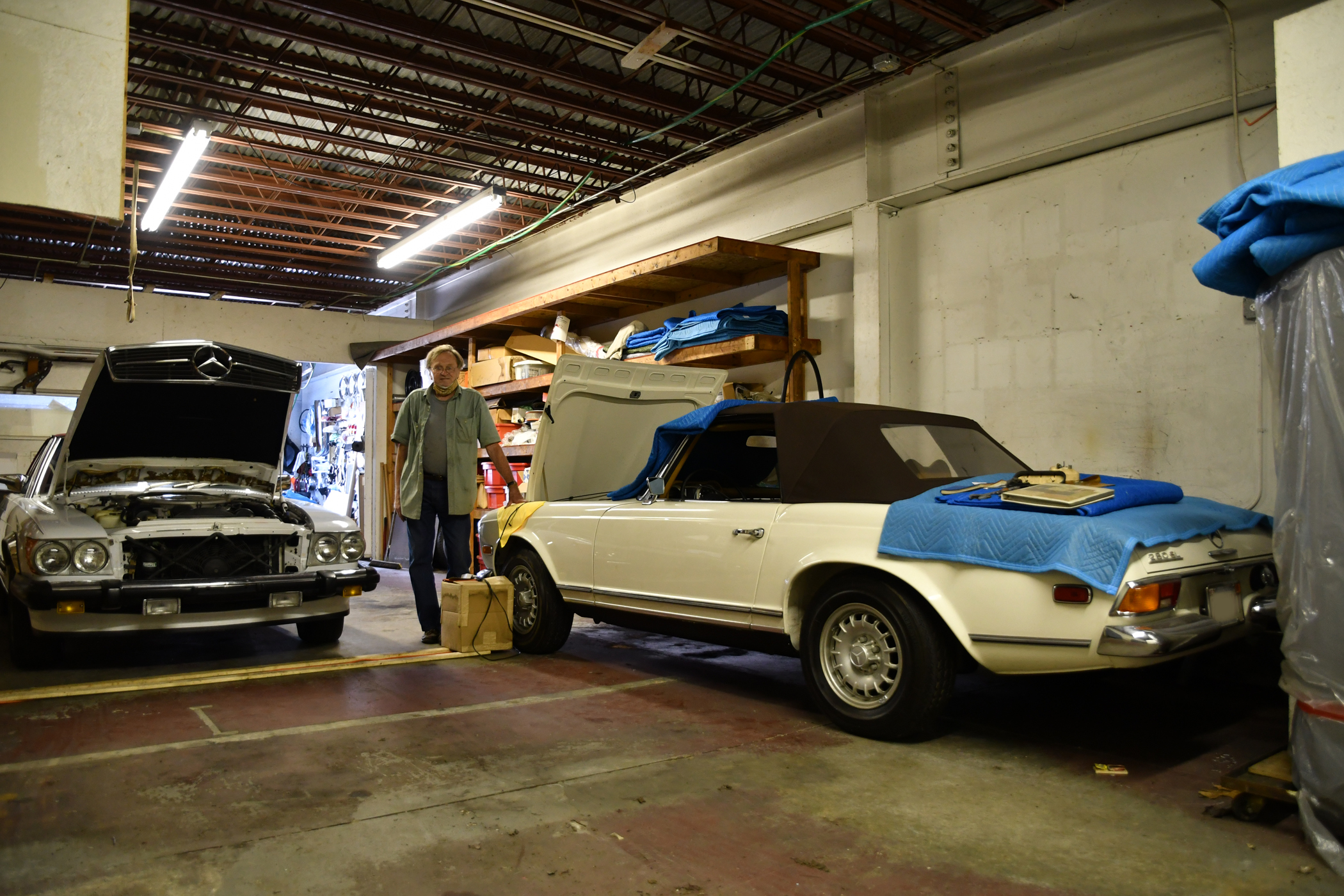
Decades ago while visiting an island off the east coast, my eye caught a neatly ordered disposition of older and highly desirable Mercedes-Benz automobiles arrayed in front of a small repair shop. The gathering of Stuttgart finery compelled me to know more.

Three vintage M-Bs filled a long single bay garage. Three-pointed stars and classic M-B grills adorned the walls. The lone occupant extended a craftsman’s hand. “I’m Larry, what can I do for you,” he said. With that, I met a gifted master mechanic immersed in mid-20th century Mercedes-Benz technology.


Old School Larry


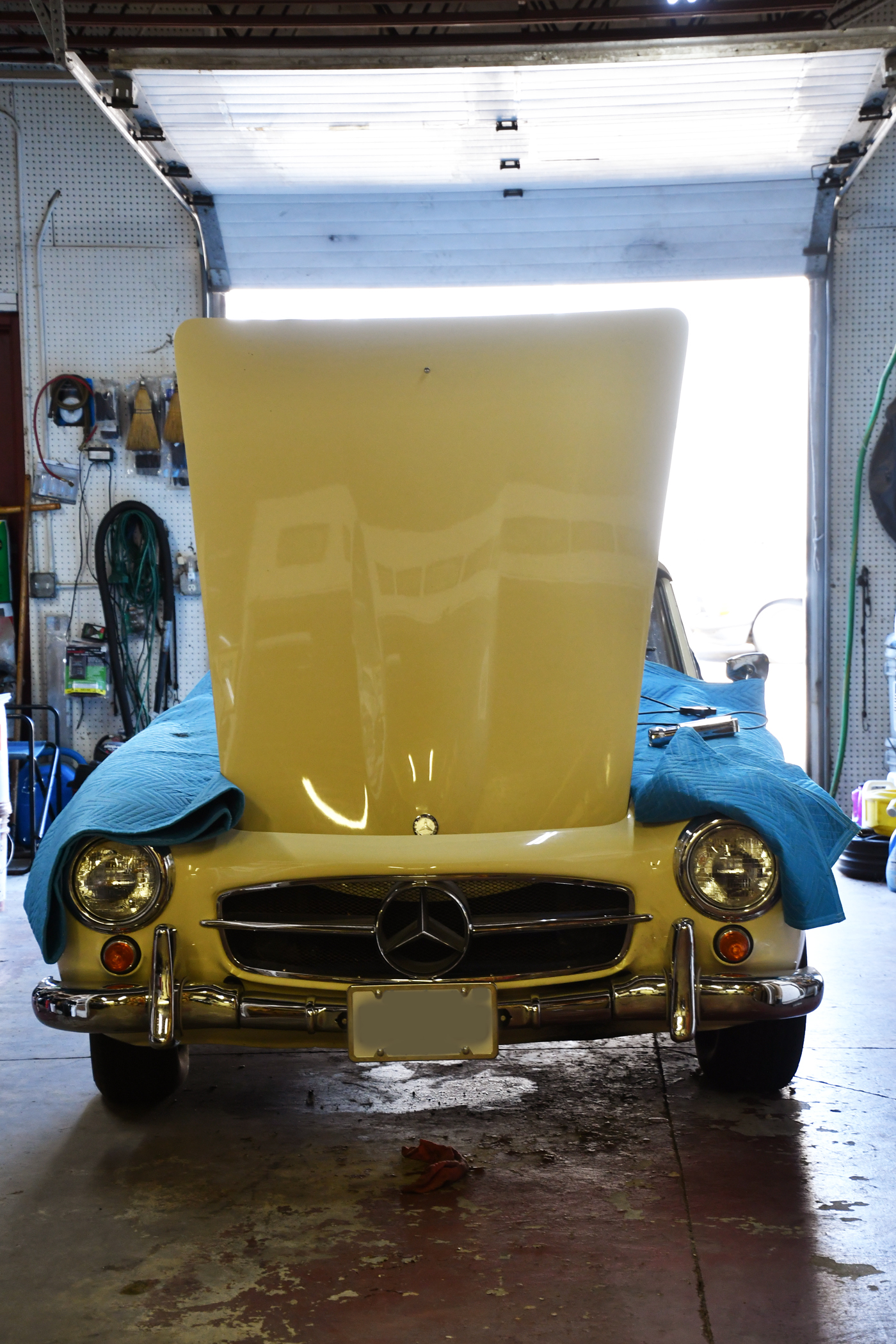
Almost forty years later, I have asked my, now, good friend Larry to sit for an interview. “I will talk with you,” Larry says, “but don’t give my full name or the location of my shop. If too many people learn what I do, the phone will never stop ringing and I will never get anything done.” You see Larry focuses his considerable Mercedes-Benz acumen primarily on Mercedes-Benz coupes, cabriolets and SLs from the’50s, 60’s, 70’s and 80s so that their owners can drive them as Mercedes-Benz had intended rather than placing them in suspended animation in some climate controlled sarcophagus.

Old school Larry is just that, “old school” and in Larry’s highly skilled case it is more accurately old “graduate” school. Old school for many conjures up a hands-on application of intuitive wizardry. Larry is all of that and more. Indeed, in Larry’s care a favorite tool endows a certain divining rod/Ouija board sixth sense.

An infrared heat gun for example offers a powerful and convenient means for deducing problems occurring in areas unseen. Pointing it at each hub cap or alloy wheel after driving can reveal a potential wheel bearing issue by displaying a significant temperature differential. Should one front tire compared to the other measure much hotter it could indicate an alignment problem. A significant tire temperature differential could indicate a brake caliper not releasing.

If, when aimed to where the exhaust manifold outlets meet the head, the temperature of one outlet exceeds the others by one hundred degrees or more it could indicate a mis-adjusted valve, a burned valve or a lean cylinder caused by a malfunctioning injector. Being M-B exclusive Larry has a mastery of the idiosyncrasies and nuances of the vintage models in which he specializes. Together with his “intuitive wizardry” he often divines high probability problems before really attempting any invasive procedure.
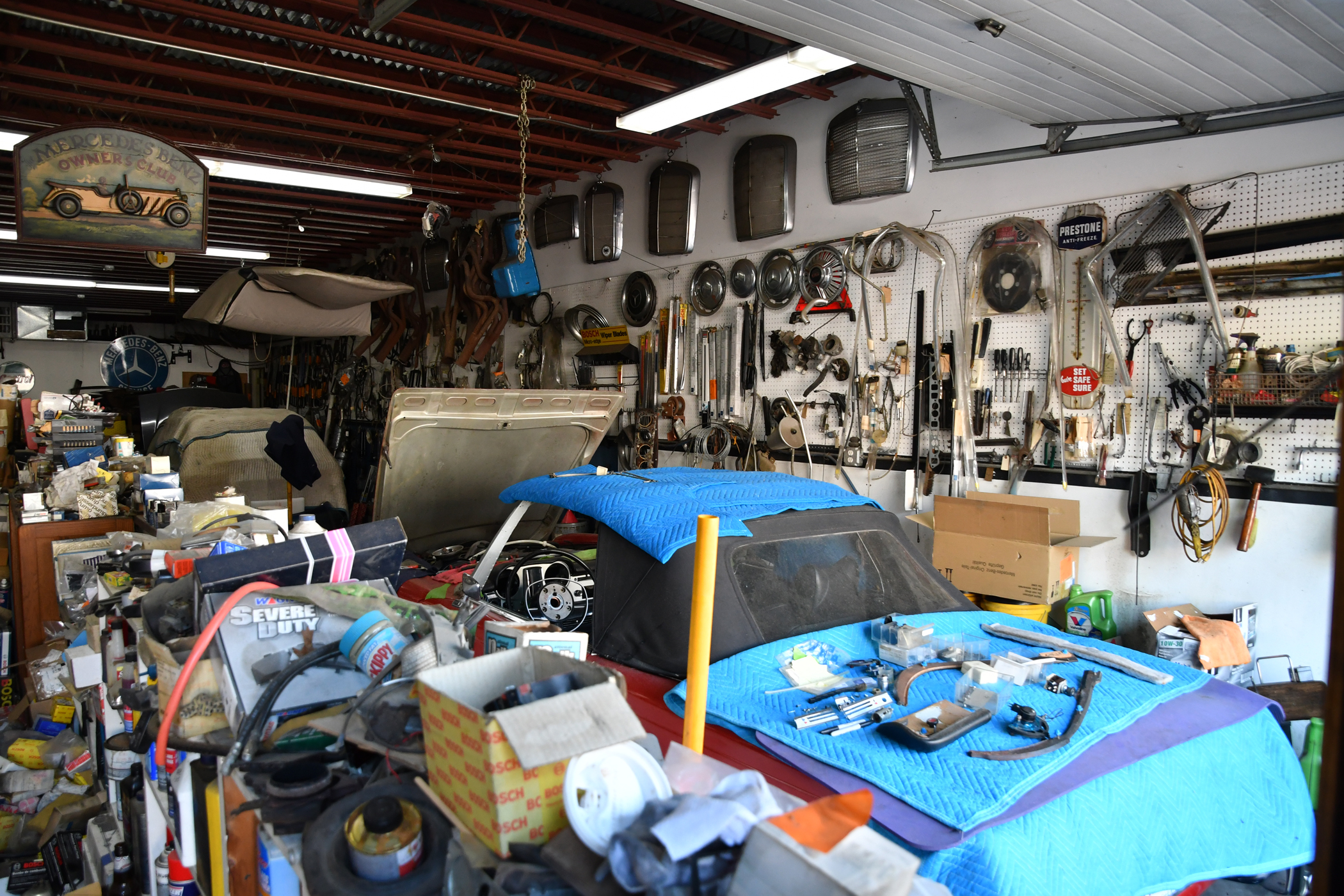
Interestingly Larry’s business is not restoration. His customer base consists largely of people of means with a particular fondness for an older Mercedes-Benz that they garage on island and enjoy driving while there.

Larry attracts customers with the natural draw of a lodestone. Old school through and through, he does not advertise. He has no social media or internet presence. He does not even have a computer. A few years back he grudgingly entered the 20th century and acquired a telephone answering machine. Lacking a computer does not mean Larry lacks resources. He possesses an extraordinary archive of manuals, parts books, service literature and parts microfiche. In this internet of everything age many respected M-B servicers will reach out to him (by phone) as a resource for part numbers and authentication.

Larry’s business focuses on the refurbishing of a select group of vintage Mercedes-Benz vehicles to a high standard. He then maintains them as premium drivers in strict accordance with factory specifications.”

Larry says, “A person may have a 380SL they bought new in 1985 when they were in their 40s. It has enjoyed the care of a beloved child. They plan to keep driving it because they have someone who understands the car, can get parts, will keep it running and be their eyes and ears. That someone is me. These people don’t mind spending the money to maintain their treasured “island” car.”

“They’re not into car shows,” says Larry, “they are into loving the car for what it is. They love to drive the car. They want it to stop, start and do what it is supposed to do and then be parked it in their garage.”

Philosophically his approach to the oversight of vehicles in his care mirrors the rigors with which aircraft are maintained with annuals based on time and usage.

While some might question how much demand exists for Larry’s vintage M-B services on a little island. Larry says when he first started in 1982 40 percent of his business came from off island. Today, the island gives him all he can handle.

Actually the level of demand has resulted in Larry totally re-evaluating the vehicles he accepts. He expects a customer to demonstrate the same respect for the automobile that Larry possesses.

“When a new client comes in I will ask the same battery of questions,” Says Larry. He will inquire of prospective customers as to when the car last had a major service based on the mileage or the time. If they respond that they don’t believe in that, then they really don’t want me,” says Larry.

When I accept a car, I provide a schedule of service prioritized from a safety standpoint and reliability standpoint. Conforming to that schedule will ensure that their vintage Mercedes is factory ready whenever they turn the key.

I love what I do says Larry and after all my years in business I want to do it my way.

I’m having fun working on great cars meeting all kinds of good people. I will have long time clients come in and sit down for an hour or two in the afternoon and we’ll just talk about cars. Some of my clients possess the financial means to buy any car they want. Many also appreciate that they lack the in-depth knowledge of the automobiles they desire. I am pleased to be of help.

When asked for any words of wisdom to share with anyone interested in purchasing the types of M-Bs he works on, Larry, smiling knowingly, says, “Know what you are looking for. Know what you want it for. Buy the best one you can find. And don’t call me.” Then he laughs.

By |2020-09-01T12:16:44+00:00August 27th, 2020|Comments Off on Conversations With People We Value #6

Conversations With People We Value #5

For the fortunate among us who have been so blessed, the emotional bond developed over the time spent with “the dog of your life” needs no explanation only celebration.

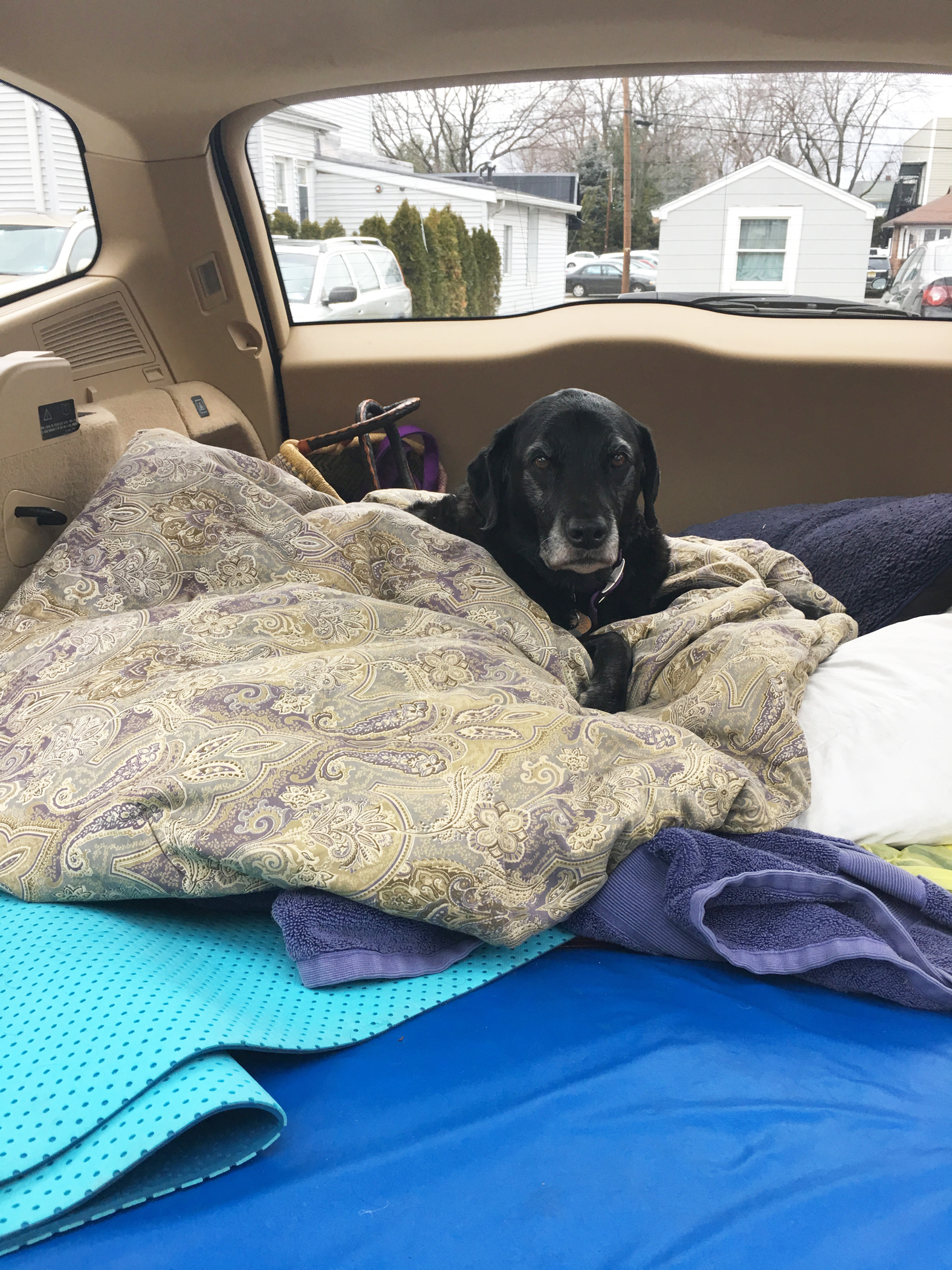
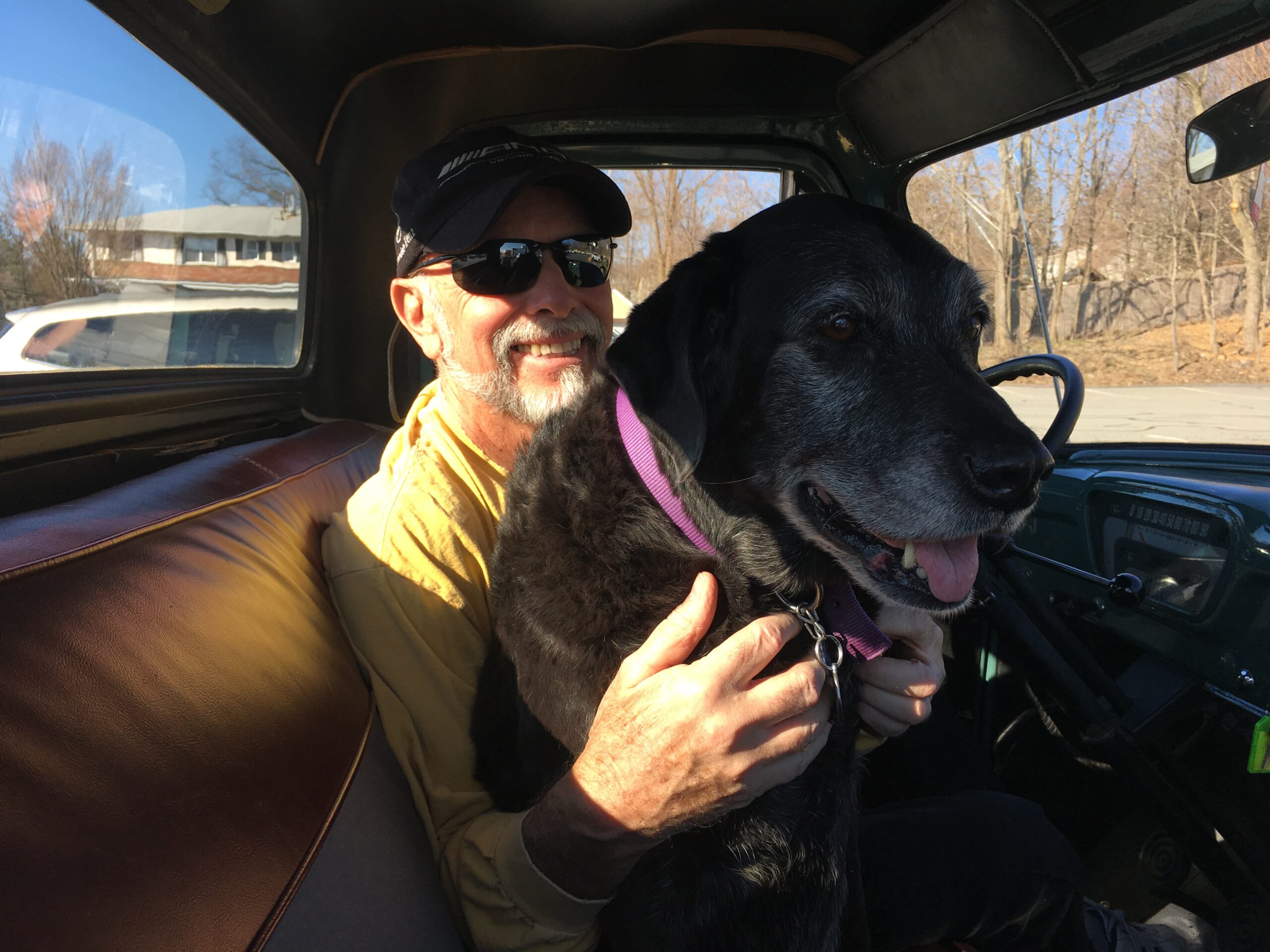
Georgie, a black lab rescue, lived life off the leash with each day an opportunity to experience and share joy only made better by reveling in it from the perspective of a moving vehicle.

On Sunday August 16th Georgie passed away at the age of 15.

In celebration of a life off the leash


While my life experience with Georgie was uniquely personal, the quality of the emotional bond forged by those life experiences is not unique and in that reality lies the beauty of this story.

Rescued by Elaine who would become the love of my life, Georgie entered my world as part of the best twofer possible.

Both Elaine and I have BMW SUVs which suited Georgie’s everyday travel tastes. Quickly, back seats went down to accommodate significant upgrades including featherbeds. Not unlike John Madden enjoying his fabulous bus, Georgie luxuriated in grand style while on the road. However no BMW snob she. Her tastes extended into the classic and quirky.

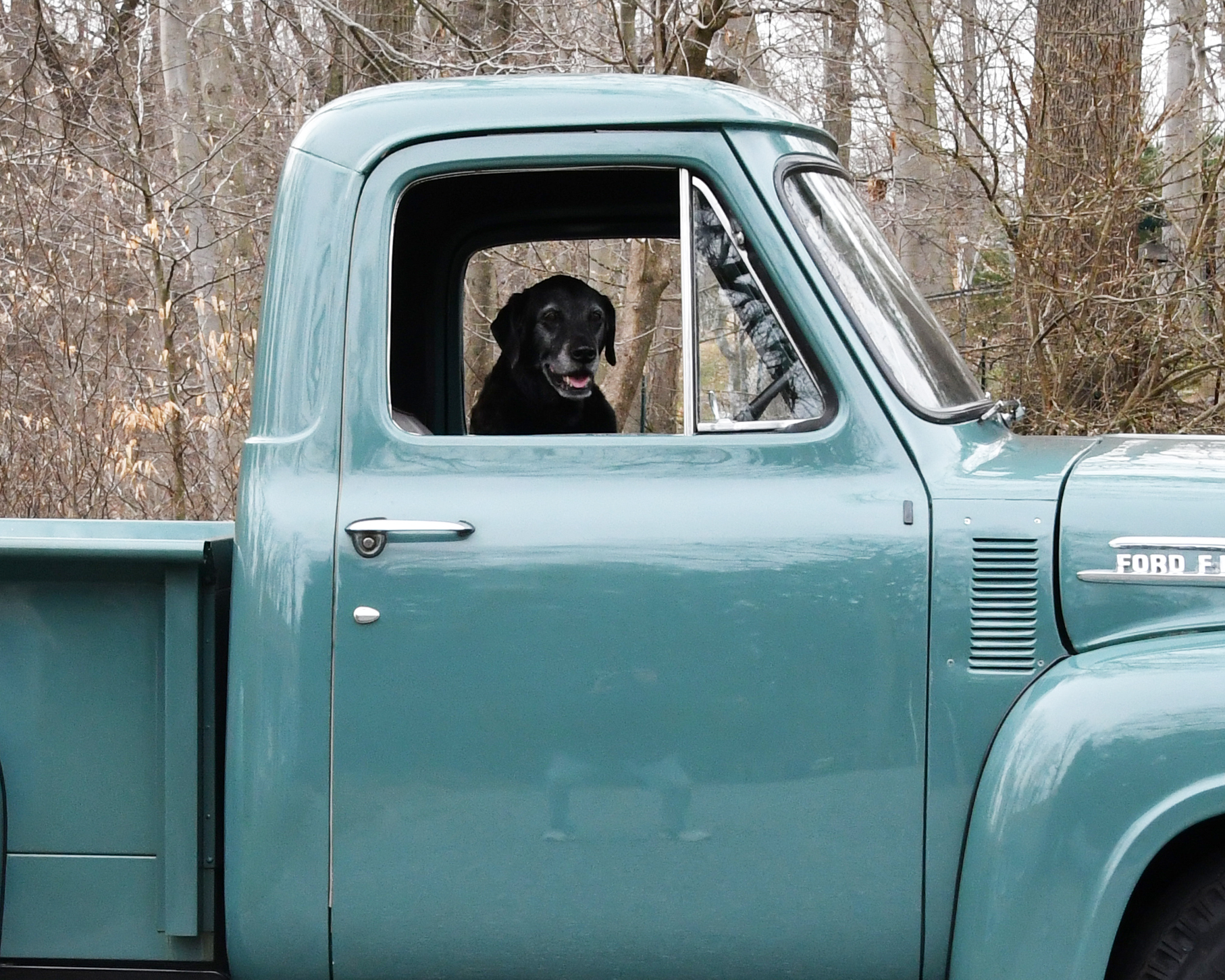
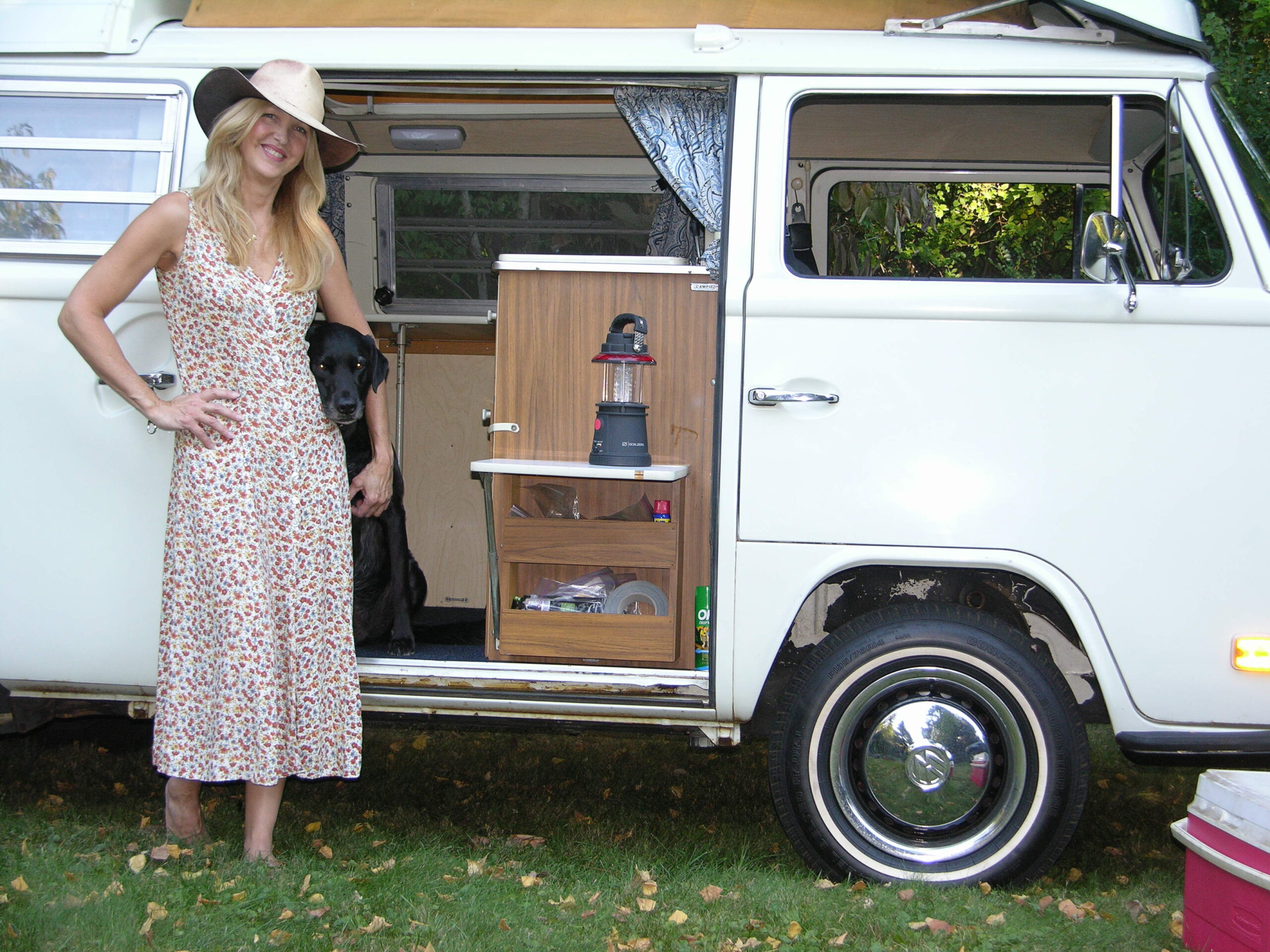
While she would tolerate a ride in a 1953 Ford F100, Elaine’s 1972 VW Westfalia camper took precedent when weather turned fair. Georgie would perch on a second row cushion with a great view of the road through the split between the front seats. With ears flapping like the flying nun’s hat, no black lab in transit savored a travel experience more.

Farmer’s markets and car shows offered extraordinary opportunities for Georgie to roam about insinuating herself into group discussions. When Elaine took a trophy for her Westfalia, Georgie trotted along to share the accolade.

Lately stories have been exchanged with other men and women, friends and strangers describing their “dog of my life.” If the stories are told in past tense regardless of the teller’s stern countenance, sand gets in their eyes. If the stories are in present tense, accompanying the joy comes a universal acknowledgment of how lucky they are and the immense respect they have for their canine partner.
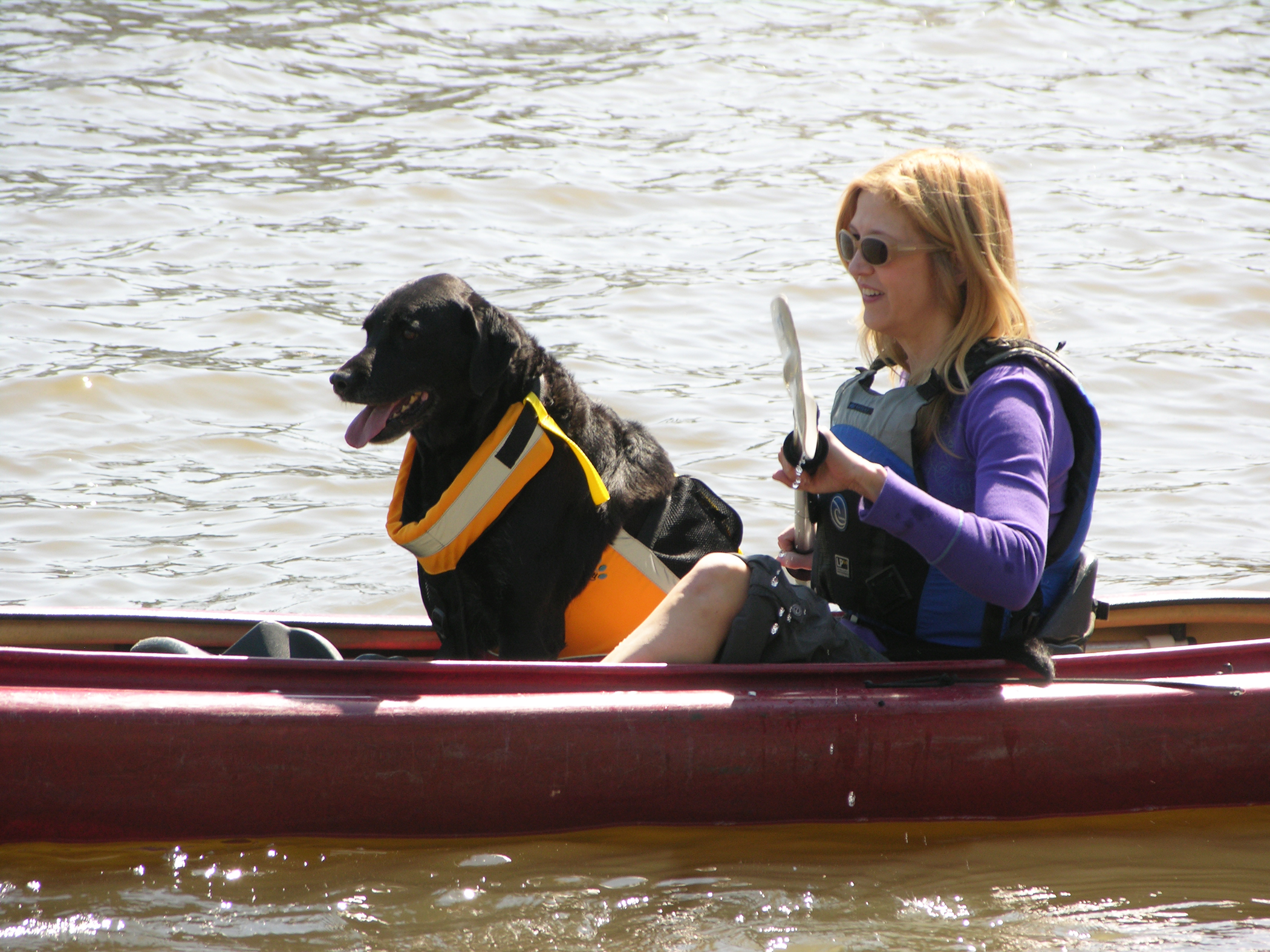
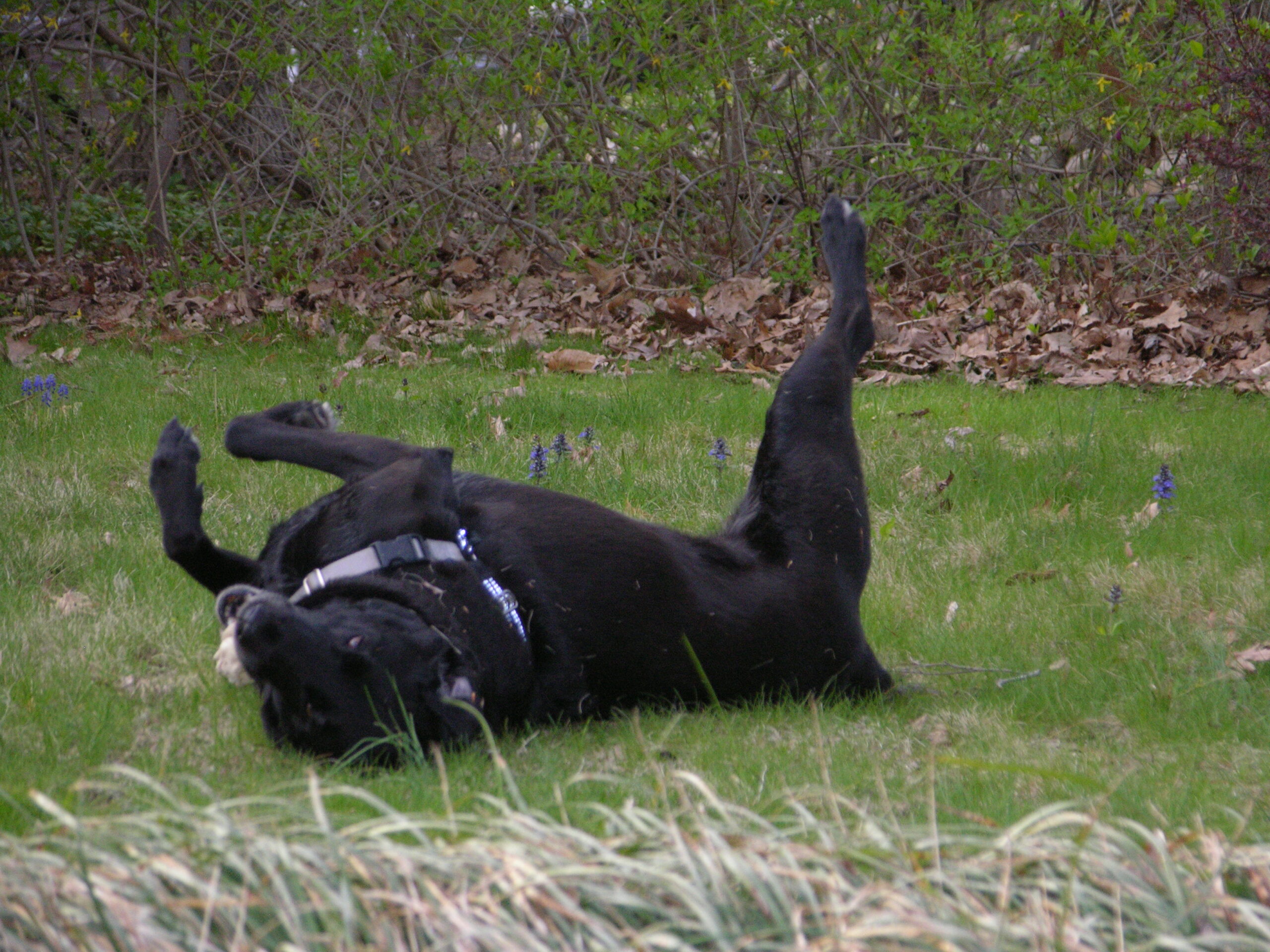
A great companion on a forest hike or a city stroll, Georgie would engage people at random with a disarming openness that communicated with cross species clarity that, of course you can pet me and you should, and almost universally, without hesitation, strangers would love her up as if she had been their own.

In my studies I have been taught that the body stores emotional pains experienced and often manifests them as physical maladies. Conversely and perversely the joy we experience is ephemeral. I do not totally agree and wish to take this opportunity to advocate for joy’s value as a lasting contributor to making each of us a better person.

Joy produces lessons learned that have staying power expressed in our thoughts and actions. While at present I am experiencing profound sadness, I also realize that I am a better person for the lessons learned in the presence of Georgie.

As a tribute to every “dog of my life” treasured as a canine companion I would like to share the following. This July on the precipice of Georgie’s decline, Elaine and I took her on vacation to an historic farm on Martha’s Vineyard. For a few days the owner’s friend served as the innkeeper. A lovely woman, she had the opportunity to spend a little time each day with Georgie. Upon hearing of Georgie’s passing she wrote us the following.

“Georgie was a special soul. A gentle, intelligent and beautiful girl. Her generous happy spirit was contagious as she shared her joy and kindness. She was a unique being with an almost saintly energy. You were blessed with the love and time you all had together. She changed your lives. Her goodness lives within you.”
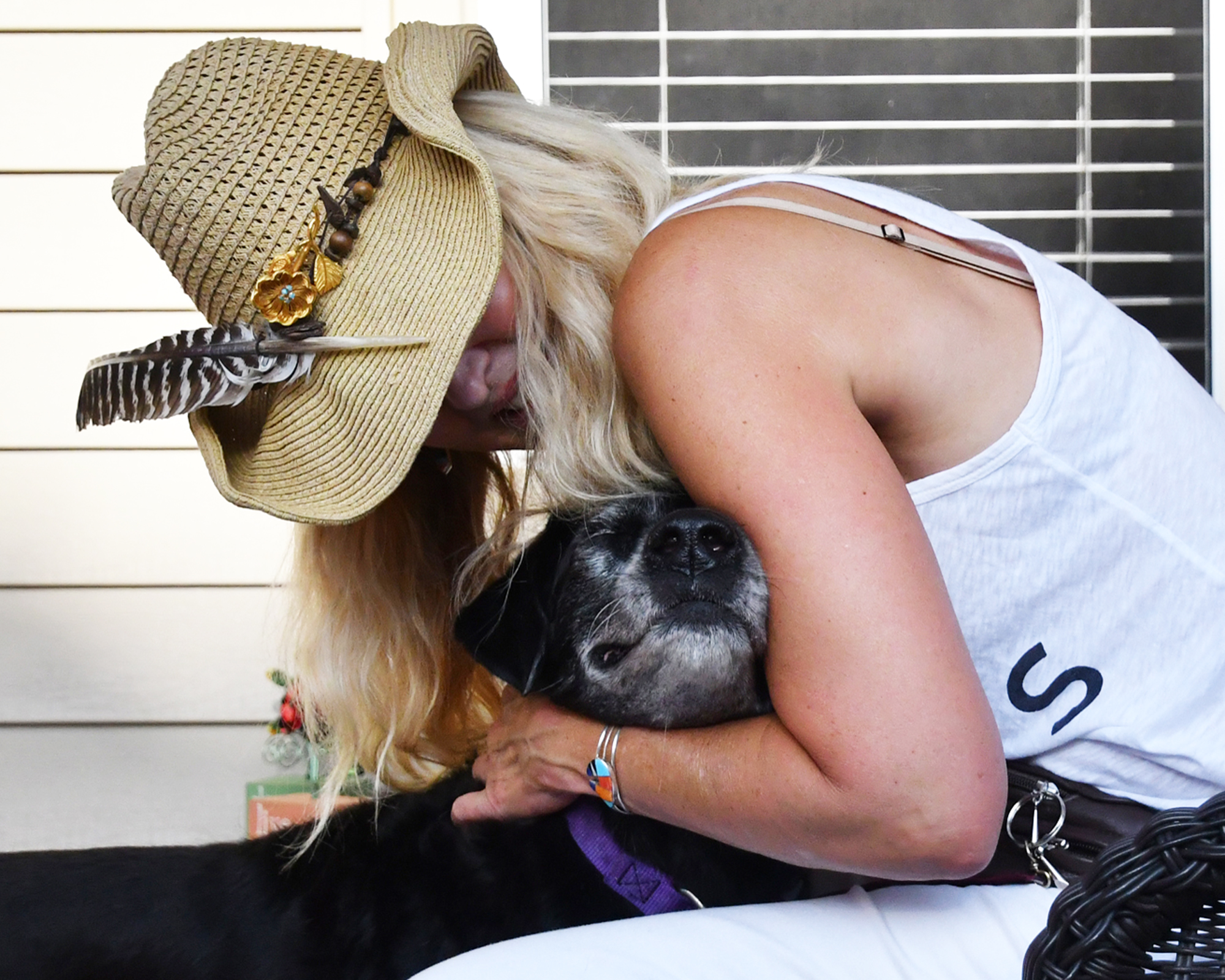
For all of us who have been blessed with the “dog of our lives” reading a heartfelt description capturing your canine partner’s qualities would be equally moving. And once again you would feel the sand in your eyes.

It is my belief that “dogs of our life” go to heaven and sitteth under the right hand of God where God can pet them for their mutual benefit.

You are invited to share a story about your “dog of your life” in the comments section. Those are stories I would love to read.

By |2020-08-27T02:04:50+00:00August 20th, 2020|12 Comments

Conversations with People We Value #4

In the moment you felt the vigor draining from your very being. Shadows took on living form and danced across your field of vision taunting you to react as they evaporated. Your eyes blinked like a neon tube going bad. You cranked up the radio, sang loudly, rolled down the windows regardless of the season or the weather. To no avail. Succumbing to the embrace of Morpheus the Greek god of dreams, you had fallen asleep at the wheel.

In Rest Stop Recovery, Dr. Charles Berg with over 40 years of experience as a chiropractor, practitioner of integrative nutrition and a lifestyle coach for organizations such as BMW and UBS offers helpful pointers and a 5-minute revitalizing routine that will get you safely back on the road and up to speed as a driver and a traveler.


Asleep at the wheel, Rest Stop Recovery


It’s a horrible feeling. Ignoring it can have deadly consequences. Estimates from the American Automobile Association show that one of every six deadly traffic accidents and one of every eight accidents requiring hospitalization are the result of drowsy driving.

Dr. Berg’s focus will be on long drives e.g. a four-hour ride home after a Thanksgiving dinner or a ten-hour ride returning from a vacation.

Rule one when drowsy behind the wheel, pull over. Then the distance to your destination will determine the right course of action so that you get there.

For short term drives within an hour of your destination the traditional solution of pulling over to take a brief 20-minute nap or down two cups of coffee normally provide the reinvigoration necessary to get home safely. It is a whole different story for that long drive home on a monotonous interstate with daylight fading and oncoming headlights twinkling in your eyes.

“In the ideal scenario, it’s a matter of prior planning,” says Dr. Berg. Plan to be rested for the drive. Plan the best time of day to depart. Plan to eat properly before and during the drive.

Get a good sleep the night before. Understand your circadian rhythm. Are you an early bird or a night owl? Plan your travel time accordingly.

Plan so that you do not drive on a full stomach. Like the proverbial pig in the python, your body after a large meal directs blood flow to the digestive system and away from cognition and muscle activity. Pythons having consumed a sizable meal become sedentary and unresponsive. Similar behavior is witnessed in male family members after a holiday meal at your grandmother’s.

Unfortunately, a vast majority of us endure travel schedule’s determined by happenstance, constricted windows of opportunity and evaporating available time that pushes us to the limit. What should someone do facing that situation?

“Biohack,” says Dr. Berg. Think of biohacking as turbocharging your consciousness. Biohacking pumps oxygen into your system and stimulates your senses.

Stair Step

Curing drowsiness demand’s elevating your oxygen supply and increasing your blood flow. An infusion of oxygen elevates your body’s ability to generate energy, just like a turbo. Large muscle movement increases blood flow which utilizes that energy.

“Biohack,” says Dr. Berg. Think of biohacking as turbocharging your consciousness. Biohacking pumps oxygen into your system and stimulates your senses.

Curing drowsiness demand’s elevating your oxygen supply and increasing your blood flow. An infusion of oxygen elevates your body’s ability to generate energy, just like a turbo. Large muscle movement increases blood flow which utilizes that energy.

Biohacks (all require pulling over):

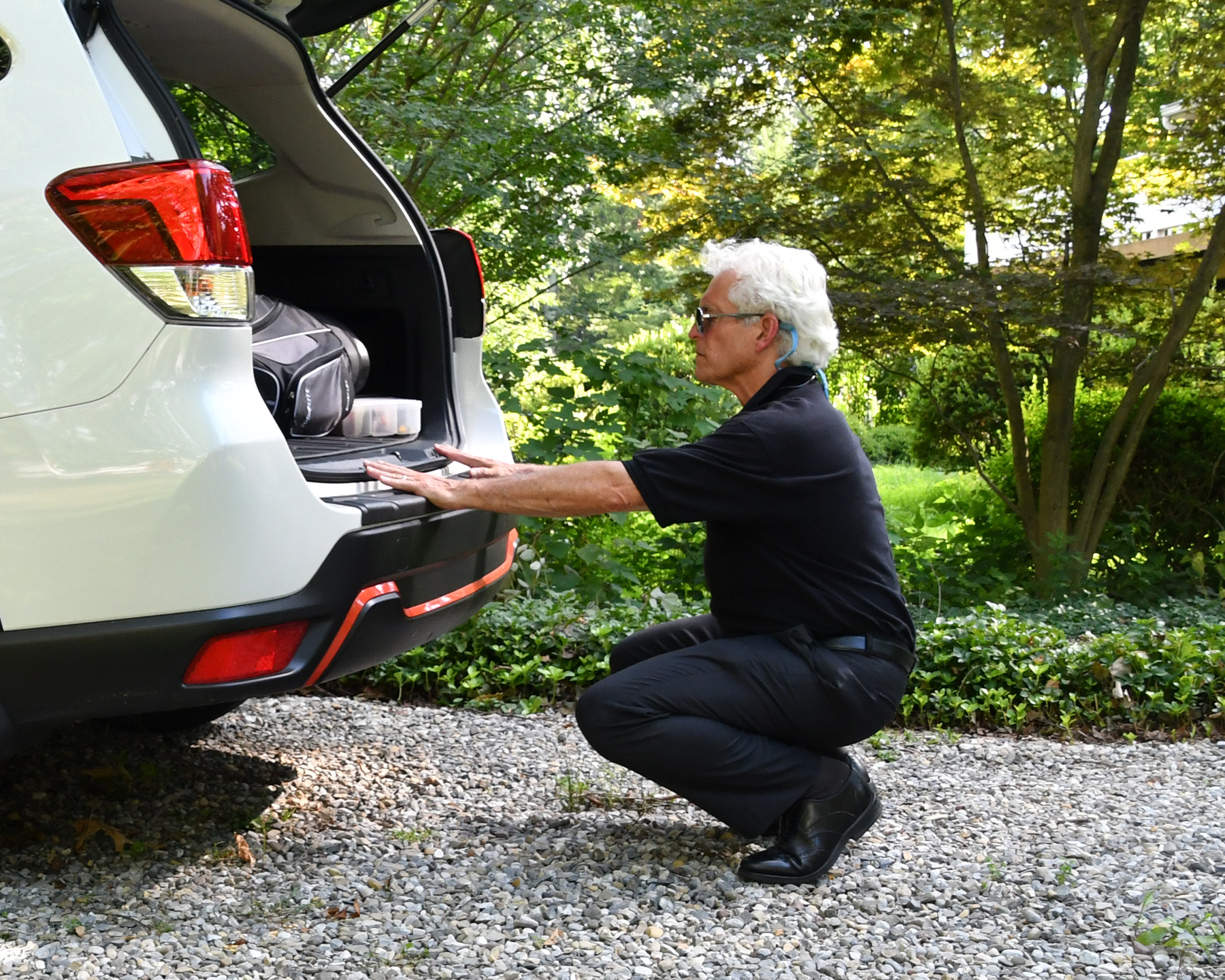
Deep Squat

  1. Deep inhalations and exhalations for 30 seconds. This stimulates your sympathetic nervous system and increases the oxygen supply which energizes the body.


  1. Shout!, just like the Eisley Brothers. Do it five or six times. It gives your system a jolt. Do this in conjunction with the deep breathing.


  1. Cold water splashed on your face and neck gives your bodya jolt. It’s just water even if you have a dress shirt on it will do no damage.

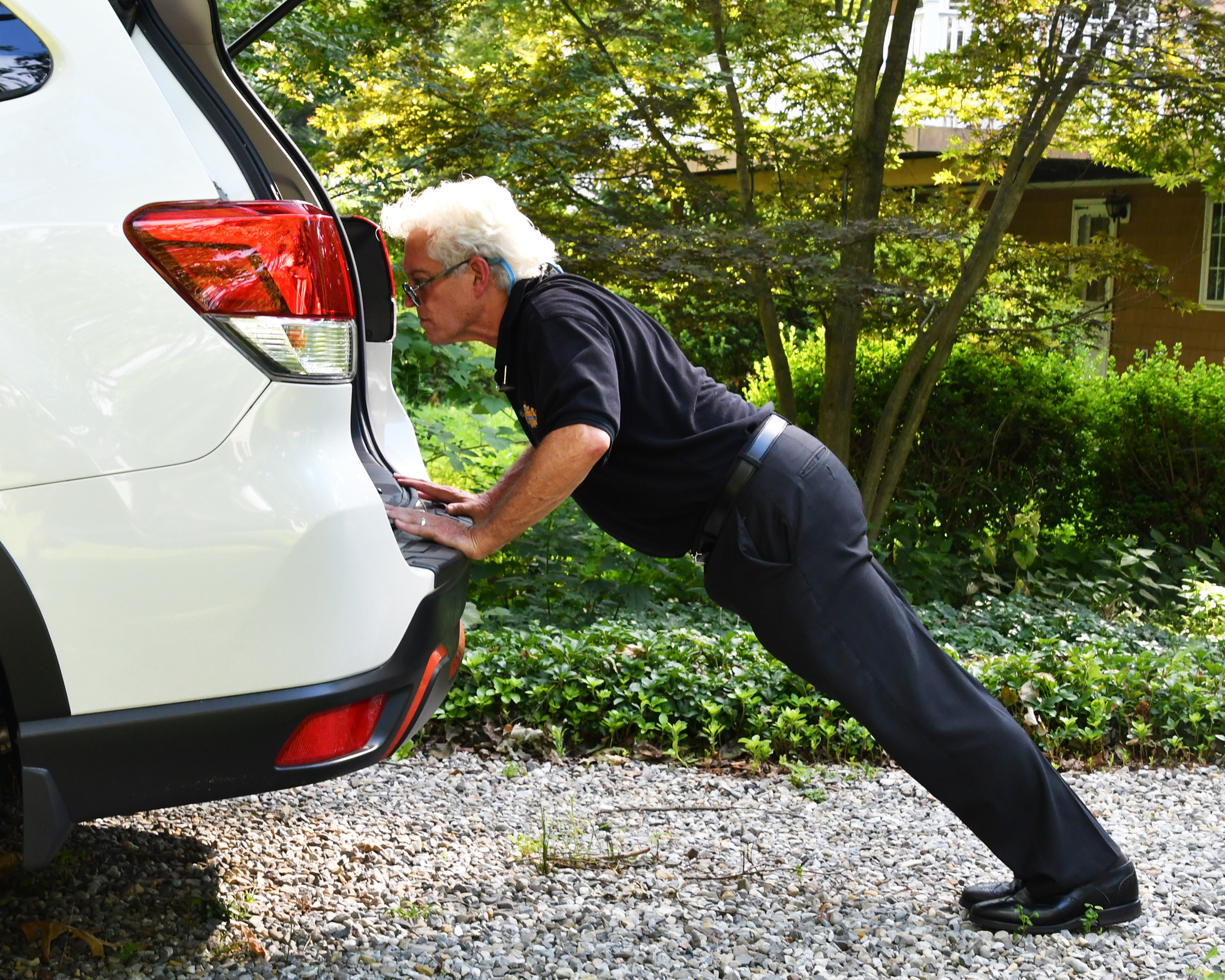
Push-up


  1. Dr. Berg’s 5 to keep you alive – Each activity employs large muscle systems such as the buttocks, thighs, quads and biceps to bring the heart rate up which increases blood flow and oxygen delivery.

The level of exertion should be in line with your level of fitness. Do each exercise for 30 seconds,

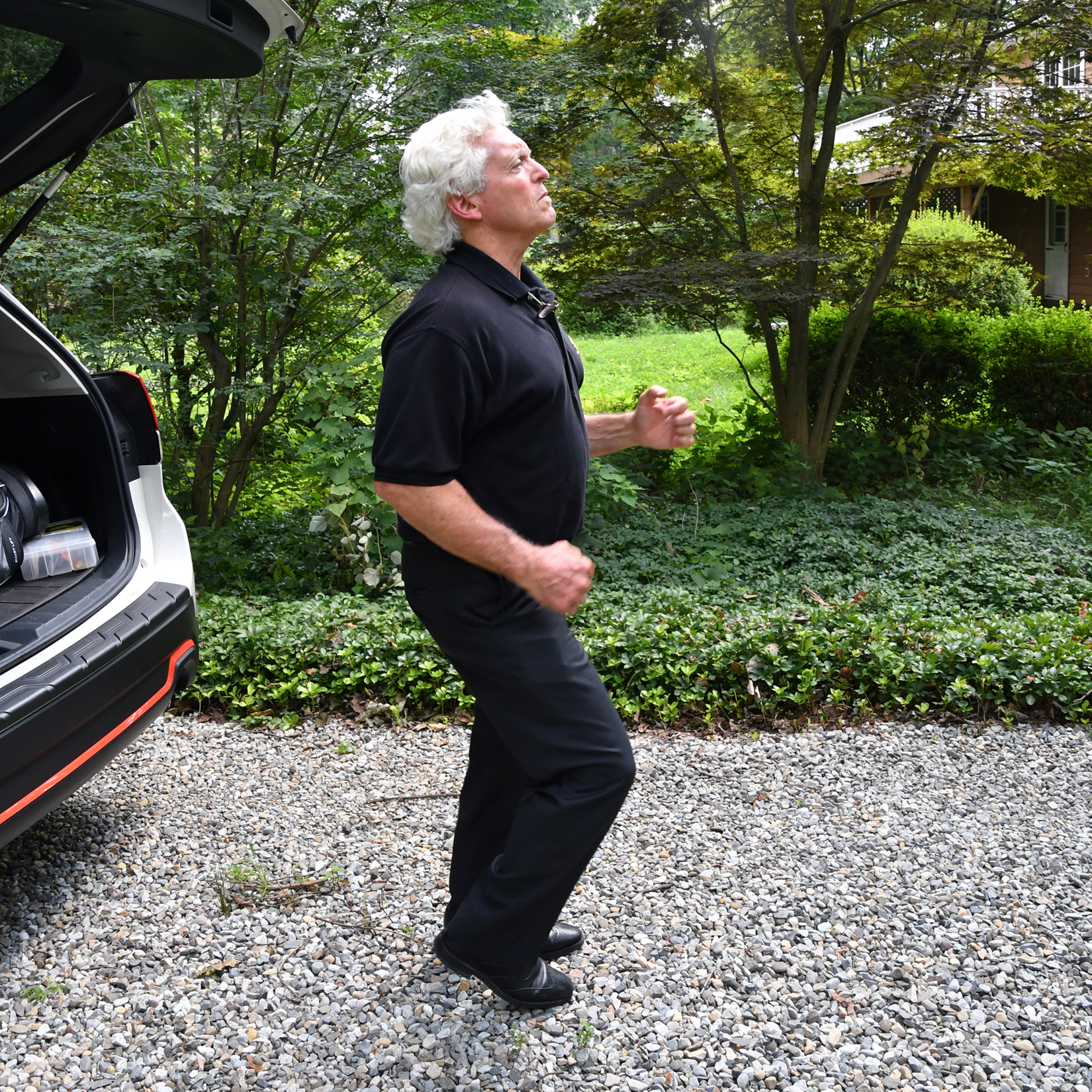
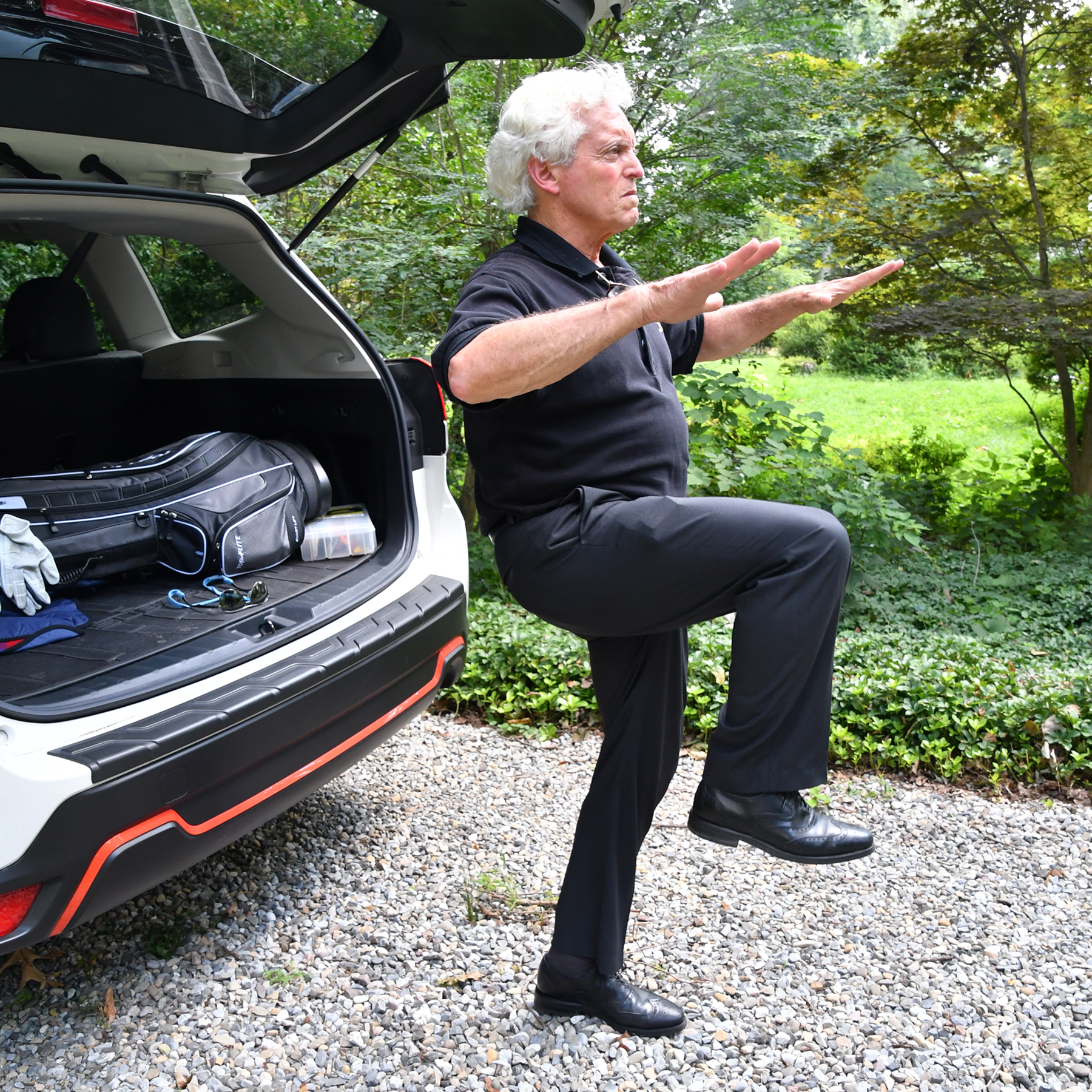
#1   Stair steps – In a stationary position bring your knee up to waist high alternating the left and right leg.


Running in place

#2   Squats – From a vertical position lower your body in a seated position to the bumper of the car. Then sit up. Repeat.


#3   Push-ups – With feet firmly shoulder length apart, place both hands on the hood, a fender or rear

bumper then raise and lower your body.


#4   Running in place


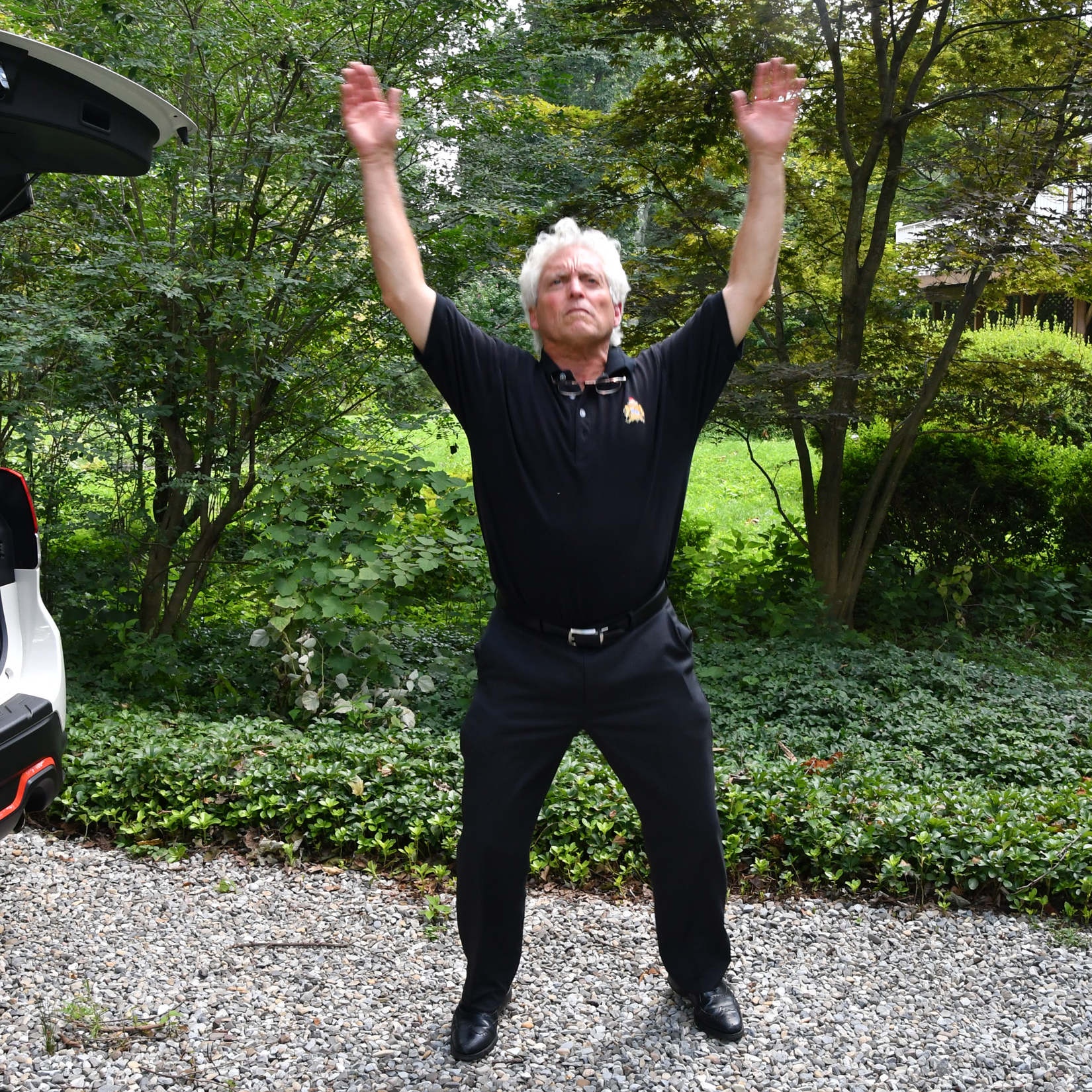
Jumping Jacks


#5   Jumping Jacks


The only thing better than knowing how to ward off drowsiness is not to experience it. Dr. Berg identifies driver seating posture and choice of snacks as two critical factors in defending against drowsiness. He calls driving with your seat reclined at a 45 degree angle, “horrific. In that position you have assumed a sleeping posture and sent a message to your brain to pull up the covers and turn out the lights.” He strongly recommends bringing the seat back up a few inches to what he calls “church pew” seating. This reinforces the need to maintain attention.

Rest Stop “less than ideal” menu

Many people consider car snacking an art. It should also be appreciated as a science, a nutritional science. “The last things you want to snack on during a long trip are carbohydrates especially sugar,” says Dr. Berg. Carbohydrates offer a short term boost followed by a punishing plunging crash. Protein foods are much better. Almonds and most nuts rank high as a driving snack as do vegetable and fruit slices. Chips, chocolate, pretzels, sugary beverages all put you on the fast lane to snoozeville.

By |2020-08-13T11:10:26+00:00August 13th, 2020|8 Comments

Roads We Remember #5

Fresh apple cider flowed through a long pipe that ran the length of the walk-up counter. It had a dozen spigots. Each one required a simple twist to fill your cup.

Pushing through the creaky screen door to enter, mingled aromas of fresh fruit and raw wood perfumed the air inside the rough hewn farm stand. You found yourself surrounded by a profusion of color and abundance.

A great maple tree towered out front to shade you from the midday summer sun and in the fall its translucent lollipop orange leaves offered a glorious umbrella under which you could savor delicious apple cider donuts.

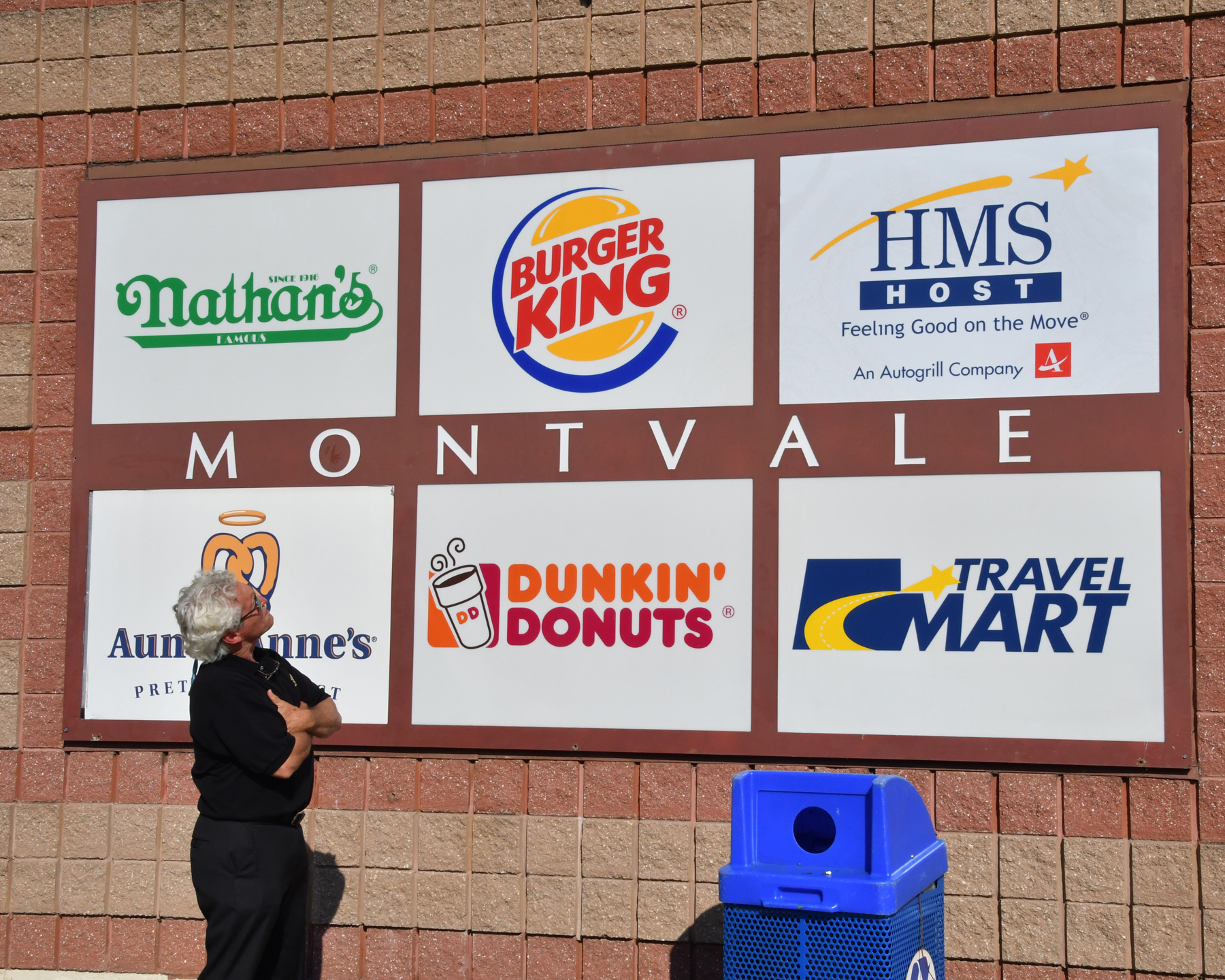
As a kid in New Jersey in the 1960s, Tice’s Farm in Montvale, NJ represented an irresistible destination for a backroad ride in the country. Even when stationed in the back seat of the family sedan, it promised a wonderful journey to a special somewhere else.

Today a similar drive to the Tice’s location finds a sprawling parking lot covered in asphalt, bricks and mortar, occupied by Athleta sportswear, Panera’s, Victoria’s Secret and many more familiar stores. A Hilton Hotel and an office park now occupy land once home to Tice’s orchard. But open road enthusiasts despair not. Within an easy morning’s journey new and similar memories can be born for the kid in all of us on…

The road to Sugarloaf.

Route 17 A – A sweet drive to Sugarloaf

Rocco Dairy Farm, Rt. 13 Warwick, NY

First, a shout out to Averell Harriman and the Harriman family who in 1910 donated the first 10,000 acres plus 1 million dollars to start what is now the 47,527 acre Harriman State Park in New York. Their effort made this ride worth your effort.

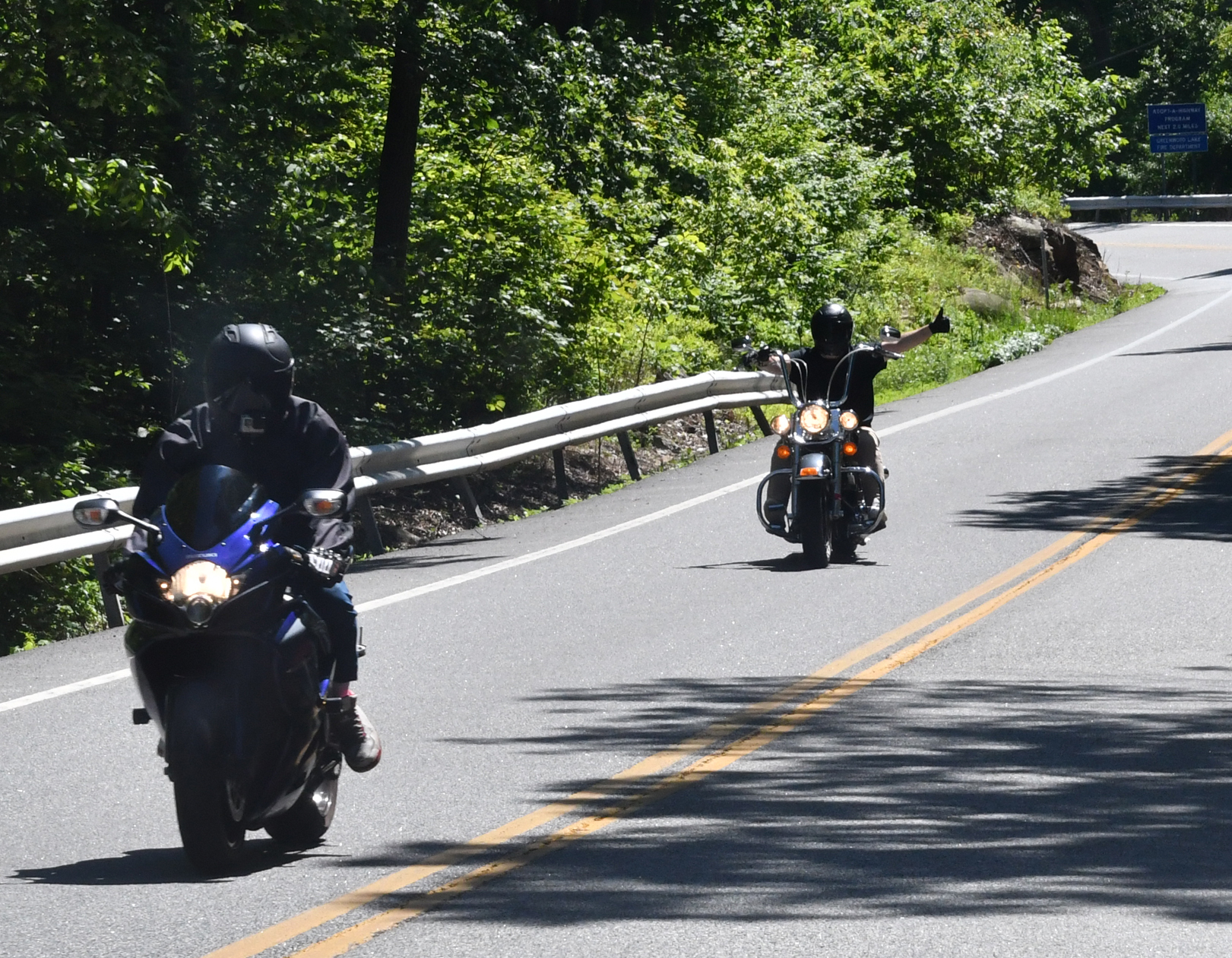
Heading west at the Route 17A entrance off Route 17 in Tuxedo, NY brings you into the western tip of Harriman State Park. Passing through the site of the “Renaissance Festival places you at the foot of a wonderful mountain populated with “Tail-of the-Dragon” quality switchbacks on both the ascent and steep descent through the forest. Early morning can find a bear or a deer sharing the road. It’s not Yellowstone but be aware.


Conclusion of your first descent puts you in the town of Greenwood Lake. Watch you speed.

Navigating though a brief patch of civilization will put you back in the woods and ascending Mt. Peter. While less circuitous than the first mountain road, 17A, here, crosses the Appalachian Trail with access parking available and offers stunning views of the Warwick Valley. One of the best locations to feast your eyes and treat your taste buds is the Bellvale Creamery. Here you can enjoy great ice cream while sitting on a grassy hill overlooking a spectacular vista. But wait there’s more, a special two for one bonus. From the same Creamery parking lot you can climb to the famous Mount Peter Hawk Watch observation station. Bring your binoculars, say hello to an eagle.

Bellvale Creamery


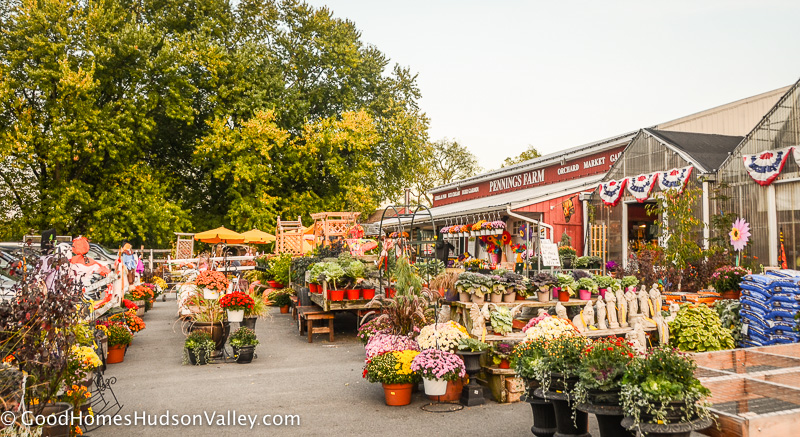
Descending Mt. Peter will bring you to a “T” intersection with NY Route 94. While Sugarloaf requires turning right, mention must be made of Pennings Farm Market located a few miles down the road if you turn left. A 100-acre farm with food, an excellent nursery, music, a bar and a great attitude, Pennings provides a worthy rest stop or destination. Across the street from Pennings can be found the Warwick Drive-in Theater.

For the trip to Sugarloaf, Turn right at the Route 94 intersection. This brings you into the very pleasant town of Warwick with its excellent shops and many fine restaurants.

Proceeding through town to Warwick Corners, an Exxon station sits at the fork. Route 94 continues to the left. Take the right leg of the fork, Route 13. Route 13 (Kings Highway) travels through mostly rural countryside as it meanders the six miles to Sugarloaf.

Sugarloaf offers a quirky assemblage of craft shops and galleries. A very comfortable environment for wandering about. For food, both the Sugarloaf Tap House with authentic rustic American fare and the Cancun Inn Restaurant offering Mexican American cuisine receive good reviews.

Sugarloaf, NY


For your journey home a very enjoyable two-lane through rural environs awaits  Shortly after leaving Sugarloaf and heading back to Warwick on Rt. 13 (Kings Highway) look for Bellvale Rd. on your left. Once you pass Bellvale Rd. look to your right for Ridge Rd. Blink and you can miss it. Make the right onto Ridge Rd. Follow this meandering blue highway till it “T”s at Rt. 94. Make the left onto Rt. 94. This will take you back to the center of Warwick where you can retrace your original route.


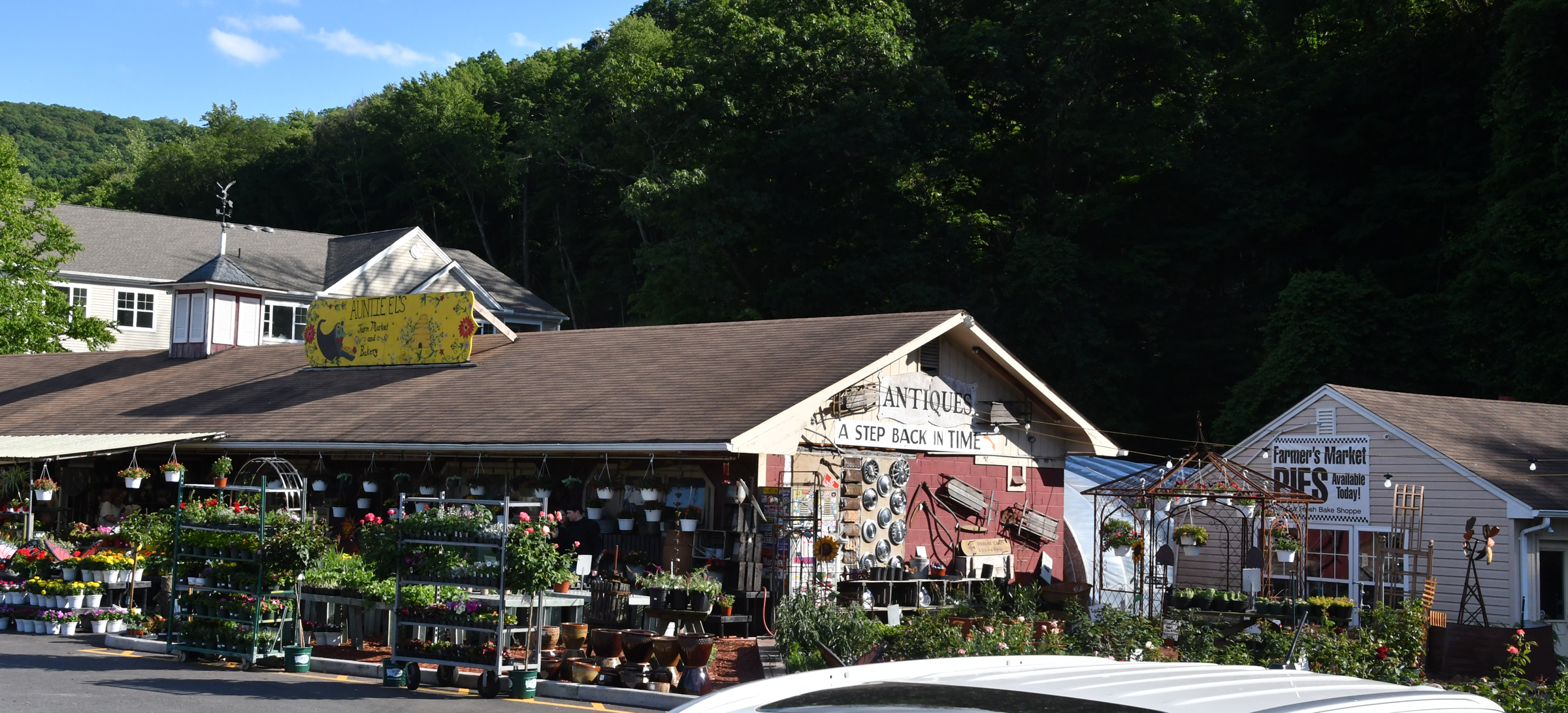
For the kids in your car or for the kid inside you, the “end of the ride, we are all a little tired, but we gotta stop here” farm stand experience, It’s Auntie El’s Farm Market and Country Bakery on Route 17 South in Sloatsburg.

Just as good as Tice’s apple cider donuts ever were, Auntie El’s apple cider donuts bring old memories to life with every bite. Auntie El’s delivers the goods and the goodies from which memories take shape and  traditions take root.

Auntie El’s, Rt. 17S Sloatsburg, NY


By |2020-08-06T10:33:04+00:00August 6th, 2020|6 Comments

Cars We Love & Who We Are #8

Over my decades of motoring along mostly forgotten blue highways, catching sight of an abandoned vehicle long retired to an open field ranked as the visual prize in the back road Cracker Jack box.

Whether huddled next to a weathered outbuilding or a lifeless shell serving as its own gravestone in a windswept field, it fascinated me.

The forsaken and forlorn car or truck rests in a virgin bed of weeds. Witnessing it defending its integrity in an inevitable losing battle against oxidation and time, I would wonder what stories it could tell?

While often no more than a pile of patina with a shape sustained by little beyond a memory, that vehicle, for me, always held out the hope of a fresh and satisfying story waiting to be savored like a new apple from an old tree.

However, while I often stopped, I rarely pursued the story.

Now, as life has afforded me more opportunities to travel blue highways in a more leisurely fashion, I am committed to harvesting the rewards of asking “what’s your story?”

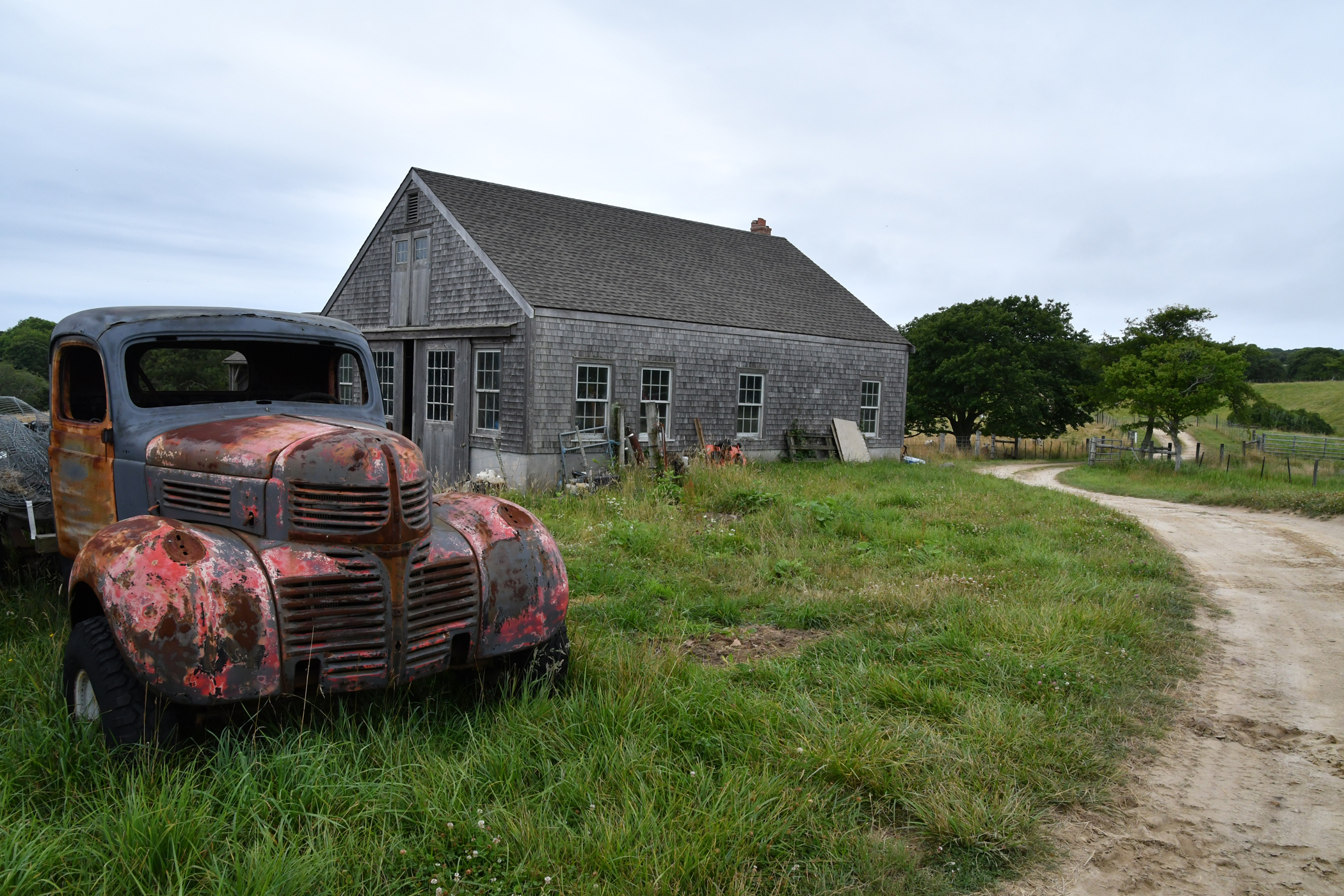
So it was with this 1946 Dodge.

What’s a “Vineyard truck?”


It came into view as the gravel road crested behind the sheep farm on a stony hill overlooking the Atlantic Ocean in Martha’s Vineyard.

Bulbous pontoon front fenders projected a decidedly 1940s look. Though denuded of trim and trappings and literally put out to pasture, the strong and stylish truck cab projected a defiant attitude.

Its Tonka Toy-like early post-war architecture displayed a kaleidoscopic patina with patches of color that indicated a life with many chapters.

Away from the truck a path led to a rustic barn and sounds of a man at work.
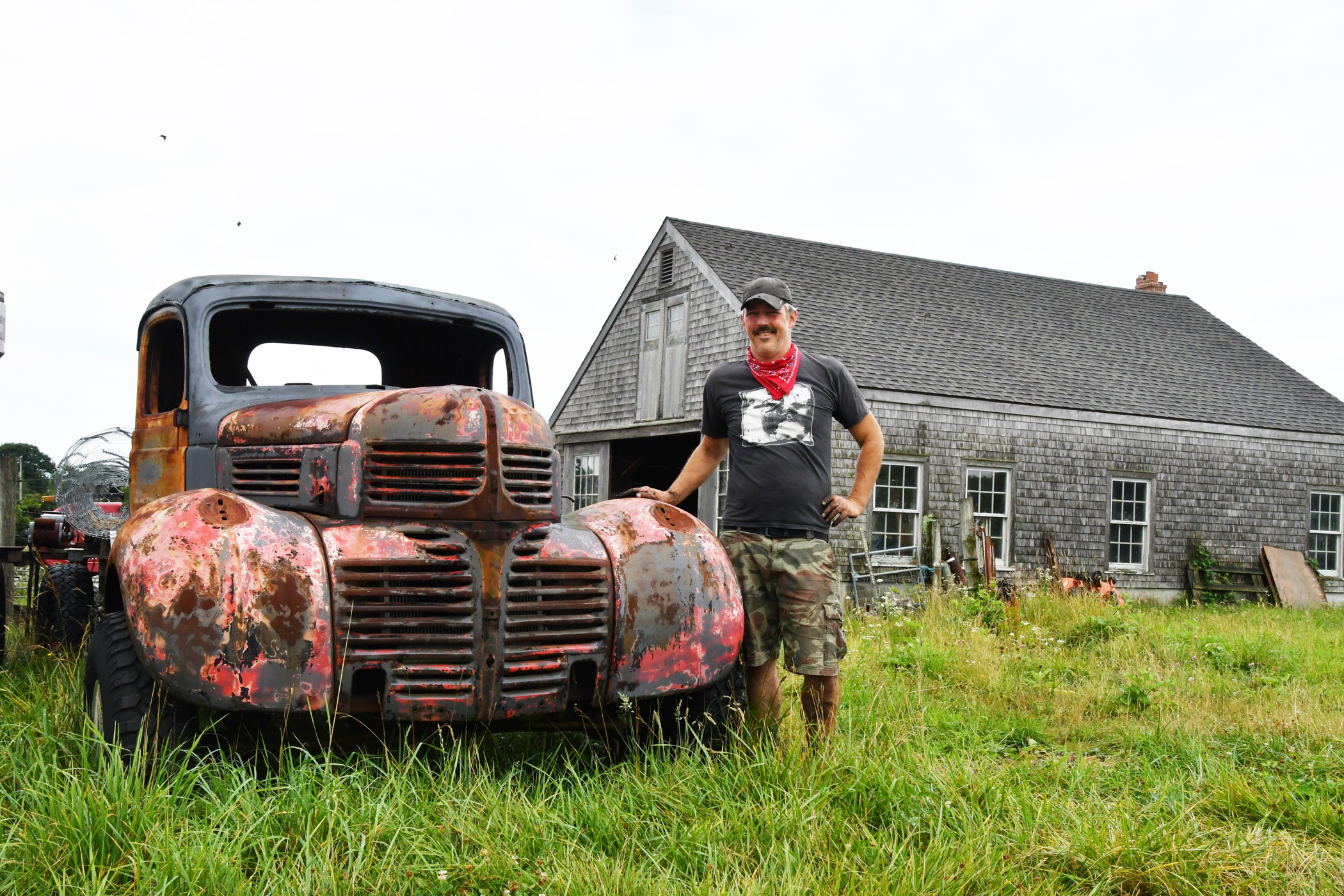
“That your truck on the hill,” I asked. “Yes sir,” came the reply. A tall friendly man in his 30s with a red neckerchief exited the barn. He introduced himself as Steve Broderick. I asked “What’s your story?”

Martha’s Vineyard has dual personality disorder. Both coincide on the same spot of verdant land off the coast of Massachusetts. During the summer months the mega-rich, simply wealthy, ex-presidents and self important celebrity types summer in rustic splendor. George Soros thinks it’s swell.

For the rest of the year with summer and glamour gone elsewhere, when snow falls and bitter winds sweep down barren beaches one finds the people who call Martha’s Vineyard home and who seal deals with a handshake. Many of those people survive by renting out their homes that have been passed down from generation to generation for the short but highly prized summer season. Steve calls it the Vineyard scramble.

Steve, a talented mechanic, is not one of the mega-rich. Born and raised on the island, Steve rents out his house and performs repairs for a local farm.

It’s a 1946 Dodge one ton. “I’ve always liked these Dodges. They are not as popular as Fords or Chevies, but they’re so stylish.” Says Steve.

With the Dodge’s long standing history in front of a friend’s shop across the island, the truck had acquired the status of “permanent fixture.” In 2009 Steve bought it. According to Steve it was pretty complete.

Steve had a plan.

Steve envisioned the Dodge becoming a “Vineyard truck” daily driver. “Vineyard truck?” Clearly, like a “Brooklyn bagel,” a “Vineyard truck” had to exhibit certain taste-based standards to qualify.

“Its nuanced’” said Steve. He continued, “A ‘Vineyard truck’ is not too shiny. It should look like it has a story behind it. By the mere fact that it still runs, it should inspire a general observer fascination. It is not a rat rod, but its patina affords it a certain rough hewn style. It’s a bit freaky, a bit funky. It’s got to be usable. You know, tow a trailer. Go to the dump. Rumbling past you a “Vineyard truck” is big on cool. When it passes you should almost feel the history. Yeh, history is good.”

No simple solution would do for Steve. His plan involved fitting the Dodge body on the chassis of a low mileage 1988 Ford F350 cut van ambulance that he also owned. Steve wanted his Vineyard truck” to look like 1946 but drive like 1988.

Once back at his shop, the Dodge was completely disassembled. The first three years produced great progress. All sorts of body work, floors and according to Steve a horrifying amount of fabrication.

However, at the top of the challenge list loomed integrating the F350 chassis and the Dodge body. Steve retained the column shift, power steering, everything.

The very sound F350 chassis featured a 7.3-liter International diesel engine with the C6 3-speed automatic transmission. “The 7.3 is a good engine though not an exceptionally high performance engine, but It does sound cool,” says Steve with a smile.
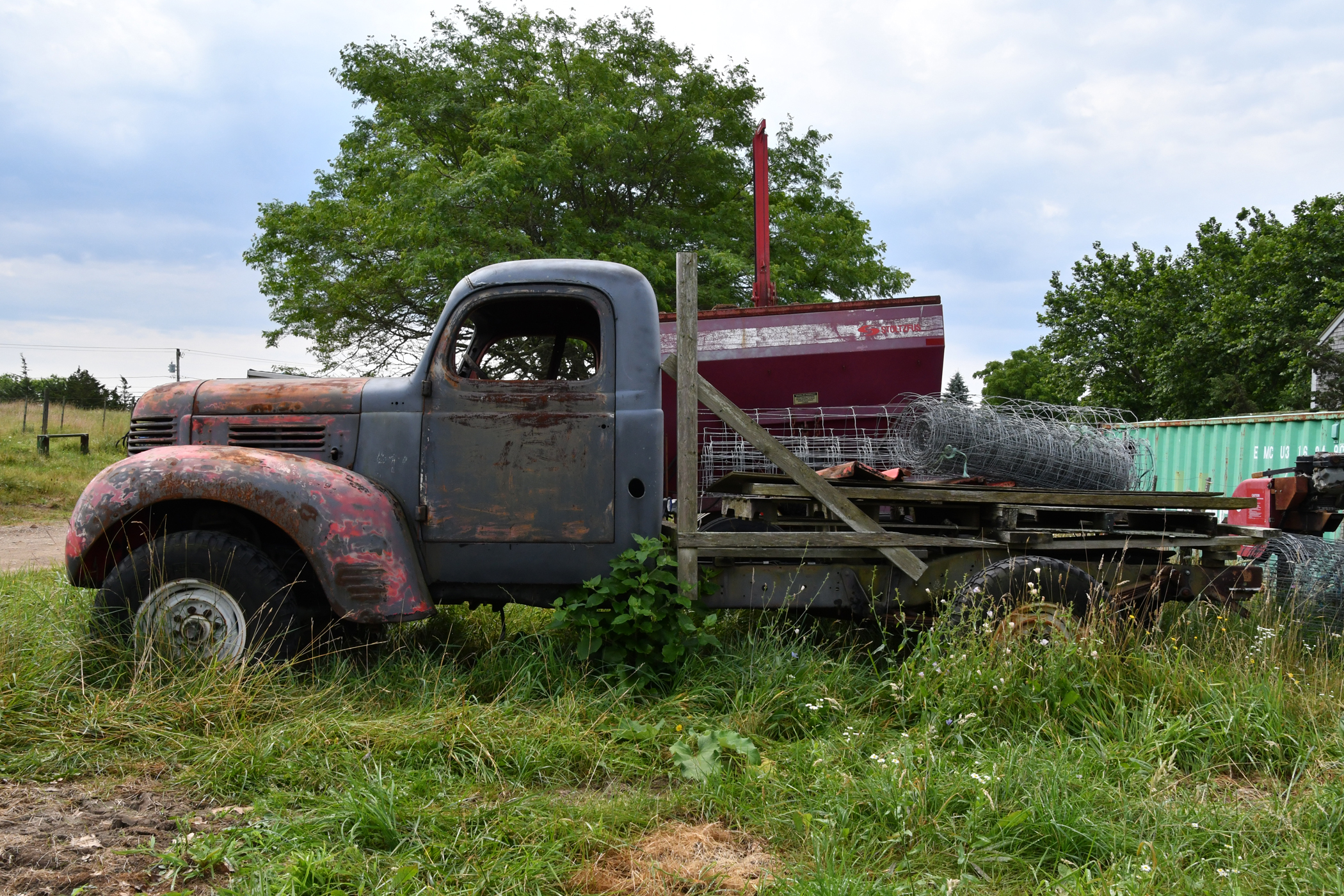
An enormous amount of re-engineering brought the dissimilar hero and donor vehicles into a smoothly operating, if rough looking, truck. In reflecting Steve’s professionalism, he said, “Doing it right demanded an enormous amount of engineering.” But I‘m a mechanic, you know, it’s got to work right.”

So how did the Dodge end up in the field? “Life,” says Steve. In 2012 life dealt him a hand that would result in his facing single parenthood with three boys, a five–year old and one-year old twins.

At that point the Dodge ran great. It just was missing the trimmings. It needed an interior, glass and a bed.

We would go out for a few burn-out sessions and donuts in the field. “But,” says Steve, “I had to shut the project down. I had to focus on the kids. I no longer had the budget or the time.”

With his ‘46 Dodge stoically sitting there, Steve estimates that completing the truck would take a year and about $7,000. Neither of which he presently has to spare.

“However, with most of the re-engineering done,” a smiling Steve says. “In a few years it could make a great dad and kids project.


By |2020-07-30T11:29:57+00:00July 30th, 2020|8 Comments

Cars We Love & Who We Are #7

Elaine Larsson leaves no doubt as to the priceless and joyful life lessons learned in the 1970’s cross country teenage adventures she shared with her parents in their 1970 Volkswagen Westfalia.

Decades later, a serendipitous sequence of events, allowed the woman Elaine has become to again enjoy the driving experience that enriched the life of the young girl she was.

The woman picks up where the girl left off


“1972 Volkswagen Westfalia, pastel white, 58,000 original miles” read the 2014 ad found while I surfed The Samba.com website. “What country is it in?” Elaine asked with conversational interest. While not a “car guy,” Elaine always waxes fondly when recalling teenage cross country family road trips in her family’s 1970 Westfalia.

Over the years Elaine would from time to time try to track down the old van. It had been sold in the late 1970s. Her efforts gave strong indication that it had long ago moved on to the old van burial ground. However, while gone, the memories it inspired remained undiminished.

Memories of her father, a retired Jersey City motorcycle cop, her adventurous mother and BFF brother generate nothing but smiles when Elaine recalls 6-week escapes in the early 1970s where the family visited mountains, prairies, and, yes, oceans white with foam.

I showed her the images accompanying the ad for the van. Same model, same color and solid original condition. Her interest perked like coffee ready to pour.

The Samba.com website provides an extraordinary global marketplace offering vans aplenty from Africa, Europe, Canada and the western US. East coast, not so much. “Where is it?” she asked with a bit more edge to her voice. “New Jersey” came my reply.

Packing a large wad of hundreds, Elaine walked the mile between her home and the van owner’s house.

“Do you want me to show you how to drive it?” the owner asked. Elaine’s knowing laugh betrayed a “you never forget how to ride a bike” level of confidence as she slid behind the same controls on which she learned to drive. Originally purchased in 1971 by an Air Force officer stationed in Germany, this van had a diary with  comments from every past owner. It had spent 20 years in the desert of the southwest.

The last nine years found it sequestered in a New Jersey garage waiting for a once newlywed bride to finally change her mind about the joys of camping.  Finally acknowledging defeat, the camping enthusiast husband had the van headed for a buyer in the UK. Then, with the joyous precision of serendipity, Elaine showed up at the door shortly after the British buyer reneged. Elaine drove the Westfalia home.

A week later while attending her first car show as an owner, she found an endless stream of visitors eager to sit inside the van. Little kids, parents, police officers all shared a common fascination. As the roll call of awards rang out over the sound system, the final award went to the “People’s Choice.” The people had chosen Elaine’s van.

Shortly thereafter, Elaine encountered an automotive journalist, Jim Koscs, who believed Elaine and her van had a story to tell. Coca-Cola agreed. Months later Elaine and her Westfalia took center stage replacing Lebron James on Coca-Cola’s Journey Global website.

As time has passed, the blonde in her van has become a locally recognized fixture as, together, they traverse the county in search of interesting garage sales and more importantly to manifest quality yoga experiences. Training as a yoga teacher, Elaine will incorporate her Westfalia in offering an open air yoga experience she has developed called “Roadhouse Yoga.”

Imbued with her father’s wisdom, her mother’s kindness, her brother’s friendship and my love, Elaine’s Westfalia with each new mile carries treasured memories of a joyous past and hopeful dreams of a beautiful future.


By |2020-07-15T22:32:01+00:00July 15th, 2020|6 Comments

Cars We Love & Who We Are #6

Firing up a classic car with over a half century of history always brings with it a high probability of adventure and the unexpected.


When time and other things stand still


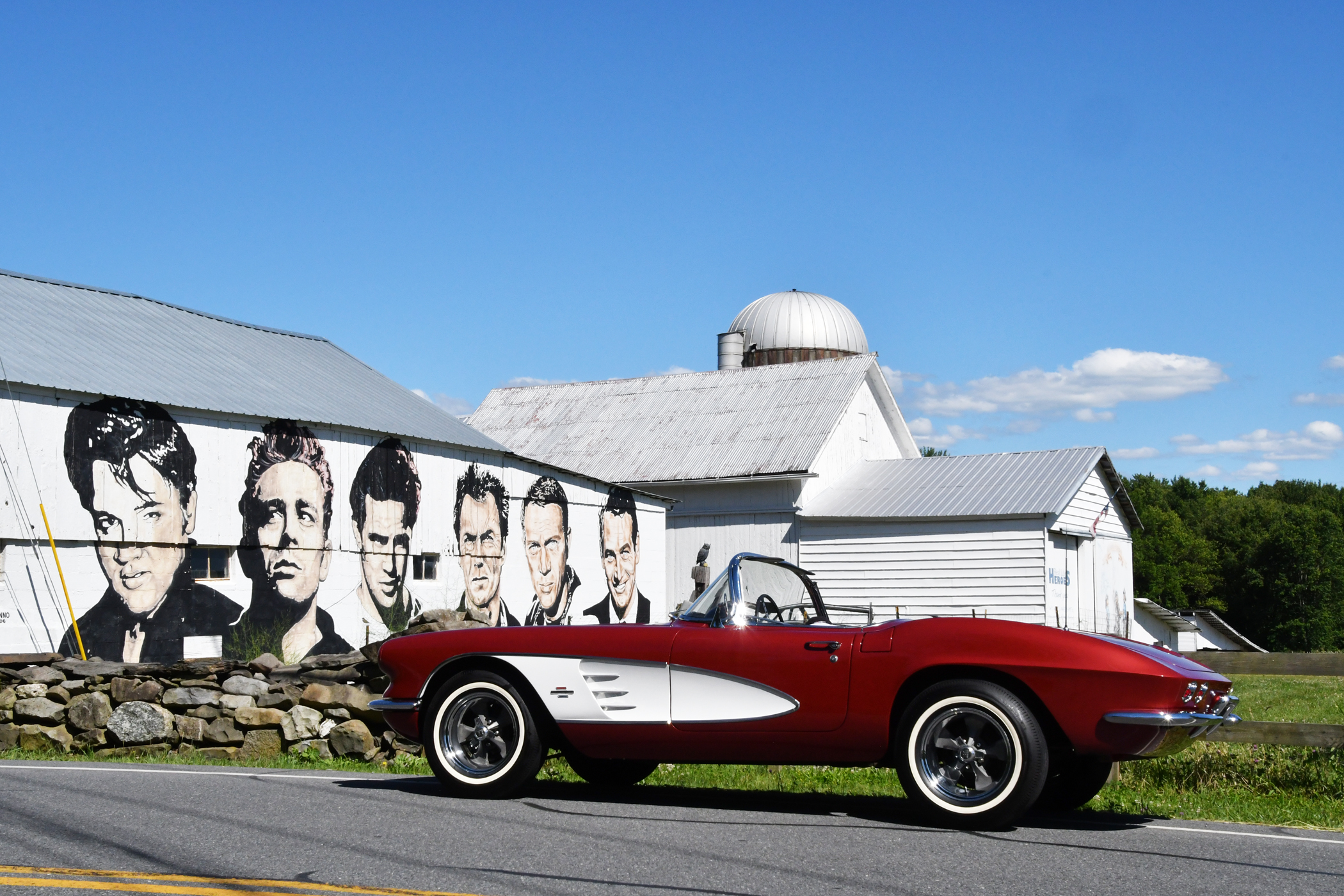
Dappled sunlight leaking through the forest canopy dances on the Corvette’s hood. It is a glorious morning on a twisting two lane that snakes through a state park. Elaine, my co-pilot for life, notices that the odometer on my recently restored 1961 Corvette stands poised to roll over to 59000.0 Actually it will be 259000.0, but in 1961 odometers only had 5 places preceding the decimal point.

A coordinated dance of digits that soon will resolve into a chorus line of zeros spin like a slow motion slot machine. Elaine, poised to nail the 59,000.0 money shot never gets the chance. At mid “.9” the odometer, as John Cleese might say, ceases to proceed.

Back home at the garage. The odometer might as well be a decal.

In planning my Corvette’s restoration, I never wanted an overlooked detail to haunt my post-restoration driving experience. With over a quarter of a million miles on my totally disassembled Corvette, I knew this was no time to cheap-out on rebuilding the instruments. The last thing I wanted was a fresh and eager car with tired instruments just waiting to crap out.

After contacting a Corvette instrument specialist on a recommendation from a respected source, I bundled up the speedometer, tachometer and clock for shipment confident that when my resurrected Corvette returned to the road it would do so with a freshly renewed set of instruments.

With a burst of Pollyanna-like optimism, I thought maybe the frozen odometer was just an anomaly, waiting for a second chance to cure itself.

Security guards at the local industrial park must have watched with incredulous awe as this Honduras Maroon and Ermine White jewel circled the empty service road in reverse. Yes, the odometer would go backwards. Having rolled in reverse a good mile, I, like a knight in a joust, briefly paused then kicked the stirrups on the hearty small block and burst forward with speed and conviction. This time I would conquer the barrier and enter the realm of 59,000.

Barrier 2, Corvette 0.

Clutching at my final straw, I drove to Park Ridge 66, the shop owned by my friend and vintage car expert, Bob Tasman. Up on the lift went the Corvette. Under Bob’s doubtful but supportive eye my plan of peeling off 10 miles to “free” the odometer commenced. I surmised that rewinding two of the rotating number barrels would do the trick. Ten backward miles later, I left Bob’s shop to get a high speed highway head start at pushing that odometer through the 59,000 mile barrier. Bob in a friendly kind of way expressed his complete doubt at any chance of success. “One of the tangs in the head unit got broken or was improperly installed,” Bob said as I rumbled off with a shaken faith not unlike that of a small child seeing Santa drawing on a Marlboro behind the Macy’s Christmas display.

Barrier 3 Corvette 0

Time for a phone call.

Truth be told, I had overlooked the earlier failure of the Corvette’s freshly rebuilt clock. In retrospect, it clearly  foreshadowed dark clouds on the instrument horizon. However, I was so thrilled to finally have the Corvette back that I chose not to notice it.

Realizing that taking the speedometer out of the freshly but not easily reassembled dashboard was out of the question, my hopes hung on getting useful information from the instrument restorer himself.

“They never break,” said the man with whom I had entrusted my instruments and my mental health. The essence of my response included the information rich nugget, “well mine broke!”

Had he replaced the 60-year old odometer mechanism that was on its third time around as I had assumed he would? “No,” he responded, “We simply inspect and clean odometers.” He then added the kicker, saying, “replacing the unit would have added $50 to the job.” An additional $50 for a part that could now easily require thousands of dollars to replace and countless weeks of downtime. Did he not think that decision should have been left up to me? His response, “Well, they never break.”

As a chaser for that bitter pill, I asked about the clock he reconditioned that, now lifeless, only gives correct time twice a day. Oh they always break,” he says, “You get a year at most out of one.”

While I think I would have had a good case for justifiable homicide especially with a jury of vintage car owners, I instead have opted to simply enjoy my beautiful rumbling living recollection of mid-century American sports car history. Maybe the odometer will heal itself. If not, I am going on record for posterity that as of June 28th 2020 my 1961 Corvette had an honest 258,999.9 miles. I do not foresee ever selling it.

One of the joys of my bias ply shod, drum braked, dual carbureted, tube radio equipped Corvette resides in its ability to transport me back in time. Sometimes it even seems to make time stand still and, now, apparently the same will be said for its mileage.

By |2020-07-09T16:33:46+00:00July 9th, 2020|6 Comments

Roads We Remember #4

Not so much a favorite road as a favorite destination, drive-in movies recall memories of family fun and fun that ended up creating families.

Peaking in the late 1950s with over 4,000 theaters across America, drive-in movies continued in their heyday until the late 1960s. From there drive-ins experienced a precipitous decline that by 2020 left but 321 drive-ins nationwide…and then came Covid-19.

Drive-in movies- back to the future


Popping up like mushrooms born in the dark of a world suddenly deprived of multiplexes, drive-in movies are staging a breathtaking revival. Social distancing, cabin fever, binging on bad TV, the sun finally came out in New Jersey, all this coalesced in a perfect storm of desperation and desire to get the hell out of the house.

Emerging from the mist of a life long gone by, the drive-in movie has come to the rescue. Local town pool parking lots, farm stands, malls, any place with a flat surface that can fit at least 75 cars seems to have a portable screen  and people are loving it.

Mention portable movie screens and I immediately betray my age by recalling those tripod based shaky jobs necessary when the health teacher broke out the Bell and Howell projector.

Instead, in my town of Park Ridge, NJ, a Macy’s Day parade balloon-size monolith with a 40 ft. by 30ft. screen swelled up in 15 minutes. As twilight advanced, cars filled the town pool parking lot taking positions eight feet apart with the precision of a marching band preparing for halftime. Movie audio played out through patrons’ premium Harmon Kardon, Bowers & Wilkins, and Bang & Olufsen Audio systems. Event producer Monte Entertainment provided everything except food. Rather than the dancing hot dog snack bar, movie goers ordered food from a local restaurant that delivered.

Choosing to screen “The Goonies”, Park Ridge Recreation Director Liz Falkenstern skillfully employed the three “Fs” of successful town events, family, fun and fresh air. No submarine races to watch here.

In surveying the arrayed cars and audience, a slight twinge of personal nostalgia bubbled up but slowly eroded as my mental check boxes denoting favorite memories remained unmarked. Cars not only lacked the character lines of rolling stock from the drive-in heydays, but most now faced the wrong way. Over half of the vehicles where SUVs facing away from the screen with rear hatches raised. In the 60’s my VW microbus, alone, stared defiantly in the opposite direction allowing for my uplifted hatch to afford fresh air and a fully reclined viewing position on the mattress in back.

As to be expected and for the organizers to be commended, this one-off drive-in experience projected a sanitized joyously family friendly, 4th of July parade-like, Hallmark moment. Well done.

However, my recollections, like woulda, coulda, shoulda memories defied resurrection. Today’s sanitize pop-up drive-in experience lacks the yesteryear tackiness of the neon rimmed refreshment stand, crunchy gravel sound as you positioned your vehicle on the viewing berm, car mounted speakers, 60-second dancing hot dog snack bar promo films, the chorus line of salty, sweet, greasy and crunchy treats arrayed across the screen under the “It’s intermission time” banner and of course mastery of the discrete wandering eye as, with cardboard snack tray of goodies clutched in both hands, you weaved your way back through the aisles of mid-century Detroit iron with no air conditioning and fogged windows.

By 2020 the dancing hot dog snack bar promos, car mounted speakers and double feature submarine race watching has disappeared into the mist of times gone by as the ranks of full-time drive-in theaters across the nation have withered to a paltry 321.

However, among that paltry rank exist drive-ins exhibiting a creative bold conviction that fortifies them in the face of extinction. I have two personal favorites. One is the Spud Drive-in in Driggs, Idaho, population 1,600.

Photographed by travelers from around the globe, “Old Murphy” a 1946 Chevy cab-over truck proudly displays a 15-foot long 2-ton potato on its flatbed. Welcome to the Spud Drive-in.

Opened in 1953, the Spud with a capacity of 100 cars may be the smallest remaining drive-in theater in America. With the Grand Teton Mountains in the distance and surrounded by some of the best trout fishing in the world, the Spud features a single screen and a ‘50s themed down home snack bar as colorfully unique as “Old Murphy.” Window speakers remain available for those wishing to enjoy the movie in a time capsule.

A good days drive south will get you to Escalante, Utah and the Shooting Star Drive-In. Uniquely situated along a green stretch of the breathtakingly beautiful and drivable Utah State Route 12, the Shooting Star offers a drive-in experience like no other. Surrounded by views of The Grand Staircase, Escalante Mountains and Dixie National Forest, the Shooting Star features Airstream trailers with Hollywood star dressing room themes for overnight accommodations and 1960’s era convertibles positioned before a drive-in movie screen that features vintage cartoons and films produced between 1946 and 1969.

Best movie for pop-up drive-in night? Has to be “Back to the future.”

By |2020-07-09T16:34:16+00:00July 2nd, 2020|8 Comments

Roads We Remember #3

As cultural icons, certain local roadside features past and present possess a mythic life of their own. Over the course of our lives they become universal reference points integrated into our personal story.

The “Evil Clown” of Middletown, NJ and the Red Apple Rest in Tuxedo,  NY are two. Without doubt, high on that list resides the Indian Motorcycle sign of Palisades, NY.


Mystery of the vanishing

Indian Motorcycle sign

Hugging Route 9W North on the New Jersey side of the Hudson, the 9W Market offers a  gourmet food oasis that has become a magnet for bicyclists from all over the Tri-state area. It is doubtful that anyone enjoying their pan fried organic egg sandwich has a clue about the structure’s first life and its starring role in one of the boldest automobilia thefts in local history.

Even from my early boyhood viewpoint in the back seat of my family’s 1948 Chevy Fleetline Aerosedan, our Sunday drives north on Route 9W never failed to entertain. Craning my neck like a hungry hatchling to peer out the small teardrop rear window, I loved the old roadhouse bars that seemed to defy gravity as they clung to the steep face of the great Palisades. For me though,  I derived special delight from the old homey gas stations as they appeared through my back seat porthole.

Of all the wonders of roadside Americana that my family Sunday drives afforded, none gave me greater joy than a weathered white Gulf station with a snack bar. Like the little engine that could, it stood proud and alone in its diminutive glory each time we motored by, and we always motored by because my father only used Sunoco gas.

Years later I learned that the little Gulf station enjoyed another admirer in the person of iconic American artist Edward Hopper. Born and raised in nearby Nyack, New York, Hopper is said to have drawn inspiration from the little station for his iconic 1940 work “Gas”.

The little Gulf station began life in 1939, when a towering rawboned motorcycle enthusiast named Henry Kennell built it as a sales point for Indian Motorcycles.

Time passed in decades. The world around Henry’s Gulf morphed into the frenetic Tri-state area. However, Henry’s Gulf remained a constant and his section of 9W seemed content to linger in 1939. One part of Henry’s Gulf though, while remaining unchanged, did steadily grow as an object of desire. Firmly affixed to the ridge of Henry’s station sat perched the crown jewel of Henry’s Gulf. There reigned the king of all signs, a roughly five foot by three foot glorious two-sided neon masterpiece that in 1939 proclaimed that beneath it could be found a genuine Indian Motorcycle dealership.

I met Henry in 1989 when I negotiated with him to film a Volvo Finance commercial set in 1961 at his, then, still active Gulf station.

Henry Kennel in spite of his 92 years maintained a gentle giant countenance. Warmly greeting you by extending a massive hand, the firm handshake seemed to extend past your hand and carry up to your elbow. His kind and affable manner like his Gulf station made you feel welcome.

From time to time during filming of the commercial Henry would saunter over from his house across Route 9W. During the breaks he would respond to my urgings to share some history of his station. He knew his Indian sign was special and he loved it.

Henry’s sign constantly generated inquiries.

Interest would often come from members of a motorcycle group called “The Sons of Danger.” A gregarious and fun loving collection of serious motorcycle enthusiasts, “The Sons of Danger” originated in the 1970’s as a creation of two pillars of the automobile advertising community. Its membership included executives of numerous automobile companies, journalists, and drivers. Names like Dan Gurney, Brock Yates and Paul Newman populated its roster.

Since the North American headquarters of Volvo resided barely a few miles away, “Sons of Danger” members including one of the two founders were keenly aware of Henry’s glorious sign. Many offers were made. Henry would not budge. Years turned to decades all the while the great Indian sign proudly anchored the present to the past from its position on high.

In 1991 Henry Kennell passed away. In a fitting continuation of ownership by kindred spirits, Henry’s Gulf station would be purchased by a legendary local vintage car owner and supplier of vehicles to the film industry, Jerry McSpirit. Owner of Cars of Yesterday Sales and Rentals, McSpirit’s involvement in supplying vintage vehicles to the film industry dates back to 1970. He provided a vehicle for my film shoot in 1989.

During McSpirit’s ownership much stayed the same. Certainly the Indian sign maintained its exalted and coveted status.

“An ill wind blows no good” goes the adage. For Jerry McSpirit Tropical Storm Floyd in 1999 fits the bill.

Beginning as a Category 4 hurricane in the Bahamas,  Floyd was a tropical storm by the time it reached northern New Jersey. The tropical storm packed punishing  torrents of rain. September 16th 1999 witnessed record flooding and Dams bursting across New Jersey. It also marked the last time Henry Kennell’s Indian Motorcycle sign was ever seen.

When McSpirit went to assess the storms impact on his little station, the only damage to be seen was where the Indian Motorcycle sign had been carefully removed. During one of the worst storms in New Jersey history and after 60 years in place, Henry Kennell’s treasured Indian sign disappeared.

Jerry McSpirit sold the little Gulf station shortly thereafter.

Despite the offer of a generous reward, the last 21 years has not produced one word as to the fate of Henry Kennell’s Indian Motorcycle sign.

By |2020-07-09T16:34:44+00:00June 25th, 2020|15 Comments

Cars We Love & Who We Are #5

If only cars possessing historic significance could talk. What stories they would tell. However, though beautiful, they remain sadly mute leaving it up to us to find their voice.

For the owner of a Sebring-raced XK120 it took 48 years for history to speak up.

Dagavar’s Jaguar, The truth at last

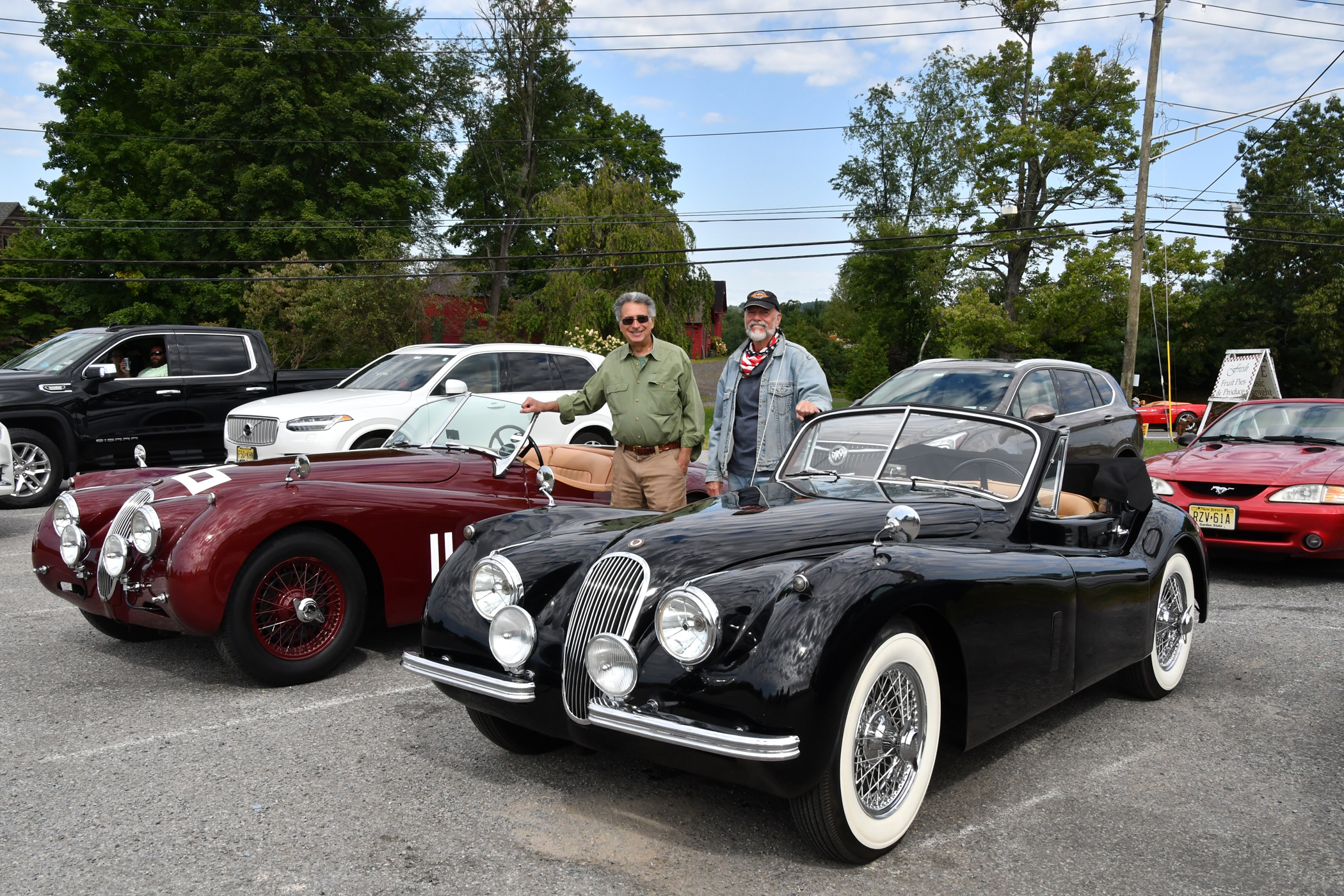
Since buying the 1954 XK120MC in 1971, Dr. Dick Santucci appreciated that by its very nature this Jaguar was special. It would take a phone call 48-years later for him to find out just how special.

Throughout Dick Santucci’s childhood, Fred Dagavar’s 1954 XK120 roadster filled the young boy’s dreams thanks to Papa Santucci’s prolific storytelling abilities and great friendship with Dagavar. Rich with grit, bravado, exotic cars and famous drivers, stories about Dagavar racing his Jaguar filled the Santucci’s Bronx kitchen and gave substance to a child’s dreams of adventure.

Years later, Dagavar, now in his ‘70s, considered selling his long retired and battered Jaguar. Santucci jumped at the chance to own the British sports car that had starred in his childhood reveries. However, with little spare time available or money remaining, Santucci knew that the severely distressed sports car would have to wait years for resurrection. College and chiropractic school would come first.

By 1978 Santucci had established his chiropractic practice. By 1981 the Jaguar returned to the road, reborn.

Having dueled against a pantheon of driving legends such as Briggs Cunningham, Stirling Moss, Luigi Chinetti, Phil Hill, Carroll Shelby and Mike Hawthorne; it was only fitting that Dagavar’s Jaguar, in an age of trailer queens, would benefit from Santucci’s passionate desire for the Jaguar to run strong and free.

Decades of driving pleasure and a total restoration, thanks to a deer that did not look both ways, culminated in 2019 with Santucci’s Jaguar being invited to the Amelia Island Concours d’Elegance. Santucci took great pleasure in witnessing what he believed would be the Dagavar Jaguar’s pinnacle achievement and confirmation of its special qualities. He had no way of knowing the secrets Dagavar’s Jaguar had yet to divulge until, back home, his phone rang.

“Do you know what you have,” asked the caller. “I am pretty sure I do,” Santucci replied. The voice of vintage Jaguar owner John Strader of Colorado spoke with confidence and conviction about the few XK120 Jaguars that went back to the factory for special attention. Strader explained that he had seen Santucci’s car on the Amelia Island website and that very few of these cars were ever produced. Actually Strader said he owned what he believed was the only other one of its kind in existence.

In the course of multiple exchanges, Strader, put Santucci in touch with Roger Payne of Perth, Australia. Payne a retired engineer and Jaguar historian was a fountain of Jaguar information.

Learning of the Dagavar Jaguar’s existence, Payne displayed a ravenous appetite for serial numbers and photographs. Like an Egyptologist in a newly discovered pyramid chamber, Payne immersed himself in researching his discovery.

Coming up for air, Payne awarded Santucci with the knowledge that only a handful of 1954 Xk120s returned to the factory to be custom equipped and factory-tuned with one of the spare second generation C-Type heads meant for the LeMans racing team.

It appeared Dagavar, who was a founding member of NASCAR and good friend of Bill France, met Jaguar’s legendary LeMans racing team manager Lofty England through Bill France at Sebring. At that time England promised to arrange a factory upgrade that included a spare C-Type head from the racing team. Santucci, Payne announced, owned one of two matching number examples in existence. Special indeed.

Associating this extraordinary provenance to the already stunningly restored vehicle proved to be the special sauce that enticed the Greenwich Concours d’Elegance to invite the Dagavar Jaguar to display on Sunday June 2nd 2019.

That Sunday at Greenwich, the Dagavar Jaguar, received the Chief Judge’s Award – International. In accepting the award from historians Ken Gross and David Schultz, Santucci smiled acknowledging that Dagavar had planted the XK into a sand bank at Sebring in 1955. Thus, this was the first win for the Jaguar since Dagavar bought the car in 1954.


Dick Santucci has entered his XK120 in the American Collectors Insurance virtual car how. It is in the “Foreign” category. If you would like to vote for Dagavar’s Jaguar the link is:

https://americancollectors.com/virtual-car-Show/?app_data=entry_id%253D247575938&category=foreign

By |2020-07-09T16:35:09+00:00June 18th, 2020|4 Comments
Go to Top