Cars We Love & Who We Are

More than the polished parts and hard to find pieces, the special interest vehicles people collect embody the character of each owner. “Cars We Love & Who We Are” profiles individual special interest vehicles and the proud owner committed to its preservation.

Cars We Love & Who We Are #12

I admit it. Every time I watch “Field of Dreams” and Ray Kinsella‘s father walks across the diamond as a young man, I tear up.

As relationships between fathers and sons evolve over time, they display a dynamic tension exhibiting powerful forces simultaneously binding them and pulling them apart.

If pressed, a son will admit that even if the father has passed away years ago, the son continues to learn more about the father  every day.

It is the very fortunate son who, in the present, experiences the lessons and appreciates their value during the arc of the father’s life.

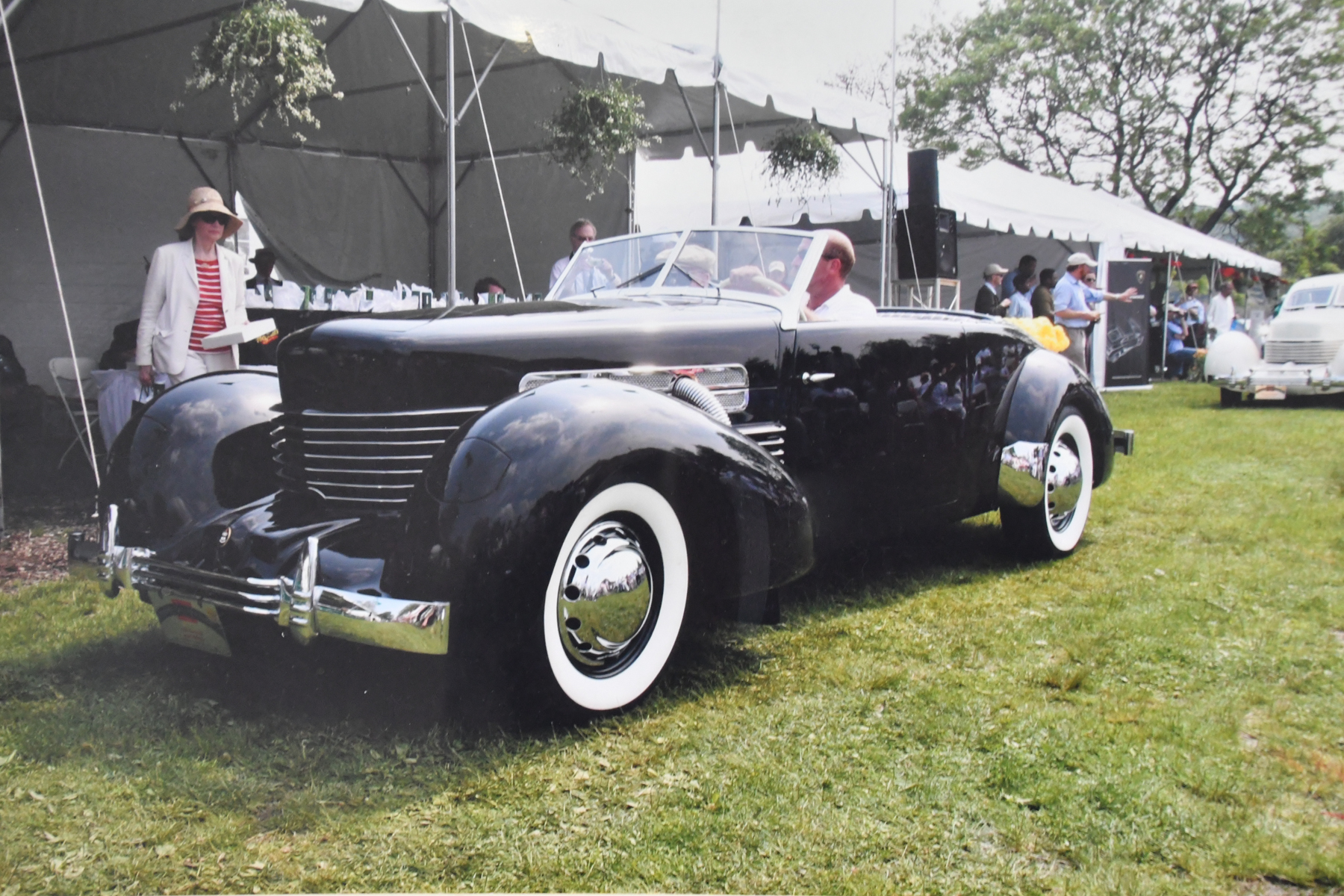
The witness to such a story would be the 1937 Cord model 812 Phaeton acquired by father Joe Maletsky in 1961.

Vintage Cord binds father and son

Joe Maletsky in his Cord at Greenwich Concours d’Elegance with Bryan Maletsky at the wheel

It was 1941. The older brother of Joe Maletsky’s best friend pulled up in front of Joe’s high school driving a Cord Phaeton (an open touring car). In that moment, 14-year old high school sophomore Joe Maletsky knew he would own a similar car one day.

Fast forward to 1961, the man renting Joe’s mother’s garage could not pay the back rent. He offered the used car housed in the garage to square the debt. Lucky for Joe, in 1961, a 1937 Cord Phaeton qualified as a used car. Joe, at last, would have the Cord of his dreams.

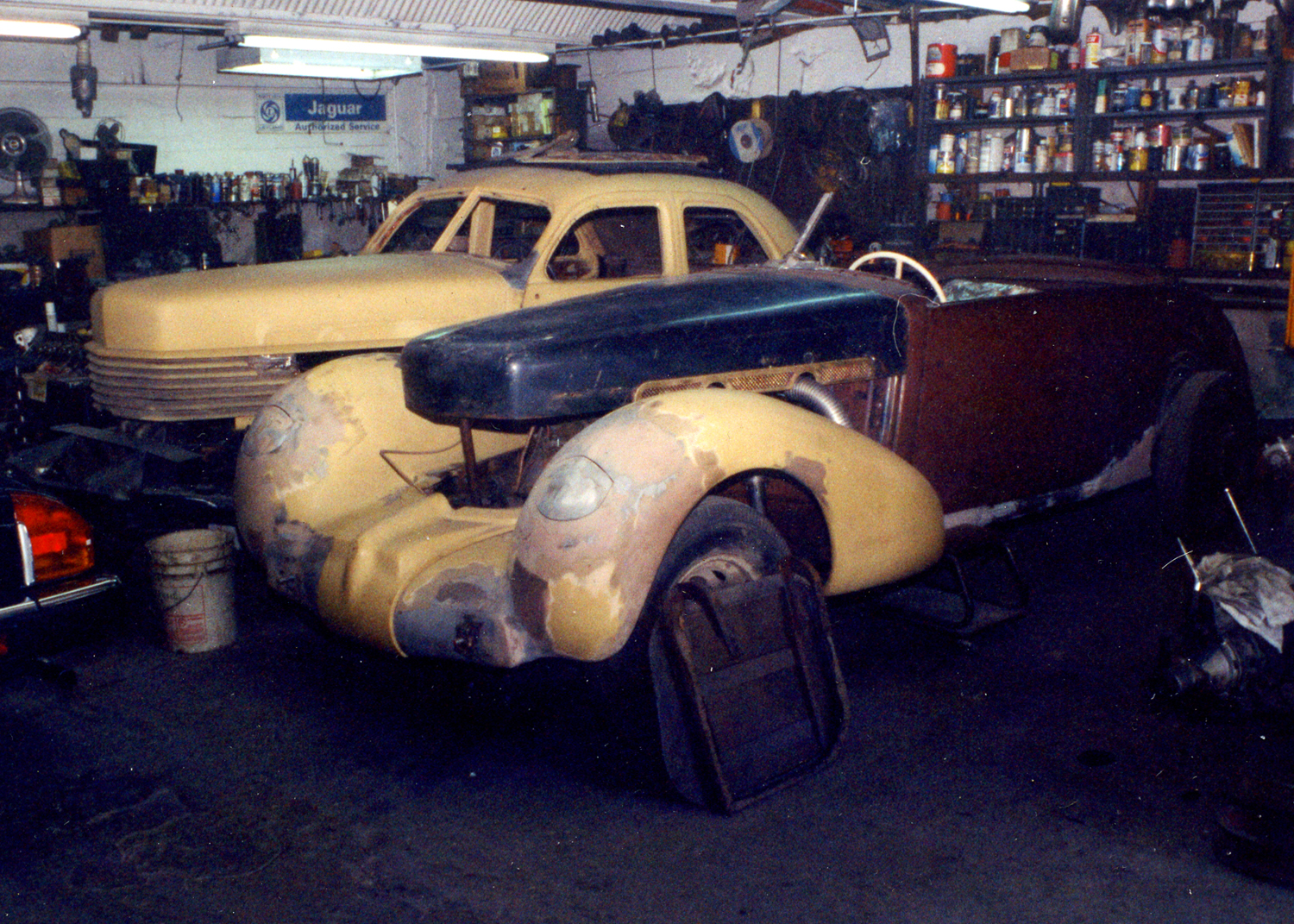
Cord moves to Motorcraft facility

“How do you make God laugh?” goes the saying. “Tell God your plans,” goes the punch line. With the demands of supporting a family, restoration of the Cord would have to wait.

Never permitted to suffer under a dusty layer of indiscriminately discarded house debris, the 1937 Cord remained untouched but not unloved while it sat for years in the garage of Joe’s mother. Bryan recalls playing in and around the model 812 Cord Phaeton as a young child and says, “Nothing was ever placed on the car. I can remember that even the tires were always inflated properly. It never had a flat.” Joe’s phaeton would patiently wait. And patient it would need to be.

The year, 1966, witnessed the Cord’s patience rewarded as the restoration began with Joe embarking on the car’s complete disassembly. However, over the next decade progress on the Cord again lost out to the demands of raising a family and making a living.

Joe Maletsky’s three sons Paul, Ken and Bryan all inherited the Maletsky gene that carried a passion for performance automobiles accompanied by the skills to build them. However, the boy’s tastes initially did not include landmark classic cars of the 1930s. Bryan says, “My brothers and I were too much into the race cars, street cars and fast cars.” Bryan does acknowledge always having a respect for the car, but never really taking too much of an interest as a youth. With a self-deprecating smirk Bryan says, “We couldn’t do burnouts with a 1937 Cord.”

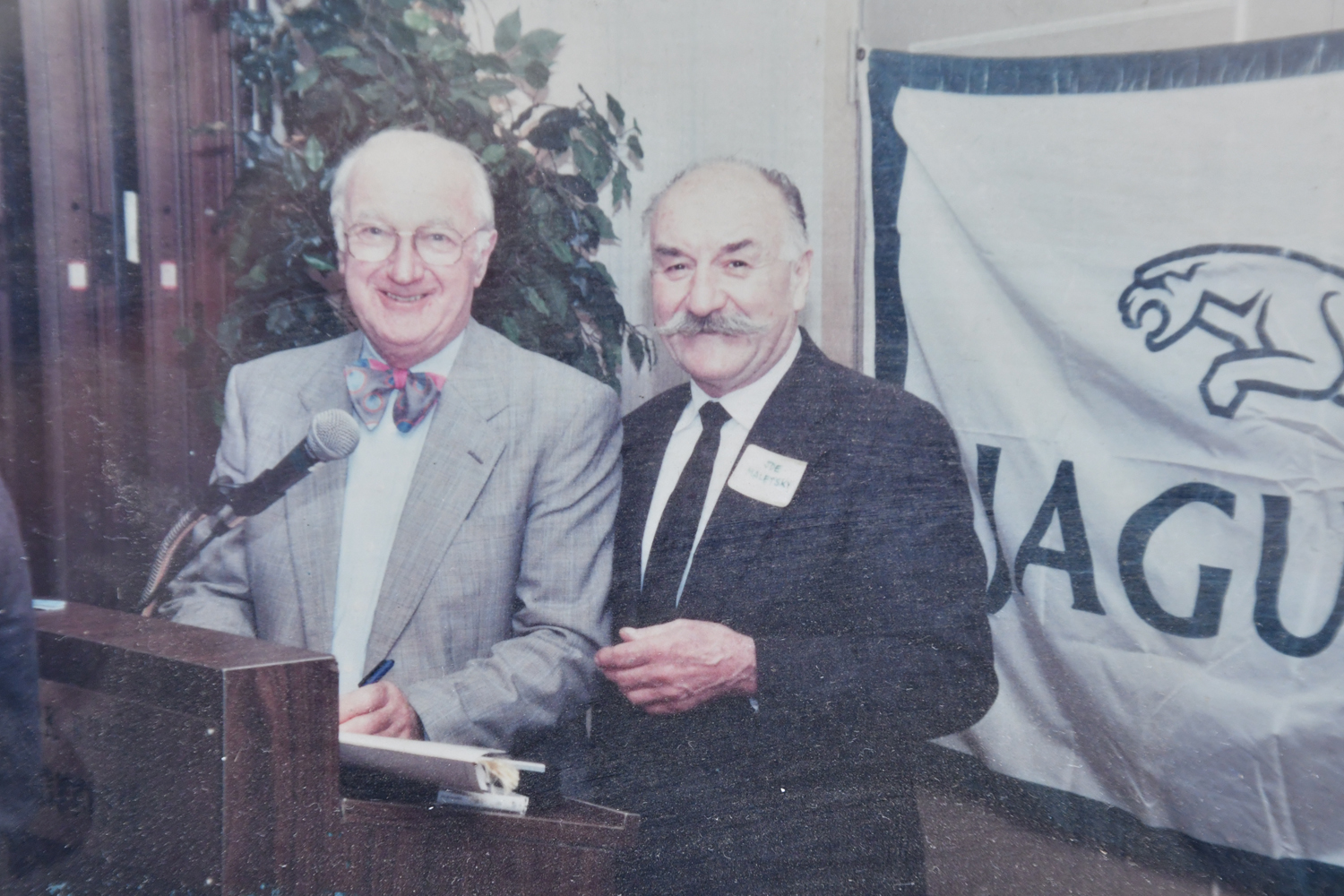
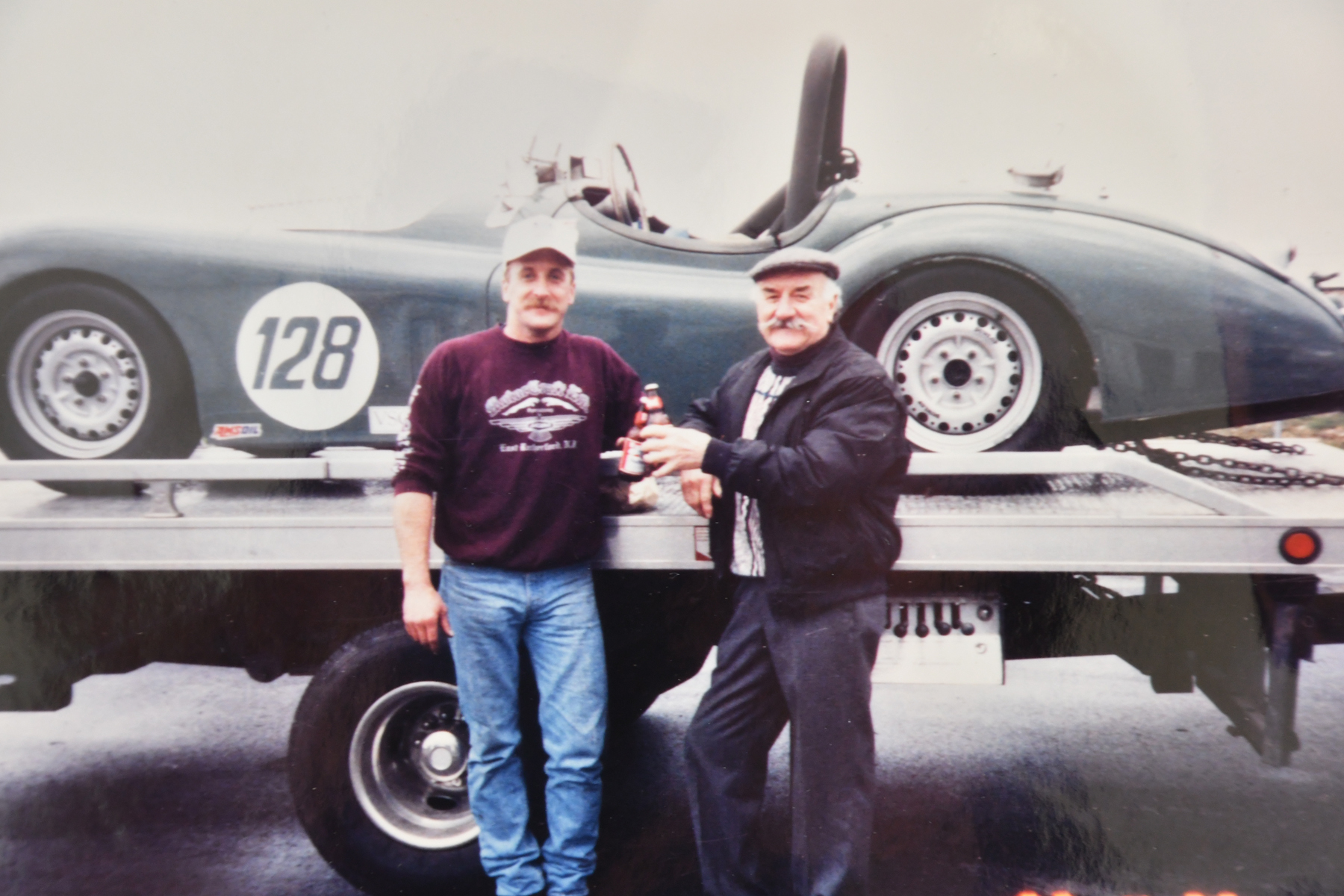
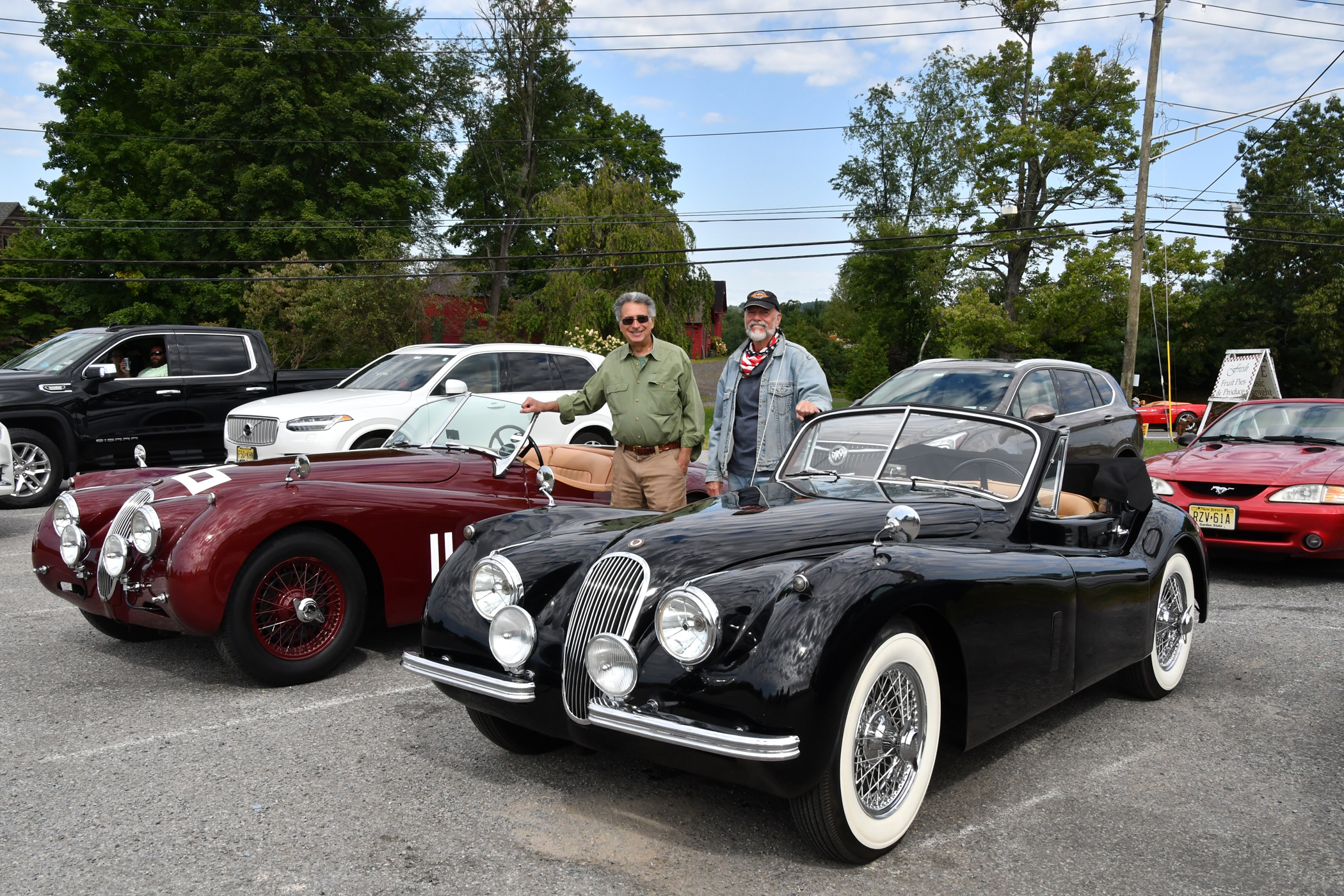
Racing legend Bryan Lister and Joe Maletsky at Jaguar Annual Meeting

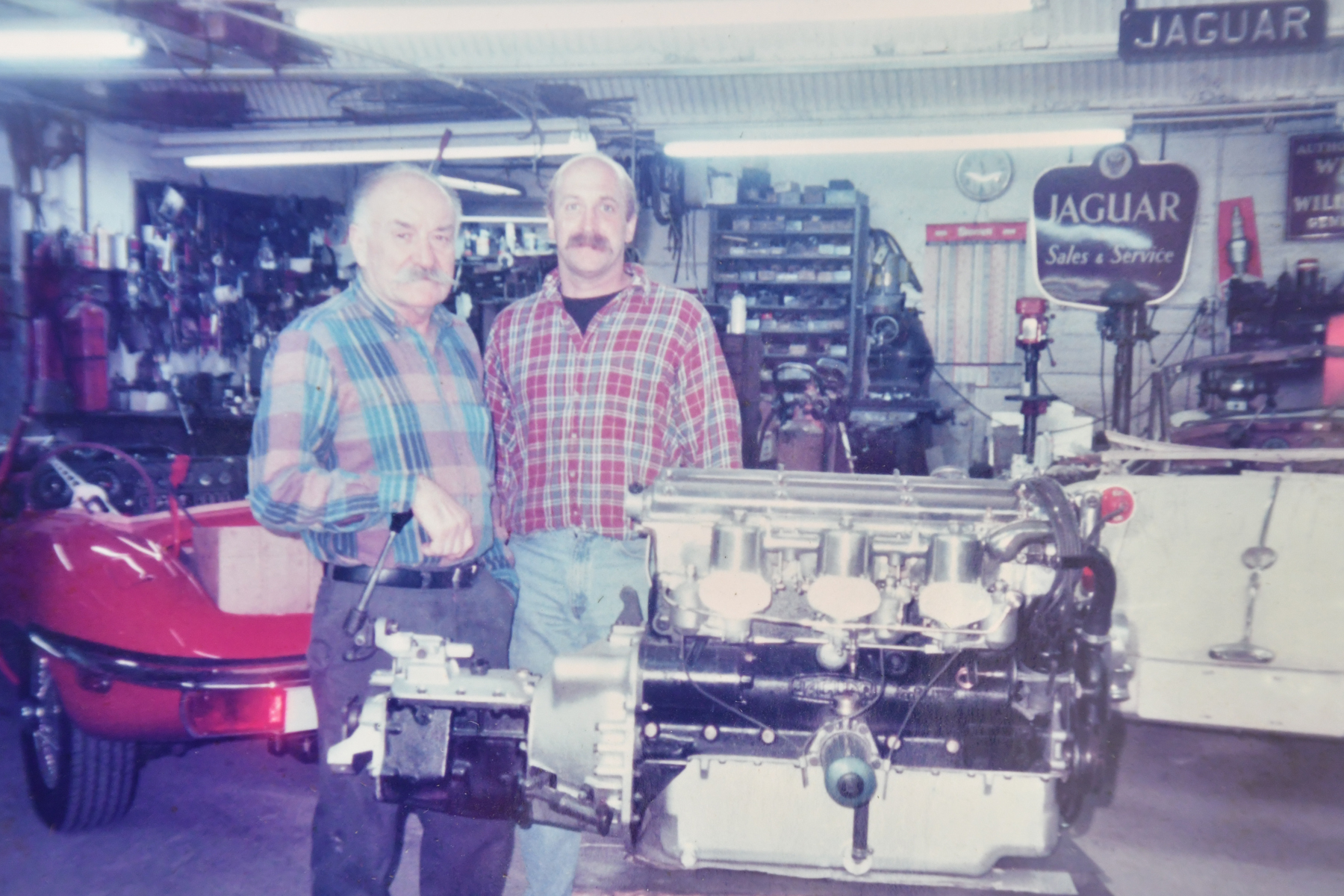
In 1972 having been bitten badly by the vintage Jaguar bug Joe along with his sons opened Motorcraft, Ltd. Bryan, while continuing to attend high school, joined Joe in the family business. Together father and sons would build a nationally–respected Jaguar restoration shop.

Bryan, now a seasoned restoration specialist at Motorcraft whose work includes 100-point JCNA judged Jaguars, leaves no doubt as to the value of time shared with Joe.

A marine serving in WWII and schooled at the Teterboro School of Aeronautics, Joe approached every job with the same disciplined perspective required in rebuilding a plane to be airworthy. His machining and metallurgy skills were off the chart.

While the Cord moved from Mom’s garage to Motorcraft in the 1980s it did not move closer to completion. In the 1990s despite the continued heavy workload at Motorcraft Joe turned his attention to rewarding the Cord’s patience and moved ahead. Bryan says, “It needed a total restoration. Full mechanical, brakes, exhaust, engine, transmission.” Joe, like a seasoned athlete, stood at the top of his game and the top of his game would be required to bring the Cord to life.

Joe and Bryan

Joe’s expertise and “can do” attitude equipped him to view no problem as insurmountable. Faced with a challenge he would machine the part or machine the tool needed to make the part. Bryan says, “Nothing a car required was beyond reason to my father. He would say there’s nothing that can’t be done. One thing or another may take a little more time but it can be done.” Bryan leaves no doubt that he learned a great deal about machining and welding looking over his father’s shoulder. Regardless of the challenge, Joe would take it on and he would just stay at it until he got it right.

As a master welder few surpassed Joe. Bryan says, “He taught me how to heat metals up properly so you could start welding without causing damage. How to gently cool the metal at a very slow rate to prevent them from becoming distorted or brittle.”

To recreate a modification performed in the 1930s. Joe wanted to transform his Cord from a standard model to the iconic look of the exposed exhaust pipe design. He created all of the patterns and hand formed the grills where the exhaust pipes exited the body as well as the supercharged exhaust manifolds.

Bryan and Joe with Bryan’s vintage racing XK120

Cords front wheel drive design suffered from serious weaknesses in the CV joints.

To address that Joe re-machined and adapted the far superior half shafts from the front–wheel drive Oldsmobile Toronado to his Cord.

By the mid 1990’s Joe had the Cord’s bodywork completed. It went out for paint.

Three years later, by the late 1990’s the body had come back ready for assembly. During this period Joe and Bryan labored during “working hours” on the considerable amount of Jaguar mechanical and restoration work that came to Motorcraft. Available nights and weekends would find Joe focused on the Cord.

As the first decade of the new century progressed the Cord slowly, very slowly approached completion. During that time Joe began to make comments about how he wanted to be alive to see this glorious restoration that had spanned two centuries completed.

Father and son agreed to the need for a finish line. All agreed that Joe’s Cord would show at the 2008 Greenwich Concours d’Elegance.

Motorcraft Ltd. shut its doors to all business for a month. Then as if witnessing the explosive kick of a great runner nearing the finish line, father and son, as one, poured their hearts into making the Cord ready and perfect for Greenwich.

No longer master and intern but in the culminating act of a life of teacher and student Joe and Bryan, shoulder to shoulder, focused the power of two masters on resurrecting the car of young Joe Maletsky’s boyhood dreams.

June 2008 arrived and with it the prestigious Greenwich Concours d’Elegance.

Brilliantly black with the handcrafted brightwork gleaming in the sun, Joe Maletsky’s Cord Model 812 Phaeton took “Best Innovation” 1930’s Class.


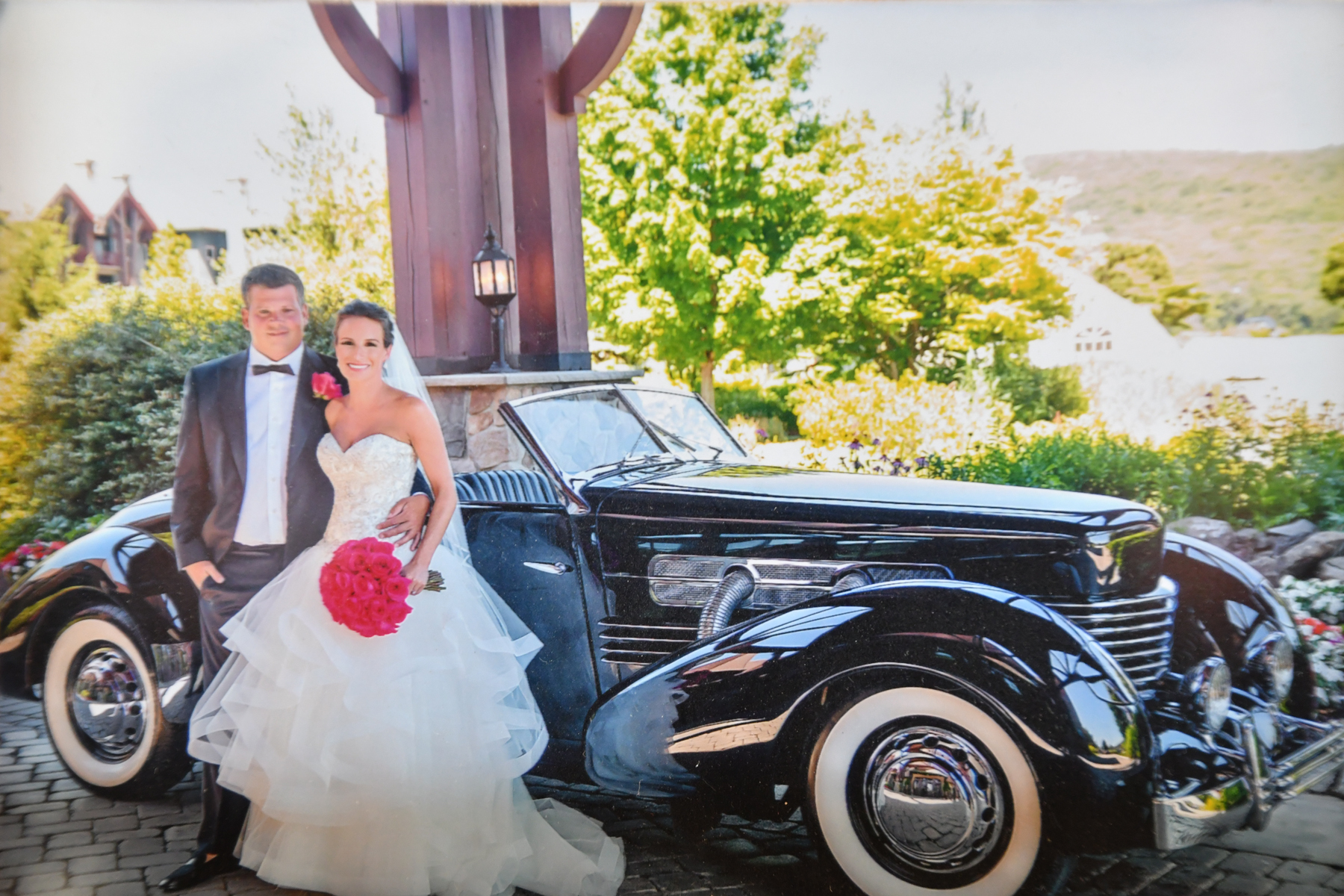
Joe Maletsky’s granddaughter Allyson Maletsky Slaman wedding photo, 2018


Best wishes to all for a happy Thanksgiving with much for which to be thankful.

By |2020-11-25T12:30:53+00:00November 25th, 2020|2 Comments

Cars We Love & Who We Are #11

Motor Trend has “Car of the Year.” Car and Driver has its annual new car “Top Ten” and so on. However, from our standpoint as classic automobile enthusiasts, the staff at Drivin’ News views such awards as akin to bragging about which fresh wine tastes best. At Drivin’ News we honor great car and owner teams with an award that can only be earned over time. Membership in the Drivin’ News Half Century Club recognizes fifty uninterrupted years of owning and operating the same vehicle.

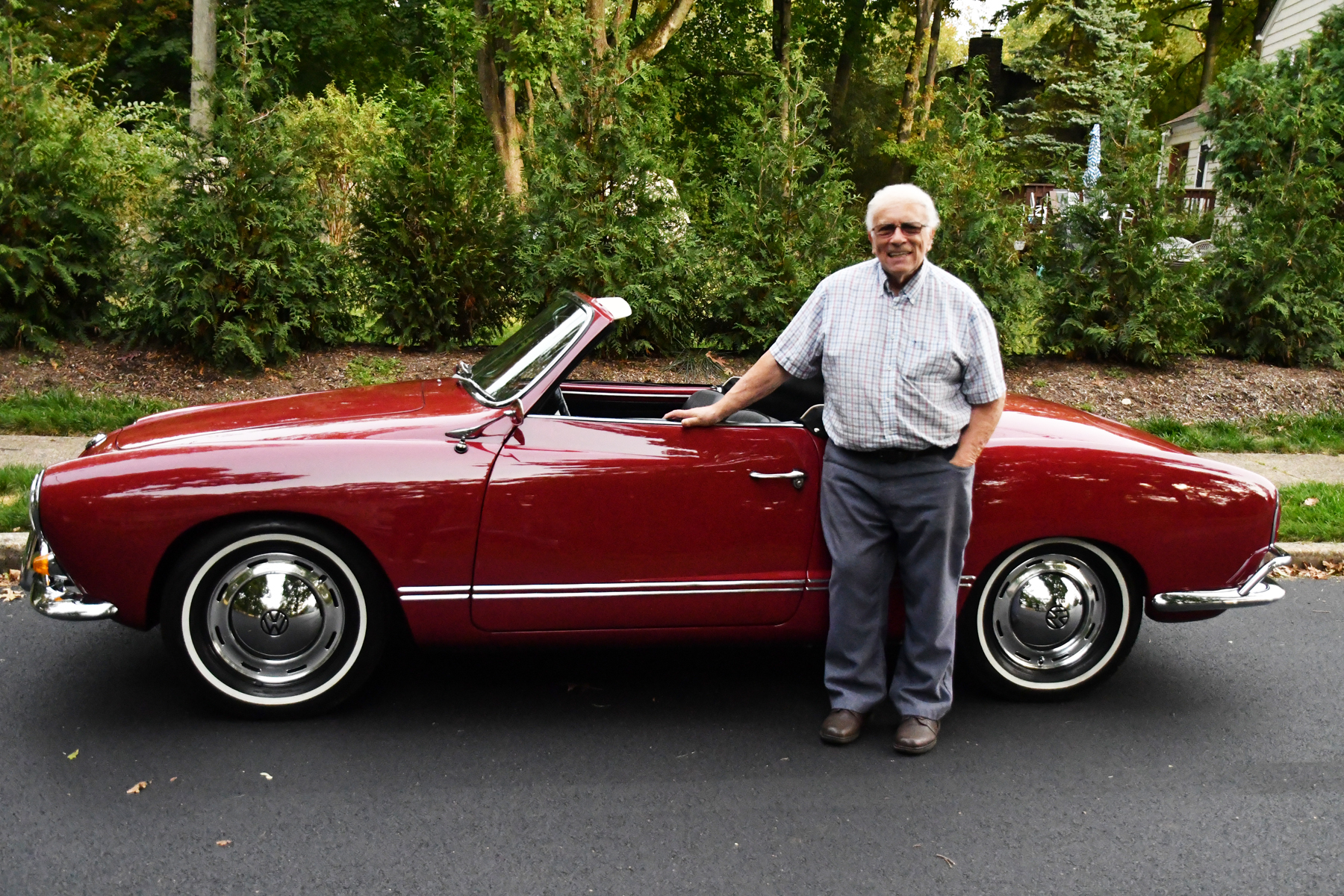
Drivin’ News is proud to induct as a member of the Drivin’ News Half Century Club, New Jersey resident and 1965 Karmann Ghia owner, Mr. Vince Vespe.

Guatemala and back in a Karmann Ghia


To say that Vincent Vespe has wanderlust qualifies as serious understatement. This is a guy who drove a VW beetle from Paris to the Arctic Circle because; well, because he had never been to Lapland.

Vespe, now retired from a career in education that saw him recognized as New Jersey History Teacher of the Year in 1982, holds a firm belief that to excel as a Social Studies teacher requires experiencing the cultures about which one teaches.

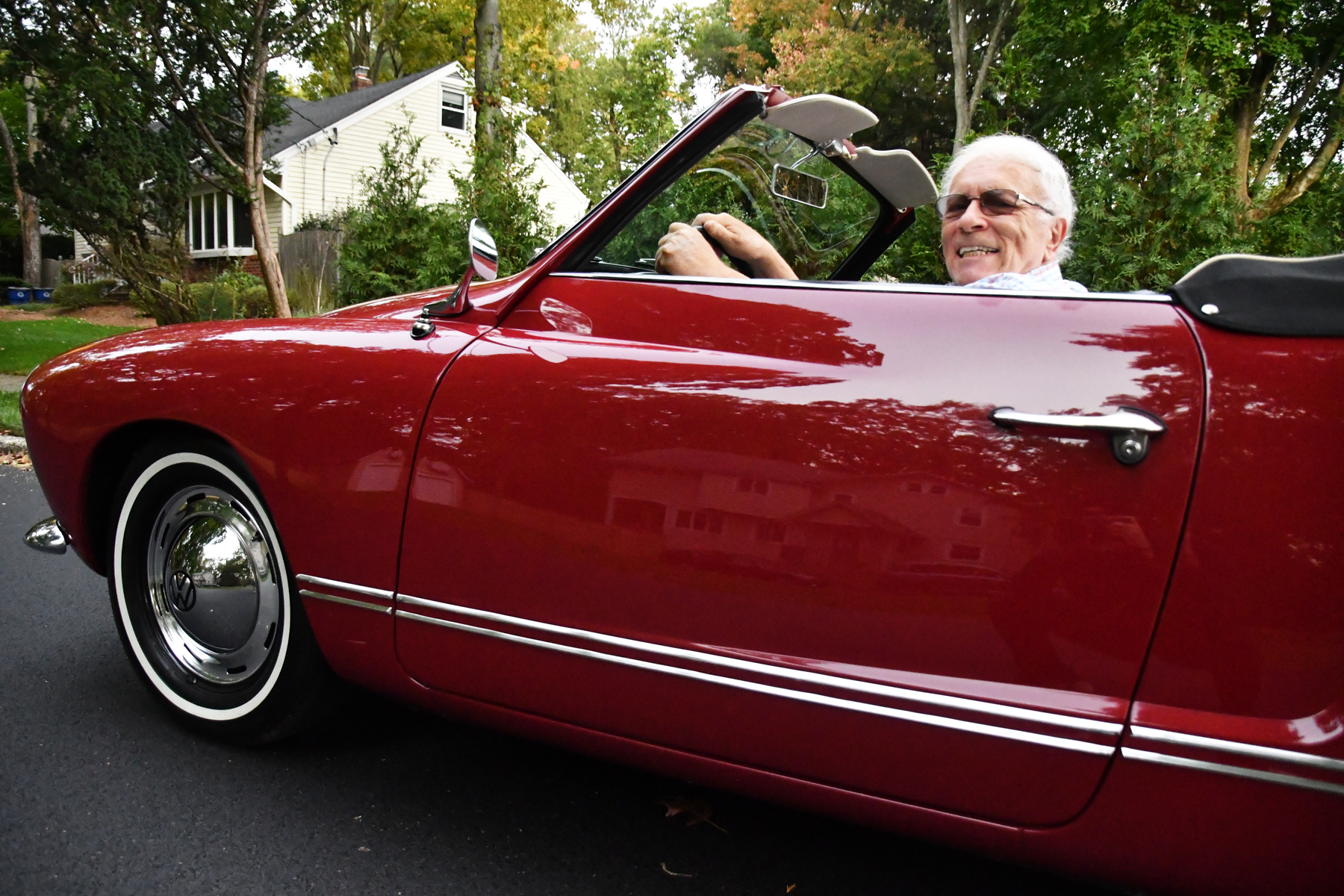
Frequently the vehicle for Vespe’s explorations was the 1965 VW Karmann Ghia cabriolet he bought new in 1965 and in 2020 still has, drives and shows.

To Guatemala and back, from New Jersey, in a 1965 Karmann Ghia convertible? For Vespe, no big deal. Actually Vespe made the Guatemala trip twice with his ’65 Karmann Ghia. The first was in 1966 and the second in 1971. For the first trip, in June of 1966, Vespe began driving down the road three days after walking down the aisle.

Vespe’s new bride, Gail, knew Vespe loved to travel. On that sunny day in June the new Mrs. Vespe stood on the brink of learning just how much. On June 22nd 1966 the Vespes began a lifetime together of exploration and adventure punctuated with the rich rewards and disquieting challenges associated with Vespe’s wanderlust.

Looking back Vespe laughs at how he and Gail blissfully ignored conditions that others would find intolerable. Normally they drove with the top down as the Karmann Ghia had no air conditioning. Vespe can recall one especially torrid day traversing the desert in Mexico when the windshield wiper control knob melted. Vespe admits at that point thinking “It’s pretty hot.”

On Padre Island, Texas, the wind blew one of the Karmann Ghia’s doors off its hinges. While camping in Kansas, a flash storm washed their camp site away. Louisiana holds especially vivid memories as they set up camp on a fire ant nest.

Vespe shakes his head with admiration when he recalls that while his Karmann Ghia’s 1965 new car limited warranty only covered 3,000 miles, his first Guatemala trip logged roughly 11,000 miles over 2 months during which the VW performed flawlessly.

Fifty five years later Vespe remains in love with Gail, enthralled with travel and passionate about his 1965 Karmann Ghia.

1977 witnessed Vespe’s VW removed from daily service though it still enjoys being driven frequently. Today it has over 250,000 miles.

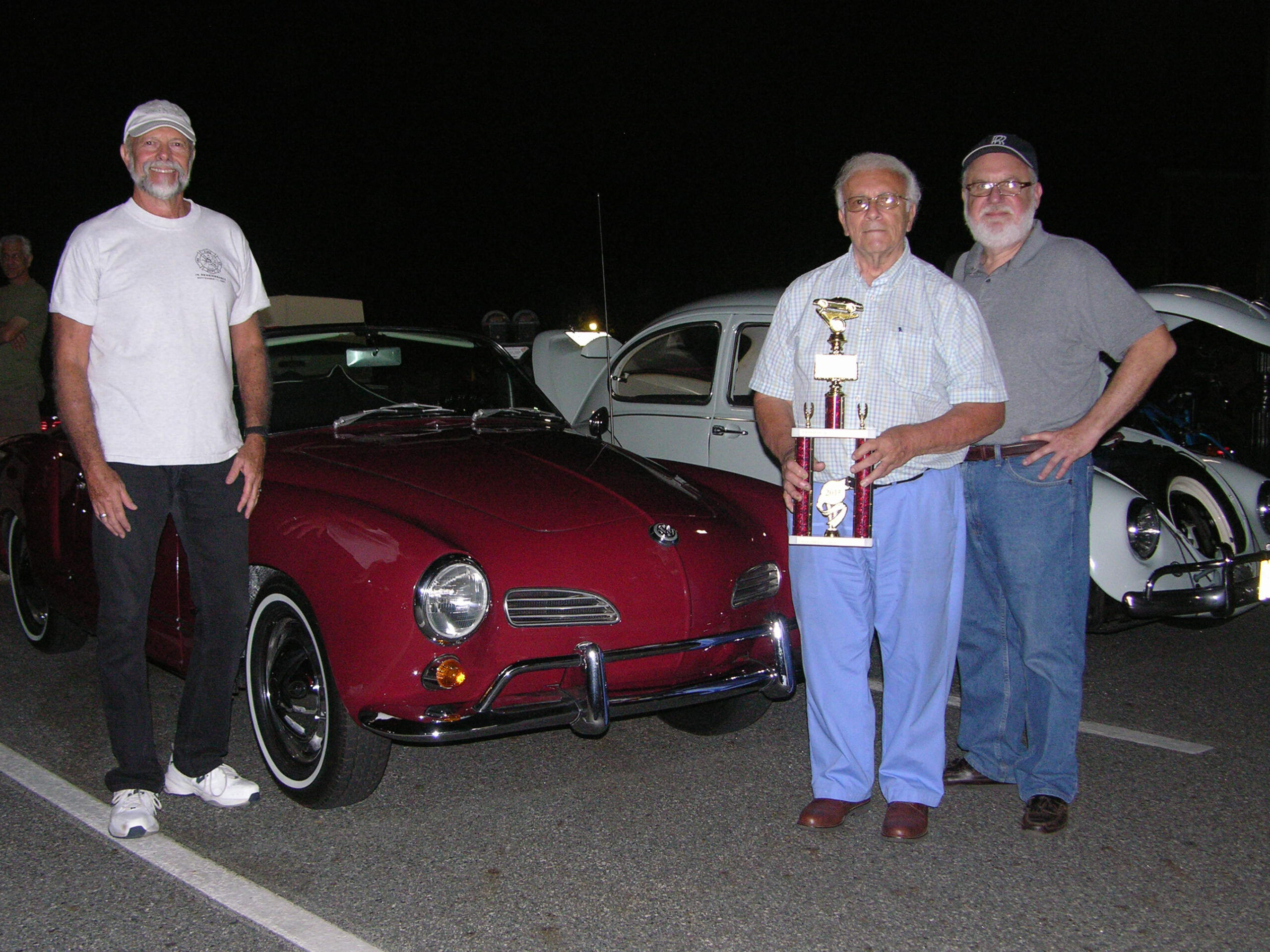
Vince takes a trophy, again

By the 1980s tin worm, a serious affliction of all Karmann Ghias, had achieved devastating success in consuming Vespe’s VW. With perforations busting through the headlight buckets Vespe resorted to the NASCAR quick fix. He skillfully molded duct tape around the headlight brows and found a rattle can color that closely matched the original Cherry Red finish. While not exactly a Hill and Vaughn restoration, it did present well enough to transport his daughter to her prom.

With the arrival of the new millennium, Vespe found himself at a crossroads. His Karmann Ghia possessed a special charm but if he did not act and act soon there would be little left of his beloved travelling companion but memories and some red duct tape.

2001 saw Vespe’s VW enter a New Jersey restoration shop for a two-year journey back to like-new condition.

Everything savable was retained and faithfully refurbished to the way it left the Pompton Plains, NJ dealership on June 10th 1965. Except for a Haartz cloth top, Vespe resisted upgrades and enhancements. His re-born cabriolet retained the original 1285 cc 4-cylinder air cooled boxer engine delivering 39 horsepower and 67 lb.ft. of torque. With drum brakes all around, a 4-speed manual gearbox and torsion bar suspension, Vespe’s Karmann Ghia places the driver in a 55-year old driving experience time machine.

Today Vespe, for the most part, limits his Karmann Ghia road adventures to regional car shows primarily in the northeast. With his Karmann Ghia a true crowd pleaser and trophy magnet, Vespe, ever the educator, takes very seriously the importance of instilling an appreciation for the history and human connections associated with his historic VW and with every classic vehicle.

Dealing with younger generations, Vespe believes that the value found in classic vehicles goes far beyond the machines themselves. They convey powerful life lessons as well.

For Vincent Vespe there is no doubt. In reflecting on his life and the 55 years with his Karmann Ghia, Vespe flashes a smile and says, “It’s been a great ride.”

By |2020-10-22T11:32:24+00:00October 22nd, 2020|Comments Off on Cars We Love & Who We Are #11

Cars We Love & Who We Are #10

Trusting in the public’s ability to practice proper Covid-19 guidance, the September Park Ridge Car Show soldiered on refusing to be a victim of pandemic panic. As a rare oasis of socialized car culture in the pandemic desert, the show’s magnetic draw surprised no one. With sunshine, blue skies and great cars, people desperately seeking relief from cabin fever flocked to an event that drew three times as many show cars as the previous year.

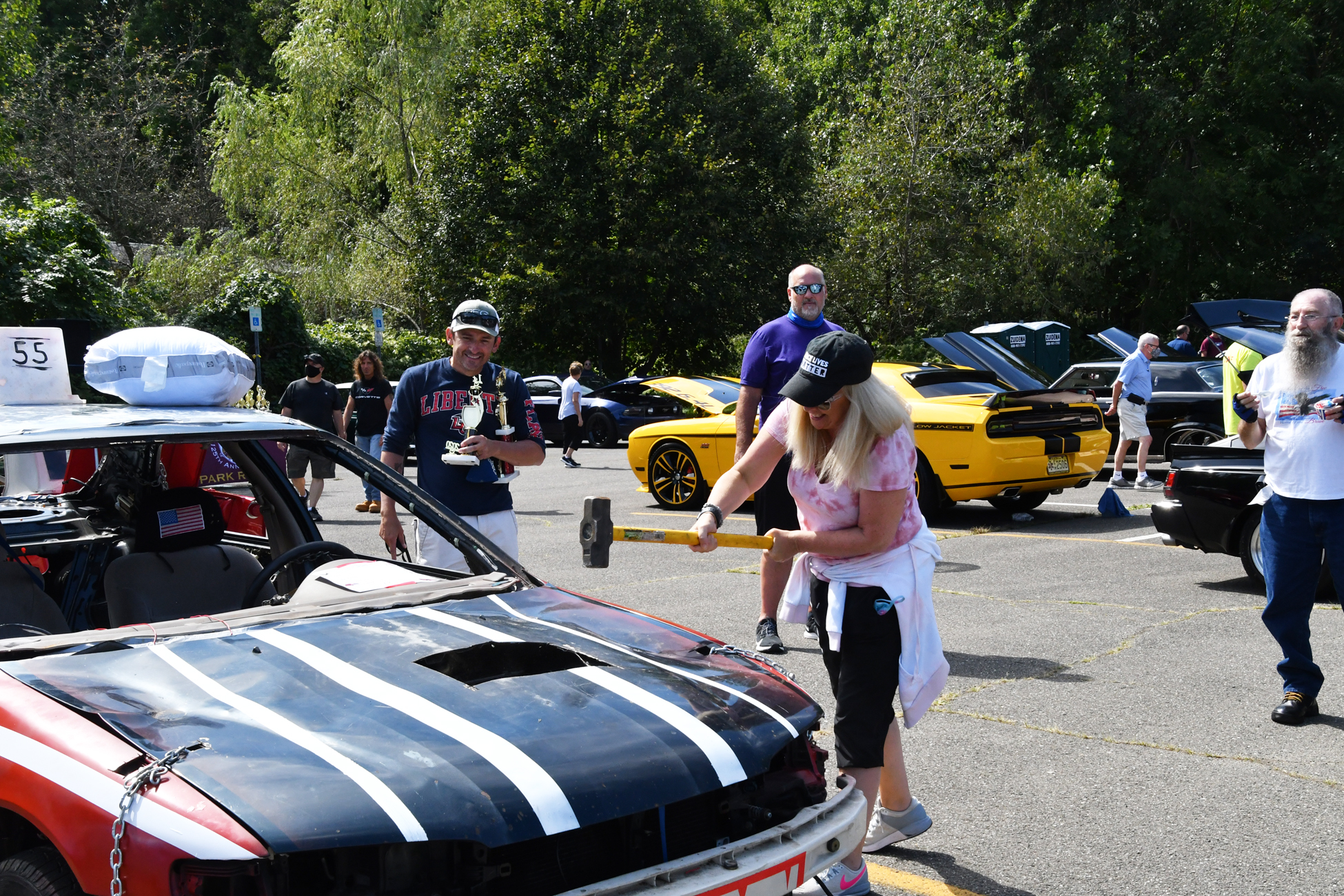
Always on the prowl for unusual stories, I moved through an eclectic array of beautiful and interesting examples of foreign and domestic vehicles from years past. While these exceptional automobiles more than merited my full attention, a most unusual site across the lot owned my focus. Show cars for the most part enjoyed the loving caresses of dusting brushes, microfiber cloths and detailing spray. Not so the object of my attention. This show car’s hood was about to bear the full brunt of a large sledge hammer.

Crash course for an underage driver

Sledge hammer challenge


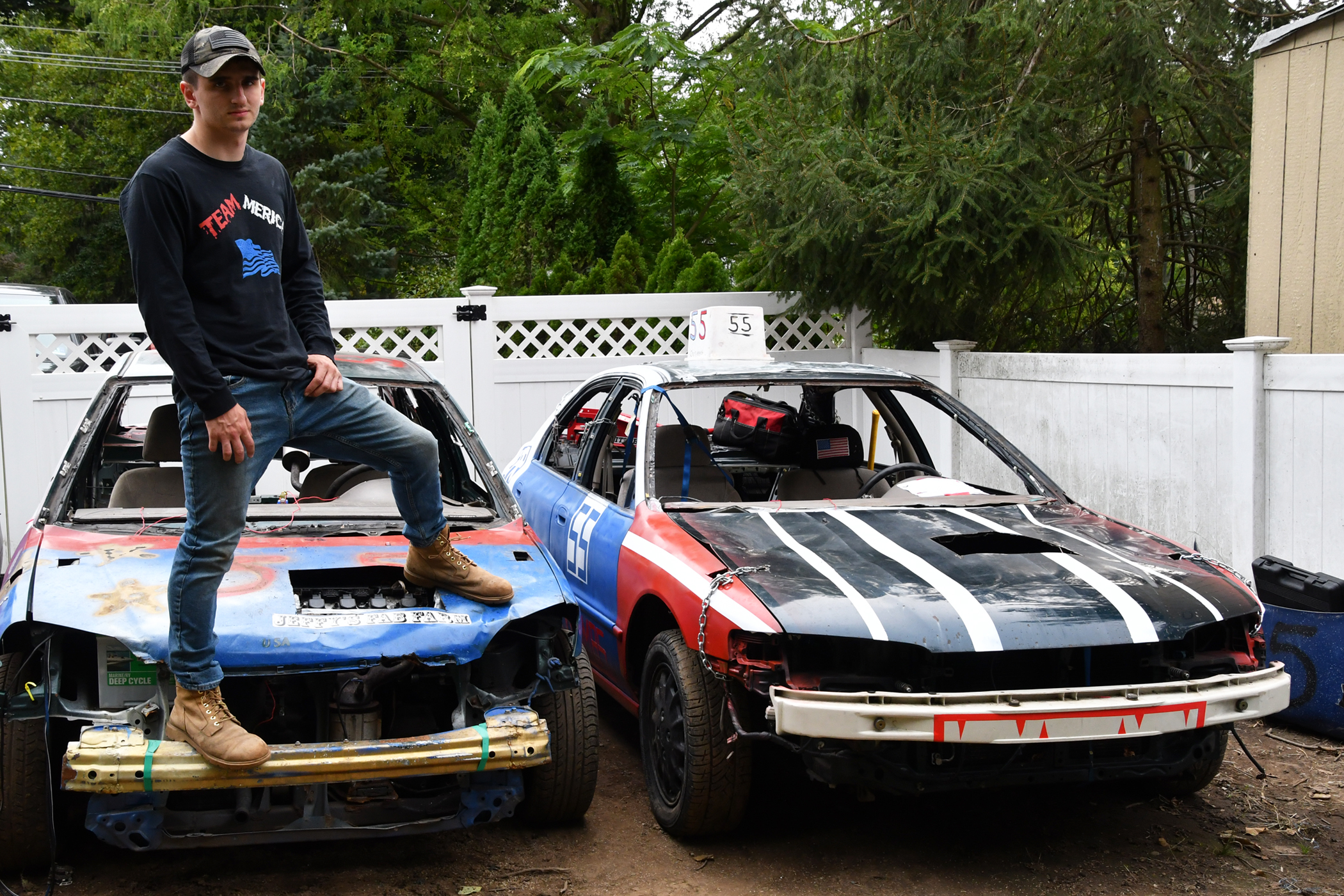
A crowd has formed around a competition prepped 1996 Honda Accord. The young owner has realized that people will pay to slam the hood of his car with a sledge hammer. Owner Christian Farquhar has no reservations about the blows to be inflicted. His logic, the blow might actual straighten out an existing dent. After all, his Honda has been prepped for a Demolition Derby.

When older car enthusiasts wonder where the new blood will come from, Christian answers that question both figuratively and literally.

It all started two years ago in 2018.

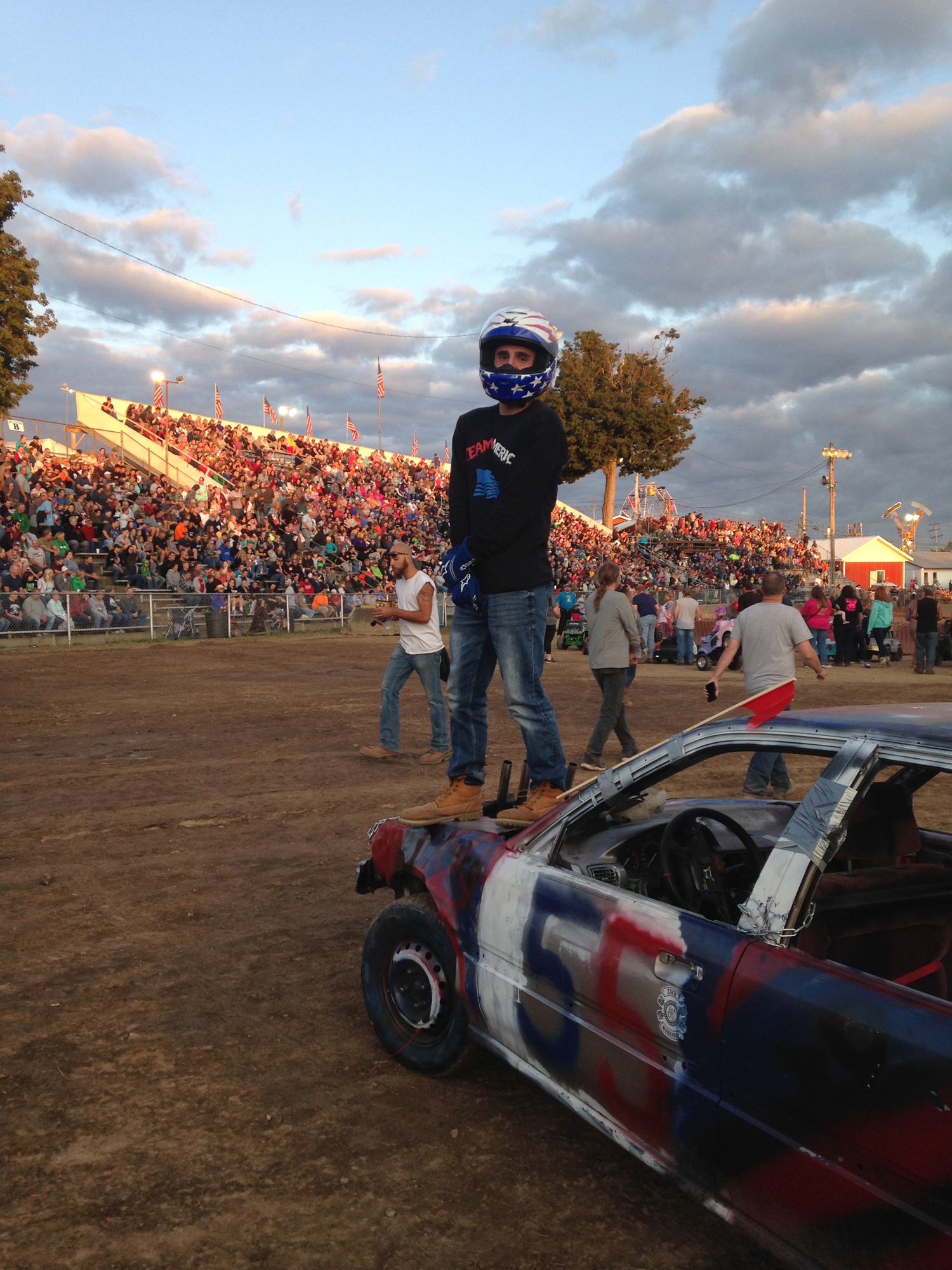
Far too young for a driver’s permit, Christian Farquhar, a high school wrestler with a stunt man’s heart climbed in through the driver’s side window of his 1991 Honda Accord. He had enjoyed watching such events on YouTube. But now, at the age of 14, it would be him behind the wheel and he would be in front of 4,000 screaming fans. For Christian’s parents, Tom and Lori Farquhar, who considered themselves well prepared for the event, their son’s first drive remains a vivid memory.

“Impacts are bone jarringly violent and louder than you would expect. All of a sudden it gets real, very real,” says Tom. Lori recalls, “walking in, I was cool with it.” Then the announcer called attention to someone lining up another car for a violent rear bumper to mid-ship T-bone special. Ooooh, ooooh, BOOM! Then she realized “that’s my son’s car,” She says, “On the video you could hear me screaming.”
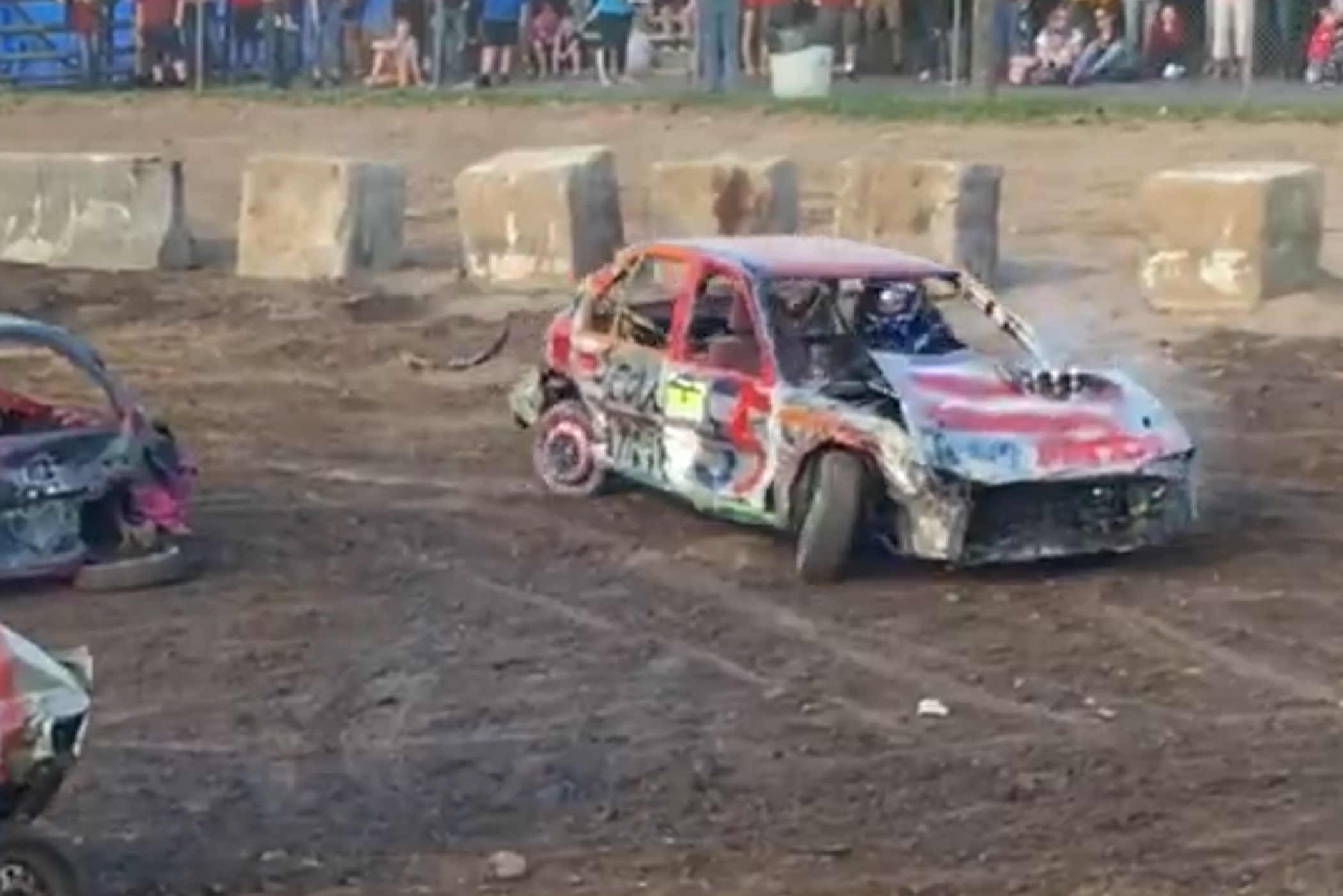
Christian smiles, saying, “the crowd loves those hard hits. It’s just like football.” But it’s not football. It’s Demolition Derby.

Demolition Derby first caught Christian’s attention while wandering around YouTube. “I kind of liked it, says Christian. His father Tom adds, “As a child he was drawn to mechanical things and movement like a lot of kids. But he was more of a daredevil. He’d always be the first one to ride his bike down the crazy hills.” Christian adds, “as a kid, I’d do things making believe I was a stunt double.”

After expressing his interest in Demolition Derby over the dinner table, Christian’s parents would later surprise him with a trip to the Sussex County Fair Demolition Derby for his Birthday.

Soaking up all he saw, the excitement of the controlled chaos in the arena channeled directly into Christian’s consciousness. His father says, “We have a picture of him at his first Derby with this  look of Amazement.“

It all came together at this first Demolition Derby when Christian heard there was a youth division. Yes indeed a separate division exists for drivers between 11 to 16 years of age. His father recalls, “He was like, WHAT?” Game on!

Protective pillow

Christian’s first car for Demolition Derby was a 1991 Honda Accord, purchase price $300. He favors Hondas saying, “They’re  just simple and easy and they’re tough.”

Vehicle preparation calls for removing all glass, interior, power steering, washer fluid and anything else you can detach. All airbags must come out or be detonated.  All doors must be chained shut. Proper attire, helmet, neck brace and a roll bar are required.

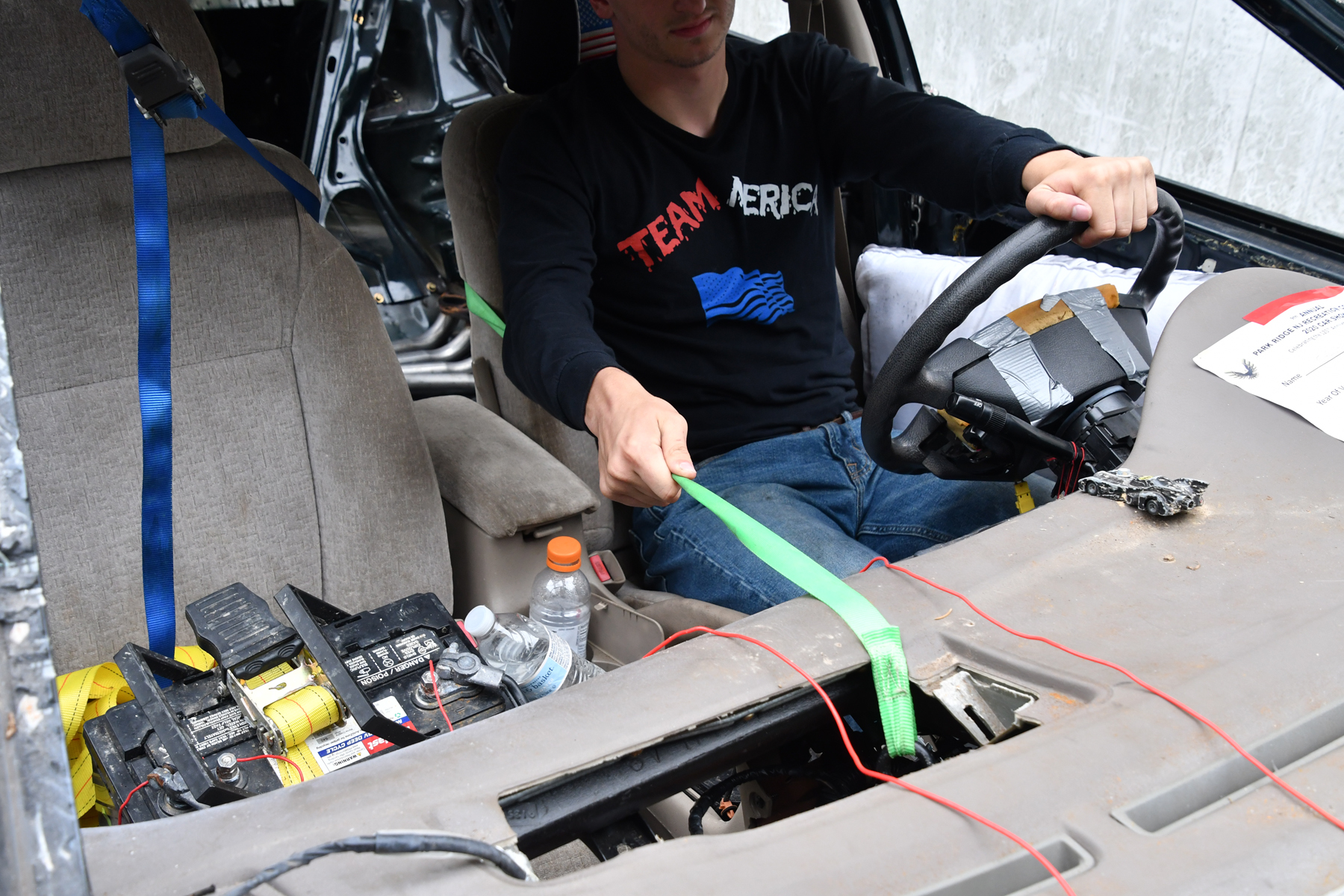
Christian has learned quickly. “There are a number of interesting modifications,” Christian says, “just about everybody runs with a pillow brought from home placed on the driver’s left side and up against the driver’s door. If you get hit, there’s a real good chance of you smacking your arm against the exposed metal in the door. Worse after the car takes a hit, sharp metal could be sticking out with a real chance of cutting into your arm and shoulder.”

ratchet strap

A ratchet strap holds the driver’s seat in position in case of a hard hit from behind.

Without the strap there exists a real danger of the seat just snapping straight back. Not good. The strap also provides the right hand with something to hold so as to prevent the driver’s arm from flailing around and potentially breaking due to the force of an impact.

Christian recalls his first ever Demolition Derby heat. It boasted a large field of 22 cars. He says, “It’s one thing to be watching on YouTube, but here I am entering the arena for the first time to actually do it.”

Christian remembers the experience saying, “Out in the arena I am backing up but too slowly. I get slammed in the side. Spun around by the hit, I nail the gas and bolt forward. I had a friend in this heat and our plan was to work together. It’s a short lived plan. The kid ran right through the back of me. My trunk lid shot straight up in the air.

I lunge forward and hit my alleged teammate. I immediately get nailed on the side and my battery breaks free from its mooring. With my ignition hot-wired, the loose battery rips of the wire to the ignition. I initially did not realize why my Honda would not start. Finally I find the problem. As I fumble to reattach the wire my hands are shaking as sparks shock my finger tips. Throwing my gloves off, I finally attached the wire. I figure, what the hell. I slam my foot to the floor and look for something to hit. The first car I see, I smash nose first. My target had an “old school” heavy bumper. I did more damage to my car than my target. My Honda’s plastic front literally disintegrates. If you watch the video you see people laughing in the background. I am learning.”
“My car has died. My target sits helplessly spinning her tires. A red flag is called to allow her to get the car moving. Returning to action, I throw the Honda into reverse and tag the first car I see. A group of cars bunch up. Not good. One guy takes a hard hit and goes over the wall. I get nailed in the side and my Honda dies,” Christian says.

Christian continues saying, “With its last gasp, my Honda fires up. I lurch forward just as my “teammate” nails me in the side and puts me into the wall. Not much left in the Honda. I floor it. Like one of those WWII submarine movies, I have a target in the crosshairs. The Honda screams as it climbs past 20 mph. I nail him at center stage in the middle of the arena. The crowd loves it.”

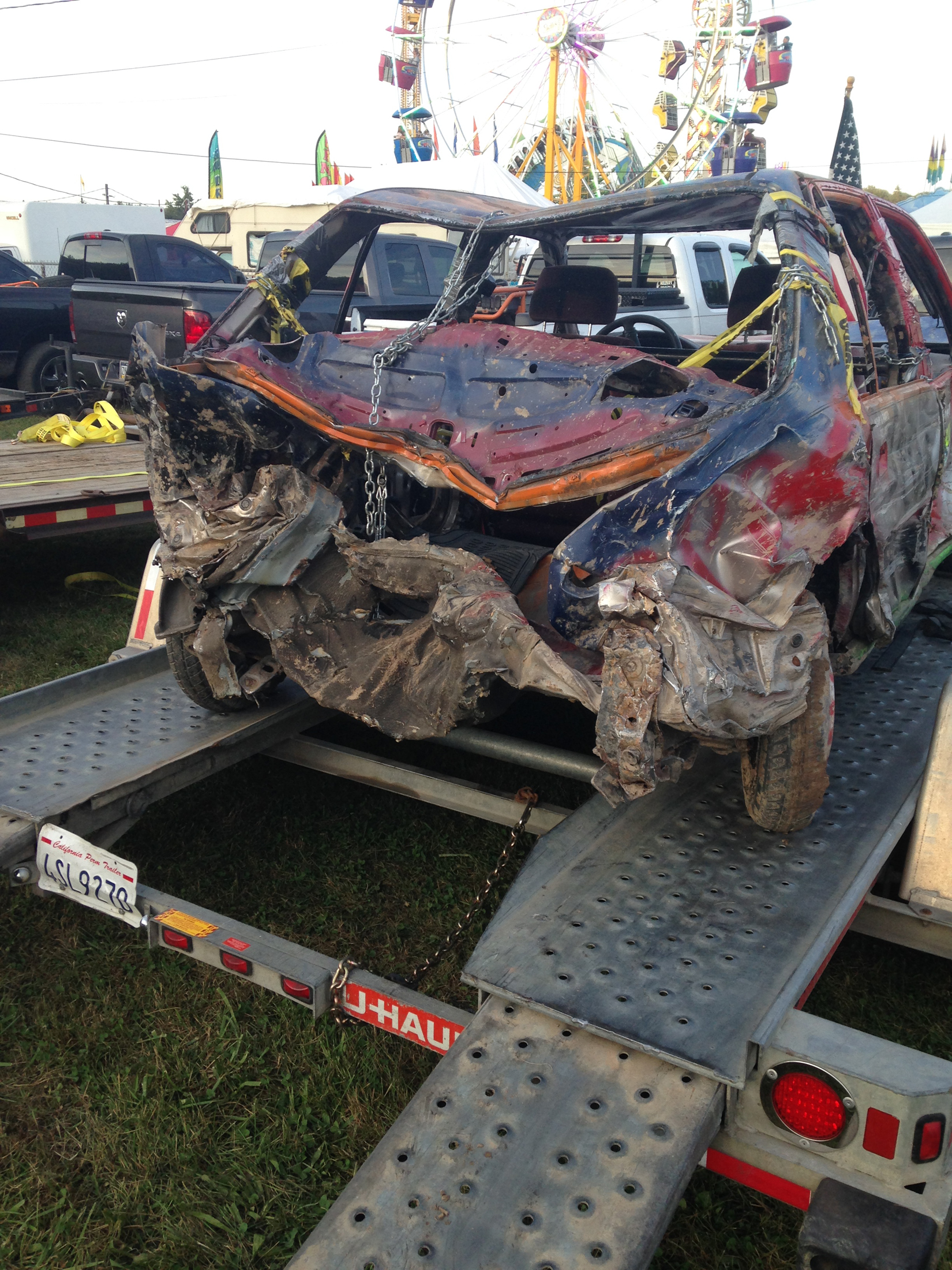
End of a tough first day

Christian’s noble Honda took it like a champ. It had given its all. The book closes on Christian’s first Demolition Derby. He will be back.

While it may not be some parent’s cup of tea, Christian’s parents are very supportive. I have a wrestling background all my life. He’s a wrestler. His brother was a wrestler. I’m fine will the roughness. I don’t get scared. I am exceptionally pleased that he has demonstrated such a high level of commitment and passion. Christian’s events are a total family affair. His younger sister even helps paint the car.

Lori, a special education teacher, finds her son’s passion and determination a source of great comfort as it has motivated him to develop skills that will serve him well throughout life. She says, “I love to see him outside rather than indoors on a computer. Over my years in education I have seen a lot of kids who suffer from limiting their involvement with the outside world.

She says, “I see him and his friend search for these cars. They knock on peoples’ doors. They’re introducing themselves. They’re negotiating for themselves. They engage people communicating face to face. What kids do that nowadays? Kids are not learning these skills today.”

Apparently, unlike his crumpled Hondas, for Christian Farquhar’s young life, Demolition Derby has had a major and positive impact.


By |2020-09-24T13:12:40+00:00September 24th, 2020|2 Comments

Cars We Love & Who We Are #9

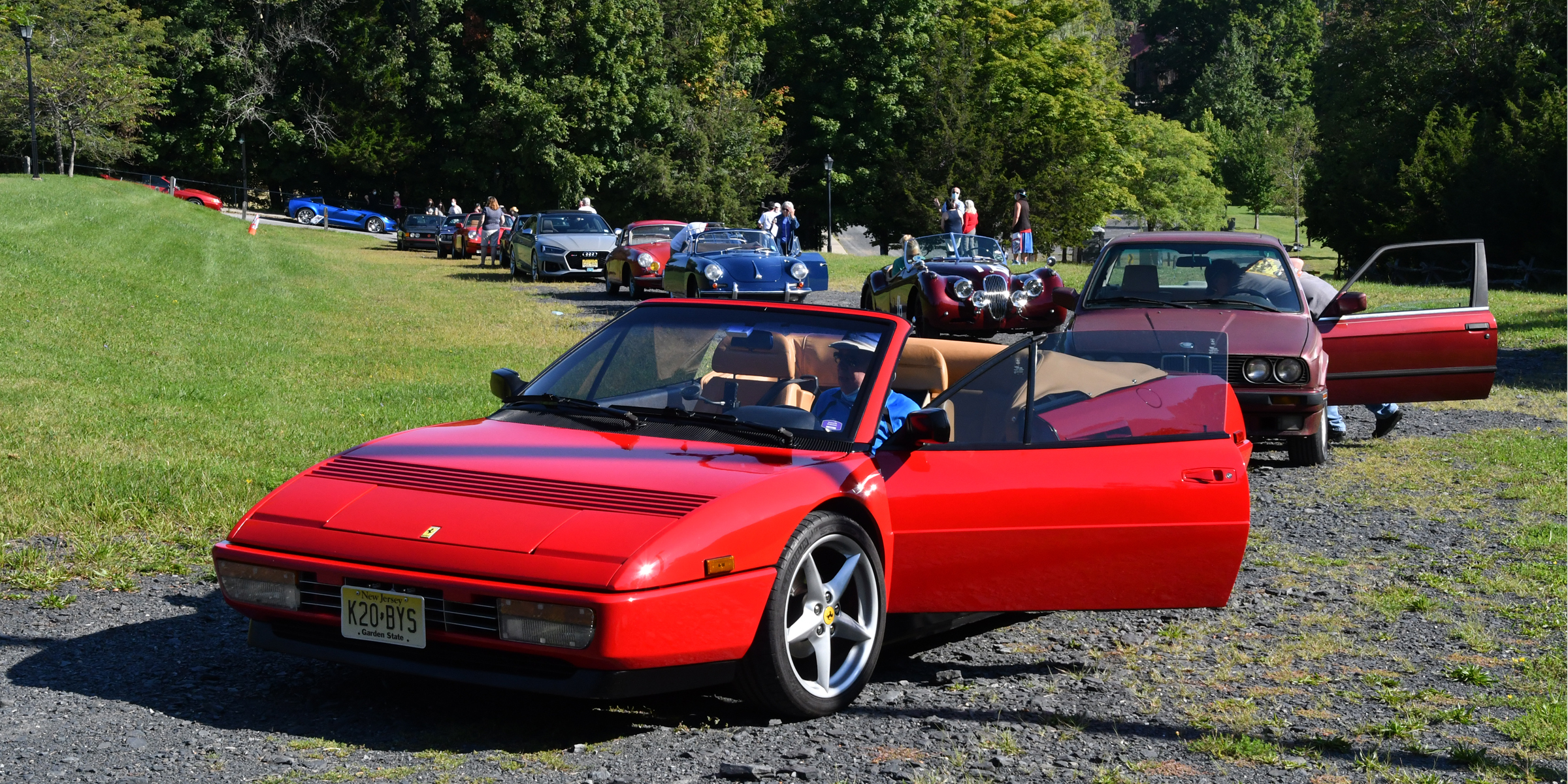
For those of us in love with the driving experience, an early Sunday morning always holds the potential to harvest the bounty earned from the work and time we dedicate to our motoring passion. Potential turns kinetic when we find ourselves on an open road whose character yields to the curves of a landscape rich in natural beauty. Last Sunday, serpentine back roads of Orange County New York delivered that kinetic experience for a number of Drivin’ News readers.

The journey is the reward


Blue skies welcomed the assembling collection of rolling art as a breeze hinting of autumn momentarily swept away the Covid overcast. A glimpse of assembled masked faces snapped consciousness back to life in the present. It did not, however, diminish the palpable excitement of a gathering poised to enjoy life behind the wheel and off the Covid leash.

Interestingly the classic automobile hobby embodies qualities of activities that have both flourished under the Covid skies and others that have withered when faced with forced isolation.

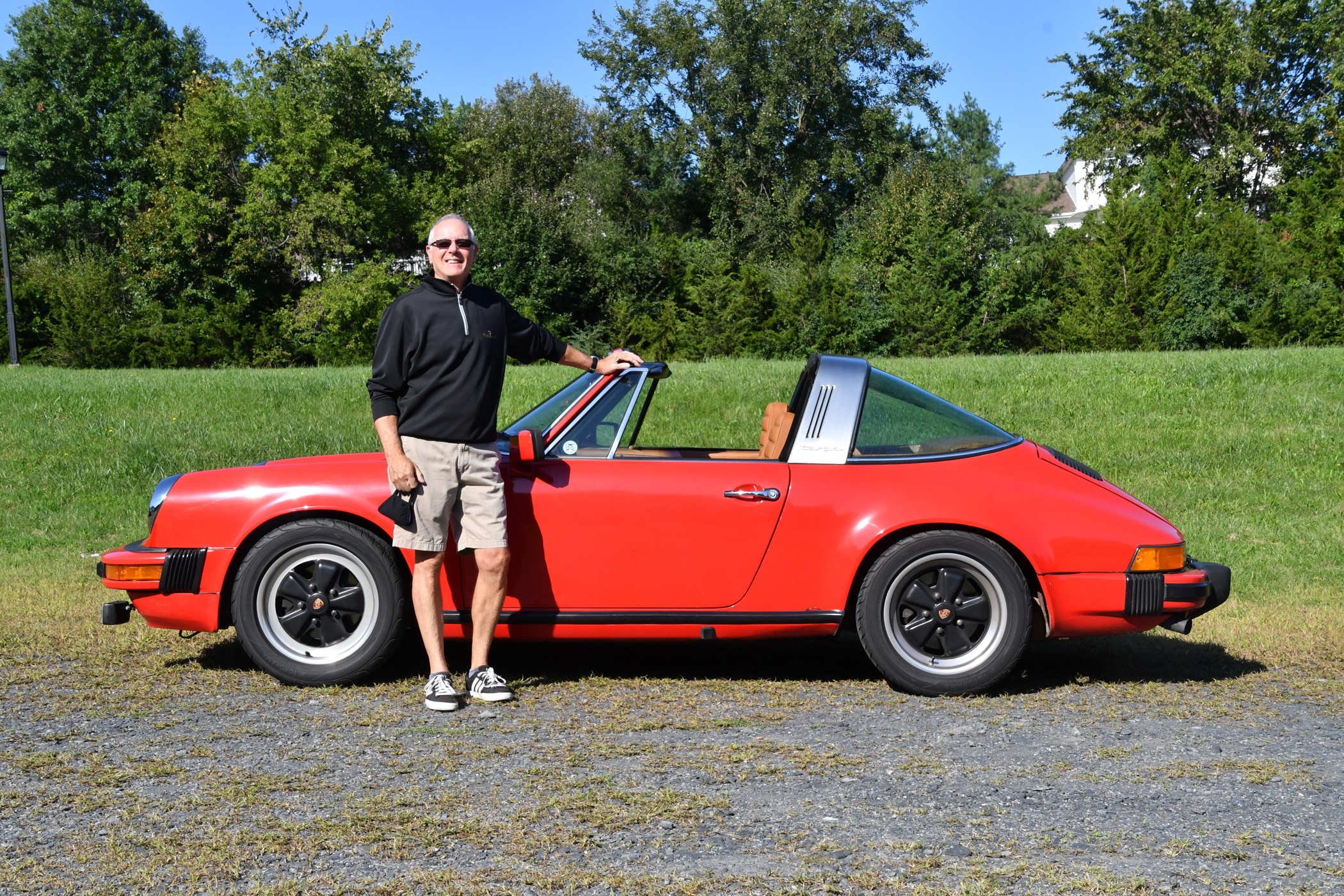
The yin and yang of Covid’s impact on the driving experience evidences itself in the comments of Sunday drive participants. Ken Zitelli owner of a 1979 Porsche 911 Targa expressed how the forced isolation of the pandemic dovetails nicely with time spent behind the wheel. Ken says, “As an outdoor activity, you’re alone and outside driving. From that standpoint there is little impact.”

As an aside, does anyone else find it curious when seeing solo drivers motoring along wearing face masks? Just sayin’.
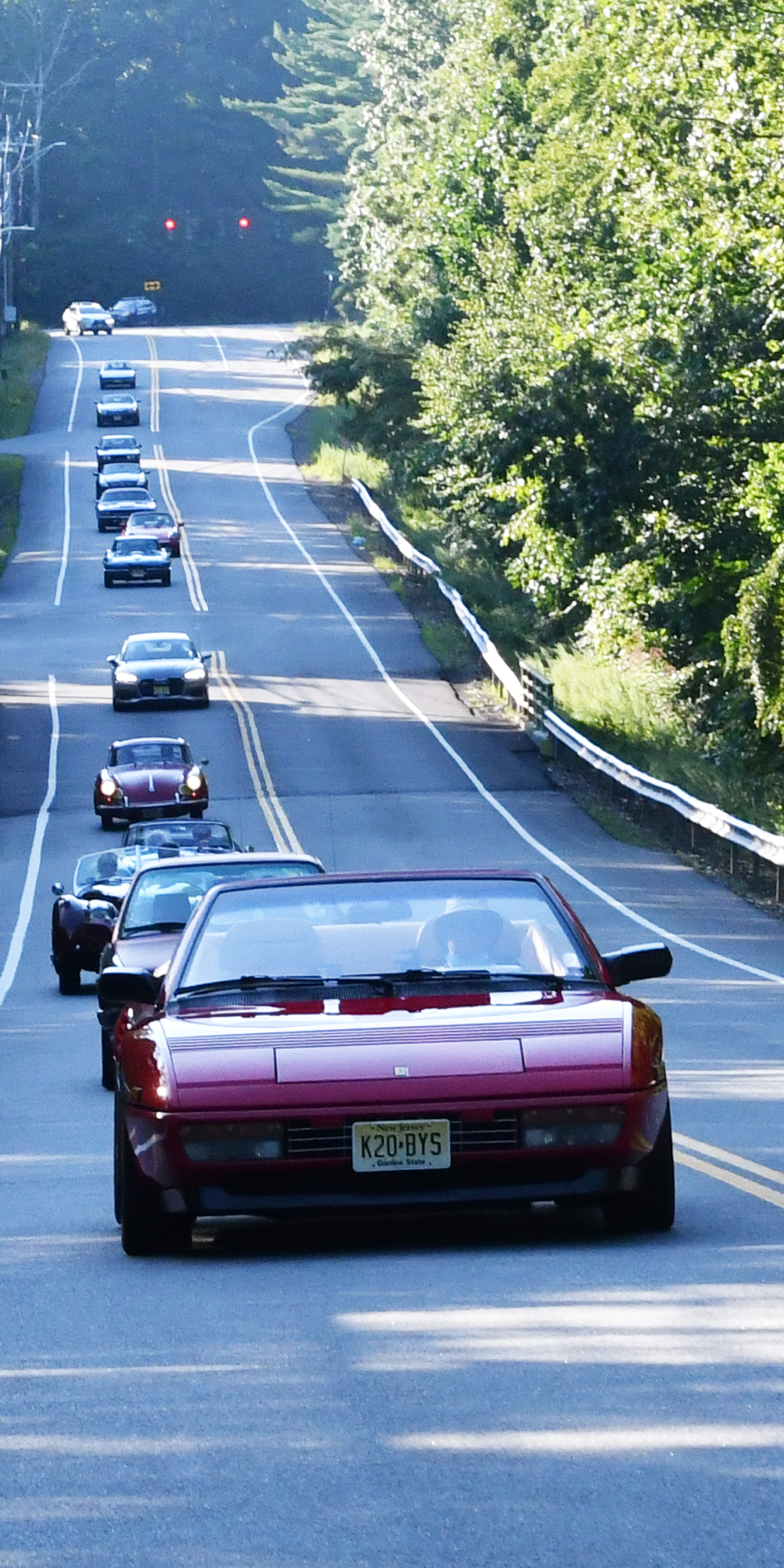
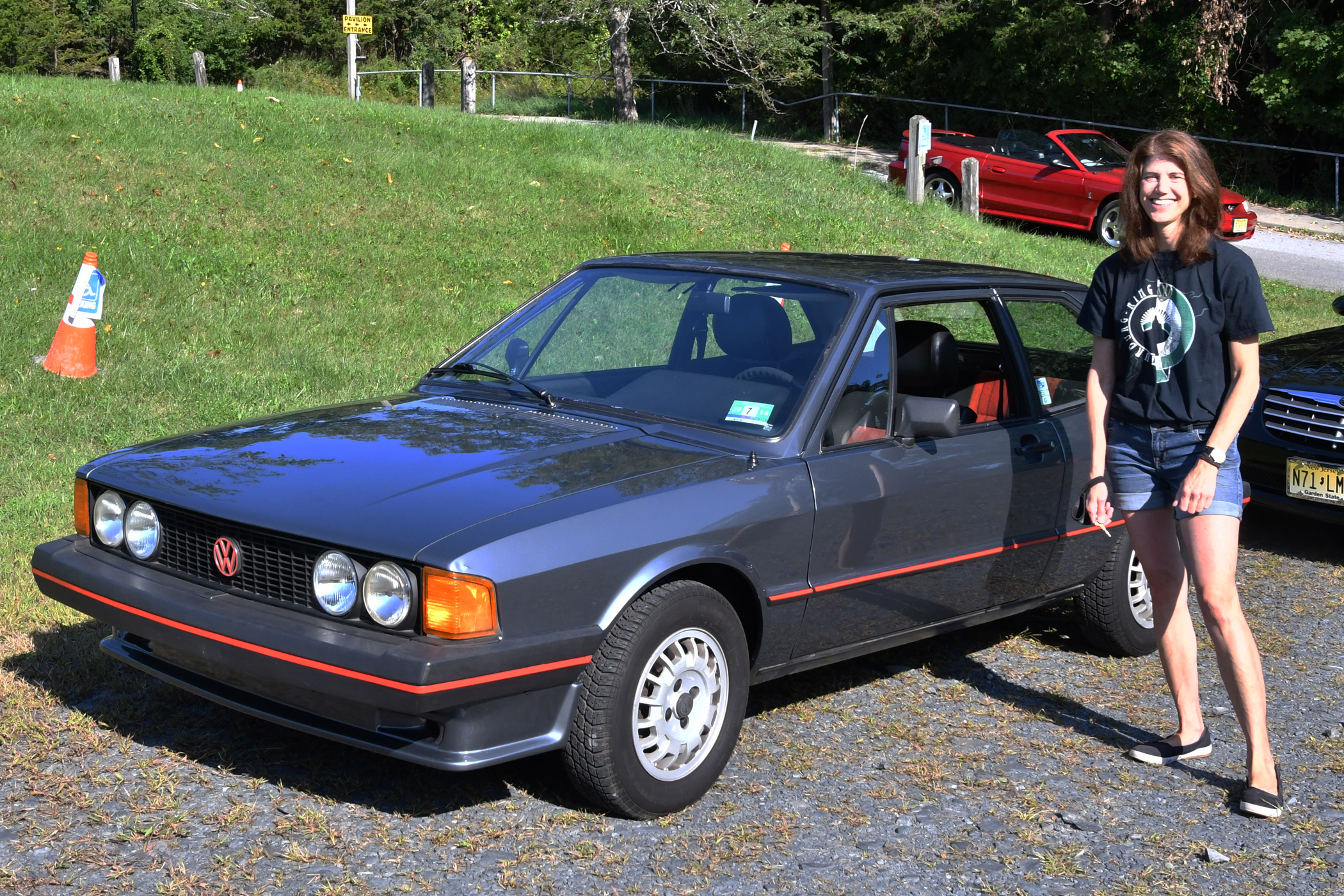
Gordon Bortek owner of a 1974 Detomaso Pantera adds that shelter in place freed him to spend more time working on his car without feeling guilty about it. However, it is not all splendid isolation. Bortek continues saying, the biggest impact it’s had on me is missing all my friends in the car world.

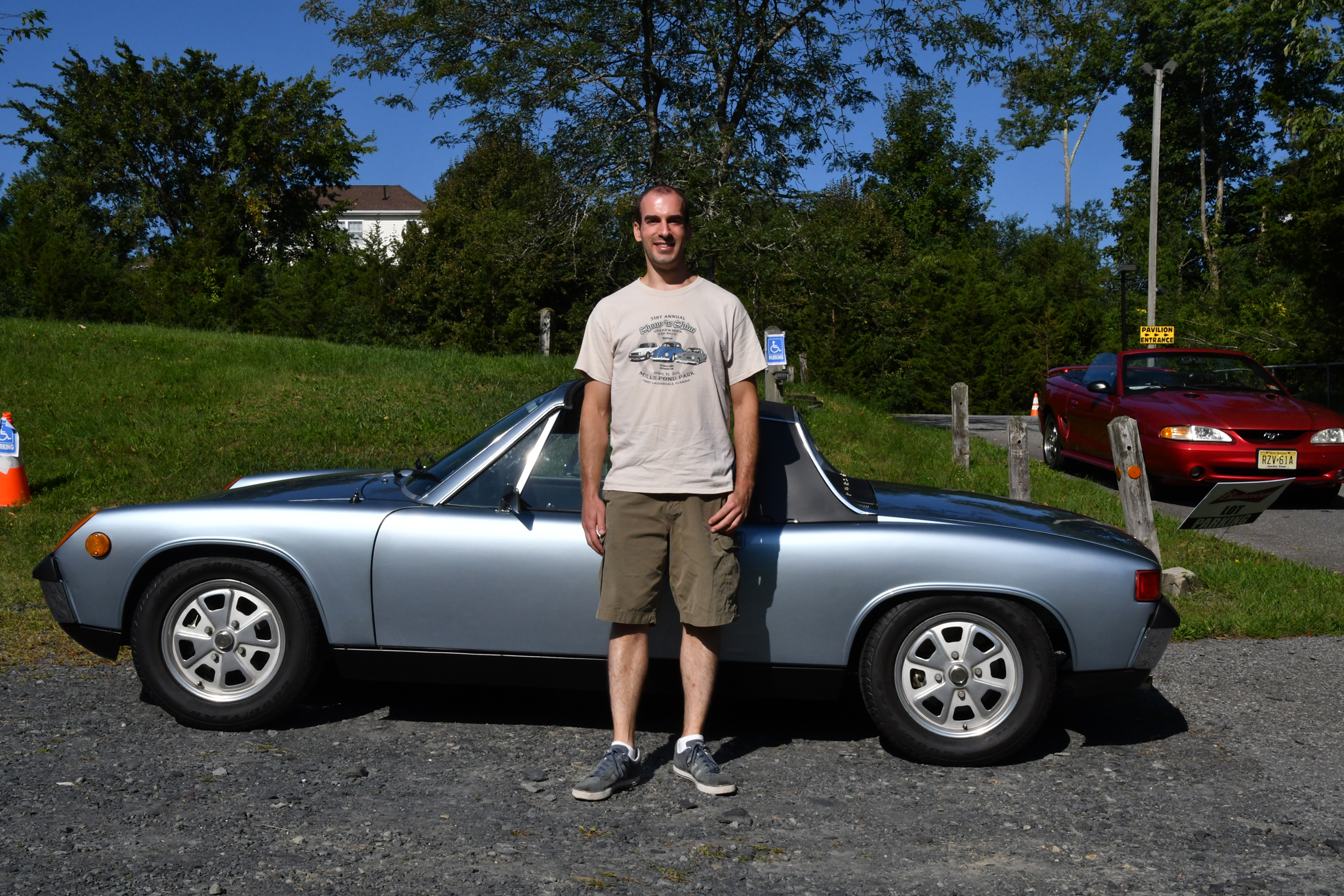
David Howard, owner of a 1974 914 Porsche agrees. He says, “it’s not a whole lot going on in terms of the automotive hobby other than working on it at home.”

Fred Hammond, owner of a 1974 ½ MGB, says, “Actually driving is probably about the only thing that I still do. The solo driving experience hasn’t really been affected by covid-19. You’re in your own private bubble and you can go wherever you want and you can choose whether or not to interact with other people.

However, as the forced isolation has dragged on, people have chafed at the restrictions. Covid has left no doubt that social interaction elevates the driving experience and the hobby as a whole to a much higher level.

Bob Austin, driving his 1996 Mustang Cobra, in reflecting on the impact of Covid says, “Mentally more than anything else, I mean, it’s not been a fun year. With the activity schedule gutted, I’ve looked at my car’s a lot and not driven them.

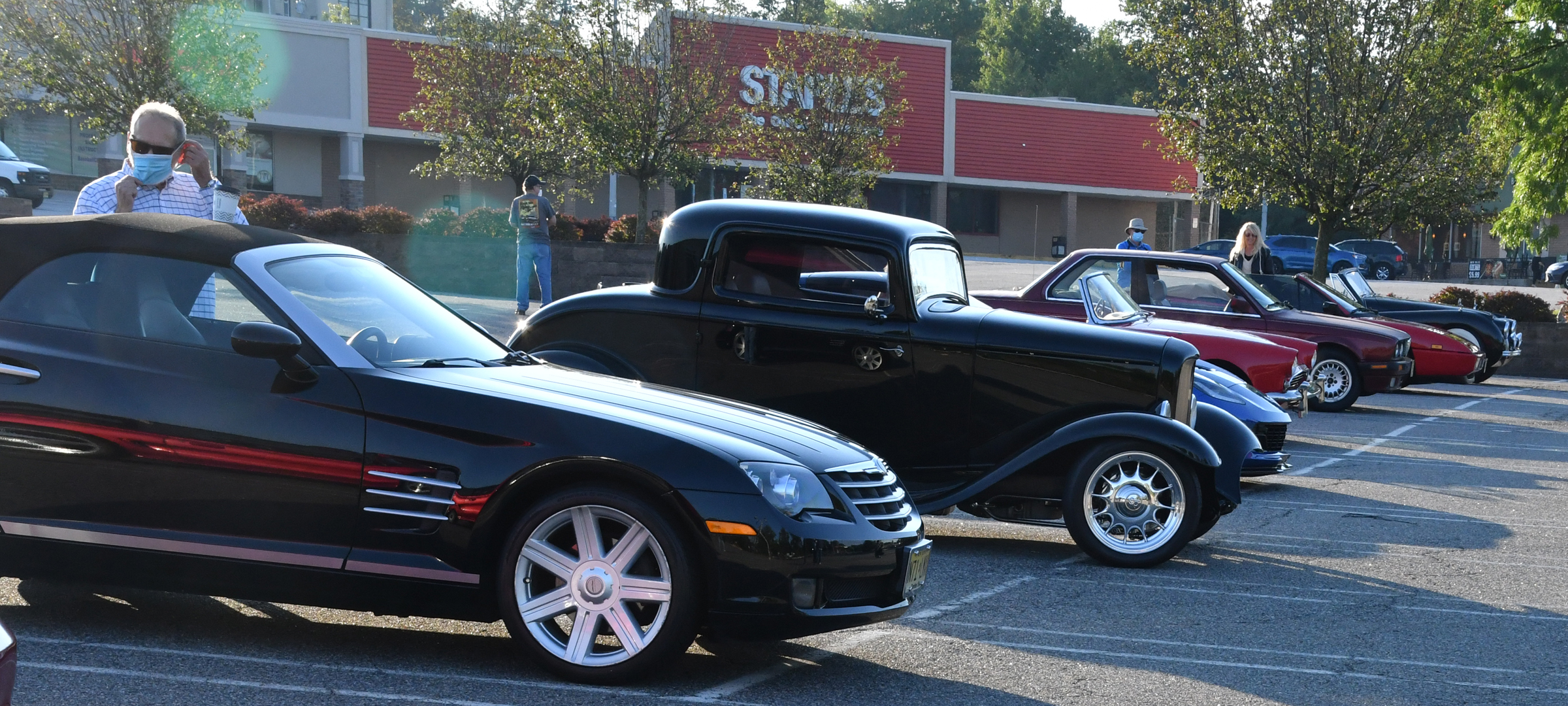
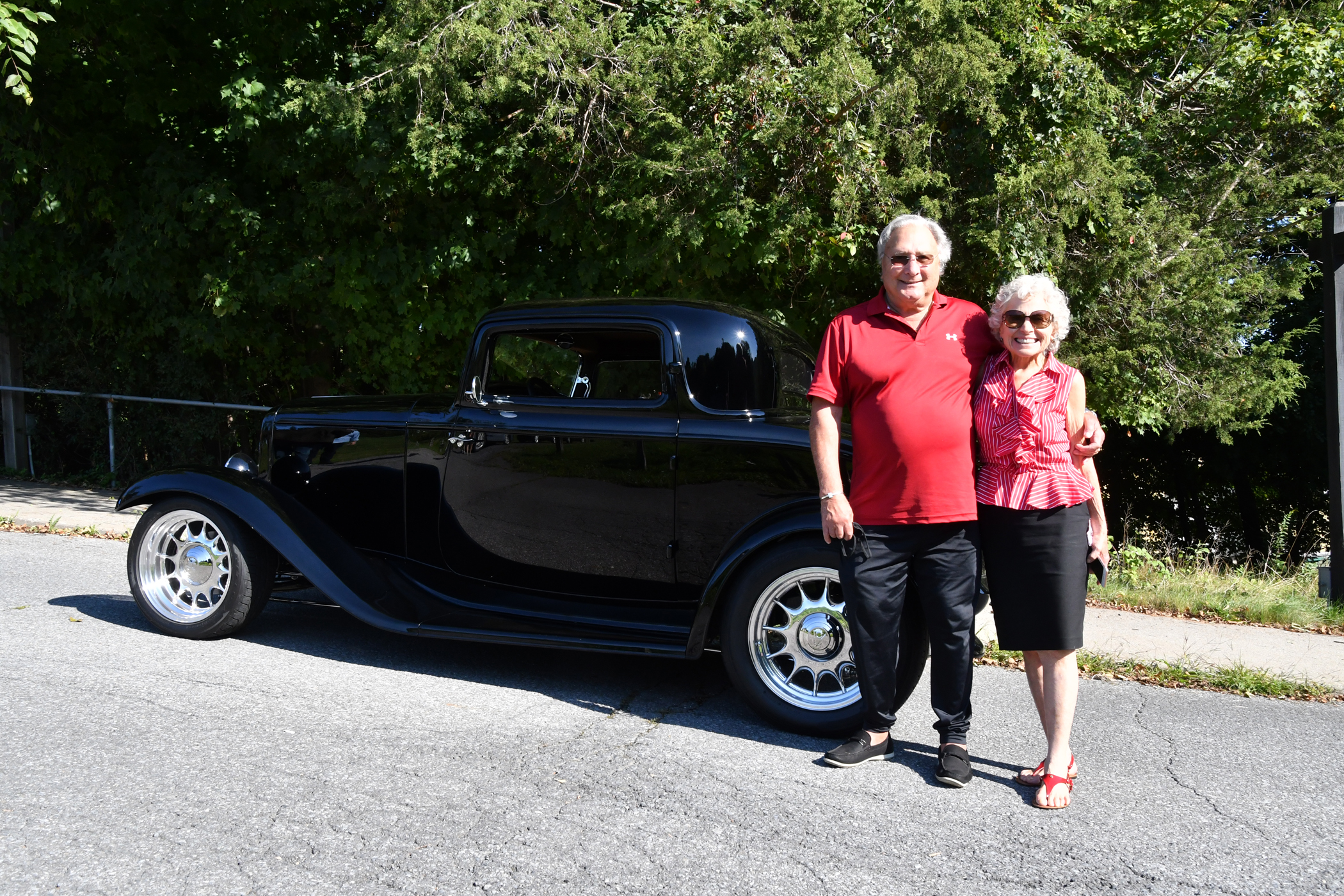
Joe Raia, driving a 1932 3-window coupe sums it up saying, “There is no hobby. This year is a washout. 2020 is the year that never happened.

Clearly most formal classic car events have been cancelled. Bortek who founded and oversees the Father’s Day Tuxedo Park “Field of Driving Dreams” classic car event has been forced to first postpone and now cancel the event this year. Bortek says, “Unfortunately, yes, we’re not doing the Tuxedo Field of Driving Dreams this year due to a New York State regulations.” With conviction he continues saying. “but we will be back strong next year.”

However, while formal events have vanished from the schedule, casual gatherings seem to be popping up like mushrooms on a dead log. This drive being one small example. For the participants, the drive served up a delicious slice of “driving with friends.”
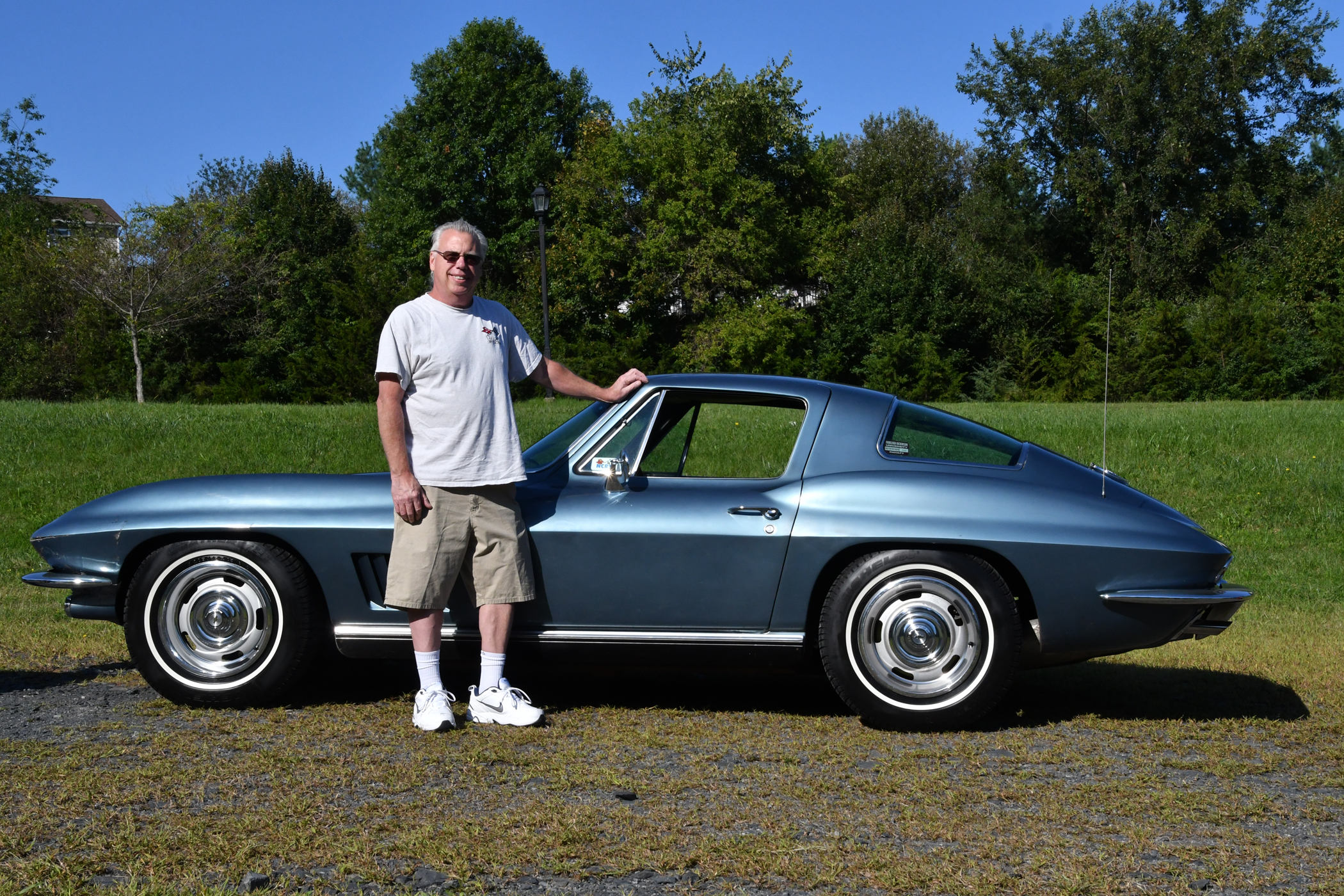
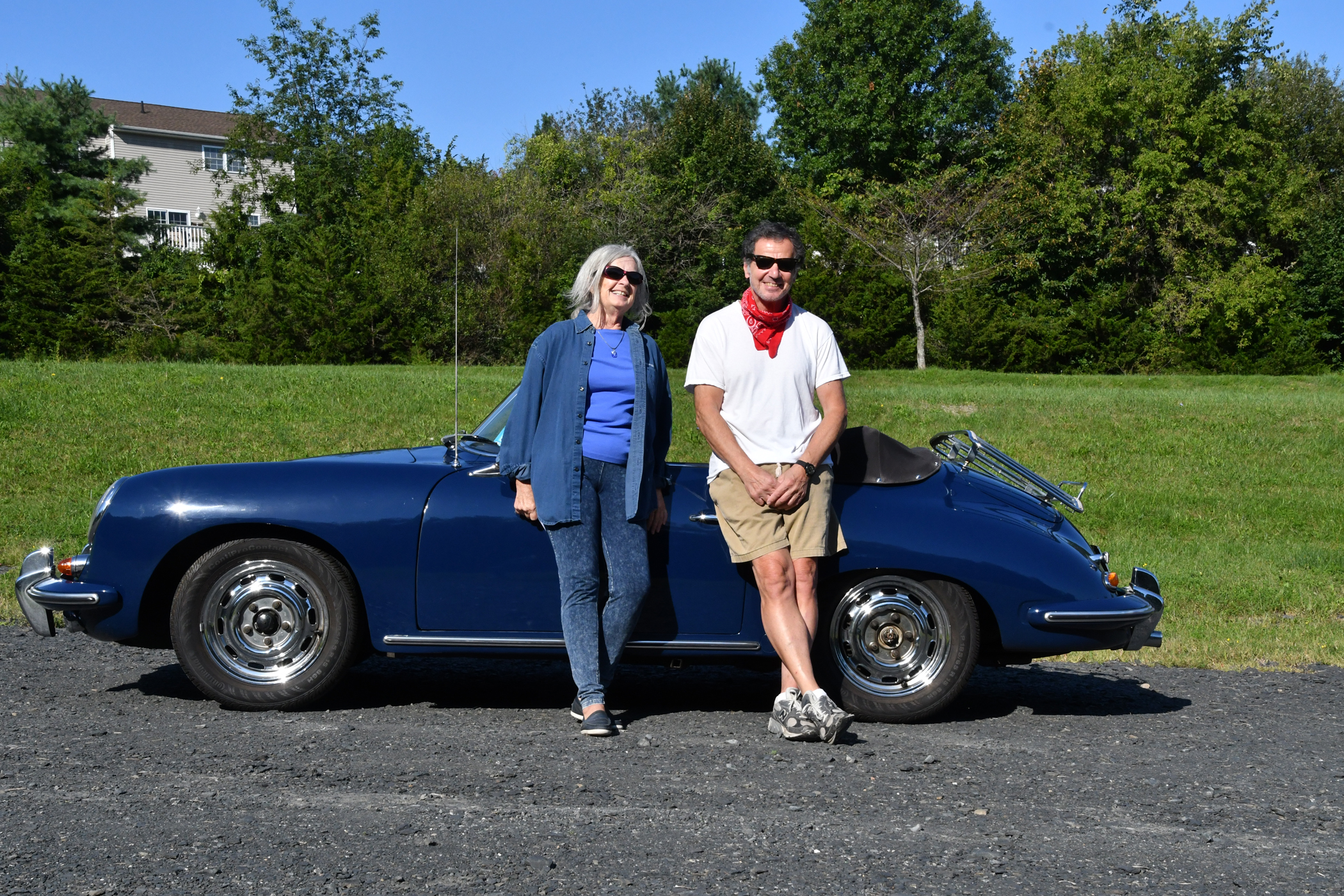
Like slender ribbons snaking through rolling hills of farmland and pasture the roads are well paved and friendly. Country farm houses and barns dot the roadside at times accompanied by small fresh produce farm stand.

Like athletes when they find the “Zone,” drivers and their vehicles meld as one.

Alicia DeLalio, driving a 1981 VW Sirocco used the drive as an opportunity to road test work she had just completed. Delalio says, “The drive today was really fun. And it was more fun when I calmed down and stopped looking at the gauges to make sure the car was running right.”

Karen Moyers in a 356 Porsche, just smiled and said, “Fantastic weather. fantastic roads. I loved it.” In a serendipitous triple play, the drive experienced little traffic, exceptional weather and cars that performed flawlessly.

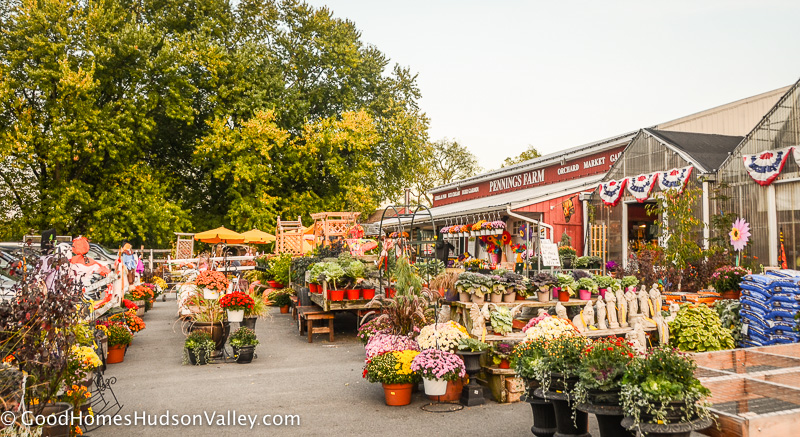
Easing across the crunching gravel this rolling car show came to rest in the parking lot of Pennings Farm Market in Warwick, NY. Offering great food, a cider mill, wonderful bakery, petting zoo and an orchard, Pennings seemed to transport this traveling classic caravan through a portal to the past.

EVERYONE MUST WEAR MASKS TO BE SERVED read the sign. Oh well, good while it lasted.


By |2020-09-10T11:29:10+00:00September 10th, 2020|6 Comments

Cars We Love & Who We Are #8

Over my decades of motoring along mostly forgotten blue highways, catching sight of an abandoned vehicle long retired to an open field ranked as the visual prize in the back road Cracker Jack box.

Whether huddled next to a weathered outbuilding or a lifeless shell serving as its own gravestone in a windswept field, it fascinated me.

The forsaken and forlorn car or truck rests in a virgin bed of weeds. Witnessing it defending its integrity in an inevitable losing battle against oxidation and time, I would wonder what stories it could tell?

While often no more than a pile of patina with a shape sustained by little beyond a memory, that vehicle, for me, always held out the hope of a fresh and satisfying story waiting to be savored like a new apple from an old tree.

However, while I often stopped, I rarely pursued the story.

Now, as life has afforded me more opportunities to travel blue highways in a more leisurely fashion, I am committed to harvesting the rewards of asking “what’s your story?”

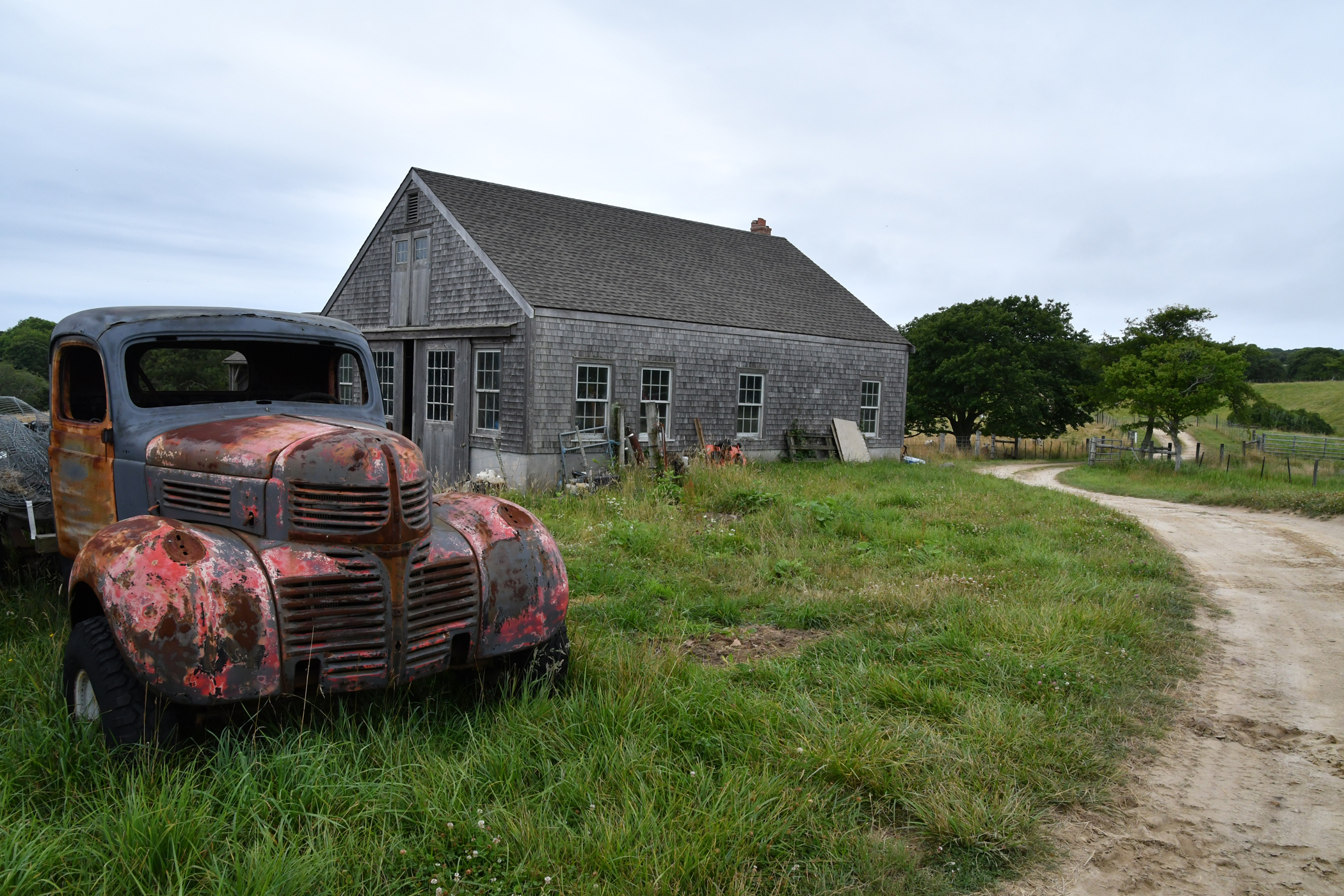
So it was with this 1946 Dodge.

What’s a “Vineyard truck?”


It came into view as the gravel road crested behind the sheep farm on a stony hill overlooking the Atlantic Ocean in Martha’s Vineyard.

Bulbous pontoon front fenders projected a decidedly 1940s look. Though denuded of trim and trappings and literally put out to pasture, the strong and stylish truck cab projected a defiant attitude.

Its Tonka Toy-like early post-war architecture displayed a kaleidoscopic patina with patches of color that indicated a life with many chapters.

Away from the truck a path led to a rustic barn and sounds of a man at work.
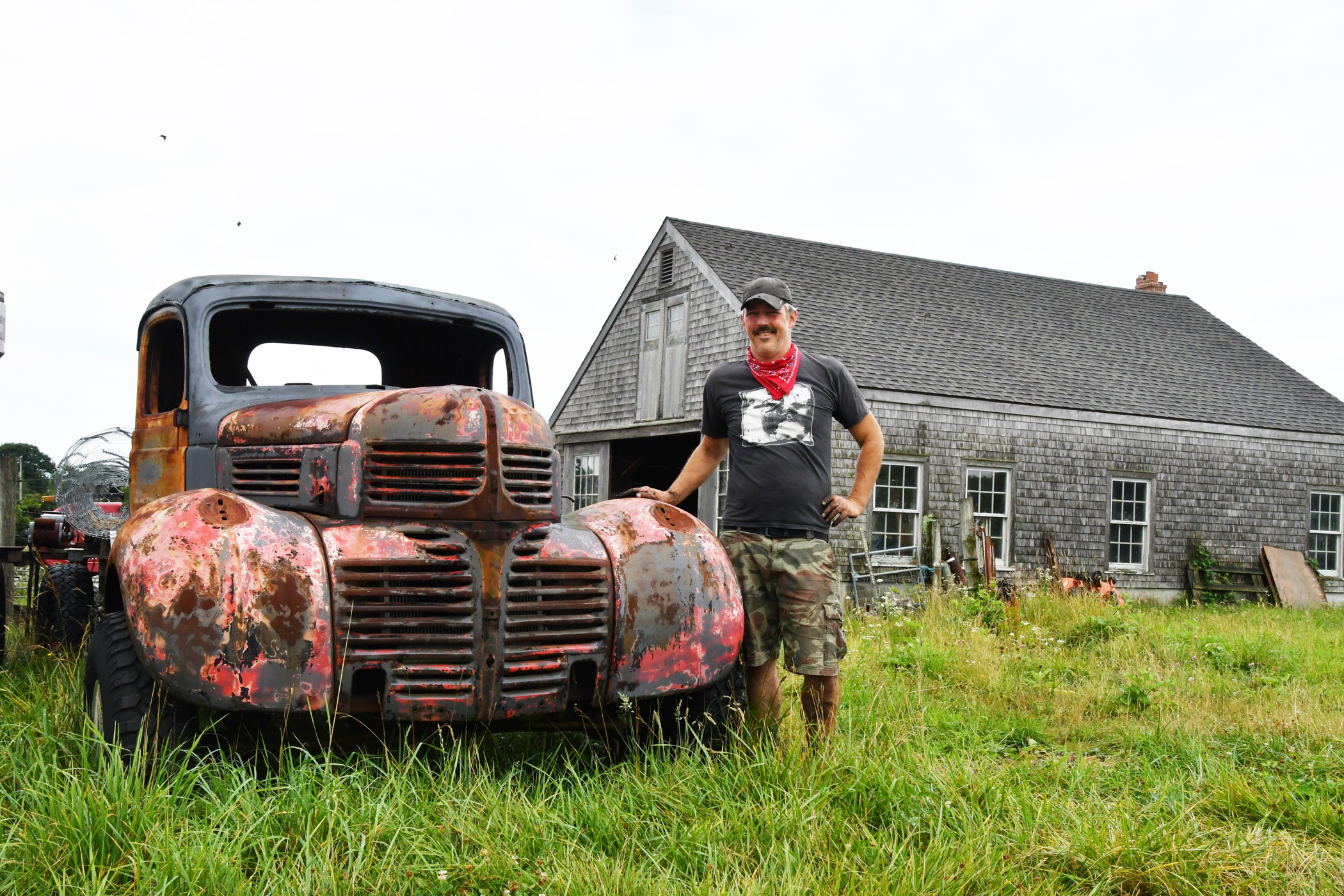
“That your truck on the hill,” I asked. “Yes sir,” came the reply. A tall friendly man in his 30s with a red neckerchief exited the barn. He introduced himself as Steve Broderick. I asked “What’s your story?”

Martha’s Vineyard has dual personality disorder. Both coincide on the same spot of verdant land off the coast of Massachusetts. During the summer months the mega-rich, simply wealthy, ex-presidents and self important celebrity types summer in rustic splendor. George Soros thinks it’s swell.

For the rest of the year with summer and glamour gone elsewhere, when snow falls and bitter winds sweep down barren beaches one finds the people who call Martha’s Vineyard home and who seal deals with a handshake. Many of those people survive by renting out their homes that have been passed down from generation to generation for the short but highly prized summer season. Steve calls it the Vineyard scramble.

Steve, a talented mechanic, is not one of the mega-rich. Born and raised on the island, Steve rents out his house and performs repairs for a local farm.

It’s a 1946 Dodge one ton. “I’ve always liked these Dodges. They are not as popular as Fords or Chevies, but they’re so stylish.” Says Steve.

With the Dodge’s long standing history in front of a friend’s shop across the island, the truck had acquired the status of “permanent fixture.” In 2009 Steve bought it. According to Steve it was pretty complete.

Steve had a plan.

Steve envisioned the Dodge becoming a “Vineyard truck” daily driver. “Vineyard truck?” Clearly, like a “Brooklyn bagel,” a “Vineyard truck” had to exhibit certain taste-based standards to qualify.

“Its nuanced’” said Steve. He continued, “A ‘Vineyard truck’ is not too shiny. It should look like it has a story behind it. By the mere fact that it still runs, it should inspire a general observer fascination. It is not a rat rod, but its patina affords it a certain rough hewn style. It’s a bit freaky, a bit funky. It’s got to be usable. You know, tow a trailer. Go to the dump. Rumbling past you a “Vineyard truck” is big on cool. When it passes you should almost feel the history. Yeh, history is good.”

No simple solution would do for Steve. His plan involved fitting the Dodge body on the chassis of a low mileage 1988 Ford F350 cut van ambulance that he also owned. Steve wanted his Vineyard truck” to look like 1946 but drive like 1988.

Once back at his shop, the Dodge was completely disassembled. The first three years produced great progress. All sorts of body work, floors and according to Steve a horrifying amount of fabrication.

However, at the top of the challenge list loomed integrating the F350 chassis and the Dodge body. Steve retained the column shift, power steering, everything.

The very sound F350 chassis featured a 7.3-liter International diesel engine with the C6 3-speed automatic transmission. “The 7.3 is a good engine though not an exceptionally high performance engine, but It does sound cool,” says Steve with a smile.
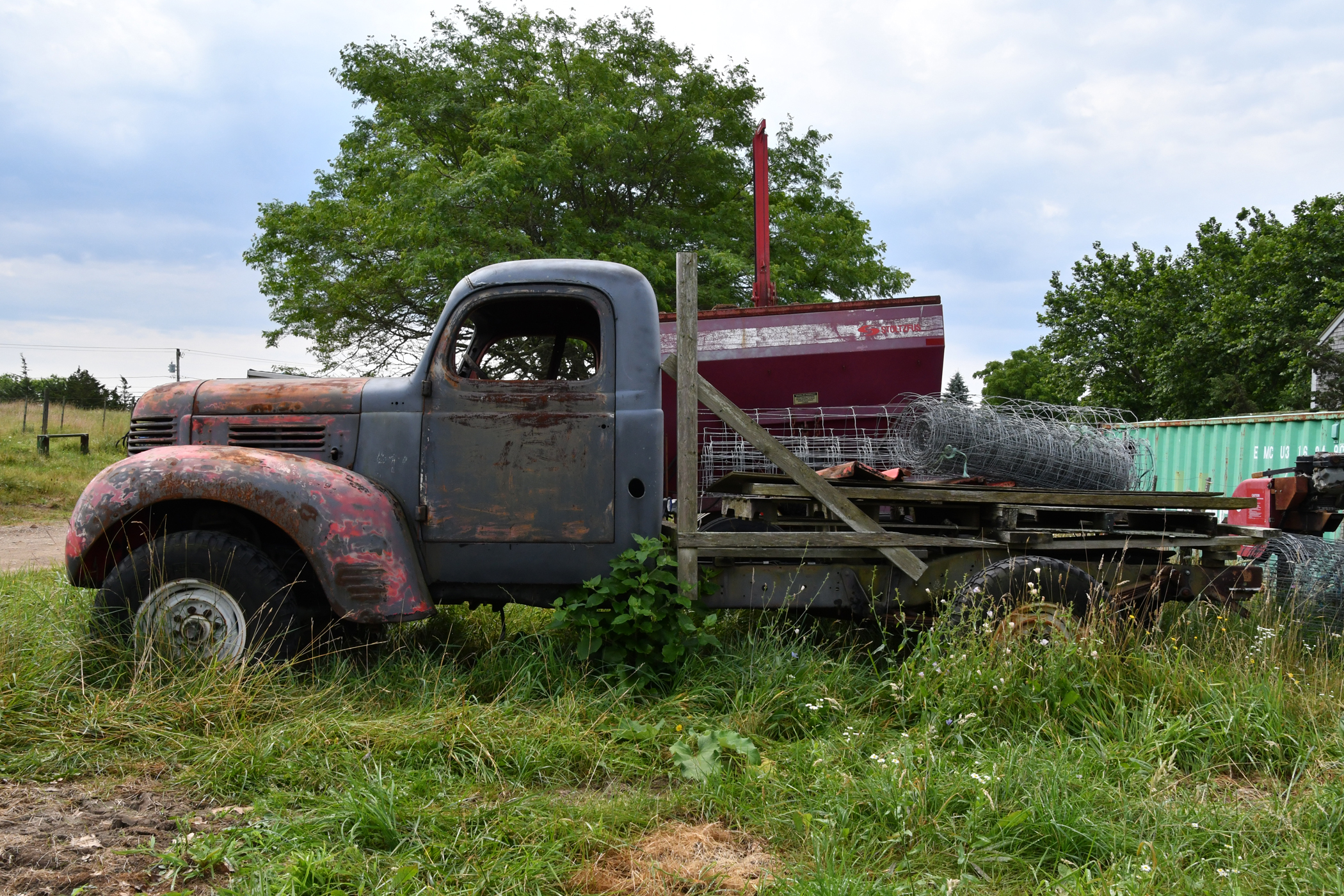
An enormous amount of re-engineering brought the dissimilar hero and donor vehicles into a smoothly operating, if rough looking, truck. In reflecting Steve’s professionalism, he said, “Doing it right demanded an enormous amount of engineering.” But I‘m a mechanic, you know, it’s got to work right.”

So how did the Dodge end up in the field? “Life,” says Steve. In 2012 life dealt him a hand that would result in his facing single parenthood with three boys, a five–year old and one-year old twins.

At that point the Dodge ran great. It just was missing the trimmings. It needed an interior, glass and a bed.

We would go out for a few burn-out sessions and donuts in the field. “But,” says Steve, “I had to shut the project down. I had to focus on the kids. I no longer had the budget or the time.”
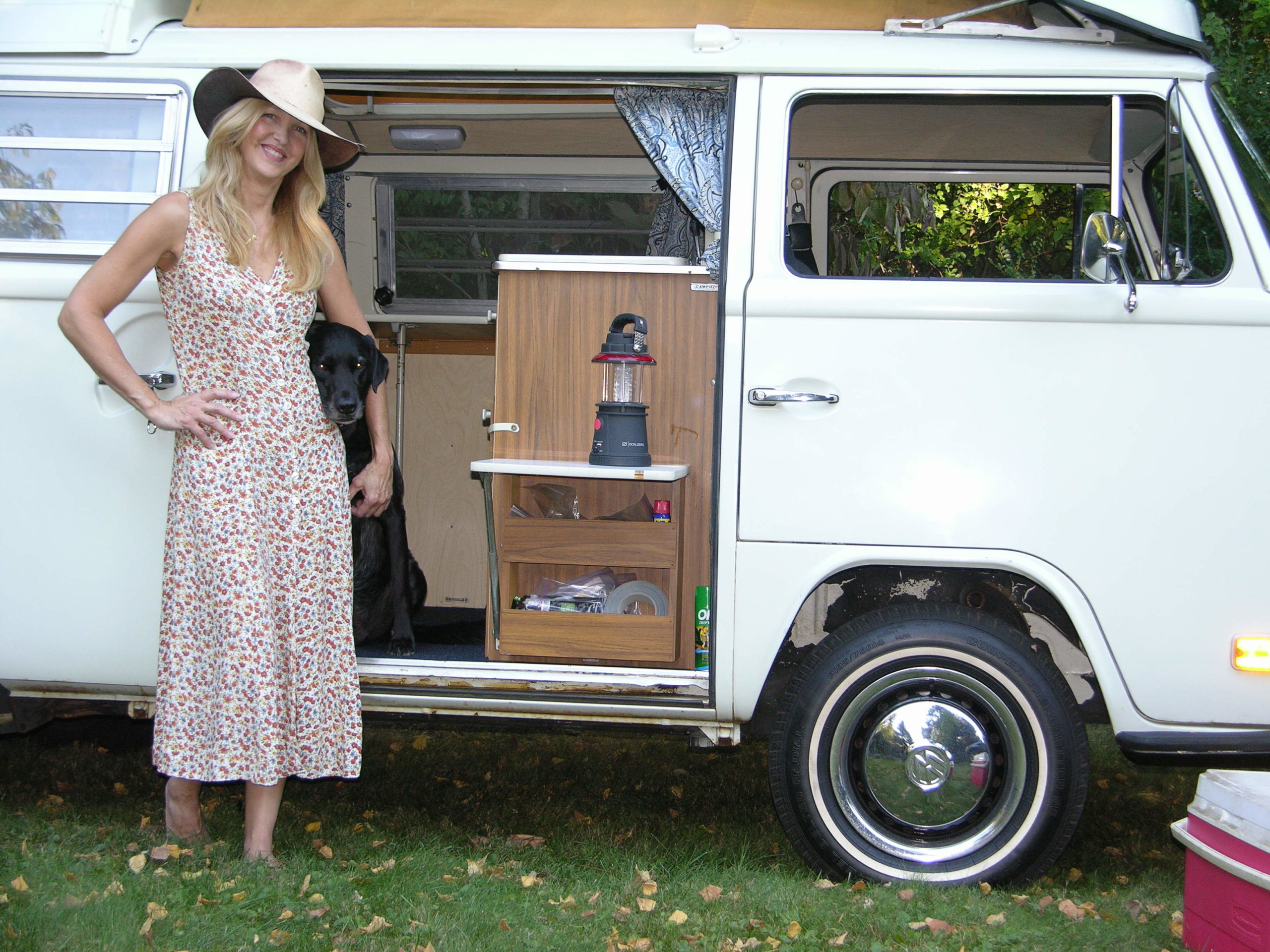
With his ‘46 Dodge stoically sitting there, Steve estimates that completing the truck would take a year and about $7,000. Neither of which he presently has to spare.

“However, with most of the re-engineering done,” a smiling Steve says. “In a few years it could make a great dad and kids project.


By |2020-07-30T11:29:57+00:00July 30th, 2020|8 Comments

Cars We Love & Who We Are #7

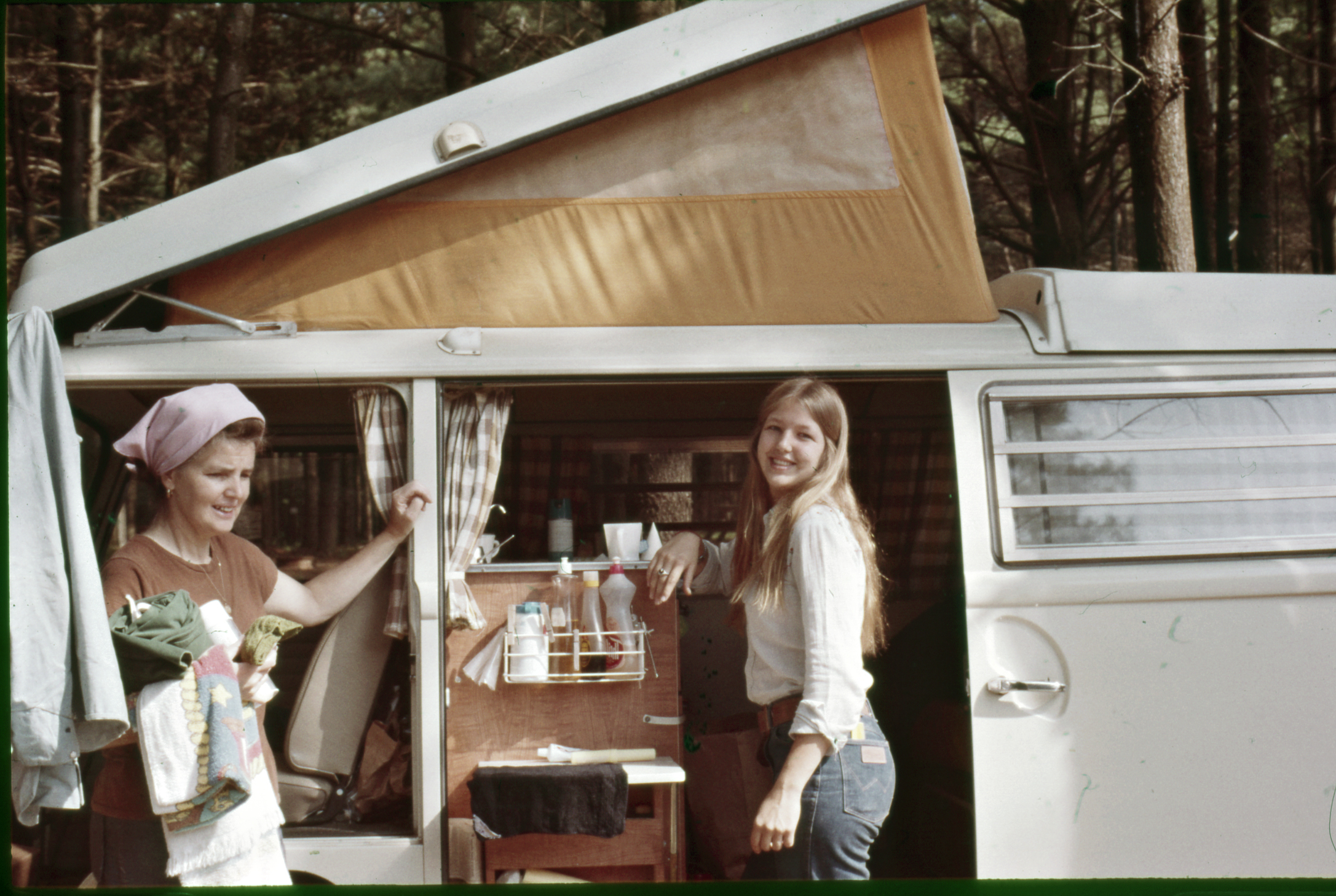
Elaine Larsson leaves no doubt as to the priceless and joyful life lessons learned in the 1970’s cross country teenage adventures she shared with her parents in their 1970 Volkswagen Westfalia.

Decades later, a serendipitous sequence of events, allowed the woman Elaine has become to again enjoy the driving experience that enriched the life of the young girl she was.

The woman picks up where the girl left off


“1972 Volkswagen Westfalia, pastel white, 58,000 original miles” read the 2014 ad found while I surfed The Samba.com website. “What country is it in?” Elaine asked with conversational interest. While not a “car guy,” Elaine always waxes fondly when recalling teenage cross country family road trips in her family’s 1970 Westfalia.
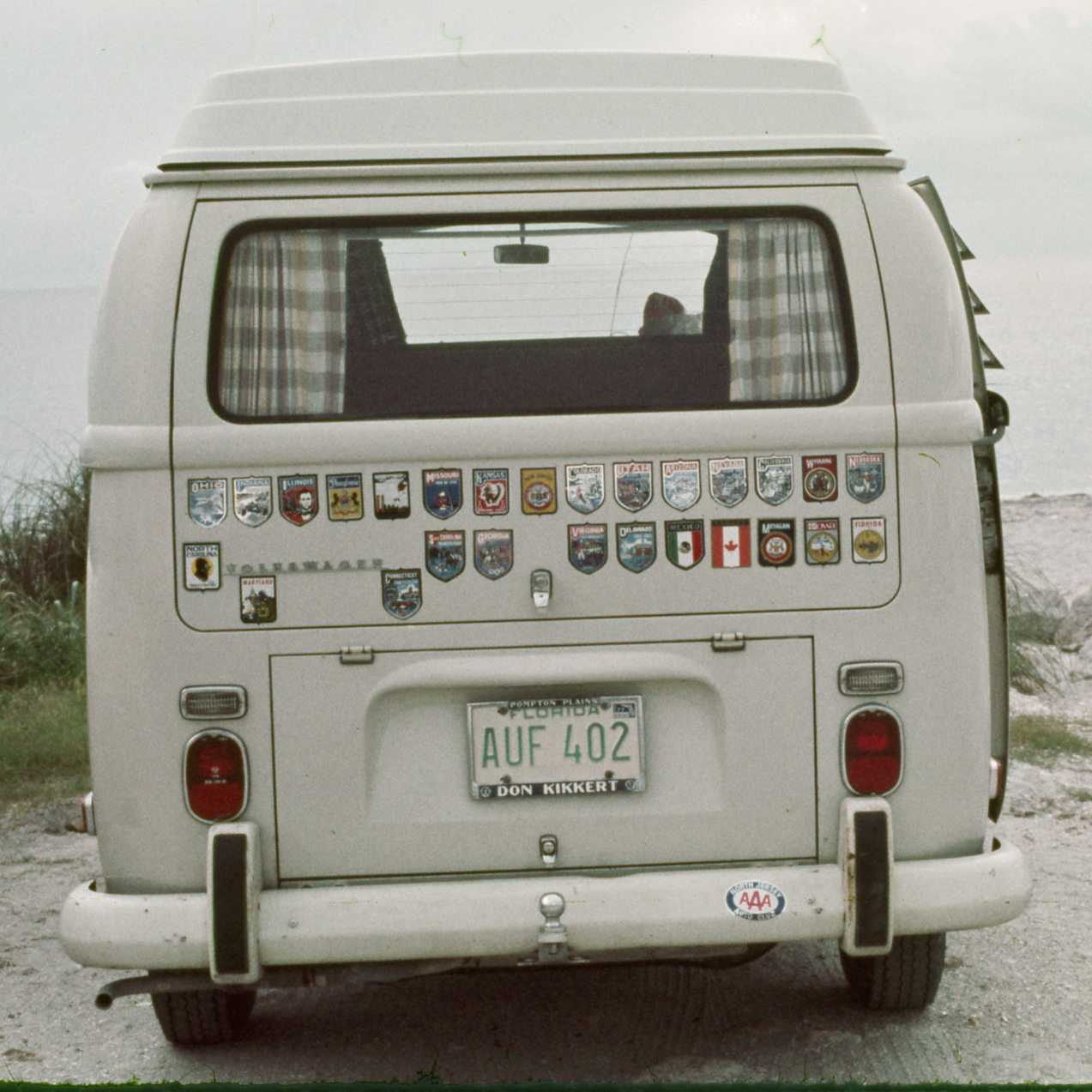
Over the years Elaine would from time to time try to track down the old van. It had been sold in the late 1970s. Her efforts gave strong indication that it had long ago moved on to the old van burial ground. However, while gone, the memories it inspired remained undiminished.

Memories of her father, a retired Jersey City motorcycle cop, her adventurous mother and BFF brother generate nothing but smiles when Elaine recalls 6-week escapes in the early 1970s where the family visited mountains, prairies, and, yes, oceans white with foam.
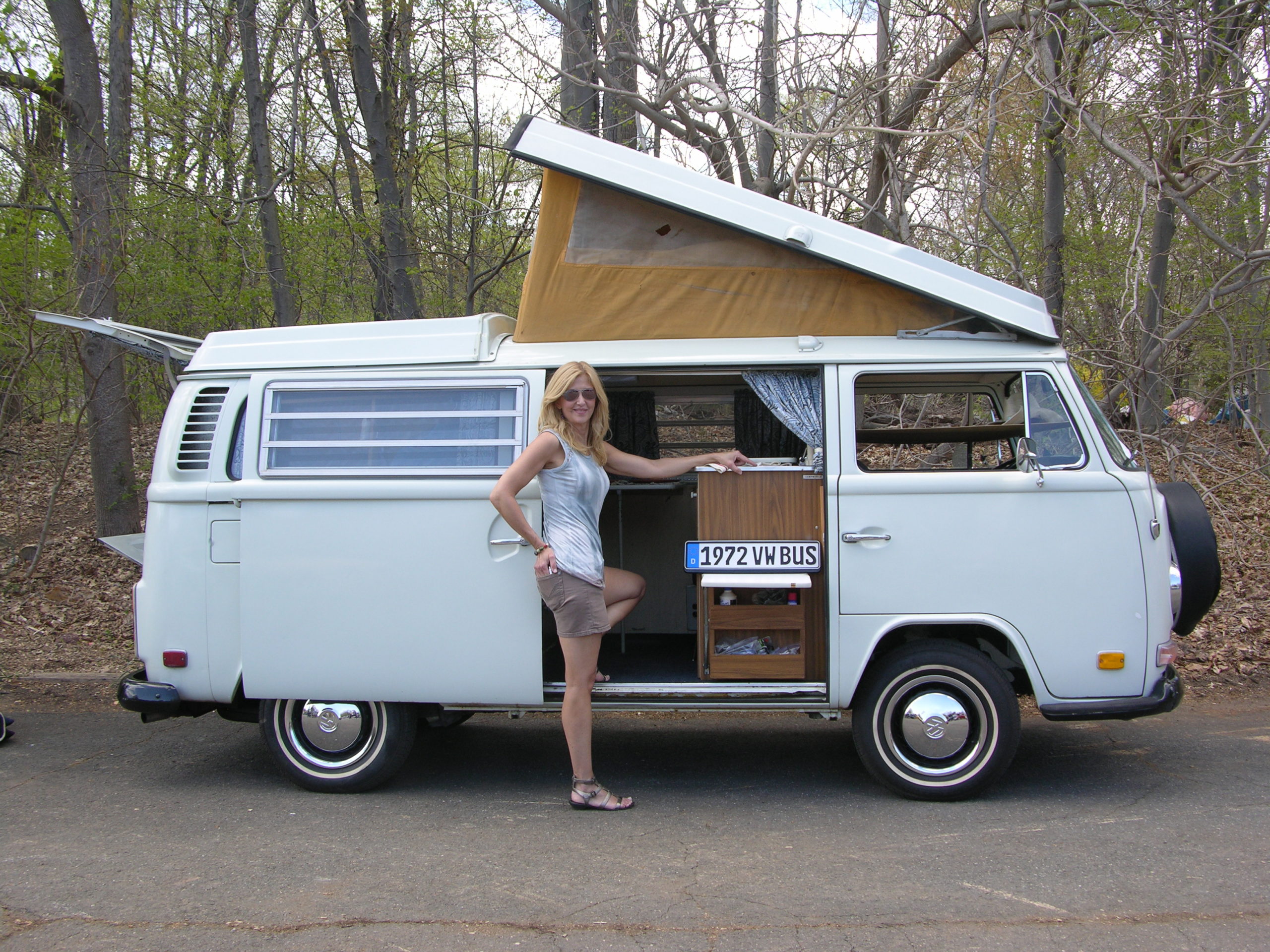
I showed her the images accompanying the ad for the van. Same model, same color and solid original condition. Her interest perked like coffee ready to pour.

The Samba.com website provides an extraordinary global marketplace offering vans aplenty from Africa, Europe, Canada and the western US. East coast, not so much. “Where is it?” she asked with a bit more edge to her voice. “New Jersey” came my reply.

Packing a large wad of hundreds, Elaine walked the mile between her home and the van owner’s house.
“Do you want me to show you how to drive it?” the owner asked. Elaine’s knowing laugh betrayed a “you never forget how to ride a bike” level of confidence as she slid behind the same controls on which she learned to drive. Originally purchased in 1971 by an Air Force officer stationed in Germany, this van had a diary with  comments from every past owner. It had spent 20 years in the desert of the southwest.

The last nine years found it sequestered in a New Jersey garage waiting for a once newlywed bride to finally change her mind about the joys of camping.  Finally acknowledging defeat, the camping enthusiast husband had the van headed for a buyer in the UK. Then, with the joyous precision of serendipity, Elaine showed up at the door shortly after the British buyer reneged. Elaine drove the Westfalia home.

A week later while attending her first car show as an owner, she found an endless stream of visitors eager to sit inside the van. Little kids, parents, police officers all shared a common fascination. As the roll call of awards rang out over the sound system, the final award went to the “People’s Choice.” The people had chosen Elaine’s van.
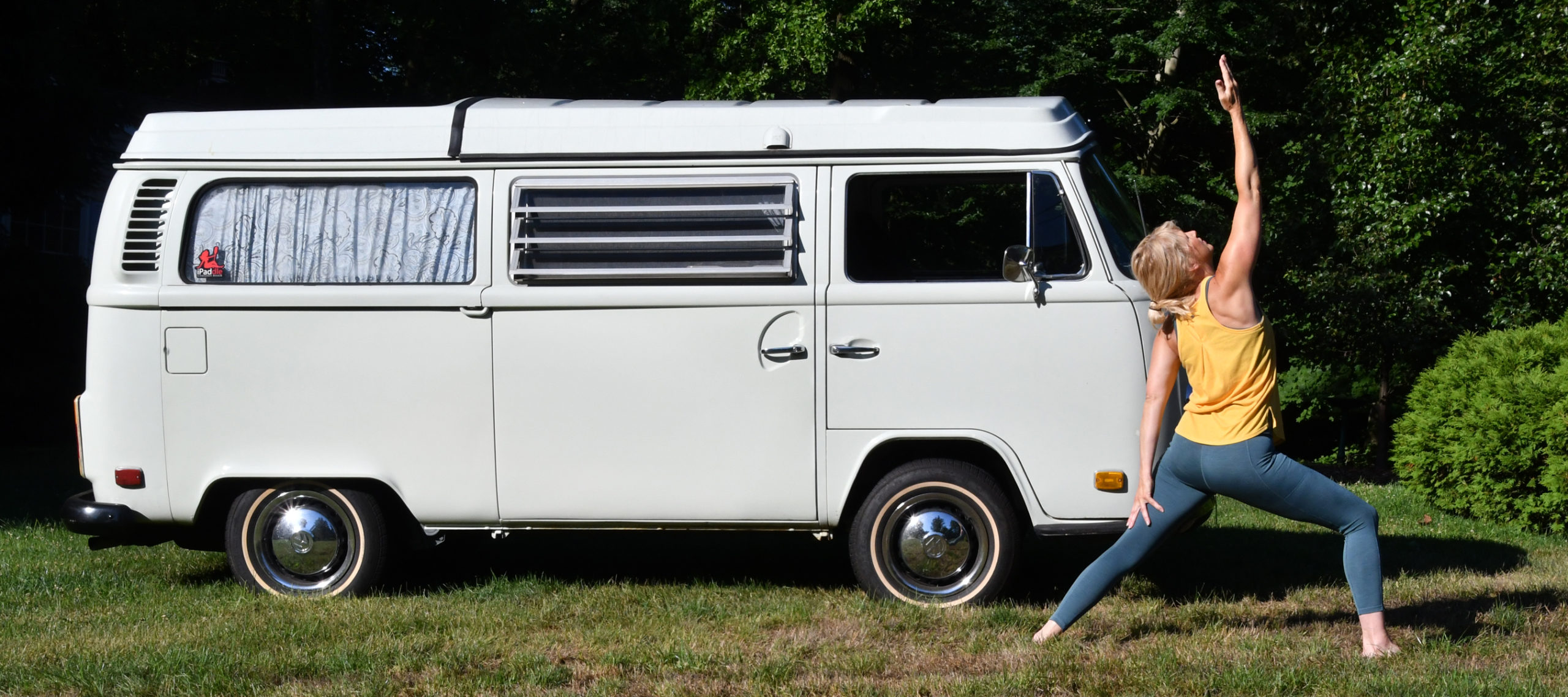
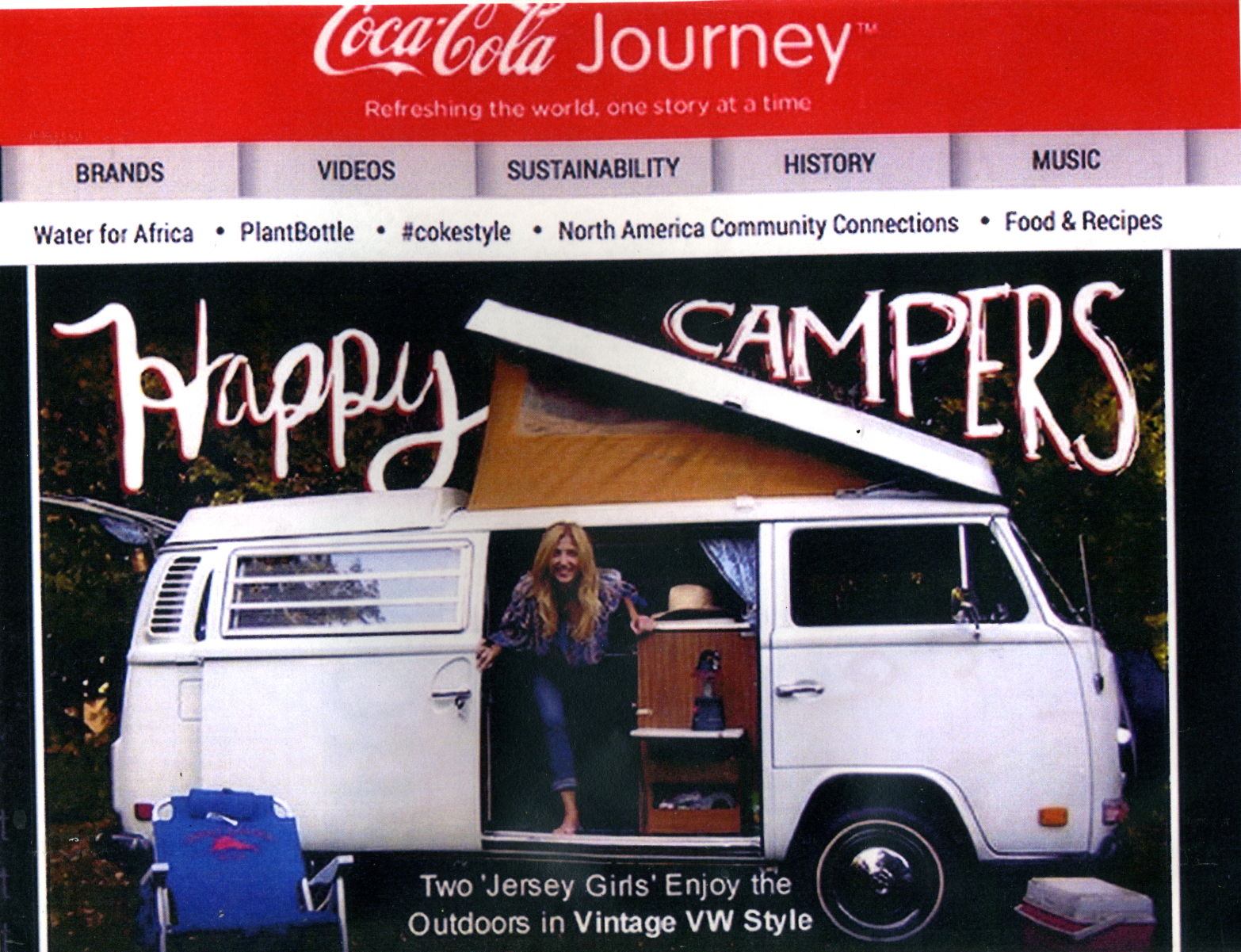
Shortly thereafter, Elaine encountered an automotive journalist, Jim Koscs, who believed Elaine and her van had a story to tell. Coca-Cola agreed. Months later Elaine and her Westfalia took center stage replacing Lebron James on Coca-Cola’s Journey Global website.

As time has passed, the blonde in her van has become a locally recognized fixture as, together, they traverse the county in search of interesting garage sales and more importantly to manifest quality yoga experiences. Training as a yoga teacher, Elaine will incorporate her Westfalia in offering an open air yoga experience she has developed called “Roadhouse Yoga.”


Imbued with her father’s wisdom, her mother’s kindness, her brother’s friendship and my love, Elaine’s Westfalia with each new mile carries treasured memories of a joyous past and hopeful dreams of a beautiful future.


By |2020-07-15T22:32:01+00:00July 15th, 2020|6 Comments

Cars We Love & Who We Are #6

Firing up a classic car with over a half century of history always brings with it a high probability of adventure and the unexpected.


When time and other things stand still


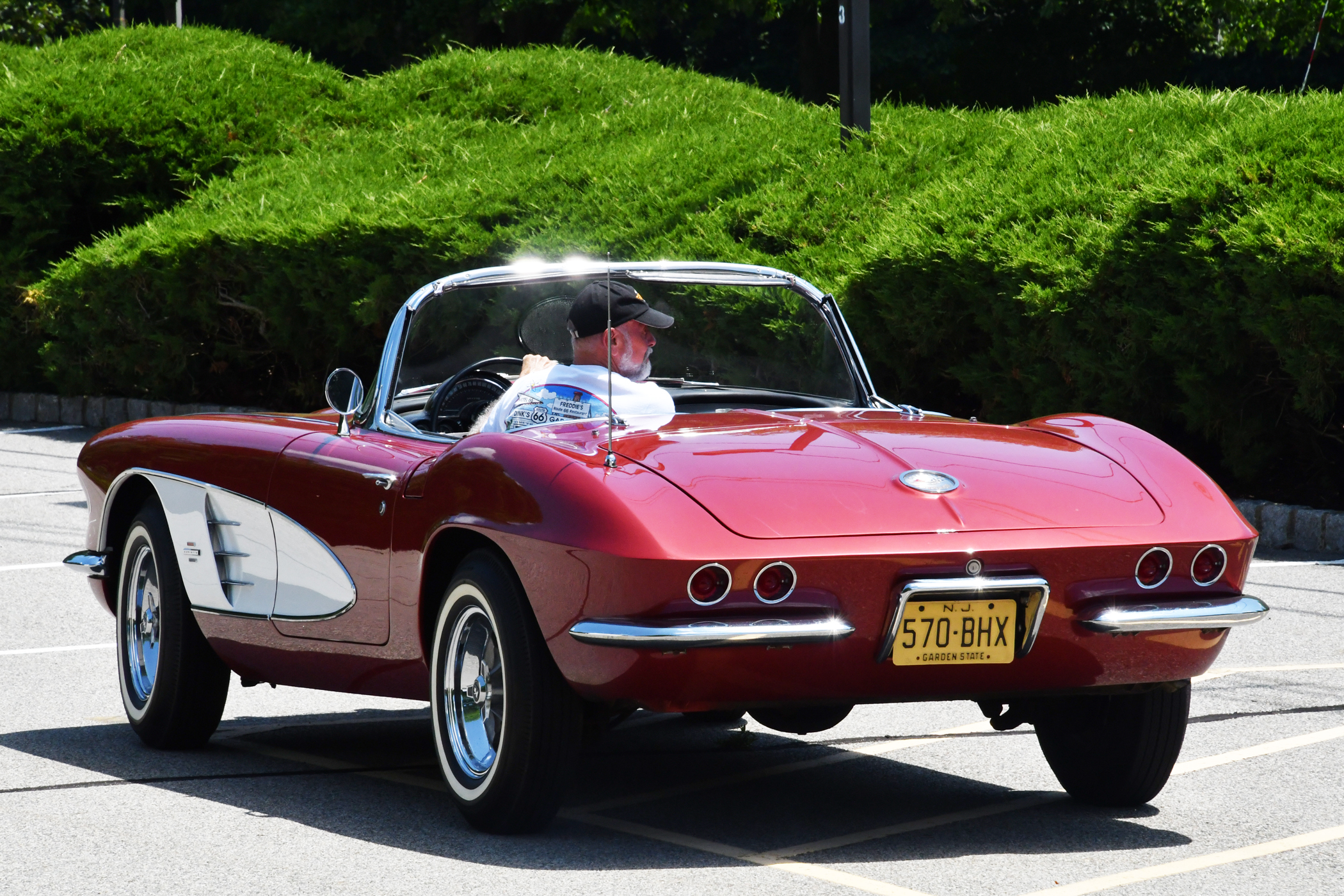
Dappled sunlight leaking through the forest canopy dances on the Corvette’s hood. It is a glorious morning on a twisting two lane that snakes through a state park. Elaine, my co-pilot for life, notices that the odometer on my recently restored 1961 Corvette stands poised to roll over to 59000.0 Actually it will be 259000.0, but in 1961 odometers only had 5 places preceding the decimal point.

A coordinated dance of digits that soon will resolve into a chorus line of zeros spin like a slow motion slot machine. Elaine, poised to nail the 59,000.0 money shot never gets the chance. At mid “.9” the odometer, as John Cleese might say, ceases to proceed.

Back home at the garage. The odometer might as well be a decal.

In planning my Corvette’s restoration, I never wanted an overlooked detail to haunt my post-restoration driving experience. With over a quarter of a million miles on my totally disassembled Corvette, I knew this was no time to cheap-out on rebuilding the instruments. The last thing I wanted was a fresh and eager car with tired instruments just waiting to crap out.

After contacting a Corvette instrument specialist on a recommendation from a respected source, I bundled up the speedometer, tachometer and clock for shipment confident that when my resurrected Corvette returned to the road it would do so with a freshly renewed set of instruments.

With a burst of Pollyanna-like optimism, I thought maybe the frozen odometer was just an anomaly, waiting for a second chance to cure itself.
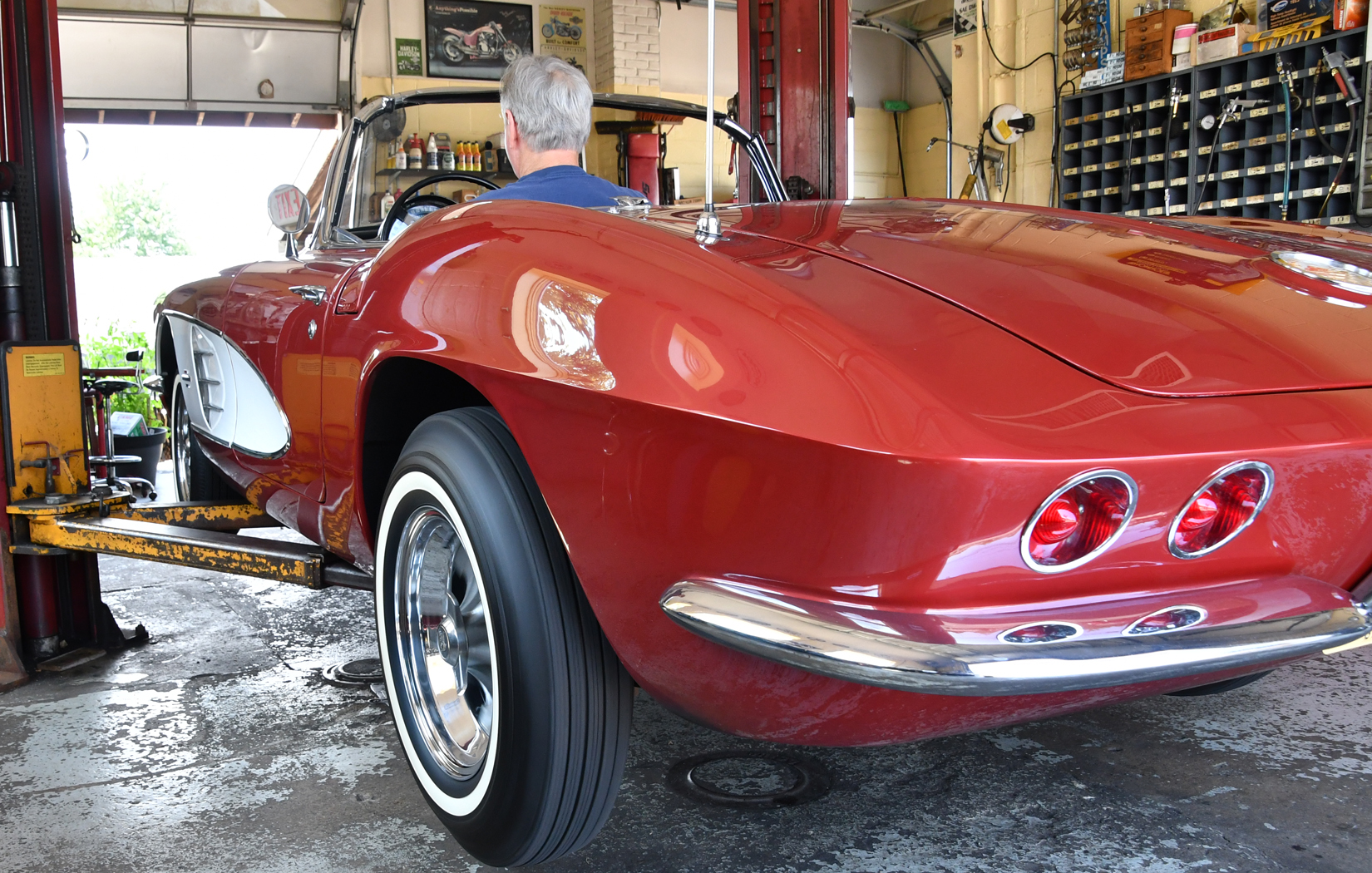
Security guards at the local industrial park must have watched with incredulous awe as this Honduras Maroon and Ermine White jewel circled the empty service road in reverse. Yes, the odometer would go backwards. Having rolled in reverse a good mile, I, like a knight in a joust, briefly paused then kicked the stirrups on the hearty small block and burst forward with speed and conviction. This time I would conquer the barrier and enter the realm of 59,000.

Barrier 2, Corvette 0.

Clutching at my final straw, I drove to Park Ridge 66, the shop owned by my friend and vintage car expert, Bob Tasman. Up on the lift went the Corvette. Under Bob’s doubtful but supportive eye my plan of peeling off 10 miles to “free” the odometer commenced. I surmised that rewinding two of the rotating number barrels would do the trick. Ten backward miles later, I left Bob’s shop to get a high speed highway head start at pushing that odometer through the 59,000 mile barrier. Bob in a friendly kind of way expressed his complete doubt at any chance of success. “One of the tangs in the head unit got broken or was improperly installed,” Bob said as I rumbled off with a shaken faith not unlike that of a small child seeing Santa drawing on a Marlboro behind the Macy’s Christmas display.

Barrier 3 Corvette 0

Time for a phone call.

Truth be told, I had overlooked the earlier failure of the Corvette’s freshly rebuilt clock. In retrospect, it clearly  foreshadowed dark clouds on the instrument horizon. However, I was so thrilled to finally have the Corvette back that I chose not to notice it.

Realizing that taking the speedometer out of the freshly but not easily reassembled dashboard was out of the question, my hopes hung on getting useful information from the instrument restorer himself.

“They never break,” said the man with whom I had entrusted my instruments and my mental health. The essence of my response included the information rich nugget, “well mine broke!”

Had he replaced the 60-year old odometer mechanism that was on its third time around as I had assumed he would? “No,” he responded, “We simply inspect and clean odometers.” He then added the kicker, saying, “replacing the unit would have added $50 to the job.” An additional $50 for a part that could now easily require thousands of dollars to replace and countless weeks of downtime. Did he not think that decision should have been left up to me? His response, “Well, they never break.”

As a chaser for that bitter pill, I asked about the clock he reconditioned that, now lifeless, only gives correct time twice a day. Oh they always break,” he says, “You get a year at most out of one.”

While I think I would have had a good case for justifiable homicide especially with a jury of vintage car owners, I instead have opted to simply enjoy my beautiful rumbling living recollection of mid-century American sports car history. Maybe the odometer will heal itself. If not, I am going on record for posterity that as of June 28th 2020 my 1961 Corvette had an honest 258,999.9 miles. I do not foresee ever selling it.
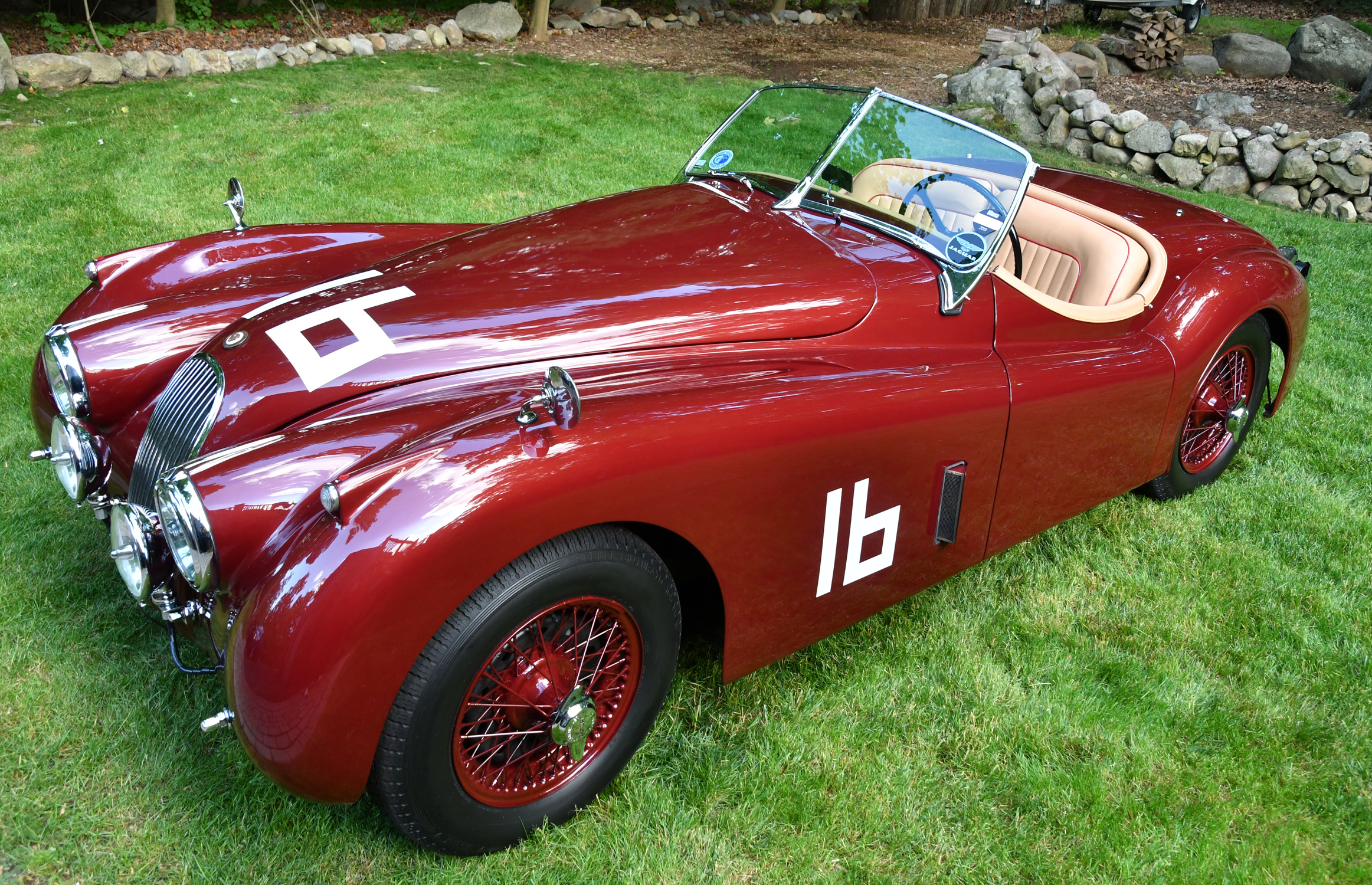
One of the joys of my bias ply shod, drum braked, dual carbureted, tube radio equipped Corvette resides in its ability to transport me back in time. Sometimes it even seems to make time stand still and, now, apparently the same will be said for its mileage.

By |2020-07-09T16:33:46+00:00July 9th, 2020|6 Comments

Cars We Love & Who We Are #5

If only cars possessing historic significance could talk. What stories they would tell. However, though beautiful, they remain sadly mute leaving it up to us to find their voice.

For the owner of a Sebring-raced XK120 it took 48 years for history to speak up.

Dagavar’s Jaguar, The truth at last

Since buying the 1954 XK120MC in 1971, Dr. Dick Santucci appreciated that by its very nature this Jaguar was special. It would take a phone call 48-years later for him to find out just how special.

Throughout Dick Santucci’s childhood, Fred Dagavar’s 1954 XK120 roadster filled the young boy’s dreams thanks to Papa Santucci’s prolific storytelling abilities and great friendship with Dagavar. Rich with grit, bravado, exotic cars and famous drivers, stories about Dagavar racing his Jaguar filled the Santucci’s Bronx kitchen and gave substance to a child’s dreams of adventure.
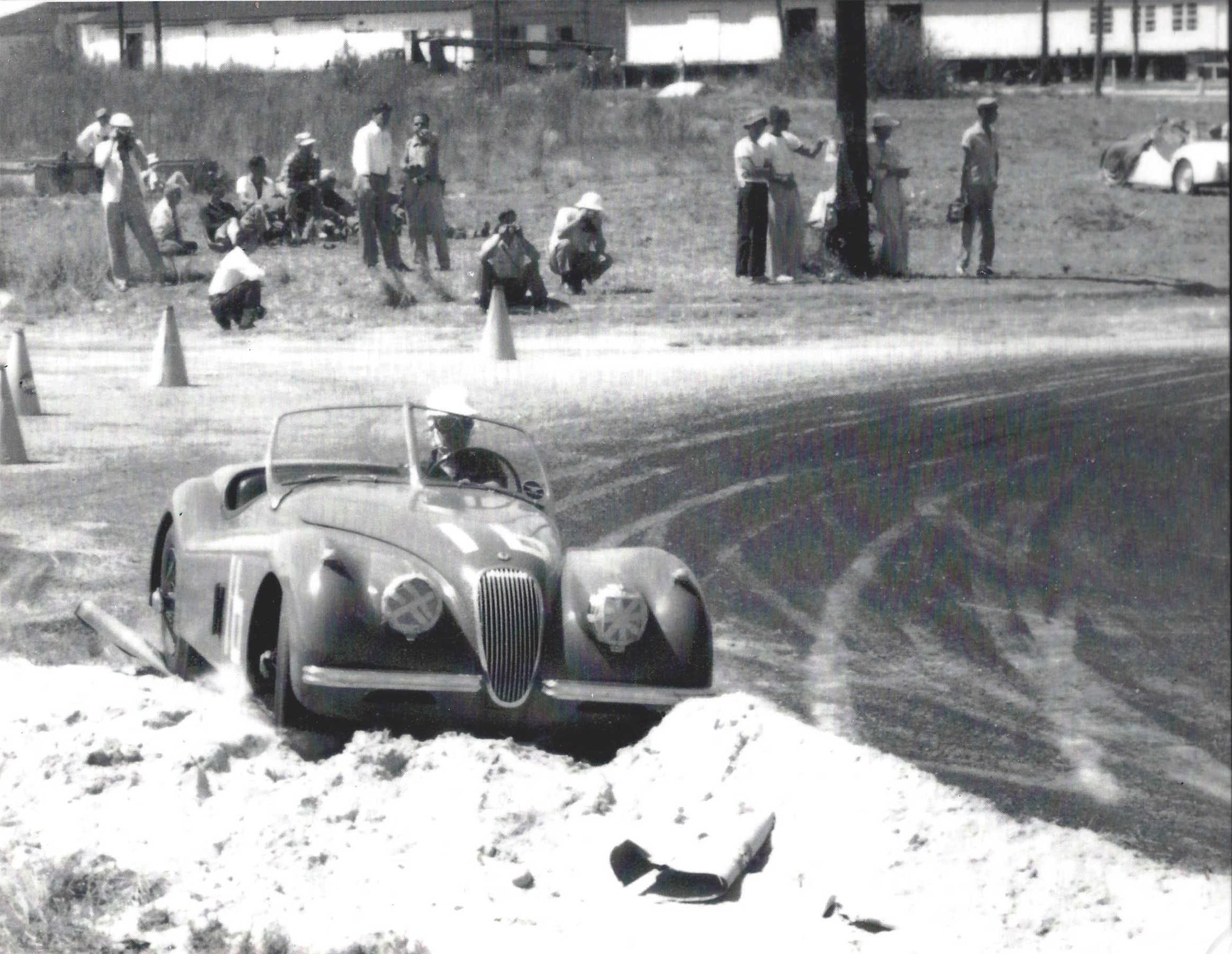
Years later, Dagavar, now in his ‘70s, considered selling his long retired and battered Jaguar. Santucci jumped at the chance to own the British sports car that had starred in his childhood reveries. However, with little spare time available or money remaining, Santucci knew that the severely distressed sports car would have to wait years for resurrection. College and chiropractic school would come first.

By 1978 Santucci had established his chiropractic practice. By 1981 the Jaguar returned to the road, reborn.

Having dueled against a pantheon of driving legends such as Briggs Cunningham, Stirling Moss, Luigi Chinetti, Phil Hill, Carroll Shelby and Mike Hawthorne; it was only fitting that Dagavar’s Jaguar, in an age of trailer queens, would benefit from Santucci’s passionate desire for the Jaguar to run strong and free.
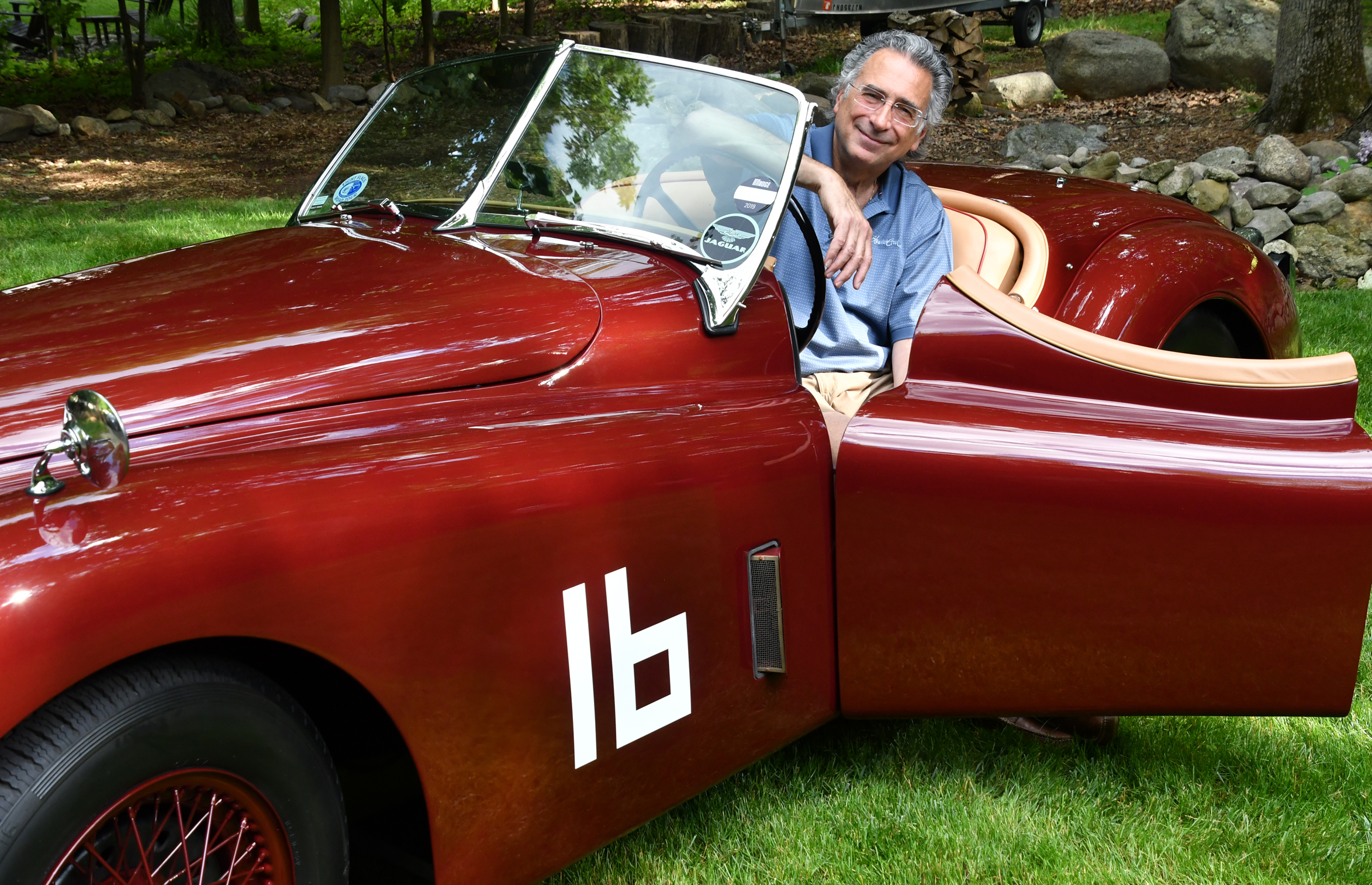
Decades of driving pleasure and a total restoration, thanks to a deer that did not look both ways, culminated in 2019 with Santucci’s Jaguar being invited to the Amelia Island Concours d’Elegance. Santucci took great pleasure in witnessing what he believed would be the Dagavar Jaguar’s pinnacle achievement and confirmation of its special qualities. He had no way of knowing the secrets Dagavar’s Jaguar had yet to divulge until, back home, his phone rang.

“Do you know what you have,” asked the caller. “I am pretty sure I do,” Santucci replied. The voice of vintage Jaguar owner John Strader of Colorado spoke with confidence and conviction about the few XK120 Jaguars that went back to the factory for special attention. Strader explained that he had seen Santucci’s car on the Amelia Island website and that very few of these cars were ever produced. Actually Strader said he owned what he believed was the only other one of its kind in existence.

In the course of multiple exchanges, Strader, put Santucci in touch with Roger Payne of Perth, Australia. Payne a retired engineer and Jaguar historian was a fountain of Jaguar information.
Learning of the Dagavar Jaguar’s existence, Payne displayed a ravenous appetite for serial numbers and photographs. Like an Egyptologist in a newly discovered pyramid chamber, Payne immersed himself in researching his discovery.

Coming up for air, Payne awarded Santucci with the knowledge that only a handful of 1954 Xk120s returned to the factory to be custom equipped and factory-tuned with one of the spare second generation C-Type heads meant for the LeMans racing team.

It appeared Dagavar, who was a founding member of NASCAR and good friend of Bill France, met Jaguar’s legendary LeMans racing team manager Lofty England through Bill France at Sebring. At that time England promised to arrange a factory upgrade that included a spare C-Type head from the racing team. Santucci, Payne announced, owned one of two matching number examples in existence. Special indeed.

Associating this extraordinary provenance to the already stunningly restored vehicle proved to be the special sauce that enticed the Greenwich Concours d’Elegance to invite the Dagavar Jaguar to display on Sunday June 2nd 2019.

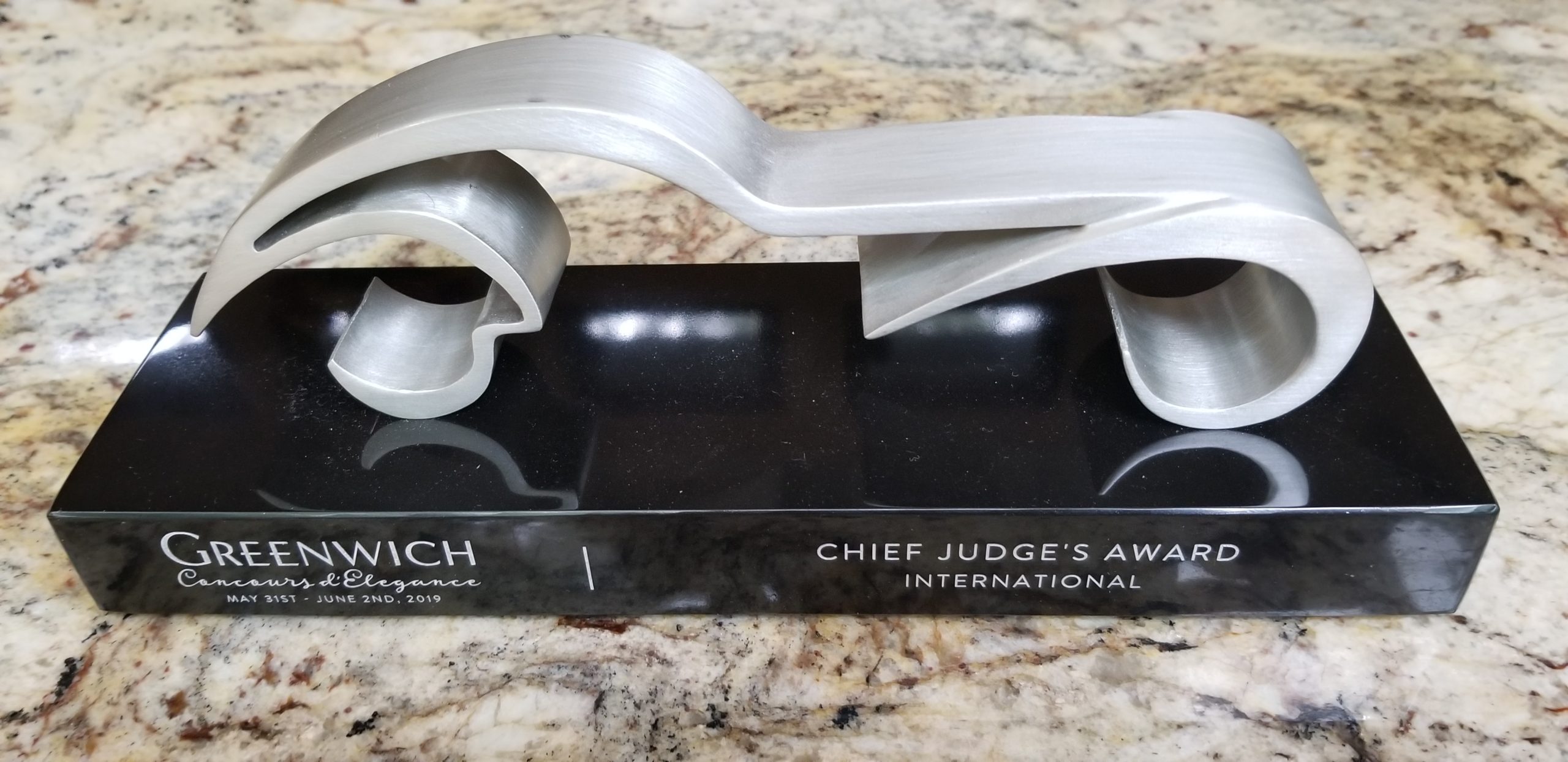
That Sunday at Greenwich, the Dagavar Jaguar, received the Chief Judge’s Award – International. In accepting the award from historians Ken Gross and David Schultz, Santucci smiled acknowledging that Dagavar had planted the XK into a sand bank at Sebring in 1955. Thus, this was the first win for the Jaguar since Dagavar bought the car in 1954.


Dick Santucci has entered his XK120 in the American Collectors Insurance virtual car how. It is in the “Foreign” category. If you would like to vote for Dagavar’s Jaguar the link is:

https://americancollectors.com/virtual-car-Show/?app_data=entry_id%253D247575938&category=foreign

By |2020-07-09T16:35:09+00:00June 18th, 2020|4 Comments

Cars We Love & Who We Are #4

It’s spring and young men’s and women’s fancy turns to thoughts of… driving their classic cars. Granted our fancy turns to thoughts of other things too, but right now I am talking classic cars.

Unlike all previous springs the joyous social nature associated with our classic car passion has been knee-capped by the Covid-19 pandemic. Conflicted by our unshakable determination to do the “right thing” and our passion for the open road, we yearn for a responsible solution. How about this?

Carnucopia

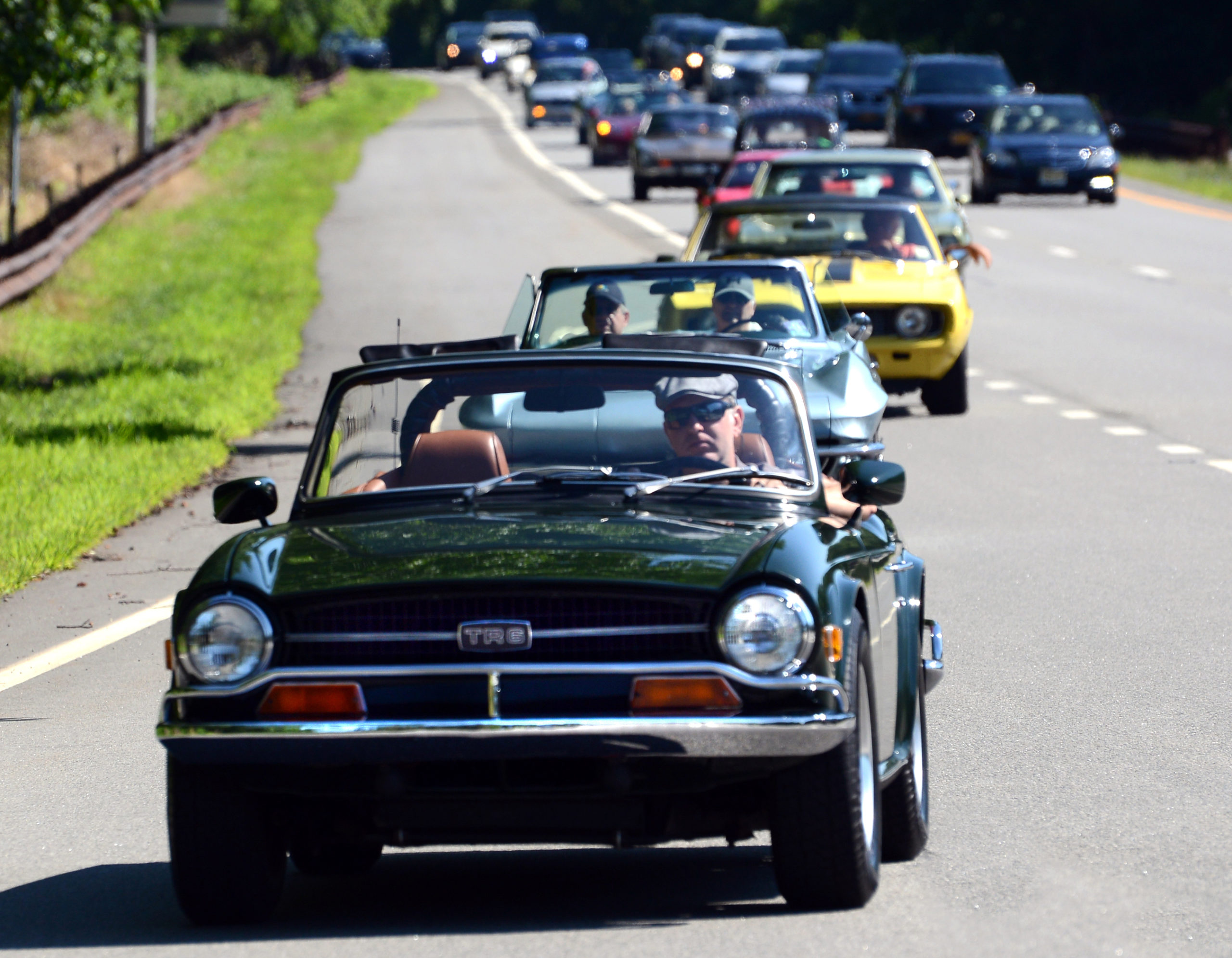
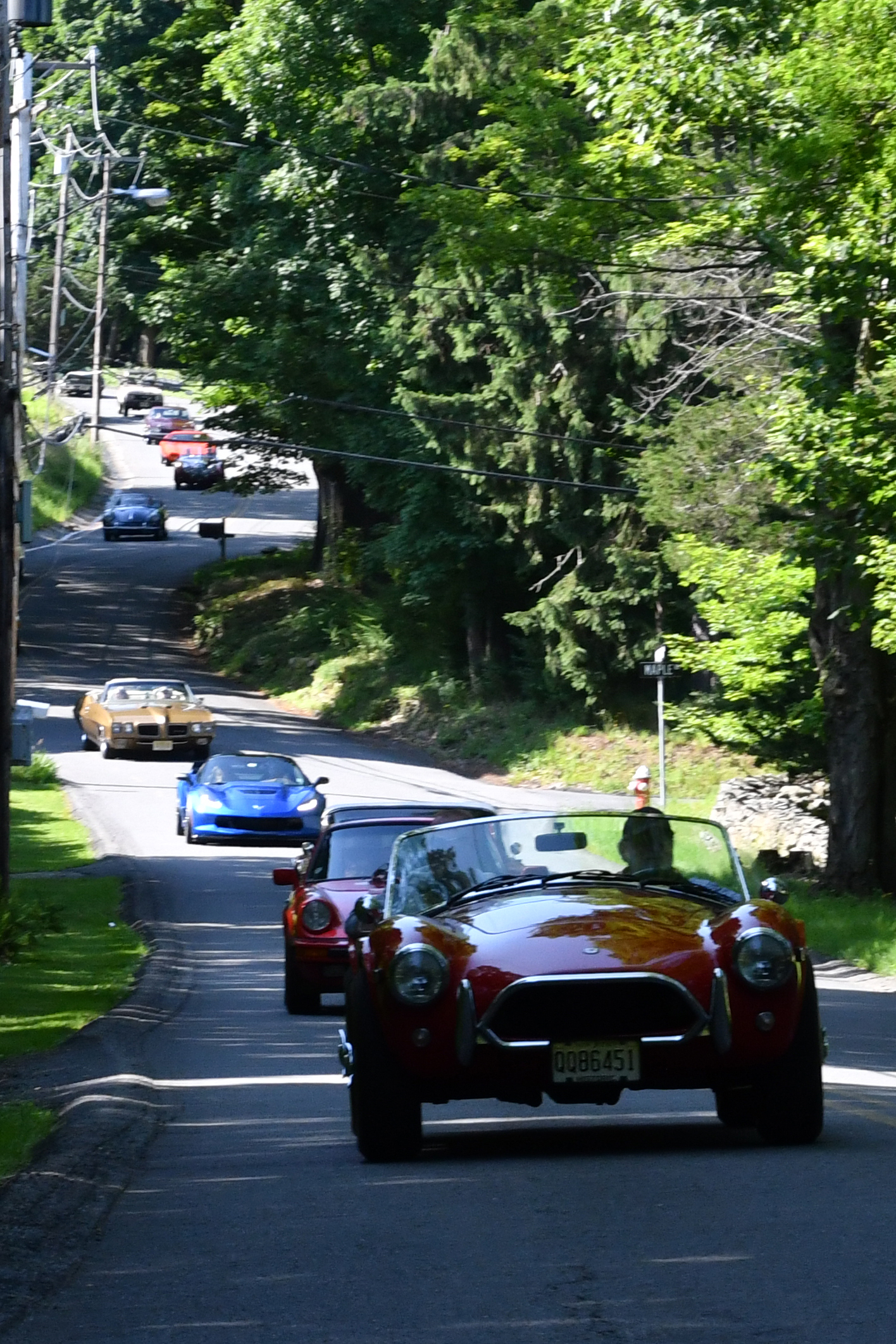
 Carnucopia offers a classic car driving event that combines helping people in need with food and necessary supplies while affording a gathering of friends an opportunity to enjoy a great drive on country roads. All while practicing proper social distancing.
Carnucopia is both a driving event and a fund raiser. Participation in the driving event requires a minimum donation of $25. Larger donations are welcomed. All moneys will go to the Triboro Food Pantry, a Park Ridge, NJ 501C3 non-profit organization. Click on the link to visit their website. They support families across Bergen County. Donations are tax deductible. Please make out all checks to Triboro Food Pantry.
In essence the plan calls for all participants to gather at 8:00 am on the morning of Sunday, May 24th at the Kohl’s parking lot on Route 17 North in Ramsey NJ.

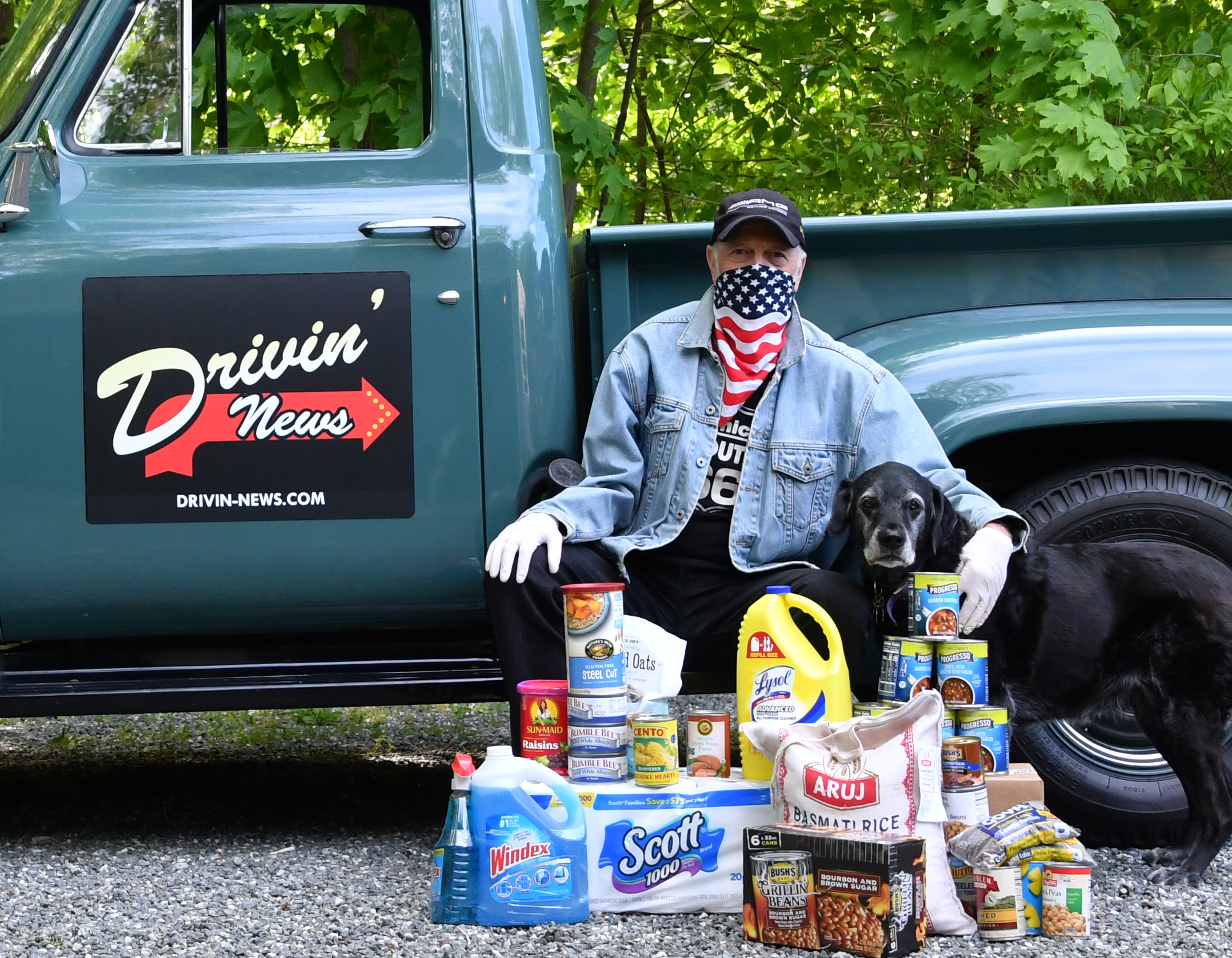
The Drivin’ News 1953 Ford F100 pick-up truck will be positioned where all participants can stop to make their donation and get route directions. Volunteers will direct participants to alternating parking spots to allow for proper spacing. PEOPLE MUST STAY IN THEIR CARS.

The drive leader will depart at 8:30 sharp.

Key Facts

  • Starting location: Kohl’s, 1300 Route 17 North, Ramsey, NJ 07446
  • A donation of a minimum of $25 is required
  • Arrive time: 8:00 am
  • Depart Kohls: 8:30 sharp
  • Distance: Approx 45 miles
  • Duration: Approx. 1.5 hours
  • Drive leader: Peter Desbets, 1986 Red Porsche 911
  • Directions are provided so that even if you get separated you will know where you are.
  • The drive will conclude at the light at the intersection of Seven Lakes Drive and Route 17 in Sloatsburg.
  • Triboro Food Pantry 501C3 tax ID# 81-1480802

Covid-19 Rules of the road

  • ALL PARTICIPANT MUST HAVE GLOVES AND MASKS WITH THEM
  • SOCIAL DISTANCING RULES MUST BE OBEYED.
  • EVERYONE MUST STAY IN THEIR CARS
  • CARS WILL BE POSITIONED EVERY OTHER PARKING SPOT
  • WE WILL ATTRACT ATTENTION, IT JUST SHOULD NOT BE FOR THE WRONG REASONS

IMPORTANT

A head count of intended participants is needed. If you plan on attending, please respond with your name and intention in the comments section. Without sufficient support the drive event will be cancelled.  I need to hear from you by Friday afternoon. By supper time Friday I will send out an email that will state if the drive is on.

The weather looks good.

By |2020-05-20T23:50:29+00:00May 20th, 2020|8 Comments

Cars We Love & Who We Are #3

Leaving the cold sun of winter behind, May brings the first hot kiss of provocatively lengthening daylight. Memorial Day approaches. Garage doors open to proclaim wrenching’s transition to a summer sport.

Even as the Coronavirus shroud lingers, the summer sun brings hope. Cars we love, like hibernating bears, prepare to leave their caves. We do all we can to help them. This is one man’s story.

Austin Healey? Nope! It’s Austin’s Crosley


Wayne Carini badly wanted Irv Gordon’s 3-million mile P1800, the world’s most famous Volvo. Bob Austin, who had joined Carini at the Long Island garage that housed Gordon’s collection since Gordon’s passing in 2018, possessed an equally passionate desire. However, though a longtime Volvo executive and Irv Gordon’s good friend, Austin’s yearning focused on another car in Gordon’s collection, a little green golf cart sized Crosley sports car.

Carini’s effort would bear no fruit. Gordon’s 3.2 million mile P1800 would assume its rightful place of honor in Sweden as a star at the Volvo Museum. Austin on the other hand smiled all the way home as the owner of a 1949 Crosley Hotshot with 4,700 miles.

Austin’s taste in automobiles might best be described as eclectic. Austin’s litany of past drives include a Ferrari, Avanti, Willy’s Jeepster, Cobra, Sunbeam Tiger, MG TD, Volvo 740 Turbo station wagon, a Royale Formula Vee race car (which presently resides in Austin’s living room…no really, his living room), but his heart belongs to Crosley. Austin’s youthful dalliance with an NSU Sport Prinz is best considered a telling behavioral marker foreshadowing his lifelong blind love for anything Crosley.

Peering behind Austin’s unapologetic passion for vehicles born of Powell Crosley’s post-WWII foray into the automobile business reveals, as is often the case with curious behavior displayed in adulthood, a childhood experience.

As a 10-year old, Austin loved his father’s 1957 Chrysler. With giant fins, sleek visual dynamics, hemi power and a massive road presence, that Chrysler bristled with character cues that George Barris would later employ in creating Adam West’s iconic Batmobile. However, young Austin could not conceive of piloting that finned chrome behemoth. Boy and beast just did not connect. But then one day…

Young Austin laid eyes on a Crosley. In recollecting that first glimpse, Austin says, “As a kid I thought hot damn! This is a car I can relate to.” For young Austin here was a car built for him. It had little tiny wheels and tires on a kid scale chassis. He could imagine driving a car like this and working on a car like this.

Sporting a smile with roots in a child’s dream, Austin says, “Every time I see one, it takes me back to that joy experienced as a 10-year old.”

Restored in the early 1980s, Irv Gordon’s Hotshot was last driven in 1988. Austin finds the 4,700 mile odometer reading quite believable. Acknowledging the Crosley’s limited comfort, Austin says, “I doubt anyone could drive a Crosley much more than that.” Austin notes that when dealing with hills, the Hotshot’s 46 cu. in. 25.4 HP engine is incapable of breaking any posted speed limit.

Austin’s initial intention simply called for new tires and a fresh battery. However, the Covid-19 lockdown restricted his driving opportunities, severely limited his ability to register the car and expanded his free time. Thus, the Covid-19 pandemic while sparing Austin’s health infected Austin’s Hotshot project with the dreaded “Scope Creep.”

The famous slippery slope witnessed “new tires and a battery” drift into “maybe those kingpins seem a little sloppy’ to presently where the disassembled suspension and brake components litter the floor below the four jack stands that suspend the shoeless Hotshot like Luke Skywalker’s Landspeeder in dry dock.

“It will be finished by June,” says Austin. As he lowers the garage door he looks back at the Crosley and flashes a smile that remains forever young.

By |2020-05-07T10:25:59+00:00May 7th, 2020|13 Comments
Go to Top