Blog

Conversations With People We Value #34

Creating a media frenzy over thirty years ago, it could have destroyed a globally respected brand. To recall just what happened, I interviewed retired Volvo PR Manager Bob Austin, a key player in what proved to be a template for effectively managing a potential corporate crisis.

The monster truck that nearly crushed Volvo


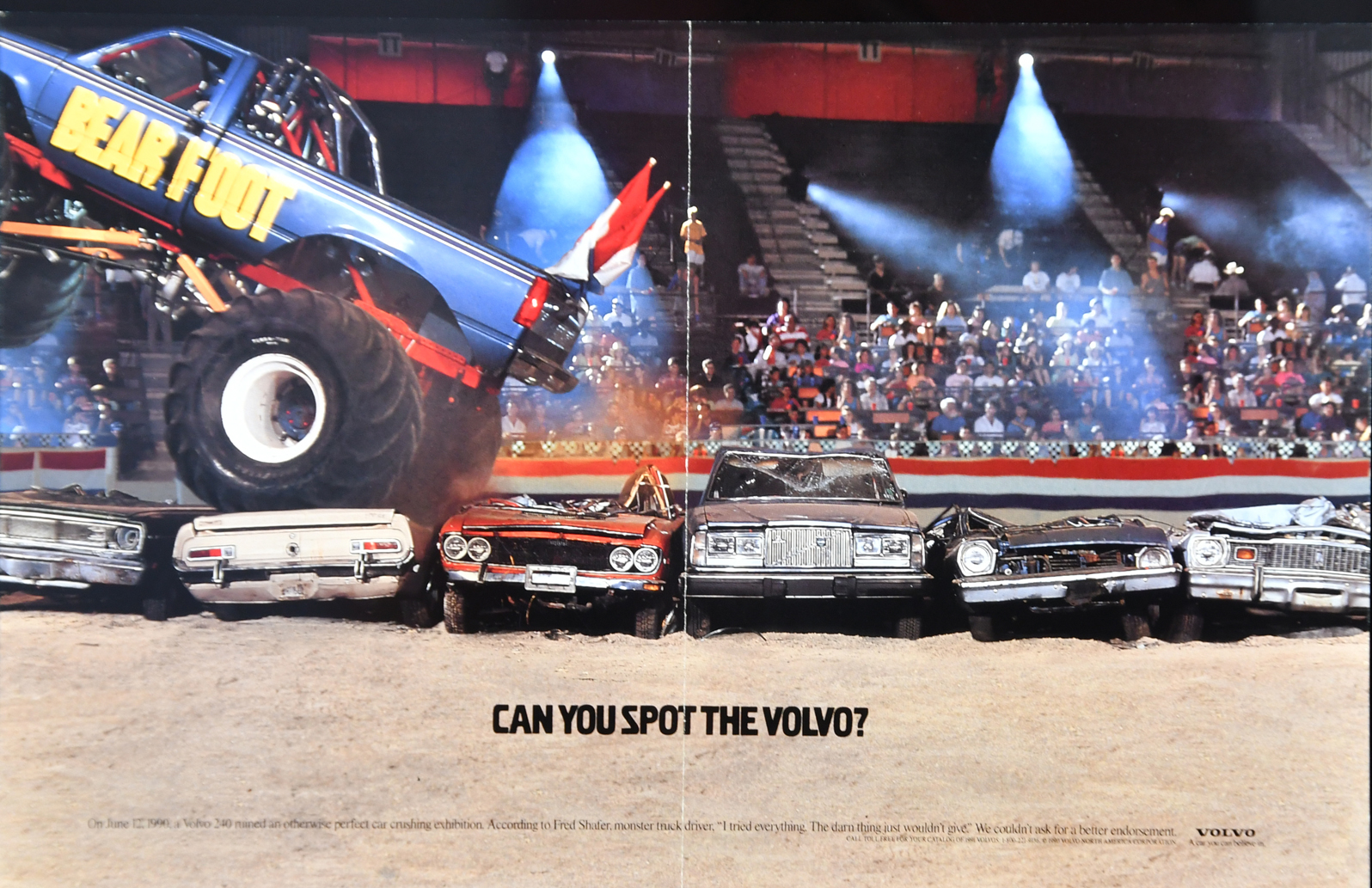
Inspired by car punishing monster truck events exploding on the scene in the late 1980s, Volvo in October of 1990 released a compelling TV commercial intended to promote its legendary rugged construction. Once broadcast, the ad would instead plunge Volvo into crisis.

On what should have been one of life’s better days, Volvo PR Manager Bob Austin’s honeymoon was interrupted by a phone call from Volvo Corporate Counsel, Bob Mercer. Mercer quickly popped Austin’s bubble of bliss and cut to the chase saying, “Can you be in the office tomorrow?” “What’s up?” asked Austin. “Better you should come in,” Mercer replied. Thus began what Austin, decades later, would recall as three of the most stressful months of his life.

At Volvo headquarters, sitting across from Mercer, Austin learned that the office of the Texas Attorney General, Jim Mattox would be charging Volvo with knowingly creating a fraudulent and misleading television commercial.

Looming as exhibit 1 supporting Mattox’s startling accusation stood the Volvo television and print campaign that would forever be known as “Monster Truck.”

Concerned to say the least, Mercer asked Austin if he knew anything that could account for this accusation. Austin stated that he was unaware of any problem. Mercer quickly changed that by dumping it squarely in Austin’s lap.

“Monster Truck” as a concept found its inspiration in an actual monster truck event held on September 11th 1988 in Essex Junction, Vermont.

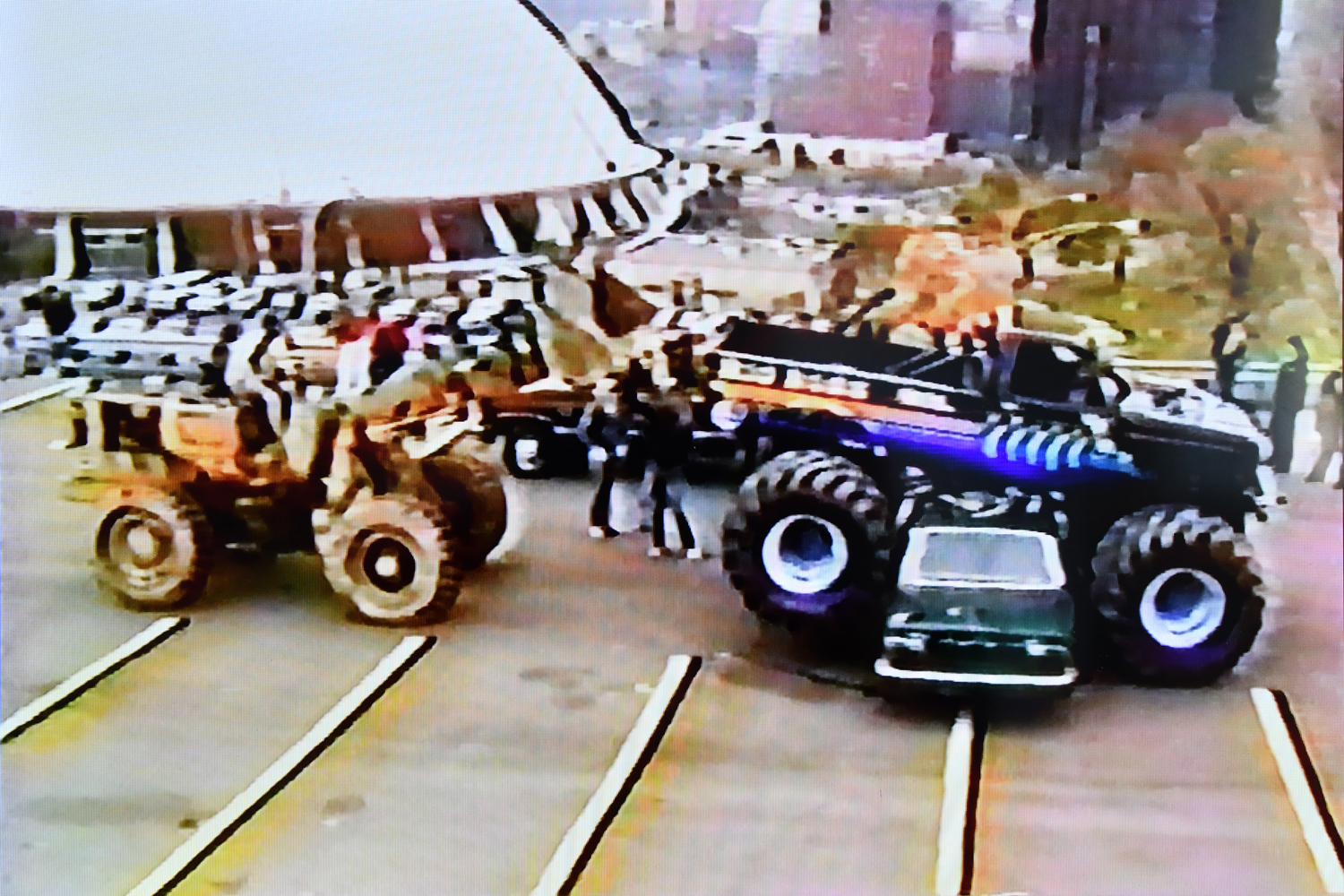
By happenstance a person associated with Volvo’s ad agency at the time, Scali, McCabe and Sloves, while on vacation had attended that Essex Junction event. On that September day in a dynamic flurry of flying dirt, waving flags, and bleachers filled with screaming fans an airborne monster truck set out to crush a row of cars. After a few passes by the massive monster truck the agency employee realized that, unlike the other vehicles in the row of sacrificial cars, a lone Volvo had stood up to the pounding with its roof remaining defiantly upright. Inspired by what he witnessed, the vacationing employee acquired video of the event. Back home, he shared it with the agency’s Volvo account staff and quickly set creative wheels in motion.

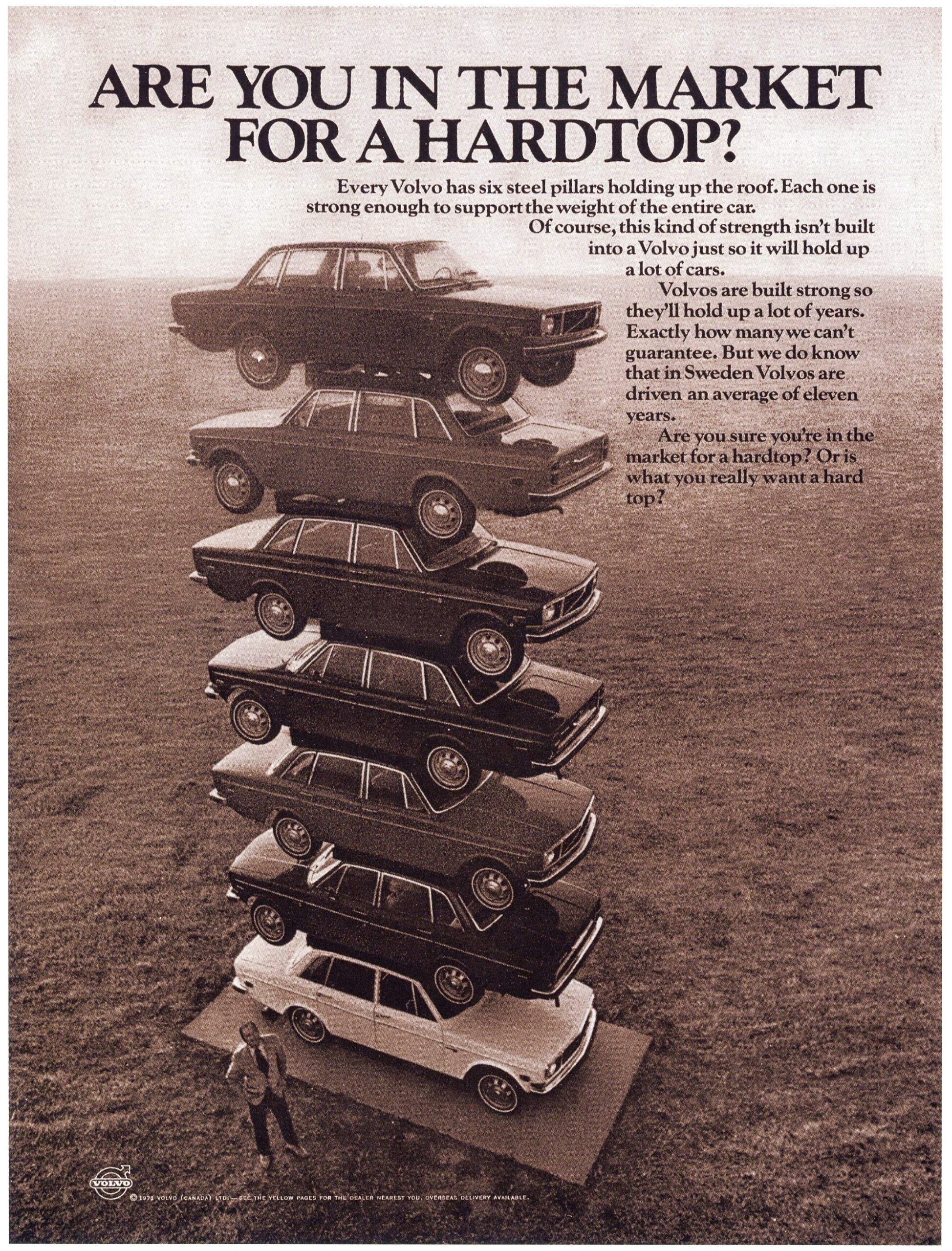
Historic Volvo ad touting roof strength

When Scali, McCabe & Sloves pitched the “Monster Truck” idea, a very interested Volvo responded by first reaching out to its engineers in Sweden to confirm that a Volvo 240 could indeed withstand such punishment.

Sweden responded with a resounding “Ya Sure.”. Engineers confirmed that each of a Volvo 240’s roof pillars had been designed to support the total weight of the entire vehicle, roughly 3,000 pounds. Doing the math, a Volvo 240 wagon with its 8 pillars should support about 24,000 pounds. Confidently, Volvo engineers concluded that the Volvo roof could easily support a typical monster truck weighing roughly 12,000 pounds.

Armed with those assurances Volvo gave its approval. “Monster Truck” would be produced as a cleaner, clearer re-enactment of the original 1988 Vermont event.

According to Austin, Scali, McCabe and Sloves awarded the project to a production company which while relatively new enjoyed a high level of confidence with the agency as it was populated with trusted past employees of the agency. It also came in with the low bid.

With concept and team in place, attention turned to location. It had to have a dirt floor. Flying dirt would dial up the drama of the monster truck making rampaging bull charges at a stationary line of cars. Another “must” was bleacher seating to accommodate the wildly screaming fans cheering the mayhem. With slim pickings in the New York metropolitan area, an expanded search located an ideal venue. A rodeo arena in Austin, Texas fit the bill perfectly.

Vehicles gathered for the shoot included the monster truck, over a dozen random used cars and three used Volvo station wagons. The need for more sacrificial vehicles than would ultimately appear in the ad was necessitated by the nature of film making. Multiple takes of the same scene often occur in order to get the best shot. When the repeated action requires a monster truck to punish a car, wear and tear can take a serious toll on the cars.

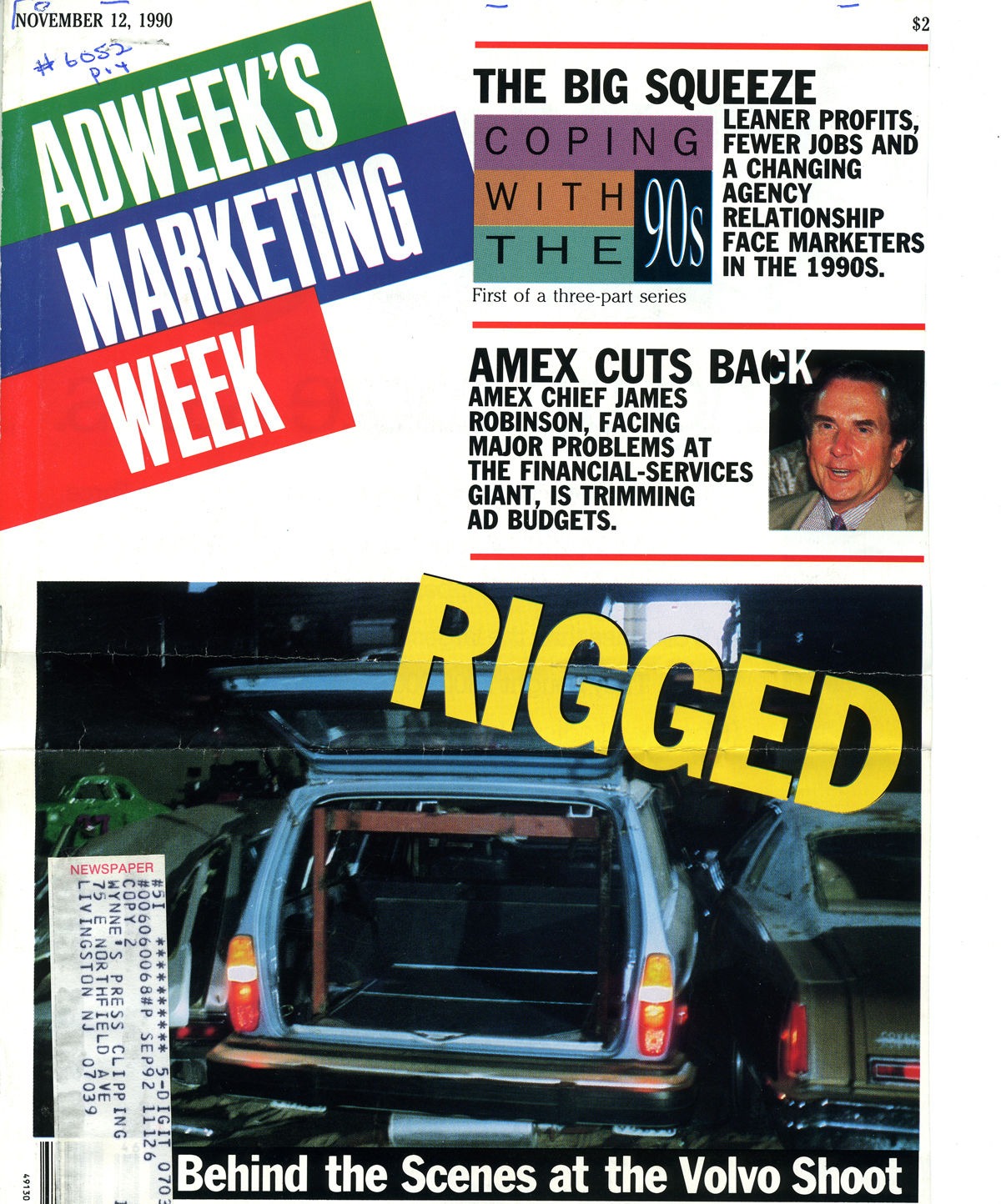
AdWeek front cover

To fill the bleachers with screaming fans, ads appeared in the local newspaper inviting people to participate in the filming of a Volvo commercial. Many people came. They fulfilled their role as rabid monster truck fans admirably. As directed, they wildly cheered for the destruction of helpless vehicles only to dissolve into a disbelieving cohort when confronted with a defiant crush resistant Volvo.

Once completed, Volvo management understood the filming to be uneventful and highly successful with the result being an attention grabbing television commercial dramatically and humorously promoting the signature strength and durability of Volvo cars. In other words, “Monster Truck” would add yet one more classic Scali, McCabe and Sloves execution to their Volvo commercial reel. Alas, it would not be so. Volvo, the company, now faced the even more punishing slow turning wheels of the Texas State Department of Justice.

With the threat of legal action looming over Volvo, Austin and Mercer, after speaking with agency management, sat down with members of the production team. They asked pointedly, did anything unusual happen during the production. Interviews with the production team affirmed that nothing of note was done to the cars. With due diligence completed, Austin, Mercer and the agency felt quite comfortable with their understanding of what had happened.

As Austin says, “We concluded that some of the extras who had been hired to be the audience had expected to see an actual “Monster Truck” event, one that takes place in real time. If an audience member had no experience in film production, he or she might have been confused by seeing the filming of one shot multiple times and the order of shots filmed in a non-sequential fashion.”

Volvo’s team confidently believed that surely this must be the cause of any misunderstanding.Creating a media frenzy over thirty years ago, it could have destroyed a globally respected brand. To recall just what happened, I interviewed retired Volvo PR Manager Bob Austin, a key player in what proved to be a template for properly managing a corporate crisis.

“Back then it was understood that being contacted by Texas AG Jim Mattox was a serious matter. That said, we felt pretty good,” says Austin. We were confident that we could explain that it was just a misunderstanding. Volvo’s team comprised of Austin, Mercer, Volvo’s Ad Manager and agency representatives prepared to fly to Texas to meet with Mattox. Actually, the Volvo team would be meeting with a member of the Attorney General’s staff William Goodman.

Austin recalls being greeted by a pleasant woman behind a desk who, upon welcoming the Volvo team, turned over her shoulder and with the signature regionalism of a Texas native called through an open door, “Bill, the boys from New York are here.”

With that auspicious welcome, Austin’s first thought was “Oh s%*t, we are in trouble.”

Image taken at filming

As the group turned to the open door, a man behind a large desk motioned them in with a distinctive Texas flair. Austin recalls, “He was dressed in a classic western style shirt with the snap flap pockets, he invited us to take a seat.” Three rows of chairs faced Goodman’s desk. Mercer and Austin, who would be representing Volvo, sat in the first row, the others retreated to the rear.

Mercer led off by reviewing the charges and Austin followed-up confidently explaining Volvo’s belief that it all was a misunderstanding based on some audience members’ unfamiliarity with the process of film making.

Seeking to clarify or some might say to firmly set the hook, the Goodman restated Volvo’s position that it was simply a misunderstanding. Austin confirmed that that was correct.

Like a fast hand gunslinger in a barroom shoot out, the attorney pulled out a stack of photos and said, “Then perhaps you can explain these.”

Image taken at filming

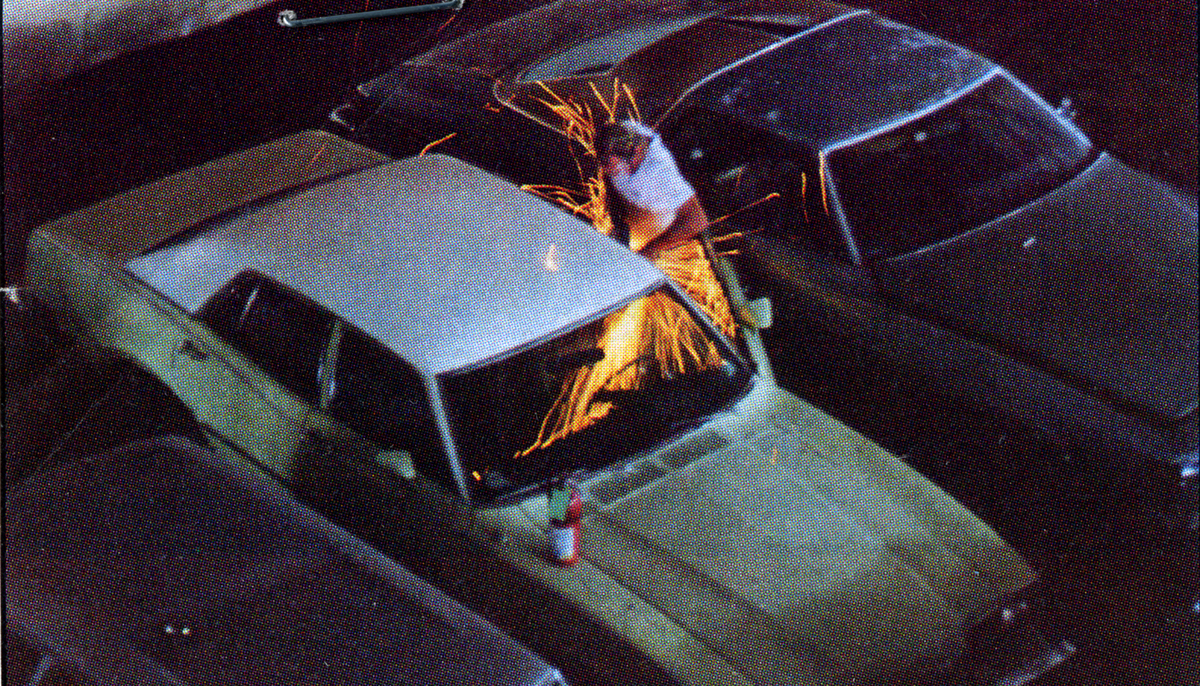
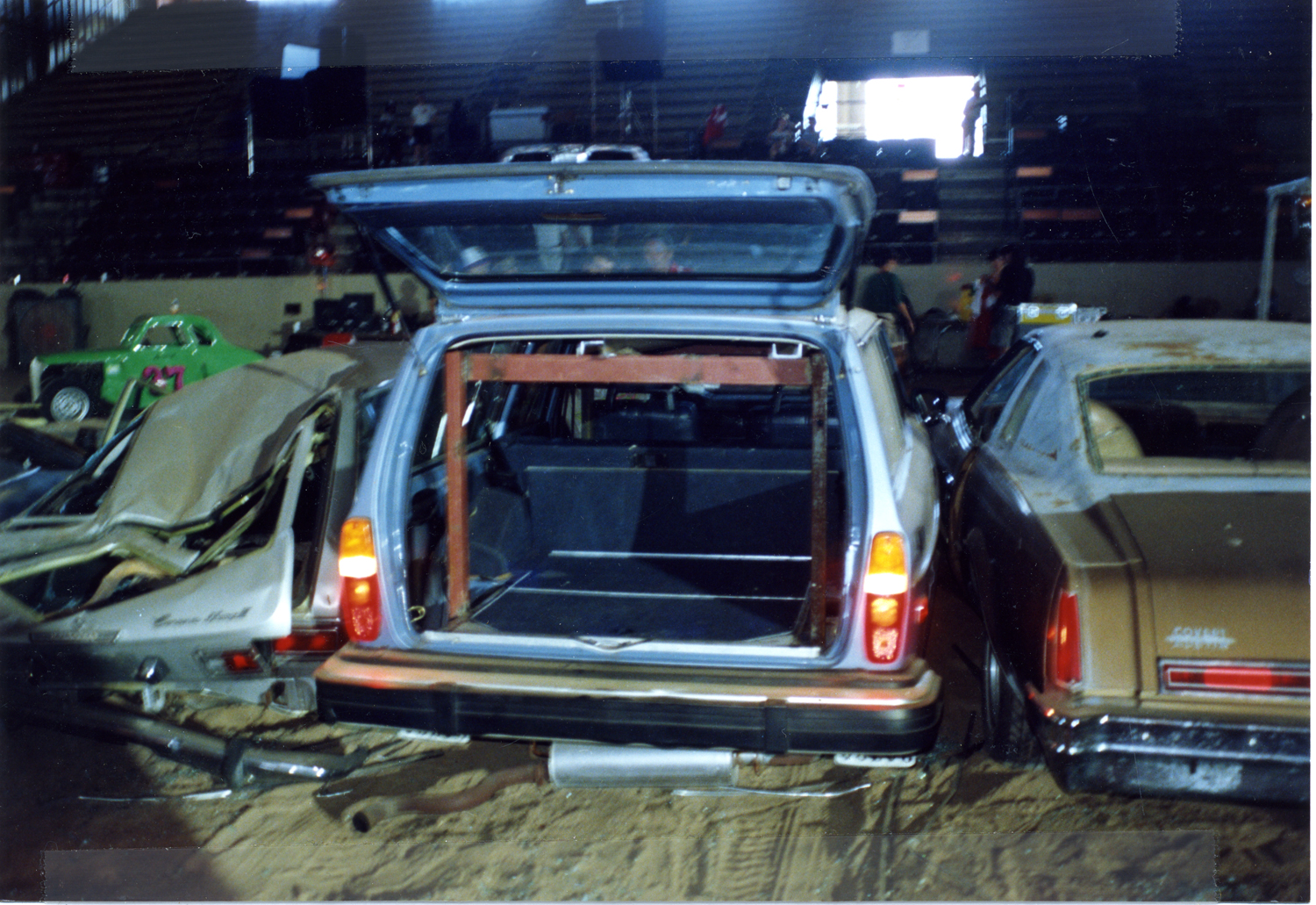
A tense silence filled the room as Austin slowly silently reviewed each photo before passing it to Mercer on his left. First came an image of the open tailgate of a Volvo 240 wagon with three 2-inch diameter tubes running from the floor to a cross member positioned horizontally under the roof. Next photo showed a man standing behind the side of a non-Volvo sedan with his shoulder raised as if he held a heavy object. A large ribbon of sparks shot out from the car past him. The next photos proved to be no less disturbing.

Accepting each from Austin, Mercer inspected each photo slowly in silence for what, Austin says, “Seemed like an eternity.”

Mercer broke the spell. He pushed back against the Texas attorney’s assumptions, saying, as Austin recalls, “I know you would like me to believe that these three tubes are there to support the roof. However, for all I know these three tubes could be a camera mount.” Mercer went on to suggest that the ribbon of sparks rather than caused by an effort to compromise the non-Volvo could be caused by the removal of a badge or other recognizable feature so that the car could not be identified.

While Mercer blunted the initial attack, the embarrassment and disbelief caused by these disturbing photos hung heavy in the room for the Volvo faithful. Agency members in the room sat mute and terrified. They too thought it had been audience misinterpretation.

As Austin recalls Mercer continued asserting that the two parties stood at an impasse. Mercer suggested that having the cars to view would certainly be a help. “No problem” fired back Attorney Goodman with a speed and finality not unlike a triggered leg trap. He continued, “We have them in storage close by. When do you want to look at them?”

All parties agreed to reconvene at the storage facility with Austin and Mercer alone representing Volvo.

After lunch the group assembled at the storage area where three battered Volvos awaited them. Two had not been altered in any way, but the third clearly displayed marks where pipes had been welded in. “As we left the facility,” Austin says, “Mercer and I agreed there was sufficient reason for someone who attended the shoot to question Volvo.”

This latest and disturbing turn of events demanded that Austin and Mercer confer with the passionate and fiery President of Volvo Cars of North America Joseph L. Nicolato. Austin says, “Cut Joe Nicolato and he bled Volvo blue. Take an action to hurt Volvo and Joe would defend the brand like a pit bull.”

A true old school, skilled and colorful leader, Nicolato, a former marine, once, at a WWII USO themed Volvo national sales meeting, arrived in a helicopter accompanied by Wagner’s “Ride of the Valkyries” wearing George C. Scott’s uniform from the movie “Patton.”

While Austin enjoyed Nicolato’s respect and confidence, Austin’s thick skin helped facilitate their good relationship. Austin understood that the possibility always existed for the messenger to take the initial heat for the message.

Joining Nicolato on the Volvo headquarters end of the conference call would be Executive Vice-President of Marketing William Hoover. Cool and controlled compared to Nicolato’s passionate and direct approach, Hoover shared Nicolato’s unwavering dedication to the Volvo brand.

“Neither Nicolato nor Hoover spoke as we debriefed them for the first third of the call,” recalls Austin. Both Nicolato and Hoover had dedicated their working lives to building the Volvo brand in North America. Now, what they heard had the potential to destroy much of what they had accomplished and seriously compromise one of the world’s most respected marques.
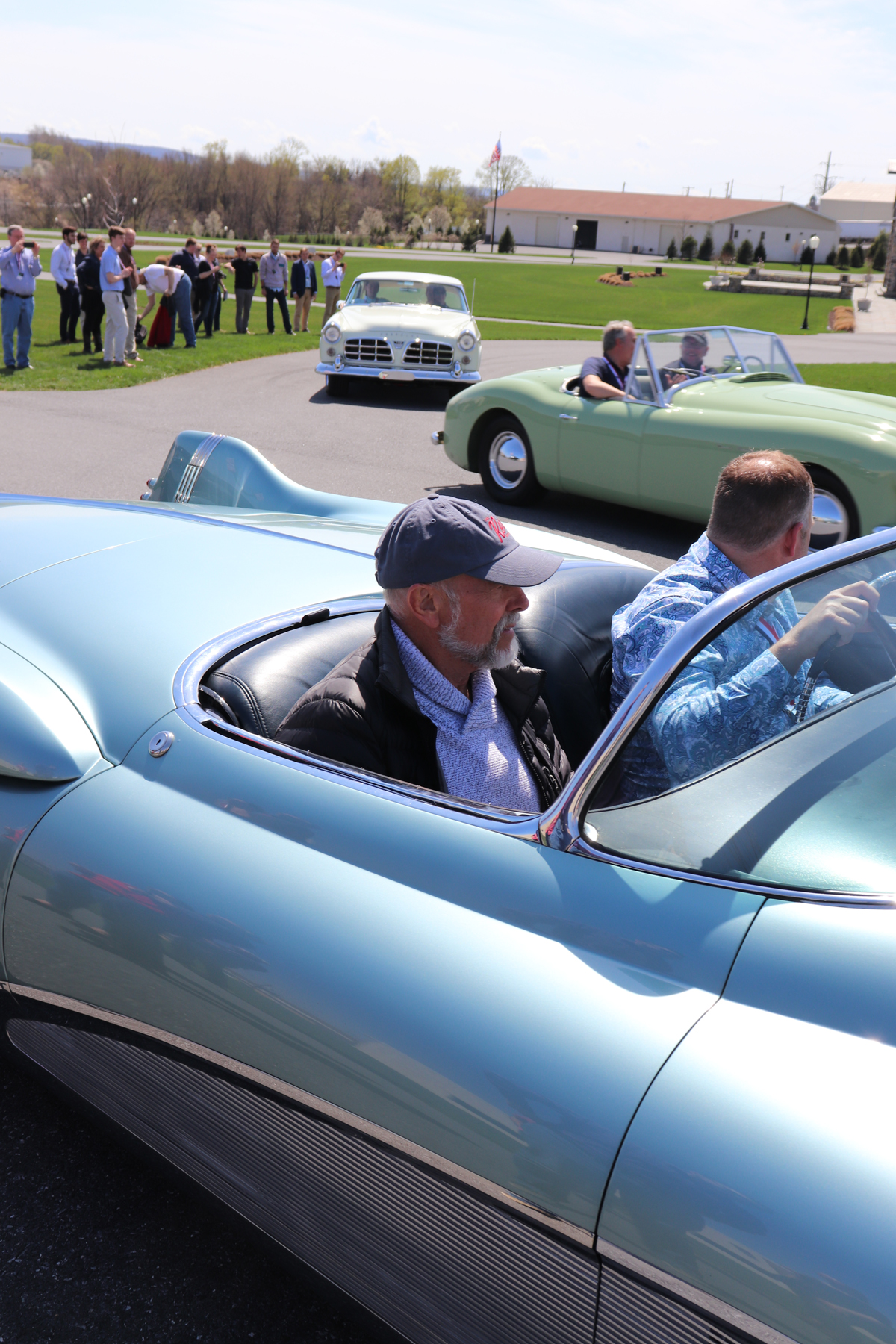
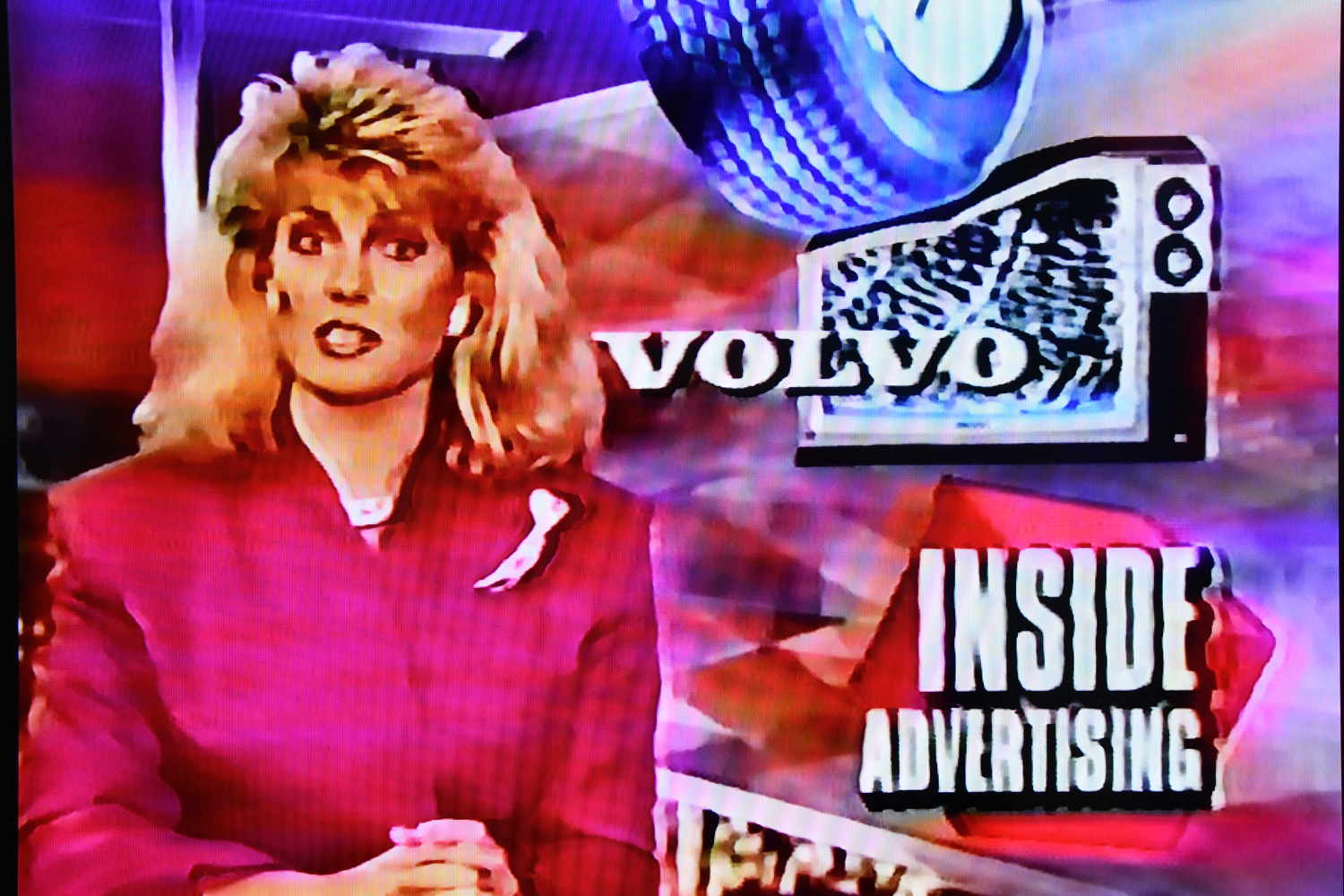
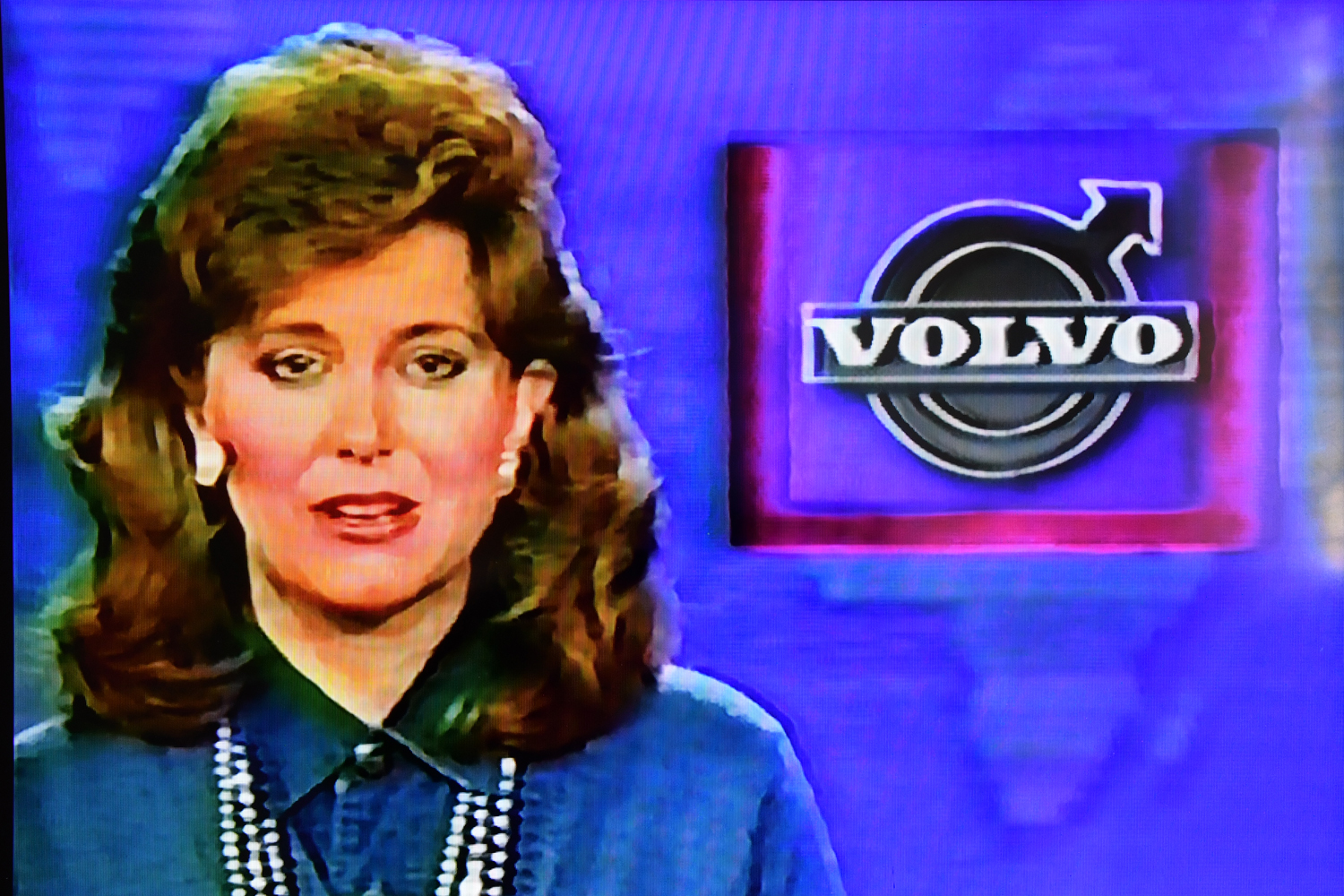
Television coverage

Horrified best described Nicolato’s and Hoover’s reactions. Infuriated and deeply concerned, Nicolato was not so much angered by the actions of the Texas AG as by this needless self inflicted wound. He was incensed by the apparent and unnecessary buttressing of a Volvo car by people who should have known better. Austin says, “Joe being Joe, the first moments of the second third of the call basically blistered the paint off the phone.”

However, Nicolato’s passion never interfered with his ability to get down to business. His storm quickly subsided. Nicolato knew important decisions needed to be made and make quickly. For Nicolato traditional corporate responses held no appeal.

Nicolato made it crystal clear that there was no way Volvo would retreat into the black hole of denial without closure. He believed such a “gutless” response could suck the life out of the proud Volvo name and it plain and simple did not represent the character of the Volvo brand or its people. All agreed.

A second traditional response felt equally distasteful. Volvo could accept the allegations, pay a hefty fine and be left to slink off in disgrace while dragging Volvo’s good name behind it. Such an approach stood especially galling as the accusation of a willful intent to deceive was not true.

Nicolato wanted offense. Austin and Mercer delivered it with a proposal that defied tradition. Their approach took AG Jim Mattox by surprise. Volvo would acknowledge that mistakes had been made in the production of the commercial and take full responsibility. Crucially, Volvo’s position would be that the mistakes made did not alter what would have been the outcome had the mistakes not taken place.

Furthermore, to Mattox’s disbelief, Volvo executives volunteered to stand at the attorney general’s side and acknowledge those mistakes at a press conference. In addition Volvo would voluntarily produce advertising acknowledging the mistakes for both Texas and national markets.

Volvo also made clear that it would not admit guilt to intentionally producing a misleading ad. As such, no fine should be levied. Attorney General Mattox agreed, though he noted a considerable sum had been spent in pursuing the investigation. Volvo agreed to reimburse the AG for those expenses, a sum of $350,000.

At the subsequent AG’s press conference Executive Vice President Hoover stated, “A mistake was made in the production of a Volvo commercial,” “Do not confuse this with the fact that Volvos are strong and rugged. This commercial may have issues, but our cars do not.”

Today, in looking back, Austin, now retired, believes that the alterations initiated by the production company resulted from panic born of a confluence of difficulties unforeseen by the production company. One of the three Volvos sustained visual, but not structural, damage very early in the filming making it unusable. Additionally, as a new production company highly desirous of getting such a plum job, they bid the project with a sharp pencil and little room for error. Above all, they had to go home with a commercial using what they had and the clock was ticking, quickly. Discipline suffered. The production company reverted to the less restrictive set of requirements used in making a theatrical movie rather than those required for an authentic recreation of an actual event. In other words, movie magic. In this case magic spelled trouble.

“I don’t even know if the reinforced Volvo actually appeared in the finished commercial,” Austin says. It didn’t matter. “The new production company’s lack of faith in the strength of our car, combined with the fear of failing to complete the shoot with the resources they had on hand, compelled them to make some unfortunate choices.”

Volvo defies monster truck

In the wake of “Monster Truck,” Volvo adopted a strict policy stating “not a single foot of film for a Volvo commercial could be shot without a senior member of the Volvo advertising staff present.” No such staff member had been on location for the entirety of the “Monster Truck” shoot.

While Volvo would survive “Monster Truck” its storied relationship with Scali, McCabe, Sloves would not. On November 12, 1990, Scali, McCabe and Sloves resigned the $40 million Volvo account after producing 24-years of award-winning advertising.

Broken Monster Truck removed from defiant Volvo

Counter intuitively, Volvo 240 monthly sales increased 19 percent that November; sales increased another 38 percent the following month. It would seem that customers still believed in Volvo and said so with their checkbooks.

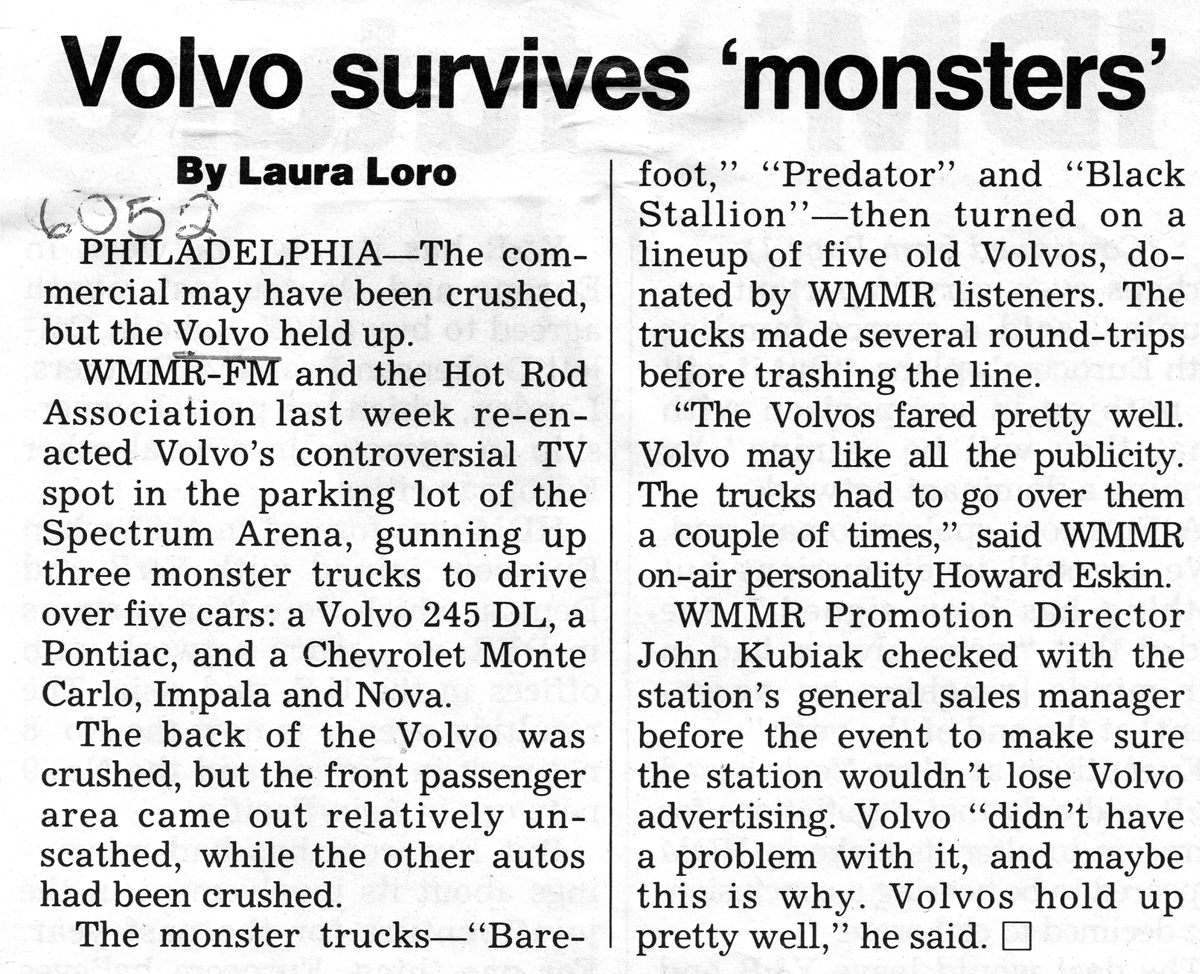
Beyond the media buzz, there was great irony in the “Monster Truck” saga. In the months after the story broke, the United States Hot Rod Association, the sanctioning body for monster truck events, embraced the global media frenzy. Around the nation the USHRA scheduled “Crush a Volvo” events as a headline grabber. However, the crushing didn’t go as planned. Even without that movie magic, and just as the Swedish engineers foresaw, Volvos really could withstand a monster truck’s abuses. As reported in the Pittsburgh Press after one such event, “Volvo was grudgingly declared the winner this morning after a monster truck trying to crush it ended up with a broken drive shaft.”

It appeared that not only could Volvos withstand brutal punishment, Volvos could even fight back.

In covering the event, USA Today reported that Volvo Spokesman Robert Austin stated, “Volvos really are tough. In fact we wouldn’t mind if they featured “new” Volvos for these events.”


LINK TO VOLVO MONSTER TRUCK COMMERCIAL

By |2022-04-14T15:46:20+00:00April 14th, 2022|2 Comments

Conversations With People We Value #33

While driving north along Virginia Route 29 I spotted a forest richly populated with orphaned trucks from the 1950s. I quickly pulled over to a clean white two-bay shop that resided on the high ground above the forest. A hand lettered sign identified the business as Melvin’s Used Cars. I drove up in the hope of finding Melvin and asking, “What’s your story?”

Well groomed and neatly attired in crisp work clothes, the man I came to know as Mel stood by an open bay. Friendly and engaging, Mel indeed had a story. He had a field of old cars that once numbered almost 500. Interestingly when I expressed my interest in writing his story, Mel repeatedly redirected the conversation to his friend R. J. Pinto who he clearly felt had better stories. As luck would have it, in mid-sentence Mel yelled, “It’s him. It’s Pinto,” as R. J. Pinto pulled in off the highway. In short order it would become evident that Mel’s story would be written another day as I was about to meet Pinto. And, now, so are you.

Drank with Arlo, Dated Alice, Tuned Evel’s motorcycle and much more. They call him Pinto.

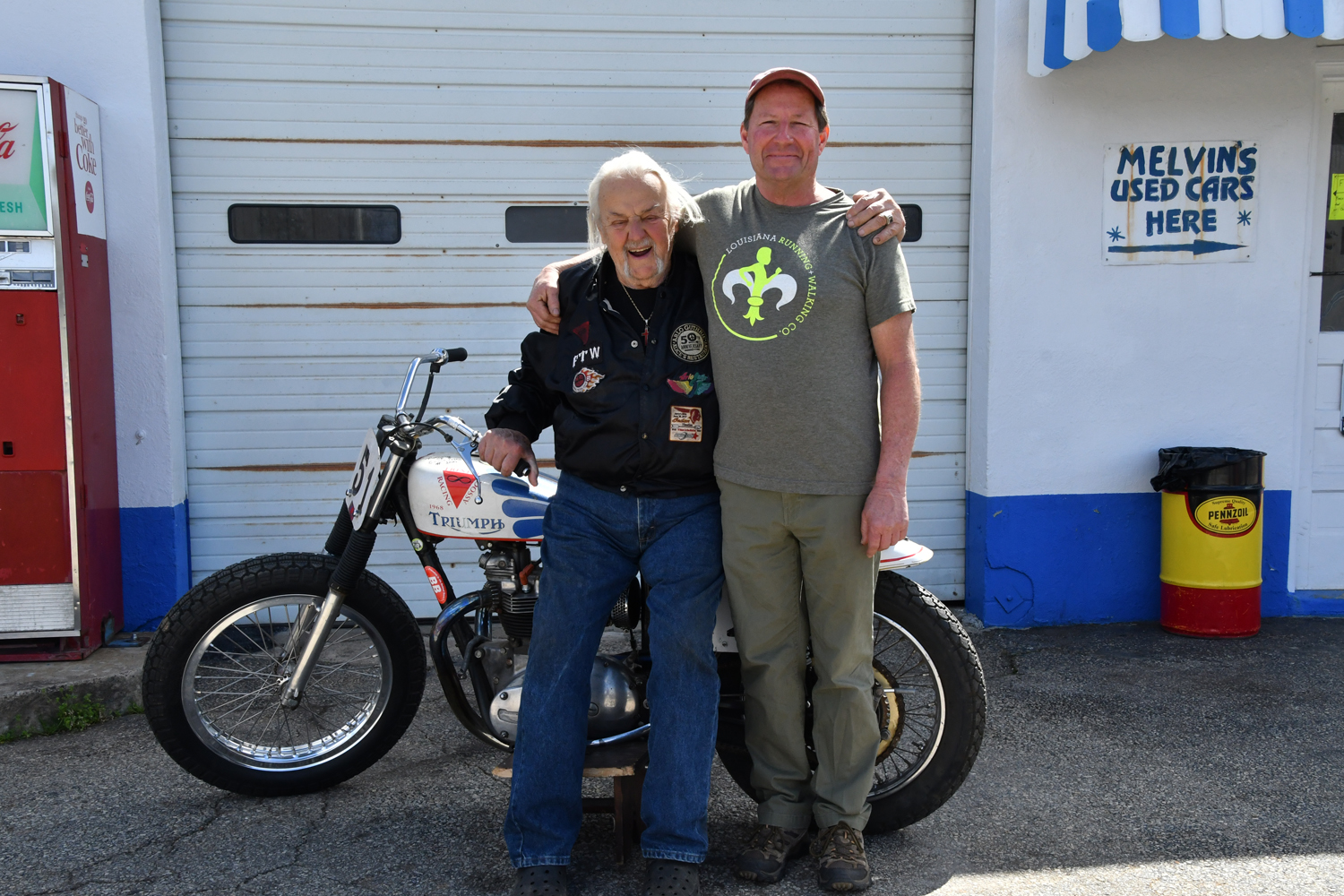
Pinto and Mel

Pinto bundles the vigor of a colorful yarn spinner in an 85-year old, burly, gregarious, engaging and earthy package. Pinto still communicates the vitality of a young man who savors grabbing life by the horns. At the same time he reflects on life with a mellowed perspective and insights refined through eight decades of having ones heart and soul polished by the abrading rapids encountered while navigating the river of life.

A brief introduction by Mel tees up what will be a fast moving morning of storytelling. Belying Pinto’s approaching 86th birthday his memories possess a crispness that brings them to life. Being on the receiving end of Pinto’s rapid fire delivery feels like taking a drink from a fire hose.

Born in Middletown, New York, Pinto, a Korean War Veteran, began a lifelong love for all things motorcycle in the 1950s. It would be an affection that would lead down many paths and involve him in iconic events of the 20th century American culture.

In the 1960s his passion for motorcycles brought him to a little restaurant called “The Back Room” in Stockbridge, Massachusetts. Purchased by the owner in 1966, it could be found around the back “just a half-mile from the railroad track.” In American culture The Back Room is more fondly remembered as “Alice’s Restaurant.”

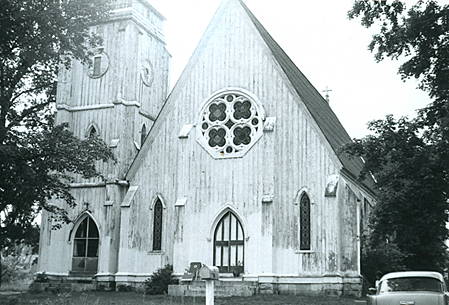
He and his motorcycle racing buddies knew the owner, Alice Brock, and Pinto says, “As a group we all comprised a family.” That family had celebrated Thanksgiving in 1965 at the de-consecrated Trinity Church in Great Barrington, Massachusetts that Alice had bought for her home in 1964.

Trinity Church 1966

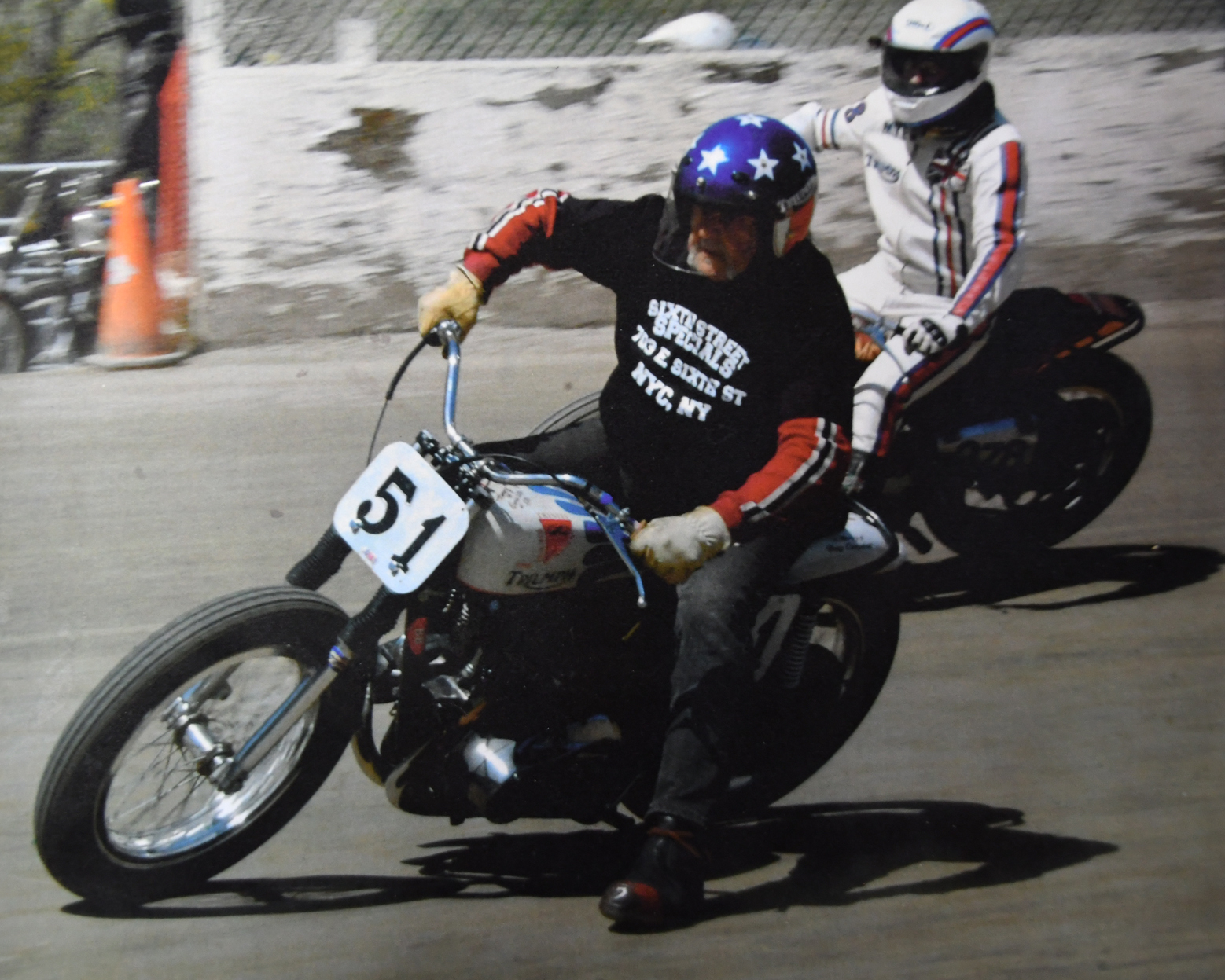
Pinto’s motorcycle family grew out of his very successful racing career on dirt tracks east of the Mississippi. If he ever chose to have a trophy room, Pinto would have had no trouble filling it with the trophies from over 100 wins.

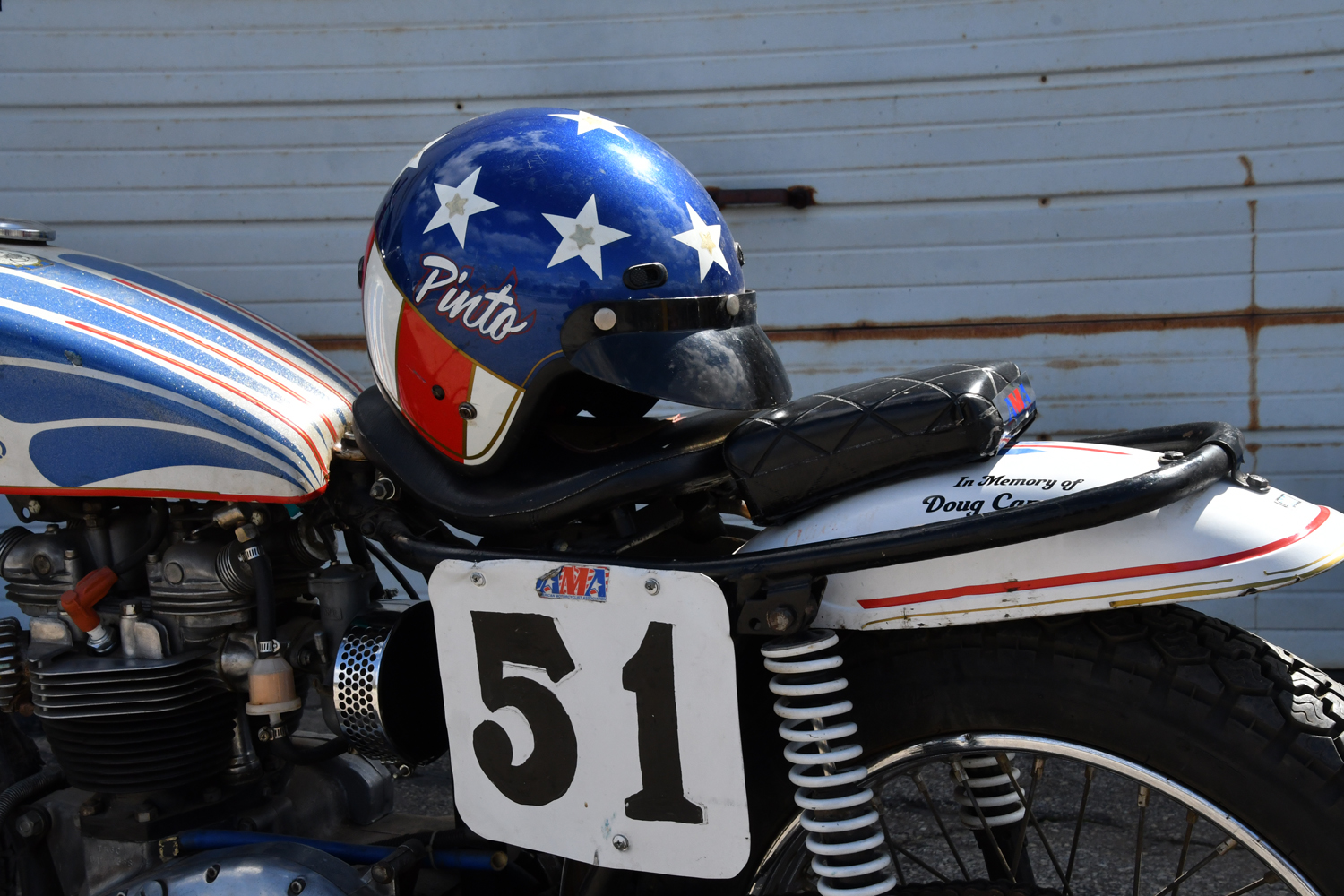
Pinto with a great affection for the Triumph motorcycles with which he competed says, “Scrambling on dirt was in the DNA of Triumph. Back in the 60s Triumph-powered machines dominated.” His is, indeed, a deep affection. He has kept the Triumph he raced for over 50 years. He says, “My Triumph TT (Tourist Trophy model) has been very good to me.”

The paths of Pinto’s dirt track racing and Alice’s Restaurant intersected in the mid-1960s at the Trinity Church.

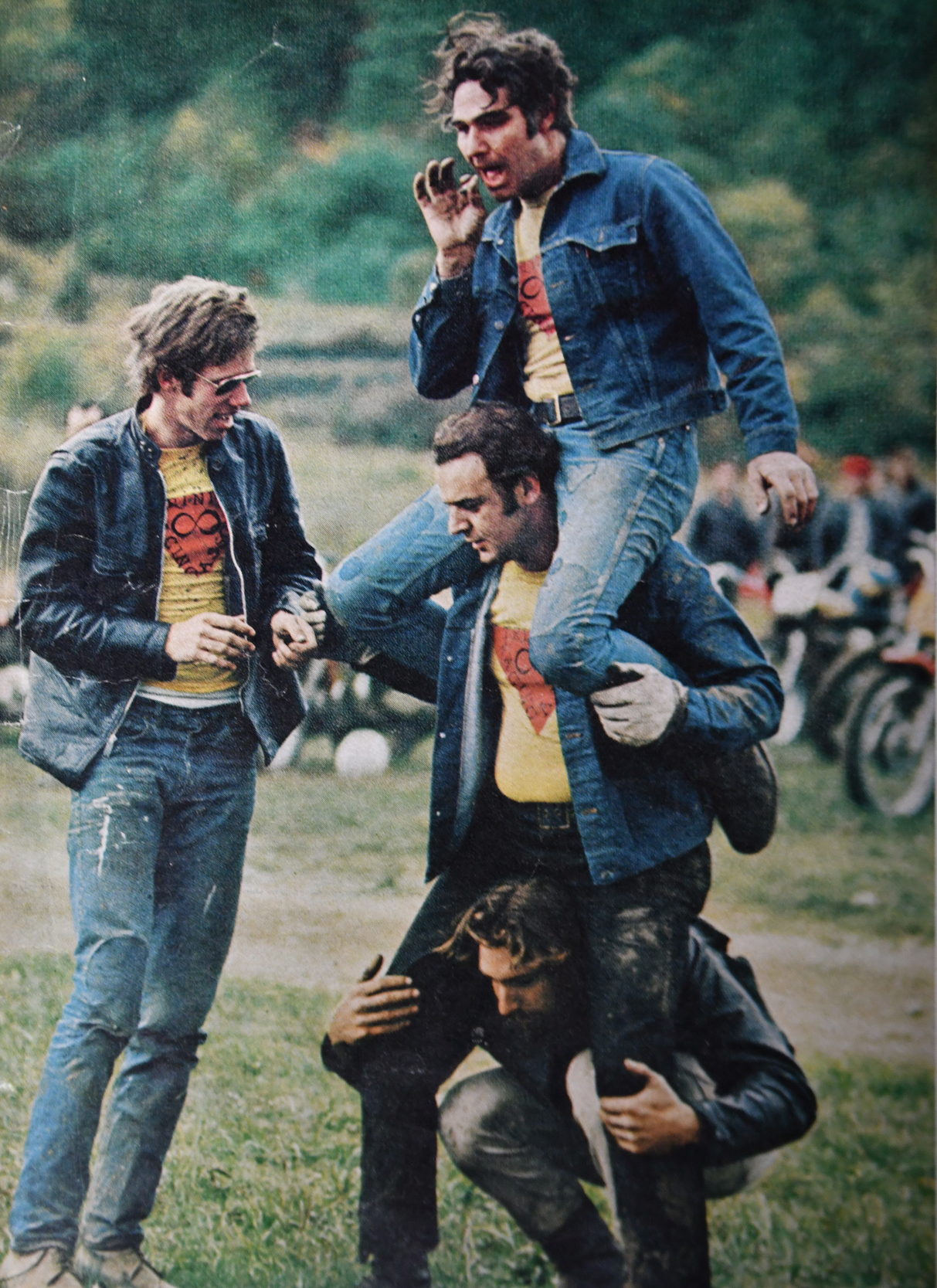
Pinto says, “I had done a lot of racing in the Schenectady area. One track in particular, a beautiful track with a little chicane and a jump I found especially friendly.” The tracks friendly environment and Pinto’s showmanship bred a family of supporters that became the Trinity Racing Association. Pinto says, “Alice’s, then husband, Ray Brock and I designed the logo for the Trinity Racing Association that consisted of a yellow circle, red triangle and infinity sign representing the Father, Son and Holy Spirit. Away from the track, the epicenter of team member activity centered on the communal environs of Alice Brock’s Trinity Church home.

Life Magazine   Top – Ray Brock    Middle – Pinto    Bottom – Doug Campbell    Standing Jimmy J.

Pinto says, “I made many friends, many of whom I still know till this day.” On one especially big racing day they all decided to come see Pinto race. Pinto says, “I happen to win that day. So I handed Alice the checkered flag and she hopped on the back of the bike for the victory lap.

Husband Ray taught a shop class and Alice was the school librarian at a local boarding school. Pinto says, “They were gifted creative people.” Being who they were, they attracted a number of students who shared their idealism and their creativity. Arlo Guthrie was one of them.”

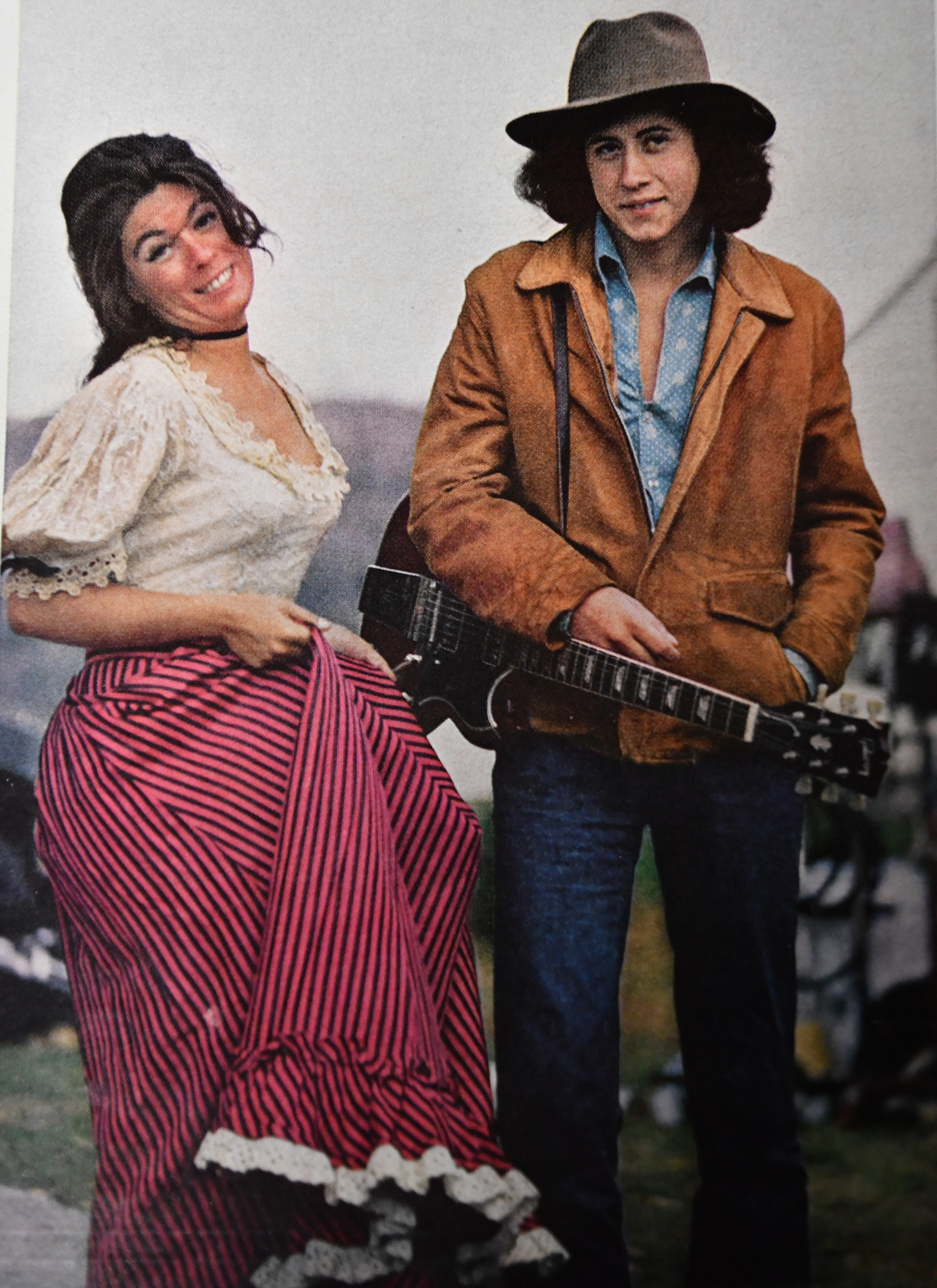
Son of American folk legend Woody Guthrie, Arlo graduated from high school in Stockbridge in 1965. After a brief stint in  college, Arlo returned to the Berkshires in November of 1965. He stayed with his friends, Ray and Alice, at the church during the Thanksgiving holidays. A holiday celebration that will forever be memorialized in song.

Alice Brock & Arlo Guthrie

Sometime during the span between the 1965 Thanksgiving dinner at the church and Arlo Guthrie’s July 16th, 1967 Newport folk Festival live performance of his opus, Alice had called Pinto to come to dinner to meet a young friend of hers named Arlo Guthrie. Pinto says, “I had no idea who Arlo Guthrie was.” At the time I saw a young kid making a living as a troubadour traveling around the country hitchhiking and playing all the café’s and bars in New York and wherever else he could make a few bucks.

Once Guthrie’s monster hit captured the public’s attention the family members peaceable life would be forever changed. Among others Alice would resent her unwanted fame and divorce her husband, Ray. Pinto would find work in the movies.

Pinto played himself in Alice’s Restaurant, the movie, having parts in scenes of the motorcycle race and getting a tattoo. In the process he developed a good relationship with director Arthur Penn. Out of that relationship came other film work involving motorcycles with the likes of Sean Connery and Clint Eastwood.

By early 1969, Pinto and Alice had become a couple. Eight months later the Alice’s Restaurant experience would peak with the release of the movie. Pinto would appear in 1969 issues of Life Magazine and Playboy that profiled the Alice’s Restaurant family. August 18th Woodstock had exploded on the global consciousness. August 19th “Alice’s Restaurant” the movie appeared in studios across America. A week later Pinto and Alice left their relationship behind and entered a friendship that continues today.

Pinto racing his Triumph at age 79

In the early 1970s Pinto had moved on to owning a motorcycle tuning operation. Called North Bergen Cycle Shop in Mahwah, NJ it specialized in building and rebuilding motors and optimizing motorcycles for the owner’s intended use. With some humility Pinto says, “If somebody came in with their BSA, Triumph, Harley, Ducati, whatever, if they came in and said I want this set-up to do such and such, make it magic, they came to the right guy.” Fifty years later and now living in rural Virginia, Pinto continues to tune the motorcycles brought to him from far and wide. Pinto smiling with the honest confidence of experience says, “I am still the right guy.”

This brings us to Pinto’s dealings with Evel Knievel. Pinto recalls a man entering North Bergen Cycle in the 1970. Pinto says, “This guy comes walking into my shop. He was a perfect gentleman. He was very honest. He was very honorable. I really liked him.” Evel Kneivel’s manager, through his connections in the motorcycle world had come to Pinto to have Kneivel’s bikes tuned for jumps he would be doing in New Jersey and Pennsylvania. Pinto says, “For me this recognition ranked high on my list of professional “WOW” moments.” Pinto said yes. Shortly thereafter a monstrous Peterbilt decked out in striking red, white and blue Evel Kneivel art thundered into his parking lot.

Up until then Kneivel had used Harley Davidsons and then Triumphs for his jumps. No more. Out of the Peterbilt rolled  seven brand new Laverda 750cc American Eagle Model motorcycles. Pinto says, “They were a very well built high quality Italian motorcycle. I just did everything to assure that they were right on spec. My job demanded that I go over every nut and bolt. The Laverdas were a beautifully designed and built motorcycle. My job was to make sure each delivered peak performance.”

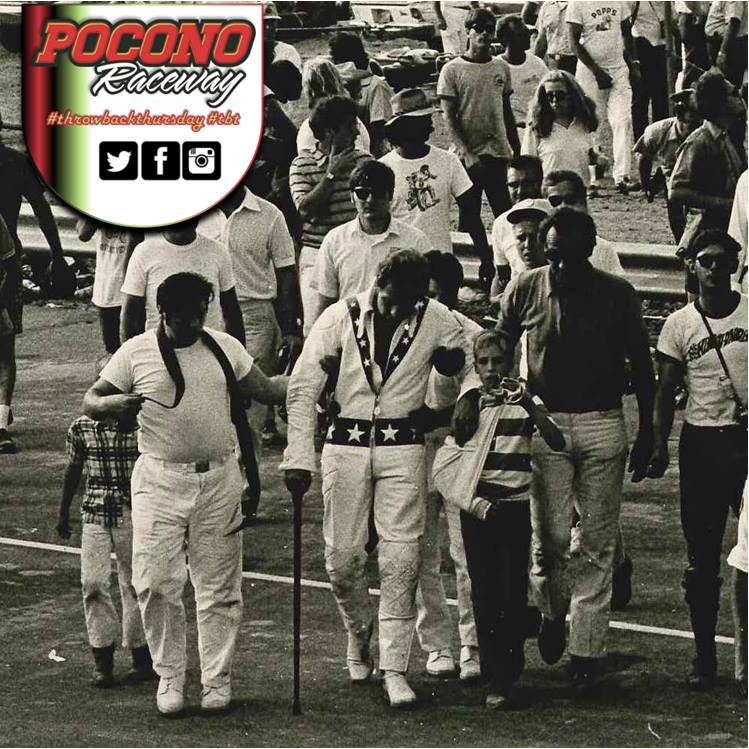
Evel Kneivel after crashing at Pocono Raceway

After being so impressed by Kneivel’s manager, Pinto admits to finding Kneivel to be a rather arrogant and unpleasant individual. Pinto says, “Maybe I just caught him when he was having a few bad days.”

Pinto, in recalling Kneivel’s jump attempt at Pocono Raceway ended in a terrible crash resulting in serious injury says, “ He missed the jump and wiped out. I could not help but think of his reputation as a heavy drinker.” It was documented that before every jump Kneivel would take a shot of Wild Turkey for good luck. Sometimes it would be two or three shots if he felt the need for extra luck. “Maybe this time the extra shots brought bad luck,”says Pinto.

In reflecting Pinto says, “What is the saying, If you love what you do it is never work. My life and my profession, in large part revolved around my passion for motorcycles. All those involved with my passion I loved and continue to do so.”

Pinto concludes motioning towards Mel saying, “Mel here shares my passion. I love him like a brother. I am blessed.”


By |2022-03-31T11:35:20+00:00March 31st, 2022|6 Comments

Cars We Love And Who We Are #25

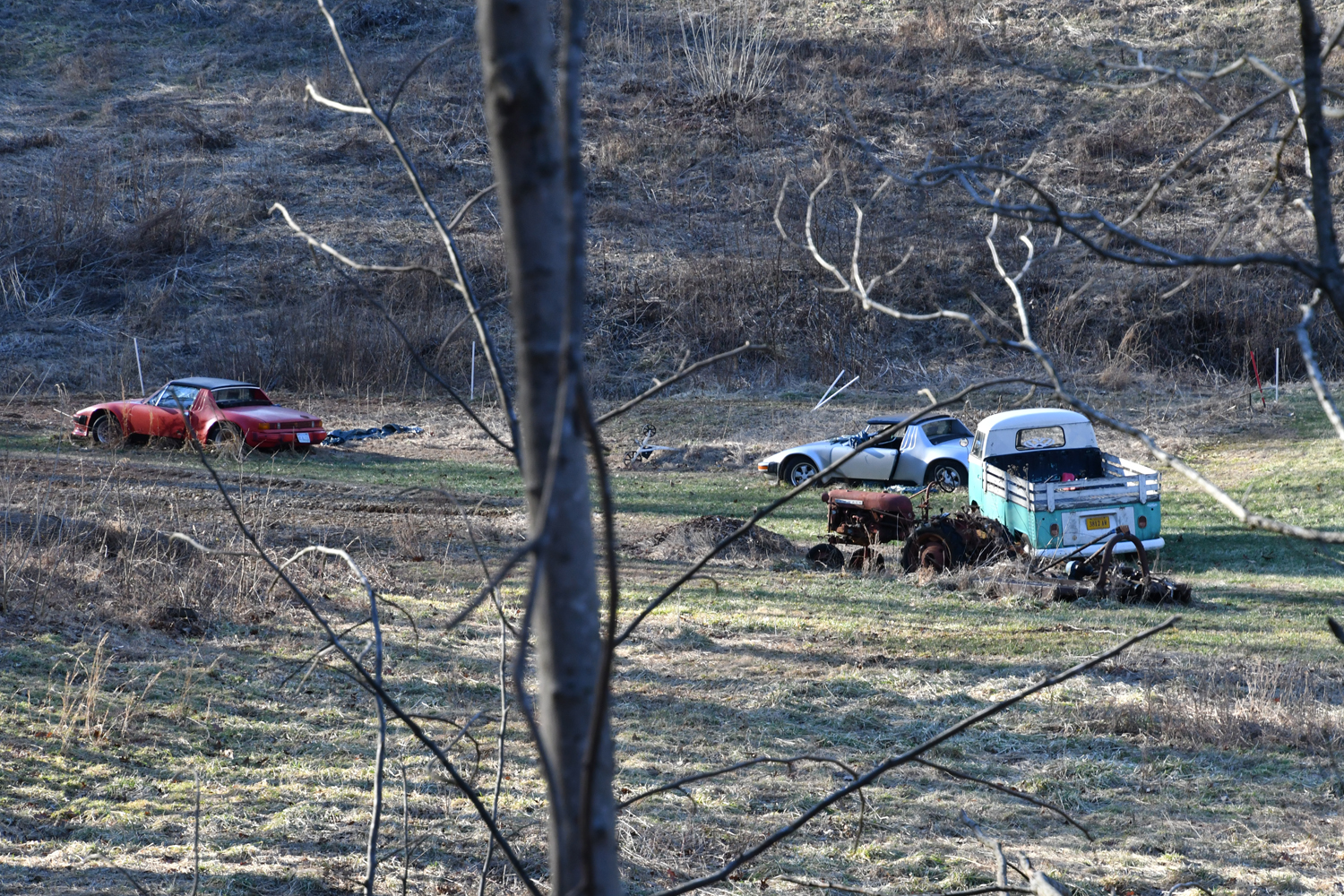
My eye had first been caught by a two-tone 1962 pickup truck version of the T1 VW Bus. Resting in a bed of dead weeds, it resided in a distant field far below my rural mountain road vantage point. However, while the iconic VW held my primary interest, my inability to identify the pair of battered Porsche-like sports cars accompanying the VW on that overgrown field began to gnaw at me.

I had to go back for the story. Little did I know the extent of the story that awaited me.

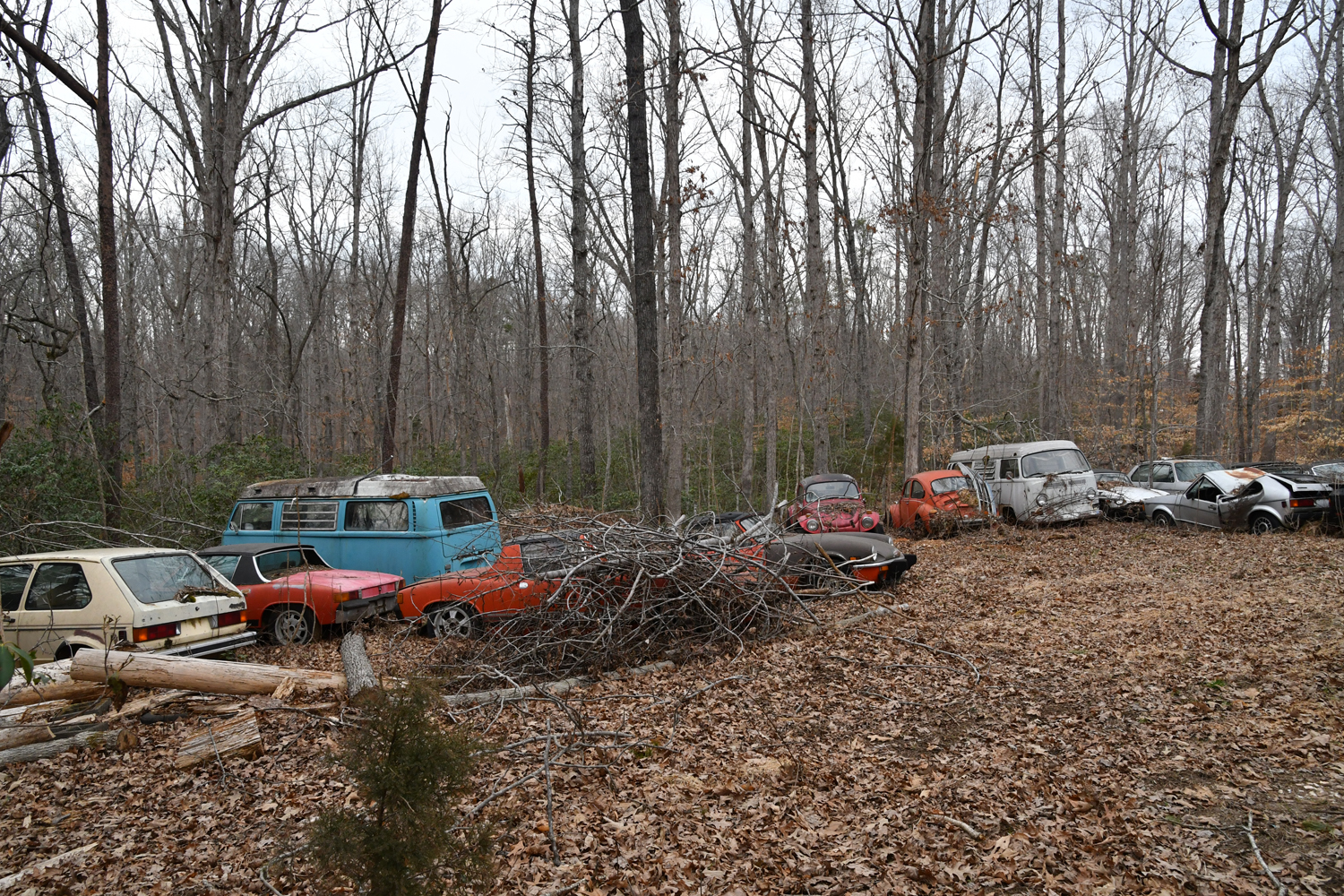
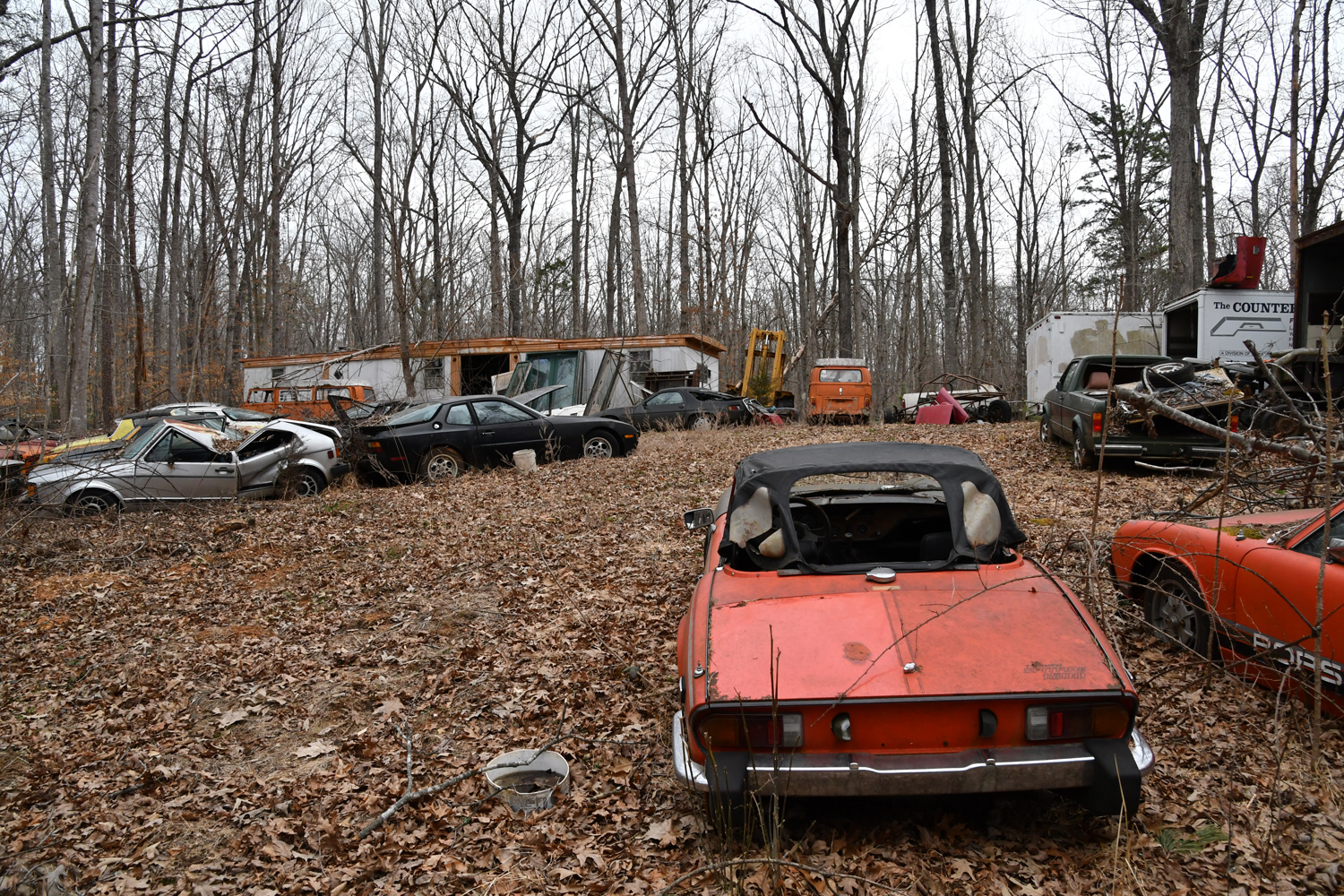
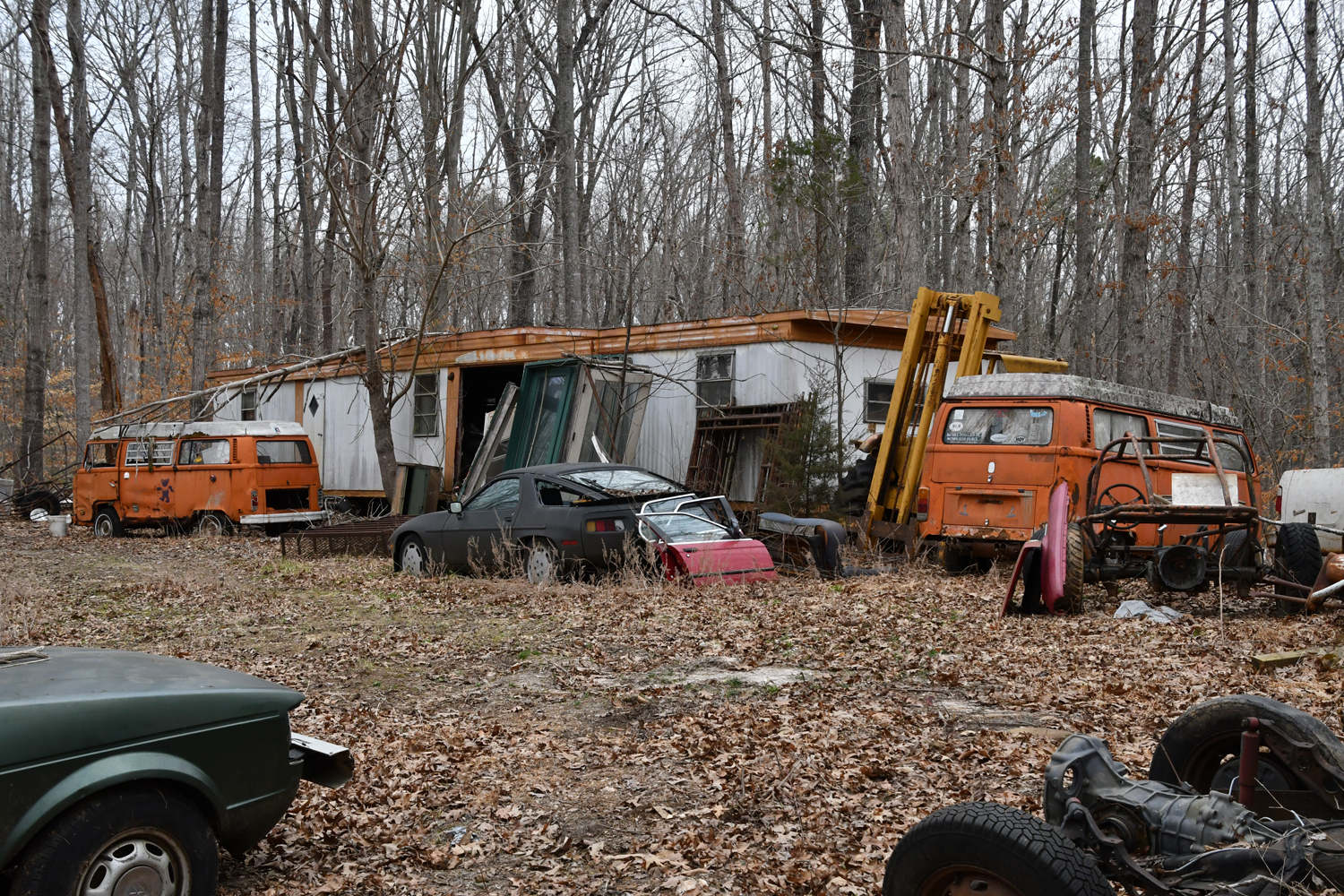
Mr. Thomas’s forest of old Porsches, VW buses and more

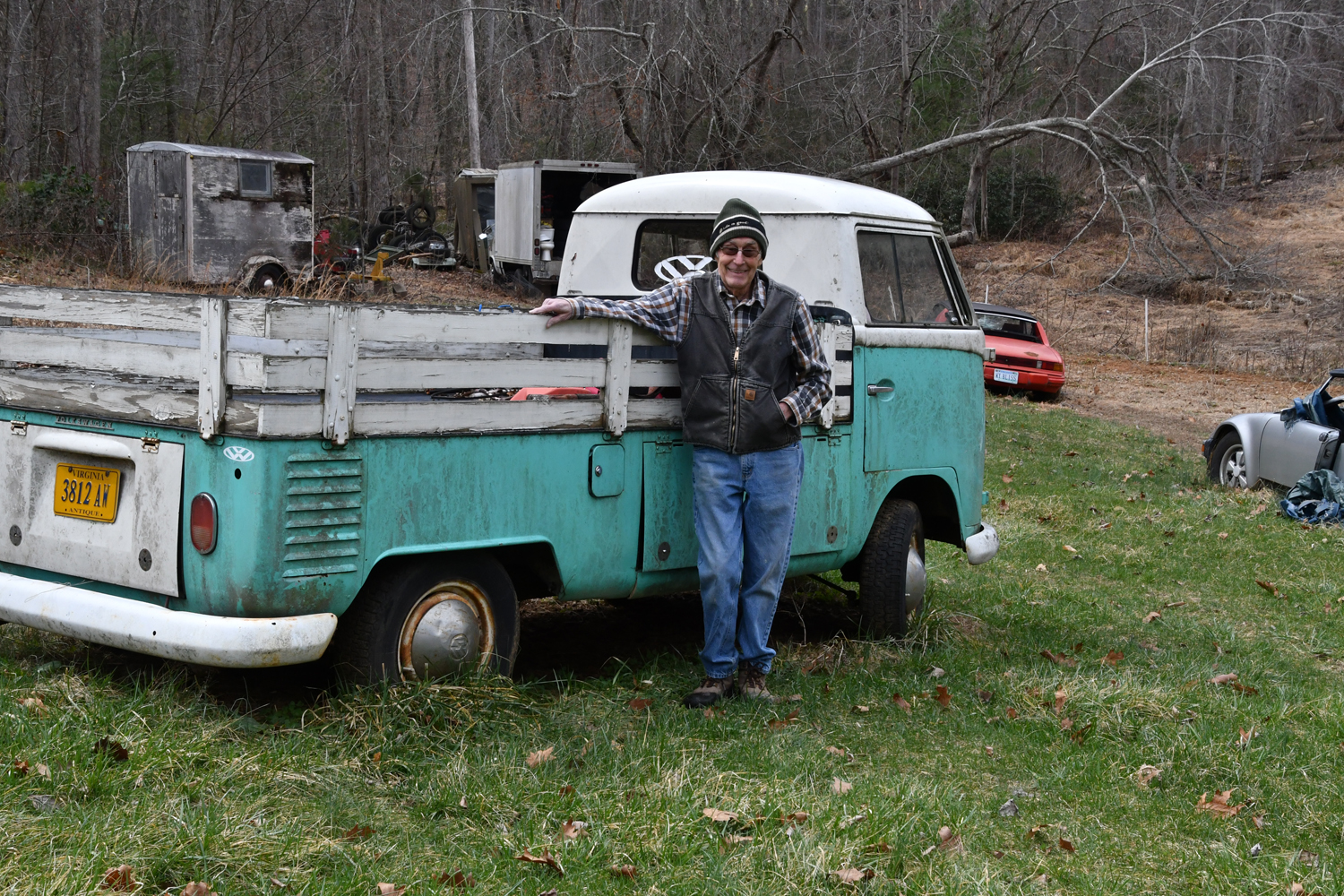
Cameron Thomas and his 1962 VW pickup

My determination took me down to the base of the steep slope in search of answers and access to the, apparently, once loved but now forlorn trio. I snaked my way along a narrow descending dirt road that brought the field closer. Arriving at a rustic country home, I sought someone capable of answering the question ”what’s the story behind the orphans in the field?”

Met by a pleasant woman with a phone to her ear, I explained my interest in abandoned classic vehicles for a Drivin’ News story. She forthrightly explained that her husband owned the cars and he would have all the answers to any questions I might have.  She directed her attention to the phone and then back to me. He would be waiting in their large hay field down the road, she explained.

As I rumbled down the dusty gravel access road that traversed the hay field, a moldering but quite complete 1963 Buick Riviera and a distressed T2 VW van came into view. I sensed that there would be much more to the story than I had anticipated.

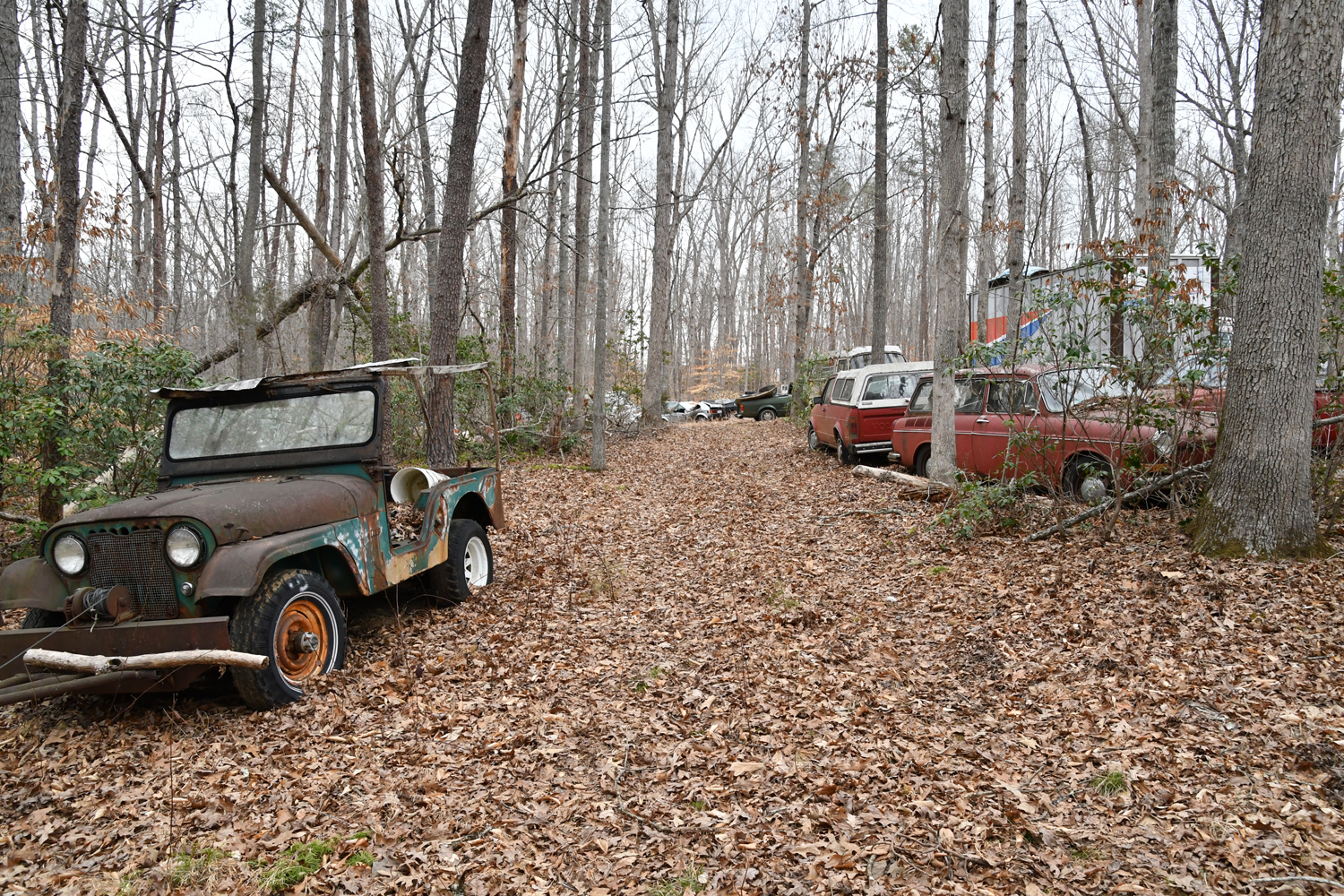
A walk in the woods

There waiting to greet me, stood master stone mason Cameron Thomas. A slender wiry man who, though in his late 70s, possessed a handshake like a leather skinned vice that left no doubt that he remained quite active in the day to day operation of his stone business. With a ready smile, a quick wit and an easy southern accent, Cameron said, “My wife tells me you have an interest in cars.” Then, with a friendly gesture he directed me toward a wide path into the nearby forest. Cameron said, “You might find this interesting.” Interesting indeed.

We turned our backs to the Riviera and VW van, both left for later discussion and moved into the woods on a single lane width trail. Early on, the view through the leafless trees of a forest in winter showed glimpses of shapes and colors that hinted at what awaited. Shortly thereafter, the path widened to reveal my first glimpse of multiple clearings where an eclectic array of vehicles possessing a heavy German accent lay strewn about the landscape.

Porsches of numerous flavors, VW Westfalias, Beetles, and Rabbits together with a sprinkling of British sports cars and a stray Jeep, all in various states of disrepair and degeneration populated the woodscape.

Staring at this assemblage, it appeared to be the land where air-cooled and German vehicles came to die.

Cameron explained that he began amassing his collection of over sixty automobiles about 50 years ago. Back then in his 20s he had formulated a retirement plan that called for accumulating desirable automobiles with the intention of building a workshop where, when he had the time, he would refurbish the cars and sell them.

Cameron admits to being partial to air-cooled German cars. He says, “ The air-cooled stuff was more of what I was looking for. My interest kind of transformed into a hobby.”

Many of the cars came to Cameron in good or at least running condition. So what happened? When asked the 64 thousand dollar question “why were they left outside,” Cameron says, “With the demands of my business, I never got around to building the workshop and we were too busy buying to do any selling. If a car experienced a problem, there always was a place for it in the woods.” With Cameron owning a large expanse of fields and woodlands there clearly existed an element of out of sight out of mind.

T-Boned Westfalia

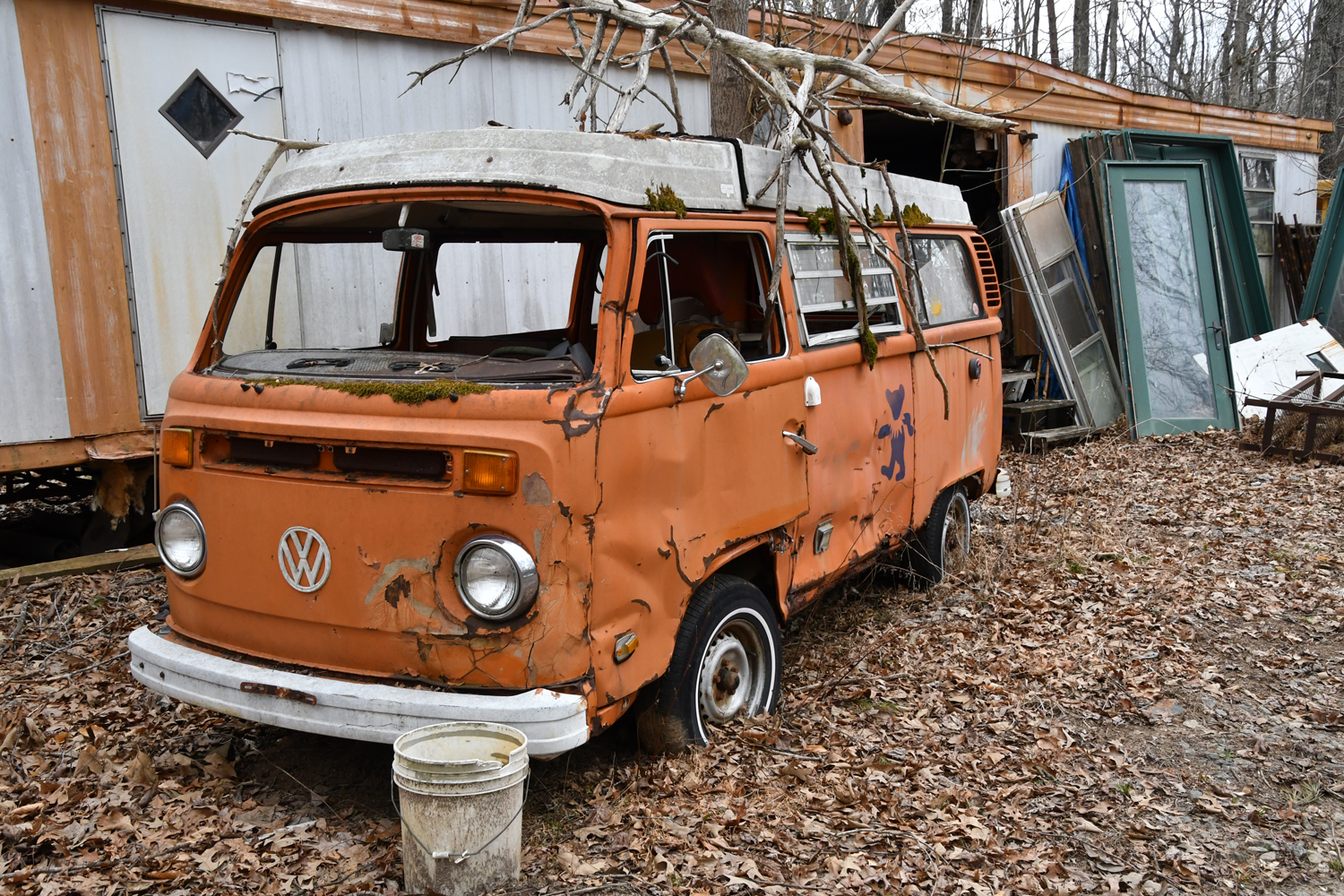
Entering the opening in the woods a battered 1972 Type 2 VW Westfalia greets us. Cameron explains that he purchased it and together with his son Jon refurbished it for Jon’s high school transportation. Leaving school one winter day Jon fired up the Westfalia and without letting it warm up made a dash to leave the school parking lot in front of a school bus that was descending from a good way up a hill. Cameron says, “My son made his move and made it to the middle of the road when the cold engine stalled. After leaving a 70-foot skid mark the bus T-boned the VW on the driver’s side.” The energy of impact delivered a blow sufficient to deposit some of the chrome letters from the hood of the bus onto the VW’s front seat. As for his son, he walked away with a few bruises. Lucky kid.

Next to the Westfalia a 1984 928 Porsche, one of two Cameron has accumulated, had a history of outrunning the local Corvettes. Cameron says, “It had a good bit of work done on the engine.” Cameron drove it for a year or so around 2005. In thinking back he says, “I can’t really think of a good excuse for parking it in 2007.”

Behind the 928 can be found the T2 Westfalia that Cameron bought right after his son’s accident. He says it was a good driver, that it was pretty much complete, including the original interior, when he bought it in 1980. It has sat unmoved in the woods since Cameron bought it.

Moving to our right brought us to another Werstfalia. Camerson acquired it in 2000 and except for winters drove it fairly regularly. Then after sitting for the winter of early 2005, he sought to fire it up in the spring of 2005. The engine locked up. Banishment to the woods quickly followed. On the plus side it remains a Westfalia with a solid and an original interior. On the down side, some windows are broken or gone and it features first class spider webs.

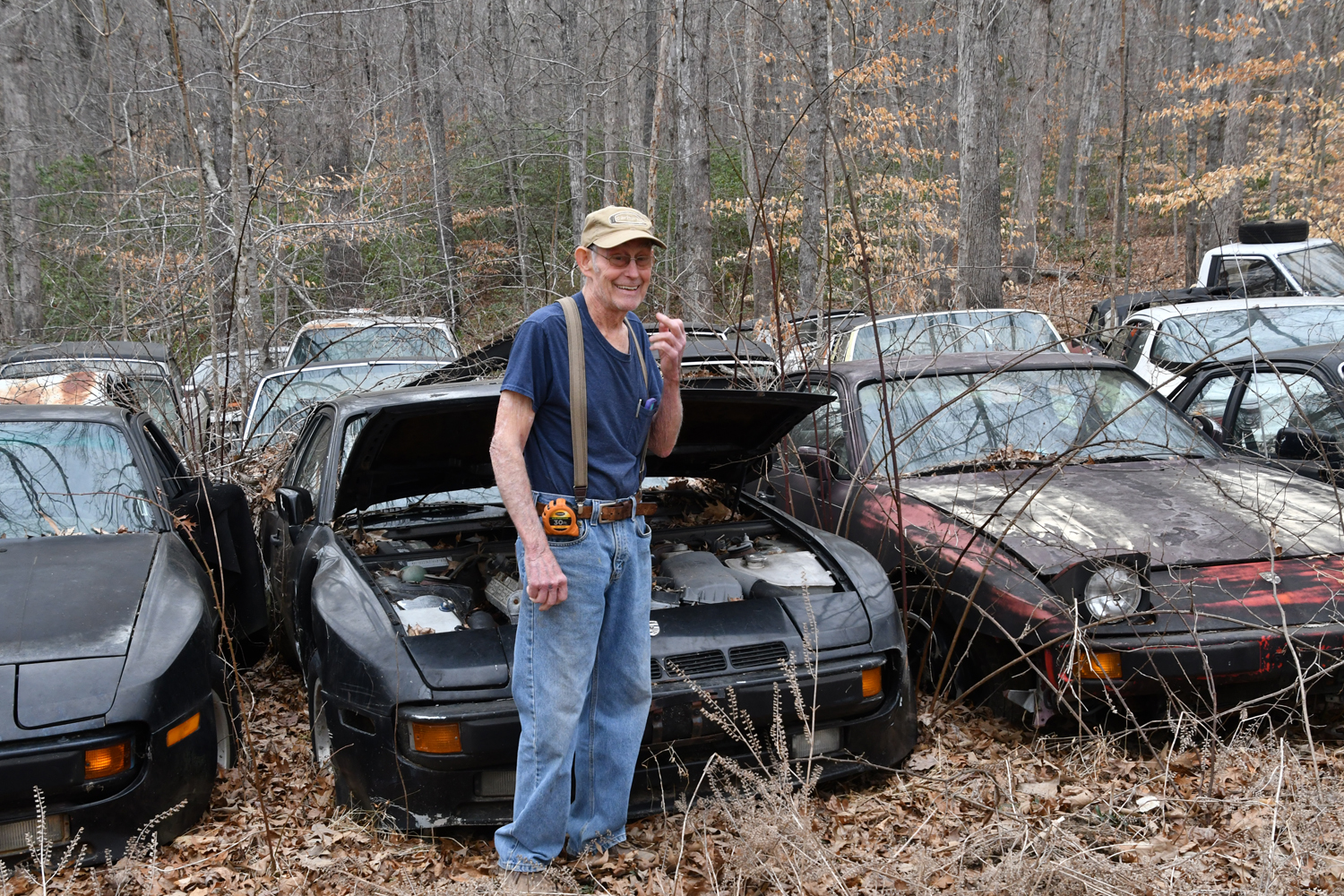
Cameron and his row of 944s

At this point evidence of a clear pattern has taken shape. It appears any vehicle that suffers failure merits banishment to the Cameron Thomas forest trail.

The fate of Cameron’s five 944 Porsches gives strong substantiation to the one strike and your out in the woods theory.

Arrayed in a neat row of five 944s, the first and last in line rated as good drivers when purchased. Others came from junkyards or the garages of people who had given up on their restoration.

One of the 944s had jumped the camshaft and bent all of the valves. Cameron and friends removed the head and reassembled the engine. When they fired it up as Cameron says, “It started screeching like a banshee and that was that. We must have missed a bent part in our rebuild.”

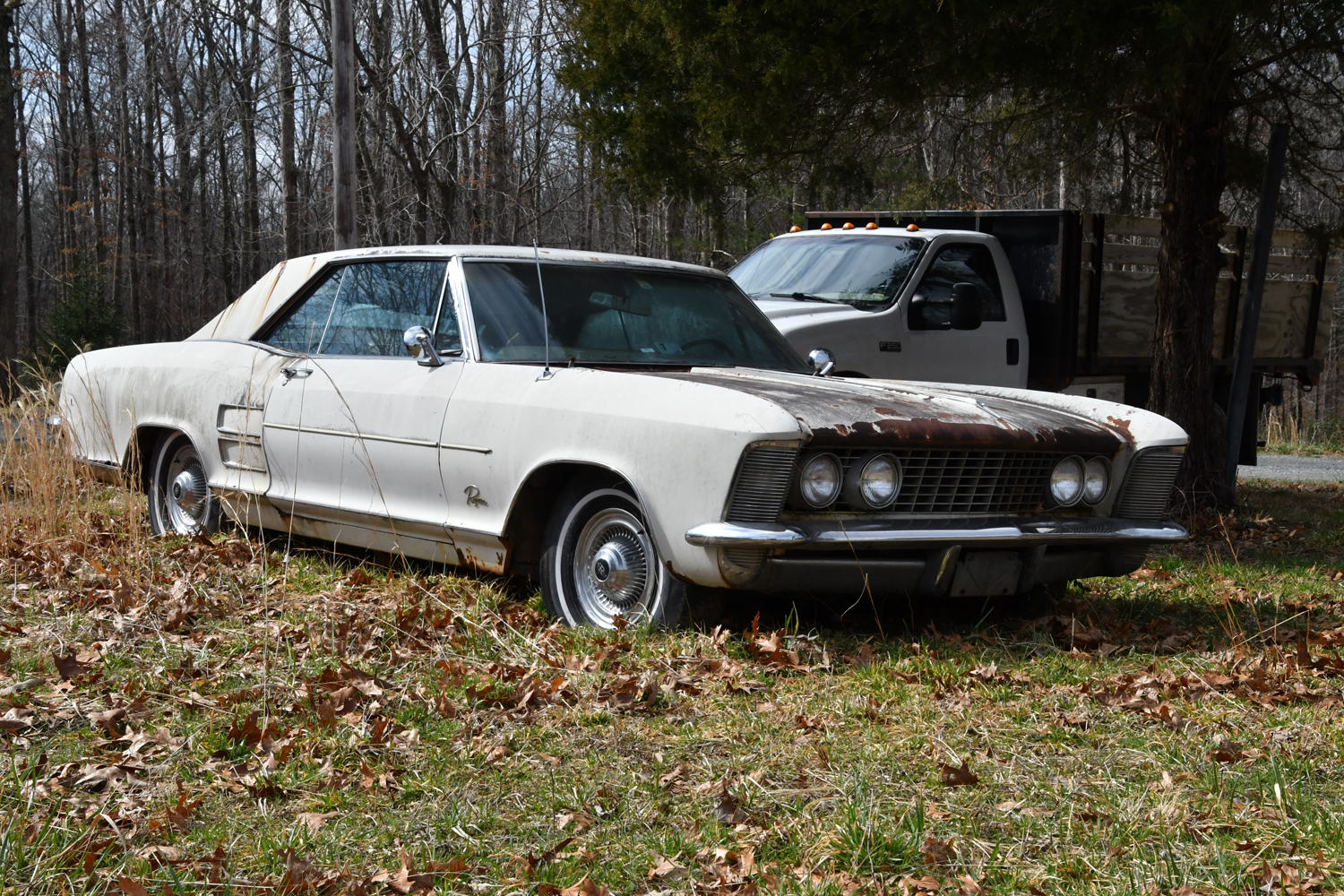
1963 Buick Riviera

Upon returning to the hay field, I asked about the Buick Riviera. Purchased in the early 1970s, Cameron says, “It was in good unrestored condition and a fine driving vehicle. Up until he had bought it the Buick had never spent a night outside of the garage.

What happened? Apparently that Buick had a two-piece drive shaft with a center U-joint. The U-joint went bad. Cameron says, “At the time I had a great deal of difficulty finding a replacement. By the time I found one my interest in the Riviera had passed.” The Riviera has sat ever since.

As we approached the end of the abandoned car trail of tears a 1963 Willy’s Jeep came into view. Cameron had come found it in Florida years back and trailered it back to Virginia. It has spent considerable time in the woods. Cameron says, “It is solid with less than fifty thousand miles on it.”

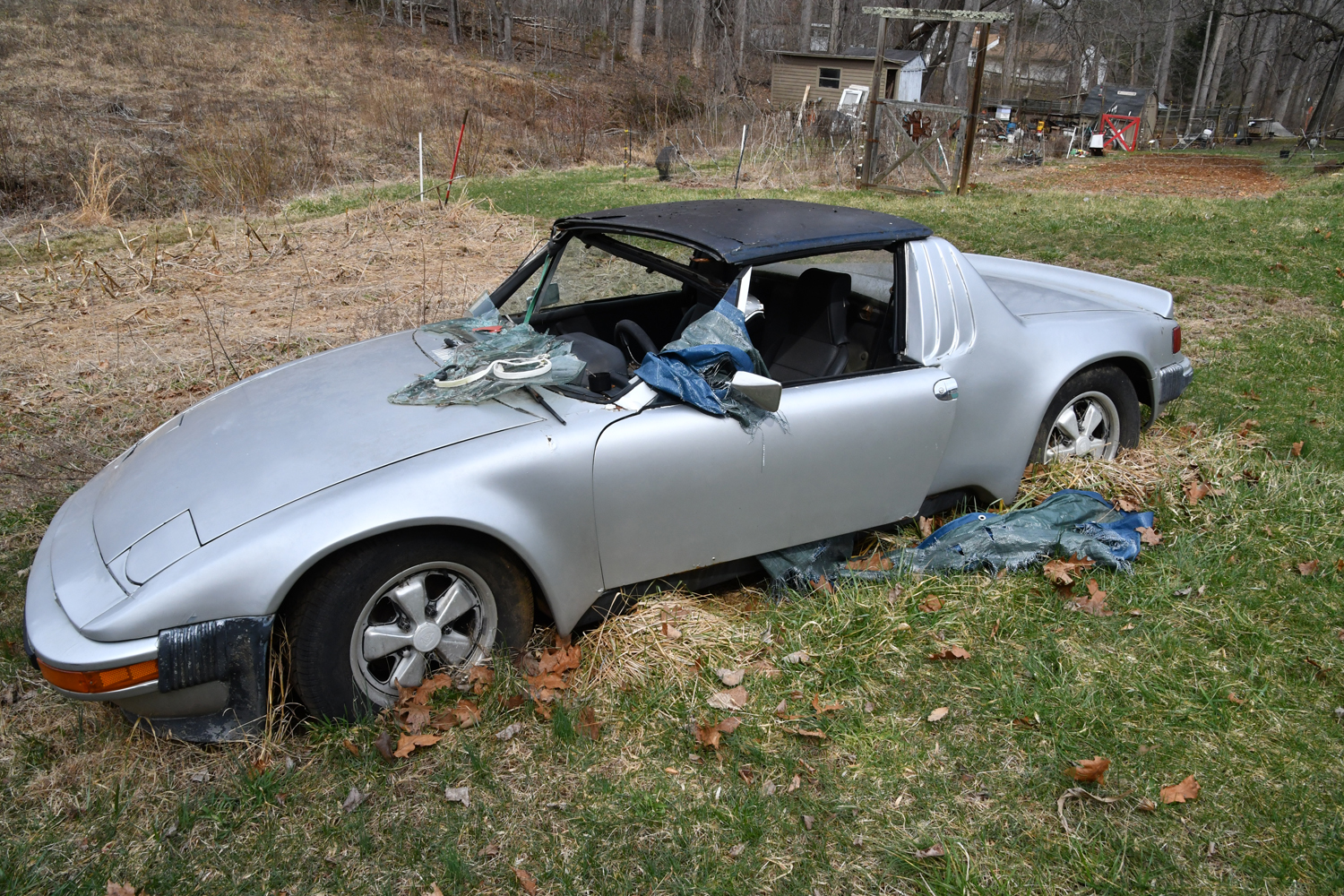
Chalon re-body

And at last we come to the trio that initially captured my attention. The two sports cars left for dead in the field are two Chalon rebodied 1972 914 Porsches. The brainchild of a California parts distributor, the Chalon kit imparted a 914 with a more aggressive slant nose presence.

The engines in Cameron’s two Chalon 914s remain 4-cylinder but brakes and suspension components reflect significant upgrades. Both cars ran strong when purchased and Cameron drove both with pleasure until the large tree fell crushing both.

Interestingly the most functional and except for his 1941 International military truck the oldest in Cameron’s collection is his 1962 T1 VW pickup. Purchased in 1985 the pickup features a 1600 cc beetle engine, upgraded brakes and a later transmission. Unlike its brethren in Cameron’s collection, with current antique vehicle tags, this VW stands poised to hit the road.

In honest reflection Cameron realizes his retirement plan, like a garden untended, took on a life of its own. He admits that he didn’t appreciate how much the cars would deteriorate over time.

1963 Willys Jeep

Now what? At this point Cameron says, “My son has made it clear that he does not want to live on a junk yard. He would like to see everything gone except the orange VW Westfalia we purchased to replace the one T-boned by the school bus.” Cameron acknowledges that there will be some head butting between he and his son on the issue. Cameron also accepts reality, saying “I accept that they need to go. I’m not going to live long enough to work on them all now.” Of the sixty he accumulated he has sold twenty. He says all are available. Anyone with a serious interest can contact him by email (cameron22959@yahoo.com). When asked if he could only restore one of his cars which would he choose, interestingly he chooses the 1963 Willys Jeep. He says, “It is solid and simple which translates into an ideal candidate for refurbishing.”

Having seen a lot in his 78 years, Cameron in his easy southern way and with a reflective knowing smile says, “Time takes its toll. It comes along slow, but it is always coming.”

By |2022-03-23T01:57:58+00:00March 18th, 2022|10 Comments

Roads We Remember #10

With interstates fading in the rear view mirror and blue highways taking their place, complex pinks and oranges paint the sky as the sinking sun of the fading afternoon ushers my driving day to a close. As I descend from Virginia’s Skyline Drive, my journey comes to rest in the bucolic embrace of Nelson County, Virginia. Tomorrow promises to be sunny and unseasonably warm as I seek a taste of the car culture of the Shenandoah Valley.


Taking the Skyline Drive to explore the dusty attic of Virginia car culture

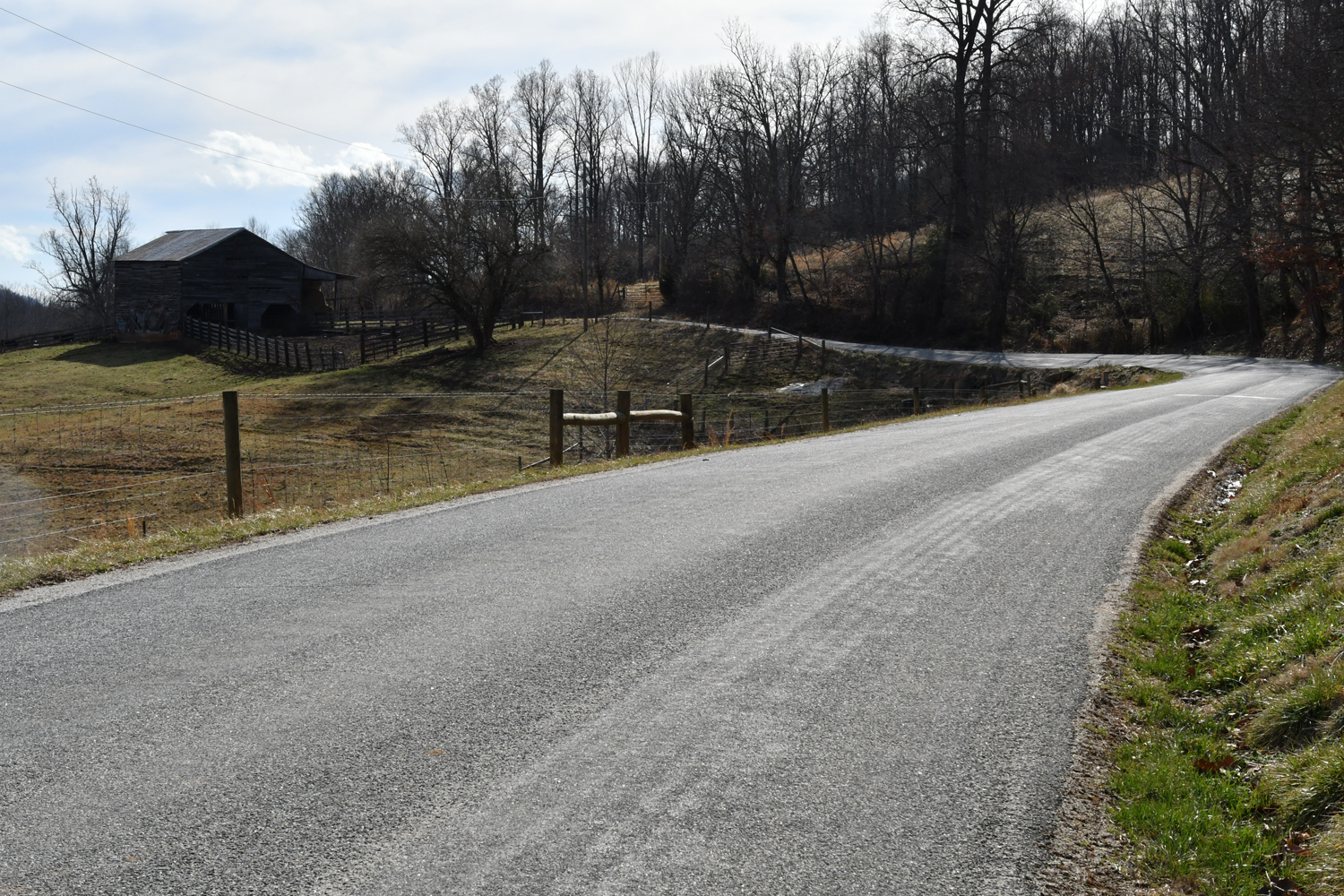
Exiting at the southern end of  Virginia’s Skyline Drive and proceeding down the east face of the Blue Ridge Mountains introduces a beautiful tangle of serpentine two-lanes, some paved, some gravel. Welcome to Nelson County.

Delivering a delightful shock to a bored suburban driver’s system, Nelson County possesses a wealth of wonderful roads and a dearth of stop lights. The whole of Nelson County contains exactly one (yes, 1) traffic light.

For those of us whose daily driving environment consists of thoroughfares that, for the most part, resemble a transposed graph paper grid, which is what they basically are, the whole of this region of Virginia pretty much presents itself as a Disney World for people who fantasize about driving on one grand “Tail of the dragon.” Great roads with character and curves, old barns, abandoned buildings, and, it is said, lots of nice stuff tucked away and cared for.

Recreation and agriculture in the form of logging and vineyards dominate the area. No belching factories here. Rich in history as well, historically significant Civil War sites populate the area as does the shadow of Thomas Jefferson with Monticello and the University of Virginia in close proximity.

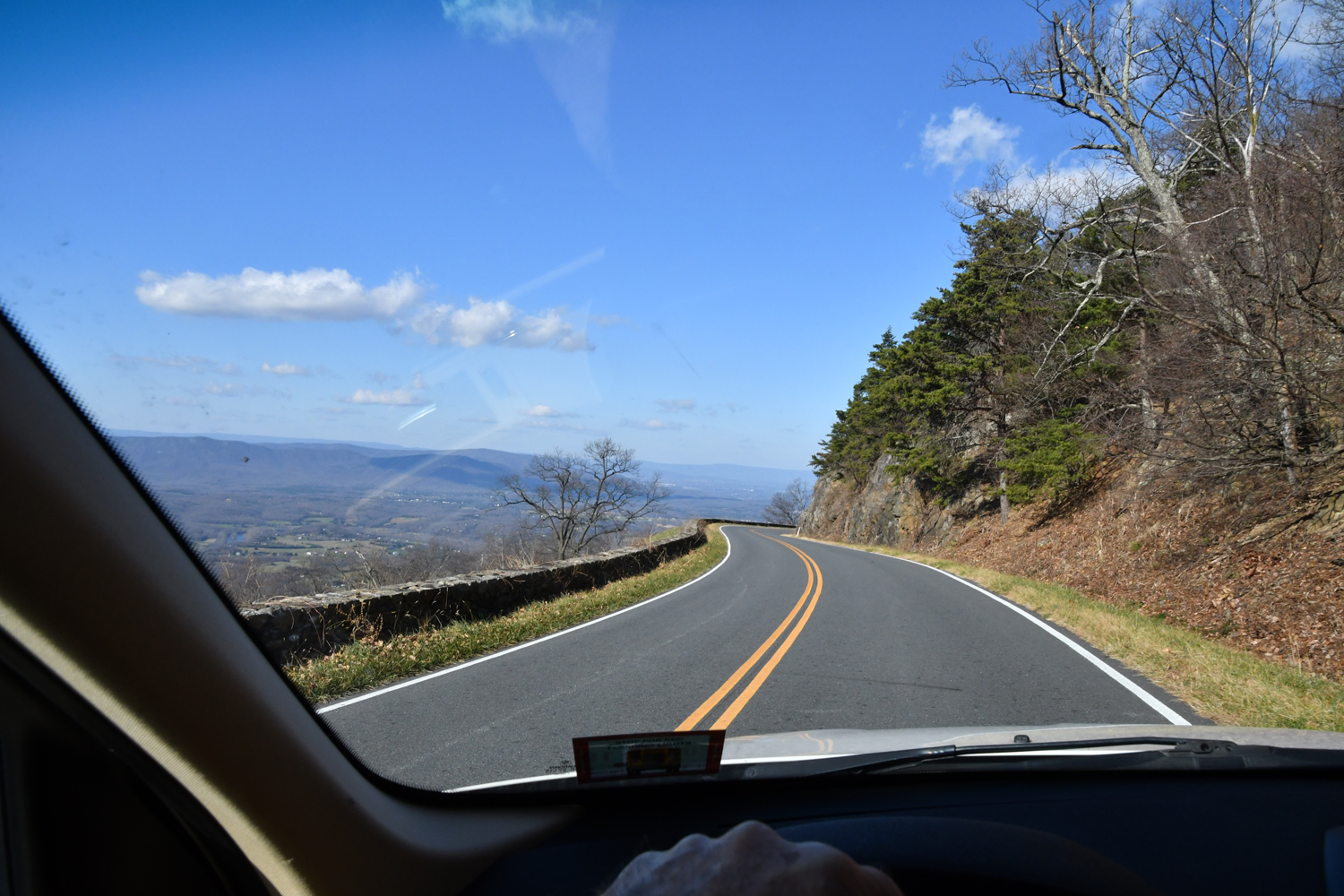
Virginia’s Skyline Drive

For enjoying Skyline Drive, summer with its lush foliage and autumn with its spectacular colors seems the no-brainer choice for a visit. That said, should one chose to tour in winter, the roads unless closed because of snow, offer a sparse beauty unavailable in other seasons. With trees free of leaves and roads free of tourists, stunning vistas otherwise hidden in high season exist aplenty. Gateway to the Blue Ridge Mountains Virginia’s Skyline Drive offers a very tasty driving appetizer to enjoy prior to the Blue Ridge Parkway entre.

Wherever you drive on these narrow mostly shoulderless country roads, folks outside their homes that dot a terrain defined by fields and forest wave and, unlike my home state, New Jersey, they wave with all the fingers on one hand. Indeed, the locals exhibit a down-home country openness that causes one to pause and wish it caught on elsewhere.

If one chooses to start the day with no itinerary, an eager curiosity and a full tank of gas or electrons, discoveries await for those in no rush to find them. On this day the blue highways did not disappoint.

While enjoying an easy cruise through a forested stretch, an opening within the trees revealed an abandoned service station. Exploring behind the “high security” torn and flapping tarp where a bay door once existed revealed a passage way to two more bays. Despite the stacked mounds of tires it did not take long to identify a heavily dust covered 60s Camaro. Old plates showed it to have been in residence for quite a while.

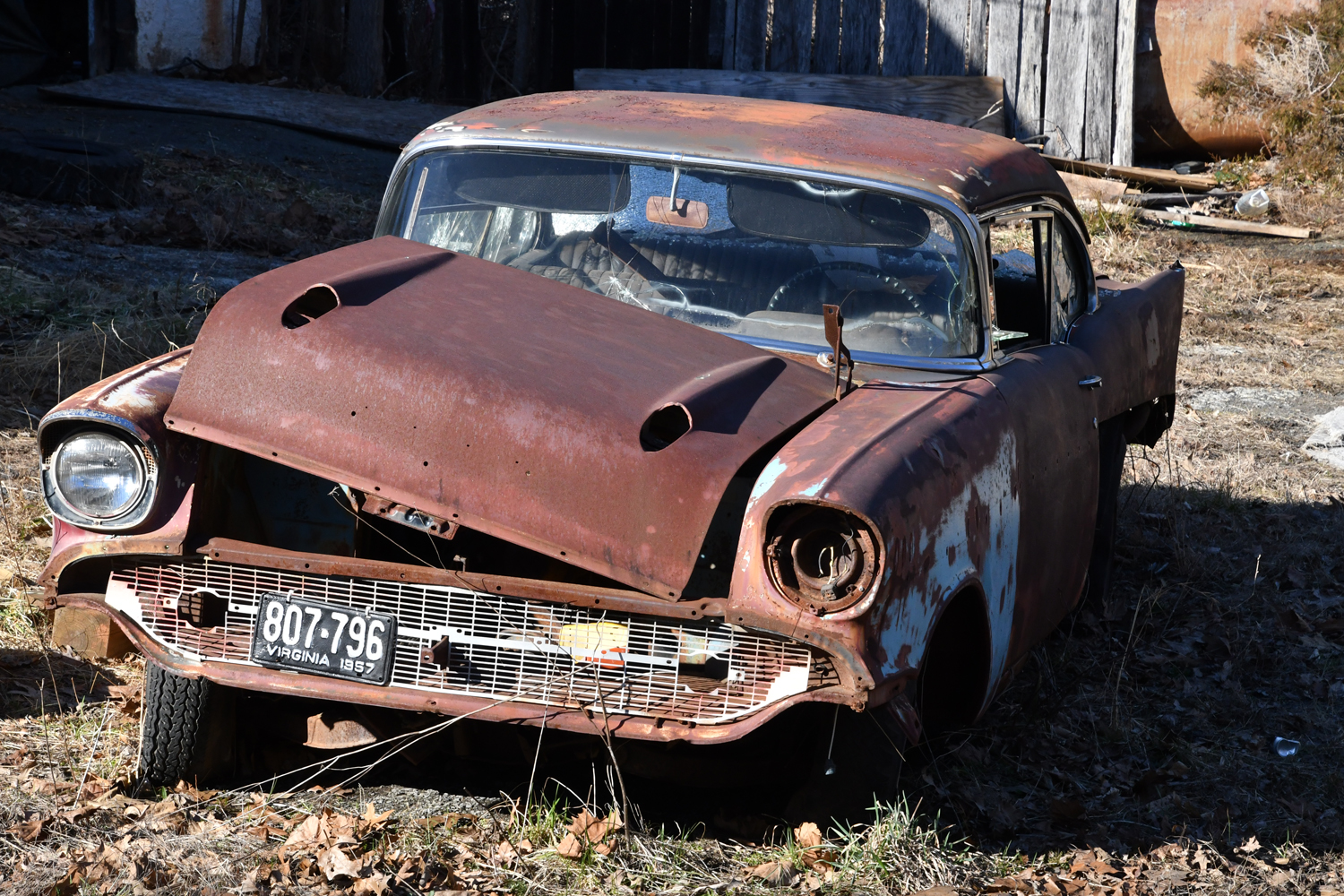
At a quiet intersection a rusted and dilapidated 1957 Chevy Bel Air sat askew and forlorn. Not a part remained that could be used. But there it rested, too worthless to save to precious to junk. Dust to dust.

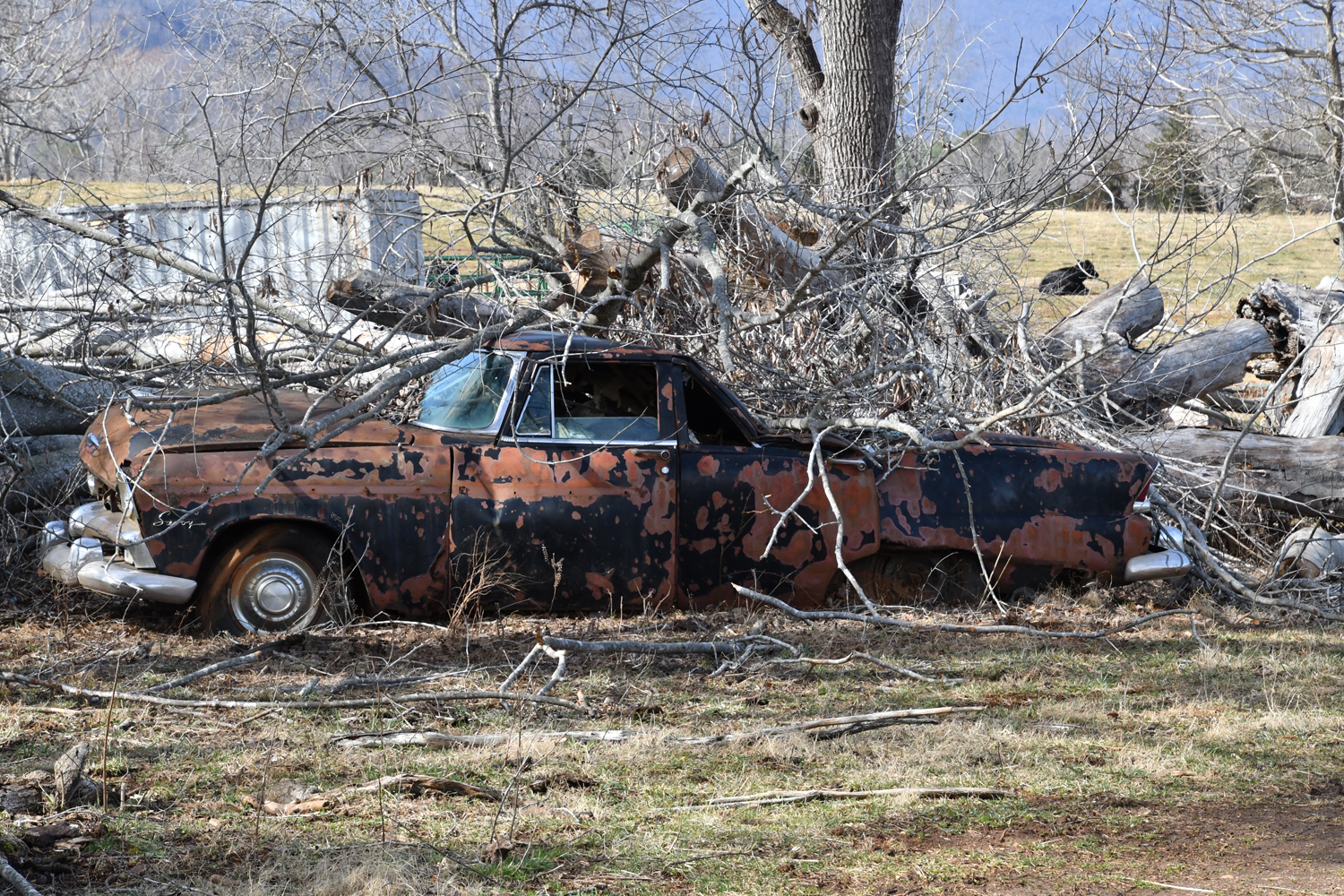
To the side of a dirt farm road, a long forgotten early 1950s Plymouth Savoy clearly fared the worst in a face off with a falling tree. A sunny field on Rt. 151 appeared to be where, years back, 1952 two-door Fords went to die.

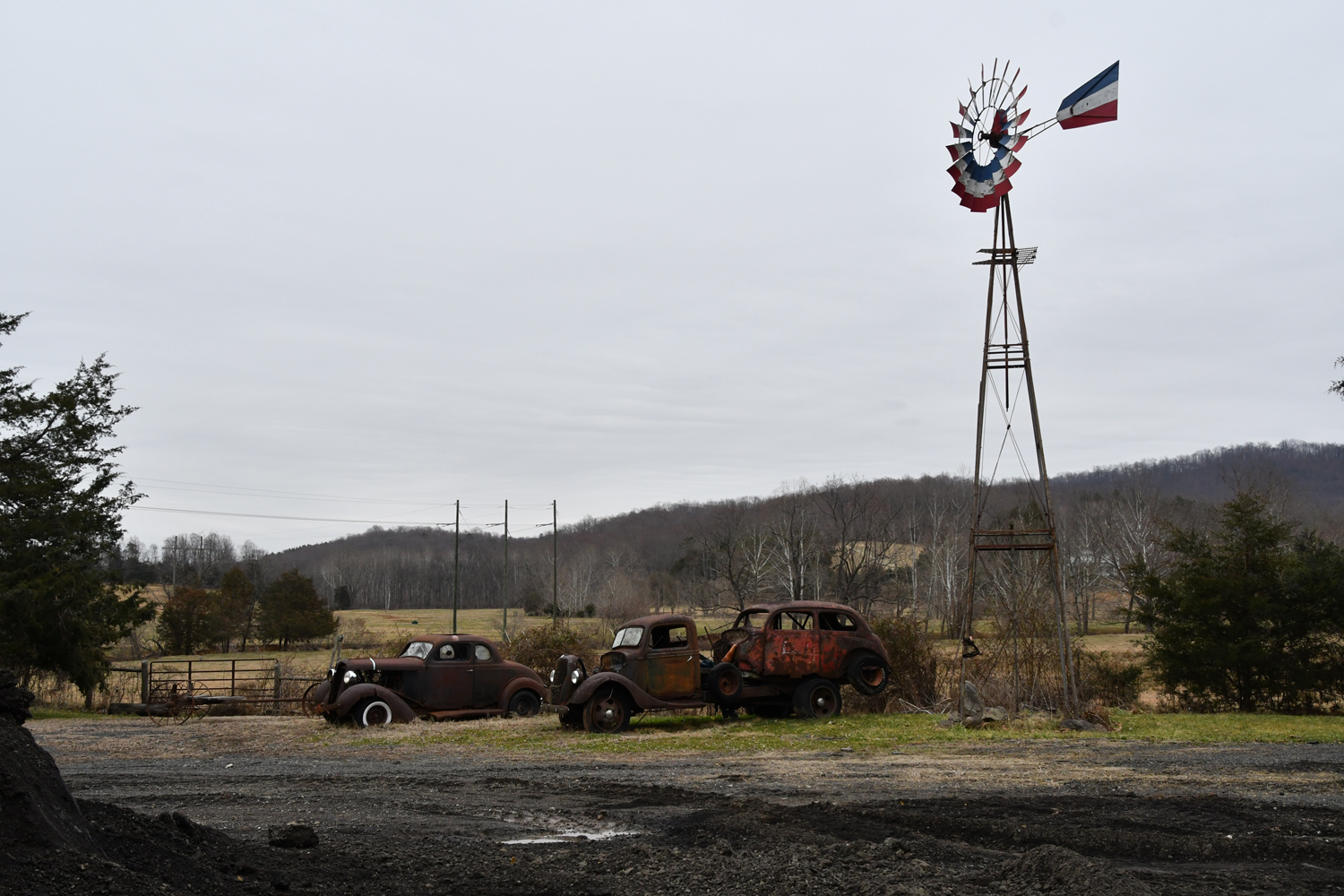
Earlier in the morning a glance to the right revealed an expansive meadow where an agrarian windmill towered over the rusted remains of a trio of hulks from the 1930’s and 40s. For the uninitiated, one or two of the carcasses could spark the tinder of restoration dreams. For those possessing restoration history and the skinned knuckles to prove it, wisdom would counsel to keep on driving.

However, simply looking would not satisfy the hunger for a backstory. Further investigation demanded turning onto the gravel driveway that lead to a sturdy fieldstone structure surrounded by an eclectic array of once useful items sadly past their “use by” date.

Plymouth Savoy

Gravel crackling beneath the tires drew into view from behind the open back hatch of a 2002 Ford Explorer the man who called this home. Sporting a badly weathered narrow brim cowboy hat, with a lined face worthy of a Dorothea Lange portrait and the animated presence of comedian Professor Irwin Corey, 62-year old David Matheny could not have been more welcoming. Approaching, he offered an easy grin accompanied by a firm and honest handshake.

Resident of this verdant valley his whole life, David spoke with an energetic ease about himself, friends, family and cars. When asked if those rusted hulks belonged to him he responded, “They are for sale.”

Learning that the interested expressed focused on their value as for a story, he asked, “If you are interested in cars want to see some more?” Absolutely shot back the reply.

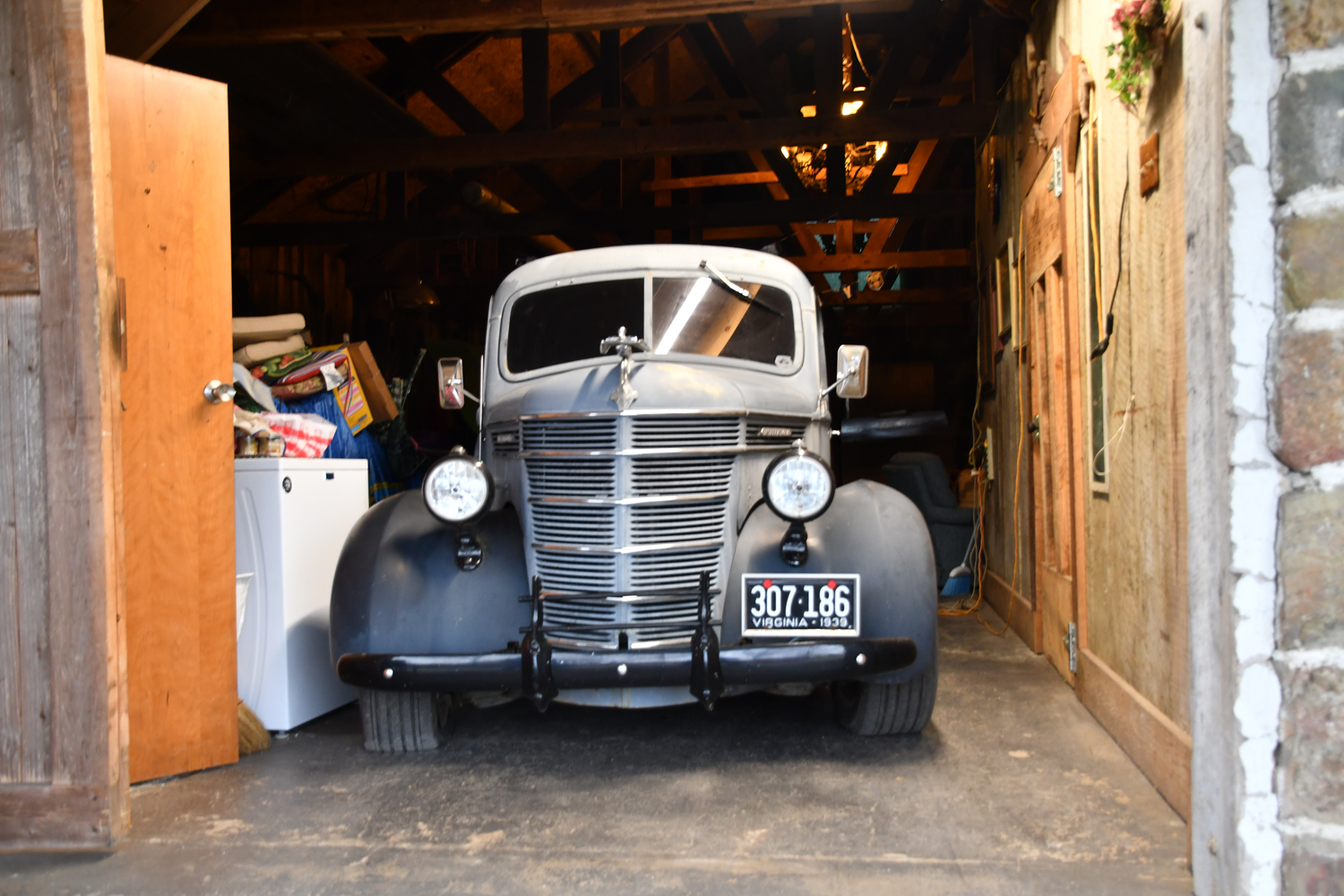
1939 International Panel truck

Directing me inside the stone structure, he opened a door to a garage containing a very clean burgundy 1940 Ford coupe and a 1939 International panel truck in primer that had been a hearse for a local church years back. Having found common ground and

a ready listener, David held forth on stories including a family classic involving a 1931 model roadster that his father had raced over sixty years ago. It remained in the family and presently resided at his nephew’s speed shop undergoing a restoration. Time sped on and David had people to meet. The sound of gravel crunching under departing tires marked the end of a wonderful history lesson.

For some it can be disquieting to have the rapid passage of time abruptly brought to one’s attention e.g. discovering that a car you personally drove when new now merits being judged at Hershey by the AACA. Much the same can be said for forty and fifty-year old future collectibles spotted in fields and under canopies. They too can be found moldering in the verdant hills of Virginia. Interestingly, they now include a distinctively foreign flavor.

While making a steep climb in Nelson County a causal glance down to the valley below revealed a field with a decidedly European flair.  Exposed to the elements, a Type 1 VW pick-up and two faux Porsche 914s slowly oxidized. Apparently left for dead, the VW pickup generated an especially strong lingering desire to find some way down that steeped ravine.

Meandering vigilantly, can enrich a blue highway experience that others, not predisposed to savor, might blow by like a subway between stops. That said, all worthy discoveries are not the exclusive province of interesting vehicles alone. People and places greatly enrich the blue highway experience.

Cruising along through the town of Schuyler brought a Model T pickup into view and with it the home of author Earl Hamner. Strike a bell? He wrote Spencer’s Mountain which television turned into “The Waltons.” Next door to Hamner’s home and across the street from the Walton’s museum could be found a handsome Bed & Breakfast displaying a period correct 1931 Model.

Conversations with local folks always explores the names of knowledgeable car enthusiasts with whom to speak. One name, Dick Carroll, came up with regularity. Reaching out resulted in a meeting with Dick and his friend Don Vey, both retired. Dick and Don possess a real fascination for special interest automobiles. A number of years back Don pursued his passion by diving head first into full restorations.

1949 Baby Lincoln Coupe Restomod

He first focused on a  1938 Buick and subsequently moved on to 1949 Baby Lincolns which came in three models, 2 Door Coupe, 4-Door Sedan and Convertible. He has one of each. He intends to recreate each as a pristine restomod. The Coupe has been completed. Built from 1949 to 1951, Baby Lincolns shared their basic body style with the Mercury of that period. What made it a Lincoln came from the firewall forward. Dick’s plan for putting his stamp on the baby Lincolns calls for a high performance power train. All three will have Corvette LS motors.

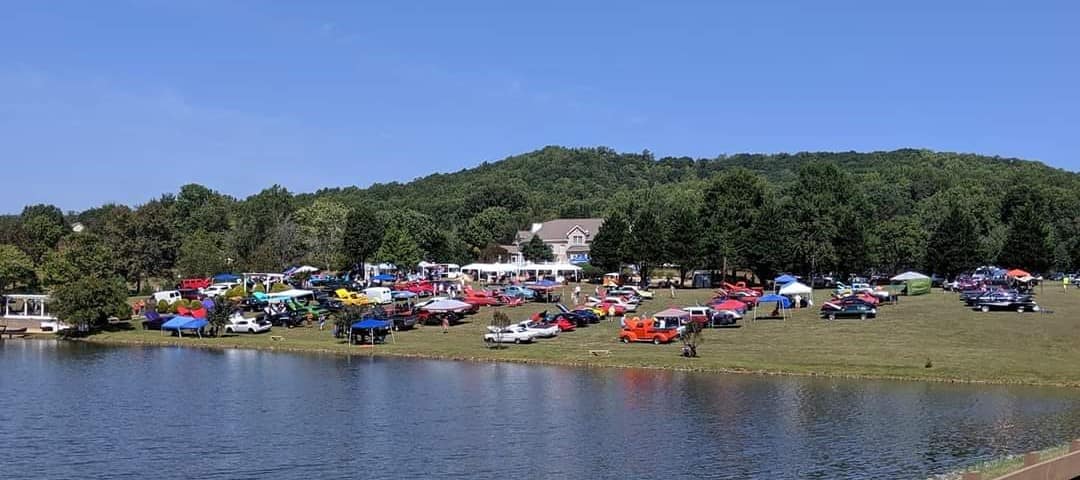
Beyond his own cars Dick has a grander vision. He appreciates not only his vehicles but those of a wealth of classic car enthusiasts in the surrounding area. To celebrate those like-minded individuals he hosts a car show on his property that looks like a mini-Amelia Island. This will be his seventh show. Covid cancelled last year.

Car Show at Dick Carroll’s

Don Vey enjoys a vintage car history starting in the early fifties. Over the years he has owned and restore a wide array of classic cars starting with a 1957 Corvette he bought in 1959. While his years of restoring and collecting have been a source of joy, they have taken a toll as well. Working with toxic paints has left him at the age of 82 dependent on a portable oxygen supply. While this may have diminished his ability to work on cars he loves, it has had no effect on the joy he derives from driving them. He came to the meeting driving a Zeus Bronze Metallic C8 Corvette. Pushing 495 horsepower with the Z51 performance package it does 0 – 60 mph in under 3.0 seconds. “God I love great cars,” Don says.

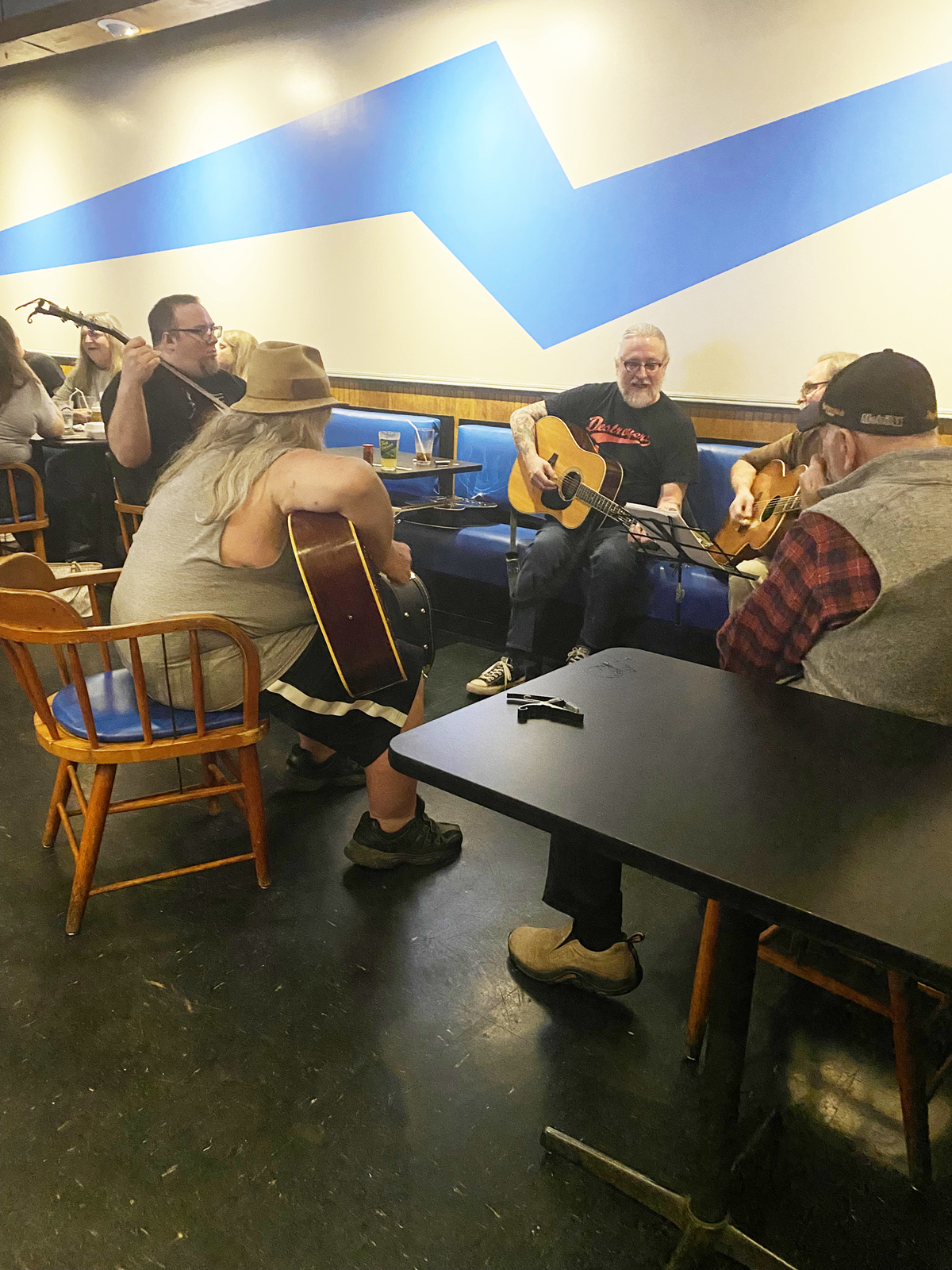
Sitting in at the Side Bar

After the last day of exploration, I looked for a local watering hole to toast the good fortune of my experiences. Passing through Lovingston, Virginia, I found a pub called the Side Bar that on this evening invited local musicians for an Open Mic Night. Another great surprise. The musicianship on display excelled. These guys could play, mostly country. Then they moved on to the blues. I always bring my harps to relax on blue highway adventures. No harp players had come to back these guys up. The energy felt so right, I asked to sit in. They welcomed me.

Apparently, at least at the Side Bar, there are no strangers in Lovingston, only friends you had not yet met.


By |2022-03-03T13:38:29+00:00March 3rd, 2022|2 Comments

Conversations With People We Value #32

Tomorrow will commence my Charles Kuralt blue highways, back roads tribute tour. As such, I am yet to have exciting tales hand-picked from road side discoveries to be served up like farm fresh delicacies for your personal consumption.

If one can will the future though, I would love nothing better than to manifest glorious surprises. As my mind wanders I imagine stumbling upon a shabby yet substantial barn nestled in a wooded expanse “out back” of a weathered farm house. Parting the barn’s feeble creaking doors reveals it to be chockablock with classic contents, each resides under a blanket of fine dust that speaks to a rich past like tree rings. All possess histories of once being driven by mid-century Hollywood royalty. It would be enough to make Tom Cotter cry. Hey, you have your fantasies, I’ll have mine.

However, while organizing my back country journey I did come across a fascinating stolen car story with its roots in the closing days of WWII and its resolution well into the next century with a conclusion worthy of O’Henry.

The following offers what I believe to be the best multiple decade stolen car story with an “I did not see that coming” conclusion.

Return of the Zipper King


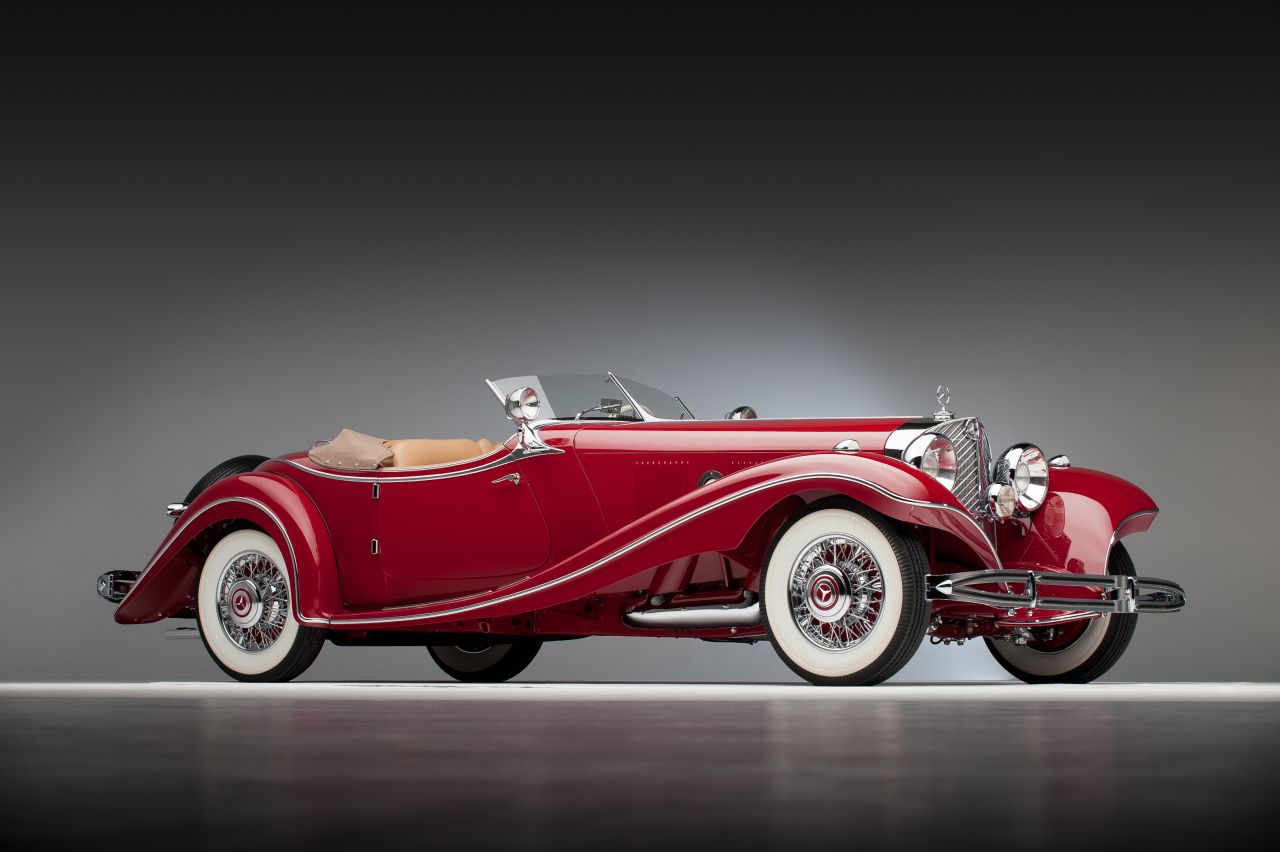
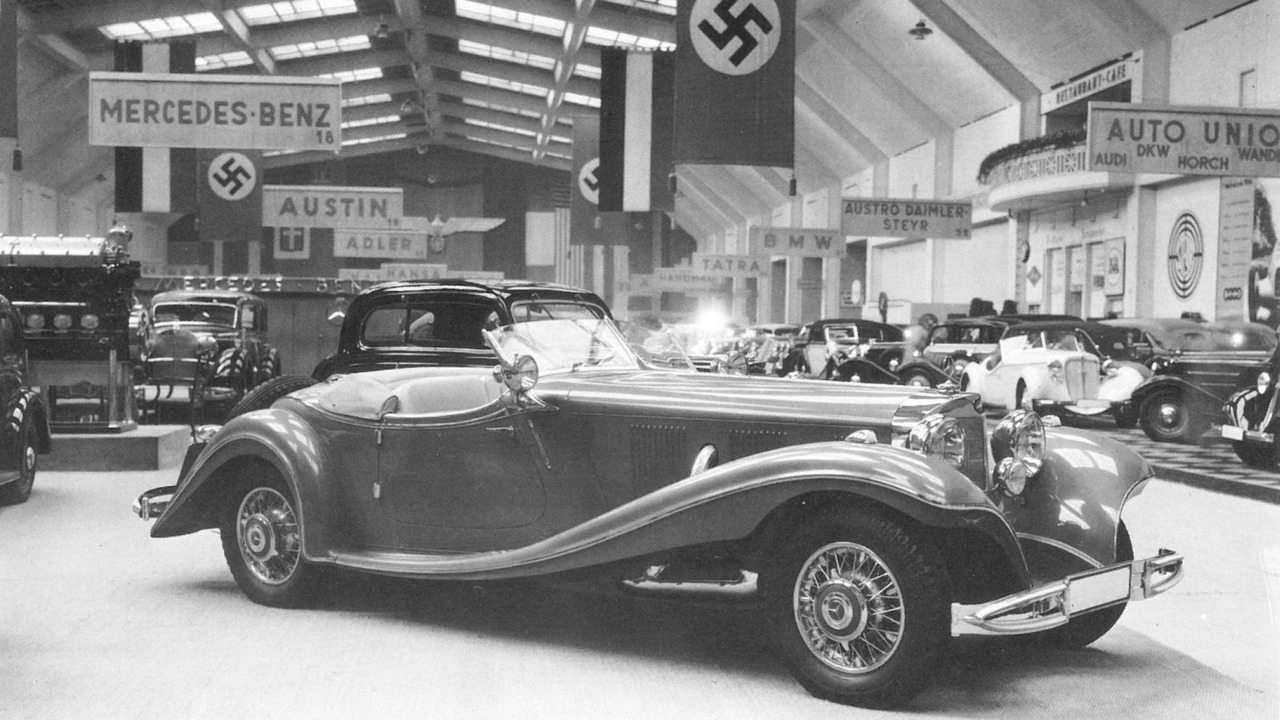
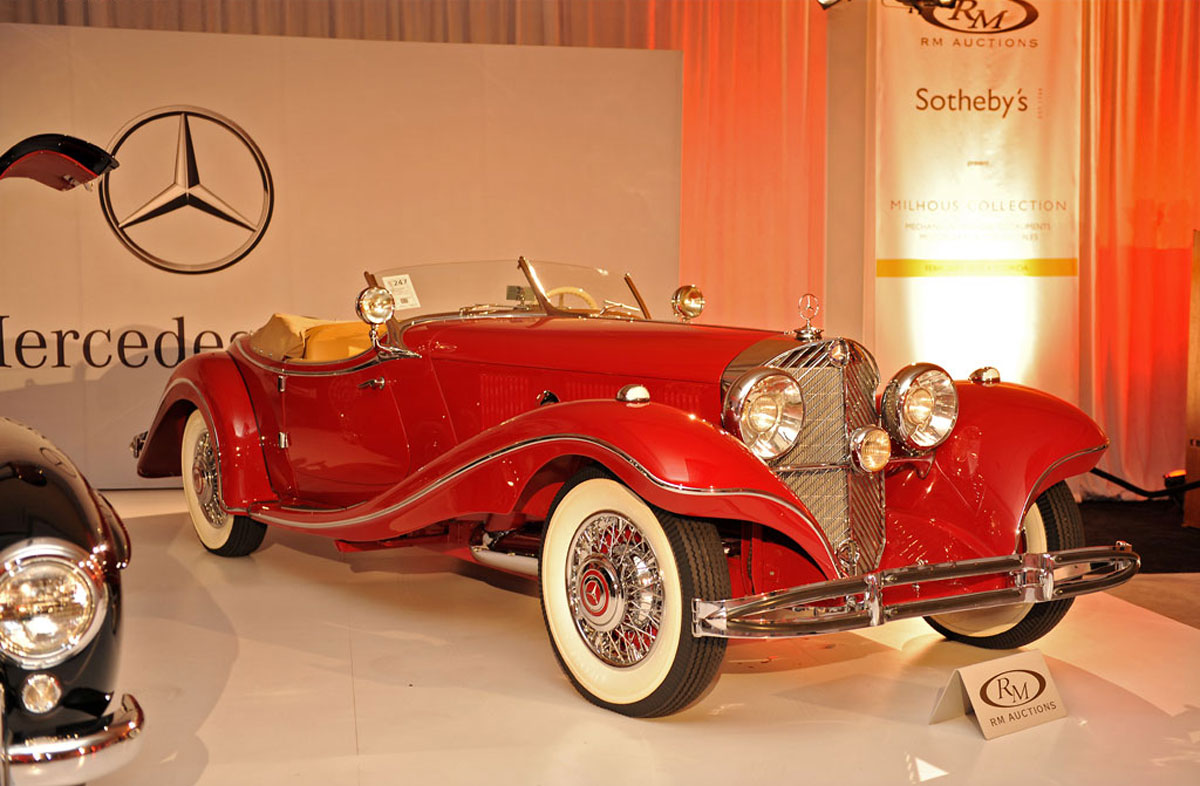
Threads that interweave to create the fabric of this 21st century ownership puzzle are many and involved. It all began at the 1935 Berlin Motor Show. Heroically displayed as the centerpiece of the Mercedes-Benz exhibit and indeed of the whole event, stood the gleaming

1935 Berlin Motor Show

Mercedes-Benz 500K Special Roadster, chassis number 105380. Built in 1935 during the 1934 and 1936 model run, it shone as a gleaming jewel of advanced engineering and design. Recognized as one of the greatest performance automobiles of the pre-war era, Mercedes-Benz produced a total of 342 500Ks with only 29 being Special Roadsters. Its supercharged (thus the “K” designation) 5.0-liter inline-8 cylinder produce 160 horsepower. Blazing fast in the context of the time, it could easily top 100 miles per hour. The 500K’s advanced engineering extended to the chassis which featured a sophisticated 4-wheel independent suspension with double wishbones at the front, a double-joint swing axle in the rear as well as coil springs and dampers.

As The Autocar wrote in 1936: “This is a master car for the very few. The sheer insolence of its power affords an experience on its own.”

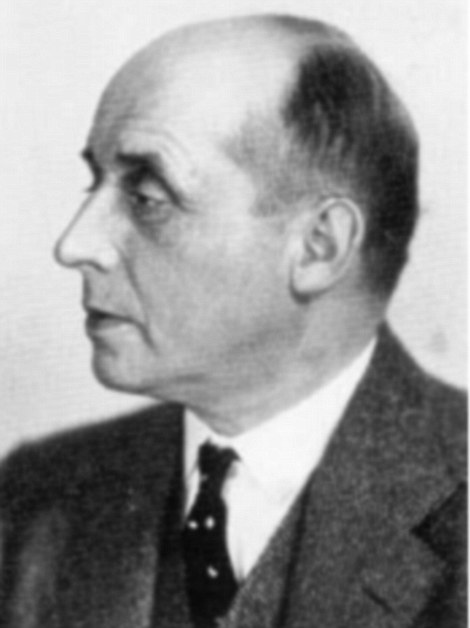
Everybody loved it. However, a precious few could afford it with its 1935 selling price of 28,000 Reichsmark ($11,200). One person who did love it and could afford it was industrialist Hanz Prym. He purchased the car new after the Berlin Motor Show in 1936.

Hanz Prym

Prym known as the “Zipper King,” lead the oldest family-owned business in Germany. For 12 generations the Prym family specialized in the manufacture of haberdashery and copper and brass products such as zippers and buttons. During the war Prym industries supplied the war effort with turbine blades as well as buttons and zippers. It should be noted that while a German industrialist and briefly imprisoned by the allies in 1945, Prym held no sympathies for the Nazi’s. He supported the Weimar Republic and actually advocated for the return of the monarchy.

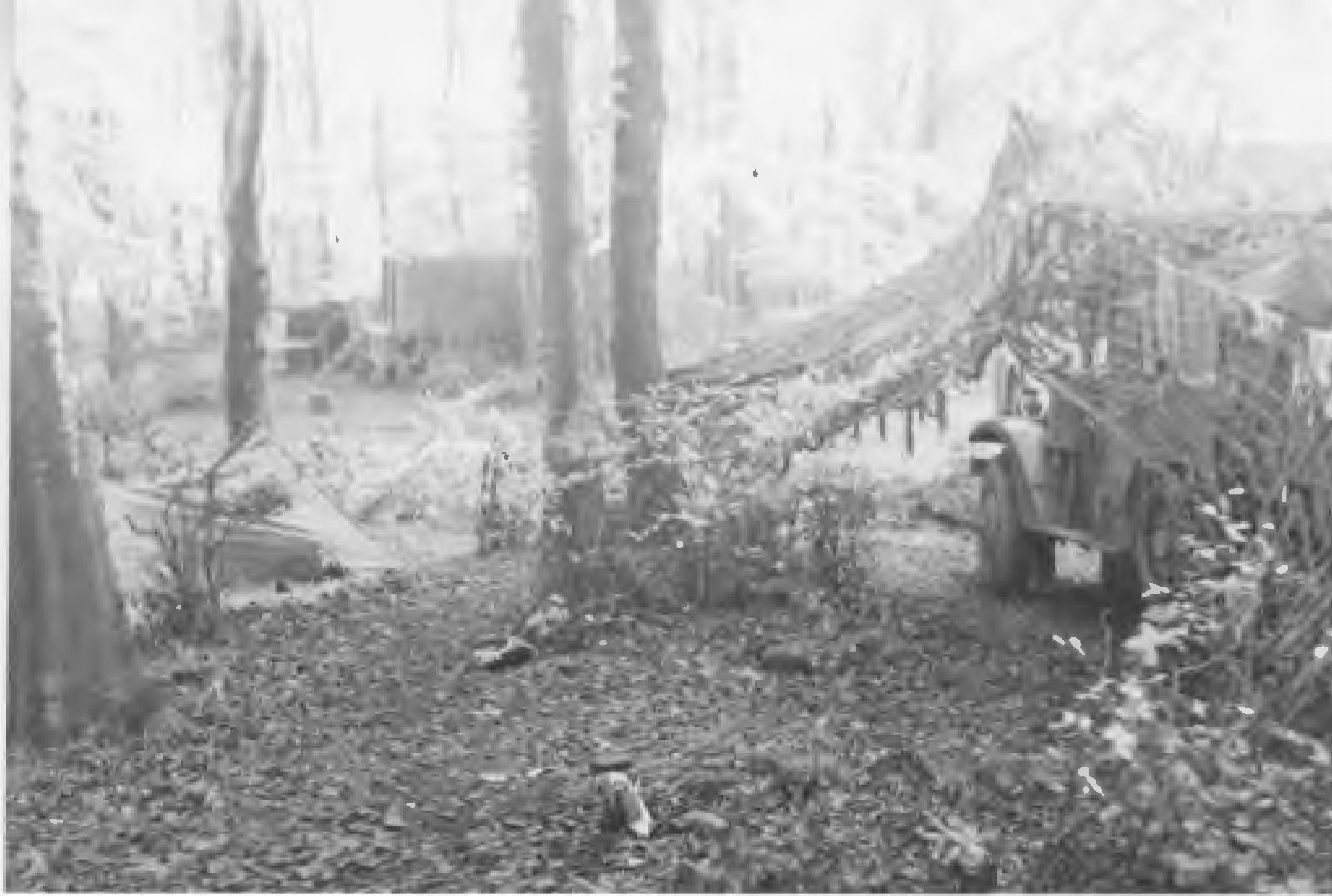
When World War II came, Prym retreated to his estate in Stolberg Germany taking the 500K with him and secreting it away on the estate grounds. The 500K quietly resided in its sanctuary while the war raged until late fall of 1944 when the collapsing German war effort saw allied troops in the form of the 3rd Armored Division (known as the Spearhead because they always like to be out in front) cross the Siegfried Line and set of camp in Stolberg at the Prym estate mansion.

First hand commentary by soldiers in the 3rd Armored Division confirmed Spearhead occupation of the Prym estate.

“The division ensconced its headquarters in the plush luxury of the Prym Mansion, just south  and east of Stolberg. The rainy winter weather soon turned the entire Division area into a sea of mud.  There were daily skirmishes and firefights, and at night patrols probed for information. Artillery  action was continuous. The men were tired and the machines needed maintenance in the worst way. Shellfire was the bane of  existence  at Stolberg and in the surrounding towns. German guns located in the Duren area constantly shelled “Spearhead” positions.”

Bivouac style encampment on Hanz Prym’s estate September 1944

During this time the car disappeared from its hiding place on Prym’s estate. Early versions of what happened told of the 500K being sold to an American soldier. Once released by  the allies after a short detention, it is said that Prym, who died in 1990, was furious upon learning that his prized Mercedes was gone. The Prym family vehemently rejected the story of the car being sold as an outright lie. The version that subsequently gained traction and stuck described the car as being spirited away by a U.S. Army Colonel and shipped to the United States while Hanz Prym was being held in the custody of Allied forces. Regardless of the reason, the 500K had vanished. Decades would pass until in 1976 when it appeared in the collection of Russell Strauch in Toledo, Ohio. From that time until 2011, Prym’s 500K changed hands with some regularity. During that period in the early 1990’s it underwent a complete restoration.

2011 RM Auctions

Then, in 2011 it starred center stage at the 2011 RM Monterey auction. There it changed hands for the princely sum of $3.7 million gleefully spent by Dutch classic car aficionado Frans van Haren. Joyfully, van Haren prepared to share his magnificent acquisition with the automotive world on Europe’s biggest stage. He intended to ship his prize to Techno Classica in Essen Germany in 2012. And he did. And that is when the Scheisse hit the fan.

Beautifully bathed in photogenic light for all to see, just not for long. Within a few hours the German authorities set eyes on the gleaming 500K and summarily seized it. Frans van Haren had been accused by the descendants of Hanz Prym of possessing stolen property. Their property. By bringing Prym’s 500K back to Germany van Haren had subjected his prized possession to German law, law that could only be enforced if the car was in Germany.

With frenzied bewilderment thick in the air along with $3.7 million disappearing into thin air, fingers seeking targets to blame flashed about pointing in all directions. At this point it would seem timely to mention that, at auction, RM Auctions stated, “Interim history is unknown.” More than 20 years of history resided in darkness and, oh yes, there was no title involved in this or any of the earlier transactions. Game on.

By the end of 2012 a German court in Hamburg ruled that the allied soldier did not have the right to take possession of the car. The 500K Special Roadster belonged to the Prym heirs not van Haren. As to what satisfaction van Haren can get from those who sold him the car, that is a story for another day.

As to the Prym progeny, in 2016 Bonhams auctioned the Prym family’s Berlin Motor Show 500K Special Roadster at the Bonham’s Chateau de Chantilly auction. It sold for $5.29 million.

As to any complaints van Haren may have, the Prym family says, “zip it.”

By |2022-02-17T04:02:02+00:00February 17th, 2022|6 Comments

Roads We Remember #9

 “Road Trip!” when spoken like a call to arms, sets the heart a flutter. The mind races with thoughts of new horizons, awaiting adventures and the freedom of the open road. Yes, all true… however. And there always seems to be a “however.” In the case of road trips, the “however,” takes shape courtesy of the  seemingly endless miles of endless miles to be covered on the way to the new horizon, miles devoid of any type of adventure or, if left unaddressed, any mental stimulation at all as a driver teeters on the threshold of white line hypnosis.

Such sleep provoking and mind numbing monotony has served as the desperate progenitor of games, distractions and challenges designed to spare drivers of the narcoleptic terror born of endless corn fields, soulless interstates, pitch black back roads illuminated only by the eye fatiguing glare of oncoming high beams and the kind of dull roads ideal for filming commercials for hands free driving features.

Now adding to the long list of keep awake tricks comes Elon Musk’s latest Tesla accessory, the TeslaMic car karaoke microphone set.

Karaoke, Elon Musk’s new weapon to fight driving doldrums.


Last Friday Tesla released its new TeslaMic. Wildly popular, it sold out in less than an hour in China, the only market where the product is presently available. Offered as a set of wireless microphones, TeslaMic basically turns the car into a personal karaoke booth. Designed to function only when the car is stopped, the microphones pair with newly released Tesla in-car karaoke software that includes audio tracks and videos.

Last year, an estimated 500 million people used online karaoke services in China. Prior to Covid, individualized karaoke booths rapidly sprang up like proverbial mushrooms throughout malls, airports and other public places across China. Now, the top Musketeer with his TeslaMic looks to tap into the immense popularity of these individual karaoke booths. Using technology that transforms the Tesla owner’s car into a private karaoke booth, it allows one or two people to sing their hearts out without being heard by anyone else. It seems only a matter of time before the market savvy Musk adapts the TeslaMic as a shower accessory.

Made even more attractive considering Corona virus fears, the ability to transform an owner’s Tesla into a personal karaoke booth offers great appeal. Representative of the typical car karaoke aficionado in China, one man quoted in the press said, “It’s quite a way to alleviate boredom during a trip.”

Not surprisingly, karaoke booths can now be seen in America popping up in public places such as Mall of America and being available to rent for wedding receptions, bar/bat mitzvahs, corporate events and birthday parties. Clearly the Chinese karaoke booth concept has infected our culture with a strong likelihood of rapidly spreading. Why does that have a familiar ring to it? Anyway…

In this age of high tech hacking where some bright lad can remotely disable an automobile’s braking technology or a bank’s security system does it seem beyond belief that another bright lad could bypass the “only operates when stationary” function?

Now, instead of merely clapping hands, which are rapidly being reduced to vestigial appendages by our Tesla’s hands free self driving features, drivers can attend to the dashboard display as it guides them through a spirited personal interpretation of Jan and Dean’s “Dead Man’s Curve” or Pearl Jam’s cover of “Last Kiss.”

Call me old school but 20th century remedies for drowsy driving displayed a great deal more character, individual inventiveness and personal involvement.

Cranking up Cousin Brucie and rolling down the windows, time honored efforts to keep 20th century minds alert have evolved over the ensuing years. As we progressed into the 21st century the radio as entertainment and distraction experienced a reconfiguring and to a significant degree a supplanting by digital technology. Interestingly, the point of the digital spear, the cellular phone offered both greater connectivity and greater distraction. Today, some say driving while texting or speaking on a cell phone has produced more fatalities that driving under the influence of alcohol.

With the expansion of platforms born of digital technology and the power to personalize content choice the technological beat goes no yet it cannot supplant the priceless value of a trusted driving companion willing even eager to compete, collaborate or confound all in the name of staying alert. Old school solutions existed aplenty.

While driving

Warplane – (Can be played by one or more) Best played by those with a theatrical bent, Warplane requires creative skills and relaxed neck muscles. Equally applicable for bomber or fighter scenarios, Warplane requires the driver to roll his head to the left as if looking out the side of a warplane’s canopy. Then to create a story line calls out what he or she makes believe has been observed. For example “We are passing over the enemy power plant. Yes, there it is. The dam is directly ahead. The flack will be heavy. Bouncing these bombs across the water is the only way we can destroy this dam.” The extent of the dramatic scenario with all occupants contributing can be a function of the time required to revive the driver.

Rhyme – One person picks a word and everyone has to go around saying a word that rhymes with it. The first person to be stumped or to repeat a word loses.

The Movie Game. One person says the name of an actor and the next person must name a movie that actor has been in. The next player must name another actor who starred in that same movie. The next player must say another movie that actor was in, and so on.

Name the artist – With any music source that does not display the artist, when a new song comes on the first person to name the artist or group performing it wins.

Alphabet I.D. – Starting with the letter “A” the first person to see the letter as the first letter on a sign, vehicle or building. Go up through the alphabet. The person with t he most correct answers wins.

21 question naked challenge – A high stakes, bare knuckles and more, nuclear option for staying alert, it is only for those possessing a hardy spirit of adventure accompanied by a significant other cut of the same cloth. After a coin flip the winner thinks of something or someone. The other person then has 21 questions to identify the person or thing. The first question is often “is it a person, place or thing?” If the person exhausts their 21 questions without a correct answer they must remove one piece of clothing. This can require pulling over to a stop. First person naked loses. Dark roads and desolate highways in the southwest usually have preference over the West Side Highway and toll roads.

When stopped

It is recognized that regardless of the century, the greatest response when one feels sleep overtaking consciousness will always be to pull over.

Physical activity – Exiting the comfort of the vehicle in itself can revitalize a driver. Combined with physical activity such as jumping jacks, running in place and pushups against the front fender further reenergizes the mind and body.

As an activity when pulling over, Musk’s TeslaMic in its intended use does promotes mental and physical stimulation that can benefit a drowsy driver. But it is not the only one. A losing streak in 21 questions can do the same.


By |2022-02-03T12:44:09+00:00February 3rd, 2022|Comments Off on Roads We Remember #9

Roads We Remember #8

After our initial stop in Nelson County Virginia, Elaine and I remain undecided about the next step in our extended south bound four-wheel winter walkabout. Will it be east to the Outer Banks or west across the Blue Ridge Mountains?

Regardless, events of January 4th in the Mid-Atlantic States reminded us of a harsh reality. WINTER CAN BE DANGEROUS! This realization came courtesy of a surprise winter storm that had frozen traffic cold, literally, for 50 miles on Route 95 in Virginia. It stranded unprepared drivers in snowbound vehicles for over 24-hours. In subsequent days new ice and snow storms as far south as the Carolinas made it clear that it did not stretch credulity that a February jaunt along the Blue Ridge Parkway or across the Carolina Piedmont could be interrupted by a powerful and unanticipated paralyzing storm. We would take the threat seriously and plan accordingly.

Tips on planning for the unexpected when winter turns ugly.


When blue highways turn white

The New York Times featured interviews with motorists that pretty much reflected the norm for unprepared travelers trapped and immobilized over night in the frigid grip of an unexpectedly severe winter storm. “It’s been so horrible,” said Arlin Tellez, 22 in an interview on Tuesday morning from her car stuck about 80 miles south of Washington, D.C.  Ms. Tellez explained to the New York Times that she had been trapped in her car since 5 p.m. Monday without any food or water, and was layering on clothes she had in the car.

Unlike Ms. Tellez, Elaine and I intend to be prepared. While we envision our trip as a party, we do not have in mind the Donner Party. As such I have assembled the Drivin’ News Winter Wander-land Preparedness Guide.

Some items for a winter survival kit are self evident, others not so much. Special emphasis will be given for considerations that may not be common knowledge. A list of all unmentioned items comprising a winter driving survival kit will be completed at the article’s conclusion.


Non-traditional winter kit items

Coffee can space heater

It is cheap and it works. It basically requires four items, an empty, clean metal (it must be metal) coffee can, candles (metal cup tea light candles are cheap and work well), matches (waterproof or wooden stick matches are easier for cold, stiff fingers to use than a match book) and a heat resistant plate.

Position the can on a flat, stable, level, fire-resistant base. Place three or four tea candles in the bottom of the can. Once lit, the tea candles will burn for up to four hours.

If alone or with one other occupant in an SUV or large sedan consider reducing the space needed to be heated by duct taping a  blanket from the headliner to the back of the front seat.

Non-lumping cat litter (5 lbs.) or carpet strips

Both provide improved traction when placed in the path of the drive wheels.

Whistle

In a blinding storm a strong whistle (120 dB and up) can alert help to your location.

Whiskey stones (Cubes of solid soapstone that when refrigerated will chill your bourbon without diluting it offer a great advantage for preventing water from freezing.)

Adding un-chilled whiskey stones to your water will help to keep it unfrozen, particularly in sub-zero temperatures. Other options include floating a ping-pong ball, a citrus peel, or another floating object that will keep the surface of your water from freezing completely over.

Bivy (Bivouac sack)

Inexpensive and rugged. Bivies pack very small, can weigh under 6 ounces and can be used as a survival blanket or sleeping bag. On the inside it has a reflective polyester coating, which can efficiently reflect up 90% of your body heat to help keep you warm even in the worst of conditions.

Cell phone walkie talkie app

Cell phone walkie talkie apps can provide the capability to turns your phone into a walkie talkie during any disaster and can help speed up rescue efforts once the storm has passed. Examples of apps: Zello, Two Way: Walkie Talkie

Newspaper

Provides great insulation when placed between skin and clothing

Crank, battery, outlet, solar power radio

Compact sized units provide AM/FM and weather bands. It includes cell phone charging jack. Contains emergency light.

LED headlight

Small high intensity light that straps around the head frees hands while providing powerful illumination.


When stranded snowbound or in blizzard conditions your safety, even your life may hinge not only on what you do but what you choose not to do.

Recommended DON’Ts

Do not panic.

Take a breath. You will think more clearly. Assess your situation. If you are within 75 to 100 yards of an occupied structure consider bundling up and making the trip. If not, set up camp in your vehicle. Hopefully after reading this article you will have some supplies on hand.

Three reasons to not drink alcoholic beverages

Danger #1  -Alcohol is a vasodilator.

Alcohol causes the blood vessels just below the skin’s surface to expand. This creates a false sensation of warmth while actually stealing heat from the vital organs and decreasing overall core temperature. Thus, alcohol overrides the body’s defenses against cold temperatures which is to constrict your blood vessels in order to keep your core body temperature up.

Danger #2 – Alcohol is a diuretic.

Alcohol causes you to urinate more. This speeds up dehydration and removes heat from your body.

Danger #3 – Alcohol impedes decision making abilities

Alcohol reduces the ability to make reasoned decisions. A bad decision in a life threatening situation is just that, life threatening.

Don’t drink coffee, tea or other beverages with caffeine

Coffee with caffeine may be hot but caffeine like alcohol is a diuretic. You will need to urinate more, thus, unnecessarily losing heat from the body.

Don’t go to sleep with the car running

A stranded car should never be left running for more than 10 minutes every hour. If no one is awake in a running car it can easily become a death chamber. Carbon monoxide, an odorless, colorless, and deadly gas produced by the engine can build up quickly inside a vehicle, poisoning anyone inside.

Recommended DOs

Stay with the vehicle. Yes, I know about Sir Ernest Shackleton and his Antarctic heroism. Few of us are Ernest Shackleton and in this day and age no reason exists for any of us to aspire through heroic efforts to prove we are.

Unless a home or building stands close and clearly reachable, stay put. The car provides shelter and protection. It is far more visible to searchers and by your having read this article it should contain supplies to help you survive until help arrives.

Clear exhaust pipe of snow

A blocked tail pipe can result in carbon monoxide entering the stranded vehicle.

Move supplies from trunk to car

As soon as you realize your situation, set up camp. Transfer all necessary supplies to where they will be easily accessible and not require going outside.

Colorful cloth on antennae

Tying a brightly colored cloth to an antennae or roof rack enhances the visibility of the vehicle.

Crack window

Leaving the two windows open slightly will assure ventilation and a supply of fresh air

Run engine a maximum of 10-minutes per hour

Run the engine sparingly to preserve fuel while generating and conserving heat.

Keep feet off floor or put paper or cloth down for insulation

Put paper or blankets on the vehicle floor or keep feet off the floor to protect loss of heat through feet.

Put on extra clothing right away

If you see that you are stranded, layer on all the clothes you have right away. Do not wait. Staying warm is much easier than getting warm.

Loosen tight clothing

Once fully dressed, loosen clothing tight to the skin. Loose cloths retain more body heat.

Remove metal jewelry

Metal jewelry can chill quickly and leach heat from your body.

Eat a snack of high calorie food before sleeping

Consuming a snack of high calorie food before sleeping will stimulate your metabolism and increase your heat production.

Tether yourself to car if you must go out

If you must leave the vehicle in a blinding snow storm tie yourself to the car with parachute cord (Paracord) or nylon rope so that you can find your way back to the vehicle.

Drink plenty of fluids

It is just as easy to become dehydrated on a cold day in winter as a warm day in summer. Dehydration makes a person more susceptible to the potential health hazards of cold weather.

Winter emergency kit content list (additional items)

Blankets

Plug in and solar cell phone charger

Chemical hand and foot warmers

Compass

First aid kit

Fresh batteries

Gloves

High energy food (Long shelf life)

Jumper cables

LED flashlight

Paper maps

Pen & Paper

Reflective triangle

Six-pack 30-minute road flares

Snow brush/ scraper

Shovel

Toilet paper

Tool kit w/Leatherman

trash bags (Large)

Warm clothes

By |2022-02-03T12:43:12+00:00January 20th, 2022|4 Comments

Roads We Remember #7

I always possessed a bit of envy for people who had a passion since childhood that swept them into the future much like a strong wave powers a surfer towards the beach. Marv Albert always wanted to be a sportscaster. Since childhood, Neil Armstrong looked to the heavens for his future. Diving before he was a teenager, Jacques Cousteau yearned to explore the ocean’s depths. For me, no powerful plan or compelling dream drove me towards a future already being shaped in my fertile imagination. At best I relied on a process. If an idea seemed to make sense and connected enough dots, I yielded to its influence and allowed it to carry me for a time until its force dissipated. Each force urging my life into the future, rather than a powerful wave, was more like an available current that helped me drift towards a better tomorrow.

Over the years as my process matured it gave birth to a simple self test when faced with dots in need of connection. I would ask myself, “if not this, what? If not now, when?”

With the arrival of 2022, I find myself facing a constellation of dots seeking order.

Blue highways, back roads – If not now, when?

Materially I have what I need in life. Some have more. Some have less. I am blessed. What I fear lurks in the rear hall of my consciousness. Its form takes shape as a lazy sameness where my soul succumbs to the dulling inertia of mind numbing predictability. No way! Figuratively and literally connecting the dots for 2022 will begin by taking Drivin’ News on the road.

As the new year dawns, my life partner and co-conspirator Elaine and I find ourselves blessed with good health and a clear schedule. I have come to fully appreciate that my friends are my family. I derive great joy from the community that has grown around the “Collectible automobiles as a passion” class that I team teach with Bob Austin and Fred Hammond. More than anything else I hunger to keep these relationships and activities fresh and populated with the uplifting and unexpected. Over the years Elaine and I have found some of our most meaningful experiences take place as happenstance encounters along “blue highways.” For those unfamiliar with the term, “blue highways,” it represents the spider web of two-lane back roads that serve the expansive countryside bypassed by major high speed interstate traffic arteries. Unlike the hypnotically dull interstates that made blue highways obsolete for high speed transit, blue highways, with the power of an evocative piece of slower paced music, re-calibrate a driver’s mood and expectations to a rhythm more in sync with the life, energy and surroundings to which this serpentine ribbon of black top belongs. Time spent attending to the dips and curves of blue highways actually engages a driver with real life experience rather than blowing though a countryside like the blur between subway stops.

Elaine and I have come to be forever bettered when time allows us to avoid interstates by stitching together a journey on blue highways. No interstate leads to a weathered country store that stands strong, proud and alone while projecting a gritty confidence that it belongs to be exactly where it is. Such structures remind me of a bricks and mortar version of a role mastered by an aged Clint Eastwood.

Often encountering a proprietor worthy of a Norman Rockwell illustration, my first question pretty much cuts to the chase, “What’s your story? I’ll ask. If not a general store, then a gas station with a rust trimmed Dad’s Root Beer sign or a hillside of sixty and seventy-year old Cadillacs with trees the size of schooner masts sprouting from hoodless engine bays. Regardless, there always seems to await a story ready to be shared.

Drawn by the magnetism of the rough hewn authenticity of the man or woman who calls our roadside discovery his or hers, Elaine and I with palpably honest fascination tease out personal histories. Often little known tales enrich references and characters that larger histories have already introduced. The tellers at their best weave color, character and detail into the fabric of what should be proudly celebrated as true Americana.

A late 1940’s pickup truck caught my attention while heading north towards Panguitch, Utah. Panguitch is a native American word for “big fish.” Despite my best fishing efforts, I had to take their word for it. He stood in the foreground of a vast field of deteriorating Detroit iron. As I walked up, he had his attention focused on a 1963 409 Chevy that he later informed me that he had once owned in high school. On the downhill side of 60 he claimed to be Jeremiah Johnson’s fourth great grandson. With a countenance worthy of a Dorothea Lange portrait, his sun bleached saddle leather skin framed a large and proud smile. Shy, yet deliberate in manner and presentation, he wove a great story of his life and the lives of family members that came before him.

At a farm stand off the Blue Ridge Parkway, we met Bill. Genial and engaging, after introducing himself, he whisked Elaine out onto the dance floor. A terrific band of mountain musicians had just fired up their instruments and before my eyes transformed a roomful of people pleasantly chatting into a gyrating bluegrass flash mob.

Later, with band members now packing up their instruments, Bill explained how he had spent many years as a NASA engineer working on projects of some renown including Apollo 11 and a system that would later become known as GPS (Yes, that Global Positioning System). Once retired he, together with his sister, decided to buy an orchard near the Blue Ridge Parkway, make it a not-for-profit 501c3, and use it to preserve and promote the culture of the Blue Ridge Mountains. Bill explained how each year spring through fall the Historic Orchard at Alta Pass put on over 160 shows. Bill just smiled as the crowd that had packed the old red farm stand/dance hall filed out, many carrying with them fresh baked goods and all holding happy memories.

Blue highways are rich with delightful people possessing great stories that eagerly await discovery like diamonds in a DeBeers mine.

Interestingly sometimes a blue highway leads to a treasure trove of profoundly moving stories with the strength to stand on their own without benefit of a storyteller. Atop a sand dune poking above a sea of beach grass at the end of a two lane that terminates on a North Carolina island stands a mailbox. Written on its supporting post are the words “THE NOTEBOOK.”

Opening the mailbox reveals a stack of neat note books where people have left their stories to be shared with strangers. On these pages raw, honest, heartfelt feelings find a home. Page after hand written page reveals the depth of human emotion in stories of love lost and found, of children who passed far too young, of friends never forgotten, of joy found, of faith renewed.

Possibly the isolation and anonymity of “THE NOTEBOOK” empowers its story telling ability. Left behind by tellers who have been swept on to the future by the tide of life, each story possesses the strength to stand on its own.

I remember from geography class in grammar school (yes I know there are no more geography classes and, yes, that makes me crazy too. But I digress.) I learned that each year the Nile River would overflow its banks. In so doing it replenished the fertility of the soil and promoted a cycle of renewed vitality. And so I now seek the same for myself.

Elaine and I intend to pack light and hit the road. With faith in serendipity and happenstance, we will set out with the goal of missing every mile of interstate possible in an effort to flood our banks.

I hope you will find the time to join us as I take Drivin’ News on the road.

By |2022-01-21T21:39:06+00:00January 6th, 2022|13 Comments

Cars We Love & Who We Are #24

Surprises, life is full of them. Always good friends at the gym, Shane and I drifted out of touch years back when, first, her career advancement played havoc with her workout schedule and, then, the gym closed.

Years passed until recently, while at a local school where I teach a class on collectible automobiles, who walks by but my old friend Shane. Now an author, among other things, she is at the school on a book tour promoting a book she authored.

In catching up, I came to learn that, previously unbeknownst to me, there exists a rich vein of classic vehicle enthusiasm running through her family with her, her husband and teenage daughter all possessing a strong affinity for classic vehicles and the collectible vehicle culture.

Meet Shane and Rich Svorec and their next generation of classic car enthusiasts.

Hot rod love, family style


A highly successful competitive business owner, consultant and published author, blonde, green eyed Shane Svorec carries with her an appealingly confident air of someone both accomplished yet approachable. However, before you get too far into framing an impression let’s take you out to the famous Lake George Cruise Night.

Lake George’s Autumn Cruise event exhibits an ever more powerful draw for eastern automotive enthusiasts seeking to celebrate the classic car culture. A steadily growing Adirondack version of the Woodward Dream Cruise, the Lake George Cruise Night sees people line up five to ten deep as far as the eye can see. They have gathered to share in a dazzling parade displaying classic examples of custom and original vintage cars proudly representing the full spectrum of vehicles residing at the heart of automobile enthusiasm.

The crowd boils with a frenetic energy creating a frenzy of wide eyed anticipation feeding the adrenalin of drivers eager to unleash the throbbing heart of their ride and “smoke’em” to earn the roaring cheers of the crowd.

Shane with her ’55 F-100

Shane says, ”While it’s bumper to bumper, it’s kind of cruise etiquette to give a guy a little bit of space so that he can get on it and smoke the tires. The crowd goes crazy and chants ‘do it again, do it again.’” So as Shane sits at the wheel of her rumbling, not stock,1955 Ford F-100 pickup she gets caught up in the vibe of the crowd. Shane finds herself revin’ up the husky Mopar V8 that had taken up residence were the Ford inline 6 used to live. She says, “I start to really goose it. You know, gettin’ on it.” The crowd spots this pretty blonde at the wheel of a fat tired, snorting pickup truck. Shane says, “The feeling seemed to be that I was some gal at the wheel of my husband’s truck. That I was just gunning it but wasn’t going to smoke ‘em. I just smiled.” She let space open up in front of her eager F-100. She pinned the throttle and unleashed all that the Mopar 383 under the hood had to give.” She left about a thousand miles of rear tire tread across a long stretch of the boulevard. She smiles again as she says, “The crowd went wild.”

Shane says, “I love to prove people wrong. I love to break barriers. I love to deliver the goods in the face of low expectations. Hey you know, a woman? A woman who loves an old pickup truck. Yes and why not. I love classic cars and trucks.”

It was Shane who actually got the classic car ball rolling in her family. That said she had the benefit of a very strong wind at her back. That supporting force existed in the person of Paul Svorec, her father-in-law who passed on a love of classic cars to his son, Shane’s husband, Rich.

Shane’s husband, Rich, talks about his dad with a reverence for the engineer father’s technical acumen, native intelligence and his penchant for plunging fearlessly into any car problem in any car and come out the victor. Rich says, “So many car problems loom like those teenage horror film scenes where everyone fears descending into the dark unknown of the basement. Not my dad.”

Rich in speaking of his father says, “Growing up, none of my friends had fathers like mine who were serious hot rodders, who got their kids into it. And hot rodding is something that, once you get into it, that’s it. It’s like a wonderful sickness. Once you get it you can’t get away from it. And don’t want to.”

Teenage daughter Lainey clearly has inherited the gene from her grandfather. She says, “Well, my grandpa, he’s always been a car guy, always fixing up cars and he taught my dad everything. He knows my dad kind of passed that all along to me and I’ve always been interested in old cars.”

Rich and his ’31 Ford panel truck

Clearly the Svorec family tree was rooted in fertile ground to allow Shane’s suggestion to bear fruit.

Rich says, “I mean how good is this. I married a woman who loves old cars. I’ll never forget the day. Shane comes home, probably eight years ago and says, “you know, I was driving through town and I saw an old pickup. It reminded me of growing up in Nebraska. I would really like a classic pickup truck.”

Shane says, “You know, for the people out there in Nebraska, that pickup truck, that’s a part of your life, Right? Still to this day, you’ll find classic cars and old pickup trucks on people’s properties and in barns, you know, what are they called, Barn Finds? Those pickup trucks, though, I grew up with them. That was just a way of life. So it’s always been a piece of nostalgia for me. I grew up with family members having pickup trucks. Not only was it practical, but it was fun. And to me, unlike,  maybe some women, I found it to be very empowering to drive a pickup truck. I found a strength in a pickup truck. You know, an American made Ford, you know, this was America. That’s why I love my truck.”
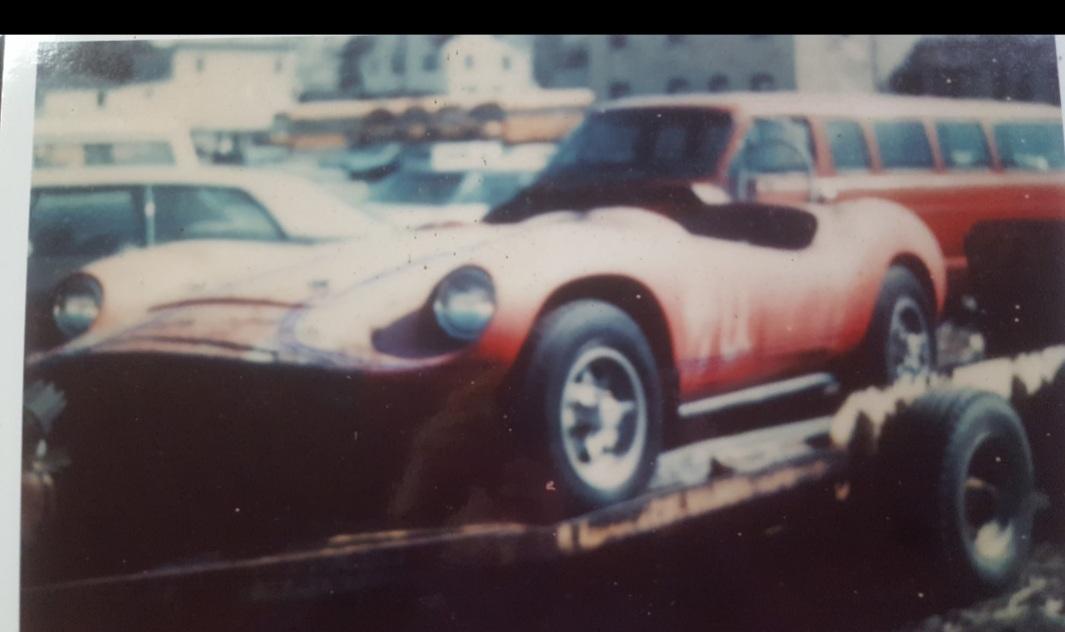
Rich, whose first car at 17 was a nasty 1970 AMX with a worked 401, says, “You know what I was thinking. I find her the right classic pickup and to maintain family balance I will need to find something for me.” Game on.

Shortly after Rich found Shane’s pickup, Paul offered his son a deal he could not refuse. The senior Svorec told Rich, “I’m looking for my 66 Plymouth Satellite Hemi or a 67 Corvette. If you can find me one, then you can have my 1931 Ford panel truck hot rod.” Paul had owned the rare truck since the 1960s. It was totally original. Paul personally carried out the stunning green on green rebuild.

The limbs of the Svorec classic car family tree had begun showing fruit.

Pulling up alongside Shane’s 1955 Ford F-100 came Rich’s 1931 Ford panel truck with a powertrain out of a 1966 Buick Electra. It included a worked 425 cu. in. nailhead V8 with dual quads putting out over 400 horsepower. But wait there is more.
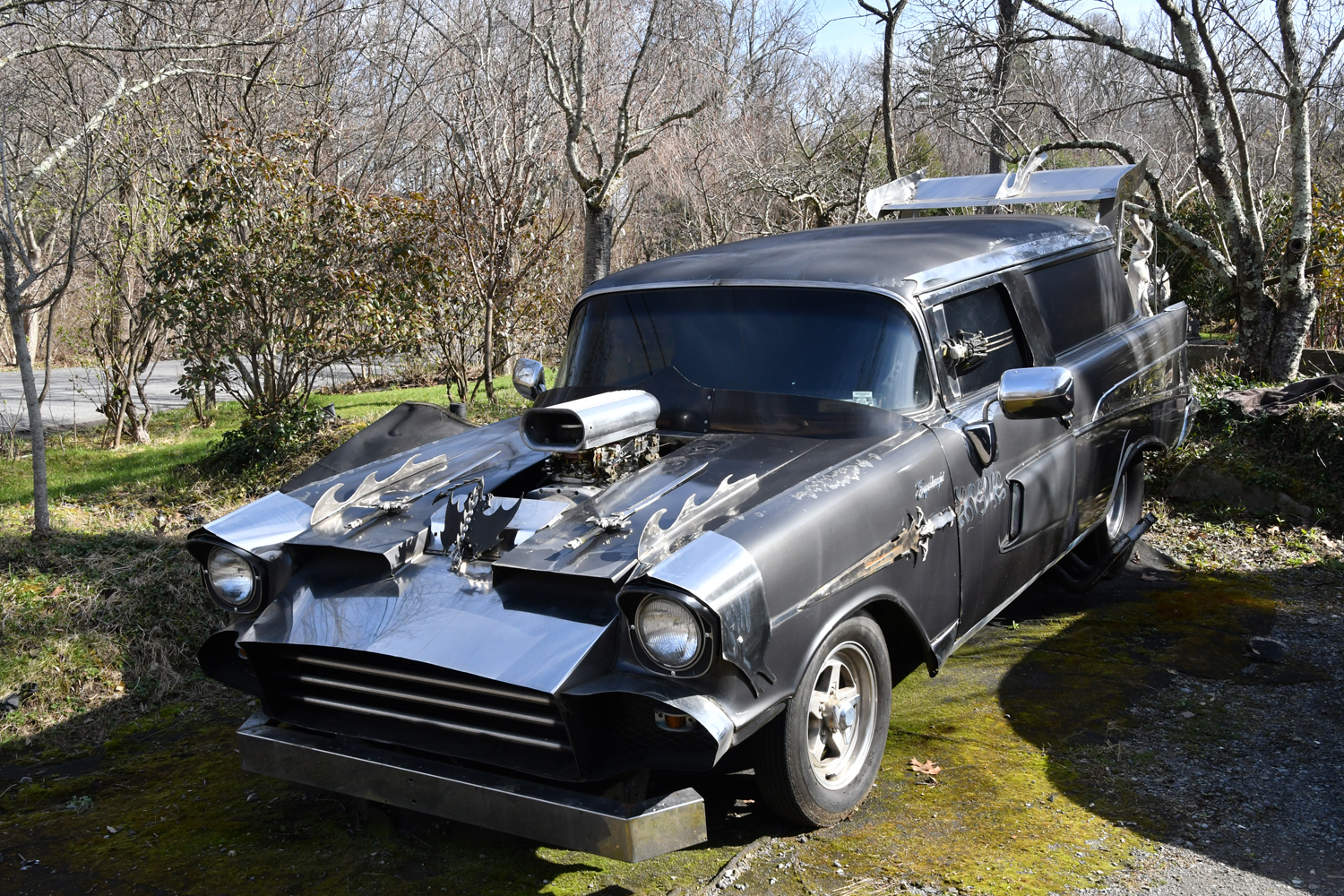
Shane speaks lovingly about her oldest child Lainey. Shane says, “Yeah. I always felt like she would be the one that would connect with classic cars. She has an old soul which is beautiful to behold when watching a young woman blossom. Especially one you love dearly. Lainey came into this world with big, big eyes. Just curious about everything, and you could tell she was from another time. So it didn’t surprise me. One bit. You know, she loves Elvis, she loves classic music. That’s just her vibe.”

Lainey with her ’68 T-Bird

Lainey, though at the time still too young to drive, had her heart set on getting a classic car. And she would buy it with her own money she had earned, thank you very much. When asked why a classic car Lainey says, “Well, I was never really a fan of the way these newer cars look. There was always so much technology. And I mean, my dad’s new pickup truck, he has this big IPad in the middle of the console. I just I didn’t like it. The old cars were just always nice looking to me.

What did Lainey’s search look like? Certainly reality reared its ugly head when she showed her father a picture of the car she had settled on, a 1959 Cadillac. He gently inquired if she had six figures in her piggy bank. While Lainey seemed drawn to mid-fifties vehicles with fins, tri-five Chevies especially, she found her true love in the form of a 1968 Ford four-door Thunderbird Landau Sedan.

Lainey says, “my dad found it and showed it to me. it looked pretty badass. Black interior and exterior, leather seats, four-door, suicide doors, 429 cubic inch V8. I really love that car. It’s really fun. I can’t wait to take my friends driving in it someday.”

425 cu. in. Buick V8

As to the Svorec’s two younger children son Jack, age 14, and daughter Destiny, age 15, signs exist that they too carry the gene.

In summing up the Svorec family affair with classic cars each member has a perspective.

Rich says, “In reflecting on my relationship with my father and his old school craftsman friends, I can only wish that I could become as skilled as they are. The would love to spend more time with them. To learn what they do and how they do it and then try to pass it along to my children and have them keep going and pass it on. With classic cars as a common interest it is my hope that our values and these vehicles are around forever.”

Shane says, “I could not be more grateful, more blessed by the family I have. That I met a husband who came from such a rich family history with a father who loves classic cars. And that we’ve instilled in our children, respect and appreciation for real traditional values and craftsmanship.”

Lainey says, ”I think life’s too short to drive boring cars.” Old soul indeed.


Drivin’ News will be taking a holiday break. We will be returning in the new year.

My best wishes for a 2022 noteworthy for peace and joy

Merry Christmas to all

By |2022-01-06T18:58:52+00:00December 10th, 2021|1 Comment

Conversations With People We Value #31

Cars & Coffee, Caffeine & Carburetors, Cars & Croissants, you get the idea. Starting somewhat organically in 2006, the original Cars & Coffee came to life on a spacious (organizers thought) corporate parking lot in Irvine California. It’s astounding and fatal success created a new class of casual auto event. In the case of Cars & Coffee Irvine, its demise came abruptly on December 20th of 2014 when 2,000 classic cars showed up. Cause of death – too popular.

In 2013 an enterprising 20-something Jerseyite decided that North Jersey needed a branded source of events with its own distinctive character. Thus was born Cars & Caffe. Caffe is Italian for coffee. Hey, this is Jersey.

Meet the man behind Cars & Caffe, Tony Boniello

Cars & Caffe’s Tony Boniello is always looking to

brew up something new


So, what if you threw a party and 10,000 cars showed up. Ask Tony Boniello. In the fall of 2017, Boniello in partnering with other groups held a Sunday Cars & Caffe event that filled a major North Jersey shopping mall parking lot and drew 20,000 people in addition to the 10,000 very cool cars. Tony openly admits that that event stands out as an outlier significantly contrasting with the 500 to 1,000 car events associated with the Cars & Caffe name.

Matt Maisano and Tony Boniello

Drivin’ News caught up with Tony at this year’s final Cars & Caffe event. Taking place at well known classic car storage facility Motorcar Manor in Ramsey, NJ, and co-hosted by Motorcar Manor owner Matt Maisano, it provided a perfect venue to display Tony’s vision of a classic Cars & Caffe event.

Tony’s path to staging an eclectic array of distinctive classic car events began as a pre-teen. A fascination with automobiles at an early age evolved into a driving (literally) passion as Tony aged through his teens becoming a true automobile enthusiast. During the journey his desire to classic car event manage took shape.

The essence and attraction of the original and oft copied Cars & Coffee concept resides in its simplicity. It many ways it resembles a slow motion classic automobile flash mob. Tony explains saying, “it’s really intended for like-minded car enthusiasts. The crowd is welcome, but it’s really a car event for car people.“  For the event, enthusiasts’ cars casually assemble at a designated gathering site. Tony says, “It is a very laid back gathering of automotive enthusiasts from across all spectrums of the car world, muscle cars, exotic cars, hot rods, pre-war, post-war, brand-new and JDM (Japanese Domestic Market).” The event exists to provide a communal assembly for like minded enthusiasts. Tony says, It is not a cruise. It is not a concours. There’s no judging. It’s car people engaging, enjoying and bonding with other car people.” Events normally do not promote to spectators though they are welcome. Events take only a few hours on a Sunday morning, never past noon.

Co-Host Matt says, “Enthusiasts drive their car to the event. They hang out for just a couple of hours and then they leave. There’s no entry fees, no registration, no trophies, no ceremonies, no DJs it’s all about the cars. There’s nothing but car people enjoying each other’s cars and conversation. It’s pure. It’s a quick event. You can leave whenever you want. It’s perfect. You can enjoy a great car event and still have time to get stuff done with the rest of your day.

As a teenager Tony witnessed first-hand the promise and problems by attending the original Cars & Coffee Irvine event. Back on the east coast a very successful version of the Cars & Coffee concept called Caffeine and Carburetors blossomed in New Canaan Connecticut. Tony recognized the New Canaan groups commitment to the concept and their professionalism. It all came together when at the age of 20 Tony decided to bring the Cars & Coffee concept to Bergen County. So why not Cars & Coffee?

Tony Says that the owners of the Cars & Coffee brand wanted a five-figure licensing fee. As a college student, the idea of a debt that size held no appeal. Tony decided that he would develop his own branded event.

Tony says, “I didn’t see the advantage of shouldering that debt. I chose rather to build my own brand. I created my own database, my own network and my own business model.” He admits that it remains a work in progress.” His attitude embraces the “Build it and they will come” philosophy with a version that states “Keep building it better and more will come.” And what about the name?

Tony says,  “I wanted to do something unique, something with a little Italian flair. There’s a lot of spin-offs of Cars & Coffee. Being Italian I had a fondness for the Italian word for Coffee, Caffe.

Tony believes that over his eight years in operation, Cars & Caffe has developed a reputation not unlike Caffeine and Carburetors which he clearly respects. Tony says, “The New Canaan event is synonymous with upscale collectible vehicles old and new in the Northeast. I like to believe that Cars & Caffe is at home in that category.”

Tony acknowledges that rules, control and being a good neighbor play a critical role in the ongoing acceptance and success of an event. Rules, if violated will result in a person and vehicle being banned. Rules are simple: No engine revving, shut your audio system off, no burnouts, no donuts (They don’t mean the Dunkin kind) and no speeding.

Tony has incorporated fund raising and food donation as an integral part of the Cars & Caffe culture. His first show featured a Hurricane Sandy fundraiser. The event at Motorcar Manor combined a very successful food drive and a fundraiser to help defray the medical costs facing an 8-year old stroke victim.

Over the years Tony has shepherded the character of Cars & Caffe events with the goal being to promote an ever more eclectic composition. He notes that early on the location of the event would significantly impact the type of cars that would show up. Tony says, “When we were at Ridgewood High School early on, we got a lot of vintage American cars and vintage European cars. As I moved the events around it became more Supercar heavy.” As Cars & Caffe has developed its personality, it has become a more consistently eclectic event. Tony, clearly pleased, says, “Now at any event you might have a Jaguar XK120 pull in next to a Porsche 918 or a ’55 T-Bird alongside a LaFerrari, a brand new Corvette next to a “63 split window fuelie. It’s great.”

Clearly, Tony possesses a vision that extends beyond his Cars & Caffe events. He has set his sights on developing a regional presence. His efforts already evidence themselves with events such as Festival Italiano a judged event with over 100 cars of Italian heritage, RennZeign German heritage concours and “Cars on the Lawn,” a curated eclectic display of 150 cars at the ex-Vanderbilt Florham Mansion.

Tony says, “I think there’s a demand for a large-scale high-end  family of events in the Northeast. I would like to bring that to reality and I’m working towards that every day.

In closing Tony says, “I have found that Cars & Caffe is more about the people than the cars. I think that the community and the friendships that have been made help pass our passion, appreciation and respect for the classic automobile on to the next Generation. There’s a lot of younger people, high school kids, even middle school and younger that their parents bring. I see these kids grow up. I see these kids get their driver’s license and continue with the interest they have developed though our events.

Clearly Tony has found the rewards of Cars & Caffe to be his cup of tea.

By |2021-11-25T17:38:35+00:00November 25th, 2021|Comments Off on Conversations With People We Value #31
Go to Top