Cars We Love & Who We Are #72
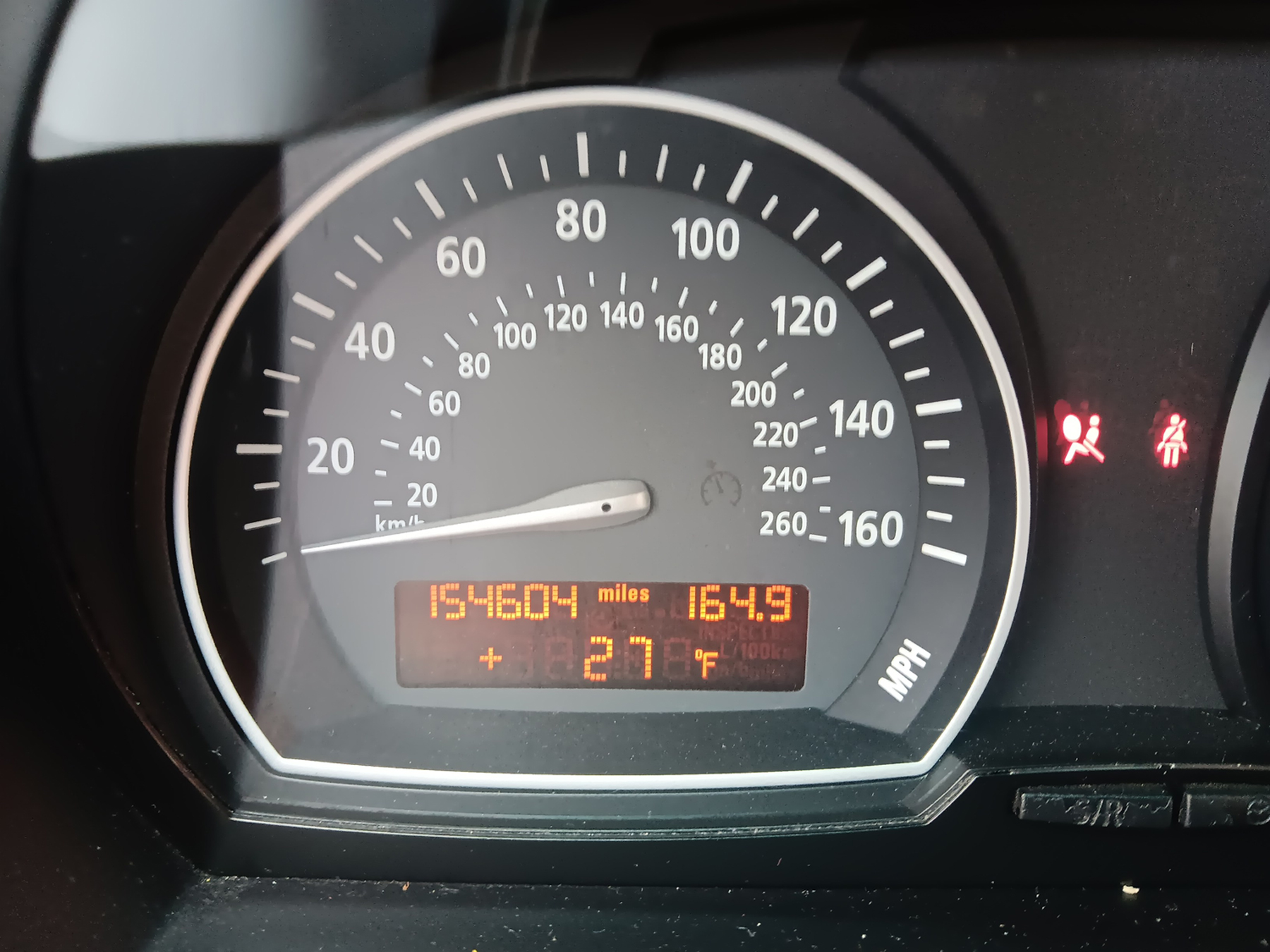
With 18-years and 155,000 miles on the clock my well maintained 2008 BMW X3 has performed nobly. It owes me nothing. That said, with it being the last BMW SUV with a manual transmission, I wanted more. While it owes me nothing, I have decided I owe it to myself to refresh this excellent ride. If my initial assessment proves valid, I will lay down the money necessary to recondition a sporty and functional vehicle I cannot replace. As I have, now, explained the “why,” the following describes the “what.”
A Winter Rebirth? Deciding Whether to Recondition My Aging Daily Driver

Its bones are quite sound with its solid body, good brakes, fresh tires, new shocks and regular servicing, though I am still on the original clutch after 155,000 miles. My daily driver’s needs reflect traditional flaws endemic to the E83 X3 including valve cover gasket oil leaks, oil filter canister gasket leaks and cooling system plastic part failures. Needless to say, high mileage on the original clutch with the notoriously expensive dual mass flywheel screams for attention. However, simply addressing known problems falls far short of my intentions for this rebirth. I wanted the insight of a specialist with the experience, feel, and passion for the BMW brand. I chose Steve Smith owner of MotorWorks West a BMW-Exclusive specialist in Wyckoff, New Jersey.
Steve, 1-month short of his 32nd birthday, with a wife and three children stands out as the kind of youthful respected skilled professional that long time car guys fear will be painfully absent in the fast approaching future.
In 2012, with the benefit of a four-year automotive technology apprenticeship program, Steve developed his taste for BMWs while quickly climbing the ladder towards Master Technician at a respected Northern NJ BMW dealership. With his eyes looking ahead to greater things, he built a cash stash by servicing three to four cars a night in his back yard after work.
By 2018 Steve purchased MotorWorks West. His goal focused on creating the ultimate BMW service facility. Steve says, “I resolved that my shop would never be hamstrung by outdated technology. At the outset I invested a ton of money into the latest diagnostic equipment and, today, continue to maintain that edge.”
Steve wants his customers to know and trust the technician working on their car. He promotes clients discussing their car one-on-one with the technician charged with the responsibility of making the repair. He says, “I rely on my customers being happy with their MotorWorks West experience. They should be confident that my technicians are not trying to rip them off.” Steve not only knows what he wants in a technician. He has a clear understanding of who he favors as a customer. Steve wants to build a customer family. In servicing the parents’ BMW he strives to know their children; children who, when old enough to drive, will trust MotorWorks West to service and maintain their BMW. He says, “I don’t try to sell them everything under the Sun.” He points out that me and my X3 are the exception. He says, “You came in wanting everything under the Sun.”
VISUAL INSPECTION
With the bitter January wind howling behind the closing front door, I entered Steve’s well organized and superbly equipped automotive shop featuring a handful of active bays populated with BMWs of varied vintages.
Steve welcomed me with a smile and a meaningful handshake. His office, adorned with BMW racing graphics and models of classic BMWs, left no doubt as to the focus of his considerable technical acumen and passion. With Steve having read my Drivin’ News post “Aging Beloved Daily Driver Quandary: Refresh or Replace” he immediately dove into the challenge at hand. To my pleasant surprise he spent the next few hours conducting a preliminary diagnosis of my X3’s health. He began by scanning for faults. With the codes printed down for reference, he moved on to conduct a thorough visual inspection. Under the hood the engine bay revealed a considerable curtain of oil bleeding down from the valve cover. Engine oil seen pooling around the injectors raised concerns that the oil might have found its way into the cylinder head intake ports. Upon inspection the concern proved proved unwarranted. Moving on to the oil filter canister Steve used a laser pointer to show me where the oil leak had created a condition that would ultimately compromise the serpentine belt. He explained that with the belt shifting noticeably off center on the pulley, little doubt existed that, left unaddressed, the oil weakened belt could shred and be sucked into the front crankshaft seal causing severe damage.
Continuing on, evidence of failing plastic coolant system parts confirmed a need to be addressed. Steve noted that this X3 has a one-piece thermostat built into a plastic housing that frequently goes bad. He indicated that replacement of the radiator loomed in the near future. He says, “My rule of thumb on this N52 engine is that you do a thermostat and a water pump together and when you do a radiator you do the upper and lower hoses together.”
Opening the power steering fluid container should reveal a fluid with a greenish clear color. Mine showed brown. Steve says, “I’m not a big fan of selling power steering flushes but when I see something like that, let’s get out the old. Replace the fluid to try to just make these parts last longer.” He makes clear that normally as a repair shop; he cannot sell all of these recommendations to one person. However, in my case I requested this level of detail.
With the car on a lift Steve commenced to give high grades for body integrity, brakes, tires and suspension components. Moving towards the front he noted two ground cables worthy of replacement before addressing the issue of the clutch. He noted that, sadly, there exists no effective way to check the clutch without significant labor. Considering the cost I pressed the issue. I understood that, with 155,000 miles on the clutch, a replacement with all the associated parts seemed likely in the not too distant future. That said would there be a cost benefit to do it now before it starts slipping. Steve explained that there exists the possibility that doing it now could produce a significant savings. How so? He says, “Your X3 has a wickedly expensive dual mass flywheel. By the time the clutch gives its first indication of slippage, the flywheel is cooked.” A decision needed to be made.
We moved along with findings being quite positive, until. Until Steve froze me with an order delivered with the authoritative tone of a cardiologist calling out a heart patient washing down a bacon and nacho cheddar hoagie with a Slurpee. Turning towards me while holding the tail end of the front drive shaft, Steve said, “You can’t drive this home.” The U-joint shook with the confidence draining sound of a baby’s rattle. Clearly poised to let loose any moment, the weighty arm’s-length drive shaft would have spun like a savage fan blade at engine speed quickly destroying all in its reach. I chose to have it repaired immediately. He would have it replaced by the next day. Having completed the inspection of issues we could observe, we moved on to the testing for problems that could not be seen.
My go/no-go “Refresh” decision would be predicated upon the results of a battery of tests that measured my X3 engine’s conformity to proper operational specifications and functionality. A strong engine rated as a major factor in making my decision.
COMPRESSION TEST
An engine compression test measures the pressure in each cylinder to evaluate overall engine health. It assesses how well each cylinder seals and holds pressure. This indicates overall engine power and efficiency. Steve explains saying, “We conducted our compression test with the engine hot. All of your pressures were in the 220s. It was like a rate of 20 to 22 24 to 25 across the board between all the cylinders.” Interestingly, while old school shops use a pressure gauge, MotorWorks West performs their compression test using a lab scope and pressure transducer that enables in-depth diagnostics without requiring a full engine disassembly. Steve says, “We read the pressure like a wave form. Every time the engine completes one full revolution, unlike an old school pressure gauge that simply shows a final maximum pressure. Our system creates a printout that details individual cylinder pressure on the way up and the way down for each revolution. I want to see each cylinder enjoy a perfectly smooth up and down wave. If an anomaly appears, I know where to look. It’s just like the EKG you get at your doctor’s office.” Steve summed up the results saying, “For this engine the wave forms looked really great.” Yippee, my engine got a clean bill of health.
LEAKDOWN TEST
Reinforcing the findings of the compression test, the leakdown test checked each cylinder’s ability to hold air pressure. Leakage by way of escaping air can indicate internal engine problems such as bad piston rings, leaking valves, or head gasket issues. In the case of my engine, Steve found the leakage fell well within the acceptable range.
SMOKE TEST: INTAKE SYSTEM
The procedure employs a smoke machine that injects a visible vapor into the engine’s intake system. A technician can then visually inspect for escaping smoke that would indicate leaks in intake hoses, vacuum lines and intake manifold. In the case of MotorWorks West, their smoke machine actually displays a digital number. In the case of my engine the system indicated a leak so large that the display could not even achieve a reading. The cause proved to be a massive leak pouring out of a crack in the valve cover; the valve cover already on the list of intended fixes.
SMOKE TEST: DMTL TEST FOR VAPORIZATION SYSTEM
A DMTL (Diagnosis Module Tank Leakage) smoke test specializes in locating small, hard-to-find leaks in the EVAP (Evaporative Emission Control) system, In this case Steve found that the smoke test revealed absolutely no leakage in the evaporation system.
CRANKCASE PRESSURE TEST
A miserable failure! But wait. This test checks for excessive pressure from blowby due to worn piston rings or issues with the crankcase ventilation system such as a clogged PCV valve. Steve using the lab scope and a pressure transducer had hoped to see a smooth up and down wave form with a maximum reading of around 33 millibar (0.48 PSI). Instead of a wave the readout showed a straight line at 50 millibar (0.73 PSI). This amount of vacuum could actually suck crankshaft seals into the engine. Steve assessed that the malfunction could again be attributed to the cracked valve cover already targeted for replacement.
CONCLUSION
Prefacing my final decision, the subject of parts deserves a bit of attention. For this project only OE (Original Equipment) or OEM (Original Equipment Manufacturer) parts would be used. The difference or lack thereof, merits explanation. The fundamental difference between OE and OEM is branding. OE parts bear the part manufacturer’s name such as Bosch. OEM parts carry the vehicle manufacturer’s name such as BMW. Both are the same part though the one with the manufacturer’s name always costs more. In my humble opinion, especially with German car parts, pricing uses the basic formula of 50% above outrageous. Parts for this project would be OEM or OE with OE being the first and cheaper choice.
With the good bones of my car confirmed and the issues needing to be addressed and agreed upon with MotorWorks West, I have decided to recondition my 2008 X3. I have provided a budget of $12,000 with a 10% contingency. Unlike an aging beloved family dog, for this family member I believe I can buy a longer life .

 Considered the last of the legendary naturally aspirated inline-6 engines upon which BMW built its reputation, the N52 in my X3 with its inherently balanced inline-6 configuration, advanced features like Valvetronic, Double VANOS and lightweight magnesium-aluminum block boasts smooth, linear power and superior reliability compared to the more complex B48 turbocharged engine found in newer BMWs.