Conversations With People We Value #65
Fast Food? How about “Fastest Food.” One does not anticipate that the 1952 International Metro van from which absolutely delicious fajitas are being served would have inspired Guinness World Records to create the new category, “Fastest Food Truck.” This fascinating intersection of unique dining delights and white line fever comes courtesy of one LJ Koch, A young man with a dream, a plan and one blistering fast food truck.
Meet LJ Koch and his Vettro.
World’s Fastest Food Truck? Guinness World Records Says Prove It.
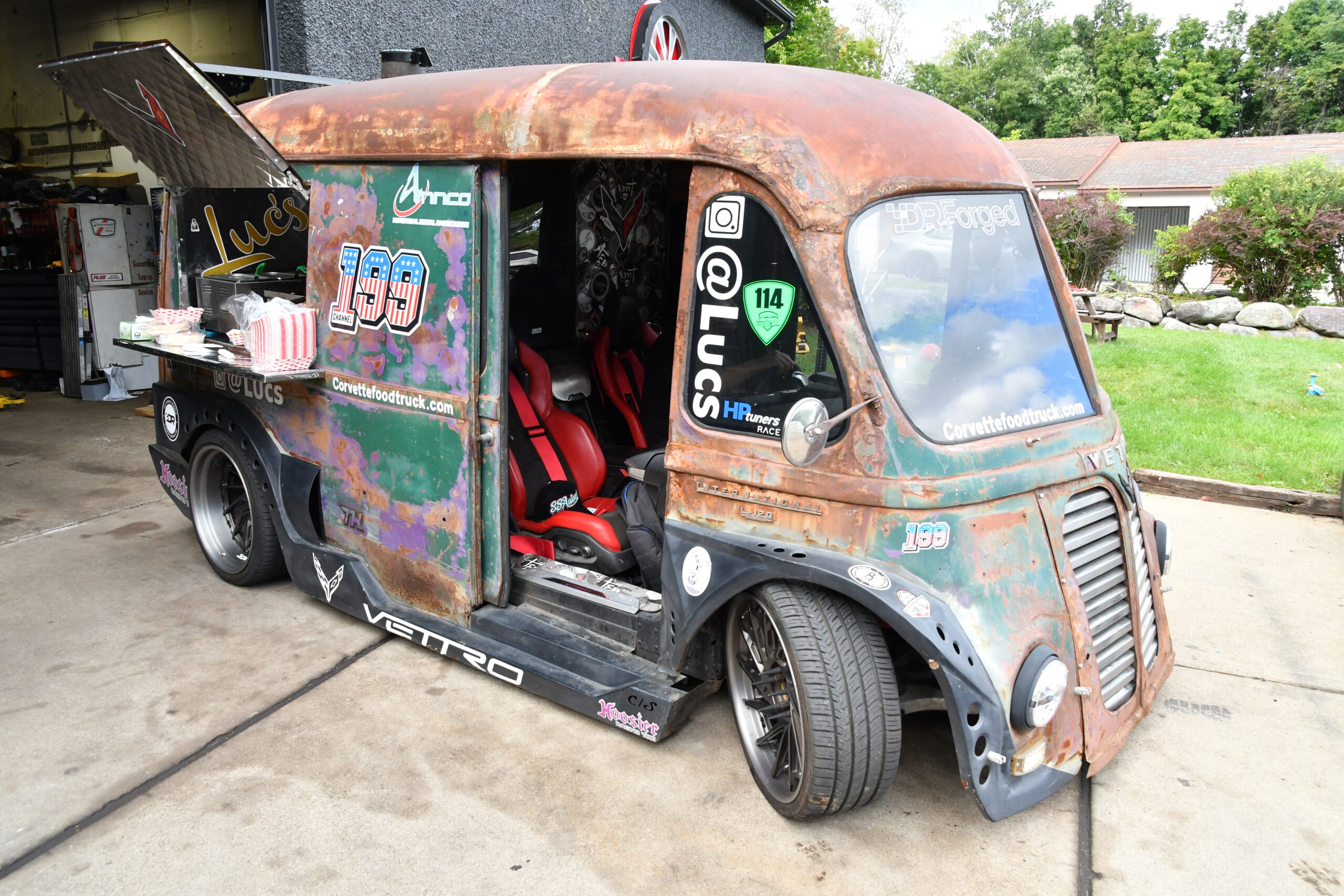
The Vettro
What kind of food truck merits having Guinness World Records create its own special category? What kind of food truck has 130,
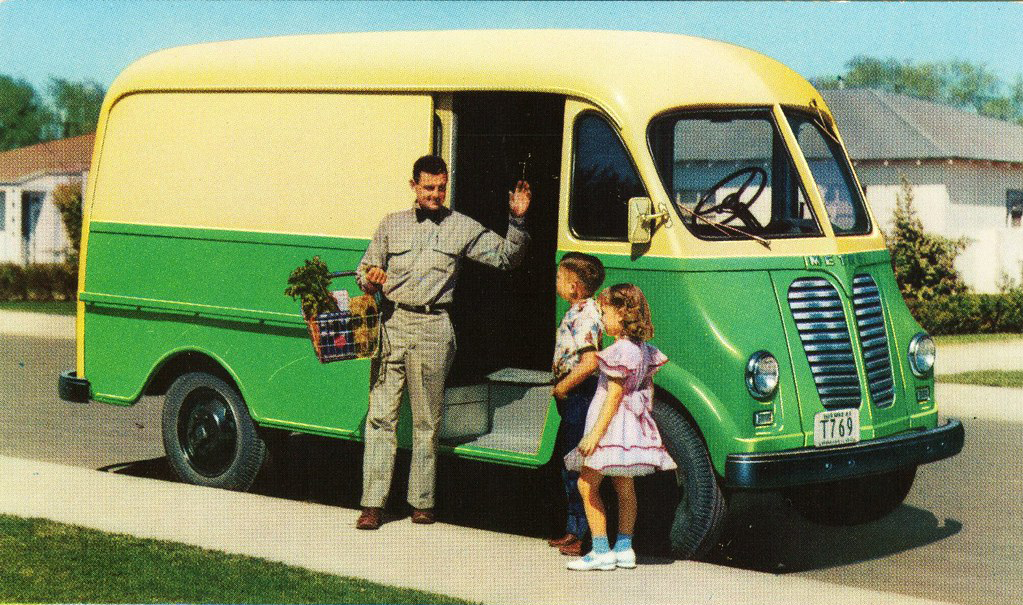
1950s Metro Van
000 followers on Instagram? What kind of food truck has Mattel considering creating its very own Hot Wheels model? Answer, the “Vettro”, one very, very fast Corvette powered 1952 Metro Van. The driving force, literally, behind the budding Fajita Hut food concept is creative chef and hot rodder LJ Koch.
The mouth-watering aroma of sizzling fajita fillings surrounded me in a delicious cloud that drenched my olfactory senses and filled my mind with delight and desire. I love fajitas. That the source seemed to be a tubbed-out rat rod version of a 1950s Metro delivery van just added spice to, what I would soon come to learn, was the Luc’s, aka Luc’s Fajita Hut, mobile dining experience. Behind the wheel and at the grill of Luc’s, I found LJ Koch, a man with a plan.
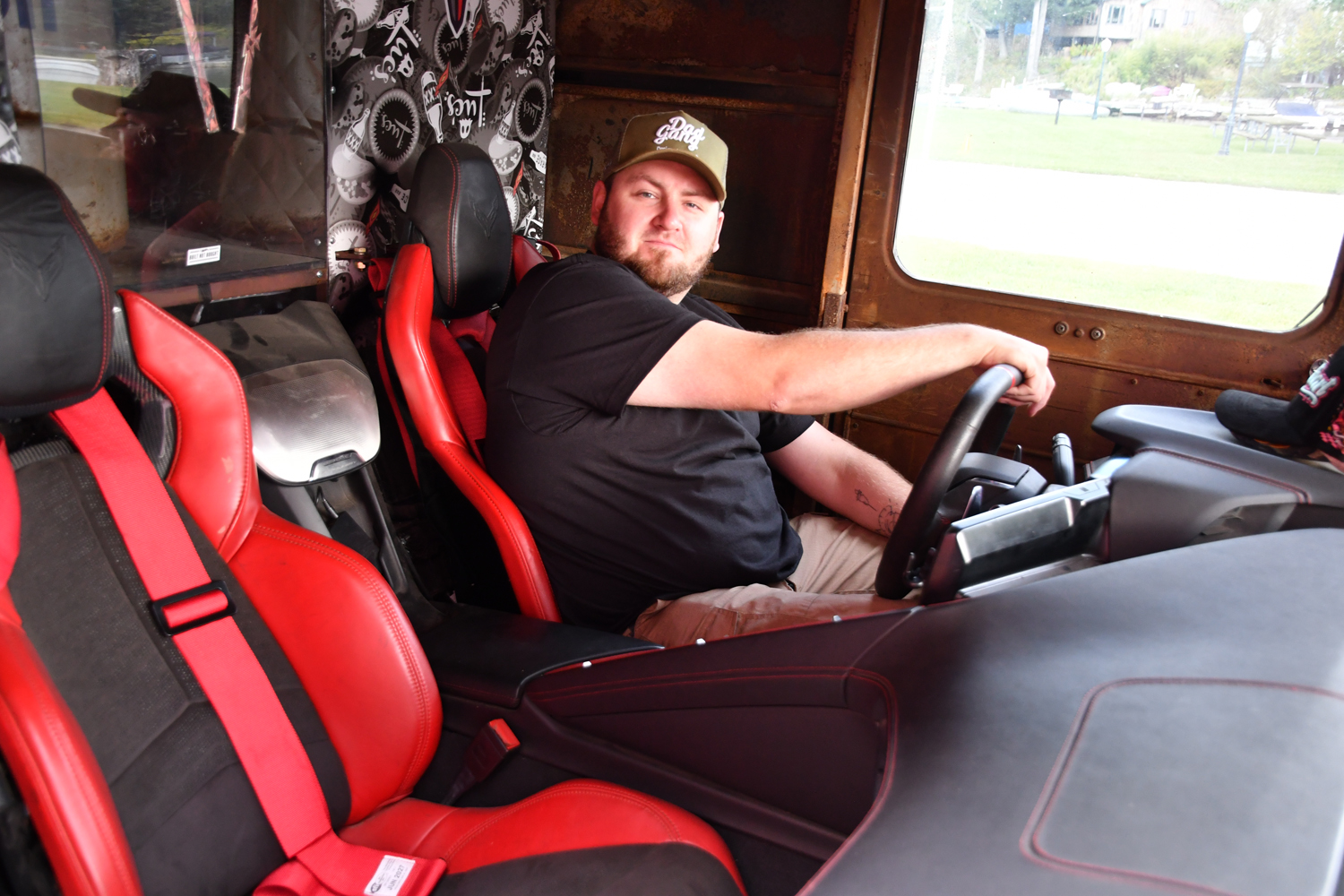
LJ at the wheel of the Vettro
Where a passion for food meets an automotive obsession; that pretty much defines the life and dreams of LJ Koch. The seeds for the business sprouted years back when LJ and his best friend, Lucas Martellacci, shared the food and fast cars dream. LJ says, “We were young kids and had started working professionally in kitchens. We loved fast cars and motorcycles. The more we cooked, the more we wanted to open a restaurant together.” Sadly, Lucas passed away in 2016. It was at that time that LJ decided to follow their shared dream and in 2017 open the business, Luc’s Fajita Hut, which he named after Lucas. The business consisted solely of food trucks until 2020 when LJ opened his first bricks and mortar location in West Milford, NJ. Today, LJ’s menu features, as one reviewer wrote, “Creative, eclectic fusion fajitas alongside international comfort classics.” Eclectic fusion fajitas sound interesting; for Philadelphia foodies, how about the Shaved Ribeye Cheesesteak Fajita? If eclectic means choosing from a wide and diverse range of sources, LJ’s eclectic fusion tastes extend well beyond food to the unique trucks that do the serving; like LJ’s high speed Vettro restovan. For LJ the Vettro provides a vehicle (No pun intended) to achieve a much greater goal.
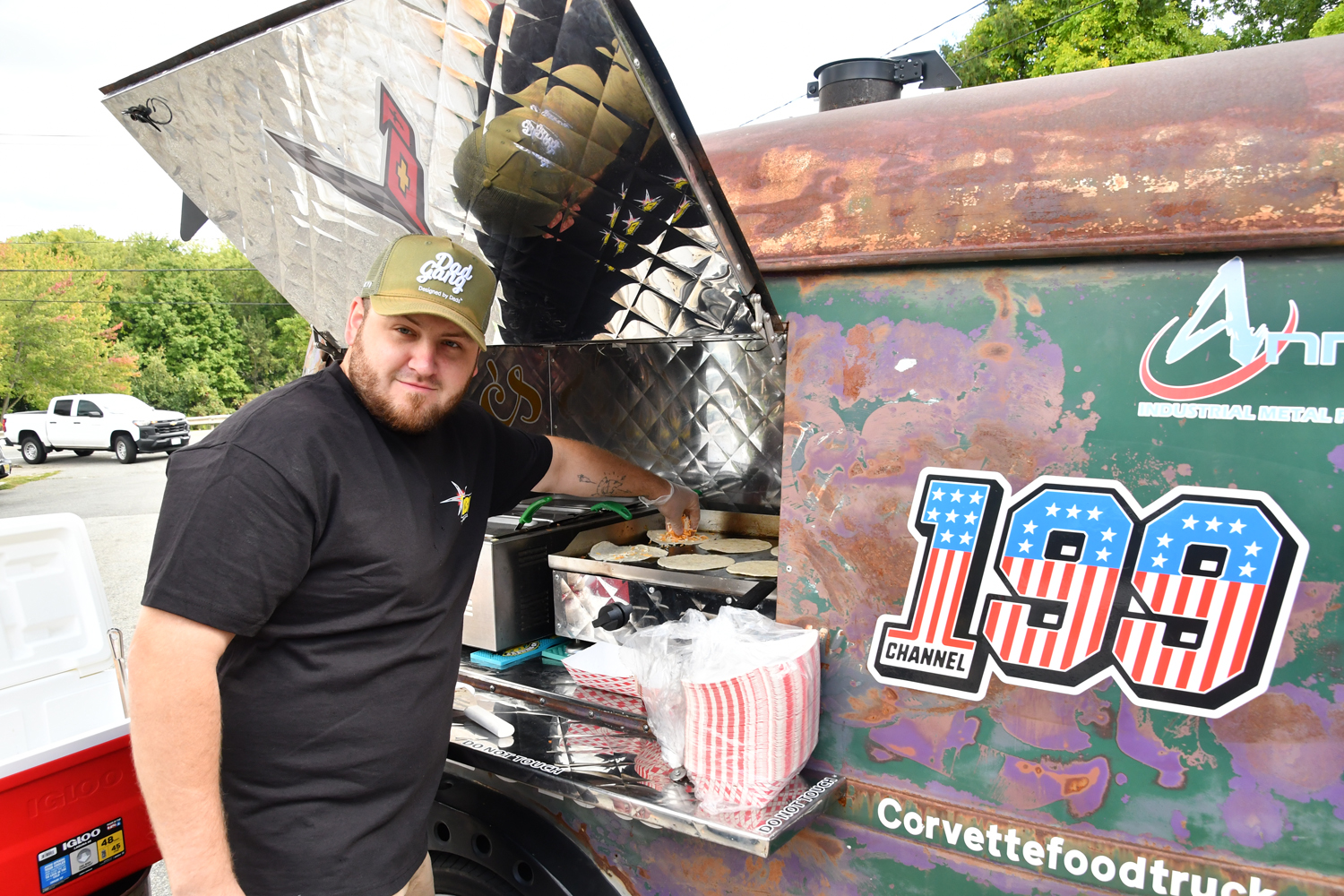
LJ at the grill
“Our goal is a multibillion dollar fajita empire,” says LJ without any suggestion that he is joking. LJ says, “We have been building Luc’s as a strong brand step by step for years based on a long horizon master plan. We have a bricks and mortar flagship location focusing on providing fresh, relatively quick, hot, quality food, all under 20 bucks. We are looking to expand through franchising. We’ve been developing a frozen fajita product, that’s pre-made. We’re looking to both ship direct to the consumer and, through a co-packer, stock Luc’s brand products in stores nationally.”
LJ says, “The Vettro represents one of the greatest marketing creations probably ever built. It has generated amazing public awareness for us and the company.” Certainly unique, it bears a blended name drawn from the 2021 Corvette and the 1952 International Metro Van that had been merged and massaged to produce this one-of-one Vettro show stopper. However, an earlier effort could easily have been named a Bitsa, you know, a bitsa this and a bitsa that, because the first concept called for the modified Metro Van fast food truck to be fitted to a shortened Chevy S10 pickup frame, with an old GM LS engine and a 5-speed hand-me-down manual transmission. However, the project took a sharp and fortunate turn on a Friday when LJ’s build partner, Matt Knapp of West Milford Tire, keenly observed that they could eliminate myriad problems by positioning the engine in the back of the cut down Metro Van. LJ agreed.
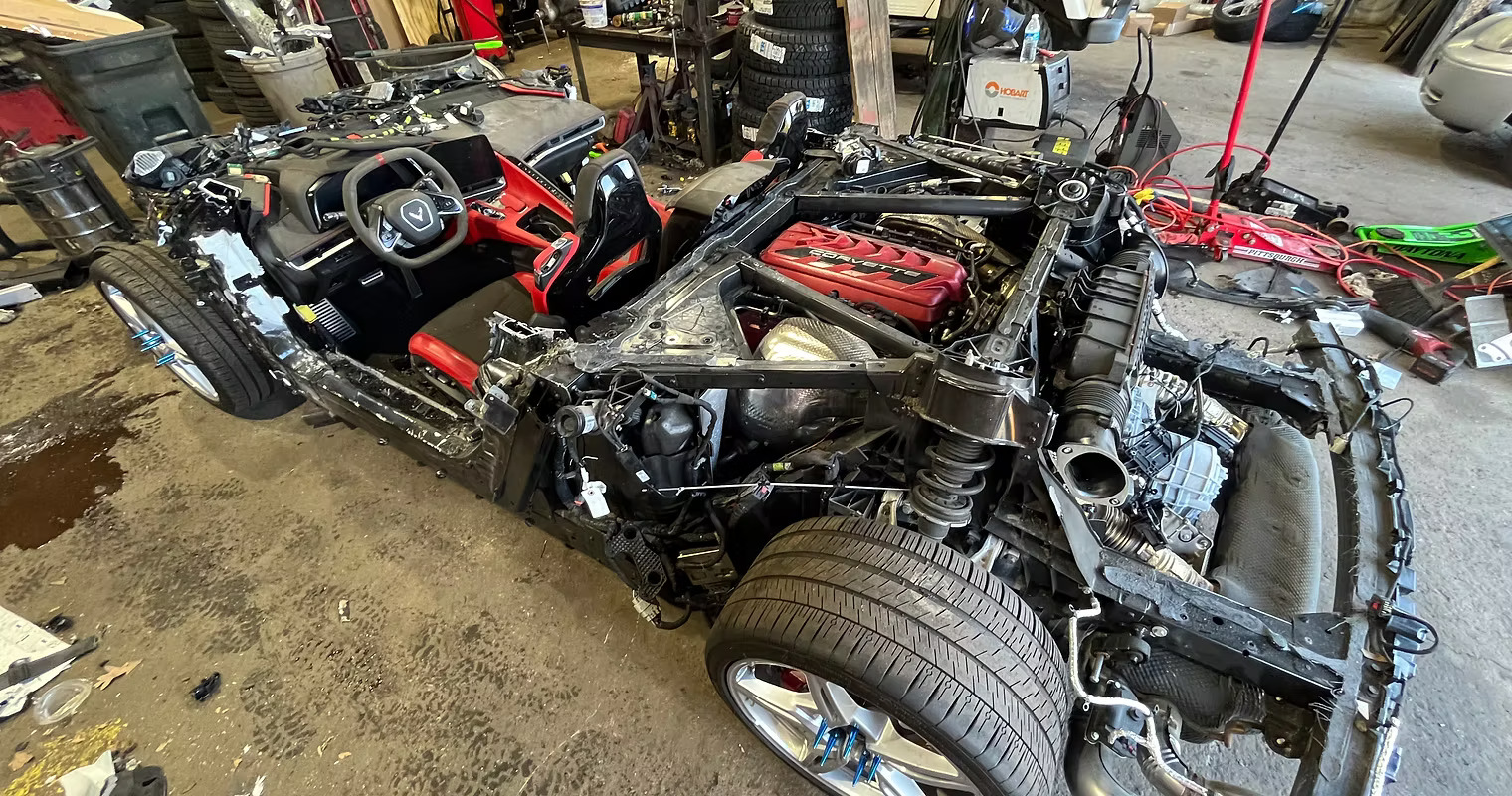
C8 Chassis
That weekend when driving north of Washington D.C. LJ spotted a damaged but basically new 2021 C8 Corvette. He bought it. By the end of that Sunday it sat at West Milford Tire. LJ says, “So, now, this is Monday morning, Matt gets to the shop and he sees it. Then I came in like about 9:00 am; dragging from about two-hours of sleep the night before. Then, I set eyes on the engine. It was just like new. I see the red engine cover of the C8. To me it looked like Optimus Prime, it was so cool, just the glowing red engine. Now, Matt’s looking at me and I’m looking at him and we just knew that we needed to do this. We were going to make this work.”
Buying the damaged C8 proved a stroke of genius. While the C8’s body suffered damage the full factory chassis showed no harm. LJ says, “Our truck would not be a jigsaw puzzle comprised of a Camaro this and a suspension from that. Our truck would have a complete C8 drive train and aluminum space frame chassis. Even the dashboard would transfer. The Vettro would boast full factory C8 power and performance.
Power for the Vettro would come from a 6.2-liter, all aluminum, naturally aspirated V8 delivering 500 horsepower and 465 lb-ft of torque with an 8-speed dual clutch automatic with paddle shifters. Standard front and rear double-wishbone suspension translated well to the Vettro application.
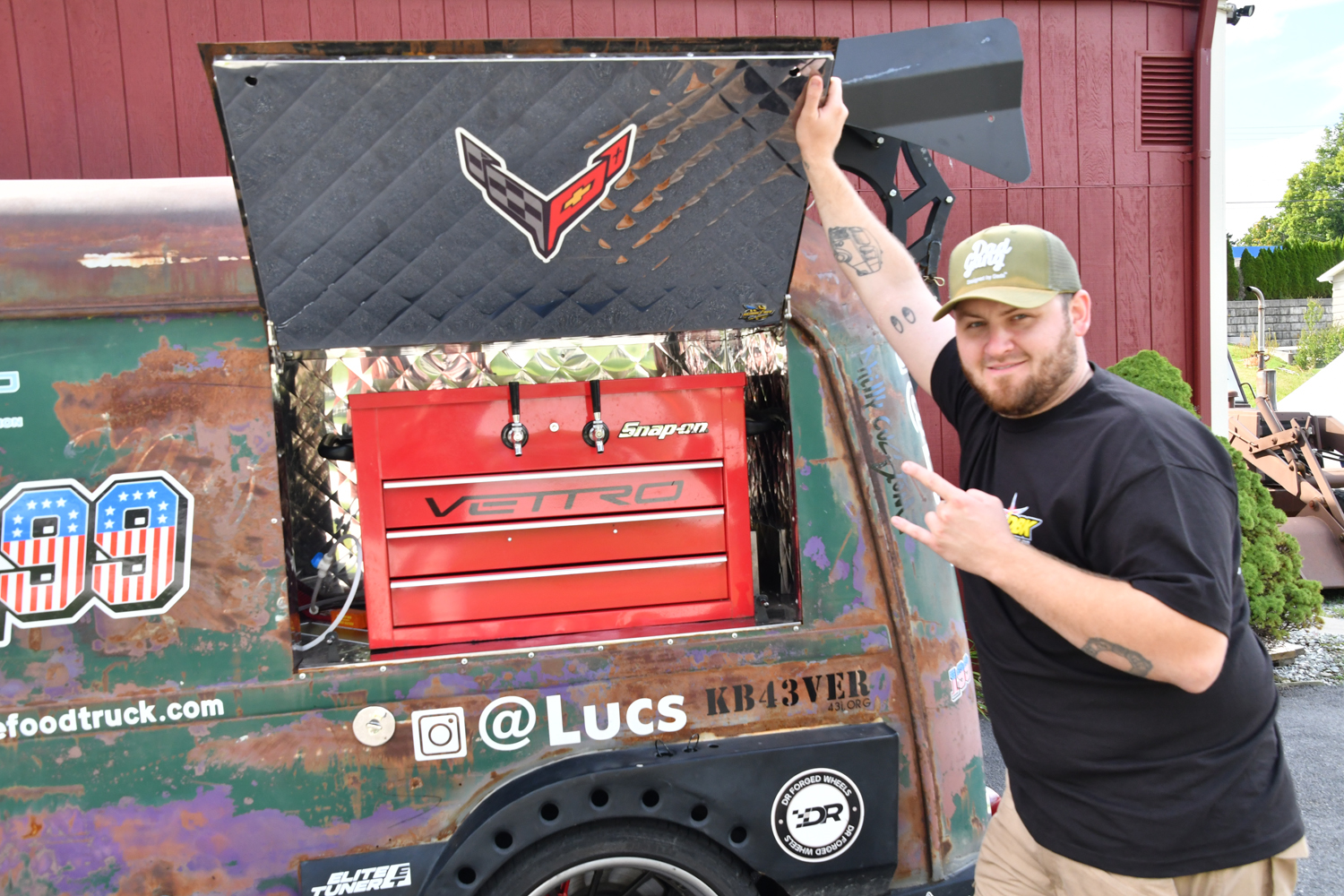
Snap-on beer taps
Some tasty Vettro non-factory options include a fully functional mobile kitchen featuring a custom flat-top grill, steam table, and a custom Snap-on toolbox that dispenses beer on tap. A guaranteed crowd magnet, Vettro appearances have been featured all over the web and social media sites. A natural PT Barnum, LJ makes sure a wide swath of the population has an opportunity to enjoy the Vettro experience.
LJ says, “The social media presence has been exploding over the past year. The Vettro has done amazing things for us and for the company, I mean, our online social media presence is absolutely booming. This week our page cracked 130,000 followers, which is a pretty big deal. Just last week we added another seventeen thousand followers. I gotta believe that, based on web page views, web time on site and social media views, the Vettro ranks as one of the most well-known builds in America today.”
As to personal appearances LJ says, “We were in probably 15 different states, Canada and countless venues in 2026 alone.” Vettro appearances included Pocono Raceway in Pennsylvania, New York International Auto Show at the Javits Center and the Indianapolis 500. A Vettro tour took the world’s fastest food truck to North Carolina, Alabama and Tennessee. They even went international by bringing the Vettro to Toronto. Everywhere the Vettro went people could enjoy Luc’s Fajita Hut specialties. Now, when people experience the Vettro in person it not only checks their personal outrageous box, but because of its wide social media presence, it impacts the audience as even more outrageous because the Vettro’s web stardom imparts a celebrity aura.” For extra measure, how about being considered for stardom as a “Hot Wheels” toy car.
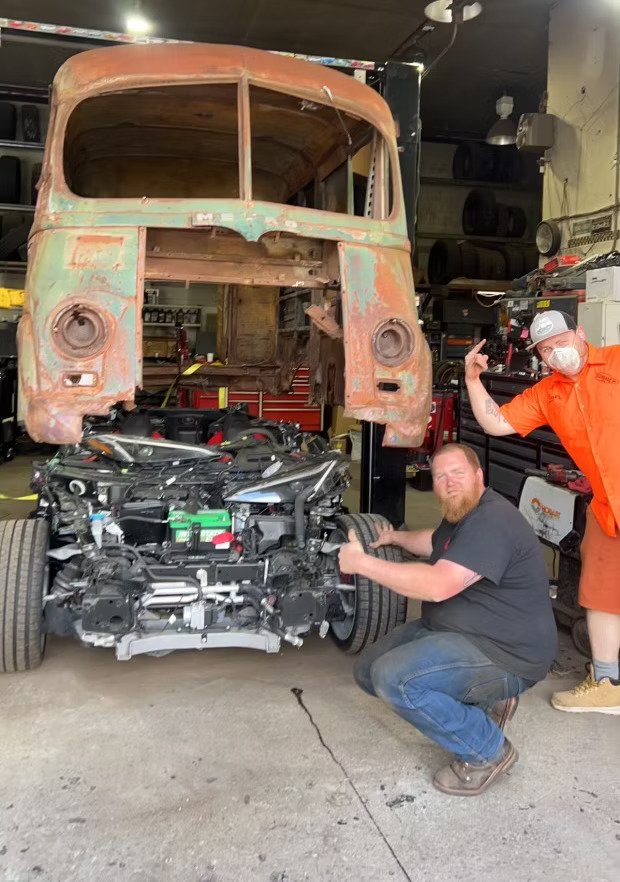
Matt Knapp mating Metro Van to C8
The coming months will see more of the Vettro magic spread across America. LJ says, “We competed in and won the Birmingham, Alabama stop on the 2026 Hot Wheels Legends Tour.” By winning its regional leg of the Hot wheels Legends, The Vettro earned the honor of competing against other custom car builders from around the globe for the ultimate prize: having its unique design immortalized and manufactured as an official 1:64 scale Hot Wheels die-cast toy car sold worldwide. But wait there’s more, as the Vettro heads to SEMA.
SEMA (Special Equipment Marketing Association,) stands alone as the world’s largest gathering for the automotive aftermarket industry. Its annual show will be held in Las Vegas this November and the Vettro will be there. LJ says, “We will be headed west to appear in the Hoosier Tire SEMA show display. Hoosiers are the only tire we put on the Vettro and they are a valued sponsor.” But why stop with being famous in North America, how about globally by appearing in the Guinness Book of World Records.
Indeed, Guinness World Records has specifically created a new category with the Vettro in mind, the “Fastest speed achieved by a food truck. With the Guinness record in mind, LJ adamantly proclaims that the Vettro has yet to achieve his grand plan. The plan calls for capturing the Guinness World Record. He figures the cost to actually do the event will run between forty and Fifty thousand dollars. In a nod to financial reality, LJ says, “We have connected with social media types, YouTubers as well as seeking additional sponsorships.”
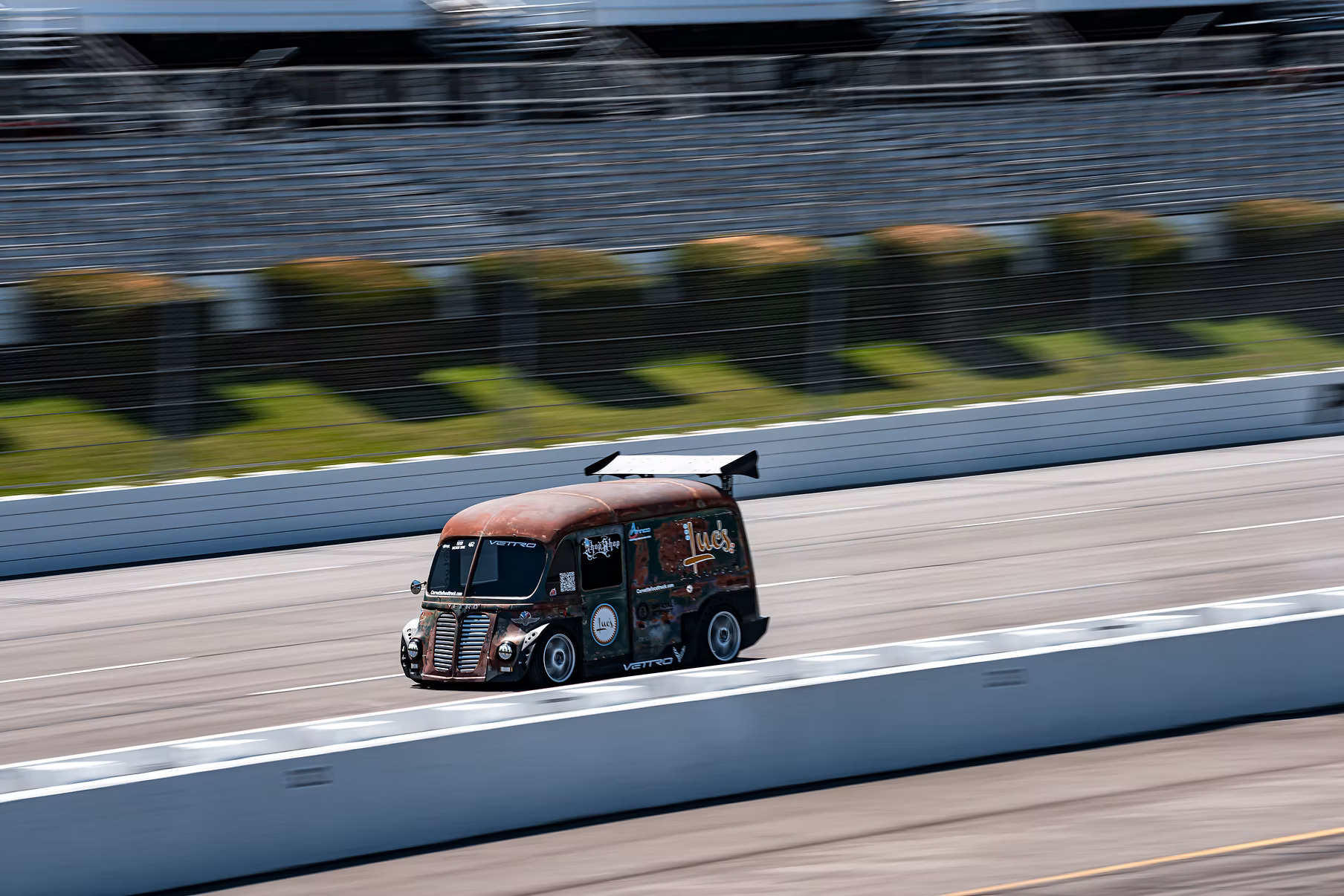
Vettro at Pocono
When asked if the Vettro ranks first in top speed, LJ responds saying, “That’s what Google says.” He, however, did not rely on Google alone. He says, “We took the Vettro to Pocono Raceway. We topped 125 miles per hour and Vettro’s got more to give.” Always the promoter, LJ has some specific ideas on just where he would like to set the record. He says, “No question we will be undertaking one very extensive and expensive project. So till then we want to take it easy on the old girl.” He continues saying, “While we’re going to produce YouTube videos and social media posts my real goal and mission is to set the record at a major racing venue on race day. So either Daytona 500, Indy 500, Talladega, could be an option. I dream of setting the record in front of a crowd of two or three hundred thousand people, now that would be badass.“
LJ says, “We are hell-bent on elevating national awareness of the Vettro to be recognized as America’s best-known food truck by being America’s fastest food truck. For Luc’s Fajita Hut and all our associated businesses, the Vettro captures the balls-out spirit of our enterprise.”

 On vacation in New London, New Hampshire, a bucolic corner of New England, Elaine and I set out for a carefree morning’s adventure. With thoughts of Drivin’ News on the back, back burner, I chose to leave my cameras behind at the B&B. Chrystal clear lakes perfectly reflecting densely forested shorelines populated a magnificent countryside made spectacular by an explosion of vibrantly colorful flora at every turn.

 Ice House which accommodated his workshop and customer cars. Time saw his storage expand beyond the single Ice House to a total of seven additional buildings. He needed the extra space to house customer cars plus his own blossoming collection of vehicles, riding toys bicycles, the decommissioned town jail cell and a constellation of modern equipment that had aged out of usefulness and found a place on a shelf or in a corner. Bill passed in 2005 the same year that the Ice House Museum became a registered 501c3. Now 21 years later Bob began our tour.
 Chronological order does not rule the day at the Ice House, Thus our first stop brings us to a WWII Ford version of the Jeep produced from 1941 to 1945. Ford got into Jeep production because Willys-Overland the company who had won the Jeep contract could not produce them fast enough. Ford ultimately produced 277,000 Jeeps for the war effort. Bob pointed out some interesting things. Motioning to the front seat, he said, “Look at the back of the seat. It has a stamped Ford indicia. Every nut and bolt on the Ford Jeeps had a Ford indicia.” Bob explained saying, “Compared to Ford, Willy’s made one hundred dollars less per Jeep which, apparently translated into lower quality control. Willys parts had a greater failure rate.” Henry Ford did not want Ford to be stuck with the warranty cost of Willy’s failed parts. So he differentiated all his parts with his Indicia. This resulted in army technicians only wanting Ford parts to fix broken Jeeps. Thus, unused Willy’s parts stacked up. The solution? The War Department made Ford stop stamping its parts rather than telling Willys to improve quality. Armed forces veteran Bob concluded with some disparaging remark involving the words Military intelligence and oxymoron as we moved on.


 One of the true delights of our four hours at the Ice House Museum (be mindful that for Elaine enduring 30 minutes of car stuff normally sorely taxes our bonds of love) came with Ben Cochran at the wheel of both the 1931 Model A Station Wagon and the open Model T.
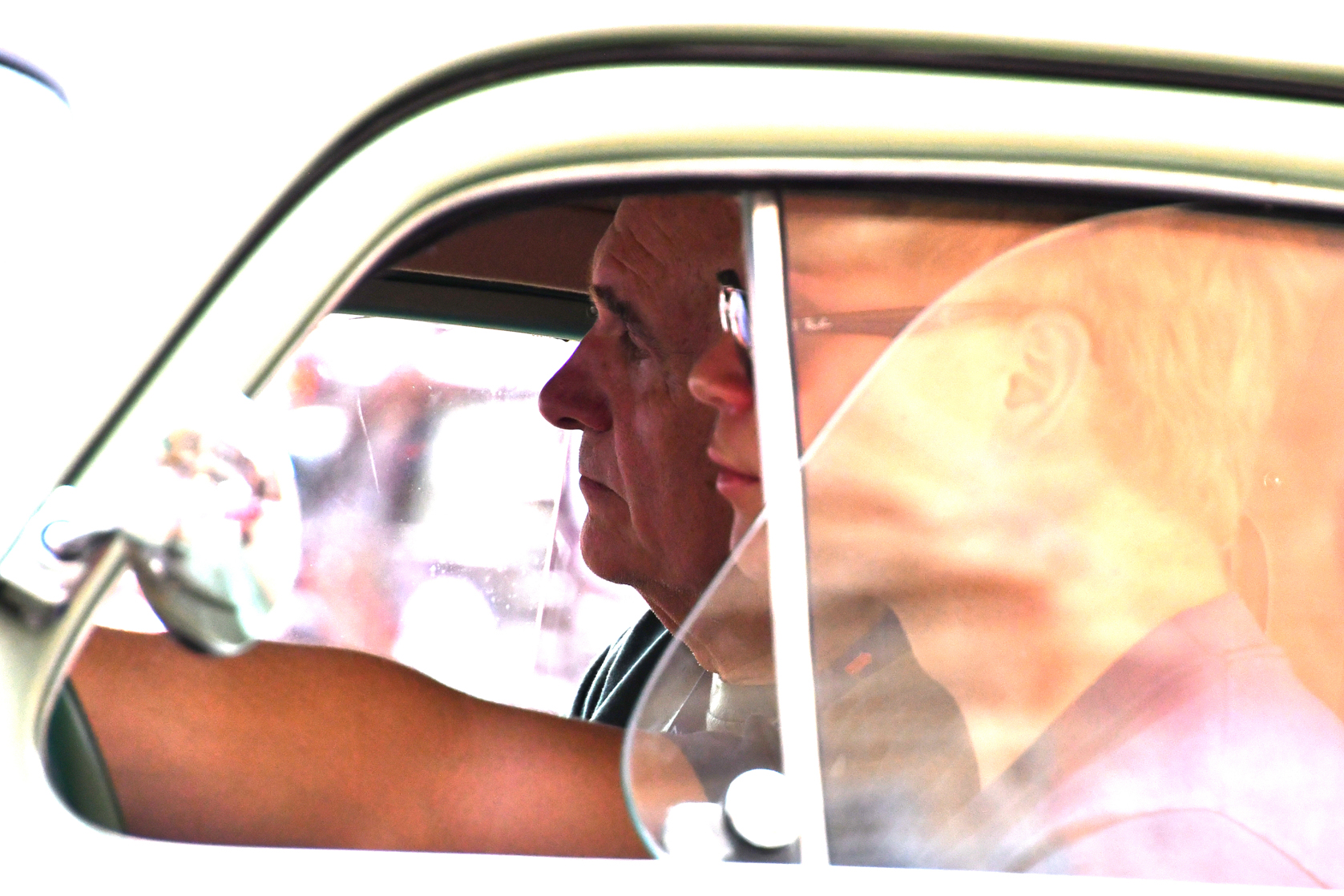
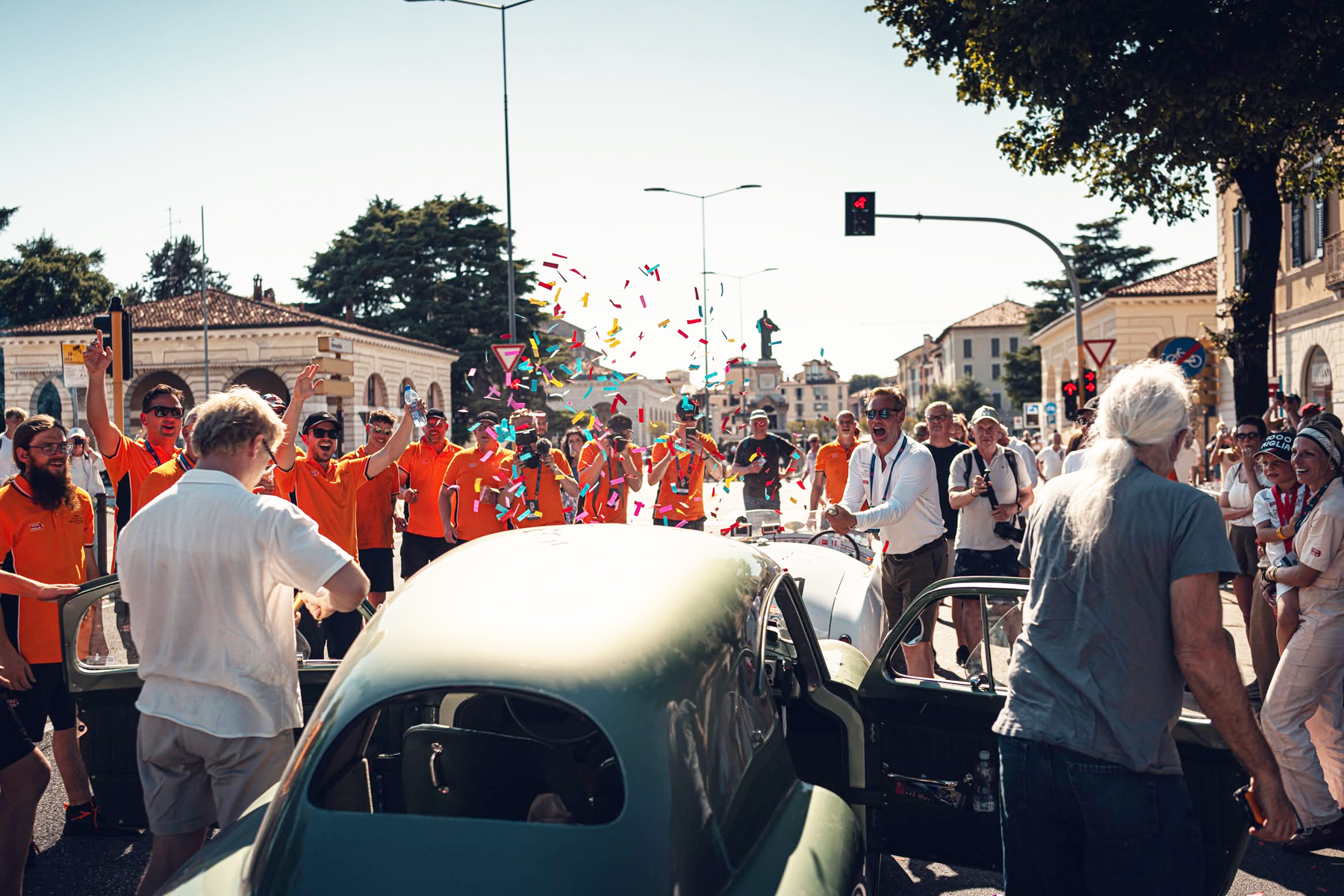
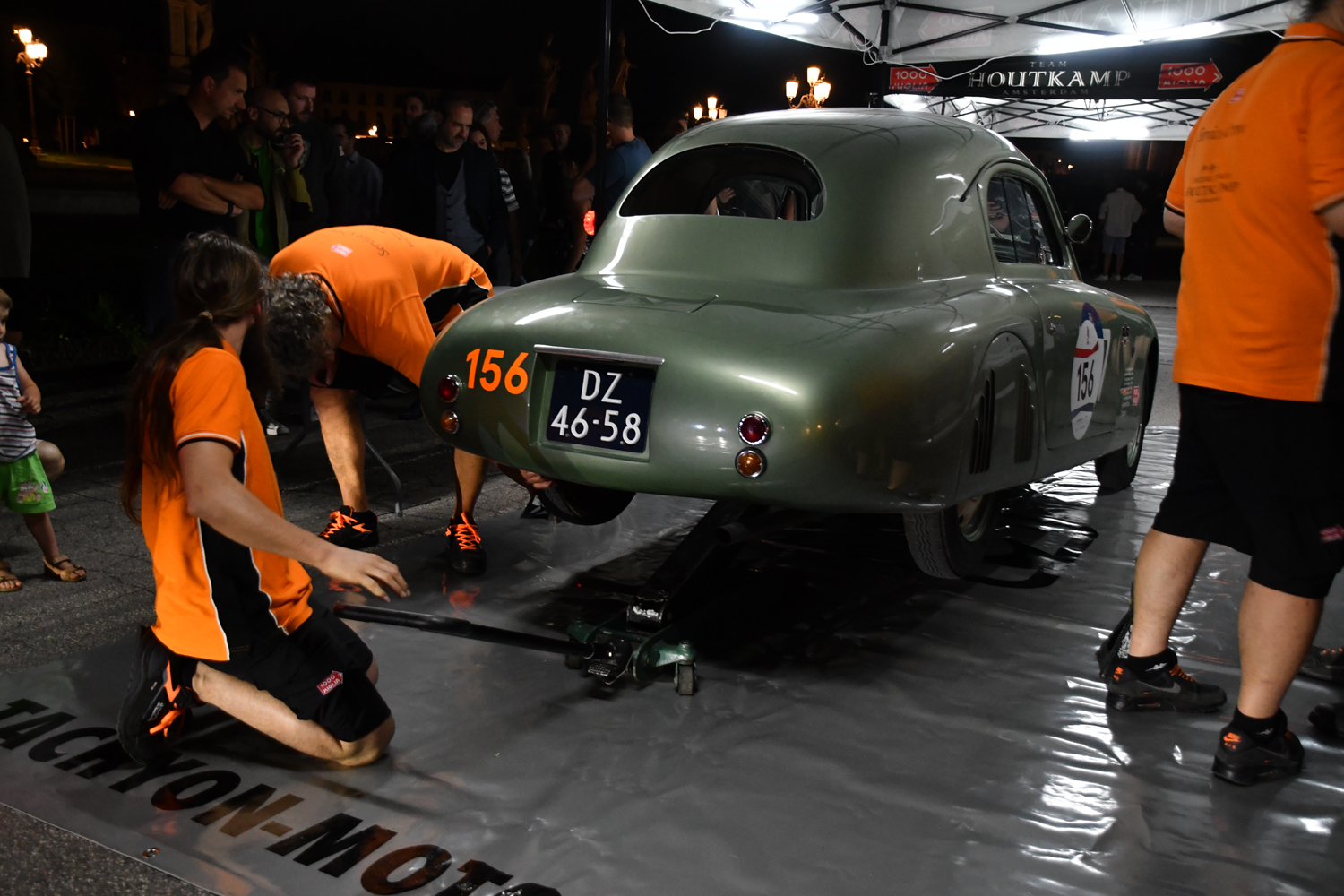
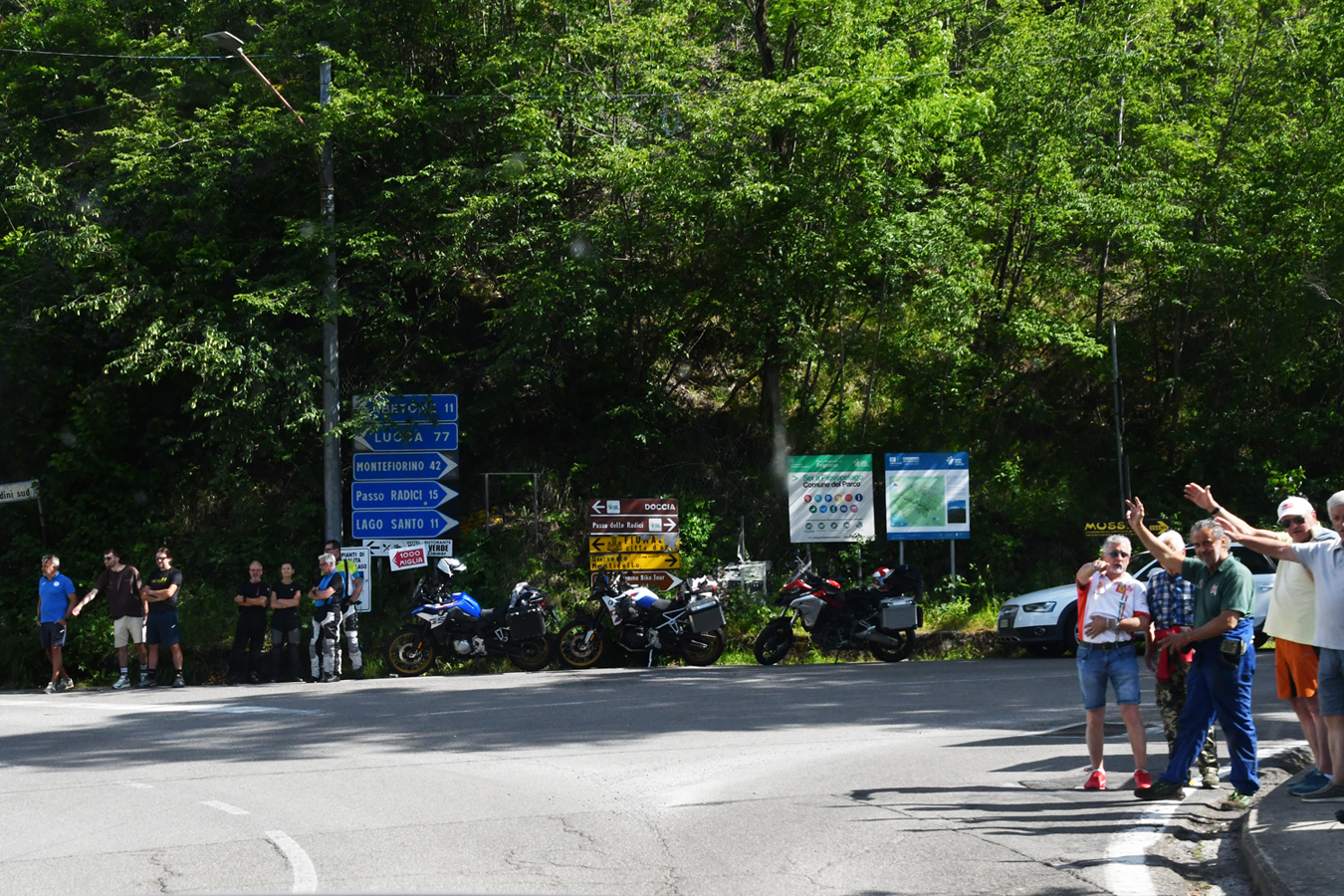 Chris says, “In my mind the cheers from the crowds spoke to the people’s admiration for the cars rather than the drivers.” Chris did note that not all reactions from the populace reflected admiration for these special cars and their special treatment. Chris says, “A majority of the local people graciously yielded to the police escorts that in many instances with their sirens and flashing lights pushed local traffic off onto the gravel shoulder in order to carve out a third middle lane for the Mille Miglia participants.” However, this did not always prove to be the case. Others Chris acknowledged offered less gracious acceptance during heavy highway traffic situations. With a tilt of his head and a raised eyebrow Chris says, “On the highway in heavy traffic, there were a few angry faces, probably on people heading home from work. I get it. Here we are splitting lanes and such. You know a police escort can be taken a few different ways.” Chris viewed the problem as not due to traffic caused by the Mille Miglia cars but by poor planning that routed the vintage participants thought normally congested thoroughfares.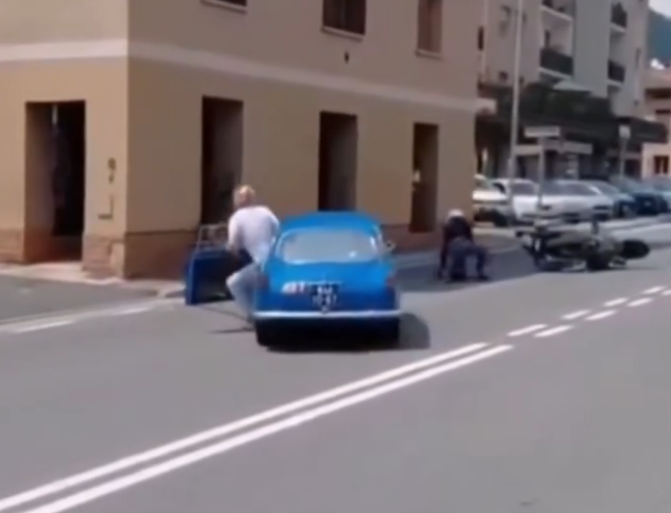
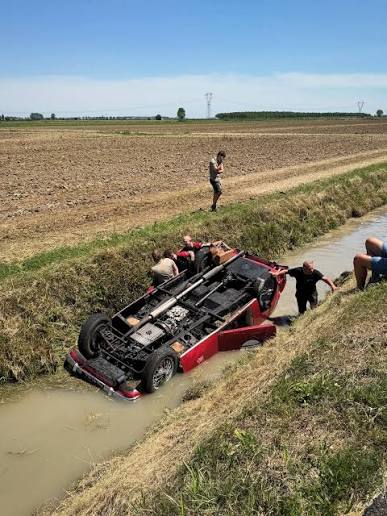
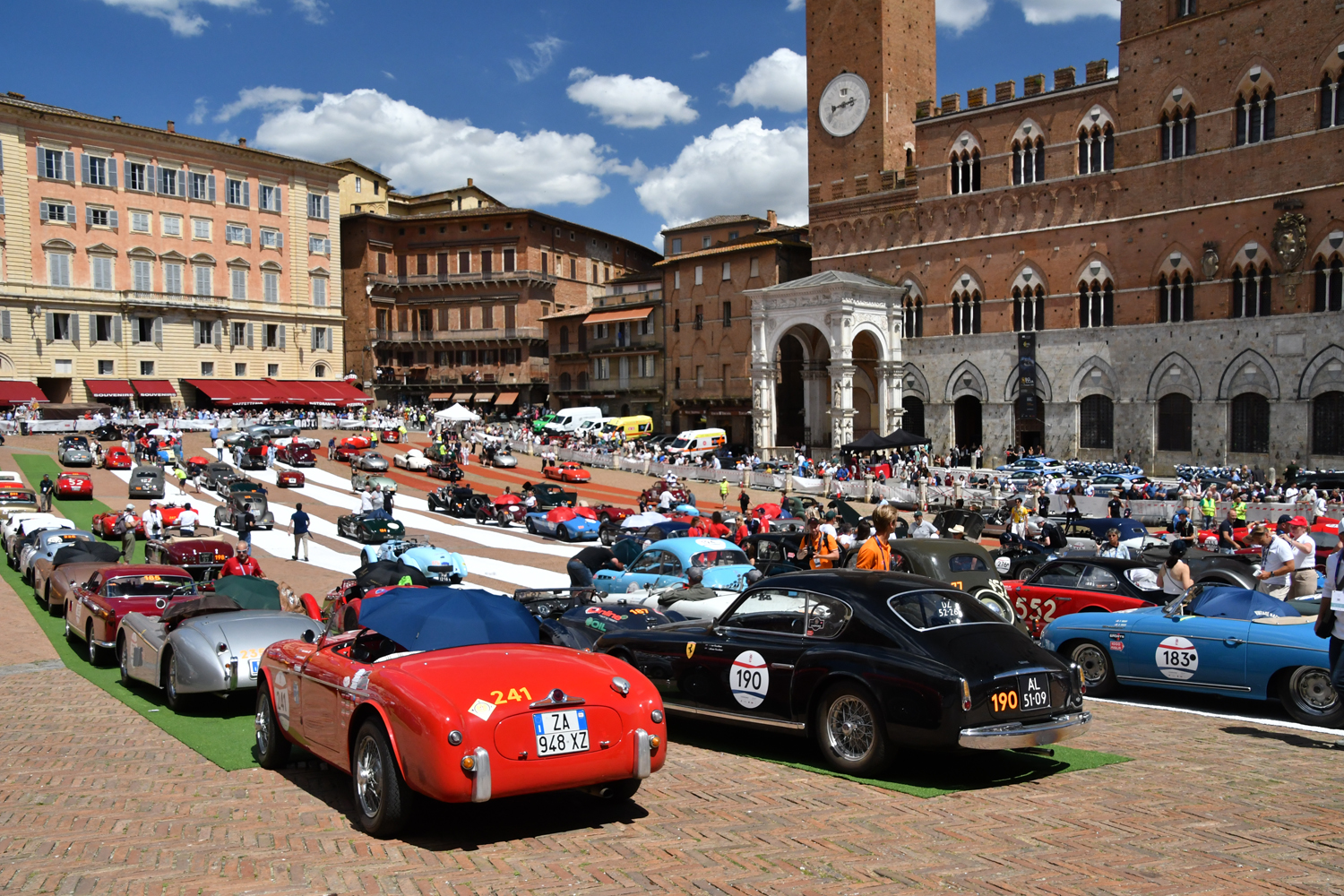
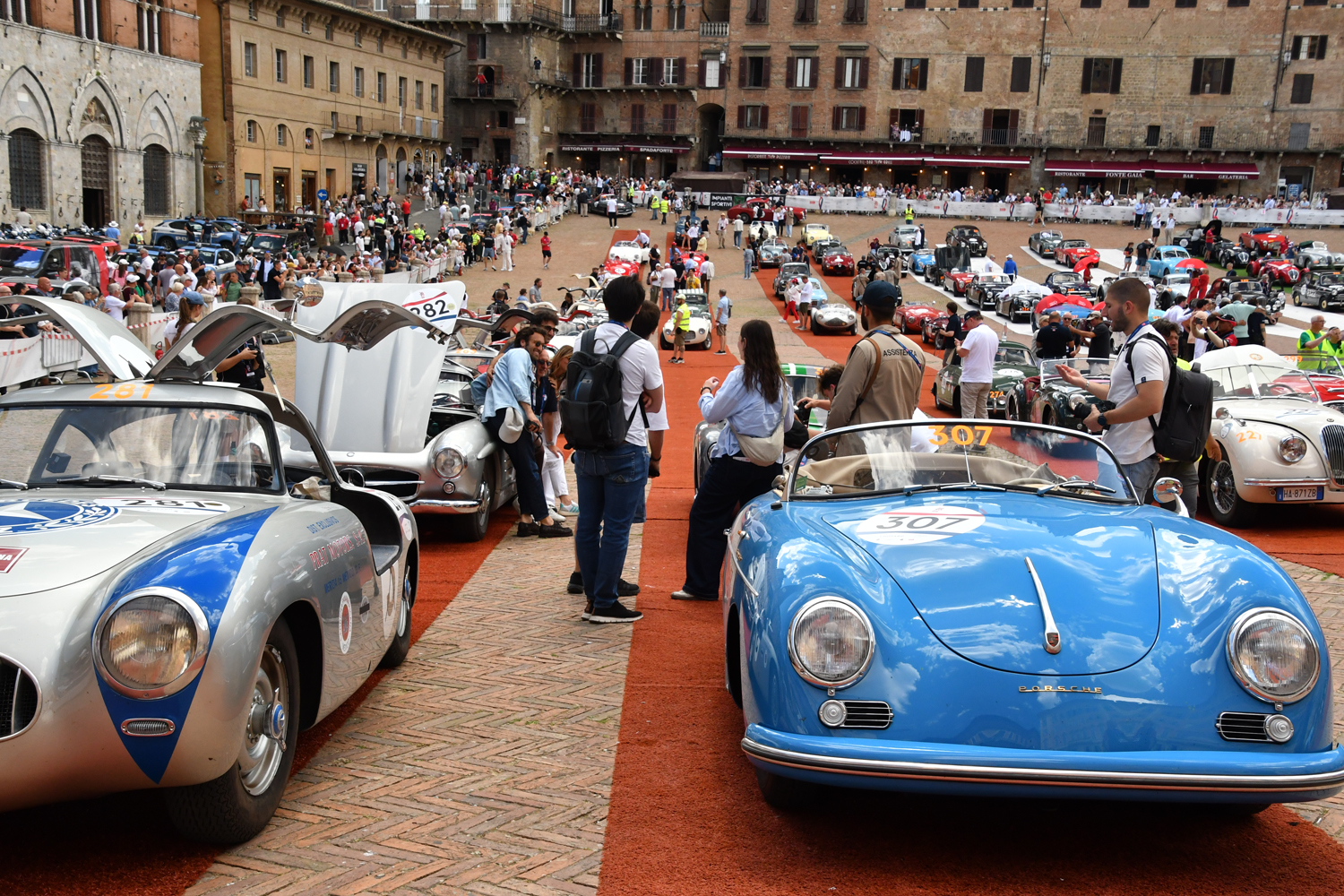
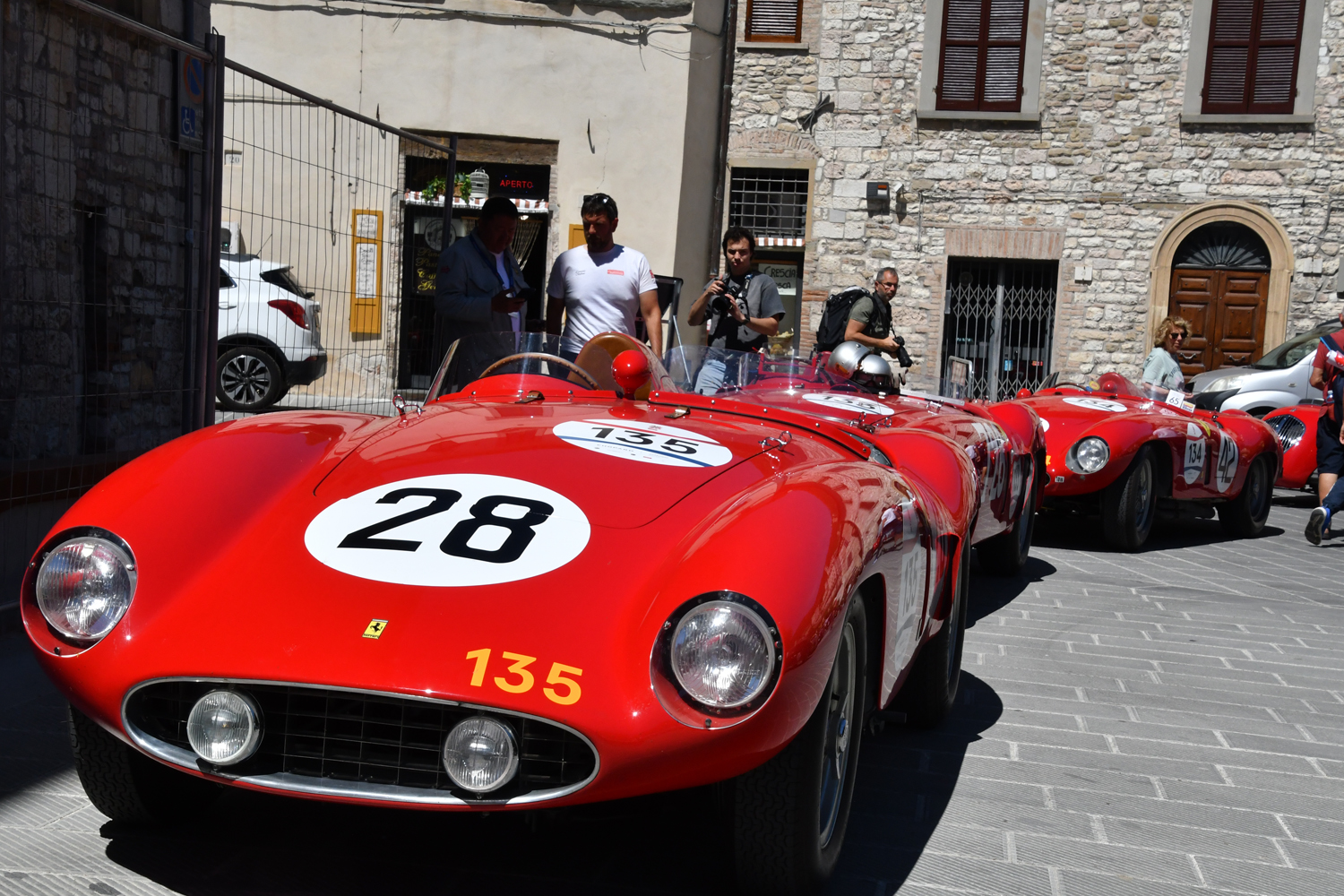 Chris says, “There was a moment today. Three vintage Ferraris passed me at blistering speed and I got chills. And as they went by, I saw the faces of the bystanders. I saw pure joy in their faces. That was the exact same feeling that I felt. Then it hit me. This event gives substance to a sense of national identity. The Italian cars with their rich history fly by and not at parade lap speeds, but at real speed; I believe the Mille Miglia cements a bond between the Italian people and their proud history of automotive excellence. It’s like their 4th of July.”
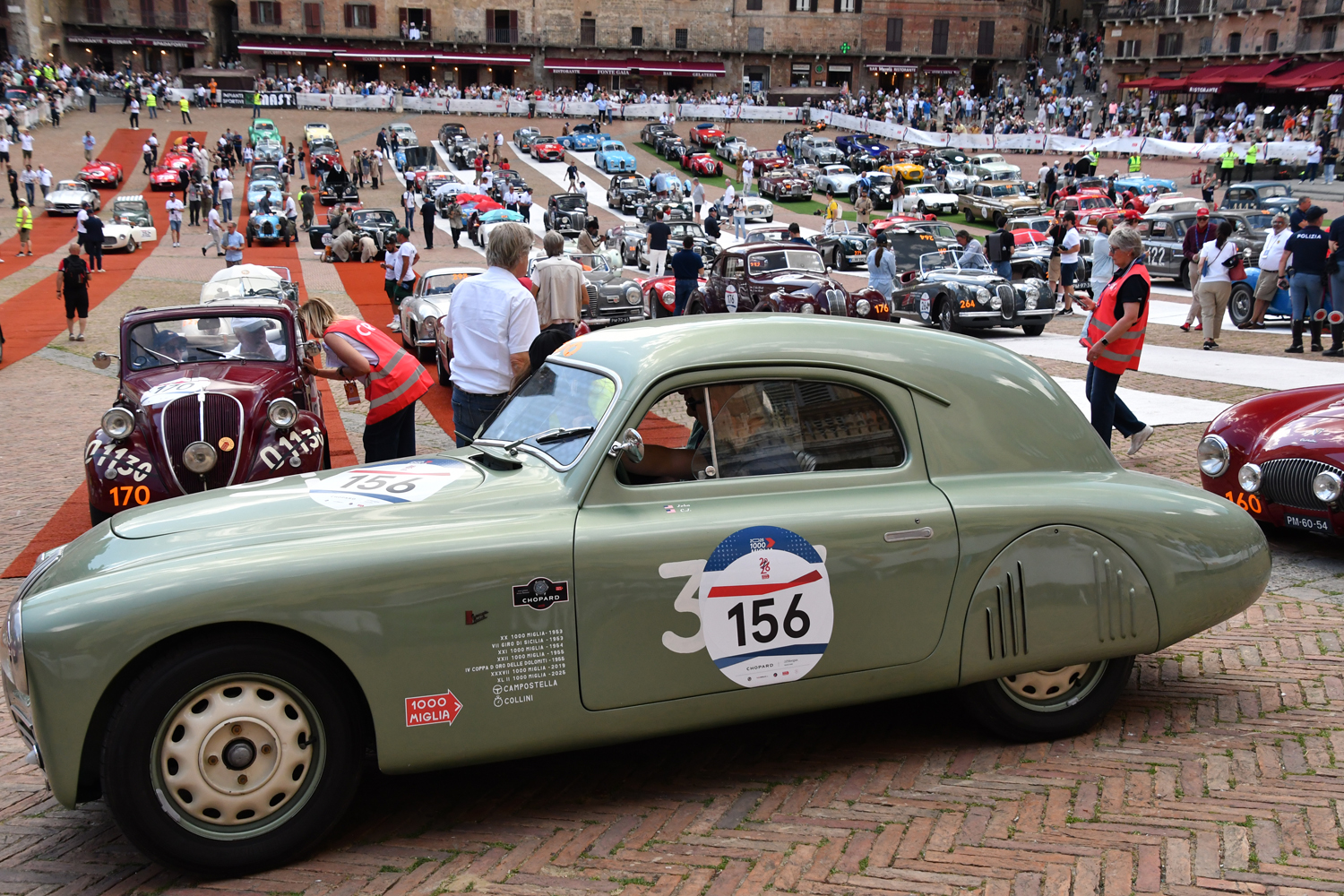
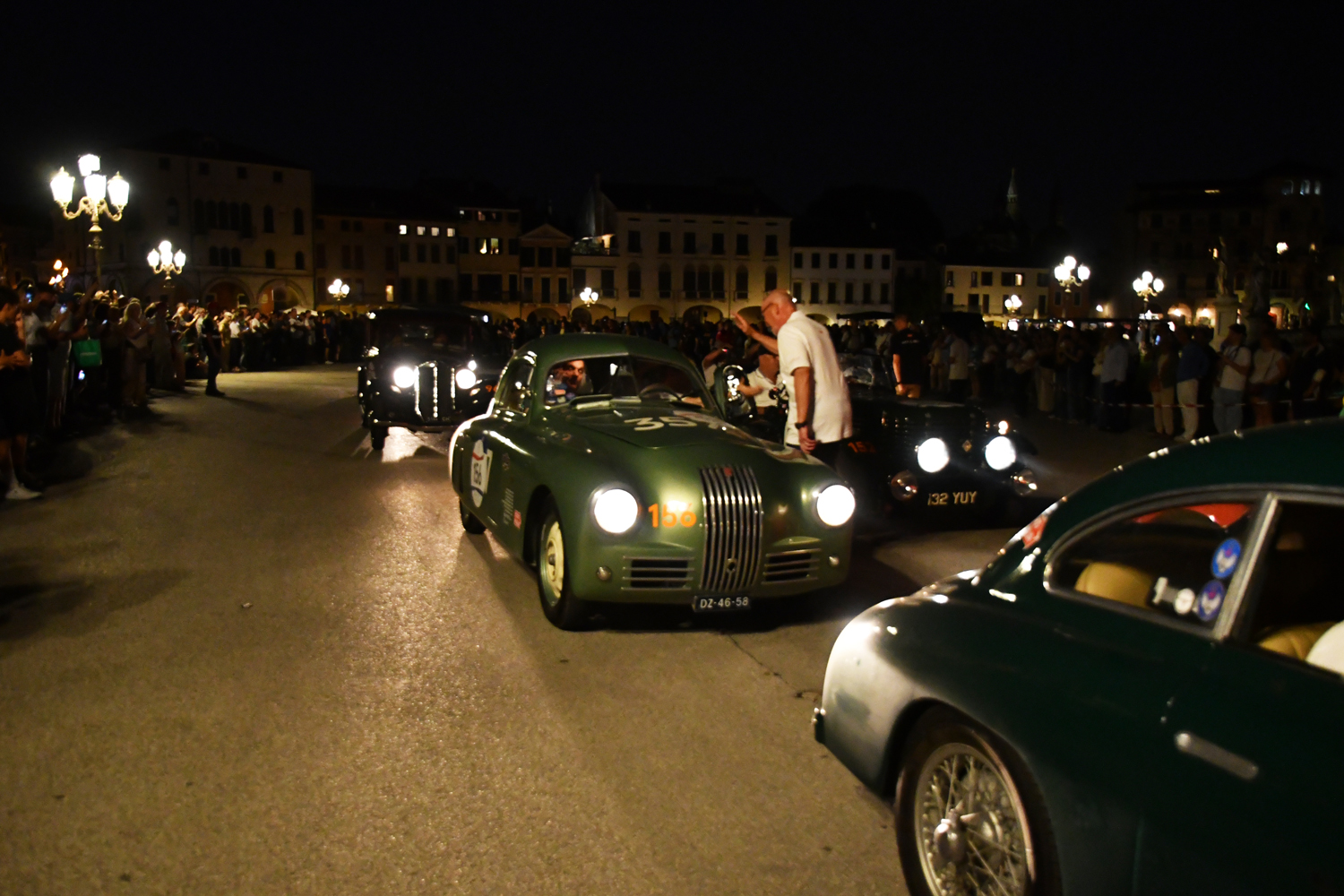
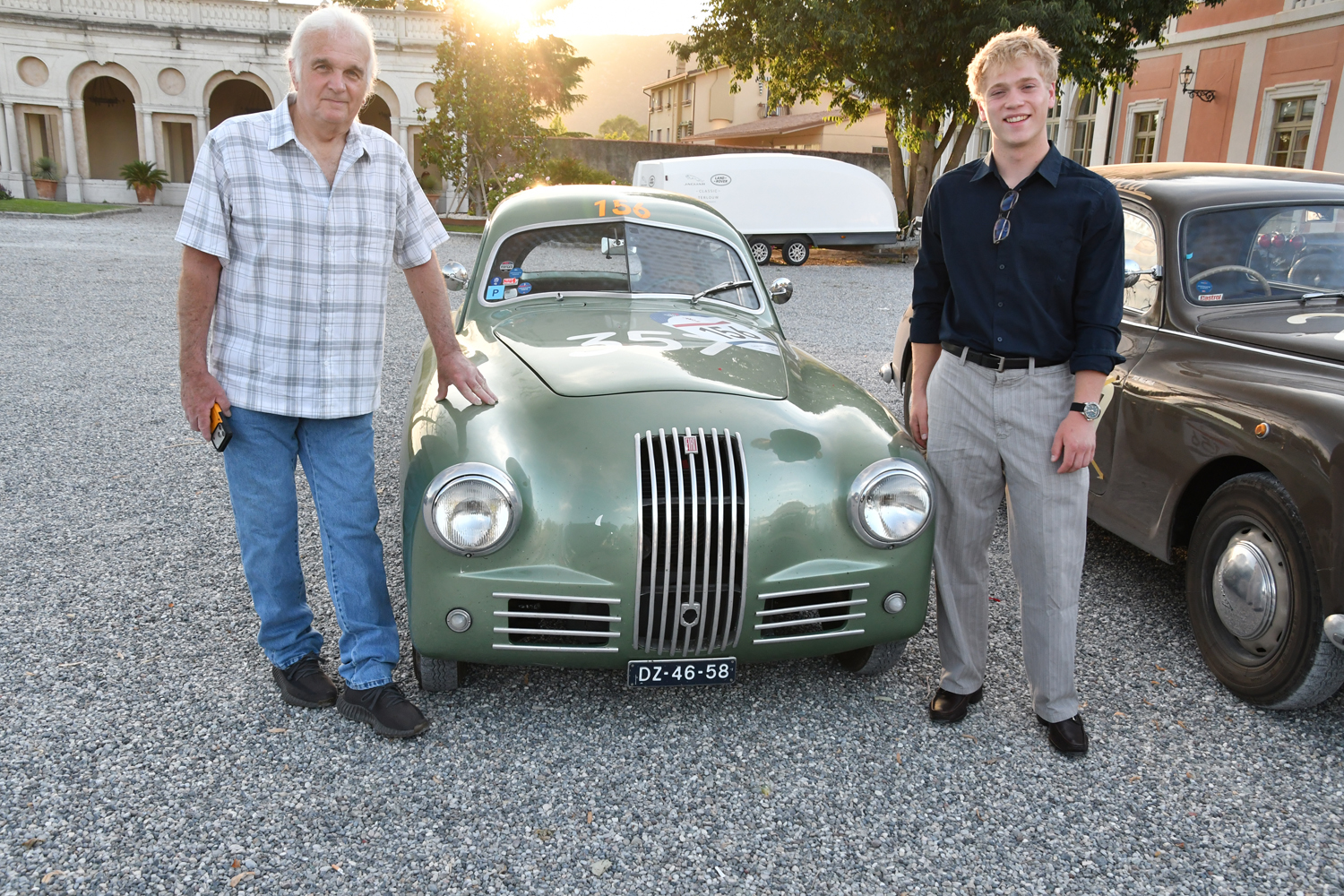
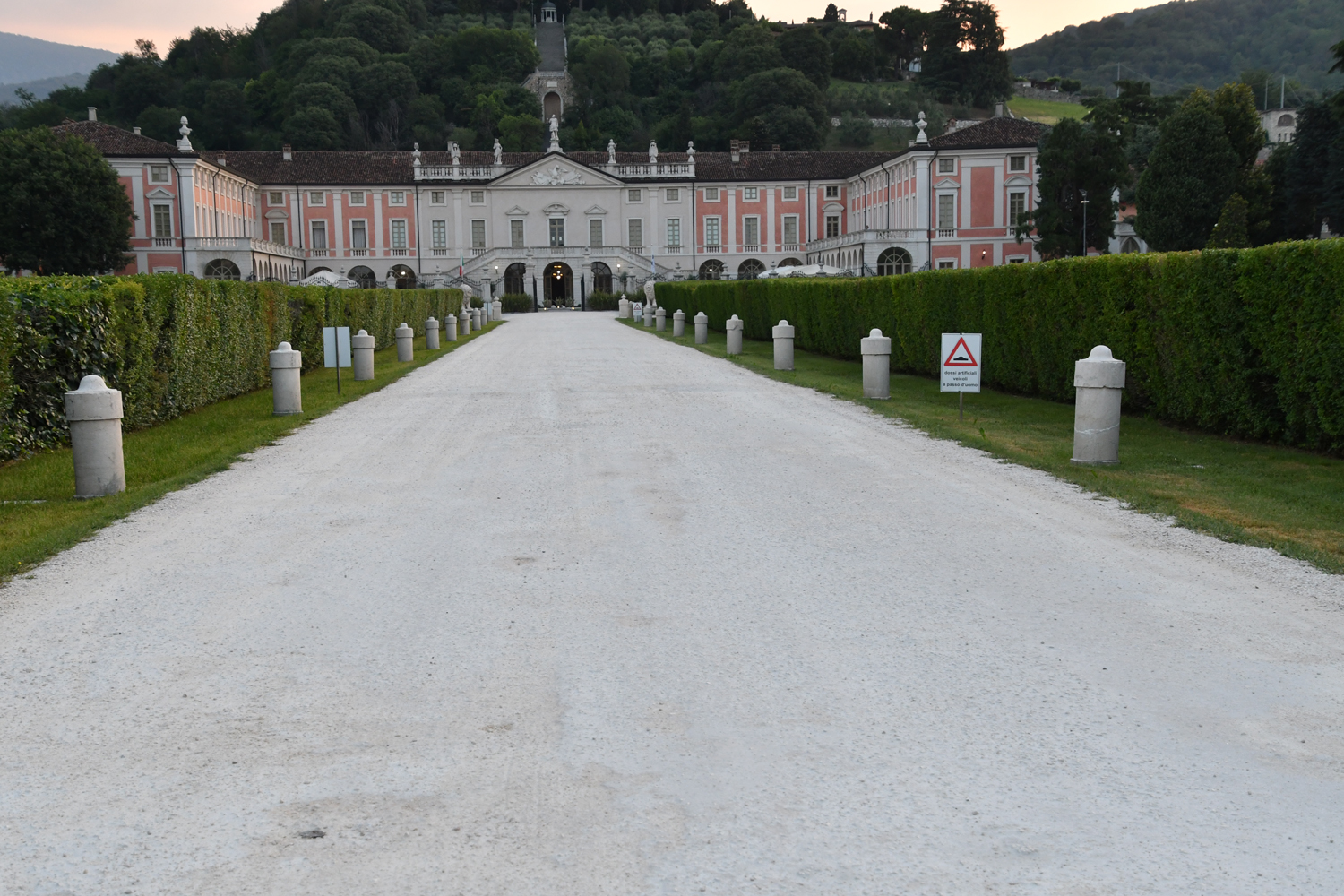
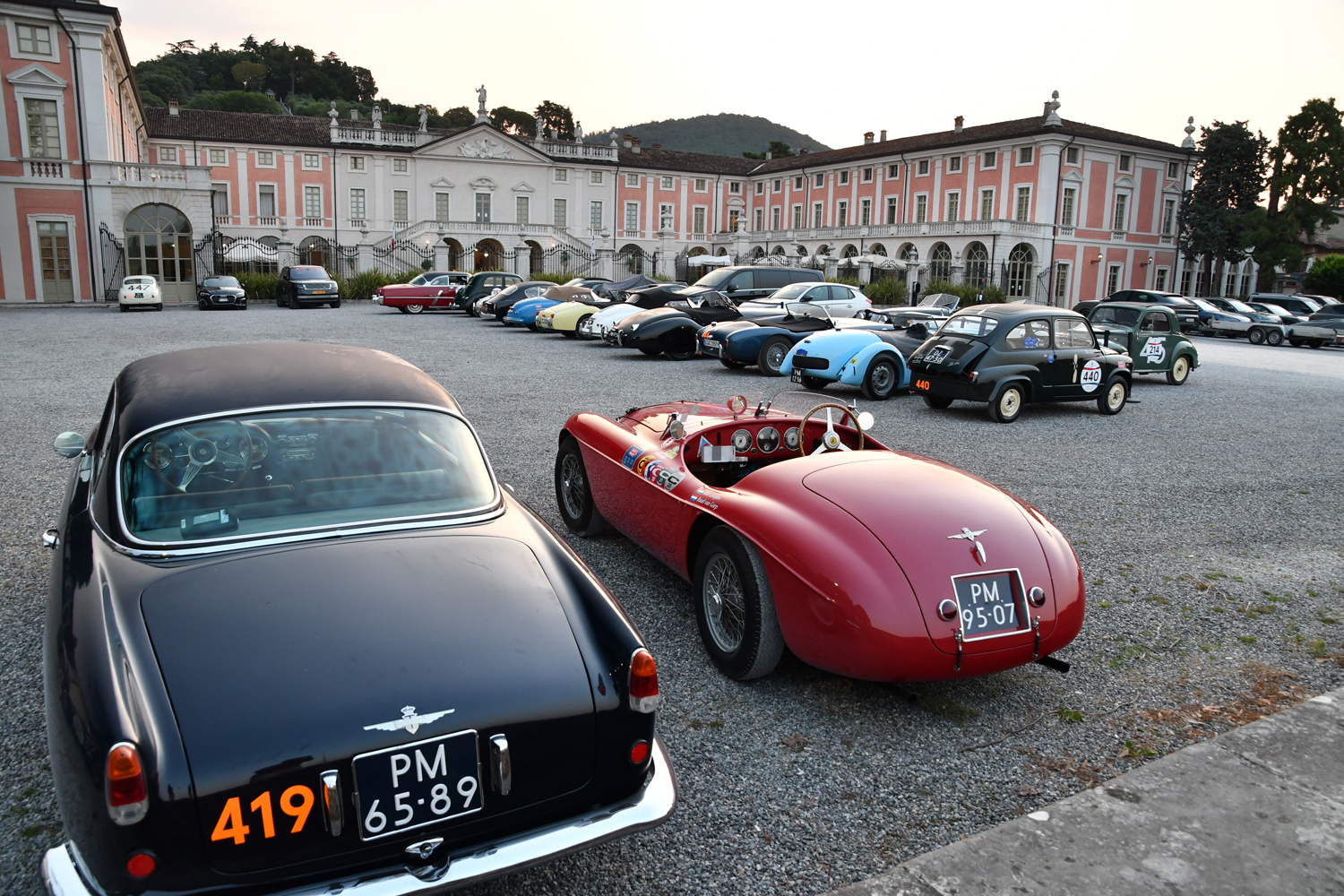
 Having come full circle, the team gathered around Fiat #156 with the Villa Fenarilo Palace Hotel in the background. The proud little Fiat had just notched its fourth completed Mille Miglia. Bruce speaking of Chris says, “He did very well. He has skill and he listened. It makes for a good driver.” Bruce being Bruce caps his remarks saying, “We made it across the podium. Thank you God.”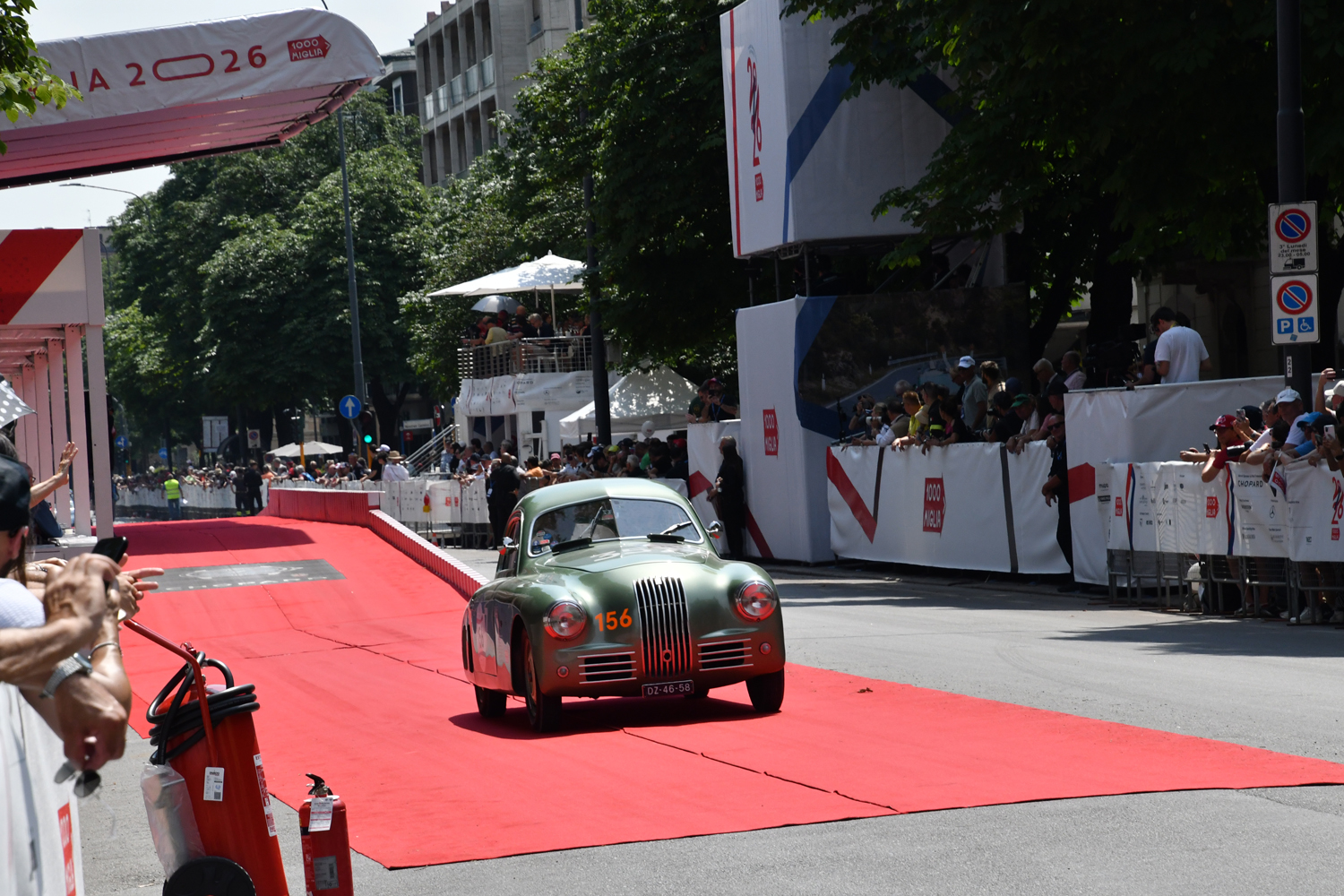
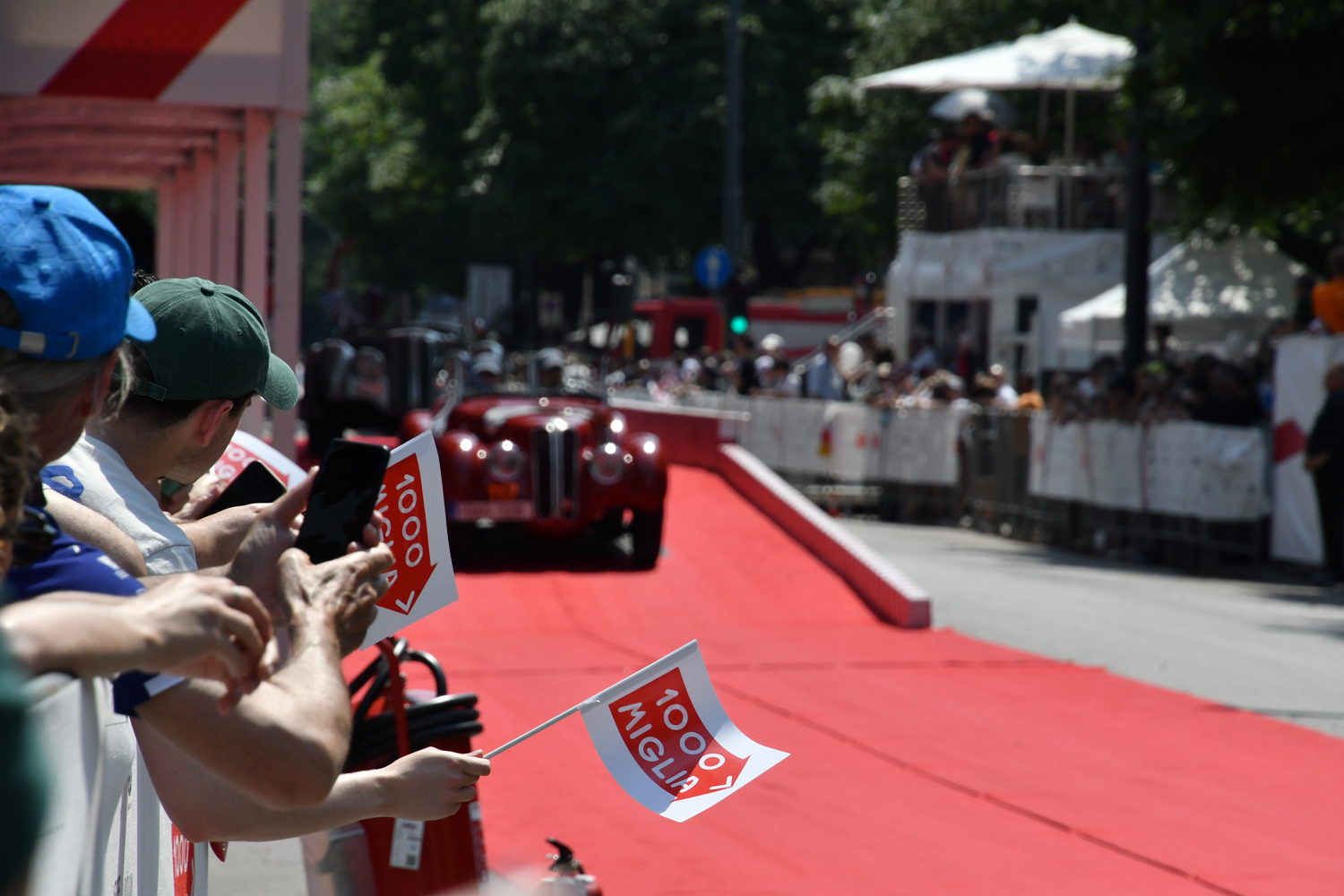
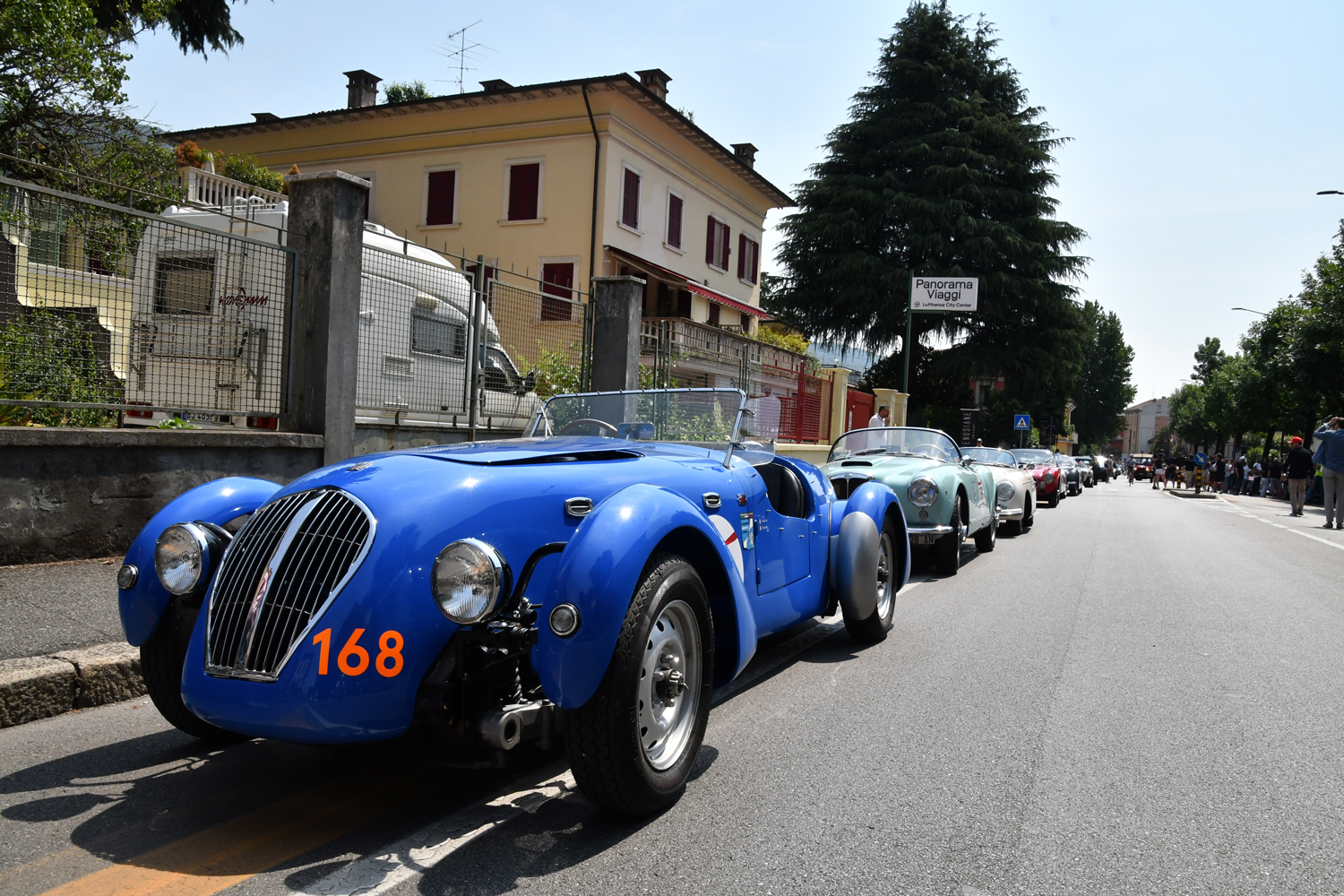

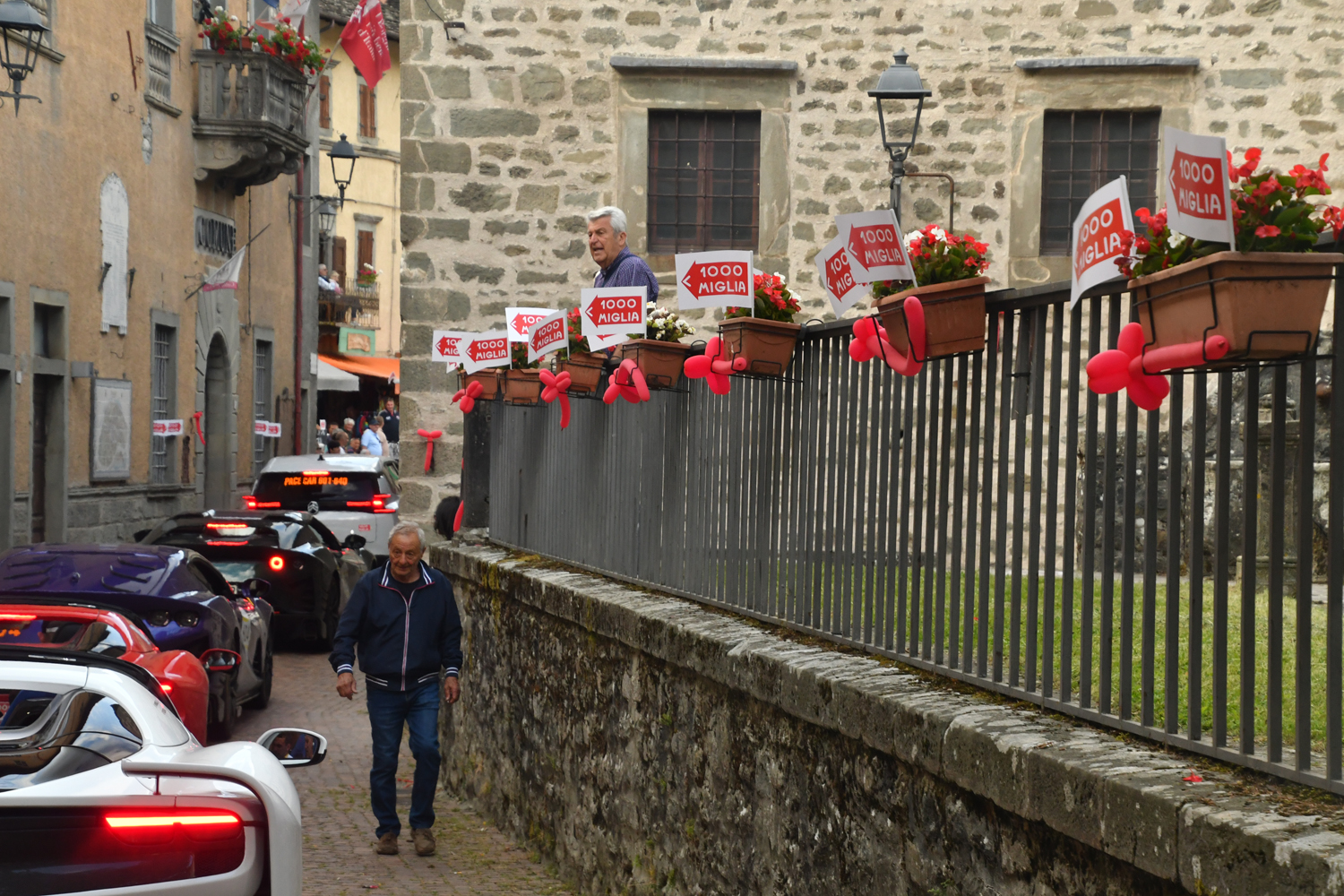
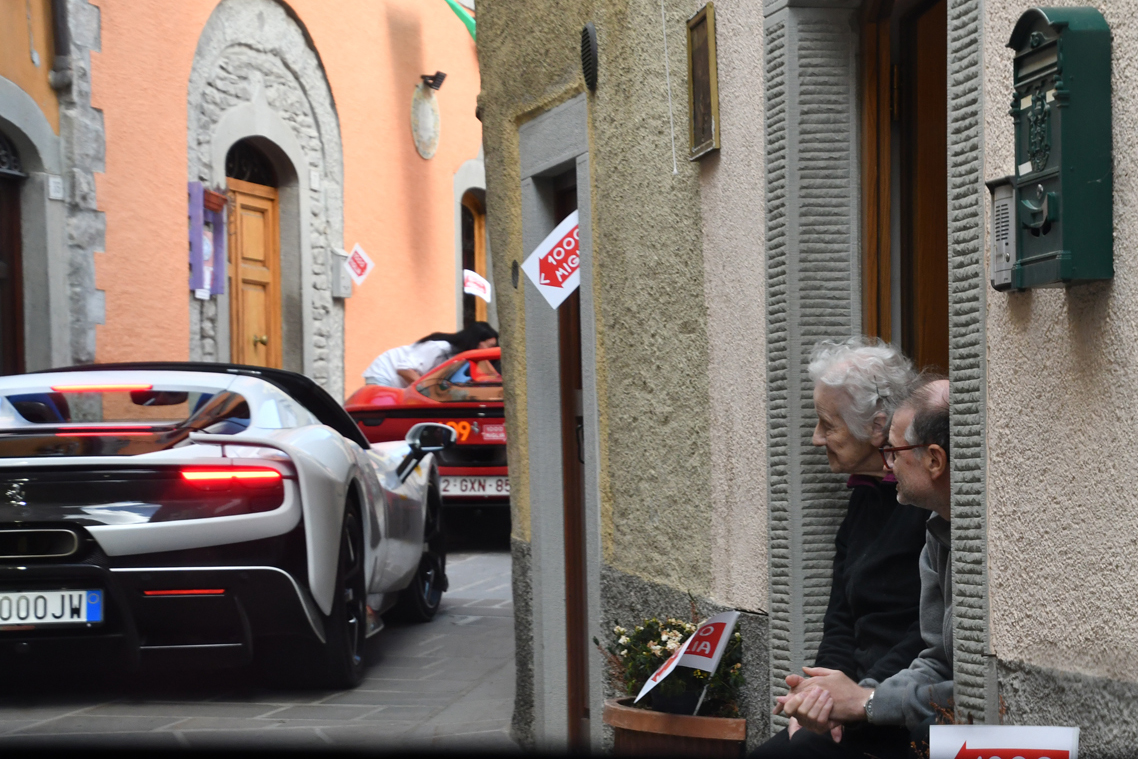
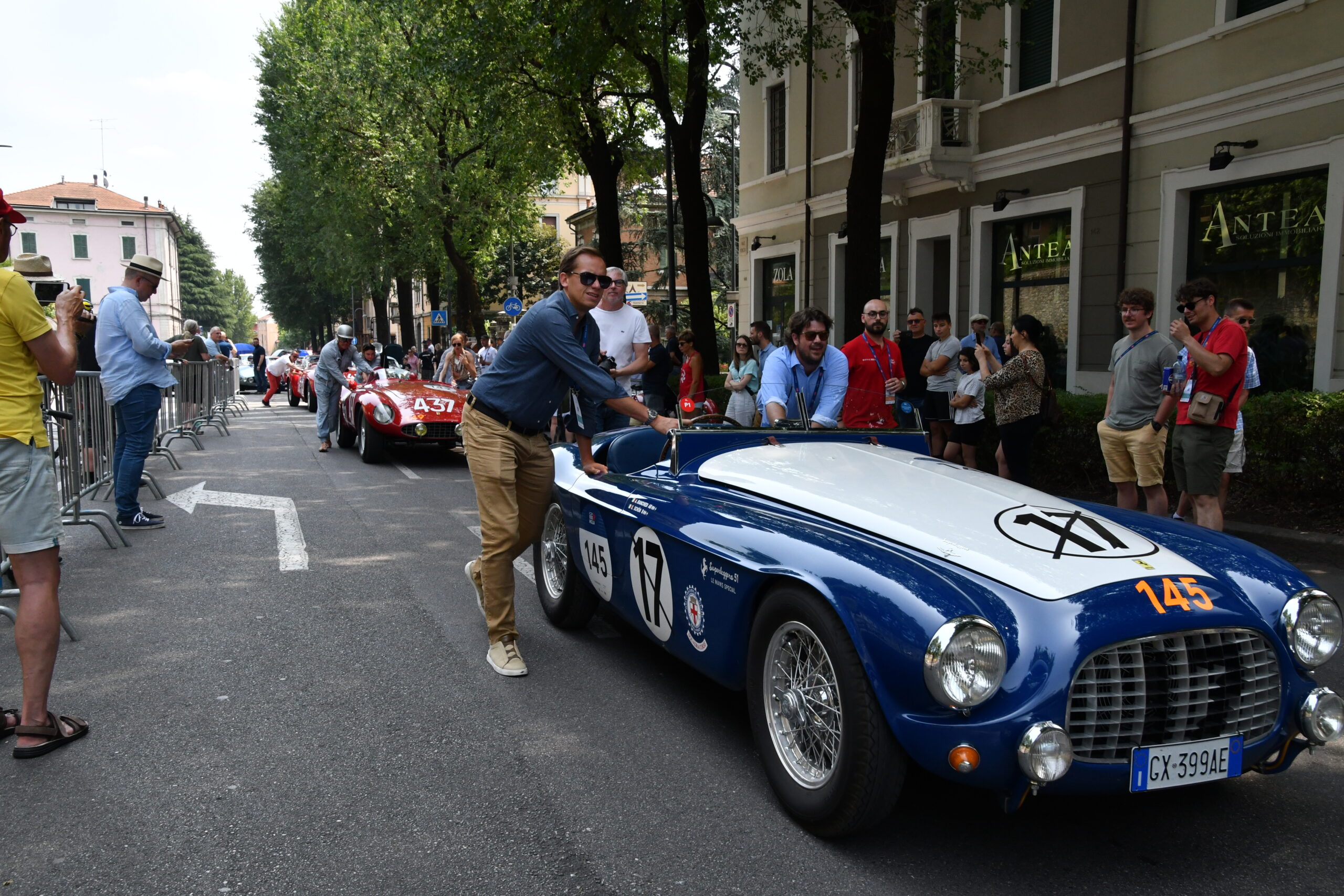
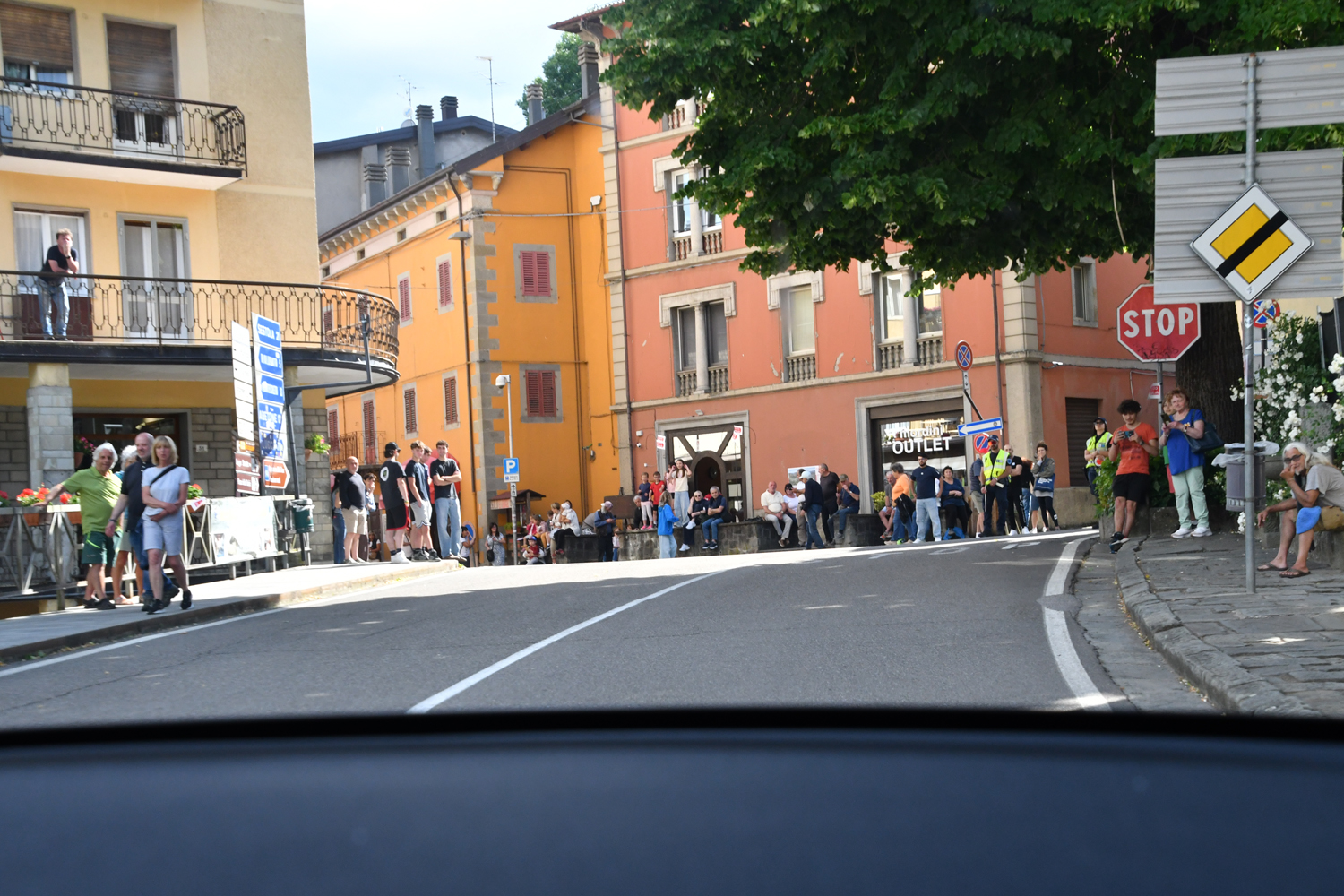 We quickly learned that encountering layers of animated flag waving fans dangerously pressed against ancient roadside buildings hugging a narrow road served to alert us when we had ventured onto the actual Mille Miglia route. That first morning we find ourselves climbing a serpentine road with hairpin turns that carve through a dense cluster of old and well tended homes. Taking the apex of a sharp turn reveals, directly ahead, the apex of the next hairpin turn plastered with a thick cluster of cheering fans fronted by a bevy of comely silver and blue clad cheerleaders. I mean real Dallas Cowboys grade comeliness shaking their silver and blue pompoms. This slammed home a reality that accompanied me for the remainder of my Mille Miglia experience: A vast majority of cheering bystanders display a fearless faith in every driver’s ability to maintain control of a car featuring the latest advances in automotive technology from seventy to ninety years ago.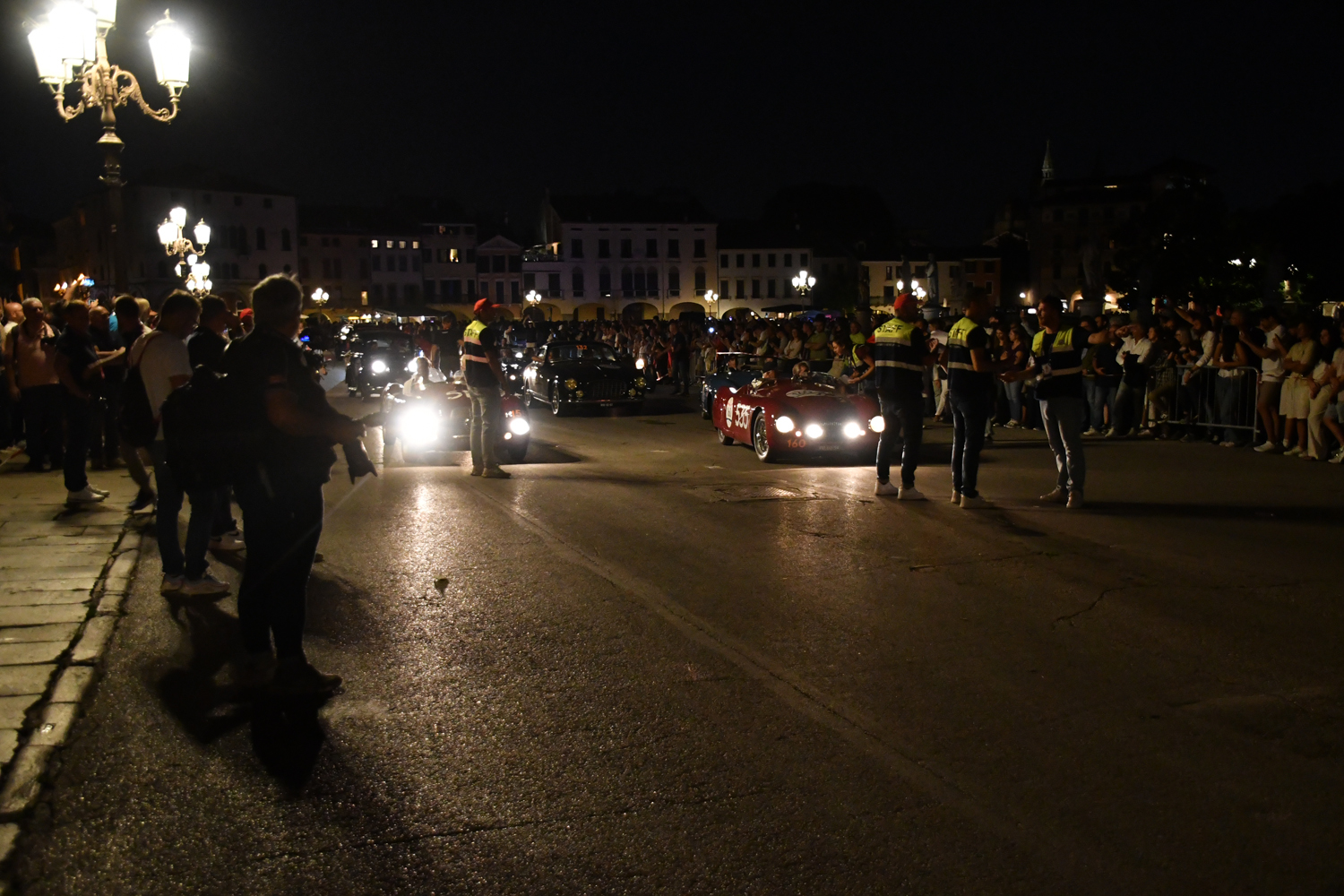
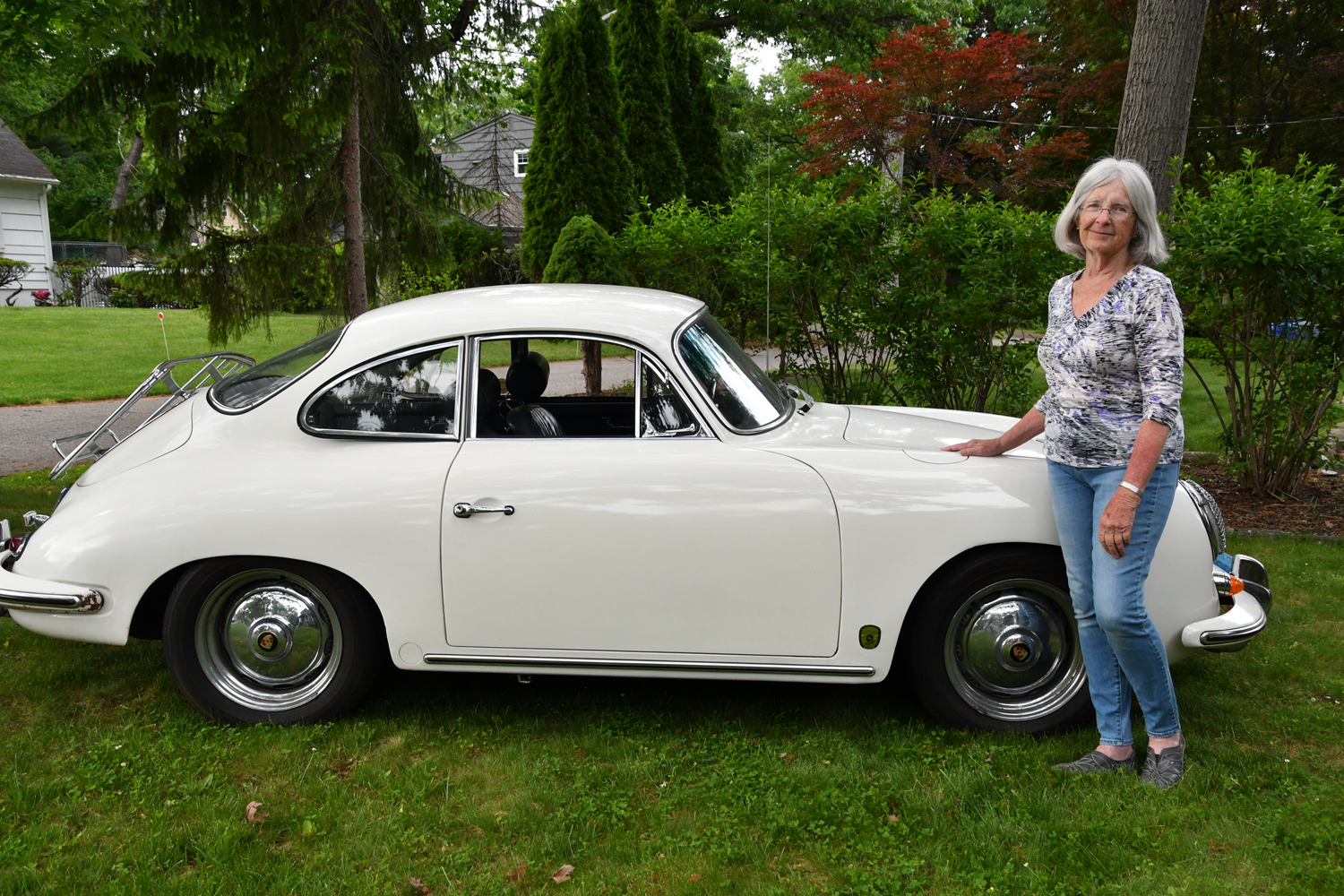
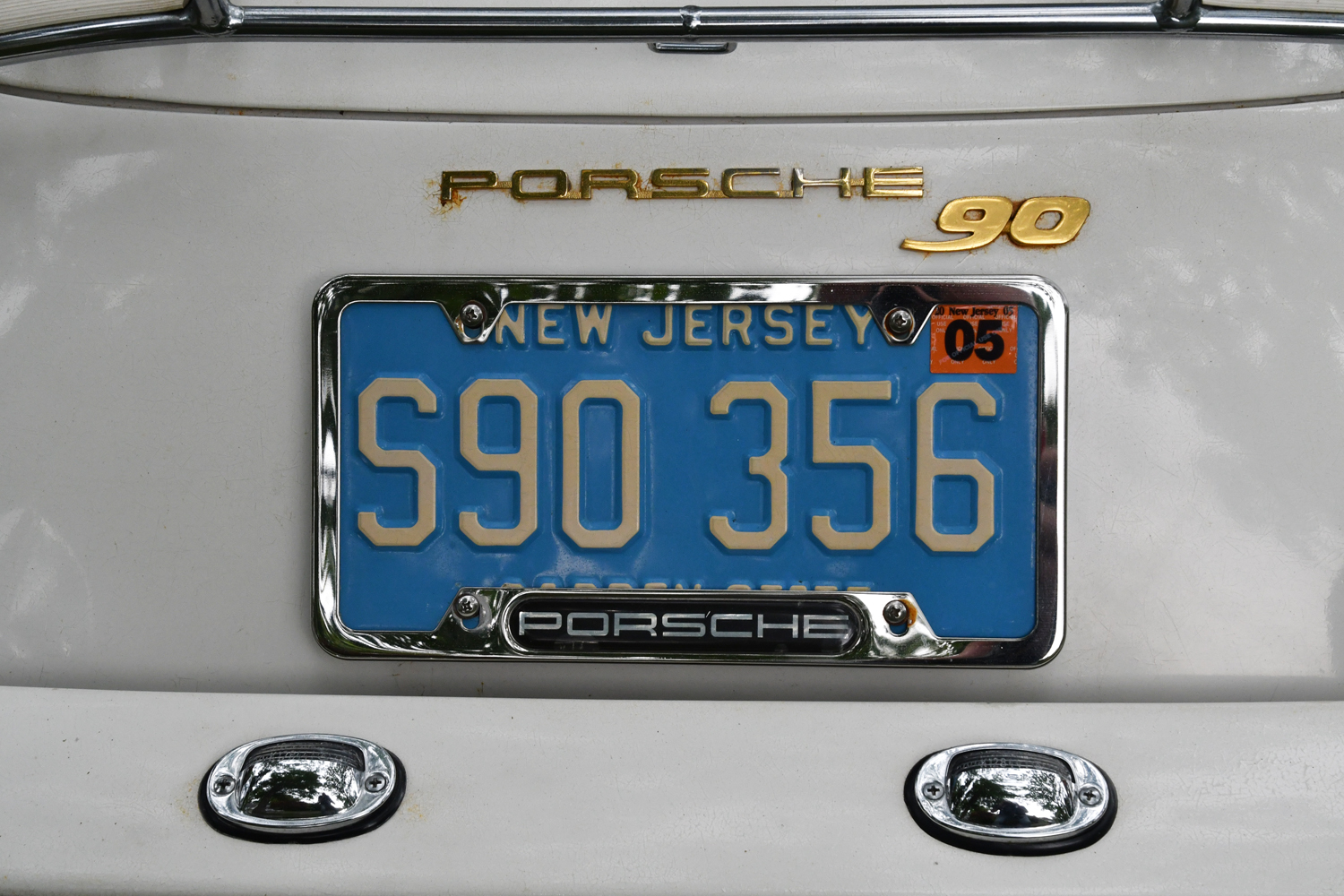 Karen’s relationship with Sally dates back to Karen’s marriage to her late husband Bill Moyers. Bill passed in 2015. Bill a Porsche executive and motoring enthusiast had originally purchased the Porsche in 1971. With Karen’s marriage to Bill in 1984 she gained a great husband and fellow motoring enthusiast. The Porsche provided just one more shared passion about which they could bond.
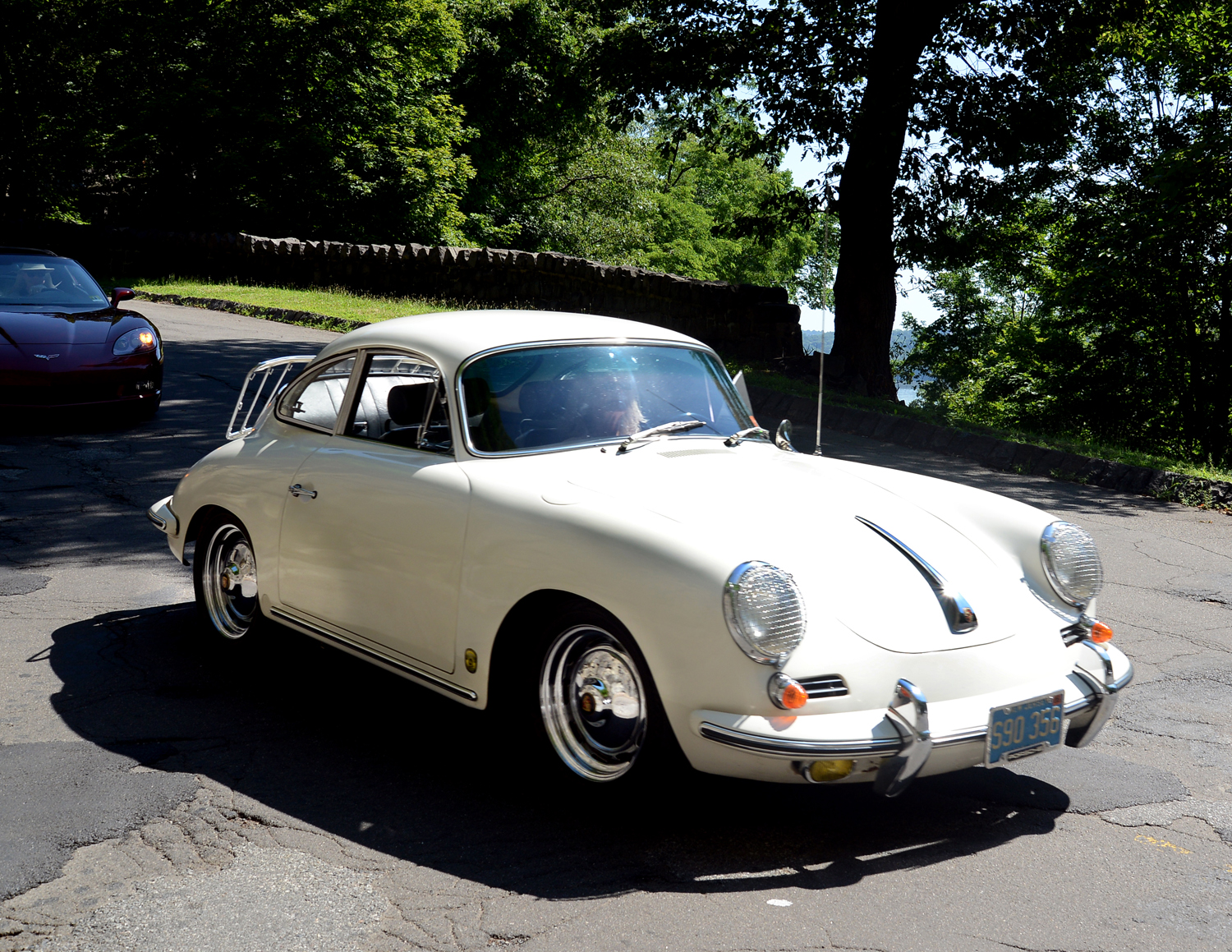 A recent road test published on the Jalopnik website 60-years after the Car and Driver article sums up the 356 Super 90 experience pretty well. It appears to have aged well, like a fine wine. The Jalopnik reviewer states, “It’s pure joy. Unfiltered driving engagement and pleasure beamed straight into my brain. I spend a lot of time laughing and talking encouragingly to the little Super 90. It feels like a partnership or a conversation in a way that even old 911s can’t match with their extra weight and more modern suspension. With a curb weight of just over 2,000 lbs, you don’t feel like you’re trying to cheat physics.” Not unlike Sally, Karen has a life born into a car culture that produced years of driving pleasure.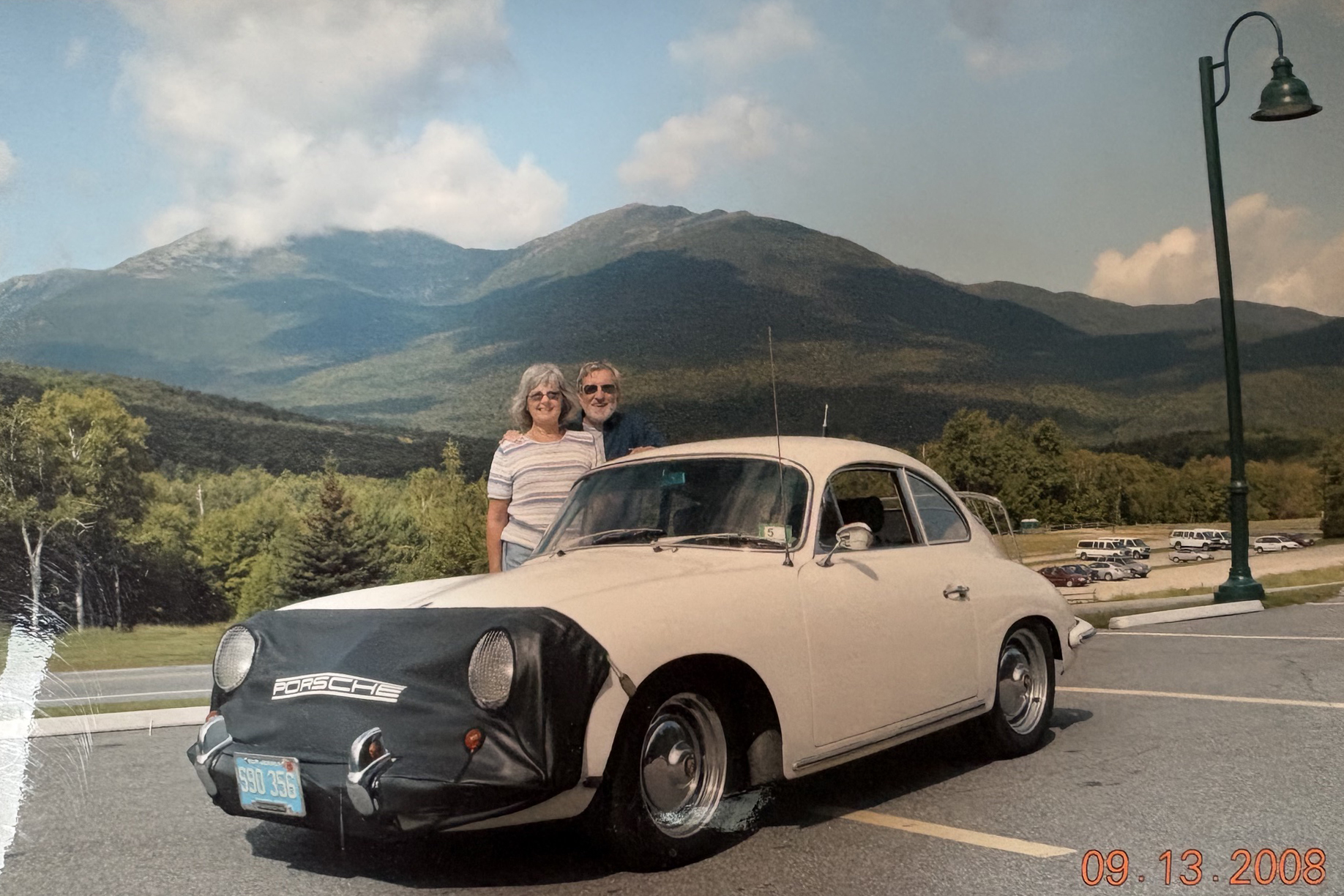
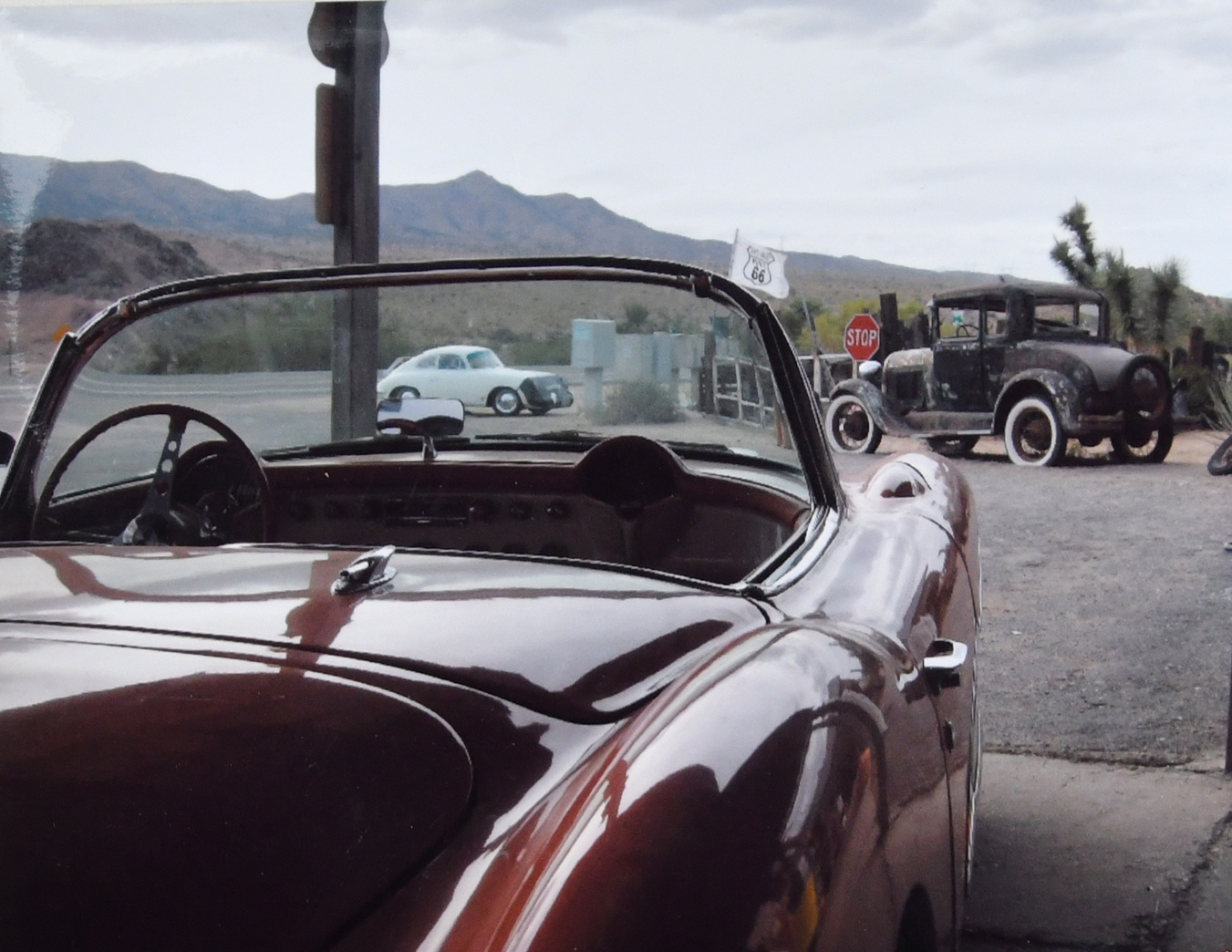
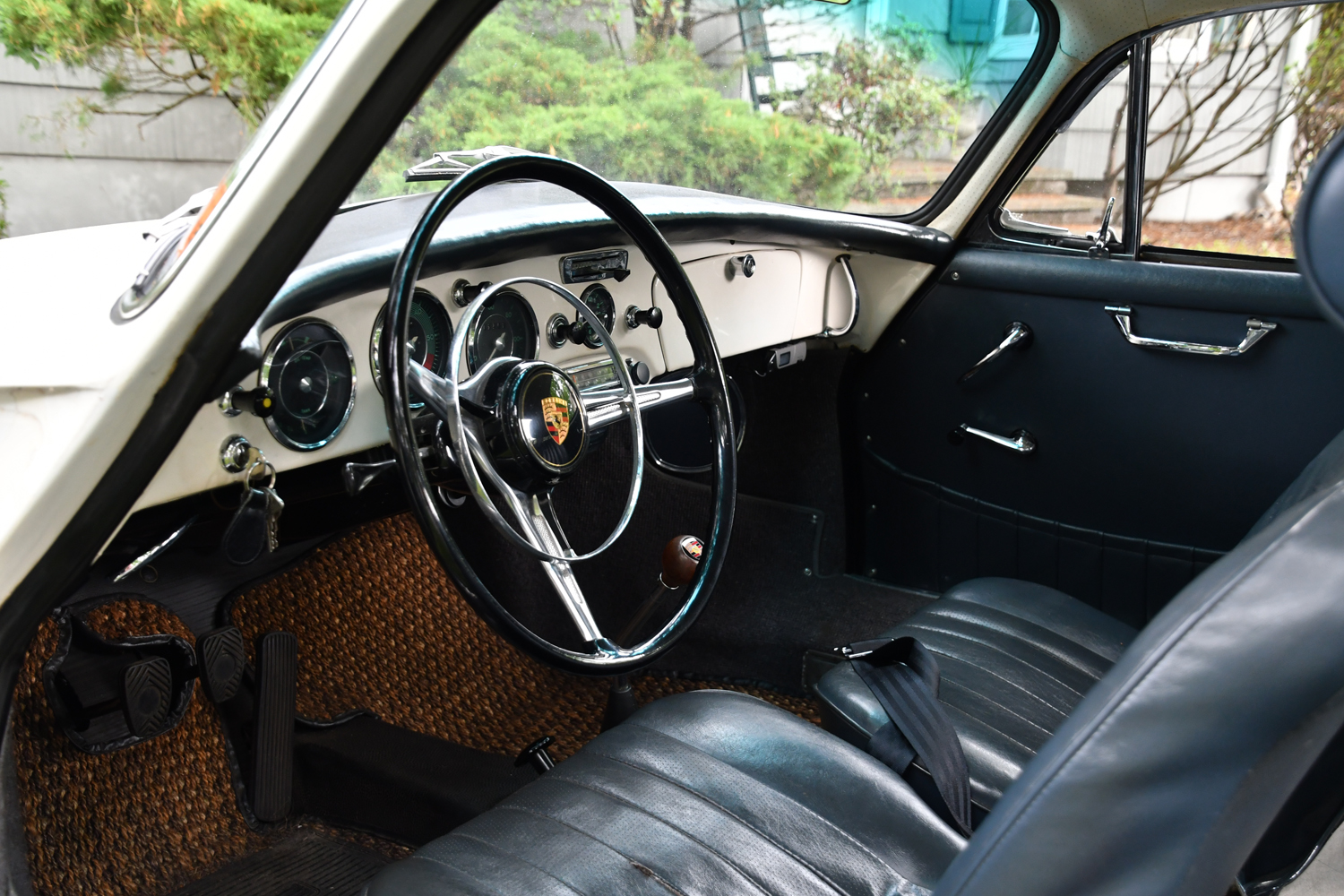 me. She provides a strength, a foundation that archives happy memories while promising opportunities for more to come.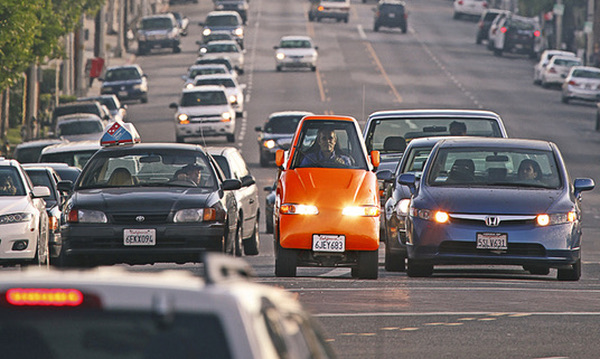
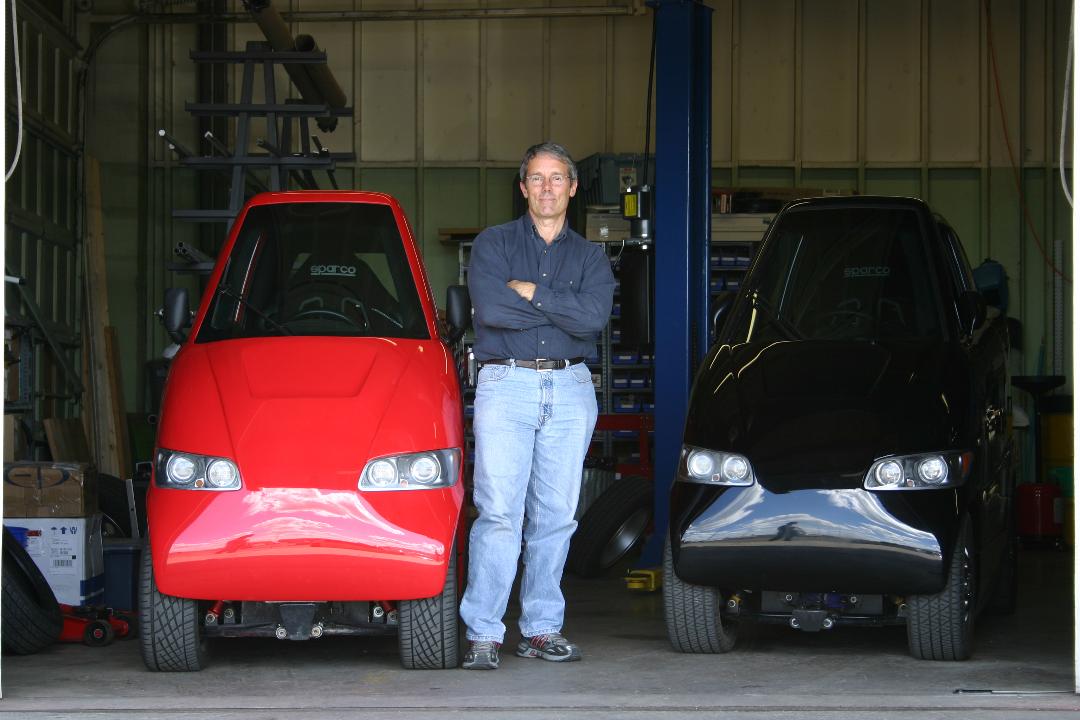
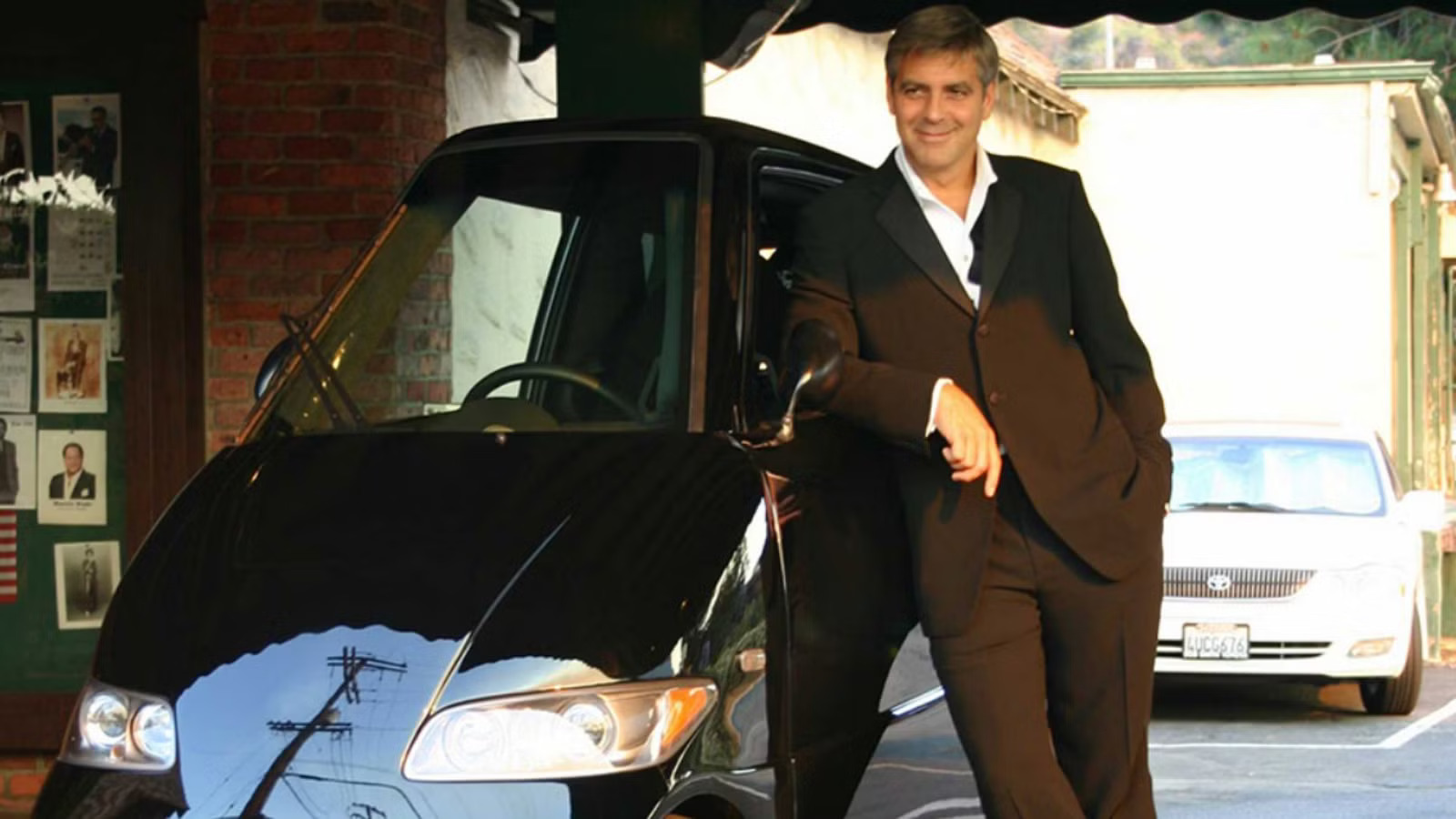
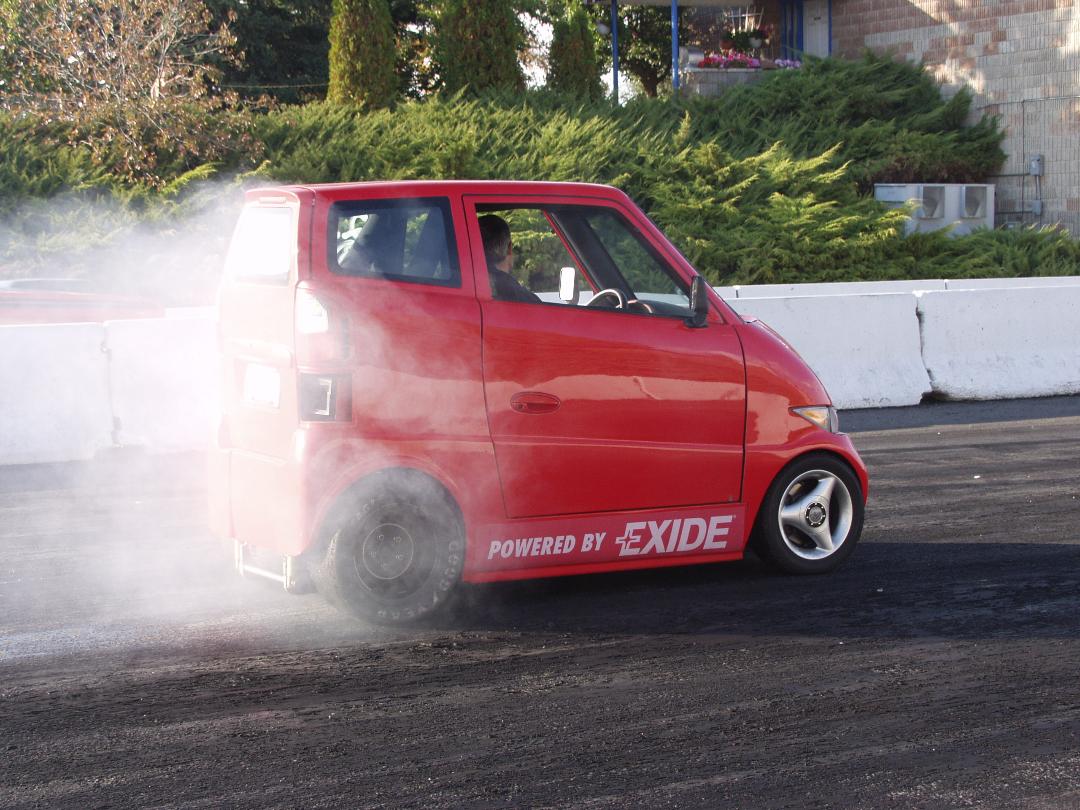
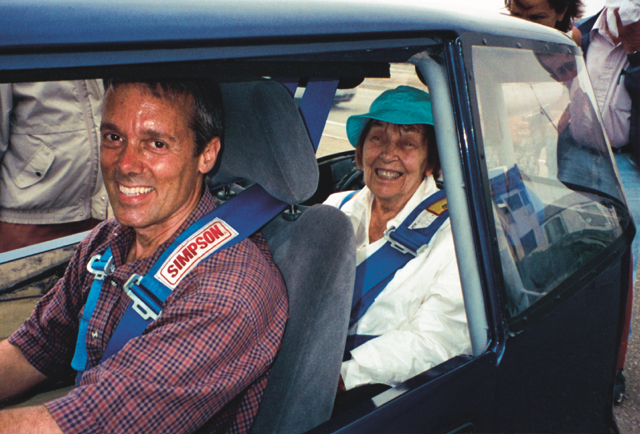
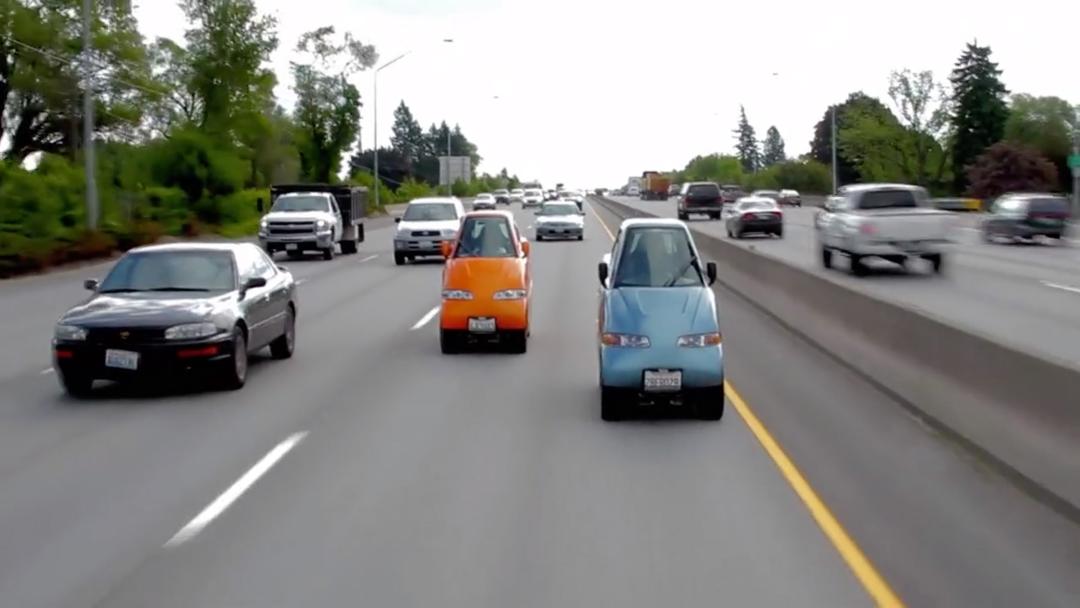 Rick says. “Let’s say it is a government project. I would suggest they focus on select zip codes. A person living in one such zip code could rent a Tango for an affordable rate per month. I see the Tango being a no frills highly mobile form of transportation; something really bullet proof. The Tango commuter car would not be something to show off.” Reflecting on that comment he laughs as he says, “Though the Tango can back in between two full size parked cars.” He believes the Tango delivers a higher level of mobility than public transportation. He says, “It just gets people where they want to go. At some point an autonomous driving feature including autonomous driving lane splitting would be available. That’s my idea for the future.” He concedes that for the Tango concept to make a difference it would need a lot of people in Tangos. Rick says, “To do that the Tango solution has to be affordable. Right now, the car costs four hundred and twenty thousand dollars each to build. That’s not affordable to anybody. Not even billionaires want to pay that much. This does not mean interest from government and business has not been expressed.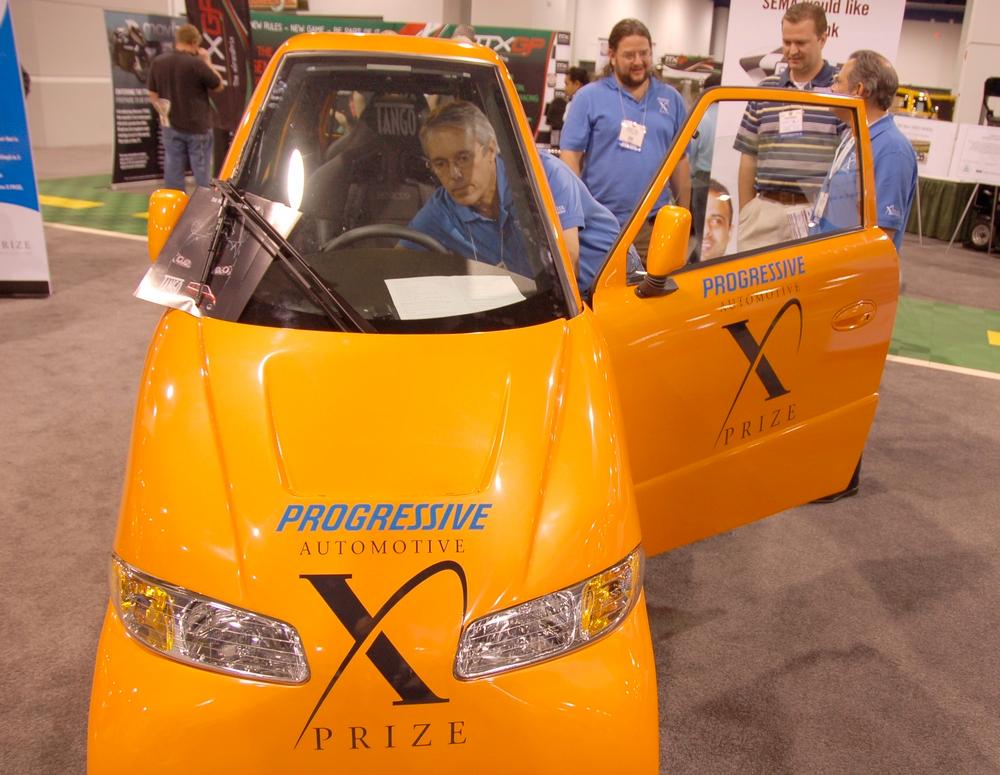
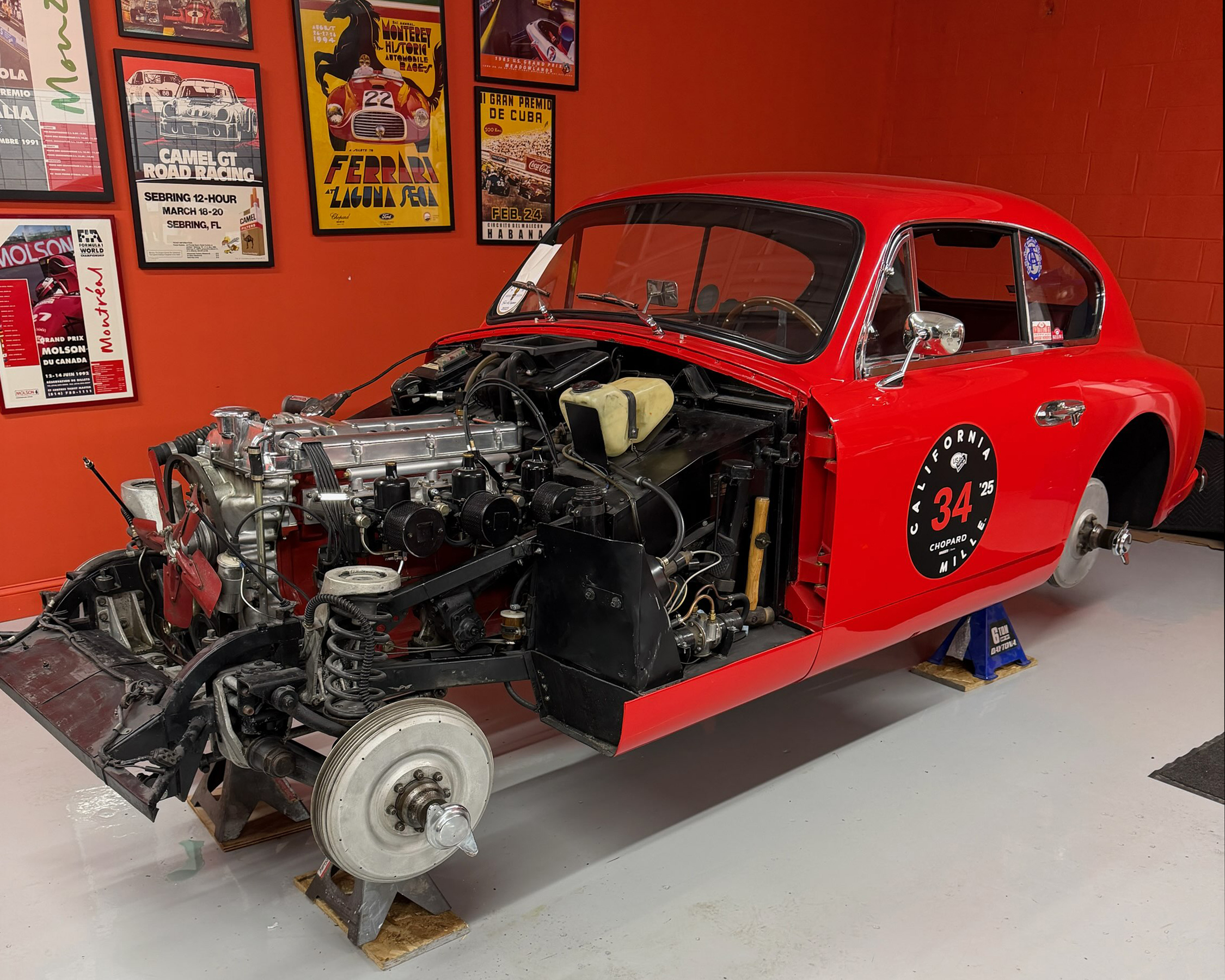
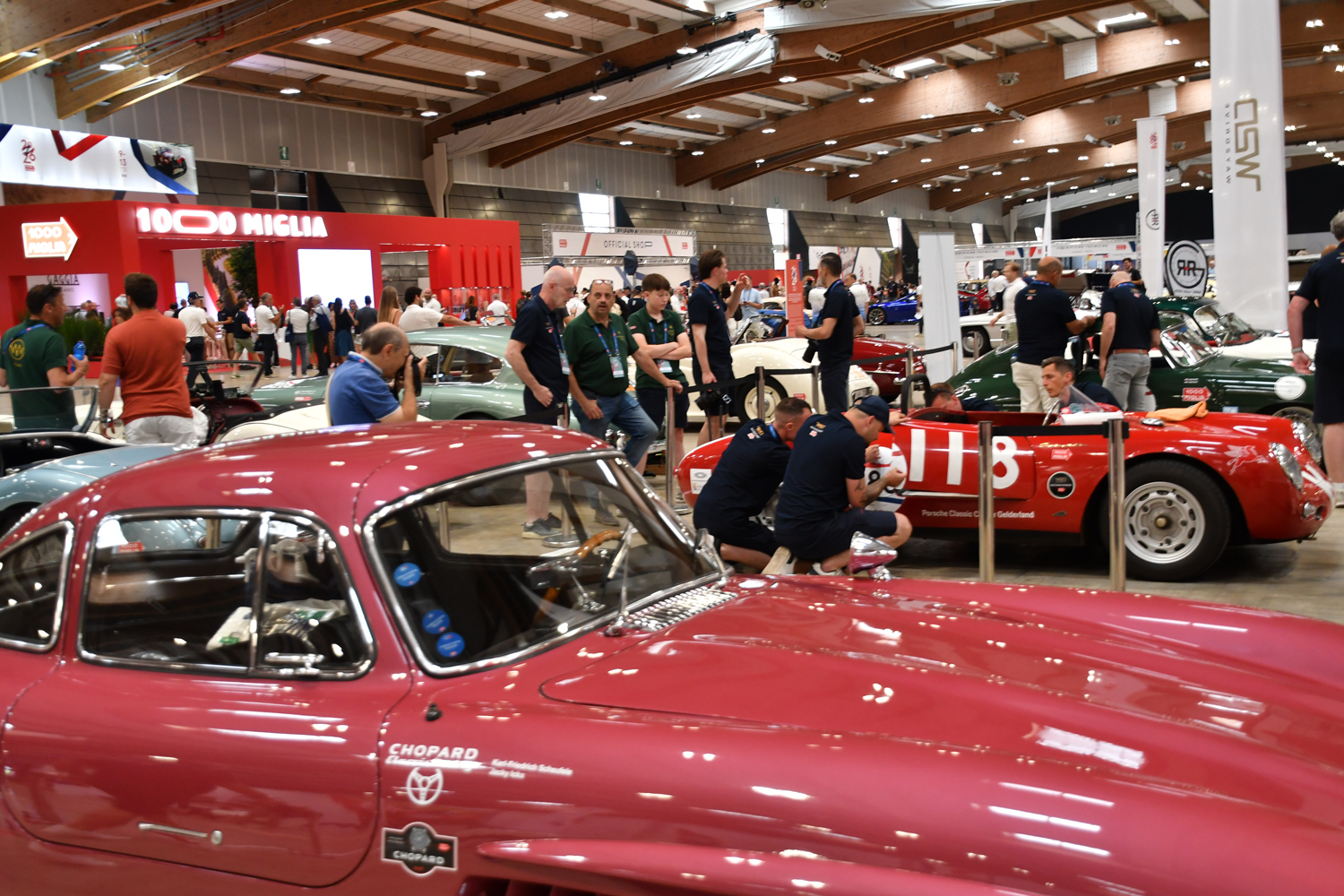
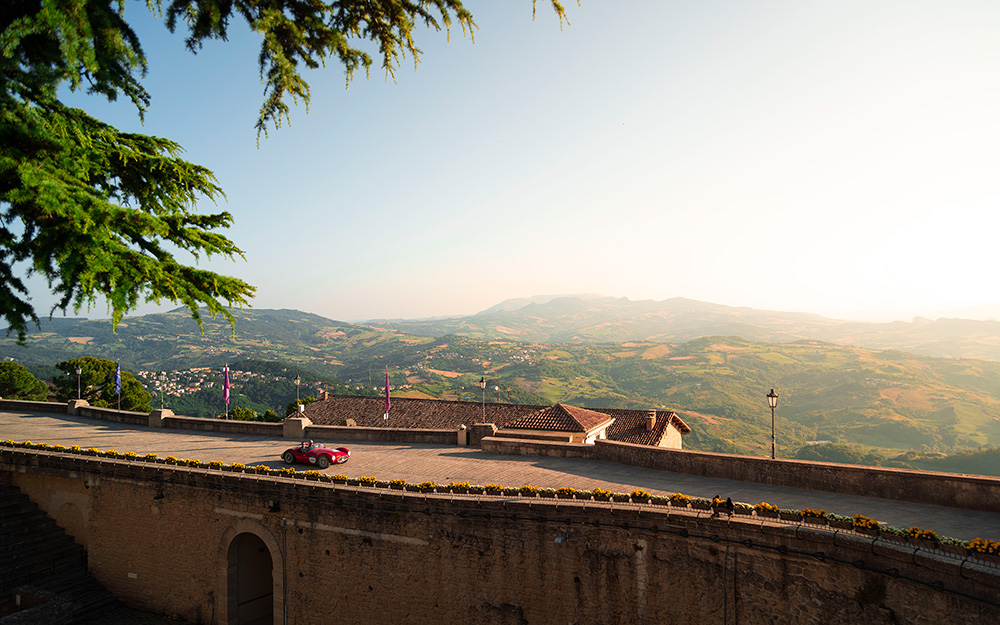
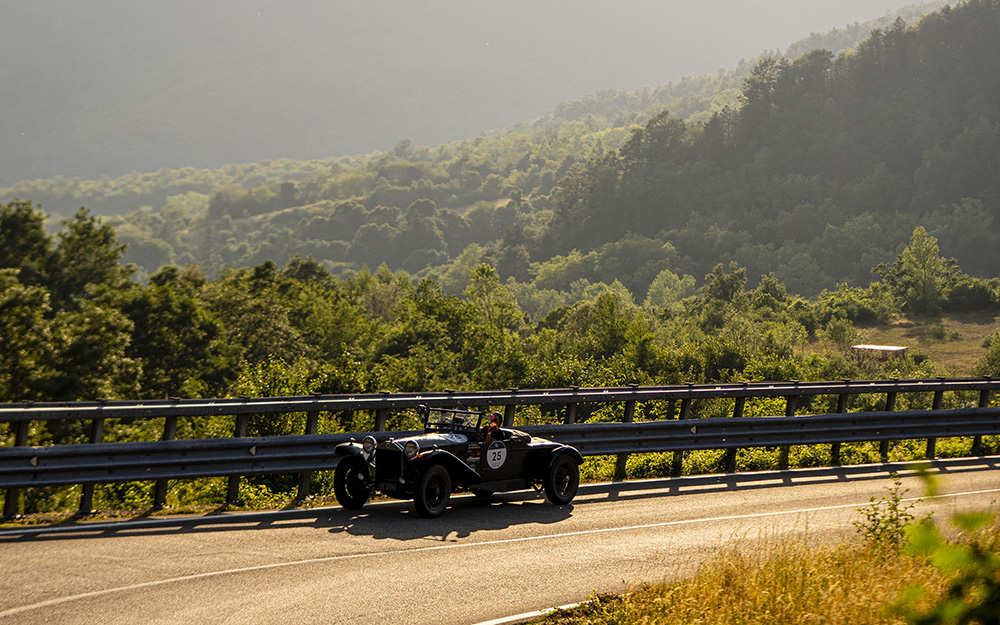 For 2026, the route will replicate the original roughly 1000 mile figure-eight course. Each of its five timed stages will take drivers on grueling 10 to 12 hour treks through a challenging mix of fast changing elevations while traversing winding, mountain passes; rugged dusty backcountry paths; narrow twisting cobblestone lanes squeezing through rural villages; and picturesque open vistas viewed from ancient roads clinging to cliffs overlooking the Adriatic Sea. Bruce Amster has seen and driven it all many times over since the 1970s.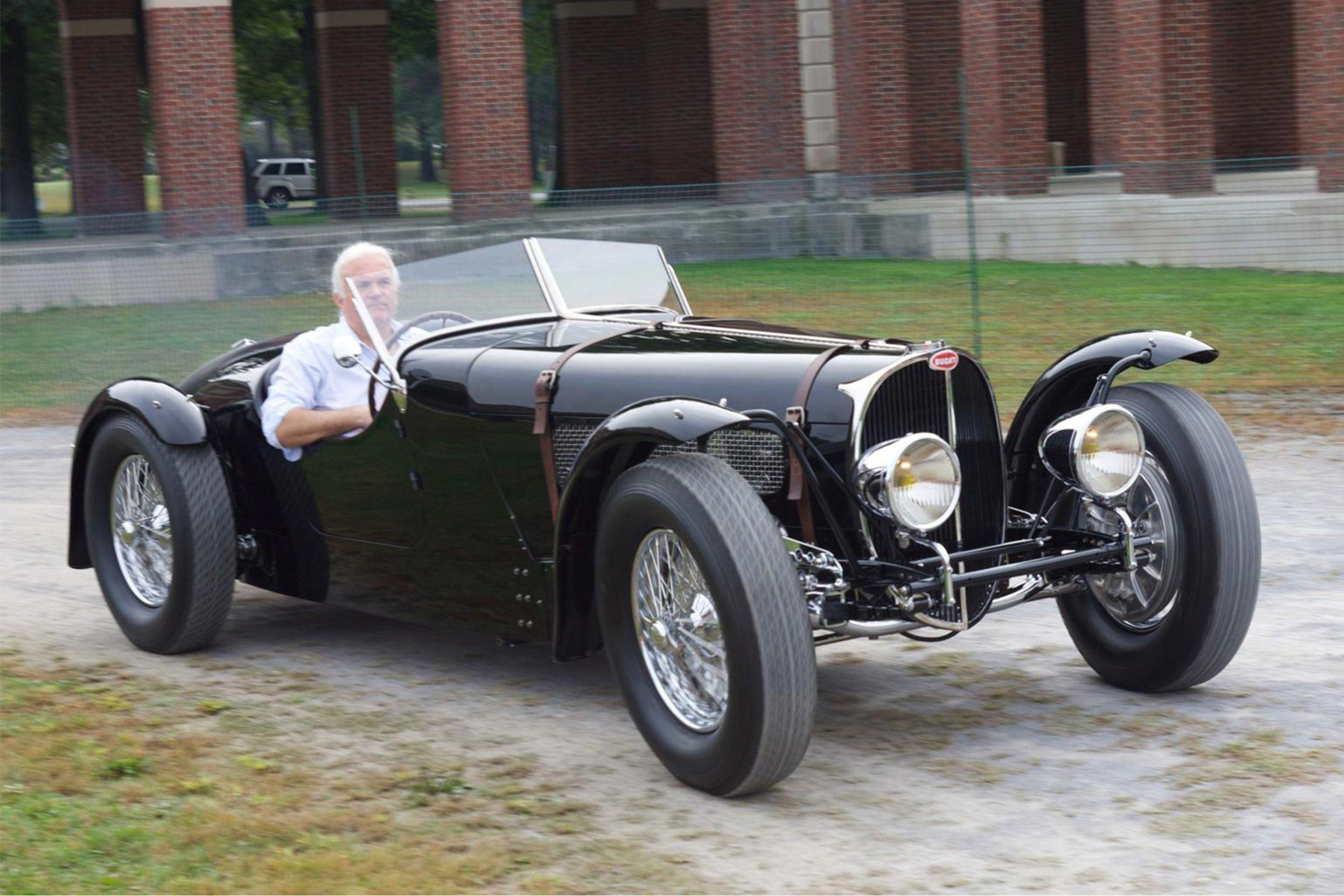
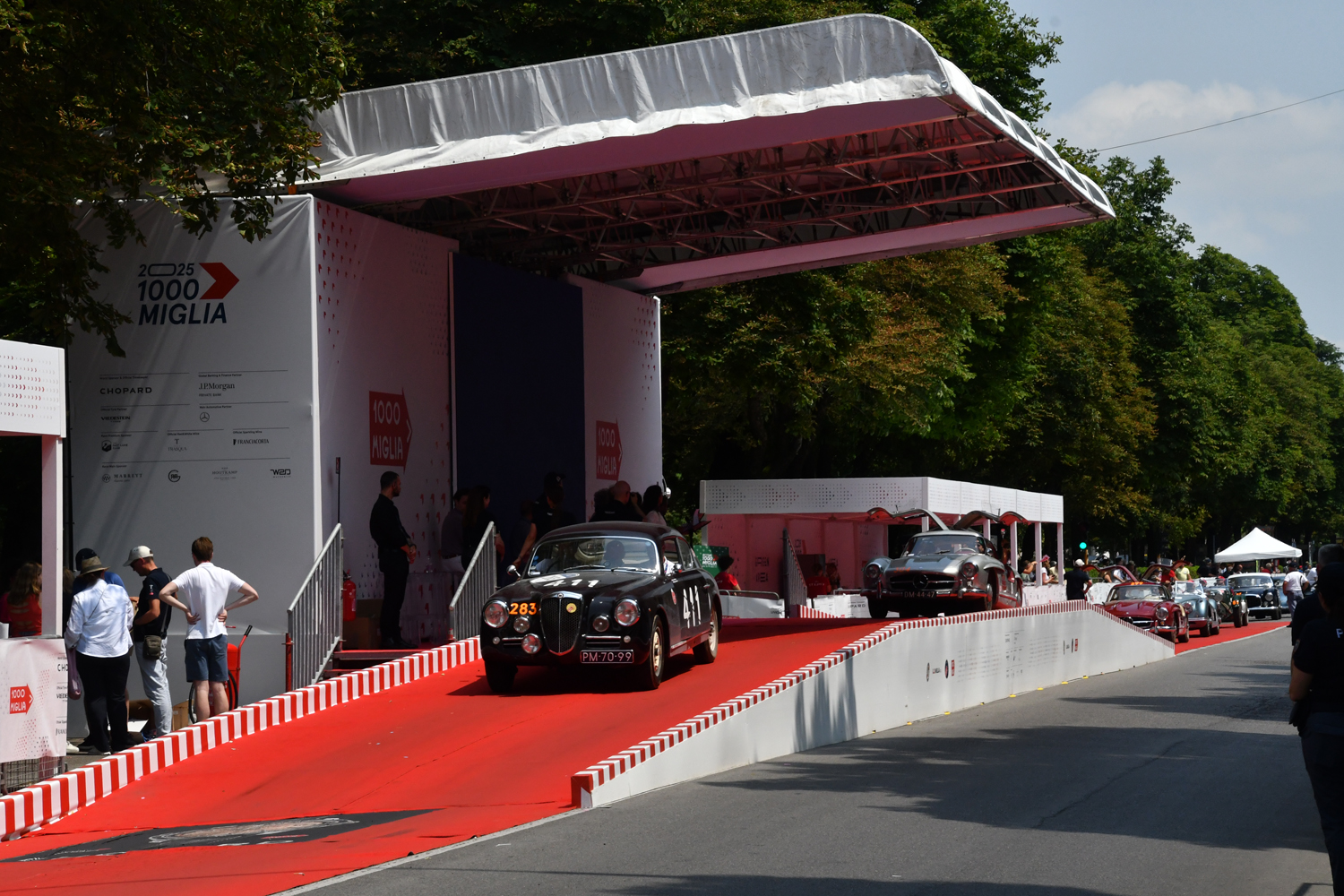
 It also makes sense for a newcomer to include a seasoned veteran as part of the team considering the price of admission. First to get accepted requires selection by the governing fathers of the Mille Miglia. The Management Committee of the Registro 1000 Miglia and the official 1000 Miglia Organizers select the vehicles based on originality and historical relevance. Eligible cars must typically be models that participated in or were registered for the original 1927–1957 races, with a preference for survivors. For an entrant who owns a car, Bruce understands the costs involved. Allowing that so many variables impact expenses, especially the cost to properly prep the car, Bruce describes his estimation as a ballpark figure. He says, “For a car coming from the United States, the cost for car preparation, shipping to and from Europe, travel costs, entry fees, support staff costs and myriad other “incidentals” the number can climb to somewhere south of $100,000.” When asked why he chose to campaign a coupe for this event rather than a cabriolet, his answer is simple. He says, “I have previously driven 10 hours in spyders with no tops that were not meant to be driven in the pouring rain. Even with all the proper rain gear we were still sitting in puddles of water. I don’t need to or want to check that box again.”
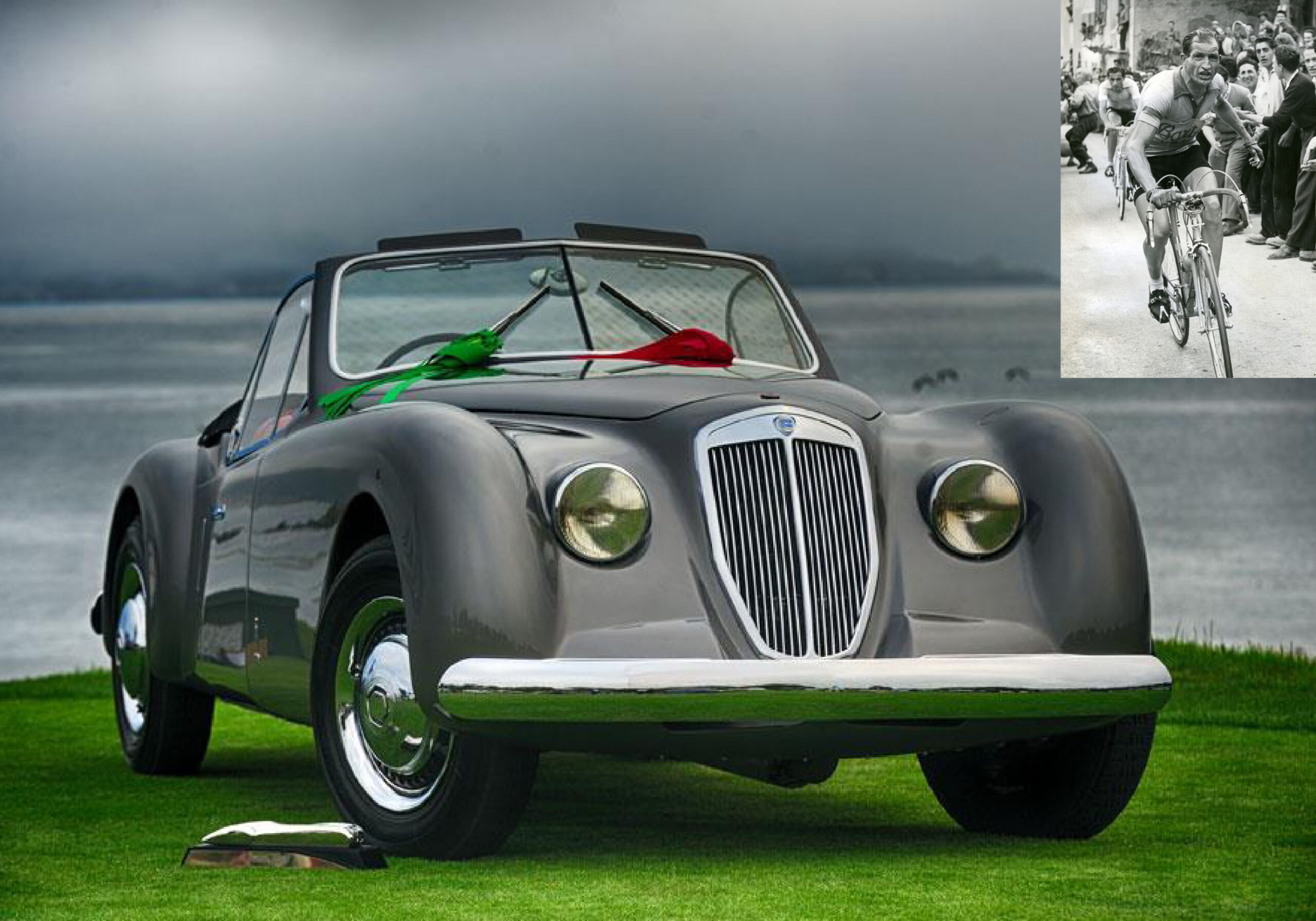
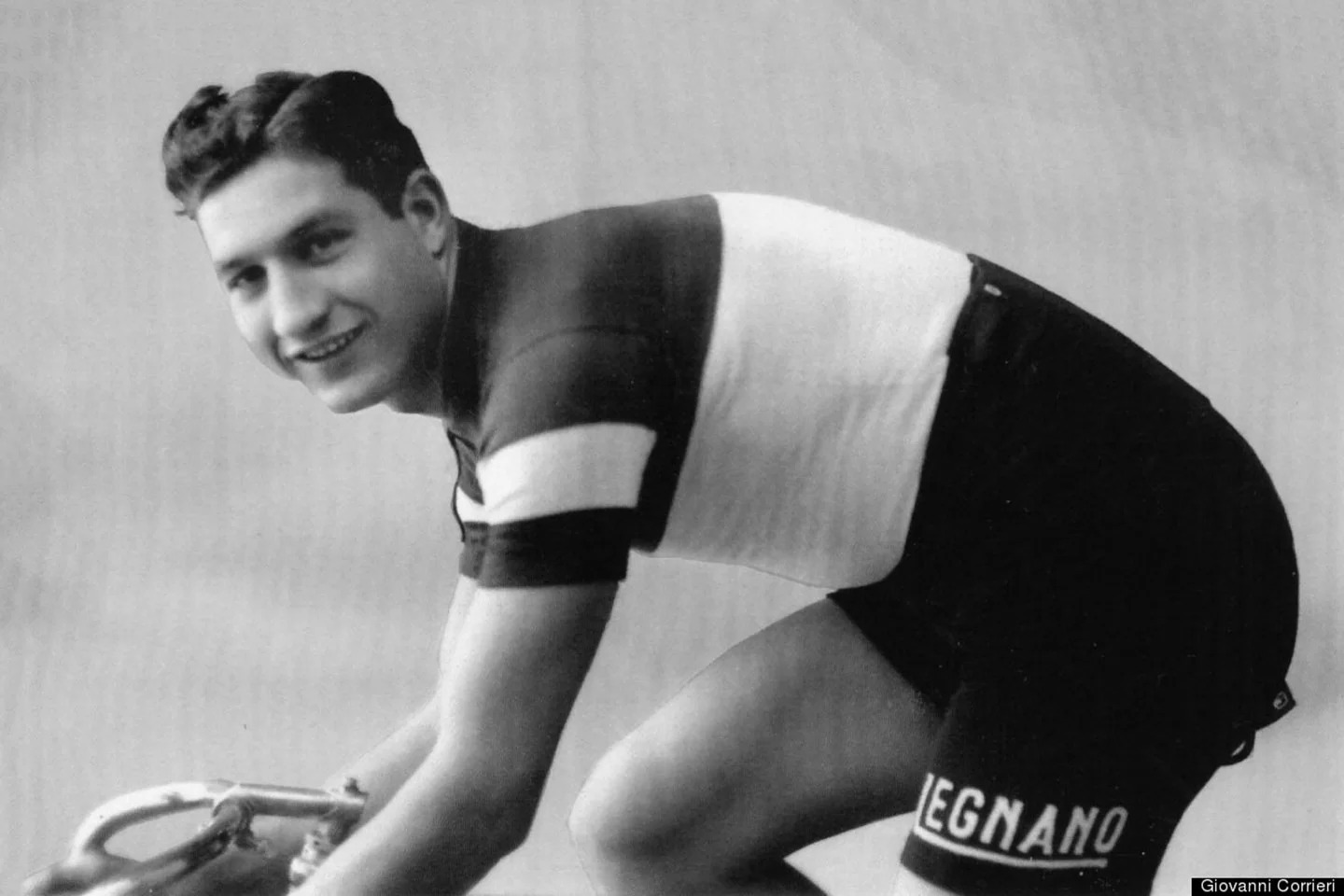 For the Italian nation in the 1930s cycling reached its peak of popularity. It served as Italy’s most popular spectator sport until the 1950s. It was a mass cultural phenomenon that unified the country, shaped the national identity of its citizens, and up to WWII became a central tool for fascist propaganda under Benito Mussolini. Cycling stood above all other sports as did baseball in America. For Italians cyclist Gino Bartali towered as their Babe Ruth maybe with a little Charles Lindbergh mixed in.
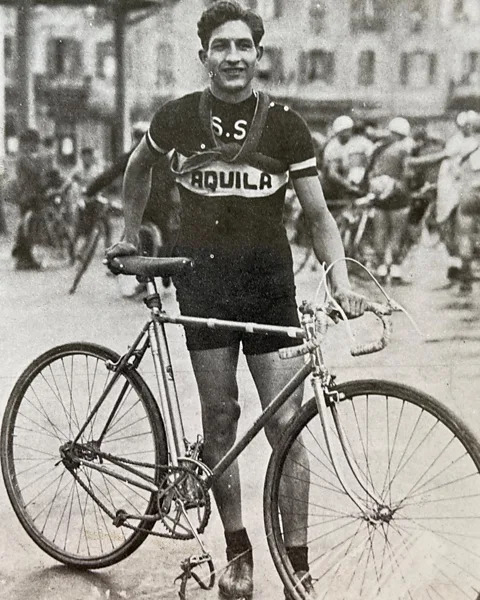 Based on research conducted by Yad Vashem, the World Holocaust Remembrance Center, Bartali, in 1943, responded to a request by the Archbishop of Florence, Cardinal Elia Dalla Costa to volunteer his cycling skills. The Archbishop in collaboration with Rabbi Nathan Cassuto established a clandestine network to hide Jews in convents and monasteries while producing forged documents to help them escape. Bartali’a role called for him to transport the counterfeit identity documents to points comprising the underground network bounded by Florence, Assisi and Genoa, an area of considerable size. He also would pick up money from a Swiss bank account in Genoa for distribution to Jews hiding in Florence. Bartali employing equal measures of courage, brazen ingenuity and chutzpa (Yiddish for audacity) would hide the documents in the frame and handlebars of his bicycle. Never taking the shortest route, to better avoid checkpoints, his clandestine rides, and he took many, could exceed 200 kilometers. When stopped and searched at German checkpoints, the famous Bartali would warn the guards not to touch the bicycle as he had it set just right to deliver optimum performance. However, as the war progressed the frequent sighting of a cyclist training for races that no longer occurred began to raise questions. In July of 1944 Bartali found himself being interrogated at the infamous Villa Triste (Sorrow House) in Florence where fascist officials practiced forced imprisonment and torture. With luck and possibly God on his side, one of Bartali’s interrogators happened to be his army CO who promptly vouched for the cyclist’s innocence. Not to be satisfied with his good works as the conduit by which Jews could escape the Nazis, he, at the same time, hid a Jewish family in his home until the allies entered Florence.
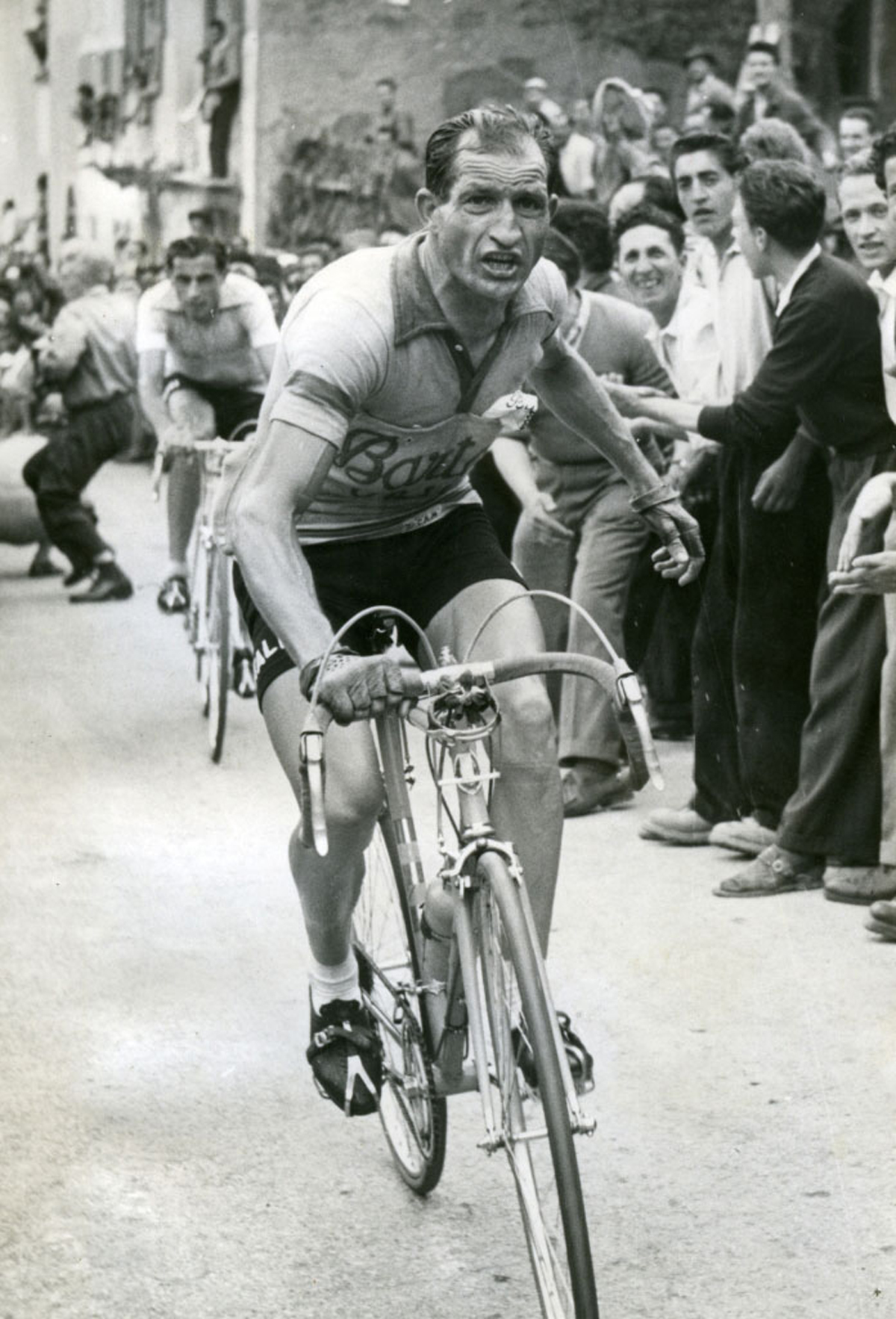 Bartali’s role in preventing an Italian civil war and saving the nation again finds a parallel in the lore of American icon Babe Ruth. In this case the fabled story of Babe Ruth’s “Called shot” comes to mind. The story takes place in the 1932 World Series. In that game “The Babe” being mercilessly heckled by the opposing Chicago Cubs pointed to the centerfield bleachers and promptly hit the next pitch for a home run into the centerfield bleachers. Though still debated, it stands firmly anchored as baseball lore.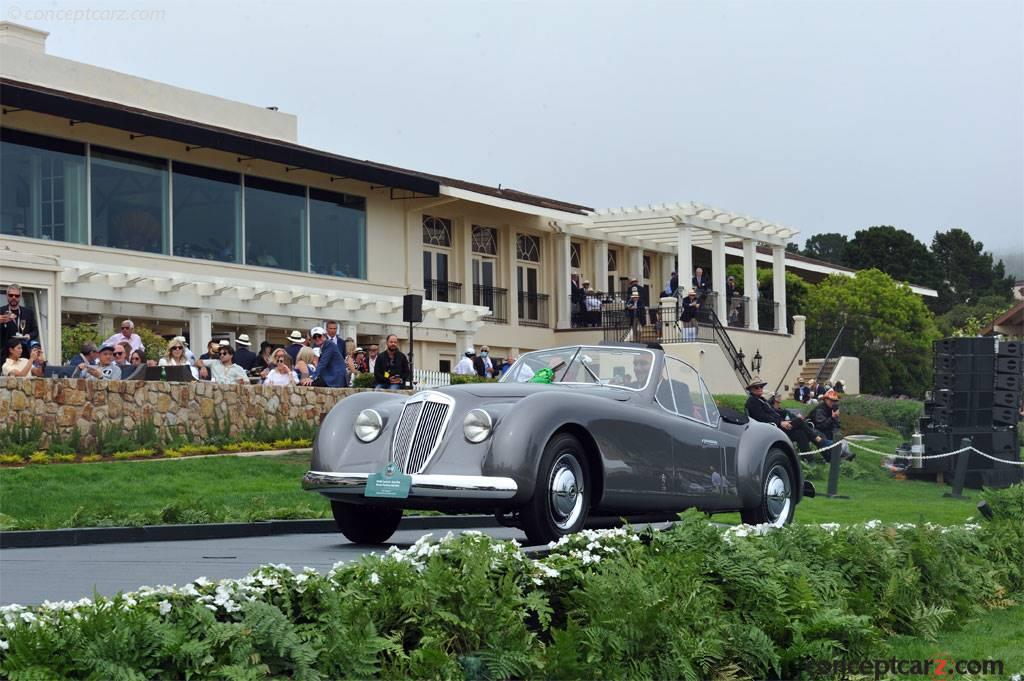
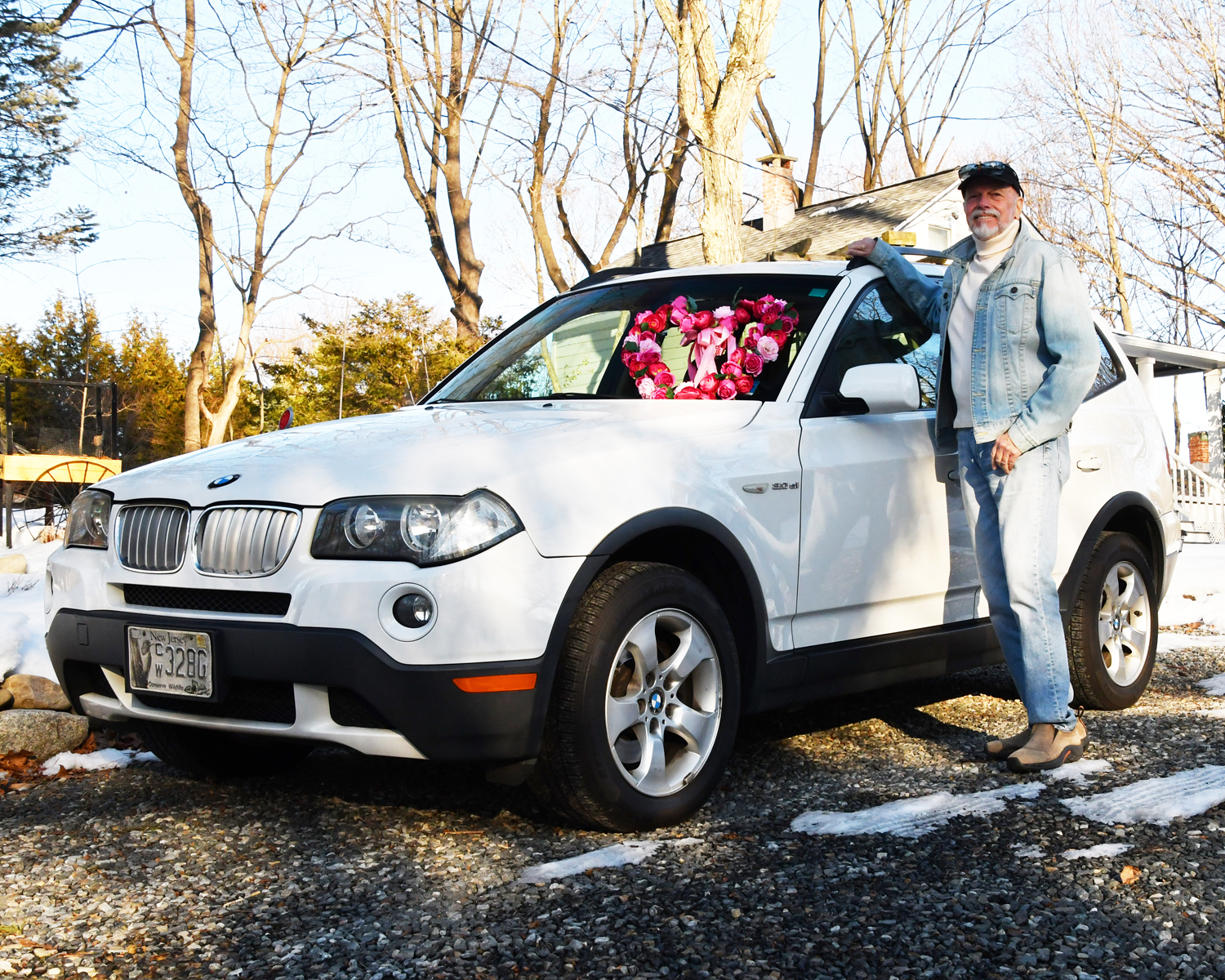
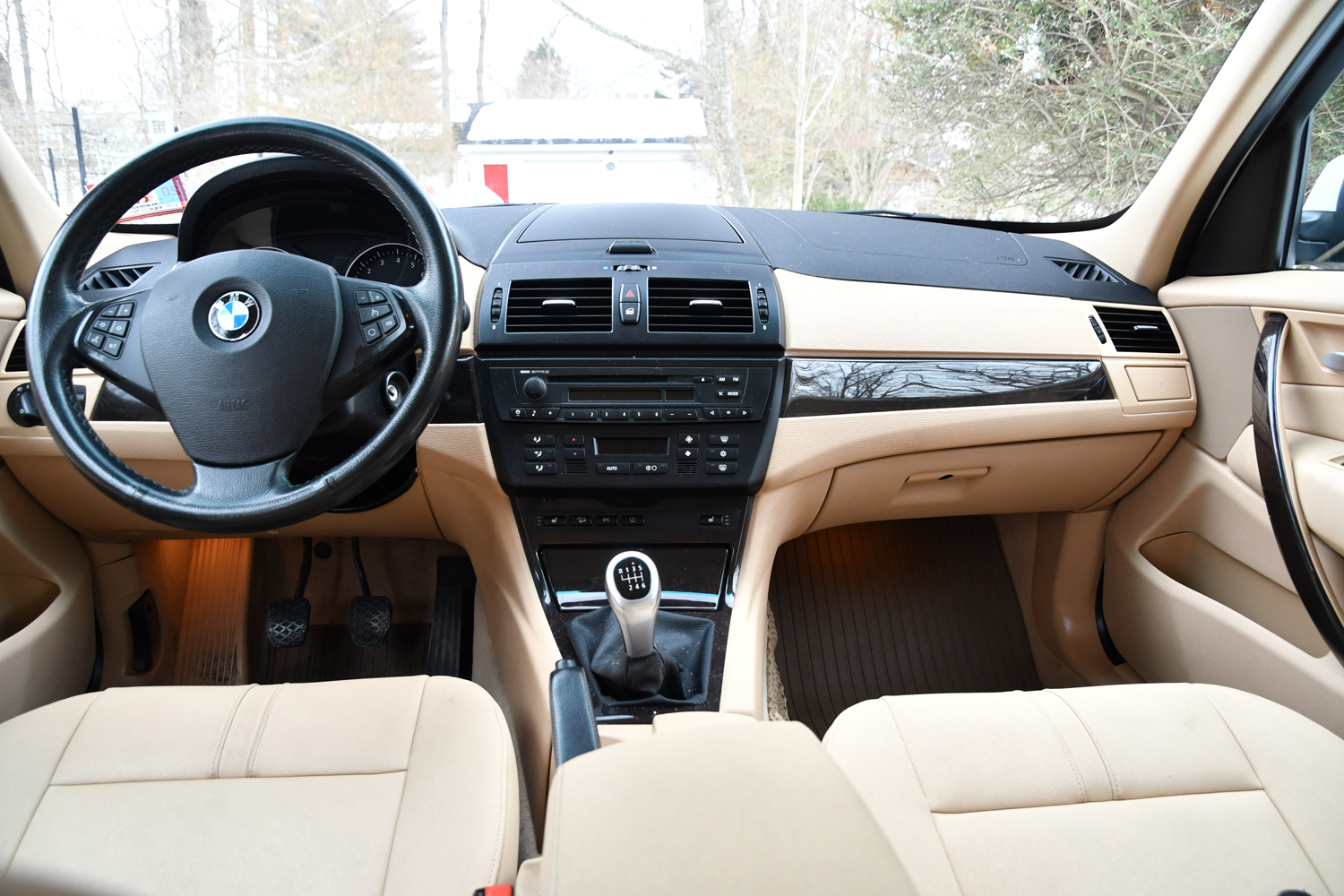
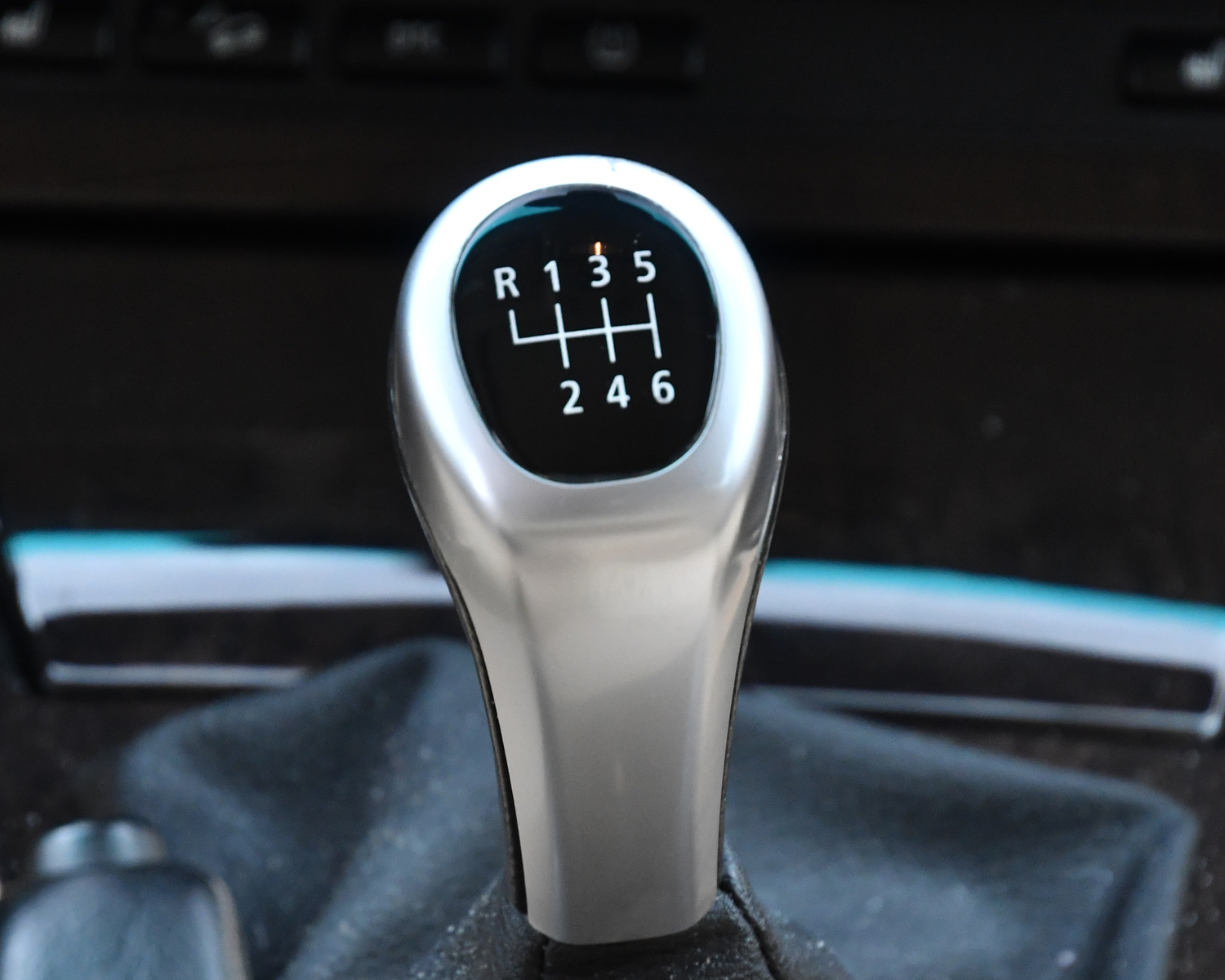 your car. In my case MotorWorks West has previously worked on my 2003 E46 BMW 330. It features a very professional exclusive BMW facility and enjoys a very positive reputation. For a Refresh, consider the shop you choose as your partner in the project. As well, the shop, too, should view this relationship as more than just another job. It certainly will be more expensive. Finally, thoroughly review the vehicle with the shop owner. This review must include both an under the hood and an up on a lift visual inspection. Before proceeding you should have a written estimate from the shop detailing all aspects of the project. This is when you decide if the Refresh merits the cost. If yes, establish a budget before proceeding. It should include a contingency of maybe 15% for legitimate work not foreseen. Have the shop save all of the old parts removed for your confirmation and inspection. Remember this job will dent your wallet. Know and respect the limit of yours.