Best described as a glorious passion driven celebration of predominantly mid-20th century analog performance motoring, the Mille Miglia stands apart from and above all other contemporary tribute driving events. It draws its unique stature both from its historic roots and the challenges posed over five days spent traversing 1000 miles of primarily rugged and often punishing Italian back country roads and the rudimentary nature, by today’s standards, of the vehicles that comprise the field of participants.
Having spent a week immersing myself in the sweltering spectacle of last year’s 2025 Mille Miglia, this year I took the opportunity to speak with a man who has campaigned numerous world class vehicles at the Mille Miglia over the last 40 years and who will return this year with a 1955 Aston Martin DB2/4.
Meet Bruce Amster.
Prepping to Race 1000 Miles on Some Bad Italian Roads
Today’s Mille Miglia may be a celebration of a once great race, but to mistake driving in it as some kind of party can cost you dearly. Unlike some stateside paved 1000-mile classic car cruises, the Mille Miglia is no pussy cat. It’s got teeth and an attitude. To display a lack of respect for its dangers can quickly tear up your car and, worse, you with it. Not everyone who starts the Mille Miglia finishes it, far from it.
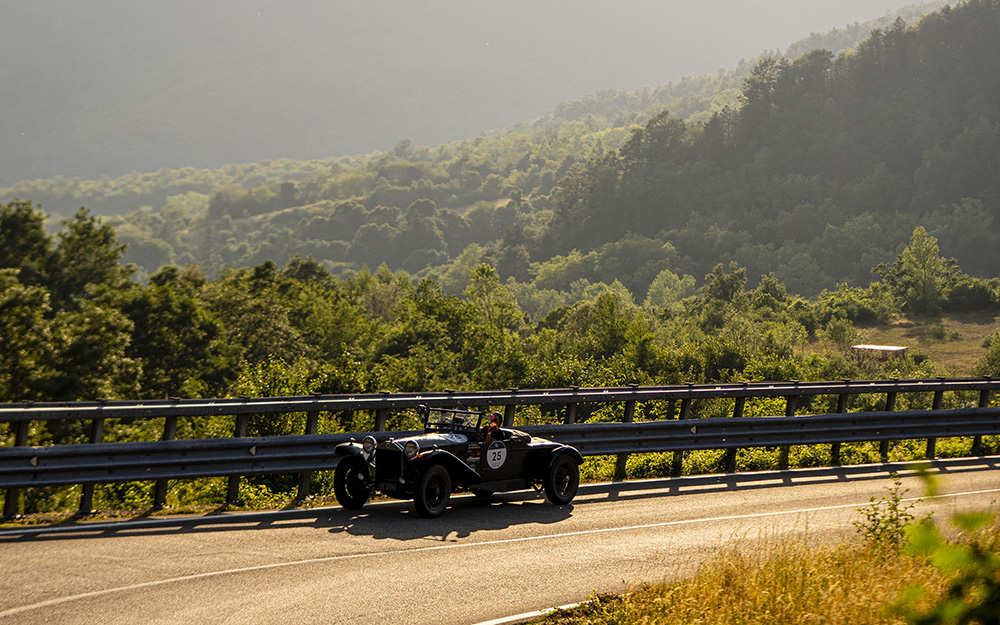 For 2026, the route will replicate the original roughly 1000 mile figure-eight course. Each of its five timed stages will take drivers on grueling 10 to 12 hour treks through a challenging mix of fast changing elevations while traversing winding, mountain passes; rugged dusty backcountry paths; narrow twisting cobblestone lanes squeezing through rural villages; and picturesque open vistas viewed from ancient roads clinging to cliffs overlooking the Adriatic Sea. Bruce Amster has seen and driven it all many times over since the 1970s.
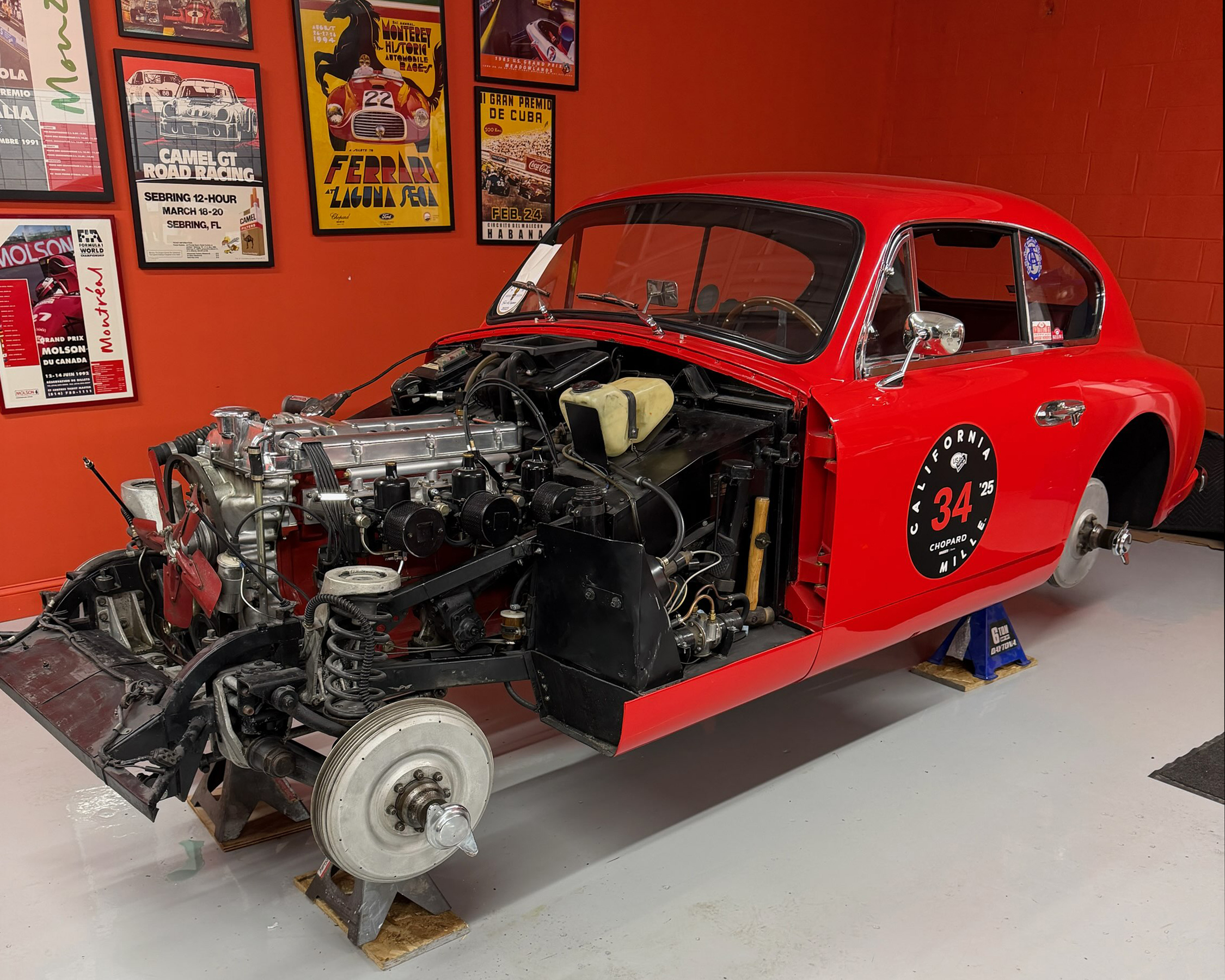
Now, ten weeks before the 2026 Mille Miglia finds classic car maven Bruce Amster immersed in executing plans made months ago. Early 2026 has seen him retained to prepare and campaign a striking red, the actual color is Dubonnet Rosso to be exact, pristine 1955 Aston Martin DB2/4 for what will be a torturous 1000 mile event. As a master of the art and science of campaigning vintage cars in grueling races, the next few months of Bruce’s life will be dominated by the varied and critical roles he will play in maximizing a father’s gift of the Mille Miglia driving experience to his son. Simply stated, Bruce has accepted the responsibility of ensuring that this beautiful Aston will not only be race-ready and poised on June 9th to depart the “Red Arrow” platform before a wildly cheering crowd but will, with every confidence, be returning to cross that same Viale Venezia platform five days later.
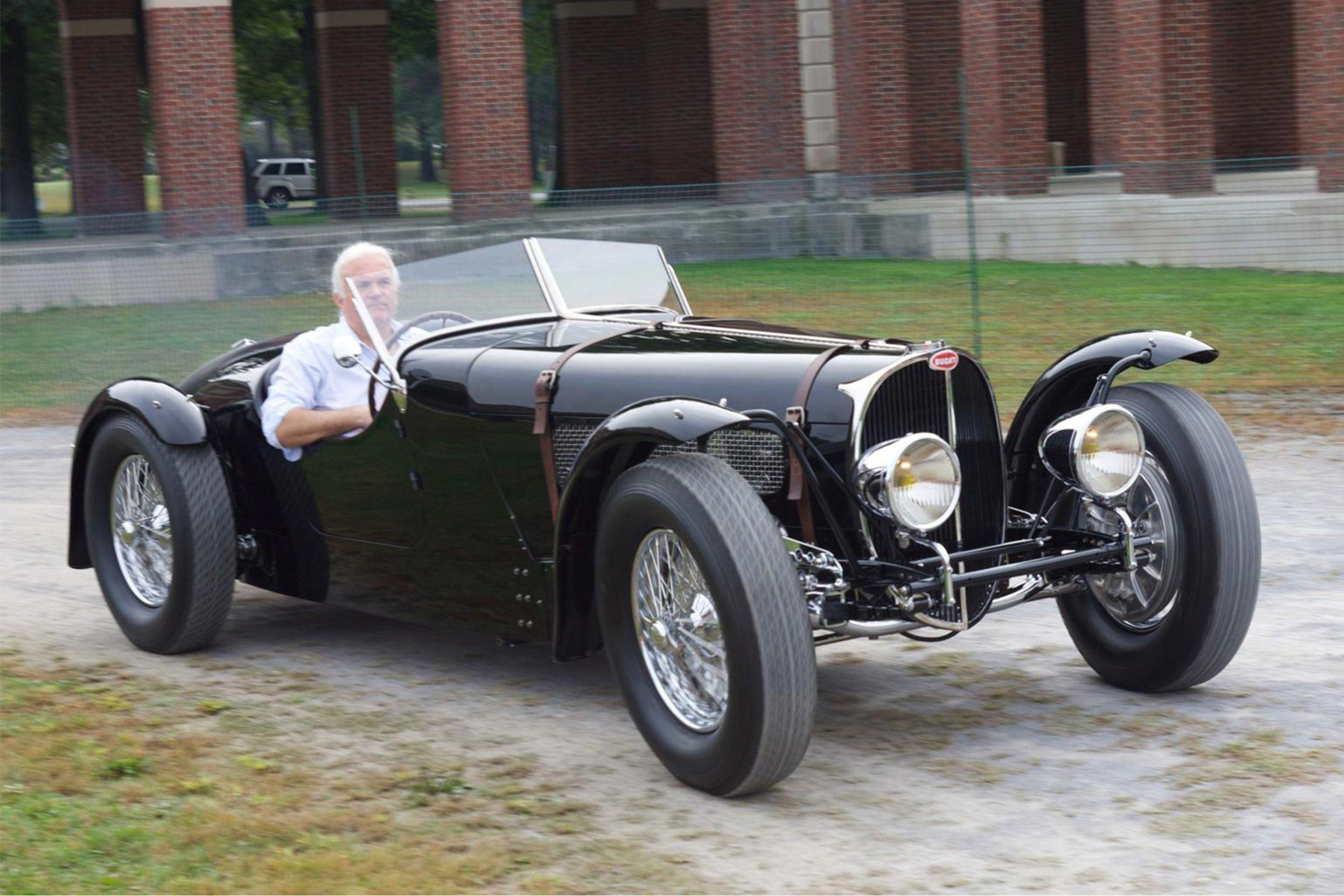
Bruce Amster
A seasoned veteran of this iconic time/speed/distance staged Brescia to Rome round trip; Bruce does not seek opportunities to campaign cars as much as they find him. His racing history; association with Redline Restorations; expertise in supercar and hypercar carbon fiber fabrication at his ABCCarbonFiber facility; and his 40-plus years campaigning cars at the Mille Miglia marks him as the quintessential go-to-guy to deliver concierge level support for a car being entered in the Mille Miglia. In this case his role calls for him to technically upgrade and fine tune the Aston; shepherd its 4000 mile transatlantic shipment to and from Brescia; provide a chase car and serve as both co-driver and driving mechanic. In the case of the 2026 event Bruce says, “In this case it’s a personal thing. It came out of a conversation at the Audrain. The owner is a good guy we have known for years. He wanted his 20-something year old son who has a racing license and track time to have the opportunity to participate in the Mille. The father wanted a race veteran who could shepherd his son while enhancing the driving experience.” For the father, retaining Bruce just made the most sense.
 It also makes sense for a newcomer to include a seasoned veteran as part of the team considering the price of admission. First to get accepted requires selection by the governing fathers of the Mille Miglia. The Management Committee of the Registro 1000 Miglia and the official 1000 Miglia Organizers select the vehicles based on originality and historical relevance. Eligible cars must typically be models that participated in or were registered for the original 1927–1957 races, with a preference for survivors. For an entrant who owns a car, Bruce understands the costs involved. Allowing that so many variables impact expenses, especially the cost to properly prep the car, Bruce describes his estimation as a ballpark figure. He says, “For a car coming from the United States, the cost for car preparation, shipping to and from Europe, travel costs, entry fees, support staff costs and myriad other “incidentals” the number can climb to somewhere south of $100,000.” When asked why he chose to campaign a coupe for this event rather than a cabriolet, his answer is simple. He says, “I have previously driven 10 hours in spyders with no tops that were not meant to be driven in the pouring rain. Even with all the proper rain gear we were still sitting in puddles of water. I don’t need to or want to check that box again.”
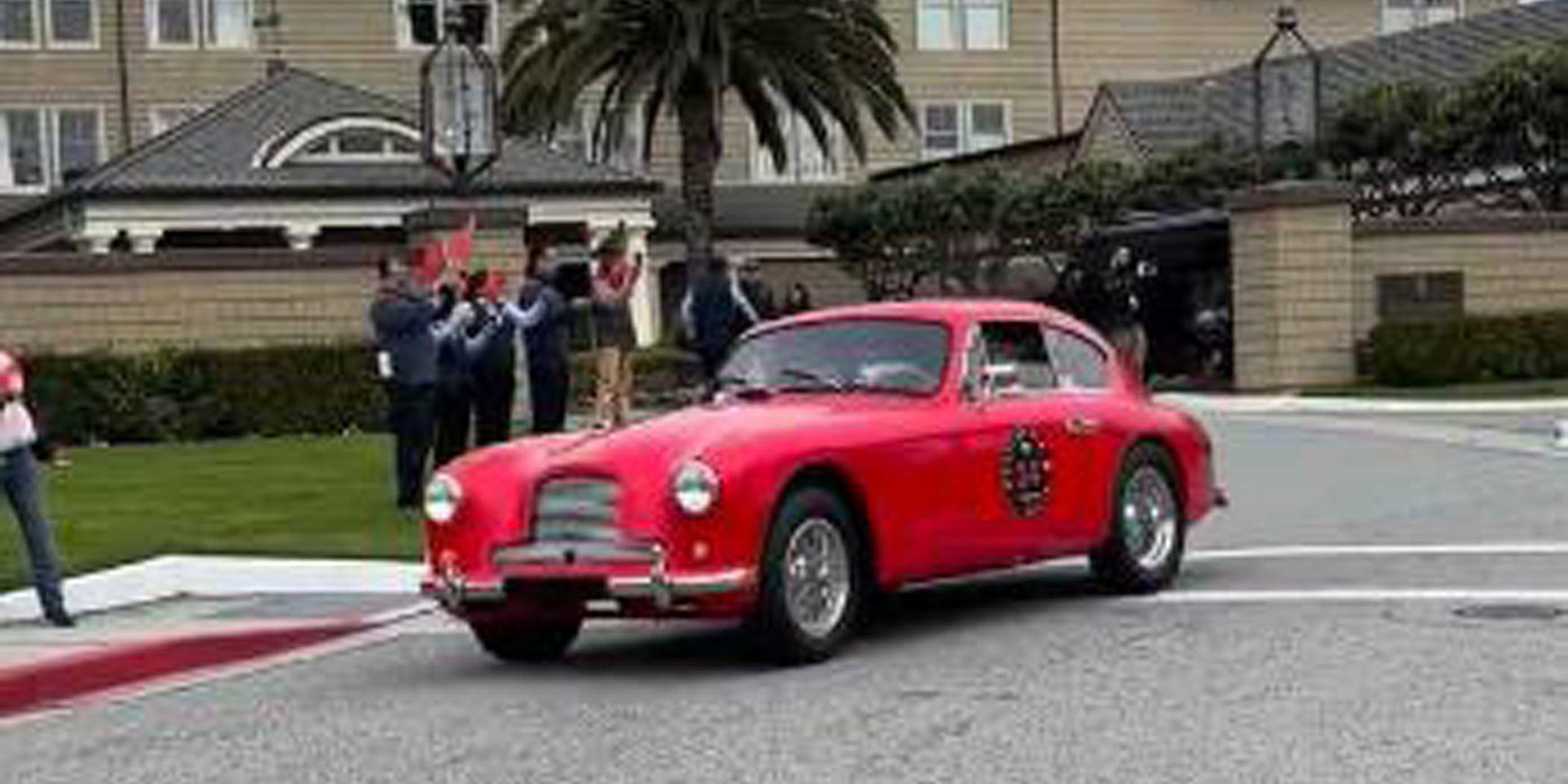
1955 Aston-Martin at California Mille
Situated in Bruce’s facility in Derby Connecticut, the Aston presently resides midway through a thorough upgrading of its 1950’s era running gear. At best, every car entered in the Mille features technology over 70 years old and most have been around since Joe DiMaggio patrolled center field. Everything running in the Mille has drum brakes. All the cars have manual transmissions. Bruce says, “You can be shifting hundreds of times in one day.” He says, “This event is no walk in the park. The Mille Miglia seems to have at its heart a determination to probe for a car’s weakest link, find it and then break it. Bruce points out that while this Aston performed beautifully in the less demanding California Mille, the Mille Miglia places far more stress on a car. He says, “That is why I go overboard when prepping a car for this event.” Keeping in mind that, for the most part, any modifications should be period correct, Bruce has targeted this DB2/4 for upgrades that include brakes, charging system, starter, larger core radiator, free-flow exhaust, water pump, all hoses and, of course, fresh tires. Shock dampers have been serviced. Bigger camshafts manufactured by Kent Cams of England will beef up the engine. Additional front and rear lighting will provide enhanced visibility. A second battery and second fuel pump will be installed as back-ups in case of a failure.
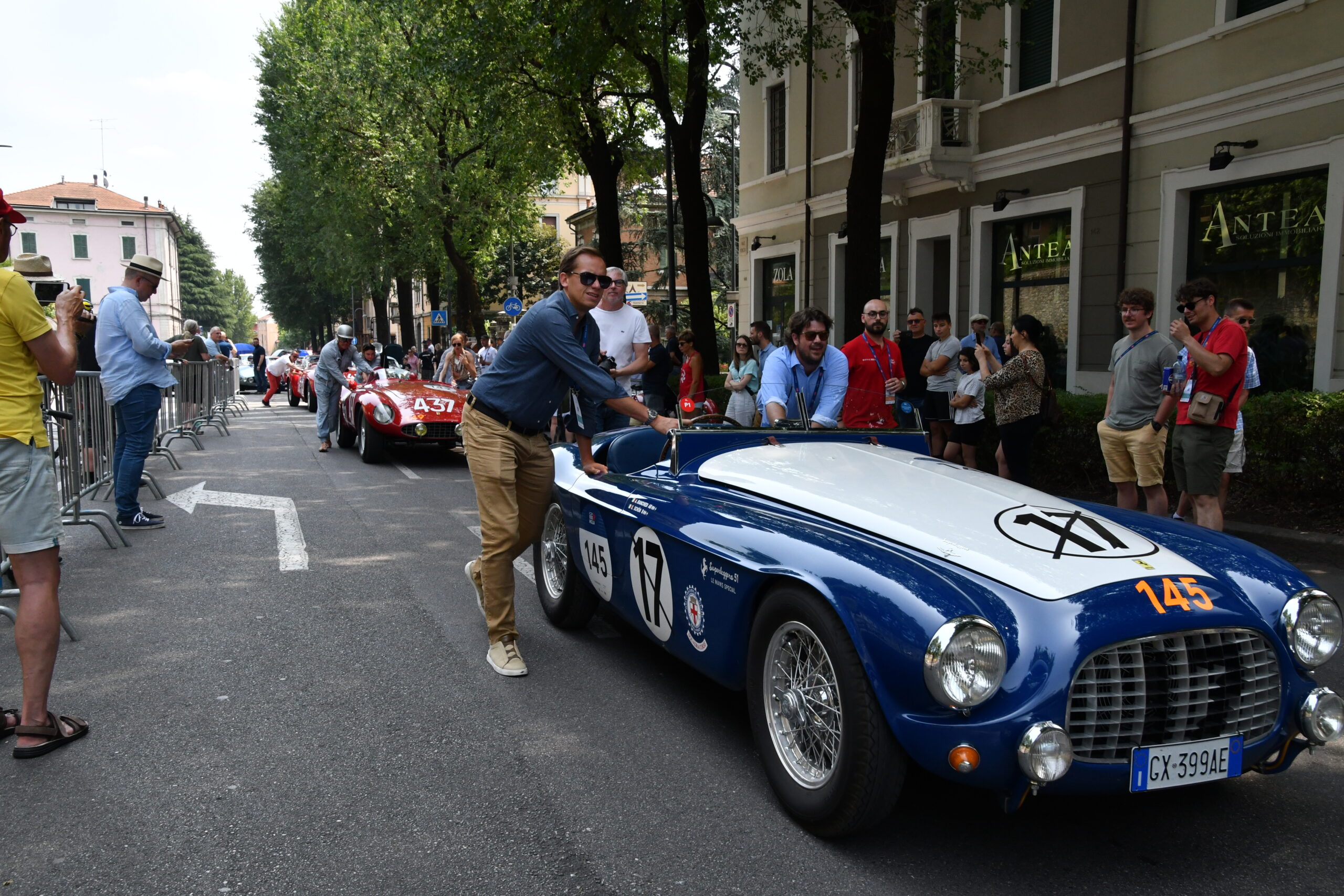
In 2025 severe heat had drivers pushing some cars to the finish
With the event now taking place in June, heat has become a real issue. In last year’s event temperatures reached near 100° F. To prepare should there be a repeat of the blistering heat, heavy insulation will be added throughout the cockpit. While the Aston’s cooling system performed flawlessly in the California event, the possibility of facing triple digit temperatures in Italy will have Bruce add a supplemental electric cooling fan at the front for added peace of mind. As well, the application of specialized ceramic-aluminum high performance coatings will drastically reduce exhaust system heat and heat related failures. That said first time drivers may be shocked when encountering harsh wintry conditions, even snow, when traversing mountainous stretches. Bruce says, “I have been driving through the Stelvio Pass in previous races and have hit snow multiple times. Now instead of too much heat, you have no heat. Your wipers are woefully inadequate. Let’s just say it’s a different experience.” Such anomalies highlight the significant benefits of having an experienced Mille Miglia driver and mechanic as part of a competing team. With his decades of running the Mille Miglia, Bruce, when asked what sage advice he would offer to first time entrants, has much to say.
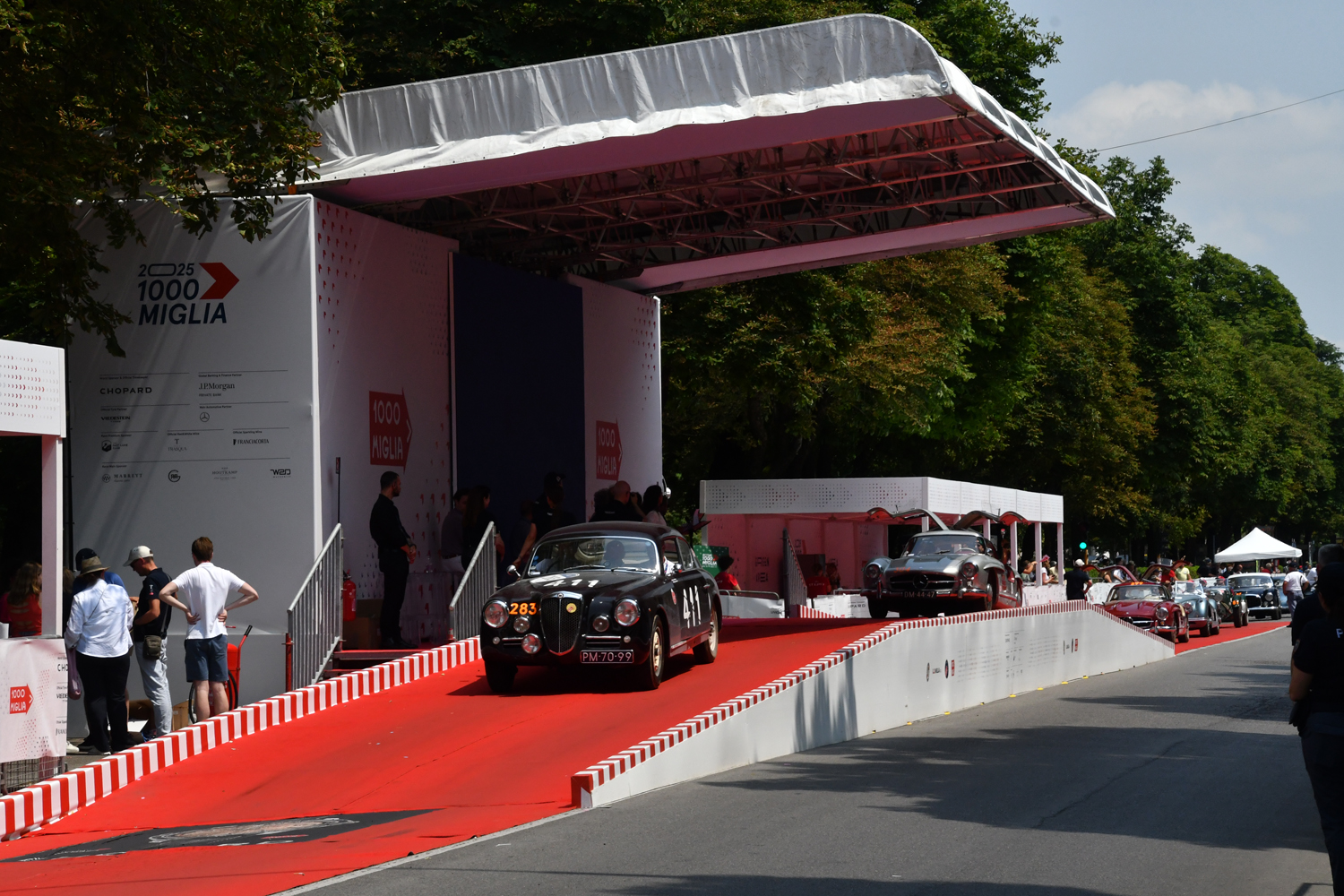
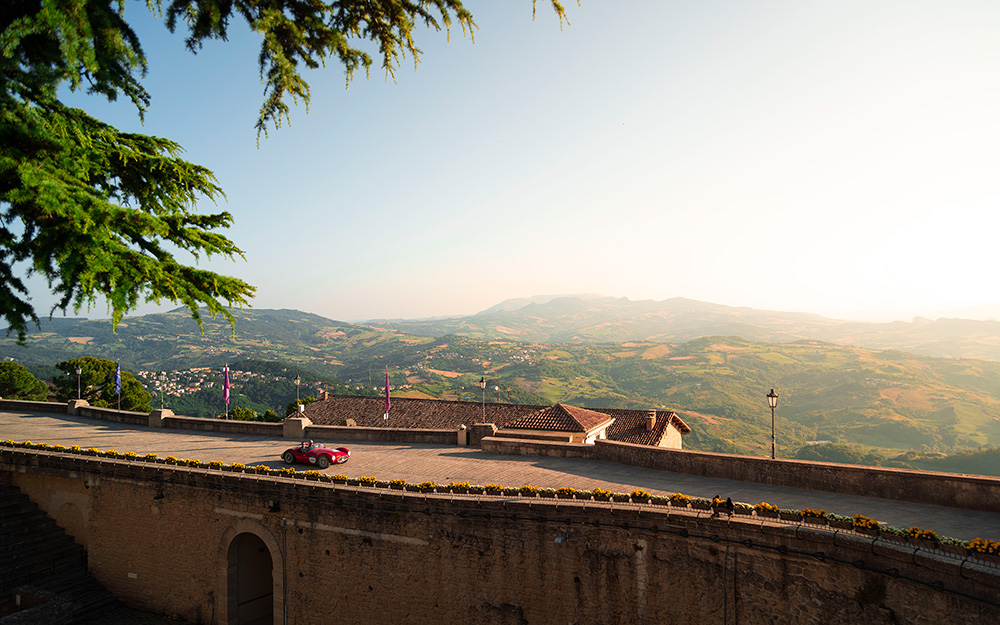
Starting and finishing bridge in Brescia
“Rule number one,” pronounces Bruce with a feigned commanding voice, “Don’t break the car!” He continues saying, “It’s not about being first. It’s just to be there at the end. Roughly 20 percent of the cars do not finish. Success is determined not by where you finished but that you did finish. Success is returning to Brescia to cross the same Bridge from which you had left.” Bruce tells first timers just to enjoy the event. He says, “Don’t expect to win. You’re up against people that have done it ten maybe fifteen times. They could have crews of four in two separate cars with computers and everything else logging in and communicating with each other on cell phones with the goal being to direct the driver to speed up or slow down to match the posted time for the stage.”
With the voice of experience, Bruce says, “Drivers, who have never driven the race before, get caught up in the excitement and let their adrenaline take over. And that’s where they make mistakes. People have died. Bruce passionately bemoans the danger of getting swept up in the moment saying, “It’s the adrenaline. Some drivers become somebody you would never expect. They become monsters. Emotional overload breeds mistakes.” Bruce says he has witnessed near miss head-on collisions when someone pulls out to pass in normal traffic. Police patrol along the route trying to keep traffic under control but cannot be everywhere. Bruce says, “Drivers, especially inexperienced ones get all caught up. Somebody passes them in a 300SL doing 100 mph or whatever. You might see fifteen idiots in OSCAs pulling out and trying to race him. That is the way it is when people get caught up in the adrenaline rush. Come on, think, we are talking 100 mph on country roads.” As to a general rule of thumb for new drivers on how to run the Mille without incident, Bruce says, ‘“If you have a car in front of you that is moving pretty steadily and you know that guy is experienced which I will find out. I do that when we are in line up. I tell the drivers I am with, follow this guy he’s Italian. He knows where he’s going. As we say in America, ‘It’s not his first rodeo’. He has done this race before.”’
With the shipping date fast approaching, time just seems to melt away like an ice cube on a summer sidewalk. Moving at pace, Bruce’s meticulous reassembly process ends each day with the Aston ever closer to what most assuredly will be a stunning and athletic thoroughbred ready to run.
In reflecting on his experiences at the Mille, Bruce says, “Each year when spring comes and people get spring car show fever, I get asked what shows I’m doing. At that point my mind finds itself on the road somewhere between Brescia and Rome. No car shows cross my mind until I can answer the question, ‘am I going to the Miile Miglia.’ That takes precedent over everything else, even Pebble Beach.
With a smile born of Hemingway-esque experiences lived behind the wheel, Bruce says, “If you do this event. I don’t care if you are in a back-up car. I don’t care where you are or where you placed. The Mille Miglia is something you will never forget in any way, shape or form.”


Leave A Comment