Conversations With People We Value

Talking with the skilled professionals who support our passion for collectible automobiles.

Conversations With People We Value #20

Covid has not so much made time stand still as it has made everybody and every event stand down, nowhere more so than in the crowd oriented classic car venues. Car show after car show, concours upon concours, swap meets and cruise nights all fell victim to pandemic panic.

Like the freak year-long winter of 1816 caused by the eruption of Mount Tambora, the 2020 classic car season fell victim to the icy chill of pandemic fears. Now in 2021, like a green shoot in early spring, the Korzinski family of Paul’s Motors in Hawthorne, NJ boldly struck a blow for a return to normalcy when they hosted the April 10th Man Cave Garage Sale.


Man Cave Garage Sale unmasks covid boredom

With a vigor just short of children departing school to start summer vacation, car enthusiasts eagerly flocked to Paul’s Motors’ Man Cave Garage Sale to experience, after more than a year long drought, an honest to goodness car event. Granted, masks adorned every face, yet it had a familiar social feeling that felt so good.

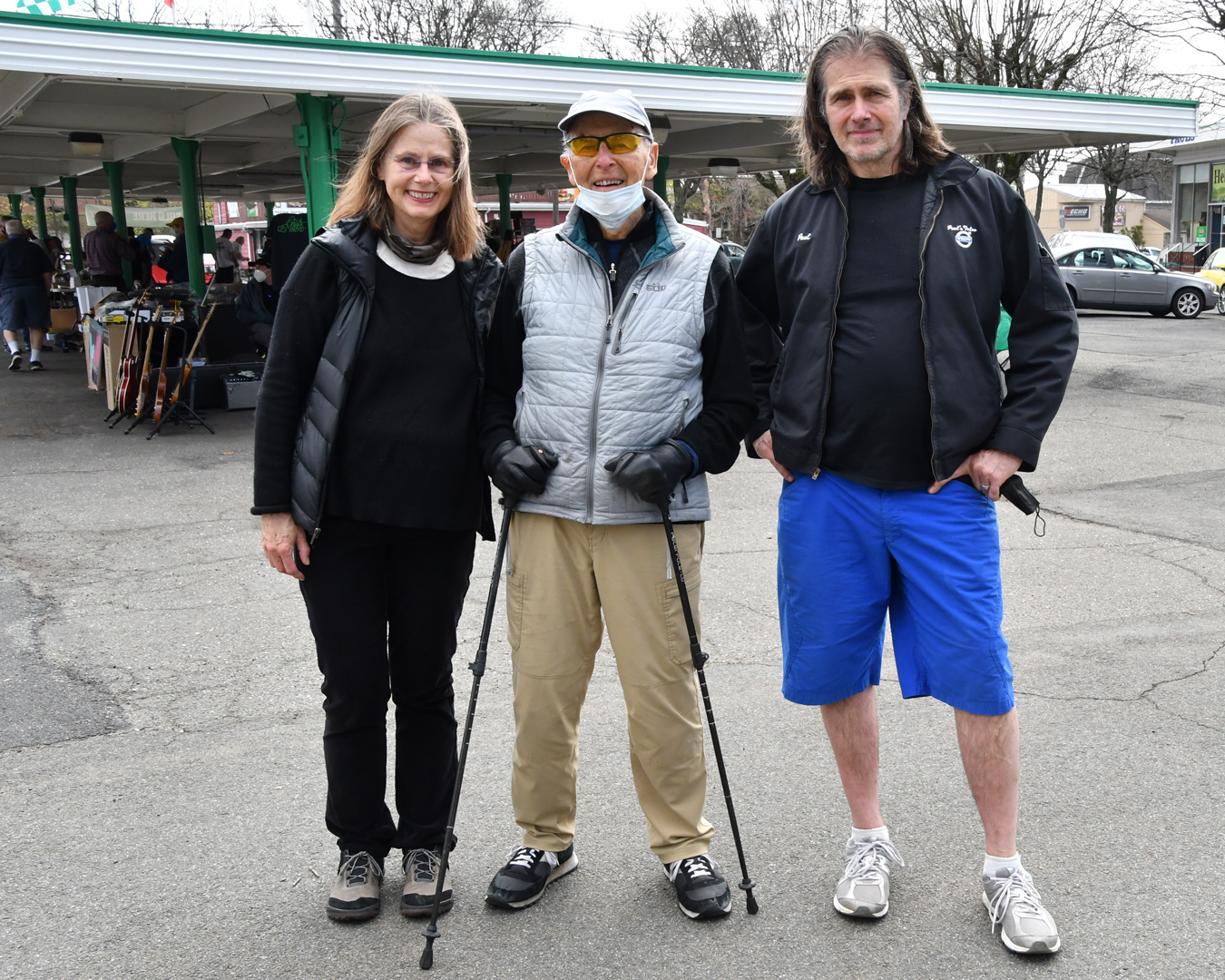
96-year old Paul Korzinski with daughter Diane and son Paul

Adding to the upbeat atmosphere was the opportunity to spend time with 96-year old Paul Korzinski whose father started Paul’s motors 101 years ago. Daughter Diane Korzonski says, “My grandfather began the business as a repair shop in 1920. My father took over after the end of WWII. He has worked here all his life.”

In 1957, the first year Volvo came to America, Paul took on a Volvo franchise. He liked Volvo because of its concern for safety. In a sign of the times, Paul’s Motors turned in its Volvo franchise after 60-years in 2017 as the corporate franchising demands placed on the small family run operation made for a money losing proposition. Always known for high quality used cars Paul’s Motors continues to be the go to place for a used vehicle.

The inspiration for the early season sale came out of a conversation between Diane and big time car enthusiast Bob Austin.

Diane says, “Bob and I were talking about how we have collections of things. As I showed him a great anvil and an old scale from one of our shipping containers, I mentioned that we’ve been here for a hundred and one years. We have a lot of old stuff. So Bob said, well, I have a lot of old stuff. Maybe we should have a Man Cave Garage Sale. What a great idea, I thought.”

While clearly car flavored, various vendor offerings provided an eclectic array of goods. Man Cave organizer Bob Austin says, “We had some interesting vendors with everything from gumball machines to airplane propellers and fur coats.” With a good size crowd throughout the day the feeling was festive and the selling was brisk. A smiling Austin says, ”Absolutely a fun day and for some of us it afforded a great opportunity to reunite with friends that we haven’t seen for the better part of the year.” As for Covid concerns, with a good breeze and everyone wearing a mask confidence ran high.
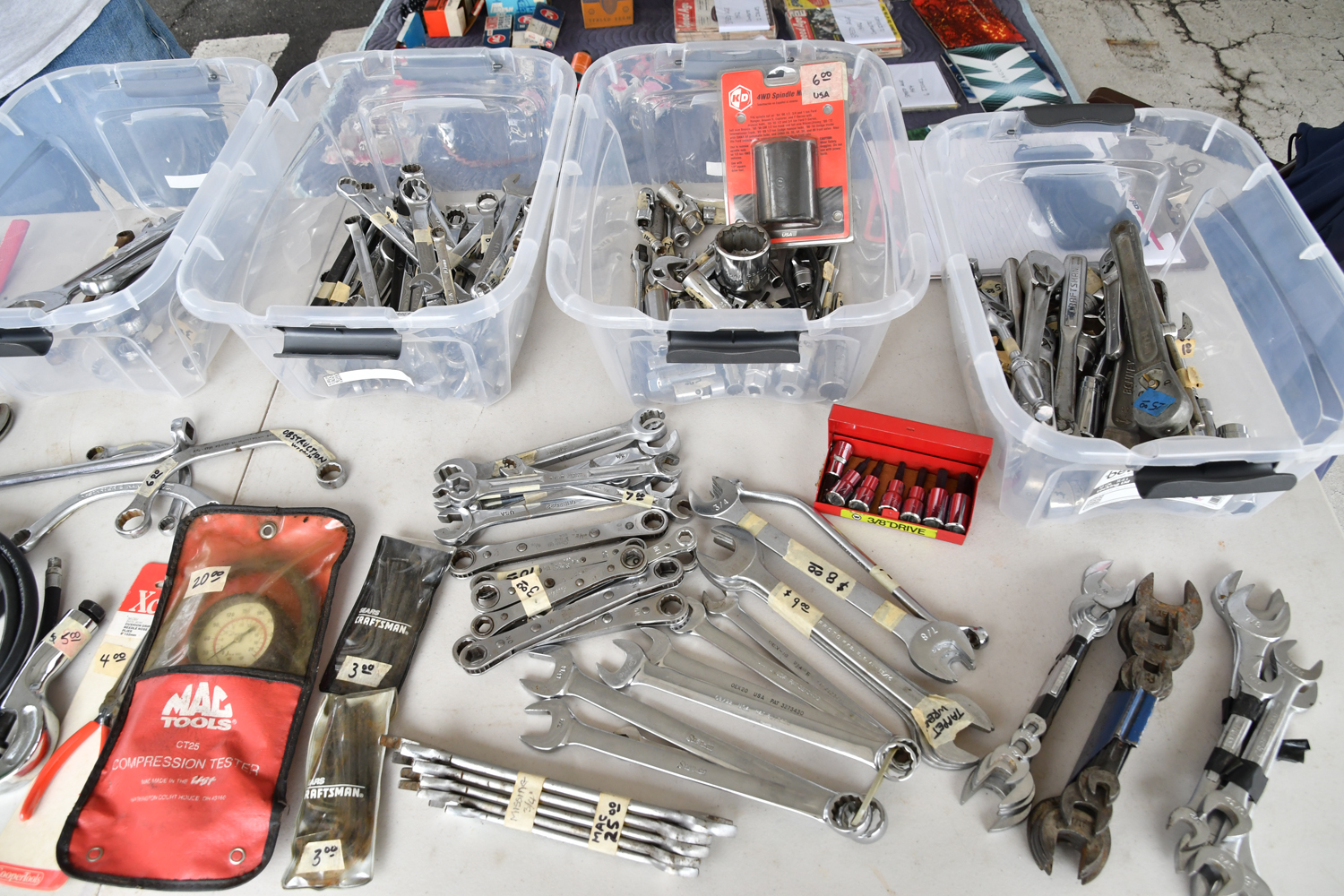
Vendor Rocco Scotellaro was clearly happy to be at the Man Cave sale. When asked about being there, Rocco said, “Excellent, historically as a vendor I usually do about two or three shows a year. Last year I did none. It’s great to be back in business.” When asked to evaluate buyer action, Rocco quickly offered that the show was much better than he expected emphasizing that the turnout was quite good. Rocco says, “A major challenge for vendors like me is deciding what to bring. It’s always a guessing game.” Sporting a big smile, Rocco went on to say, “I guessed right for the Man Cave sale and did very, very well.

Clearly people savored the opportunity to share space and time with others in a non-Zoom real world environment. Diane commented that, “I think a lot of people came in looking for something free of Covid gloom, something to make them happy. We’ve all been kind of cooped up all winter. Watching the news certainly hasn’t helped.”

Jaguar Land Rover Archivist Fred Hammond brought a treasure trove of classic car models and automobilia. Fred says, “The Man Cave Sale has been a tremendous success in so many ways. I mean one can put it in the context of saying that I sell stuff. Yeah, you bet. I sold a lot of things but the real enjoyment here was seeing friends, fellow car enthusiasts and talking to people sharing the joy of being outside with others, at last. Everyone seemed to be  basking in the joy of feeling a kind of normalcy.”

Pieces, parts and even a very clean 1996 Mustang Cobra changed owners thanks to being on display at the Paul’s Motors event.

Clearly, everyone has suffered through serious cabin fever with a nasty Covid hangover and could not wait to rub elbows with their fellow man. If the Man Cave Garage Sale represents any indicator, social distances show every sign of shrinking as humanity pokes its collective head out from under the Covid rock.

By |2021-04-21T13:47:40+00:00April 21st, 2021|6 Comments

Conversations With people We Value #19

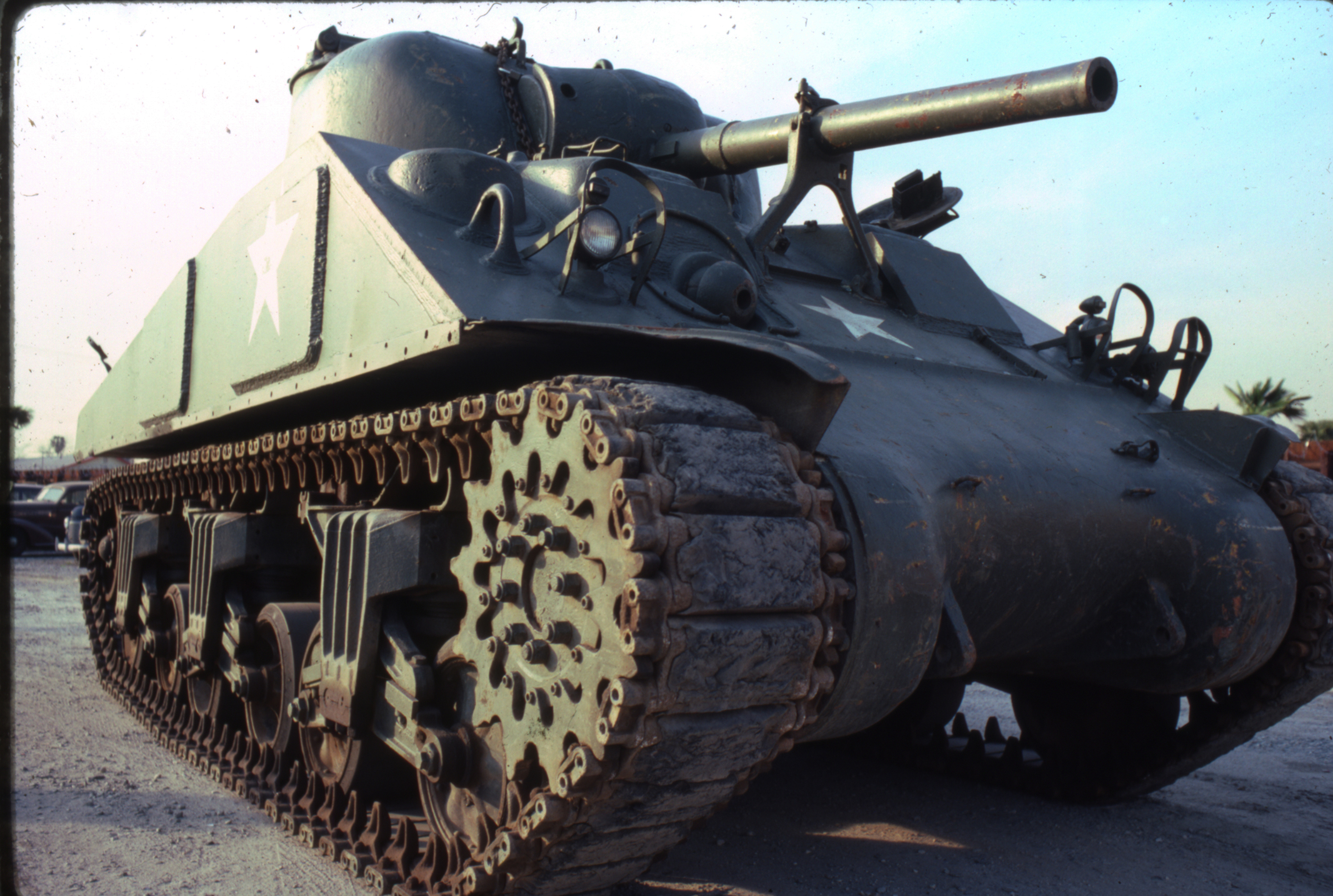
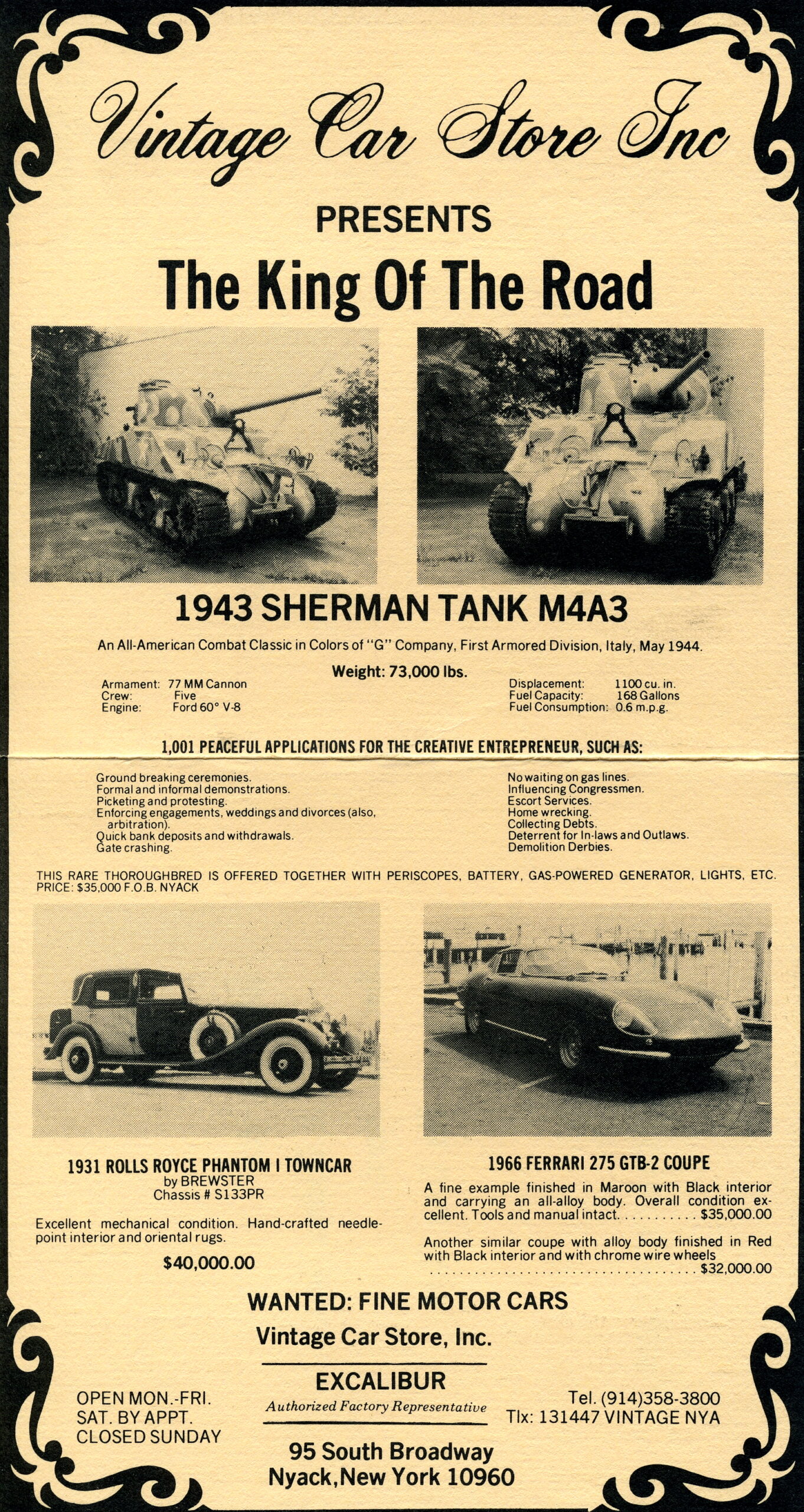
In retrospect, Ed Jurist’s Vintage Car Store clearly stood way out ahead of its time in the 1960s and 70s. Unlike today when a sprawling worldwide collectible vehicle business pretty much blankets the globe, the Vintage Car Store in Nyack, NY ranked as one of few top tier go-to places for connoisseurs seeking high quality classic cars. Ferraris, 4½-liter Bentleys, Rolls Royce Town Cars and Maseratis mingled with a 12-cylinder Allison air craft engine on display and striking transportation themed wall art. However, even in this rarified atmosphere of vintage collectibles, Jurist’s exterior display area featured a real show stopper, a 1943 M4A3 Sherman Tank, for sale.

A Sherman tank’s incredible journey from Nyack, NY to the final episode of M.A.S.H.

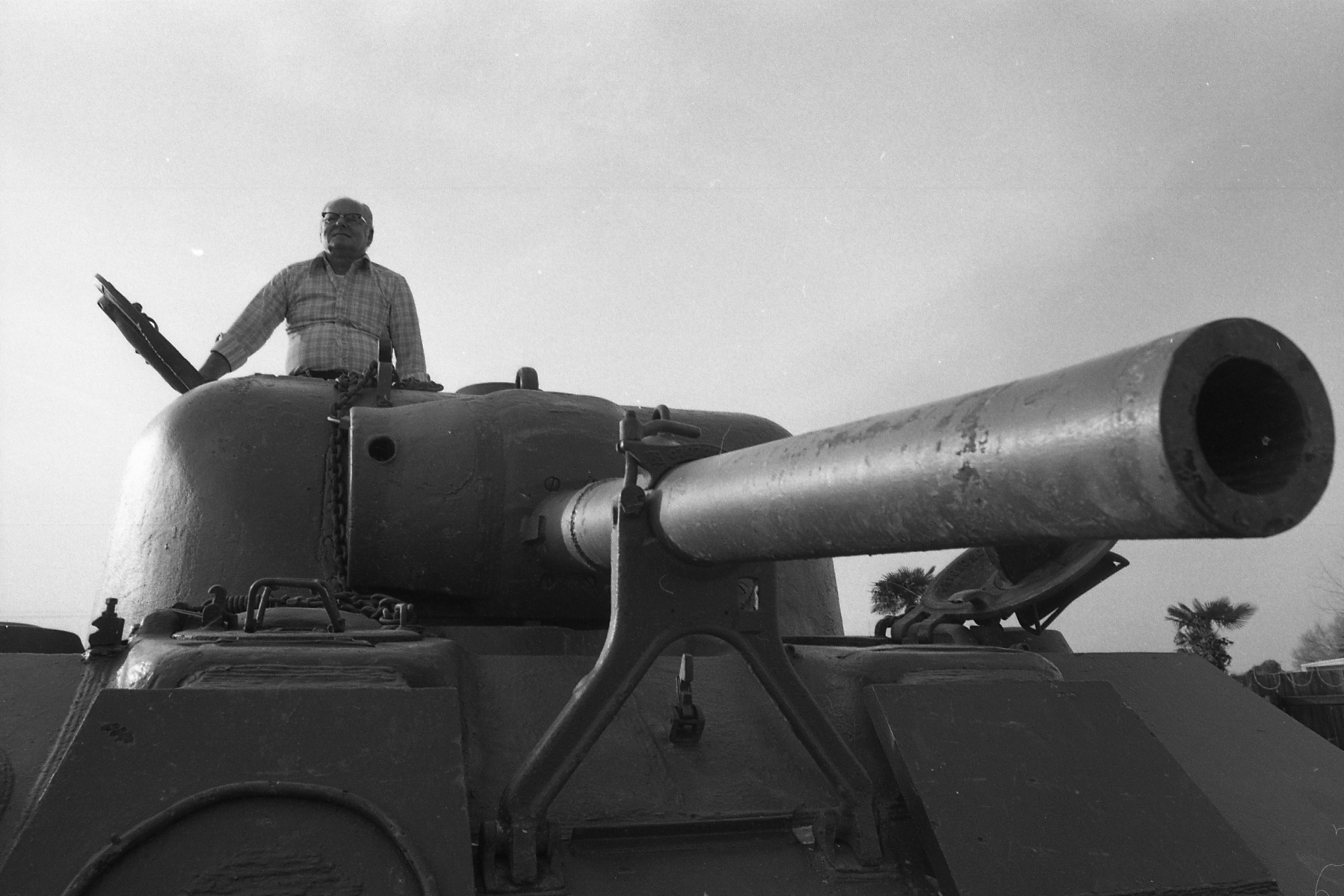
Bill Wahnish in his Sherman tank


Note 275 GTB for $35,000

While sitting in Ed Jurist’s cozy almost cramped Vintage Car Store office in the early 1980s I noticed a brass ring mounted on a wooden plaque. Inquiring of Jurist, I learned that this treasured artifact had been attached to the ripcord of a parachute that had safely floated him to earth after his WWII B-17 bomber had been shot down over Nazi Germany. Taken prisoner by the Germans, Jurist subsequently succeeded in escaping his captors. This pretty much tells you all you need to know about Jurist the pioneer classic car and vintage military aircraft aficionado. After taking ownership of the Vintage Car Store in 1961, Jurist traveled all over the world seeing South America, India, Europe, Middle East, Far East and Australia to set up agents and ferret out salvageable military equipment and locate desirable classic cars.

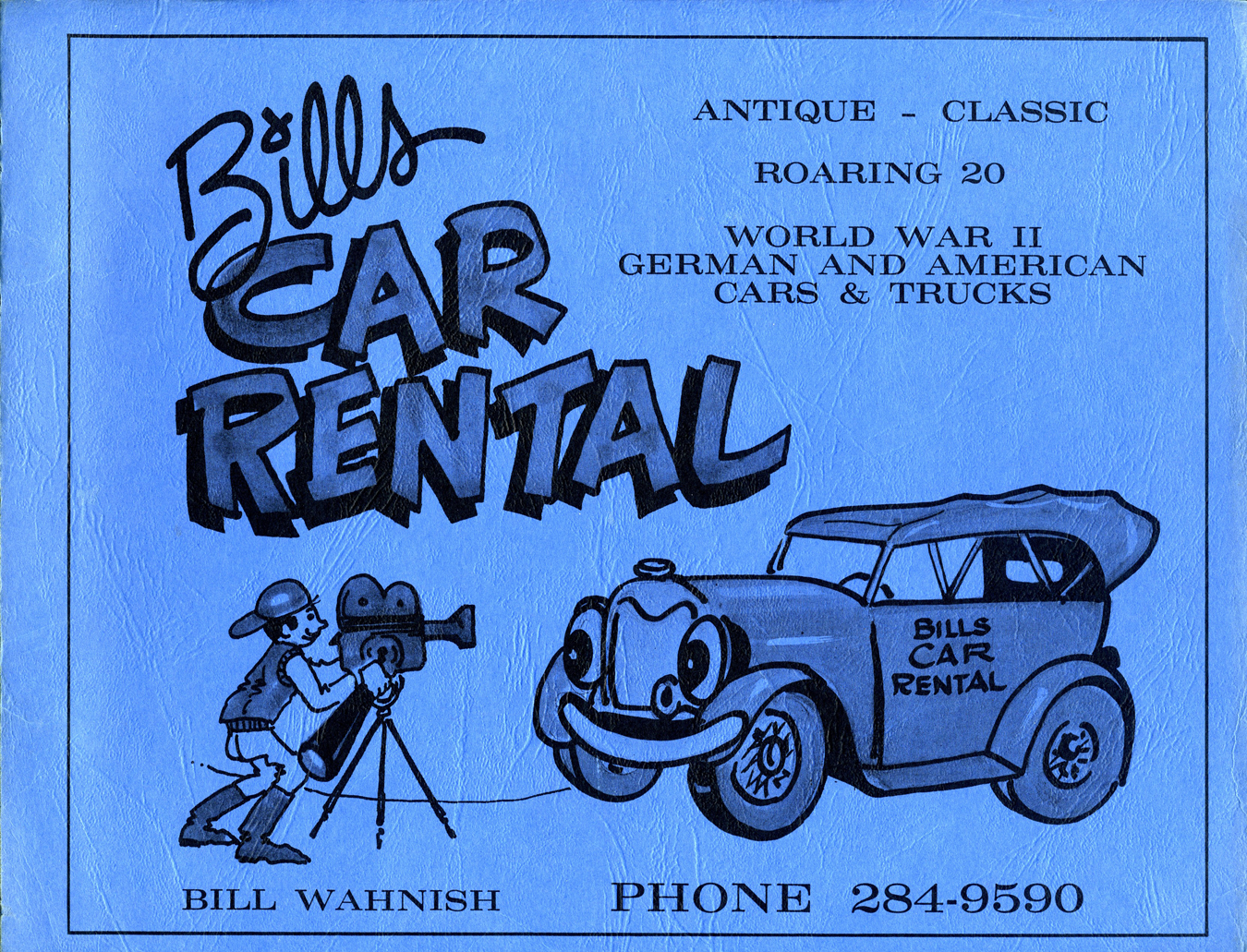
When I spoke with Jurist in 1982 the tank had been sold two years prior (February 1980) to Bill Wahnish, a gentlemen with a large film industry car rental business (Bill’s Car Rental) in Hollywood. In  1979 Bill had flown back east slammed a hatch or two, kicked the treads and said, “I’ll take it.” It would be two almost three months before Bill would take delivery in Los Angeles.

For Jurist selling a 73,000 pound Sherman tank with a seized engine is one thing. Moving it is quite another.

Jurist laughed when recalling and said, “It’s not like the town will let you drag it through the streets or over the sidewalks.” Transporting the M4A3 would require winching the tank onto a low flatbed. Jurist said, “That may sound easy, but how do you get that low bed into position? The flatbed is a huge trailer. It would require the street to be blocked off.

This operation called for serious planning, coordination, wide load clearance and timing. Local Nyack Police, NY State Police and NJ State Police stood poised and ready in the dark early morning of February 29, 1980.

Quiet streets allowed the loading to proceed smoothly though achingly slow. Once loaded, the flatbed with Sherman tank firmly lashed in place moved through the silent streets with all the dexterity of a house being relocated.

After slowly creeping towards and across the New York/New Jersey state line, the heavily burdened flatbed then made its way to a Paterson, NJ, rail head. As the railroad lacked the equipment to lift the tank, the Sherman had to be positioned on the loading platform so that the railroad flatcar could receive the beast.

With the tank loaded and firmly secured including the turret which had to be turned around to face backwards like a catcher wearing a baseball cap, the tank would head west. What could possibly go wrong? The answer, plenty, as time would show.

One day into the journey from Paterson, the tank broke loose. It took another week for riggers to lash it down again. After just ten miles of its rail journey to Chicago, it broke loose again. Another week’s delay. Just outside of Chicago, the tank came loose and was almost sideways on the flat car as the freight train rumbled towards the Windy City. Conrail was traveling west but the tank was facing south. Finally Santa Fe sent out a crew to lash the tank down once and for all. This added one more week. Lashed properly at last, the tank arrived three days later in the Los Angeles Rail Yards.

Bill Wahnish a warm and friendly bear of a man began in Hollywood as a truck driver for the movie studios. By 1980 Bill and his wife of 42-years Beverly had been restoring old cars as a hobby for over 25-years. During that period Bill’s collection of cars had attracted the attention of the film industry. By the time the tank arrived that hobby has morphed into a full time car rental business for the film industry with credentials that including the contracts to supply period vehicles for films like “Chinatown” and “Day of the Locust.” Bill’s Car Rental now had over 130 vehicles available.
When asked about the tank Bill said, “I have wanted to restore a tank for over twenty years.” At that time probably no more than a half dozen Sherman tanks could be found in the country that ran. Bill said, “I just wanted the feeling of accomplishment that I had restored one.”

Bill first set eyes on his new purchase as he drove down the Long Beach Freeway and saw it in the rail yard from an overpass. With the tank loaded by railroad crane onto his flatbed the tank began its journey to Bill’s storage lot. Crowds formed as the flatbed bearing the tank slowly navigated its way.

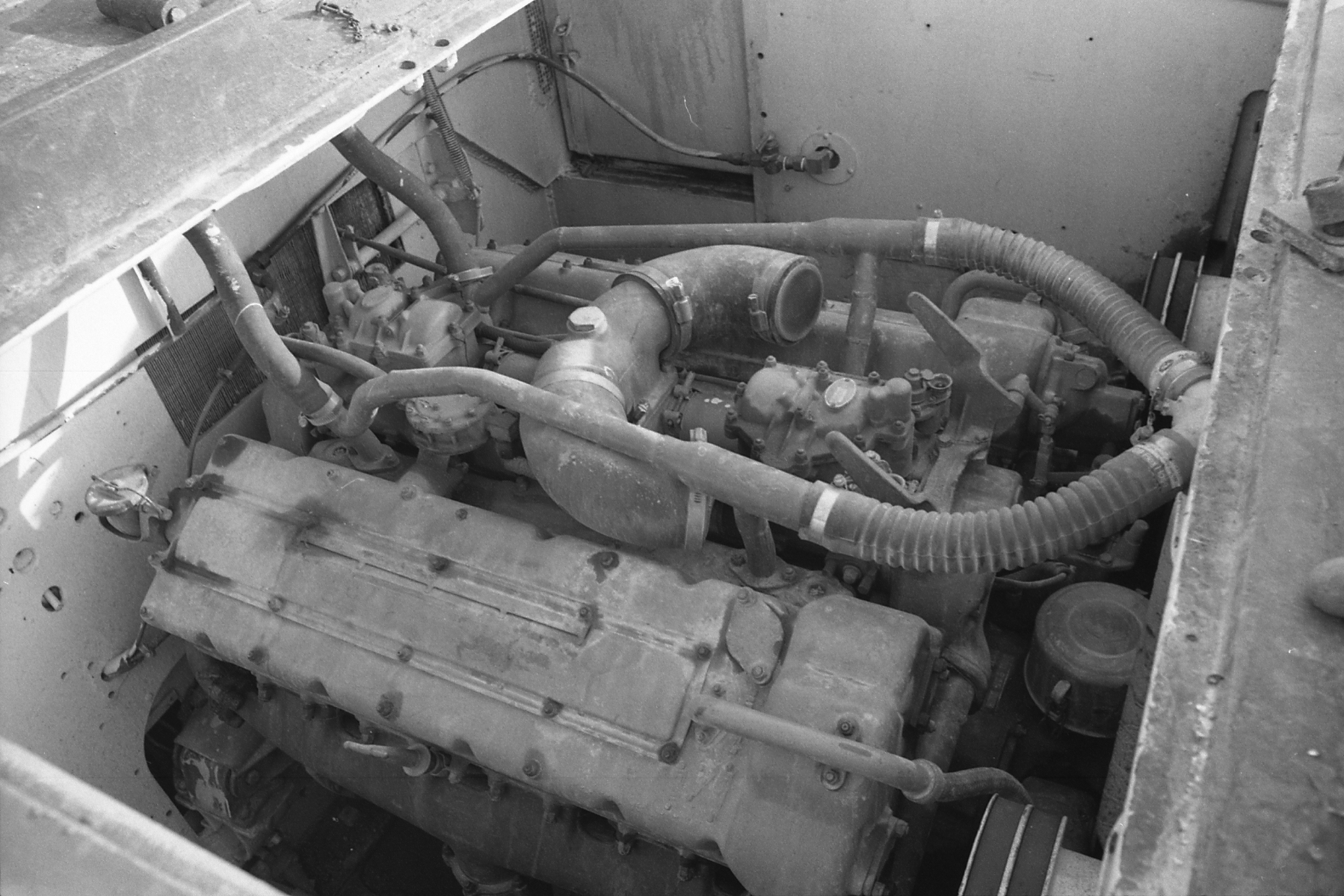
With all hands on deck the restoration took about 6 months. Happenstance and good fortune certainly helped in speeding the restoration. Job one for Bill? He needed to replace the seized 1100 cu. in. 500 horsepower Ford V8 that propelled the Sherman up to 24 mph.

1100 cu. in. Ford V8

Bill thought he would get some tips from his friends down at the local Fred George Military Surplus store. Indeed he did. When he asked a counterman for any suggestions, the counterman called to the back asking, “Do we still have that rebuilt 1100 cu. in. Ford V8 in the crate back there.” “Yes,” came back the reply. Clearly with the wind to their back, Bill’s dedicated team of employees and volunteers poured an enthusiastic 2,000 man-hours into the restoration.

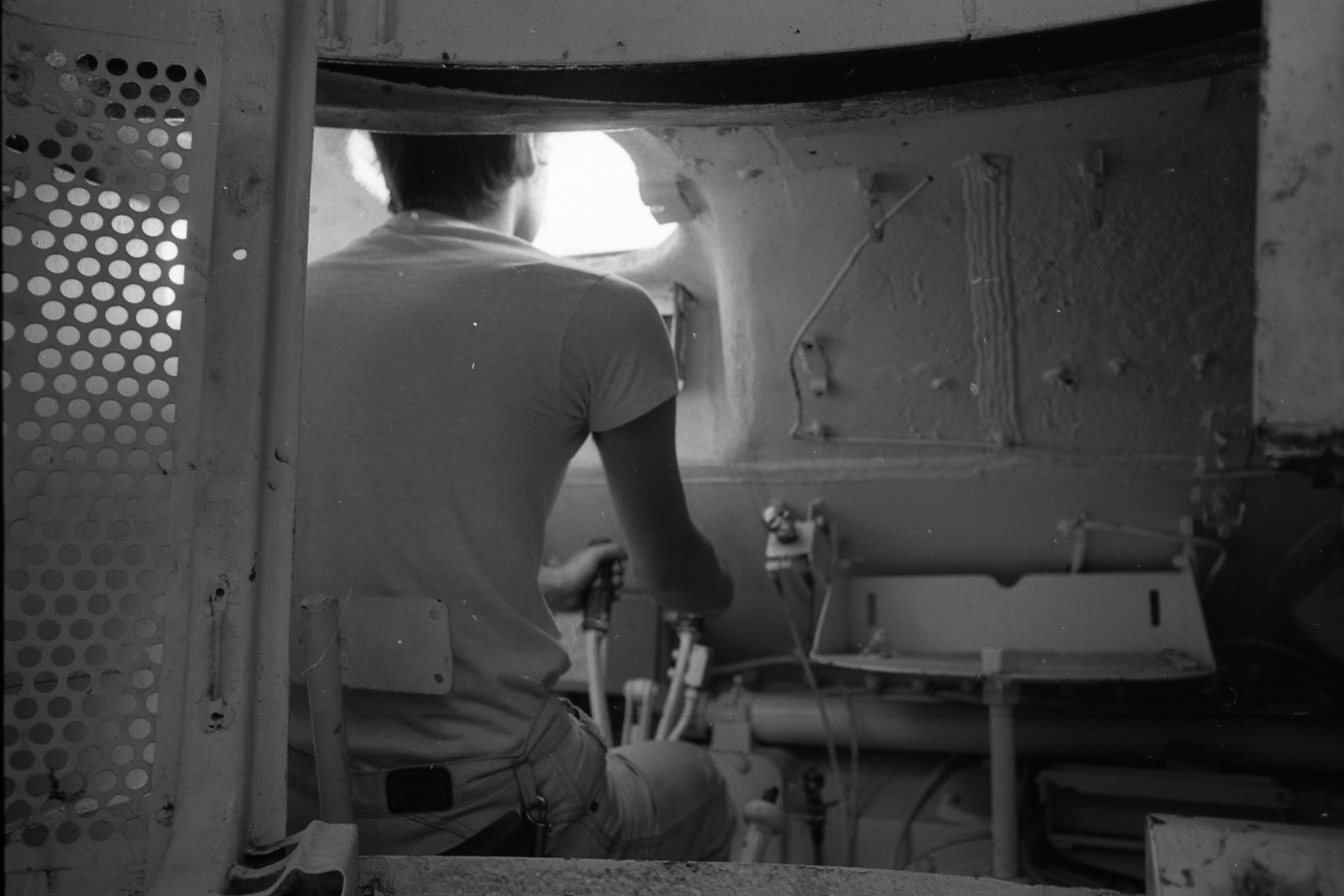
Interestingly, Bill had never driven his completed tank. Bill said, “I just love to look at it go.” When I got my own opportunity to ride in the tank, it would be driven by, then, 23-year old Craig Michelson. Craig’s father, Donald Michelson founded the American Society of Military History Museum which gave young Craig incredible access to and experience with military vehicles of all types.

Craig Michelson at controls

Craig arrived and climbed up onto and down into the Sherman. It fired up with an angry growl. That served as my invitation to climb aboard. Bill’s storage lot provided a large open area for my test drive. Poised at the open turret hatch, I had a General George Patton-like vantage point to savor the opportunity to take a spirited ride in military history. The best part came when the Sherman under Craig’s capable control stormed up to the end of Bill’s property and pulled alongside the McDonald’s parking lot bordering Bill’s property. He locked up the tank to an abrupt stop and rotated the decommissioned 75-mm turret gun towards the parking lot with the customers munching away in their cars. You had to see the looks on their faces. Priceless.

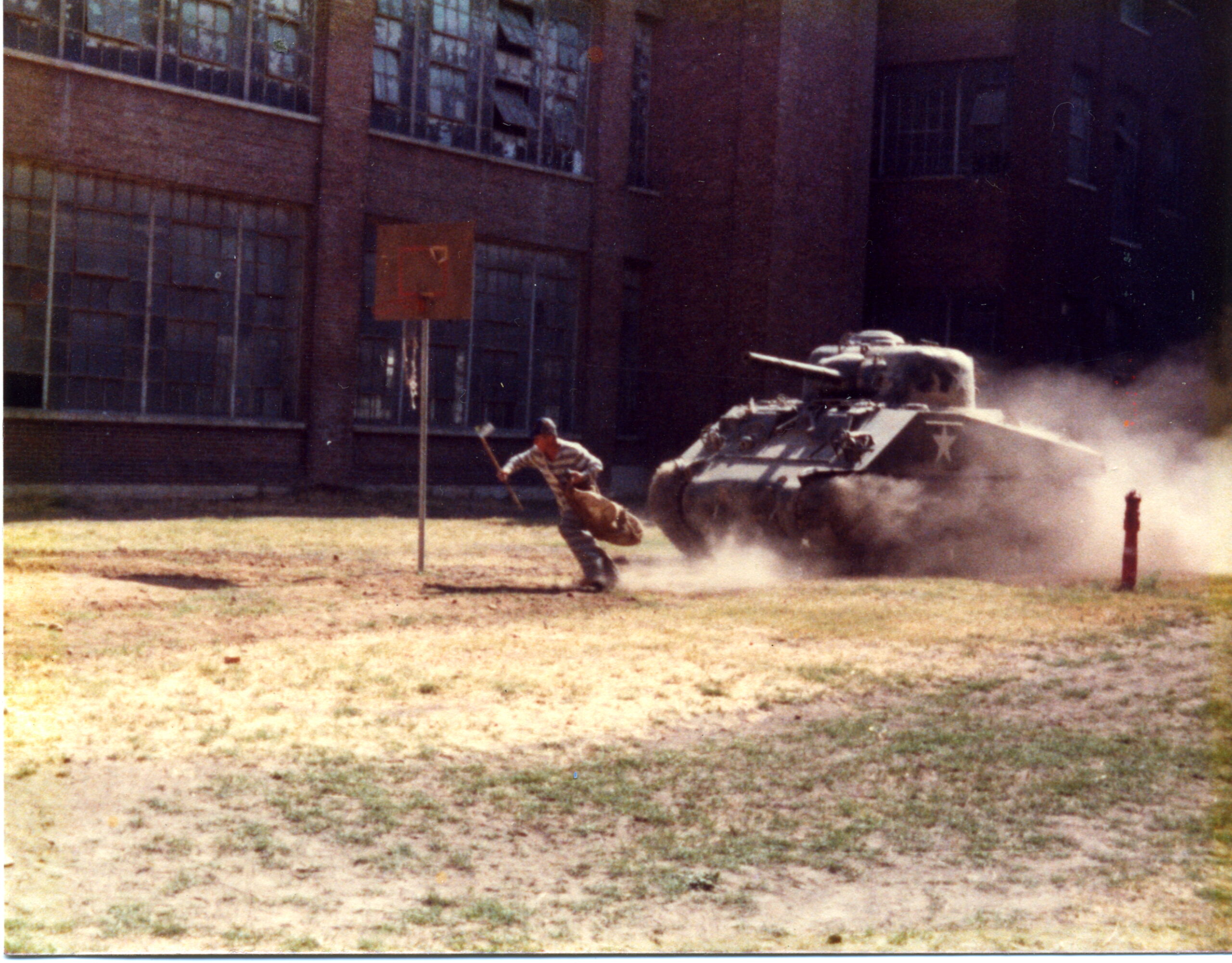
Sherman in one of many feature film appearances

Bill’s Sherman had made many appearances in feature films but its most famous appearance resulted due to a serious forest fire in the Malibu hills where the M.A.S.H. set was located.

Much of the final episode had been shot for the 1983 finale. In the episode, a Chaffee light tank has been driven into the camp by a wounded soldier. With the tank in the M.A.S.H. camp, enemy mortar fire begins to rain down on the medical facility. The shot that had not been filmed before the forest fire required images of the tank being driven out of the camp by Hawkeye. However, not only was the M.A.S.H. set destroyed, which could be rebuilt, but so was the Chaffee tank. A call went out to Bill’s Car Rental and Bill and his Sherman tank answered the call. If you ever look at a rerun of the final M.A.S.H. episode take notice that the tank driven into the camp is not the same one driven out. Did not catch that the first time did you?

By |2021-03-11T12:10:23+00:00March 11th, 2021|10 Comments

Conversations With People We Value #18

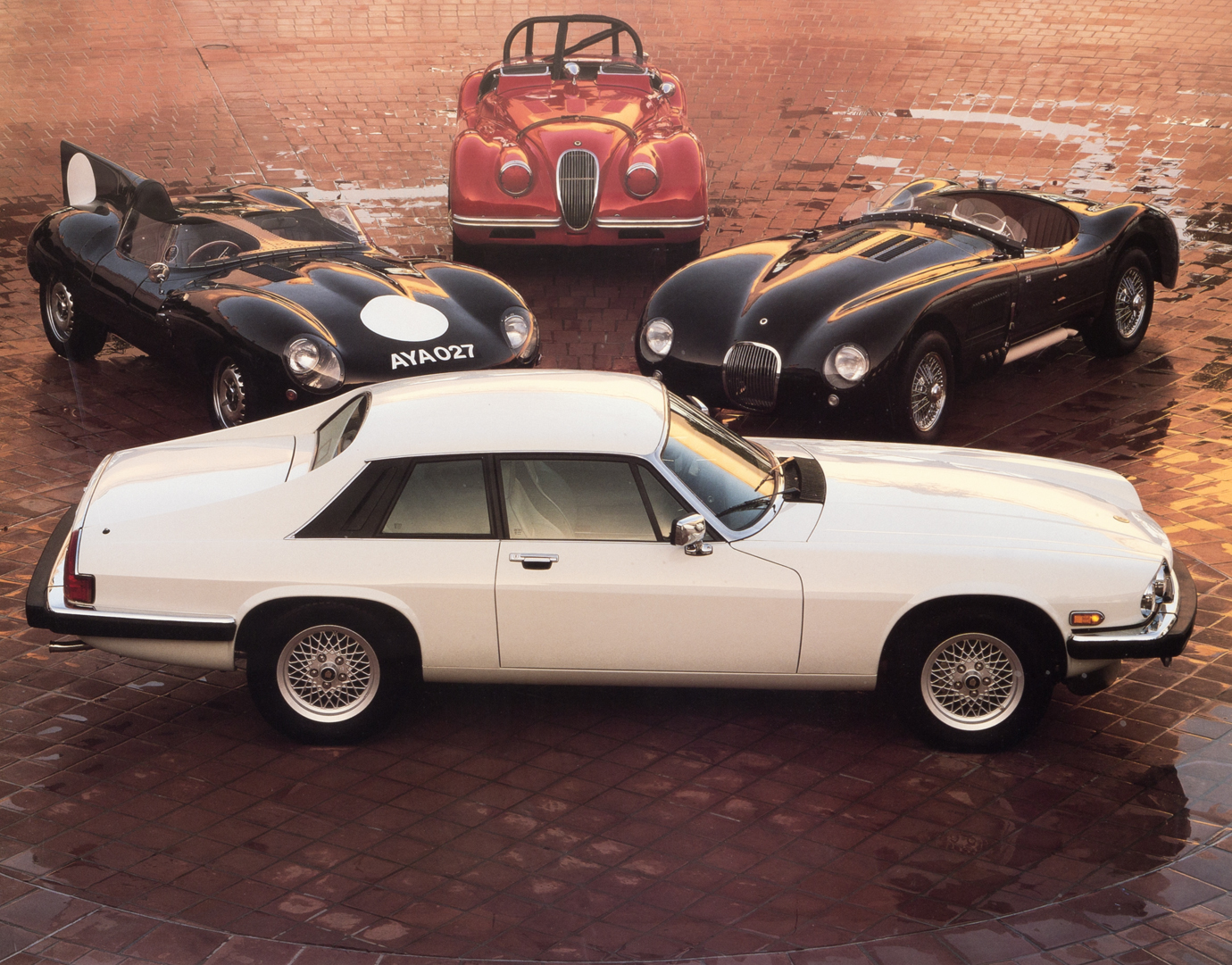
My footsteps echoed off the walls of the long, mostly doorless hallway. Aged large format black & white action photos of vintage sports cars lined the walls and whet my already eager appetite for the experience that awaited. As a car guy and owner of a 1953 Jaguar XK120 my destination held great fascination for me. Summer of 2012 blazed outside as I came to make a pitch for the contract to digitize the thousands of original photographs, slides and films housed in the Jaguar Land Rover North American Archive. I would be meeting with Jaguar Land Rover Archivist and retired import car industry public relations legend Mike Cook and Assistant Archivist Fred Hammond.

Jaguar Archive – Preserving the soul of the brand


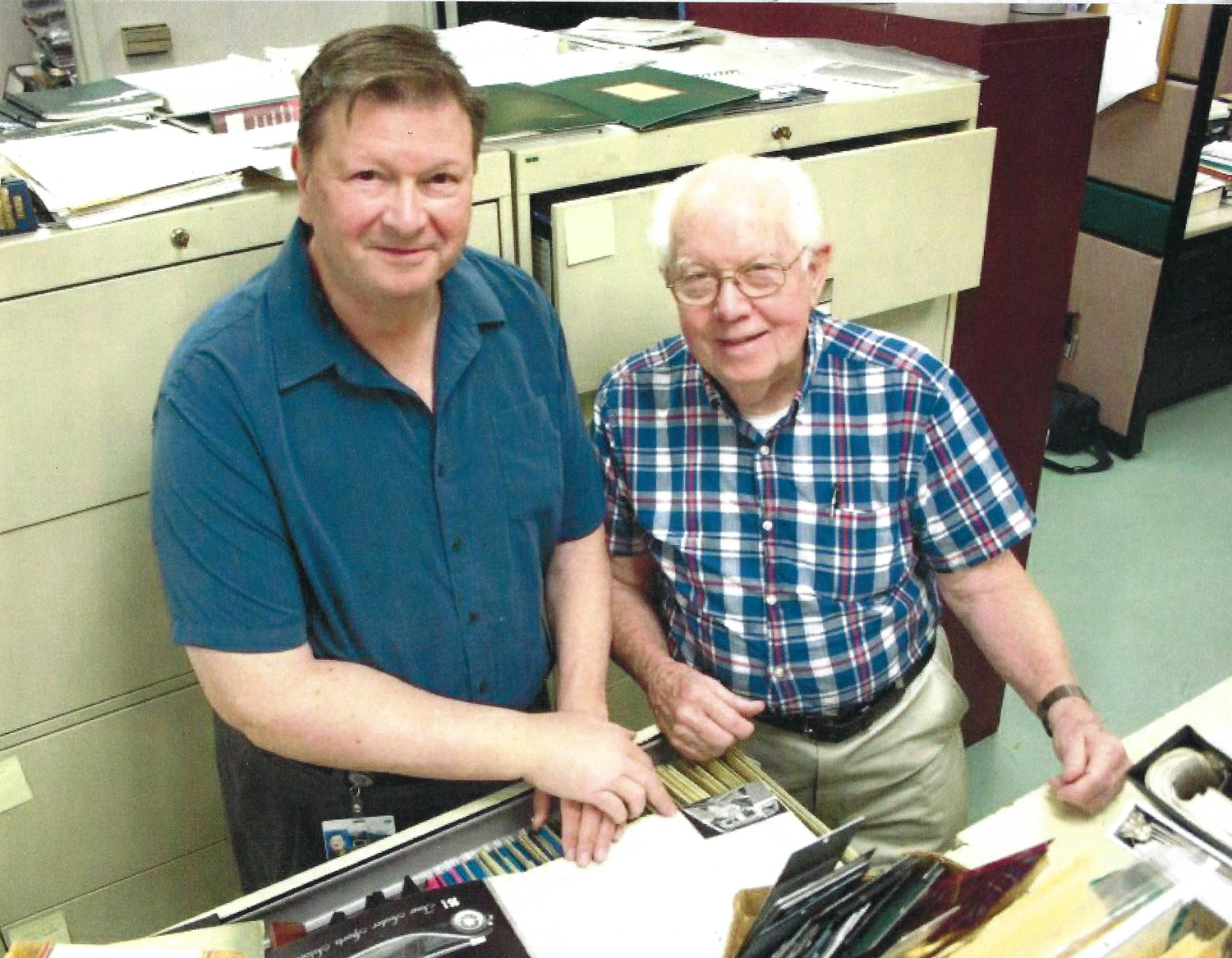
Mike Cook approached me flashing a ready smile and a genial demeanor as I entered the Jaguar Land Rover North American Archive. Mike could not have been a more gracious host as he guided me through the rows of files, shelves and cabinets. During my tour Mike took the opportunity to, in one single action, indelibly impress upon me the rich historic value residing within this treasure trove of 20th Century British automotive print, film, photography and documents.

Fred Hammond      Mike Cook

As a side note, while Land Rover is included in the Archive title, it has a significantly smaller presence than Jaguar as it was only added to the Archive around 2008. From here on Jaguar will be the focus.

Turning to the large open floor of the archive’s main room, Mike spread his arms open to the room and instructed me to pick any cabinet, open any drawer, pull out any file and remove any document and then said, “tell me what you found.” I did just that.

With the resulting file in hand, I removed two slips of paper.

Inspecting the first slip of paper revealed a letter written around 1957 from Sir William Lyons to another “Sir” explaining his great relief that “this unpleasant business” of wresting control of Jaguar distribution in America from Mr. Hoffman, referring to the notorious Max Hoffman, had been concluded.

The second slip of paper could not have been more historically significant. It was a telegram sent from home office shortly after the tragic events at the 24-hours of Le Mans in 1955, which Jaguar won. It instructed the North American office that Jaguar would neither promote nor advertise its victory at Le Mans.

Both documents, though brief, delivered powerful insights into life in the mid-20th century North American automobile business and powerful reminders of real life events in the automotive world that possessed industry and international significance. Wow, all in just one folder.

1948 New York Auto Show First U.S. showing of XK120

Viewing its rows of closed drawers and shut cabinets made clear that an archive differs significantly from a museum. Rather than an interactive visual display, an archive offers a thoughtfully curated comprehensive brand reference resource. It offers a place to conduct research and disseminate information. Jaguar’s North American Archive contains documents, data and materials all designed to provide a detailed and nuanced understanding of the company from its introduction in the North American market in the late 1940s through the current day. Its second component, a huge technical reference library represents a priceless resource for maintaining, servicing, preserving and restoring Jaguars. The archive gets calls from repair shops looking for specific information. A shop undertaking a ground-up restoration may need to know at what VIN# a change was made. A hobbyist doing his or her own work may want to know if the engine in an E-Type could be removed without the transmission. FYI: the answer is no.

As I witnessed when watching Mike and Fred in action, calls to the Archive were warmly received, treated with a sincere commitment to provide a correct answer, and, the conversation is free.

Having been awarded the contract, I enjoyed the opportunity to explore and marvel at the Archive contents for years and subsequently become a friend of the Archive. In my involvement, I found equally impressive the encyclopedic automotive knowledge of Mike and Fred, not just for Jaguar, but for the industry as a whole. At times I would be present when they would get into recalling the fine details of automotive or racing events in witnessed in their teenage years from 40 or 50 years prior. No archive much less a Jaguar Archive could be in better hands than those of Mike Cook and Fred Hammond.

Group 44 jaguar XJR-5

In 2018 Mike, then in his mid-80s passed away. A bright, fun loving car enthusiast with an acknowledged special love for all things Triumph brought an enormous knowledge of the British car industry in North America to the Archive. He started in the British car industry in the mailroom of Standard Triumph in 1958. He retired as Vice President of Public Relations for Jaguar Cars in 1990. He became archivist for Jaguar in 1990. In 2017 Mike was inducted into the British Sports Car Hall of Fame.

Fred Hammond who succeeded Mike as Jaguar Archivist holds Mike in very high esteem. Fred first met Mike when Fred, fresh out of college in 1973, began working at British Leyland Motors. In recalling the qualities Mike brought Fred says, “Mike was a mensch, honest, giving, caring, smart, reasonable and sincere. And the Archive reflected his personality, serious but not taken with itself.”

Today, Fred brings those same qualities in keeping the Archive active and available despite Covid restrictions. Fred with his vast wealth of product knowledge and commitment to the Jaguar brand and the Jaguar owner has kept the Archive active and available to all requests even when required to work from home. Fred says, I believe it is imperative that the marketplace and especially our owners have confidence in our presence and know that, even in these challenging times, the flag is still flying.”

Fred points out that a significant difference exists between the North American Jaguar Archive and the Jaguar Heritage Trust in the United Kingdom. Fred says, “The UK archives specifically focus on what happened in the UK in the home market at the factory. In North America Jaguar served as a marketing arm with enormous freedom to create our own advertising, literature, public relations imagery. Our focus targets preservation of that body of work.

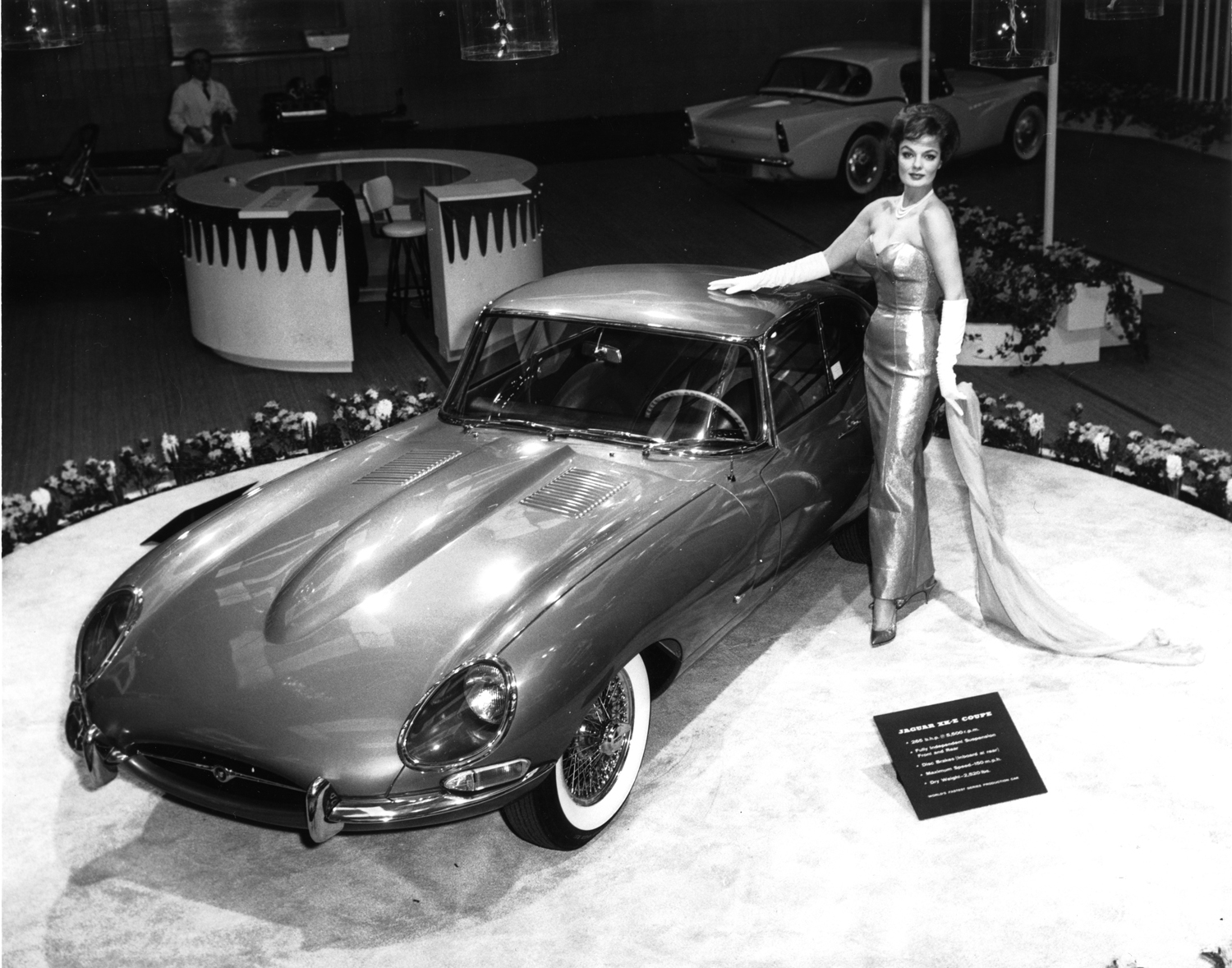
1962 New York Auto Show U. S. reveal of E-Type

A legion of users take advantage of the Jaguar Archives easy access and vast resources. Owners of individual vehicles, all forms of media, buyers and sellers even the police turn to the Archive.

Fred says, “The most consistent requests we get revolve around histories of individual vehicles.” Having a chassis number, an owner will call looking for the vehicle build date. Others call seeking to identify the proper engine or transmission number.”

A gentleman in Texas has six huge barns filled with Jaguar bits and pieces, chassis, engines and transmissions. He tries to reunite cars with their correct individual components after having been acquired dismantled. He will call for information on a specific chassis number or with just an engine number. The Archive can then provide the other corresponding numbers. Fred says, “We are pleased to respond to these requests. That’s why we are here.”

If someone is buying a Jaguar or looking to sell a Jaguar they may call to confirm that the car has matching numbers.

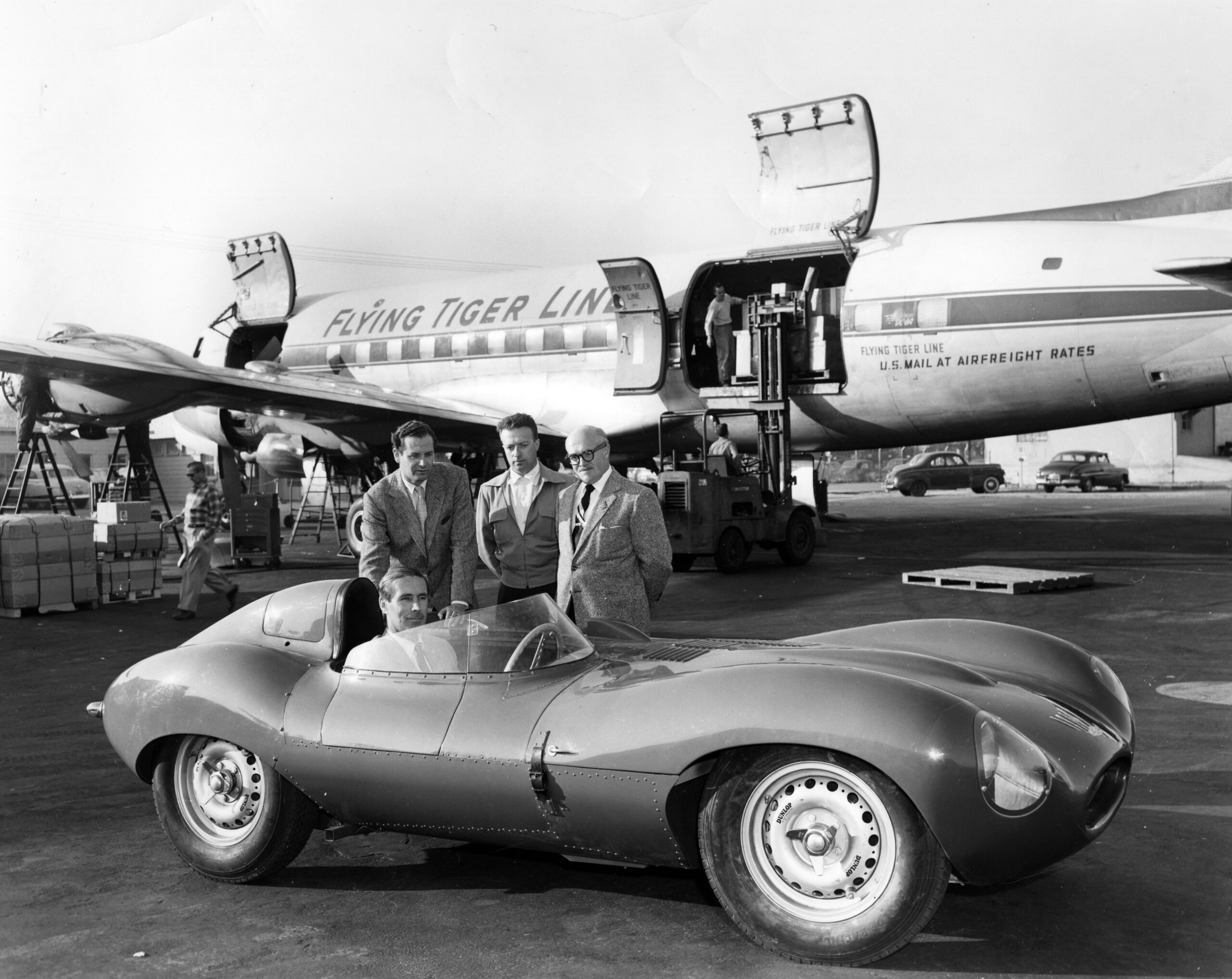
First customer D-type arrives at Idlewild Airport New York

Demands by various media play an increasingly growing source of requests. Fred says, “These days with the exploding number of platforms some people want still images, television may want moving pictures and internet requests look for everything.”

As to being contacted by the police, Fred says, “I think the most interesting one was a recent inquiry about an XK 140 that had been stolen back in the very late 1950s. The car had just disappeared and when the serial number came up decades later, it came up as a stolen vehicle.” After the caller confirmed his identity as a police officer, Fred provide not only the vehicle numbers but the original owner’s name and address.

In summing up the critical importance of a manufacturer’s archive Fred says, “Essentially a quality archive details the story of where you, the company, came from. It paints a vivid picture of your history. Our Jaguar Archive assures that future generations of the Jaguar family will have an understanding of where the company came from and what that imparts to our product.” Fred believes whole heartedly that preservation of history provides the foundation for appreciating the soul of a brand. Fred says, “If you don’t have that brand identity you reduce yourself to the level of commodity. And as a commodity the only motivation for a customer to walk across the street to buy your product is a lower down payment and less per month. That does not bode well for a profitable future.”

By |2021-02-25T16:32:32+00:00February 25th, 2021|8 Comments

Conversations With People We Value #17

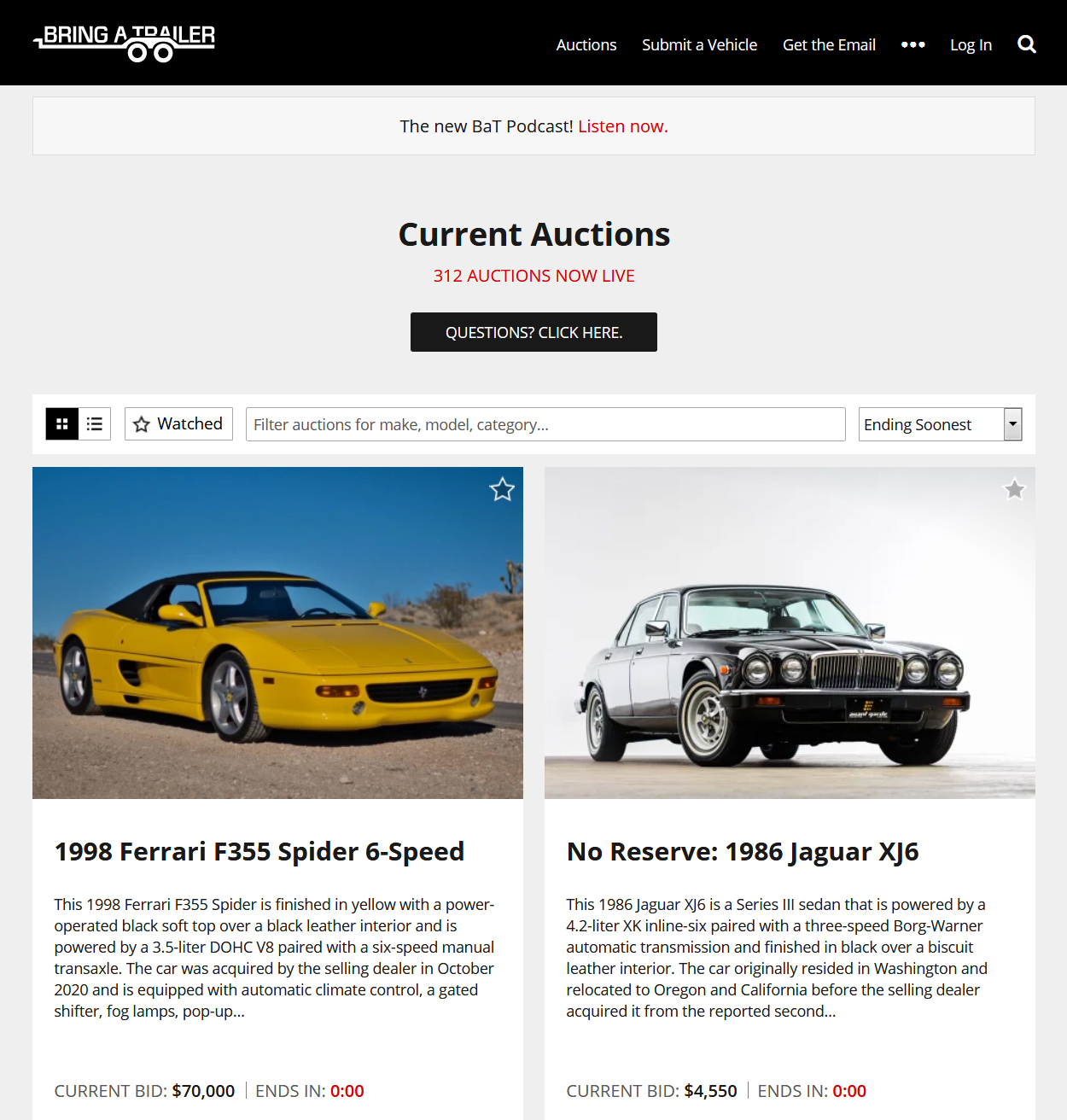
Considering Covid, sheltering in place, social distancing and a steady diet of heavy snow, the attraction of distraction cannot be underestimated. And the explosive growth of online activities clearly leads the pack in the distraction derby. However, when it comes to winning the “selling winter coats in Miami when the temperature plunges” sweepstakes, nobody has been better positioned to benefit from social isolation than Bring-a-Trailer.com.

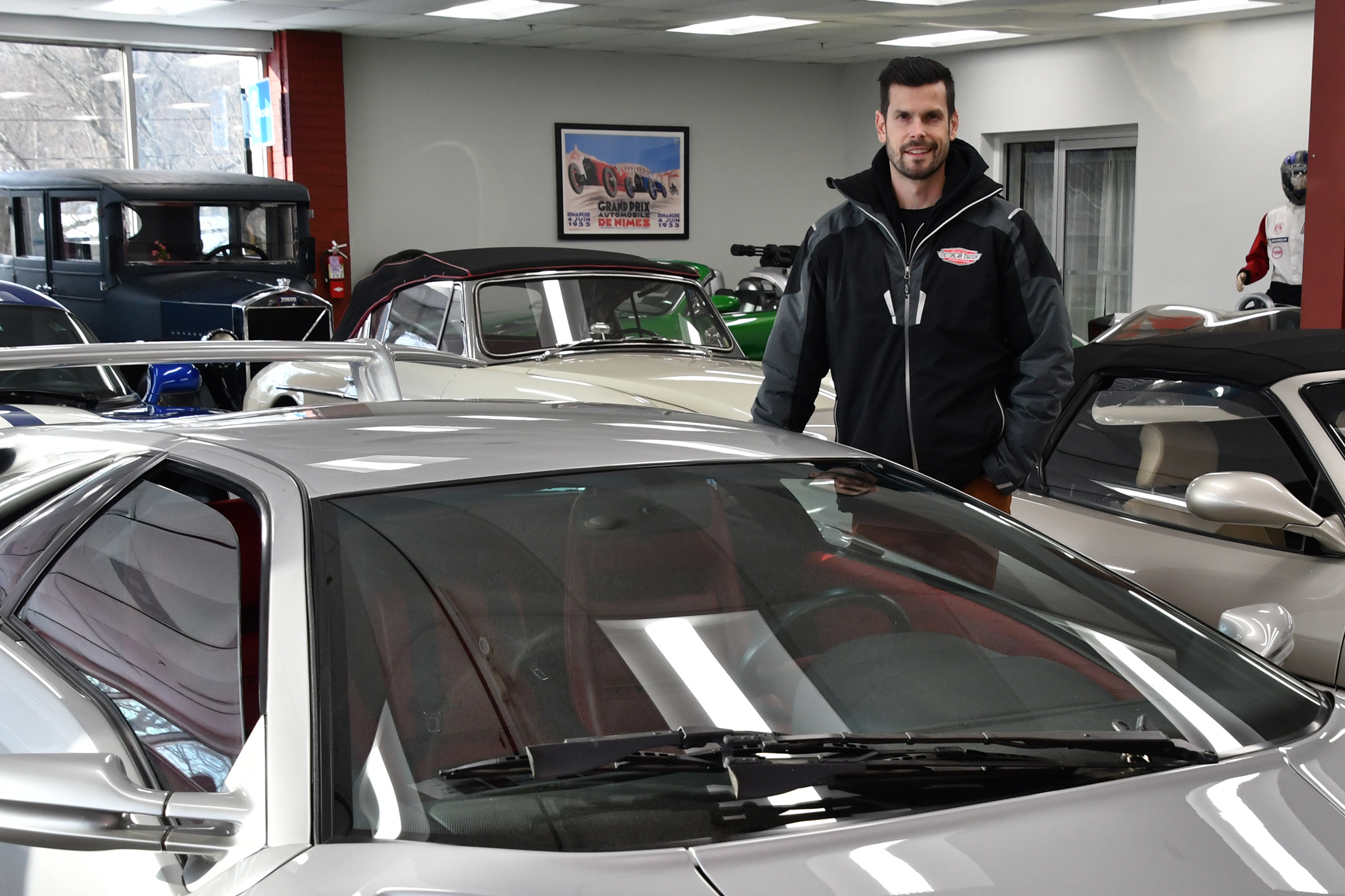
For an insider’s look at the Covid fueled Bring a Trailer online marketplace phenomenon, we reached out to Matt Maisano, classic car broker and owner of Motorcar Manor a premium vehicle storage facility in Ramsey, NJ.

Carried away by Bring a Trailer


Matt Maisano of Motorcar Manor

For car enthusiasts what began quite humbly over a decade ago has become an obligatory hour lost each day to ogling an eclectic and glorious array of exceptional vehicles from around the world being auctioned in real time. Matt Maisano, with a shrug, concedes, “It’s highly addictive for sure, but it’s a great tool for understanding the market, far better than Autotrader or eBay and if you’re looking to kill an hour of Covid boredom. BaT is for you.”

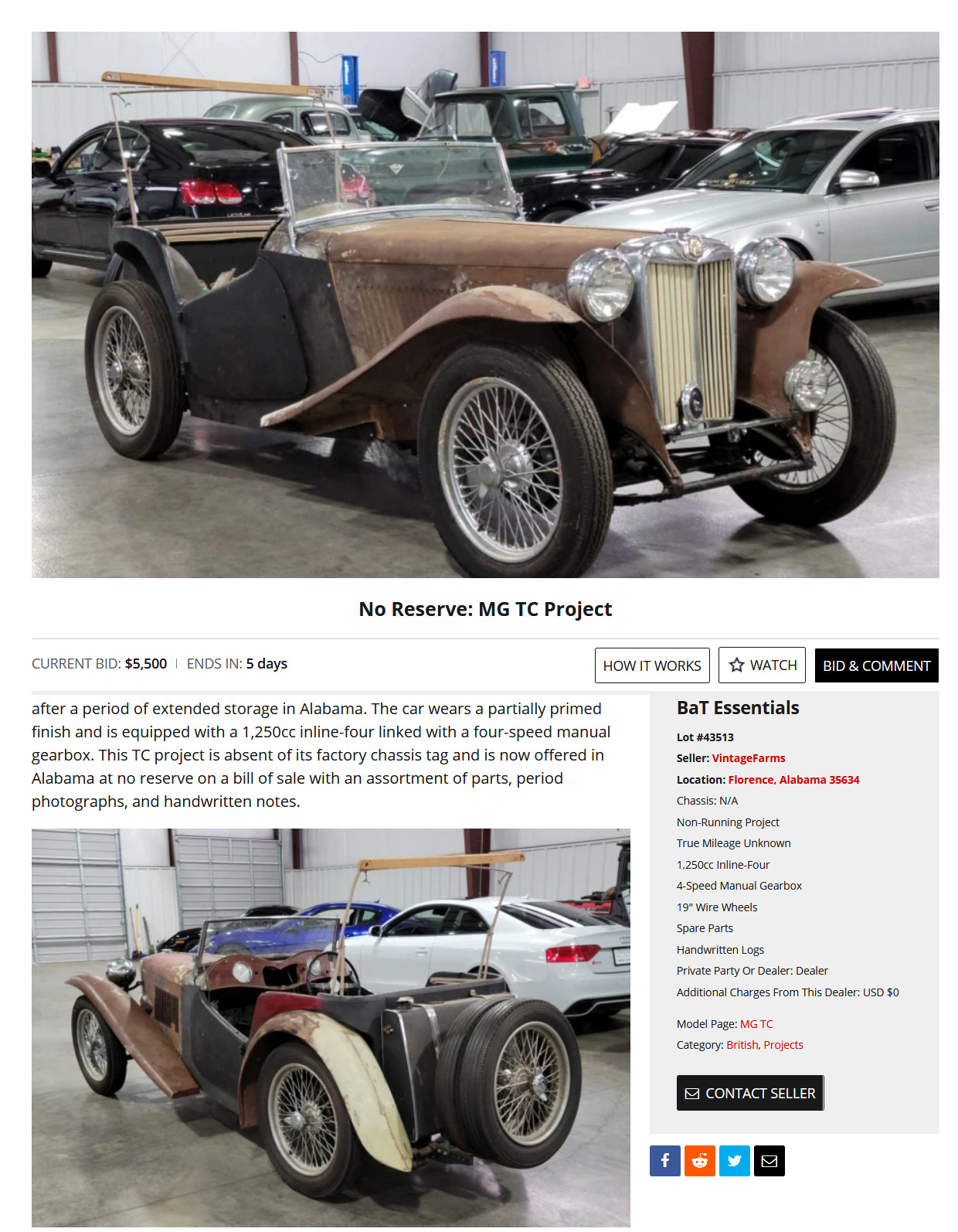
True to its name, Bring a Trailer began in 2007 as pretty much a car enthusiast website for selling incomplete project cars and race cars incapable of being driven home. Then, in 2014, based on the evolving culture and expanding community of Bring a Trailer, co-founders Randy Nonnenberg and Gentry Underwood took what would be a tentative and ultimately profoundly disruptive step impacting the business of collectible automobile auctions. They launched BaT Auctions.

Nonnenberg grew up as a kind of millennial version of older car guys like many of us. The type who in days past would be at the newsstand waiting for delivery of the WantAd Press. How about that for a blast from the past? Or the type who would follow the NY Times delivery truck to its next stop on a late Saturday night to get first crack at the automotive classified section in the Sunday Times. Yes, I did that.

Born out of Nonnenberg’s passion for all things automotive, Bring a Trailer came to life and evolved into what, in the time of Covid, ranks as the dominant classic and special interest vehicle auction venue.

Bring a Trailer’s very first auction on July 23, 2014 offered three cars, a 1970 “Boss” Mustang, Nonnenberg’s own 1991 BMW M3 and a 1964 Alfa Romeo coupe. Today BaT has over 300 cars auctioning at any one time. The total number of listings per month exceeds 1400 with a sale rate of approximately 80%. Vehicles sold on BaT include vehicles ranging across the full spectrum from category 5 “full restoration needed” to absolutely top tier classics. Six-figure sales are common place with seven-figure sales of a 1957 M-B Gullwing and a 2007 Saleen S7 LM on record. Among the cars Matt has sold on BaT, a 1972 Ferrari Daytona went for mid six-figures.

MG TC non-running project car

BaT’s community comprises a vast population of informed and engaged members. While the number constantly spirals up, BaT’s knowledgeable community exceeds 450,000 users and over 200,000 registered bidders. Matt when asked as to who the bidders are blurts back, “With Covid everybody has become a bidder on Bring a Trailer.” Since Covid came to town the concept of the typical BaT bidder has gone out the window. Matt says, “I’ll have guys – who’ve been dedicated sideline watchers of BaT but who have never purchased anything. Next thing, you know within three months time they’ve purchased two cars from BaT.”  Matt confirms that he knows guys during this pandemic who have gone nuts buying cars on BaT.

At this point BaT enjoys a backlog of over 5,000 cars waiting patiently for their turn to cross the BaT online auction block.

Bring a Trailer’s success has not gone unnoticed by big business. Just recently Nonnenberg and his partners sold BaT making it part of the Hearst multinational mass media empire. Nonnenberg will continue to manage it.

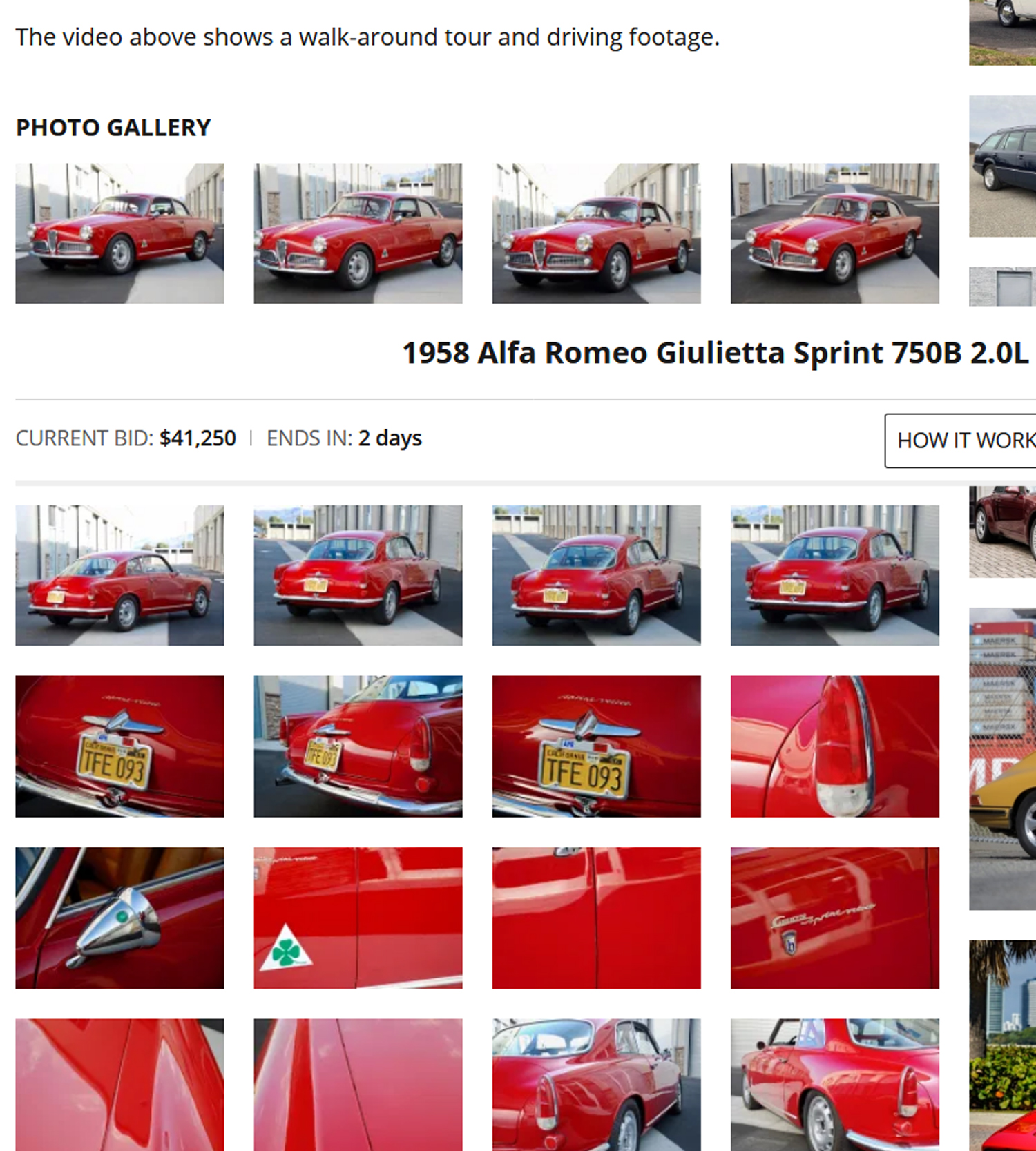
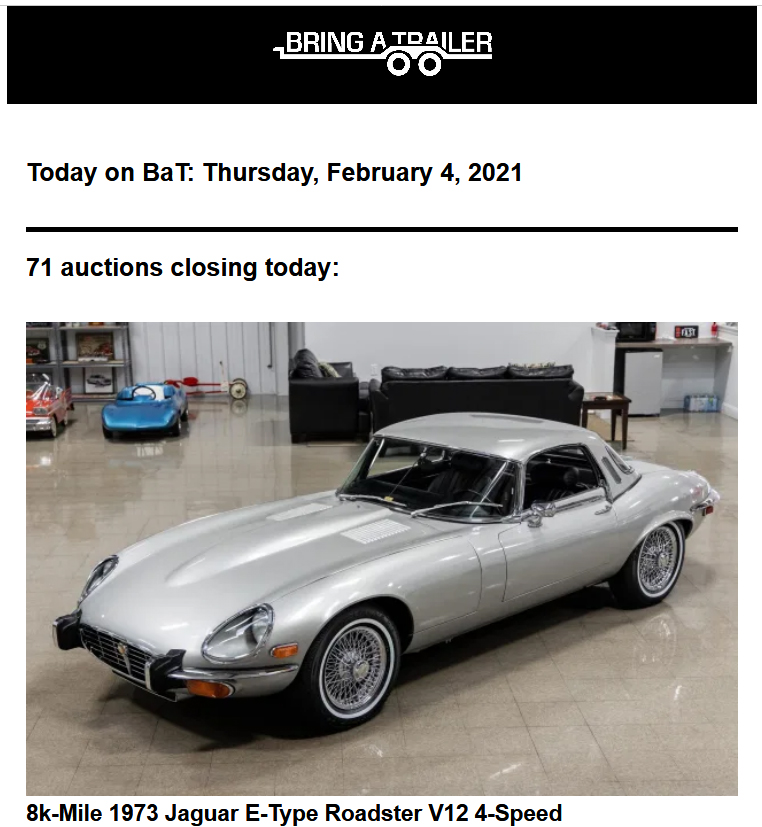
A visual and content rich feast for the car enthusiast, each vehicle being auctioned features high quality photography, driving videos and succinct and detailed descriptive copy. Matt says, “BaT really upped the game for photo quality from the craigslist days of ‘here’s a wheel’ and ‘here’s a bumper’ to BaT’s current comprehensive photo profile of easily 100 or more pictures.
However, it is the “comments” section that stands out as a key measure that enhances the total BaT experience and clearly distinguishes and differentiates its offering from others. Matt says, “Aside from the friendly, ‘I had one and loved it’ comments, real value exists in the pointed and technically astute insights in the comments section.” Matt strongly recommends that anyone in the market for a  specific vehicle take the time to monitor the comments offered by knowledgeable people in reference to the same type vehicle. Being an informed bidder can save a great deal of buyer’s remorse. This clearly helped a personal friend considering a BMW Z3. The comments section offered great insights such as lifting the trunk carpet to check the condition of the spot welds anchoring the rear suspension. Broken spot welds would indicate hard driving and necessary repair.

Want to be a registered BaT user? Simply go to the BaT homepage, go to “log on,” click “register and provide your email, a user name (What people will see if you comment or bid) and a password. Done.

Itching to place a bid? First thing, understand the costs involved. Compared to what many see as the usurious 10% buyer premium charged by the in person auction houses such as RM, Bonham’s, Barret-Jackson, Gooding to name a few, BaT maxes its buyer fees at a pretty painless 5 percent up to a maximum of $5,000. Matt says, “To become a bidder the steps are clear cut. Create a login name, register by completing some agreements and provide BaT with your credit card information. Bidder credit card info must be on file. The reason being that when you place a bid, BaT immediately puts a hold on your credit card for 5% of the bid.

Unlike eBay, BaT does not permit sniping. Sniping refers to a common practice on eBay where a bidder waits to the last second to place a hopefully winning bid while leaving no time for another bidder to counter. BaT, however, prevents sniping by adding an additional two minutes to any last second bid. Matt points out that the two minute extension can actually draw a bidder in and overwhelm the bidder’s better judgment. Matt says, “It gives other people time to jump in. Acting on behalf of a client and under the client’s direction, I found myself in an online bidding battle. Someone else REALLY wanted this car. It got to the point where the bidding had gone far beyond reason. Someone would be paying way over its true value. I had to pull my client back and say this is crazy.”
Have a car to sell? Matt says, “Initially you must provide your name, your email address, your vehicle description and pictures. You don’t have to submit all 100 pictures, but definitely give them at least 20 picture so they can get an overall sense of the vehicle.” In a process BaT calls “curation” it subjects your vehicle to careful scrutiny that it meets its standards including repair records, ownership history, accurate mileage and special features. BaT always demands to see acceptable proof of ownership. Listing a car on BaT carries a fee of $99.

While BaT clearly stands as the online auction big dog, it also makes an attractive target. Competitors have begun surfacing intent on carving out their niche. Gaining in popularity, online auction site “Cars and Bids” features its founder, Doug DeMuro, an engaging, knowledgeable and opinionated automotive journalist and You Tuber. Focused on cars of the 1980s,’90s and newer, DeMuro puts a distinctive and personalized stamp on the vehicles auctioned on his website. DeMuro’s popularity grows as does the “Cars and Bids” community.

Additional BaT competitors include pcarmarket.com specializing in Porsches, the mbmarket.com a Mercedes-Benz only website, Hemmings online auction and, coming in March, radforsale.com offering just cars from the 1980s and newer.

Clearly the affinity of Millenials and Gen Xers for all things digital makes online auction sites a natural draw for those demographic groups. Matt says, “Online definitely attracts a younger community compared to in person auctions. I mean granted I recently sold a Ferrari Daytona online to a 75-year old gentleman. But definitely the online community is more youthful. Look Gen Xers and Millennials are just more used to doing things online.”

When asked if older buyers are waiting for the in person auctions to return, Matt responds without hesitation. Matt says, “Oh without a doubt. First of all, it’s a destination. They want an excuse to get out of their homes. As well, the older buyer wants to touch, feel, smell and experience the car they intend to buy. Buying cars online is still a really weird place especially if you are not a digital native. In addition, older buyers are much more concerned about getting screwed on a car. For some reason Gen Xers and Millennials are a little bit more forgiving with an attitude of ‘oh it is what it is.”

Matt also believes that the traditional auction houses, while most have ventured on line with some success, yearn for a return to in person events. Matt says, “Online you lose out on the whole live theater experience. Live is where a bidder can seize the moment. Bidders get caught up in the atmosphere. Your buddies pump you up and cheer you on. Whether it’s peer pressure or booze pressure, chances are enhanced that you’re going to keep buying and that’s what the auction houses want. You don’t get that on line.

By |2021-02-18T11:44:33+00:00February 18th, 2021|2 Comments

Conversations With People We Value #16

Totally unplanned, it proved to be one of the more entertaining days of my life. Business had brought me to Burbank California. A friend in the film industry had taken me on a tour of the movie studios and, seeing that one sound stage had activity underway, he brought me in. By sheer luck we would be the only two non-actors ever to see an hysterically funny full cast rehearsal for the wedding dance in the Taxi episode “The marriage of Latka. ”What could possible beat that? Shortly I would find out when my friend introduced me to 92-year old Hollywood dentist and movie car legend, Dr. George Schweiger.

Hollywood dentist Dr. George Schweiger’s fantastic stable of future classic car rentals


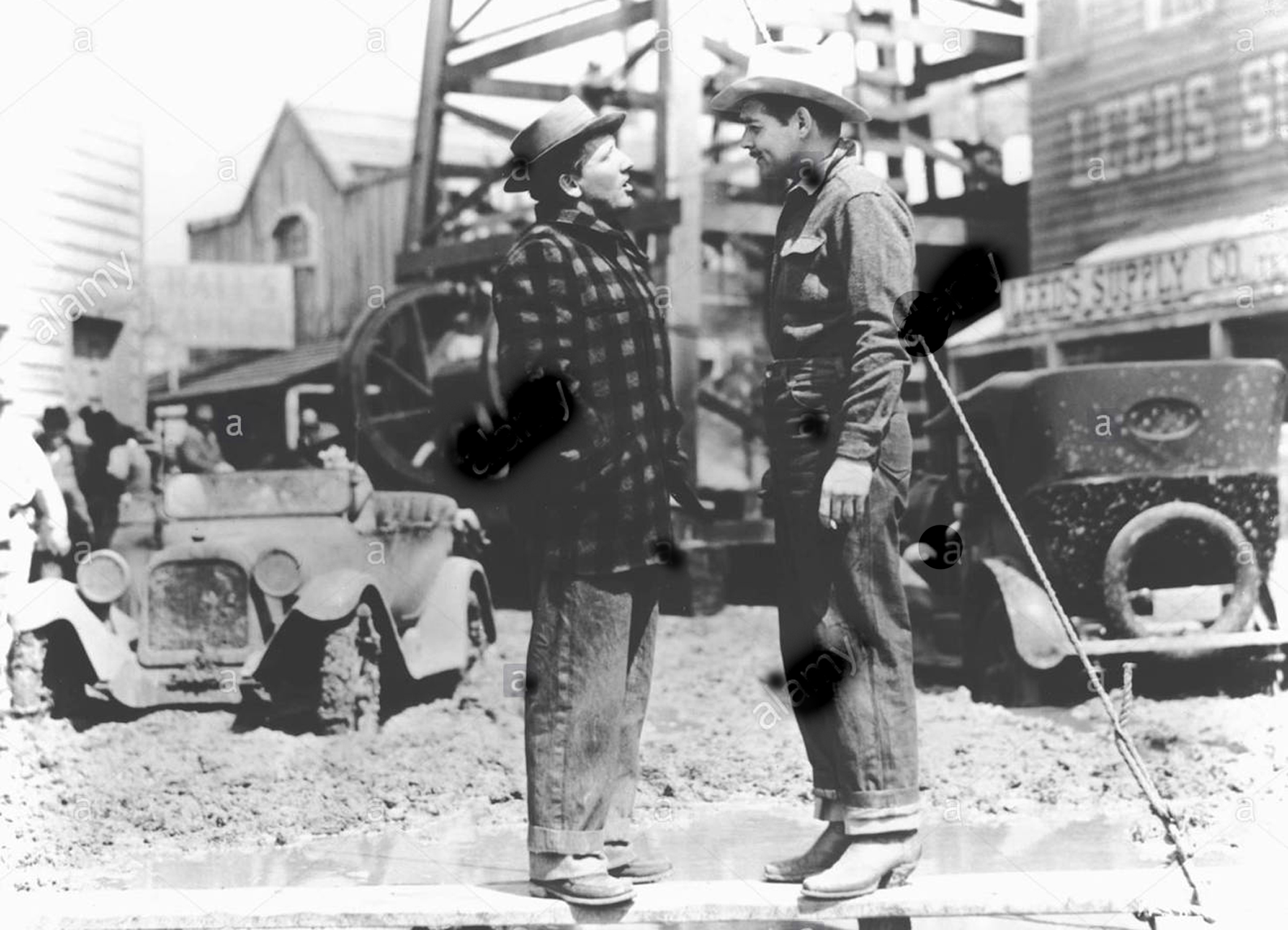
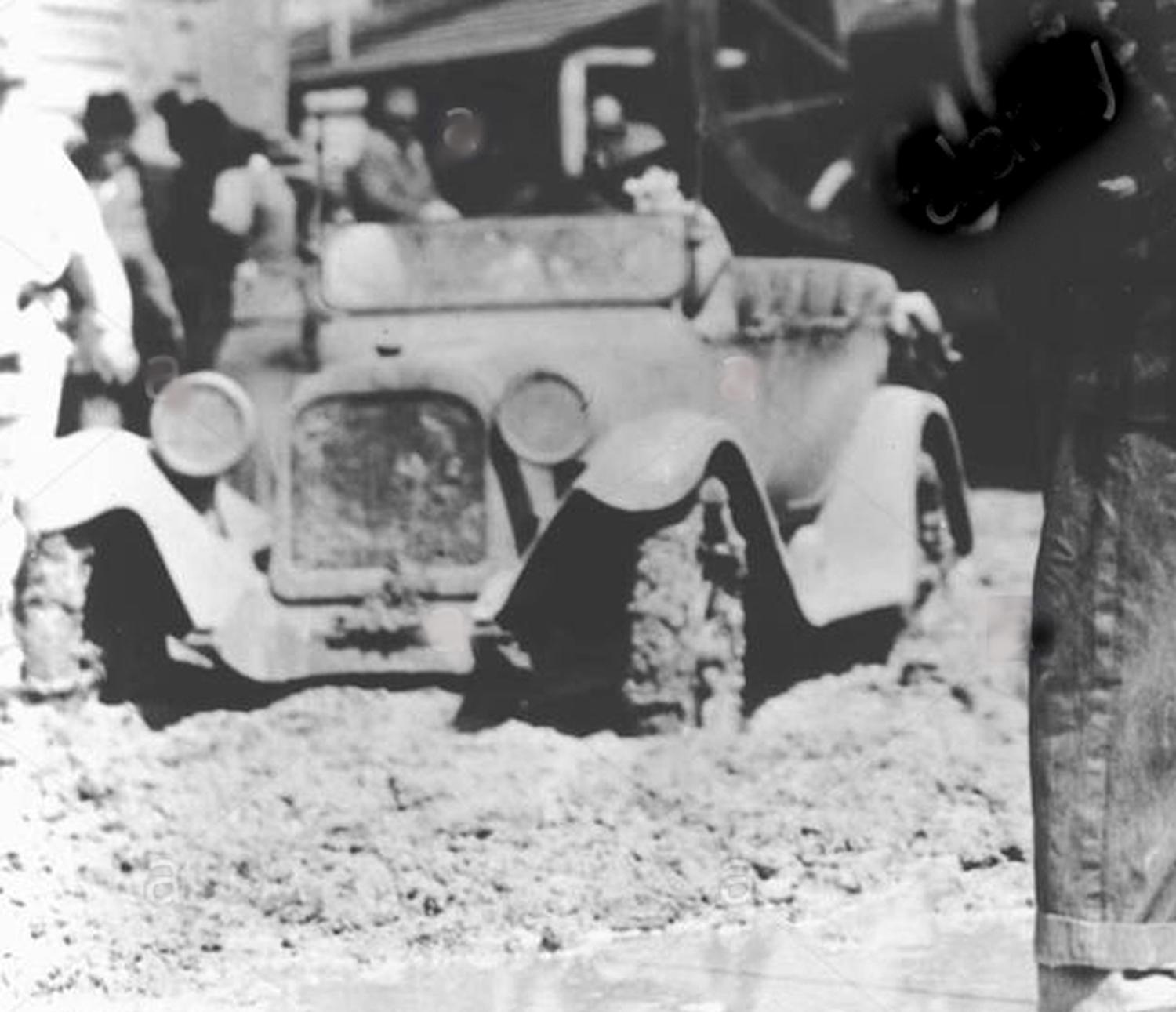
Spencer Tracy and Clark Gable “Boomtown” with mud and tire chains


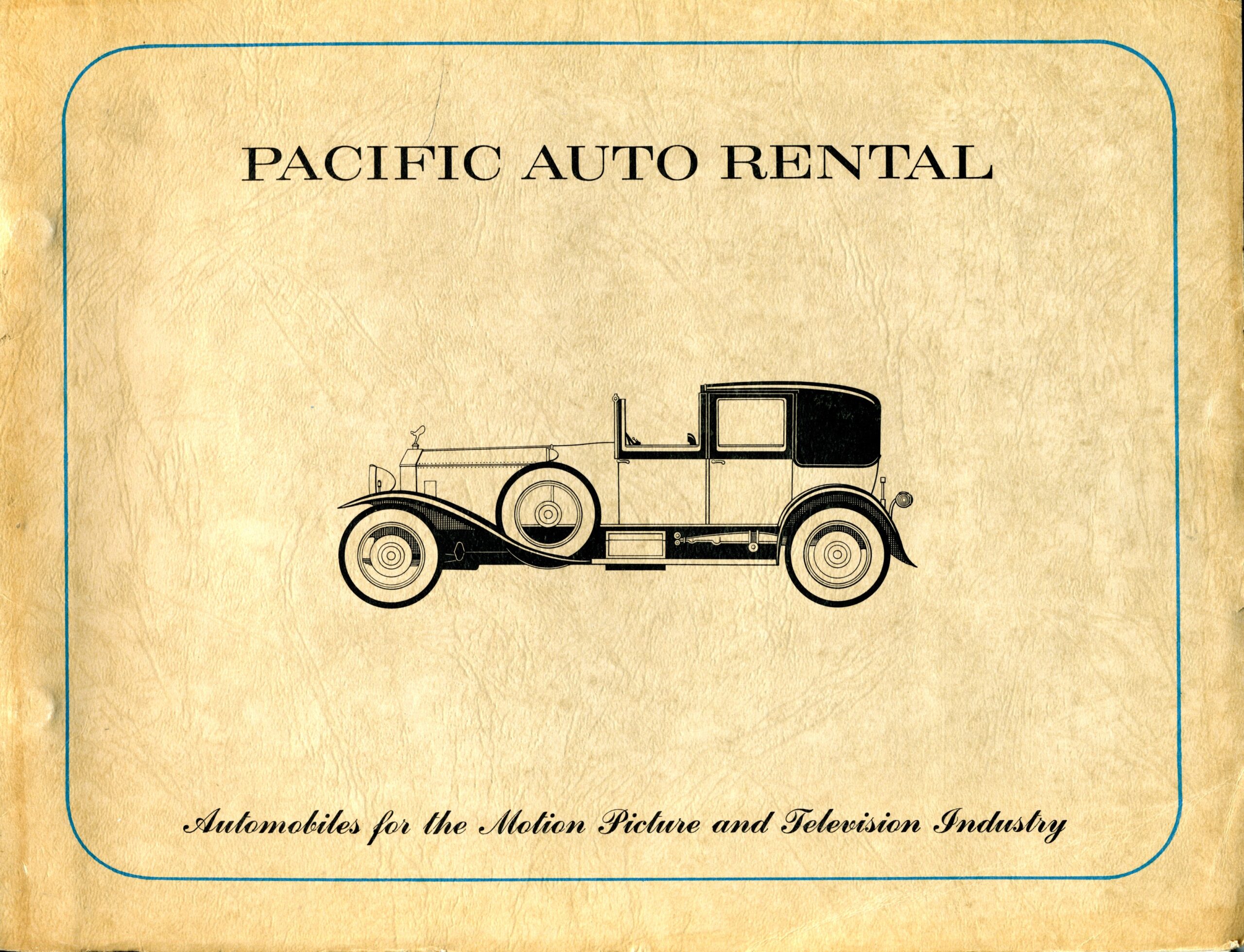
Pacific Auto Rental Catalog

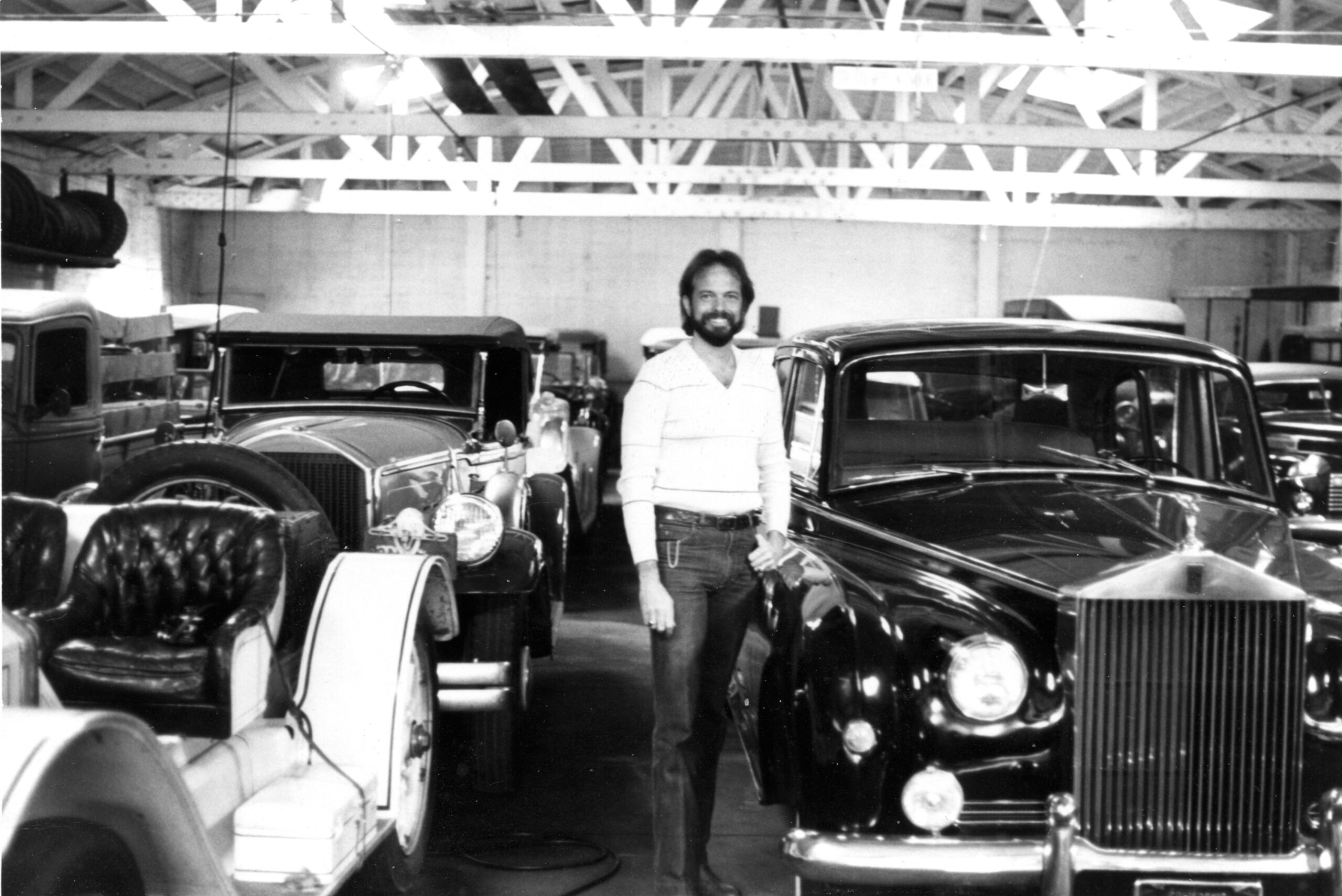
Driving to meet Dr. George Schweiger on a late summer morning in 1982, my friend Bill Wahnish alerted me that the somewhat curmudgeonly good doctor was a man of few words and had never been interviewed. This would be a first. Pulling up in front of an unremarkable but large one-story warehouse with huge sliding doors, Bill informed me that this was but one of three large facilities used to house the roughly 300 vehicles held by Schweiger’s Pacific Auto Rental business.

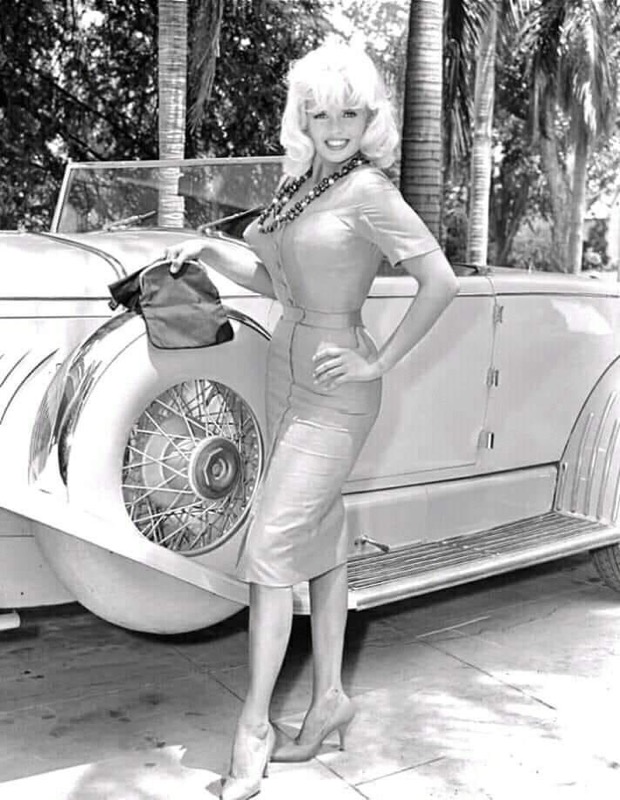
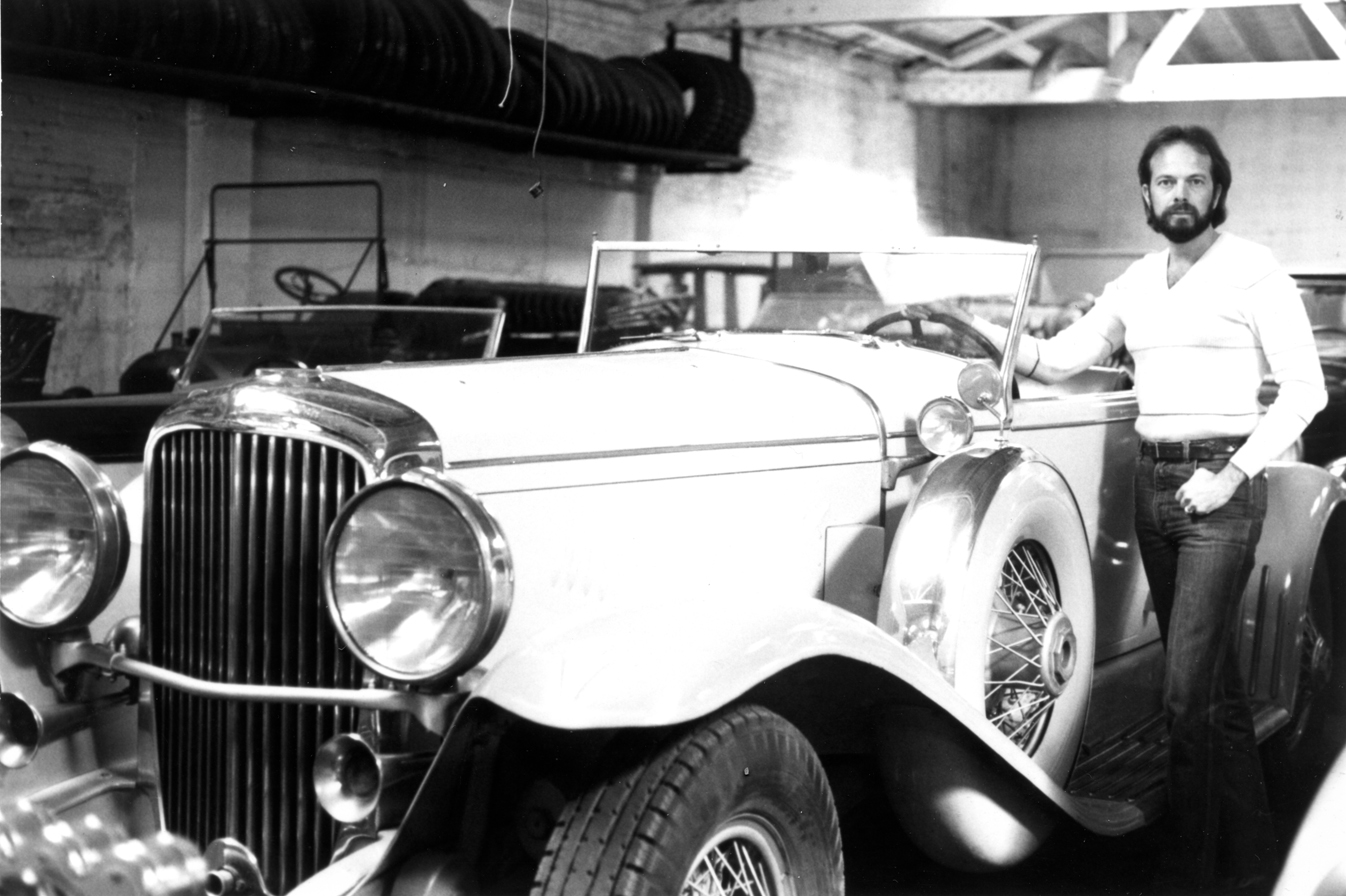
1931 Duesenberg Model J and Jayne Mansfield

A practicing and well-to-do Hollywood dentist in the time of silent films, Dr. George Schweiger possessed a great passion for interesting automobiles. As the 1920s came to a close, Schweiger had amassed a sizeable collection.

When the “Roaring 20s” disintegrated into the deep Depression. Schweiger decided he wanted some amusement in those dark times. His solution called for turning his car collection into a stable of vehicles available as rentals for the Hollywood movie studios. Schweiger’s breathtaking personal museum of future classic cars included numerous Rolls-Royces, Packards, Cadillacs, Mercedes-Benzes, Isotta Fraschinis and Duesenbergs including a 1931 Duesenberg Model J ‘Disappearing Top’ Convertible Coupe by Murphy that in 2015 would sell for $3,520,000.

Schweiger met us out in front of the warehouse. Spry and sharp, sporting suspenders and a dress shirt, Schweiger agreed to speak with me before departing for his usual afternoon tennis match.

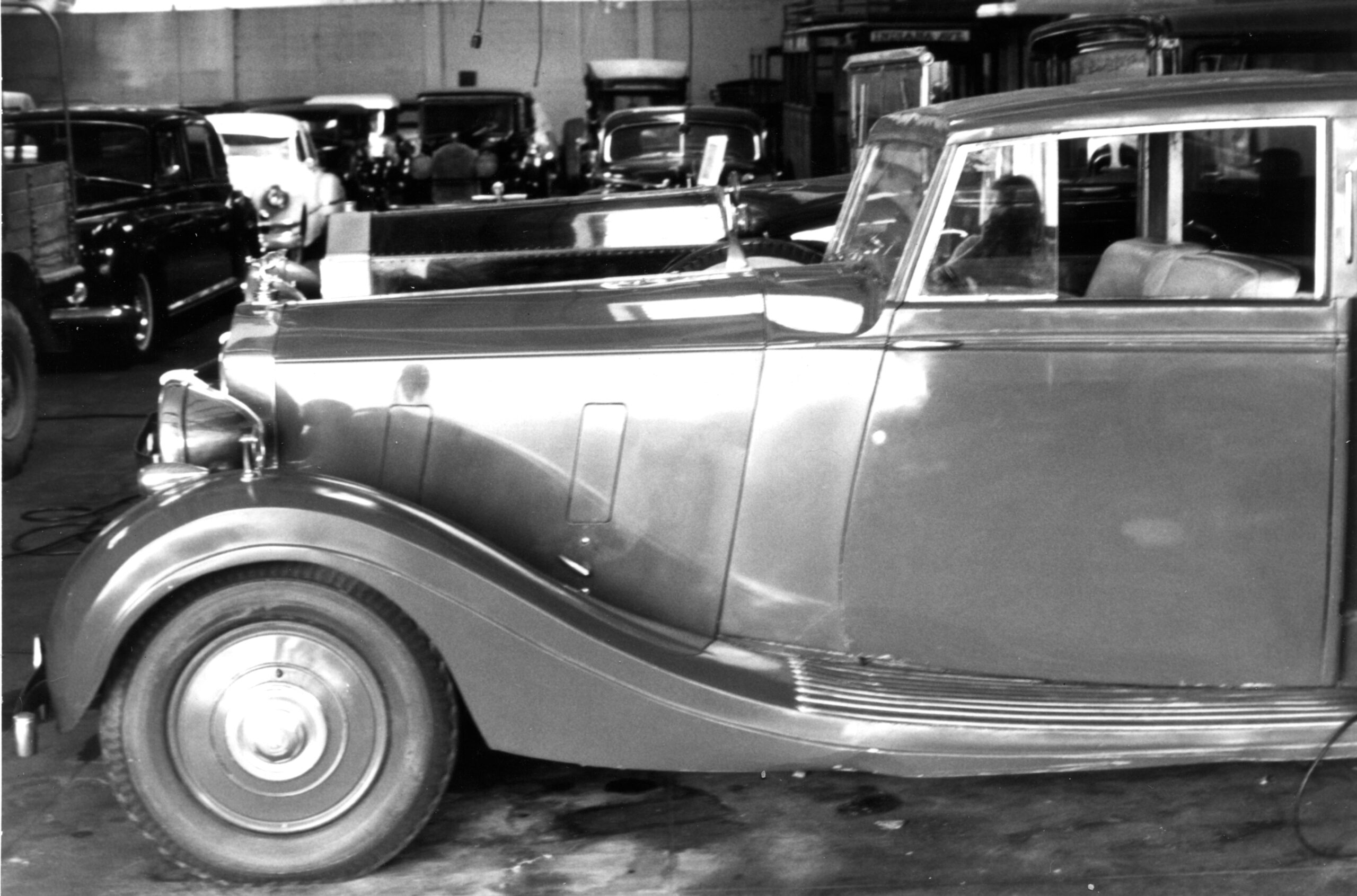
Following Schweiger through the entry door, I found myself in a dimly lit cavernous space tightly packed with classic vehicles of all stripes and sizes. High end sedanca devilles of the 1930’s, ‘40s and ‘50s on trickle chargers lined the length of one wall. A far corner was thick with late ‘30s and ‘40s trucks, some military, others commercial canvas top 5-ton stake jobs, the kind seen careening down a dark road in chase scenes from 1940s and ’50s serial adventures.

Against a back wall resided a 1924 Model T taxi that frequently appeared with Laurel and Hardy. Stationed to its immediate right sat a 1922 Maxwell made famous by comedian Jack Benny and his chauffer Rochester. Menacingly stern and next in line, was a 1939 dual-wheel Mercedes-Benz staff car custom built for Nazi general Erwin Rommel and bought by Schweiger in 1950. It would later be made famous on “Hogan’s Heros.” Most conspicuously and proudly displayed in the center of the warehouse floor were the Duesenbergs. Dominant in their presence and perfection, this proud assemblage of American automotive royalty included the future multimillion dollar 1931 Model J Convertible Coupe.

Our conversation would be held in Schweiger’s office. Directed to my left, we approached a classic glass pane and metal panel factory floor office. It displayed all the patina one would expect after spending over forty plus years in a vintage vehicle storage facility. Pacific Auto Rental had moved there in 1940. During that time Schweiger’s original partner had passed away in 1943. Shockingly for Schweiger, his sixty-year old son predeceased him some years back and forced the doctor to resume control of the business. Considering the impressive size of his collection, the minimal nature of the Pacific Auto Rental support staff came as a shock. It consisted solely of a postman who worked part time and a young man with learning disabilities. Everything else was left to the studio renting the vehicle and specialists on the other end of a phone call.
Reticent to say much at first, Schweiger initially deflected questions saying that he could not remember much. However, with a little encouragement, recollections began to flow with greater speed and amazing accuracy.

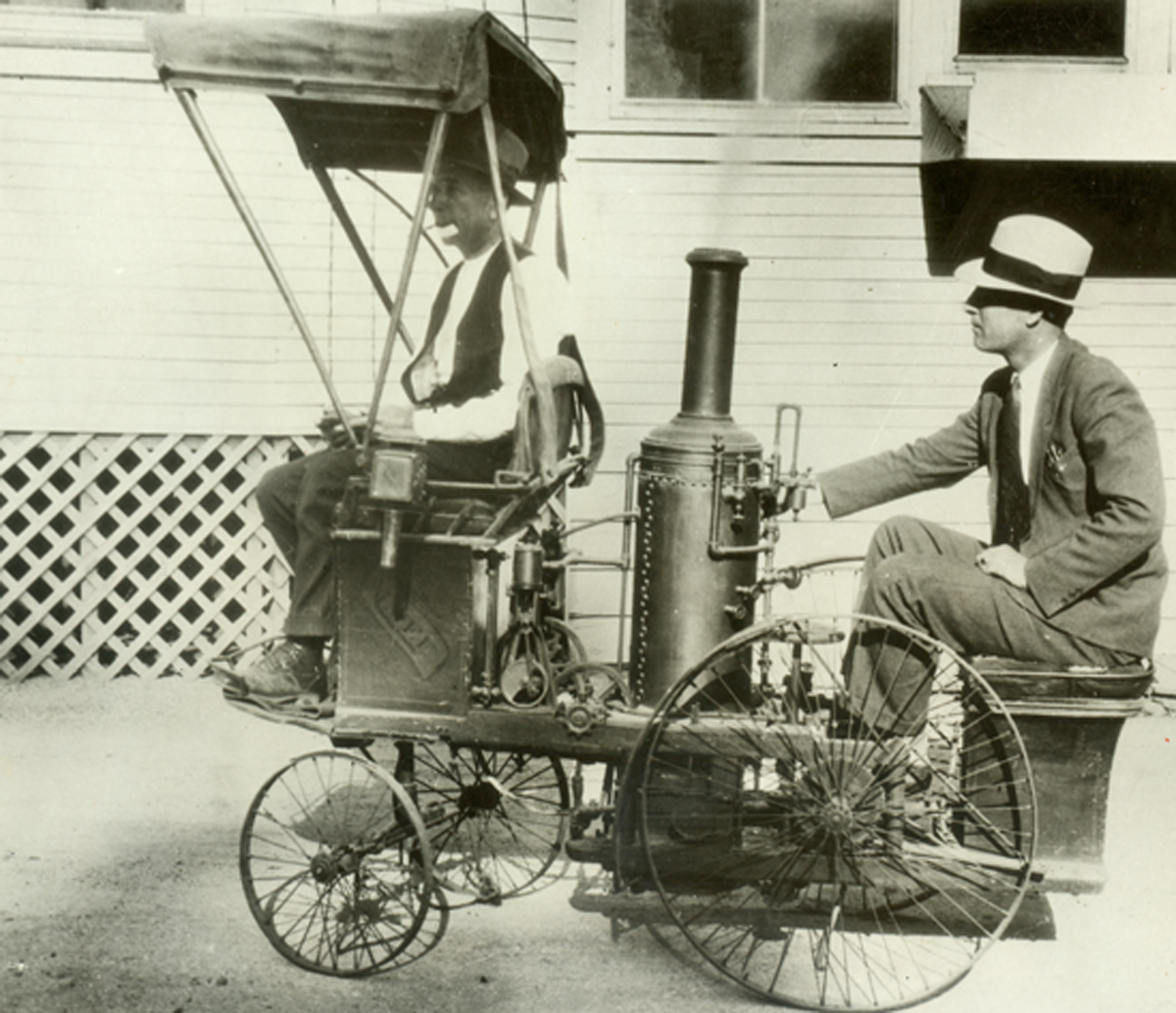
Philion Steamer

Schweiger first recalled his good friend and favorite trading partner Bill Harrah who passed in 1978. Owner of Harrah’s Hotel and Casinos, one of the most influential figures in gaming history and at one point the owner of the largest collection of classic vehicles under one roof, Harrah and Schweiger had a great relationship. Harrah’s favorite motorized possession, a Philion Steamer came in a trade with Schweiger. Harrah loved the little steamer. Built in the late 1890s by French circus showman Achille Philion, the coal burning steamer successfully served to call attention to Philion when he paraded it down main streets of America to announce that the circus had come to town.

Schweiger rolled right into the backstory of Samuel Goldwyn of Metro-Goldwyn-Mayer renown. As Schweiger starts the story, Samuel Goldfish has not yet changed his name to Goldwyn. A Polish immigrant, Goldfish in 1909 started out in Manhattan as the owner of a long and narrow novelty store. With the movies entering popular culture as a new form of entertainment, venues to show films were in great demand. Goldfish’s long narrow storefront suited the need perfectly. Within a few years Goldfish had progressed into movie making by entering into a partnership with the Selwyn brothers, Archibald and Edgar. To name their partnership they chose to combine their last names. Goldfish liked the name Gold-wyn so much so that he legally adopted it as his own. It also seemed a far more appealing combination than Sel-fish.

1931 Duesenberg Model J

As Gary Cooper’s mother lived on the same block as Schweiger, Cooper became a close friend and would stop by Pacific Auto Rental at times with his Duesenberg SSJ, the same Duesenberg SSJ that in 2018 would be sold by Miles Collier for $22 million. Hollywood’s A-list members possessing a love for Olympian automobiles apparently found Schweiger a kindred spirit and would visit Pacific Auto Rental to sell a car or just to hang out. Clark Gable, Carole Lombard, Tyrone Power and others would casually while away time in Schweiger’s little factory floor office. Years later a 20-something Elke Sommer would stop by to sell her 1957 Rolls-Royce.

A smile flashed across Schweiger’s face as his experiences on the set of the 1930’s Spencer Tracy and Clark Gable movie “Boomtown” came to mind. He recollected the heavy rains and deep mud that required putting tire chains on all 50 of his cars being used in the filming. He laughed in recalling how he crawled around in the deep mud affixing the chains so filming could proceed.

Rental car with chains

Schweiger, now fully engaged with his past, brought to life a wonderful freewheeling first person journey through the history of early Hollywood seen through the windshields of iconic vehicles that appeared in films America loved. Then, the clock struck twelve, literally and figuratively. I realized that time had melted away leaving me painfully close to missing my return flight home.

With many thanks, smiles and handshakes, I promised to continue the interview in the future. Back home I sent out query letters to a variety of magazines. A few months passed until  one day when four related letters arrived coincidentally. Three of the letters were responses to my magazine queries and expressed interest in the story of Dr. Schweiger and Pacific Auto Rental. The fourth letter came from my friend Bill. The single sheet of paper read, “Doc passed away. Thought you would want to know.” It would appear I had the honor of benefiting from the only personal recounting of Dr. George Schweiger’s remarkable Hollywood history.

I had been told that Schweiger’s only relative, a niece, possessed absolutely no interest in his collection other than its value. A few months later I learned that the physical assets of Pacific Auto Rental had been sold to the Imperial Palace in Las Vegas.

That said, I retained Schweiger’s priceless recollections. Some shared here with you.


By |2021-02-11T13:33:23+00:00February 11th, 2021|10 Comments

Conversations With People We Value #15

Like pearls on a fine necklace, the vivid memories string together as bright as if they happened yesterday. However, it was September of 1986 and the events came courtesy of a Volvo press event led by Volvo PR guru Bob Austin.

To introduce the new Bertone designed 1987 Volvo 780 Luxury Coupe, Volvo flew a premier selection of North American Journalists to Monaco. There, cosseted with no expense spared, the journalists would sample the new Volvo luxury Coupe on the narrow corniches (a road cut into the edge of a cliff running along the coast) clinging to the mountains of southern France high above Monte Carlo. My job was to capture it all on film.

And then, Nuccio Bertone signaled for his personal Miura

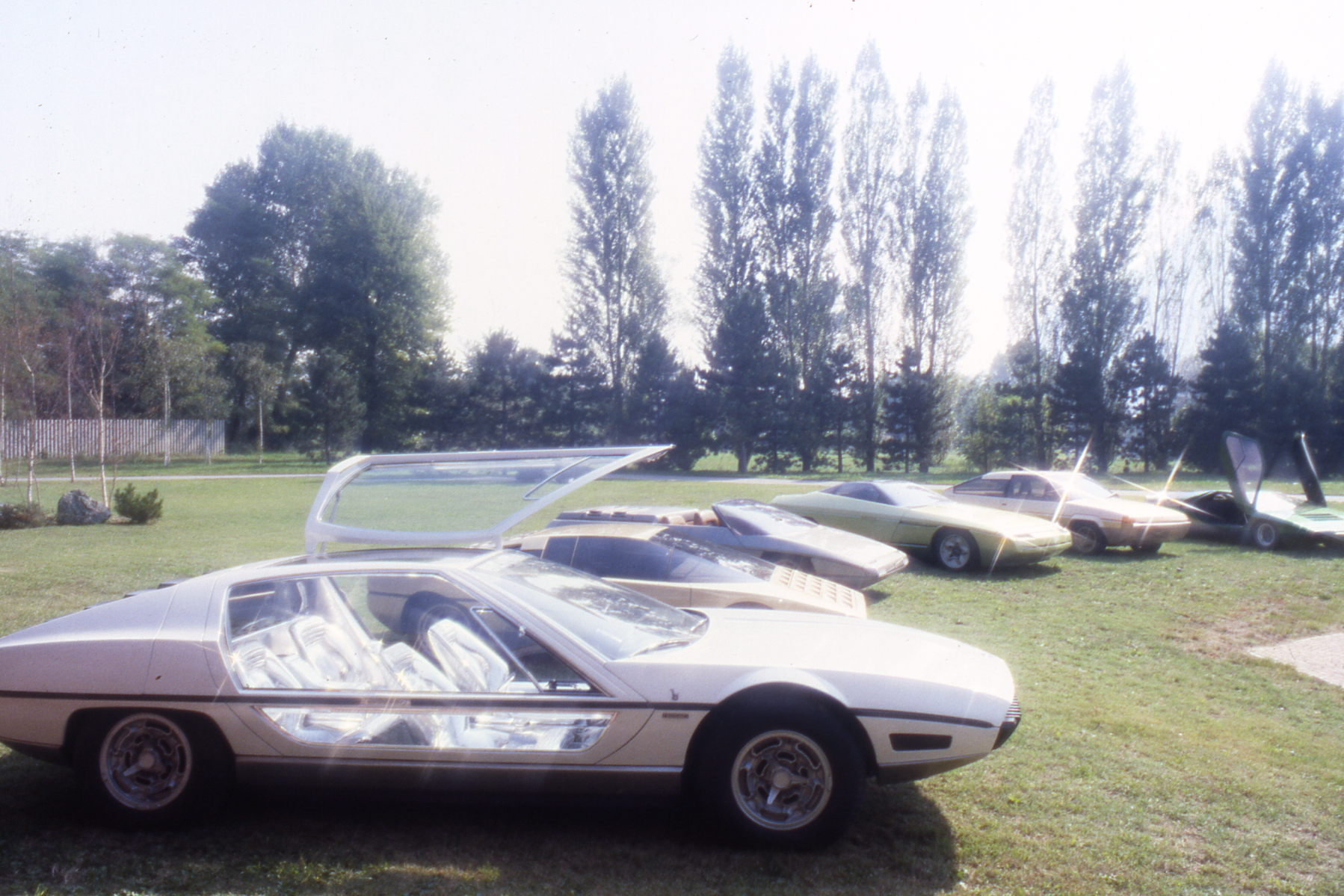
Display of Bertone concept cars

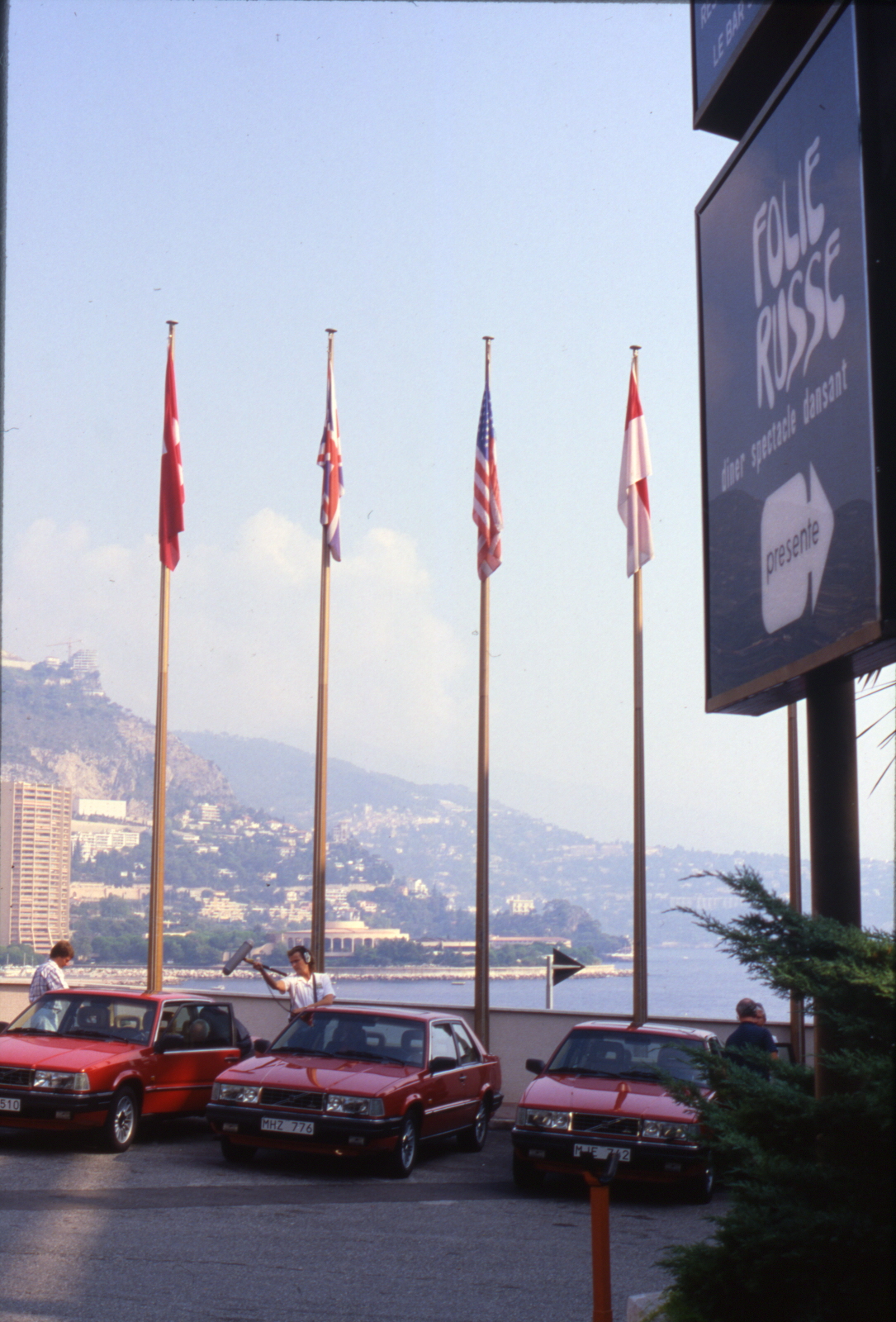
View from Lowes Hotel

Disembarking from the 747 jumbo jet, we arrived sleepy eyed in Nice on the first day that France required visas from all travelers entering the country. Terrorist bombings in Paris had spurred the French to respond with severely tightened security measures. Wearily pushing a dolly piled with luggage and camera gear we searched for customs. To this day I have no idea how, pushing our dolly piled with large black boxes, we found ourselves in the terminal with no memory of passing through security.

Tightly packed in our generic European rental, my director Jeff and I wove through the French Riviera high above a glistening Mediterranean on our way to Monte Carlo. Our arrival predated that of the journalists to allow us a few days to scout locations for filming. On our way we took a turn and pursued a long decent towards the sea in search of an old fort. Climbing the long and steep hill as we returned from our search we spotted a soccer ball hugging the curb as it accelerated down to the sea. In the passenger seat, I swung my door open. As we slowed, I scooped up the soccer ball. I knew this story would have more to tell. After continuing up the winding hill a young, I suspect, mother appeared in hot pursuit. As we approached her, I extended my arm out the window proffering the runaway ball. Her glorious smile and relieved expression lit up the street. I believe this serendipitous encounter blessed the coming days with good fortune, good will and good work.

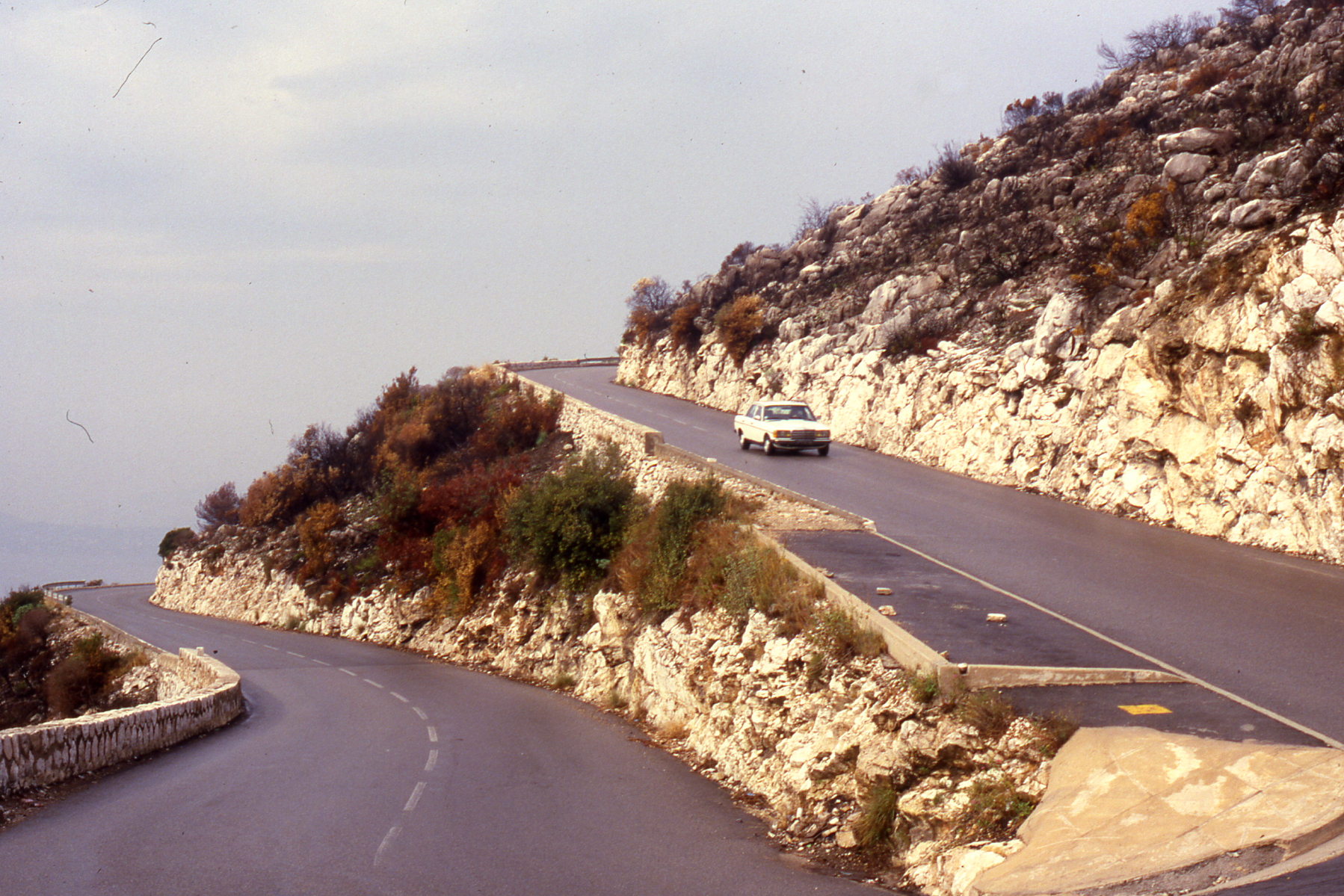
Corniche

Unlike the often spartan quarters allocated to a film crew, we would be enjoying the same luxury accommodations as the journalists. Majestically situated on muscular pillars at the water’s edge, the spectacular Lowes Hotel in Monte Carlo visually promised and totally delivered sumptuous luxury for the rich, the famous and, on this day, for Jeff and me.

Having upgraded to one of the Volvo 780 press cars, Jeff and I ventured out early the next day in search of beauty and drama on the twisting switchbacks above and beyond Monaco. Carved into mountain sides populated with single lane tunnels, these roads hugged towering cliffs on one side while featuring precipitous drop-offs on the other. Any concern for the absence of guardrails drew troubling substantiation from the still visible slide trails of vehicles lying crumpled hundreds of feet below.

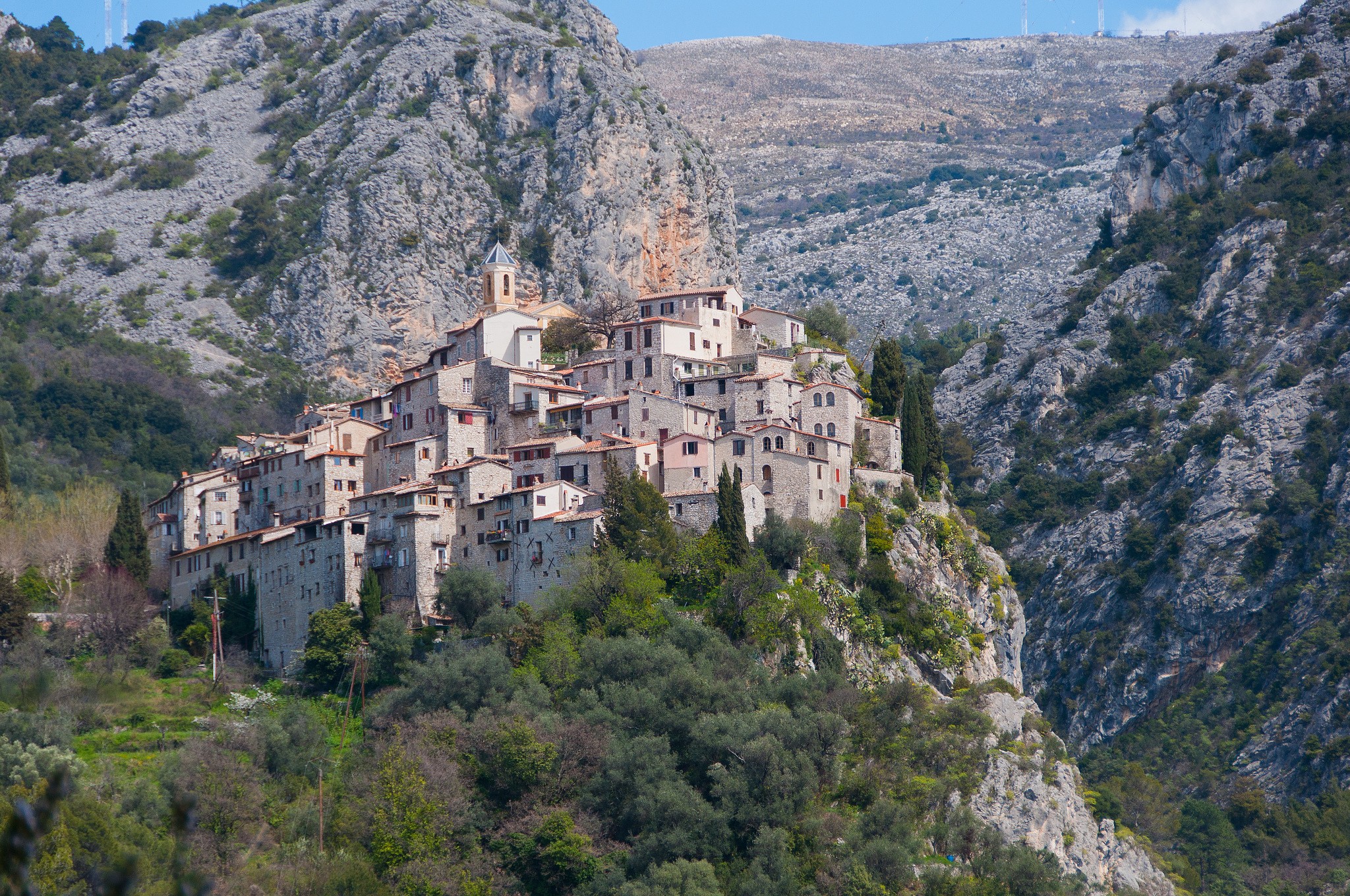
Peille

Properly exploring mountain roads that make Big Sur feel absolutely urban required advanced meal planning. Planning that we did not do. Mid-day found us hungry with no place to eat. Ahead, the road followed the towering cliff wall and bowed to our right. In so doing it revealed a small and visually striking assemblage of red tile roofed stucco homes blindingly white in the baking sun. Affixed like a wasp nest to the side of a cliff, the sleepy mountainside town of Peille greeted us. Driving through, the town emoted a timeless authenticity. Then suddenly, Jeff swore we had just passed a restaurant sign. We stopped. Moseying down charming and immaculate cobble stone alleyways we found La Feniere (translation, the hay loft), a tiny charming restaurant with maybe five tables. We were saved.

Sitting in her rocker like “Whistler’s Mother” and peacefully waiting for her bread to bake, the proprietress reacted to our entry with a start. We quickly realized that she spoke no English. As for us, other than bonjour, we were at a loss for words. Somehow the international language of pointing resulted in a glorious lunch of tomatoes, Cheese, fresh bread and Perrier. We departed having made a friend.

Filming would begin before the journalists arrived allowing us to shoot running footage of the 780s on the mountain roads. My good fortune continued with the arrival of my Volvo supplied film crew from Sweden. Talented and professional, they quickly bonded with us to form a strong personal and professional attachment. That bond would soon save lives when a crew member sacrificed his body to prevent a deadly accident during shooting.

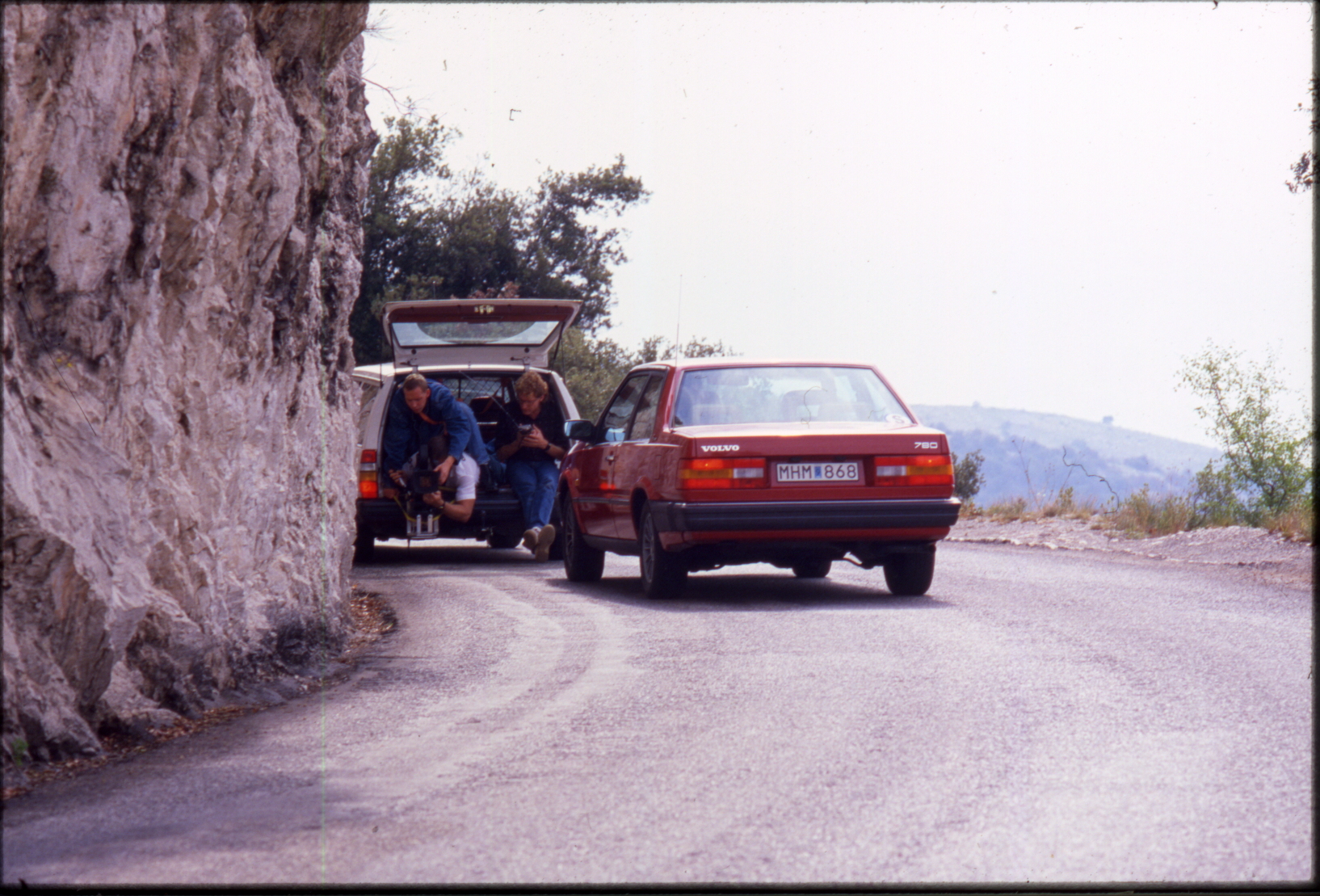
Filming on narrow mountain roads

Using a Volvo 740 wagon as a camera car to shoot the hero 780 required frequent readjustments of the camera mounts. A steep cliff on one side and precipitous drop on the other left no place but the skinny corniche roadway itself to set up each shot. Walkie talkies and few automobiles made controlling traffic flow quite manageable. French motorists seemed delighted to be witnessing film production. However, not every driver felt obliged to calmly wait. For one particular shot, a blind curve separated the stopped traffic and the crew members setting up the next shot on the roadway.

Screams and blaring horns yanked my attention from my notebook to see my Swedish assistant director draped on the hood of a BMW clutching the windshield wipers as the car came to an angry halt. The impatient BMW driver who had bolted out of the waiting line had come to rest just before taking the turn and plowing into the defenseless crew.

On a lighter side while prepping a shot by another sharp turn, I was approached by a tourist who had just pulled over. ”Does anybody here speak English,” He inquired. I indicated that, yes, I did. He asked, “Is this the place where Princess Grace died?” Now, I was blessed with a crew with two Swedes, Pelle and Rune, both of whom displayed a wicked funny sense of humor. Below the curve at the bottom of the hill lay a few wrecked Renaults. They begged me to say yes just to see the guy go down and try to rip a souvenir off a car. I would have none of it. I explained our purpose for being there. He thanked me and went on his way. A few days later I learned that that specific curve possesses a bad reputation that earned it the name, the “Devil’s Curse.” And, yes, Grace Kelly’s accident occurred there. Sorry Mr. Tourist.

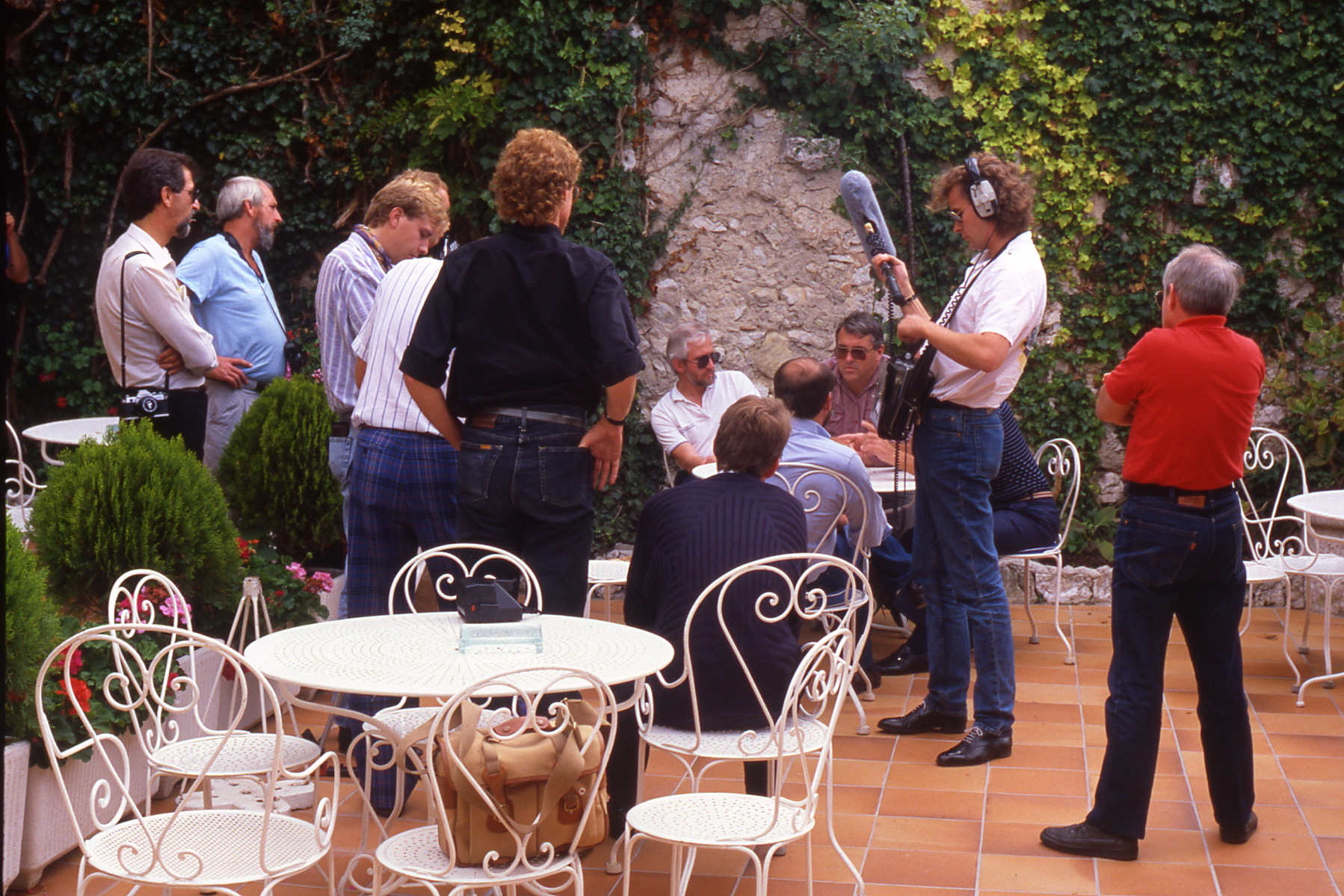
Interviews at Chateau Eza

With the journalists having arrived, work for the crew really dialed up. With a trip to the spectacular Chateau Eza for lunch and interviews, plenty of footage to be shot with the journalists interacting with the 780 and, of course, more driving footage B-roll, it created very long days for the crew. This in turn created a very interesting interaction in the Lowes Hotel lobby. Returning from the road in the evening, the crew, looking very much the part of a grunge band, would arrive in the lobby about the same time the black tie crowd departed to enjoy their rich and famous lifestyle. Oh, when worlds collide. Basically their response resembled stepping on roadkill with a bare foot, until. Until, the glitterati spotted the 35mm Panavision film camera and trappings. Le Cinéma? Postures firmed as soft smiles filled the room.

With gear packed tightly in our 740 wagon, we departed leaving Monte Carlo in our taillights. Next stop Turin and Carrozzeria Bertone where we would meet Signore Nuccio Bertone himself.

Discovering break-in at hotel in Torino

Leading our film crew caravan to our next stop in Turin, I had the wheel of a red 780 press car. I have never been to Italy. In this pre-GPS age, I have simply pointed my 780 in the direction of Torino and hit the gas.

With an incredible stroke of luck, upon entering downtown Torino I looked to my right and saw the Hotel Jolly Ligure, our destination. Pretty beat from the day, our ragtag film crew staggered in to the hotel to get some rest for the big day tomorrow.

Broke into what? Awakened by a knock, I heard the news that our 740 wagon parked at the front door of the hotel loaded with a six figure camera kit had been broken into. Yes, in retrospect it was clearly a mistake to leave it in the car despite the desire for an early getaway.

I hustled down to discover that the crafty thieves broke in, crawled over $100,000 plus of Panavision equipment and, and stole the radio. I am not saying this in any way represented a karmic payback related to the soccer ball incident but I am not saying it did not.

Nuccio Bertone has his Miura brought out

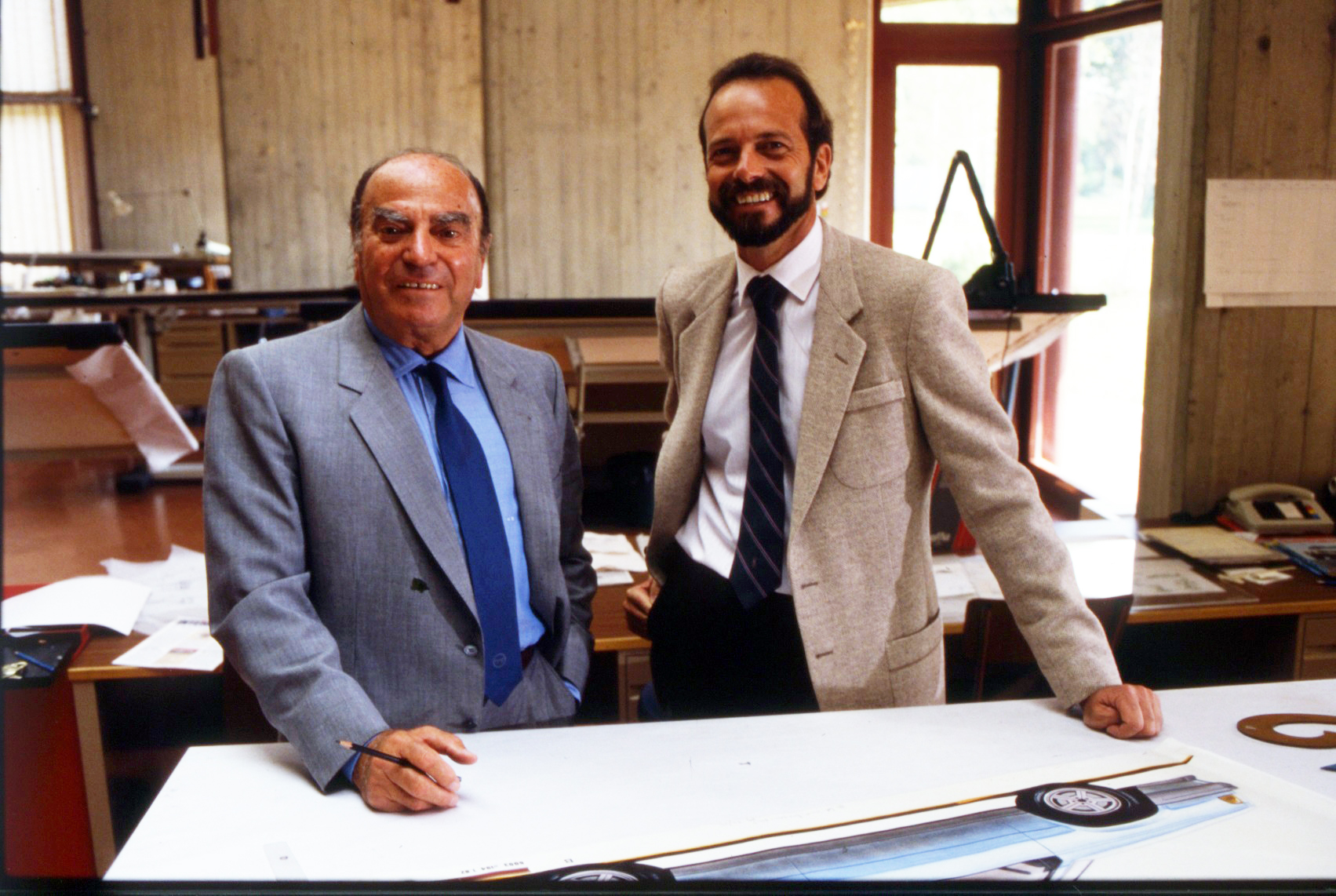
Arriving at the bright and airy Carrozzeria Bertone Studio nestled against the foot hills of Torino, we were greeted by a display of iconic Bertone designed concept cars. As my crew went about setting up for interviews, I grabbed the opportunity to wander alone among this breathtaking collection of automobile artistry. As I slowly moved through the collection, an older Italian gentleman stood quietly at the far end of the semi-circle. I greeted him. I spoke no Italian. He responded genially but spoke no English. I smiled and said with a shrug, “No Miura.” With that my genial companion called out in a firm tone. His voice brought hustling workers on the run. Shortly thereafter a yard tug pulled out an immaculate orange Miura. I had just met Nuccio Bertone who would become a friend.


Nuccio Bertone and yours truly, 1986

By |2021-01-28T13:14:16+00:00January 28th, 2021|16 Comments

Conversations With People We Value #14

As car enthusiasts we revel in the beauty, the performance and the perfection of the vehicles we love. We also recognize that for the vast majority of us the skills required to properly maintain the 4-wheeled objects of our affection exceed our level of expertise. The responsibility for preserving our classic automobiles at a high level rests on the shoulders of a shrinking body of skilled artisans. As these gifted craftsmen age out of the community we find ourselves painfully aware of their critical value in preserving the health of our classic car hobby. Once plentiful, this, now, dwindling breed features men who rank as savants in their respective fields. None more so than Steve Ellis.

Rebuild it and they will come –

The life of Carburetor Steve


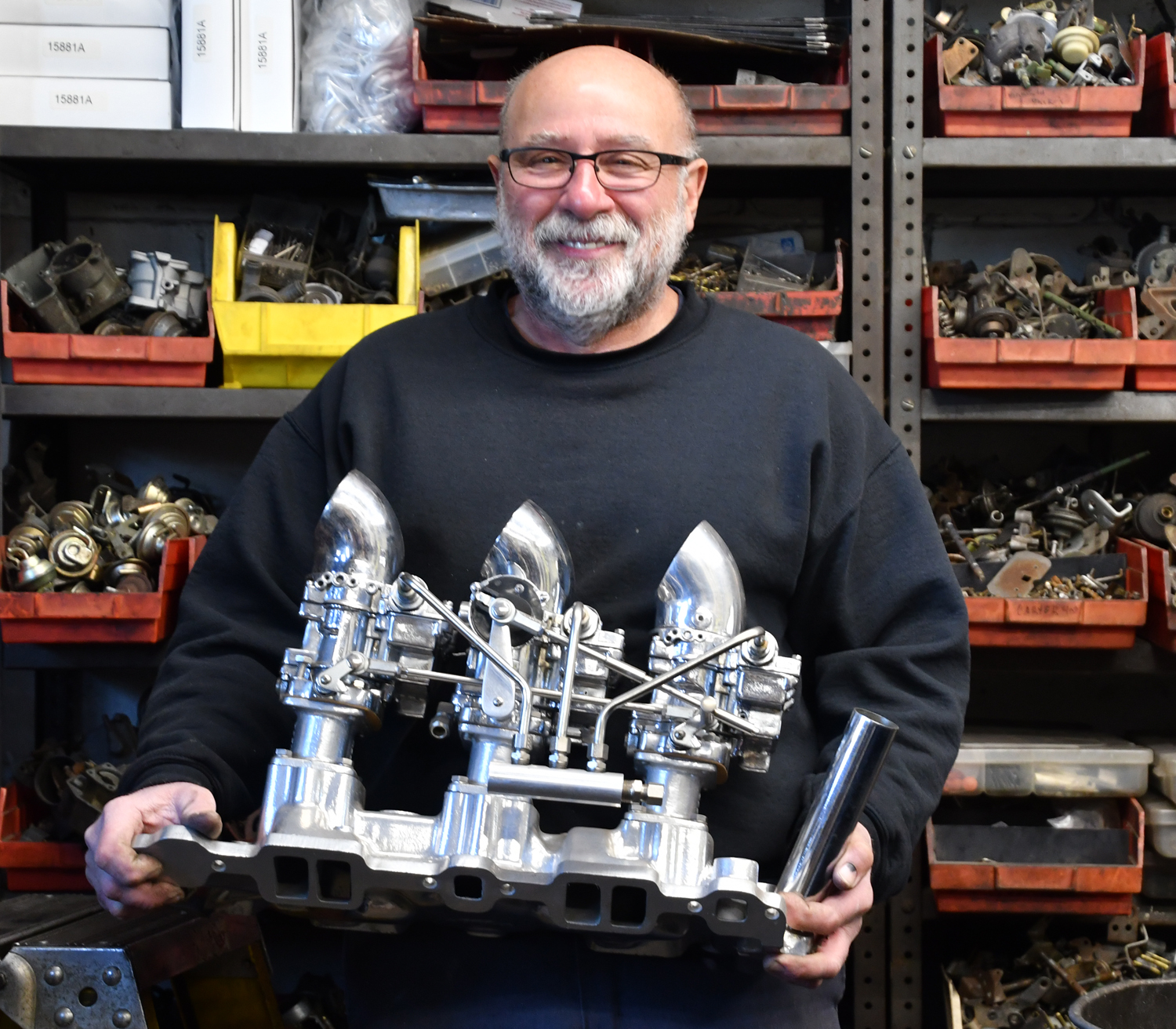
Steve Ellis with custom tri-power for a Chevy small block

Sitting on Steve’s work bench, the three Weber carburetors belong to a 1964 Ferrari Lusso. Steve, in the process of explaining his complete rebuild of the, now, perfect threesome, gets interrupted by a guy who bursts through the door announcing his entry with a warning. “This box stinks! Careful when you open it.” Within the stinking box resides the carburetor for a 1948 Dodge sedan afflicted with vintage gas from before Hess sold toy trucks. As Steve says, “Welcome to my world.”

1948 Dodge 1-barrel and 1964 Ferrari Lusso Weber tri-power

Better known and revered as Carburetor Steve, Steve Ellis has displayed his total mastery of everything “carburetor” for 41 years with the last 37 years spent in his own business, Steve’s Carburetor Shop in Lyndhurst, New Jersey. Totally at home and at ease amidst a thoughtfully organized chaos of carburetor innards and completed foreign and domestic setups, his shop features completed examples of vintage carburetion ranging from the mundane to the exotic.

Since Steve began, profound changes driven by emissions requirements, computers and performance demands have morphed the nature of carburetor rebuilding. Over the last 40 years Steve’s business has pivoted from an emphasis on supporting a vast population of primarily generic travel appliances to providing life support for the vehicles owned by automobile enthusiasts dedicated to enjoying the landmark cars that brought the 20th century’s golden age of the automobile to life.

Steve says, “When I started, my business was purely wholesale supplying gas stations. I had three guys and a driver working here. I used to do a lot of Hondas, Toyotas and Nissans but that’s all gone. Now it’s shrunk down to where it’s just me and a part-time guy.” However, for Steve the enormous community of vintage car enthusiasts in New Jersey and across the nation keeps him busy. Steve says, “Almost all of those vintage cars have carburetors which need service every couple of years. I am doing carburetors over now that I did ten or fifteen years ago.”
Shortly after the stinky 1948 Dodge carburetor made its appearance, a kind of “Back to the Future” Doc Brown personality enters and introduces his vintage project. “It’s off a ’57 Buick,” Says Doc Brown. Not unlike presenting a vintage time piece to the expert on Antiques Road Show, Steve displays a comprehensive knowledge of the 60-year-old Carter AFB as evidenced by the probing and nuanced questions he asks. Doc Brown simply says, “do it.”

When asked specifics about Doc Brown, Steve, with a shrug, acknowledges he has never seen him before. That says it all about reputation. Clearly word of mouth had brought that 1957 Carter AFB to Steve’s. “That’s pretty much how it works, people with vintage jobs just show up.” says Steve. He adds, “You know like in the movie Field of Dreams  ‘build it and they will come,’ well in my business it is rebuild it right and they will come.” And they do.

Steve in the process of confirming that my 1961 Corvette’s dual quads need help

When asked about competition, Steve recalls that when he first started just about every other town had a shop specializing in rebuilding carburetors, generators and starters. Today in the whole state of New Jersey less than a handful, maybe three or four at most, can do what Steve can do. And just what can Steve do?

Regardless of its pedigree every carburetor rebuilt by Steve enjoys the same comprehensive overhaul. It starts with a full teardown and cleaning. Steel parts go to an industrial plater. Castings are subjected to ultrasonic washing followed by glass beading and then a second ultrasonic wash. Steve says, “it not only makes a difference functionally but aesthetically as well. Aesthetics can be a big deal if the car is being shown.” With all old material and grime removed new gaskets and worn parts are replaced. With a jeweler’s eye for perfection, Steve reassembles the carburetor to the point where it is ready for final tuning after being returned to the engine.

Moonkist

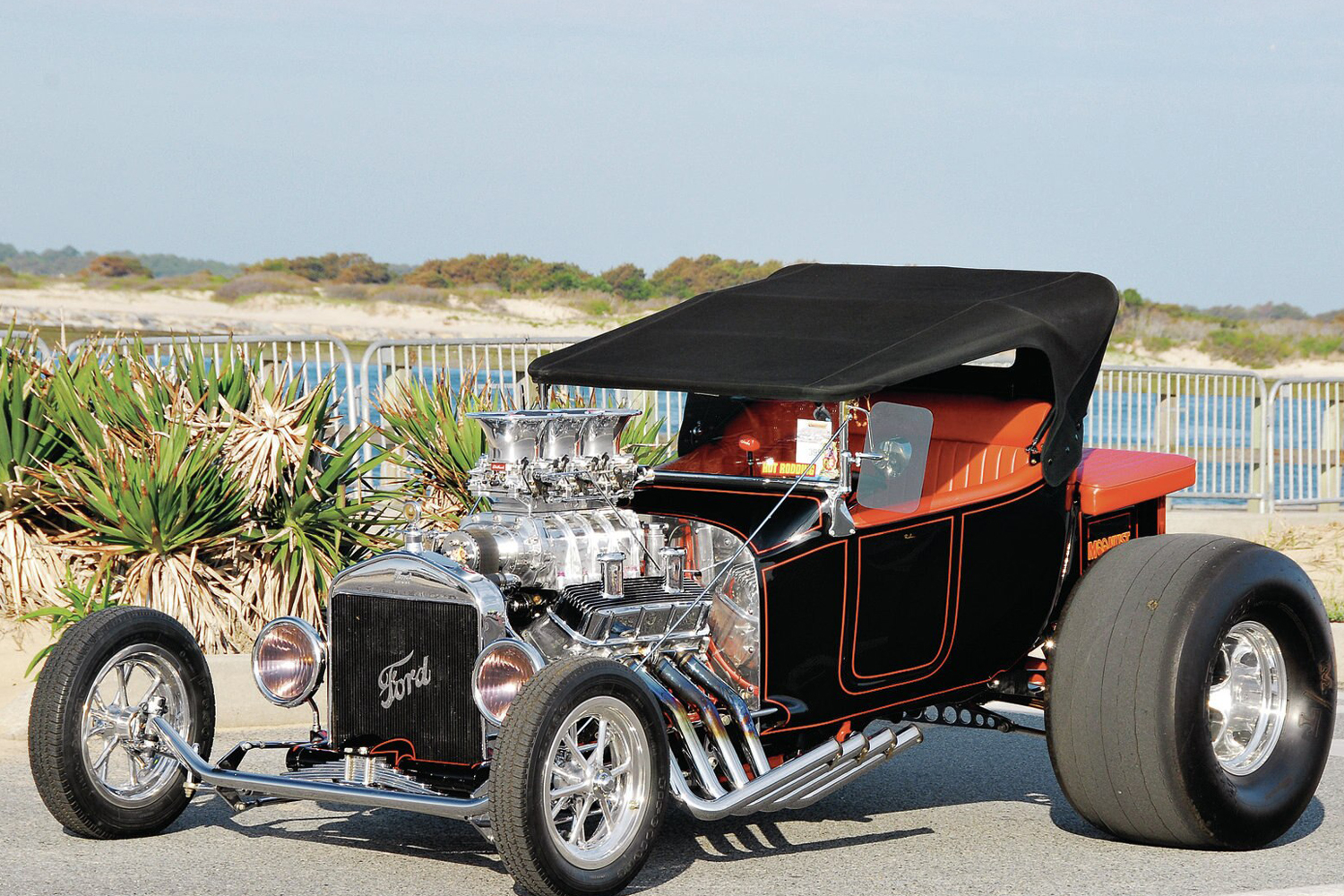
A recent arrival to Steve’s work bench stands out among the many custom setups from landmark vintage cars entrusted to Steve’s skilled hands. Awaiting Steve’s attention are a trio of Edelbrock 500 carburetors from “Moonkist,” a legendary T-bucket hotrod from the 1970s. Inspired by the brilliantly wicked early 1970s Randy Bianchi designed T-bucket “Sunkist,” Moonkist, built in the late 1970s featured the joint vision and skill of Bianchi and the late Willy Donato.

Admittedly, Steve had suffered from being victimized by his own obsession for perfection. For a period he would build custom tri-power systems for clients. A gifted machinist, Steve, working with stainless steel, tailored fuel logs in a variety of shapes from hex to square to round. He fabricated custom fuel lines and linkages and brackets from stainless all with a jewelry finish.

However, work for a custom client named “Mr. Skate” put the stainless steel nail in the custom tri-power coffin.

Mr. Skate approached Steve expressing a desperate desire for a custom tri-power set-up. Steve explained that he created custom systems during slow times at the shop. Skate agreed. Steve says, “It was like he hadn’t left my shop yet and he was asking when it would be done.” Skate began calling repeatedly. He would make demands saying that he needed the tri-power right away. Steve says, “I would see him at cruise nights. He would harass me with comments like ‘I’m a customer too. I want my tri-power.” Steve had had enough. Steve, to satisfy Mr. Skate, would come back to the shop at night to finish all the finely detailed custom stainless work. He delivered the system. Steve recalls, “With the system completed, Mr. Skate now had a problem with the price.” And, thus, Skate earned his name. As Steve says, “Mr. Skate was excessively frugal.”

In looking back Steve says, “I’d make all these little pieces on the lathe and Bridgeport. They’re all stainless. I polished the heads of all the bolts and they’re all stainless. The process proved enormously time consuming. I wound up losing money. I had to stop.”
As a kind of “carburetor whisperer” Steve offers insights into the proper care and feeding of vintage carburetion. With systems like dual quads and especially tri-power Steve advises, “Every time you take the car out you have to put your foot into it. You have to open up the end carburetor(s). Steve tells the story of a guy who wanted tri-power for his Mopar though he believed that they would be a pain in the neck and a nightmare to set up. “Not true,” says Steve, “Just set them up right. It’s always one of two things. Either the linkage is out of whack or the end carburetors don’t get used and they gum up.”

To make his point Steve returns to his “favorite” customer the excessively frugal Mr. Skate with his tri-power. Steve says, “He came in and wanted me to show him how far down he could push the gas pedal before the end carbs kicked in. He didn’t want to waste gas.”

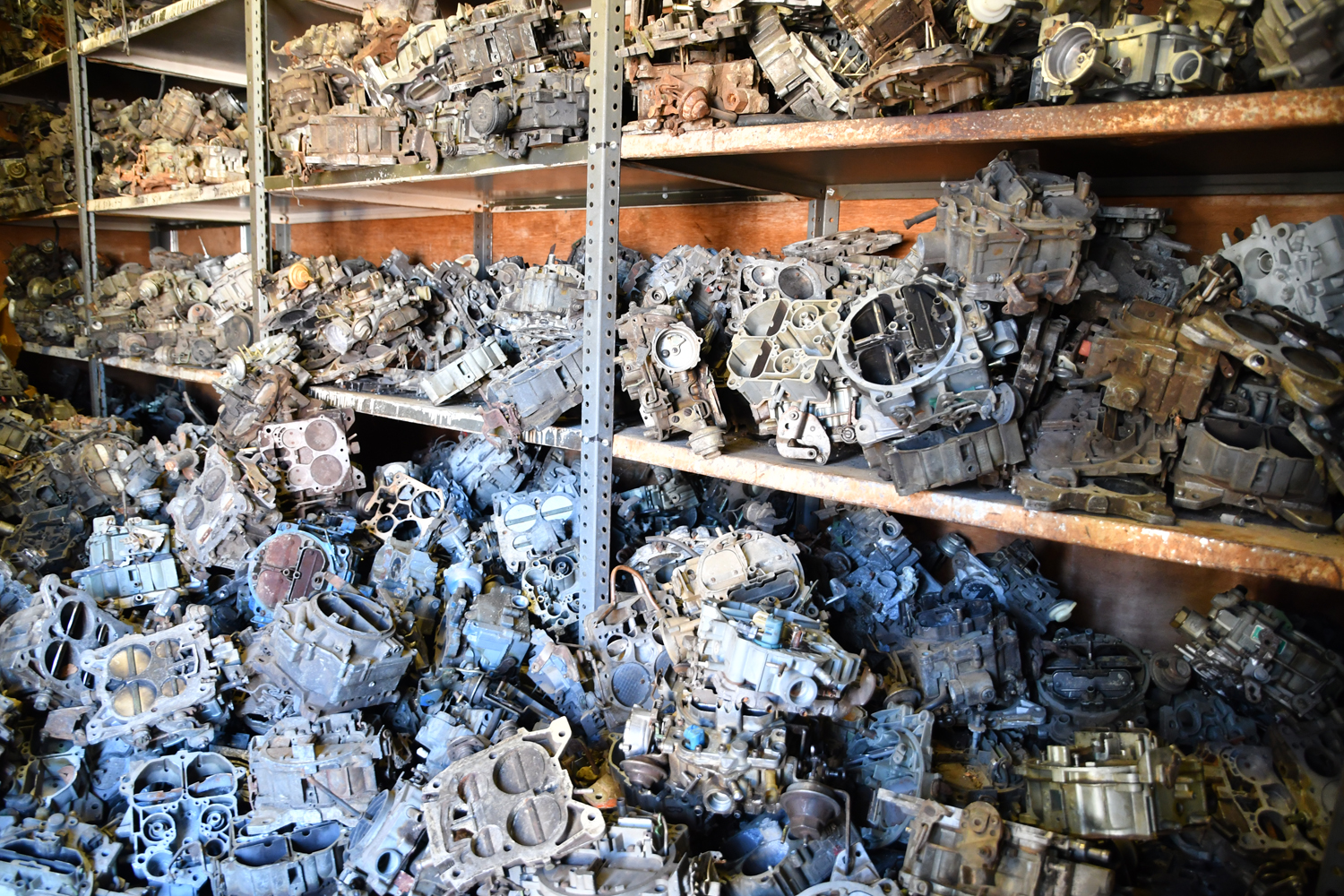
In walking around Steve’s shop a respectable pile of old carburetors fills a corner. When called to his attention Steve just laughs and opens a door to his back lot. Outside a shipping container roughly nine feet high and 55 ft. in length fills a side of his parking lot. Unlocking an access door reveals shelves lining the full length on both sides filled with old carburetors. But wait there’s more! Having exhausted all shelf capacity, a thigh-high snow drift of old carbs cover the floor for the length of the container. Steve utters a self-deprecating laugh as he explains the calls he gets from the children of deceased mechanics or downsizing hobbyists with boxes of old carburetors looking for a new home. “I never say no,” says Steve. Reflecting on his past misjudgment, Steve recalls his total confidence in knowing that when he bought the container he could never exceed its cavernous capacity.

When asked about the future of carburetor repair Steve says that even if someone has the desire to learn it, so much can no longer be picked up in everyday work experience. He laughs saying that he has float levels for generations of carburetors committed to memory.

Steve also makes a point of acknowledging the help he received along the way. He gives great credit to an older friend he recalls as being a big brother when he needed one. His friend, Charlie, generously shared his extensive technical knowledge and commitment to excellence in welding, painting and engine work. Turning serious for a moment, Steve slows to give emphasis to his words, “Everything I do and how well I do it has its foundation in everything Charlie taught me.”

When asked about his future Steve says, “I am going to continue doing antique carburetor work. Maybe someday I’ll retire but not now.

Time spent with a remaining artisan like Carburetor Steve triggers recollections of an earlier era when appreciation and respect was rightfully accorded the honest labor, commitment to excellence and pride associated with the mastery of a craft. As well, it reminds us how good we feel when in the presence of such mastery.

Merry Christmas, Joyous Holidays and a happy and healthy New Year

Drivin’ News will return in the first week of 2021. The adventure continues…

By |2020-12-24T12:18:59+00:00December 24th, 2020|6 Comments

Conversations With People We Value #13

Last week my F100 pickup required a flatbed. Upon calling AAA I discovered that while a flatbed would be sent for my truck, I could not accompany my vehicle, AAA’s Covid policy. It would be up to me to get personal transportation.

AAA only tells you this when you call for assistance. Questions relating to proper delivery of the vehicle and disposition of the vehicle key remained unanswered. Be warned.

Luckily in my case, a friend nearby came to my rescue. We accompanied the flatbed to the repair shop.

In a classic lemons to lemonade story, while visiting the repair shop the following day, owner and good friend Bob Tasman shared a great story as retold below.


Confessions of a demolition derby survivor

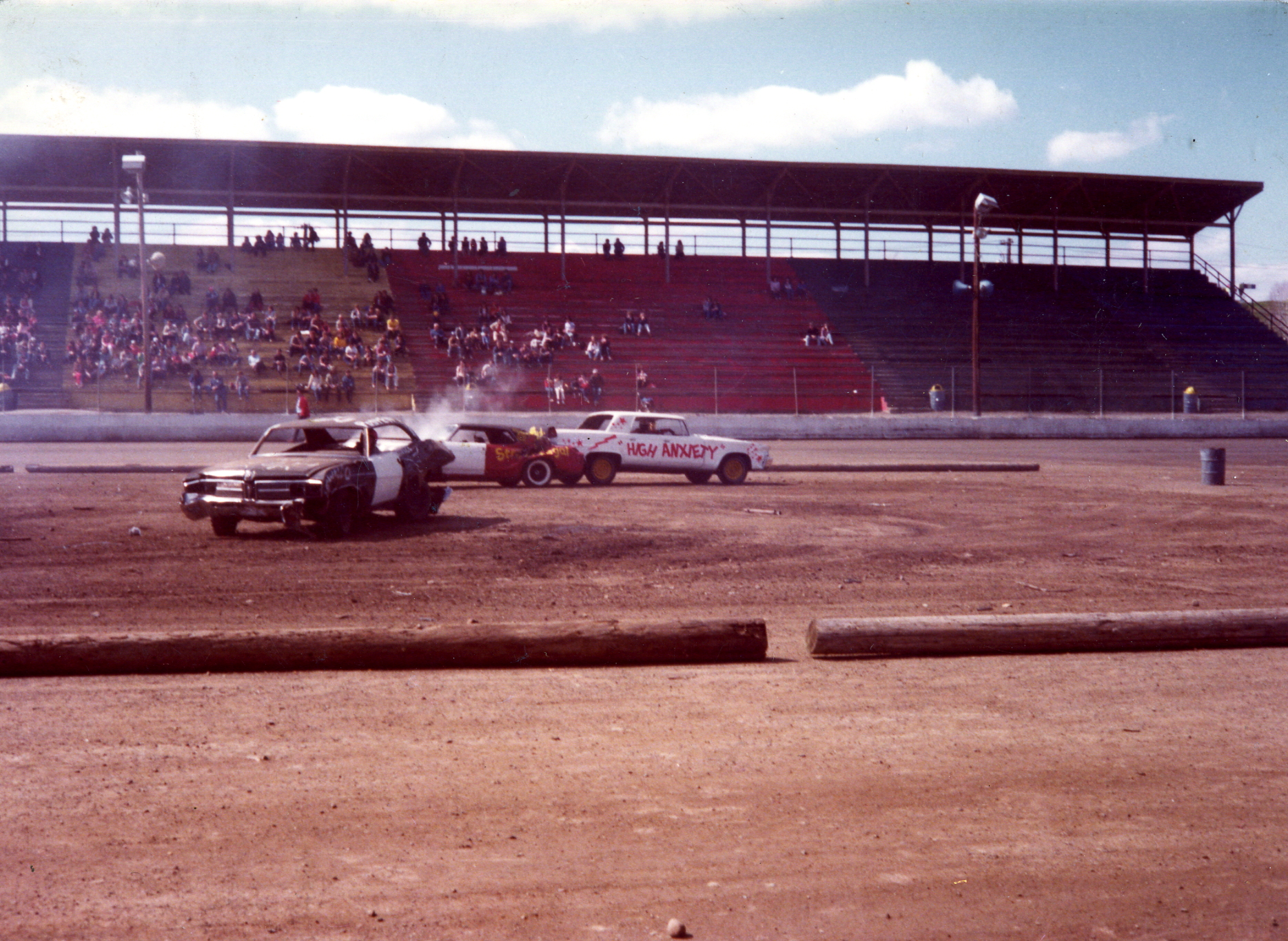
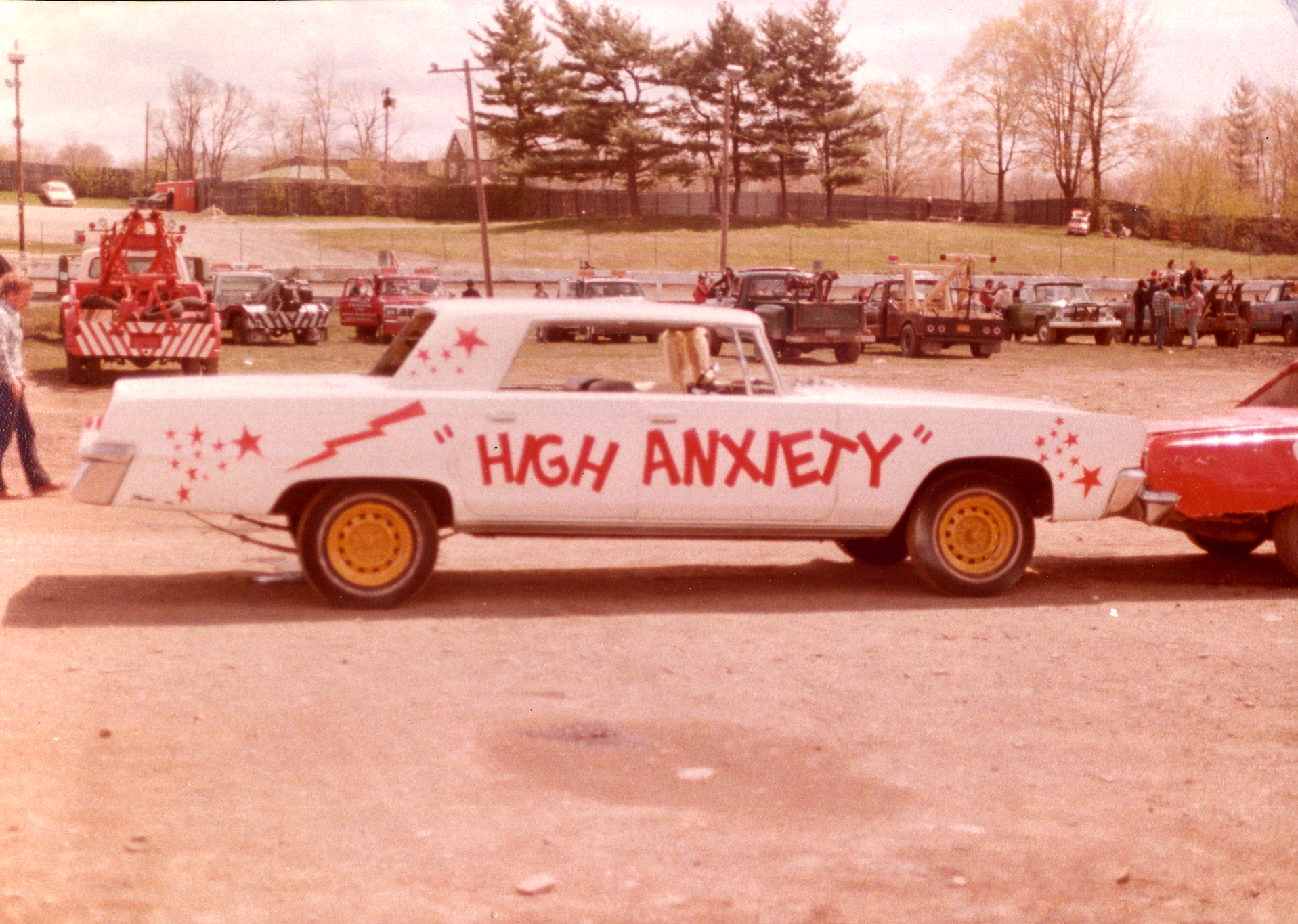
High Anxiety

Bob Tasman epitomizes the hard core automobile driving enthusiast who grew up in the mid-twentieth century’s golden age of the automobile.

As a Drivin’ News reader, Bob while looking at my truck tossed out an offhand comment about a recent Drivin’ News story that described a teenager’s passion for driving in demolition derbies (“Crash course for an underage driver”).

Though a big time dirt track racer for many years, Bob said, “Reading that story gave me an instant flashback to my first involvement in demolition derbies.”

Since the 1970s Bob had been competing in dirt track racing, often at the Orange County, NY Fairgrounds. Like dirt track racing, demolition derby enjoyed a great following at the Fairgrounds with a highlight being the demolition derby held at the annual fair.

OUCH!

1982 saw Bob and a number of dirt track racing buddies decide demolition  derby looked like fun. To a man “Let’s all do it” rang out as the dirt track racers’ battle cry.

When asked if he had any trepidations about entering his first demolition derby and a very serious one at that, Bob says, “I was a race car driver. I pretty much figured I wouldn’t be seeing anything I hadn’t seen before. I mean I’ve crashed. I’ve been on fire.” Bob understood the prevailing mindset for anyone entering this land yacht battering ram version of a steel cage wrestling match saying, ”I think probably the best asset anybody can have in a situation like this would be the killer instinct.”

Clearly Bob knew it would not be for the faint of heart. It promised two-ton behemoths colliding at high speeds generating tremendous crashes. Saying, “It was exciting to me,” displays Bob’s eager attitude towards participating in the motor mayhem.

With the July demolition derby date fast approaching, job one demanded finding the right car. Basic vehicle specs for demolition derby survival consisted of massive four-door Detroit Iron with a big torquey V8.

Four-doors rated above two-doors because of their greater length. Additional length offered a larger cushion for withstanding damage before something terminal could happen.

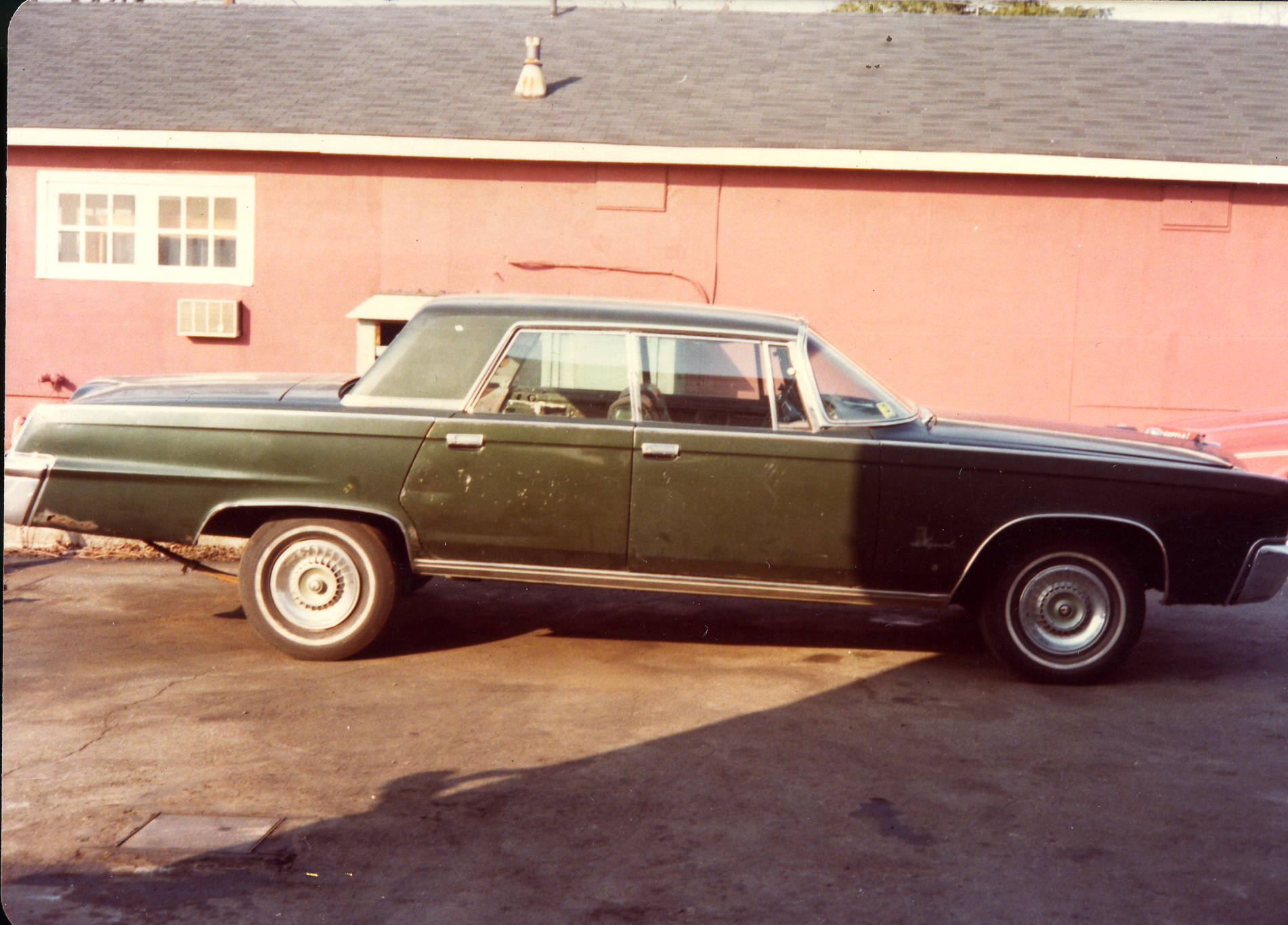
1964 Chrysler Imperial before High Anxiety makeover

Right out of the gate, for the less than princely sum of $75, Bob scored the perfect car, a four-door 1964 Chrysler Imperial.

Bob’s Imperial measured an impressive 19 feet in length with long overhangs measuring a robust impact withstanding 6 1/2 feet wide. It weighed in at roughly 2.5 tons with a 0-60 time of 7.7 seconds courtesy of a 413 cu. in. Chrysler V8 delivering 470 lb.-ft. of torque at around 2500 rpm. But wait there’s more. Imperials of that year had welds not bolts anchor the front fenders to a beefy chassis for a quieter ride of little interest for demolition derbies. However, welded front fenders also translated into greater strength for surviving brutal impacts.

Interestingly, mid-60s Chrysler Imperials enjoyed such a reputation for being notoriously tough that they frequently suffered banishment from the derby circuit.

It is interesting to note that this sturdy unyielding construction effectively reduced the damage to the car resulting from a collision. Unlike modern cars it transferred the energy of the impact to the occupants inside. Modern cars enjoy impact absorbing crumple zones that dissipate and redirect the energy of a collision away from the occupants. Thus, modern car designs are bad for demolition derbies but good for modern drivers.

Not satisfied with having acquired an Imperial that would gain a feared reputation as the Cleopatra’s barge of demolition derby destruction, Bob set out to upgrade its defenses.

A first step not so much to add lightness in the spirit of Colin Chapman but to increase driver safety required removing all glass and ripping out all interior components except the front seat.

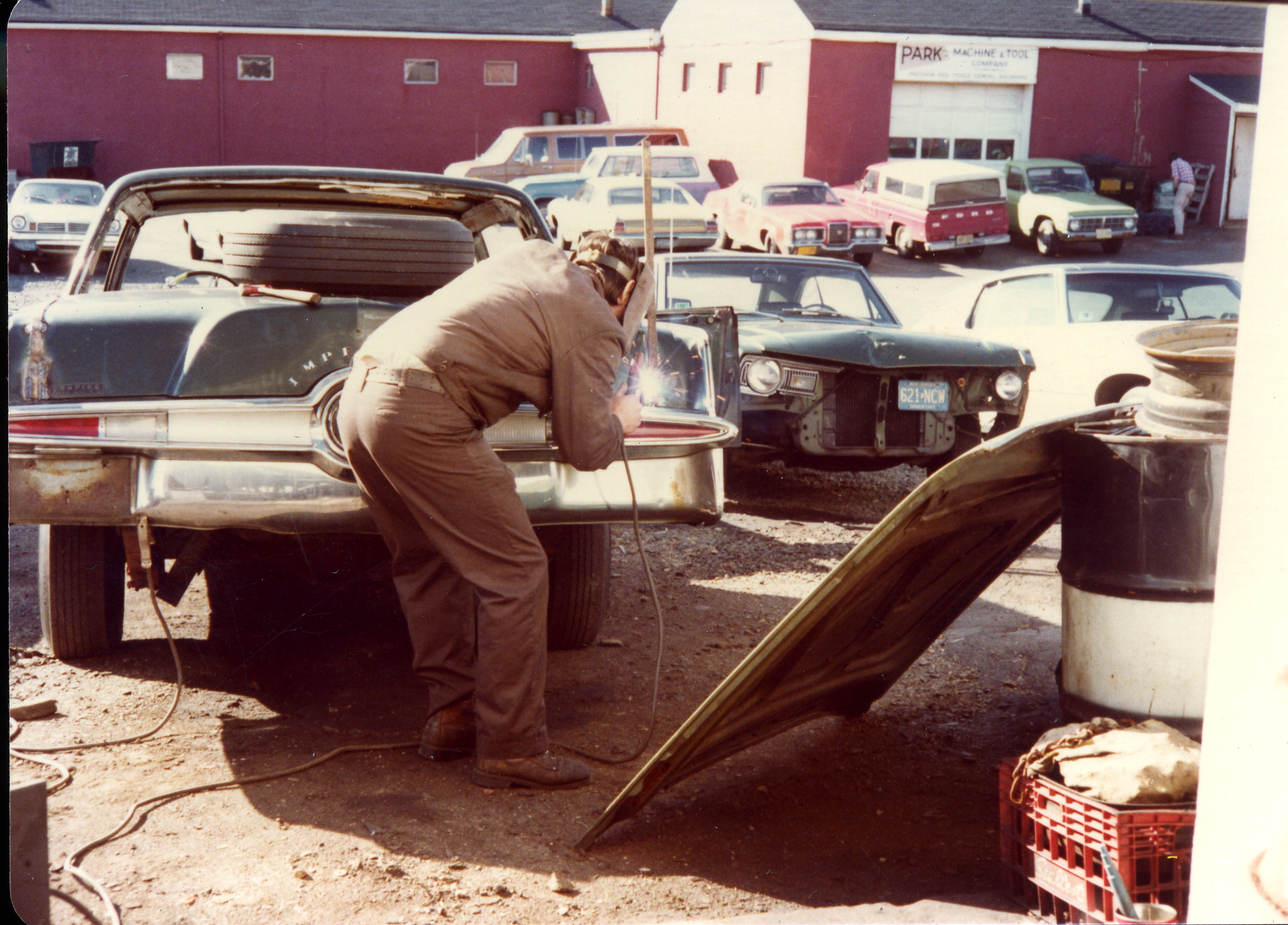
Welding trunk of High Anxiety

Bob as a racer, an innovator and a fabricator had only just begun.

Cutting off the exhaust system eliminated the threat of it wrapping around the axel or drive shaft.

Removal of the radiator, an easy target for knocking a car out of competition followed. By running the upper and lower radiator hoses through a small pressure tank, Bob could simply remove the radiator and eliminate a major liability.

Since it is best to keep a car from squatting down when hitting someone, the shock absorbers were removed. A piece of angle iron was cut to match the distance between the upper and lower shock mounts when fully extended. Welding it in place ensured that the Imperial aligned with other vehicles to do maximum damage.

Anticipating brutal collisions that would surely break the motor mounts. This called for the engine to be chained to the chassis so it would remain in place and not jamb the throttle.

Batteries would be repositioned in a milk crate on the passenger side front seat. Tire pressure pumped up to 60 psi significantly reduced flexibility and susceptibility to puncture.

Two inspired finishing touches dealt with a second major vulnerability, the gas tank. Bob cut a hole in the floor of the trunk and another through the top of the gas tank, He filled the tank with wet sand.

For a replacement tank impervious to destruction, a bulk head added behind the back seat area concealed a much smaller but adequate gas tank from a Volkswagen. To make the whole rear-end assembly one piece simply required welding the trunk shut and the bumper to the chassis.

Killer instinct in action

Finally the finishing touch of chaining the front and rear doors together made everything ready for paint. A brush would do. Christened High Anxiety, the ’64 Imperial had its game face on when it lined up for the heat.

Unlike readying the cars, driver preparation called for little more than a helmet and a lap belt. Other than that, jeans and a t-shirt met with full approval.

Bob admits to a little apprehension as the two dozen competitors divided into two rows and positioned facing the opposing line back end to back end separated by about 200 feet. Bob says, “I saw all these cars and I knew they were all there for one reason.” However, once the flag dropped, for Bob, the fun just started.

Even in reverse, speeds of the rearward charging Detroit Iron battering rams easily reached 40 mph. Bob says, Your head had to be on a constant swivel. If you see it coming you can prepare yourself.

So how did Bob make out. He says, “It came down to me and one other car.” Bob was confident. High Anxiety continued to run strong though a fuel line had started leaking. Bob positioned himself secure in his ability to close out the last competitor. He does point out that there was the issue of the fire.

Bob says, “Granted the front of High Anxiety was on fire, flames leaped out from around the hood and fanned out through the front wheel wells. But my adrenaline was pumping. I thought, hey, the car’s running. I’m still going and I’m after this guy.” Bob recalls thinking that he was a race car driver and had been through all sorts of situations and didn’t feel unsafe. Derby officials did not agree. Bob got the signal to shut it down. Figuratively he was toast.

In the minds of the officials, that was literally what they wanted to avoid.

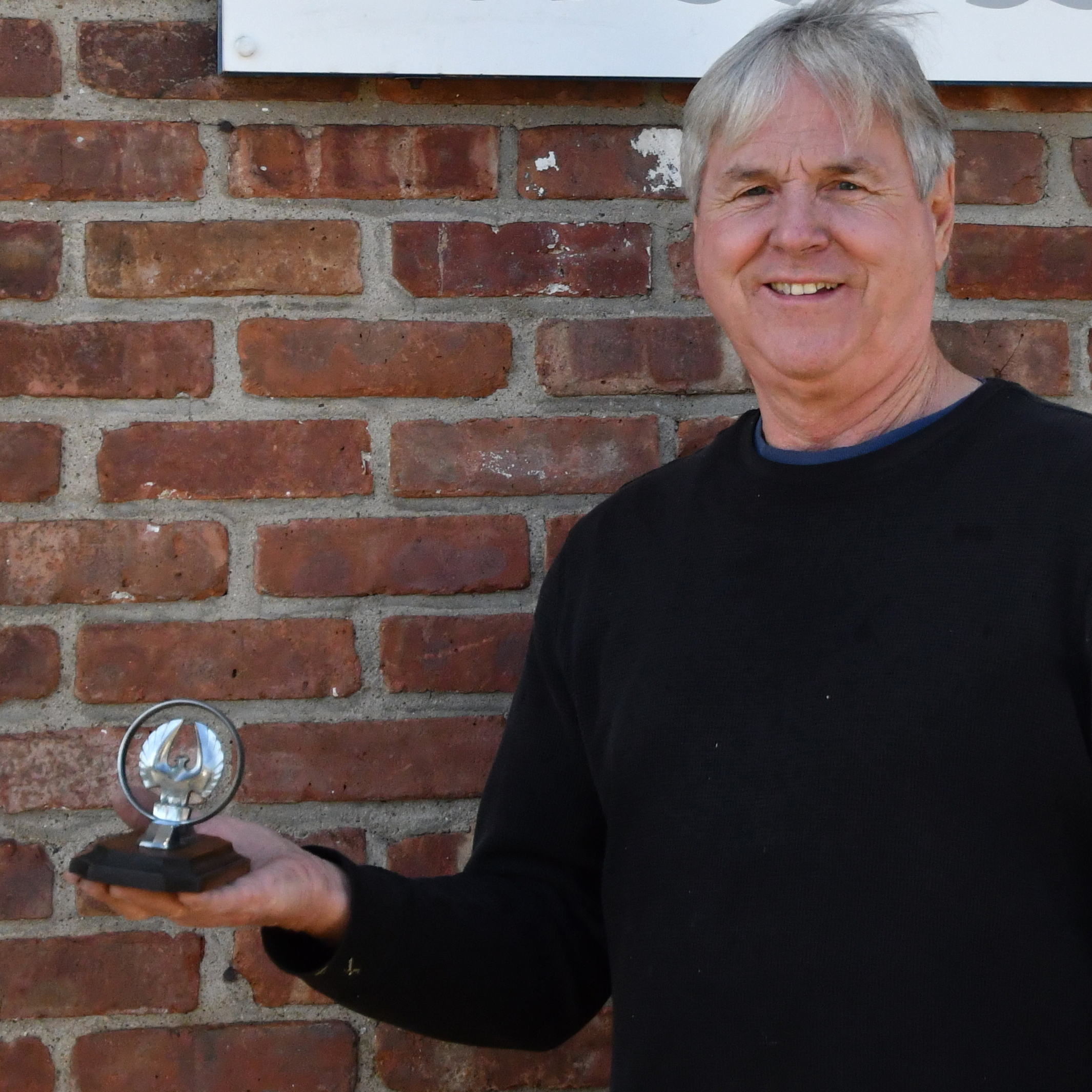
Bob Tasman with the last remaining piece of High Anxiety, the hood ornament


By |2020-11-12T11:38:06+00:00November 12th, 2020|4 Comments

Conversations With People We Value #12

Featuring expensive suits, slicked back hair, martinis and land yacht lifestyles; HBO’s “Mad Men” portrayed the man’s world of  Madison Avenue with a decidedly mid-20th century Gentleman’s Quarterly persona.

Far afield of HBO’s take on advertising’s Mad Men resided an accomplished, respected and loosely affiliated band of Madison Avenue road warriors. Self-assured, self-deprecating and self-named they were the “Sons of Danger.”

Sons of Danger – Mad Men on wheels

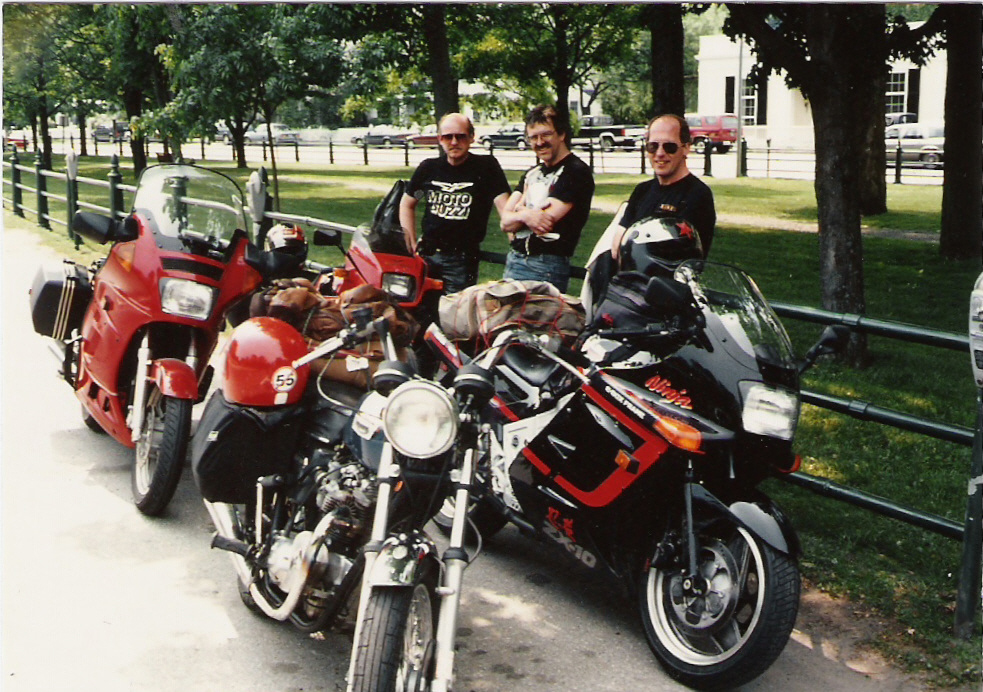
Sons Of Danger enroute to Laconia, NH Motorcycle Week 1984

“Sons of Danger” as a group could only have been born in the halcyon days of the later 20th century when automobile accounts pumped excitement and money into advertising agencies and magazines. Populated with automobile and motorcycle racing champions, automotive industry leaders, creative minds from advertising and publishing and gifted free spirits, the “Sons of Danger” roster boasted a selective coast to coast who’s who of fun loving motorheads. Those who belonged included cultural icons such as Malcolm Forbes; Paul Newman; Olympian Bart Conner; writers Brock Yates, P. J. O’Rourke and David E. Davis; champion drivers Dan Gurney, Kenny Bernstein, Don Garlits, Tom Sneva, Sam Hanks and Steve “Yogi” Behr; and Corvette designer Larry Shinoda. The list goes on. Membership could not be requested. It could only be offered.
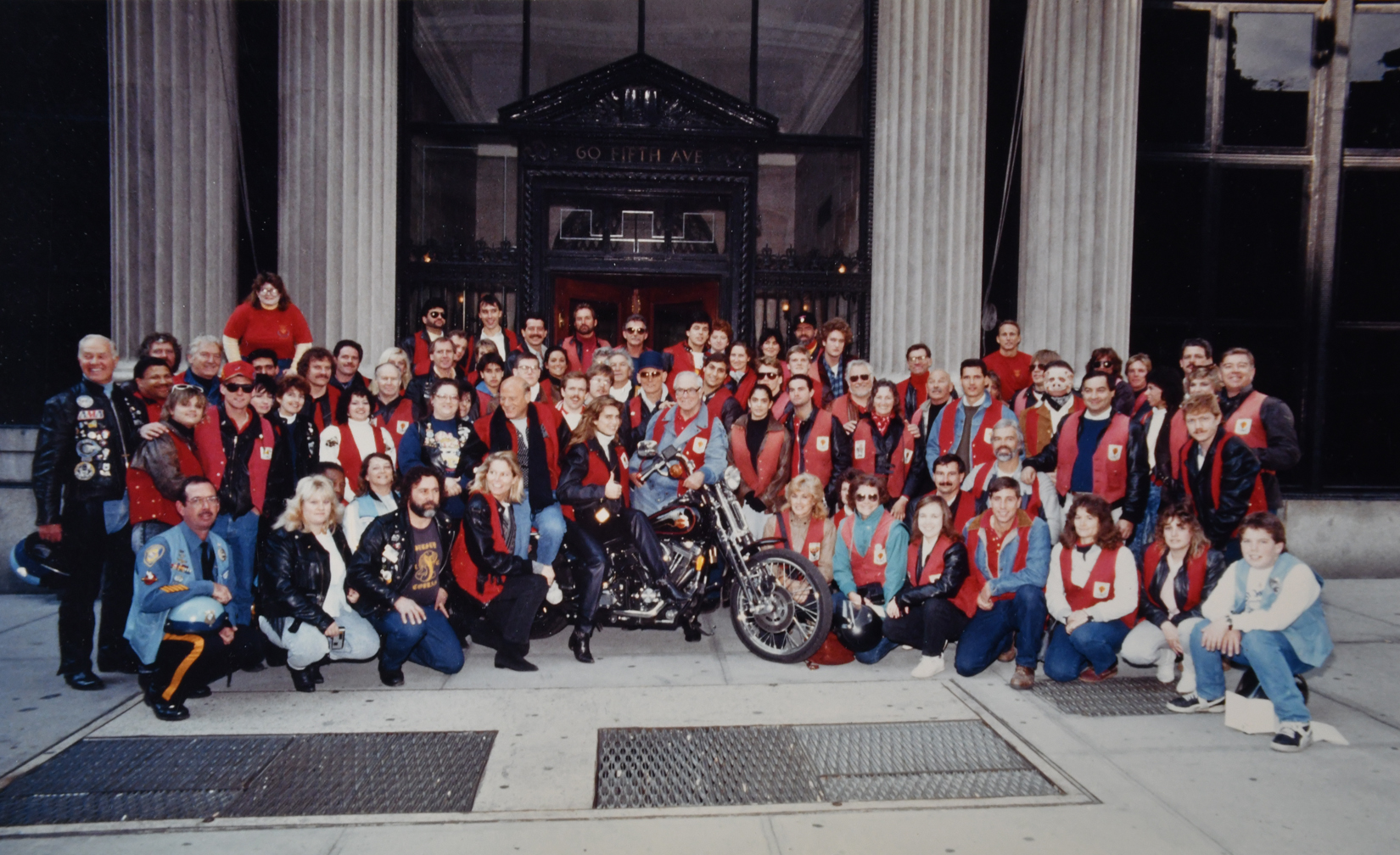
Milt Gravatt on a Malcolm Forbes ride

A mid-1970s brainchild that sprang from the fertile minds of Volvo Advertising Manager Milt Gravatt, Petersen Publishing Account Executive Charlie Alexander and Chuck Riley of Young & Rubicam, “Sons of Danger” was envisioned as a loose affiliation of men of similar character sharing a common interest in all motorized vehicles that moved fast. It also afforded a relatively anonymous and spirited way to bleed off the stress accompanying the demands of leadership, creativity on demand and/or celebrity.

Other than unscheduled, informal and randomly attended gatherings at Brews, an East Side NYC pub, now long gone, members solely assembled when personally drawn by the magnetic pull of a motoring event of interest. Events spanned a wide spectrum from the down and dirty to the simply splendid.


Malcolm Forbes ride participants at Forbes Building

As a billionaire, “good guy” and “Sons of Danger” member, Malcolm Forbes would stage an annual motorcycle ride. “Sons of Danger” members and others would be invited to Forbes’ New Jersey estate. There, over 40 or more immaculate and gassed-up motorcycles, mostly Harleys, sat in a stable ready for anyone without a ride to use. Along the way to NYC and the Forbes Building the group of maybe 70 riders would stop for lunch and to refuel with Forbes picking up the whole tab. Accompanying the riders, Forbes’ man in charge of motorcycles would pay the Holland Tunnel toll in advance for everyone. Aside from basic driving safety only one rule held sway at a Forbes event. If you used it as an opportunity to pitch a business deal you were never invited back.

Motorcycle events always exerted a powerful draw with Laconia Motorcycle Week being a favorite. With the “Sons of Danger” ranks brimming with accomplished riders, the spectacle and competition of the Laconia races proved irresistible. Laconia rides also afforded a possible window into the underlying wisdom of creating the “Sons of Danger” as a personal bonding vehicle for members of companies, agencies and publications with significant and interrelated budgets.

One member recalls a specific event when the flood of bikes enroute to Laconia stopped for a lunchtime refueling. A white panel truck that had been trailing the riders pulled up and set up tables just like the lunchtime craft services trucks that feed the crew on a movie set. “Want a soda, a beer, a tasty sandwich,” the caterer inquired? Great, thought the hungry and thankful rider. Curious, he asked one of those arranging the ride, “Who’s paying for this?” A response, both succinct and blunt shot back, “That’s a question you never ask. Never ask where did this come from or who’s paying for this. Got it?” Just eat up and shut up.”

Early on, one of the ride leaders had researched a newly built condominium near downtown Laconia overlooking Lake Winnipesaukee. It would become ground zero for the “Sons of Danger” on all subsequent Laconia trips. Returning from town for supper, riders found a steak fry and corn roast sponsored by Petersen Publishing. Word got out and Petersen’s fed a group ranging from Hell’s Angels to the cops patrolling the town. A tradition was born.

Lime Rock Park also drew “Sons of Danger” members in significant numbers. Contributing to its drawing power was having the manager of Lime Rock a member of the group. So, in addition to offering a great motorsports venue, Lime Rock had a beautiful chateau right at the top of the hill by Big Bend. Funded by Petersen Publishing it catered to the group. On any race day one might find Paul Newman, a great driver, and wife Joanne Woodward resting peacefully and undisturbed on the grassy hill. Inside would be any number and array of “Sons of Danger” members either watching or taking a break from racing.

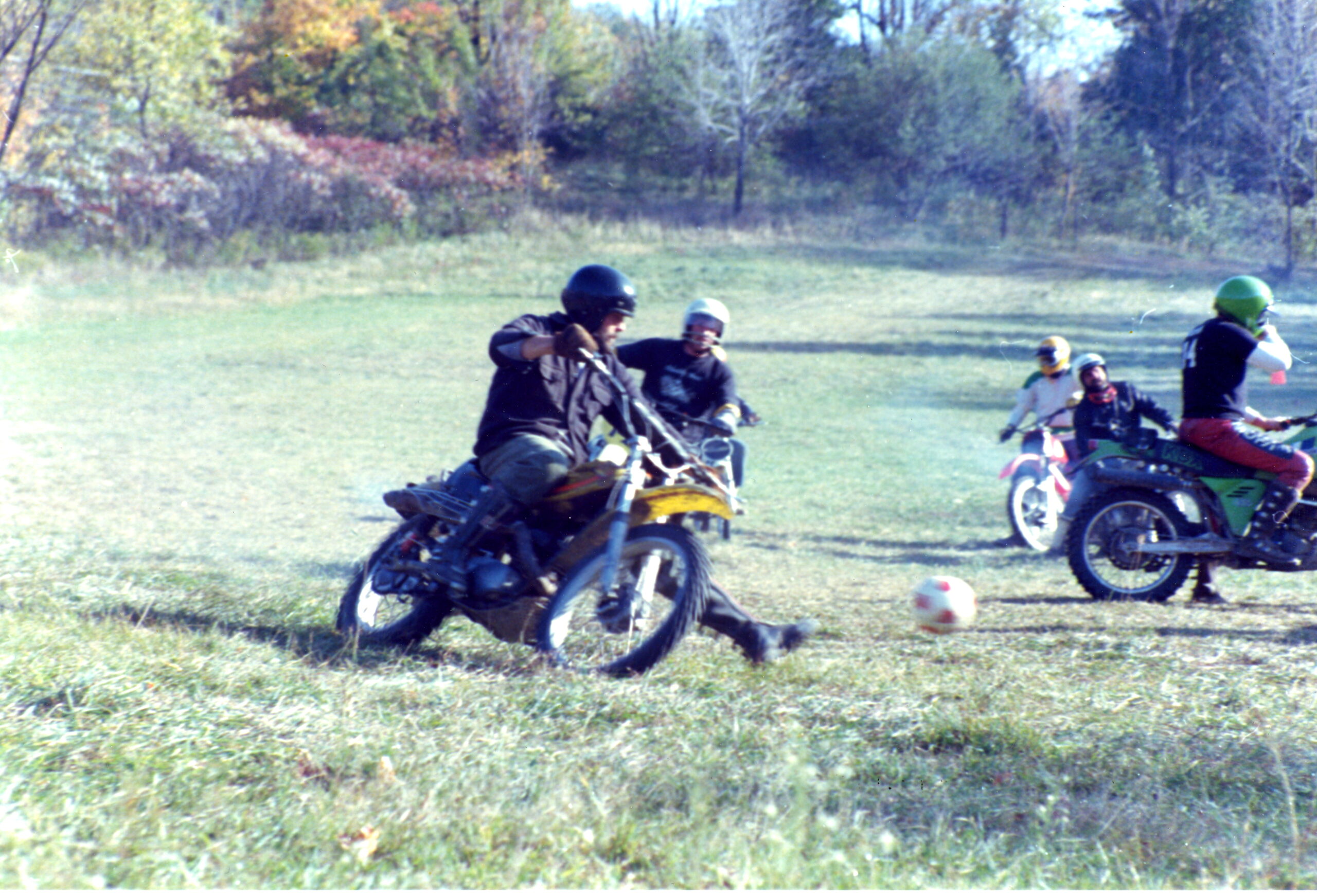
Motoball in action

When it came to down and dirty, nothing surpassed the Motoball competition hosted by the Muddy Boot Gang of Orange County, NY in the 1980s. Conceived and run by Peter Hewitt a respected automotive industry technical expert, it called for playing soccer with dirt bikes. “Sons of Danger” and Muddy Boot Gang member Galen Royer, the National Technical Training Manager for Volvo, had no trouble finding riders to put a “Sons of Danger” stamp on the event. While some outsiders may view Motoball as a cry for help, participants to a man considered it enormous fun.

As the new millennium approached, the “Sons of Danger” as an active body began to leak vigor and steadily dissipated into gone-ness. Charlie Alexander passed away around 1999. Milt had retired from Volvo years back. People no longer attended events. Guys who had been boaters went back to their boats. Lingering members awoke to the strains of an Allman Brothers song, “Nobody left to run with anymore.”

Mitch Duncan with Sons of Danger members Galen Royer and Gary Mahannah on road to Laconia Motorcycle Week

Though gone, for some, “Sons of Danger” clearly was not forgotten. Around 2017 Mitch Duncan a retired Volvo lifer and a serious car guy and competitive motorcycle rider was dying of cancer. He knew his time fast approached. In speaking with his wife Diane he confessed that in his life he had but one regret. Though he had often ridden with the “Sons of Danger,” he had never been inducted as a member. While the ranks of living members had dwindled, Diane reached out to “Sons of Danger” member and still active rider Galen Royer. Was it possible, she asked, for Galen to do anything to address her husband’s sole regret? Galen could not believe such a deserving candidate had been overlooked.

Galen reached out to remaining “Sons of Danger” members Bruce Olds and Ron Morgan. Together they committed to assembling a membership package worthy of the moment. They succeeded. Galen inducted Mitch on his deathbed. Mitch was gone in a week. Diane had Mitch laid out in his Harley clothes and leather vest with his “Sons of Danger” member shirt close by.


In researching this article I met with Galen Royer and his son-in-law Joe Lopane at Galen’s home. Joe Lopane stands as the last active “Sons of Danger” member to be inducted. Joe had brought his two sons over to see my restored 1961 Corvette and to talk with Galen, their grandfather, about cars and dirt biking. Doors shut. Doors open. Old “Sons” fade. New “Sons” are born.


By |2020-11-05T12:32:53+00:00November 5th, 2020|9 Comments

Conversations with People We Value #11

A few years back I had been asked to judge at a local Concours d’Elegance. I envisioned strolling across lovely grounds viewing a field of beautiful cars. What fun! My judging assignment included an aircooled class comprised primarily of Volkswagens. More fun!

Judging criteria for this concours would employ “French Rules.” Compared to the judging at marquee club events (Porsche Club, Corvette Club) where the wrong oil breather cap can hurt your score, French Rules lean more on aesthetics.

With French Rules, visual impact more than technical authenticity holds sway. Additional attributes that merit judgments of worthiness include a car’s condition, authenticity, originality, quality of restoration, rarity, and historical importance. Basically French Rules creates a personal opinion beauty contest with the benefit of a few qualifiers to assist judges in thin slicing degrees of excellence to substantiate the choice of a winning car. I had no idea that I was about to face the challenge of thin slicing with a scalpel.

My partnering judge and I approached our subject cars and immediately recognized the challenge. With late 1950s being the newest model year, a splendid array of highly desirable VW Beetles awaited our scrutiny. It could only be compared to judging a beauty contest with the five finalists being striking identical quintuplets.

Each of the five VW Beetles enjoyed exquisite restorations featuring superb aesthetics clearly executed with an artist’s eye. All five Beetles showcased the craftsmanship of the same man. His name? Chris Vallone.

VW bug restoration is no joke. Ask Jerry Seinfeld


Being an accomplished independent film maker with a background in cartooning and fine art seems an unlikely route to becoming recognized world over for producing mechanically superior and aesthetically refined Volkswagen Beetle restorations.

“I was living my dream,” says Chris Vallone, founder of Classic VW Bugs, Inc. in Congers New York. For ten years after earning his degree, Chris wrote, directed, shot, produced and edited his own independent films. “Action films, horror films, that sort of thing,” says Chris. He achieved a degree of success with one of his films being picked up for distribution internationally. However, recognition does not necessarily equate to financial success.

Chris and father with award winning 1952 split window

In the background during the decade dedicated to advancing his career in film making, Chris enjoyed a hobby defined by maintaining his 1968 Volkswagen. “Honestly, I loved the image of the artist throwing his gear in his VW bug and pursuing his passion,” says Chris.

In life as in a good film, inflection points occur that force a dramatic change in the action. Chris’s life plot took a major turn when the monetary demands of distributing a film exceeded his financial reach. Translation, Chris found himself broke and in debt. “The whole starving artist thing,” says Chris.

“I realized that my Hollywood aspirations should be pushed to a back burner,” Says Chris. Actually Chris pushed the Hollywood idea right off the stove. “As I approached my late 20s, I realized that I needed to get serious about making a decent living to survive,” says Chris. Step one called for eliminating my debts.

Chris’s hobby came to the rescue. He would sell the 1968 VW he had restored. He used his filmmaking skills to showcase the Bug on eBay. This happened way before video became a staple on Bring-a-Trailer.com auctions. It was way before BaT existed.

His VW quickly sold to a buyer from Cincinnati, Ohio. Chris says, “This floored me because I grew up in a world where everything happened locally. What an eye opener for me.” This was around 2003.

AFTER – 1956 Ragtop

BEFORE -1956 Ragtop

Chris’s father, Chris Vallone senior, saw an opportunity saying “We got something here.” And indeed they did. Chris senior had decades as an experienced mechanic. Chris junior possessed an artist’s eye for visual interior and exterior executions. Their blended talents would combine to impart a unique and striking signature look to their future creations.

Working out of their home’s one-car garage, they would first rebuild a VW Bug to use and then sell it. However, within a year Chris decided to buy a Beetle with the sole intent of restoring and flipping it. Son and father went all in. With the VW Bug completed, Chris created a full blown sales video with music, titles and effects and posted it on eBay.

Incredulously Chris says, “We had people come to our house, knock on the door and ask us to end the auction saying “I want to buy it now.” Time for another inflection point.

In a move of profound significance, Chris redirected his marketing media skills to a new platform, YouTube. He now employed his talents to fully orchestrate traditional and social media platforms. That’s when it happened. People began calling. Interested customers no longer wanted to bid on a VW Bug Chris put up for auction. They wanted Chris to build one just for them. Chris says, “I never ever thought of doing that.”

Classic VW Bugs facility

Chris pivoted his business to embrace the custom Build-a-Bug philosophy. Classic VW Bugs, Inc. was born. Chris had discovered a niche within a niche populated with people in their fifties to seventies possessing the money to have their VW Bug professionally restored with a visual character attuned to their tastes.

Clearly, having outgrown the garage, son and father took a deep breath, swallowed their trepidations and leased a significantly larger commercial space. Game on.

Despite launching Classic VW Bugs at the dawn of the Financial Crisis, Chris has never looked back. Counter intuitively, as the stock market collapsed, his business grew. Chris explains this saying, “People buying our cars were primarily investors or collectors who wanted to add to their collection. They viewed our restored VW Bugs as an appreciating asset.”

While the sweet spot of the buyer demographic presently rests in the fifty to seventy age range, Chris has witnessed a surge of interest by those in their thirties and forties.

Chris sees this trend inspired by a motivation quite different from say the muscle car or resto-mod markets. He says, “To a significant degree it is nostalgia driven.” Chris senior says, “People’s youthful personal experiences wove the Beetle into the fabric of their soul. It remains there today.”

When asked about the pivotal moment when Chris realized that Classic VW Bugs, Inc. had arrived as a presence in the international Beetle restoration community, he did not hesitate. “When Jerry Seinfeld walked through the door,” says Chris.

About seven or eight years ago, Chris answered a call from a guy introducing himself as Jerry Seinfeld. He wanted to discuss a prospective Beetle restoration. Chris’s initial response was, “Yeh right, who is this?” However, as a big Seinfeld fan, Chris recognized the caller’s intonation. Seinfeld brought a 1956 Beetle requiring significant work to Chris’s shop and hung out for a while to discuss the project.

After taking delivery of the completed Beetle, Chris did not hear from Seinfeld again until this past summer when a clearly satisfied Seinfeld brought another Beetle to Chris’s shop. Chris took the opportunity to ask Seinfeld how he found Classic VW Bugs. Chris says, “Sure enough it was YouTube.”

Chris has posted over 600 videos on YouTube. Every one laser focused on Beetle restoration. He gets over a million hits a month. At times Chris senior will ask his son why he works so hard posting on YouTube. Chris says, “Google searching is the key. I truly believe that if I didn’t do the videos, we wouldn’t have the work.” Twenty percent of Classic VW Bugs business is international, the rest comes primarily from the south and west.” Very little is local.


As the interview approached its conclusion, I called attention to a weathered black VW Bug convertible off on the side that appeared more well used than abused. Chris responded with a look of un-reconciled indecision. Clearly this Bug had a story.

Chris explained, ”It is a 1954 one-owner, all original, numbers matching rare gem. No accidents. Everything lines up perfectly.” Roughly 900 new 1954 Beetles were sold in the U.S. market. Only a few were convertibles.

About five years ago Chris got a call from the son of the original owner. He told Chris that he wanted to sell it, but only wanted it to go to a good home. Chris bought it and has wrestled with its fate ever since. Chris says, “I want to restore it and bring it back to its glory.” But then Chris recognizes that it enjoys a glorious patina and is fundamentally sound enough that, with a little structural work, it can be cleaned up and driven as an original. Chris says that he has always wanted a survivor.

What do you think he should do? Should this be the one? Help Chris make up his mind.

Chris will read your comments.


By |2020-10-29T11:03:09+00:00October 29th, 2020|11 Comments
Go to Top