Conversations With People We Value

Talking with the skilled professionals who support our passion for collectible automobiles.

Conversations With People We Value #40

Having made a few friends along the Blue Ridge Mountains, it was not a total surprise to run into one at a local car show in the wine country of western Virginia. While doing a little catch-up with my friend and Drivin’ News reader Dick Carroll, he abruptly pointed across the grassy show field to an older gentleman with a weathered countenance, easy manner and a T-shirt adorned with restored pick-up trucks. “There,” Dick said with absolute conviction, “Is a man with stories to tell.” Dick continued, “He is a gifted craftsman known for the beautiful vehicles that role out of his garage. To confirm my understanding I asked, “He has a restoration shop?” No, he has a garage at his house where he does everything including paint. And no he does not have a spray booth.

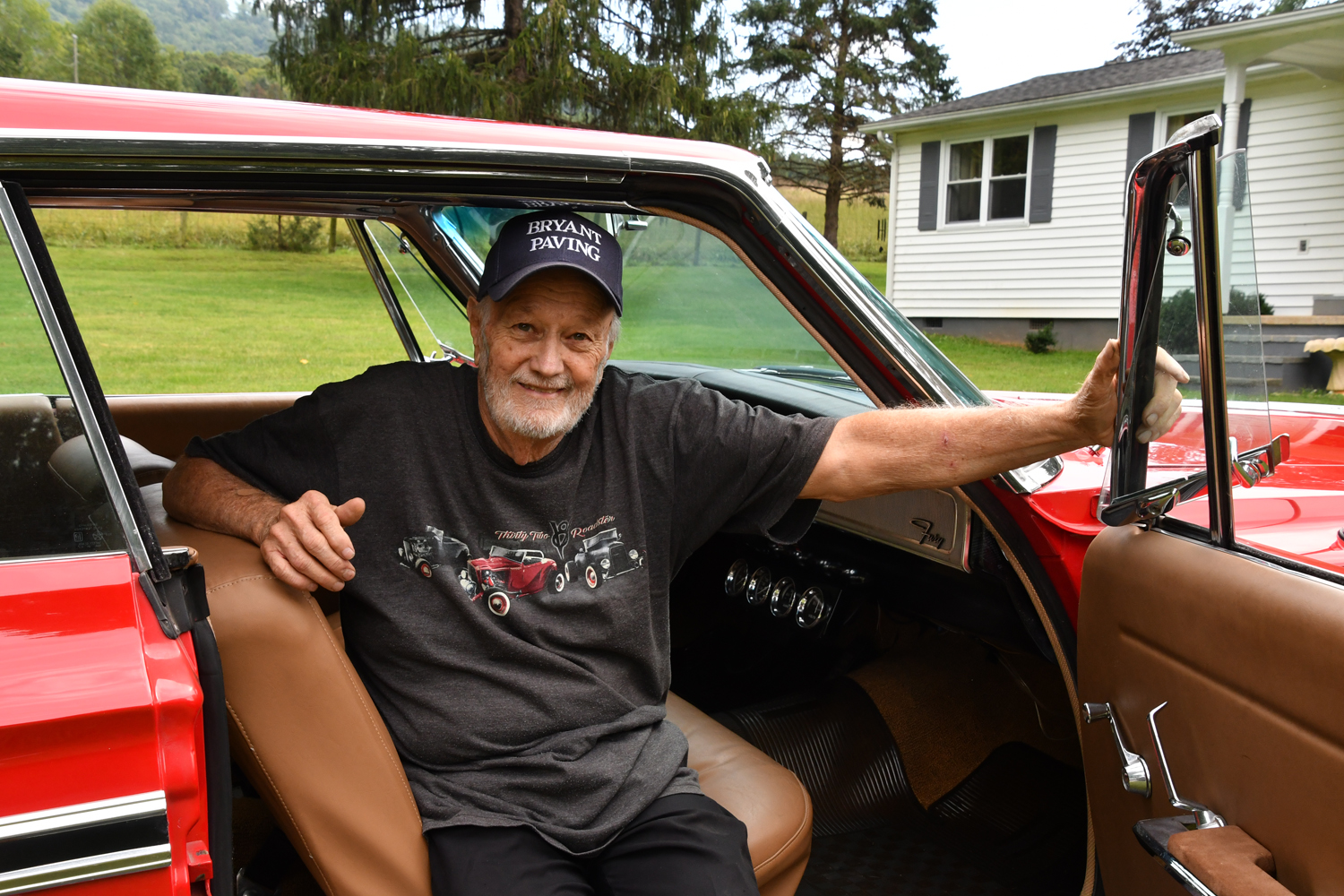
Meet Septuagenarian Benny Bryant, a rural Rembrandt of restoration.

Benny Bryant’s 50 years of building Blue Ridge beauties

Benny Bryant in his 1964 Plymouth Fury

Unassuming yet quietly confident in his ability to artfully craft wood and steel with skills for which he thanks the good  Lord, Benny Bryant projects the grounded presence of a man at peace with himself and his seventy-five years of life lived in Nelson County, Virginia.

Speaking with a voice possessing a slow talking sincerity reminiscent of a cowboy recalling truths around a campfire, Benny lays out his story like a chef’s timely delivery of each subsequent course for a well prepared dinner.

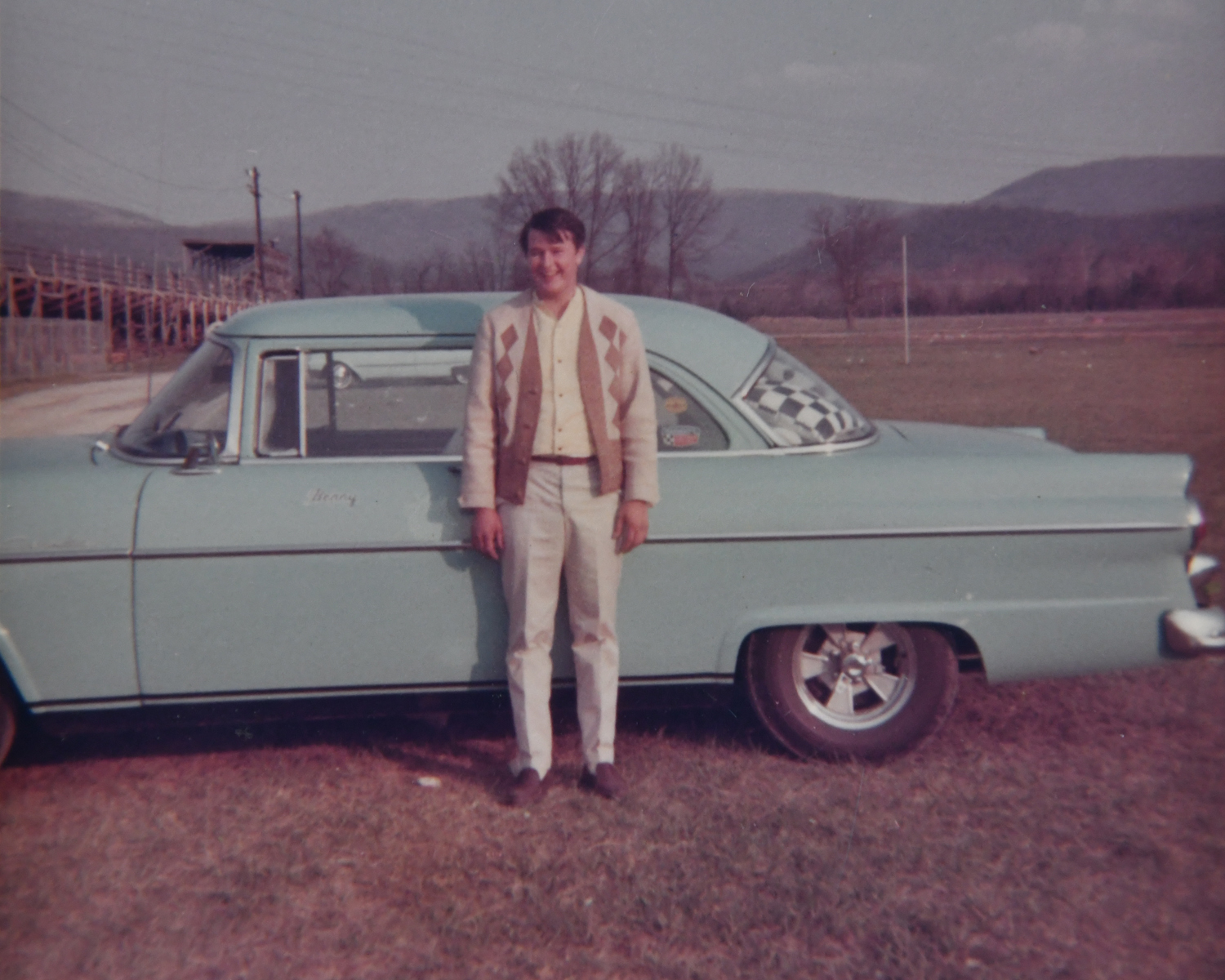
Benny with 1955 Ford

As a teenager Benny began a life-long career in the automotive business by prepping new cars at the local Ford dealer in 1964. It was at that time that Benny bought the first car of his own that he would work on, a 1955 Ford.

One of the few perks of his entry level position resides in the Pantheon of his young life’s experiences. He remembers prepping new Fords for delivery and driving numerous high performance 289 mustangs and a very rare 1965 Galaxy 500 with all the right boxes checked: 427 check, 2x4s check, 4-speed check. A fun job, but not forever.


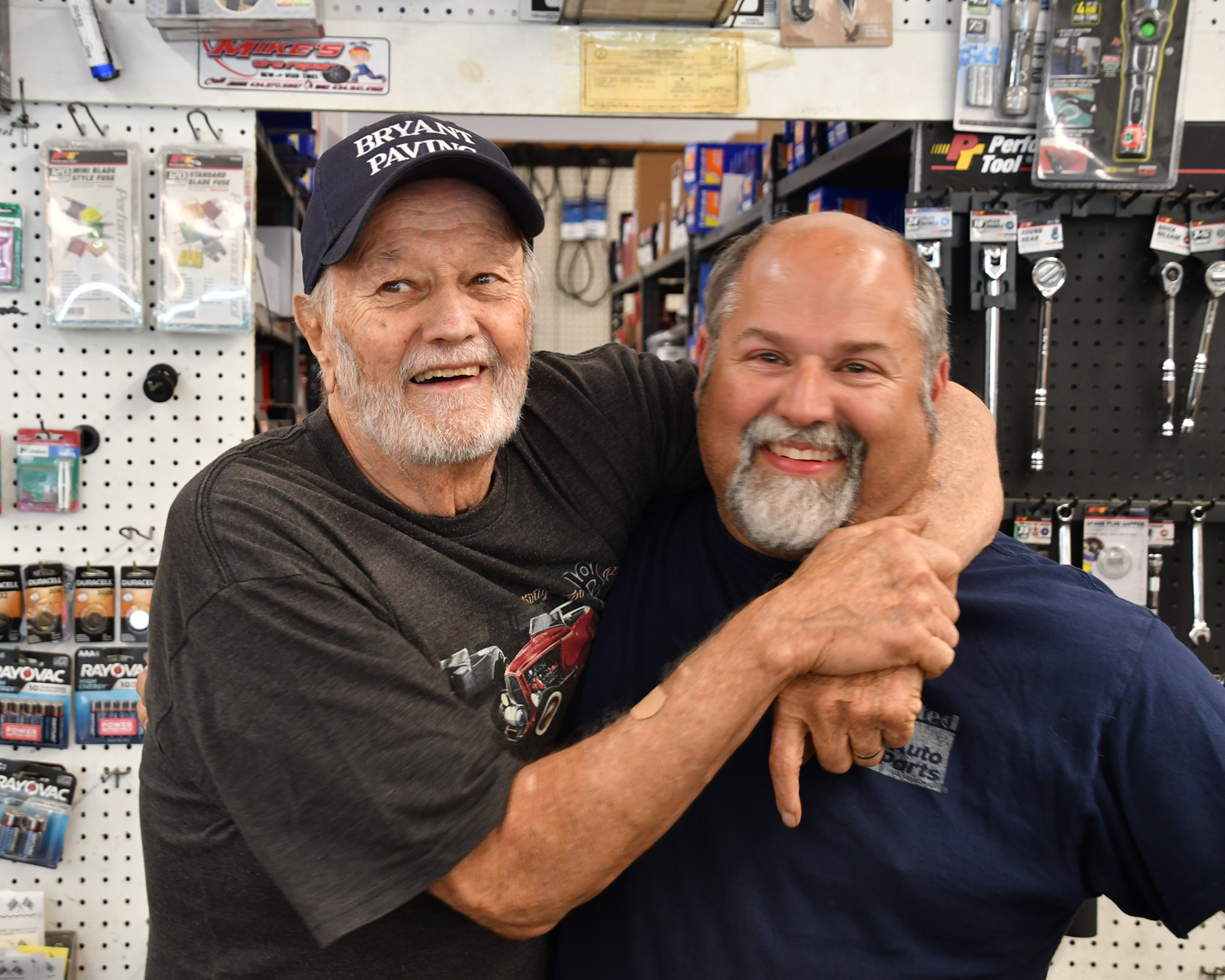
Benny and son Benji

Benny migrated to what would be his life’s work in the automotive parts business from which he would retire after 43 years as the owner/manager of a Fisher-Federated parts store. During those years Benny would build a family and populate his spare time honing his God-given abilities for restoring distressed vehicles. Indeed his two passions, love of family and love of restoration would interweave seamlessly as he shared his passion with his children and their children. Benny’s long life and passion had blossomed into a family affair. He says, “My son Benji stayed out here in the garage with me from the time he was probably two years old up until he got married and left at about 30.” Benji became a serious contributor to projects about the age of 14. Benji says, “I learned so much. We did a little bit of everything. I mean we pulled motors, did body work. We would just tear things apart head to toe. My dad and I got along good. It made things easy.”

Once retired, Benny would kick his passion for classic vehicle restoration into high gear as a full time pursuit that would sustain him and his family. He says, “I am not a wealthy man. Restoring cars defined my retirement plan.” The last decade witnessed Benny hit his stride as the consummate restoration artist possessing a special affection for pickup trucks. For those who know Benny, an added mystique enhancing the personality of what Benny creates resides in where he makes his restoration magic happen, the garage behind his home.

A handsome and neatly manicured residence, featuring many pieces of hand-made furniture crafted by Benny, sits on the side of a quiet country road that is now paved. For many years that was not the case.

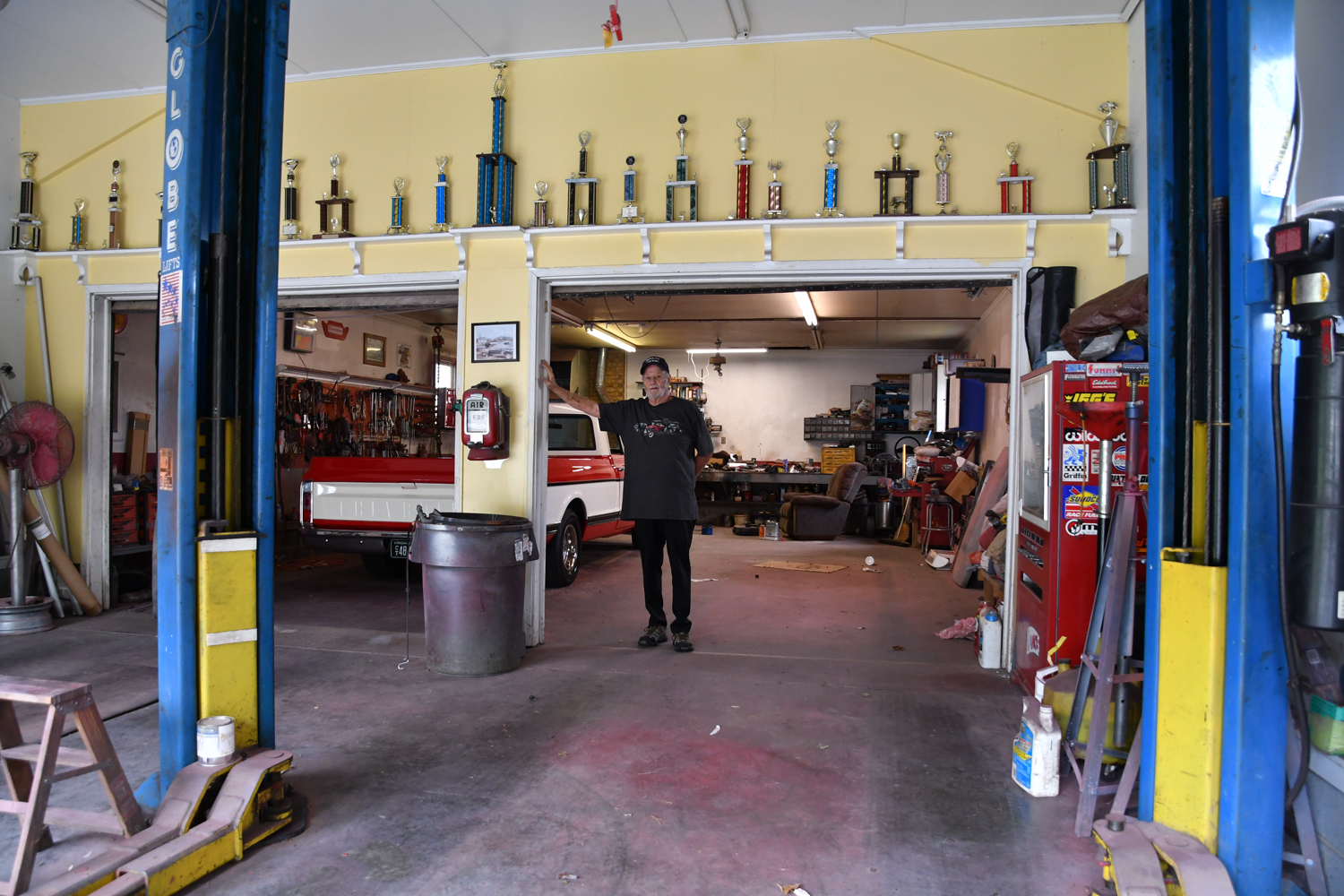
Benny’s garage

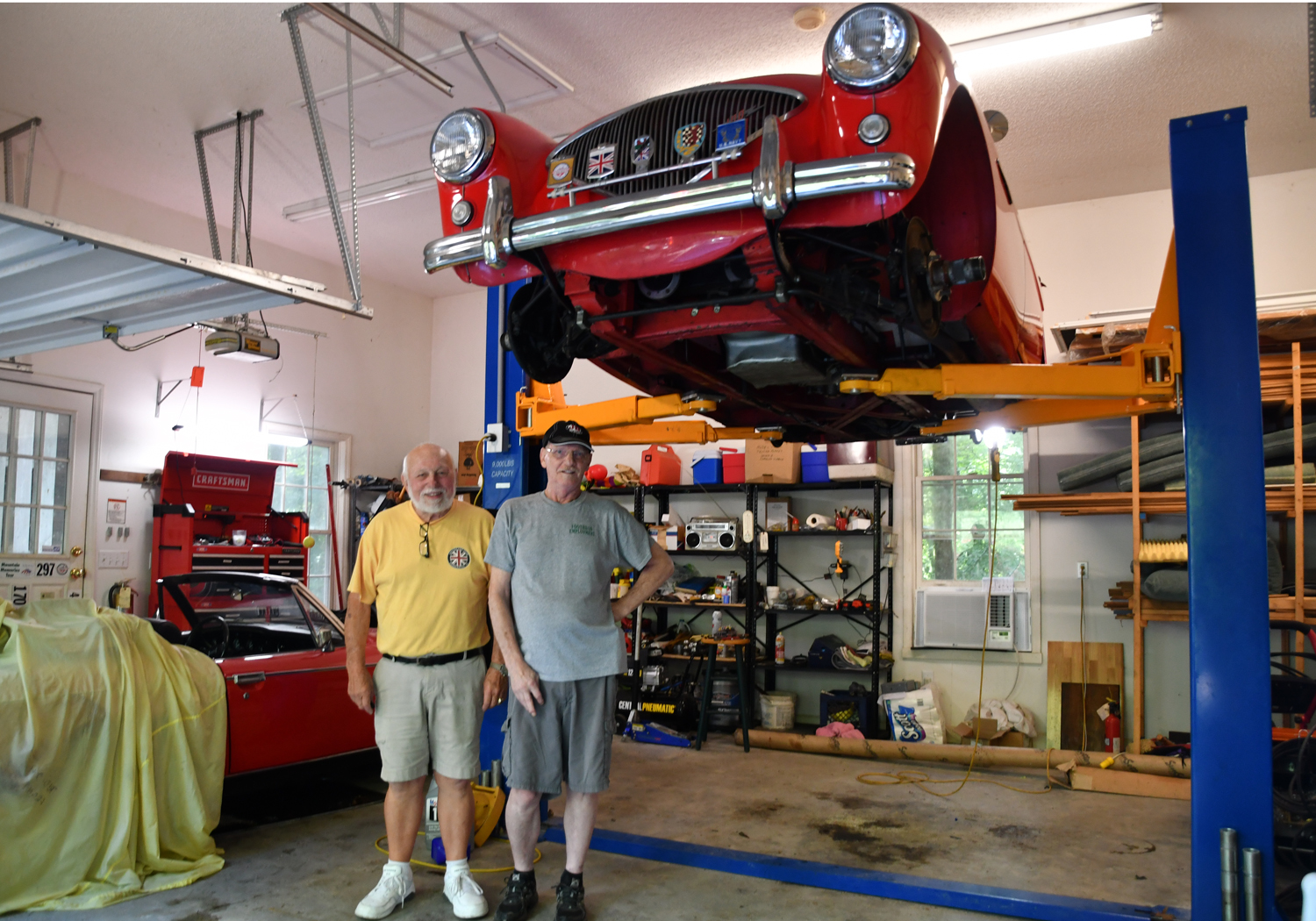
Behind the house a two-bay garage two cars deep with a single lift and an upholstered recliner (more about the recliner later) provides the stage where Benny performs. To appreciate the achievement Benny’s work represents, demands a look at where it takes place. Neat, clean and organized with photos on the walls and trophies on shelves accompanying all the equipment Benny needs to turn trash into treasure.

For those raised on watching high tech restorations on the Velocity Channel, Benny’s garage (Wow what a great name for a TV show) offers a stark contrast. Benny in describing the technical sophistication of his garage says, “We do it with nothing. I got a little welder and that’s all really that we got. Heck, I got a few little old body tools. I got a couple of D.A.s (Dual Action sanders) and some grinders and that’s it. That’s all we got. In describing work on two of his projects he says, “All that frame work under that Plymouth and the one under that Nova both, we built lying on the floor with grinders, cut off wheels and a little weld.”

In looking at two of his restorations up close and personal the paint showed well. When asked about his paint booth, Benny responded, “I don’t have one.” Benny shoots all his restorations in his garage.” When asked how, he explains that he first sweeps out the garage and wets down the floor. A powerful fan fills a window to draw out dust and fumes. He often shots with a Binks spray gun but other equipment as well. When first visiting Benny’s garage two examples of his work grace his driveway.

Benny’s 1964 Plymouth Fury

With an aggressive stance and a dazzling red paint job a pristine 1964 Plymouth Fury says all you need to know about Benny’s work ethic. Owned by Benny for over 50 years, this Mopar beauty through pride and service has earned its place as part of the Bryant family. He says, “My daughter was born in ‘72, I bought it just before she was born and it brought her home from the hospital.” While loved, his Fury has not always enjoyed such an easy life. He says, “When we first got it, we kind of treated it like a four-wheel drive truck even though it was only 2WD. Out front of our house used to be a dirt road and in the wintertime the ruts were real bad. So bad I broke the steering box off it.” Luckily the panels remained good with damage primarily to the chassis.

Since surrendering its daily driver status, the Fury has been repainted twice and reupholstered twice. Its present garage applied lustrous red skin was applied 20 years ago. The chrome, done over 30 years ago shows very well. The stainless steel grill and all other trim are original. Everything is basically as new including the engine. Its aggressive presence screams 413 wedge but no, power comes from a 318 with a two barrel. When asked why the modest power plant Benny says, “Money. I had a wife and two children and I was the only one working.”

Today Benny’s Fury has 208,581 miles and counting.

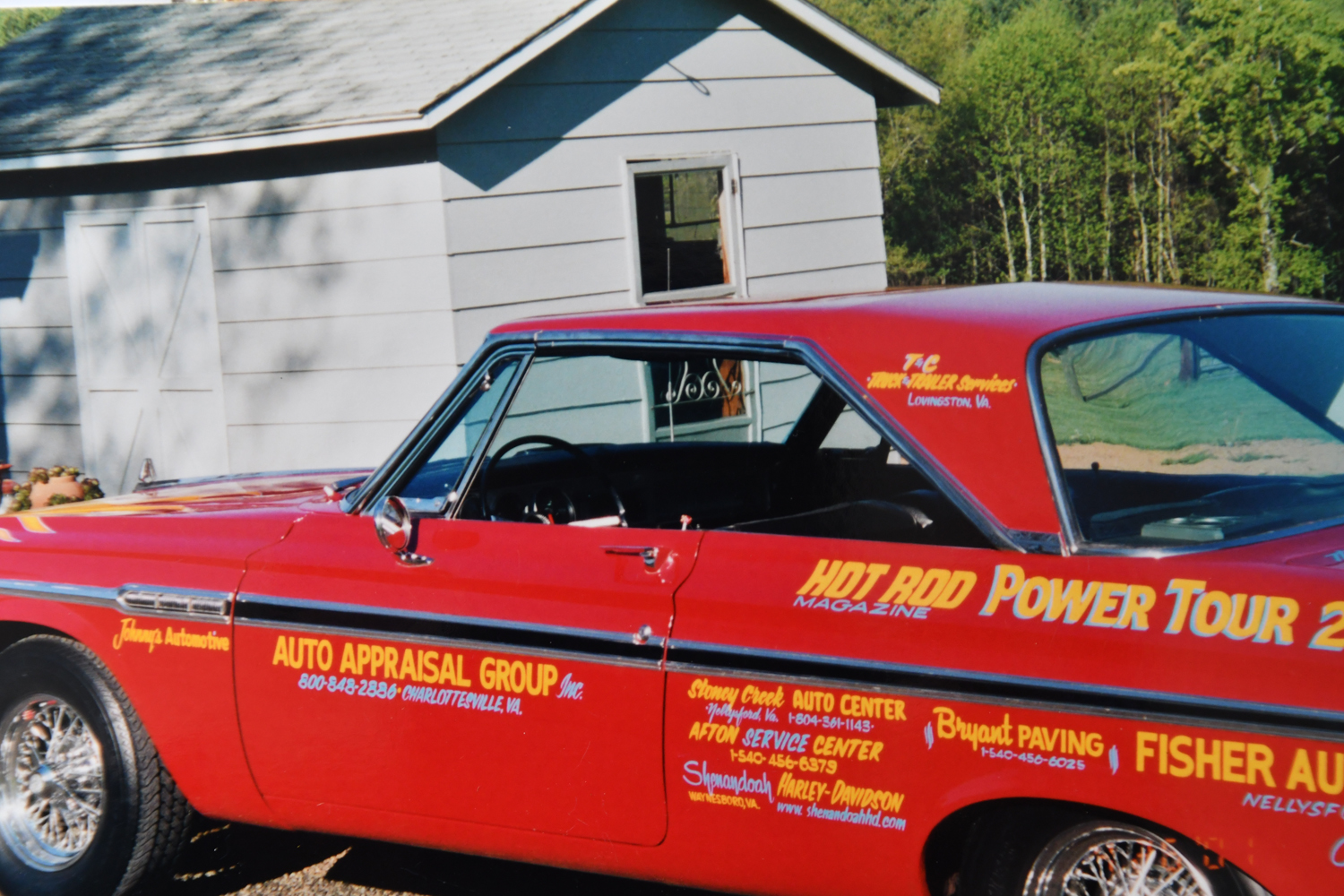
1964 Fury on 2001 Hot Rod Power Tour

When asked to tell a good story about his Fury, and knowing Benny, it had to involve family as well the car. And the story is a good one. Benny’s son Benji drove it the full length of the 2001 Hot Rod Magazine Power Tour.

For those not familiar with The Hot Rod Power Tour it began in 1995 as the brain child of the Hot Rod Magazine staff. Basically intended as the world’s largest traveling car show, its intention was to invite car enthusiasts of all stripes to participate in a seven-day gearhead circus and carfest that traveled across the country. The point of the tour is about driving your car, seeing new parts of America, meeting more people and sharing the total car experience. Today, it involves thousands of cars and tens of thousands of people. In 2001 the tour kicked-off in Pontiac, Michigan, ran for nine days and 2,414 miles and concluded in San Bernardino California. Benji and a friend ran the full tour across the country without a mechanical issue.

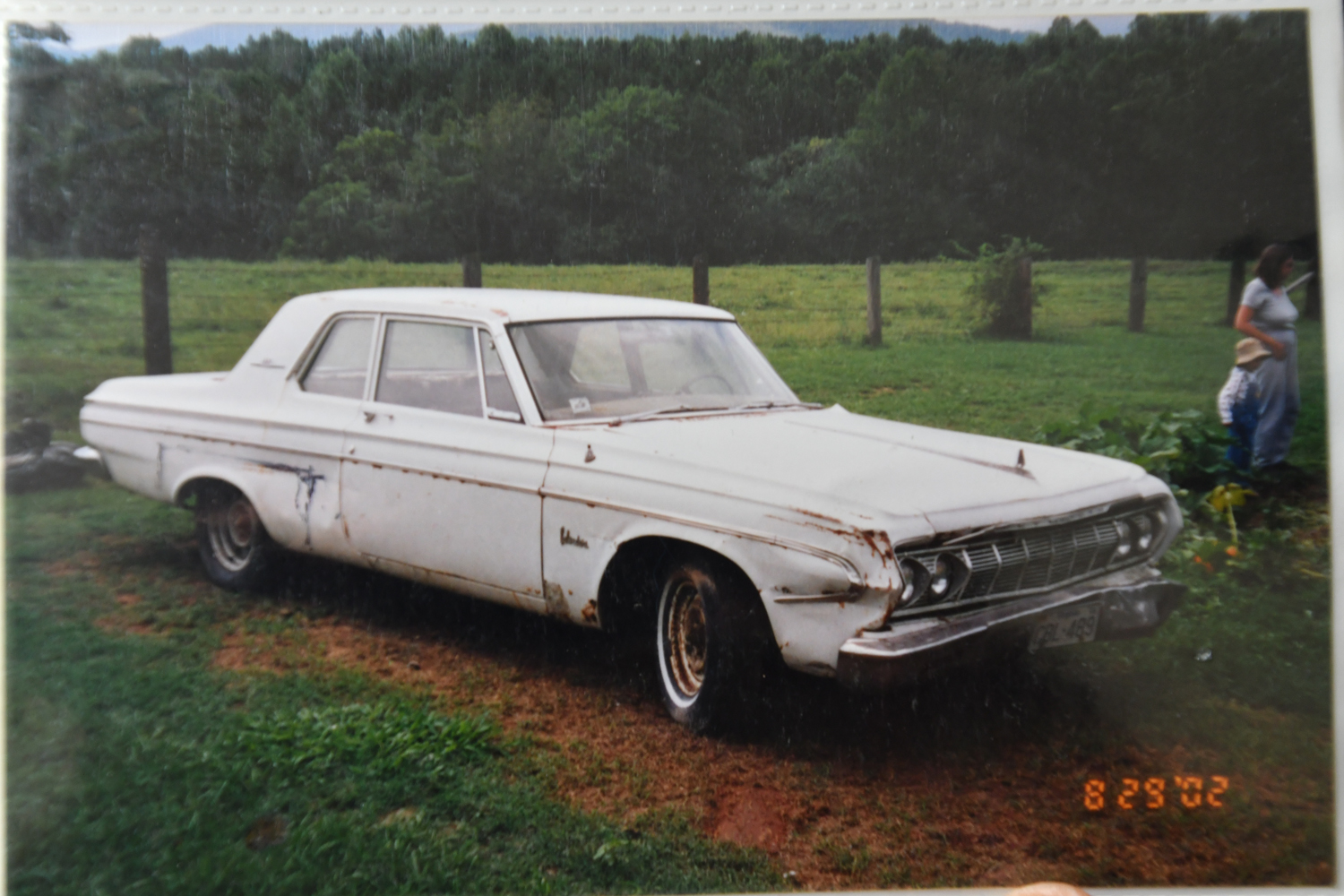
1964 Savoy pre-restoration

Clearly with a soft place in his heart for ‘64 Plymouths, Benny performed an amazing transformation on a ‘64 Plymouth Savoy that was well along the journey from dust to dust. He says, “Bought it at the West Virginia line and brought it home. Seeing it, everybody said why in the world did you bring a pile of junk like that home. The front end was just about rotted off. No floor boards. The cowl where the windshield wipers went had been eaten completely out of it so badly that the windshield wipers fell down inside of the car.” But Benny had a vision and a spectacular one that would become a reality.

1964 Plymouth Savoy on 2003 Hot Rod Power Tour

It began by moving the front axle six-inches forward and the rear axle 13-inches forward. Why? Benny says, “Well back when I come along about everything at the drag strips was altered wheelbase cars and I just loved them for their looks. To me they just are beautiful.” When completed, the

Savoy had a Dana 60 rear, a really strong 383 Chrysler V8 and a four-speed all wrapped up in one mind blowing bad-ass black Mopar monster. Of course, Benji took it on the 2003 Hot Rod Magazine Power Tour.

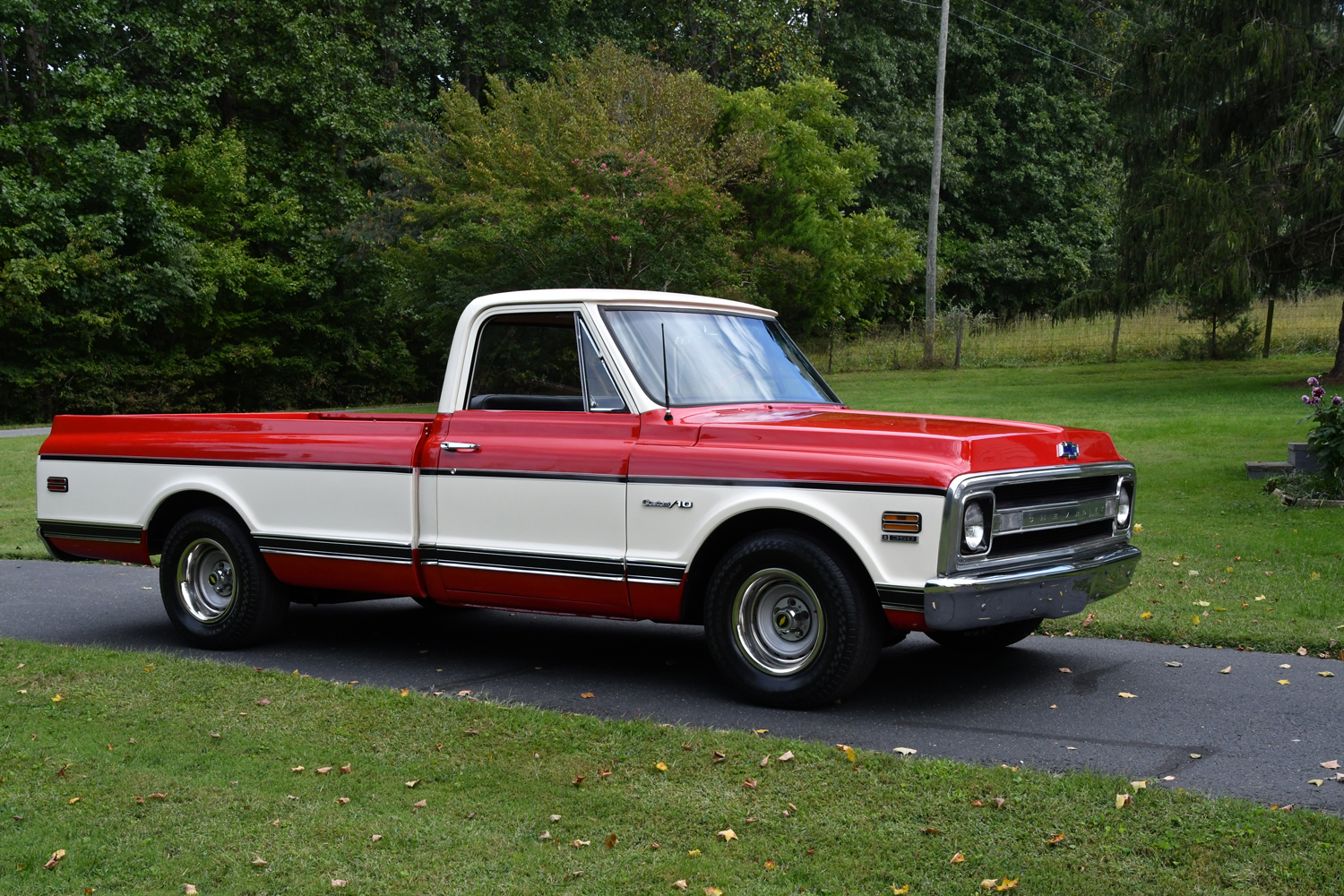
As pickup trucks star in Benny’s mind as a favorite restoration subject, his red and white 1972 Chevy C10 shines like a gem with roots very different than that of his Fury. Benny says, “Bought the chassis in one place. Bought the bed in another place. Bought the cab in another place. A guy give me his two front doors and the two front fenders. I bought the hood in another place.” Now, completed, it has a Chevy 350/350, lowered springs in the rear and cut coils in the front, new upholstery and new paint. When asked how long ago he started this project he says, “A year.” Benny does not drag his feet with a project. A partial list of his projects since he retired boggles the mind.

Benny’s 1972 Chevy pickup

In the past seven years Benny has done two Dodge diesels, an ‘89 Ford F-150 short bed, ‘96 Ford F-150 short bed, 13 Ford Rangers, 19 Toyota pickups and two Chevy S10 pickups. In the years prior to retirement completed projects included: A 1932 Ford 3-window coupe, Three 1972 Chevrolet pickups like his, one Jeep, a Bronco, a ‘32 Ford 5-window Coupe, ‘31 Ford 2-door sedan, 1964 Plymouth Savoy and a 1967 Chevy II tubbed with a 355, Littlefield blower and 2x4s. There were more. This, now, brings us to the La-Z-Boy in the garage.

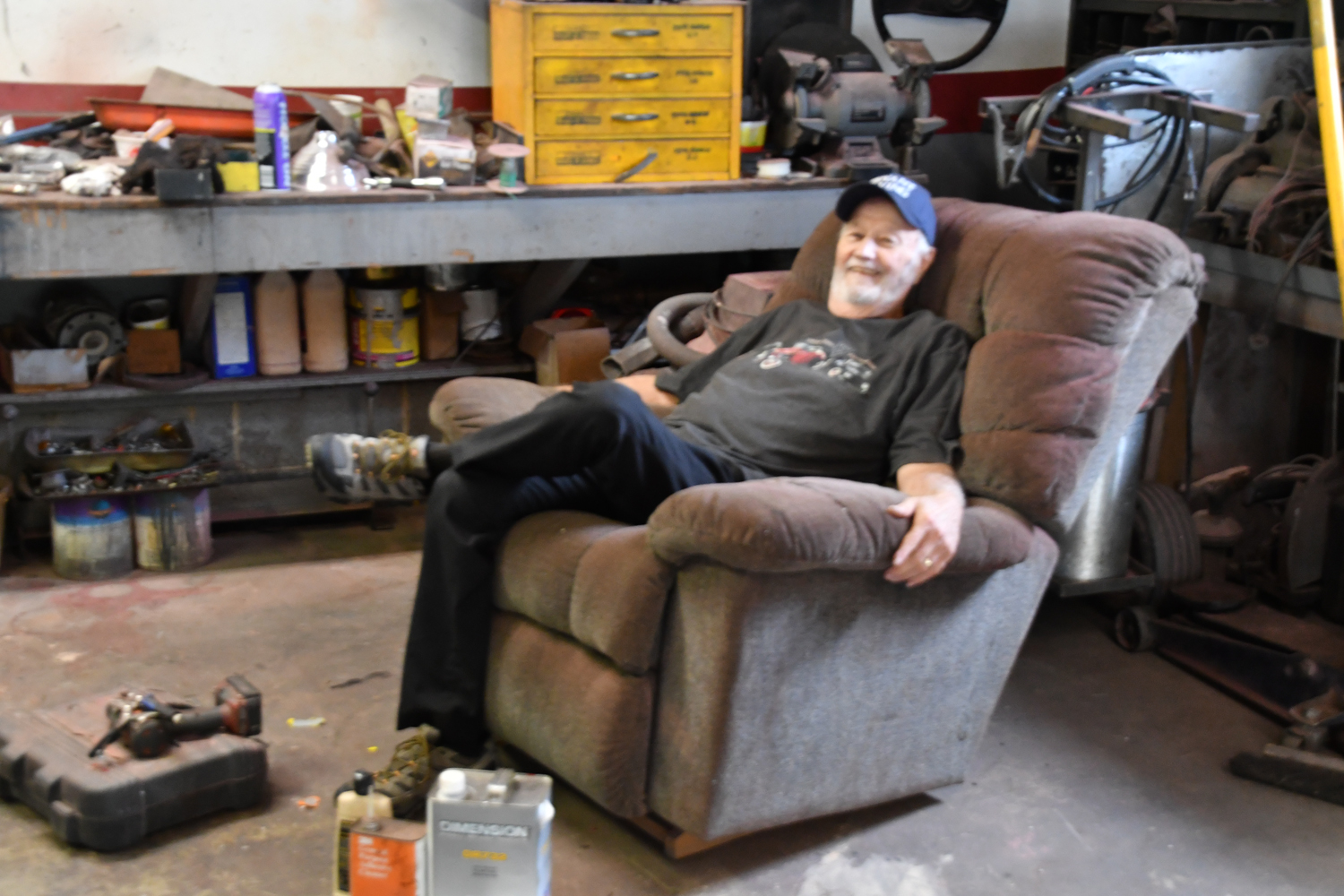
Benny in his recliner

When asked why he has a recliner in his garage Benny says, “It’s because I am 75-years old. I have had two heart attacks and I have had triple bypass surgery. At this point in life I work about 10 minutes and sit about three or four minutes and then, maybe, I can work another 10 minutes. I love what I do.”

Benny Bryant’s extensive roster of masterful restorations leaves no doubt as to how well he has succeeded in sharing the fruits of his passion with family and friends alike. And he continues to do so in his reclining years.

By |2022-11-25T13:08:43+00:00September 29th, 2022|4 Comments

Conversations With People We Value #39

With Alaska in my rearview mirror, the late summer sunshine inspired a journey south along the Blue Ridge Parkway in search of stories to be found on the country byways that splinter off from the great mother road of the rural southeast in North Carolina.

Some stories stoked an inspiring blend of incredulity and awe such as that of the engaging gray haired gentleman with a roadside repair business sharing space with an array of deteriorating foreign and domestic classic cars snuggled fender to fender like sardines in a can. He began collecting vehicles around his ninth birthday. His collection, now, stowed away in nondescript chicken coups and barns included hundreds of cars and over 1,000 motorcycles.

Another story came alive when stopping at a farm stand nestled in a valley bounded by thickly forested mountains. That stop introduced me to a remarkable gentleman, retired rocket scientist and Apollo 11 team member. Together with his sister he continued his extraordinary life by buying an historically significant orchard and by turning it into a non-profit 501c3 changed lives while preserving and promoting the culture of the Blue Ridge Mountains.

Those, however, will be stories told another day.

This week’s story tells of a man who created a community designed for classic car enthusiasts.

Meet Allan Witt visionary developer of Hawk’s Hill.

Visiting a community built for car enthusiasts

Departing from the Holly & Ivy Inn B&B in Newton, NC we headed out on some twisties toward Lenoir, NC. The Holly & Ivy deserves a shout out as easily the best bargain in a refined B&B I have ever enjoyed. At $92 a night this immaculate and exquisitely appointed restored Manor House of a 19th century industrialist could be considered a bargain at twice the price.

In Lenoir, located in the foothills of the Blue Ridge Mountains, resides Hawks Hill a community dedicated and tailored to the interests of the collectible car enthusiast. Created by now retired businessman and British Car enthusiast Allan Witt, Hawks Hill migrated from vision to reality over a period starting with the purchase of the land in 1987. At that time Allan and his now deceased wife Patricia, who passed in 2016, purchased a beautiful, wooded 108 acres in Lenoir. Allan gives much of the credit to Patricia, who owned and enjoyed her 1958 Morgan, for sparking the concept of a collectible car friendly rural community.

Passing the sign announcing the entry to Hawks Hill, one proceeds up a smoothly paved serpentine drive through a thickly forested community. In the age of clear cutting and cookie cutter homes, the handsome houses of Hawks Hill enjoy a setback that subordinates their presence to promote a pleasing sense of a forest ambiance.

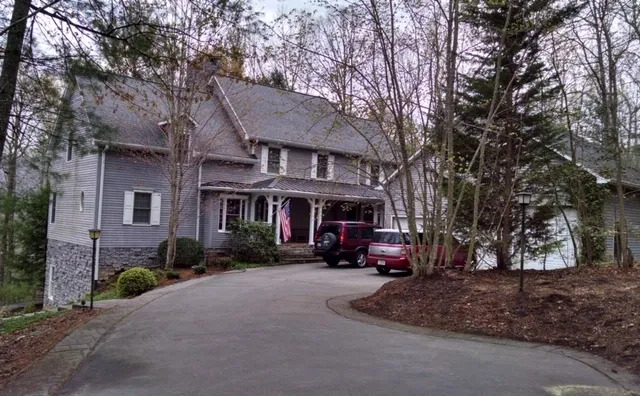
A sloped driveway snaked up to Allan’s residence. The attractive home at the top included an attached garage with a lift and space for three vehicles. Across the driveway stood a handsome barn capable of accommodating 6 cars in various states of repair including a bare Jensen-Healy body on a rotisserie stand. Down the sloping approach to Allan’s home stood yet another barn that accommodated six cars. As the man espousing the vision of a car enthusiast community, Allan clearly walked the walk.

Allan Witt, Sherrill Eller

Walking about his property with his companion Sally Tatham and his friend and skilled mechanic Sherrill Eller Allan details how the vision of a car enthusiast community manifested itself as Hawks Hill.

Allan says, “When I sold my business in Connecticut my wife and I looked at the property we had bought here and didn’t know what to do with it.” Allan and his wife decided to subdivide it into lots of over 1 acre each and sell the lots in phases. In the early 1990’s phase one with nine lots went on the market. None of them sold. There was little interest. It was time for a plan B for phase 1. It was at that time that Allan’s wife said, “You like cars. Lots of people like cars. Why don’t we make a car community out of it?” Allan loved the idea.

Step one, they advertised in “Old Cars Weekly” which ranked as their magazine of choice. Allan says, “It came out weekly. It was inexpensive.” And it was brilliant. Quickly after placing their ad the first half dozen lots had sold. Hawks Hill had a working plan and they would hold true to its winning formula. Over the ensuing years Hawks Hill rolled out four more phases. Hawks Hill contains a total number of 48 building lots. At the age of 86, Allan has no plan for a phase 6 to sell the final five lots.

While a “car guy,” Allan sought to tailor amenities that could be enjoyed by a broad spectrum of families and individuals alike while resonating strongly with car enthusiasts. Hawks Hill features an unusual integration of features appealing to both those with an affinity for hiking though the woodlands and those who savor driving through the forest.

Club House with 8 bays

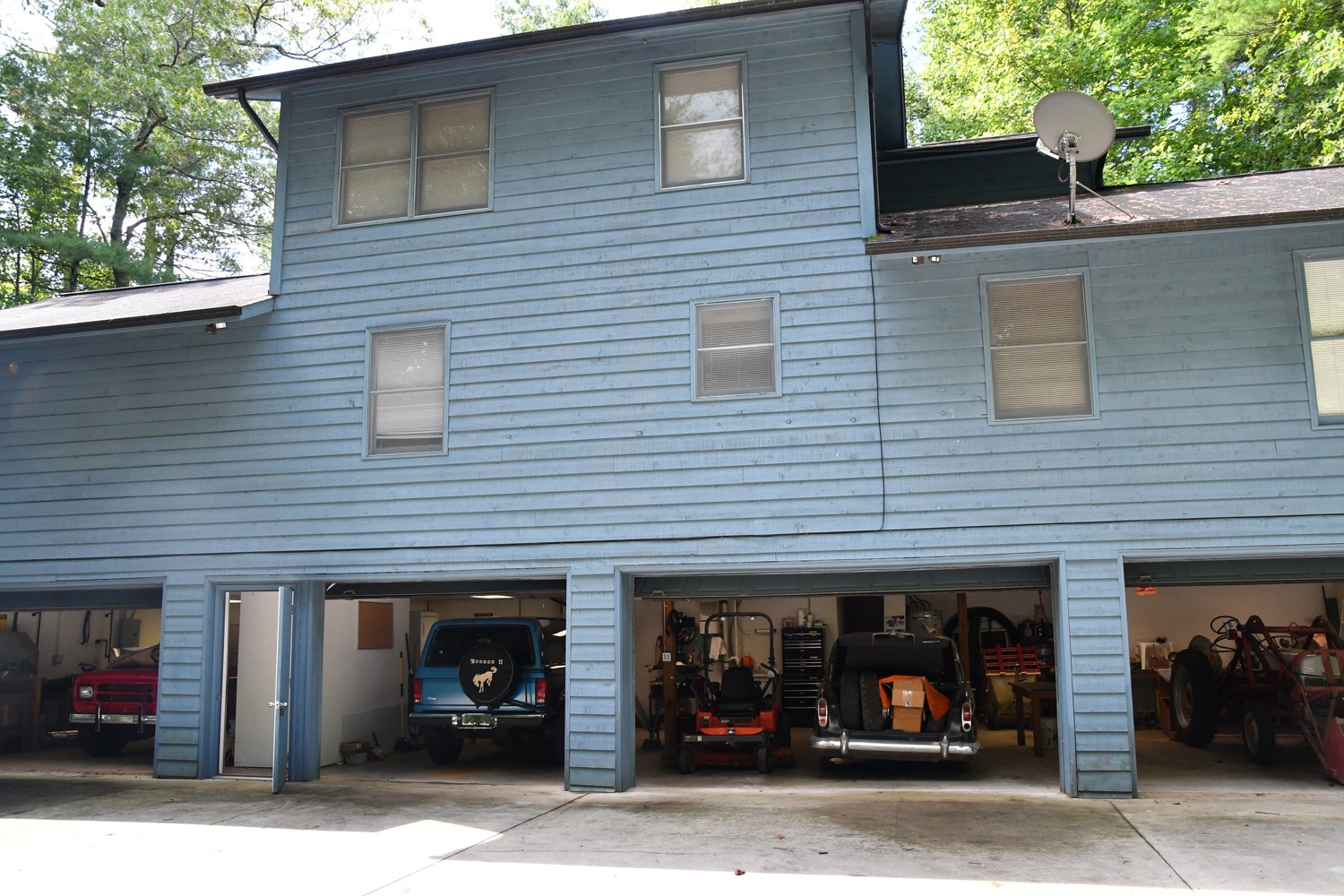
Almost assuredly unique to Hawks Hill would be its 2-story clubhouse that features a downstairs offering eight (8) shop bays. The bays have a full complement of tools including access to a lift and machinist tools for fabrication. A milling machine, a lathe, sheet metal tools, sand blasting equipment, a large capacity air compressor and more stand ready for any home owner’s use.

The upstairs contains three bedrooms, three bathrooms, a giant kitchen, a huge living room and a wood burning fireplace. Allan says, “Fundamentally it is a guest house.” The upstairs also contains a club room for gatherings.

In driving around Hawks Hill the sensitivity of car enthusiasts to the importance of the necessary space to properly pursue their passion makes them hyper-vigilant. For car guys, encountering space in abundance borders on a religious experience. In driving through Hawks Hill, the presence of a wealth of space to nurture the passion screams out. Handsome homes with three bays incorporate independent structures that attractively provide an additional three, four, or five bays. Jaguars, Healeys, Mercedes, Model As, muscle cars, supercars, fire engines, name it, all find a home here. At the wheel, it would appear the quality of the roads serves to celebrate an avocation built on the joy of driving.

Demographics of the area began as predominantly retirees. However, with the recent explosion in work-from-home opportunities that mix appears destined to change.

Allan’s House and attached garage

Allan says, “It is extremely affordable to live here.” He has his three buildings on over ten acres with taxes in the area of $3,000. He says, “At this point I do not see additional new construction happening. When a house goes up for resale it sells very quickly.

If you want to live where you can walk to downtown, Hawks Hill is not the place for you. That said, if you want to live in a region rich in automobile activities they abound in the area. Allan says, “There is lots of car stuff around here.” The first of each month Lenoir has a downtown cruise that pulls over 500 cars. Allan points out that there exists a number of marque and non-marque specific clubs in the area. Most interestingly, a race track at North Wilkesboro that closed in 1996 has received state funding to rebuild and reopen. Allan says, “It is already reopened and they are having a variety of races including stock car and sprint car. Last week Dale Earnhardt Jr. was racing there.” As well, other speedways abound. Allan says “Antioch Speedway, Tri-County Speedway and Hickory Speedway add to the motor sport offerings in the area.”

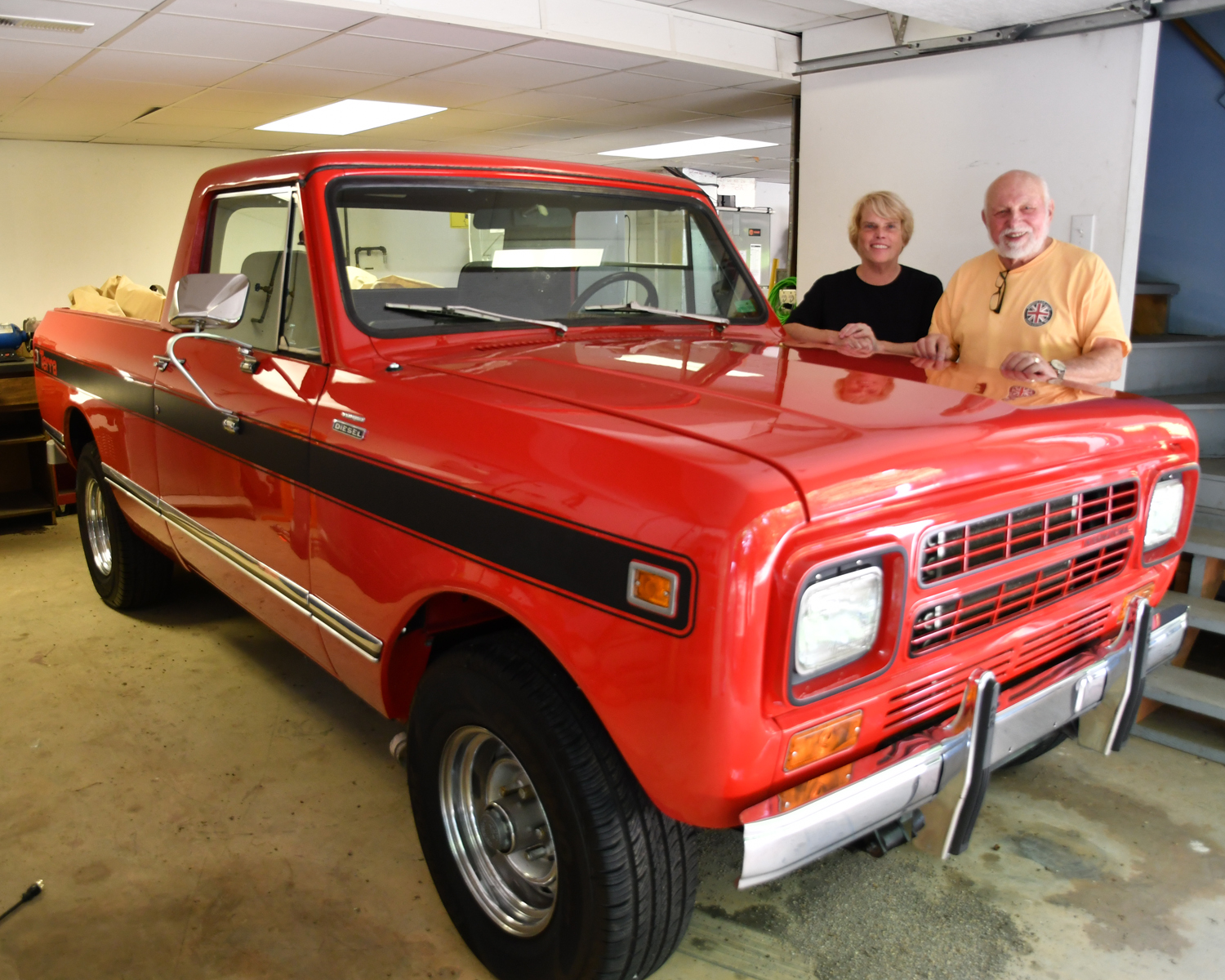
Sally Tatham, Allan Witt and 1980 IH Scout

As to Allan “the car guy,” he pretty much sticks to the British offerings that almost exclusively populate his collection. He has a special affection for Jensen-Healeys of all stripes and Austin-Healeys though a few Humber Super Snipes have found their way into his heart through the years. However, somewhat surprisingly, his favorite may be a rare American in the fold. Produced for only one year, Allan’s totally restored 1980 long wheelbase turbo-diesel International Harvester Scout sits in the catbird seat at Hawks Hill.

By |2022-11-25T13:07:13+00:00September 15th, 2022|4 Comments

Conversations With People We Value # 38

My experiences in Alaska benefited considerably from the character of many with whom I became acquainted. In some ways they projected a presence that seemed “realer” than that of the quasi-urbanized east coast sort common to where I call home. Not saying that either one holds an advantage as being better or worse as a human being, but realer? I say yes.

To a degree I believe that the beauty and challenge associated with life in this water wonderland that clings like a barnacle to the southern tip of Alaska shapes the character of those who call this archipelago home. It stamps each with a decidedly “made in Alaska” personality. Not so much a chip on their shoulder, far from it, it is more like they are playing an honest hand with chips in the game.

Emblematic of this living life in living color mentality is a woman whose trip to Ketchikan in 1985 profoundly altered her future vision. She never left. Meet Michelle Masden, Alaskan bush pilot.

Reaching the heights of her dreams on the wings of a deHavilland Beaver

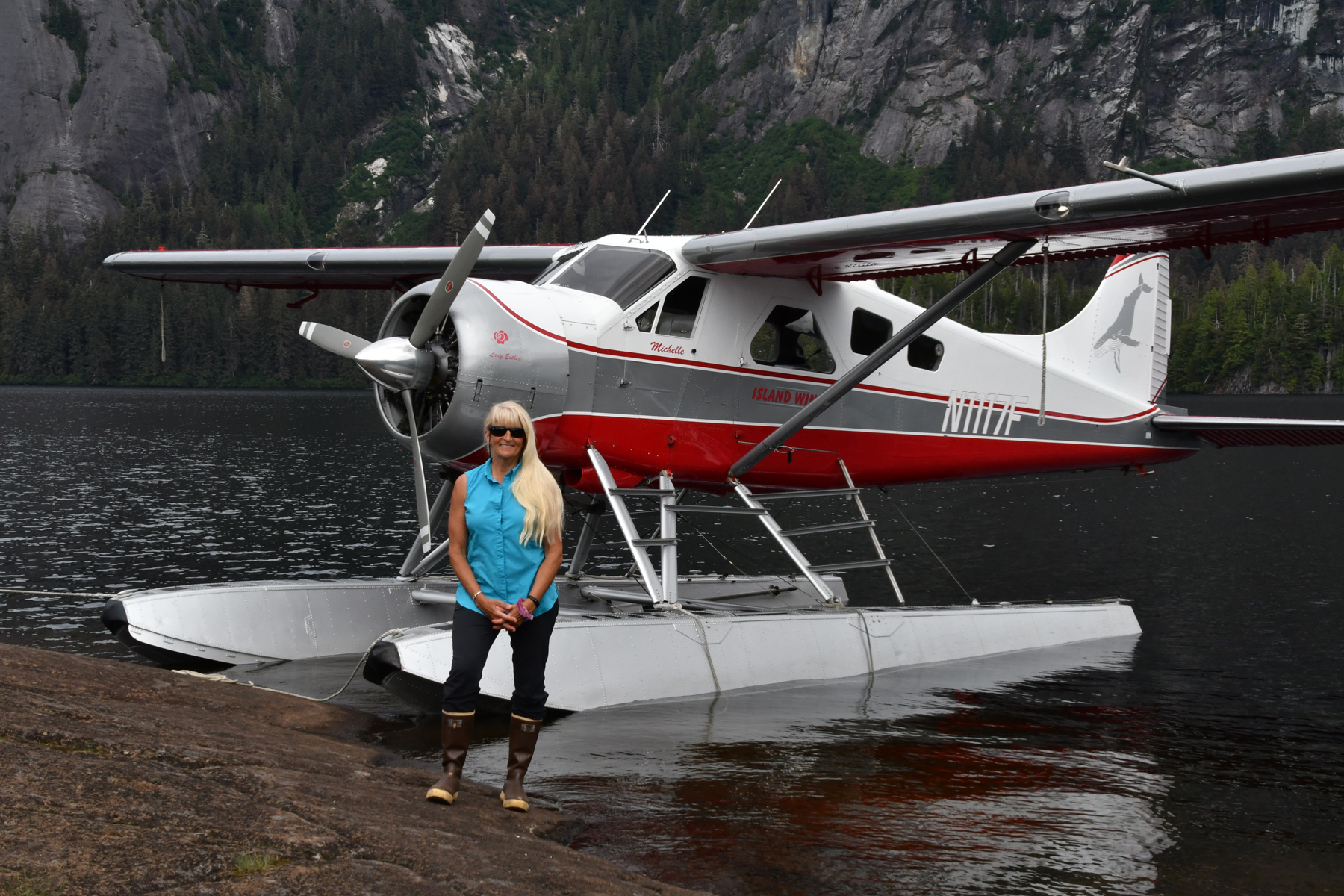
Michelle Masden with Lady Esther

Smart, confident, engaging, rugged as the Alaskan terrain and just as pretty, Michelle Masden does not fit conventional wisdom’s image of an Alaskan bush pilot.

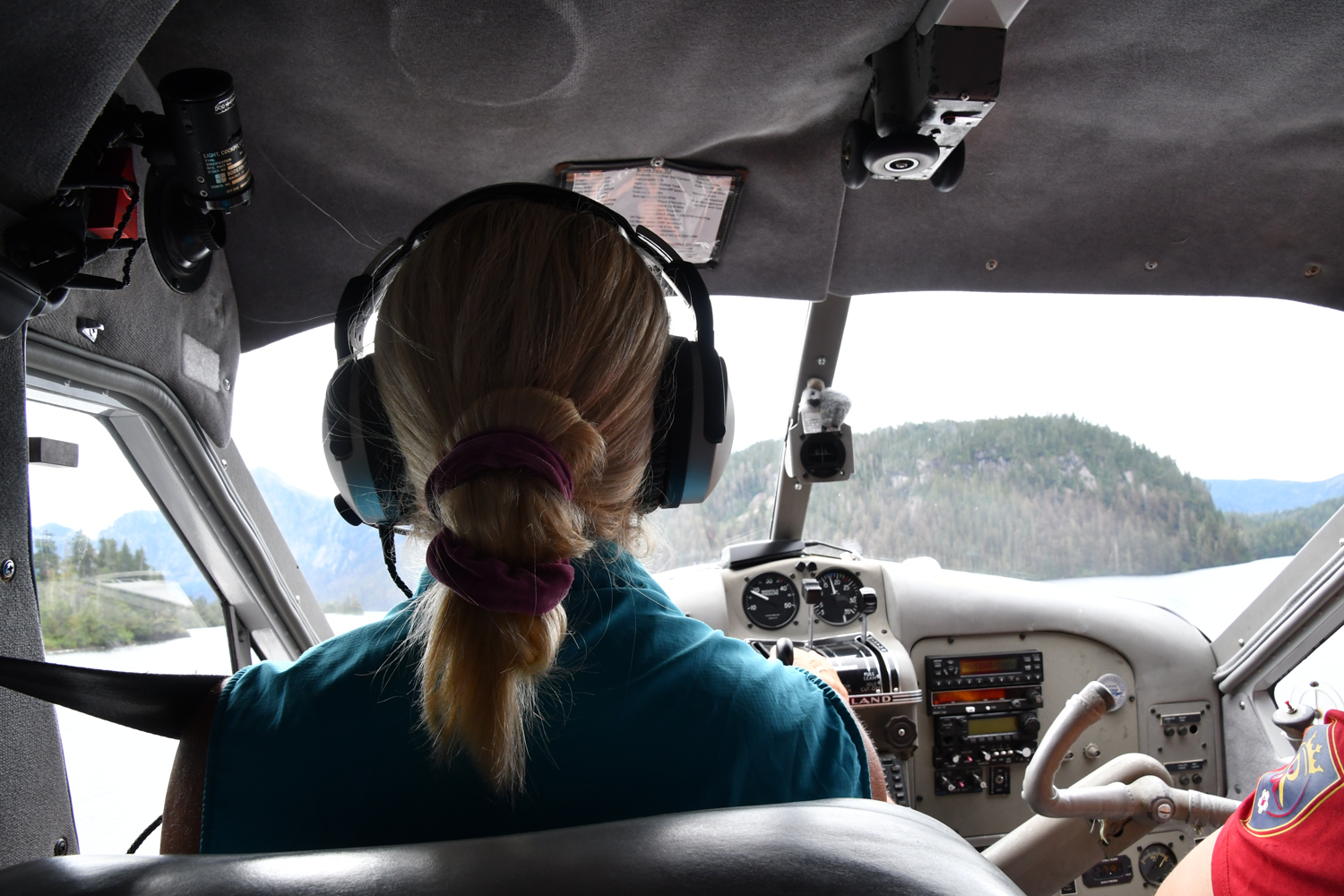
Interestingly, it was Michelle’s airplane that led to my meeting Michelle. Seeking the source of the powerful, lumpy, growl building from a radial engine peaking to a crescendo from a nearby waterfront dock led me to a beautifully restored vintage floatplane and its owner and pilot Michelle Masden.

Like a featured vehicle at a concours firing up to take a trophy lap, the plane, a 1959 deHavilland Beaver roared to life. Decked out in a striking livery of red, white and silver, it clearly took “Best in Show” among the area’s large population of floatplanes. Named the Lady Esther, it honors Michelle’s grandmother who hated to fly but whole-heartedly supported Michelle’s airborne dreams.

One of a series of deHavilland DHC-2 aircraft built between 1947 and 1967, now completely restored, this deHavilland Beaver started out as a military surveillance plane.  As a military plane this model had been relied upon by more than 30 countries. It began life in 1959 equipped with a machine gun drive synchronized with magneto timing allowing it to fire harmlessly through the propeller. As well, it came equipped with a camera bay allowing for mounting cameras vertically down through the belly to photograph enemy territory. The camera bay remains. The machine gun does not.

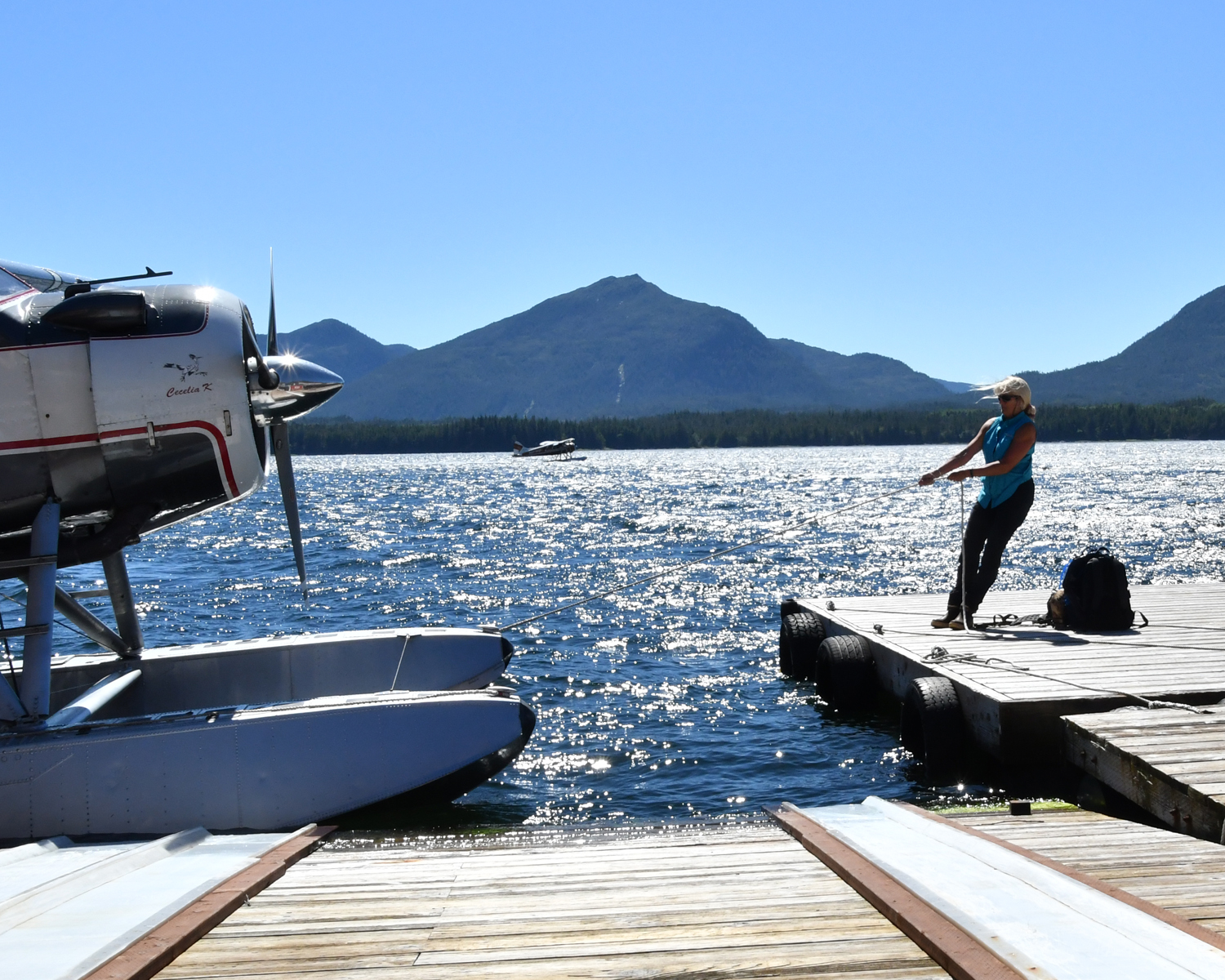
At Island Wings Air Service Michelle pulls her weight and much more

Standing, no correct that, I quickly realized that Michelle never seems to stand still, especially around her floatplane. We spoke while she actively tended to her plane, much like a concert musician tended to her violin. Shortly a new half dozen or so tourists would be arriving to fly into Alaska’s Misty Fjord National Monument or go into the bush to set down and witness the interaction of bears and salmon.

Generous and polite in sharing the little time available, she first spoke of her plane, then of herself.

Michelle purchased her floatplane from Kenmore Air of Kenmore, Washington in 2002. Much like the Mercedes-Benz Classic Center, Kenmore stands as the go-to experts for deHavilland Beaver restoration and upgrades.

Powered by a 450 horsepower Pratt & Whitney 9-cylinder radial engine, Lady Esther is a very capable lady. With its large wing area and powerful engine, the Beaver displays exceptional STOL (Short Takeoff and Landing) performance making it a favorite of bush pilots. It certainly ranks at the top of Michelle’s list. She says, “This is a fabulous plane. It was designed to take off and land in relatively short spaces. That is what my business is all about. In my opinion no floatplane does it better.” The last one left the factory over 50 years ago. Nothing built since then has supplanted its number one ranking in the bush pilot community.

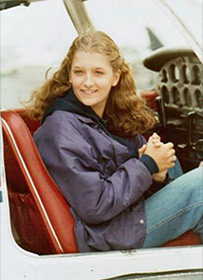
Michelle at 17. The day she got her pilot’s license

Born to be a pilot, Michelle took her first flying lesson at the age of 16. By the age of 17 she had earned her pilot’s license. Later, fresh from graduation at the University of Nebraska with dreams of becoming a commercial airline pilot, Michelle came to Ketchikan as many College students did to enjoy a post college summer fling. The year was 1985. Seduced by the beauty and character of the 5,000 island Alexander Archipelago in which Ketchikan is situated, Michelle’s goal of becoming a commercial airline pilot morphed into a dream that would be her life’s passion and profession.

Michelle says, “In experiencing Ketchikan I realized that I did not want to have the life of a commercial airline pilot flying from city to city living in hotel rooms.” Michelle realized her life would be lived in the skies over Alaska. Making her dream a reality posed many obstacles. First and foremost ranked the need for a plane around which she could build a business. Her present job as a deck hand on a sailboat paid nothing other than free transportation to Alaska. However her salvation would be found at sea. She went to work as a deckhand on a commercial fishing boat. Being a “girl” the offers did not pour in. But Michelle is nothing if not tenacious and strong willed. Once she got a job each subsequent year finding work would not be a problem. Michelle says, “The first summer, it was challenging to get on a boat. However after that, no. Why, because for anyone who isn’t a hard worker, it shows immediately. Up front everyone knows that it’s not going to work, right? But anyone who demonstrates an ability and willingness to put in the effort will get work.” She had eleven job offers her second year. Michelle ended up crewing on a fishing boat for seven summers. The money was good and it allowed her to pursue her second passion, traveling.

The first three years she fished for three months and traveled for 9 months. By her fourth summer she had saved enough to buy her first airplane, a Cessna 172, a little four-seater on wheels.

For the next four years she continued to fish in the summer but, now, the other nine months would see her flying her Cessna out of Saint Croix doing inter-island ferry work. Now the dream had gained some momentum. In 1993 she sold the paid off Cessna 172 and bought a Cessna 185 floatplane and settled in Ketchikan to live full time. She set her sights on building the business that would bring her dreams to life. Michelle started Island Wings Air Service. Interestingly her experience on the water gave Island Wings the boost needed to get it off the ground. She says, “My fist customers were fishermen because that was an industry I knew from the inside. The commercial fleet uses airplanes for spotting fish, tender placement, delivering parts and people.” From there her business expanded into tourism, transportation to forest service cabins, charter work and basically anything people need that will fit in an airplane.

Michelle recognizes that no accomplishment comes without help from those around you. She says there were many but expresses a special fondness for veteran bush pilot and flight instructor Jack Cousins who generously shared all he had learned in over 50-years in the Alaskan sky. Michelle says, “ Jack called Alaska the greatest place in the world to fly.” Jack passed away in 1999. Michelle says, “He was a great friend and mentor. I miss him.”

Jack Cousins and Michelle

Michelle’s life in the air above Alaska has offered a rich diet of life experiences across a spectrum of emotions. She says, “I fly famous muckety-mucks all the time. I have to sign a nondisclosure so that I can never tell anyone that they were here. What kind of life is that?” Michelle also performs medevac flights and participates in search and rescue missions. She says, “Search and rescue is really difficult because it is never a nice day and often times you know the people you are looking for.”

Island Wings now approaches its 30th year in business. It stands as a true success story and a tribute to an enterprise built on the dreams and dedication of a woman with her head in the clouds and her mind squarely focused on sharing the beauty of Alaska with others. Michelle’s success in translating her passion and sharing her joy can best be expressed by comments on the Trip Advisor travel site where of 757 reviews of their experience with Michelle and Island Wings, 18 say very good. 728 say excellent.

By |2022-11-25T13:08:06+00:00September 1st, 2022|10 Comments

Conversations With People We Value #37

Recently my search for blue highways and good stories took me to the island town of Ketchikan, Alaska. Drawing its name from the Tlingit Indian tribe language, Ketchikan translates into “Thundering wings of an eagle.” Its name offers more than a hint of its character. A single road stretches the length of Ketchikan and it is the bluest of highways. A town of mostly rough structures reminiscent of old seaports, diverse cultures and an annual rainfall of 14 feet, Ketchikan clings tenaciously to the rugged granite face of Revillagigedo Island. For those who call it home, it seduces their love of nature and fully challenges their determined countenance to withstand winter’s fury. Stories are many. I have captured a few.

One such story is that of an engaging and cheerful mother and third grade math and science teacher who possesses world class street creds as an experienced “musher’ with multiple finishes in Alaska’s brutal 1,000-mile “Iditarod Trail Sled Dog Race.”

Meet Angie Taggart.

35 Below, 16 Dogs, 13 Days. Angie tackles Alaska’s Iditarod

Angie Taggart at Iditarod

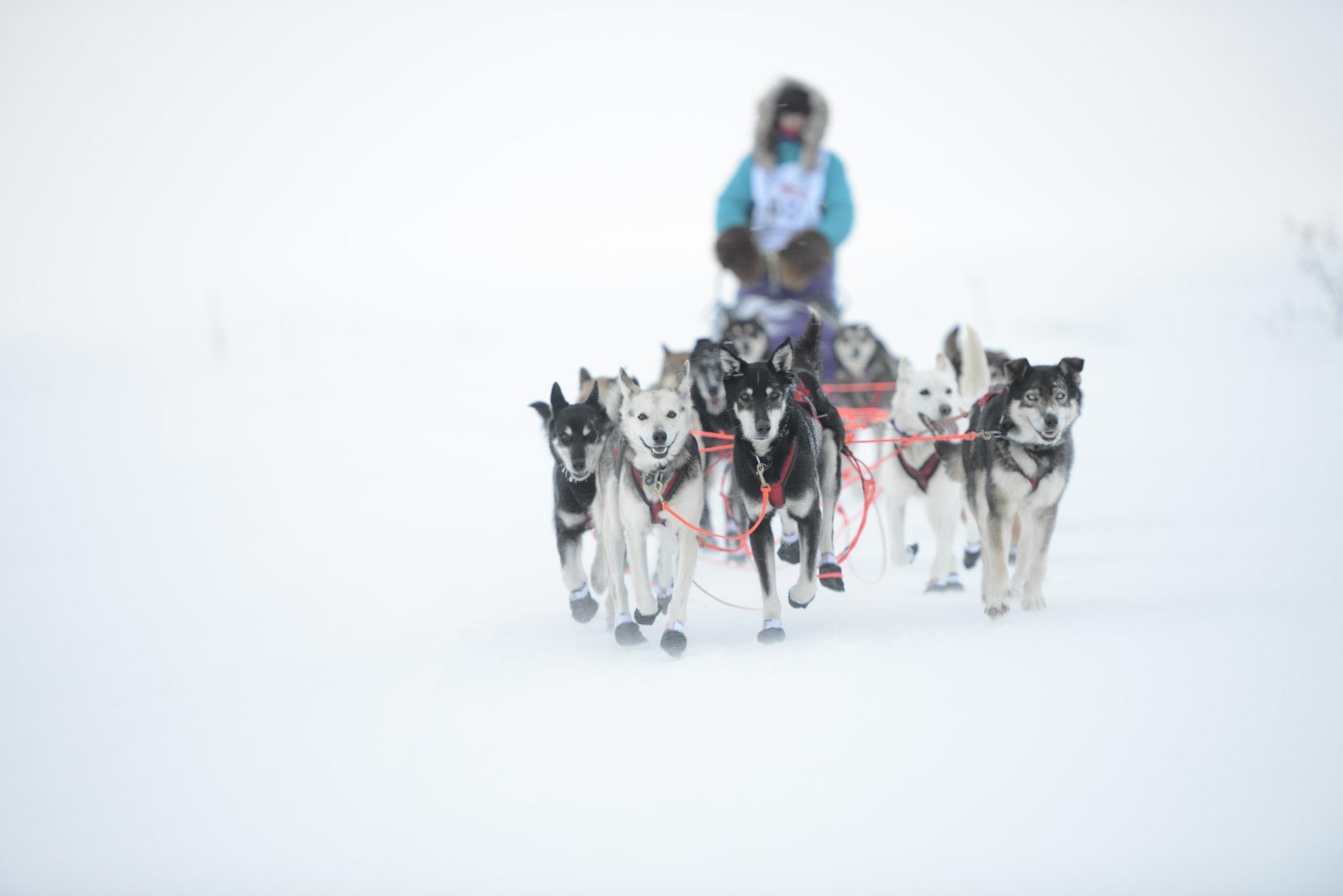
Called by many the “Last Great Race” on the planet, the Iditarod draws a rare and hardy breed of men, women and dogs to a starting line on the first Saturday in March that begins a thousand mile race across a frozen trail from the ceremonial start in Anchorage to Nome during the bitter and cruel Alaskan winter.

Angie, her father John and Iditarod fan who made highest bid at fundraiser for a ride with the team

Meeting Angie Taggart does not immediately instill a sense of being in the company of a daredevil looking to test her physical and mental limits against one of the most punishing environments on earth. Making her acquaintance affords one an immediate sense of being in the presence of a woman both genuine and likeable. A ready smile and a sharp mind leave no doubt that she has the qualities of an excellent teacher. That she has the guts, courage and physical prowess to conquer the Iditarod, twice, not so much. However, in conversing with Angie you gain both a sense of a quiet and powerful resolve and an inherent “can do attitude” completely devoid of bravado. In embracing a challenge Angie displays a power of intention as rugged as the island she has called home since the age of five. One likes her right away.

Angie Taggart at Iditarod in 2013

After graduating from college in 1998 with a degree in education, Angie decided to seek a teaching job in the Alaskan “Bush” country. Bush Country earns its definition by being accessible only by boat or plane. No highways, not even blue ones, can get you there. From out in the Bush, Pikta’s Point, Alaska responded to young Angie’s job search. Isolated on the Yukon River with a young population hovering just over 100 souls, Pitka’s Point became Angie’s new home. As fate would have it, Angie’s fellow teachers each year would charter a plane and fly to Nome to witness the end of the Iditarod Race. While Angie knew the Iditarod ranked at the top of Alaskan sporting events, sled dogs were not part of her experience growing up. That would soon change.

The word “Iditarod” has its roots in the Ingalik Indian word “Haiditarod” which was the name for the river on which the, now, ghost town, “Iditarod, stood. It means “far distant place.” Today, while the town Iditarod is gone, the trail that bears its name remains an integral part of the great race. The Iditarod actually encompasses many trails that started in Seward and ended in the “gold boom” birthed town of Nome.

First run in 1973, the Iditarod owes its existence to many but none more so than Dorothy G Page, the Mother of the Iditarod, and Joe Redington Sr., the father of the Iditarod. Page, not an Alaska native, became president of the Wasilla-Knik Centennial Committee in charge of coming up with an event for 1967 to celebrate the 100th anniversary of Alaska’s purchase from Russia. She originated the idea of a dog sled race that in 1967 covered 56 miles. Out of subsequent conversations with native Alaskan, experienced musher and kennel owner Redington the idea of the 1000 mile Iditarod came to life.

Deeply disturbed in the 1950s by the “Iron Dog’s” (snowmobiles’s) displacement of the dog sled, Redington dedicated himself to preserving the sled dog as part of Alaskan culture and having the Iditarod recognized as a National Historic Trail.

THE RACE

Covering a total distance of over 1000 miles, the distance traveled as the crow flies, is about 650 miles. Conditions facing all participants can include howling winds, blinding blizzards, sub-zero temperatures and emotionally punishing loneliness. Completion times range from 9 to 13 days.

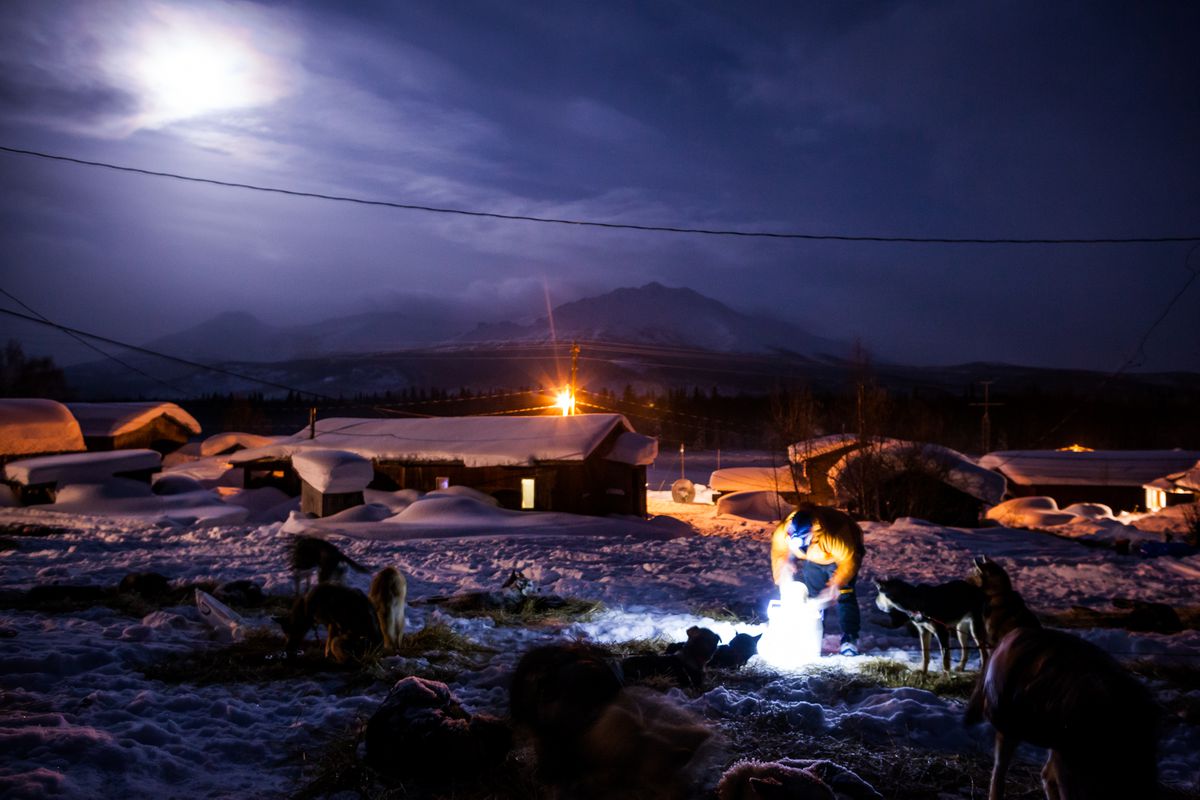
Twenty six checkpoints exist along the 1000 plus mile trail. Here mushers can stop to rest themselves and their dogs, eat, and get their dogs checked. However, when it comes to mandatory “pit” stops only one 24-hour stop and two 8-hour stops are required.

THE DOGS

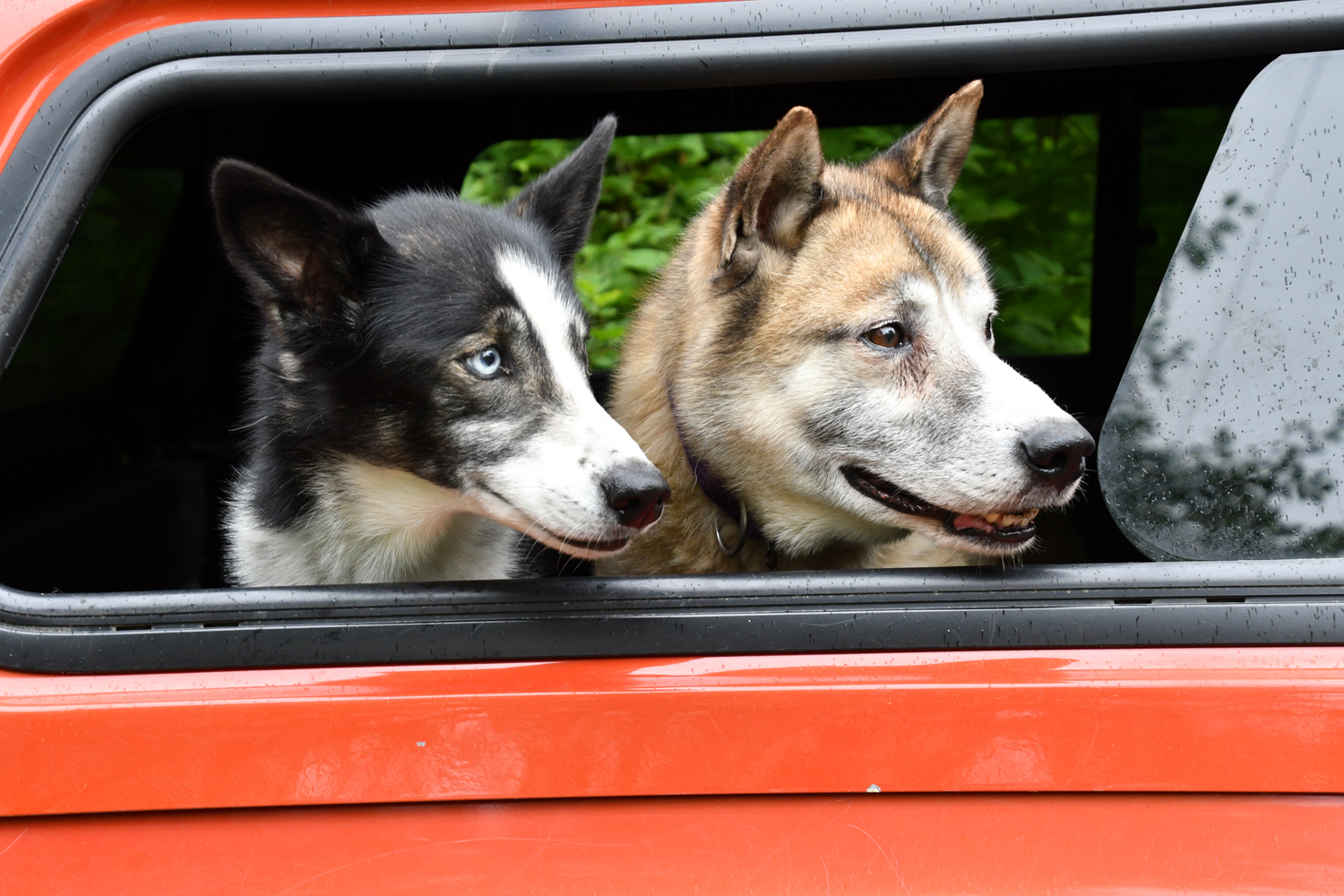
Original sled dogs from a century ago with their thick necks and chests weighing about 80 pounds descended from wolf stock bred by the Malamute Indians. The breed would later be known as Malamutes. Interestingly today’s Iditarod sled dogs, known as Alaskan Huskies, are crossbred for speed and endurance with weights in the 35 to 65 pound range. Breeding sled dogs with greyhounds is not unheard of. On the trail dogs will burn 10,000 to 12,000 calories a day. All wear protective booties to prevent cuts and abrasions from jagged ice.

An Iditarod musher will start with 12 to 16 dogs. During the race if a dog gets hurt or a rest stop veterinarian judges that a dog is not fit to continue, the dog will be removed from the team, not to return. The dog cannot be replaced. All dogs have a microchip implanted to confirm proper identification. Any dog removed from a team is returned to Anchorage and after being checked in is transported to the Eagle River Correction Institute where designated inmates care for the dog until the musher’s handlers arrive to take the dog home.

Like people dogs have distinct personalities. The smartest and fastest possessing an instinct for navigating a trail become “lead” dogs. Dogs gifted with the ability to best handle curves become “swing” dogs and literally follow the leaders. Closest to the sled can be found the largest and strongest dogs called “Wheel” dogs. Much like a collegiate sculling crew every member plays an indispensable role in creating a complete and competitive team.

For Angie what started as a fling with friends to share a novel experience morphed into a life changing passion. Quickly she and her friends joined the legion of volunteers who helped with the dogs. Angie says, “I immediately just fell in love with the whole lifestyle of being out and about in nature with the dogs.” By her second year at the Iditarod Angie knew she would be leaving teaching at Pitka’s Point.

In realizing that she had no obligations or plans for that matter, Angie decided to explore the possibilities available for being an Iditarod sled dog handler. Angie says, “Most of my friends responded with a Mr. Spock-like raised eyebrow and an, okay, whatever.” Angie’s first move called for approaching a woman musher and Iditarod veteran whom she truly respected, Dee Dee Jonrowe. Jonrowe had run the Iditarod 30 times and finished second overall three times. In describing the toll taken by a sport she loved, Jonrowe was quoted as saying, “I’ve had back surgery, frozen my shoulder, broken my hand…I think I’ve had every single cold related injury. I haven’t had any amputations, but I have had severe frostbite on my fingers, cheeks and nose. I even frostbit my corneas some years ago”.

DeeDee JonRowe

When Angie asked Jonrowe what she needed to do to become a dog handler, Jonrowe basically responded, “Do you have a strong back?” Angie said “yes” and Jonrowe replied, “Call me in two weeks.” Two weeks later in the spring of 2000, DeeDee invited Angie to her facility in August to be her dog handler. Working with Jonrowe and her 100 dogs, Angie fell in love with the life and developed a driving passion to run the Iditarod.

After completing her year with Jonrowe, Angie returned to Ketchikan, and had the great good fortune to share her dream with a friend, an older woman who felt convinced that Angie had what it took to achieve her dream to run the Iditarod. The woman said, “You’re going to do this one day and I am going to support you. I am going to get you there.”

Angie says, “It takes a lot more than desire to be in the race. You have to run qualifying races totaling 500 miles.” Most of those miles would take place under the close scrutiny of race officials filling out a report card to confirm the musher’s fitness to handle the Iditarod challenge. Prior to qualifying Angie met with a friend, Ray Redington, yes, the grandson of Iditarod Icon, Joe Redington. He agreed to let her use his dogs for the qualifying races. Angie got a great report card. This gave her two years to run the Iditarod before she would have to requalify.

Sled dogs Willow and Chip

Unable to get an unpaid leave of absence from her teaching position in 2010, Angie set her sights on 2011.

With her leave granted for 2011, it was game on. Angie bought the team she would run from another of Joe Redington’s grandson’s, Ryan Redington.

Angie trained through the summer in races with the team pulling a 2,000 pound sled on wheels. When asked how she personally trained to be in shape, Angie says, “Just working with the dogs. I lost so much weight and gained so much muscle mass just by lifting 50 pound bags of dog food and lifting and repositioning dogs. Trust me it was a strenuous task. Physically I was ready.”

March 6th, the race started at 1:00 o’clock. Entrants pull a bib number (the number the musher would wear) from a boot to the sequential starting order. Each entrant had two minutes to start or go to the end of the queue. A few nights earlier Angie had drawn bib number 19.

Nobody cracks a whip or yells mush to start the team. Pretty much “Let’s go” gets the team off and running.  Weather a 200-pound musher or a 110-pound musher, it does not matter. No attempt is made to equalize weights. The weight of the sled is the sum of you and what you choose to bring. Angie says, “The combined weight for me and the sled was 300 pounds. That may sound like a lot but snow offers little friction and the weight per dog with 16 dogs is less than 20 pounds.”

Once at full stride Angie describes her dogs as “racing machines.” At the start I had 16 dogs and, at times, would leave my sled and run along side to lighten their load. By the end of the race I had 12 dogs and never left the sled even on hills. More than half the time Angie would sleep with her dogs using her -40 degree F sleeping bag. Only when her clothes had gotten soaked would she spend the night indoors as her clothes dried.

Conditions on the trail would see temperatures drop to -35 degrees F. These temperatures demanded that coats be put on the dogs. Yet, at other times conditions suffered from water pooling on top of ice. At the Yukon River Angie experienced a total whiteout with blizzard conditions and 35 mph winds. Angie says, “That was the only time I thought I was not going to finish the race. I could not find a dog that would lead.” Angie notes that dogs act much like people. Sometimes a highly qualified individual facing a challenge fails to measure up. In the face of the blizzard all dogs wanted to turn back. Then one dog, ten-year old Carmack, stepped up as a single lead and took the team through. Maybe he should be renamed Rudolph (OK, bad joke).

After thirteen days, Angie Taggart and her team pulled into Nome Alaska. Of the 64 teams that started, 47 finished. In her first Iditarod Angie and her team finished 43rd.

When asked what did this experience mean to her Angie says, “I would say just the opportunity to be able to do this. More people have summited Mount Everest than have finished the Iditarod.”

By |2022-08-18T11:37:55+00:00August 18th, 2022|4 Comments

Conversations With People We Value #36

Among classic car enthusiasts, the time was when referring to a specific vintage automobile as “original” was synonymous with the most valuable version. Today, that no longer can be assumed as a given.

Welcome to the ascendant age of the “Restomod.”

Restomods – Does original matter anymore?


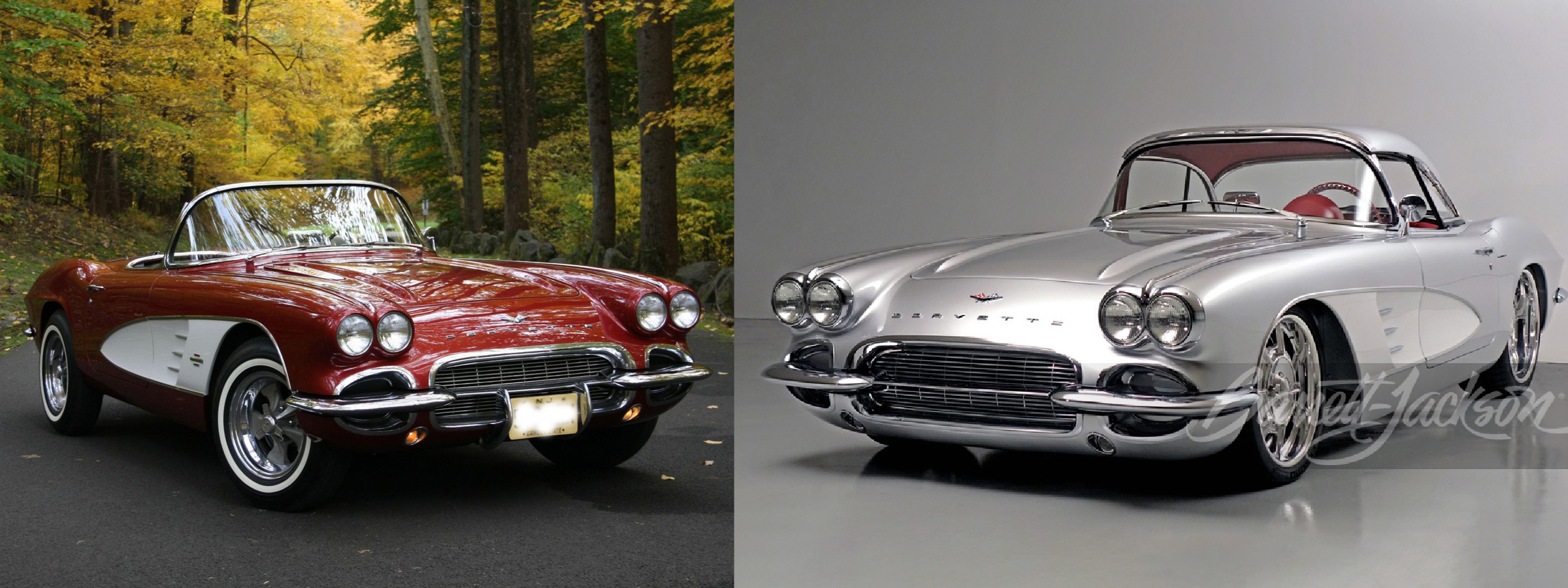
1961 Corvette original $85K-$95K                         1961 Corvette Restomod $467K

Clean, numbers matching muscle cars and Corvettes are no longer a given as the most prized examples on the auction block? That’s crazy talk. In years past, yes. Today, not so much. For those who have not noticed, recent times have witnessed a profound sea change in the vintage vehicle attributes that translate into the big dollars when crossing the block at auctions like Mecum and Barrett-Jackson. Restomods have supplanted numbers matching and very clean originals as stars on the auction stage.

Restomods are best described as domestic and import cars that retain their original classic look, but have been restored, modified and upgraded with the latest technology, power trains and chassis. Period correct technology like carburetors, distributors and dated suspensions have no appeal to the restomod buyer. Restomod buyers love the classic look but want the handling and performance technology bristling with modern capabilities.

Watching restomods’ startling rise to pinnacle status reflects not only a revolution in tastes, buyer demographics and perceptions of value but an even more fundamental change seen rippling through the very heart of the restoration industry. What can only be described as a tectonic shift is transforming the character of the builder community itself.

Jeff Buchak

To better understand the buyer and builder in the brave new world of restomod ascendance Drivin’ News reached out to restomod builder, Jeff Buchak, owner of Paradigm Auto Restorations and Matt Maisano owner of Motorcar Manor and a classic car purchasing consultant.

Matt starts off by noting that the car market in general took off around 2013 as the economy picked up. He says, “2013 is when we started seeing cars selling for what we thought, then, were ridiculous prices.” Matt points out that during that same period restomods started selling for descent money. That said, Matt makes the point that even five or six years ago at a Barrett-Jackson auction a restomod would sell for significantly less than an original version of the same vehicle. Matt gives an example saying, “Five or six years ago a standard 1967 big block Corvette would sell in the area of $160,000 while a restomod of the same model in similar condition would go for $125,000.” Matt continues to explain that today that same big block Corvette might go for $200,000 to $250,000 but a restomod based on a lesser 327 version might go for $375,000. When asked when did this big turnaround happen Matt points to 2017.

In reflecting on the restomod buyer Matt says, “A lot of people in the under 50-year demographic want to take it easy. Maybe they are a bit more lazy when it comes to driving and don’t want to deal with tune-ups and tweaking. These new restomod aficionados, unlike the traditional older car enthusiast, may not view the “joy” of maintaining a classic car as part of the fun.” Matt also notes the younger generations prevailing need for instant gratification. He or she wants the car to use, NOW, not after having to fiddle with a carburetor or such.

Are restomods a passing phase? Not in the opinion of Matt. He says, “Restomods are here to stay.” Interestingly he sees restomods becoming more desirable because they will be worth more and will hold their value. He says in the old school world none of this makes sense, but it’s a new world.” Matt gives the example of a standard 1966 327 Chevelle, not a Super Sport, that is all original including paint. He says, “That may be a $70,000 car based on its originality.” If you restomod that car it can become a $200,000 even a $300,000 car.

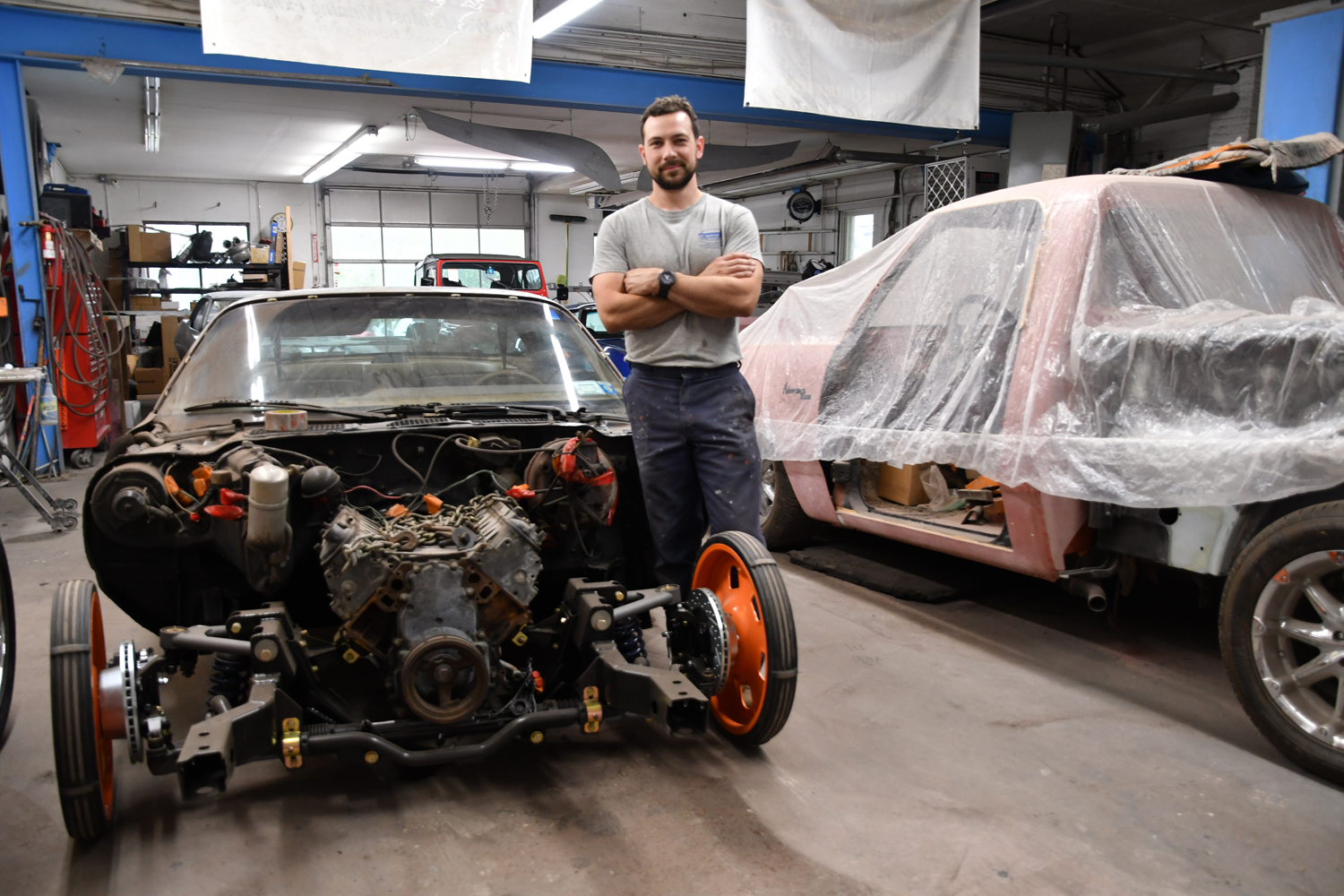
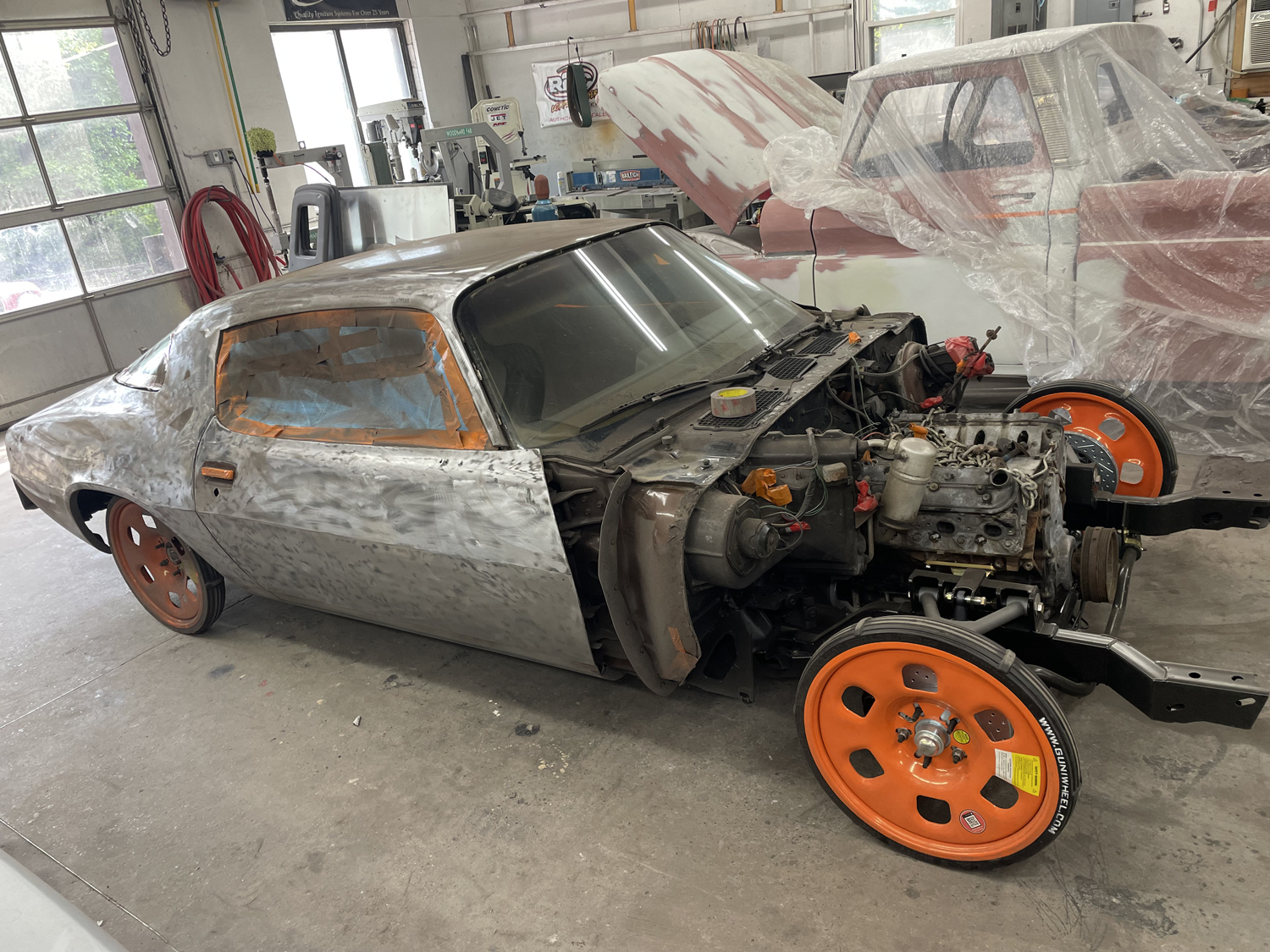
What then goes into making a restomod that so significantly increases the value of the base vehicle. For that we spoke with restoration shop owner, Jeff Buchak. Jeff has done a number of restomods and is presently starting on a 1979 Camaro with a 1970 Corvette waiting next in line.Jeff makes the interesting observation that around the early turn of the century, 2003 to 2004, the stock restoration of muscle cars reached its peak as enthusiasts became heavily invested in restoring these cars to their original form. However, Jeff notes that after pulling out of the Great Recession around 2012 people displayed an interest in exploring a different style of collector car. Jeff says, “Lots of new advanced technology came on the market creating a fertile environment to create a new class of collector car for people who liked the classic car look but loved the drive qualities of the latest performance technology.”

Seminal work on the restomod concept originated with the builders who had been focusing on “restoration to original condition” projects. Up until The Great Recession, 2008, restoration shops witnessed the hot market for restored muscle cars and thrived on the work. However, Jeff notes, “Builders saw that their beautifully restored classic cars, by contemporary standards, often drove horribly because of the authentic but dated technology.” According to Jeff, builders started exploring answers to the question, is there a better way?

Builders found the answer in the hybrid build combining classic car looks and contemporary performance technology. Then the tumbling dominoes of interest started to pick up speed. First builders created these classic cars with contemporary underpinnings for themselves. It then did not take long for collectors to notice and decide this combination of an old look  and modern drivability was pretty cool. At that point collectors started pressing builders to create these restored and modified (resto-mod) creations for the collector himself. Jeff says, “Then it just started to accelerate.” From around 2012 to 2017 a lot of engineering and development trial and error took place. By 2017 the restomod build had been sorted out and blossomed into a full blown and accepted and increasingly prominent new class of collector vehicle. The question then asks what accepted solutions had been distilled during the sorting out process that made the restomod so successful as a new category of collectible car.

BODY

A solid clean body means everything. A good body saves an immense amount of money. Jeff says, “It is conceivable that you could save $30,000 to $40,000 with a nice body that needs minimal body work and rust repair.” In the case of Jeff’s ’79 Camaro project the body, from out west is solid with minimal needs.

For the ’70 Corvette Jeff will do next, the whole car is an original one-owner car. Basically the customer paid $35,000 to get a great body and good VIN#. He said they made money selling the motor, drivetrain and chassis. Being a solid body they saved thousands on unnecessary fiberglass work.

An interesting sidebar to the importance of a solid body is the growing market for a clean title and VIN # that matches the car from which a restomod will be created. Jeff says, “People are paying crazy money for a title because as long as you have a title and VIN# you can build anything.” With a good VIN# you can call up Auto Direct and order a full Camaro body or Tom’s Bronco in California for a Bronco body. Jeff has seen people pay eight to ten thousand dollars on a car just to get the VIN plate.

CHASSIS

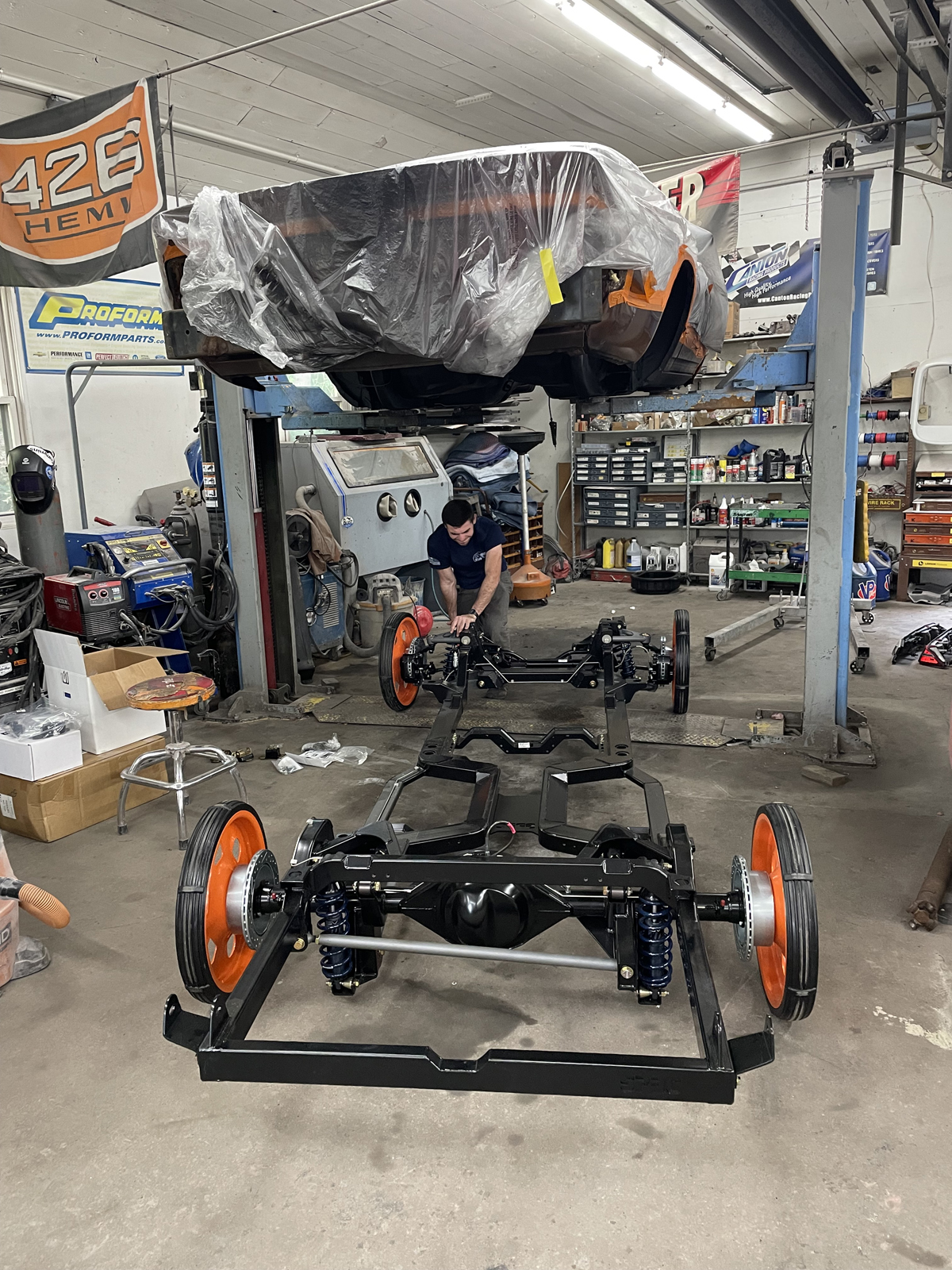
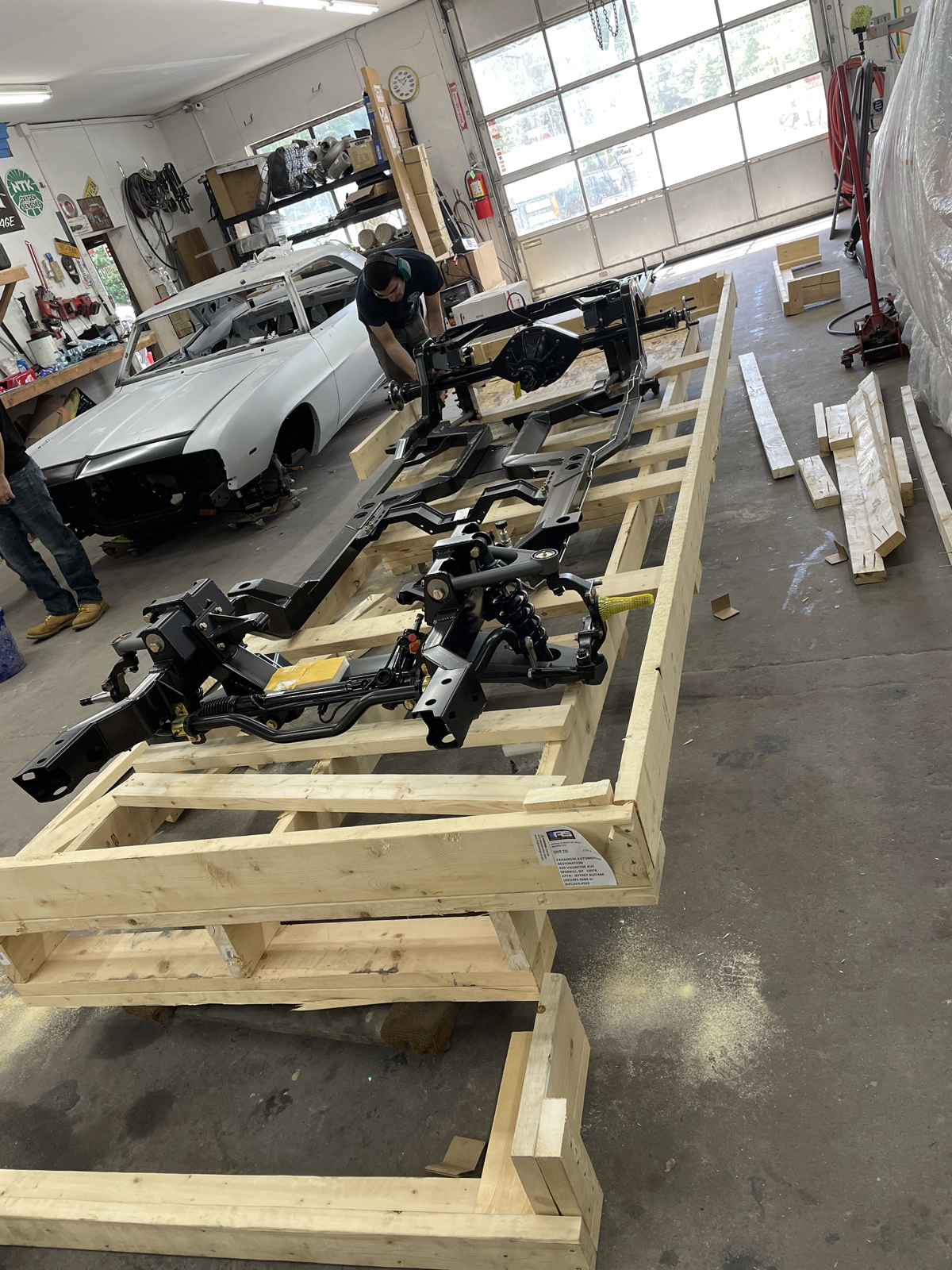
For his ’79 Camaro project Jeff is using a Roadster Shop brand chassis. Jeff says, “It is a great product and a smart way to control costs instead of custom fabricating a chassis.” On Jeff’s end, the client avoids a significant custom labor cost. Jeff says, “I’m going to call up Roadster Shop. I’m going to order a roadster shop chassis specific to the ’79 Camaro. It comes already set with the proper motor and transmission mounts.”

Before ordering the chassis it is critical to explore what the client wants because the chassis will come completed to match his specs. Is the intention to race or drive it on the street? Important questions include the stance desired, type of suspension and braking.

Costs can add up quickly. Jeff says, “If the customer intends to be road racing and wants an independent rear suspension, that is  Ten thousand dollar upgrade. If you want a billet aluminum CNC-machine center section, Throw another 5,000 on. Eye candy options abound. For a 68 to 72 C3 Corvette, you can get a really great driving powder-coated chassis delivered to your door for twenty seven to thirty thousand dollars. You can get it with an independent rear suspension, Billet CNC’d Center section, all the works, huge brakes. And it’s an additional twenty to twenty five thousand dollars.

ENGINE

Jeff notes that, in most cases, for engine choices there exist three options. The Hemi crate motor from Chrysler performance comes as the 5.7-liter, 6.4-liter or Hellcat motor. Its guaranteed from 400 to 1,000 horsepower.

Secondly, You can call up Ford performance and order a 5-liter coyote motor out of the Mustang.

Then there are the GM LS Motors. Jeff says, “The LS motors are probably the most desirable because of their potential. The aftermarket is endless. So many different manufacturers make every single product. I like Texas Speed and Performance. They have a really nice formula showing how to achieve different stages of power. They can guide you.”

TRANSMISSION

Choice of transmissions almost exclusively centers on 6–speed Tremecs as compared to 5-speeds and automatics. Part of the allure comes with the reality that very few new performance cars even come with a manual transmission available.

BRAKES

Jeff says, “For a strictly street use application roughly $1100 dollars can get you 11 inch or 12 inch rotors and 4-piston calipers front and back from Baer. If you’re going to be constantly pounding the brakes doing a pro touring circuit track, then you’re going to go to a 14-inch ceramic-coated rotor and a 6-piston caliper from a new Z06 and that brake package is around ten thousand dollars.”

UPHOLSTERY AND PAINT

As the saying goes “it’s a matter of taste.” Purely customer choice, an interior can be the focal point of a restomod or a purely functional treatment.

So too with paint. Jeff’s true art and passion resides in his commitment to perfect paint. The idea of an “OK” paint job on a one-off restomod passes well beyond the line of bad choice to crazy. In Jeff’s mind, a bare restomod body offers a blank canvas crying out for an artist.

1979 CAMARO PROJECT

In the future, Drivin’ News intends to revisit Jeff’s completed ’79 Camaro restomod. For now the plan calls for a Roadster Shop chassis, 525 horsepower LS engine, 6-speed Tremec T56, 20-inch aluminum snowflake wheels from Forgeline painted gold polish finish that recalls the original Camaro wheel and a custom brown paint.


An interesting and final thought brought to mind by Jeff questions the future of auto restoration. Jeff says, “Eventually I believe most auto restoration will fade out. Restoration will be replaced by the building of individual cars utilizing superior contemporary technology.”

Jeff sees that, today, people really are not restoring vehicles to factory spec unless they have a lot of value.

Jeff believes the future will see people starting with a classic shell and contracting with a shop to build it to their specifications.

He thinks that a few cars worth a lot of money will continue to be the subject of a restoration but there are not that many original vehicles left to be restored like that.

Jeff says, “How many original un-restored L88 Corvettes are there left to restore?. I mean there’s a lot of regular 64 Corvettes that just came with 327s. But even now these are the cars that people are using as the basis for a restomod.

Jeff believes they are doing the right thing. Do you?

By |2022-07-07T11:57:45+00:00June 23rd, 2022|2 Comments

Conversations With People We Value #35

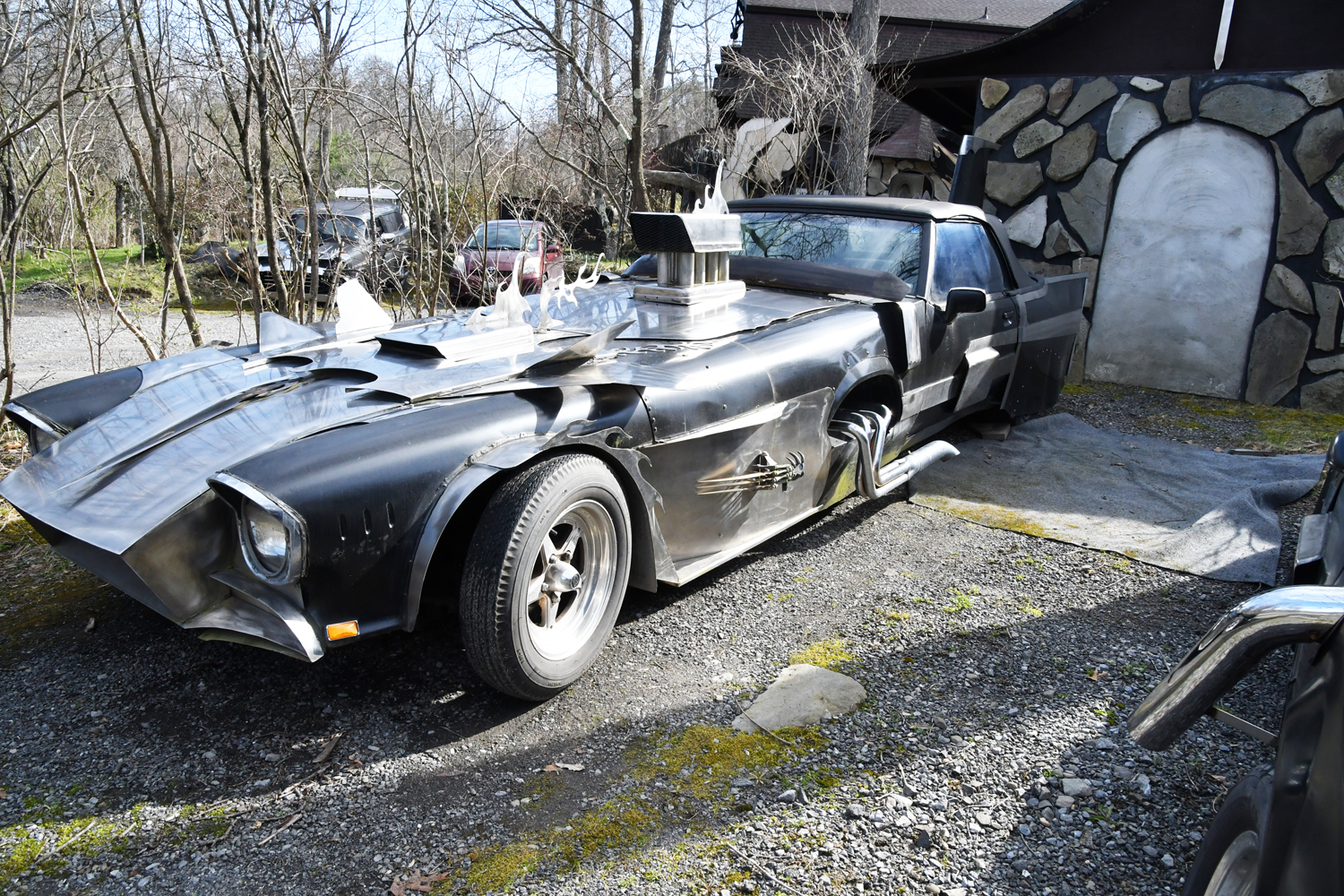
“Really it’s like nothing you have ever seen.” With those intriguing words, my gym buddy Chris lit a fire under my curiosity. He told me of a skilled and, some night say, eccentric car fabricator with tastes that blended Batman, Mad Max and George Barris. Residing on a rural spread of land, he brought to life blown, big block monster executions born of a wild imagination.

His name is Gary.

Hot Rod Missionary and his monster machines

Dragon Express


Gary

Any doubts about Gary giving an “interesting” interview quickly dissipated when he prepared to speak by pulling on a leather biker’s helmet with a fake black pony tail. No question, for creativity and passion, Gary, by far more than anyone I have ever encountered in my life, embodies the defining qualities of Doc Brown of “Back to the Future” fame.

Bedecked in helmet and ponytail Gary unleashed an uninterrupted and interwoven torrent of one-off car descriptions, mind bending technical “how to” and personal philosophy. He projected a firm determination to create the most content rich and complex sentences. He succeeded.

I use Gary’s first name only because he prefers the anonymity that his backwoods location affords. He says, “I like to be a good neighbor so I maintain my property with vehicles neatly arranged amongst the concrete and steel life size statues of horses and angels. That being said, I know it makes for an attention grabbing display. Locating my place on a map would flood the neighborhood with Japanese tour busses and throngs of camera happy tourists. Like I said, I want to be a good neighbor.”

Pretty much a self-made man, Gary retired young after a successful career in home building and real estate. Possessing a natural gift for fabrication skills, he mastered a full palette of capabilities that equipped him to bring to life the fruits of his wild imagination.

The well tended grounds containing Dave’s assemblage of Monster machines presents a fascinating landscape of coordinated chaos.  It is populated with open barns stocked with wild gothic themed engineering marvels, sheds stocked high with power equipment, tools of all stripes, parts and pieces and more, much more.

When asked where he finds the materials and power train components for his projects, Gary points to two brand new refrigerators in the rear of a shed to illustrate his answer. He says, “For decades I have bought good things when they were on sale or cheap, not when I needed them.” He has always possessed total confidence in knowing what he would need someday. Big block engines, whole power trains, name it and he has stockpiled it. He says, “If I don’t use it, it’s still here. It’s not bothering anybody. So in the end I don’t have to go looking for something. I already have pretty much whatever I need here.”

The answer to what has motivated Gary’s 40-year obsession to construct a sprawling farm yard populated by thundering high performance beasts catches one by surprise. Gary possesses strong religious beliefs and has constructed his eye-popping array of Monster Muscle as a means for attracting people with whom he can share his religious beliefs. As the self proclaimed “Hot Rod Missionary,” he has dedicated himself to connecting with people that might not regularly find themselves in a house of worship.

Alien

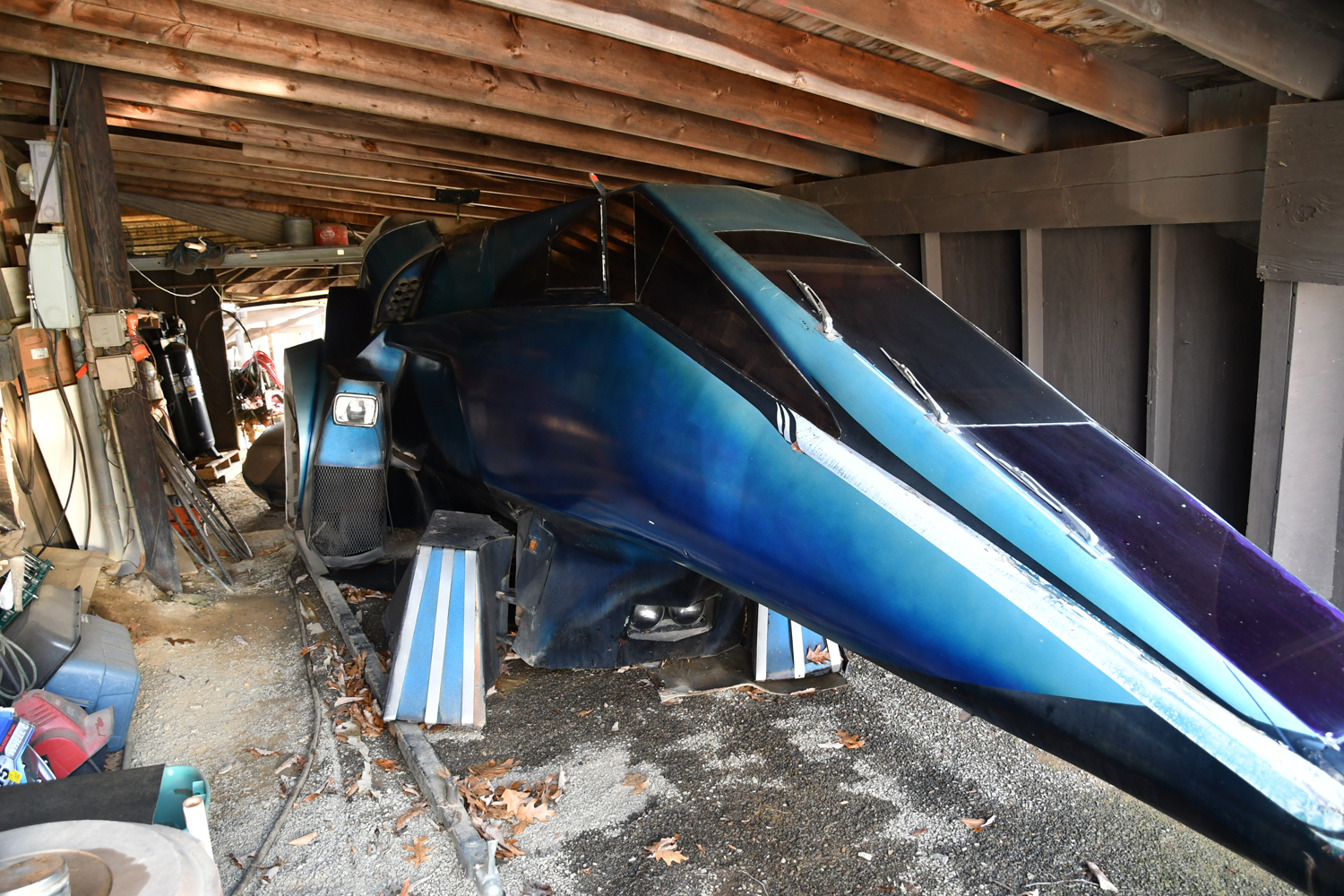
Showmanship leavened by a sense of humor complements Gary’s strong religious leanings as evidenced by his space ship themed hot rod “the Alien.” By the way, all of Gary’s Monster Machines have names. Alien, fully fabricated by Gary from scratch, sports a 400 plus horsepower 455 cu. in. V8 big block. It is street legal as are almost all of his creations.

When first built, Alien took first prize for Special Interest Automobiles at a World of Wheels Auto Show. Gary, when interviewed at the time, explained that his intention called for adding booster rockets to facilitate possible future space travel. In reflecting on Alien’s present earthbound limitations, Gary acknowledged that, “Its primary use now is taking it to town to buy pizza.”

For night time events Gary mounted equipment on Alien that would shoot large plumes

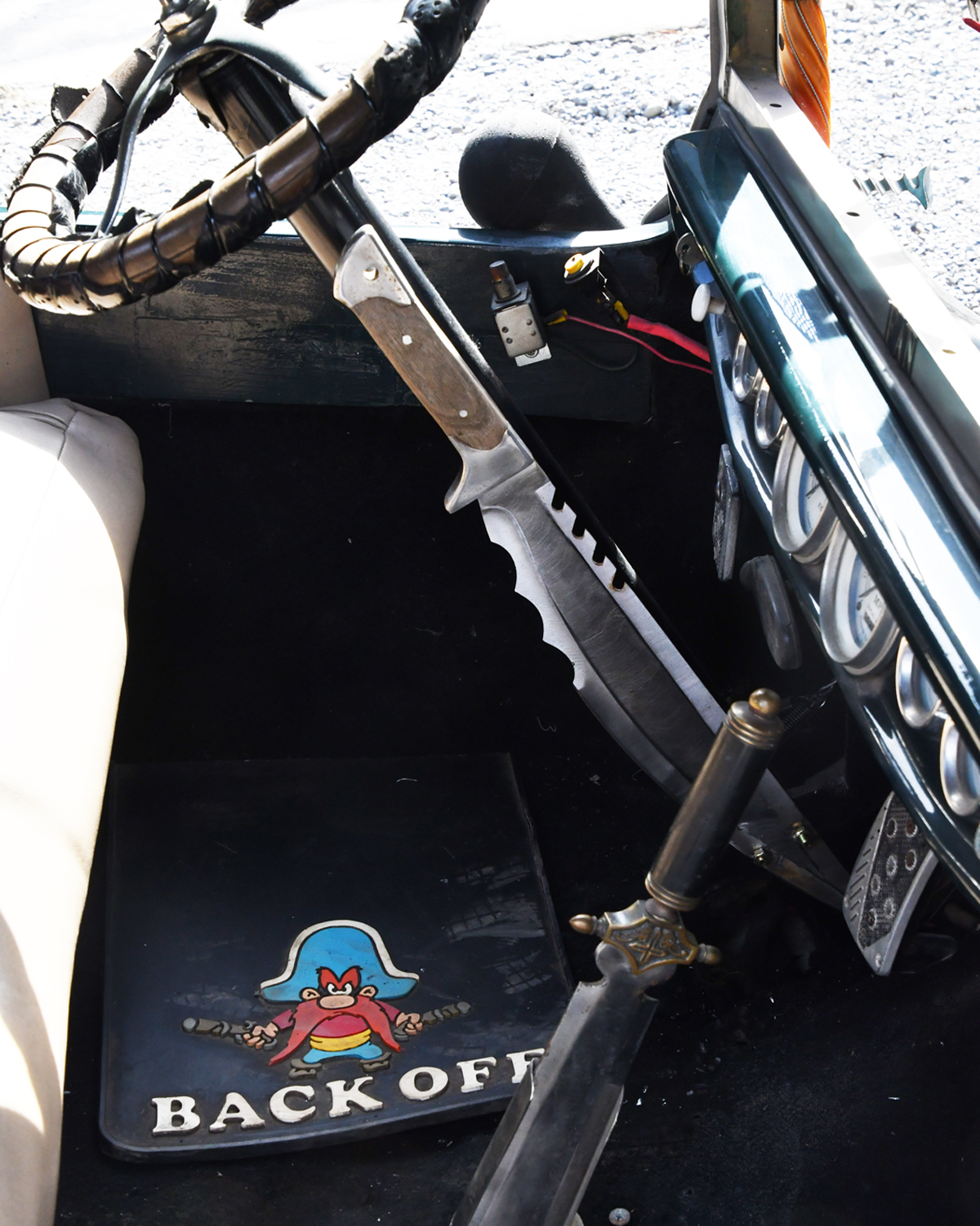
Gary likes to use swords as design elements

of flame out the back. It proved to be a big fan favorite when the Sun went down. However, when an inattentive parent asked Gary to fire up the flames and Gary realized the fan’s child was standing behind the Alien a shaken Gary literally cooled the Alien’s jets for good.

Housed in bays, barns, containers or simply exposed to the elements, Gary’s hand fabricated Monster menagerie truly inspires fascination of the eye-popping variety.

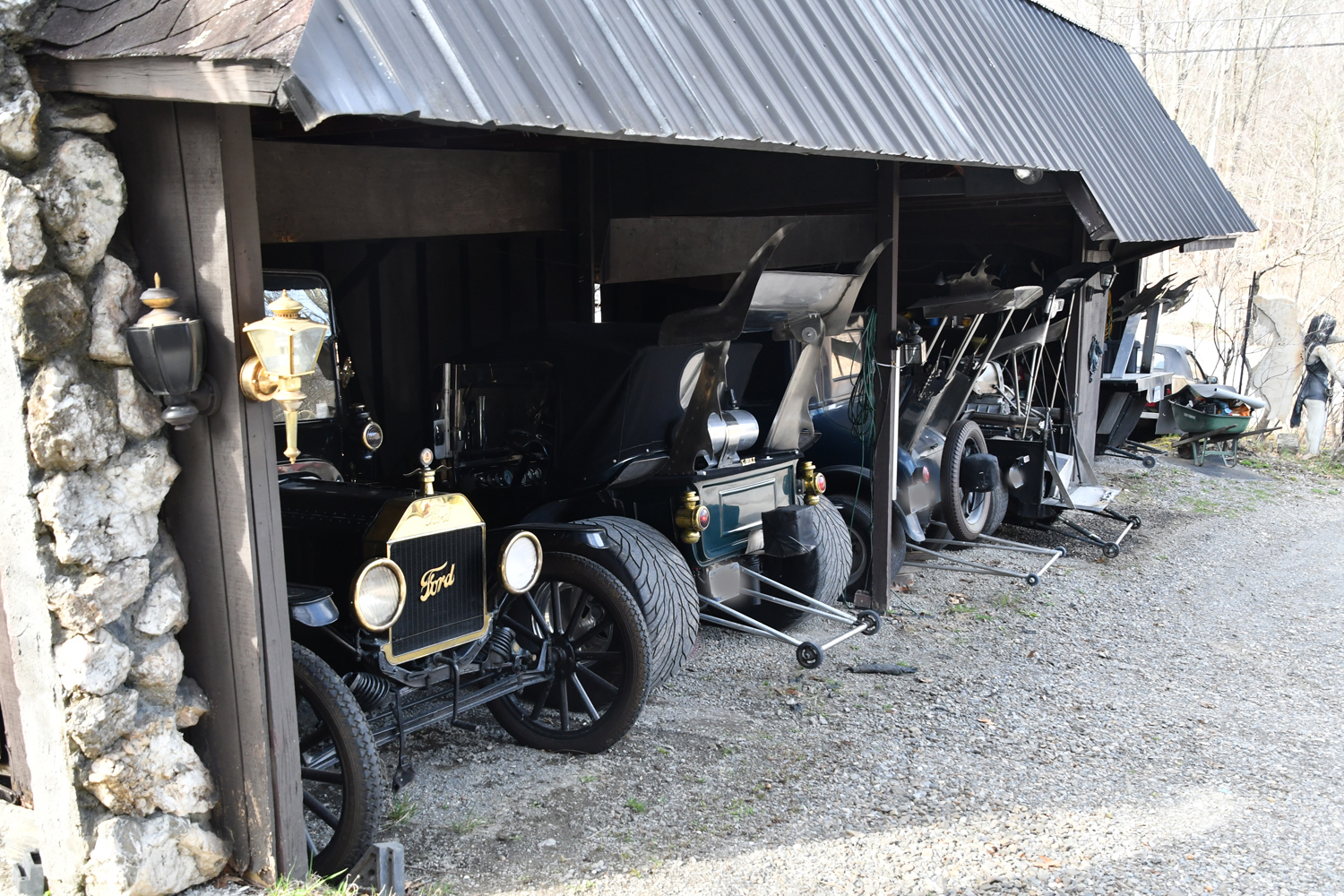
An open stable building teases the imagination with a glimpse of four Model Ts. Three of them boast enormous rear tires clearly made a necessity by the mammoth engines that provide the giddy up.

The stable structure opening to a courtyard reveals the spectrum of Gary’s passion. The first bay houses a pretty much bone stock 1915 Model T Touring car. Interestingly Gary’s taste in vehicles in large part involves either totally stock or radically modified Model Ts. To that point, despite his collection of otherworldly monster modifieds, Gary’s favorite may well be his totally stock Model T convertible pickup truck.

Next to the Touring car resides the decidedly non-stock “Wild Man” which Gary fired up and, accompanied by ground shaking exhaust notes, pulled out into the court yard. With enormous tires on the rear and brutally wild metal adornments punctuating its hot rod T

Model Ts

character, Wild Man just screams and thunders FUN! Gary who does sell some of his creations says, “Wild Man is special and I won’t sell it because it is special. You sell the stuff that isn’t fun. You drive the stuff that’s fun. This is fun.”

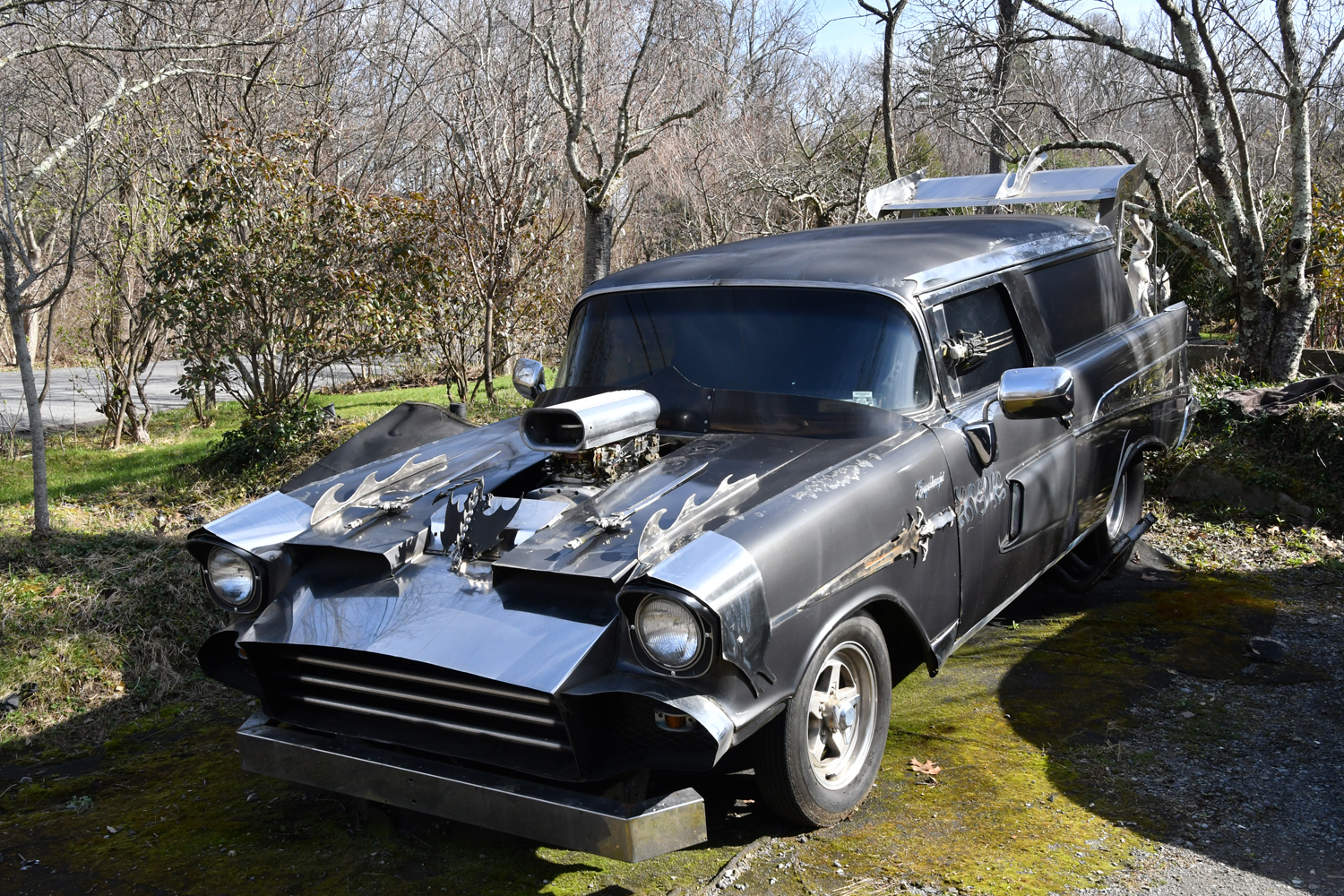
Across the courtyard a 1957 Chevrolet station wagon, like no other, menaces the nearby street. The wagon named “Dragon Express” with its cobra nose and Adam’s family visual treatment features a worked small block with two-fours and an 871 blower. Street legal, the tubbed out rear and racing tires tells you all you need to know about available performance.

Starfighter

“Star fighter”, another denizen of Gary’s Gothic Garage, started out as what he describes as a Rustang(Badly rusted Mustang).

Laughing he says, “Enough daylight passed through its panels that you could get a tan.” Undeterred Gary fabricated a complete frame, installed a power tilt stainless steel cobra nose and ’57 Chevy front fenders. Chassis-wise Gary created a split Model T independent front suspension with disc brakes. Starfighter’s visual presence bears the signature Gary look with the ever popular skeleton forearm trim pieces and machined stainless steel flame shaped attachments.


Rocky with extending nose

With the look of a fuelie dragster from hell, Rocky, features a 426 Hemi, airbag suspension and a split Model T front axle with disc brakes. However, Rocky has much more to offer. Amazingly Gary designed and engineered the long dragster nose to extend an addition fully functional eight feet significantly increasing the wheelbase. Yes, brake lines, steering mechanism everything needed for a totally operational and drivable vehicle extends an additional eight feet out front.

Why? From Gary’s point of view, why not?

By |2022-04-28T11:24:30+00:00April 28th, 2022|2 Comments

Conversations With People We Value #34

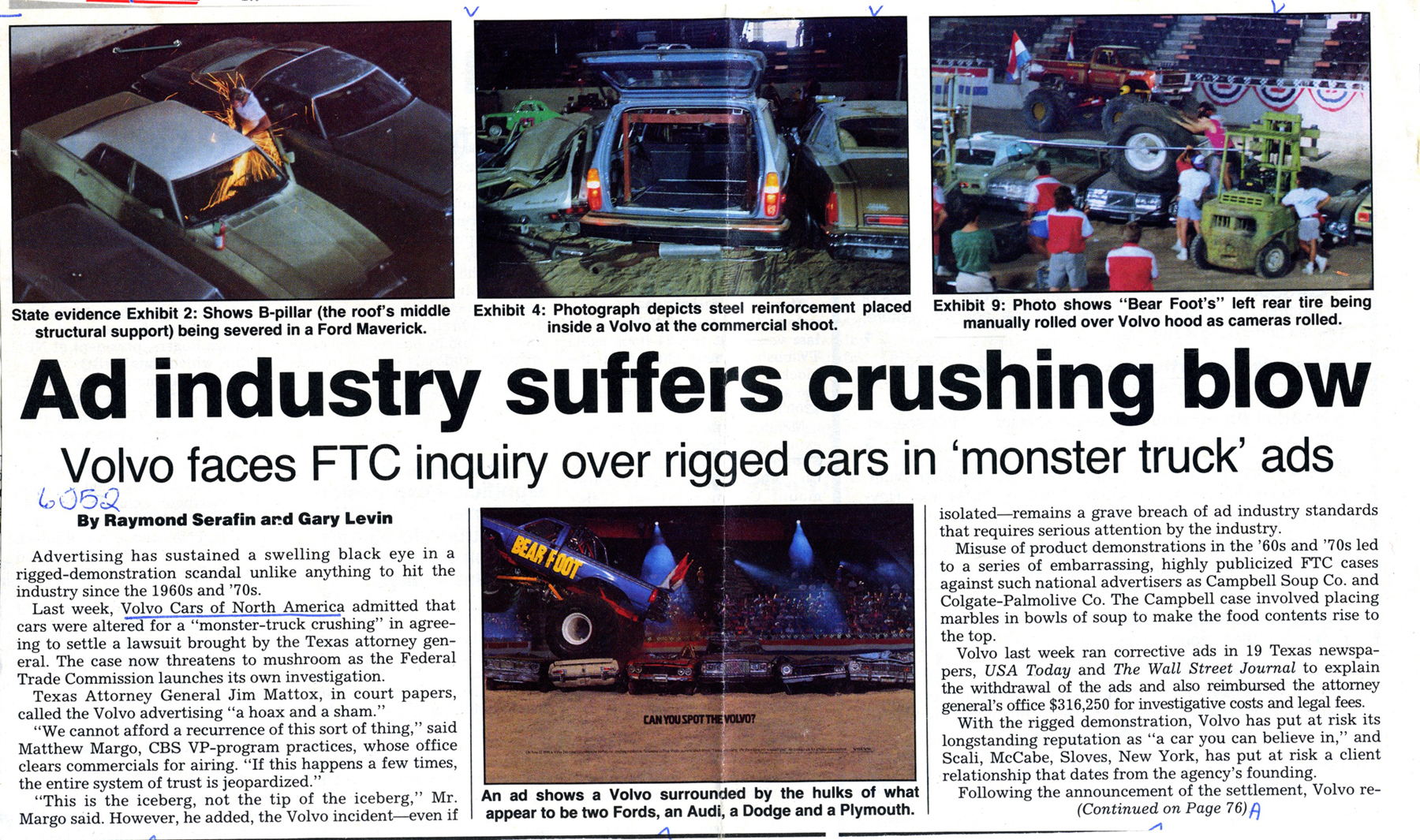
Creating a media frenzy over thirty years ago, it could have destroyed a globally respected brand. To recall just what happened, I interviewed retired Volvo PR Manager Bob Austin, a key player in what proved to be a template for effectively managing a potential corporate crisis.

The monster truck that nearly crushed Volvo


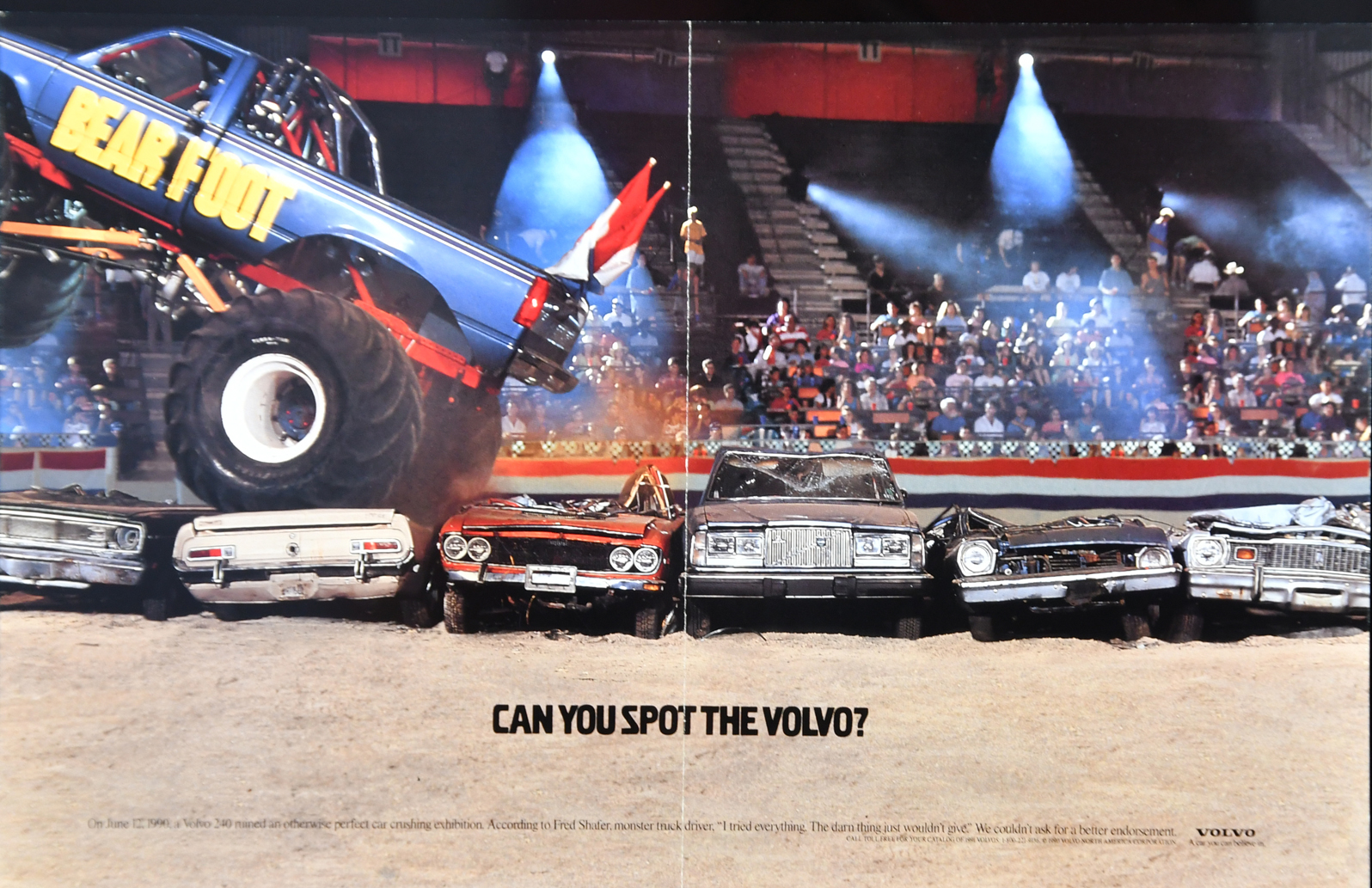
Inspired by car punishing monster truck events exploding on the scene in the late 1980s, Volvo in October of 1990 released a compelling TV commercial intended to promote its legendary rugged construction. Once broadcast, the ad would instead plunge Volvo into crisis.

On what should have been one of life’s better days, Volvo PR Manager Bob Austin’s honeymoon was interrupted by a phone call from Volvo Corporate Counsel, Bob Mercer. Mercer quickly popped Austin’s bubble of bliss and cut to the chase saying, “Can you be in the office tomorrow?” “What’s up?” asked Austin. “Better you should come in,” Mercer replied. Thus began what Austin, decades later, would recall as three of the most stressful months of his life.

At Volvo headquarters, sitting across from Mercer, Austin learned that the office of the Texas Attorney General, Jim Mattox would be charging Volvo with knowingly creating a fraudulent and misleading television commercial.

Looming as exhibit 1 supporting Mattox’s startling accusation stood the Volvo television and print campaign that would forever be known as “Monster Truck.”

Concerned to say the least, Mercer asked Austin if he knew anything that could account for this accusation. Austin stated that he was unaware of any problem. Mercer quickly changed that by dumping it squarely in Austin’s lap.

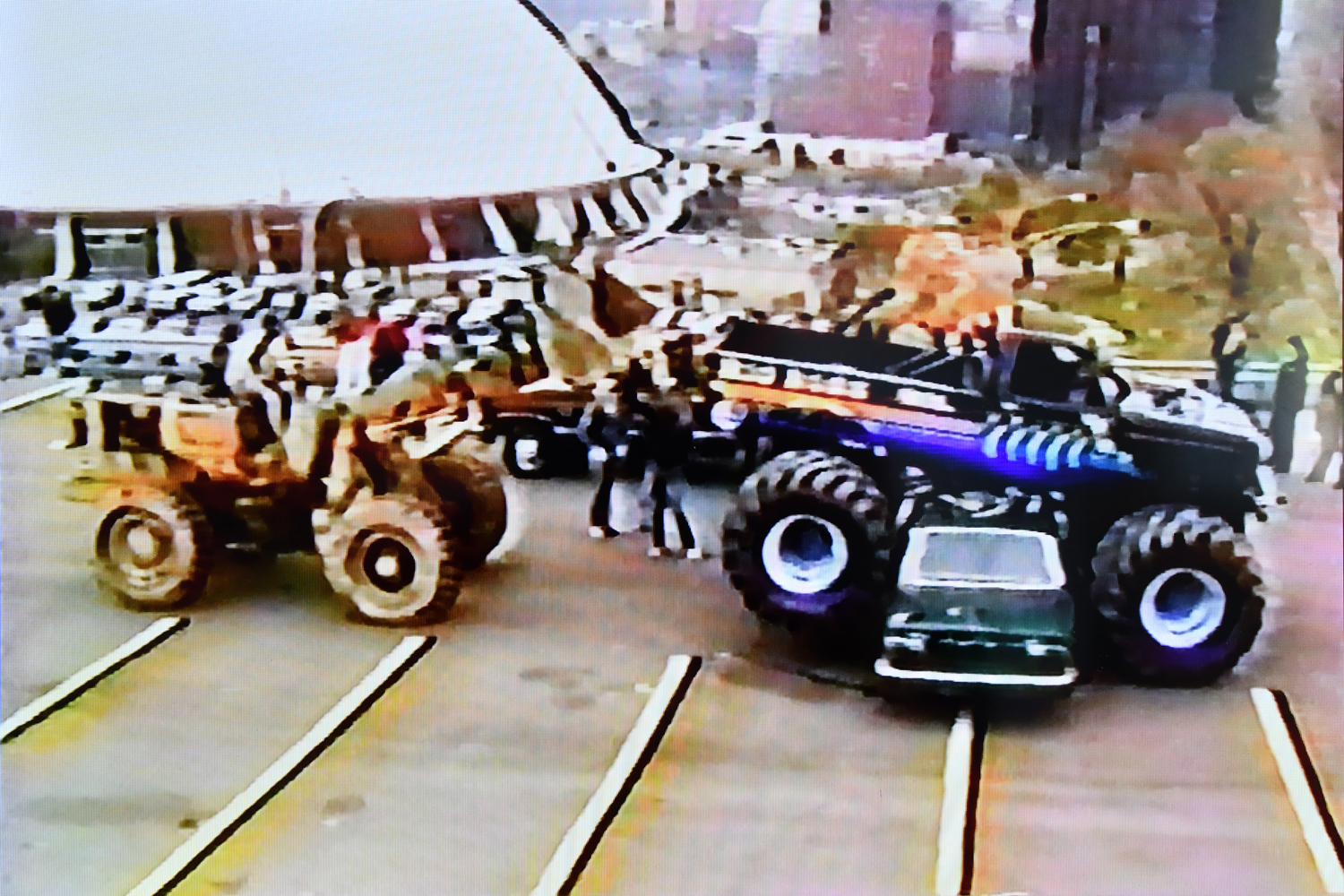
“Monster Truck” as a concept found its inspiration in an actual monster truck event held on September 11th 1988 in Essex Junction, Vermont.

By happenstance a person associated with Volvo’s ad agency at the time, Scali, McCabe and Sloves, while on vacation had attended that Essex Junction event. On that September day in a dynamic flurry of flying dirt, waving flags, and bleachers filled with screaming fans an airborne monster truck set out to crush a row of cars. After a few passes by the massive monster truck the agency employee realized that, unlike the other vehicles in the row of sacrificial cars, a lone Volvo had stood up to the pounding with its roof remaining defiantly upright. Inspired by what he witnessed, the vacationing employee acquired video of the event. Back home, he shared it with the agency’s Volvo account staff and quickly set creative wheels in motion.

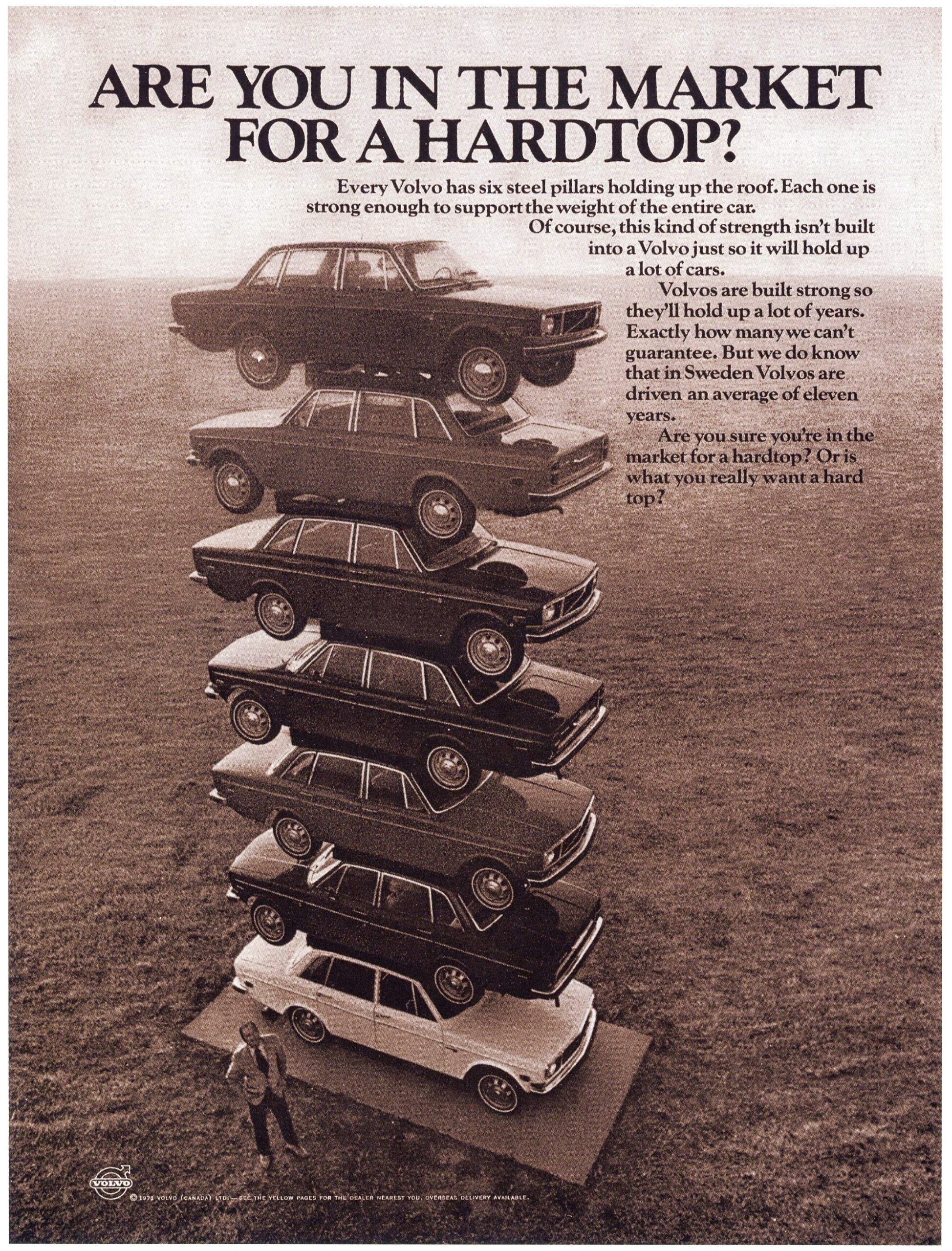
Historic Volvo ad touting roof strength

When Scali, McCabe & Sloves pitched the “Monster Truck” idea, a very interested Volvo responded by first reaching out to its engineers in Sweden to confirm that a Volvo 240 could indeed withstand such punishment.

Sweden responded with a resounding “Ya Sure.”. Engineers confirmed that each of a Volvo 240’s roof pillars had been designed to support the total weight of the entire vehicle, roughly 3,000 pounds. Doing the math, a Volvo 240 wagon with its 8 pillars should support about 24,000 pounds. Confidently, Volvo engineers concluded that the Volvo roof could easily support a typical monster truck weighing roughly 12,000 pounds.

Armed with those assurances Volvo gave its approval. “Monster Truck” would be produced as a cleaner, clearer re-enactment of the original 1988 Vermont event.

According to Austin, Scali, McCabe and Sloves awarded the project to a production company which while relatively new enjoyed a high level of confidence with the agency as it was populated with trusted past employees of the agency. It also came in with the low bid.

With concept and team in place, attention turned to location. It had to have a dirt floor. Flying dirt would dial up the drama of the monster truck making rampaging bull charges at a stationary line of cars. Another “must” was bleacher seating to accommodate the wildly screaming fans cheering the mayhem. With slim pickings in the New York metropolitan area, an expanded search located an ideal venue. A rodeo arena in Austin, Texas fit the bill perfectly.

Vehicles gathered for the shoot included the monster truck, over a dozen random used cars and three used Volvo station wagons. The need for more sacrificial vehicles than would ultimately appear in the ad was necessitated by the nature of film making. Multiple takes of the same scene often occur in order to get the best shot. When the repeated action requires a monster truck to punish a car, wear and tear can take a serious toll on the cars.

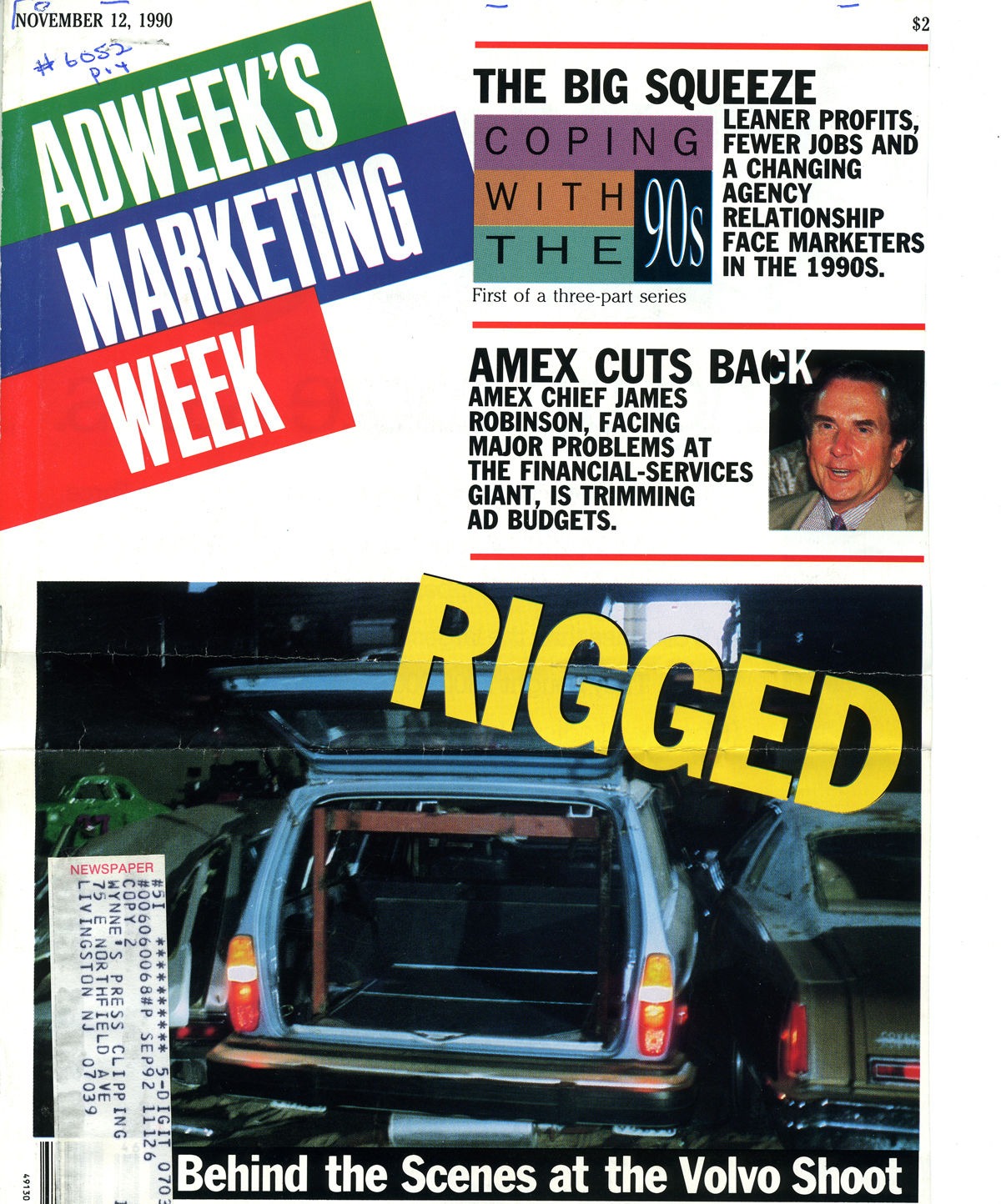
AdWeek front cover

To fill the bleachers with screaming fans, ads appeared in the local newspaper inviting people to participate in the filming of a Volvo commercial. Many people came. They fulfilled their role as rabid monster truck fans admirably. As directed, they wildly cheered for the destruction of helpless vehicles only to dissolve into a disbelieving cohort when confronted with a defiant crush resistant Volvo.

Once completed, Volvo management understood the filming to be uneventful and highly successful with the result being an attention grabbing television commercial dramatically and humorously promoting the signature strength and durability of Volvo cars. In other words, “Monster Truck” would add yet one more classic Scali, McCabe and Sloves execution to their Volvo commercial reel. Alas, it would not be so. Volvo, the company, now faced the even more punishing slow turning wheels of the Texas State Department of Justice.

With the threat of legal action looming over Volvo, Austin and Mercer, after speaking with agency management, sat down with members of the production team. They asked pointedly, did anything unusual happen during the production. Interviews with the production team affirmed that nothing of note was done to the cars. With due diligence completed, Austin, Mercer and the agency felt quite comfortable with their understanding of what had happened.

As Austin says, “We concluded that some of the extras who had been hired to be the audience had expected to see an actual “Monster Truck” event, one that takes place in real time. If an audience member had no experience in film production, he or she might have been confused by seeing the filming of one shot multiple times and the order of shots filmed in a non-sequential fashion.”

Volvo’s team confidently believed that surely this must be the cause of any misunderstanding.Creating a media frenzy over thirty years ago, it could have destroyed a globally respected brand. To recall just what happened, I interviewed retired Volvo PR Manager Bob Austin, a key player in what proved to be a template for properly managing a corporate crisis.

“Back then it was understood that being contacted by Texas AG Jim Mattox was a serious matter. That said, we felt pretty good,” says Austin. We were confident that we could explain that it was just a misunderstanding. Volvo’s team comprised of Austin, Mercer, Volvo’s Ad Manager and agency representatives prepared to fly to Texas to meet with Mattox. Actually, the Volvo team would be meeting with a member of the Attorney General’s staff William Goodman.

Austin recalls being greeted by a pleasant woman behind a desk who, upon welcoming the Volvo team, turned over her shoulder and with the signature regionalism of a Texas native called through an open door, “Bill, the boys from New York are here.”

With that auspicious welcome, Austin’s first thought was “Oh s%*t, we are in trouble.”

Image taken at filming

As the group turned to the open door, a man behind a large desk motioned them in with a distinctive Texas flair. Austin recalls, “He was dressed in a classic western style shirt with the snap flap pockets, he invited us to take a seat.” Three rows of chairs faced Goodman’s desk. Mercer and Austin, who would be representing Volvo, sat in the first row, the others retreated to the rear.

Mercer led off by reviewing the charges and Austin followed-up confidently explaining Volvo’s belief that it all was a misunderstanding based on some audience members’ unfamiliarity with the process of film making.

Seeking to clarify or some might say to firmly set the hook, the Goodman restated Volvo’s position that it was simply a misunderstanding. Austin confirmed that that was correct.

Like a fast hand gunslinger in a barroom shoot out, the attorney pulled out a stack of photos and said, “Then perhaps you can explain these.”

Image taken at filming

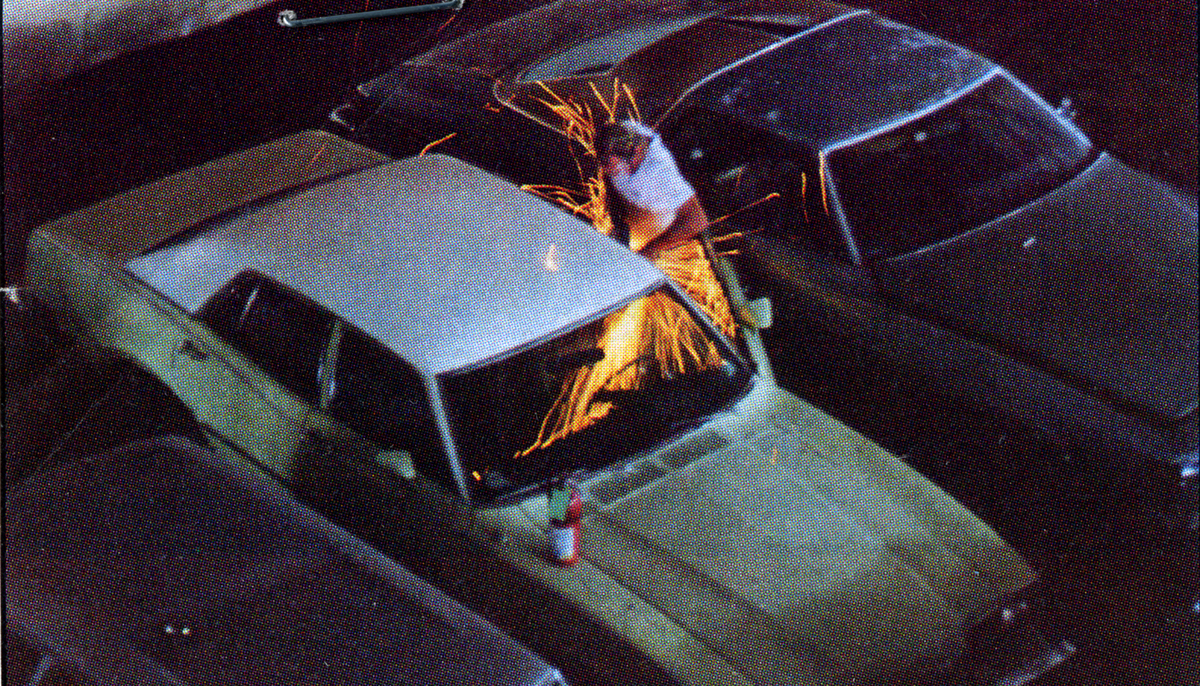
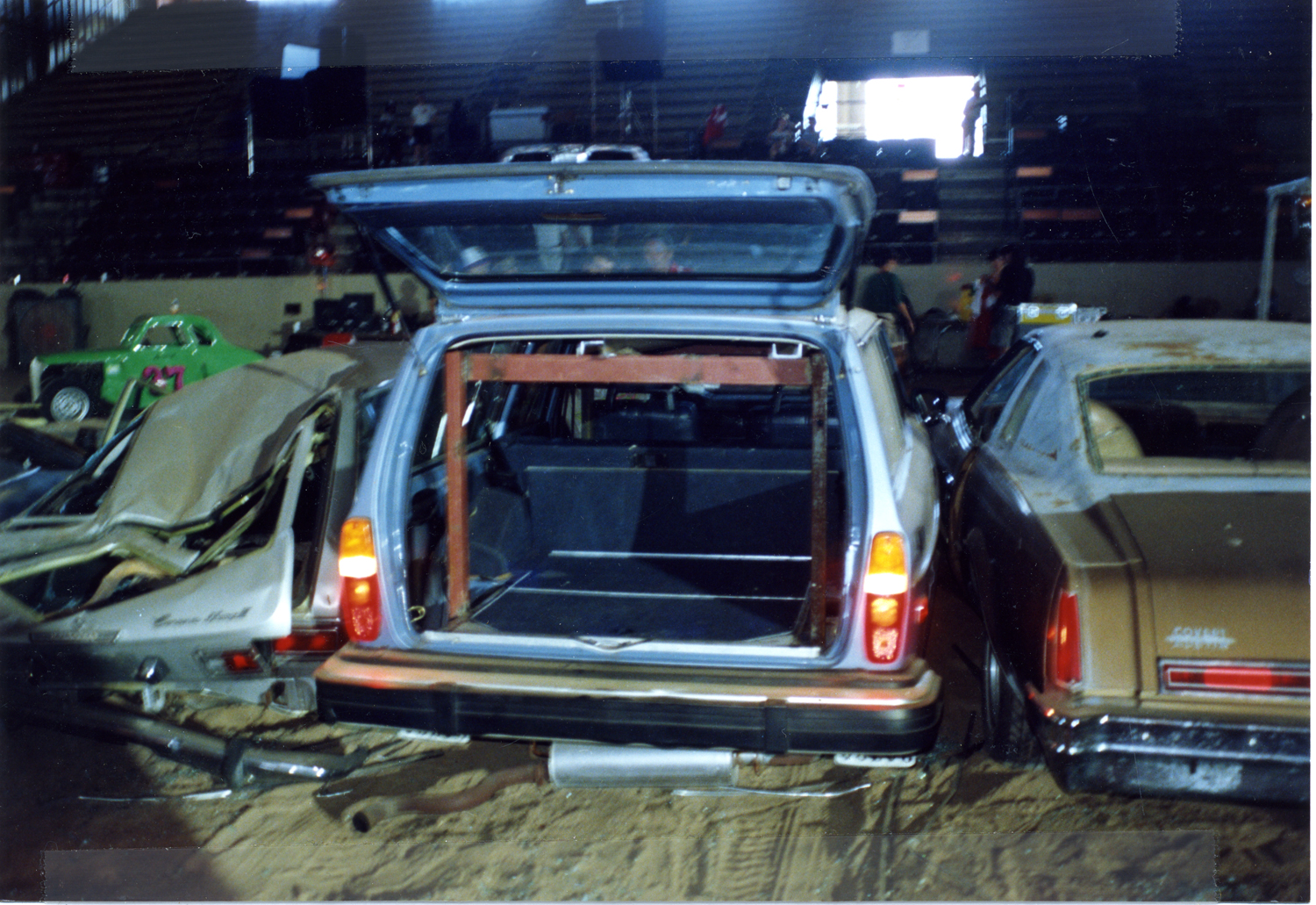
A tense silence filled the room as Austin slowly silently reviewed each photo before passing it to Mercer on his left. First came an image of the open tailgate of a Volvo 240 wagon with three 2-inch diameter tubes running from the floor to a cross member positioned horizontally under the roof. Next photo showed a man standing behind the side of a non-Volvo sedan with his shoulder raised as if he held a heavy object. A large ribbon of sparks shot out from the car past him. The next photos proved to be no less disturbing.

Accepting each from Austin, Mercer inspected each photo slowly in silence for what, Austin says, “Seemed like an eternity.”

Mercer broke the spell. He pushed back against the Texas attorney’s assumptions, saying, as Austin recalls, “I know you would like me to believe that these three tubes are there to support the roof. However, for all I know these three tubes could be a camera mount.” Mercer went on to suggest that the ribbon of sparks rather than caused by an effort to compromise the non-Volvo could be caused by the removal of a badge or other recognizable feature so that the car could not be identified.

While Mercer blunted the initial attack, the embarrassment and disbelief caused by these disturbing photos hung heavy in the room for the Volvo faithful. Agency members in the room sat mute and terrified. They too thought it had been audience misinterpretation.

As Austin recalls Mercer continued asserting that the two parties stood at an impasse. Mercer suggested that having the cars to view would certainly be a help. “No problem” fired back Attorney Goodman with a speed and finality not unlike a triggered leg trap. He continued, “We have them in storage close by. When do you want to look at them?”

All parties agreed to reconvene at the storage facility with Austin and Mercer alone representing Volvo.

After lunch the group assembled at the storage area where three battered Volvos awaited them. Two had not been altered in any way, but the third clearly displayed marks where pipes had been welded in. “As we left the facility,” Austin says, “Mercer and I agreed there was sufficient reason for someone who attended the shoot to question Volvo.”

This latest and disturbing turn of events demanded that Austin and Mercer confer with the passionate and fiery President of Volvo Cars of North America Joseph L. Nicolato. Austin says, “Cut Joe Nicolato and he bled Volvo blue. Take an action to hurt Volvo and Joe would defend the brand like a pit bull.”

A true old school, skilled and colorful leader, Nicolato, a former marine, once, at a WWII USO themed Volvo national sales meeting, arrived in a helicopter accompanied by Wagner’s “Ride of the Valkyries” wearing George C. Scott’s uniform from the movie “Patton.”

While Austin enjoyed Nicolato’s respect and confidence, Austin’s thick skin helped facilitate their good relationship. Austin understood that the possibility always existed for the messenger to take the initial heat for the message.

Joining Nicolato on the Volvo headquarters end of the conference call would be Executive Vice-President of Marketing William Hoover. Cool and controlled compared to Nicolato’s passionate and direct approach, Hoover shared Nicolato’s unwavering dedication to the Volvo brand.

“Neither Nicolato nor Hoover spoke as we debriefed them for the first third of the call,” recalls Austin. Both Nicolato and Hoover had dedicated their working lives to building the Volvo brand in North America. Now, what they heard had the potential to destroy much of what they had accomplished and seriously compromise one of the world’s most respected marques.

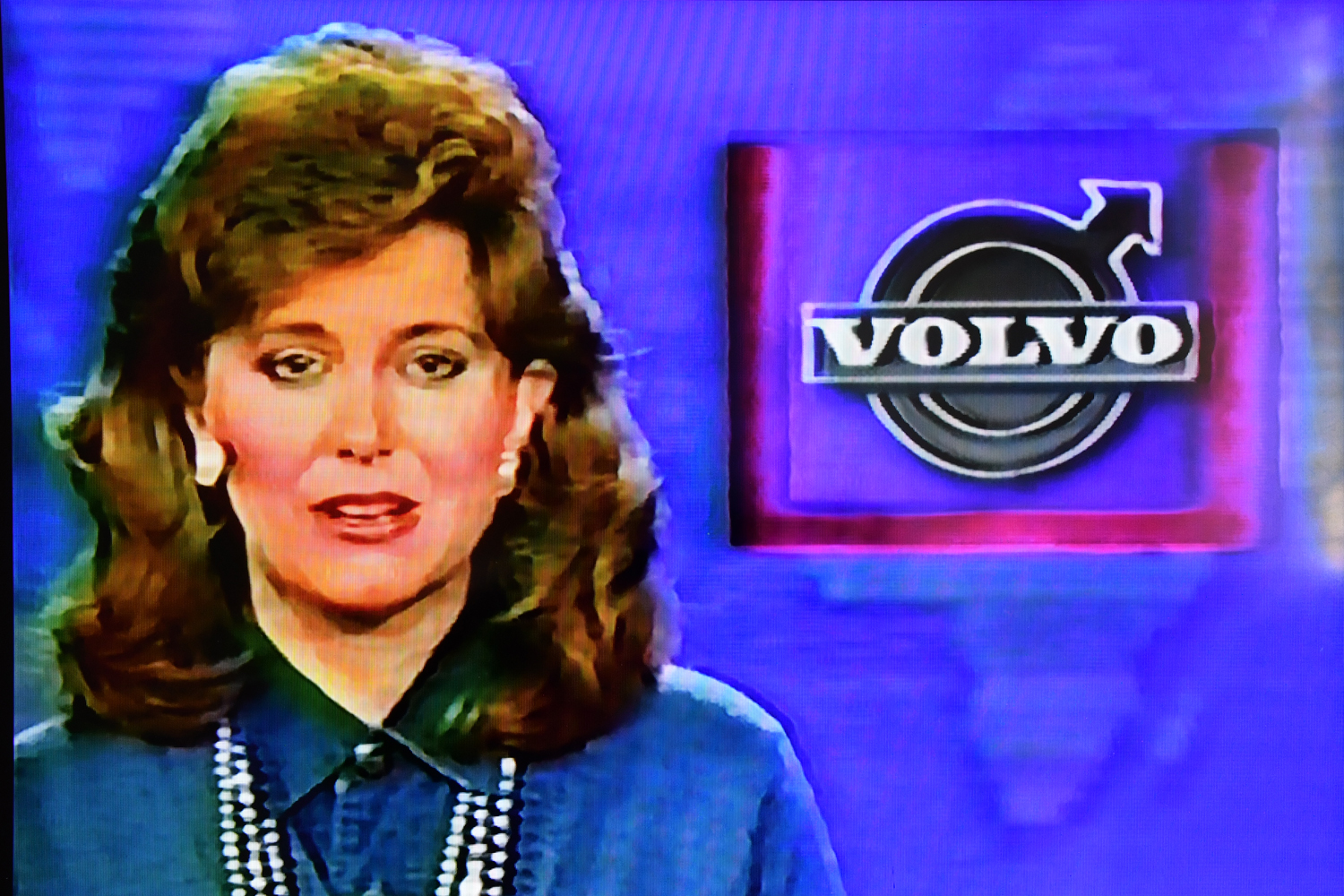
Television coverage

Horrified best described Nicolato’s and Hoover’s reactions. Infuriated and deeply concerned, Nicolato was not so much angered by the actions of the Texas AG as by this needless self inflicted wound. He was incensed by the apparent and unnecessary buttressing of a Volvo car by people who should have known better. Austin says, “Joe being Joe, the first moments of the second third of the call basically blistered the paint off the phone.”

However, Nicolato’s passion never interfered with his ability to get down to business. His storm quickly subsided. Nicolato knew important decisions needed to be made and make quickly. For Nicolato traditional corporate responses held no appeal.

Nicolato made it crystal clear that there was no way Volvo would retreat into the black hole of denial without closure. He believed such a “gutless” response could suck the life out of the proud Volvo name and it plain and simple did not represent the character of the Volvo brand or its people. All agreed.
A second traditional response felt equally distasteful. Volvo could accept the allegations, pay a hefty fine and be left to slink off in disgrace while dragging Volvo’s good name behind it. Such an approach stood especially galling as the accusation of a willful intent to deceive was not true.

Nicolato wanted offense. Austin and Mercer delivered it with a proposal that defied tradition. Their approach took AG Jim Mattox by surprise. Volvo would acknowledge that mistakes had been made in the production of the commercial and take full responsibility. Crucially, Volvo’s position would be that the mistakes made did not alter what would have been the outcome had the mistakes not taken place.

Furthermore, to Mattox’s disbelief, Volvo executives volunteered to stand at the attorney general’s side and acknowledge those mistakes at a press conference. In addition Volvo would voluntarily produce advertising acknowledging the mistakes for both Texas and national markets.

Volvo also made clear that it would not admit guilt to intentionally producing a misleading ad. As such, no fine should be levied. Attorney General Mattox agreed, though he noted a considerable sum had been spent in pursuing the investigation. Volvo agreed to reimburse the AG for those expenses, a sum of $350,000.

At the subsequent AG’s press conference Executive Vice President Hoover stated, “A mistake was made in the production of a Volvo commercial,” “Do not confuse this with the fact that Volvos are strong and rugged. This commercial may have issues, but our cars do not.”

Today, in looking back, Austin, now retired, believes that the alterations initiated by the production company resulted from panic born of a confluence of difficulties unforeseen by the production company. One of the three Volvos sustained visual, but not structural, damage very early in the filming making it unusable. Additionally, as a new production company highly desirous of getting such a plum job, they bid the project with a sharp pencil and little room for error. Above all, they had to go home with a commercial using what they had and the clock was ticking, quickly. Discipline suffered. The production company reverted to the less restrictive set of requirements used in making a theatrical movie rather than those required for an authentic recreation of an actual event. In other words, movie magic. In this case magic spelled trouble.

“I don’t even know if the reinforced Volvo actually appeared in the finished commercial,” Austin says. It didn’t matter. “The new production company’s lack of faith in the strength of our car, combined with the fear of failing to complete the shoot with the resources they had on hand, compelled them to make some unfortunate choices.”

Volvo defies monster truck

In the wake of “Monster Truck,” Volvo adopted a strict policy stating “not a single foot of film for a Volvo commercial could be shot without a senior member of the Volvo advertising staff present.” No such staff member had been on location for the entirety of the “Monster Truck” shoot.

While Volvo would survive “Monster Truck” its storied relationship with Scali, McCabe, Sloves would not. On November 12, 1990, Scali, McCabe and Sloves resigned the $40 million Volvo account after producing 24-years of award-winning advertising.

Broken Monster Truck removed from defiant Volvo

Counter intuitively, Volvo 240 monthly sales increased 19 percent that November; sales increased another 38 percent the following month. It would seem that customers still believed in Volvo and said so with their checkbooks.

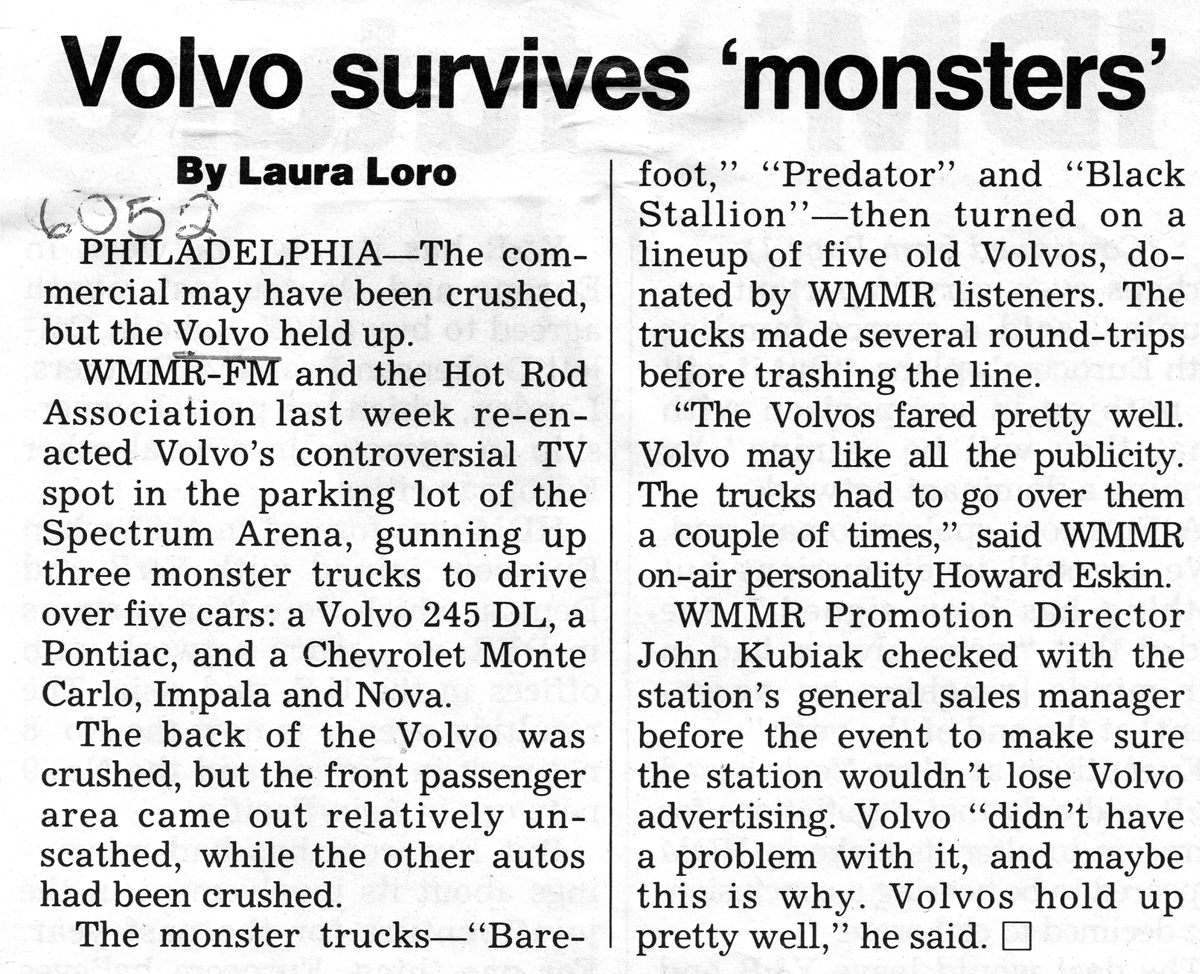
Beyond the media buzz, there was great irony in the “Monster Truck” saga. In the months after the story broke, the United States Hot Rod Association, the sanctioning body for monster truck events, embraced the global media frenzy. Around the nation the USHRA scheduled “Crush a Volvo” events as a headline grabber. However, the crushing didn’t go as planned. Even without that movie magic, and just as the Swedish engineers foresaw, Volvos really could withstand a monster truck’s abuses. As reported in the Pittsburgh Press after one such event, “Volvo was grudgingly declared the winner this morning after a monster truck trying to crush it ended up with a broken drive shaft.”

It appeared that not only could Volvos withstand brutal punishment, Volvos could even fight back.

In covering the event, USA Today reported that Volvo Spokesman Robert Austin stated, “Volvos really are tough. In fact we wouldn’t mind if they featured “new” Volvos for these events.”


LINK TO VOLVO MONSTER TRUCK COMMERCIAL

By |2022-04-14T15:46:20+00:00April 14th, 2022|2 Comments

Conversations With People We Value #33

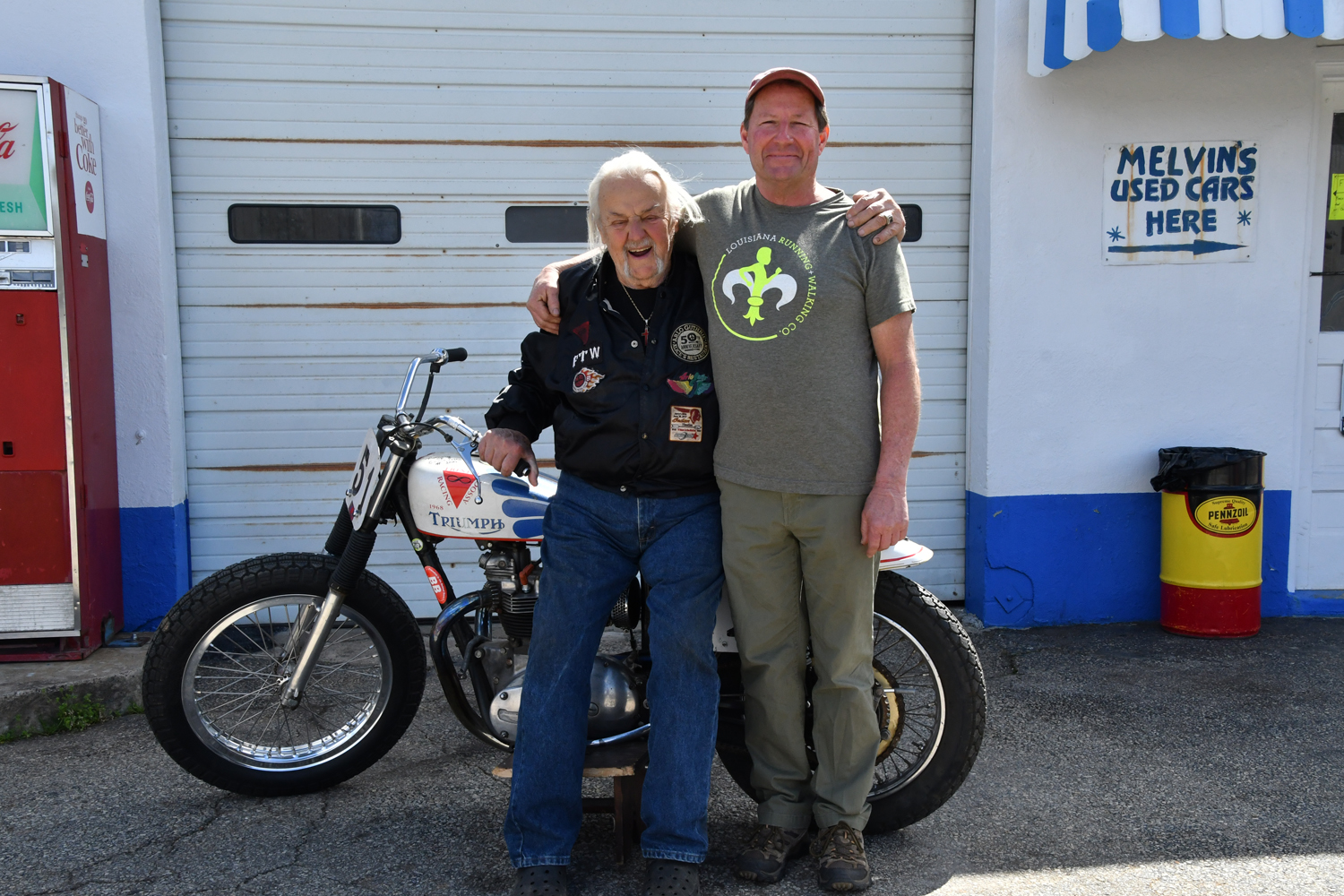
While driving north along Virginia Route 29 I spotted a forest richly populated with orphaned trucks from the 1950s. I quickly pulled over to a clean white two-bay shop that resided on the high ground above the forest. A hand lettered sign identified the business as Melvin’s Used Cars. I drove up in the hope of finding Melvin and asking, “What’s your story?”

Well groomed and neatly attired in crisp work clothes, the man I came to know as Mel stood by an open bay. Friendly and engaging, Mel indeed had a story. He had a field of old cars that once numbered almost 500. Interestingly when I expressed my interest in writing his story, Mel repeatedly redirected the conversation to his friend R. J. Pinto who he clearly felt had better stories. As luck would have it, in mid-sentence Mel yelled, “It’s him. It’s Pinto,” as R. J. Pinto pulled in off the highway. In short order it would become evident that Mel’s story would be written another day as I was about to meet Pinto. And, now, so are you.

Drank with Arlo, Dated Alice, Tuned Evel’s motorcycle and much more. They call him Pinto.

Pinto and Mel

Pinto bundles the vigor of a colorful yarn spinner in an 85-year old, burly, gregarious, engaging and earthy package. Pinto still communicates the vitality of a young man who savors grabbing life by the horns. At the same time he reflects on life with a mellowed perspective and insights refined through eight decades of having ones heart and soul polished by the abrading rapids encountered while navigating the river of life.

A brief introduction by Mel tees up what will be a fast moving morning of storytelling. Belying Pinto’s approaching 86th birthday his memories possess a crispness that brings them to life. Being on the receiving end of Pinto’s rapid fire delivery feels like taking a drink from a fire hose.

Born in Middletown, New York, Pinto, a Korean War Veteran, began a lifelong love for all things motorcycle in the 1950s. It would be an affection that would lead down many paths and involve him in iconic events of the 20th century American culture.

In the 1960s his passion for motorcycles brought him to a little restaurant called “The Back Room” in Stockbridge, Massachusetts. Purchased by the owner in 1966, it could be found around the back “just a half-mile from the railroad track.” In American culture The Back Room is more fondly remembered as “Alice’s Restaurant.”

He and his motorcycle racing buddies knew the owner, Alice Brock, and Pinto says, “As a group we all comprised a family.” That family had celebrated Thanksgiving in 1965 at the de-consecrated Trinity Church in Great Barrington, Massachusetts that Alice had bought for her home in 1964.

Trinity Church 1966

Pinto’s motorcycle family grew out of his very successful racing career on dirt tracks east of the Mississippi. If he ever chose to have a trophy room, Pinto would have had no trouble filling it with the trophies from over 100 wins.

Pinto with a great affection for the Triumph motorcycles with which he competed says, “Scrambling on dirt was in the DNA of Triumph. Back in the 60s Triumph-powered machines dominated.” His is, indeed, a deep affection. He has kept the Triumph he raced for over 50 years. He says, “My Triumph TT (Tourist Trophy model) has been very good to me.”

The paths of Pinto’s dirt track racing and Alice’s Restaurant intersected in the mid-1960s at the Trinity Church.

Pinto says, “I had done a lot of racing in the Schenectady area. One track in particular, a beautiful track with a little chicane and a jump I found especially friendly.” The tracks friendly environment and Pinto’s showmanship bred a family of supporters that became the Trinity Racing Association. Pinto says, “Alice’s, then husband, Ray Brock and I designed the logo for the Trinity Racing Association that consisted of a yellow circle, red triangle and infinity sign representing the Father, Son and Holy Spirit. Away from the track, the epicenter of team member activity centered on the communal environs of Alice Brock’s Trinity Church home.

Life Magazine   Top – Ray Brock    Middle – Pinto    Bottom – Doug Campbell    Standing Jimmy J.

Pinto says, “I made many friends, many of whom I still know till this day.” On one especially big racing day they all decided to come see Pinto race. Pinto says, “I happen to win that day. So I handed Alice the checkered flag and she hopped on the back of the bike for the victory lap.

Husband Ray taught a shop class and Alice was the school librarian at a local boarding school. Pinto says, “They were gifted creative people.” Being who they were, they attracted a number of students who shared their idealism and their creativity. Arlo Guthrie was one of them.”

Son of American folk legend Woody Guthrie, Arlo graduated from high school in Stockbridge in 1965. After a brief stint in  college, Arlo returned to the Berkshires in November of 1965. He stayed with his friends, Ray and Alice, at the church during the Thanksgiving holidays. A holiday celebration that will forever be memorialized in song.

Alice Brock & Arlo Guthrie

Sometime during the span between the 1965 Thanksgiving dinner at the church and Arlo Guthrie’s July 16th, 1967 Newport folk Festival live performance of his opus, Alice had called Pinto to come to dinner to meet a young friend of hers named Arlo Guthrie. Pinto says, “I had no idea who Arlo Guthrie was.” At the time I saw a young kid making a living as a troubadour traveling around the country hitchhiking and playing all the café’s and bars in New York and wherever else he could make a few bucks.

Once Guthrie’s monster hit captured the public’s attention the family members peaceable life would be forever changed. Among others Alice would resent her unwanted fame and divorce her husband, Ray. Pinto would find work in the movies.

Pinto played himself in Alice’s Restaurant, the movie, having parts in scenes of the motorcycle race and getting a tattoo. In the process he developed a good relationship with director Arthur Penn. Out of that relationship came other film work involving motorcycles with the likes of Sean Connery and Clint Eastwood.

By early 1969, Pinto and Alice had become a couple. Eight months later the Alice’s Restaurant experience would peak with the release of the movie. Pinto would appear in 1969 issues of Life Magazine and Playboy that profiled the Alice’s Restaurant family. August 18th Woodstock had exploded on the global consciousness. August 19th “Alice’s Restaurant” the movie appeared in studios across America. A week later Pinto and Alice left their relationship behind and entered a friendship that continues today.

Pinto racing his Triumph at age 79

In the early 1970s Pinto had moved on to owning a motorcycle tuning operation. Called North Bergen Cycle Shop in Mahwah, NJ it specialized in building and rebuilding motors and optimizing motorcycles for the owner’s intended use. With some humility Pinto says, “If somebody came in with their BSA, Triumph, Harley, Ducati, whatever, if they came in and said I want this set-up to do such and such, make it magic, they came to the right guy.” Fifty years later and now living in rural Virginia, Pinto continues to tune the motorcycles brought to him from far and wide. Pinto smiling with the honest confidence of experience says, “I am still the right guy.”

This brings us to Pinto’s dealings with Evel Knievel. Pinto recalls a man entering North Bergen Cycle in the 1970. Pinto says, “This guy comes walking into my shop. He was a perfect gentleman. He was very honest. He was very honorable. I really liked him.” Evel Kneivel’s manager, through his connections in the motorcycle world had come to Pinto to have Kneivel’s bikes tuned for jumps he would be doing in New Jersey and Pennsylvania. Pinto says, “For me this recognition ranked high on my list of professional “WOW” moments.” Pinto said yes. Shortly thereafter a monstrous Peterbilt decked out in striking red, white and blue Evel Kneivel art thundered into his parking lot.

Up until then Kneivel had used Harley Davidsons and then Triumphs for his jumps. No more. Out of the Peterbilt rolled  seven brand new Laverda 750cc American Eagle Model motorcycles. Pinto says, “They were a very well built high quality Italian motorcycle. I just did everything to assure that they were right on spec. My job demanded that I go over every nut and bolt. The Laverdas were a beautifully designed and built motorcycle. My job was to make sure each delivered peak performance.”

Evel Kneivel after crashing at Pocono Raceway

After being so impressed by Kneivel’s manager, Pinto admits to finding Kneivel to be a rather arrogant and unpleasant individual. Pinto says, “Maybe I just caught him when he was having a few bad days.”

Pinto, in recalling Kneivel’s jump attempt at Pocono Raceway ended in a terrible crash resulting in serious injury says, “ He missed the jump and wiped out. I could not help but think of his reputation as a heavy drinker.” It was documented that before every jump Kneivel would take a shot of Wild Turkey for good luck. Sometimes it would be two or three shots if he felt the need for extra luck. “Maybe this time the extra shots brought bad luck,”says Pinto.

In reflecting Pinto says, “What is the saying, If you love what you do it is never work. My life and my profession, in large part revolved around my passion for motorcycles. All those involved with my passion I loved and continue to do so.”

Pinto concludes motioning towards Mel saying, “Mel here shares my passion. I love him like a brother. I am blessed.”


By |2022-03-31T11:35:20+00:00March 31st, 2022|6 Comments

Conversations With People We Value #32

Tomorrow will commence my Charles Kuralt blue highways, back roads tribute tour. As such, I am yet to have exciting tales hand-picked from road side discoveries to be served up like farm fresh delicacies for your personal consumption.

If one can will the future though, I would love nothing better than to manifest glorious surprises. As my mind wanders I imagine stumbling upon a shabby yet substantial barn nestled in a wooded expanse “out back” of a weathered farm house. Parting the barn’s feeble creaking doors reveals it to be chockablock with classic contents, each resides under a blanket of fine dust that speaks to a rich past like tree rings. All possess histories of once being driven by mid-century Hollywood royalty. It would be enough to make Tom Cotter cry. Hey, you have your fantasies, I’ll have mine.

However, while organizing my back country journey I did come across a fascinating stolen car story with its roots in the closing days of WWII and its resolution well into the next century with a conclusion worthy of O’Henry.

The following offers what I believe to be the best multiple decade stolen car story with an “I did not see that coming” conclusion.

Return of the Zipper King


Threads that interweave to create the fabric of this 21st century ownership puzzle are many and involved. It all began at the 1935 Berlin Motor Show. Heroically displayed as the centerpiece of the Mercedes-Benz exhibit and indeed of the whole event, stood the gleaming

1935 Berlin Motor Show

Mercedes-Benz 500K Special Roadster, chassis number 105380. Built in 1935 during the 1934 and 1936 model run, it shone as a gleaming jewel of advanced engineering and design. Recognized as one of the greatest performance automobiles of the pre-war era, Mercedes-Benz produced a total of 342 500Ks with only 29 being Special Roadsters. Its supercharged (thus the “K” designation) 5.0-liter inline-8 cylinder produce 160 horsepower. Blazing fast in the context of the time, it could easily top 100 miles per hour. The 500K’s advanced engineering extended to the chassis which featured a sophisticated 4-wheel independent suspension with double wishbones at the front, a double-joint swing axle in the rear as well as coil springs and dampers.

As The Autocar wrote in 1936: “This is a master car for the very few. The sheer insolence of its power affords an experience on its own.”

Everybody loved it. However, a precious few could afford it with its 1935 selling price of 28,000 Reichsmark ($11,200). One person who did love it and could afford it was industrialist Hanz Prym. He purchased the car new after the Berlin Motor Show in 1936.

Hanz Prym

Prym known as the “Zipper King,” lead the oldest family-owned business in Germany. For 12 generations the Prym family specialized in the manufacture of haberdashery and copper and brass products such as zippers and buttons. During the war Prym industries supplied the war effort with turbine blades as well as buttons and zippers. It should be noted that while a German industrialist and briefly imprisoned by the allies in 1945, Prym held no sympathies for the Nazi’s. He supported the Weimar Republic and actually advocated for the return of the monarchy.

When World War II came, Prym retreated to his estate in Stolberg Germany taking the 500K with him and secreting it away on the estate grounds. The 500K quietly resided in its sanctuary while the war raged until late fall of 1944 when the collapsing German war effort saw allied troops in the form of the 3rd Armored Division (known as the Spearhead because they always like to be out in front) cross the Siegfried Line and set of camp in Stolberg at the Prym estate mansion.

First hand commentary by soldiers in the 3rd Armored Division confirmed Spearhead occupation of the Prym estate.

“The division ensconced its headquarters in the plush luxury of the Prym Mansion, just south  and east of Stolberg. The rainy winter weather soon turned the entire Division area into a sea of mud.  There were daily skirmishes and firefights, and at night patrols probed for information. Artillery  action was continuous. The men were tired and the machines needed maintenance in the worst way. Shellfire was the bane of  existence  at Stolberg and in the surrounding towns. German guns located in the Duren area constantly shelled “Spearhead” positions.”

Bivouac style encampment on Hanz Prym’s estate September 1944

During this time the car disappeared from its hiding place on Prym’s estate. Early versions of what happened told of the 500K being sold to an American soldier. Once released by  the allies after a short detention, it is said that Prym, who died in 1990, was furious upon learning that his prized Mercedes was gone. The Prym family vehemently rejected the story of the car being sold as an outright lie. The version that subsequently gained traction and stuck described the car as being spirited away by a U.S. Army Colonel and shipped to the United States while Hanz Prym was being held in the custody of Allied forces. Regardless of the reason, the 500K had vanished. Decades would pass until in 1976 when it appeared in the collection of Russell Strauch in Toledo, Ohio. From that time until 2011, Prym’s 500K changed hands with some regularity. During that period in the early 1990’s it underwent a complete restoration.

2011 RM Auctions

Then, in 2011 it starred center stage at the 2011 RM Monterey auction. There it changed hands for the princely sum of $3.7 million gleefully spent by Dutch classic car aficionado Frans van Haren. Joyfully, van Haren prepared to share his magnificent acquisition with the automotive world on Europe’s biggest stage. He intended to ship his prize to Techno Classica in Essen Germany in 2012. And he did. And that is when the Scheisse hit the fan.

Beautifully bathed in photogenic light for all to see, just not for long. Within a few hours the German authorities set eyes on the gleaming 500K and summarily seized it. Frans van Haren had been accused by the descendants of Hanz Prym of possessing stolen property. Their property. By bringing Prym’s 500K back to Germany van Haren had subjected his prized possession to German law, law that could only be enforced if the car was in Germany.

With frenzied bewilderment thick in the air along with $3.7 million disappearing into thin air, fingers seeking targets to blame flashed about pointing in all directions. At this point it would seem timely to mention that, at auction, RM Auctions stated, “Interim history is unknown.” More than 20 years of history resided in darkness and, oh yes, there was no title involved in this or any of the earlier transactions. Game on.

By the end of 2012 a German court in Hamburg ruled that the allied soldier did not have the right to take possession of the car. The 500K Special Roadster belonged to the Prym heirs not van Haren. As to what satisfaction van Haren can get from those who sold him the car, that is a story for another day.

As to the Prym progeny, in 2016 Bonhams auctioned the Prym family’s Berlin Motor Show 500K Special Roadster at the Bonham’s Chateau de Chantilly auction. It sold for $5.29 million.

As to any complaints van Haren may have, the Prym family says, “zip it.”

By |2022-02-17T04:02:02+00:00February 17th, 2022|6 Comments

Conversations With People We Value #31

Cars & Coffee, Caffeine & Carburetors, Cars & Croissants, you get the idea. Starting somewhat organically in 2006, the original Cars & Coffee came to life on a spacious (organizers thought) corporate parking lot in Irvine California. It’s astounding and fatal success created a new class of casual auto event. In the case of Cars & Coffee Irvine, its demise came abruptly on December 20th of 2014 when 2,000 classic cars showed up. Cause of death – too popular.

In 2013 an enterprising 20-something Jerseyite decided that North Jersey needed a branded source of events with its own distinctive character. Thus was born Cars & Caffe. Caffe is Italian for coffee. Hey, this is Jersey.

Meet the man behind Cars & Caffe, Tony Boniello

Cars & Caffe’s Tony Boniello is always looking to

brew up something new


So, what if you threw a party and 10,000 cars showed up. Ask Tony Boniello. In the fall of 2017, Boniello in partnering with other groups held a Sunday Cars & Caffe event that filled a major North Jersey shopping mall parking lot and drew 20,000 people in addition to the 10,000 very cool cars. Tony openly admits that that event stands out as an outlier significantly contrasting with the 500 to 1,000 car events associated with the Cars & Caffe name.

Matt Maisano and Tony Boniello

Drivin’ News caught up with Tony at this year’s final Cars & Caffe event. Taking place at well known classic car storage facility Motorcar Manor in Ramsey, NJ, and co-hosted by Motorcar Manor owner Matt Maisano, it provided a perfect venue to display Tony’s vision of a classic Cars & Caffe event.

Tony’s path to staging an eclectic array of distinctive classic car events began as a pre-teen. A fascination with automobiles at an early age evolved into a driving (literally) passion as Tony aged through his teens becoming a true automobile enthusiast. During the journey his desire to classic car event manage took shape.

The essence and attraction of the original and oft copied Cars & Coffee concept resides in its simplicity. It many ways it resembles a slow motion classic automobile flash mob. Tony explains saying, “it’s really intended for like-minded car enthusiasts. The crowd is welcome, but it’s really a car event for car people.“  For the event, enthusiasts’ cars casually assemble at a designated gathering site. Tony says, “It is a very laid back gathering of automotive enthusiasts from across all spectrums of the car world, muscle cars, exotic cars, hot rods, pre-war, post-war, brand-new and JDM (Japanese Domestic Market).” The event exists to provide a communal assembly for like minded enthusiasts. Tony says, It is not a cruise. It is not a concours. There’s no judging. It’s car people engaging, enjoying and bonding with other car people.” Events normally do not promote to spectators though they are welcome. Events take only a few hours on a Sunday morning, never past noon.

Co-Host Matt says, “Enthusiasts drive their car to the event. They hang out for just a couple of hours and then they leave. There’s no entry fees, no registration, no trophies, no ceremonies, no DJs it’s all about the cars. There’s nothing but car people enjoying each other’s cars and conversation. It’s pure. It’s a quick event. You can leave whenever you want. It’s perfect. You can enjoy a great car event and still have time to get stuff done with the rest of your day.

As a teenager Tony witnessed first-hand the promise and problems by attending the original Cars & Coffee Irvine event. Back on the east coast a very successful version of the Cars & Coffee concept called Caffeine and Carburetors blossomed in New Canaan Connecticut. Tony recognized the New Canaan groups commitment to the concept and their professionalism. It all came together when at the age of 20 Tony decided to bring the Cars & Coffee concept to Bergen County. So why not Cars & Coffee?

Tony Says that the owners of the Cars & Coffee brand wanted a five-figure licensing fee. As a college student, the idea of a debt that size held no appeal. Tony decided that he would develop his own branded event.

Tony says, “I didn’t see the advantage of shouldering that debt. I chose rather to build my own brand. I created my own database, my own network and my own business model.” He admits that it remains a work in progress.” His attitude embraces the “Build it and they will come” philosophy with a version that states “Keep building it better and more will come.” And what about the name?

Tony says,  “I wanted to do something unique, something with a little Italian flair. There’s a lot of spin-offs of Cars & Coffee. Being Italian I had a fondness for the Italian word for Coffee, Caffe.

Tony believes that over his eight years in operation, Cars & Caffe has developed a reputation not unlike Caffeine and Carburetors which he clearly respects. Tony says, “The New Canaan event is synonymous with upscale collectible vehicles old and new in the Northeast. I like to believe that Cars & Caffe is at home in that category.”

Tony acknowledges that rules, control and being a good neighbor play a critical role in the ongoing acceptance and success of an event. Rules, if violated will result in a person and vehicle being banned. Rules are simple: No engine revving, shut your audio system off, no burnouts, no donuts (They don’t mean the Dunkin kind) and no speeding.

Tony has incorporated fund raising and food donation as an integral part of the Cars & Caffe culture. His first show featured a Hurricane Sandy fundraiser. The event at Motorcar Manor combined a very successful food drive and a fundraiser to help defray the medical costs facing an 8-year old stroke victim.

Over the years Tony has shepherded the character of Cars & Caffe events with the goal being to promote an ever more eclectic composition. He notes that early on the location of the event would significantly impact the type of cars that would show up. Tony says, “When we were at Ridgewood High School early on, we got a lot of vintage American cars and vintage European cars. As I moved the events around it became more Supercar heavy.” As Cars & Caffe has developed its personality, it has become a more consistently eclectic event. Tony, clearly pleased, says, “Now at any event you might have a Jaguar XK120 pull in next to a Porsche 918 or a ’55 T-Bird alongside a LaFerrari, a brand new Corvette next to a “63 split window fuelie. It’s great.”

Clearly, Tony possesses a vision that extends beyond his Cars & Caffe events. He has set his sights on developing a regional presence. His efforts already evidence themselves with events such as Festival Italiano a judged event with over 100 cars of Italian heritage, RennZeign German heritage concours and “Cars on the Lawn,” a curated eclectic display of 150 cars at the ex-Vanderbilt Florham Mansion.

Tony says, “I think there’s a demand for a large-scale high-end  family of events in the Northeast. I would like to bring that to reality and I’m working towards that every day.

In closing Tony says, “I have found that Cars & Caffe is more about the people than the cars. I think that the community and the friendships that have been made help pass our passion, appreciation and respect for the classic automobile on to the next Generation. There’s a lot of younger people, high school kids, even middle school and younger that their parents bring. I see these kids grow up. I see these kids get their driver’s license and continue with the interest they have developed though our events.

Clearly Tony has found the rewards of Cars & Caffe to be his cup of tea.

By |2021-11-25T17:38:35+00:00November 25th, 2021|Comments Off on Conversations With People We Value #31
Go to Top