Blog

Conversations With People We Value #44

Sometimes life taps our shoulder to remind us of the sacrifices others have made so that we have the opportunity to have so much. The recent passing of my friend James (Jimmy) Anagnost at age 98 did so for me.

In his later years Jimmy belonged to an ensemble of dedicated morning workout-aholics at a local gym. Though one of the older members, he showed up on schedule with a Cal Ripkin-like consistency for years without fail even into his 90s. An old soul imbued with values recalling a simpler time, Jimmy sported a sprightly elfin humor and laughing eyed geniality that earned him the love and affection of his gym buddies, men and women alike. Only in his later years did Jimmy honor me by breaking his good-natured smiling silence and share with me elements of his history. I found him both uniquely special as an individual and, again, representative of a generation. Jimmy’s story rightfully honors both him and his peers.

His story begins before the WWII Battle of the Bulge in 1944.

Fanfare for an uncommon man. A decorated soldier passes at 98
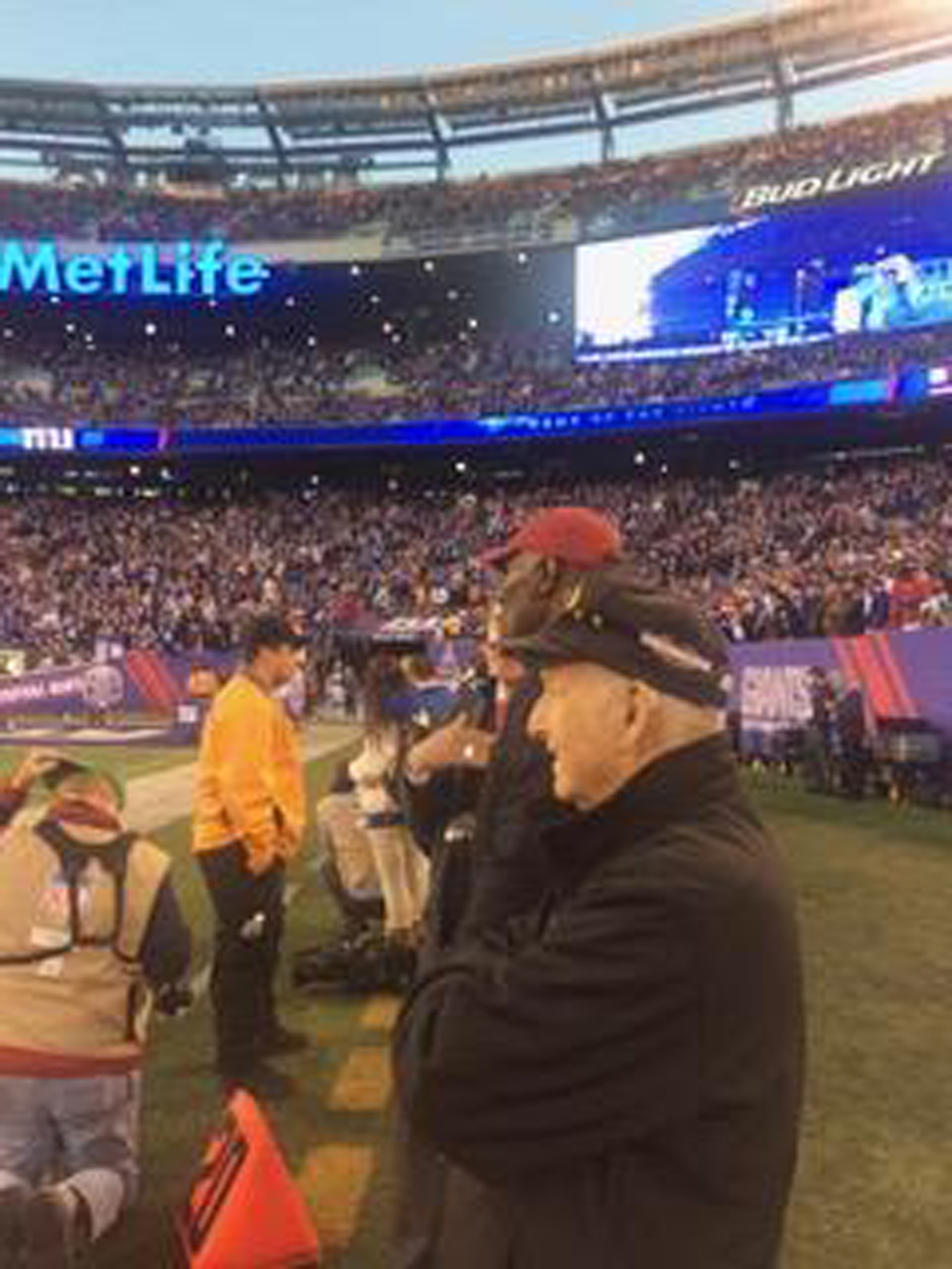
Jimmy Anagnost at MetLife Stadium

Born in July of 1924, little in his early years would prepare Jimmy Anagnost for the future that awaited him and millions of others like him. While that cataclysmic future bringing WWII awaited all, some, when finding themselves in fate’s crosshairs, forced to face cruel choices chose to respond to a higher calling. Such was young Jimmy of Nashua, New Hampshire.

“As a high school senior seeing the war in full swing, I figured knowing a little German might come in handy,” Jimmy said with a “did not need to be a rocket scientist” gesture. Jimmy would find his intuition about the benefit of speaking some German to be oh so true.
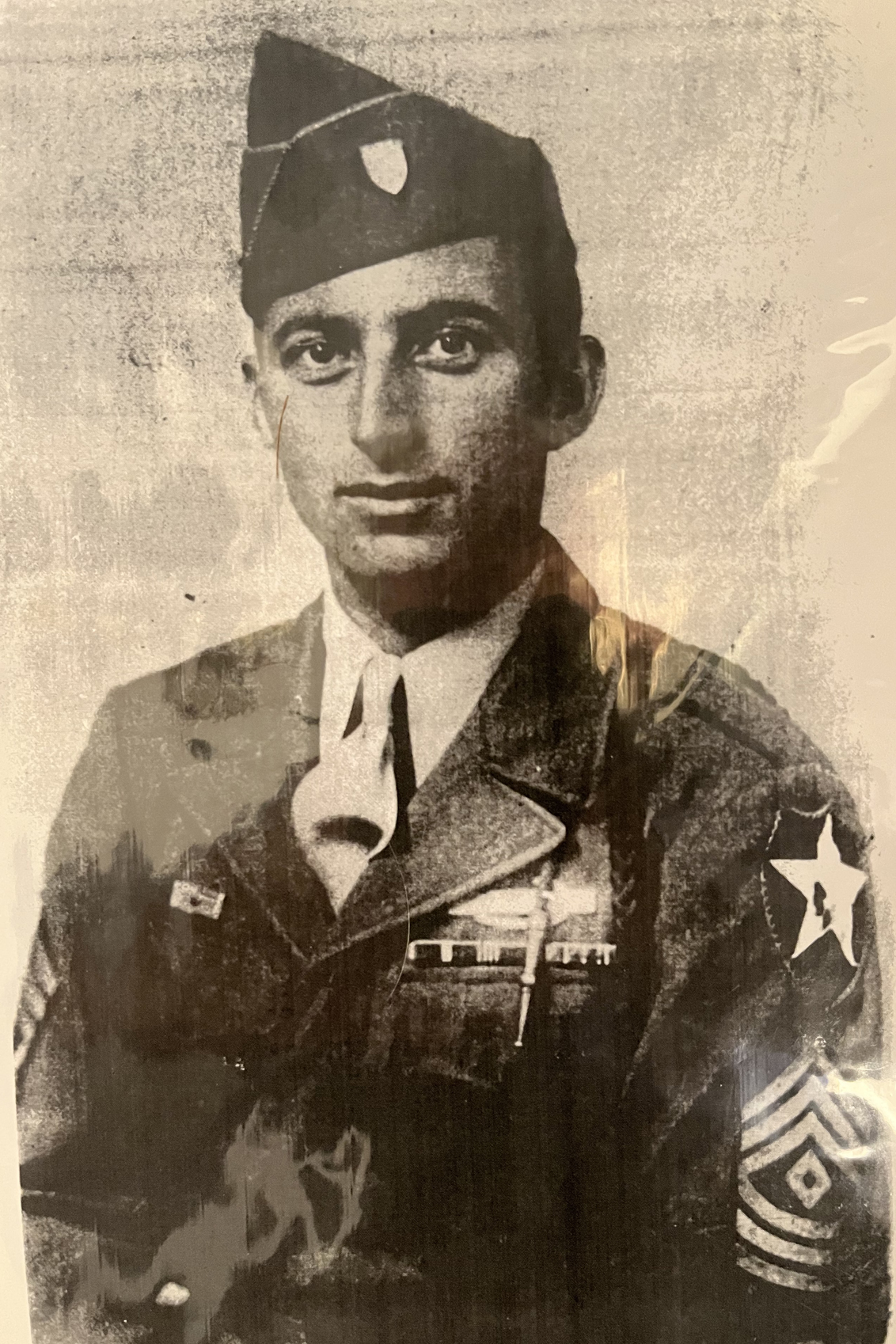
Jimmy in uniform

The following year after completing his freshman year at Springfield College on a Friday in June of 1943 Jimmy received his draft notice the next Monday. By November Jimmy found himself aboard Britain’s original HMS Queen Elizabeth. No pleasure cruise this. Being berthed five hammocks high in tight quarters together with wicked rough seas reduced the crossing to a six-day barf fest. A further wrenching of the ship’s collective stomach came with rumors that the QE1 had a Nazi U-boat in pursuit. The only stress relief resided in the belief that no U-boat had the speed to catch Britain’s queen of the sea.

Jimmy recalled, “Our destination would be Belgium. The Battle of the Bulge had broken out.”

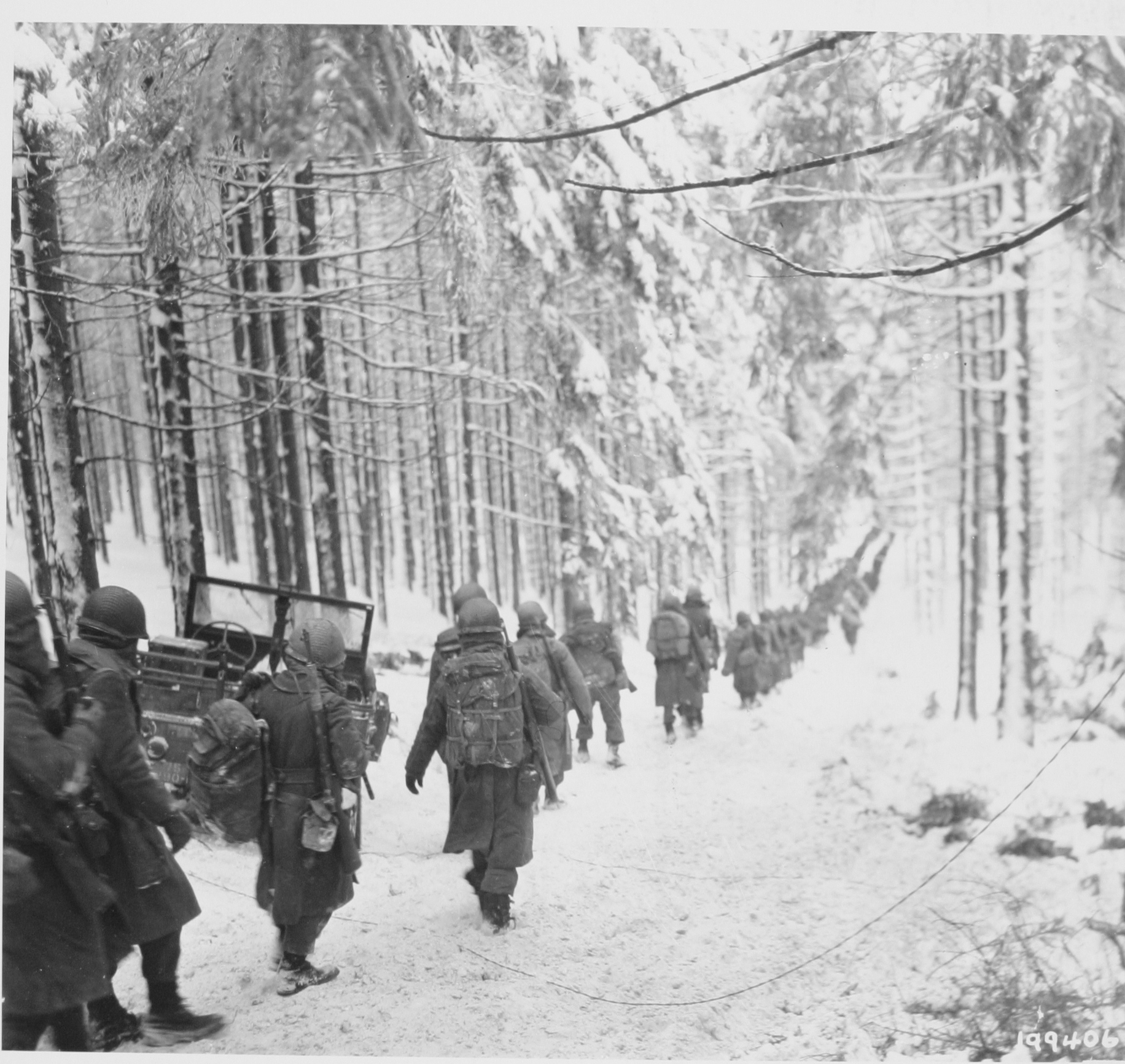
For those unfamiliar with the “WWII Battle of the Bulge” It stands as the Nazi’s last major offensive of WWII and an all out effort in the dead of winter to split allied forces along the Western Front. It got its name from the large sag or “bulge” in the Allied line resulting from the German surprise attack.

It resulted in a frozen six-week blood bath in the dense Ardennes Forest of Belgium. Winston Churchill called it “the greatest American battle of the war with a deployment of over 500,000 troops. Adding to the frozen horror, a deep snow, freezing rain and record breaking cold temperatures brutally assaulted the troops with over 15,000 injuries resulting from the severe cold alone. Many of the soldiers were young men barely out of high school, just like Jimmy. In the end, the American forces prevailed and threw back the Nazi offensive though paying a terrible price in the process. According to the National WWII Museum, in what would be the costliest battle ever fought by the U.S. Army, American troops suffered over 80,000 dead and wounded.

All units in the frozen Ardennes meat grinder needed replacements, young Jimmy with the rank of corporal would be a replacement with a battered infantry division. His first exposure to death came with witnessing dead American soldiers being loaded like uncut cord wood into a truck. Jimmy said, “To this day, every time I see a truck loaded with cord wood it brings that sight back to life for me.”
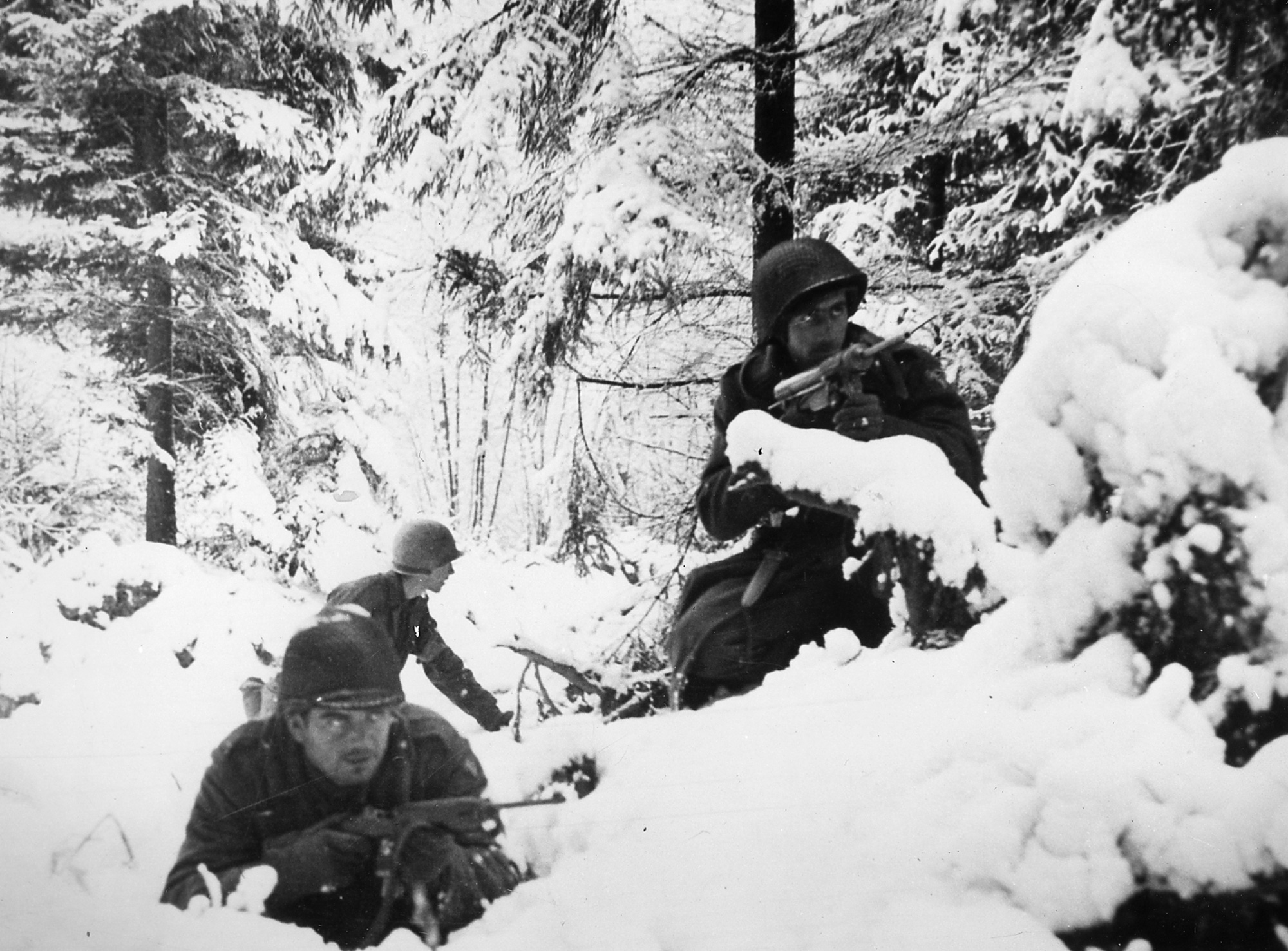
Battle of the Bulge,  Ardennes Forest

Life came at Jimmy with increasing speed. A following morning  found Jimmy and his fellow replacements being stocked with supplies, ammunition and fed a breakfast of pancakes with chocolate syrup. Jimmy said, “A veteran from D-Day informed me that that breakfast was tradition before heading into battle.” He remembered the day being bitter cold and snow depths made it difficult to walk. Jimmy said, “Marching to battle I was scared. No conversations filled the air. A deathly quiet seemed to choke life itself. Not knowing what to expect fed my fear. In all my time in combat that was the most fear I ever had.” Once action started, Jimmy said, “I fired my gun. Yelled for my men to move forward and basically acted like a leader.” It helped eliminate his fear. It did not free him of experiences that would haunt his memories for the rest of his life.

Jimmy recalled coming under intense German fire. His friend Sergeant Joe Vosek hugged the ground next to him firing in the direction of the German attack. Jimmy heard a gulping sound. Jimmy said, “I turned and blood was flying everywhere. Joe had been machine gunned in the throat. Joe died. I was ordered to advance which I did but I will never forget Joe Vosek.”

One especially bitter day in this frozen hell Jimmy faced decisions that would forever impact the lives of his men and lives of those who depended upon them.

The following comes directly from Jimmy’s Commanding Officer’s recommendation of Jimmy for the Silver Star.

On 2 March 1945 as Company K 23rd Infantry (Jimmy’s unit) crossed the Urft River the enemy opened fire from 18 pillboxes trapping the company in a small open pocket. Strongly prepared enemy positions poured a hail of fire from three sides. The company found itself unable to withdraw because of enemy mortar and machine gun fire.

When 2nd platoon was ordered to withdraw Corporal James Anagnost volunteered to remain in position to keep in radio contact while the platoon leader reconnoitered a favorable withdrawal route to safety. Although it meant being dangerously exposed to enemy fire, Cpl. Anagnost with high devotion to duty took up the exposed position.
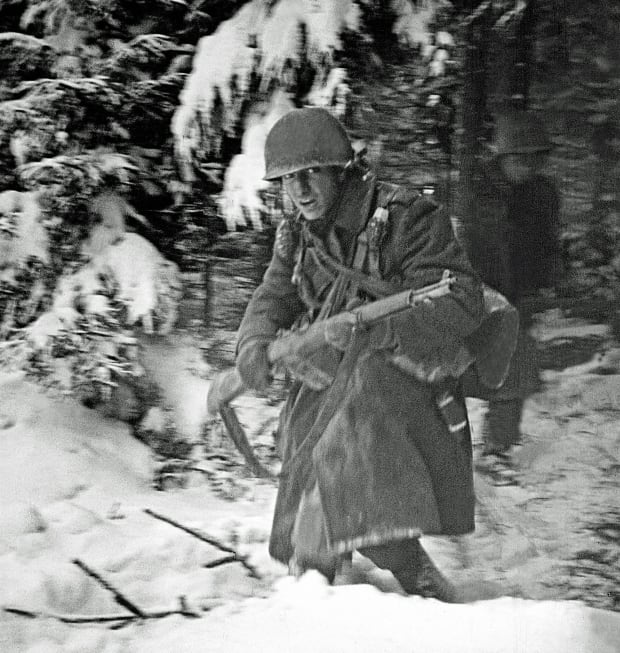
Upon receiving word to withdraw the 2nd Platoon he utterly disregarded his own safety to crawl from position to position to contact each man to order him to pull back. All the while Cpl. Anagnost was dangerously exposed to the hail of enemy small arms fire, automatic fire and mortar fire as he moved over the open and fire swept field. Only when he was sure that every man was withdrawn from the area did Cpl. Anagnost dash through enemy fire to reach the cover of a brick wall. There, with a handful of riflemen Cpl. Anagnost directed a rear-guard fight to cover the withdrawal of 3rd Platoon and other elements of Company K in the area.

Just as Cpl. Anagnost received a radio message to withdraw from his position, he heard a wounded man calling for aid from the open field in front of the wall. Aware that the platoon aid man was busy treating and evacuating several wounded men under cover of the brick wall, Cpl. Anagnost called for a volunteer to try to reach the wounded man. When no one responded he declared that he would make the perilous journey himself. Despite the advice and arguments of the other men that it was suicidal to leave the cover of the wall Cpl. Anagnost moved into the enemy fire crawling some thirty-five yards over the fire swept ground to reach the wounded man. Discovering that the man was wounded in the leg and arm and unable to help himself in withdrawing, Cpl. Anagnost dragged the man through the snow to the cover of the wall where he treated the leg wound and applied a tourniquet to the arm. Cpl. Anagnost then directed the men to withdraw to the rear and cross the river. He was the last man to leave the area and withdraw across the river.

By his high devotion to duty, courage and utter disregard for his own safety, Cpl. Anagnost was highly responsible for the successful withdrawal of Company K from its perilous position without staggering casualties and for the rescue of a wounded man who otherwise would have been killed or captured.
Two months later, Jimmy, now Staff Sergeant Anagnost and his men, after clearing two villages of snipers, moved on to neutralize several heavy gun placements targeting Allied troops at point blank range. After calling in a punishing heavy artillery barrage on the enemy position, Jimmy, surveying the scene from a location on high ground, realized that the enemy was surrounded. Clearly it would be in the Germans best interests to surrender and prevent the terrible loss of life assured by the impending withering fire awaiting to pound their inescapable position. Jimmy armed with his high school German, amazing chutzpa and basic decency volunteered to go forward alone into a clearing and facing the enemy line attempt to talk the Germans into surrendering. As described in the Army account:

S/Sgt Anagnost went forward to the enemy position and was met by a German with a bazooka pointed at him. At that time S/Sgt Anagnost was joined by Sgt Ray Legg, Albany, NY who whispered to Anagnost to hit the ground while Legg would shoot the German.

Jimmy in recalling the incident said, “My German was not that great. I was not getting through to the Germans that they were surrounded and basically faced annihilation. Ray kept whispering, almost imploring me, saying Jimmmmyyyy. I told Ray just one more chance.” According to the Army report, on this final effort “Another German soldier jumped out of a gun emplacement and yelled, ‘I’m from New Jersey we can make this work.’” Apparently the German soldier’s father, before the war, had come with the family to work for a German company in Edison New Jersey. Returning to Germany before the war, the son, still a German citizen, was conscripted. Jimmy said, “If you saw this in a movie you would say what a load of B.S. I guess what they say is true in war you see things that you just couldn’t make up.”
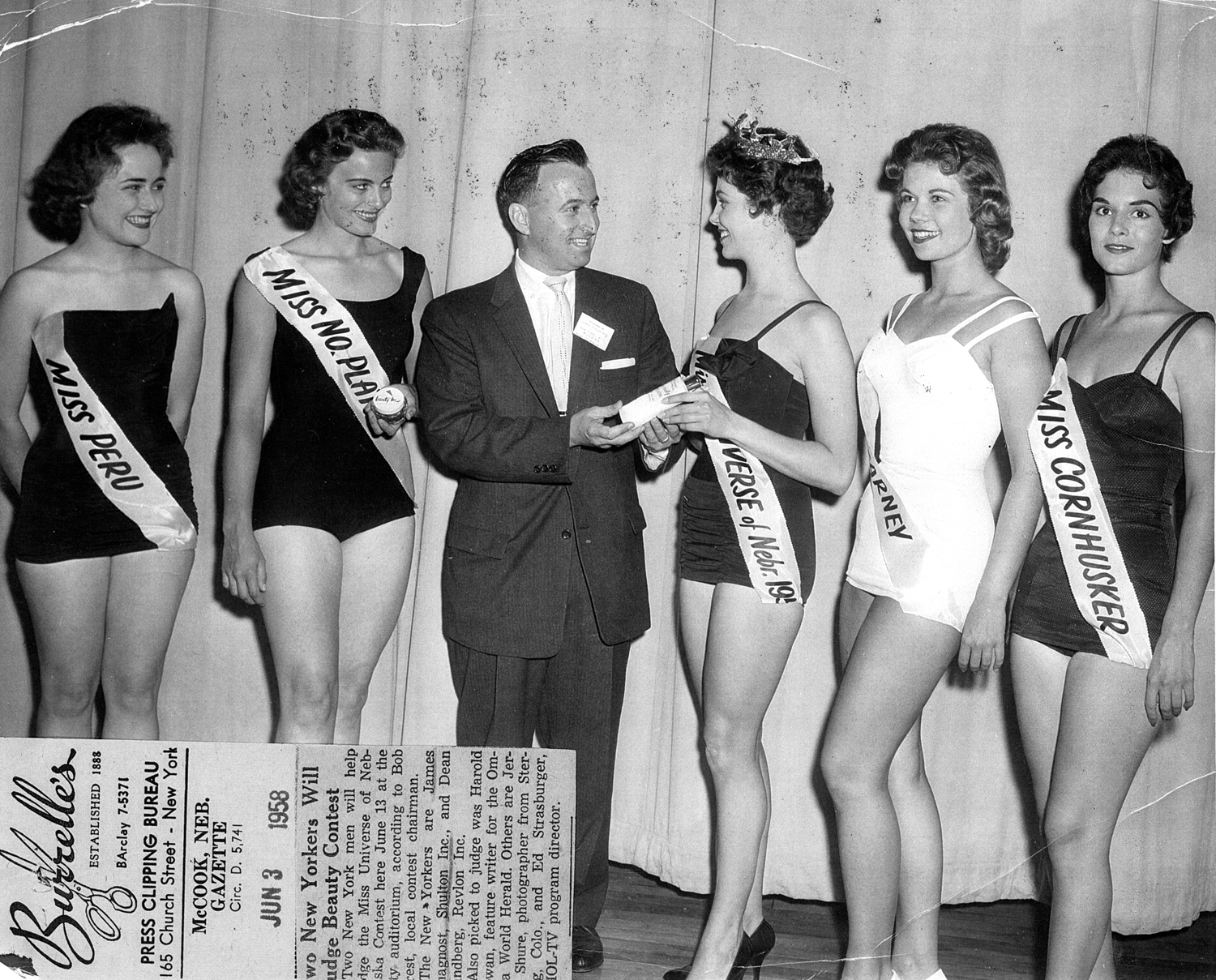
Jimmy as Shulton Rep judging for Miss Nebraska 1958

Jimmy’s actions resulted in the capture of over 50 flak guns that would no longer jeopardize allied planes, many 88mm heavy guns that would no longer kill allied troops and 250 prisoners who could no longer take allied lives and had been given the opportunity to live out their lives after the war.

In returning home after the war Jimmy finished his degree at Springfield College and set about building a good life after surviving a terrible war. Jimmy began a career with the Shulton Company best known for its Old Spice products. Jimmy represented Shulton products to military bases around the world. Interesting Jimmy once acknowledged to me that the most fear he ever experienced in his life occurred when going to Vietnam for Shulton in the mid 1960’s. Jimmy said, “You never knew who was the enemy nor how close they were. There was no enemy line. It scared me.”

In 1953 Jimmy married the love of his life Katharine (Kitty) Anagnost and raised a family with 3 sons and a daughter. Jimmy and Kitty’s marriage lasted 68 loving years. Kitty passed in 2021.

Jimmy’s later years had found him spending summers in Maine and when at his home in River Vale NJ attending a health club in Westwood, New Jersey. It was at that gym where Jimmy established himself as a beloved member of the health club family. Into his 90s Jimmy would work out diligently. He amazed his fellow gym rats with his vigor and by his sheer genuine joie de vivre and decency charmed
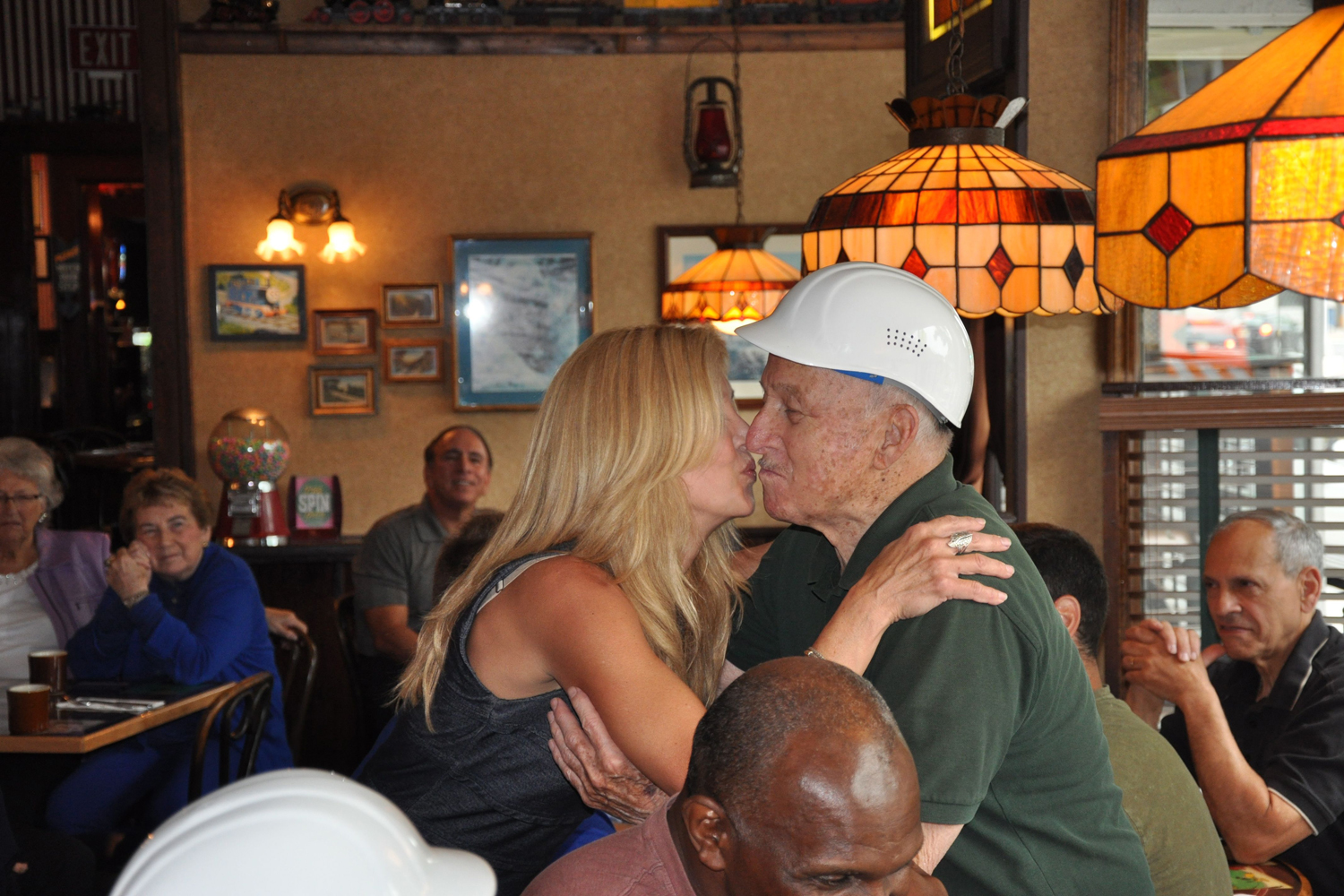
Happy 90th Birthday Kiss

the women and was beloved by “the guys.” That said, one friendship in particular stands out for both its apparent incompatibility and depth.

Over the years a deep, strong almost familial bond developed between Jimmy and fellow gym member New York Giants Pro Football Hall of Fame Linebacker Harry Carson. This friendship defied a phalanx of possible divisions from age, physical stature, regional roots, race, profession, celebrity and more. And in so doing, made a profound and universal statement about the deep transcendent nature of true friendship.

Jimmy roughly five feet seven inches tall and 150 pounds and Harry at six feet two inches and 255 pounds (He retired in 1988 and still maintains his playing weight) were so different yet so comfortable together. Harry deferred to Jimmy like a respected and beloved favorite uncle. Harry remained in constant contact with Jimmy right through Covid and during Jimmy’s time in assisted living right till his passing. Simply a joy to see them together. Watching Harry a bright, famous, revered, giving and personable man defer to Jimmy seemed a moving expression of a hero’s joy when focusing the spotlight on another.
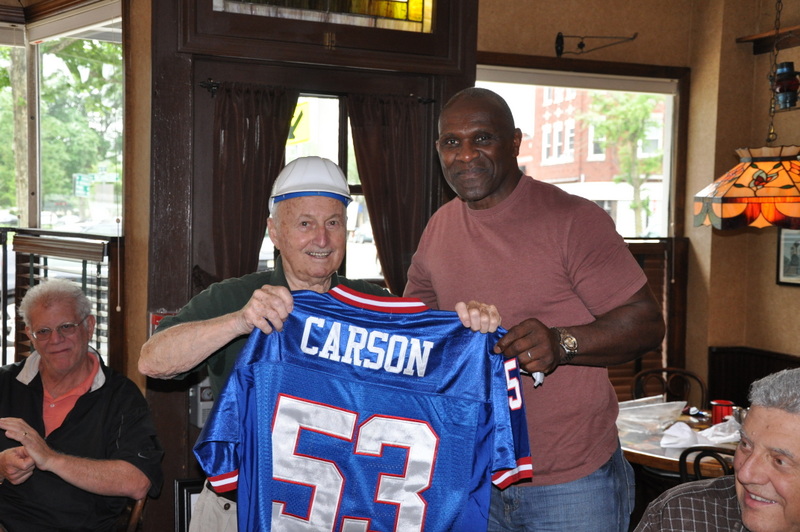
Jimmy and Harry Carson celebrating Jimmy’s 90th Birthday

Harry’s deep affection and respect for Jimmy evidenced itself in 2015 when at Harry’s urging, the New York Giants honored 91-year old Jimmy during the NFL’s salute to veterans before a packed Metlife Stadium.

Announced to the full house by Harry, Jimmy walked on the field with a deliberate stride (all his gym friends told him to confidently stride out on the field and snap off a salute). Mission accomplished. Rising with a thundering roar from a single voice shared by the 83,000 fans, all in attendance celebrated the life of an uncommon man.

At 98 Jimmy has passed. Our lives are better because of the life he and his peers lived. Long live Jimmy.

Jimmy Anagnost will be buried at Arlington National Cemetery.
By |2023-02-16T14:33:21+00:00February 2nd, 2023|20 Comments

Cars We Love & Who We Are #33

Like a blue ribbon bloodhound tracking a scent, Dr. Fred Simeone possessed a remarkable ability to sniff out a trail of ownership regardless of how faint the trace. He employed the brilliance, tenacity and ferreting instincts that distinguished history’s great sleuths in his unearthing of long lost historically important car provenance.

Clearly, Dr. Simeone’s love and passion for meaningful classic cars did not stop at the mechanical and aesthetic wonder of the automobiles he owned and cherished, as well, he passionately embraced the pursuit of their accurate and detailed backstory.

He focused not only on the history of significant automobiles in his collection but extended his laser-like forensic curiosity to historically significant cars owned by others that suffered from gaps in time that demanded authentication.

What follows provides some of the detailed backstories unearthed for cars in the Simeone Museum.

Dr. Fred Simeone’s Mona Lisa car legacy, Part 2, Fascinating backstories of cars he preserved.

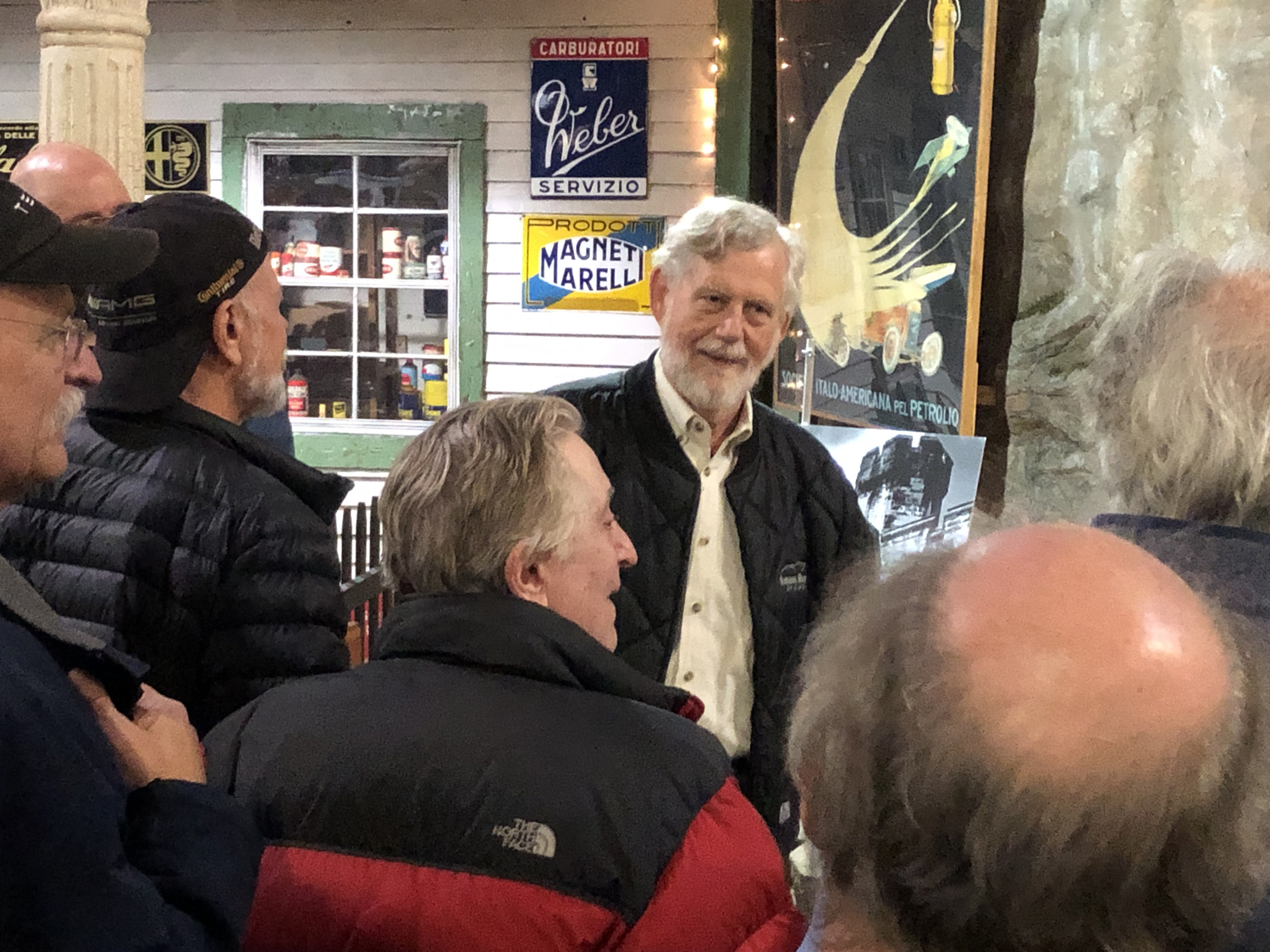
Dr. Simeone conducting a class on researching provenance

In authoring the preface to a wonderful book called The Stewardship of Historically Important Automobiles Dr. Fred Simeone wrote, “To those who believe an owner has the right to do whatever he wishes with his car in terms of use or modification, there is no need to follow another precedent. But to those who acknowledge that their preserved car has special significance as an example of the industrial age’s greatest gift, we suggest that you pass it on to future generations as it left the hands of its creators.”

In creating what many consider to be the finest automobile museum in the world, Dr. Simeone amassed and curated a pantheon of historically significant vehicles from the 20th century and cared for each with a brilliant consistency faithful to his written words. History in general and the automobile culture in particular are far better for it. As shared by Simeone Museum Director of Programs Harry Hurst, the following stories illustrate the value as an historic record and teaching tool afforded future generations by Dr. Simeone’s unwavering dedication to preservation.

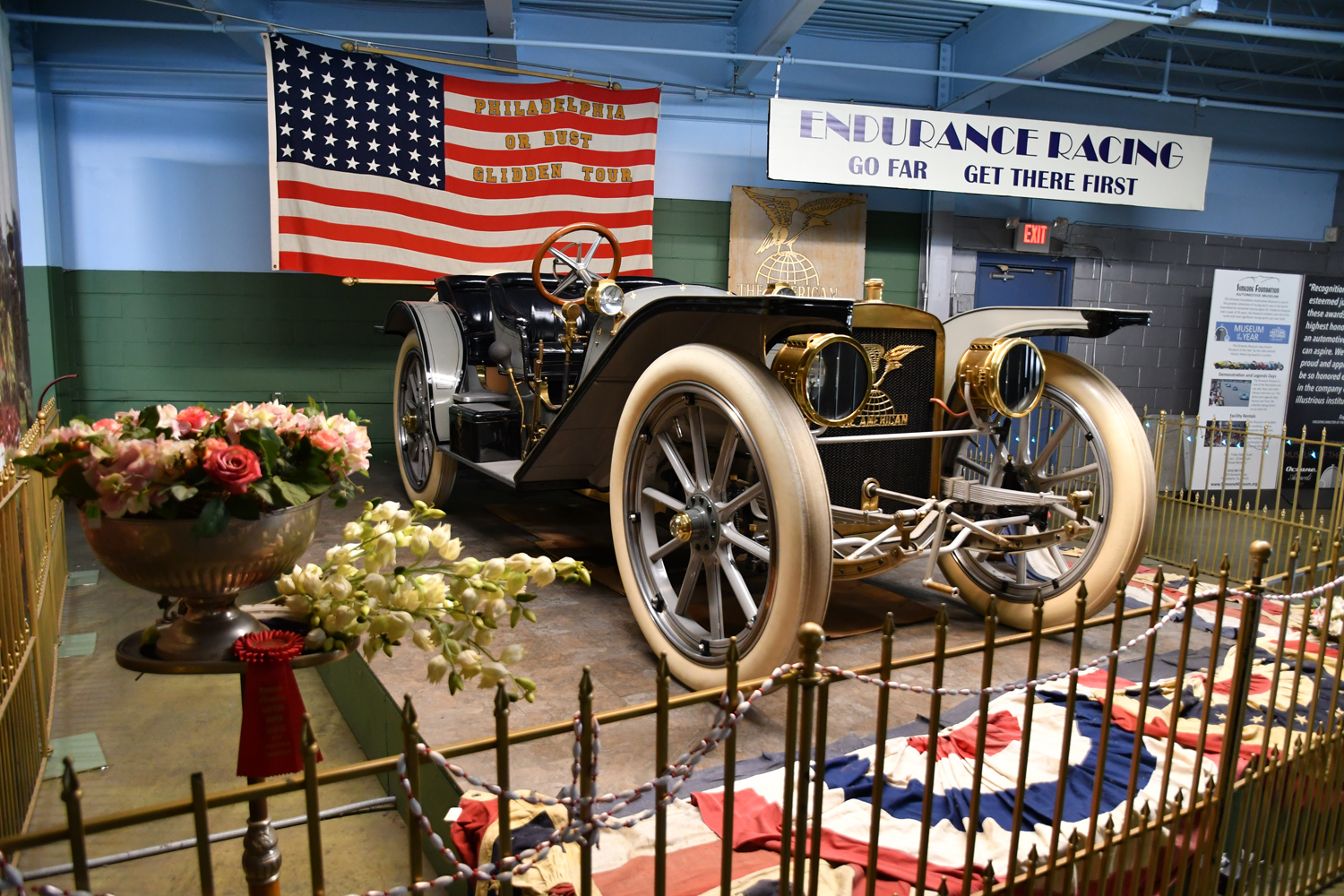
1909 American Underslung

One of the Simeone Museum’s oldest cars on display, a 1909 American Underslung visually distanced itself from the constellation of new automobile marques fighting for life in the frantic automobile market of the early 20th century. Even though it belonged to the early iteration of “new car” offerings it stood out, even to this day, for a decidedly sporty stance. Its intention to be a worthy competitor in racing events demanded the ability to traverse high crowned rutted roads, ford streams and successfully face obstacles like tree stumps. Such were the challenges commonly encountered in its day because race tracks had yet to be built. Courses for races instead extended from city to city.

By positioning the chassis below the axles for a performance oriented lowered center of gravity, it gained superior handling, a sporty visual signature and its product name. Use of tall 40-inch tires afforded ample road clearance by compensating for the lowered center of gravity.

The Simeone model features a 571 cubic inch engine producing 60 horsepower. When new, it sold for around $4,000 at a time when the average American worker earned roughly $400 a year. Its comprehensive backstory comes courtesy of the work of Walter Seeley an Underslung enthusiast who starting in 1960 dedicated over a decade of his life to fleshing out this cars history going back to its original owner Mr. F.C Deemer a coal baron from Brookville, Pennsylvania.

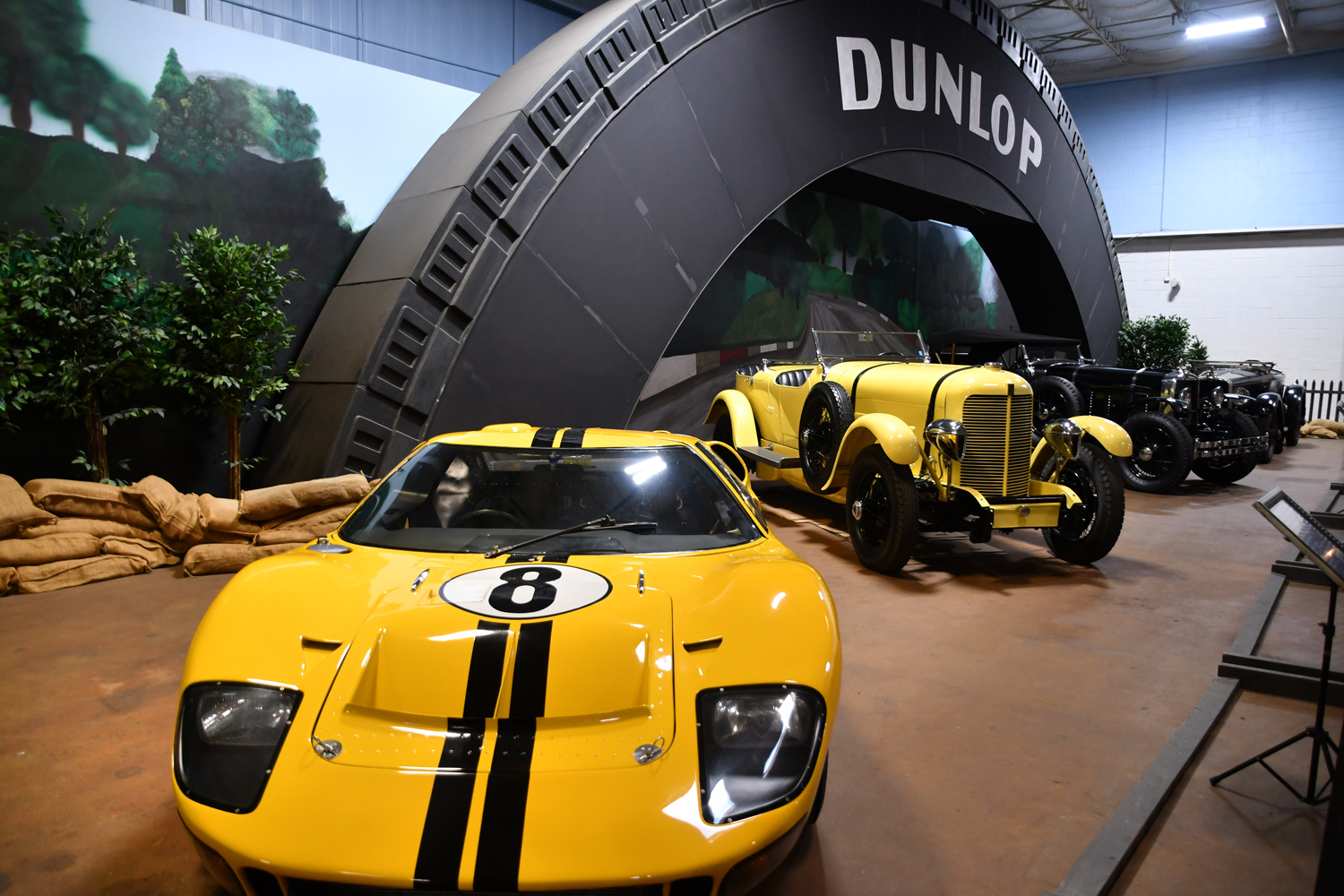
As an early milestone in competition design, Harry Hurst compares it to the Ford GT40 as marking one hundred years of progress saying, “the Underslung had 40-inch tires, a century later the Ford GT40 barely stood 40-inches tall, period.”

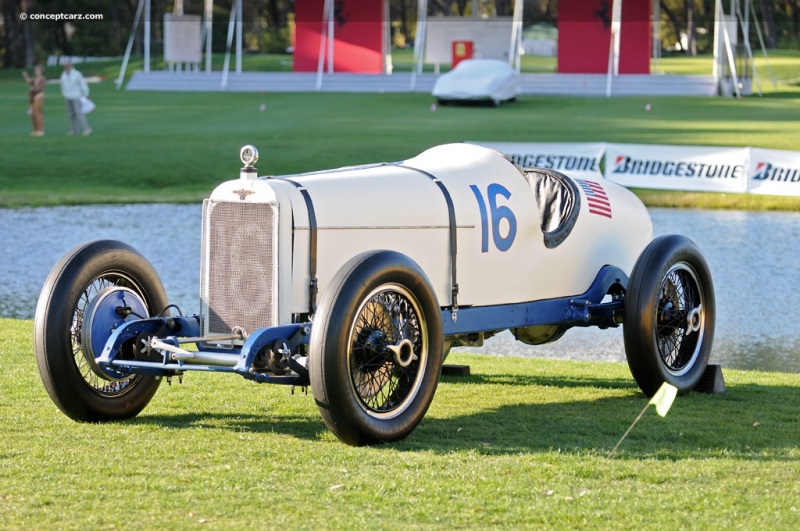
1921 Duesenberg 183 Grand Prix

Sometimes life places something so close that you do not recognize what stands before you. Such was the case with the Simeone 1921 Duesenberg. Originally purchased off a Philadelphia used car lot by Dr. Simeone’s father and “car guy,” Dr. Anthony Simeone, neither father nor son considered anything about the race car as representing something uniquely special. It had been painted yellow and raced locally years back before being pushed into a corner of the dimly lit downtown parking garage where Simeone cars had been stored well before the museum became a reality. Hurst says, “Years back Dr. Simeone had invited Jay Leno to visit the parking garage to see the collection. Accompanying Leno happened to be Randy Ema, probably the world’s foremost expert on the Duesenberg. As they passed by the dimly lit resting place of the ’21 Duesenberg Ema says, “Well Fred you might want to rethink this car.”

Surprised at Ema’s comment about a car that had languished in his own garage, Dr. Simeone quickly drilled down. Hurst says, “Ema expertly applied his jeweler’s eye to the seemingly unremarkable Duesenberg.”

According to Hurst, Ema called out a number of things that distinguished this Duesenberg in significant ways. Right off the bat Ema flagged the existence of a cutout on the passenger side of the cowl being extraordinarily rare, its purpose to afford a riding mechanic a place on which to hold. Furthermore this car featured four-wheel brakes, a feature not found on cars raced on American tracks. Cars racing in America only had rear-wheel brakes because in America drivers only used brakes when coming in for a pit stop not when racing. Adding to its rarity, this Duesenberg had hydraulic brakes and no Duesenberg in 1921 came equipped this way except…the four Duesenbergs entered in the 1921 French Grand Prix. While not the Grand Prix winning car, the Simeone Duesenberg stands alone as the only original Duesenberg remaining of the four entered in 1921 French Grand Prix. Very special after al1.

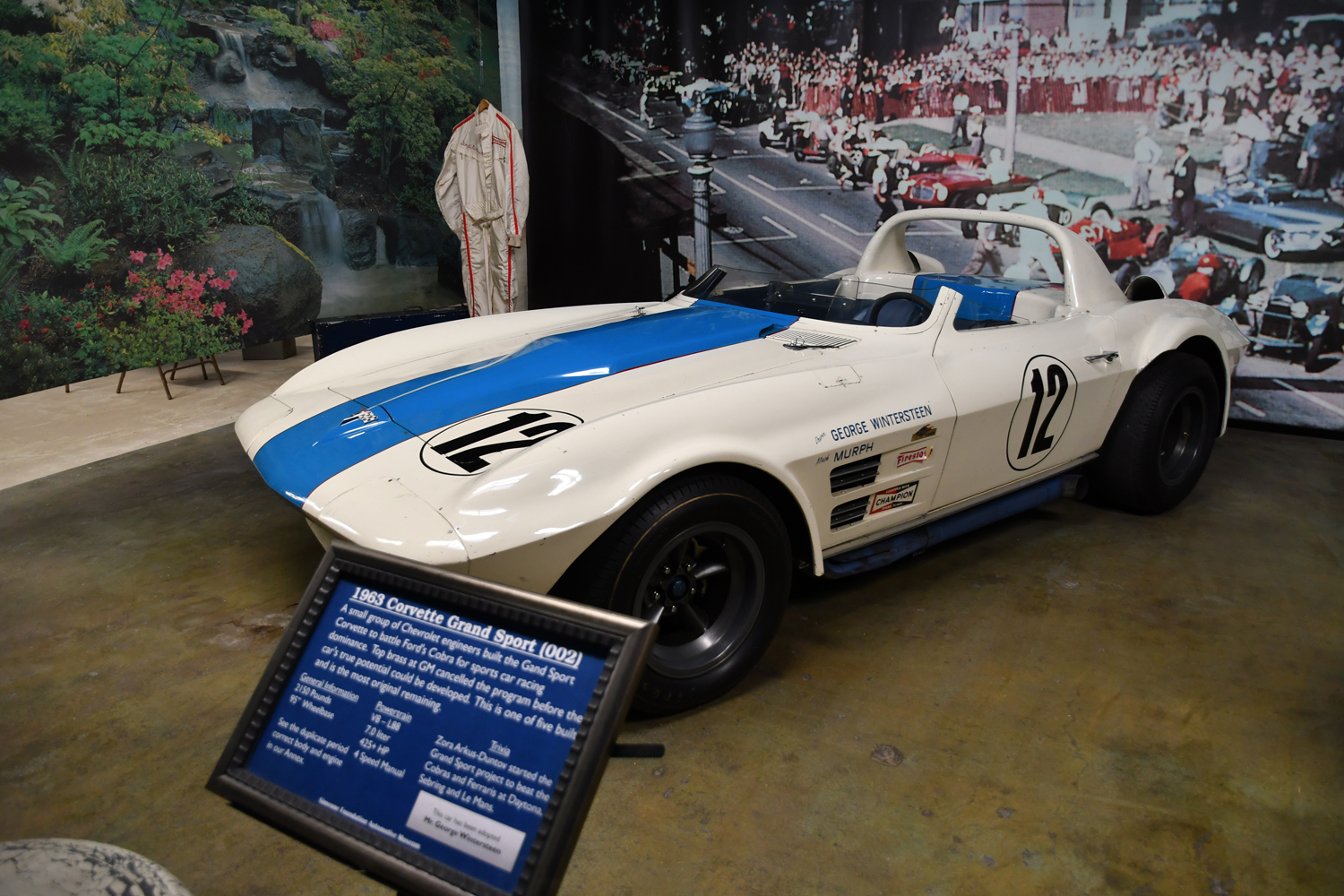
1963 Corvette Grand Sport

It smoked engineers at GM that Shelby’s 289 Cobras ruled the roost on GT world championship race courses aroundthe world and at home while GM management had a strict ban on racing. Burning brightest with frustration Corvette godfather Zora Arkus-Duntov would have none of it and built an internal skunk works that raced cars though private teams. As well, with some backdoor funding support from pro-racing Chevrolet General Manager, Bunkie Knudson, Arkus-Duntov assembled the “Project Lightweight Program” that would spawn the legendary 1963 Grand Sport Corvette. Over 1000 pounds lighter than a stock Corvette, fitted with a 377 cu. in. 480 horsepower aluminum Chevy small block and just about every performance tweak on Arkus-Duntov’s Christmas list the Grand Sport was born a beast. And quickly died one. December 1963 in Nassau, Bahamas proved to be a hot time for Carroll Shelby’s Cobras, too hot. Too hot, as well, for the Corvette Grand Sport. In the only time when the Grand Sport and Cobras competed directly, the Grand Sports crushed the Cobras and everything else including Ferrari’s GTOs. Everyone noticed including GM management who, now aware of Arkus–Duntov’s sidestepping their racing ban, shut down the Project Lightweight Program for good. All Grand Sports quickly went to private owners.

GM sold Grand Sport 002 to Roger Penske. Penske sold it to his friend George Wintersteen. As an interesting side bar for all car enthusiasts who wished they had not sold “that” car years back. You know, the one that in recent years has sharply appreciated. Well, Wintersteen recalls selling 002 in 1967 for the princely sum of $6700. Grand Sport 002 then passed through the hands of a number of respectful owners until being purchased by Jim Jaeger, the co-creator of the Escort Radar Detector, in 1990. In 2008 002 became part of the Simeone collection. Today 002 stands as the only 1963 Corvette Grand Sport never to have been restored and, as such, contains a wealth of unique historic information.

Interestingly it has been conventional wisdom that a total of five Grand Sports existed. But wait. Apparently even world renowned museums can be in for a surprise. Hurst said that recently he had been in contact with John Mecom who owned the Grand Sports that raced at Nassau in 1963. Hurst says, “Mecom confirmed to me that the total stable of Grand Sports numbered six and he had a photograph of the six 1963 Corvette Grand Sports.

1964 Shelby Cobra Daytona Coupe

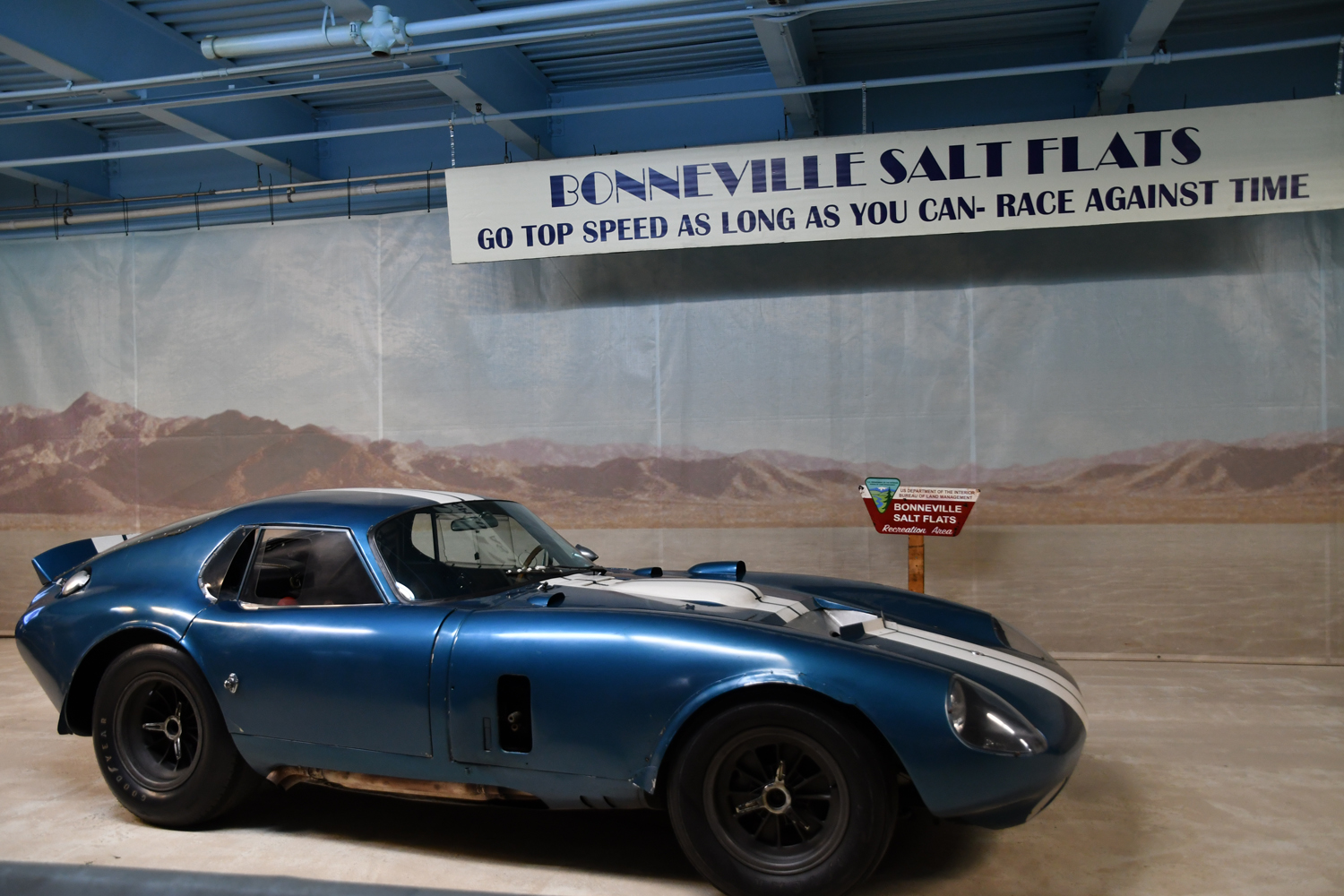
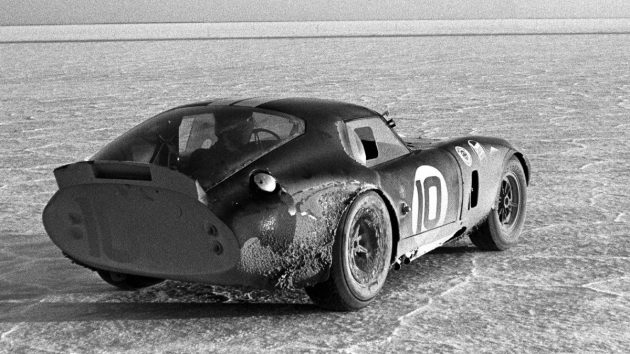
“Mona Lisa car”, the phrase honors a special vehicle for its unique achievement as a one-of-a-kind automobile. The Simeone Cobra Daytona Coupe CSX2287 merits the honor as the Cobra Daytona Coupe prototype, the only one built in the United States, the first to race at Daytona where it earned its name, the last to race in competition and in 1965 owner of 23 land speed records. Today, it ranks as the first automobile listed on the National Historic Vehicle Registry. It also had, for a period of thirty years, been lost.

After being retired by Ford when it turned Carroll Shelby’s attention to the GT40, the effort to sell these “old used” race cars met with little interest. They sat unloved in a corner of Shelby’s shop for years. CSX2287 finally found a buyer Jim Russell. Sale price $4,500. Ownership then passed on to “Wall of Sound” music produced Phil Spector. Advertised price $12,500. Spector became dissatisfied with its race track personality and manners but put off by the cost to “civilize” CSX2287. Now, as a disenchanted owner with a fistful of speeding tickets, he sold the Cobra to George Brand his body guard in 1971. Word had the purchase price at around $1000.

Later on Brand gave the car to his daughter, Donna O’Hara. In 1982 O’Hara and her husband divorced with Donna O’Hara getting the Cobra. At that point O’Hara went off the radar as did CSX2287. Stories told include many offers including one from Carroll Shelby being ignored or rejected. At times O’Hara gave mixed signals as to the existence of the car. In 2000, still possessing the Cobra and without leaving a will, O’Hara died. Through the courts ownership passed on to her still living mother Dorothy Brand. Without the space or interest in untangling the subsequent decade of convoluted legal wrangling leave it to say that CSX2287 entered the Simeone collection where it sits on display today.
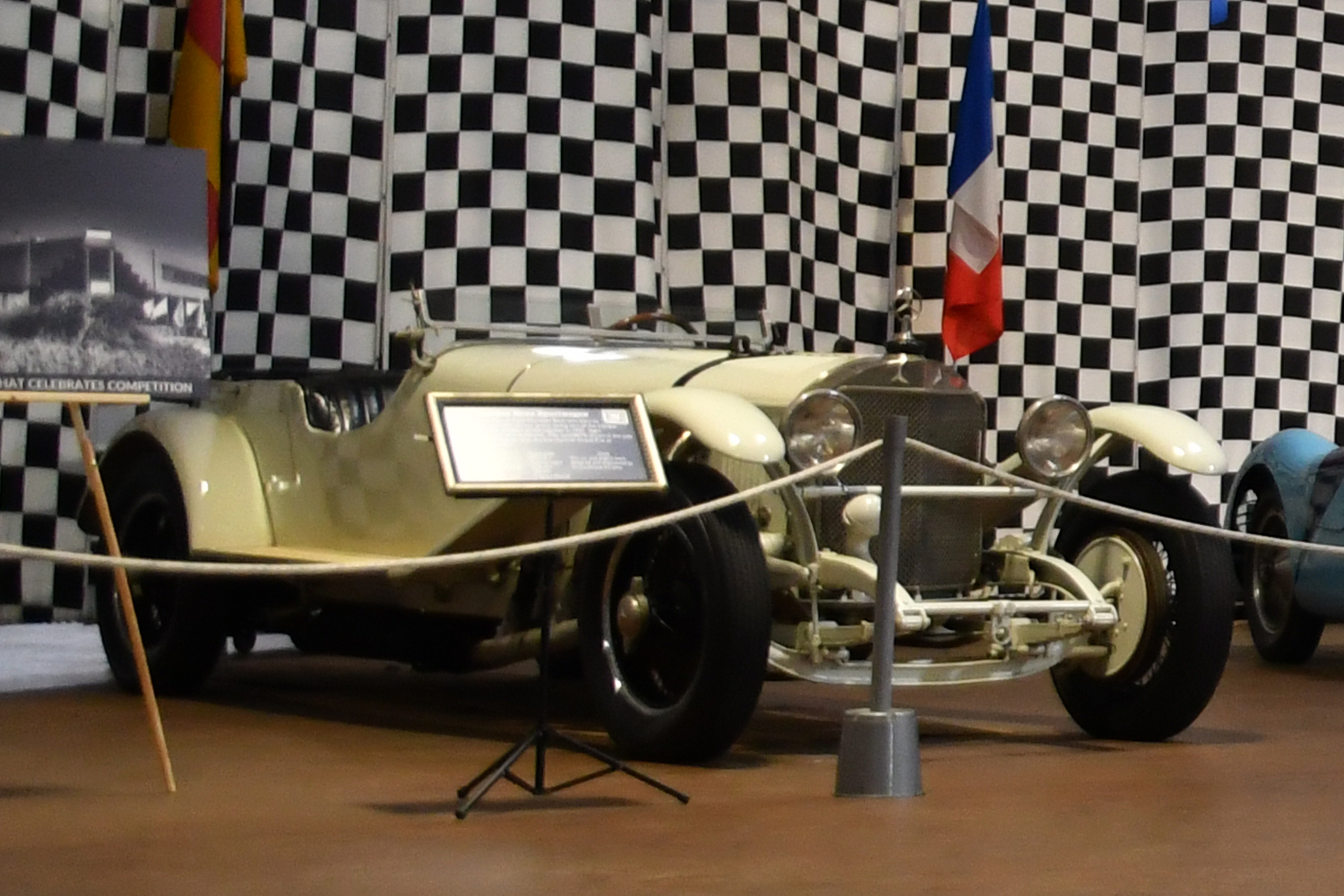
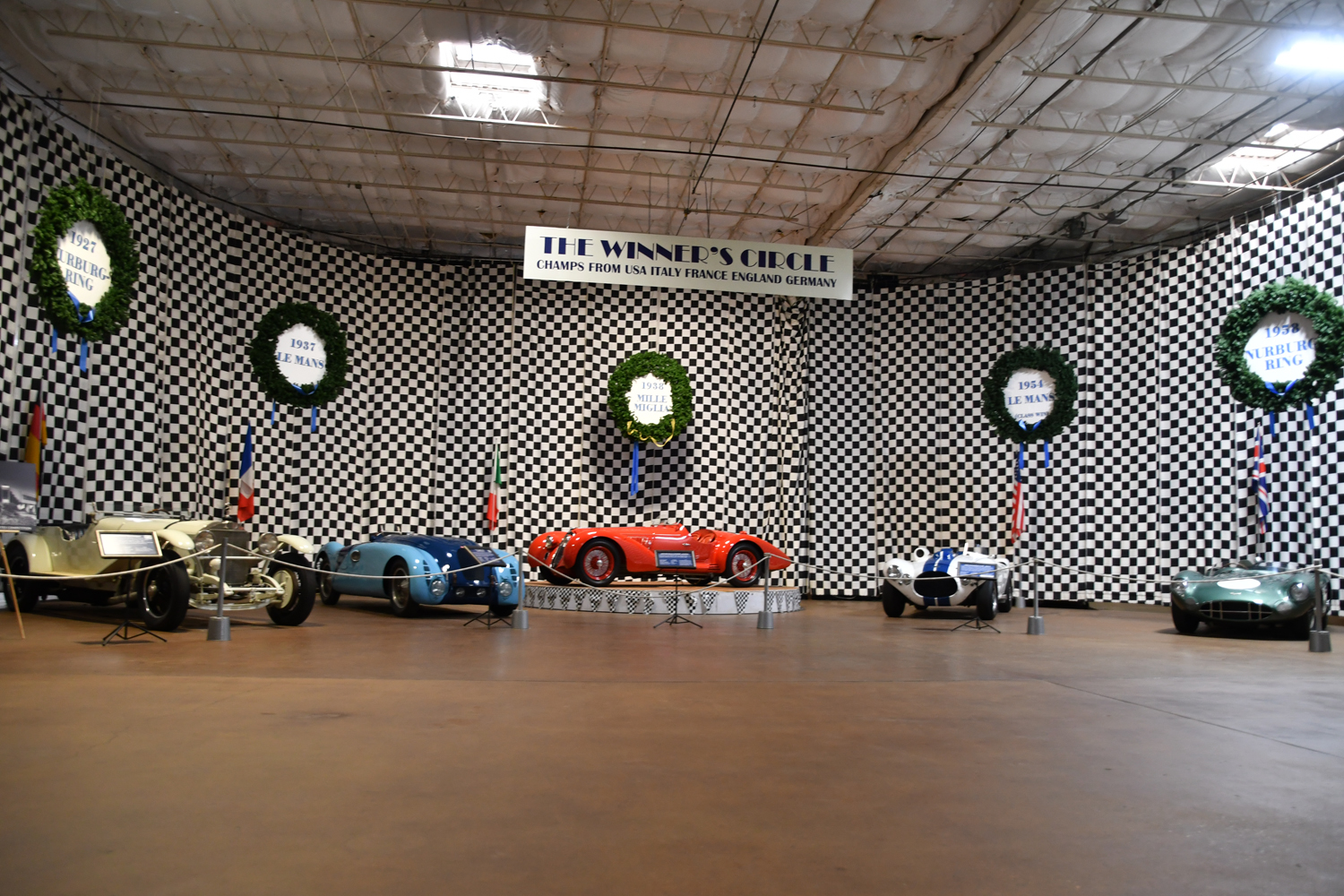
1927 Mercedes-Benz Sportswagen S-Type

In 1927 Mercedes-Benz built eight Sportswagen S-Type sports cars produced under the direction of Ferdinand Porsche. Powered by a 6.8-liter, overhead cam, and supercharged inline-6 engine delivering 180 horsepower and with four-wheel brakes, this, then, state-of-the-art sports car dominated the track at its introduction. Entered in the first German Grand Prix in 1927 at the newly completed Nurburgring Race Track, these works cars finished first, second and third. Today, only one of the eight Sportswagen S-Types still exists. That sole remaining car, driven by race winner Otto Merz, now resides in its original race condition at the Simeone museum. An interesting piece of historic trivia, Race winner Otto Merz had been a chauffeur driving in Archduke Ferdinand’s motorcade when the archduke was assassinated sparking World War I.

A cash-strapped Mercedes-Benz’s earmarked the Nurburgring winning Sportswagen (33679) for sale in the United States. After the sale to a New York buyer fell through, it shipped 33679 to Mercedes-Benz Motor Company, 6063 Sunset Boulevard in Los Angeles for a quick sale to a Mr. Baldwin in 1928. An information gap then occurs with the trail being picked up around 1934 with confirmation of its ownership by a Mr. Robert Day of Beverly Hills. Day sold the car to Mr. Fred Torsen from whom it was purchased by Mr. Bayard Sheldon. Sheldon a long time owner drove the car extensively including a coast to coast cross country adventure. In 1973 Mr. Ben Moser purchased 33679. Despite intending to enjoy long term ownership in 1975 life got in the way for Moser and 33679 entered the Simeone Collection.

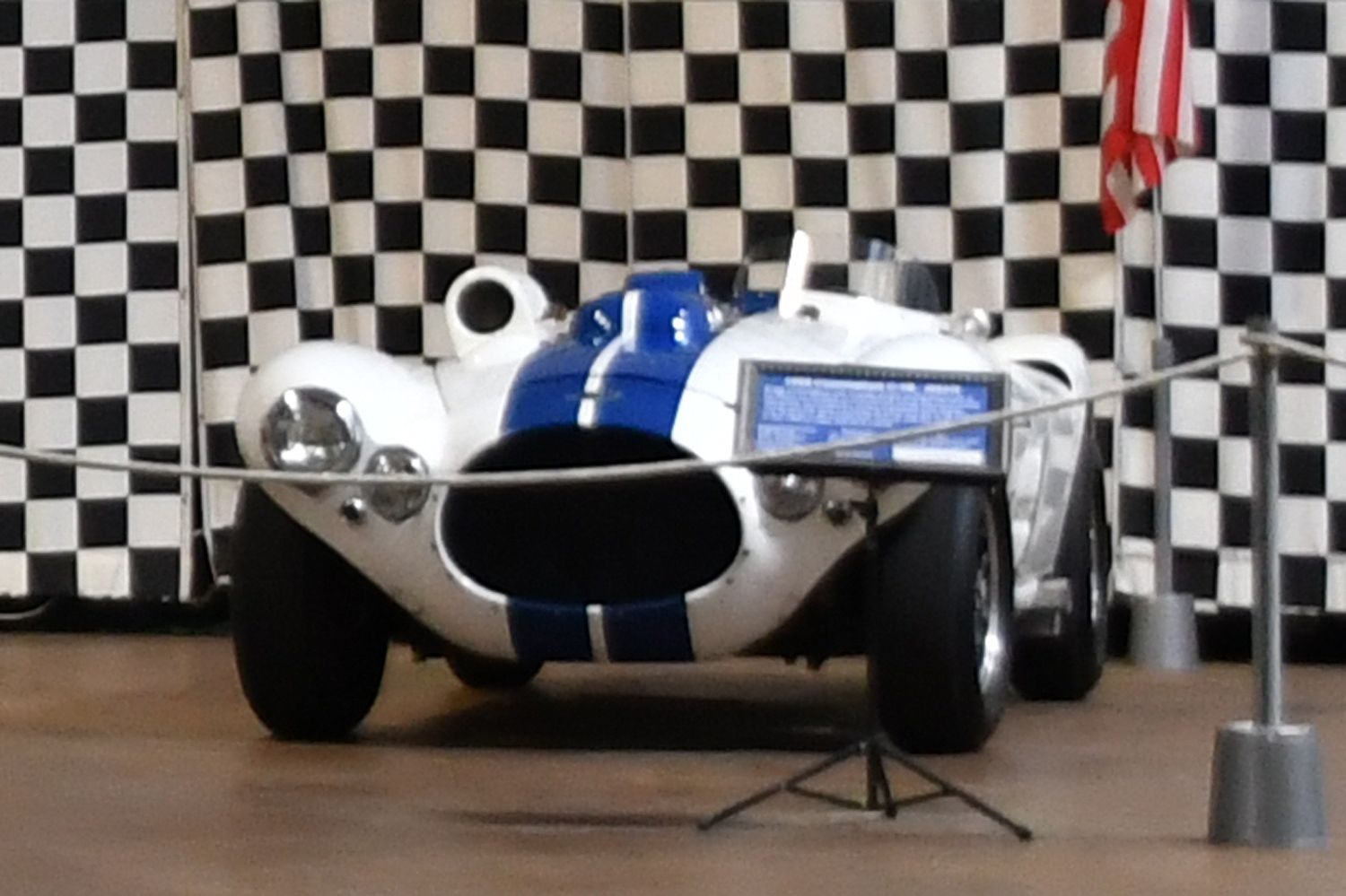
1952 Cunningham C4R Roadster

A story, both humorous and telling, as recalled by Director of Programs Hurst evidences Dr. Simeone as a man of scrupulous integrity and honesty. It involves the Cunningham C4R displayed as the winner of the 1953 Pillar of integrity and honesty

Prior to Ford’s 1960s GT40 program, Briggs Cunningham stood as the driving force behind the post war effort to win as an American builder racing at LeMans. The handsome Briggs Weaver designed, 325 horsepower Chrysler hemi V8 powered C4R proved to be the pinnacle of Cunningham’s effort to win Lemans. Cunningham produced three C4R cars. In all the events they entered the three cars they won 74% of the races entered and finished 84% of the races they started. Their success convinced Cunningham the C4R would be his ticket to victory at Lemans. It would not be so with Cunningham’s highest finish at LeMans believed to be 3rd.

The Simeone collection’s Cunningham C4R offers compelling   proof that provenance can never be assumed no matter how sound the supporting evidence. The following information comes from Dr. Simeone’s writings on the Simeone Museum website describing his research confirming the authenticity of his Cunningham C4R.

Dr. Simeone possessed the ad from the October 1954 Road and Track magazine placed by Alfred Momo the race preparer for Cunningham advertising for sale the C4R, now in the Simeone Collection. The ad represented the car as both the 1953 Sebring winner and the third place finisher in the 1954 LeMans. Purchased by noted driver Charles Moran Jr., it participated in 1955 and 1956 SCCA events with both Moran and Fred Wacker driving. With the passing of Moran the car sold at an April 25, 1970 Parke-Benet auction. The auction catalog described the car as the 1953 Sebring winner. In subsequent years the C4R raced in vintage events frequently bearing the number 57 worn by the 1953 Sebring winner.

Tiny Gould, a dealer, placed the winning bid at the Parke-Benet auction before passing the car along to Warren Collins. The subsequent string of ownership included Henry Faulkner and in 1983 Robert Williams. During William’s period of ownership he drove in 1984, 1986, 1987 and 1988 Mille Miglia retrospectives. During these events co-drivers included renowned drivers Augie Pabst and John Fitch. Following the 1988 Mille Miglia event a restoration was performed with intense vigilance over authenticity. Subsequently after appearing in racing and show events the C4R joined the Simeone Collection.  This brings us to one day when years later Dr. Simeone walked into Hurst’s office with a fuzzy black and white photo.

Hurst says, “Fred asks can you blow this up?” Hurst scans the photo, blows it up, performs a little Photoshop clean up and delivers the enhanced photo. It’s clear enough to make out that it’s the Sebring C4R.” It has number 57 on the side in masking tape. Hurst remembers Dr. Simeone asking him to count the number of side louvers on each car. Hurst says, “I count the two rows of louvers on the car in the photo. 1,2,3,4,5,6,7,8,9 and 1,2,3,4,5,6,7,8. We are standing by the museum’s C4R. I count both rows. 1,2,3,4,5,6,7,8,9 and 1,2,3,4,5,6,7,8 – 9. WOW!” Now both start looking at other little things, differences that nobody ever noticed over the last half century. It becomes clear the Simeone car did not win Sebring. Hurst says, “Fred and I are the only two people on earth that have this realization. Do you realize what happens to the value of a car when it goes from being a winner at a major race like Sebring to only having a class win at ’54 LeMans? It is significant. And Fred looks at me and simply says, I guess we‘re going to have to change the sign.” Hurst says, I swear to God that was Fred in a nut shell. He was rigorously honest.”

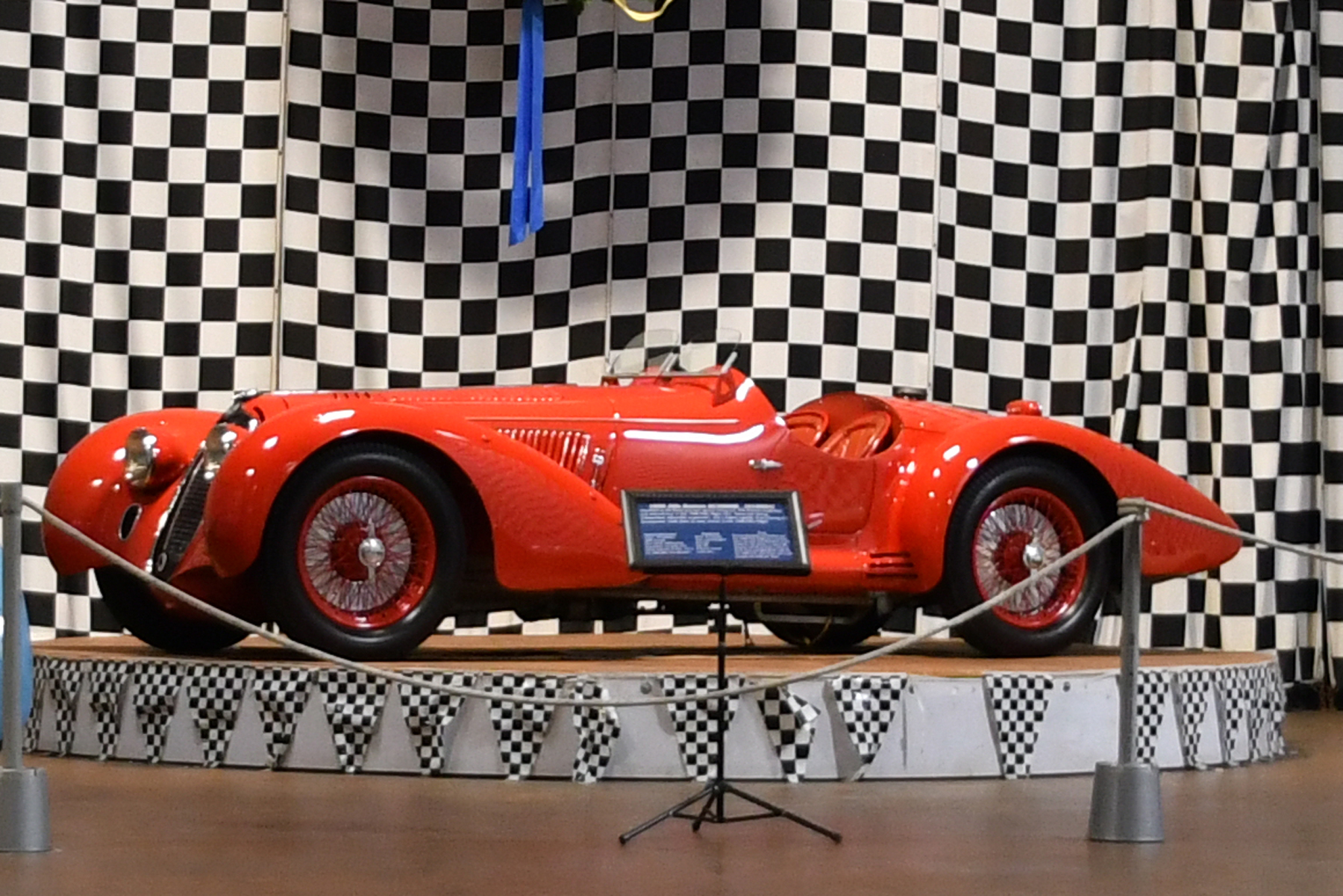
1938 Alfa Romeo 8C2900B

When asked to name his favorite car, Dr. Simeone would not hesitate. The 1938 Alfa Romeo 8C 2900B owned his very enthusiastic heart.

Hurst tells a story on himself. Walking through the old downtown garage that housed the Simeone Collection before the creation of the museum, Hurst remembers walking with someone possibly Ken Gross, if not Gross then someone very knowledgeable. Hurst says, “As we pass the Alfa Romeo 8C2900B sitting in the shadows my walking companion comments that this may be the most valuable car in the world.” Hurst continues saying, “Now considering that the Mercedes-Benz Uhlenhaut Coupe went for $140 million I have no idea what the Alfa would bring.”

Winner of the 1938 Mille Miglia, Alfa Romeo’s 8C2900B towered as a technological and aesthetic wonder for its time. It wrapped the beautiful body by Carrozzeria Touring around an engineering tour-de-force including a 180 horsepower 2.9-liter inline 8-cylinder with double overhead valves, double overhead cams, twin superchargers, independent four-wheel suspension, a transaxle, and suspension dampers that were adjustable from the driver’s seat!

Alfa Romeo entered four 8C2900Bs in the 1938 Mille Miglia. Simeone Museum’s Chassis number 412031 driven by Clemente Biondetti won with a record setting time that lasted for 15 years.

In 1986 Dr. Simeone had his heart set on driving his 8C2900B in the Mille Miglia. Technicians worked feverishly to get the automotive love of his life ready on time. With his beloved classic Alfa prepared to perfection Dr. Simeone proceeded to arrange shipping. Hurst relates the story saying, “Because of its value Fred sought insurance for its transportation. The insurer responded with a breathtakingly steep premium. Fred then asked how the car would be shipped. It will be flown over came the response. Fred asked if it would be a commercial jet. The answer came back, yes. Fred responded by declining the insurance and booking a seat on the same flight saying if it crashes, I won’t care.”

By |2023-01-19T16:41:44+00:00January 19th, 2023|6 Comments

Cars We Love & Who We Are #32

It was a few years back. I had no idea what to expect. But I had to try to get in. The Simeone Museum’s archive possessed a motherlode of historically significant automotive art and literature dating back to the birth of the automobile. Having committed to presenting at the Historic Vehicle Association International Drive Conference, gaining access to the Simeone Archive meant everything. I never anticipated it would mean benefitting from the personal attention, warmth and insights of museum founder Dr. Fred Simeone himself.

In our contemporary age of celebrity worship, vapid personalities who, without merit, condescendingly distance themselves behind digital walls act as if, with apologies to F. Scott Fitzgerald, they are not like the rest of us. In such times, encountering ready accessibility to a man of profound accomplishment challenges accepted convention.

Yet, Dr. Simeone, a gifted and accomplished neurosurgeon of global renown, joyfully embraced engaging the public in a passionate effort to promote and preserve automotive racing history. With Dr. Simeone’s passing in June of 2022, his museum now lives on by embodying his same genius and desire for engaging the public to make a century of meaningful racing history available to all.

The following affords a look at the man behind the amazing living history Dr. Simeone spent his life building for the benefit of future generations and why visiting the Simeone Museum merits a high position on any car guy’s life list.

Now, join Drivin’ News in exploring the soul of the Simeone Museum guided by longtime friend of Dr. Simeone and Simeone Museum Director of Programs Mr. Harry Hurst.

Dr. Fred Simeone’s love, vision and priceless racing legacy   Part 1

Dr. Fred Simeone behind the wheel of a 1933 Alfa Romeo on a Demonstration Day

Harry Hurst’s love of cars and racing dates back to his teenage years spent as track photographer at Sebring in the 1960s. Decades later as an accomplished photographer, author, technical writer and racing mechanic, the inevitability of Hurst meeting Dr. Fred Simeone seemed a given. Indeed, 1995 witnessed their paths cross at a vintage car event in Philadelphia where Hurst and a friend stared at what appeared to be a breathtaking Aston Martin DBR1. Both questioned how it could possibly be an original here in Philadelphia.

Harry Hurst

Within earshot of their conversation, famous photographer and friend of Simeone, Michael Furman confirmed its authenticity as the Nurburgring race winning 1958 DBR1 and that it belonged to Simeone. The twains were about to meet. Like Furman, Hurst would become a dedicated supporter of Simeone’s vision for an automotive racing museum founded on the Spirit of Competition. Today, Hurst who conceived of the museum’s unique “Demo Days” focuses his 35-years of technical and marketing expertise in support of Simeone’s vision of creating the world’s premier automobile racing museum.

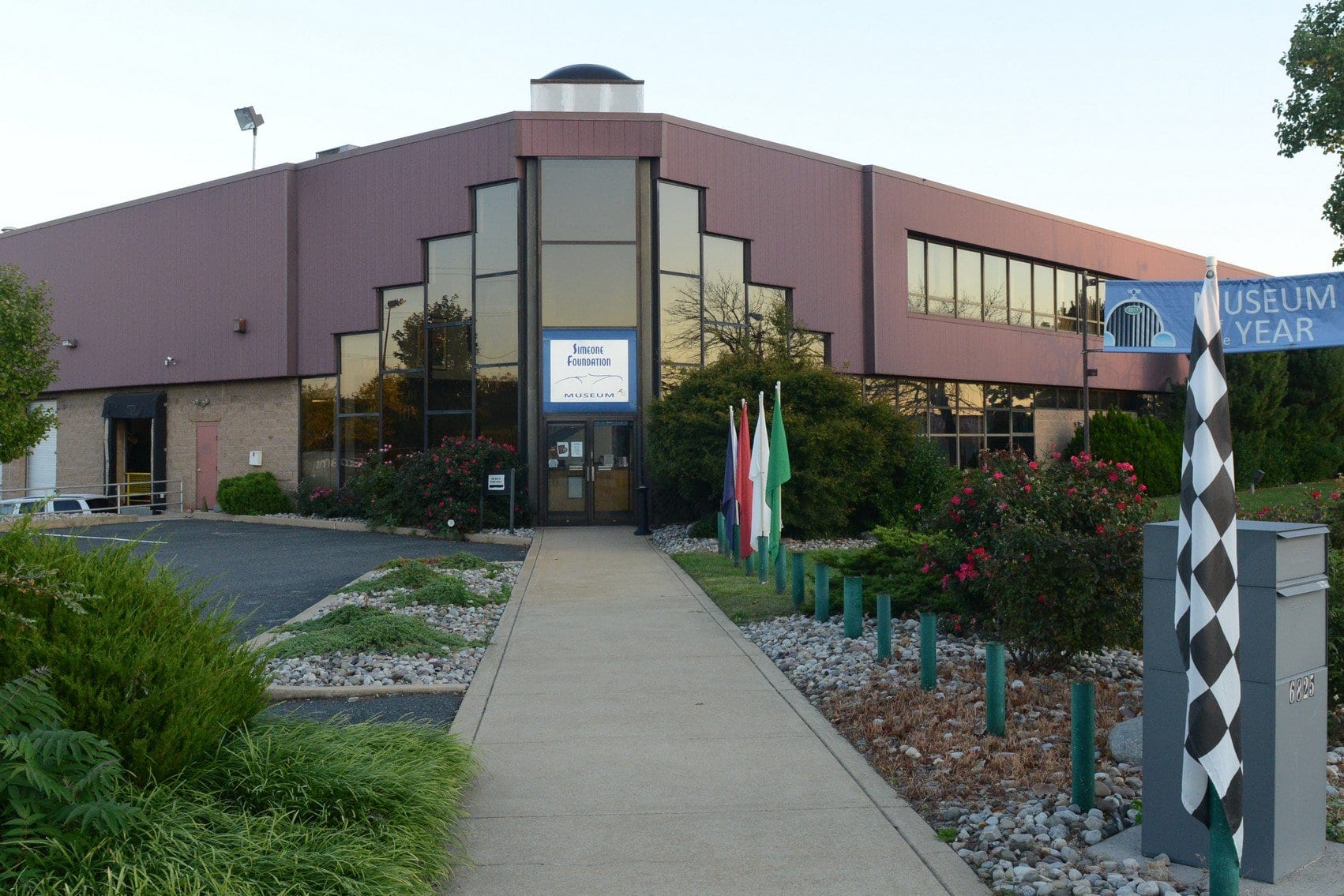
Starting as a dimly lit parking garage in Philadelphia the Simeone Museum came into its own with a freshly constructed and dedicated space in 2008. Since then it has been ranked annually as either the number 1 or number 2 automotive collection in the world with Miles Collier’s Revs Institute occupying the other slot.

Simeone grew up in the decidedly blue-collar neighborhood of Kensington in Philadelphia, where his father, a family doctor, served the surrounding neighborhood. Though not wealthy, his father had a great love for cars, a love he passed on to his son. To this day some of his father’s cars remain in the Simeone collection. Fired by his acquired love for cars, Simeone at an early age began collecting sales literature. As a teenager he would go to Hershey to build onto a budding collection that in the coming century would blossom into one of the finest and most comprehensive automotive literature and art collections in the world.

1958 Aston Martin DBR1

In those early years Simeone’s passion for collecting literature would bring him to the Philadelphia Free Public Library with its extensive collection of automotive literature. His continued presence moved the library staff to present Fred with a card that said, “This is to introduce Frederick A. Simeone. He is our representative, please extend any courtesy to him to support his acquisition of automotive literature.”  His passion drove him to do everything he could to ensure that the history of the automobile in general and extraordinary automobiles in particular would be properly told.

Simeone diligently pursued his automotive preservation goals while at the same time attending Temple Medical School, then residences at Harvard University and The Mayo Clinic before returning to Philadelphia to serve for 25 years as Chair of the Department of Neurology at the University of Pennsylvania’s Pennsylvania Hospital. As one of the world’s foremost neurosurgeons he was also considered the busiest. During his tenure his peers voted him the busiest physician in the United States. Hurst with enormous admiration says, “He would perform up to eight or ten surgical procedures every day that he was on. And realize that we are talking spinal and brain surgery.” At the same time Simeone co-authored “The Spine” the seminal text on spinal surgery that continues to be used to train new surgeons today. Hurst says, “It’s incredible to consider what he achieved in promoting the preservation of automotive history in light of his accomplishments as a neurosurgeon.” Remarkable indeed and achieved through a clearly held vision.

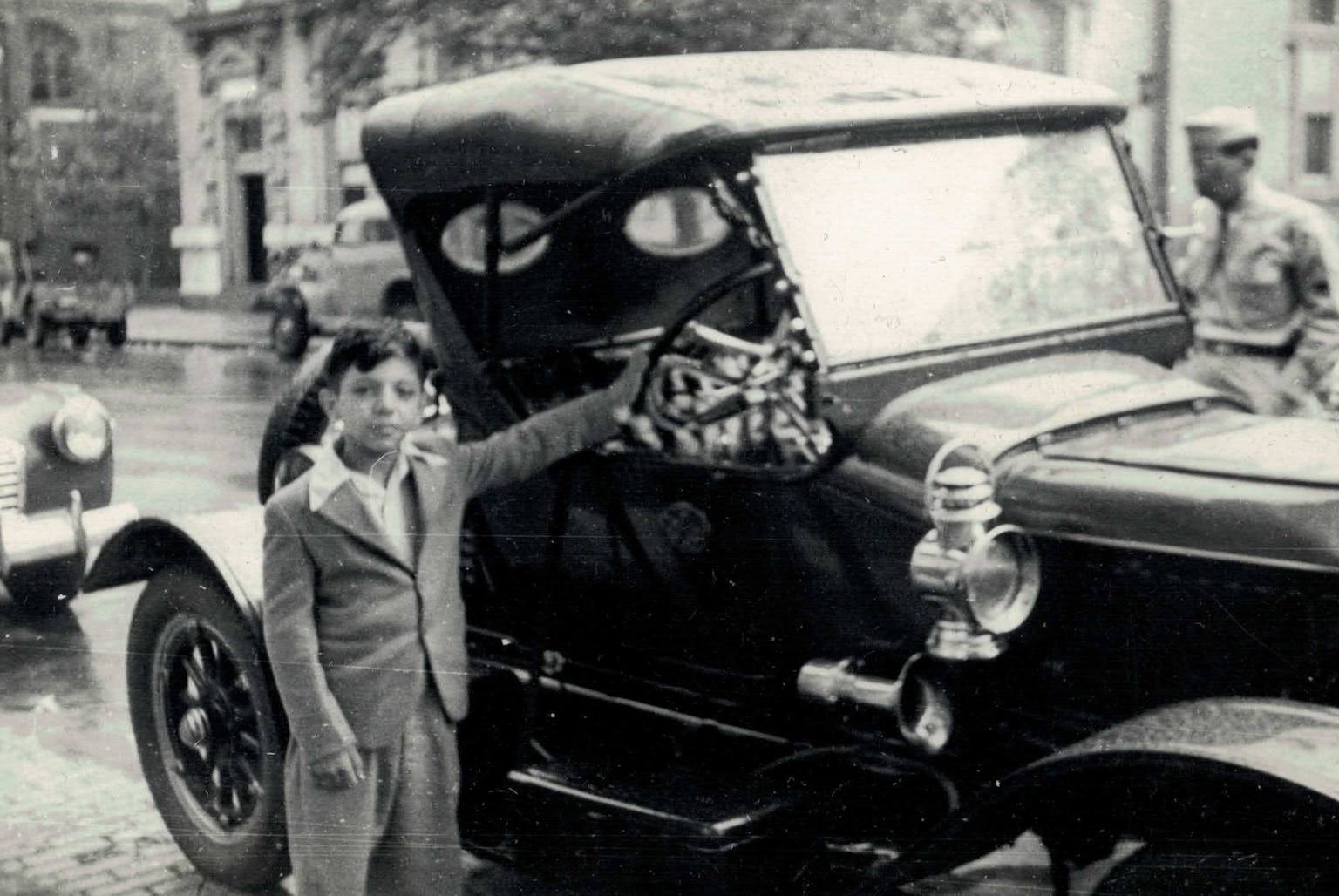
Fred Simeone as a boy

In describing Simeone’s vision Hurst says, “Fred envisioned not just the collection and preservation of these significant cars. It was to display these cars in a manner that interpreted their meaning. It’s the only automotive museum I’ve ever seen where the cars on display are used to emphasize the importance of the spirit of competition. How competition is used to improve the cars that you and I now drive.” Hurst points to the disc brakes that set Jaguar’s race cars above and apart from the competition in the 1950s.

Simeone believed strongly in the value of competition. Hurst says, “The belief that there can be no progress without competition stood as a real driving force with Fred. He especially felt it important to communicate that fact, especially to young kids. He loved talking with young kids.”

Of equal importance as a defining principle of the collection, preservation ranked way above restoration in the mind and vision of Simeone. Hurst says, “As you view most cars on display here, the thing that immediately strikes you is, oh my God, why don’t they take that apart and repaint it?” Hurst continues, “The concept of preservation? That is one of the most important legacies of Fred’s vision.”

When Simeone started collecting back in the early 1970s, nobody cared about old race cars. Vintage racing did not yet exist, so without anyplace to race obsolete race cars their value quickly approached nil. Hurst says, “Fred’s passion for racing drove him to start collecting these “worthless” old pieces of history.” Back then anybody interested in possessing such old cars would acquire one and immediately dismantle, rebuild and refinish it to sparkling “new.” Simeone, with collecting tastes that extended beyond old cars, also had an interest in other vintage collectibles including antique furniture. With antique furniture, anything that alters the original finish seriously degrades its value. Simeone applied that same aesthetic to his managing his car collection.

Dr. Simeone’s 300SL

The worth of an authentic vehicle as a valuable historic document is evidenced by the 1955 300SL in the Simeone Collection. Originally purchased by Simeone’s father Dr. Anthony Simeone in the 1950s (for somewhere around $7,000 to $8,000). It was his father’s pride and joy. Today that 300SL stands fundamentally just as it rolled out of the showroom. With both paint and interior original. Hurst says, “It is one hundred percent original to the extent that I just arranged for a gentleman to fly up to see the car to confirm the originality of his 1955 300SL. That man spent all day referencing the Simeone 300SL to determine his 300SL’s authenticity.” In today’s collector car world, the Simeone 300SL serves as the standard for determining the accuracy of paint finish, original upholstery stitching and so on. Hurst says, “So much can be lost if you replace something. If someone says I’m just replacing the carpeting…, NO! The carpeting may be a certain type. The backing, the stitching, the edging, all of that is only original once and sometimes it’s very hard to replicate.  Hurst goes on to say, “Fred would always say, something can only be original once.”

That belief now serves as the guiding principle for the presentation of his collection. With that said, Hurst says, “We do make sure that mechanically all cars are in excellent condition. Only, where absolutely necessary would we do any repainting or replacement.” Hurst went on to say, “That’s also why we don’t vintage race any of the cars, though all of the cars in the collection do run. We take them out twice a month for demonstrations on the 3-acre back lot beside the museum where we drive them around so visitors can see, hear, smell what these cars were like. However, mindful of their frailty, we do not push them to racing speeds. We run them. We do not abuse them.”

Simeone chose to direct his focus on acquiring racing cars that typically possessed headlights and fenders. Such cars could conceivably be driven on the road and, thus, entered in LeMans, Sebring and Daytona endurance races up to a certain point in time. Later years found this not necessarily the case. And indeed the period of cars represented in the museum skews to the early and mid-20th century. Hurst says, “That is our real concentration. Fred did not favor Formula 1 cars as he felt they had no relationship to production vehicles. Fred clearly felt that for a car to be worthy for inclusion in his collection he preferred production-based vehicles. That’s where Fred’s interest rested. He focused on how competition improved the breed and how that improved the cars that the public would drive.”

An important lesson learned by Simeone in creating his legacy came by way of his association with another famous car collector, Bill Harrah, legendary owner of Harrah’s Casino in Las Vegas. The lesson arrived by way of Harrah’s death in 1978 and the realization that Harrah had made no plans in his will for his collection. As a result, Holiday Inn took over the Harrah assets and started selling off a lot of the cars. Fred actually bought a Stutz, a Squire and the Ford GT40 Mark IV, from Holiday Inn.

With Harrah’s lesson learned, plans were well in place when time arrived for Simeone’s Museum dreams to come to fruition. By 2008 and the museum’s opening Simeone had donated his entire collection to the Simeone Automotive Foundation. He had taken the lessons of Harrah’s passing to heart and recognized the problems museums experience when the founder dies. Simeone had thoughtfully acted to ensure a stabile future where in his absence his legacy would be supported by a strong financial foundation and a dedicated and knowledgeable staff.

The story of what is widely considered the world’s preeminent automobile racing museum began with the passing, in 1972, of Dr. Anthony Simeone a family doctor in the blue-collar Kensington neighborhood of Philadelphia. Seeding his brilliant son Frederick’s future with a bequest of $8,000, four old cars and an inherited passion for automobiles, the father set the stage for his son’s brilliant medical career and a realized passion to preserve the priceless history of automobile racing in the 20th century.


A future Drivin’ News will feature Part 2, Fascinating backstories of Simeone Museum’s Mona Lisa cars

By |2023-01-05T13:21:29+00:00January 5th, 2023|4 Comments

Conversations With People We Value #43

A recent crisp and bright December day delivered conditions that brought the big cat heart of my XK120 Jaguar to full roar. With the Jaguar feasting on the cool air and eager to run, Elaine and I had set out to visit an amazing and still thriving remnant of American Revolutionary War history, a three-century old Public House and America’s oldest tavern, “The Old 76 House.” I found it amusingly ironic to be behind the wheel of a very much alive piece of later day British automotive history. Once again the British were coming. My journey would travel routes once traversed by General George Washington at a pivotal time in American history when the battle for independence hung uneasily in the balance.

Now, join Elaine and me as we break bread with ghosts of the American Revolution.

Driving to history, Visiting America’s oldest tavern and the man who saved it

During the later colonial period, taverns served as the powerful pumping heart of Revolutionary fervor leading up to and during America’s War of Independence. Two of the most famous of these taverns, Fraunces Tavern in New York City and The Old 76 House in Tappan, New York, remain in operation today. Both have been operated by members of the Norden family. For a number of years Robert Norden oversaw Fraunces Tavern and for the past 37-years his son, Robb has owned and operated The Old 76 House.

The significance of the tavern or “public house” in colonial American history evidences itself in the central role it played in community formation. For a land patent (think of today’s incorporation) to be granted for the formation of a new town, e.g. Tappan, New York in 1686, the town actually had to have pre-existed as a town for one generation. The existence of a public house stood as a requisite feature central to a town’s formation, much like the role a grain of sand plays in the formation of a pearl. Colonial Tappan like its Mid-Hudson Valley brethren of communities featured a predominately Dutch and German population. Decidedly anti-British, they rejected the idea of using the British term public house or pub in their new community. Tavern instead would be their choice. And across America that tradition lives on today. In 1686 the site that would become the Old 76 House three centuries later came into existence as part of the newly created town of Tappan. By the time of the American Revolution the tavern bore the name of its, then, keeper, Casparus Mabie (Pronounced like the word “maybe”). Mabie’s tavern lived at the center of the gathering storm that would engulf the 13 colonies and ultimately change the world. Here, George Washington, Lafayette, Von Steuben, Lord Stirling, Anthony Wayne, Generals Green, Knox, Talmadge, Grover, and Alexander Hamilton, who actually lived in a room upstairs, ate drank and charted a future that would see the birth of the United States of America.

On July 4th 1774, two years to the day before the signing of the Declaration of Independence, the New York Committee met at the site of the Old ’76 House and adopted the Orangetown Resolutions. With language foretelling what would come two-years later, voices emanated from Mabie’s Tavern that would join with others from across the colonies in a united call for relief from the oppression imposed by the British Parliament’s passage of the Intolerable Acts.

Located a short walk from the historic DeWint House that served as General George Washington’s headquarters four-times during the Revolution, Mabie’s tavern sat front and center to witness  events that would change the world.

With the war in full stride came an event that would indelibly mark Mabie’s Tavern on history’s ledger. In September of 1780 Colonial soldiers captured British Major John Andre who served as head of the British Secret Service in America during the Revolutionary War. After meeting with, soon to be reviled Colonial General Benedict Arnold, Major Andre had with him documents detailing General Arnold’s plan to surrender West Point to the British. Forced by failed efforts to return by boat to British controlled territory, Andre had to make his way through Colonial held territory by land. He did not make it past Tarrytown, NY.

The bar at Old 76 House

General Washington’s availability at Mabie’s Tavern, assured that Major Andre would be tried as a spy in Tappan, NY. There Andre could be confined at Mabie’s during his trial. The door to his holding cell remains in place at the Old 76 House to this day. Despite the high regard in which Andre was held by many Colonial officers including Alexander Hamilton and Marquis de Lafayette, Andre, being found guilty as a spy, faced the gallows in Tappan on October 2, 1780 before a crowd estimated at 2,000.

Hearing of Andre’s capture, Benedict Arnold deserted West Point and, reaching the British warship, Vulture, fled for the protection of the British. Given a Brigadier General’s commission, Arnold would lead British troops against Colonial forces in Virginia. Retiring to England and infamy, Arnold avoided any punishment for his treachery. He died in 1801.

Letter written by Benedict Arnold found on Major John Andre

Fast forwarding to 2022, Drivin’ News has come to speak with Robb Norden the man who researched, restored and, now, owns and operates The Old 76 House. Warm, welcoming, exuberantly gracious with a ready laugh, Norden offers a high energy mix of menu recommendations leavened with a docent’s feel for sharing the stories this grand old building has to tell.

Though educated as an architect, life as a chef seemed a hard wired given for Robb Norden since early childhood. His grooming in the fine art of culinary excellence started at a young age. Robb says, “I never experienced a Thanksgiving sitting down. As a five-year old my family would put me in some crazy little costume and I would walk around the Fraunces Tavern dining room with apple juice refreshing everybody’s glass.” Not that he did not fight his family’s apparent predetermination of his future as a restaurateur. Despite the grooming by a father who operated Fraunces Tavern, Robb went back to college to be an architect. His father, believing that his son would not follow in the father’s footsteps cut Robb off. With a shrug of resignation Robb says, “Since I needed to support myself through school, I fell back on what I knew. Since the age of eleven Robb had been working in kitchens with a broad spectrum of culinary professionals. Conveying deep respect, Robb says, “The last kitchen in which I trained was the Union Square Café where I worked with Ali Barker a culinary pioneer and a master chef extraordinaire.”

Talking with Robb one finds his interests range far and wide.  His appreciation for preserving and enjoying items with a history extend well beyond the Old 76 House. A pilot, he enjoys flying his restored 1962 Piper PA-28. As well, as a hobby he updates vintage airplanes with modern avionics. A car enthusiast, he finds his pleasure in bringing old Porsche 911s and BMW 2002tiis back to factory spec. While also a diver, recreational chef and collector of artifacts associated with his interests nothing surpasses his passion for the living museum he brings to life each day when he turns on the lights of the Old 76 House.

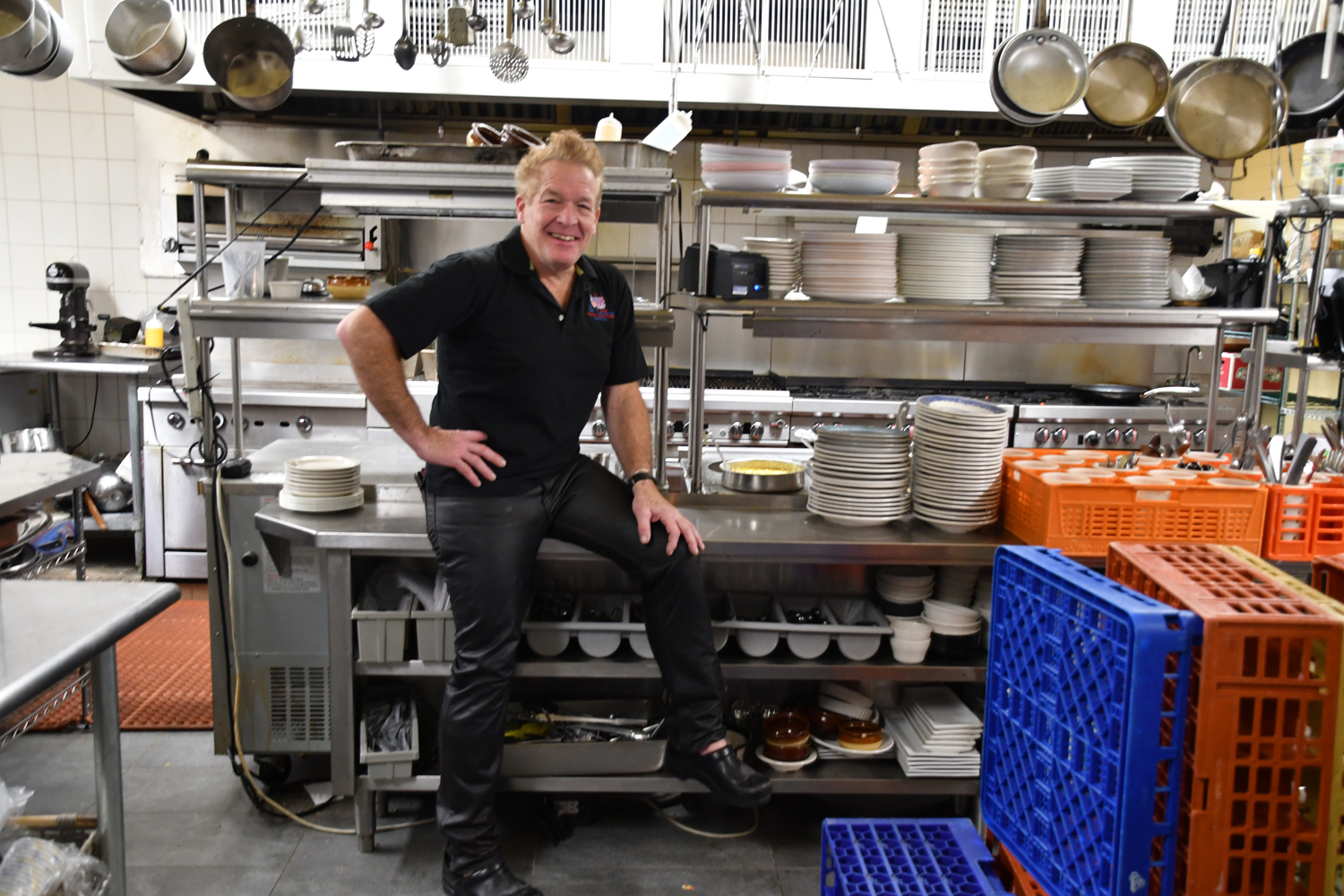
Robb Norden at home in the Old 76 House kitchen

What triggered this perfect fusion of talent and passion? Robb explains saying, “In my 20s I worked as the preservationist overseeing the restoration. This took more than a year. During that time the owner’s involved me in discussions about the character of the dining experience they had in mind.” Robb responded by adamantly protesting their vision. Robb says, “Their vision was completely wrong.” He told them that they needed to embrace the fact that this is a tavern. The prior owners did not see it that way. He says, “They wanted to make it a very high-end restaurant. They wanted a poissonnier, saucier, two pastry chefs, their plan had more people in the kitchen than they would have had in the dining room. They would have been billing meals at $100 per person. In the 1980s it would have been as well received as billing a thousand dollars a person today.”

Not long after the discussion, Robb received a call. He had won over the owners with the wisdom of his vision. They conceded the site perfectly suited housing a restaurant that celebrated its rough hewn historic charm with a refined dining experience free of ostentation but oh so rich in character. That said, they had no interest in implementing it themselves. Robb says, “They went on to say that I had invested so much of my life into this building and my passion for it was so evident that they would sell me everything for $1…and…and for that $1 I would also be buying their restaurant corporation and their real estate corporation, both of which had crazy debt.” In considering this “opportunity” Robb explains his reasoning saying, “I was in my 20s. At this time in the 1980s a 20-year old couldn’t get a loan for five bucks. So now I would own the business. I would know how to run it better than they did. I would pay it all off.” Now, 37 years later as 2023 appears on the horizon, Robb acknowledges that he is still paying it off. While Bob clearly exhibits qualities associated with the classic Renaissance man, he acknowledges that while he has great acumen for certain things he possesses no acumen for others and he says, “Making money clearly resides in the no acumen column.”

His love affair with this proud old colonial lady from a distant past runs deep and strong. A few years back a physical exam revealed tumors that demanded immediate attention and removal. One of the attending physicians projected that Robb might have less than two years to live. With a grateful nod of the head, Robb offers a tight lipped smile and says, “It has been more than two years now. I feel fine. I feel free. But all that being said, it forces you to re-evaluate.” Inspired by that self directed  challenge Robb faced the question “What have I done with my entire life?”

Party in the house, The Old 76 House with Mark Sganga ensemble (Jen Heaney , Mark Sganga, Larry Eagle (obscured), Freddie Pastore, Candyce Giaquinto)

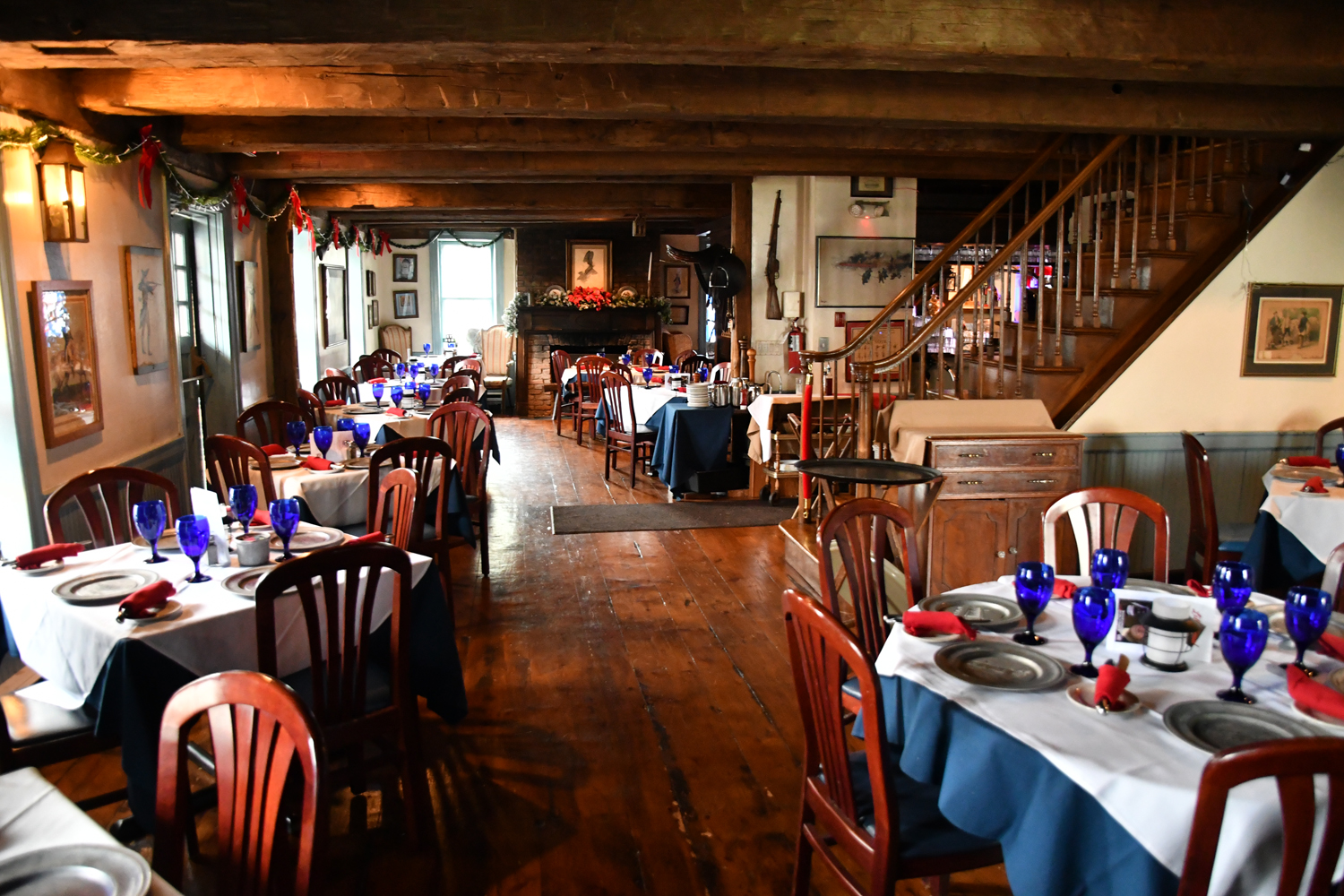
Robb pauses and notes that he has been here, in the room where we both now stand, for 37 years. He says, “I honestly believe I could have done great things in other areas.” He continues saying, “Did I waste this time?” He slowly looks about capturing and savoring all he sees, he leaves a silence hanging in the air and quietly says, “No.” Again pausing he then continues, “This is not a business. For me it is almost like a living breathing fine art project, like the David or the Sistine Chapel. I feel it is a great accomplishment because I don’t serve food here. I serve an experience and try and make those who are receptive to the fact that they in a building that has grown with our country and is still doing that self same thing. Equally impressive nothing here is artificial. There’s nothing fake. What we have as ornaments for lack of a better word are real, from start to finish, there’s no false cheesy prints. The armaments hanging around are real and were used in battle. When the floor deteriorates in a certain area, I don’t replace it with something that looks fake. I replace it with something that is obviously of fine quality. Now these floors are pine. And if I have to repair it, I use a fine piece of Oak so that people can say, well, that’s the older stuff. And that’s the repair, and the repair should be evident because this is the true place that remains. If you go to Williamsburg, which is great. It’s super for propagating that kind of American History idea. However, it’s Disneyland. Here is where everybody actually sat where they actually caused, so many important things to happen. And these are the actual beams and building and so on. And it’s been not only preserved but protected for years to come.”

Old 76 House, good spirits fill the room

In honest reflection Robb explains to people that his ownership of the Old 76 House is not so much a “living” as it is a life style. He agrees with the old adage that “you do not own a restaurant, the restaurant owns you. Clearly Robb loves his Old 76 House and he shares that affection with the customers he cares for through the camaraderie he promotes. Enjoying an eclectic taste in music, Robb promotes a musician friendly climate with music most every night that attracts a level of talent rarely encountered outside of premium music venues. Wednesday nights belong to an ensemble cast of respected musicians and session players who have played with the best and rank among the best and invite friends who are the best.

Some say the Old 76 House harbors ghosts, if so, then when the band starts, good spirits fill the room.


Drivin’ News will be taking a break for the holidays. 

Merry Christmas and Happy New Year.

May 2023 bring you joy and abundance.

By |2022-12-08T14:50:33+00:00December 8th, 2022|7 Comments

Conversations With People We Value #42

A recent Drivin’ News story, “When the collection outlives the collector,” resonated with a broad spectrum of readers. Its theme focused on the challenges facing adult sisters charged with disposing of their recently deceased father’s collection of distressed classic Cadillac cars and piles of associated parts.

Much of the feedback focused on the need for a collector to organize and preferably simplify the contents of a collection in advance of the time when it gets passed on.

Inspired by the research of Drivin’ News friend and “avid car guy,” Rocco Scotellaro, Drivin’ News will explore channels available for collectors to dispose of their collection’s contents. The word “dispose” may seem a rude assessment in contrast to the more positive “sell.” Unfortunately, while most classic car pieces and parts have a value, the market for some items associated with classic cars especially pre-war cars may be melting out of the population. For the sake of one’s progeny, information about purpose and worth can be invaluable.

With that said, Drivin’ News explores managing down a collection.

How to manage down a classic car collection.

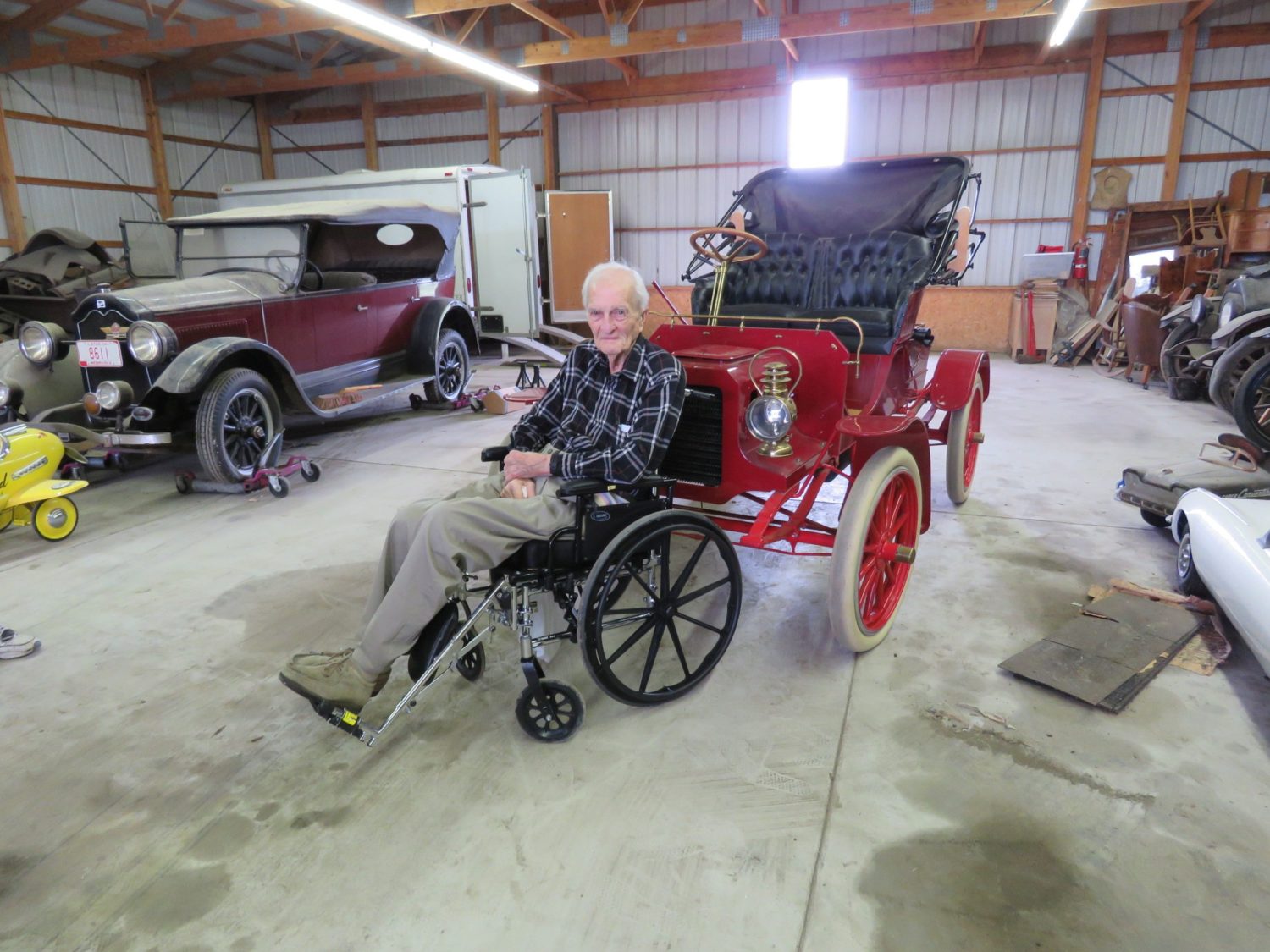
Mr. Doan and his collection being auctioned by VanDerBrink Auctions

Disposal of classic car parts, pieces and print materials presents a daunting task even for the collector who knows what his collection contains. Thus, avenues for clearing out parts and pieces will be the focus of this article. For a discussion of the sales channels for complete and running vehicles, readers can refer to the October 14, 2021 Drivin’ News story, Comparing classic car sales platforms.”

The plight of the four LaFronz sisters featured in the Cadillac story hit home for both the younger readers who might be on the receiving end of a collection and the not so young audience members (You are not going to catch me calling my friends old) who find themselves staring at piles of vintage car parts accrued, often times, over decades. In hearing the sisters’ story, younger potential collection recipients can envision the painful loss of a parent complicated by the daunting task of disposing of items for which they have neither an interest in keeping nor a knowledge of their value. For older collectors, with most residing in an age bracket frequented by grandparents, the task of planning for the disposal of their collection presents the potential for an equally unpleasant experience. Issues relating to one’s mortality offer little in the way of pleasant reflection.

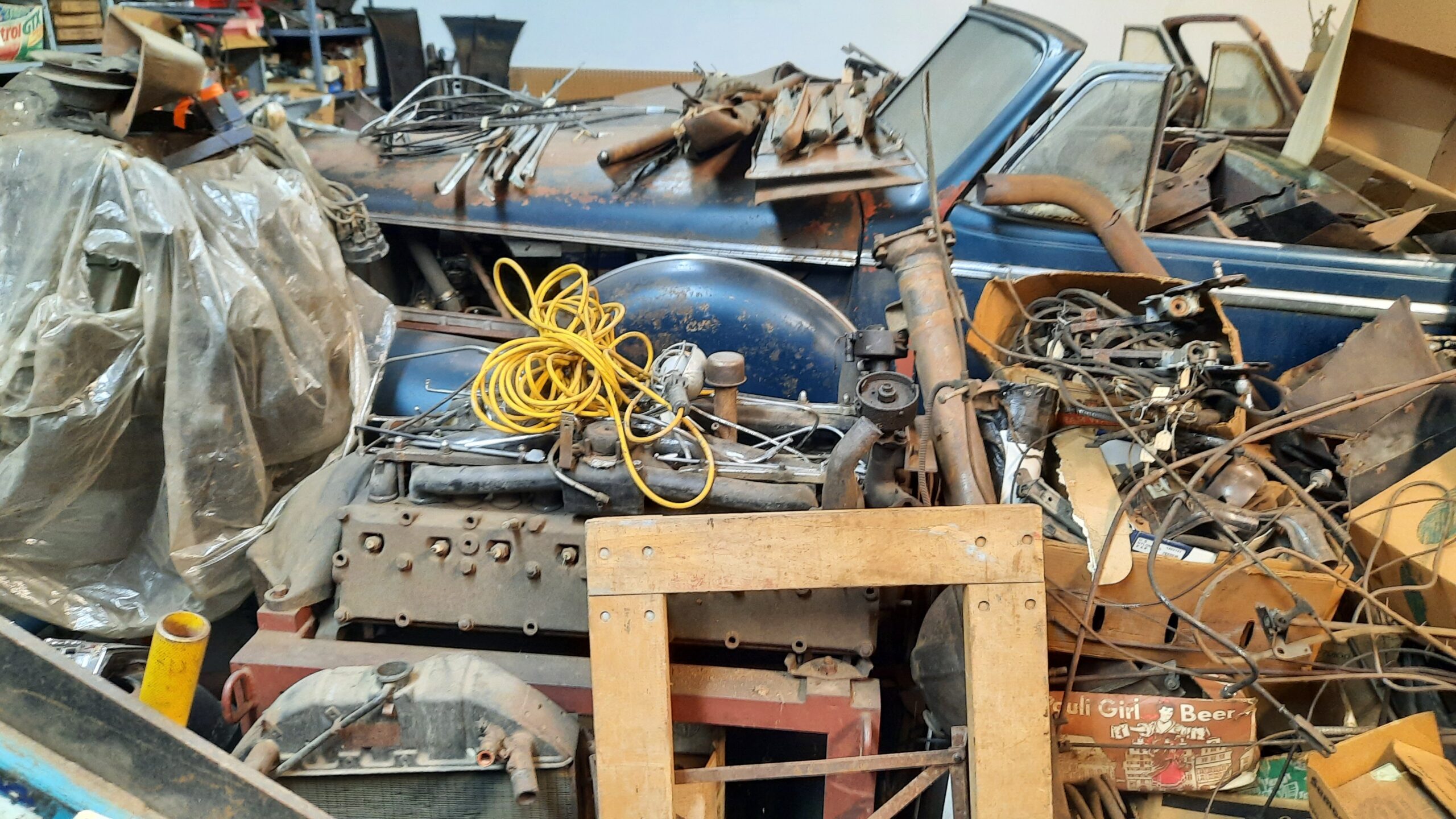
LaFronz sisters’ Cadillac collection chaos

Today, many longtime collectors with a clear eye on reality, some grudgingly and others with a quiet nod to inevitability, find themselves coming around to facing the responsibility that rests alone on their shoulders to do right by their collection and those who will assume the responsibility for it. Whether being kept in the family or organized for liquidation, they know they need to prepare their collection for the transition.

Rocco Scotellaro has been a life-long car enthusiast and collector. A professional engineer, Rocco had been my student during my brief stint as a middle school science teacher in the time of the first Nixon administration. We reconnected 50 years later when he registered for an adult school class I presently teach on collectible automobiles. With a special place in his heart for classic Pontiacs and C2 Corvettes, Rocco has accrued a mountain of parts during his decades of restoration activities. In a concerted effort to keep his inventory under control and promote marital harmony, he has developed significant expertise in the avenues for turning excess inventory into cash while reducing that mountain to a mole hill.

To equip collectors with effective tools for disposing of parts and pieces no longer needed, Drivin’ News has combined the work of Rocco and the widely respected Drivin’ News research department to offer an overview of proven avenues to reduce the clutter and make a few bucks.

Seek help!

SPECIAL NOTE: If you have a space filled with an eclectic jumble of random car parts that you passionately defend against any suggestion to reduce the chaos, you have crossed the line and are, indeed, a hoarder. Seek help.

Before charting a path for the sale of items in a collection, it is paramount to be clear on the scope of what is being sold. A manifest difference exists between clearing out some NOS and used parts for which you no longer have a need versus a one-time disposal of a barn chock-a-block with bodies, chassis and shelves of associated parts. Answers to the “How to” question can range from creating a small side business that serves as a pleasant distraction and makes a few bucks all the way up to contracting a professional auction house with the market savvy and resources to move everything at one time. The spectrum of solutions existing between those poles demands an honest assessment of your knowledge, your time and your objectives.

As an example, the adult sisters in the distressed Cadillacs story face real choices. At a disadvantage with their lack of knowledge as to the value of the collection, they could contract with a respected auction house that deals with the disposition of such lots. The benefit would be that the responsibility for resolution of the matter would no longer be the sisters’ day to day concern. However, the cost for this convenience could be a significant percentage of the money raised at auction. This also assumes that a reputable auction house would take on the task, meaning it has assessed that money could be made. For those predisposed to such an arrangement the frightening possibility exists that a reputable auction house would determine that auctioning the lot was not worth the effort.

A second alternative exists where the sisters seek venues where they can advertise the total collection at a set price or ”Best Offer.”

Lastly for consideration here calls for the sisters to assume the responsibility of parting out the collection through venues where individual parts or batches of parts can be offered for sale. The phrase “daunting challenge” was specifically created to be applied in situations like this.

As we review different avenues for the disposition of parts we will return, from time to time, to assess its applicability in the case of the sisters’ inherited distressed Cadillac collection.

All avenues for parts sales have a few basics in common. Every one involves displaying the item, agreement on a deal, payment for the purchase and transfer from seller to buyer.

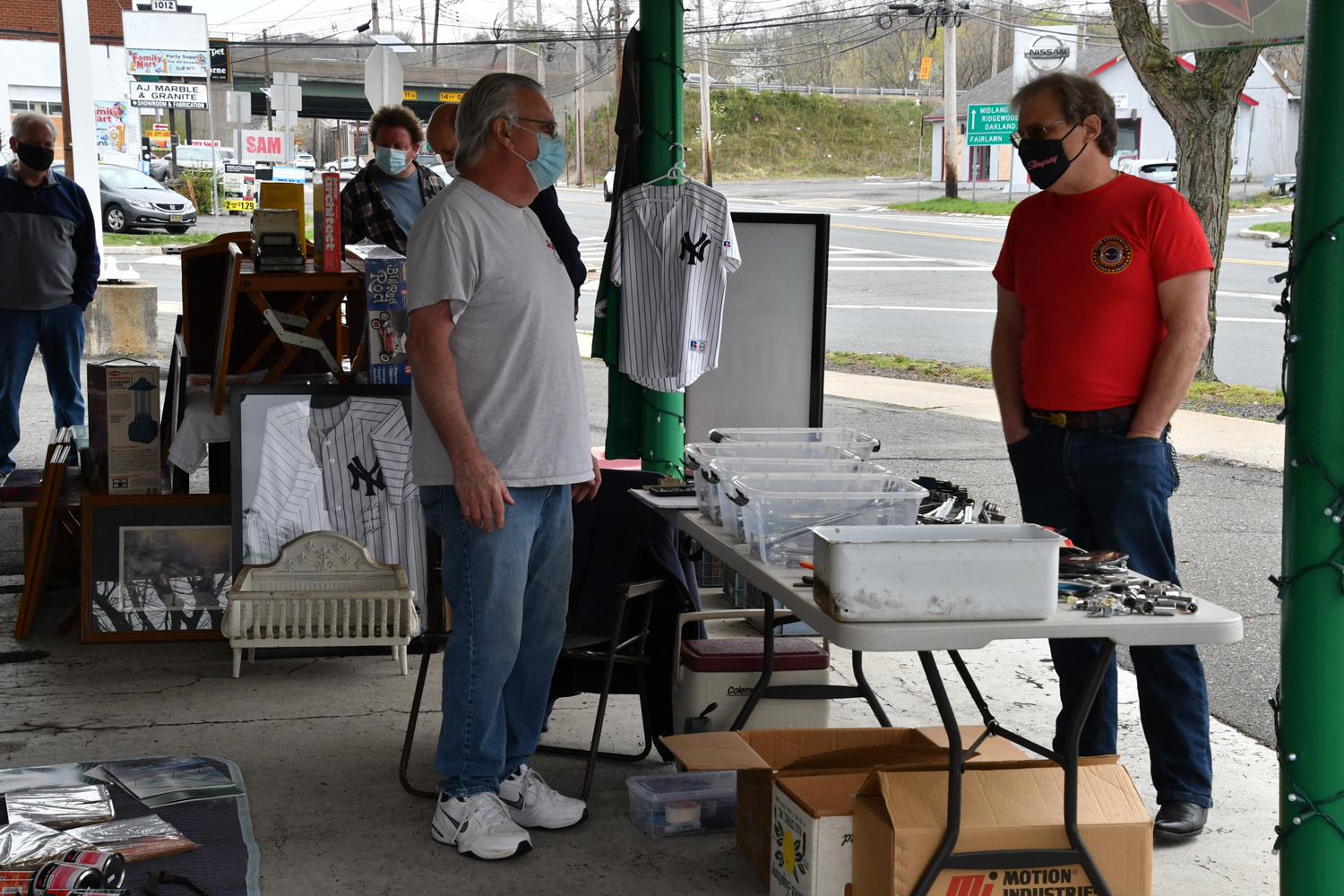
Rocco Scotellaro doing business even in the time of Covid

Display – Description of an item can be in person or through a written ad and/or photography or video.

Confirming a deal can either be in person or through electronic communications.

Payment can be in the form of cash, check, PayPal, or apps such as Venmo or Zelle. As explained in Forbes Advisor, Zelle (rhymes with sell) and Venmo rank as two of the most popular P2P (person-to-person) mobile apps providing digital payment services. Zelle allows you to send and receive money instantly between U.S. bank accounts. It partners with over 10,000 financial institutions with over 1.8 billion made between its inception in 2017 and 2021. It enables you to send money quickly from your bank account to anybody you pick. In a matter of minutes.

Venmo, unlike Zelle functions as a digital wallet, allowing you to accrue money in your Venmo account to pay for future purchases. Money transferred through Venmo arrives in your account instantly. The recipient can then keep the funds in their Venmo account or transfer the money to a linked bank account. Money is not available instantly unless you pay a fee.

PayPal offers a much more comprehensive menu of services with  users in over 200 countries. Its broad international reach is accompanied by a complex fee structure. Unlike PayPal, Zelle and Venmo only serve users in the U.S.

Transfer either is through an in-person exchange or by shipping. This involves packing and selecting a shipper.

Packing – Rule 1, if you are shipping an item pack it well. The last thing you want is a shipment damaged. Returns and insurance are a real hassle. Double wall boxes are the best. Big stuff can be a challenge. Packaging large body panels and engine blocks are best not attempted by the inexperienced.

Shipping – Size more than weight matters. A large light door panel will cost more to ship than a small heavy engine component. Small items are well served by flat rate boxes available at the post office. UPS and FedEx offer a menu of delivery schedules and prices. If you ship enough you can get a price break. Shipping without a doubt adds a level of complexity avoided with a simple hand-off.

Garage SalesBasically, a garage sale requires writing an ad that can be placed on Craigslist, a local garage sale website or a local newspaper. If your garage sale will be primarily car parts and pieces it is important that you reach out everywhere to alert your intended buyers. A properly placed clear ad promoting “Car Stuff” for sale will draw car guys like flies to, well to whatever flies are drawn to.

PROS

  • Easy
  • Free
  • Buyers interact with item before sale
  • All cash transactions
  • Items sold as is,
  • No taxes
  • No shipping

CONS

  • Days of preparation to organize, price and label items. Write the ad Make and post signs.
  • Need to sell at lower prices (Be prepared to negotiate because everyone wants a deal)
  • Weather dependent
  • Limited customer base
  • Thieves cruise garage sales to distract the seller and take things. It is best to have a few helping you. Don’t be bullied and be alert to distractions and confusion.

Garage sales are hard work. They can also be fun and profitable. In the following example Rocco describing one of his garage sales the past summer (keep in mind that Rocco is good at this). Rocco says, “I put an ad on Craigslist for “tools” in the automotive section. I had good traffic maybe 50 people over the two days. I had been collecting carpenter planes. I had maybe 15 of them displayed. The first guy there asked how much for all of them. He bought them all. First sale, $350.” In two days I sold two thousand dollars worth of stuff. It is worth the effort.”

This is not to say that this happens every time. Sometimes it can be a dud. That is life. But, most often if you advertise properly, have good stuff and are willing to deal, sales will happen.

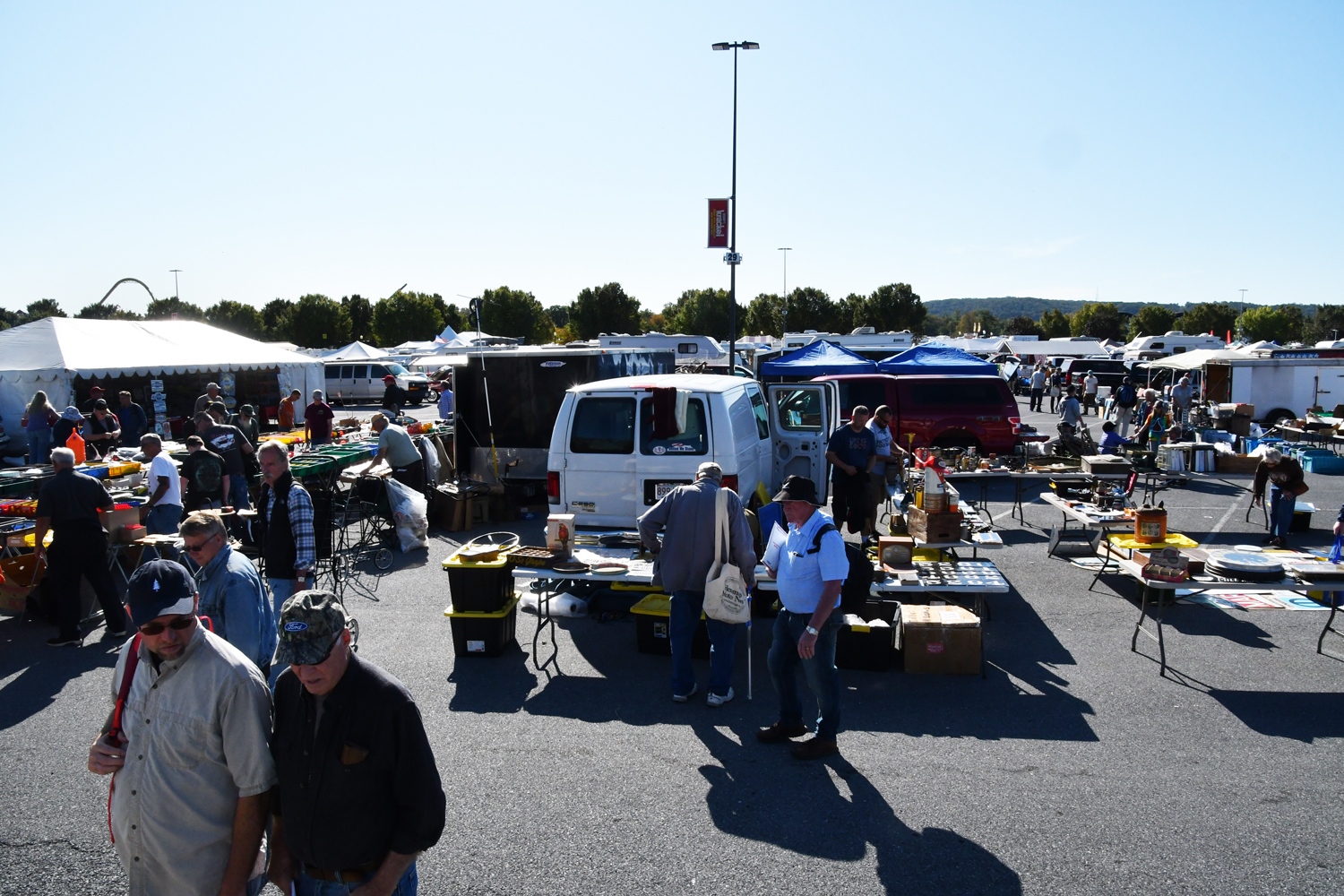
Swap Meets/ Car Shows/ Flea Markets

From the local car show to the sprawling acres of Hershey, Carlisle, Charlotte Motor Speedway and the like, the basics of a swap meet remains the same only the size of the event differs.

Hershey Swap meet

Basically a swap meet is like a big flat area filled with a whole bunch of garage sales. That said swap meet participants are certainly a notch above a garage sale in the organization of their operation. Usually for swap meet participants, it is not their first rodeo. That said one can usually expect a large friendly gathering of like minded car enthusiasts having a good time and eager to buy something. Offerings at swap meets extend across the spectrum of car enthusiast needs. Small swap meets have some professional participants mixed in with folks that bring stuff that would be found at a garage or estate sale.

PROS

  • A far more targeted audience than a garage sale
  • Buyers interact with item before sale
  • Cash sales
  • Higher prices
  • No shipping
  • Secure environment

CONS

  • Must pay for Vendor space
  • Must pack and transport stuff to location
  • Cost of travel/ lodging (if overnight)

Craigslist/ Facebook Market Place

Kind of the wild west of online shopping. Real bargains and real misinformation. Like garage sales everyone has a bargain in mind. That said, I have sold parts and cars on Craigslist. Think of these sites as having both wheat and chaff. It remains up to the buyer to sift through it.

Craigslist also is rife with scam artists. One particular one has a very motivated caller who desperately wants to buy whatever you are selling. Unfortunately, the caller will be out of the country so he will send over a friend with a certified check to pick up the item. A deal sweetener of say $100 or, if it is a large purchase, $500 will be added to compensate you for the inconvenience. If the seller goes along, the item is picked up in exchange for the certified check. Only two weeks or so later does the certified check prove to be worthless. Always be wary with Craigslist.

An increasingly major concern with Craigslist is personal security. As reported by NBC News, a robbery arranged on Craigslist is the perfect crime. Whether the victim is buying or selling an item, he or she arrives at a meeting with either a wad of cash or something valuable.

Such meetings often involve the disclosure of much personal information, including phone numbers and home addresses. A clever robber may even persuade the potential victim  to disclose tidbits like work schedules or number of adults in the household at a given time.  And while most consumers are now appropriately skeptical of e-mail from criminals, many let their guard down when a person-to-person meeting is arranged. One very common example occurred in sleepy suburban Bogota, NJ. There a man selling a MacBook on Craigslist had arrived on a sleepy suburban street to meet a buyer responding to the seller’s Craigslist ad. The buyer approached the seller and started counting out the cash. With his focus on the alleged buyer the seller did not see the man who shoved a shotgun in his face. The men then grabbed the computer and ran off. It is becoming increasingly common. Police call it robbery by appointment.

Be warned. Be careful.

Due to this trend many police departments are setting up an area at the station where such exchanges can be made safely.

PROS

  • Free targeted audience
  • Usually a cash sale
  • No shipping unless buyer chooses to (Be careful)

CONS

  • Must submit ads with photos
  • Limited/local audience
  • Must field questions
  • Must arrange for pickup and payment
  • Security concerns

eBay

Ebay represents the online sales 900-pound gorilla in the room. With a potentially global audience and easy payment options eBay grew into an international phenomenon. Unfortunately accompanying that growth has come a complex and off-putting fee structure.

Rocco has developed some pretty strong feelings about eBay based on his years of experience. He says, “eBay is pretty interesting but it can get very complicated and it is getting more complicated by the day. Their terms and conditions seem to change every quarter. I’m kind of glad that I’m running out of stuff to sell because it’s getting more difficult and less worth the trouble. eBay can easily take 15% of your sale.”

PROS

  • Wide targeted audience
  • Available access to meaningful sales data
  • Higher prices as compared to garage sales and Craigslist
  • Can target your market to global or U.S. only

CONS

  • Fees
  • Tax liabilities
  • Required record keeping
  • Necessity of shipping
  • Have payment procedures
  • Necessity for ad copy and photography
  • Be prepared to answer questions
  • eBay rules and regulations

 Bring-a-Trailer.com

Primarily BaT has evolved into the premium on line community for the sales of special interest vehicles. Parts are a very small piece of their offerings being primarily confined to high end components primarily wheels.

 Car Club Forums

Pretty much have the feel of a craigslist targeted to a specific and often knowledgeable audience.

PROS

  • Targeted audience
  • Knowledgeable audience

CONS

  • Very informal
  • Necessity for shipping
  • Must be comfortable with online discussions

Auctions

High-end auctions such as Gooding, RM Sotheby’s, Bonham’s and their ilk primarily focus on the disposition of premium special interest cars or collections of special interest vehicles. They will deal with parts if they come with the collection.

However other auctions have made a name by serving the need for disposing of collections not necessarily comprised of pristine classic cars.

One example is VanDerBrink Auctions. Owned and operated by Yvette VanDerBrink, the company focuses its operations in America’s heartland having run sales in 17 states, but it’s hardcore heartland, the Dakotas, Nebraska, Iowa, Missouri and Minnesota where the company and founder have made their respective reputations. To see how they operate visit their website www.vanderbrinkauctions.com. Even if they do not operate in your area, it affords a good reference for what to look for if you want to move a mixed car and parts collection at one time. For the “Cadillac sisters” finding a suitable auction house might be the best solution to their disposal challenge.

PROS

  • Relieves you of the responsibilities of disposal.
  • One single financial transaction
  • Your sale is advertised to a targeted audience
  • You don’t have to write ads or do photography
  • No security issue
  • You have the best chance to get the best value for the collection

CONS

  • The collection needs to be large enough to make it worth while
  • The service comes at a price
  • Demands research to confirm the auction you select meets your standards.
  • You may not get what you want but what the market will pay.

Marque enthusiast club publications

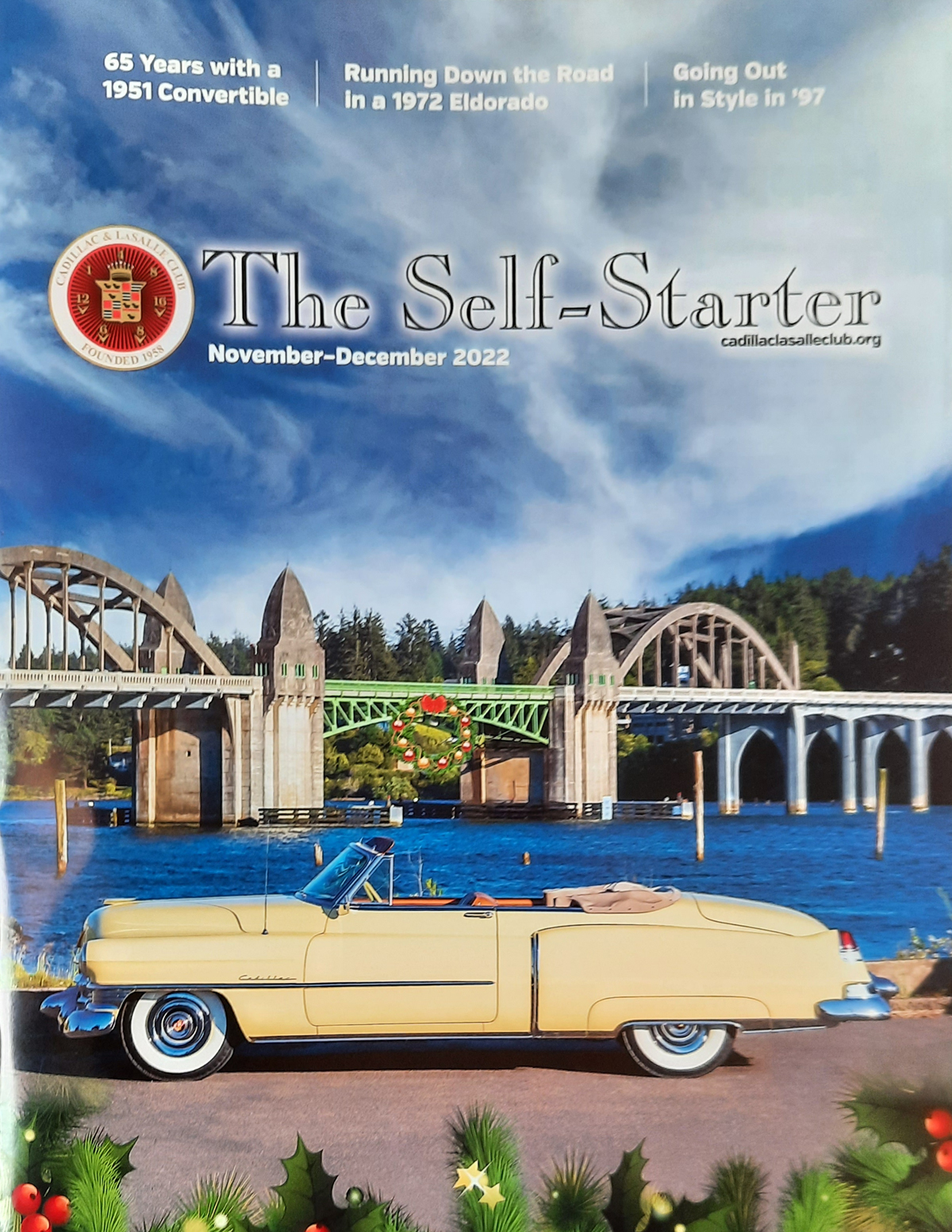
Cadillac enthusiast Magazine

Major marques such as Cadillac (The Self-Starter), BMW (Roundel), Porsche (Panorama) and many more have publications published by enthusiast organizations. These publications have classified sections where cars and parts can be advertised. If you are seeking to dispose of parts for that brand these publications offer a great opportunity to connect with people possessing a passion for what you may be selling. While far more work than an auction, this type of advertising of a single lot for sale could certainly be a consideration for the “Cadillac sisters.”

PROS

  • Marque specific
  • Knowledgeable audience
  • Higher prices
  • Less wasted communications

 CONS

  • Necessity of shipping
  • Have payment procedures
  • Necessity for ad copy and photography
  • Be prepared to answer questions

 In the end choosing a path for disposal of part or all of a collection comes down to issues of time, money and emotions. Do you have the time to personally manage a sale? Do you need to wring out every penny possible from the disposition. Does finding a “good home” matter?

For those considering thinning or disposing of a collection, the avenues for disposition offered here could prevent the bequeathing of a collection in chaos from turning into a gift wrapped in a headache.


By |2022-11-25T13:19:22+00:00November 25th, 2022|Comments Off on Conversations With People We Value #42

Conversations With People We Value #41

The allure of blue highways in many ways draws its power from the potential to discover unexpected cultural treasures along the twists and turns of less traveled byways. On a recent journey I found one.

It certainly offered the most understated of promotional roadside signage, even for the blue highways of Western Virginia. “OPEN” read the flapping flag next to a narrow road that climbed into a dense forest. However, for me its simplicity generated an irresistible draw. Turning off the highway put Elaine and me at the bottom of a steep narrow road that snaked up a hillside and, with a sharp hairpin to the right, twisted out of sight.

I would soon learn that this serpentine climb would lead to the century old Wood Ridge Farm in Woods Mill, Virginia, now, battling to survive the forces of our modern world with a brilliant strategy devised at the intersection of cold reality and the genius of its fourth generation owner.

Meet Barry Wood the visionary owner of the 300-acre home of the Wood Ridge Brewery and so much more.

Saving the farm. Barry Wood’s beach club on the Blue Ridge

Cresting the steep climb we faced a broad expanse of land rich with plowed fields and traditional farm buildings and equipment. Unexpectedly, integrated into this bucolic setting resided structures and features that were anything but traditional farm trappings. I resolved to meet the owner and ask, “What’s your story?”

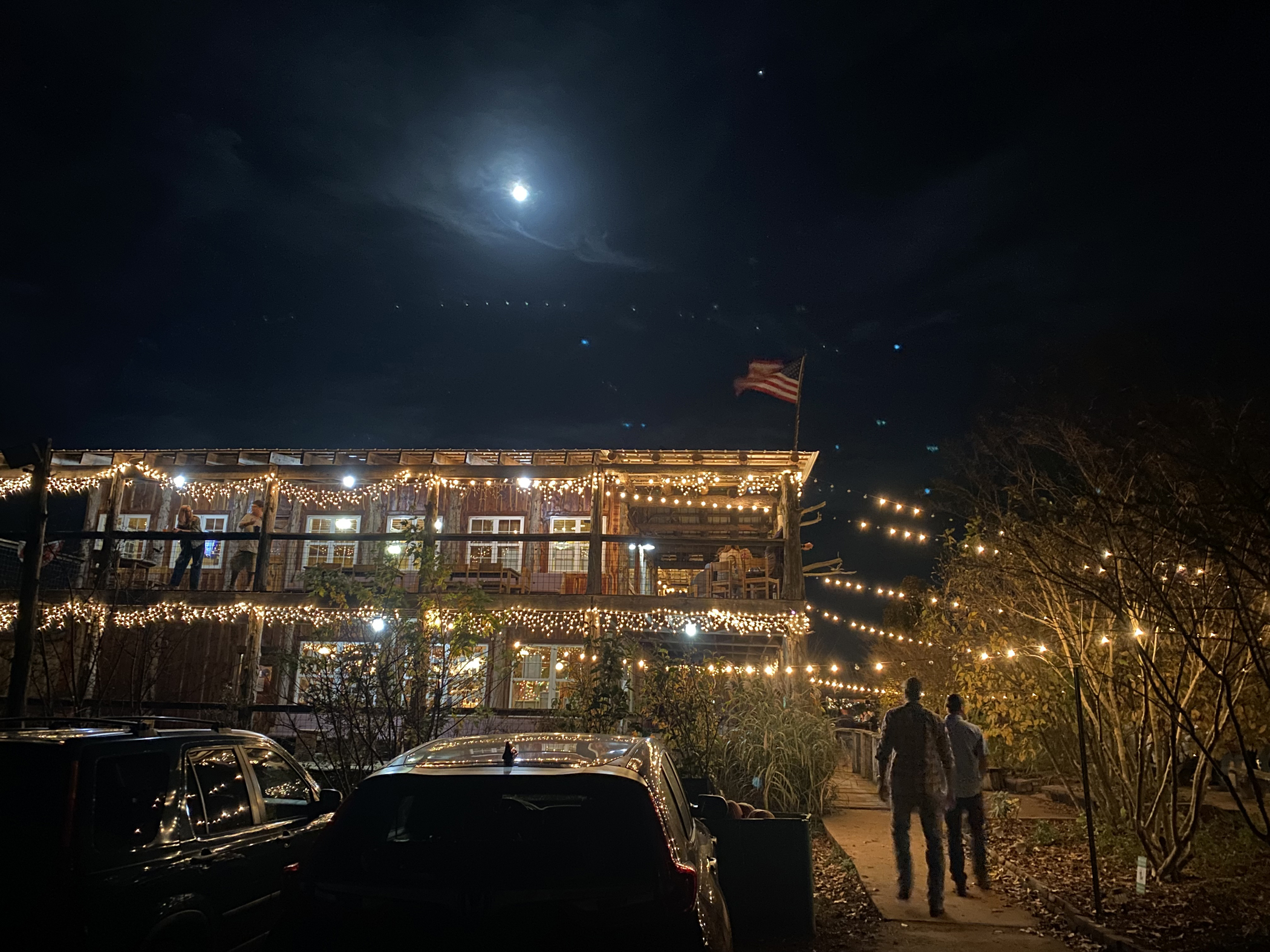
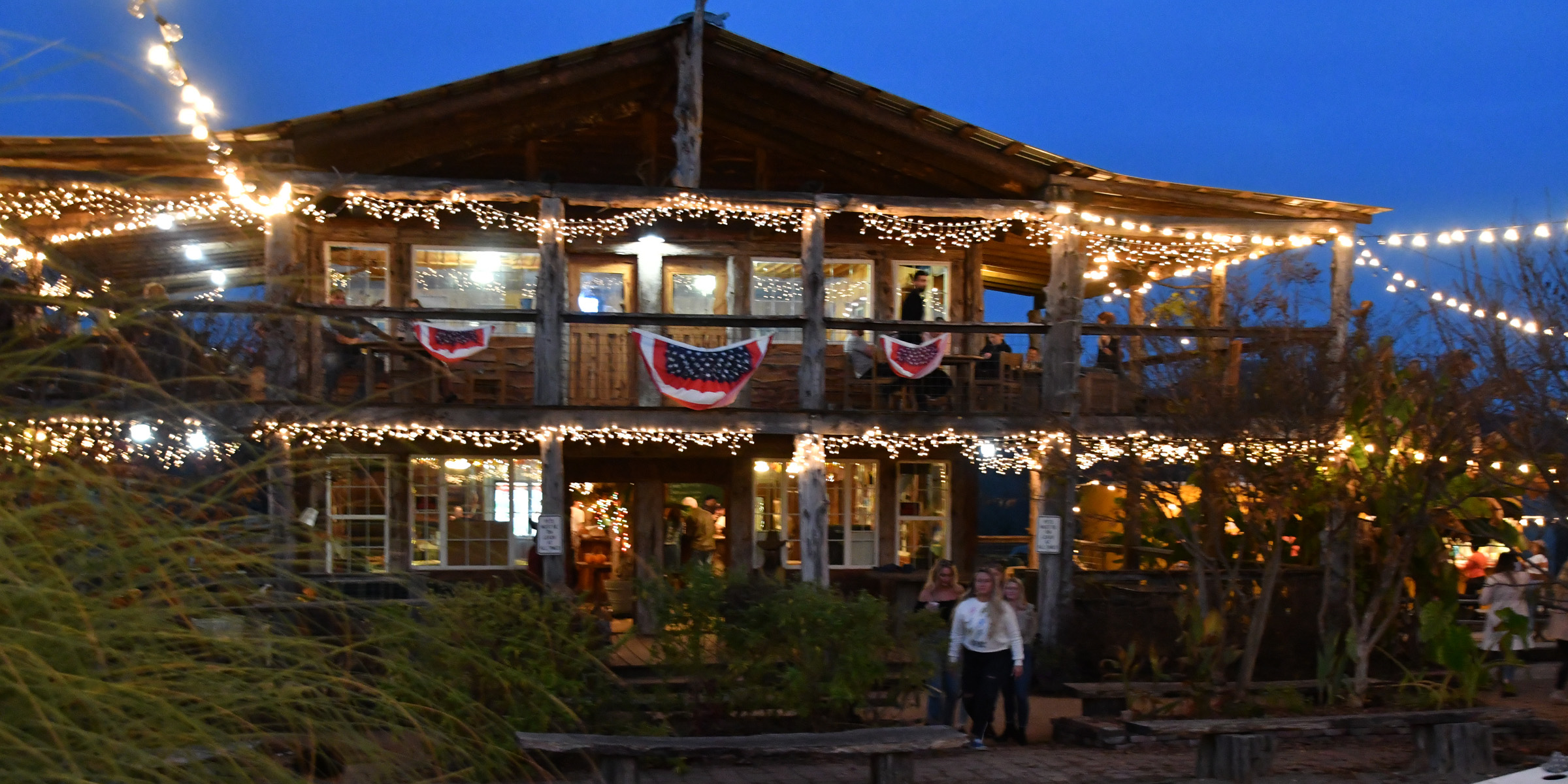
I pulled into an open space in a large parking field filled with cars and dusty pickup trucks that worked for a living. All pointed towards a rough hewn, pin light adorned, handsome log building. It stood two stories high with open decks overlooking a sandy expanse filled with tropical trees and foliage.

Wood Ridge Farm Brewery, alive at night

Elaine and I walked in to be immersed in a beach-like party atmosphere with a live sound track from the stage and the competitive banter from the corn hole competition in process. Pretty young women holding beers socializing with attentive young men blended with families herding kids and dogs, retired couples and milling family groups. A genial mix surrounded the good natured competition on the corn hole courts. Others drifted along sandy trails edged with tropical flowers, banana trees and palm trees. Paths to the left led to a Tiki bar with a completely different musical track and vibe. Further on led to a food court with an outdoor brick oven pizza facility and the “Fired Up Curbside Grill” food truck.

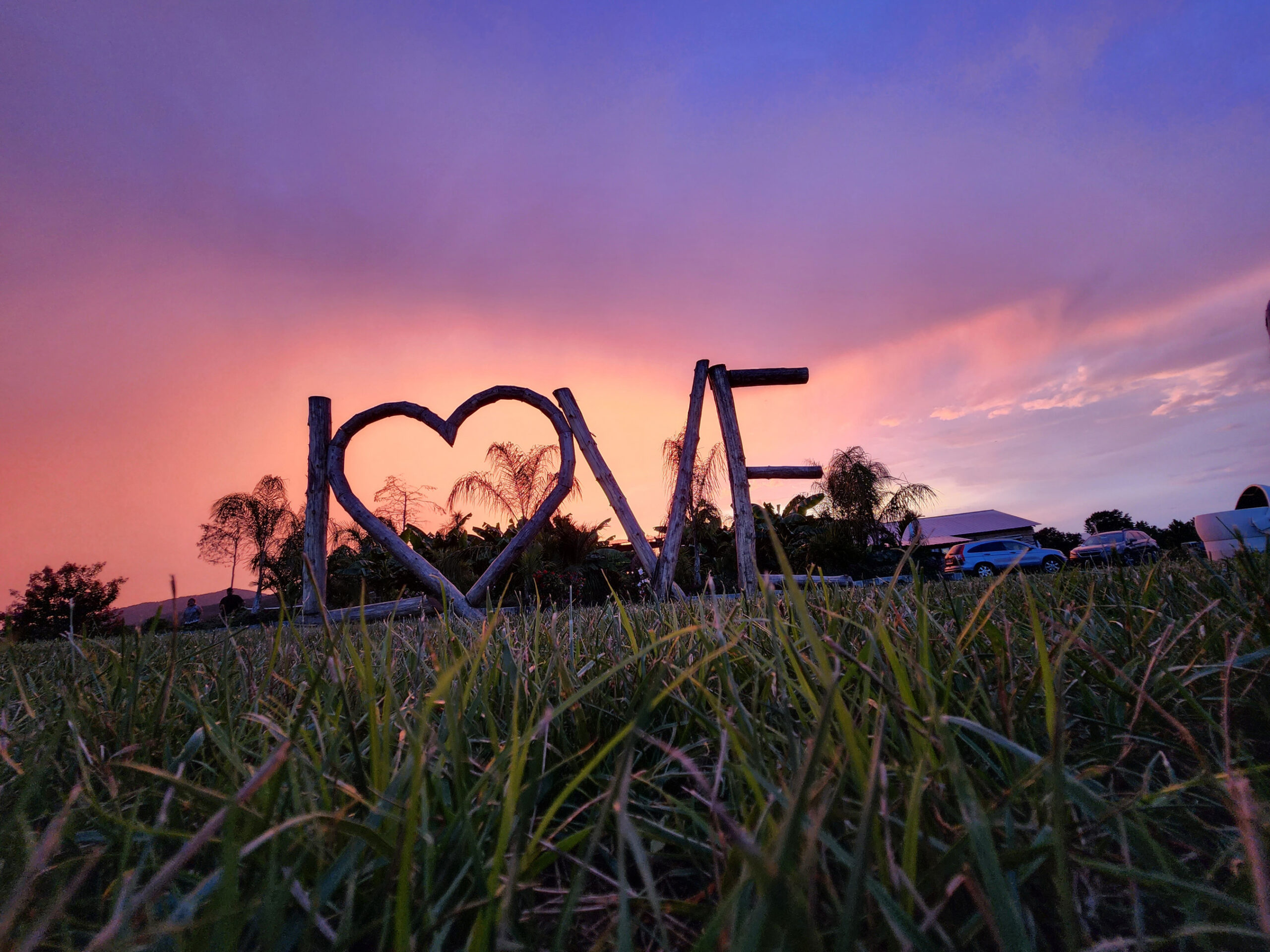
Turning to the right led down a palm lined path to a sand volleyball court. To the side a huge natural tree-based Virginia L-O-V-E sculpture stretched 15 feet in the air. For those who do not know, Virginia has promoted the creation of large artistic LOVE signs that reflect the character of a tourist destination. Barry’s farm may have the largest of its kind. To the right one can hit golf balls on a 300 yard driving range. Off to the distant left of the driving range across a meadow stands an imposing five-acre corn maze. To its left resides a children’s obstacle course and petting park.

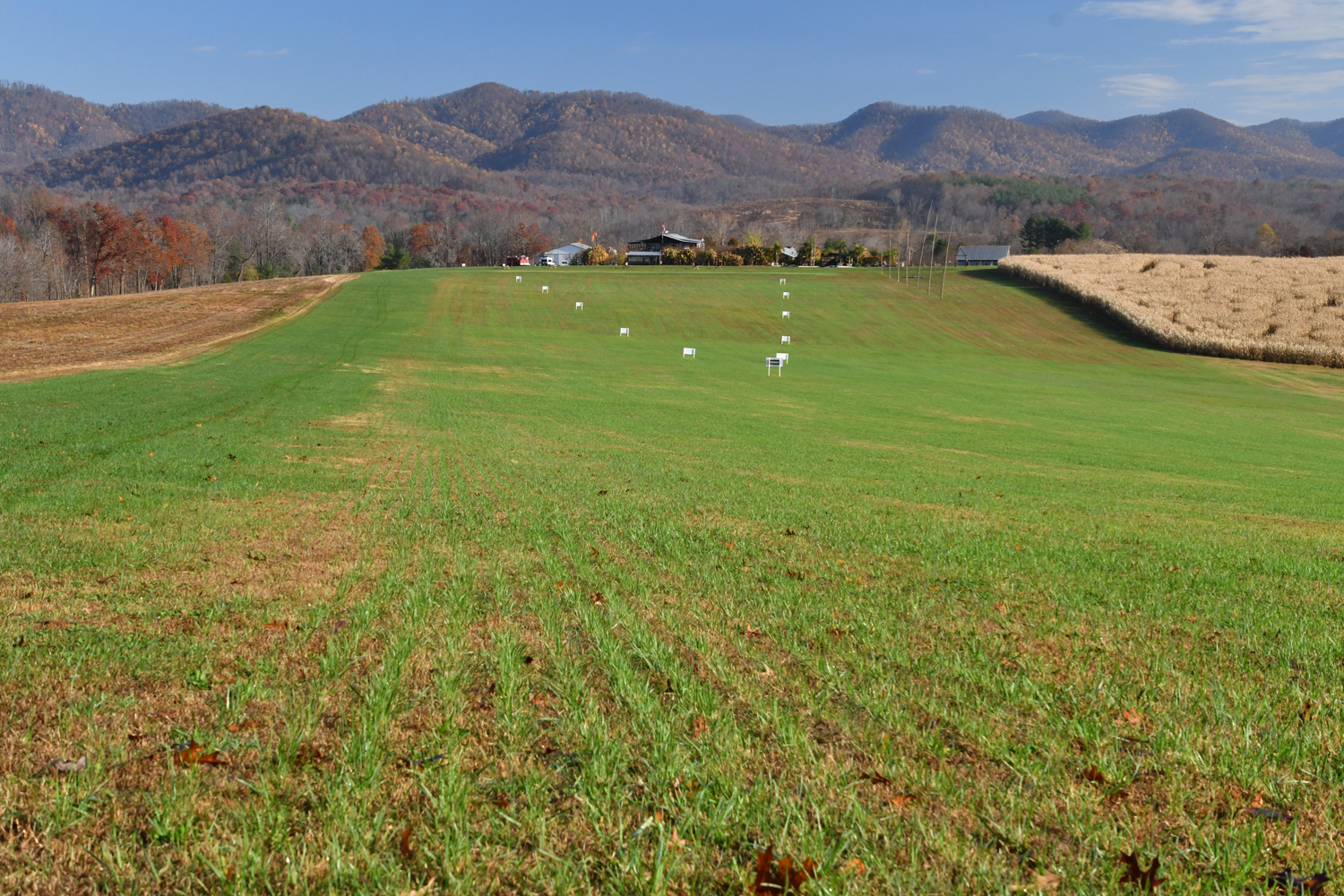
A long look at the brewery, driving range and corn maze

However, without doubt the centerpiece of this agrarian fun park is the Wood Ridge Farm Brewery. Here the young women and everyone else purchase beer brewed on location with the process visible through large windows directly behind the bar.

Asking a few questions we learned that the owner’s name was Barry Wood and were directed towards a man in a cowboy hat and jeans intently shucking oysters by a fire pit. We introduced ourselves then asked “What’s your story?”

Owner and visionary Barry Wood shucking oysters

Middle aged, friendly, fit and direct Barry clearly communicated the persona of a man of conviction with his words and deeds. Yes, a country boy, but also a licensed pilot, deep sea diver, past successful businessman and, now, a farm owner facing a world of challenges. Armed with an impressive skill set, astute business sense, fierce commitment to succeed and a love for sandy beaches (which explains the caribbean beach bar motif) he showed no intention of backing down from the challenge.

With the sale of the land he leased for his successful retail farm market, Barry, in 2000, chose to move to and re-energize the farm he had inherited from his father. With the house vacant for over 25 years and the land suffering from little attention for decades Barry took over a farm in dire need of help.

“It’s real simple,” stated Barry Wood with a relaxed Virginia drawl, “Today, as a small farmer you can’t make a living with a farm just by farming.” Made equally clear, was Barry’s absolute conviction to preserving the farm in its totality and in his family.

Wood Ridge Farm Brewery

Barry spoke of inheriting his grandparent’s 300-acre farm over twenty years ago and the subsequent decades of challenges, efforts, successes, failures and lessons learned. He left no doubt that the most profound lesson delivered came by way of a modern world of costly fuel, expensive equipment, low commodity prices and the competition of massive corporate farms. He spoke of the realization that for the farm to survive intact for future generations it demanded original thought way outside the box of traditional farming solutions. Fate had clearly been kind in placing the right man in charge at the right time.

“Creative agritourism,” said Barry as he fired up his Ford pickup filled with the tools, debris and dog hair that left no doubt as to Barry’s deep involvement with running the farm. Barry says, “Not much of a choice. Let the farm go or go the agritourism route to keep the farm alive. To me agritourism means getting people to pay for the beauty, experience and enjoyment I can create and at the same time eliminate their need to get on a plane or drive somewhere else to get what I am providing here.” Clearly Barry sees a future built on creating atmospheres for families where they feel comfortable.

Barry insisted that I take a tour of the farm with him before I asked any questions. I did not need convincing.

Beginning at the top of a broad downward sloping expanse, Barry showed how the area had been repurposed to be home to the massive corn maze, a golf driving range, areas for crops and in the distance, set against the mountains of the Blue Ridge, all of the structures to support both the traditional farming activities and those demanded to serve the entertainment needs created by the agritourism activities.

Moving on, we entered the dense surrounding forest, the Ford pickup seemed to willingly absorb the punishment of the deeply rutted trails. Both Barry and the Ford treated the bone jarring ride with the indifference of an urbanite on a transit bus. I hung on.
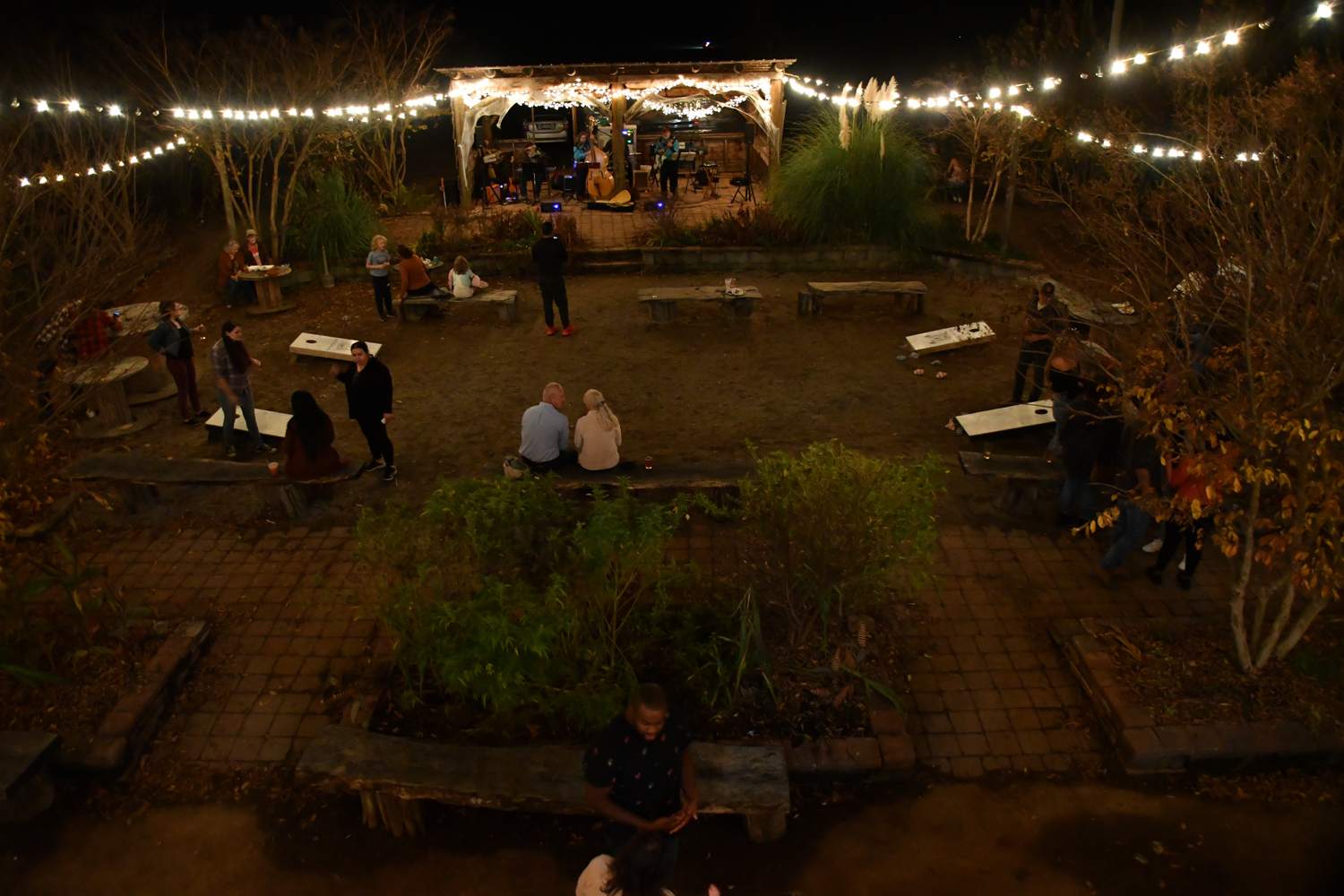
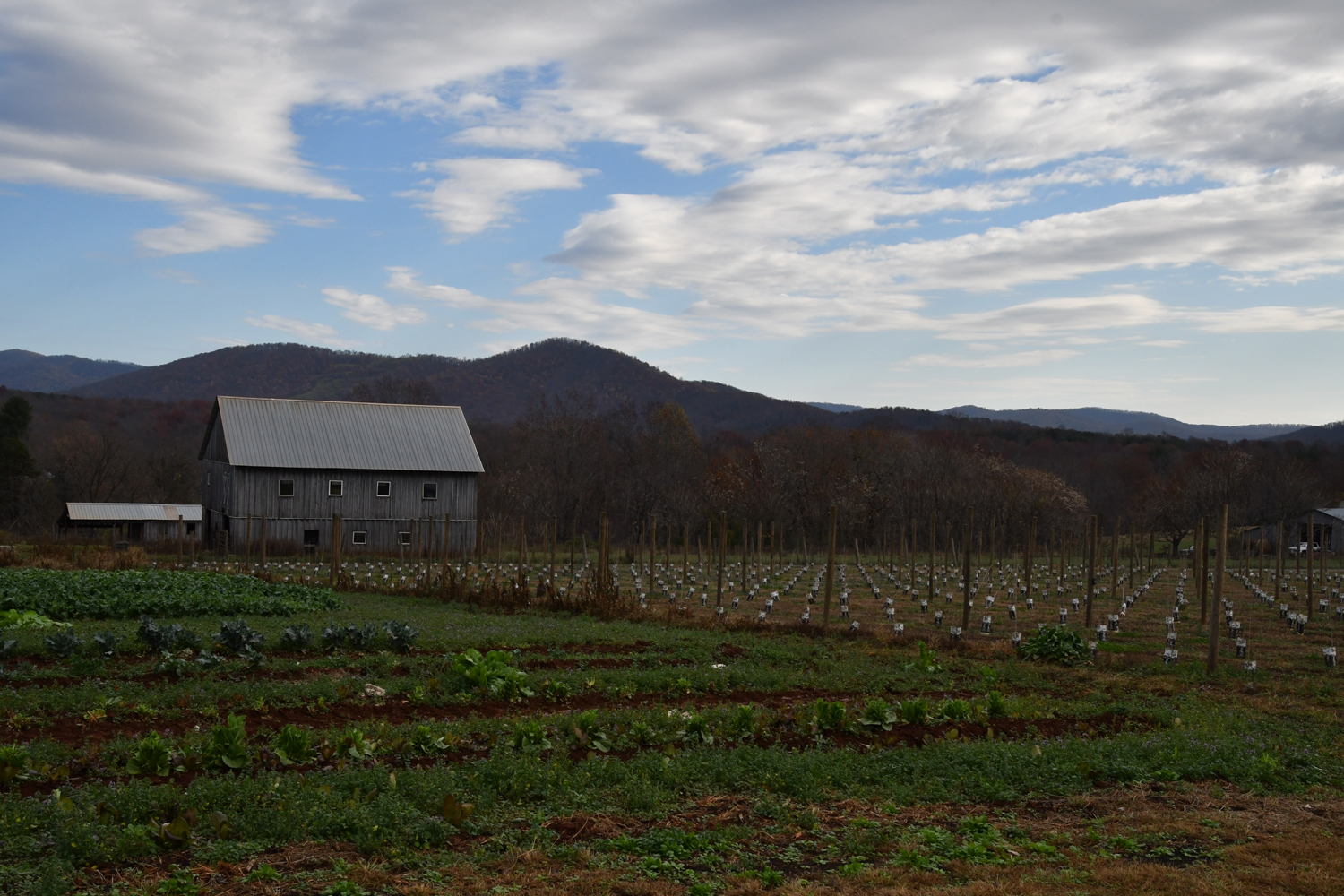
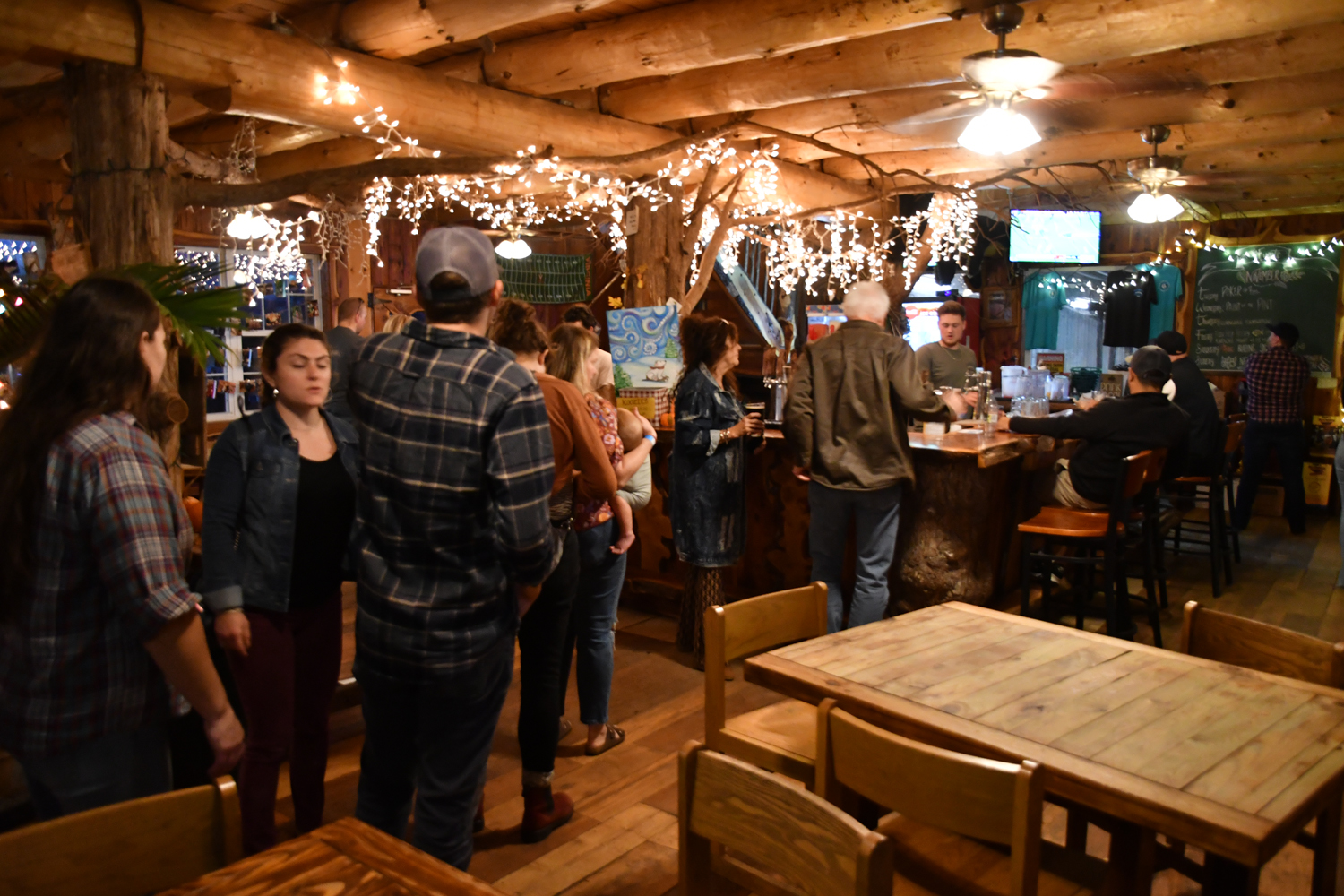
Our next stop offered a primer on the mindset Barry applies in implementing his agritourism vision and the operation of traditional farming activities. In a cautious world of bureaucracies that demand preliminary plans, meetings, approvals and, above all, specificity he employs a creative process that can best be equated to a quarterback calling audibles at the line.

Descending a hillside brings into view a tranquil lake and handsome three-story log cabin with covered decks on the two top floors.

Commenting on the beauty of the small lake, I could understand why he built this handsome log house next to it. I did not realize until later that he first had to build the lake.

Barry explained that the cabin started out to be a bathroom because when the family would have beach parties there the girls would have to run into the bushes to pee. The girls made it very clear that they wanted a bathroom by the lake. He offered to build an outhouse. “No way,” they protested, “spiders and snakes!”

Barry agreed to build a bathroom. To do so required building a one-room cabin. This meant digging a basement and pouring walls. He said, “I decided it wasn’t big enough so we added a bedroom. Then I realized that the bedroom would block the view of the lake so I turned the bedroom into a sun room and went up to a third level for bedrooms.” To finish things off he added decks. He now rents it.

I told Barry that such a lovely lake made it a perfect spot for the cabin. He then added that he had created the lake some years back as well. He says, “My intention was to excavate a little swimming hole for the kids with the help of a friend with a small bulldozer.” Six weeks later Barry had involved eight pieces of excavation equipment including a mammoth Caterpillar D8 bulldozer. Barry adds, “When we finished, the lake reached a depth of 27 feet and the dam a height of 32 feet.”

As would become evident on my subsequent tour of the farm, Barry has employed a free form genius that manifested by taking the seed of an idea and running with it as it gained momentum until finally, over time, it matured into a realized and complete execution. Concurring Barry says, “I can’t do something until I “see” it in my mind. Sometimes I will lose the vision. Then, maybe at 2:00 in the morning “pop” the vision returns and I can proceed.”

Vineyard in the making

Barry’s sturdy Ford navigated the roads as he shared stories of his efforts. Both presented a very bumpy ride. His litany of efforts include raising alpacas, growing shrimp and running 49,000 feet of drip line during a drought to raise watermelons, cantaloupes, tomatoes, squash, zucchini and more. Deer ate every melon and cantaloupe.

A litany of Barry’s 20 plus years of efforts to preserve and promote Wood Ridge Farm clearly displays a tenacity that offers tribute to the human spirit.

Then around ten years ago, Barry heard that distillers had their eyes out for good size farms to raise barley that would be malted for making beer and whiskey. Game on for Barry. He believed that locally raised and malted barley would be very appealing to the craft brewers and distillers in the region. He went to Canada to learn proper malting and built a specialty barley malting facility on the farm. Wood Ridge Farm would malt barley just like it was done 200-years ago. With his successful early efforts he used the malted barley to brew Wood Ridge Farm’s own beer. To quote from Genesis, “And it was good.”

With the proof in the bottle, so to speak, Barry went on the road to sell his specialty malted barley. Initial efforts met with success but the spotty nature of demand presented problems. Buyers would only purchase when the fresh hops were available and resistance to the price he needed to charge for his premium specialty malted barley met with resistance from distillers that could get by with lower quality malt. Barry says, “So I pretty much just got pissed off one day and got on my backhoe and started digging footings. I would build my own brewery.”

Inside the brewery

As Barry started digging footings around 2014 he discovered that he would be exceeding the maximum allowable footprint before triggering environmental rules dictating retention ponds and other requirements. He chose to reduce his footprint and build a second floor. With the bones of the Wood Ridge Farm Brewery established, he went about harvesting timber for the farm’s saw mill to create the boards to complete his rustic vision that stands today as the beating heart of a healthy Wood Ridge Farm tradition.

As Barry takes a moment to reflect on the present state of the farm, He is first quiet then says, “Yep, creative agritourism and the fact that we raise our own barley and malt the barley like it was done 200 years ago, there’s easier ways, but that’s the way we do it. And it’s working.” Then he allows himself a well earned smile.

By |2022-11-25T13:09:14+00:00November 10th, 2022|Comments Off on Conversations With People We Value #41

Conversations With People We Value #40

Having made a few friends along the Blue Ridge Mountains, it was not a total surprise to run into one at a local car show in the wine country of western Virginia. While doing a little catch-up with my friend and Drivin’ News reader Dick Carroll, he abruptly pointed across the grassy show field to an older gentleman with a weathered countenance, easy manner and a T-shirt adorned with restored pick-up trucks. “There,” Dick said with absolute conviction, “Is a man with stories to tell.” Dick continued, “He is a gifted craftsman known for the beautiful vehicles that role out of his garage. To confirm my understanding I asked, “He has a restoration shop?” No, he has a garage at his house where he does everything including paint. And no he does not have a spray booth.

Meet Septuagenarian Benny Bryant, a rural Rembrandt of restoration.

Benny Bryant’s 50 years of building Blue Ridge beauties

Benny Bryant in his 1964 Plymouth Fury

Unassuming yet quietly confident in his ability to artfully craft wood and steel with skills for which he thanks the good  Lord, Benny Bryant projects the grounded presence of a man at peace with himself and his seventy-five years of life lived in Nelson County, Virginia.

Speaking with a voice possessing a slow talking sincerity reminiscent of a cowboy recalling truths around a campfire, Benny lays out his story like a chef’s timely delivery of each subsequent course for a well prepared dinner.

Benny with 1955 Ford

As a teenager Benny began a life-long career in the automotive business by prepping new cars at the local Ford dealer in 1964. It was at that time that Benny bought the first car of his own that he would work on, a 1955 Ford.

One of the few perks of his entry level position resides in the Pantheon of his young life’s experiences. He remembers prepping new Fords for delivery and driving numerous high performance 289 mustangs and a very rare 1965 Galaxy 500 with all the right boxes checked: 427 check, 2x4s check, 4-speed check. A fun job, but not forever.


Benny and son Benji

Benny migrated to what would be his life’s work in the automotive parts business from which he would retire after 43 years as the owner/manager of a Fisher-Federated parts store. During those years Benny would build a family and populate his spare time honing his God-given abilities for restoring distressed vehicles. Indeed his two passions, love of family and love of restoration would interweave seamlessly as he shared his passion with his children and their children. Benny’s long life and passion had blossomed into a family affair. He says, “My son Benji stayed out here in the garage with me from the time he was probably two years old up until he got married and left at about 30.” Benji became a serious contributor to projects about the age of 14. Benji says, “I learned so much. We did a little bit of everything. I mean we pulled motors, did body work. We would just tear things apart head to toe. My dad and I got along good. It made things easy.”

Once retired, Benny would kick his passion for classic vehicle restoration into high gear as a full time pursuit that would sustain him and his family. He says, “I am not a wealthy man. Restoring cars defined my retirement plan.” The last decade witnessed Benny hit his stride as the consummate restoration artist possessing a special affection for pickup trucks. For those who know Benny, an added mystique enhancing the personality of what Benny creates resides in where he makes his restoration magic happen, the garage behind his home.

A handsome and neatly manicured residence, featuring many pieces of hand-made furniture crafted by Benny, sits on the side of a quiet country road that is now paved. For many years that was not the case.

Benny’s garage

Behind the house a two-bay garage two cars deep with a single lift and an upholstered recliner (more about the recliner later) provides the stage where Benny performs. To appreciate the achievement Benny’s work represents, demands a look at where it takes place. Neat, clean and organized with photos on the walls and trophies on shelves accompanying all the equipment Benny needs to turn trash into treasure.

For those raised on watching high tech restorations on the Velocity Channel, Benny’s garage (Wow what a great name for a TV show) offers a stark contrast. Benny in describing the technical sophistication of his garage says, “We do it with nothing. I got a little welder and that’s all really that we got. Heck, I got a few little old body tools. I got a couple of D.A.s (Dual Action sanders) and some grinders and that’s it. That’s all we got. In describing work on two of his projects he says, “All that frame work under that Plymouth and the one under that Nova both, we built lying on the floor with grinders, cut off wheels and a little weld.”

In looking at two of his restorations up close and personal the paint showed well. When asked about his paint booth, Benny responded, “I don’t have one.” Benny shoots all his restorations in his garage.” When asked how, he explains that he first sweeps out the garage and wets down the floor. A powerful fan fills a window to draw out dust and fumes. He often shots with a Binks spray gun but other equipment as well. When first visiting Benny’s garage two examples of his work grace his driveway.

Benny’s 1964 Plymouth Fury

With an aggressive stance and a dazzling red paint job a pristine 1964 Plymouth Fury says all you need to know about Benny’s work ethic. Owned by Benny for over 50 years, this Mopar beauty through pride and service has earned its place as part of the Bryant family. He says, “My daughter was born in ‘72, I bought it just before she was born and it brought her home from the hospital.” While loved, his Fury has not always enjoyed such an easy life. He says, “When we first got it, we kind of treated it like a four-wheel drive truck even though it was only 2WD. Out front of our house used to be a dirt road and in the wintertime the ruts were real bad. So bad I broke the steering box off it.” Luckily the panels remained good with damage primarily to the chassis.

Since surrendering its daily driver status, the Fury has been repainted twice and reupholstered twice. Its present garage applied lustrous red skin was applied 20 years ago. The chrome, done over 30 years ago shows very well. The stainless steel grill and all other trim are original. Everything is basically as new including the engine. Its aggressive presence screams 413 wedge but no, power comes from a 318 with a two barrel. When asked why the modest power plant Benny says, “Money. I had a wife and two children and I was the only one working.”

Today Benny’s Fury has 208,581 miles and counting.

1964 Fury on 2001 Hot Rod Power Tour

When asked to tell a good story about his Fury, and knowing Benny, it had to involve family as well the car. And the story is a good one. Benny’s son Benji drove it the full length of the 2001 Hot Rod Magazine Power Tour.

For those not familiar with The Hot Rod Power Tour it began in 1995 as the brain child of the Hot Rod Magazine staff. Basically intended as the world’s largest traveling car show, its intention was to invite car enthusiasts of all stripes to participate in a seven-day gearhead circus and carfest that traveled across the country. The point of the tour is about driving your car, seeing new parts of America, meeting more people and sharing the total car experience. Today, it involves thousands of cars and tens of thousands of people. In 2001 the tour kicked-off in Pontiac, Michigan, ran for nine days and 2,414 miles and concluded in San Bernardino California. Benji and a friend ran the full tour across the country without a mechanical issue.

1964 Savoy pre-restoration

Clearly with a soft place in his heart for ‘64 Plymouths, Benny performed an amazing transformation on a ‘64 Plymouth Savoy that was well along the journey from dust to dust. He says, “Bought it at the West Virginia line and brought it home. Seeing it, everybody said why in the world did you bring a pile of junk like that home. The front end was just about rotted off. No floor boards. The cowl where the windshield wipers went had been eaten completely out of it so badly that the windshield wipers fell down inside of the car.” But Benny had a vision and a spectacular one that would become a reality.

1964 Plymouth Savoy on 2003 Hot Rod Power Tour

It began by moving the front axle six-inches forward and the rear axle 13-inches forward. Why? Benny says, “Well back when I come along about everything at the drag strips was altered wheelbase cars and I just loved them for their looks. To me they just are beautiful.” When completed, the

Savoy had a Dana 60 rear, a really strong 383 Chrysler V8 and a four-speed all wrapped up in one mind blowing bad-ass black Mopar monster. Of course, Benji took it on the 2003 Hot Rod Magazine Power Tour.

As pickup trucks star in Benny’s mind as a favorite restoration subject, his red and white 1972 Chevy C10 shines like a gem with roots very different than that of his Fury. Benny says, “Bought the chassis in one place. Bought the bed in another place. Bought the cab in another place. A guy give me his two front doors and the two front fenders. I bought the hood in another place.” Now, completed, it has a Chevy 350/350, lowered springs in the rear and cut coils in the front, new upholstery and new paint. When asked how long ago he started this project he says, “A year.” Benny does not drag his feet with a project. A partial list of his projects since he retired boggles the mind.

Benny’s 1972 Chevy pickup

In the past seven years Benny has done two Dodge diesels, an ‘89 Ford F-150 short bed, ‘96 Ford F-150 short bed, 13 Ford Rangers, 19 Toyota pickups and two Chevy S10 pickups. In the years prior to retirement completed projects included: A 1932 Ford 3-window coupe, Three 1972 Chevrolet pickups like his, one Jeep, a Bronco, a ‘32 Ford 5-window Coupe, ‘31 Ford 2-door sedan, 1964 Plymouth Savoy and a 1967 Chevy II tubbed with a 355, Littlefield blower and 2x4s. There were more. This, now, brings us to the La-Z-Boy in the garage.

Benny in his recliner

When asked why he has a recliner in his garage Benny says, “It’s because I am 75-years old. I have had two heart attacks and I have had triple bypass surgery. At this point in life I work about 10 minutes and sit about three or four minutes and then, maybe, I can work another 10 minutes. I love what I do.”

Benny Bryant’s extensive roster of masterful restorations leaves no doubt as to how well he has succeeded in sharing the fruits of his passion with family and friends alike. And he continues to do so in his reclining years.

By |2022-11-25T13:08:43+00:00September 29th, 2022|4 Comments

Conversations With People We Value #39

With Alaska in my rearview mirror, the late summer sunshine inspired a journey south along the Blue Ridge Parkway in search of stories to be found on the country byways that splinter off from the great mother road of the rural southeast in North Carolina.

Some stories stoked an inspiring blend of incredulity and awe such as that of the engaging gray haired gentleman with a roadside repair business sharing space with an array of deteriorating foreign and domestic classic cars snuggled fender to fender like sardines in a can. He began collecting vehicles around his ninth birthday. His collection, now, stowed away in nondescript chicken coups and barns included hundreds of cars and over 1,000 motorcycles.

Another story came alive when stopping at a farm stand nestled in a valley bounded by thickly forested mountains. That stop introduced me to a remarkable gentleman, retired rocket scientist and Apollo 11 team member. Together with his sister he continued his extraordinary life by buying an historically significant orchard and by turning it into a non-profit 501c3 changed lives while preserving and promoting the culture of the Blue Ridge Mountains.

Those, however, will be stories told another day.

This week’s story tells of a man who created a community designed for classic car enthusiasts.

Meet Allan Witt visionary developer of Hawk’s Hill.

Visiting a community built for car enthusiasts

Departing from the Holly & Ivy Inn B&B in Newton, NC we headed out on some twisties toward Lenoir, NC. The Holly & Ivy deserves a shout out as easily the best bargain in a refined B&B I have ever enjoyed. At $92 a night this immaculate and exquisitely appointed restored Manor House of a 19th century industrialist could be considered a bargain at twice the price.

In Lenoir, located in the foothills of the Blue Ridge Mountains, resides Hawks Hill a community dedicated and tailored to the interests of the collectible car enthusiast. Created by now retired businessman and British Car enthusiast Allan Witt, Hawks Hill migrated from vision to reality over a period starting with the purchase of the land in 1987. At that time Allan and his now deceased wife Patricia, who passed in 2016, purchased a beautiful, wooded 108 acres in Lenoir. Allan gives much of the credit to Patricia, who owned and enjoyed her 1958 Morgan, for sparking the concept of a collectible car friendly rural community.

Passing the sign announcing the entry to Hawks Hill, one proceeds up a smoothly paved serpentine drive through a thickly forested community. In the age of clear cutting and cookie cutter homes, the handsome houses of Hawks Hill enjoy a setback that subordinates their presence to promote a pleasing sense of a forest ambiance.

A sloped driveway snaked up to Allan’s residence. The attractive home at the top included an attached garage with a lift and space for three vehicles. Across the driveway stood a handsome barn capable of accommodating 6 cars in various states of repair including a bare Jensen-Healy body on a rotisserie stand. Down the sloping approach to Allan’s home stood yet another barn that accommodated six cars. As the man espousing the vision of a car enthusiast community, Allan clearly walked the walk.

Allan Witt, Sherrill Eller

Walking about his property with his companion Sally Tatham and his friend and skilled mechanic Sherrill Eller Allan details how the vision of a car enthusiast community manifested itself as Hawks Hill.

Allan says, “When I sold my business in Connecticut my wife and I looked at the property we had bought here and didn’t know what to do with it.” Allan and his wife decided to subdivide it into lots of over 1 acre each and sell the lots in phases. In the early 1990’s phase one with nine lots went on the market. None of them sold. There was little interest. It was time for a plan B for phase 1. It was at that time that Allan’s wife said, “You like cars. Lots of people like cars. Why don’t we make a car community out of it?” Allan loved the idea.

Step one, they advertised in “Old Cars Weekly” which ranked as their magazine of choice. Allan says, “It came out weekly. It was inexpensive.” And it was brilliant. Quickly after placing their ad the first half dozen lots had sold. Hawks Hill had a working plan and they would hold true to its winning formula. Over the ensuing years Hawks Hill rolled out four more phases. Hawks Hill contains a total number of 48 building lots. At the age of 86, Allan has no plan for a phase 6 to sell the final five lots.

While a “car guy,” Allan sought to tailor amenities that could be enjoyed by a broad spectrum of families and individuals alike while resonating strongly with car enthusiasts. Hawks Hill features an unusual integration of features appealing to both those with an affinity for hiking though the woodlands and those who savor driving through the forest.

Club House with 8 bays

Almost assuredly unique to Hawks Hill would be its 2-story clubhouse that features a downstairs offering eight (8) shop bays. The bays have a full complement of tools including access to a lift and machinist tools for fabrication. A milling machine, a lathe, sheet metal tools, sand blasting equipment, a large capacity air compressor and more stand ready for any home owner’s use.

The upstairs contains three bedrooms, three bathrooms, a giant kitchen, a huge living room and a wood burning fireplace. Allan says, “Fundamentally it is a guest house.” The upstairs also contains a club room for gatherings.

In driving around Hawks Hill the sensitivity of car enthusiasts to the importance of the necessary space to properly pursue their passion makes them hyper-vigilant. For car guys, encountering space in abundance borders on a religious experience. In driving through Hawks Hill, the presence of a wealth of space to nurture the passion screams out. Handsome homes with three bays incorporate independent structures that attractively provide an additional three, four, or five bays. Jaguars, Healeys, Mercedes, Model As, muscle cars, supercars, fire engines, name it, all find a home here. At the wheel, it would appear the quality of the roads serves to celebrate an avocation built on the joy of driving.

Demographics of the area began as predominantly retirees. However, with the recent explosion in work-from-home opportunities that mix appears destined to change.

Allan’s House and attached garage

Allan says, “It is extremely affordable to live here.” He has his three buildings on over ten acres with taxes in the area of $3,000. He says, “At this point I do not see additional new construction happening. When a house goes up for resale it sells very quickly.

If you want to live where you can walk to downtown, Hawks Hill is not the place for you. That said, if you want to live in a region rich in automobile activities they abound in the area. Allan says, “There is lots of car stuff around here.” The first of each month Lenoir has a downtown cruise that pulls over 500 cars. Allan points out that there exists a number of marque and non-marque specific clubs in the area. Most interestingly, a race track at North Wilkesboro that closed in 1996 has received state funding to rebuild and reopen. Allan says, “It is already reopened and they are having a variety of races including stock car and sprint car. Last week Dale Earnhardt Jr. was racing there.” As well, other speedways abound. Allan says “Antioch Speedway, Tri-County Speedway and Hickory Speedway add to the motor sport offerings in the area.”

Sally Tatham, Allan Witt and 1980 IH Scout

As to Allan “the car guy,” he pretty much sticks to the British offerings that almost exclusively populate his collection. He has a special affection for Jensen-Healeys of all stripes and Austin-Healeys though a few Humber Super Snipes have found their way into his heart through the years. However, somewhat surprisingly, his favorite may be a rare American in the fold. Produced for only one year, Allan’s totally restored 1980 long wheelbase turbo-diesel International Harvester Scout sits in the catbird seat at Hawks Hill.

By |2022-11-25T13:07:13+00:00September 15th, 2022|4 Comments

Conversations With People We Value # 38

My experiences in Alaska benefited considerably from the character of many with whom I became acquainted. In some ways they projected a presence that seemed “realer” than that of the quasi-urbanized east coast sort common to where I call home. Not saying that either one holds an advantage as being better or worse as a human being, but realer? I say yes.

To a degree I believe that the beauty and challenge associated with life in this water wonderland that clings like a barnacle to the southern tip of Alaska shapes the character of those who call this archipelago home. It stamps each with a decidedly “made in Alaska” personality. Not so much a chip on their shoulder, far from it, it is more like they are playing an honest hand with chips in the game.

Emblematic of this living life in living color mentality is a woman whose trip to Ketchikan in 1985 profoundly altered her future vision. She never left. Meet Michelle Masden, Alaskan bush pilot.

Reaching the heights of her dreams on the wings of a deHavilland Beaver

Michelle Masden with Lady Esther

Smart, confident, engaging, rugged as the Alaskan terrain and just as pretty, Michelle Masden does not fit conventional wisdom’s image of an Alaskan bush pilot.

Interestingly, it was Michelle’s airplane that led to my meeting Michelle. Seeking the source of the powerful, lumpy, growl building from a radial engine peaking to a crescendo from a nearby waterfront dock led me to a beautifully restored vintage floatplane and its owner and pilot Michelle Masden.

Like a featured vehicle at a concours firing up to take a trophy lap, the plane, a 1959 deHavilland Beaver roared to life. Decked out in a striking livery of red, white and silver, it clearly took “Best in Show” among the area’s large population of floatplanes. Named the Lady Esther, it honors Michelle’s grandmother who hated to fly but whole-heartedly supported Michelle’s airborne dreams.

One of a series of deHavilland DHC-2 aircraft built between 1947 and 1967, now completely restored, this deHavilland Beaver started out as a military surveillance plane.  As a military plane this model had been relied upon by more than 30 countries. It began life in 1959 equipped with a machine gun drive synchronized with magneto timing allowing it to fire harmlessly through the propeller. As well, it came equipped with a camera bay allowing for mounting cameras vertically down through the belly to photograph enemy territory. The camera bay remains. The machine gun does not.

At Island Wings Air Service Michelle pulls her weight and much more

Standing, no correct that, I quickly realized that Michelle never seems to stand still, especially around her floatplane. We spoke while she actively tended to her plane, much like a concert musician tended to her violin. Shortly a new half dozen or so tourists would be arriving to fly into Alaska’s Misty Fjord National Monument or go into the bush to set down and witness the interaction of bears and salmon.

Generous and polite in sharing the little time available, she first spoke of her plane, then of herself.

Michelle purchased her floatplane from Kenmore Air of Kenmore, Washington in 2002. Much like the Mercedes-Benz Classic Center, Kenmore stands as the go-to experts for deHavilland Beaver restoration and upgrades.

Powered by a 450 horsepower Pratt & Whitney 9-cylinder radial engine, Lady Esther is a very capable lady. With its large wing area and powerful engine, the Beaver displays exceptional STOL (Short Takeoff and Landing) performance making it a favorite of bush pilots. It certainly ranks at the top of Michelle’s list. She says, “This is a fabulous plane. It was designed to take off and land in relatively short spaces. That is what my business is all about. In my opinion no floatplane does it better.” The last one left the factory over 50 years ago. Nothing built since then has supplanted its number one ranking in the bush pilot community.

Michelle at 17. The day she got her pilot’s license

Born to be a pilot, Michelle took her first flying lesson at the age of 16. By the age of 17 she had earned her pilot’s license. Later, fresh from graduation at the University of Nebraska with dreams of becoming a commercial airline pilot, Michelle came to Ketchikan as many College students did to enjoy a post college summer fling. The year was 1985. Seduced by the beauty and character of the 5,000 island Alexander Archipelago in which Ketchikan is situated, Michelle’s goal of becoming a commercial airline pilot morphed into a dream that would be her life’s passion and profession.

Michelle says, “In experiencing Ketchikan I realized that I did not want to have the life of a commercial airline pilot flying from city to city living in hotel rooms.” Michelle realized her life would be lived in the skies over Alaska. Making her dream a reality posed many obstacles. First and foremost ranked the need for a plane around which she could build a business. Her present job as a deck hand on a sailboat paid nothing other than free transportation to Alaska. However her salvation would be found at sea. She went to work as a deckhand on a commercial fishing boat. Being a “girl” the offers did not pour in. But Michelle is nothing if not tenacious and strong willed. Once she got a job each subsequent year finding work would not be a problem. Michelle says, “The first summer, it was challenging to get on a boat. However after that, no. Why, because for anyone who isn’t a hard worker, it shows immediately. Up front everyone knows that it’s not going to work, right? But anyone who demonstrates an ability and willingness to put in the effort will get work.” She had eleven job offers her second year. Michelle ended up crewing on a fishing boat for seven summers. The money was good and it allowed her to pursue her second passion, traveling.

The first three years she fished for three months and traveled for 9 months. By her fourth summer she had saved enough to buy her first airplane, a Cessna 172, a little four-seater on wheels.

For the next four years she continued to fish in the summer but, now, the other nine months would see her flying her Cessna out of Saint Croix doing inter-island ferry work. Now the dream had gained some momentum. In 1993 she sold the paid off Cessna 172 and bought a Cessna 185 floatplane and settled in Ketchikan to live full time. She set her sights on building the business that would bring her dreams to life. Michelle started Island Wings Air Service. Interestingly her experience on the water gave Island Wings the boost needed to get it off the ground. She says, “My fist customers were fishermen because that was an industry I knew from the inside. The commercial fleet uses airplanes for spotting fish, tender placement, delivering parts and people.” From there her business expanded into tourism, transportation to forest service cabins, charter work and basically anything people need that will fit in an airplane.

Michelle recognizes that no accomplishment comes without help from those around you. She says there were many but expresses a special fondness for veteran bush pilot and flight instructor Jack Cousins who generously shared all he had learned in over 50-years in the Alaskan sky. Michelle says, “ Jack called Alaska the greatest place in the world to fly.” Jack passed away in 1999. Michelle says, “He was a great friend and mentor. I miss him.”

Jack Cousins and Michelle

Michelle’s life in the air above Alaska has offered a rich diet of life experiences across a spectrum of emotions. She says, “I fly famous muckety-mucks all the time. I have to sign a nondisclosure so that I can never tell anyone that they were here. What kind of life is that?” Michelle also performs medevac flights and participates in search and rescue missions. She says, “Search and rescue is really difficult because it is never a nice day and often times you know the people you are looking for.”

Island Wings now approaches its 30th year in business. It stands as a true success story and a tribute to an enterprise built on the dreams and dedication of a woman with her head in the clouds and her mind squarely focused on sharing the beauty of Alaska with others. Michelle’s success in translating her passion and sharing her joy can best be expressed by comments on the Trip Advisor travel site where of 757 reviews of their experience with Michelle and Island Wings, 18 say very good. 728 say excellent.

By |2022-11-25T13:08:06+00:00September 1st, 2022|10 Comments

Conversations With People We Value #37

Recently my search for blue highways and good stories took me to the island town of Ketchikan, Alaska. Drawing its name from the Tlingit Indian tribe language, Ketchikan translates into “Thundering wings of an eagle.” Its name offers more than a hint of its character. A single road stretches the length of Ketchikan and it is the bluest of highways. A town of mostly rough structures reminiscent of old seaports, diverse cultures and an annual rainfall of 14 feet, Ketchikan clings tenaciously to the rugged granite face of Revillagigedo Island. For those who call it home, it seduces their love of nature and fully challenges their determined countenance to withstand winter’s fury. Stories are many. I have captured a few.

One such story is that of an engaging and cheerful mother and third grade math and science teacher who possesses world class street creds as an experienced “musher’ with multiple finishes in Alaska’s brutal 1,000-mile “Iditarod Trail Sled Dog Race.”

Meet Angie Taggart.

35 Below, 16 Dogs, 13 Days. Angie tackles Alaska’s Iditarod

Angie Taggart at Iditarod

Called by many the “Last Great Race” on the planet, the Iditarod draws a rare and hardy breed of men, women and dogs to a starting line on the first Saturday in March that begins a thousand mile race across a frozen trail from the ceremonial start in Anchorage to Nome during the bitter and cruel Alaskan winter.

Angie, her father John and Iditarod fan who made highest bid at fundraiser for a ride with the team

Meeting Angie Taggart does not immediately instill a sense of being in the company of a daredevil looking to test her physical and mental limits against one of the most punishing environments on earth. Making her acquaintance affords one an immediate sense of being in the presence of a woman both genuine and likeable. A ready smile and a sharp mind leave no doubt that she has the qualities of an excellent teacher. That she has the guts, courage and physical prowess to conquer the Iditarod, twice, not so much. However, in conversing with Angie you gain both a sense of a quiet and powerful resolve and an inherent “can do attitude” completely devoid of bravado. In embracing a challenge Angie displays a power of intention as rugged as the island she has called home since the age of five. One likes her right away.

Angie Taggart at Iditarod in 2013

After graduating from college in 1998 with a degree in education, Angie decided to seek a teaching job in the Alaskan “Bush” country. Bush Country earns its definition by being accessible only by boat or plane. No highways, not even blue ones, can get you there. From out in the Bush, Pikta’s Point, Alaska responded to young Angie’s job search. Isolated on the Yukon River with a young population hovering just over 100 souls, Pitka’s Point became Angie’s new home. As fate would have it, Angie’s fellow teachers each year would charter a plane and fly to Nome to witness the end of the Iditarod Race. While Angie knew the Iditarod ranked at the top of Alaskan sporting events, sled dogs were not part of her experience growing up. That would soon change.

The word “Iditarod” has its roots in the Ingalik Indian word “Haiditarod” which was the name for the river on which the, now, ghost town, “Iditarod, stood. It means “far distant place.” Today, while the town Iditarod is gone, the trail that bears its name remains an integral part of the great race. The Iditarod actually encompasses many trails that started in Seward and ended in the “gold boom” birthed town of Nome.

First run in 1973, the Iditarod owes its existence to many but none more so than Dorothy G Page, the Mother of the Iditarod, and Joe Redington Sr., the father of the Iditarod. Page, not an Alaska native, became president of the Wasilla-Knik Centennial Committee in charge of coming up with an event for 1967 to celebrate the 100th anniversary of Alaska’s purchase from Russia. She originated the idea of a dog sled race that in 1967 covered 56 miles. Out of subsequent conversations with native Alaskan, experienced musher and kennel owner Redington the idea of the 1000 mile Iditarod came to life.

Deeply disturbed in the 1950s by the “Iron Dog’s” (snowmobiles’s) displacement of the dog sled, Redington dedicated himself to preserving the sled dog as part of Alaskan culture and having the Iditarod recognized as a National Historic Trail.

THE RACE

Covering a total distance of over 1000 miles, the distance traveled as the crow flies, is about 650 miles. Conditions facing all participants can include howling winds, blinding blizzards, sub-zero temperatures and emotionally punishing loneliness. Completion times range from 9 to 13 days.

Twenty six checkpoints exist along the 1000 plus mile trail. Here mushers can stop to rest themselves and their dogs, eat, and get their dogs checked. However, when it comes to mandatory “pit” stops only one 24-hour stop and two 8-hour stops are required.

THE DOGS

Original sled dogs from a century ago with their thick necks and chests weighing about 80 pounds descended from wolf stock bred by the Malamute Indians. The breed would later be known as Malamutes. Interestingly today’s Iditarod sled dogs, known as Alaskan Huskies, are crossbred for speed and endurance with weights in the 35 to 65 pound range. Breeding sled dogs with greyhounds is not unheard of. On the trail dogs will burn 10,000 to 12,000 calories a day. All wear protective booties to prevent cuts and abrasions from jagged ice.

An Iditarod musher will start with 12 to 16 dogs. During the race if a dog gets hurt or a rest stop veterinarian judges that a dog is not fit to continue, the dog will be removed from the team, not to return. The dog cannot be replaced. All dogs have a microchip implanted to confirm proper identification. Any dog removed from a team is returned to Anchorage and after being checked in is transported to the Eagle River Correction Institute where designated inmates care for the dog until the musher’s handlers arrive to take the dog home.

Like people dogs have distinct personalities. The smartest and fastest possessing an instinct for navigating a trail become “lead” dogs. Dogs gifted with the ability to best handle curves become “swing” dogs and literally follow the leaders. Closest to the sled can be found the largest and strongest dogs called “Wheel” dogs. Much like a collegiate sculling crew every member plays an indispensable role in creating a complete and competitive team.

For Angie what started as a fling with friends to share a novel experience morphed into a life changing passion. Quickly she and her friends joined the legion of volunteers who helped with the dogs. Angie says, “I immediately just fell in love with the whole lifestyle of being out and about in nature with the dogs.” By her second year at the Iditarod Angie knew she would be leaving teaching at Pitka’s Point.

In realizing that she had no obligations or plans for that matter, Angie decided to explore the possibilities available for being an Iditarod sled dog handler. Angie says, “Most of my friends responded with a Mr. Spock-like raised eyebrow and an, okay, whatever.” Angie’s first move called for approaching a woman musher and Iditarod veteran whom she truly respected, Dee Dee Jonrowe. Jonrowe had run the Iditarod 30 times and finished second overall three times. In describing the toll taken by a sport she loved, Jonrowe was quoted as saying, “I’ve had back surgery, frozen my shoulder, broken my hand…I think I’ve had every single cold related injury. I haven’t had any amputations, but I have had severe frostbite on my fingers, cheeks and nose. I even frostbit my corneas some years ago”.

DeeDee JonRowe

When Angie asked Jonrowe what she needed to do to become a dog handler, Jonrowe basically responded, “Do you have a strong back?” Angie said “yes” and Jonrowe replied, “Call me in two weeks.” Two weeks later in the spring of 2000, DeeDee invited Angie to her facility in August to be her dog handler. Working with Jonrowe and her 100 dogs, Angie fell in love with the life and developed a driving passion to run the Iditarod.

After completing her year with Jonrowe, Angie returned to Ketchikan, and had the great good fortune to share her dream with a friend, an older woman who felt convinced that Angie had what it took to achieve her dream to run the Iditarod. The woman said, “You’re going to do this one day and I am going to support you. I am going to get you there.”

Angie says, “It takes a lot more than desire to be in the race. You have to run qualifying races totaling 500 miles.” Most of those miles would take place under the close scrutiny of race officials filling out a report card to confirm the musher’s fitness to handle the Iditarod challenge. Prior to qualifying Angie met with a friend, Ray Redington, yes, the grandson of Iditarod Icon, Joe Redington. He agreed to let her use his dogs for the qualifying races. Angie got a great report card. This gave her two years to run the Iditarod before she would have to requalify.

Sled dogs Willow and Chip

Unable to get an unpaid leave of absence from her teaching position in 2010, Angie set her sights on 2011.

With her leave granted for 2011, it was game on. Angie bought the team she would run from another of Joe Redington’s grandson’s, Ryan Redington.

Angie trained through the summer in races with the team pulling a 2,000 pound sled on wheels. When asked how she personally trained to be in shape, Angie says, “Just working with the dogs. I lost so much weight and gained so much muscle mass just by lifting 50 pound bags of dog food and lifting and repositioning dogs. Trust me it was a strenuous task. Physically I was ready.”

March 6th, the race started at 1:00 o’clock. Entrants pull a bib number (the number the musher would wear) from a boot to the sequential starting order. Each entrant had two minutes to start or go to the end of the queue. A few nights earlier Angie had drawn bib number 19.

Nobody cracks a whip or yells mush to start the team. Pretty much “Let’s go” gets the team off and running.  Weather a 200-pound musher or a 110-pound musher, it does not matter. No attempt is made to equalize weights. The weight of the sled is the sum of you and what you choose to bring. Angie says, “The combined weight for me and the sled was 300 pounds. That may sound like a lot but snow offers little friction and the weight per dog with 16 dogs is less than 20 pounds.”

Once at full stride Angie describes her dogs as “racing machines.” At the start I had 16 dogs and, at times, would leave my sled and run along side to lighten their load. By the end of the race I had 12 dogs and never left the sled even on hills. More than half the time Angie would sleep with her dogs using her -40 degree F sleeping bag. Only when her clothes had gotten soaked would she spend the night indoors as her clothes dried.

Conditions on the trail would see temperatures drop to -35 degrees F. These temperatures demanded that coats be put on the dogs. Yet, at other times conditions suffered from water pooling on top of ice. At the Yukon River Angie experienced a total whiteout with blizzard conditions and 35 mph winds. Angie says, “That was the only time I thought I was not going to finish the race. I could not find a dog that would lead.” Angie notes that dogs act much like people. Sometimes a highly qualified individual facing a challenge fails to measure up. In the face of the blizzard all dogs wanted to turn back. Then one dog, ten-year old Carmack, stepped up as a single lead and took the team through. Maybe he should be renamed Rudolph (OK, bad joke).

After thirteen days, Angie Taggart and her team pulled into Nome Alaska. Of the 64 teams that started, 47 finished. In her first Iditarod Angie and her team finished 43rd.

When asked what did this experience mean to her Angie says, “I would say just the opportunity to be able to do this. More people have summited Mount Everest than have finished the Iditarod.”

By |2022-08-18T11:37:55+00:00August 18th, 2022|4 Comments
Go to Top