Blog

Cars We Love & Who We Are #49

Good fortune allowed me to enter the U.S. import car business in the later part of its formative years. For a subsequent period touching 5 decades I had the privilege to write for the vast majority of European automobile brands including, for over 30 years, Mercedes-Benz, Volvo and BMW. It afforded me the opportunity to work with some of the best and brightest professional men and women to grace the import automobile industry. I learned from these experienced, insightful and wise individuals the meaning and importance of “brand.” I admired how they would passionately defend “the Brand.” My time in the business also allowed me to witness corporate decisions that tacked a marque away from their traditional brand values.

This two-part issue of Drivin’ News will ask can “Betraying the Brand be good business?”

Betraying the Brand or Smart Business? Part I


For a product, a brand is a promise. A strong brand adheres faithfully to a set of values highly prized by a targeted market segment. Building a powerful brand image takes time and consistency because building trust takes time (five to ten years is a number quoted) and consistency. A brand that has established a high level of trust usually features a slogan and/or logo, the Mercedes-Benz 3-Pointed Star, Volvo Iron Mark or BMW Roundel that functions as a beacon signaling to targeted customers that this product will fulfill their expectations. A brand that customers have grown to trust represents a hard earned and invaluable asset. A product sending off-brand messages confuses the customer and undermines the brand. It raises questions.

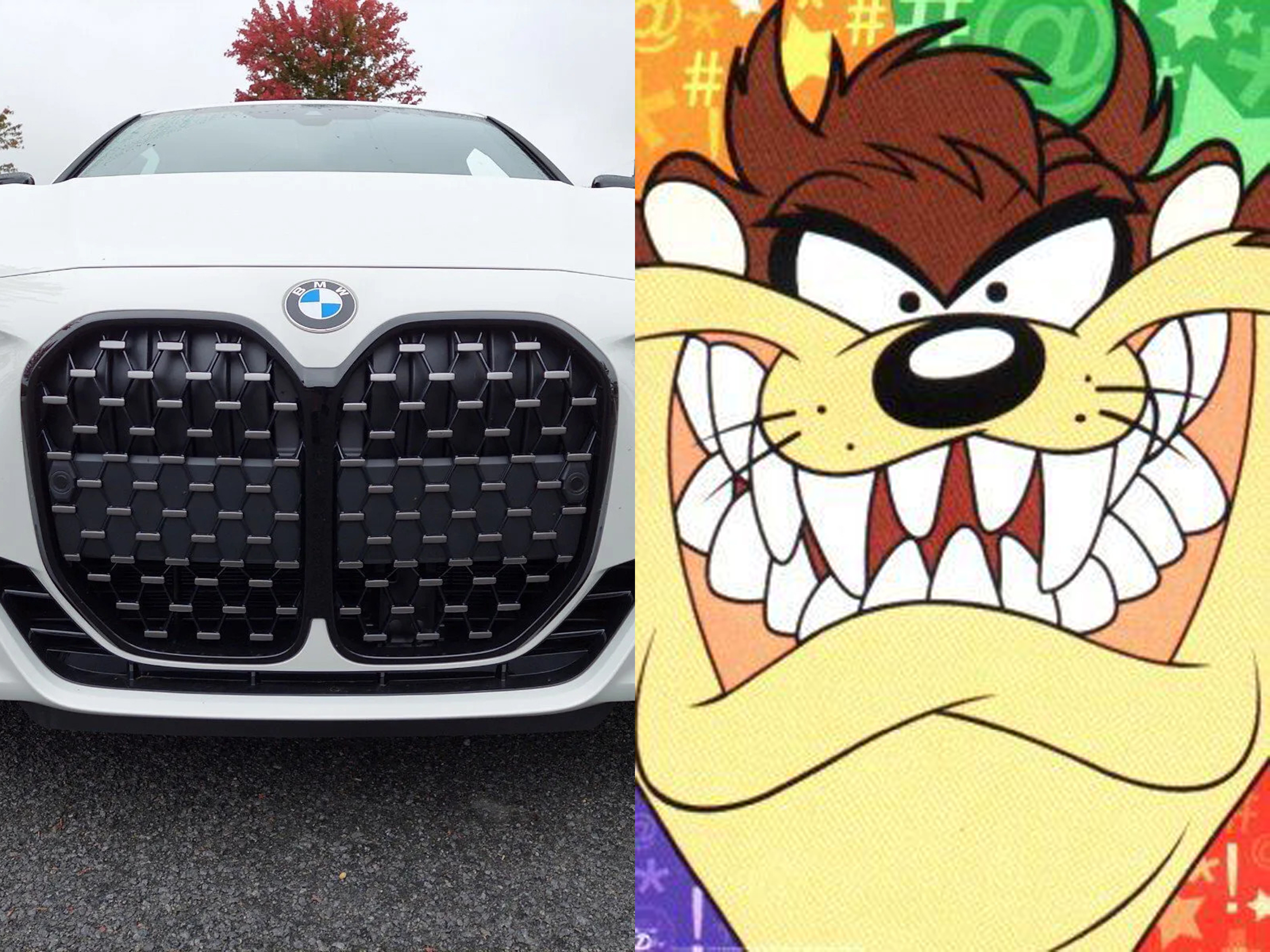
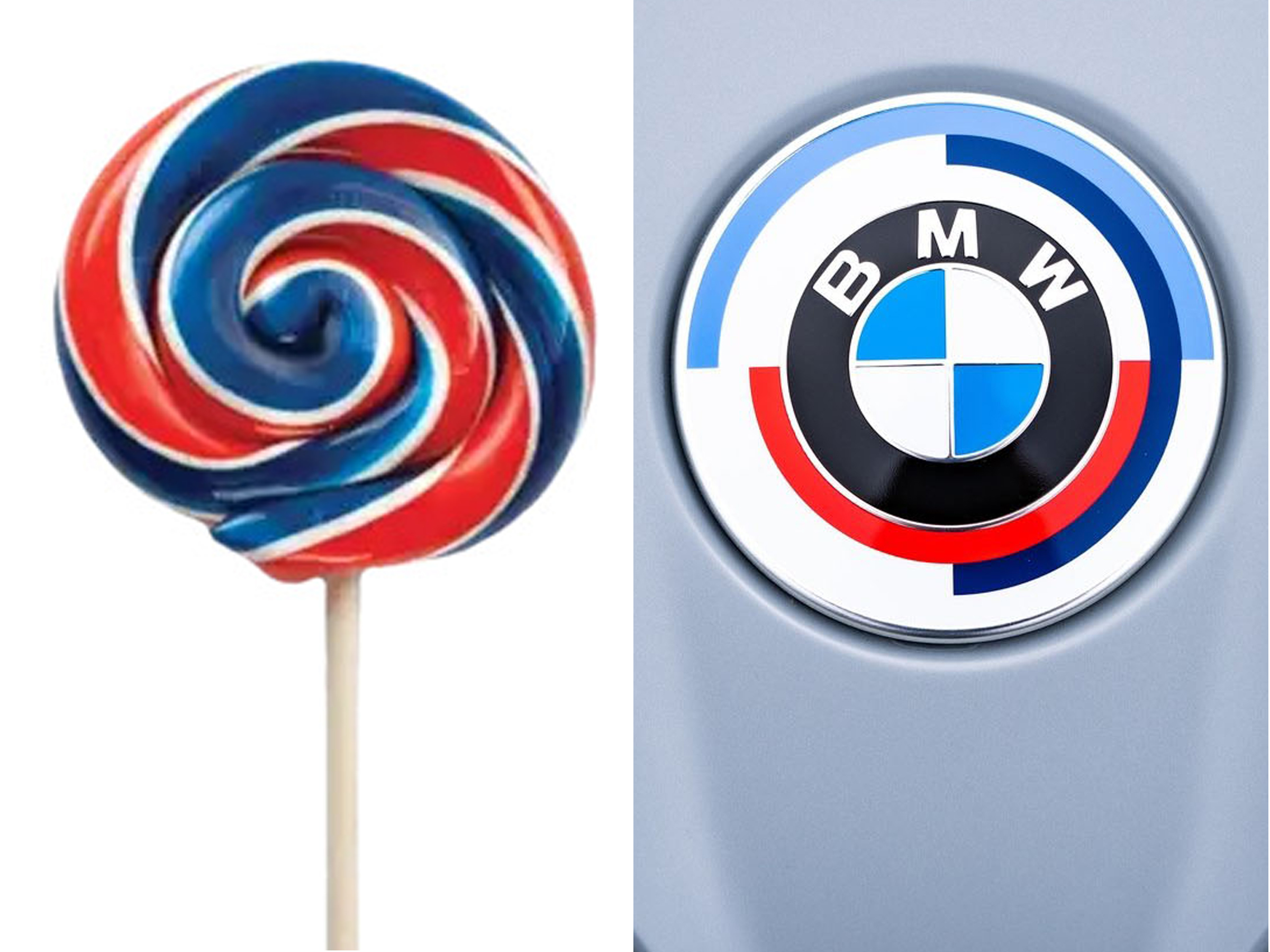
Recently I noticed a new BMW with a redesigned version of the iconic blue, white and black BMW badge. The new iteration called to mind a child’s multi-color swirl lollipop. That together with BMW’s recent addition of the oversized smiling Tasmanian Devil grill gave me pause. I realized that I had witnessed this manifestation of questionable branding efforts before. As a “car guy” such moves always engendered personal doubt and discomfort. As an exercise in retrospection I chose to revisit examples of brand infidelity I had witnessed and dig deeper before I explore two of BMW’s recent curious measures and their potential impact on the BMW brand.

Rather than looking first at BMW, Part I will start on the other side of the Strasse, with BMW’s arch rival Mercedes-Benz and in Part II, Volvo.

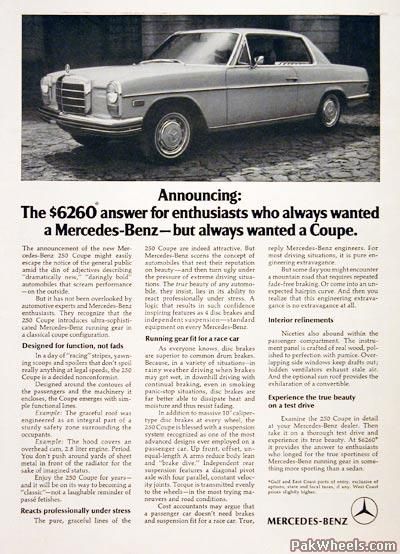
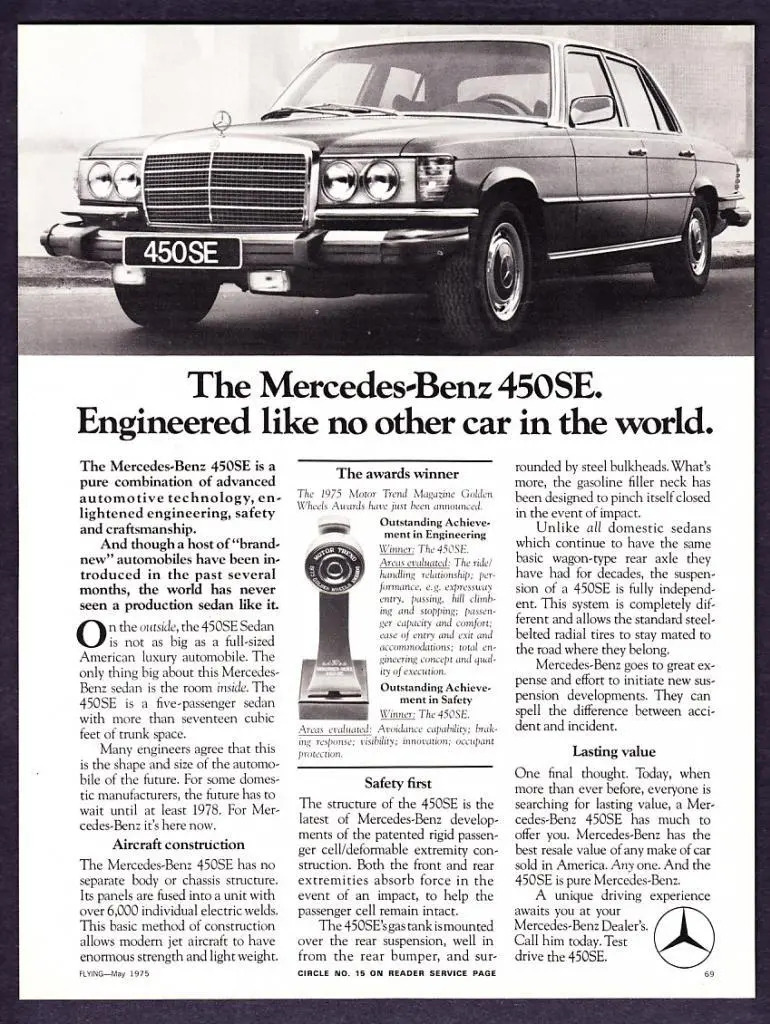
I began working at Mercedes-Benz in 1976. Then, the Mercedes-Benz boldly confident slogan “Engineered like no other car in the world” succinctly captured the Mercedes-Benz commitment to engineering excellence, quality, and luxury. It proudly advanced without equivocation the Mercedes-Benz brand values. As an organizational culture most everyone in the company embraced the passionate self-assessment of Mercedes-Benz as a builder of superior luxury automobiles for customers who understood, respected and could afford superior quality.

In the early years the business plan expressed by Mercedes-Benz management actually considered restricting overall Mercedes-Benz sales to 100,000 units to maintain its limited availability and support premium pricing and healthy margins. It is said that in the 1960s Executive VP of Sales Heinz Waizennegger laughed at the thought that consumers would ever consider paying $10,000 for a new passenger car. By the time I joined, company insiders laughed at the idea of people paying $20,000. By the 1980s nobody laughed any more.

Back then Mercedes-Benz as a company benefited from a workforce populated with skilled and dedicated car guys, both male and female, who, as a group, displayed a quiet and prideful confidence born of their perceived association with an internationally admired, stable and prosperous organization where the employees place and future seemed assured. Gifted engineers and technicians held respected status.

Many employees bought a new Mercedes each year at a favorable discount. Often the following year they would sell their year-old sedan for a profit. For longtime employees the annual profit could build to a cumulative sum where they were buying their annual new Mercedes with what felt like “house money.”

The Mercedes-Benz early North American business model succeeded based on a system where cars were designed, developed and perfected in a timely manner. Much like the aging of a prime steak or the maturing of a fine wine, Mercedes-Benz would bring without great haste well engineered and assorted superior vehicles to a loyal but limited market. However, the late 1980s witnessed U.S. sales volumes and margins declining. Word filtered out of internal management discussions considering the advisability of moving Mercedes-Benz product upscale into higher cost/higher margin but lower volume Rolls-Royce/Bentley territory.

Then Mike Jackson took the helm in 1989. He passionately preached to Stuttgart a message advocating reduced prices with more exciting product and advertising designed to reach a younger and broader market slice. To keep this in context, realize that M-B home office in Germany and M-B North America did not always see eye to eye. In their early years in America the mindset of the predominantly conservative post-war German Mercedes-Benz management in Stuttgart found the North America market baffling and at times infuriating. Especially humorous and emblematic of the disconnect surfaced in the early years when Mercedes-Benz in America pressured Stuttgart for a sunroof as a product feature. The German’s did not see the need when you could simply open the windows but, over time, Germany yielded to the demand. Shortly thereafter America wanted air conditioning. Home office in Stuttgart lost its mind. “The Americans had gotten their sunroof with the fresh air and sunshine now America wanted to close the sunroof and have air conditioning. By the 1980s, however, times were indeed changing with Mercedes-Benz having a more international character.

At the close of 1980s, U.S. sales had dropped for most European luxury car makers, including Mercedes. The economic recession, the luxury tax, and the dollar/mark valuation all played a part in the problem.

A 1991 study by J.D. Powers & Associates found that American luxury owners appreciated prestige but bought reliability, a Japanese brands’ strength. One particular reason for Mercedes’ maintenance issues, as compared to Japanese brands, emanated from Mercedes-Benz emphasis on cars being crafted more than mass produced. The Mercedes-Benz mindset at that time was expressed by Edzard Reuter, then chairman of Daimler-Benz, who said, “We constantly study our position and we always come to the conclusion that we should stay away from mass production. The economies of scale wouldn’t help us. Besides, we have a culture of engineering and product differentiation that would make it difficult.”

However, it had become increasingly apparent that Americans viewed Mercedes’ signature over-engineering as irrelevant. By 1991, Mercedes had started to pay attention to what the American customer and baby boomers in particular, wanted. This sea change in mindset resulted in Mercedes redirecting its focus away from engineering and towards marketing. Germany had listened to Mike Jackson. Mercedes-Benz would respond to a new reality by retaining the 3-pointed star but changing the value proposition it represented.

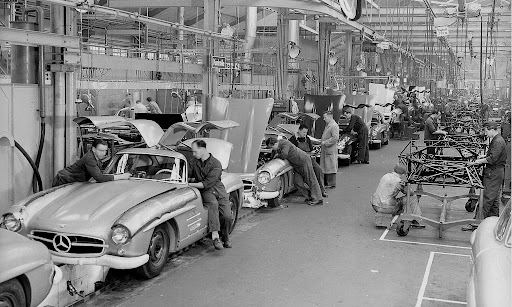
300SL factory craftsmanship

Like the canary in the coal mine, the slogan “Engineered like no other car in the world” would no longer sing the praises of Mercedes-Benz automobiles. The old brand values buckled under the pressure making way for a new paradigm intent on defining a new path to broader success.

Mercedes-Benz of North America retreated from its engineering-centric heritage to that of a North American marketing function. The retreat created pain. Notorious international business consulting firm McKinsey came in to plan the desired organizational changes with one of the results being a mass layoff of staff members that became known as “Black Tuesday.” This purging of experienced and loyal employees devastated company morale and weakened the foundation of the corporate culture. McKinsey interventions often left such organizational detritus in its wake.

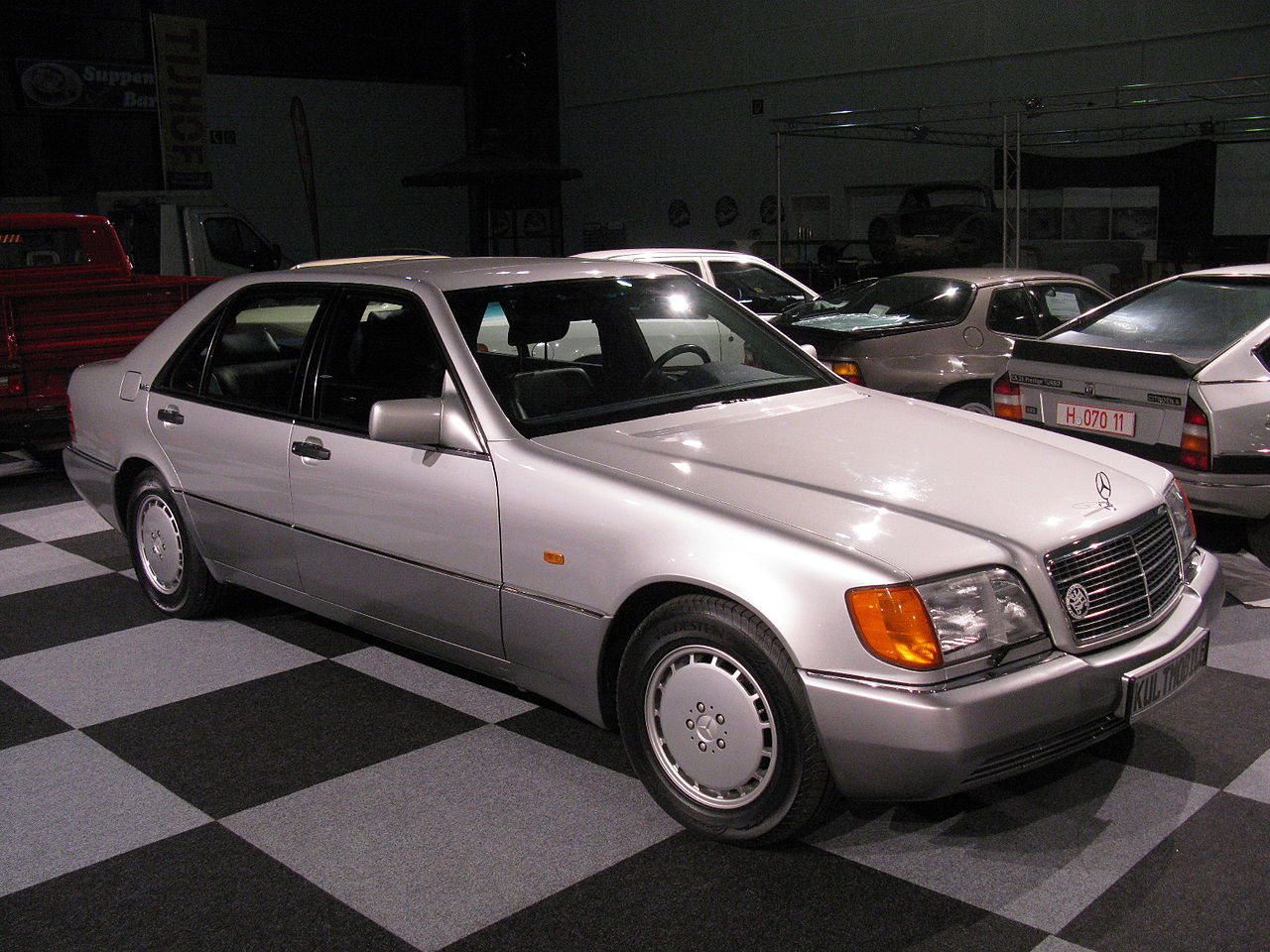
W140 S-Class

The radical departure from past practices would evidence itself when comparing the MY1992 W140 S-Class with its replacement the MY2000 S220 S-Class. With the W140, initial development started in 1981 with it coming to market in 1991. It should be noted that the final product caused much consternation in Germany. The impact of significant cost overruns associated with the project’s over-engineering (Estimate, approx. $1 billion) would ripple through the organization with lasting effects. That said, in the case of the W140, save for a later developing issue with the car’s biodegradable wiring insulation, its excellent build quality and noteworthy expression of over-engineering received wide praise but lukewarm buyer interest. Certainly, new competition contributed to Mercedes’ disappointing sales. Japanese luxury in the form of Lexus and others had burst onto the scene swinging polite but sharp elbows. It forced the staid luxury market including Mercedes-Benz into a period of wrenchingly painful self-examination.

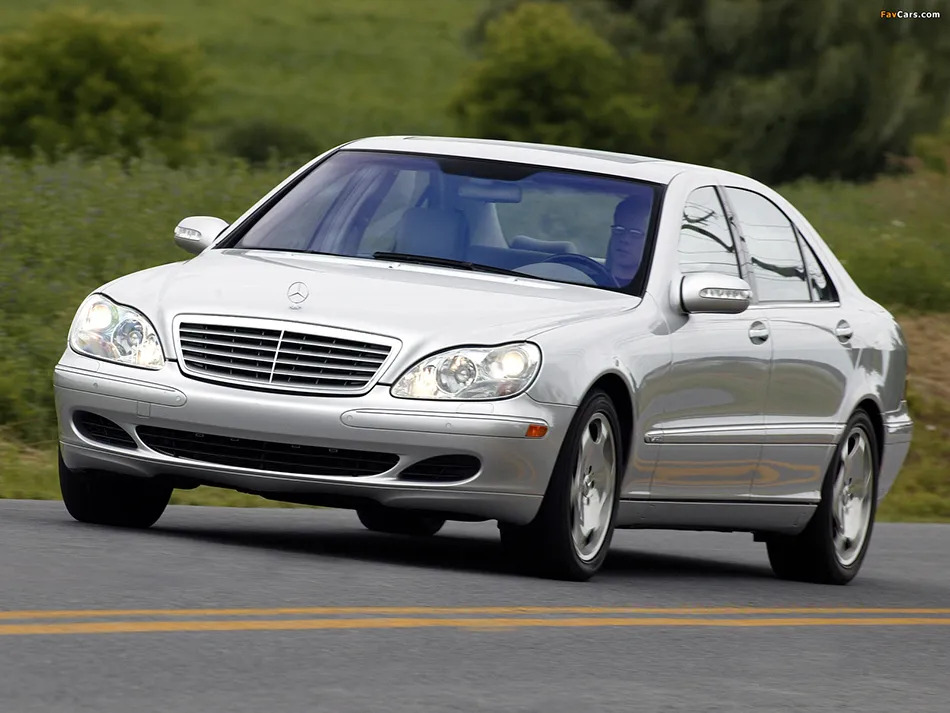
Development of the S220 began in 1992 at the dawn of marketing taking dominance over engineering at Mercedes-Benz. In comparing the S220 replacement for the W140, Motor Trend wrote, “Though hard to pin down, there was something about the S220 that suggested it was developed in an era when the engineers no longer held sway at Mercedes.”

S220 S-Class

Doug Munro, the respected online car reviewer and founder of “Cars and Bids” in comparing the S220 and W140, said, “It represents a low point being the product of cost cutting and simplification in production and engineering.” Munro went on to say, “The earlier goal in producing the W140 was to make the greatest car in the world and they did. In the case of the W220 cost cutting was the name of the game.” The 2000 S500 cost roughly 15% less than the 1992 S500.

So was the Mercedes-Benz course of action that of a brand betrayed or a smart business decision necessitated by a changing market?

The answer may well depend on your point of view. Are you a pure car guy or a business guy? A car guy savors great automobiles built with passion, brilliance, excellence and a cost be damned attitude. Business guys savor a great car that makes money. Car guys love Duesenbergs, Cords, Tuckers, Ferraris, Lamborghinis, Bentleys, Rolls-Royces to name a few. Unfortunately, all went bankrupt or were sold.

As to whether brand betrayal or smart business move, by the year 1998, one would have to say a necessary business decision. Why 1998? Because that year Daimler-Benz swallowed Chrysler and initiated a boiling cauldron of brand confusion and chaos. But that is story for another day.

Did Mercedes-Benz financially benefit from the brand’s redirection? Sales volume would seem to say yes. From Model Year 1991 though 1999 Mercedes-Benz unit sales increased from 58,868 units to 189,437 units. Certainly many factors such as more models, sportier offerings, the competitive set, exchange rates, manufacturing techniques and market conditions impacted sales as well. Furthermore, in considering the earlier fate of pinnacle brands such as Rolls-Royce, Bentley and, later, Mercedes’ own effort with Maybach, the idea of the upmarket move Mercedes-Benz management once considered, would seem to have been destined to fail. Furthermore, based partly on the success of Mercedes-Benz who industry insiders viewed as having been revitalized by Mike Jackson, Jackson now resides in the Automotive Hall of Fame.

In speaking of the old Mercedes-Benz brand, then, it may be best to say, “The king is dead. Long live the king.”


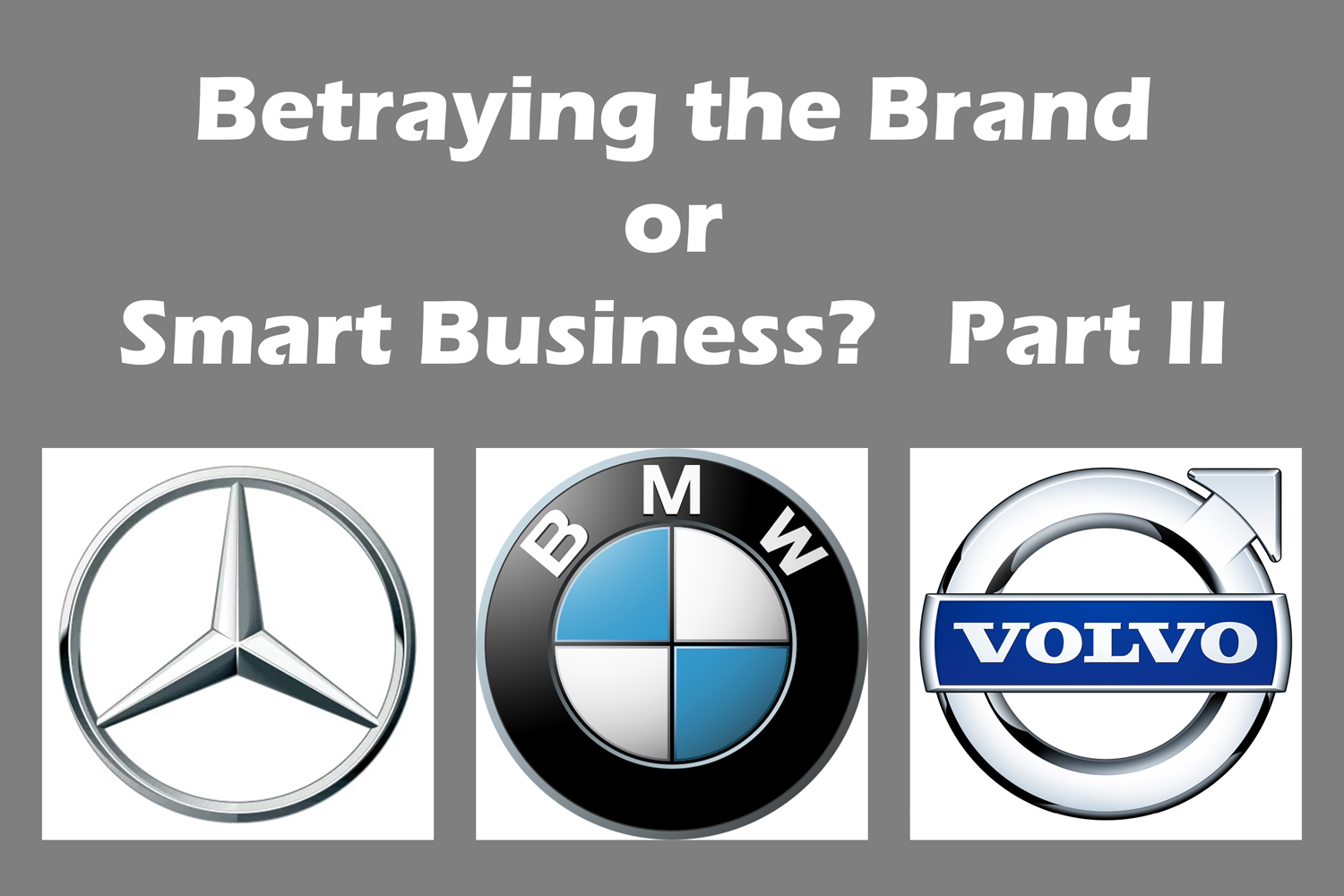
Betraying the Brand or Smart Business? Part II will focus on Volvo and BMW

By |2024-02-15T15:19:41+00:00February 15th, 2024|12 Comments

Cars We Love & Who We Are #48

It ranks high on the list of last places to look for classic Rolls-Royces and Bentleys. The meandering country two-lane bisects a large expanse of Mechanicsburg, Pennsylvania farmland. Upon cresting a berm saddled with a railroad crossing, the road descends to reveal a well tended but non-descript collection of linked single story beige structures with the character of warehousing. Au contraire, one has arrived at the Rolls-Royce and Bentley Museum and home to the Rolls-Royce Foundation and Rolls-Royce Owners’ Club. Much like an automotive Clark Kent there is far more here than first meets the eye.

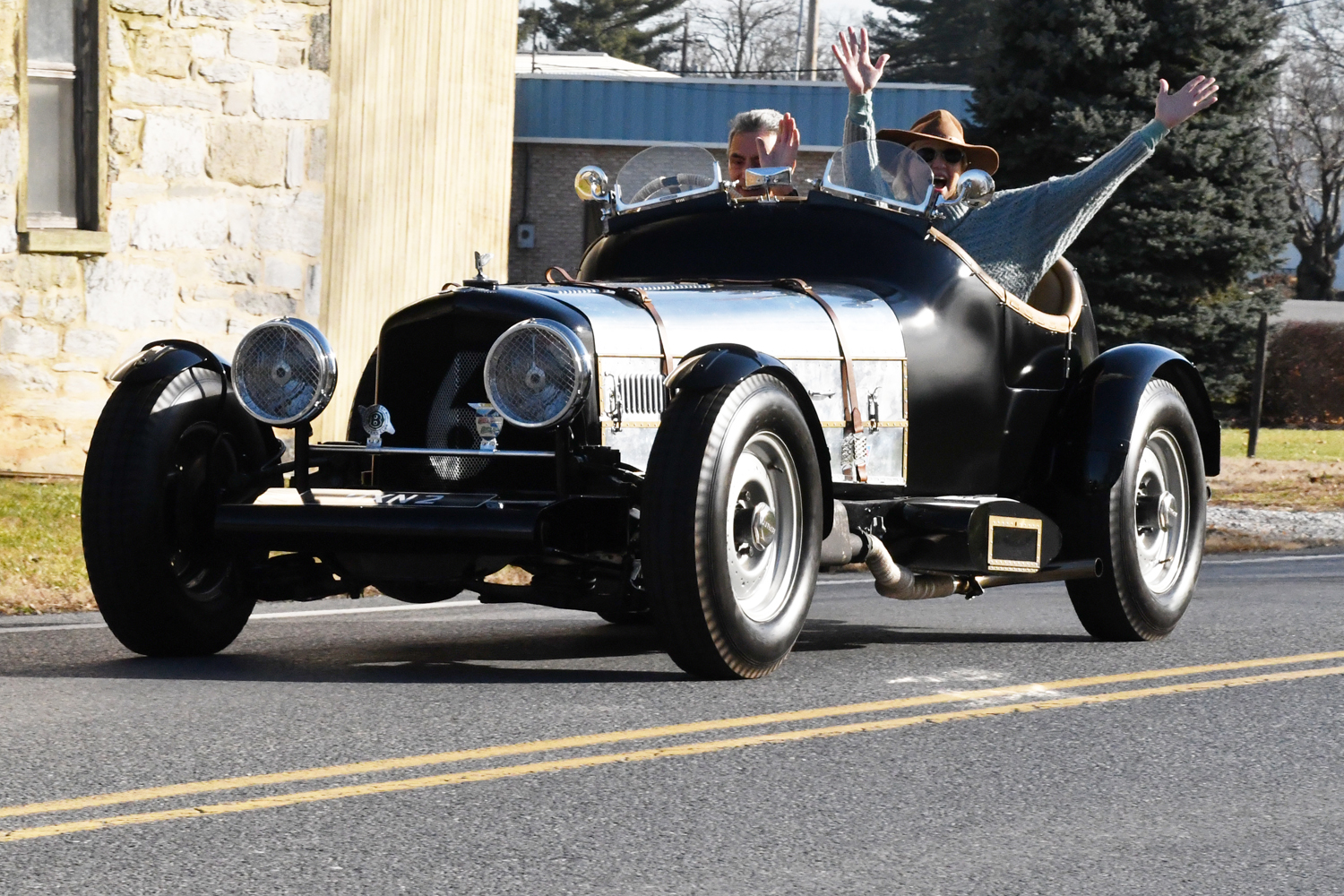
On this particular clear and crisp late autumn day turning into the front parking area reveals an array of vintage and classic Rolls-Royces and Bentleys. One in particular snags the eye and demands greater scrutiny. A striking black and silver open wheel hot rod sporting a Bentley Flying “B” vibrates in place, poised to launch.

Meet the Black Adder VI Bentley Special.

The Black Adder VI, an Outrageous Hot Rod Bentley

Alex and Elaine in the Black Adder VI

Daresay that the chances approached nil. Surely Baron Henry de Blonay of Villa Favorite in Chembésy, Switzerland never thought about it at all. What were the chances that his new 1947 Bentley Mark VI would, 70 years later, be a cycle fendered, open cockpit hot rod named after a poisonous viper and seen cruising the back roads of Mechanicsburg, Pennsylvania.

While tracking ownership history of early postwar Bentleys ranks high on the frustration scale, much of the Black Adder’s last 75 years is known. Most of it resides in Mechanicsburg, PA.

My friend Henry Uiga greeted me. A Rolls-Royce owner, club member and Drivin’ News reader, Henry had extended Drivin’ News an invitation to the Rolls-Royce Club’s monthly Volunteer Saturday. On this scheduled day club members gathered at the Museum to service the Rolls-Royce and Bentley vehicles in the collection. Watching the members in action quickly dismissed any preconceived notions of an elitist membership dominated by the white glove crowd depicted in the iconic Grey Poupon Mustard ads. The men and women present and immersed in their hands-on work displayed a hardy respect for the 100 plus-year heritage of Rolls-Royce and Bentley automobiles including that featured in the fabled mid-century “Loudest thing is the clock” ads.

As I entered a workshop lined with vehicles representing a century of British engineering excellence, I had found Henry working on an open wheel roadster the likes of which I had never seen. It sported the Bentley Flying “B.”

Displaying an apparent Dry Lakes Racer/T-Bucket inspired visual execution and chassis number B46AK, this right-hand drive Bentley hot rod pleased the eye with a striking livery of a black passenger tub with saddle tan interior, black cycle fenders and silver aluminum bonnet. With Brooklands Type Racing Screens, leather hood straps and an athletic stance, this well conceived custom execution represented a consummate example of a breed of collectible Bentley, the modified Bentley “Special”.”

Starting life as what might be described as the entry level 1947 Bentley Mark VI, the Bentley Special concept came to life in the early 1960s. At that time, the poor quality sheet metal used in the early Post WWII Mark VI had almost universally fallen prey to the tin worm. In sharp contrast, owners found their Bentley Mark VI’s seriously deteriorated steel bodies to be mounted on rugged and reliable chassis with an equally capable drivetrain.

As a restored Mark VI did not possess a high value comparable to a Rolls-Royce Phantom or a Vintage Bentley, owners saw little merit in committing large sums of money to the restoration of a rusted hulk. However, the Mark VI did possess a rugged drivetrain and chassis pretty much regarded as bulletproof. The solution? Re-body and upgrade the remaining chassis to create a “Special” that reflected the personal tastes and interests of the individual who commissioned the restoration.

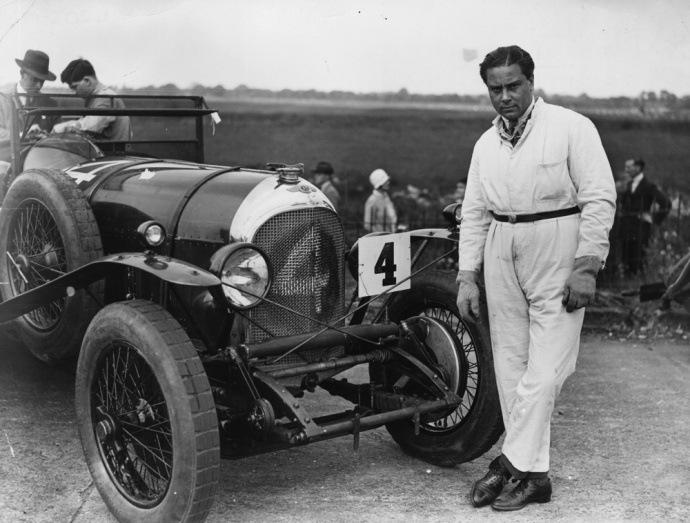
Woolf Barnato

Starting around 1963 in the UK, Bentley Specials became very popular. Many of the first re-creations emulated the vintage racing Bentley’s of the late 1920s and early 1930s. During that period Bentley had made its name in competitive motorsports with numerous victories including multiple wins in the 24-Hours of LeMans. At the same time, this period witnessed the heyday of adventuress part-time drivers, more sportsmen than professionals. They became known as gentlemen-drivers who would race their cars at the track and then drive the same cars home. Their ranks included Bentley drivers like Woolf Barnato, John Duff and Glen Kidston. These men, though not professional drivers, piloted Bentley’s to many impressive victories in the 1920s and 1930s earning them the name, the “Bentley Boys.”

Bentley “Specials” today offer non-professional drivers great enjoyment in vintage racing as well as rallies and tours. Utilizing open style bodywork and Bentley sourced performance upgrades, one prominent auction house states, “We admire these MK VI Specials, and think they best represent what a true British gentleman might create in lieu of an American hot rod.”

To get the real story behind the Museum’s chassis number B46AK Black Adder VI Special, Henry directed me to Mark Lizewskie, the Executive Director of both the Rolls-Royce Owner’s Club and the Rolls-Royce Foundation. Mark said, “As with all the vehicles in our collection this Special came to us as a donation. Presented to us by the married couple of author, military historian and decorated Special Forces veteran James Stejskal and Ms. Wanda Nesbit, a United States diplomat and career Foreign Service Officer. the Black Adder VI entered the collection in 2017.”

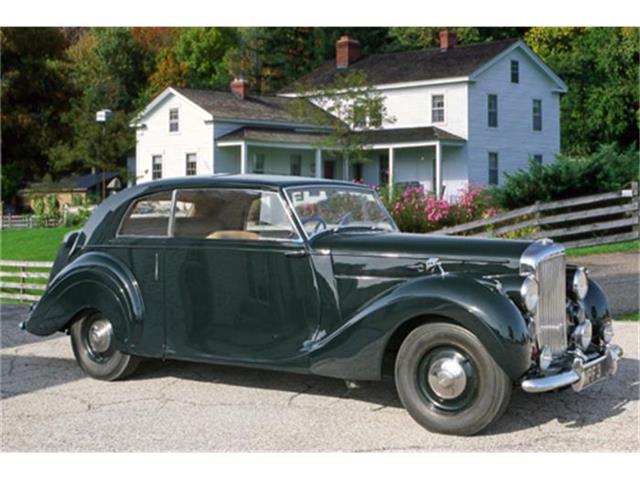
James Young Coupe bodied Mark VI

The record seemed to indicate that chassis number B46AK started life in 1947 as a James Young Coupe bodied Mark VI. The subsequent search for any records covering the next 25 years drew a blank. Fortunately its history resurfaced in the 1970s when Johnard Engineering, located in Blandford, Dorset UK, re-bodied B46AK as a Bentley Special. Johnard possessed considerable renown for the superior technical and aesthetic execution of its Bentley Specials. Elton John owned one and another finished 4th in class in the 1997 Peking to Paris Challenge.

The 21st century saw B46AK experience a second re-bodying by the late Victor Yordy of Metal Works in Dewart, Pennsylvania. Many regarded Yordy as an artist who at times would create new art in the form of an automobile. B46AK’s beauty extended beneath the skin with all mechanicals undergoing a comprehensive performance upgrade by the Rolls-Royce specialists Pierce Reid and Billings Cook at The Vintage Garage in Stowe, Vermont. Billed as purveyors of superlative engine rebuilding, mechanical restoration and service since 1963, the end result affirmed their reputation. And so, the Black Adder VI came to life. As reported in The Flying Lady, “ The Black Adder VI is a formidable performer, with 90+ mph available in third gear alone; no one is exactly sure what the top speed is on this car. Equally at home on the track or on the road. It is in outstanding condition and a formidable performer. In short it embodies everything a Bentley Special should be.” In 2015 it received a Touring Class award at the RROC Annual Meet.

Mark in describing some of the technical upgrades said, “As with all Specials it reflects the owner’s specific taste and preferences. Mark continued saying, “It’s certainly not original. And after all, that is the point of a Special.”

In enhancing the original Bentley 4.3-liter inline 6-cylinder, the Black Adder features an R-type Continental big valve head and highly desirable R-type Continental manual center shift gearbox. Mark added to the list saying, “It’s upgrades include disc brakes, larger SU carburetors and numerous drivetrain tweaks.”  As to the actual engine and performance specs, Mark says, “It has never been on a dyno. But, together with the engine upgrades and the significant weight reduction due to the open cockpit re-body, performance has improved significantly.” Interestingly no base performance figures exist as Rolls-Royce/ Bentley never would publish them. With true British reserve, the corporate answer to questions about horsepower and performance was, “Adequate.”

Now came the time to bring the Black Adder out to play. Climbing behind the wheel would be Foundation volunteer Alex Sharpe. Alex said his lean physique, comfort with the right-hand steering and the four-speed found him taking the Black Adder out with the greatest frequency.

Elaine, my partner in crime, would be taking the passenger seat for the test drive. She noted that the interior while very nicely trimmed did feel quite confining. She said, “The tiny doors provided minimal easing of entry. I am glad I do a lot of yoga otherwise getting in and out would be a challenge.” In referring to my size twelve feet she just shook her head and said, “No way.”

Alex agreed saying, “The cockpit itself is very tight. It’s very shallow at the end so your seating is much more constrained and the relationship between you and the steering wheel is much different than people are used to in a modern vehicle.” Alex continued saying, “You sit tall in the seat with the door top in line with your kidneys. That together with the fact that instead of having a conventional windshield you have the Brooklyn screens makes for a very open cockpit.

Twitchy might be the best word for Alex’s description of the Black Adder’s handling. B46AK’s close coupled design positions the driver just forward of the rear axle while, much like an XK120 (Alex owns and drives one), the front end feels a mile away. Alex said, “It can create a dynamic that produces over steer.” With a wry smile Alex laughed saying, “I have not pushed it to the point where I can confirm my suspicions. I like being a volunteer here.”

In closing, when asked for any other comment he would have on the experience of driving the Black Adder VI Bentley Special. Alex said, “I just can’t wait to get out there and enjoy it more.”

Apparently being snake bit is not always a bad thing.

By |2024-02-01T15:00:16+00:00February 1st, 2024|1 Comment

Cars We Love & Who We Are #47

As announced in the last Drivin’ News posting, I have chosen the depths of winter in New Jersey to produce a Collectible Car event comprised of a photography show, raffle, wine tasting and panel discussion. Its purpose, to benefit North Jersey’s decades-old and respected Tri-Boro Food Pantry.

The logic inspiring my seemingly counter intuitive plunge into the heart of Winter Pattern SAD (Seasonal Affective Disorder) resides in the fast fading joy of the increasingly distant holidays and the associated ennui of a large population of car enthusiasts Jonesing for something, anything car related to do. I am placing my bet on a sunny day in January that together with a fun and interesting Collectible Car event will entice a boatload of enthusiasts out of their man cave hibernation.

As my esteemed panel of experts comprised of Dave La Chance, Bob Austin, Bryan Maletsky, Fred Hammond and Matt Maisano will be wrestling with the topic of “The Future of Collectible Automobiles” I have decided to explore just what makes an automobile collectible.

Defining “Collectible Car.”

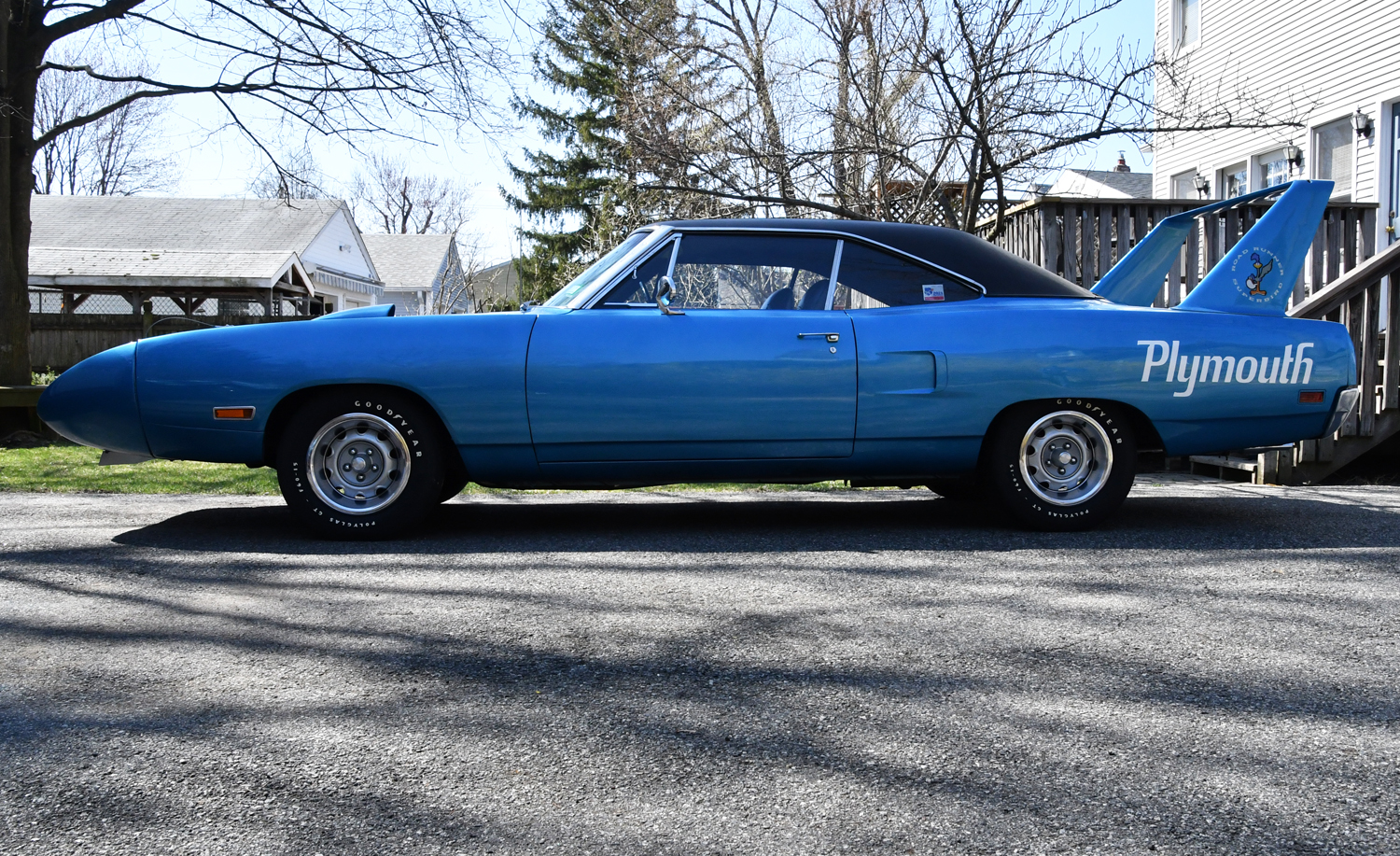
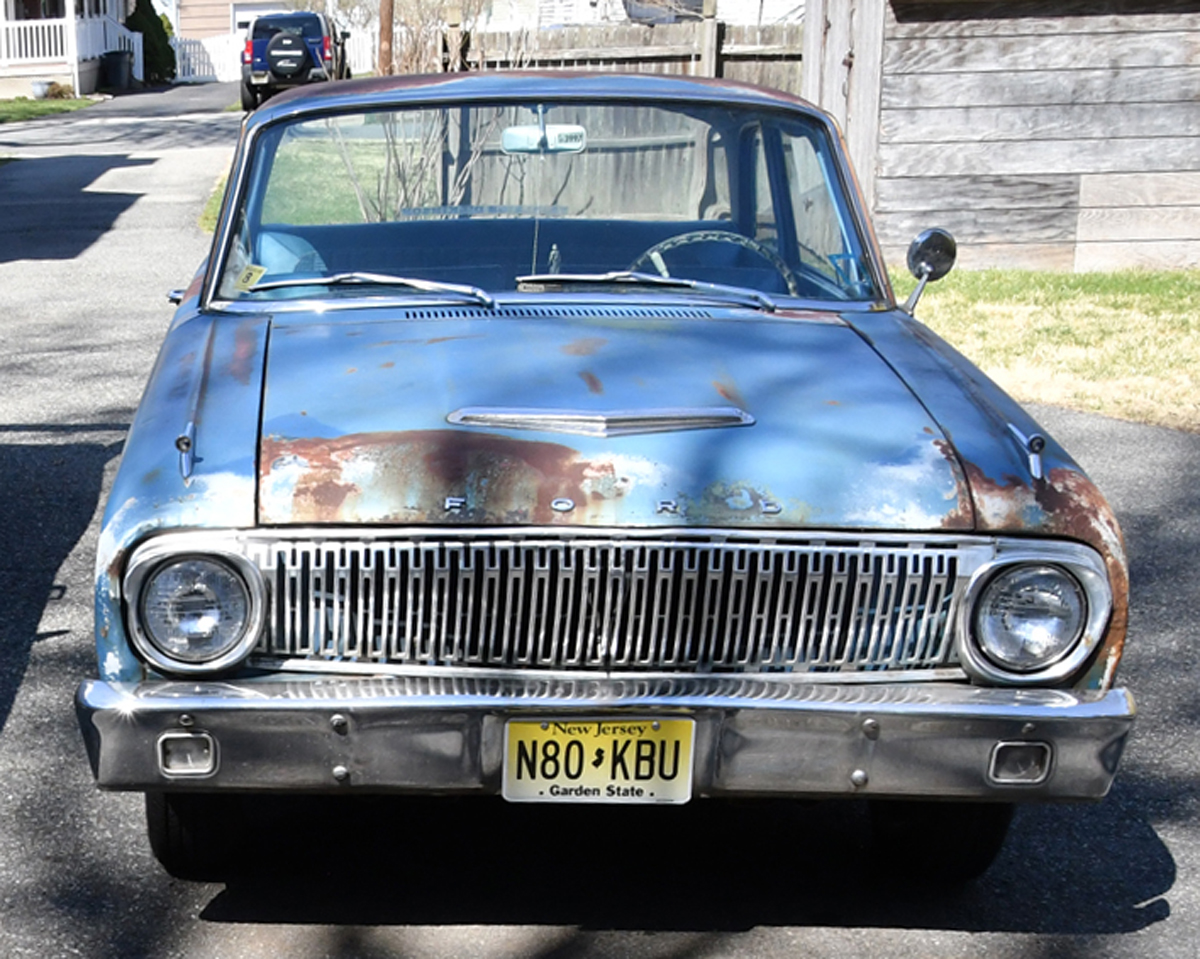
Vinny Plotino with his ’70 Plymouth Superbird and ’62 Ford Falcon

So What defines a collectible vehicle?

In the broadest sense, a collectible car is one you do not need in the least but would most love to have. Much like asking opinions on who makes the best pizza, the  definition of a Collectible automobile can vary. In the case of Jay Leno, he says, “It should be of technical or historical interest, fun to drive and pleasant to look at.” Others such as renowned car enthusiast Miles Collier, founder of the Revs Museum and Dr. Fred Simeone founder of the eponymous Simeone Automotive Foundation Museum both put a more a much finer point on what determines a true collectible automobile. For the sake of this article, I would like to take everyone to my friend Vinny Plotino’s garage.

Opening the garage doors reveals a pristine B5 Blue 1970 Plymouth Superbird and a severely distressed 1962 Ford Falcon. Few cars could stand farther apart on the collector car spectrum. Vinny’s Superbird towers as an unmodified, low mileage, highly valued iconic beacon of visually outrageous high performance.

His lowly, bland Ford Falcon displays a level of patina that crosses the line into structural decay. As to its cash value, it has none. Vinny pays more each year for a place to store the car than the car is worth. However, value to the wallet can be trumped by value to the heart. ToVinny, this Falcon belonged to his beloved and deceased childhood neighbor Mrs. Olesko. This 85-horsepower budget coupe never got more than 20 miles out of town and never did so at great speed. However, while traveling within that tight circle it played a huge part in Vinny’s life since he was seven-years old. He treasures that little blue Falcon for all the love and memories it holds for him but for him alone and no other collector. However, what of other vehicles that do not rely on tender memories to have value? These special interest vehicles merit love and admiration as subjects of desire for what they represent within the broad universe of Collector Car enthusiasts. Using Hagerty and other respected sources, I have segmented such special interest vehicles into three specific groupings as automobiles desired in primarily unmodified form.

In the case of Collier and Simeone, the emphasis placed on a car’s proximity to its original unmodified form is of paramount importance, with its worth determined by a rigorous assessment based on a specific set of attributes.

Roughly based on Collier’s and Simeone’s benchmark’s for collectability, the following four primary attributes and three attribute enhancements represent the primary drivers of a vehicle’s worth as a Collectible car.

PRIMARY ATTRIBUTES

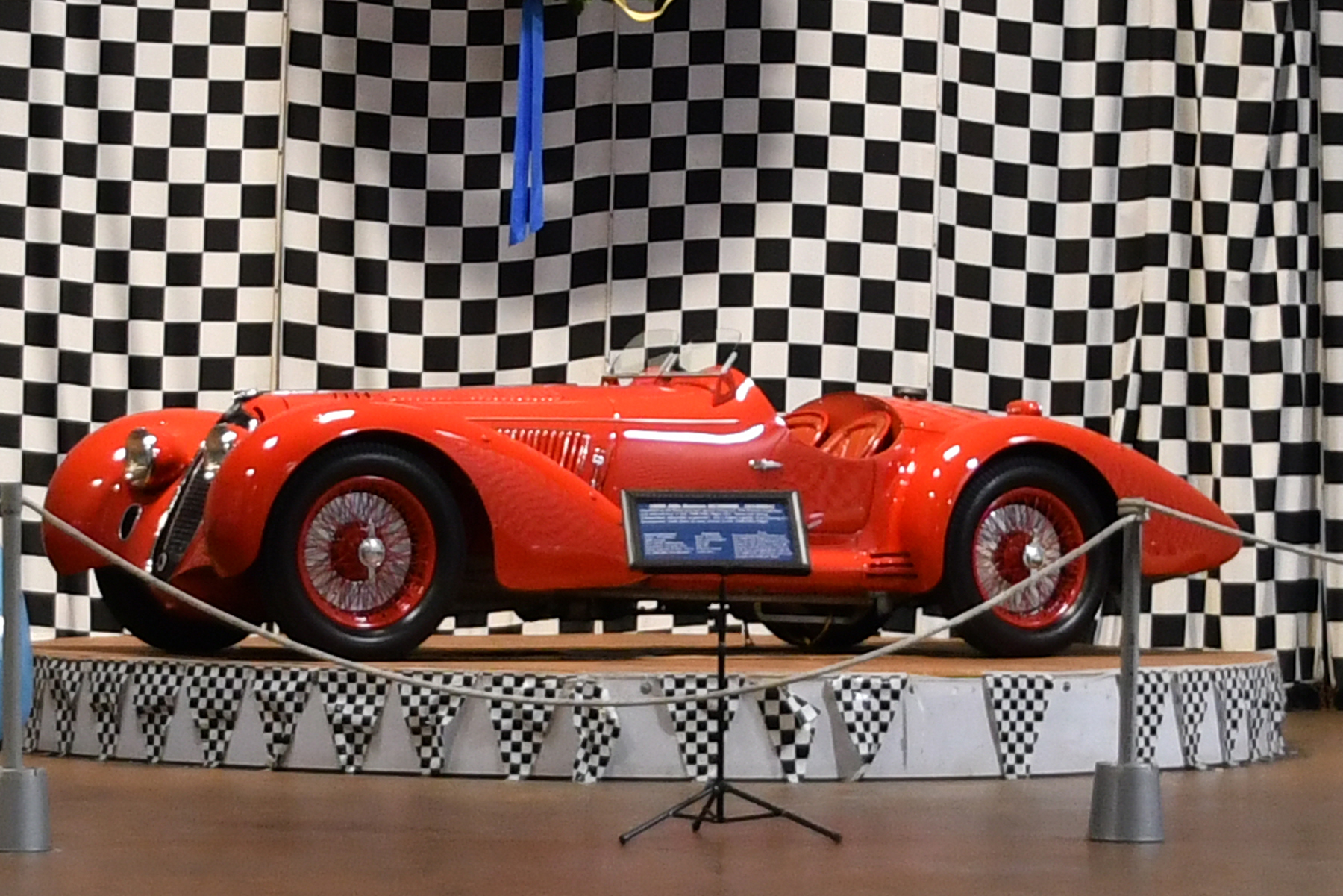
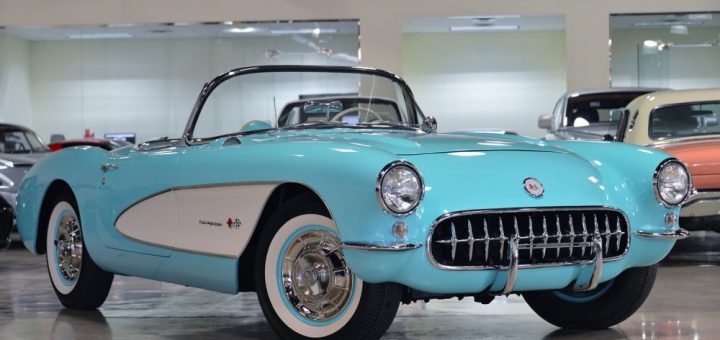
  1. Evidence of past design innovation, style, construction technique, etc (1971 Hemi Cuda, 1938 Alfa Romeo 8C 2900B, 1957 Corvette)

    Plymouth Hemi ‘Cuda


    1938 Alfa Romeo 8c 2900B


    1957 F.I. Corvette


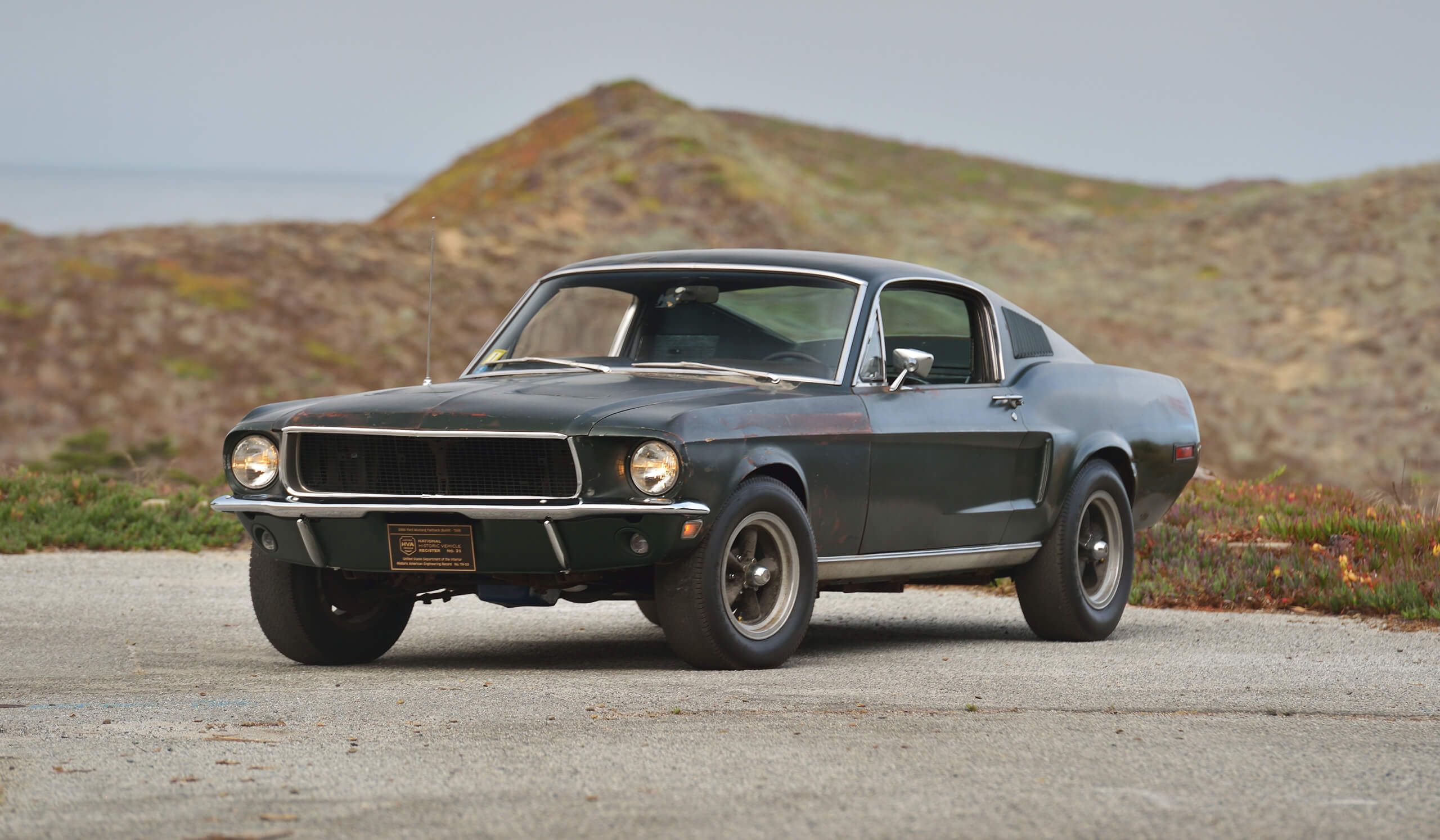
  1. Political, cultural or spiritual significance for a particular segment of society (Bullitt Mustang, James Bond’s 1964 DB5 Aston Martin)

    1968 Bulltitt Mustang

    1964 “James Bond” DB5 Aston Martin


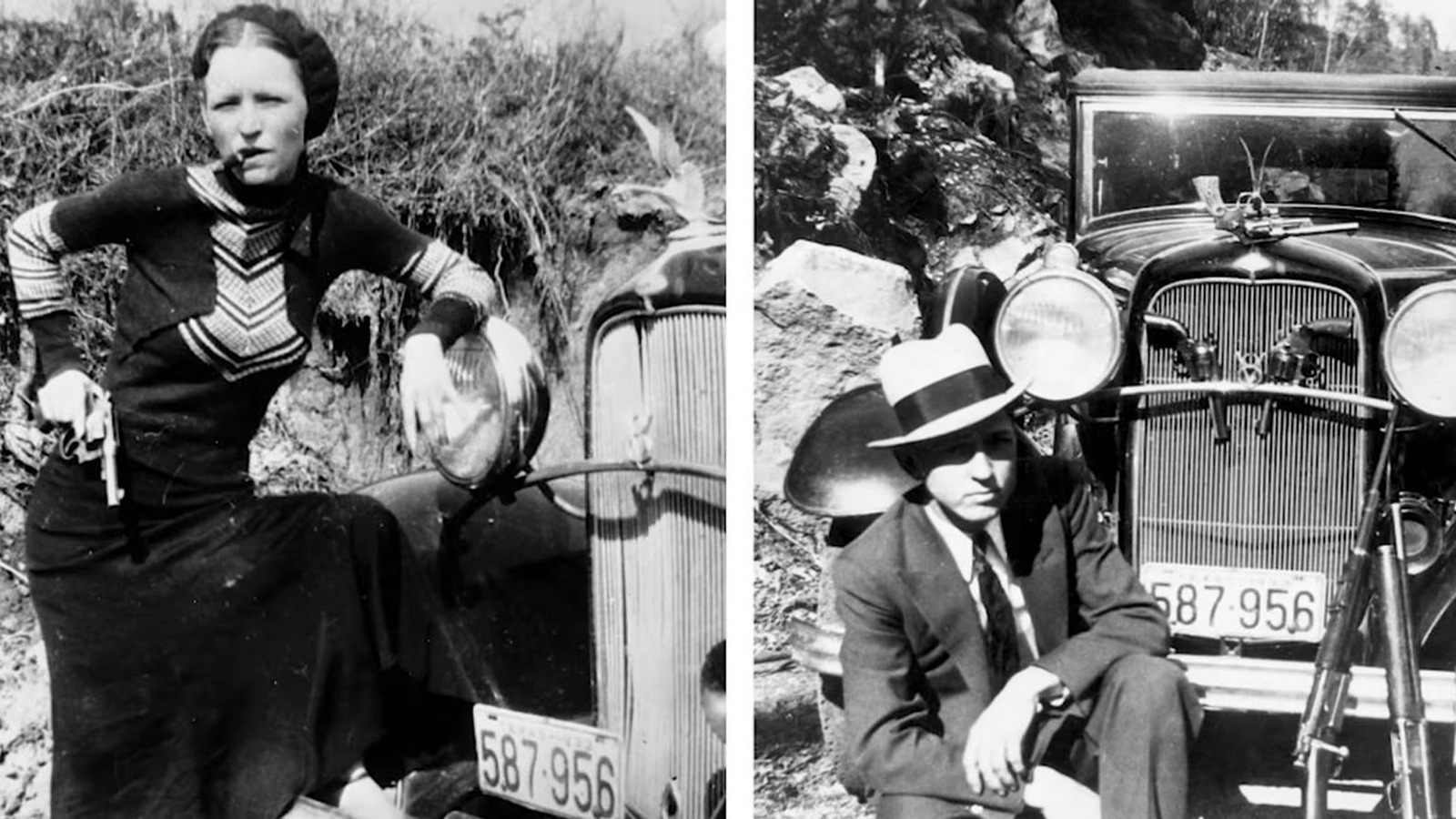
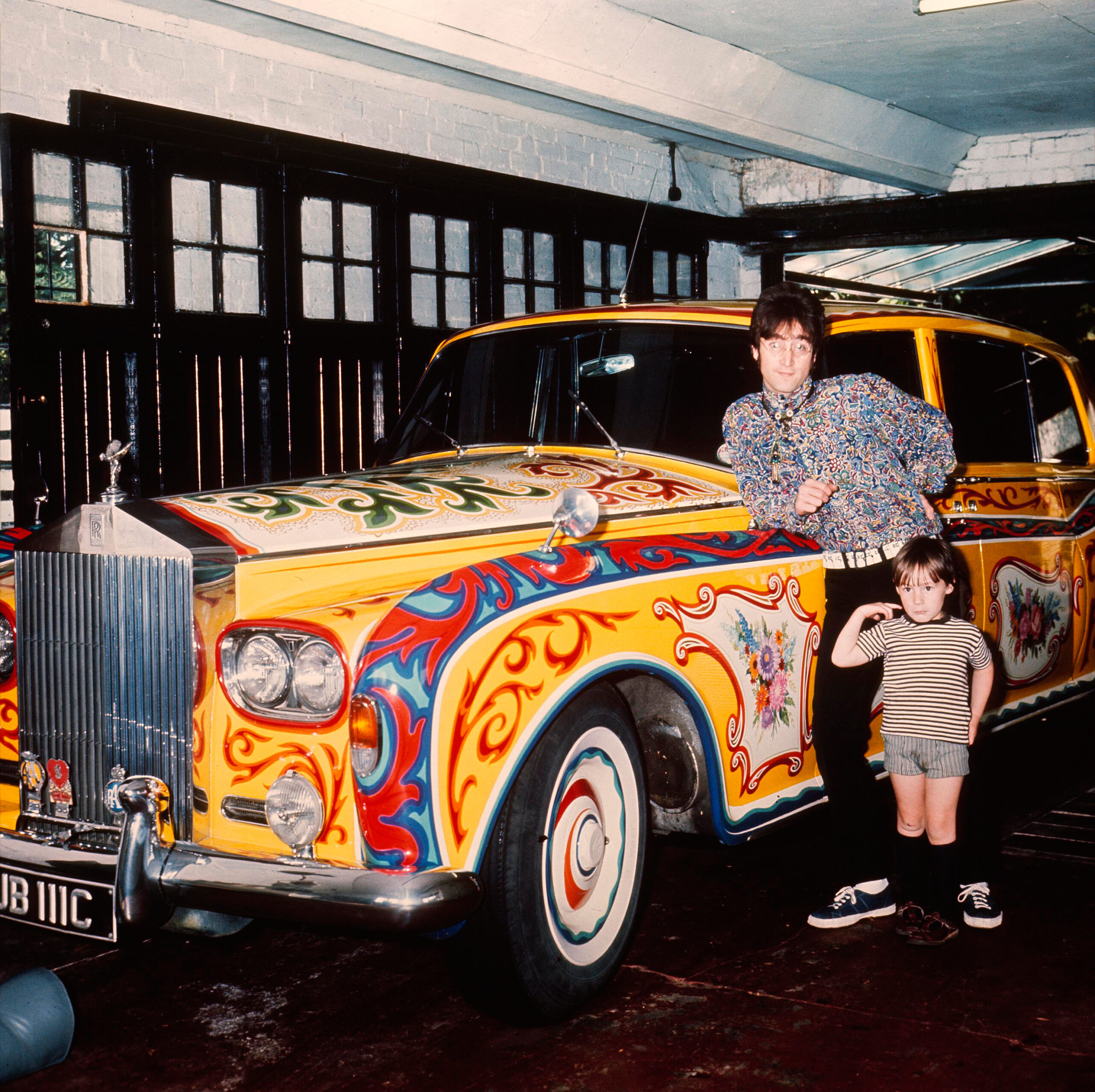
    3. Association with a particular event or individual (Bonny and Clyde’s Ford V8, John Lennon’s Rolls-Royce, Clark Gable’s Jaguar XK120)

    Bonny and Clyde’s “34 Ford V8


    John Lennon’s Rolls-Royce


    Clark Gabel’s 1952 XK120 Jaguar


    4. Exceptional aesthetic qualities of form and decoration (1961 Jaguar E-Type, 1936 Bugatti Type 57 Atlantic Coupe, 1963 Corvette split window coupe)

    1961 Jaguar E-type


    1936 Bugatt1 Atlantic


    1963 Corvette Sting Ray

    ATTRIBUTE ENHANCEMENTS

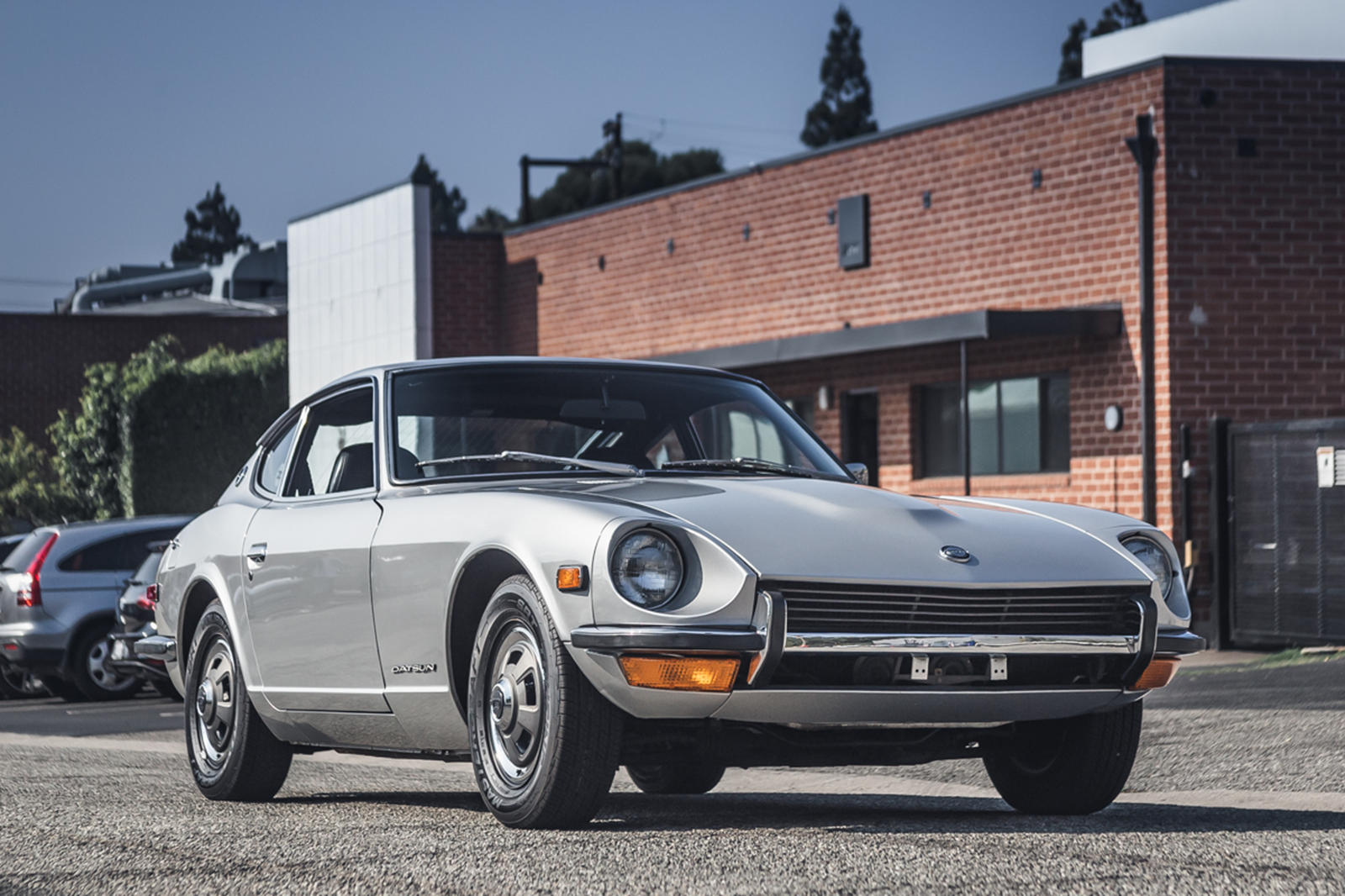
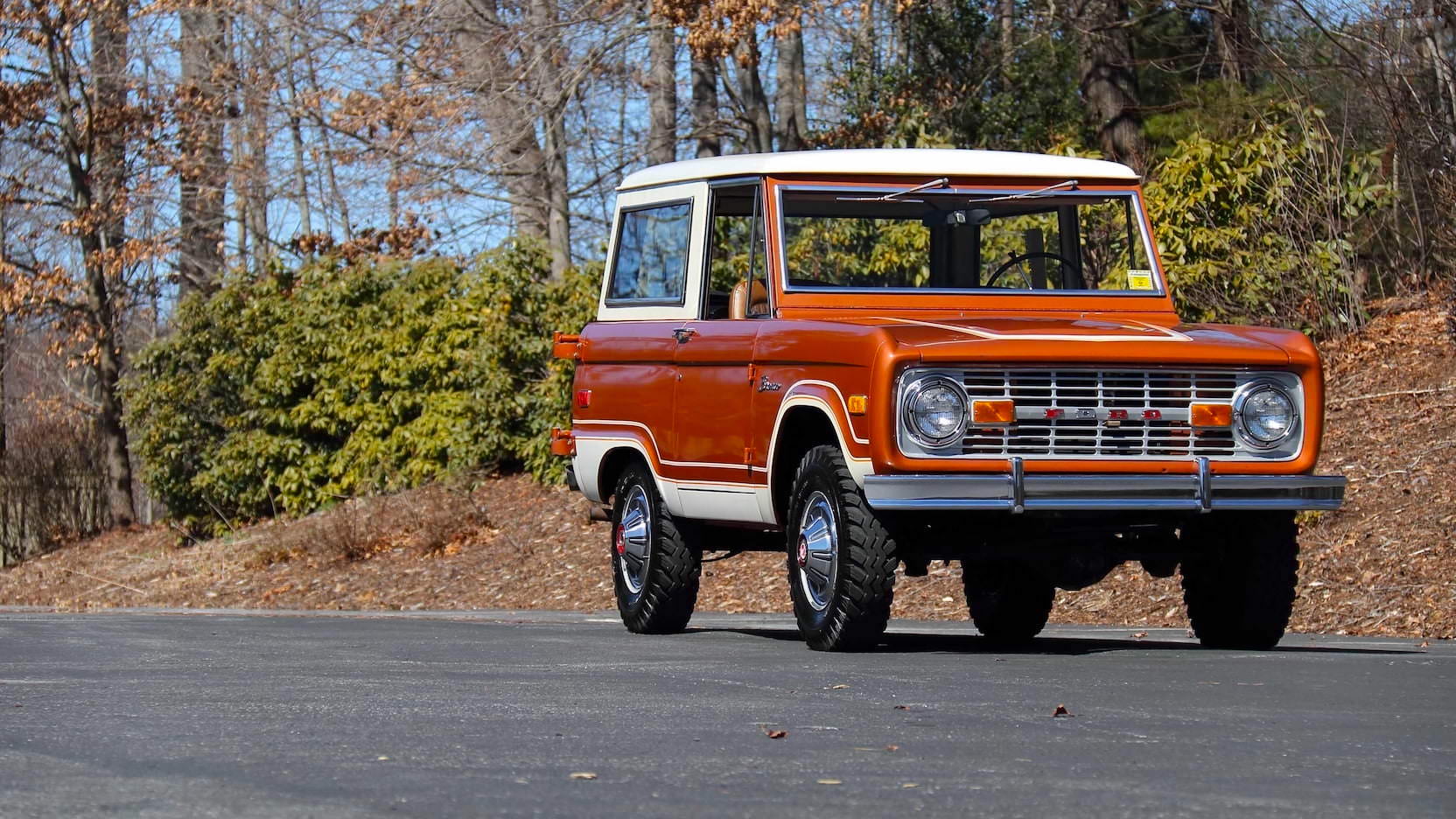
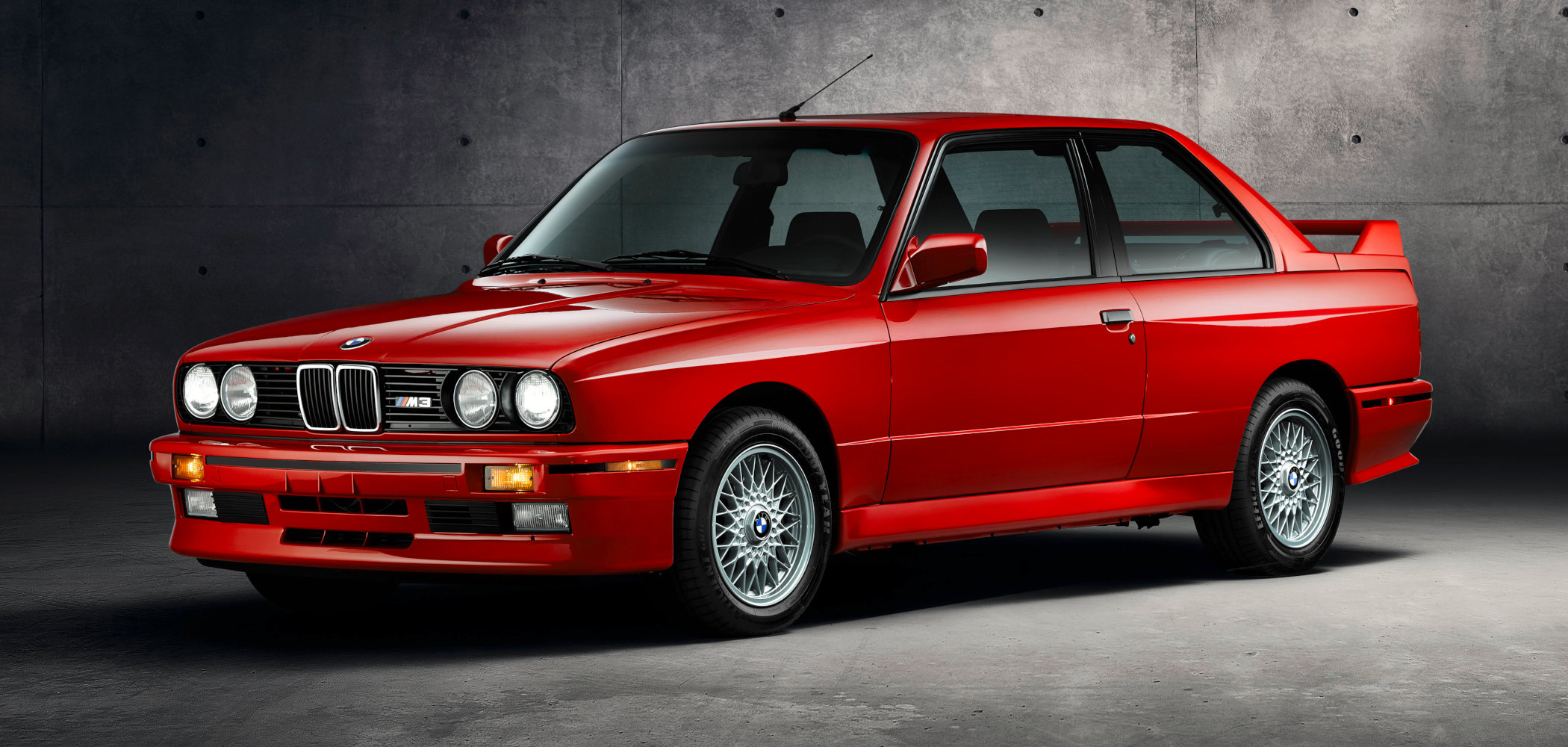
    1. Popularity that increases desirability in the present marketplace (1st Generation 1970- 1972 Datsun 240Z, 1st Generation 1966 – 1977 Ford Bronco, 1st Generation 1986 – 1991 BMW E30 M3)

    1st Generation Datsun 240Z


    1st Generation Ford Bronco


    1986-1991 BMW E30 M3

    3. Originality, condition and extent of remaining original material (Tom Cotter Barn Find 1967 Big Block Shelby Cobra, 1966 Ferrari 275 GTB, Seinfeld’s 1958 Porsche Speedster)

    Barn Find Original, 1966 Ferrari 275 GTB and 1967 Big Block Shelby Cobra


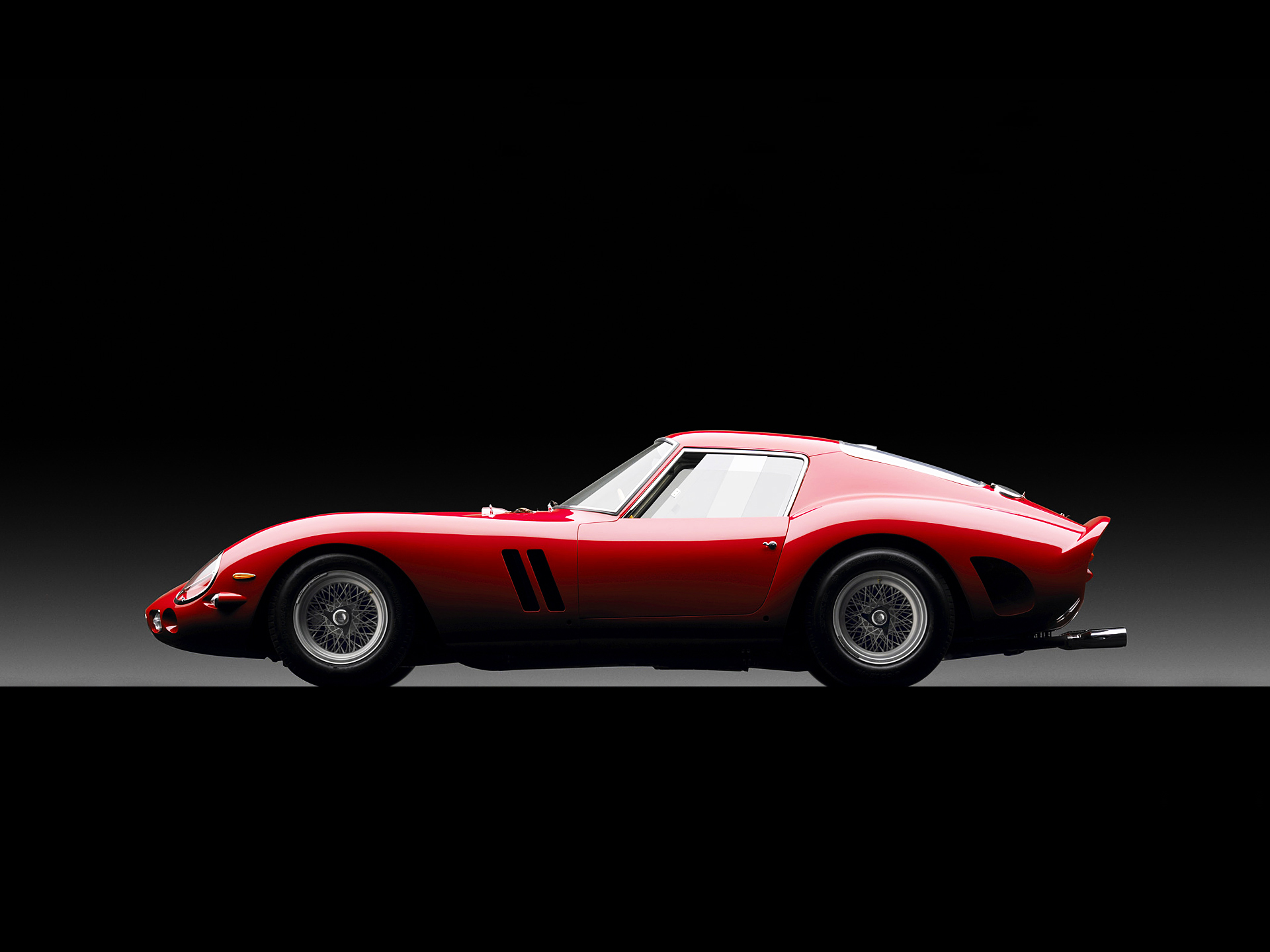
    3. Rarity as a survivor. Probably fewer pristine 1977 Mavericks exist than the thirty something early 1960s Ferrari 250 GTOs. However, the Maverick has no value while recently a 250GTO sold for $51.7 Million.

1962 Ferrari 250 GTO

The following three specific groupings offer special interest cars where the determination of value resides to a significant measure on the degree it possesses Primary Attributes and Attribute Enhancements:

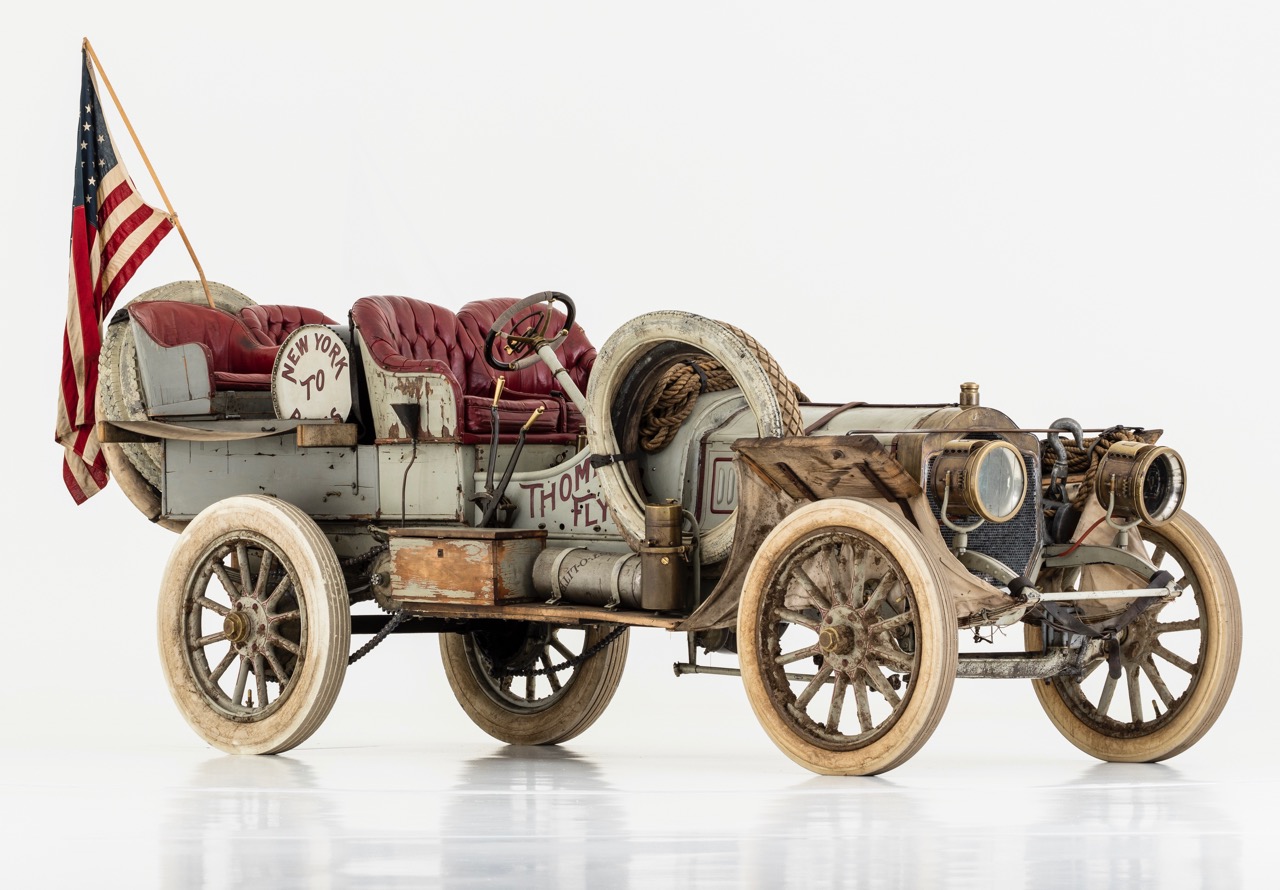
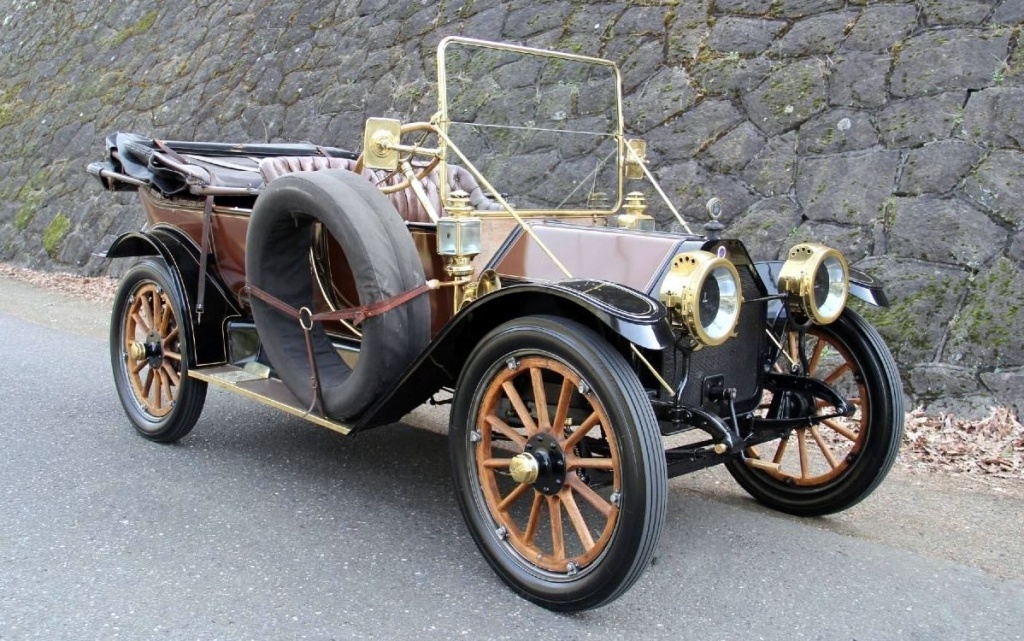
Brass Era – Vehicles from 1903 to 1918 named for the prominent brass fittings used during the period for such features as lights and radiators.

1907 Thomas Flyer


Brass Era 1912 Buick


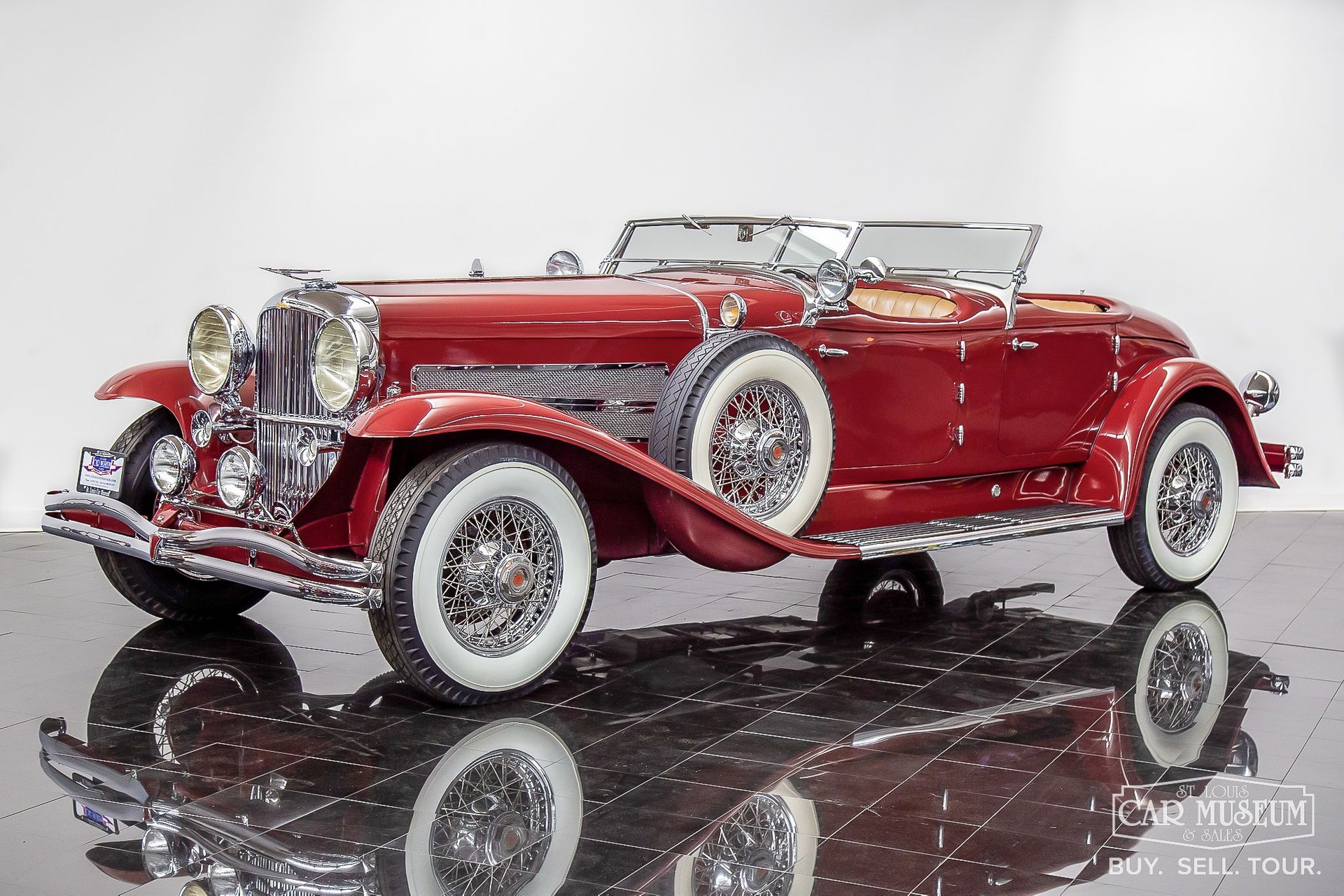
Vintage Cars – Vehicles produced between 1919 to 1969.

1935 Duesenberg

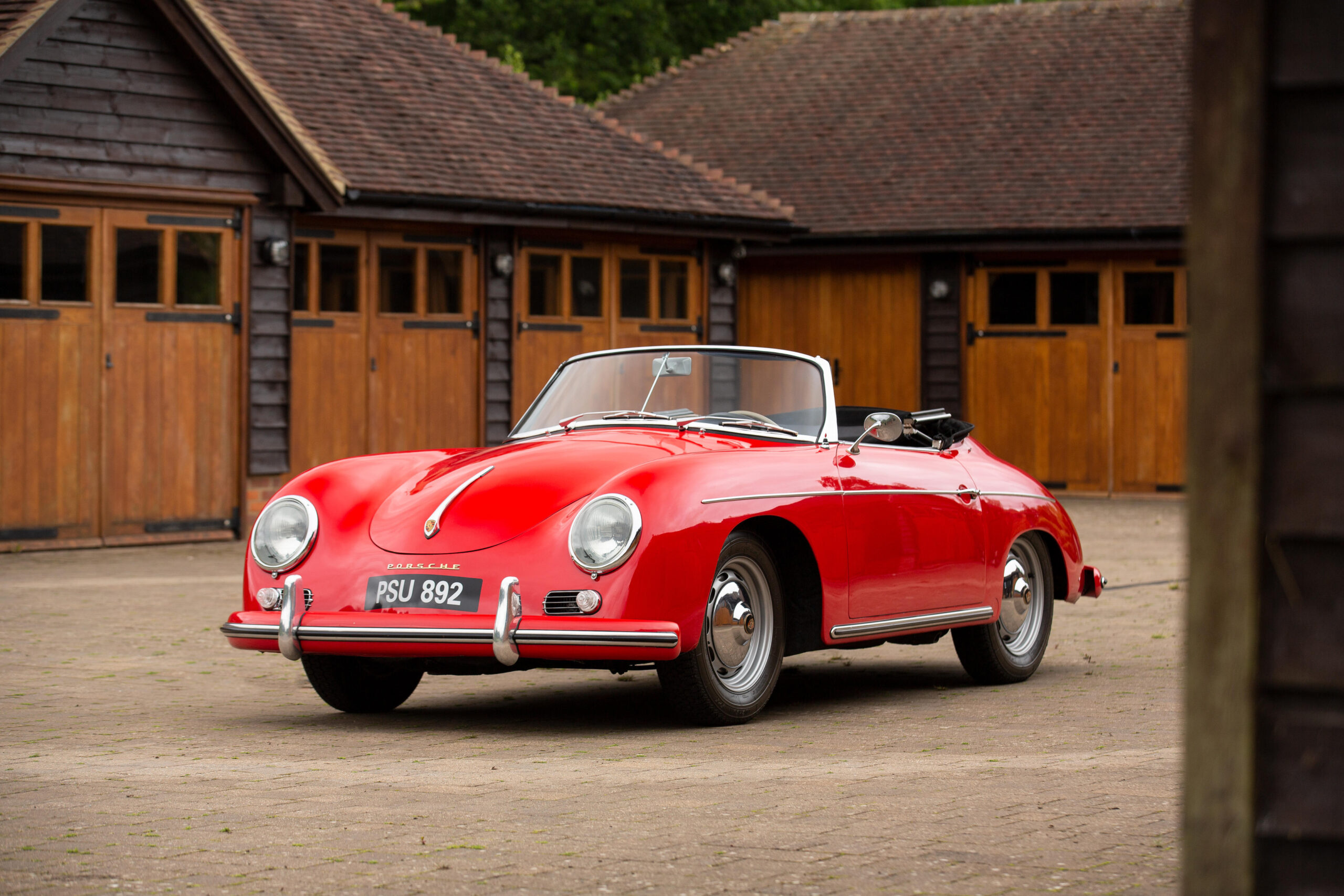
356 Porsche

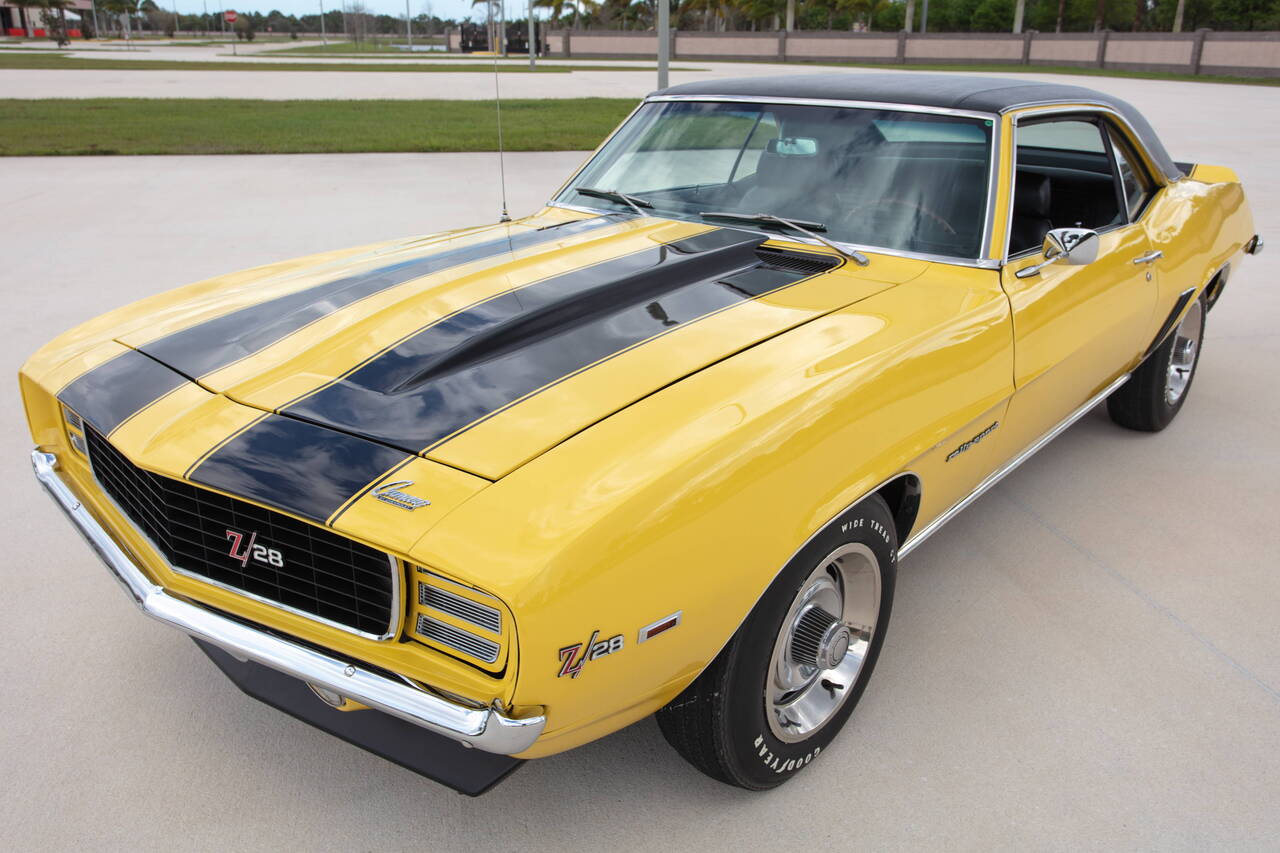
1969 Camaro Z28

Classic Cars – Vehicles at least 25 years old but not older than 50 years, So roughly 1970 to 2000.

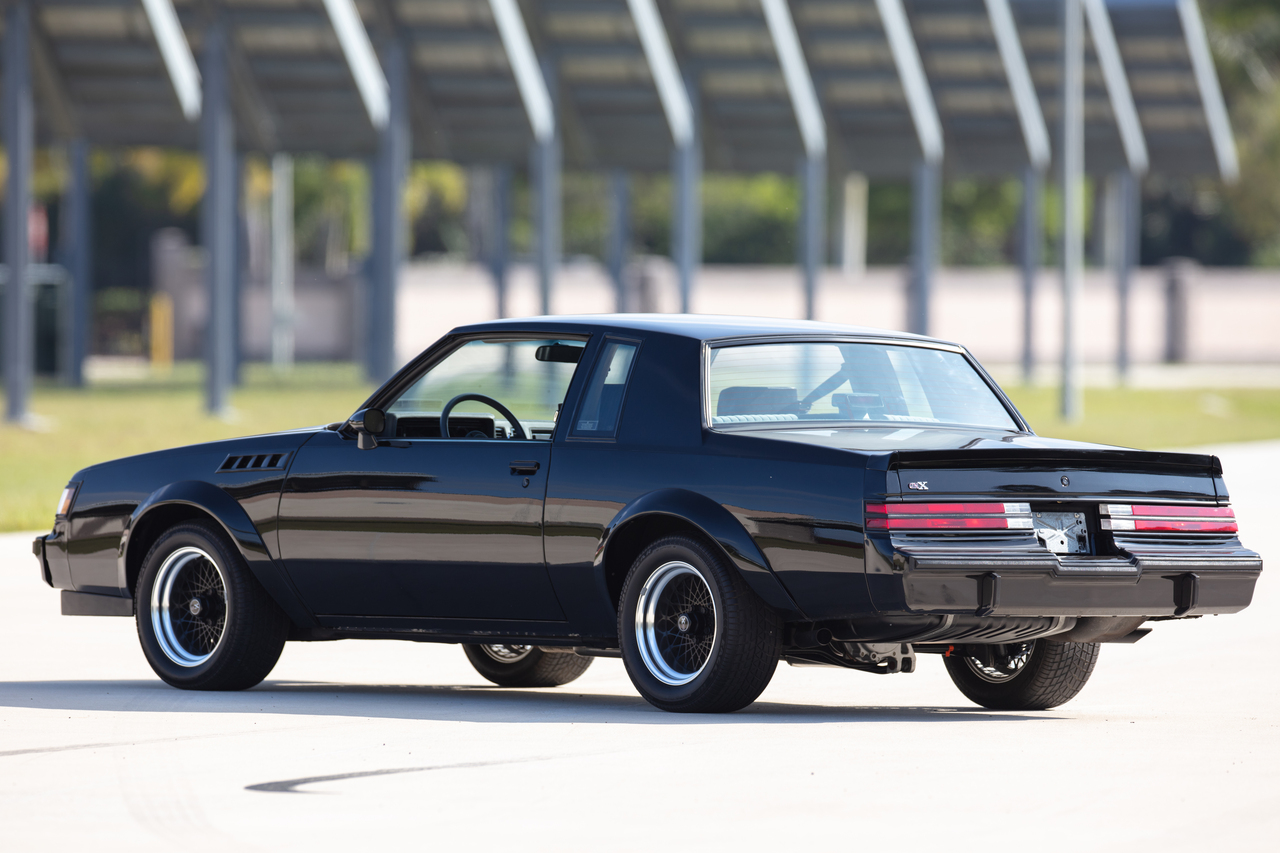
1987 Buick Grand National GNX


1990 Porsche 911


Three other families of cars have been excluded (some may say arbitrarily) from the value discussion as the means for establishing their worth does not conform to the determinants defined by the Primary Attributes and the Attribute Enhancers. Their exclusion does not mean that these cars have no value, many have significant value, or that that enthusiasts do not collect them. Many do, but these segments of the enthusiast universe do not, at this point, enjoy the broadest appeal.

The first two segments are Hot Rods and Restomods, not because they are not collected, they certainly are, but because they are for the most part individual expressions of personal taste.

Hot Rods

Hot Rods traditionally are early to mid-20th century automobiles stripped down, rebuilt and modified according to an individual’s personal taste for high speed, fast acceleration and at times, trumping the first two, design.

The operative phrase in assessing their value is “personal taste.” Creating a unique hot rod has its greatest appeal to a market of one, the builder, which is not to say that they do not appeal to others. But for the most part they do not appeal to the broadest audience.

1927 Ford Model “T” Sedan


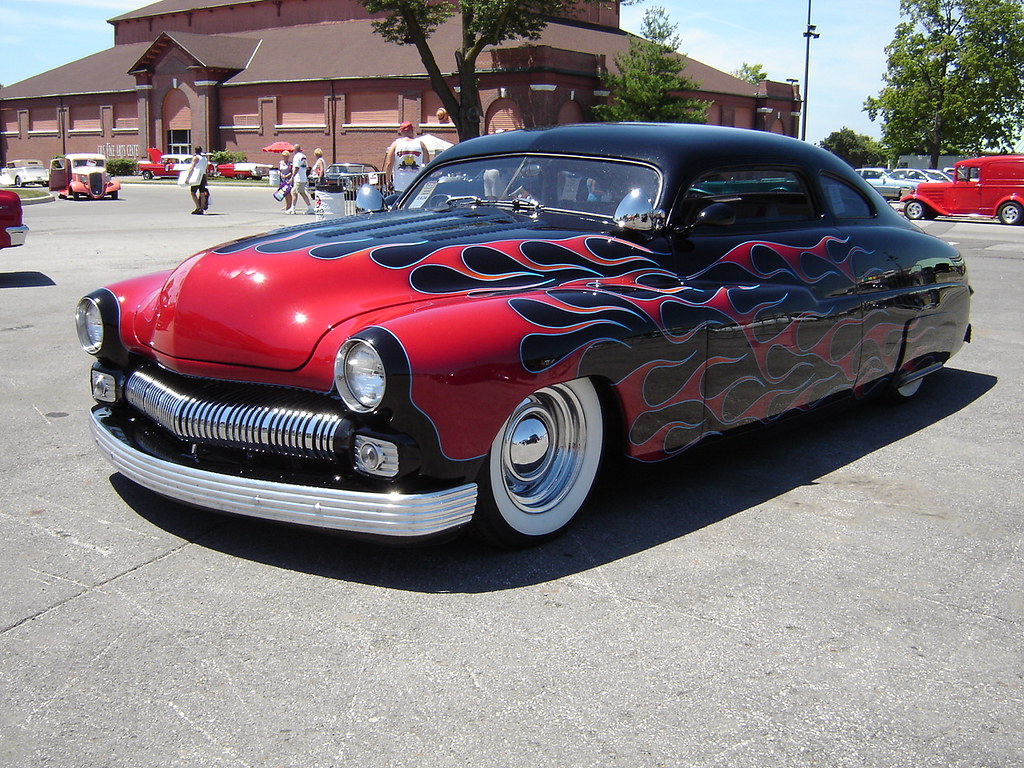
1950s Mercury

Restomods

Restomods are a newer entry on the car enthusiast scene. Primarily Vintage or Classic Cars subjected to both restoration and modification. They combine classic looks and modern convenience. Restoration returns a vehicle to a state representing its original condition. Modification can introduce body alterations and extensive upgrading of suspension, drive train and interior with new non-original specification components. The nature of the modification rests solely on the basis of the restomod owner’s personal tastes and desires.

Again the operative phrase in assessing value is personal tastes. As with Hot Rods a Restomod often targets its greatest appeal to a more limited market. And while they are gaining in popularity, they remain a special segment within the broader market.

Restomods pursue the incorporation of the latest features in a classic body. The question can be posed as to whether an older restomod as it ages with dated technology will appreciate. In the case of an original classic Corvette, Porsche or other vehicle, it will never need to change its dated engine or chassis to maintain its collectability.

1961 Corvette Restomod


1957 Chevrolet Bel Air Restomod

The third family of cars are Hypercars

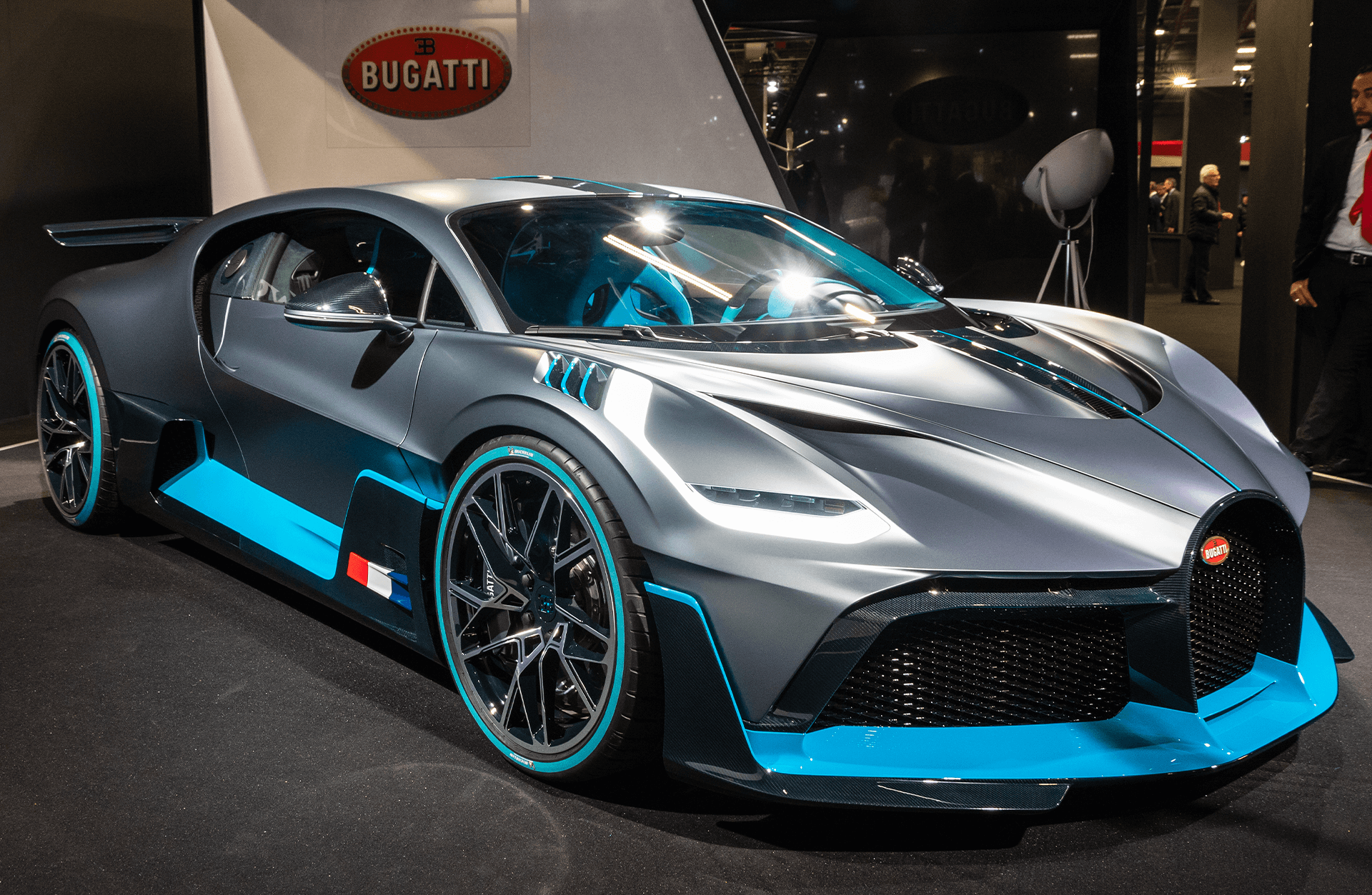
The hypercar arrived on the scene with the 21st century. In essence the term hypercar describes an absurdly powerful, outrageously expensive, limited edition sports car. All hypercars have theoretical top speeds approaching or exceeding 300 mph and prices well into seven figures.

To quote The New Yorker magazine some motoring aficionados view driving a hypercar like cracking a nut with a diamond-encrusted sledgehammer.

On the rare occasion when mingling on public roads with we common folk, hypercars and their, notch lower but still outrageous, supercar brethren are often driven in a manner that leave behind a wake of single finger salutes.

They are rare, they are fabulously expensive, they are contemporary trophies to excess and people do collect them, however they do not fit into this article’s Collectible segments of Brass Era, Vintage and Classic segments spanning 1903 to 2000.

2023 Bugatti Divo


2024 Czinger 21C


It should be noted that not all cars from any period merit Collectible Car status. A good indicator of a car deserving of such recognition occurs when, over time, its price declines from new and after hitting a bottom appreciates to a point far exceeding its original cost due to its being recognized as highly desirable.

Basically, emotional appreciation of a car by car enthusiasts translates into monetary appreciation in the car’s value. Thus defines the difference between a Collectible Car and a used car.

By |2024-01-18T15:04:11+00:00January 18th, 2024|4 Comments

Conversations With People We Value #51

Returning from a too long deferred journey to visit the hallowed grounds of the Gettysburg Battlefield, I found myself on the old Lincoln Highway and in the heart of Amish Country. In possessing no meaningful contact with the Anabaptist community, reliance on contemporarily derived depictions like Harrison Ford’s movie “Witness” shaped my life view. That void left me unsatisfied. I had increasingly desired a better understanding of their chosen path. Now, writing Drivin News afforded a context for me to explore the seemingly simpler path chosen by these gentle people.

Join me for a buggy ride in Amish country.

Amish Buggies, Where Worlds Collide but No One Crashes


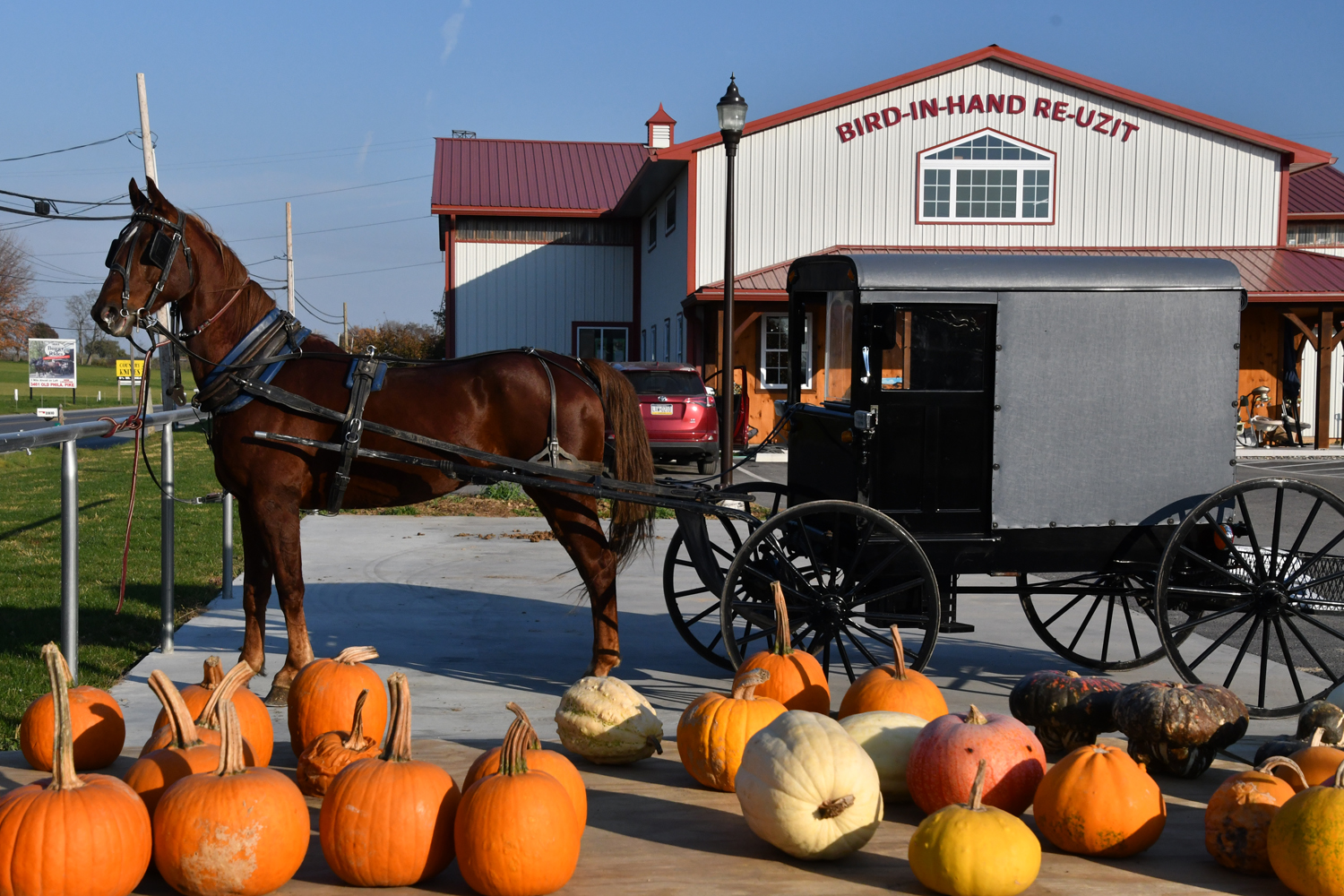
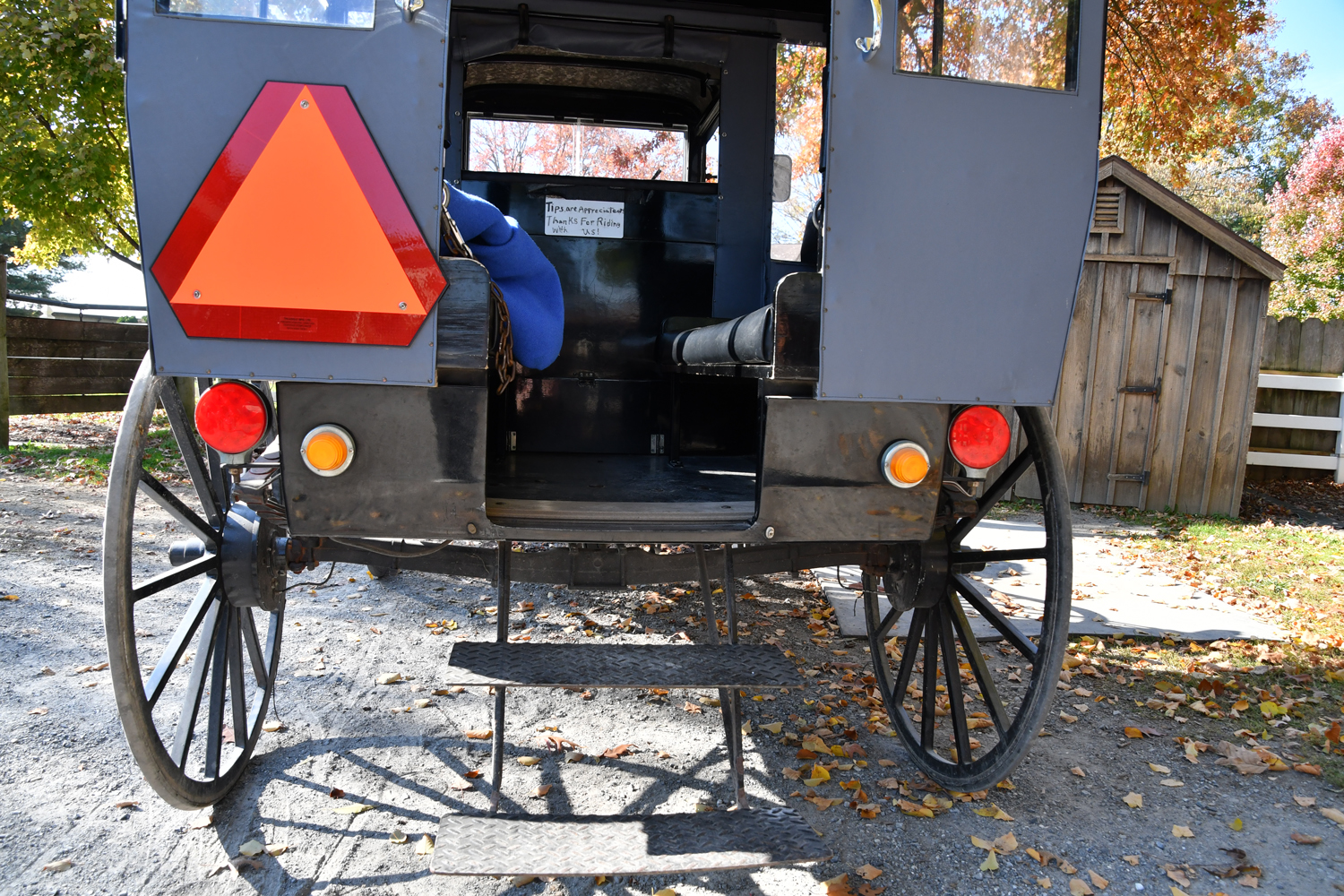
The approaching rhythmic clop-clop sound of horse hooves created a calming sound track while triggering learned memories of a simpler time before our birth. Fittingly, a hunched, weathered, gray bearded man in dark trousers, white shirt and black, flat brimmed hat gently eased the wooden-spoke buggy to a halt in an open barn yard. Pulled by a handsome sweat glistened black Morgan cross breed, the Amish buggy presented a timeless image that, save for safety lights and a windshield wiper blade, would seem appropriate to any day over the last two-hundred years. As  tourists departed the buggy, a man of similar age and dress as the driver appeared at the opening of a nearby barn. Reserved but open, he introduced himself as the owner of this tourist buggy ride business. Hearing of my intention to write about driving an Amish buggy in the modern world, he willing agreed to the interview.

Before proceeding with the story, attention must be directed to what will prove to be the complete absence of names and/or photos of the Amish men and women who agreed to be interviewed. Their religious views and cultural imperatives precluded,, such perceived expressions of ego.

The unwavering Amish reliance on the horse drawn buggy serves as a perfect metaphor for the their culture’s steadfast commitment to a simpler life. As well, their favored mode of personal transportation stands emblematic of their passive and powerful resolve to defy the pressures of a modern world. One cannot help but be curious as to the nature of life lived by the Amish at the intersection of their chosen path and that of a frenetic modern world that compels the vast majority of its members headlong into an uncertain future.

Amish Buggies serve as the hood ornament for our modern society’s clichéd objectification of an Amish culture rich in tradition. Originally called Anabaptists (meaning to baptize again) the Amish embrace the practice of baptizing members as adults rather than children. Primarily an agrarian society, the Amish adhere to the teachings of Jesus Christ, particularly the Sermon on the Mount which calls for a rejection of violence and a commitment to mercy, forgiveness, and nonresistance.

These beliefs did not necessarily endear them to those of other Christian denominations who in 18th century Europe believed differently. To escape religious persecution, the Amish embraced William Penn’s holy experiment of religious freedom centered in Pennsylvania (Penn’s woods). The early 1700s saw them establish their roots in American soil. In understanding what some may view as their peculiar ways one Amish gentleman explained it this way saying, “Jesus’ words remind us that our good deeds should be done in an effort to glorify God, and that, through our conduct, people will see Him.” In that vein, the Amish believe that worldliness keeps one from being close to God. Thus, they choose to live without many modern conveniences and technologies such as automobiles, television, etc. Rather than using electricity, bottled gas stoves and refrigerators serve their needs.

Humility, a core attribute central to the Amish culture, gives substance to the Amish aversion to being photographed and certainly to having ones image used for promotion. One Amish gentleman explained saying, “The danger here is the exaltation of the person. The fear is that the photograph is an attempt to preserve and make permanent that which God has decreed shall pass away.” As Amish author, Elmo Stoll warns saying, “Let us beware lest we permit self to be exalted becoming unto us a graven image.”

So here we have a hard working, God loving society built around mercy and forgiveness conducting an alternate merge with a modern world that has spawned phrases like “Road Rage.” They name towns like “Bird-in-Hand.” Modern society coins phrases like “Flip the bird.” So Mr. Amish person, “How’s that merge working for you?” Apparently according to the Amish with whom I spoke, pretty well. But that said, confirmation demanded a road test.

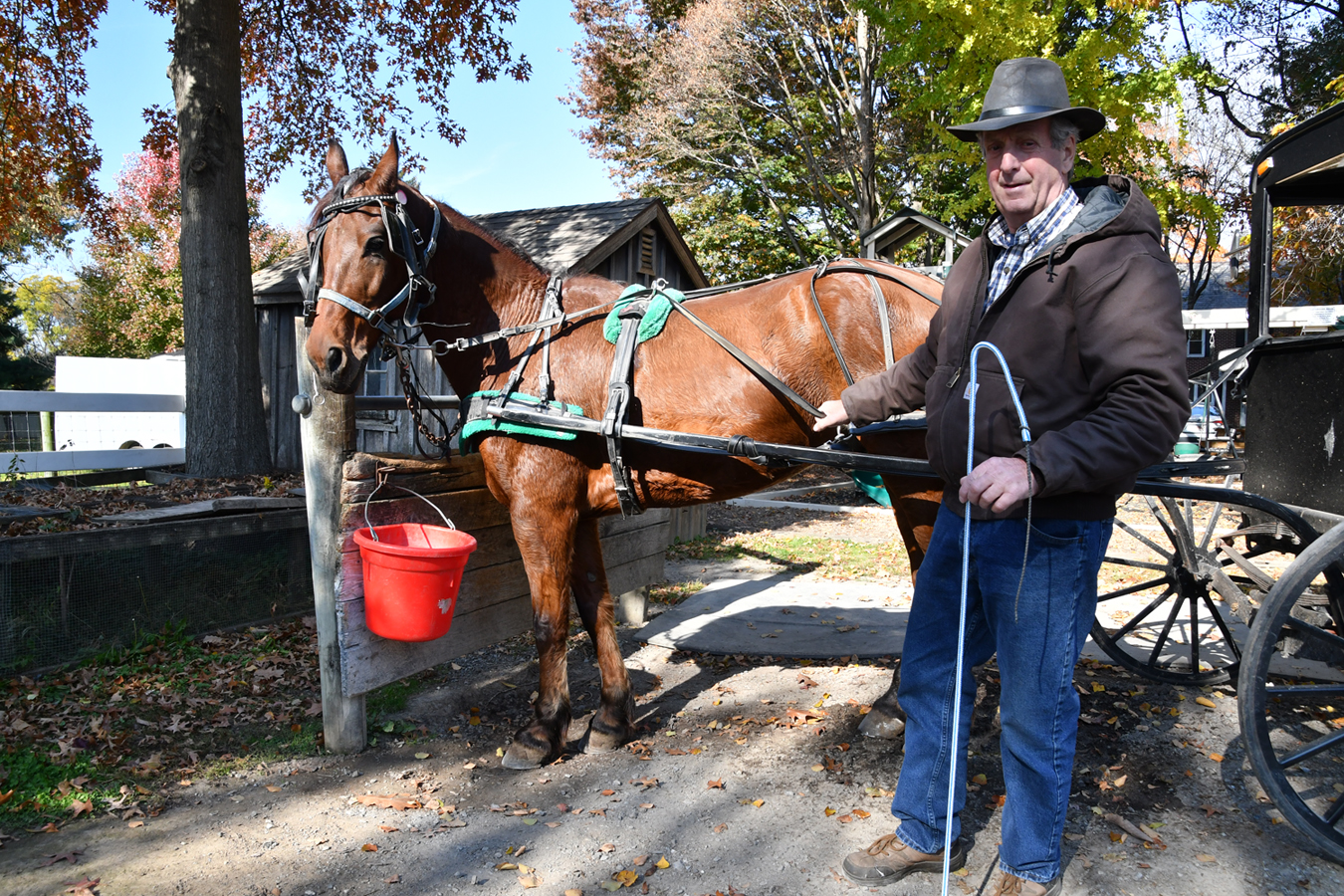
Eli with Paul holding buggy “accelerator”

Luckily, I engaged a buggy driver named Paul, a Mennonite and good story teller who did not mind being photographed. Mennonites are also Anabaptists but more liberal, kind of Amish light.

Paul with a charming Pennsylvania Dutch flavor spicing his stories explained the different types of buggies with models that include the closed “family wagon”, open “spring wagon” , runabouts and pickups.

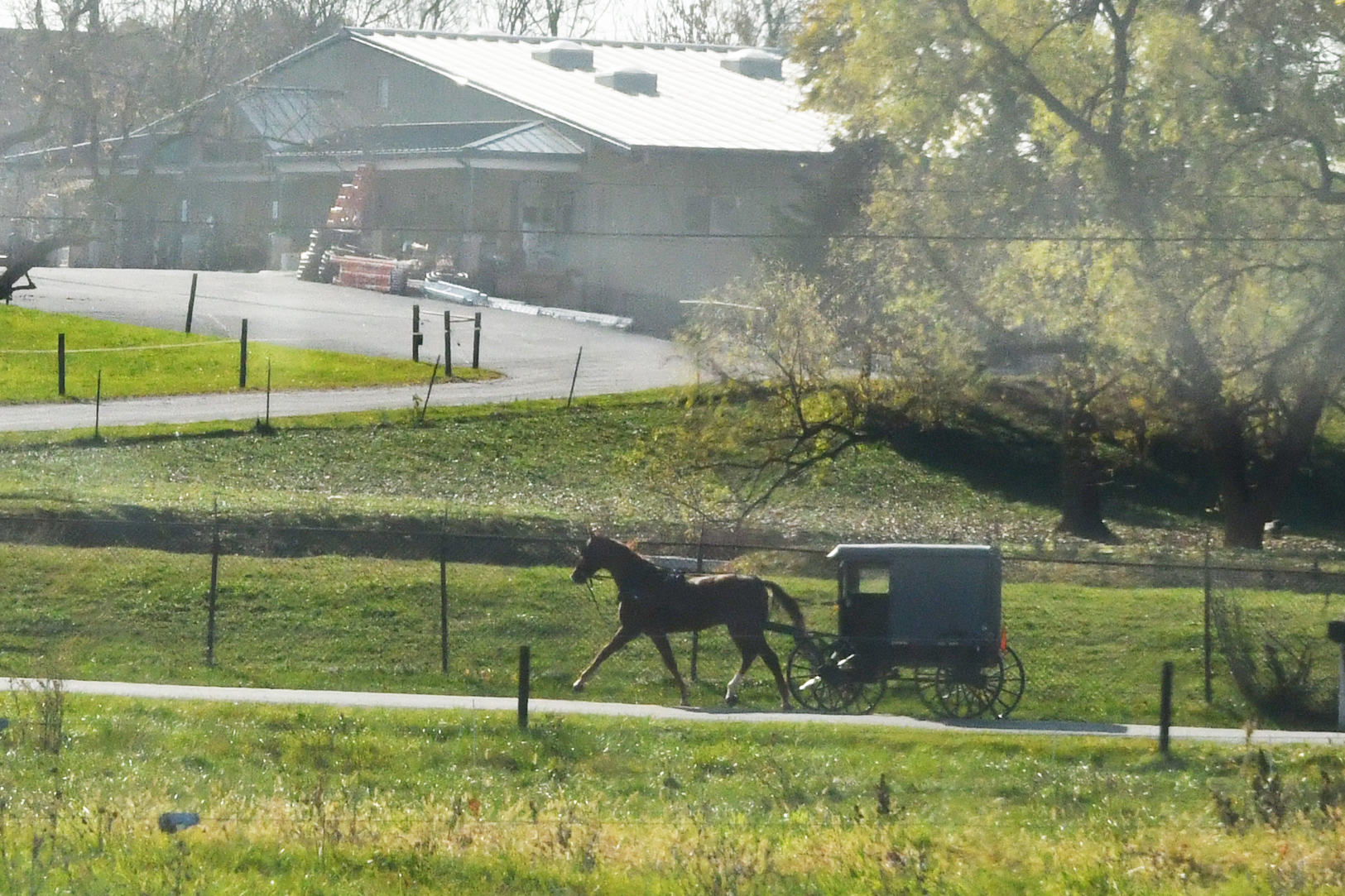
All Amish carriages derive their motive power from a one horsepower, well, horse. Handsome, powerful, sturdy and even tempered, crossbreeds of the versatile and athletic Morgan and the hard working Percheron draft horse seemed favored when observing the local Amish buggies. Paul explains the cross breeding saying, “We don’t need speed. We just need the power.” On the road, horse drawn buggies cruise at about 5 to 8 mph. A short sprint can produce a top speed of 20 mph.

Buggy specs include a braking system utilizing a 7-inch drum brake on a front or rear axle. The driver’s position has a single pedal, to apply the drum brake. Though infused with a certain church pew quality, buggies offer somewhat comfortable upholstered seating, though a Recaro upgrade would be welcomed. Concessions to modern technology have been made in the name of safety. Battery powered electric lights mounted front and rear, thanks to more efficient LED lighting, no longer demand a deep-cycle marine battery for power. Now, a single DeWalt 20-volt/6-amp battery, the type that powers a cordless electric drill can run the whole electrical system for two to three hours on a charge. Those traveling for longer periods carry spare batteries. Diesel generators at home take care of recharging. The Amish do not hook up to the grid.

Before hightailing it out on the highway (I could not resist. For the first time in my life my ride actually possessed the ability to hightail.) I had taken the opportunity to visit a nearby manufacturer of Amish buggies. My only disappointment came with my acceding to the gentle owner’s wishes. He requested that I not promote his company by name in my story. His world and mine, different, neither wrong, most important, both respected.

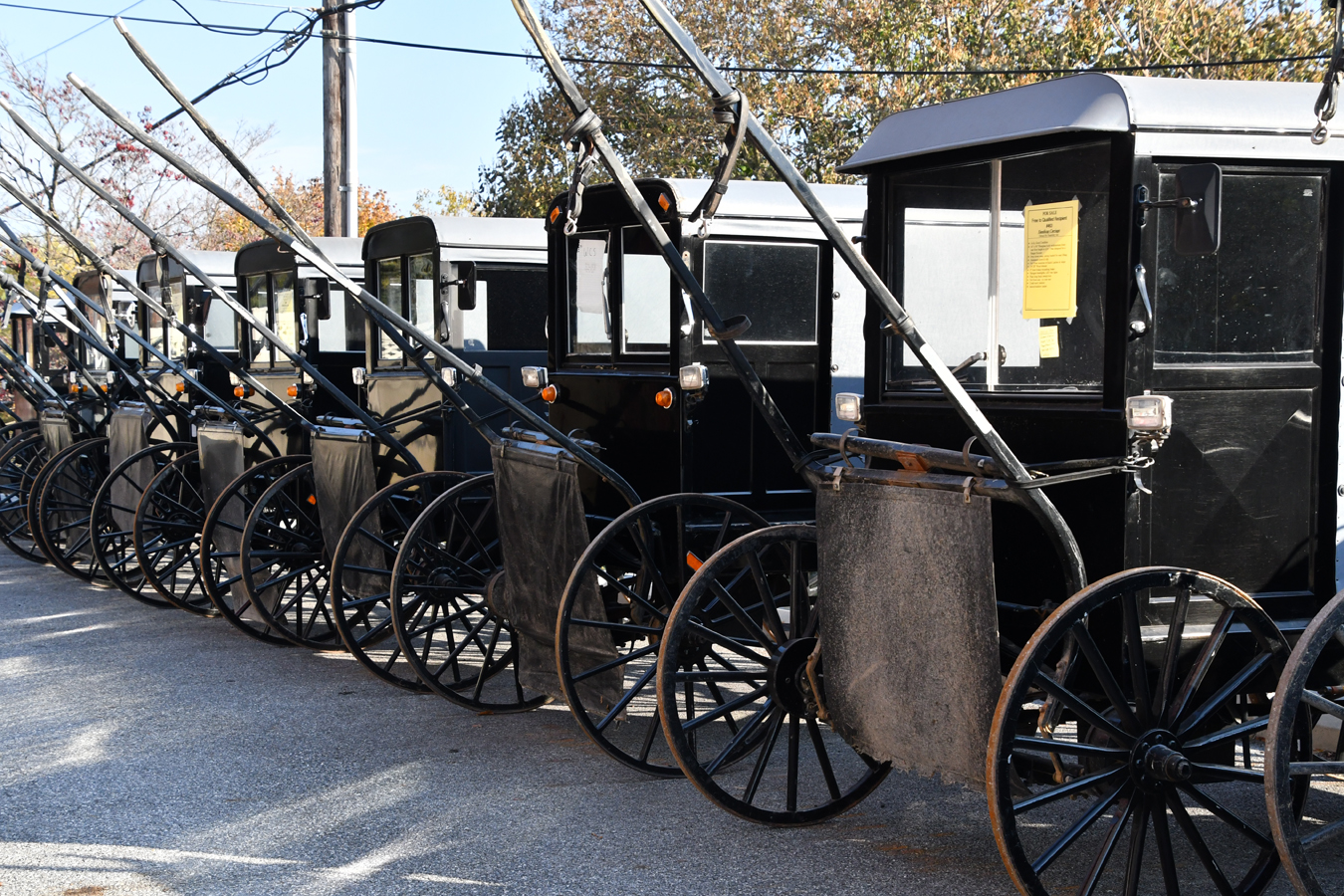
Used buggy lot

Outside the factory’s orderly paved courtyard fronting the clean brick two-story edifice stood an angled line of refurbished buggies. OMG, This new buggy factory offered CPO (Certified Pre-Owned) buggies as well. The austere product presentation spoke of an understanding that those in the market would know where to go. Apparently a reputation built on history and performance served as the only marketing effort necessary. Did this profoundly understated business model need an upgrade, considering the Amish value system, probably not. Tall flapping Gumby-like attention grabbing roadside promotional balloons with arms whipping in the air would have been terribly out of character.

Upon entering a side entrance, I encountered an Amish gentleman with an easy, engaging demeanor. I hoped to get a brief overview of the operation. Upon explaining my intention to write a story he, without skipping a beat, offered a complete tour. Exhibiting an encyclopedic knowledge of the manufacturing process, he wove a path from floor to floor that touched each work station. Once there, he explained the function in detail and introduced the gifted craftsman plying trades including metal working, paint, upholstery and wood working.

Clean, orderly and busy, the facility showed a fascinating amalgam of hand craftsmanship, functional technology and ingenuity. With no access to the grid, the operation displayed a fascinating application of compressed air and hydraulics. The factory seemed to be doing quite well. Confirmation came with learning that all new buggies built had confirmed buyers. Other than new buggy construction, the shop of Amish workers kept busy refurbishing used buggies for existing owners or for sale.

I understand that some city types exposed to this experience might view it through the lens of a tourist at a quaint Disney staged experience. If so, how unfortunate to deprive one’s self of an appreciation for the existence of true craftsmanship actively engaged in supporting daily lives in a productive society manifestly different from their own. Bidding my tour guide goodbye, my carriage and Paul awaited.

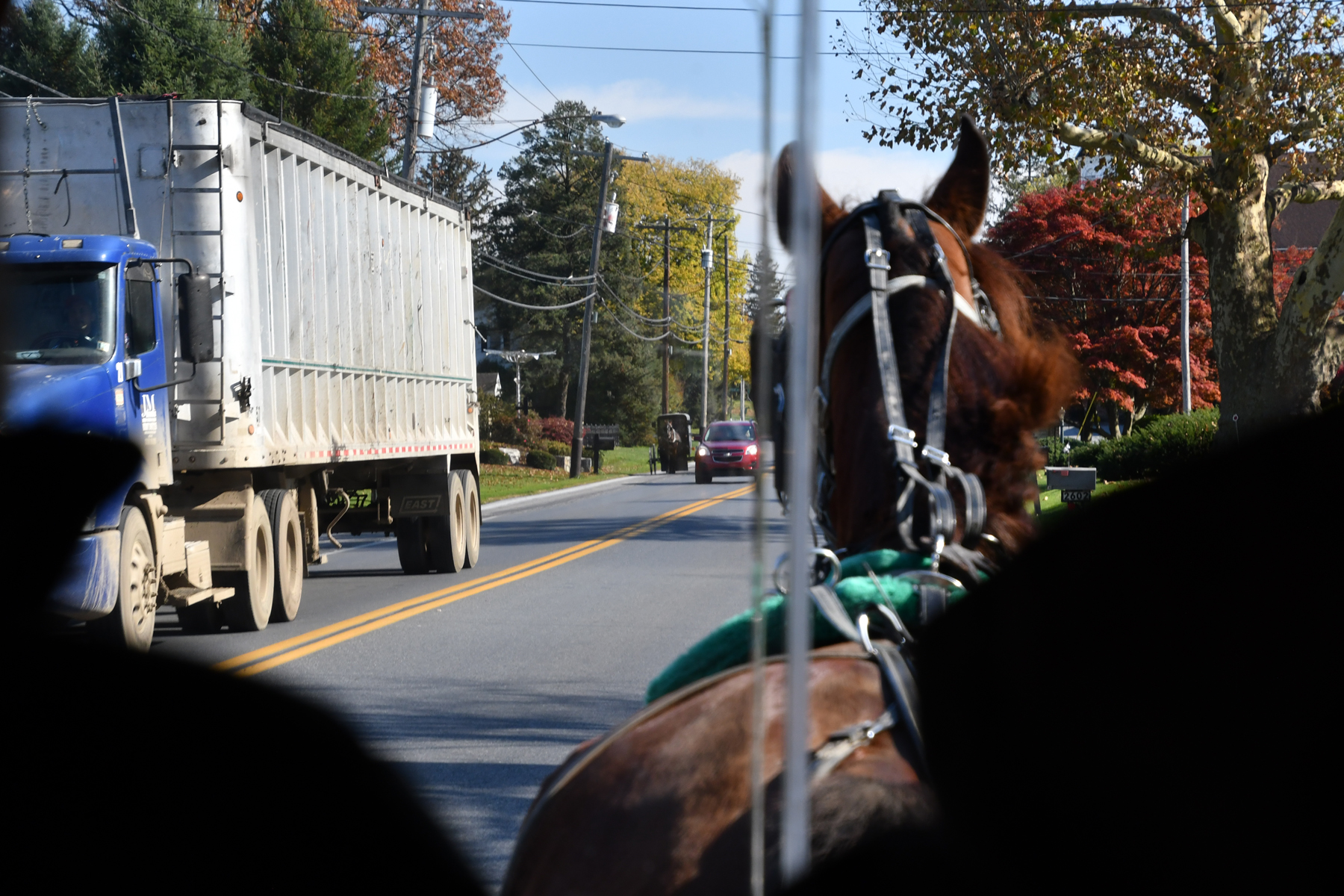
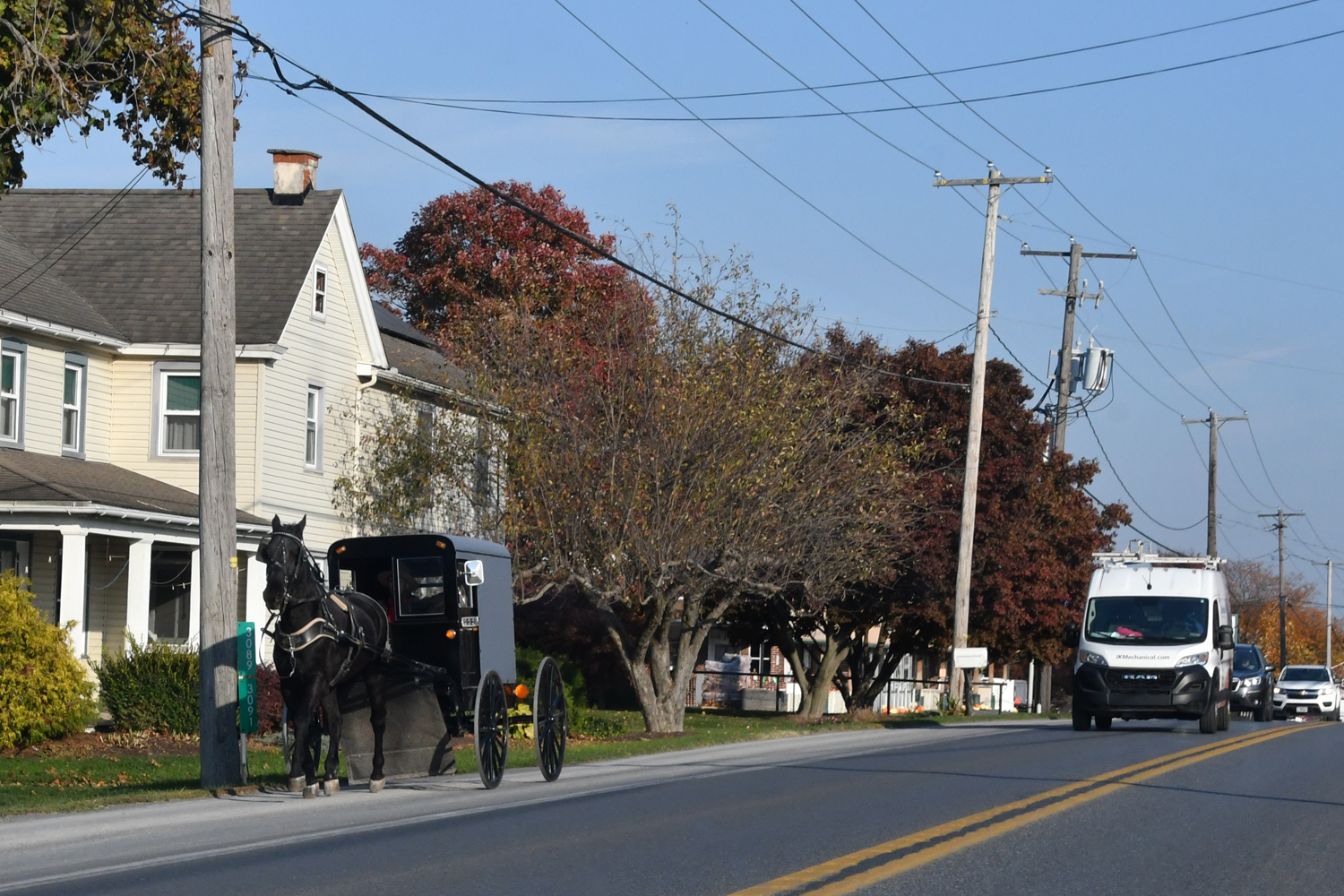
In a somewhat awkward fashion, I squeezed my long limbs into the confined buggy cab to be shared with Paul. Uttering a gentle chk-chk he alerted Eli our Chestnut Morgan crossbreed. We headed out onto Route 340 with its speeding tourists and rumbling truck traffic. Paul scanned the presently open road and guided Eli to carve a large arc defined by the big harnessed horse and the buggy he pulled. Main arteries in Amish country offer a buggy-width shoulder that serves Buggy drivers well. Off the main thoroughfares, however, unforgiving narrow roads abound.

To employ a very forgiving description, our buggy had now entered the traffic pattern. More to the point, sharing the road with Class 8 trucking felt like the tortoise racing an 80,000 pound GVW hare. This seemed like a good time to pop the question to Paul. His response when asked “How do other drivers react to sharing the road with an Amish buggy” came as a surprise. Paul said, “When it comes to the truckers, they respect who we are and they give us room. We have very few complaints if any.” When asked what advice he would give to someone unaccustomed to sharing the road with Amish buggies, Paul smiling reflectively, said, “It’s important to be mindful that compared to them we are going slow, really slow.” As long as room to pass exists, the law allows a driver to cross a double line.” The biggest problem for automobile drivers and thus for us comes when they do not watch their speed. Paul with a slight wince said, “When accidents do occur they often result from drivers not appreciating how fast they are going versus a buggy’s slow speed. Especially when climbing a hill when a driver does not pay attention then suddenly, POW, they are on top of a buggy. Luckily that does not happen often.”

In reflecting on driving manners especially of tourists, again a surprise. Paul says, “Basically we find people very respectful.” Amen to that.


Follow -up on Ford F100 sale on Facebook Marketplace


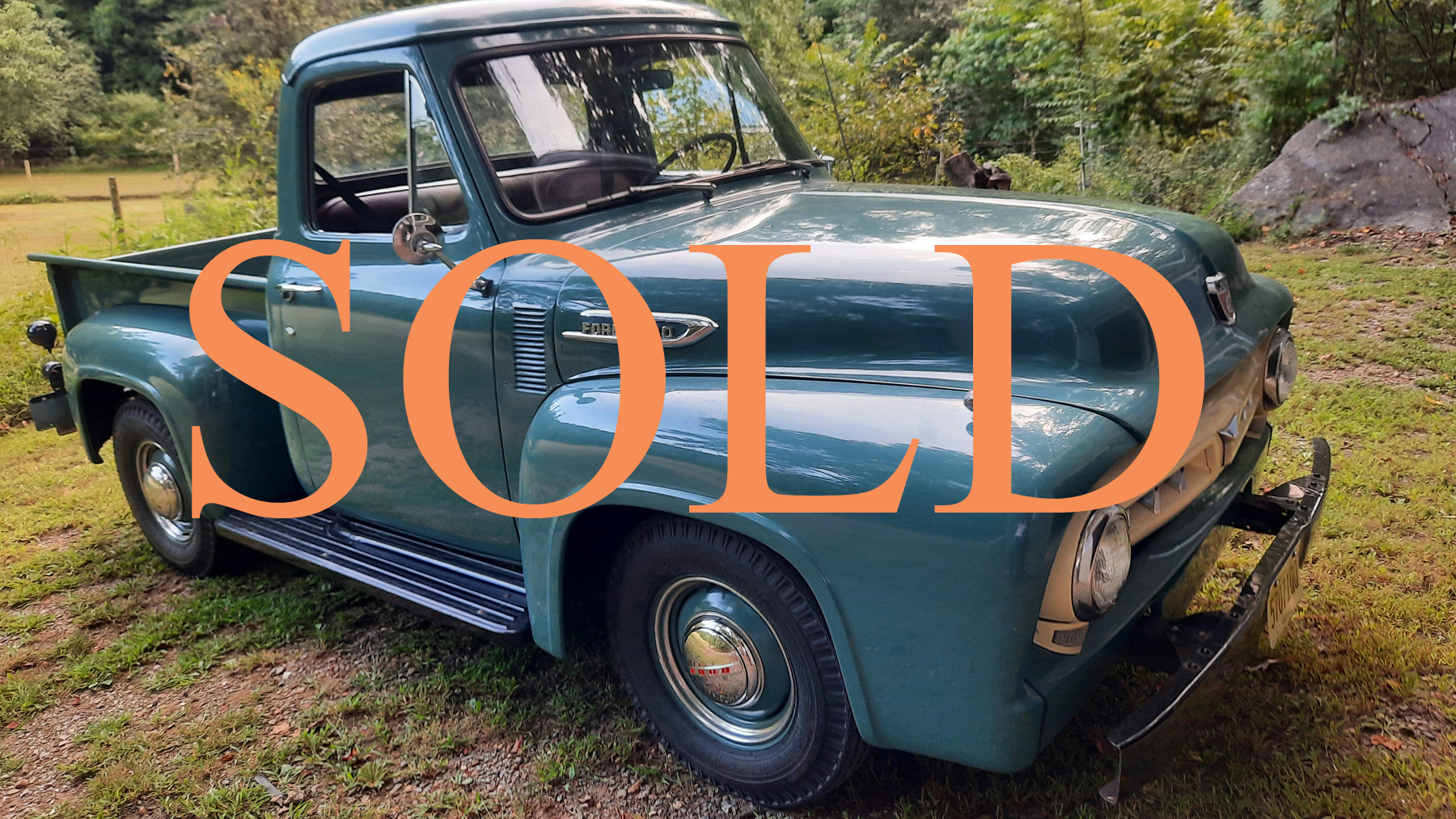
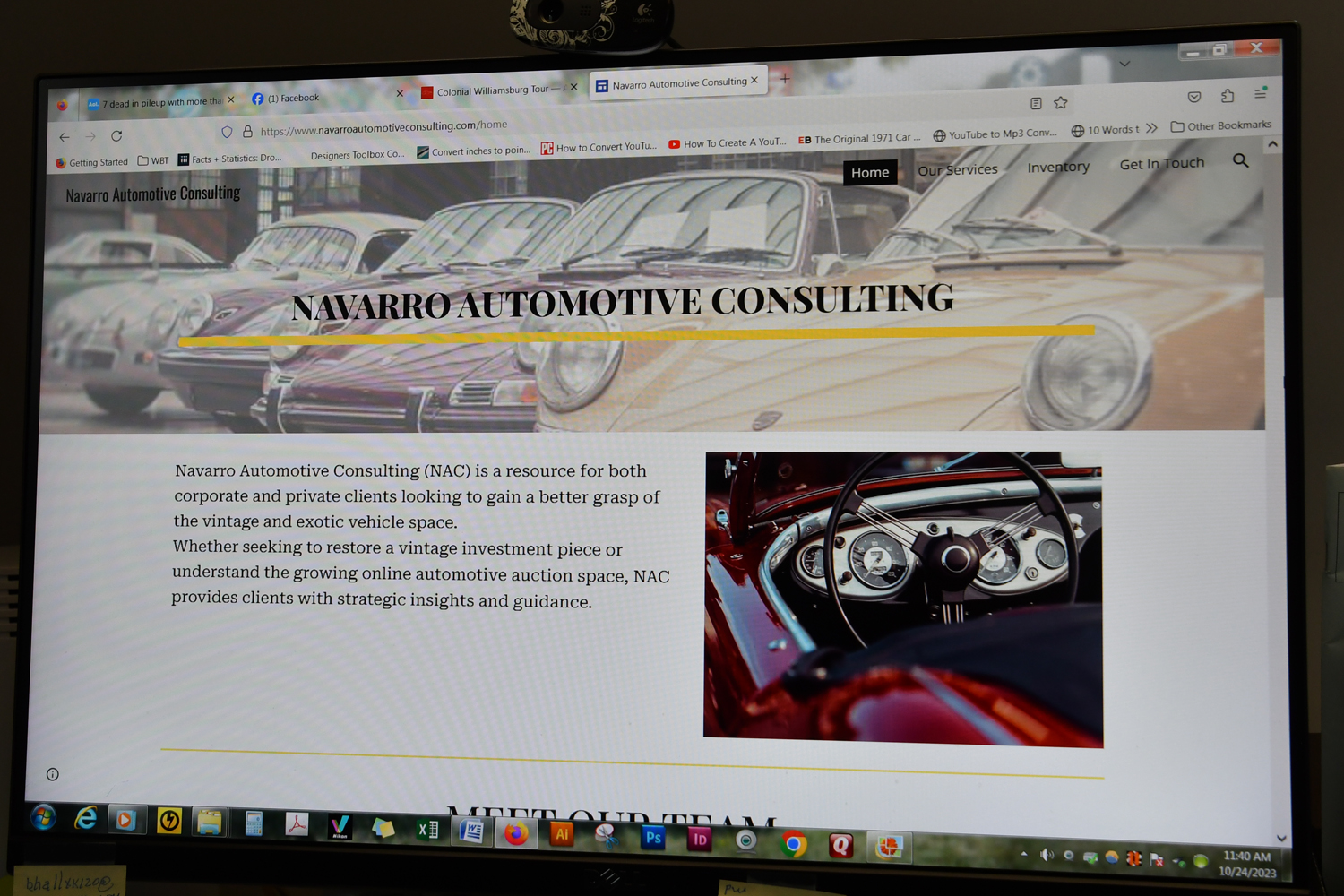
Earlier this month the Drivin’ News story “An old car guy goes face-to-face with Facebook Marketplace” described my decision on where to sell my 1953 Ford F100 Pickup truck. I am here to briefly describe the outcome. Rather than choosing one of the popular auction sites, I chose Facebook Marketplace, and because I am not a Facebook guy, I engaged Navarro Automotive Consulting (NAC) to assist me.

In a nutshell NAC:

  • Provided guidance in creating a four-paragraph vehicle description and appropriate photograph.
  • Provided masterly navigation with a site where I had no experience.
  • Shielded me from online tire kickers and hassles. NAC only sent me vetted prospects.
  • I had full control of the listing from creation to sale.
  • The listing offered the potential to be viewed by more eyes than other classic consignment sites. Granted Facebook delivers a much broader audience than a car-centric BaT or Hemming’s, etc.

The result:

  • Viewed 27,128 times
  • Saved by 631 people
  • Shared 135 times
  • Direct messages 70+
  • With an asking price of $23,500. It sold within the week.

If you are considering selling a vehicle and want a hands-off quality experience, I would highly recommend NAC. It translated a normally painful process into a smooth sale.

By |2023-11-30T16:26:26+00:00November 30th, 2023|2 Comments

Conversations With People We Value #50

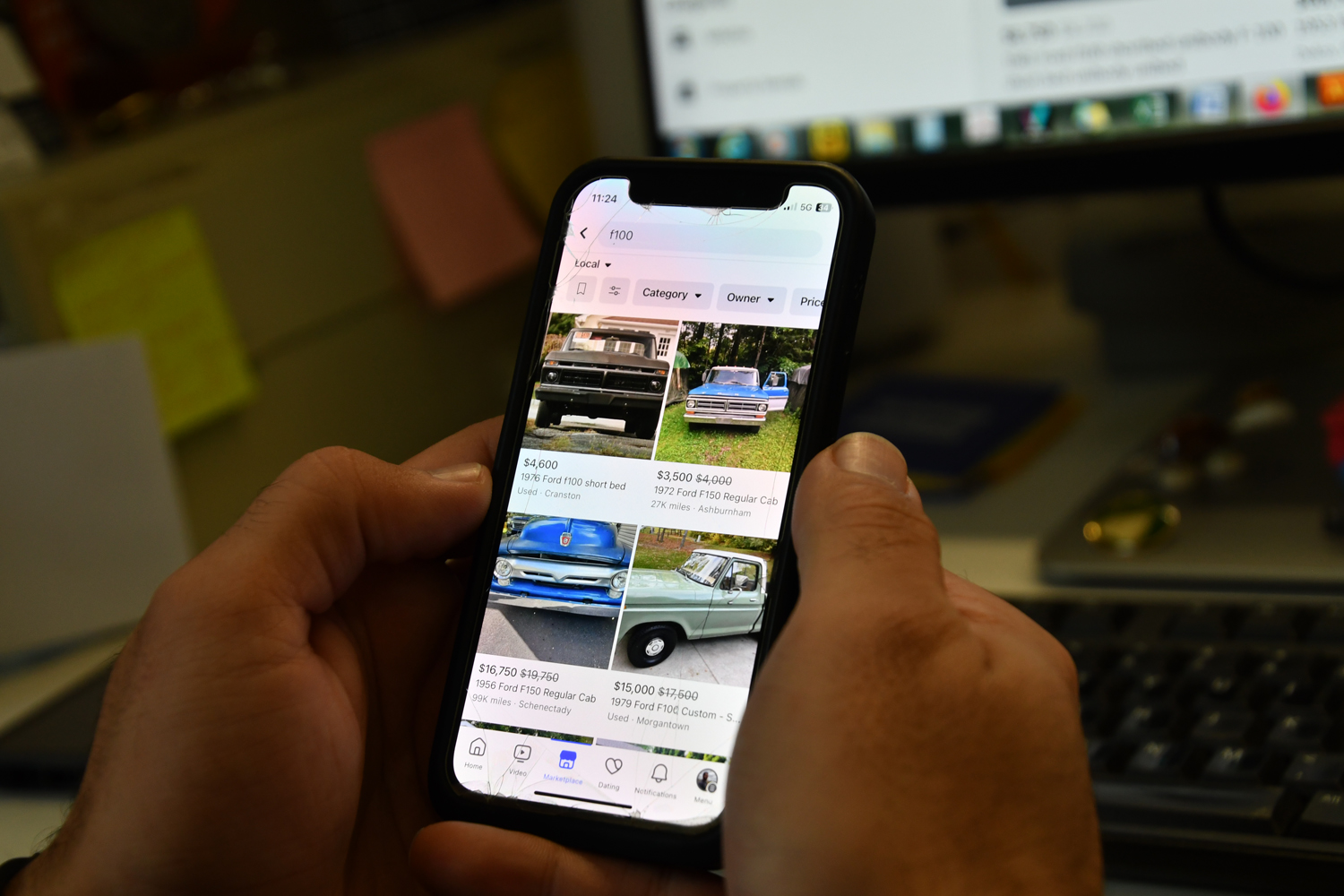
Though not exactly Sophie’s choice, the decision to sell my 1953 Ford F100 Golden Anniversary Edition pickup left me torn and uneasy. Grudgingly working through the process of winnowing down my small collection of vehicles left standing alone my able and eager Meadow Green F100 work horse of the 1950s. Consideration of my other vehicles found them either worth too little or meaning too much. Now, the question facing me required deciding on how to sell it. Park it on a busy street sporting a for sale sign? Maybe an online purchase site. Certainly myriad online auctions beckoned. Finally based on a friend’s suggestion, I turned to Facebook Marketplace. Let me say upfront, I consider Facebook to be the Devil’s work. That said, I figured why not let the Devil work for me.

Going face-to-face with Facebook Marketplace

An old school car guy goes face-to-face with Facebook Marketplace

Unlike billions of other Earthlings I did not spend time on Facebook…until last week. Enlisting the aid of friend and online sales maven Nick Navarro of Navarro Automotive Consulting (NAC), I elected to go where millions of people have gone before, just not me. I entered Mark Zuckerberg’s digital bazaar.

My friend Nick represents the “Hope” side of what I call “The History and the Hope” spectrum of automotive enthusiasts. The “History” side of the classic vehicle obsession makes itself painfully evident with the departure of the many skilled craftsman and passionate collectors we witness melting out of the culture. Nick conversely represents one of the many young men and women who share the passion and willingly accept the baton we of the  “History” side happily hand off, grateful for their youthful interest.

With a Bachelor’s degree in Automotive Restoration from McPherson College and, after post graduation work in high-end classic car restoration including work for the Museum of Modern Art (MOMA) and the Audrain, Nick began his own company, (NAC) focusing on restoration consulting and brokering.

Nick, being both a dyed in the wool car guy and an accomplished digital native, represents the future of classic car enthusiasm. To better understand those comprising the “Hope,” one should recognize an attribute, that of “Digital Native,” common to those like Nick. Think of digital communications as a language. Rare is the older person who learns a language without retaining an accent as compared to a person who learned a language as a child. So it is with digital communications. Those who have learned to navigate social media outlets from childhood, like Nick, employ it’s refinements with a natural ease and artistry. An ease, artistry and interest which I, as part of the history, frankly lack.

At the start Nick suggested posting my F100 using his site. He offered that this would relieve me of significant phone drudgery. Nick Says, “For most sellers, it is best to channel initial inquiries through my site. It allows me to vet the contacts and weed out the tire kickers, scammers and kooks.” Nick’s functioning as a buffer benefits sellers like me by limiting their involvement to dealing with serious prospects. I agreed. Now, on to creating the posting.

Interestingly, especially for those preferring computers (desktops, laptops) versus mobile devices (phones and tablets) Nicks notes that Facebook Marketplace, counter intuitively at least for non-digital natives, actually offers more features when accessed through a mobile device.

Anyone can access Facebook Marketplace to browse, though one needs an account to engage. Nick cautions saying, “Anybody can do this on their own personal page. It can be done on select commercial pages too, but it requires registering and it involves more of a process.” So, to begin.

Select marketplace

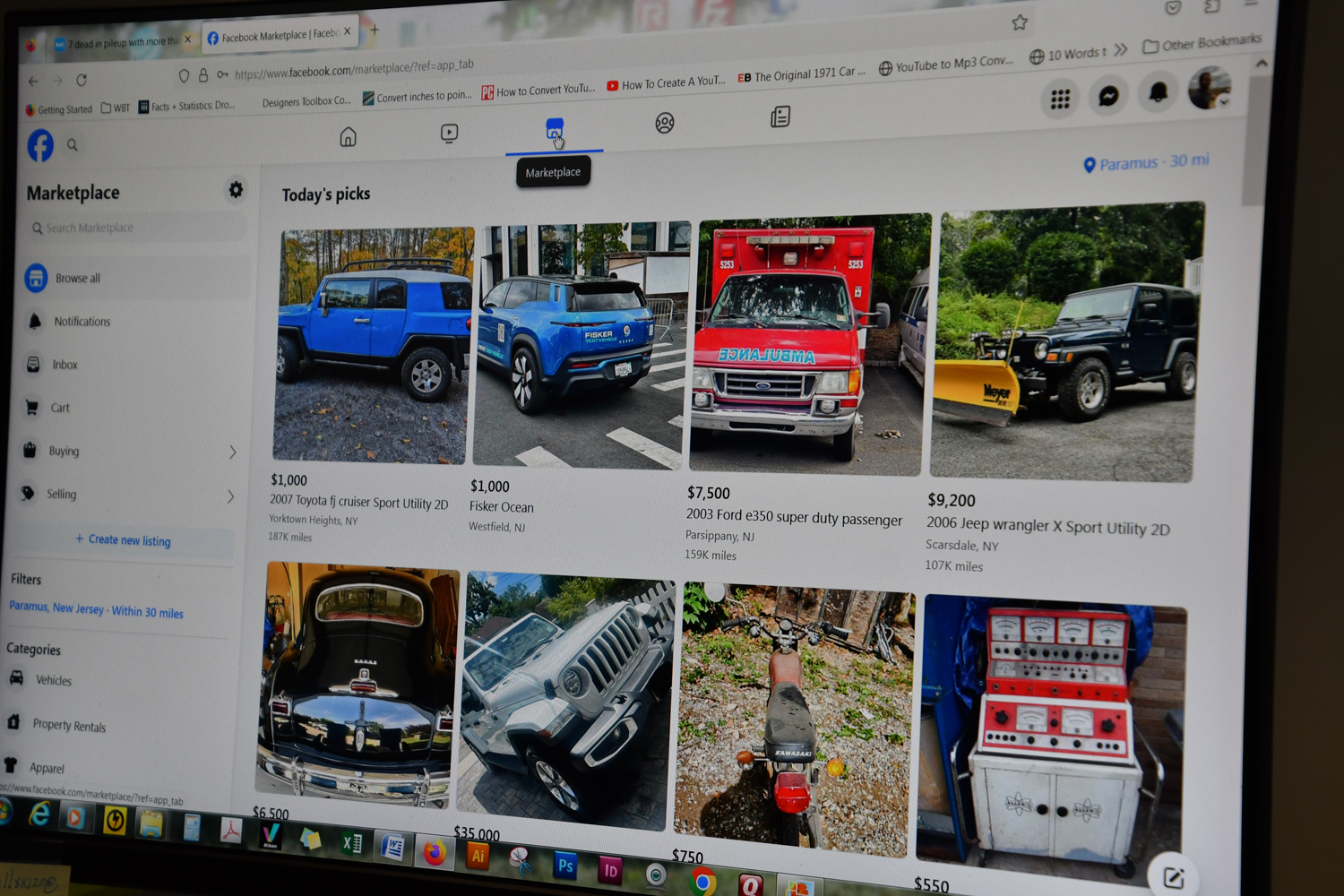
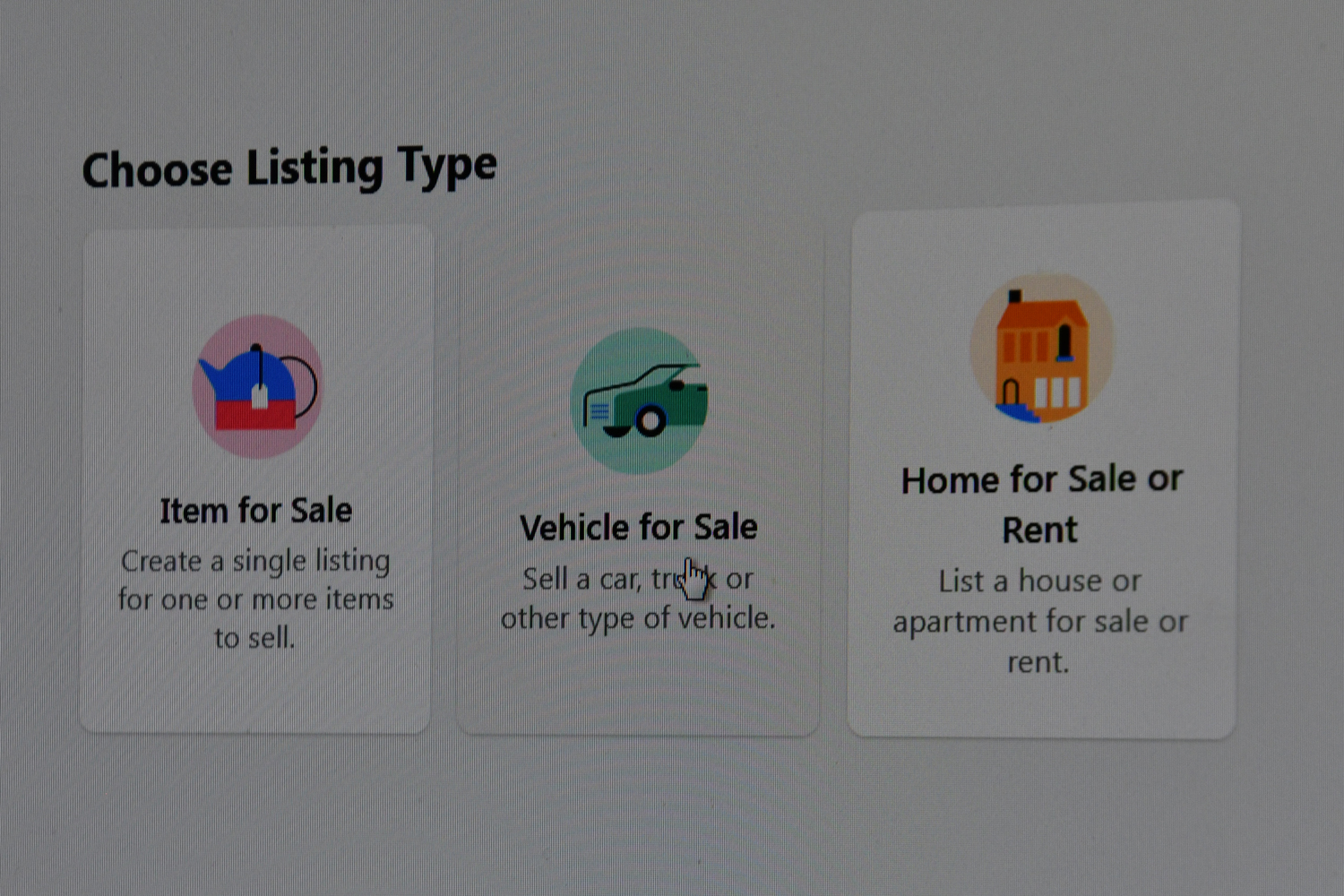
Start by logging on to your Facebook page and click on the Marketplace icon to begin creating a new listing. It offers three choices, Item, Vehicle or Home. Select Vehicle.

A prompt comes up requesting photographs as well as specific information including type of vehicle, location, model year, make, model, price and description. Additional prompts may request type of fuel, transmission, interior and exterior color.

In referring to writing the description Nick says, “I prefer to keep it broad because the Facebook audience is a broad audience.” He believes a broader description may offer a greater appeal to a first time buyer or someone new to the hobby. He continues saying, “However, I do like to include a few specifics that will resonate with a more knowledgeable reader.” In the case of my truck he calls attention to the hard-to-find under-bed spare tire hanger and wing nut. Nick says, “Marketplace does not offer as sophisticated a platform as, say, Bring-a-Trailer with BaT’s space for hundreds of photos, expansive copy and comments.” He does emphasize that photography remains an important feature essential to creating an effective Marketplace posting.

As to photography Nick says, “You want high quality, sharp, well composed images clearly showing all the specific areas such as underneath, engine compartment, interior and exterior from all sides of the vehicle and all angles. Three-quarter shots are a must. Videos of your vehicle can also be posted. Nick says, “Videos, if available, showing the vehicle running, etc. can add to the power of your post.”

Accompanying the crisp, and clear photography must be a written description equally clear. Copy should provide the basic vehicle history and important attributes in clear succinct paragraphs. Not too long, not to brief, it should simply provide enough detail to make an interested party more interested. A written description should provide what you as a buyer would want to know. It should not so much sell, rather it should accurately describe. Good writing does not tell. It shows. Copy like “WOW, a super powerful tire smoker” would better be written as “Dyno tuned 426 Hemi.” Trust that the buyer has a brain. While some callers may make you question that assumption, a real prospective buyer will not. Have faith.

Accompanying the “DOs” for a quality Facebook Marketplace experience are a number of DON’Ts.”

Be mindful that certain precautions should be taken as you are attaching this post to your social media platform. Nick says, “You shouldn’t have any personal data on either the listing or your personal profile page. Strangers can link both of them.”

With all bases touched Nick launched the competed post. An important reminder, a post will last for seven days. At the end of the week it must be renewed, not recreated, just renewed.

Always know that anything posted goes public and lasts forever even if deleted. Do not include your phone number or your address. Social media company Meta owns Facebook and Instagram. They make money off your data. With every click you make, Meta creates a file. Presently this reality rules the social media world. If this makes you uncomfortable do not use it. Or, as I have done, have Nick and NAC do it to keep the seller anonymous.

That said, Facebook does offer the ability to access over three-billion users world-wide. Does that mean you post will be seen by potential buyers from the town next door to across the globe? No. However, anybody on Facebook can access your post whether your neighbor Tony on the next block or Sven in Gӧteborg, Sweden. Marketplace offers multiple paths to your posting.

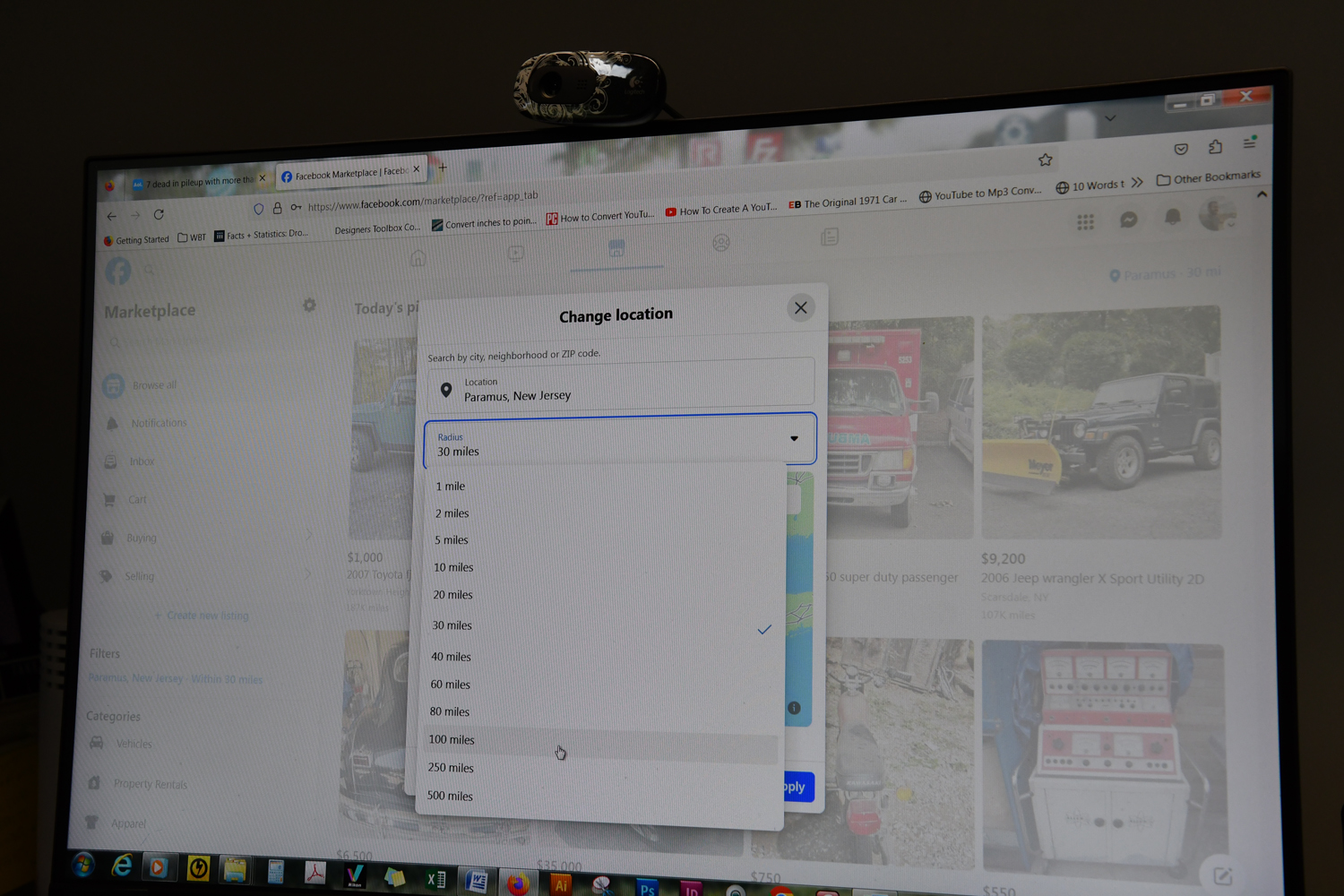
When listed your posting will be made available to your Local area much like Craig’s List. Areas such as Northern New Jersey or Southern New Jersey. So if someone in Carlisle, PA is looking for an F100 pickup but they are only searching their local area my F100 would not come up. However, again like Craig’s List, that buyer can expand the search area around his location by 500 miles, then my F100 would show up. Or Maybe someone in Vermont thinks he or she can get a cleaner example of the vehicle they want in California. That person can set their geographical position to California to conduct their search there. This represents an enormous advantage over Craig’s List.

As a seller I can boost my exposure a number of ways. I can join a national or international group focused on a certain vehicle. In my case Ford F100 pickups. Nick says, “Hypothetically, you can share your listing with groups around the world focused on what you are selling. As a sales tool, if used properly, it can be very effective.”

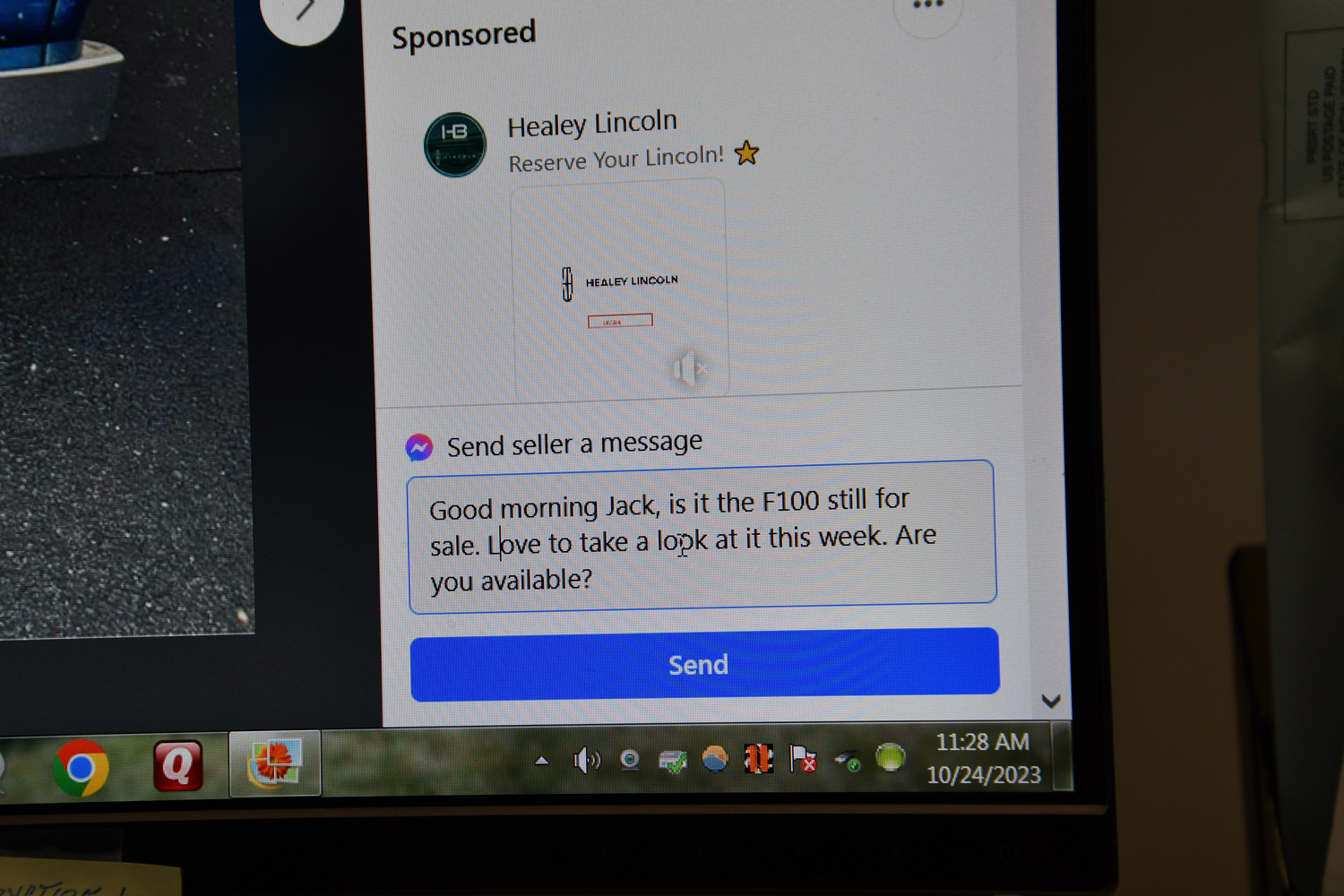
NAC offers a clean vetting process. Nick says, “Prospects contact us via Facebook Messenger, with a message basically stating an interest in the vehicle. First thing we do is request a contact phone number. When we get a number, it tells us two things. It proves that they are real and that they are interested. With that, a call can be used to vet them. Through that process of separating chaff and wheat we can provide prospects worth the sellers time.”

Planning for success can create success. However, without a good plan problems can arise. Some quite bad. In this day and age setting up the right location to show a vehicle to a prospective buyer is important.

Nick’s key points:,

  • Unless you know the person, Nick suggests picking a busy populated place to meet a stranger. Outside Starbucks works. Next to a police station is better. Many police departments have a dedicated “Meet” space with cameras for citizen transactions.”
  • Cash is king. If the buyer needs to come back with the cash. He must leave a non-refundable deposit, $1,000 works. As seller, write up a simple contract with amount of sale, amount of deposit and date due final payment. Dealing with payments from out of state best involves establishing a third-party escrow account. Check with your bank or attorney for details
  • Accompanying a buyer to his bank for a withdrawal can work.
  • Always trust your gut!

Decades ago when breathlessly scanning the latest local WantAd Press, gut instincts, learned from experience, served buyers and sellers alike. However, the WantAd Press and its beloved ilk are gone. Supplanted by a digital landscape that has wildly reconfigured the structure of the selling function, the process remains reliant on the same timeless gut instincts to achieve success.

Today, my F100 entered public consciousness by way of the  Zuckerberg digital bazaar. A few hours later a meeting with a prospective buyer had been arranged. Time will tell. So will my gut.

By |2023-11-09T21:04:01+00:00November 9th, 2023|2 Comments

Conversations With people We Value #49

The immediate dopamine rush when discovering a previously unknown car brand bearing one’s first name is heady stuff indeed. Certainly for me. While a fairly lengthy list of automobile brands sport the last name of their founders, only one brand, Mercedes, took on a person’s first name in advance of making it famous. Or so I thought, until at a recent car show I pulled up next to a charming, if rudimentary, blue European sports car branded with the name Burton, my first name. And in this case it would be all about me. The surprise coupled with my healthy sense of self fired my curiosity. My total ignorance of the Burton brand would soon be addressed with my introduction to European car importer Simon Knott.

Meet Simon Knott and the Burton.

What’s a Burton?

With a slight autumnal chill in the evening air and a brilliant blinding sun hanging low in the sky, I slowly squinted my way into a spot on the field of a local car show. With my dazzled eye sight returning to normal, I turned to the car on my left. It strongly resembled a cross breeding of a Lotus Seven (Patrick McGoohan drove one in “The Prisoner”) and the 1950s British built Singer roadster. This MGTD-sized open sports car projected a charm and vigor that would seem to fit nicely as a runabout in a Florida, California or other sun drenched temperate community. Adorning the nose and the high cutaway door sills, elegant chromed script copy within an oval emblem spelled out “Burton.” I couldn’t help wondering, “Why choose that name?”

At the car’s left hand driver’s side a genial man with a fine British accent spoke to a group eager for details about the Burton. A smooth blend of salesman, tour guide and professor, he spoke in a most engaging and casual manner. Before the curious group of admirers he held forth detailing the virtues of the Burton. Clearly, this little blue sports car was the first Burton any in this gathering had ever seen. I would soon learn that the Englishman explaining its merits was Simon Knott whose company, Round Peg International, had imported it to America from the Netherlands.

As the crowd dissipated, I had the opportunity to ask Simon, “What’s a Burton?” and, for me, even more pressing, “Why choose that name?”

I learned that, by now in his 60th year, Simon’s life had included an eclectic mix of professions and accomplishments that culminated in his founding Round Peg International in 2019. Over its young life Round Peg would prosper by specializing in the import to America from Europe of very clean original Minis, Land Rovers, a few stray Citroën Deux Chevauxs (2CVs) and the solitary Dutch built Burton standing before us. Why choose that name? That question, like a buzzing mosquito in a darkened bedroom could not be swatted away. I returned to exploring Simon’s path to Burton advocacy.

Simon Knott

Initially trained as an aircraft engineer, Simon spent ten years  in the Royal Air Force servicing jet fighters and helicopters. By the late aughts, life had swept him to the U.S. and Mercedes-Benz of North America. Then, after ten years of serving the three-pointed star 2018 found him waving goodbye as Mercedes packed up and headed to Atlanta. Wanting no part of their southern strategy, Simon set about in a search of a new pursuit. Serendipitously, a whim morphed into a plan.

Unemployed and at a bit of loose ends, Simon, skilled at things mechanical and technical, bought a 1991 long wheelbase Land Rover 110. He says, “Frankly, I found the idea of getting my hands dirty quite appealing.” Putting his technical skill set to work he rebuilt it and put it on eBay. He says, “It sold in an hour.” Quick to grasp an opportunity, Simon recognized that a clear course of action had revealed itself. His future would be as a broker of pre-owned European cars. As he had spent much of his life driving and appreciating original 20th century Minis and Land Rovers he founded Round Peg with the express intent of focusing on pre-2000 Mini’s and Land Rovers. In short order Deux Chevauxs and the closely related Burton (more about that later) would expand Round Peg’s offerings. By October 2019 Simon had completed the rigor of acquiring his New Jersey dealer’s license. Game on for Round Peg. With approximately £150,000 to spend, Simon set off to Europe on a buying spree. It would prove to be one of many to come. Cutting to the chase, I asked THE question about the Dutch manufacturer, “Why choose that name?” Simon with his charming British accent and brevity said, “No idea whatsoever.” Disappointed, I pressed on.

When asked what inspired the naming of his company, Simon said, “For an individual, finding and buying a quality pre-2000 Mini, Land Rover or something unusual like a Burton, it can be a challenging task fraught with problems, missteps and frustration. It poses the classic square peg in the round hole situation. My business model strives to shave the troublesome corners off the square peg to make for a smooth round peg in a round hole buying experience.” He summed it all up saying, “The Round Peg experience for a client means a simplified buying experience.”

To maintain a steady inventory, Simon employs a network of knowledgeable “Bird dogs” around Europe that keep a sharp eye out for quality cars to show Simon on one of his buying trips.

Opening the door to one of Round Peg’s two warehouses revealed three very clean Minis and the Burton. The three Minis a blue 1980, a green 1993 and a red 1996 all show exceptionally well with excellent mechanicals. However, in their midst resided the blue roadster I had seen at the car show. I quickly learned that while sporting a Dutch body it boasted a French heart.

As has been noted, Round Peg imports 20th century Citroen Deux Chevauxs and there the story begins. On one of Simon’s many buying trips he joined a Citroen specialist with whom he had worked for over 30 years. At one of the destinations he found a wealth of 2CVs and among them the blue Burton. Poised to head home to America with many cars but little cash, he closed the deal on the Burton with all the money he had left. With the Burton what exactly did He buy.

The brainchild of two Deux Chevaux loving Dutch brothers, Dimitri and Iwan Gӧbel, the Burton came to life in 1998 as a kit. Inspired by dreams of Jaguars, Bugattis, Delahayes and Morgans the brothers Gӧbel hand shaped a prototype sports car body that would mate seamlessly to the stock 2CV chassis. Citroen’s 2CV employed a traditional body on frame construction making replacement of the original body easy. By 2000 the brothers had Burton kits for sale. My buzzing mosquito, Why choose that name?

In the case of Simon’s Burton, despite the body coming with a 2011 Burton kit batch number, the fact that its chassis and mechanicals come straight out of a 1987 2CV meant it being titled as a 1987 model. As a 1987 model it met the 25-year waiver and could be imported into the U.S.

Deux Chevaux translates to, literally, two horses. It reflected the cars status when the Citroën 2CV was first introduced in 1948. Its horsepower rating for tax purposes was two horsepower. (It actually delivered 9 horsepower). Powered by a durable air-cooled 2-cylinder flat-twin engine, over its 42-year production life its output climbed slowly but steadily to a peak of 33 horsepower. A realistic top speed for most 2CVs fell in the 55 MPH range. Its transmission reflected a design that many would describe as curious. A gear shift described by some as an umbrella handle sticking out of the dashboard did, to its credit, provide four forward speeds though accessed through a rather non-traditional but easy to master shift pattern. Indeed much of the 2CV design featured unique solutions, possibly none more so than its suspension. Described in a road test by Britain’s Classic World TV that stated, ”The suspension in layman’s terms offers a big coil spring in a can tucked inside the rocker panels on each side of the car. They connect the front and rear wheels on both sides with the net result being a car that rides fantastically well over rough roads.” This system actually can adjust the wheelbase and caster automatically depending of the load, to deliver improved handling. In the road test the driver offered his opinion saying, “There is no car that contains so little and offers so much.” It actually seemed a living tribute to Lotus designer Colin Chapman’s oft quoted mantra of “simplify and add lightness.” Not without reason, the test drive described the 2CV chassis as the working class Lotus. Heady praise indeed.

In essence the Gӧbel brothers grasped the efficiency, potential and economy of the 2CV and translated it into a sports car experience but, why choose that name. I had to find out.

Burton Cars remains in business today both providing body kits and as a source for all things Deux Chevaux. I reached out to their home office. Their only contact came in the form of an email. My query, “Why choose that name? Nothing, crickets. I learned that Burton had been bought by French company 2CV Mehari Club Cassis of France. I called. A lovely English speaking French woman answered. She explained that this was no longer the company’s number. Au revoir.

Undeterred, well maybe a little deterred, I found the name of a North American Burton distributor, Mr. DeWitt. My pulse quickened when a man with Dutch flavored English answered the phone. “Why chose that name?”, I asked. “I cannot tell you,” he responded. “It is too complicated. Call Iwan Gӧbel.” He gave me a phone number. Aware of my logging international calls like an eastern European scam line. I dared not think about my phone bill.

However, I was not going to stop now. With my newfound mastery of dialing internationally, I dialed. Iwan Gӧbel answered. Hearing my voice he seamlessly switched to Dutch flavored English. I prepared for a long explanation. “Why choose that name,” I asked. Without equivocation and in less than two minutes, Iwan Gӧbel cheerily explained, “For months we were looking for the right name. We had a list of over 400. In the end we decided on Burton.” “Why?” I asked. He answered saying, “Because it was a name you pronounced the same in English, French or Dutch and it imparted the feeling of an English product.”

I have now joined Mercedes Jellinek as having a car brand bearing my first name.

By |2023-10-30T15:55:52+00:00October 26th, 2023|4 Comments

Cars We Love & Who we Are #46

This late June day finds Fred Hammond cruising peaceably along a suburban four-lane county road. The car to his left has it’s left directional on indicating the intent of the woman at the wheel to turn left into an awaiting Marriot parking lot. Fred maintains his progress in the right lane only to have the, soon to be ticketed, directionally challenged driver to his left make a sharp right turn. I am pleased to report that Fred’s car with its plenitude of safety features functioned as intended when called upon. The good news, Fred fared far better than his car. As to the bad news, his car suffered fatal injuries. And this brings us to the point of our story.

Fred’s quest to purchase another set of wheels.

Carvana Confusion – Dude where’s My Car?

Carvana C70 Ad

Fred found himself priced out of a new car marketplace suffering from the turbulence of the post Covid era. This included limited supply, higher prices and high interest rates. In this environment he would be both unwilling and unable to replace his totaled 2021 Hyundai with a like model. At that point Fred turned his attention to finding a quality used car. He recalled, “My insurance picked up the cost of a rental car, about $30 a day. Starting from the day of the accident, June 16th, I figured that covered me until the beginning of July.”

For a number of reasons Fred directed his focus to Carvana. About Carvana Car and Driver had written, “Carvana is an online-only used-car retailer that performs almost all the functions a physical dealer would offer: buying and selling cars, accepting trade-ins, and financing purchases.” Fred says, “Based on the commercials, on the hype and everything else, I found Carvana interesting.” He does say that he had heard some disquieting things about their inability to deliver titles to people who purchased cars. However, it did not reach a point that discouraged him from exploring cars available on the Carvana site. As told to me by Fred, the following describes his Carvana experience.

Fred offered a number of reasons that made Carvana appealing to him. First and foremost it provided a broad selection of vehicles. Secondly, Fred found the Carvana 120-point inspection program very attractive. Being a veteran of the car business Fred understood that used cars most often required some repair of problems developed during their prior usage. Fred pretty much viewed the 120-point checklist as Carvana’s version of new car dealers’ Certified Pre-Owned (CPO) used car programs. Lastly, Carvana’s ability to provide financing offered a high level of convenience should he buy a car. Fred understood that getting financing when purchasing an older car especially 10-years or more could be very difficult. Armed with a down payment of $3000 thanks to the refund from his insurer after the totaling of his Hyundai, Fred explored the Carvana site. Success came quickly. His find was, to quote singer Robert Palmer, “Simply irresistible.”

Fred, as a long time Volvo fan had a sweet spot in his heart for their sturdy Swedish products. Upon opening the Carvana site, the stylish convertible jumped out at him like a loose $20 on a sidewalk. His find, a 2011 Volvo C70 convertible with retractable hardtop. It featured an uncommon and desirable Flamenco Red Metallic exterior with cranberry and black interior. Fred says, “In the Flamenco Red it is a visually striking car. The interior is not a pure red. It’s a red and black combination. It’s just a stunning looking car.” To boot, it featured factory late production 5-spoke wheels that Fred loved. The gleaming C70 listed for $15,590 and, Carvana offered financing. According to the Carvana site $2,750 down and $300 a month would have Fred cruising in a car he loved. The site said he could have it by the following Tuesday. Fred felt that this had real possibilities. He reached out to Carvana and expressed his interest. Carvana responded with a status report explaining that the car was not currently available. Its 120-point check-up had yet to be completed. However, he could put a deposit of $1000 down to hold it. Fred says, “That’s what I did. I really wanted that C70.”

Fred received a pre-order confirmation email indicating that he would be kept up-to-date with availability notices. Carvana also added, “We like your style.” Shortly thereafter Fred got an update that informed him that Carvana had upped the price of the C70 to $16,784, raised his down payment to $3000 and increased the monthly payment to $369.


Not happy, Fred felt no satisfaction would be achieved in trying to communicate with AI bots responding to a complaint. Seeking a more direct channel for redress, he scoured through the Carvana website to find a headquarters phone number in hopes of connecting with a sentient being. Success, he connected with a Customer Service Representative and learned that the elevated monthly payment included a maintenance program and a warranty. After much haggling to remove the unapproved programs the final monthly payment came to $308 though the down payment remained at $3000. Fred says, “The original quote, was essentially useless. It was just a come on. For me that was strike number one against Carvana.” Still Fred  decided to go through with it. He loved the car. With the details confirmed Carvana assured Fred he would be contacted upon completion of the 120-point inspection. Further adding to Fred’s frustration, despite his numerous requests, he had been afforded no opportunity to personally inspect the car.

Now, however, he received notification that the C70 had been transported to a nearby location in Midland Park, NJ and would be ready for delivery Thursday July 29th.

At this point Fred signed all the papers only to, now, find to his consternation that the APR on his loan would be 17 ¾ percent. He said, “They never discuss the interest rate until after you sign the papers. Strike two for Carvana.” Fred let it go for the time being while proceeding to begin exploring personal loans to essentially get the car while dispensing with Carvana financing.

Suddenly Carvana alerted Fred to a postponement of the delivery date. A problem had surfaced requiring the Volvo to return to the shop. Delivery would now take place on August 3rd.

Having been approved by a local credit union for a personal loan with an APR of 8% and anticipating taking delivery of his much delayed C70 on August 3rd, Fred returned the rental car, the expense of which he had been carrying for almost a month. He had arranged for insurance. Excitement built as Fred’s girlfriend Nadine drove him to the delivery location. In the words of historic NASA mission control, “Preparing for lift off.” Mid journey, Fred’s phone rings. “Houston we have a problem” (To continue my NASA theme). A Carvana Maintenance Manager in Midland Park informed Fred that considerable problems existed with the C70’s retractable roof. He described a headliner that hung down and a roof that would not close properly. He assessed the whole mechanism as inoperable. Fred’s described his first thoughts saying, “How was this missed by the alleged rigorous 120-point pre-sale inspection?” Fred went on to say, “If you look at the pictures on the website, they show the car with the roof down and there’s nothing wrong with the headliner and there’s nothing wrong with the roof. It went down and went back up.”

Carvana re-rescheduled delivery for August 10th. Now on a first name basis with the people at the rental counter, Fred rented another car on his credit card at $30 a day. At this point  Carvana introduced a phrase that would serve as the Greek Chorus for the remainder of Fred’s Carvana experience. When Fred expressed his concern about the problems seemingly overlooked by the 120-point inspection, Carvana’s responded saying, “You can always cancel the deal.”

As August 10th fast approached. A new Carvana status notification informed Fred, “We still have problems. We’re waiting for the headliner.” Delivery re-rescheduled to August 19th. Cue the Greek Chorus. “You can always cancel the deal.”

Accompanying the arrival of August 19th came a call from Carvana. Parts were still on order. Cue the Greek Chorus. “You can always cancel the deal.” Fred says, “It is now August 19th. Still no car. We are talking 19 days since the car was originally supposed to arrive. At $30 a day for a rental car we are looking at $570 plus insurance for the car I don’t have.” At this point Fred, an ever patient man, had grown increasingly irritated. As well, the financial burden had started to weigh heavily.

Out of frustration Fred started exploring alternatives. Fred says, “That’s when I started looking elsewhere and happily found a 2005 Jaguar XK8 convertible with 65,000 miles in Pennsylvania. Very nice car, low mileage and actually priced $3,000 less.

Still with lingering hopes of rescuing the C70 from being lost Fred, the following week, reached out to see if Carvana had any updates. Carvana’s response, “No, we’re still waiting for parts, but we anticipate delivering the car on or about the 31st of August.” Fred says, “I had been on the hook with Carvana from mid-July to the 31st of August. I had committed to the deal and I had been paying insurance on a car I didn’t have. With all that I still continued to drive a thirty dollars a day rental with no commitment from Carvana as to when they could deliver the car. Cue the Greek Chorus, “You can always cancel the deal.” Strike three.

Finally getting off the phone after hearing Carvana unable to commit to a firm delivery date, Fred decided to take Carvana’s advice. He called up the dealer in Pennsylvania and put a thousand dollars down on the Jaguar. He then called Carvana back and cancelled the deal.

In assessing his Carvana experience Fred says, “After getting off the phone with them and they could still not give me a firm date for delivery, I lost all trust in them. Their inability to answer any questions, their lack of transparency, their inability to diagnose a problem or honor a commitment, it all eroded any sense of trust. I gave them the benefit of the doubt and they betrayed it at every step.

Sadly all of their actions supported their mantra, “You can always cancel the deal” and despite Fred’s best efforts he finally did.

By |2023-10-12T14:00:59+00:00October 12th, 2023|9 Comments

Cars We Love & Who We Are #45

“When worlds collide” always comes to mind whenever I see a wheelchair bound individual poised at a crosswalk on a busy street. In my town I have observed this scene with considerable frequency over the years. Gutsy men and women in electric wheelchairs mixing with other pedestrians offer a relatively common sight around my town. (People in motorized wheelchairs are considered pedestrians by law). I finally decided to find out their story. Many stories awaited me, all touching and many inspiring. None more so than that of Charles Ward.

Meet Charles Ward.

Mobility Matters, Navigating Life in a Wheelchair

Charles loves his Lincoln

Created as a dedicated facility for wheelchair bound but self sufficient individuals, Lehman Gardens in Park Ridge, New Jersey has served disabled men and women since the 1980s. Here 36 modest individual apartments sit nicely spaced in a landscaped setting enhanced with flowered walks and curved paths. My first time entering the parking lot I knew nothing about Lehman Gardens not even its name. That would soon change. I met Ed and Mike.

Taking advantage of the beautiful late summer day, Ed a burly congenial man in a Harley-Davidson T-shirt welcomed me with a smile. His openness immediately relieved me of any self consciousness I might harbor in asking questions of a disabled person about mobility. Seated in his electric wheelchair Ed projected the persona of a man of years eminently capable as a craftsman and absolutely not afraid to get his hands dirty. Ed had one leg. His disability certainly did not limit his passion for motorcycles and big block Mopars. Ed knew his stuff. To Ed’s side I met Mike. Quick to laugh, Mike a long time resident with an updated Haight-Ashbury look had been disabled by a stroke at the age of three. I recognized Mike as one of the brave souls who ventured forth in his wheelchair to travel the half mile or so to downtown.

As a side bar for the gearheads out there, top speed for a standard electric wheelchair ranges from 5 mph to 8 mph depending on class. To answer the question I am confident some Drivin’ News readers stand poised to ask, I say, yes. There is an electric wheelchair land speed record. Full credit goes to Jason Liversidge, an Englishmen, avid adventurer, adrenaline junkie, married father of two and a quadriplegic. Though paralyzed from the neck down, Liversidge set the world record of 66.826 mph (107.546 km/h) in 2020 during the Straightliners Speed Weekend, held at England’s Elvington airfield. He set the Guinness record using only the motion of his head to control the record setting electric mobility-vehicle. Now back to Lehman Gardens.

Charles at Lehman Gardens

As Ed and I spoke he made it clear that the best person with whom to speak would be another resident, Charles. As if on cue a gentleman in an electric wheelchair came rolling up on one of Lehman Gardens neatly groomed concrete paths. His left arm hooked around a vertical bar on the wheelchair’s seat back. It appeared to provide stability for a torso that seemed twisted in an uncomfortable curl. Bright and engaging he projected the spirit and energy of a man younger than what I would learn to be his 65 years. Upon Ed’s urging the man introduced himself as Henry Charles Ward. He made clear he preferred to be called Charles. Accompanying his introduction he offered an outstretched hand. The hand, though proffered with rigid fingers and limited mobility, somehow succeeded in conveying sincerity and conviction.

Easy to speak with and disarmingly honest Charles indeed provided a special person with whom to discuss the challenges, lessons and life journey experienced in a wheelchair. Born in Alabama before moving to Newark, NJ, Charles at the age of 23 experienced the misfortune that would demand his remaining years be spent in a wheelchair. I did not explore his misfortune. He wisely noted that little would be gained by looking back when all of life’s remaining good stuff lay ahead.

Indeed, while Charles’ body exists relegated to a wheelchair his spirit soars without bounds.

Early in our conversation Charles expressed a passionate desire to relate the story of Lehman Gardens and in so doing inadvertently reveal much about the man into whom he had grown over his 40 years as a resident of Lehman Gardens.

Charles says, “It all began with a devoted family, their beloved son, a compassionate church, a willing town, a supportive county and a terrible accident. Over 40-years ago a local family, the Lehmans experienced a horrific tragedy. Their son, Tom, suffered a terrible spinal cord injury that left him a quadriplegic. Though paralyzed from the neck down, Tom craved independence. As a lifelong member of the local Our Lady of Mercy Catholic Church, Tom approached the church with the idea of creating a facility dedicated to providing a place where wheelchair bound individuals could live independent lives. He advocated for the Church to donate a parcel of land it owned as the site. The church leadership and congregation embraced the idea and donated the property. Then Tom’s plan needed an organization to run the facility. The county housing authority stepped to the plate and agreed to oversee what many believe to be the first facility dedicated to providing a place for young self-sustaining wheelchair bound individuals to live independent lives. Charles with a clear expression of pride says, “The concept caught fire and over the coming years spread worldwide.”

Lehman Gardens, in focusing on independence does not provide care giving staff. Residents need to have a home health aide or family member to provide assistance when needed.

Charles echoed the sentiments of other residents with whom I spoken, such as Ed, when Charles said, “This is the most wonderful blessing that could ever be offered to a wheelchair bound person, whether you’re coming from a nursing home or from your parents home. Young Tom Lehman used to live with his parents, but he wanted to be independent. It’s a blessing from the town of Park Ridge and from the church for the residents to be able to do this.”

Lehman Gardens’ wheelchair bound residents’ in their demonstrated passionate desire for independence leave no doubt as to how much they appreciate their benefactors who aid in overcoming life’s everyday challenges. Charles says, “Our home town here of Park Ridge has helped a lot by providing sidewalks that assist in promoting our mobility.” Charles goes on to recognize the town and the local Rotary Club. He says, “They built a bridge that allowed us to visit the local baseball field.” Local police and friends of Charles created a GoFundMe effort that enabled him to achieve the ultimate mobility, buy a car he could drive. More about that later.

At age 22 Charles faced life as a healthy, vigorous and strong young man. At 23 an accident changed his life profoundly. Few believed Charles would long survive the severe injuries he had sustained. Charles says, “With the grace of God, when you are down, you have no other choice but to get up.”

When Lehman Gardens first got off the ground in the mid-1980s Charles at the age of 23 found himself basically homeless, physically disabled and wheelchair bound. He had become acquainted with Tom Lehman through a local community college. Charles says, “I called Tom up and told him my story.” Charles spoke with Tom. He interviewed with the church. They welcomed him as a resident in the Lehman Gardens’ experiment. Almost forty years later both Lehman Gardens and Charles have grown to benefit those with whom they connect. Charles who today provides the voice of Lehman Gardens tells a powerful story of how Lehman Gardens changed his life. Charles recalls a life altering dream he had. Charles says, “In my dream Tom Lehman tells me that I want you to talk to people and talk about this place but mention my name. I started crying. I said I can’t do that. He said don’t worry. I will provide the words and help you. Sure enough, Tom Lehman died and  the people from the town and people that I know, people from government and Congress, they all came to me and started talking to me. And I don’t know what happened, but the words just start coming out of my mouth. And I’ve been talking ever since. Charles caps his recollection with a smile saying, “As you may have noticed.” Indeed Charles stands as a most eloquent and passionate advocate for Tom Lehman and his concept of independence for the disabled.”

Charles now serves as a powerful advocate for promoting independence for the disabled across the county and state. When asked as to what society in general may not understand or appreciate about those in his situation, Charles says, “Don’t take anyone for granted. Just because they have a disability doesn’t mean that they don’t have a sound mind. The mind is a powerful thing that can go anywhere or do anything as witness by myself and other residents. When I found myself in a wheelchair, I thought my life was over. Then I realized that the only thing holding me back was my mind. So society has to appreciate that the mind is the most powerful thing.” Which brings us back to Charles and his car.

When asked what having a car means to a disabled person such as himself Charles says, “Oh Lord. When I was in rehabilitation at Kessler, the first thought on my mind was independence. I knew I had to learn to drive. So through Kessler Rehabilitation I worked hard and took my driver’s test to make sure that when I got out of rehab I could get around. Leaving Kessler I had been approved to drive a vehicle outfitted for someone with my disability.”

With a big smile Charles asks if I would like to see his car. I eagerly accepted. As noted earlier Charles had acquired it with the support of the local police, fiends and strangers on GoFundMe. Following Charles as he motors across the parking lot, I am brought to a 1997 Bright Toreador Red Metallic Lincoln MK VIII. Smiling proudly Charles says, “I take pride and joy in my Lincoln.” It had gotten a lot of respect from the automotive press when new. Certainly far more than the Lincoln Town Car. Edmunds wrote, “Under the skin, the Mark VIII is unbeatable, and we think that buyers who like the styling of the Mark VIII will enjoy this quick, competent luxury coupe for many years to come.” Clearly Charles does.

Charles acknowledges that he does not drive as much as he used to because he no longer parties like he used to. When I ask where he used to party, I realize that I knew Charles from years back when I partied on much the same circuit. I now recall a party animal in a wheelchair busting some two wheel moves on the dance floor. We recall those days and smile and laugh.

I ask Charles if he will pose by his Lincoln for a photo. He flashes a big smile and asks if he can have a copy. No problem.

Charles loves his Lincoln and his independence.

By |2023-09-30T21:06:04+00:00September 28th, 2023|2 Comments

Conversations With People We Value #48

In conducting research for “The Lost Royale,” I had the good fortune to stumble across fascinating and worthy stories depicting events in Europe during the months leading up to WWII. For me, one story rose above the others. Left forgotten in the dustbin of pre-WWII history, this heroic tale captured what would prove to be the unfathomable irony that informed daily lives as the fevered madness of a few evil men propelled mankind towards unthinkable horror and world war.

The following recounts the efforts of Britain’s MG in 1939 to set land speed records and break the 200 mph barrier in Adolf Hitler’s back yard.

MG shatters records on Hitler’s “Salt Flats” in the shadow of WWII

Major Goldie Gardner in MG EX135 at Dessau, Germany 1939

As the ominous clouds of impending conflict gathered on the horizon, May 1939 witnessed a factory racing team from Britain’s MG set sail for Nazi Germany with great hopes for returning with a fistful of records set by its experimental MG EX135. The “Dessauer Rennstrecke” (Dessau race track) ultra high speed test track section of the autobahn awaited MGs arrival.

Led by its accomplished driver Major Alfred Thomas “Goldie Gardner,” a highly decorated British army officer in WWI, MG had set its sights on breaking speed records for the 750cc to 1100cc International Light Car Class.

Dessauer Rennstrecke

Though an ambitious goal, MG eagerly embraced the challenge. It reflected the plucky little company’s DNA. While the Depression had exacted a terrible toll in bankrupting many small car companies, MG’s decision to embark on a racing program had produced international recognition and with it many orders. Right up MG’s alley, the challenge to set 1100cc class records now sat squarely in its sites. Only time would reveal an added opportunity that MG would seize to expand the EX135’s record performance.

In retrospect, the choice of the Dessau track represented an interesting window into the mind of Adolf Hitler and a curious insensitivity by others to the realities of the day. Hitler’s notorious envy of things possessed by others often lead to his taking that which he desired or if not possible, then to at least copy it. That America had the Bonneville Salt Flats to test high speed vehicles and set records galled “The Fuhrer.” Nothing similar existed in all of Europe much less Germany. The Dessauer Rennstrecke represented Hitler’s effort to address this German shortcoming.

In the 1930’s the great ribbons of concrete comprising the German autobahn system ranked in the minds of many as an amazing wonder of the world. As well, for Hitler it provided a solution for solving his lack of a high speed testing site. To create his German “Salt Flats” Hitler had a ten kilometer section of the new autobahn between Dessau and Leipzig widened to roughly 25 meters with the center median paved to make one exquisitely flat concrete race track. Its surface so perfect some believed it to be hand finished. Its pillarless bridges and absence of interchange exits left no doubt as to its intended use as a high-speed track ideal for races and record attempts. The gracefully arched bridges seemed intended to serve as gun sights to guide drivers attempting high speed records. Here Rudolf Caracciola in a Mercedes-Benz W154-based streamlined special achieved 399.6 km/h (248.2 mph) over the measured mile for a world record.

For MG, the Dessauer Rennstrecke’s close proximity to England as compared to the Bonneville Salt Flats certainly made it attractive. However, the choice of Dessau, as well, seemed to indicate a certain resignation to the existing troubled world condition leavened with a bit of British “Carry on regardless.” And MG would indeed carry on with a very sweet piece of performance engineering and one very special driver at its wheel.

No standard MG sports car, the EX135 featured a 1086cc supercharged, 6-cylinder, 195-horsepower streamlined vehicle with a single purpose, go fast in a straight line. A British Racing Green beauty over 16-feet long, 5-feet wide and a little over 2-feet high with a wheelbase of 99”, EX135’s beautifully sleek streamlined design reflected the genius of designer Reid Railton. Those knowledgeable of his accomplishments consider Railton “A titan of 20th century high speed automotive engineering having collaborated with the likes of Sir Malcolm Campbell and John Cobb.”

Reid Railton trying on his EX135 creation

Called upon by MG to wrap the EX135 within a slippery wind cheating skin, Railton drew upon design concepts developed by Mercedes-Benz and Auto Union that employed aerodynamic patents of visionary designer and aerodynamics pioneer Paul Jaray. In the early 20th century Jaray advanced the use of wind tunnels in streamlining automobile and Zeppelin bodies. An added design challenge facing Railton included the six-foot three-inch and somewhat immobile frame of driver Major Goldie Gardner. It demanded special consideration. Indeed, Goldie Gardner stood out in many ways as a very special man.

Bearing his mother’s maiden name of “Goldie” as his lifetime nickname, Gardner, a decorated WWI British army officer had quickly risen through the ranks to be the youngest Major in the British armed forces. In 1915 as one of the first 98 officers to receive the British Military Cross (Similar to the American Silver Star) Britain recognized Gardner for bravery in battle.

In 1917 his reconnaissance plane succumbed to withering enemy fire. The crash resulted in Gardner sustaining leg and hip injuries that required two years of hospitalization, twenty surgeries and a subsequent life without the full use of his right leg. He would walk with a cane for the rest of his days. In 1921 the army discharged him as being medically unfit for military service. By 1924 Gardner despite his disability had embarked on a path to becoming one of the most accomplish racing drivers of his time. Through the 1920s and 1930s Gardner established a reputation not only for driving excellence but a broad spectrum of competencies. In 1935 he served as team manager for Sir Malcolm Campbell’s World Land Speed Record attempt.

In retrospect, while the focus of the story rests squarely on MG’s efforts to set records, stepping back for a broader view affords a noir undercurrent recalling the movie Casablanca.

John Dugdale a respected editor of The AutoCar Magazine in the 1930s had been invited to accompany the MG racing team to Dessau. His notes from that experience profile a world for which  the phrase “whistling past the graveyard” seemed painfully accurate. After crossing the English Channel Dugdale, accompanied by Goldie Gardner; Alan Bickwell, Public Relations Manager for Lagonda and George Tuck,

Giovanni Lurani, John Dugdale, Goldie Gardner

Publicity Manager of MG picked up their car and set out for Dessau Germany. Anyone long in the car business knows that publicity events in the good old days had many perquisites. In this case the four companions had at their disposal the latest V-12 Lagonda Saloon-de-Ville,  the brainchild of W.O. Bentley, revered founder of Bentley Cars. Dugdale swooned over the luxurious Lagonda saying, “A real beauty. A 4-door sedan with silky smooth multi-cylinder engine, 4-speed manual transmission and independent front suspension.” Living in the moment with Goldie Gardner at the wheel, they enjoyed the ride. Dugdale recalled cruising through Belgium and passing through the German town of Aachen. He said, “In that gorgeous summer of 1939 that balmy sunshine denied the ominous war clouds which had threatened for years.” How prescient, as not many years later Aachen would be the sight of possibly the toughest urban battle of WWII for American troops. Dugdale went on to recall his experience when he wrote, “We dined deliciously at the Rotisserie d’Alsace in Brussels then crossed the sinister fortress lined frontier passing both the Belgium Maginot and German Siegfried Lines.”

Dugdale’s recollections of positive interactions with members of the German military and public who would soon become sworn enemies took on a surreal quality considering what the near future held. Dugdale said, “It was quite an adventure going to Germany. War was likely to break out at any time. But that did not deter our little party of Englishmen led by Goldie Gardner. Besides he was popular among Germans as a typical British soldier type. The Germans even called him “Der Herr Major’” A few years earlier Gardner had been chasing speed records near Frankfort and as a former Royal Artillery Officer, he received an invitation to a local Wehrmacht officer’s mess to dine.

Interestingly Dugdale noted that in traveling to Dessau they passed through Hanover, once the house of Britain’s own royal family. Interestingly in 1917 with England during WWI experiencing a strong anti-German sentiment, England’s King George V decried that that all British descendants of Queen Victoria (A Hanover) in the male line would adopt the surname Windsor. Apparently it made things less confusing when explaining the mortal enemy thing.

All stood ready to run the next day. The plan called for challenging the records for the kilometer, the mile and the five kilometer on all the same runs.

6:00 am Wednesday May 31st found the EX135 poised and ready facing the length of the Dessauer Rennstrecke. Red lighting boards to mark the timed sections stood ready, painted lines had been retouched and a huge Zamboni-like machine swept the road surface.

With the sun bright and rising, 7:00 am saw Gardner arrive. At 8:00 am the EX135‘s super-tuned engine fired up after maybe a ten-yard push. After first sputtering and coughing as it woke from a week in storage, it then quickly smoothed to reach a crackling perfection. Time to go. Following the awakening EX135 down the track, observers in the Lagonda at 100 mph quickly fell behind.

Now ready for the run at the record, Dugdale positioned himself on a cross bridge about a kilometer south of the measured mile. If all went well the MG would be doing 200 mph as it passed below. EX135 though almost 10 kilometers away could be heard in the distance. Like a symphony of mechanical perfection, the music of the MG rose to a crescendo and then at 7,500 rpm held the note at a high pitched whine. A black dot first quite small in the distance, then ever larger grew to where its green color could be distinguished. Locked on to the center line the EX135 announced its passing with a trumpeting blast from its vertical exhaust.

Since the record would be calculated by averaging the speed out and back, the MG had been turned around and began its charge north with the record now at stake. In the distance the black dot again grew and the symphony reached its crescendo. The roar blasted up from below and the EX135 had again passed below. History had been made. It had set the “under 1100 cc” class record for all three distances with class records of 200 mph set for the kilometer and mile. EX135 broke 200 mph for the kilometer (203.54 mph) and mile (203.16 mph). The 5-kilometer finish fell just short (197.54 mph) while still setting a record.

German Soldiers with EX135

Gardner felt so pleased that he decided to go for the 1100cc to 1500 cc records. For Gardner it only required boring the 1086 cc engine out to 1186 cc and rebuilding the engine overnight. Interestingly, the MG team lacked some of the capabilities to do the rebuild and happily found that the Junkers aeronautics engine factory just outside of Dessau showed a willingness to help. Dugdale remarked that their generosity was quite startling considering that Junkers had the task of developing Germany’s latest twin-engine medium bomber the Junker JU88. Dugdale wrote, “This JU88 was a hot secret at the time. One of them flew fast and low over the record road early one morning. I snapped a photo that I brought back providing a useful record of its profile for RAF reconnaissance for the mass bombing to come.”

The record runs on Friday for the 1500cc class proved even more successful. EX135 broke 200 mph for the kilometer (204.28 mph), mile (203.85 mph) and 5-kilometer (200.62 mph)

With the record run completed but before departing Germany, Dugdale and his three travel buddies would drive the Lagonda to Berlin. There Gardner would speak of the record braking success for the BBC. While there Dugdale learned of a big event planned for the next day to celebrate the visit of a Yugoslavian dignitary. Dugdale chose to stay. His companions chose to return home.

The following day Dugdale witnessed what he called, “A glimpse of the Nazi propaganda machine at the height of its powers.” A mammoth celebration staged within the Berlin East/West City Axis, a massive 5-kilometer long central mall created as the centerpiece for Albert Speer’s grand architectural plan for Berlin. Dugdale wrote, “The city was crowded with marching spontaneous demonstrators escorted to their posts by double rows of SS troops. Little three-wheeled vans puffed among the crowds distributing the appropriate flags of the Reich and Yugoslavia. Postcards of the Fuhrer and Yugoslavian prince were on sale. Special magazines celebrating the return of the Condor Legion from the Spanish Civil War were selling well. Overhead roared over 150 Junkels and Heinkels, quite a lot of aircraft for 1939. A particularly hearty cheer went up for the Yugoslavian prince by the single expedient that 60,000 lusty throated Hitler youth had been imported. When all was done, the apparently carefree crowd broke up mixing with the helmeted Herman Goering troops whose marching songs echoed among Alfred Speer’s new government buildings.”

Shortly afterward, on a train back to Dessau Dugdale pondered the meaning of all he had witnessed.

Within weeks WWII would provide answers.


By |2023-09-15T01:19:40+00:00September 15th, 2023|6 Comments

Cars We Love & Who We Are #44

The death of wealthy Romanian playboy Archimedes “Archie” Antonescu, had placed Estonian farmer and gifted mechanic Jaak Oja in a precarious situation fraught with danger. Antonescu had prepared a fabulously expensive one-off race-tuned Bugatti Royale with the intention of competing in the 1939 Monte Carlo Rally. Tallinn, Estonia had been selected by Antonescu for his starting point.

Unfortunately damaged in pre-race preparation, Antonescu’s Royale had been secreted away to Jaak’s farm for desperately needed repairs. Jaak had been chosen both for his mechanical skills and his rural location. At his farm repairs could be performed without prematurely revealing the spectacular Royale’s existence to the world automotive press. Now with Antonescu dead, and Estonia immersed in deadly pre-WWII political turmoil that threatened Jaak’s son Mihkel, the suddenly orphaned Royale in Jaak’s barn radiated a powerful gravity that attracted danger that threatened Jaak and his loved ones. Jaak had to warn his son and make the Bugatti disappear.

In Search of the Lost 7th Royale

(Part 1 – Episode 8 – Darkness Swallows a Priceless Treasure)


A clearing alive with barking Malamutes and Siberian Huskies opened up before Jaak. From a cabin with a thick ribbon of smoke rising from its stone chimney came a young man who had not long ago been an athletic teenage boy laughing and eating at the Oja family dinner table. Now, more angular in face and form, his time in the woods had begun to chisel his manhood. Arms spread and smile wide Mihkel Oja ran full speed to his father. For Jaak the hug from his son warmed his heart even as he feared it might break his ribs.

They laughed and listened as stories spilled out about home and family and adventures experienced and lessons learned during time spent in the forest. They wiped the dampness from their eyes that both described as sweat. However, looking at Jaak, Mihkel knew only something very serious would force his father to risk betraying his son’s whereabouts.

With Mihkel’s friend Juri out gathering firewood, Jaak let it all out in a flood of emotion, confusion, fear and bewilderment. He updated Mihkel on the worsening political climate that portended frightening violence at the hands of both Nazis and Communists alike. Against that background he spoke of the spectacular Bugatti with the elephant hood ornament. He related his amazement when viewing the damaged masterpiece that had been trucked to the Oja farm and his barn for repair. He described “Antonescu” the sinister Romanian who owned it and damaged it. He almost shivered in sharing Antonescu’s bare faced threat to Mihkel’s well being. He admitted his complete bewilderment at how Antonescu knew about Mihkel. He admitted his fears for his son’s well being had only gotten worse. Finally, he looked at Mihkel with painful confusion on his face and beseeching arms spread wide to express his quandary. What should he do with this fabulously expensive orphaned work of art sitting in his barn. Its Nazi sympathizer owner and the only other people who knew its location other than Jaak, Ann and, now, Mihkel had died taking with them their secret.

Years later history would refer to life in Estonia during this period as “Estonia’s Silent Era.” After leading a coup, government official Konstantin Päts established himself as a heavy-handed dictator.  His regime barred political parties, suspended elections and took control of the newspapers. Estonians no longer had access to news other than that put out by the Ministry of Propaganda. Päts closed Estonia’s borders and imposed a strict lockdown. No one could get out, not even Estonian diplomats. Päts quickly evolved into a Soviet puppet. He allowed Russia to build military bases in Estonia and bring in over 50,000 troops. The ugly face of Soviet dominance revealed itself in many ways, some horrific and brutal. During the winter of early 1939, Red Army troops captured Estonian soldiers on the Estonian side of the lake that separated Russia and Estonia. The Russians dragged all the captured Estonian soldiers onto the frozen lake and shot them all.

Soviet troops marching in Tallinn, Estonia

Considering the state of their world, father and son agreed that survival, however unpleasant, offered the only hope. With the hated communists clearly gaining the upper hand, Mihkel needed to flee Estonia, but for now, his only choice required he remain hidden and wait for an opportunity. His skill at living off the land would be tested and not for the last time. As to the elephant in the barn, both agreed its discovery would doom both Jaak and Ann. The secret of its existence must be preserved. Jaak assured his son he had a plan to do just that.

The falling sun in the early afternoon sky dictated the painful necessity of concluding this heart rending meeting of father and son. The only joy each took from this dangerous rendezvous came from the faith each had in the other’s ability to prevail, regardless the odds. The hug they shared reflected an unspoken awareness that it might have to last forever. Jaak climbed into the buggy. Päts (Jaak’s horse, sarcastically named after the Estonian dictator) looked back as if to capture a final vision of the young boy, now man, who had so lovingly cared for him on the farm. No longer explained away as “sweat,” accepted tears ran down the cheeks of both father and son as Päts turned towards home.


Over the following months that ran from spring through the autumn of 1939 Mihkel probed and probed for an escape route. To no avail. At times he would allow himself to dream of finding his way to America and freedom. Living off the land and training his dogs, Mihkel felt the mounting pressure of political forces that could end his life. More than once he had barely eluded Red Army troops in the Estonian forest. He had seen their encampments, on Estonian soil. It infuriated him. Being powerless only made the pain worse. He hated the Russian Communists. He remembered his grandmother’s story of the Bolshevik led slaughter of Estonians going back to 1905.

June of 1939 witnessed Konstantin Päts fold under the pressure of communist revolutionaries. While Nazis remained in Estonia for the time being, Communists with their lies of a better life had ascended to new heights. Estonia teetered on the brink of being torn apart. August of 1939 saw Germany and Russia sign a non-aggression treaty that among other things divvied up the Baltic states with Estonia going to the Russians. September 1st brought the start of what would become WWII. To Mihkel the impossibility of fleeing Estonia seemed more pronounced than ever as the bitter winter of 1939 arrived and with it the Finnish-Russian “Winter War” of 1939 – 1940. So bitterly cold, the winter of 1939 to 1940 saw the Gulf of Finland freeze over. Desperate times call for desperate measures. Mihkel had an idea.

The Winter War had brought chaos to the Gulf of Finland region. Huge troop movements with lots of unusual activity would not attract the same level of attention expected in peace time. A frustrated and angry Mihkel saw this as his best ticket, frankly his only ticket to freedom. He would punch that ticket behind his team of dogs and speed across the frozen Gulf of Finland to Finland and freedom.

While he normally used a team of six or eight dogs, his “Freedom Team” would include all twelve of the Malamutes and Siberian Huskies he personally trained. He wanted freedom for them as well. And what of Juri? A dear friend who had become even more so over the previous year, Mihkel had always said that he trusted him with his life. In this case Mihkel’s concern for his own life rated second to his concern for Juri’s. Mihkel eliminated any trace of his presence in the camp, took what he needed  and quietly slipped out well before dawn. He left to be burned a note to Juri. It read, “With hate in your eyes, tell anyone who should ask about me that Mihkel, that crook, stole your best dogs and a sled. If they catch him you want your dogs and sled back! And you don’t give a damn what you do to him.” Below the instructions  the note concluded with “Take care my brother.”


Like an idling steam engine, Jaak exhaled into the bitter morning air creating a swirling white cloud. Rattling shut, the big wooden barn door closed behind him. His eyes swept the full expanse of the barn’s interior. Not a trace of the Bugatti remained. Jaak allowed himself an expression of sad satisfaction at the success of his plan. This muted relief mirrored that derived from having quelled the pain of an aching tooth while knowing the tooth remained.

A few months back, in facing the challenge of how to make this beautiful beast disappear, Jaak had allowed himself a few moments to simply gaze at the great Bugatti in an attempt to comprehend its magnificence. The diffuse morning light filtering into the barn softened the Royale’s heroic visage. Its presence in this rough hewn barn seemed irreconcilable with reality, not unlike discovering Michelangelo’s David tucked away in a forgotten broom closet. Jaak’s thought of the David tucked in a closet sparked his imagination. It give birth to a solution. He would hide the Royale in plain sight.


Placed beneath each of the Bugatti’s 36-inch wheels, four wheeled dollies fabricated by Jaak would allow the massive Royale to be re-positioned without being started. Maneuvering its prodigious mass, however, presented an additional challenge. Luckily, one with a ready solution. Prior to the arrival of the Bugatti, the Ploesti owned oil shale company had brought a Lanz Bulldog tractor to Jaak’s shop for repairs. In a fortuitous twist of fate, the political turmoil erupting in the ensuing months resulted in the departing Nazi’s abandoning the tractor.

Now, with Jaak at the controls, he effortlessly eased the Bugatti into close proximity with the rear inside wall of the barn. For Jaak, all that remained to do required gathering the readily available weathered barn siding strewn about the farm and constructing a new wall to match the old one. Completed, the new wall plunged the beautiful Bugatti into decades of dark isolation. Isolation, yes, abandonment, no. Once every month for many decades to come the Bugatti would have a visitor. He would lift the great hood and remove the dual sets of spark plugs. Oil would be squirted into each cylinder and the engine would be given a few turns. Jaak could not allow the beautiful beast to die.


Frozen Gulf of Finland

Mihkel having smeared petroleum jelly on the exposed skin of his face turned his attention to his beloved dogs. Each dog’s paws received a proper application of the same petroleum jelly and a fitted reindeer hide boot. There could be no turning back. His dogs capable of covering 100-miles in a day could do 20-miles an hour. He estimated the distance across the gulf to be 50 miles, 50-miles of dark uncertainty and danger.

With Siberian Husky Maksim in the lead, Mihkel eased the dog sled down the gently sloping shore line of what in summer would be the water’s edge of the Gulf of Finland. On this winter night the unrelenting bitter cold temperatures had turned the gulf into an expansive ice road reaching from Estonia to Finland. A road Mihkel prayed would take him safely to freedom. In a firm but low voice he commanded his team to go. Eerily, with the well trained sled dogs silent and focused on the task, the only sound came from the soft rasp of the sled blades skimming the ice.


This 8th installment of “The Lost Royale” completes the first of three-parts comprising a book detailing the fate of the Oja family and the lost 7th Royale to which the family is inextricably linked.

With this the 101st issue of Drivin’ News, I will take the opportunity to pause and recharge. Drivin’ News will return after a brief hiatus with stories collected over my time away. My intention is for Part II of “The Lost Royale” to return before year’s end.


By |2025-01-23T15:46:50+00:00August 17th, 2023|Comments Off on Cars We Love & Who We Are #44
Go to Top