Blog

Cars We Love & Who We Are #73

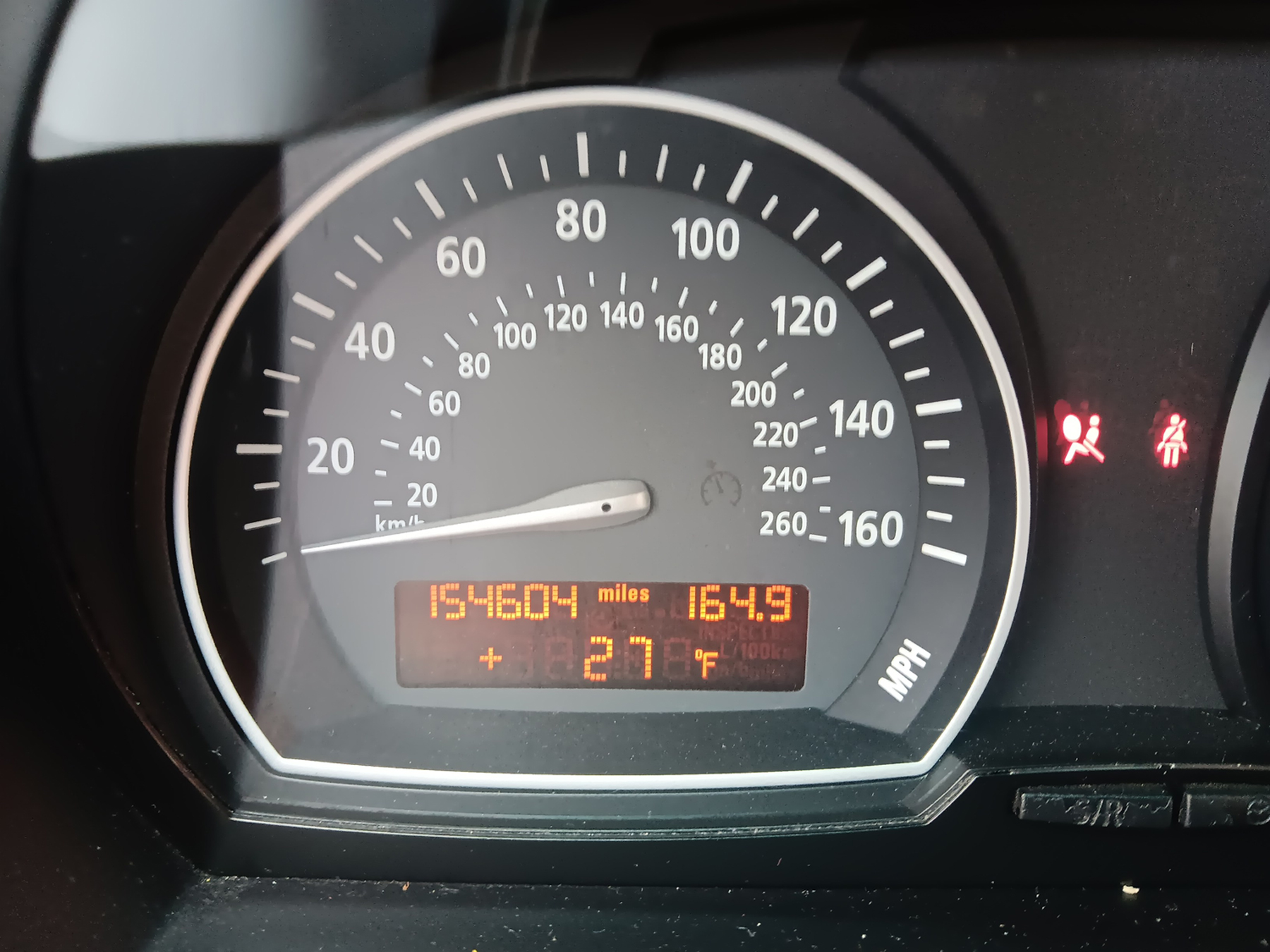
My 2008 BMW X3 “Refresh or Replace” “Drivin’ News” post garnered significant feedback sympathetic to and supportive of my decision to refresh. An appreciable number of people shared that they too had lately mulled the same question. Some had already made the commitment to refresh. Maybe not surprisingly, I found those seriously considering undertaking this fairly costly preservation effort bore many similarities and shared concerns. For me, reader comments drew attention to an evolution in the character of car enthusiasm that I found quite telling.

Let’s see if you agree.

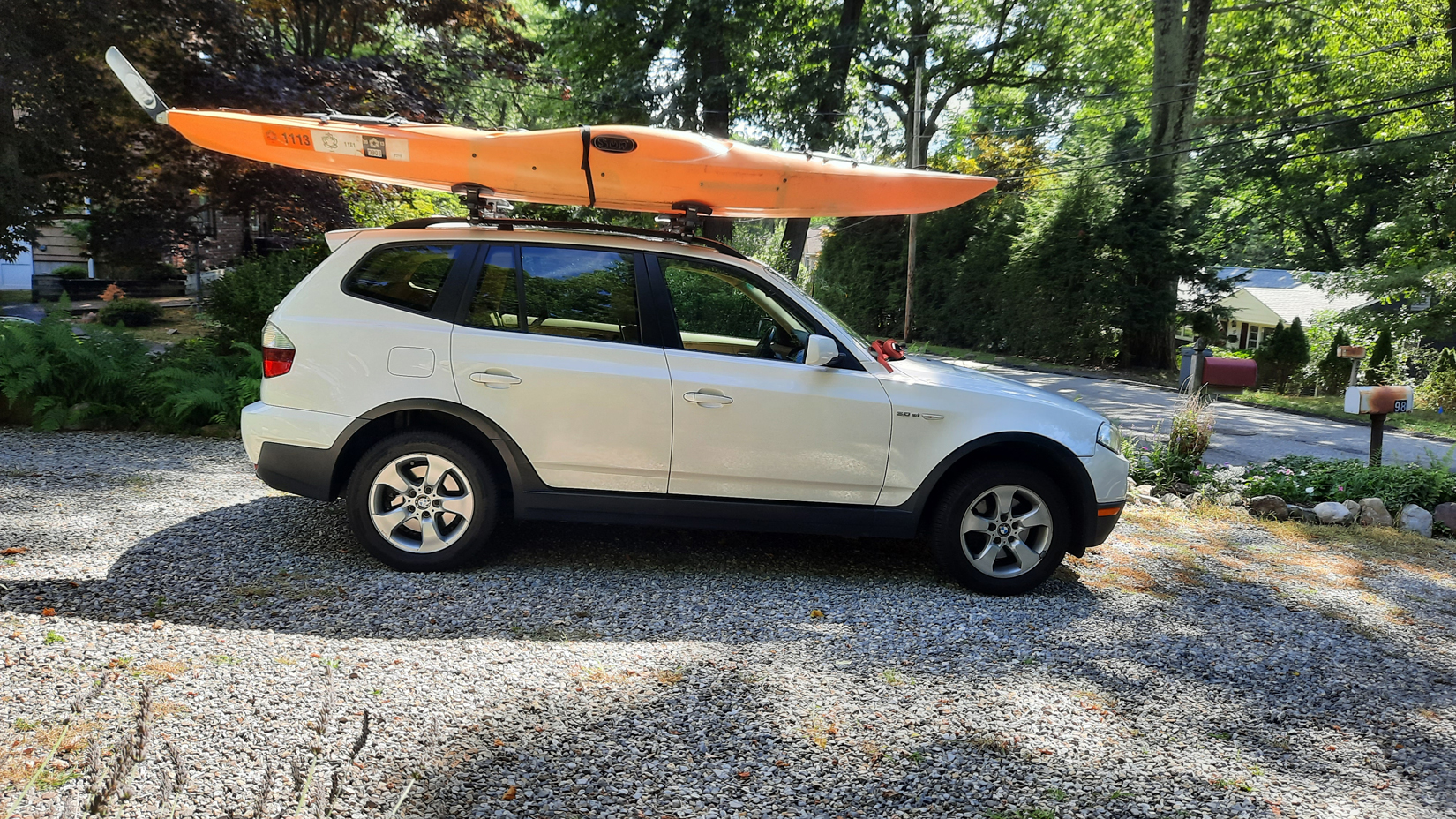
My 2008 BMW X3 Refresh, Going all in on another 50,000 miles
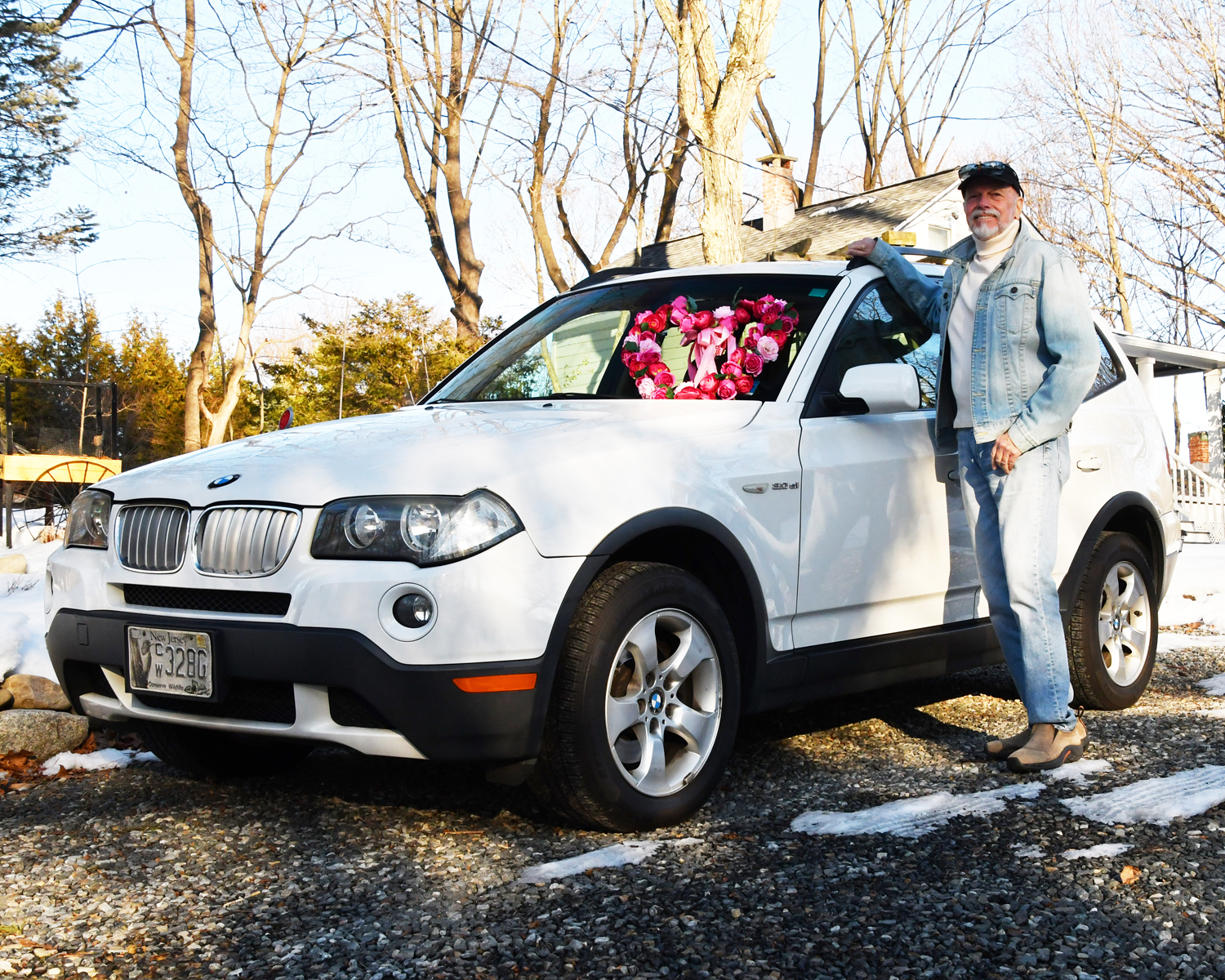
Valentines Day present. Just got my X3 Refresh back

Defining a Refresh demands focusing on functional excellence as compared to aesthetic perfection when applied to a long time daily driver. It is not a restoration. When successfully executed it does not target attracting huzzahs from admiring Concours judges. It does reward an owner’s investment in a long held daily driver by providing additional years delivering the driving experience that earned the owner’s loyalty in the first place. My experience has identified three requisites necessary for a vehicle to merit consideration for a Refresh: Good bones, an owner with a comprehensive knowledge of the car and a marque astute shop to entrust with the work.
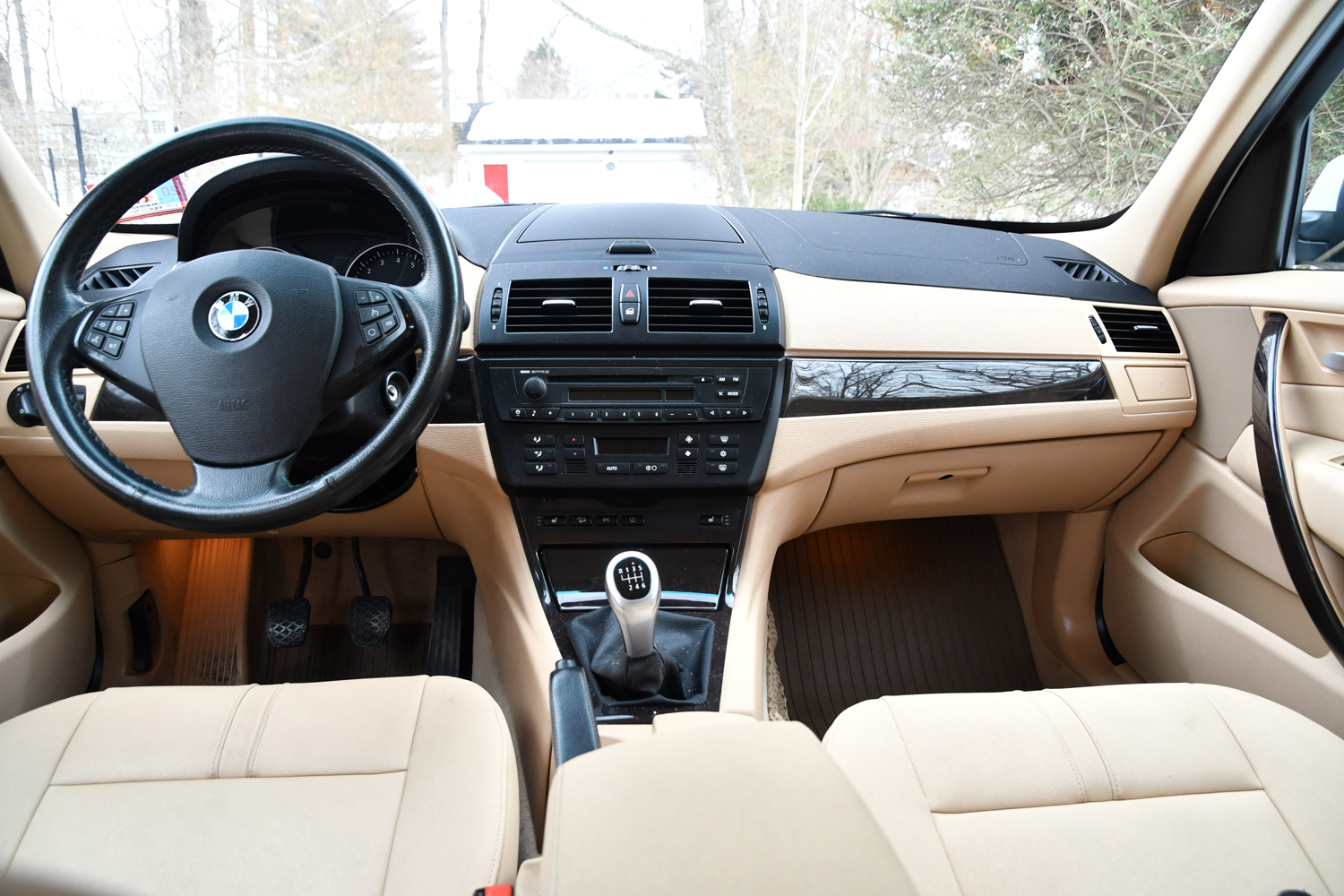
The quality of the car being considered for a Refresh ranks first and foremost. Good bones, proper treatment, regular maintenance and a proven track record over its driving history all determine if a vehicle merits the investment. Good bones displayed in a car bear similarities to the desirable qualities bred in a horse. Over time, the quality of materials, construction integrity and design of a specific make and model imparts a reputation; sometimes good, sometimes not so good.

Step one demands knowing if the car deserves the love and money a Refresh will demand of its owner. Other than the general attributes that history has shown the car to possess, the specific vehicle’s track record means everything. Thus, long time ownership by the present owner ranks very high. Only he or she will know how the car has been treated; how it has been maintained and all or at least a considerable portion of its driving history. In my opinion, a serious accident in a car’s past disqualifies it for consideration as a Refresh. Contemplating a Refresh on a car that you just purchased introduces too many questions, any of which could produce an answer that would disqualify the car.

Finally, the third leg to support a successful Refresh, and very possibly the most important, resides in the shop entrusted with the Refresh. The guy who changes your oil or can fix “any car” has no place in the conversation. You must do your homework. If you are looking to get off cheap, it will be the most expensive mistake you could make. You are lucky if a marque specialist already services your car. In my case MotorWorks West has previously worked on my 2003 E46 BMW 330. It features a very professional exclusive BMW facility and enjoys a very positive reputation. For a Refresh, consider the shop you choose as your partner in the project. As well, the shop, too, should view this relationship as more than just another job. It certainly will be more expensive. Finally, thoroughly review the vehicle with the shop owner. This review must include both an under the hood and an up on a lift visual inspection. Before proceeding you should have a written estimate from the shop detailing all aspects of the project. This is when you decide if the Refresh merits the cost. If yes, establish a budget before proceeding. It should include a contingency of maybe 15% for legitimate work not foreseen. Have the shop save all of the old parts removed for your confirmation and inspection. Remember this job will dent your wallet. Know and respect the limit of yours.
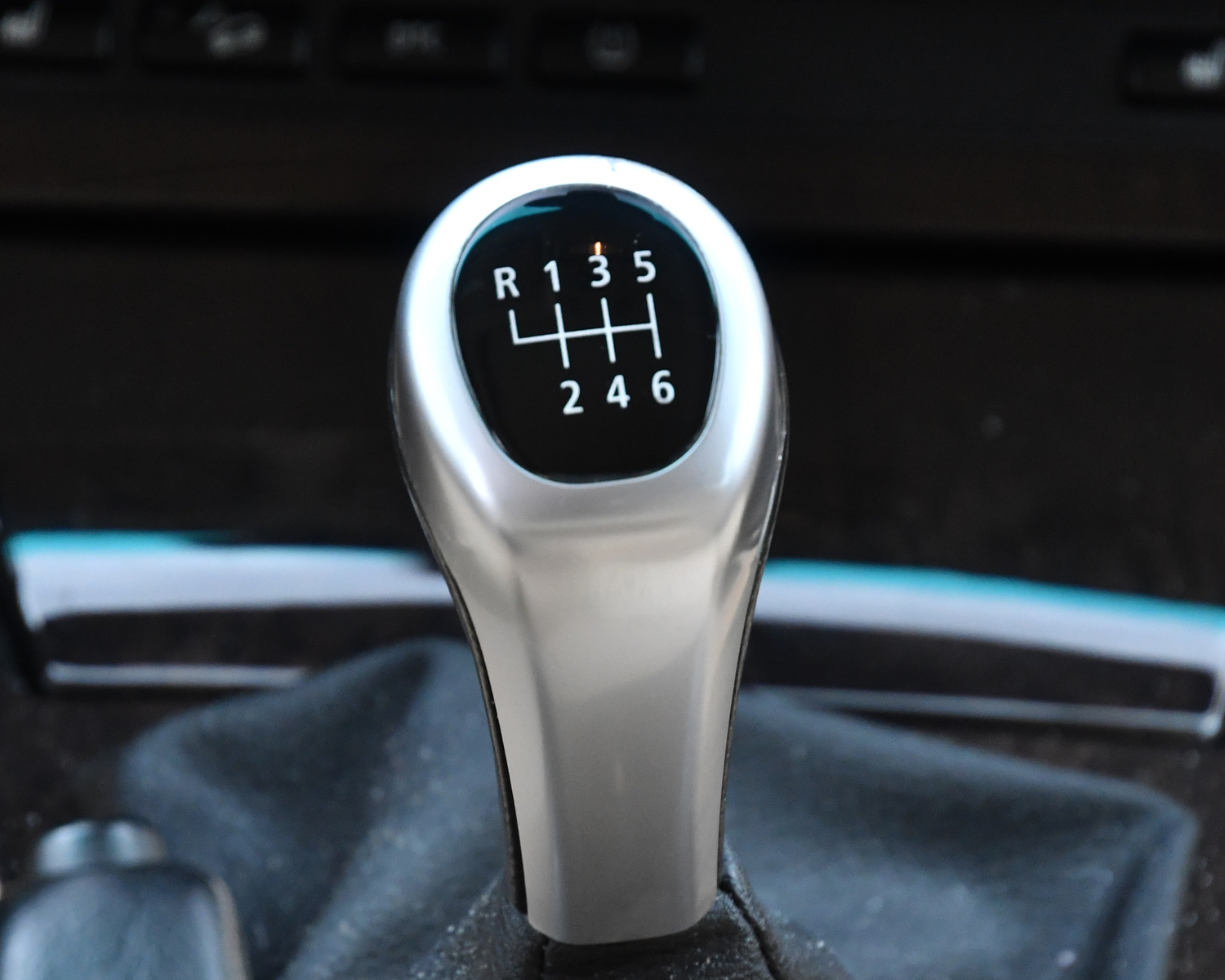
With my X3’s Refresh completed Steve Smith owner of MotorWorks West reviewed the final invoice. the absence of any surprises delighted me. To my BMW’s credit the clutch and flywheel, both with 155,000 miles of wear, remained fully functional. However, inspection clearly showed that future failure fast approached. As to the engine Steve provided me the individual cylinder wave form printouts of my compression test. These graphic representations confirmed my engine’s health as did the results of the other diagnostic tests. They supported a decision to proceed with the Refresh. Should the diagnostics have shown serious engine problems, I would not have proceeded. Either way the diagnostics would have been worth the cost in providing evidence supporting a go/no go decision.
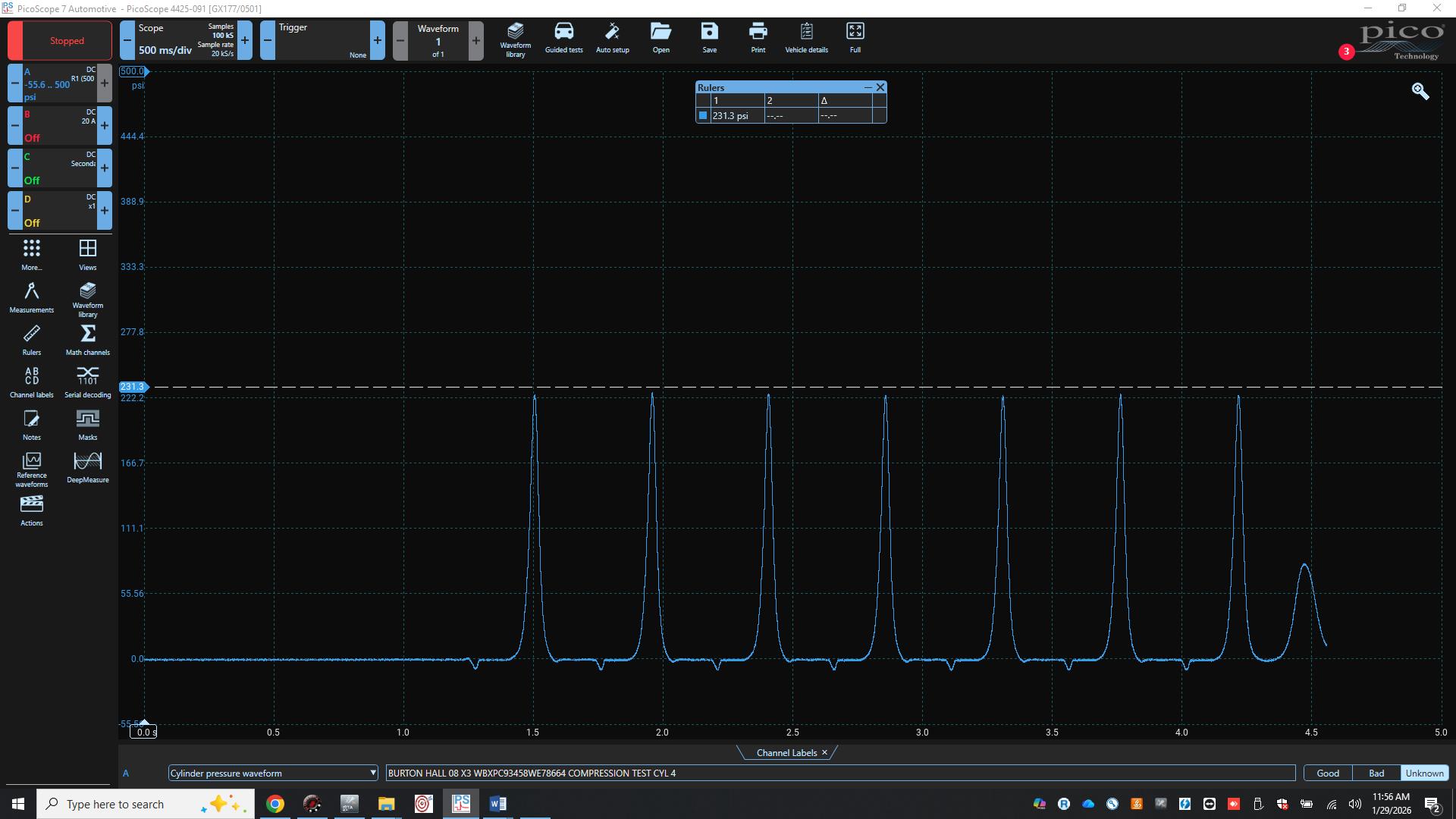
Compression test wave form #4 cylinder

To add perspective to the wisdom of refurbishing a long time daily driver, I interviewed five seasoned car enthusiasts and friends of Drivin’ News who have or are considering giving new life to their high mileage daily driver.

Jim El Nabli loves his 2011 BMW X5 with 135,000 miles and recently conducted a major refresh to keep the love alive. Once upon a time an automobile technician, now an attorney and passionate BMW enthusiast, Jim, a multiple BMW owner, has for the past decade, immersed himself in a 100 point restoration of a 1999 BMW Euro-spec E36M he purchased new.

Peter Desbets cannot say good bye to the 2011 Volvo XC60 daily driver with 173,000 miles he has owned since new. He has spent over 40 years as an executive in the automobile industry and president of a media company serving the automobile industry. A dyed in the wool car guy he presently owns a pristine 1986 Porsche 911 Carrera and an eclectic track record of classic car ownership.

Bill Hoover bought his 2015 Volvo XC70 T-6 daily driver new. He describes it saying, “It’s the last of the in-line 6’s with just the right level of technology. A Polestar performance upgrade adds some fun to the experience.” Now, with 100,000 miles recently showing on the clock he looks to do whatever is required to provide another 100,000 miles of high-quality motoring. An auto industry executive in both the United States and Asia he has an SCCA racing history and a significant roll call of classic cars owned now and in the past.

Each of these men champion a perspective that embraces an analog, tactile driving experience left in the dust if not for dead by today’s new car offerings. Possibly the leading edge of a movement, the cohort of individuals rejecting today’s expensive, technology drenched automobiles appears to be growing.

Jim says, “I’m the original owner of my 2011 X5. I bought it brand new. I special ordered it with pretty much every option. It had everything that I want.” Upon hitting 130,000 miles he looked into a new replacement. He ran the numbers to cost out buying an equivalent new X5. Jim says, “I was shocked to find myself looking at a price well into the 90s, maybe even higher, which sounds crazy, but that’s where the prices are today. That’s a huge pill to swallow financially.” He even notes that prices for a used X5 go through the roof as well. Luckily for Jim his X5 enjoys life being owned by a fastidious owner. For the decision on doing a Refresh, Jim’s X5 checked all the boxes. He has owned it since new. It had enjoyed all scheduled services and been maintained to keep it in peak running form. It had good bones. He started on his Refresh by addressing all recognized weak points such as the harmonic balancer.

Jim estimates that the Refresh made great financial sense. He says, “If I can get another hundred thousand miles out of it. I’d be very happy. I think that would have been well worth the cost. When it comes to dollars you can’t look at it as I’m putting in ten thousand, twenty thousand dollars and I’m going to lose that money. You have to amortize that over time so let’s say I hold on to the car now the five years. So, how much am I really spending per year?

A universal concern among all the men interviewed played a significant role in Jim’s decision to refresh. He says, “Complexity towers as a growing concern for automobile longevity. The past 15 years have witnessed a profound reengineering of automobile functions utilizing sophisticated electronics. Jim has an opinion saying, “Cars are far more complicated by the integration of digital technologies and electronics. In my experience electronics don’t last. Today’s cars are so complex that when things go wrong, diagnosis can present a formidable, frustrating and costly challenge.”

Jim acknowledges that his car while considered cutting-edge when new, today, ranks as a dinosaur based on today’s technology. That said, he responds saying, “Dinosaurs did last for 75 million years. I’ll take my chances on my X5 not being wiped out by a meteorite.”

Bill, in describing how he feels when he slides behind the wheel of his 2015 Volvo XC70, says, “There is a comfort factor when I jump into that car in the morning. It feels like an old friend. The feeling brings to mind the old Mastercard tag line, that feeling is priceless.” Bill finds much of that comfort in the smooth robust power delivered by the Polestar tweaked Turbocharged inline 6-cylinder engine putting out 370 horsepower.  With his home in Tucson 200 miles away from a mountain getaway at an altitude of 7200 feet Bill savors his Volvo’s elevation eating performance.

Bill says, “With power to spare, it’s great for my drive up to the mountain house. It’s a car that is reliable. It’s not going to have suspension issues or brake issues. It’s basically going to perform like a new car. Yeah, it’s priceless.” Bill is confident in the longevity inherent in his 2015 Volvo’s bones. He expresses concerns about the product life inherent in today’s maximized low displacement engines and the reliance on sophisticated complex technology, engineering solutions upon which contemporary automobiles rely.

Bill, while accepting some technology such as parking sensors and blind spot warning, lacks any passion about wanting every next new thing that comes along. Actually he comes across as being quite sanguine about all of the latest things absent in the 2015 Volvo XC70 that he loves. To his driving delight one of the newer things his XC70 lacks is EPS (Electronic Power Steering). It does have the old traditional hydraulic power steering which features exceptional driver feedback. EPS on the other hand provides the means for enabling the inclusion of advanced driver-assist features like lane-keeping assist and automatic parking. Bill clearly favors his XC70’s old school hydraulic. He says, “I occasionally drive my partner’s car with EPS. For me it has nowhere near the same road feel as my XC70. It’s too light. It drives me crazy. They have the software dialed in to prevent torque steer. The steering angle also controls the throttle response. I find myself pressing on the accelerator and not going anywhere. It’s like wait a minute, wait a minute. Now, unwind the steering wheel. OK, now we’re going. It frustrates the crap out of me. As for my partner, she sees no problem other than my complaining.”

In recent years Peter has casually explored a suitable replacement for his limited edition Cosmic White Metallic 2011 Volvo XC60, but to no avail. In reflecting on his long time daily driver it features a 3.2 liter non-turbo inline 6 cylinder engine with a 6-speed Geartronic transmission and Haldex all-wheel drive. It ranks among the last of Volvo’s non-turbo sixes.

He says, “I like the way it looks. I love the way it drives. Great suspension, it’s all been rebuilt over time. Marvelous seats. It’s an R design. Its 20-inch wheels and stance look great.” But, now with 15 years and 173,000 miles on the clock, Peter finds himself at a crossroads. He says, “I’m the original owner. I’ve had it for 15 years this February. It runs great. All the known quirks have been addressed including oil consumption issues and a leaky windshield. It has been meticulously maintained. Frankly, no real necessity demands a Refresh or Replace decision. All that exists is that nagging 173,000 on the odometer.”

Peter’s first move took him to the new car marketplace. He has a new car in the family, his wife’s Acura. Reflecting on the new Acura he says, “Pricing is ridiculous.” With that in mind he decided to explore CPO (Certified Pre-Owned) used cars. He looked in the $25,000 to $28,000 range. About his CPO search Peter says, “Cars in that range have 80,000 miles to 100,000 miles. I look at that and think has it been serviced properly? Have the brakes been done and when? Have this and that been done.” The idea of leaving a good car that he knows well and jumping into something that he knows little about haunts him. And, then, comes the complexity kicker: Newer cars possess much more sophisticated electronics. He expresses his concern saying, “This is all great. But what will the sophisticated electronic features be like five years down the road?  And if you look at something with a high degree of complex technology what happens seven, eight, nine or ten years down the road. Will that technology be supported? Software changes constantly. What if the software running something in your car is no longer viable like a cell phone that is no longer viable or your laptop can’t be upgraded. What do you do?” After due consideration, Peter’s decision called for keeping his XC60.

Peter says, “It has been so well maintained I don’t see any major investment needed in the foreseeable future. God forbid, the transmission goes. Still, I’ll probably get it fixed and continue to use it. Certainly from a cost of insurance standpoint money savings versus a new car is huge.” Echoing the sentiments expressed by Bill about his beloved XC70, Peter says, “I love my Volvo. Settling into the great Volvo seat, my XC60 fits like a great pair of old sneakers.” Similarities common to each individual’s experience painted a fairly clear image of Refresh minded owners.

Clearly an older group, predominantly but not exclusively male, all gained their driving chops in the late 20th century’s “Golden Age” of the automobile. They cut their motoring teeth when feeling the road qualified as a good thing. All possess confidence in their skill behind the wheel and frequently find high tech driver aides an annoyance or worse a distraction. They know what they like and they like cars designed to enhance the driving experience not dull it.

By |2026-02-19T12:41:48+00:00February 19th, 2026|0 Comments

Cars We Love & Who We Are #72

With 18-years and 155,000 miles on the clock my well maintained 2008 BMW X3 has performed nobly. It owes me nothing. That said, with it being the last BMW SUV with a manual transmission, I wanted more. While it owes me nothing, I have decided I owe it to myself to refresh this excellent ride. If my initial assessment proves valid, I will lay down the money necessary to recondition a sporty and functional vehicle I cannot replace. As I have, now, explained the “why,” the following describes the “what.”

A Winter Rebirth? Deciding Whether to Recondition My Aging Daily Driver

Its bones are quite sound with its solid body, good brakes, fresh tires, new shocks and regular servicing, though I am still on the original clutch after 155,000 miles. My daily driver’s needs reflect traditional flaws endemic to the E83 X3 including valve cover gasket oil leaks, oil filter canister gasket leaks and cooling system plastic part failures. Needless to say, high mileage on the original clutch with the notoriously expensive dual mass flywheel screams for attention. However, simply addressing known problems falls far short of my intentions for this rebirth. I wanted the insight of a specialist with the experience, feel, and passion for the BMW brand. I chose Steve Smith owner of MotorWorks West a BMW-Exclusive specialist in Wyckoff, New Jersey.

Steve, 1-month short of his 32nd birthday, with a wife and three children stands out as the kind of youthful respected skilled professional that long time car guys fear will be painfully absent in the fast approaching future.

In 2012, with the benefit of a four-year automotive technology apprenticeship program, Steve developed his taste for BMWs while quickly climbing the ladder towards Master Technician at a respected Northern NJ BMW dealership. With his eyes looking ahead to greater things, he built a cash stash by servicing three to four cars a night in his back yard after work.

By 2018 Steve purchased MotorWorks West. His goal focused on creating the ultimate BMW service facility. Steve says, “I resolved that my shop would never be hamstrung by outdated technology. At the outset I invested a ton of money into the latest diagnostic equipment and, today, continue to maintain that edge.”

Steve wants his customers to know and trust the technician working on their car. He promotes clients discussing their car one-on-one with the technician charged with the responsibility of making the repair. He says, “I rely on my customers being happy with their MotorWorks West experience. They should be confident that my technicians are not trying to rip them off.” Steve not only knows what he wants in a technician. He has a clear understanding of who he favors as a customer. Steve wants to build a customer family. In servicing the parents’ BMW he strives to know their children; children who, when old enough to drive, will trust MotorWorks West to service and maintain their BMW. He says, “I don’t try to sell them everything under the Sun.” He points out that me and my X3 are the exception. He says, “You came in wanting everything under the Sun.”

VISUAL INSPECTION

With the bitter January wind howling behind the closing front door, I entered Steve’s well organized and superbly equipped automotive shop featuring a handful of active bays populated with BMWs of varied vintages.

Steve welcomed me with a smile and a meaningful handshake. His office, adorned with BMW racing graphics and models of classic BMWs, left no doubt as to the focus of his considerable technical acumen and passion. With Steve having read my Drivin’ News post “Aging Beloved Daily Driver Quandary: Refresh or Replace” he immediately dove into the challenge at hand. To my pleasant surprise he spent the next few hours conducting a preliminary diagnosis of my X3’s health. He began by scanning for faults. With the codes printed down for reference, he moved on to conduct a thorough visual inspection. Under the hood the engine bay revealed a considerable curtain of oil bleeding down from the valve cover. Engine oil seen pooling around the injectors raised concerns that the oil might have found its way into the cylinder head intake ports. Upon inspection the concern proved proved unwarranted. Moving on to the oil filter canister Steve used a laser pointer to show me where the oil leak had created a condition that would ultimately compromise the serpentine belt. He explained that with the belt shifting noticeably off center on the pulley, little doubt existed that, left unaddressed, the oil weakened belt could shred and be sucked into the front crankshaft seal causing severe damage.

Continuing on, evidence of failing plastic coolant system parts confirmed a need to be addressed. Steve noted that this X3 has a one-piece thermostat built into a plastic housing that frequently goes bad. He indicated that replacement of the radiator loomed in the near future.  He says, “My rule of thumb on this N52 engine is that you do a thermostat and a water pump together and when you do a radiator you do the upper and lower hoses together.”

Opening the power steering fluid container should reveal a fluid with a greenish clear color. Mine showed brown. Steve says, “I’m not a big fan of selling power steering flushes but when I see something like that, let’s get out the old. Replace the fluid to try to just make these parts last longer.” He makes clear that normally as a repair shop; he cannot sell all of these recommendations to one person. However, in my case I requested this level of detail.

With the car on a lift Steve commenced to give high grades for body integrity, brakes, tires and suspension components. Moving towards the front he noted two ground cables worthy of replacement before addressing the issue of the clutch. He noted that, sadly, there exists no effective way to check the clutch without significant labor. Considering the cost I pressed the issue. I understood that, with 155,000 miles on the clutch, a replacement with all the associated parts seemed likely in the not too distant future. That said would there be a cost benefit to do it now before it starts slipping. Steve explained that there exists the possibility that doing it now could produce a significant savings. How so? He says, “Your X3 has a wickedly expensive dual mass flywheel. By the time the clutch gives its first indication of slippage, the flywheel is cooked.” A decision needed to be made.

We moved along with findings being quite positive, until. Until Steve froze me with an order delivered with the authoritative tone of a cardiologist calling out a heart patient washing down a bacon and nacho cheddar hoagie with a Slurpee. Turning towards me while holding the tail end of the front drive shaft, Steve said, “You can’t drive this home.” The U-joint shook with the confidence draining sound of a baby’s rattle. Clearly poised to let loose any moment, the weighty arm’s-length drive shaft would have spun like a savage fan blade at engine speed quickly destroying all in its reach. I chose to have it repaired immediately. He would have it replaced by the next day. Having completed the inspection of issues we could observe, we moved on to the testing for problems that could not be seen.

My go/no-go “Refresh” decision would be predicated upon the results of a battery of tests that measured my X3 engine’s conformity to proper operational specifications and functionality. A strong engine rated as a major factor in making my decision.

COMPRESSION TEST

An engine compression test measures the pressure in each cylinder to evaluate overall engine health. It assesses how well each cylinder seals and holds pressure. This indicates overall engine power and efficiency. Steve explains saying, “We conducted our compression test with the engine hot. All of your pressures were in the 220s. It was like a rate of 20 to 22 24 to 25 across the board between all the cylinders.” Interestingly, while old school shops use a pressure gauge, MotorWorks West performs their compression test using a lab scope and pressure transducer that enables in-depth diagnostics without requiring a full engine disassembly. Steve says, “We read the pressure like a wave form. Every time the engine completes one full revolution, unlike an old school pressure gauge that simply shows a final maximum pressure. Our system creates a printout that details individual cylinder pressure on the way up and the way down for each revolution. I want to see each cylinder enjoy a perfectly smooth up and down wave. If an anomaly appears, I know where to look. It’s just like the EKG you get at your doctor’s office.” Steve summed up the results saying, “For this engine the wave forms looked really great.” Yippee, my engine got a clean bill of health.

LEAKDOWN TEST

Reinforcing the findings of the compression test, the leakdown test checked each cylinder’s ability to hold air pressure. Leakage by way of escaping air can indicate internal engine problems such as bad piston rings, leaking valves, or head gasket issues. In the case of my engine, Steve found the leakage fell well within the acceptable range.

SMOKE TEST: INTAKE SYSTEM

The procedure employs a smoke machine that injects a visible vapor into the engine’s intake system. A technician can then visually inspect for escaping smoke that would indicate leaks in intake hoses, vacuum lines and intake manifold. In the case of MotorWorks West, their smoke machine actually displays a digital number. In the case of my engine the system indicated a leak so large that the display could not even achieve a reading. The cause proved to be a massive leak pouring out of a crack in the valve cover; the valve cover already on the list of intended fixes.

SMOKE TEST: DMTL TEST FOR VAPORIZATION SYSTEM

A DMTL (Diagnosis Module Tank Leakage) smoke test specializes in locating small, hard-to-find leaks in the EVAP (Evaporative Emission Control) system, In this case Steve found that the smoke test revealed absolutely no leakage in the evaporation system.

CRANKCASE PRESSURE TEST

A miserable failure! But wait. This test checks for excessive pressure from blowby due to worn piston rings or issues with the crankcase ventilation system such as a clogged PCV valve. Steve using the lab scope and a pressure transducer had hoped to see a smooth up and down wave form with a maximum reading of around 33 millibar (0.48 PSI). Instead of a wave the readout showed a straight line at 50 millibar (0.73 PSI). This amount of vacuum could actually suck crankshaft seals into the engine. Steve assessed that the malfunction could again be attributed to the cracked valve cover already targeted for replacement.

CONCLUSION

Prefacing my final decision, the subject of parts deserves a bit of attention. For this project only OE (Original Equipment) or OEM (Original Equipment Manufacturer) parts would be used. The difference or lack thereof, merits explanation. The fundamental difference between OE and OEM is branding. OE parts bear the part manufacturer’s name such as Bosch. OEM parts carry the vehicle manufacturer’s name such as BMW. Both are the same part though the one with the manufacturer’s name always costs more. In my humble opinion, especially with German car parts, pricing uses the basic formula of 50% above outrageous. Parts for this project would be OEM or OE with OE being the first and cheaper choice.

With the good bones of my car  confirmed and the issues needing to be addressed and agreed upon with MotorWorks West, I have decided to recondition my 2008 X3. I have provided a budget of $12,000 with a 10% contingency. Unlike an aging beloved family dog, for this family member I believe I can buy a longer life .

By |2026-02-02T16:25:45+00:00February 2nd, 2026|6 Comments

Cars We Love & Who We Are #71

With about 155,000 miles on my very clean 2008 BMW X3, my quandary appears to be shared as of late by many fellow car owners of a variety of brands. We find ourselves clinging to a long held daily driver with a passion normally saved for the family dog. Unfortunately we see this beloved vehicle getting quite long in the tooth.

I really like my X3. I mean, really. I have enjoyed multiple BMWs for decades. My E83 X3, sturdy and reliable at 18 years of age offers many appealing features no longer available on comparable contemporary BMW X3s or, for that matter, any other new X3 competitors like the M-B GLC, Audi Q5, Lexus Rx or Volvo XC60. As well, it delightfully lacks many features unavoidable in today’s high priced digitally infected offerings.

However unlike Rex the family dog, a treasured daily driver can have its life extended. In my case my goal would be to add another 50,000 miles of high quality driving. Refresh or replace my X3? That is the question explored in this Drivin’ News post.

Aging Beloved Daily Driver Quandary, Refresh or Replace?

The following paragraph comes with apologies to Julie Andrews: Knobs on my radio, buttons on dashes, shifting a 6-speed for lane changing passes, no need for oil of zero weight grade, this is how my favorite car would be made. Sadly none so equipped can be found anymore and that makes me feel so bad.

I purchased my 2008 X3 in 2017 from the original owner. It had 67,000 miles, a clean Carfax and all service records. It featured BMW’s acclaimed 3.0-liter 260 horsepower N52 naturally aspirated inline-6 coupled to a 6-speed ZF manual transmission. I can attest that my X3 translates the essence of the once renowned BMW driving experience into an SUV. To emphasize that point BMW embraced the descriptor SAV (Sports Activity Vehicle) to highlight the X3’s ability to fuse the practicality, space, and ruggedness of an SUV with the spirited performance, agile handling, and driver-focused feel of its signature sports sedans. BMW’s basing the 2008 X3 architecture on a 3-Series platform confirms that assessment. To quote Edmunds.com, “Given its very athletic personality, calling the 2008 BMW X3 the “3 Series of SUVs” wouldn’t be a stretch.” “Interestingly, of the 17,622 new 2008 X3s sold in America only a very small fraction came with the manual transmission found in mine. Today, locating a clean X3 with a manual transmission ranks as a rare and desirable find.

Considered the last of the legendary naturally aspirated inline-6 engines upon which BMW built its reputation, the N52 in my X3 with its inherently balanced inline-6 configuration, advanced features like Valvetronic, Double VANOS and lightweight magnesium-aluminum block boasts smooth, linear power and superior reliability compared to the more complex B48 turbocharged engine found in newer BMWs.
So, what shakes out when comparing the N52 against BMW’s B48 2.0-liter turbocharged engine introduced in the 2016 BMW X3 and continuing on today? One must consider that the Turbo B48 is quicker, more efficient and far easier to tune to a higher performance level. The downside comes with the complexity that can be associated with forced induction. For me the N52’s smooth, reliable and traditional feel when partnered with the robust ZF 6-speed known for its reliability and precise shifting suits my tastes and needs better. And, Oh yes, my X3 runs well on regular grade gasoline saving roughly one dollar per gallon at fill-up.

Compared to my X3, a new BMW X3 or any in its competitive set would provide for a far more modern vehicle and driving experience in terms of technology and sophistication. However, considering my preference for engagement and the associated simple pleasures enjoyed when behind the wheel when engaged, the character of the new X3 and the like might be off-target for my tastes.

Clearly among the automotive literati and traditional BMW enthusiasts, the 21st century has found voices expressing considerable concern that BMW has veered from the course set by the brand’s earlier classic models. These voices express a belief that BMW has abandoned its sporting heritage to emphasize an elevated level of luxury and advanced technology in an effort to appeal to a broader consumer base. Indeed such criticisms do resonate with me. Based solely on my driving preferences, the following concerns about the 2025 X3 actually make my 2008 more appealing. Keep in mind the very personal nature of my assessment. BMW by building cars to my tastes would most assuredly bankrupt the brand.

Engagement resides at the heart of the driving experience that defined BMW’s claim to being the Ultimate Driving Machine. Most obviously the new X3 does not come with a manual transmission. Indeed, the new X3’s mandatory electronic 8-speed automatic may shift quicker and smoother than my X3 with me at the controls. However, that absence of the third pedal, for me, succeeds in purging a richly tactile and rewarding enhanced driving experience. Another concern expressed by many focuses on BMW’s Standard electronic power steering (EPS) introduced in the 2014 model year. Though EPS enables seamless integration with driver aids like lane assist, custom steering modes and eliminates the need for hydraulic steering fluid, critics bemoan that it lacks the natural road feel and driver feedback considered a signature feature of the classic Ultimate Driving Machine. Other big problems exist as well.

For my needs the new X3 suffers from the common problem of “biggerness.” Like so many evolving brand models, each generation of X3s has grown. Compared to the 2008 X3 the 2025 X3 has grown 8 inches longer, 3 inches wider and 350 pounds heavier. Moving to the inside of the new X3’s tech-heavy interior one finds a passenger cabin replete with seemingly every application of advanced automotive digital interactive communications technology. While opening myself up to consideration as a borderline Luddite, I say for those who love a total immersion in tech; knock yourself out. For me, I prefer my dashboard to feature an analog interface rather than a sprawling IMAX screen. In scanning the new X3 dashboard, its 14.9-inch center iDrive9 infotainment display features a 12.3-inch fully digital gauge cluster. I find it demands my attention in the event I wish to change my heater setting or turn on the radio. And yes, I know to activate some new X3 functions I can talk to the car with the BMW Intelligent Personal Assistant. I have enough friends thank you. Wow, I am sounding a bit curmudgeonly I must confess. But, hey I just want a car I enjoy driving not a mobile video game.

Tactile friendly latching pushbuttons and knobs feature prominently on my list of dashboard actuators fondly recalled and absent in a new X3. For the latest X3, haptic, capacitance sensing, buttons rule the interface. On the steering wheel and across the center console these touch-sensitive surfaces deprive the driver of the satisfying tactile feedback of an intended action confirmed. While on the subject of cost cutting, road tests and customer feedback offer scathing criticism of the “cheap” and hard plastics employed throughout the interior. To boot, unlike my old X3 the new X3 no longer offers a sunroof that opens.

Other considerations impacting the Refresh or Replace decision include insurance and replacement cost. Presently, insuring my 2008 X3 cost $540 for a 6-month period. I do not have collision or comprehensive with the book value being roughly $2200. Maybe it goes for $5000 retail. With the cost of a low end new X3 30 with sales tax being well over $60,000, my insurance for the 6-month period with comprehensive and collision would be an estimated $2,737. This would make my new X3 insurance 500% of my present insurance or roughly $4,400 more per year. If you have an older car you like and it has good bones it does make you think. And I am thinking enough to move to the next step.

At this point in the Refresh or Replace decision process my honest evaluation of my X3 reveals problems associated with all of the classic 2008 X3 faults including: Valve cover gasket oil leaks, oil filter housing oil leaks and coolant system plastic parts failure. For more professional scrutiny, the next step calls for visiting my longtime trusted and respected BMW specialty shop. Here performance of a few basic tests will indicate the wisdom of pursuing the Refresh. In addition to a thorough visual inspection, a compression test will reveal the presence of any worn piston rings or leaky valves. A leak-down test will pinpoint with pressurized air the exact location of any power sapping engine problem. The compression test is a quick check to see if a cylinder’s compression is low while a leak-down test is more diagnostic, revealing the fault causing the low compression. Finally a smoke test injects smoke into a sealed engine intake system. Any escaping smoke pinpoints leaks from cracks, loose hoses, compromised vacuum lines or faulty gaskets.

So I stand poised at the precipice. With the goal of an additional 50,000 miles of high quality personal driving pleasure do I invest considerable dollars that I will never recoup whether sold or, God forbid, totaled? Clearly plowing money into a car with eighteen years and 155,000 miles on the clock will not address every component subject to failure. That said we are not talking a Chevy Vega here. This is the product of a proud design and manufacturing culture when it boasted products where 200,000 even 300,000 miles did not peg the exceptional performance needle. I am confident my 2008 BMW E83 X3 boasts the bones to be worthy of the effort. That assumes the preliminary inspection supports my confidence.

When they no longer make the car you love, does it make sense to love the car you have got. While the Beatles sang “Can’t buy me love,” applying to hearts, it may not hold true for cars. At least I intend to find out.


STAY TUNED IN THE COMING WEEKS FOR PART TWO “MAKING THE DECISION.”

By |2026-01-11T21:36:14+00:00January 11th, 2026|4 Comments

Conversations With People We Value #61

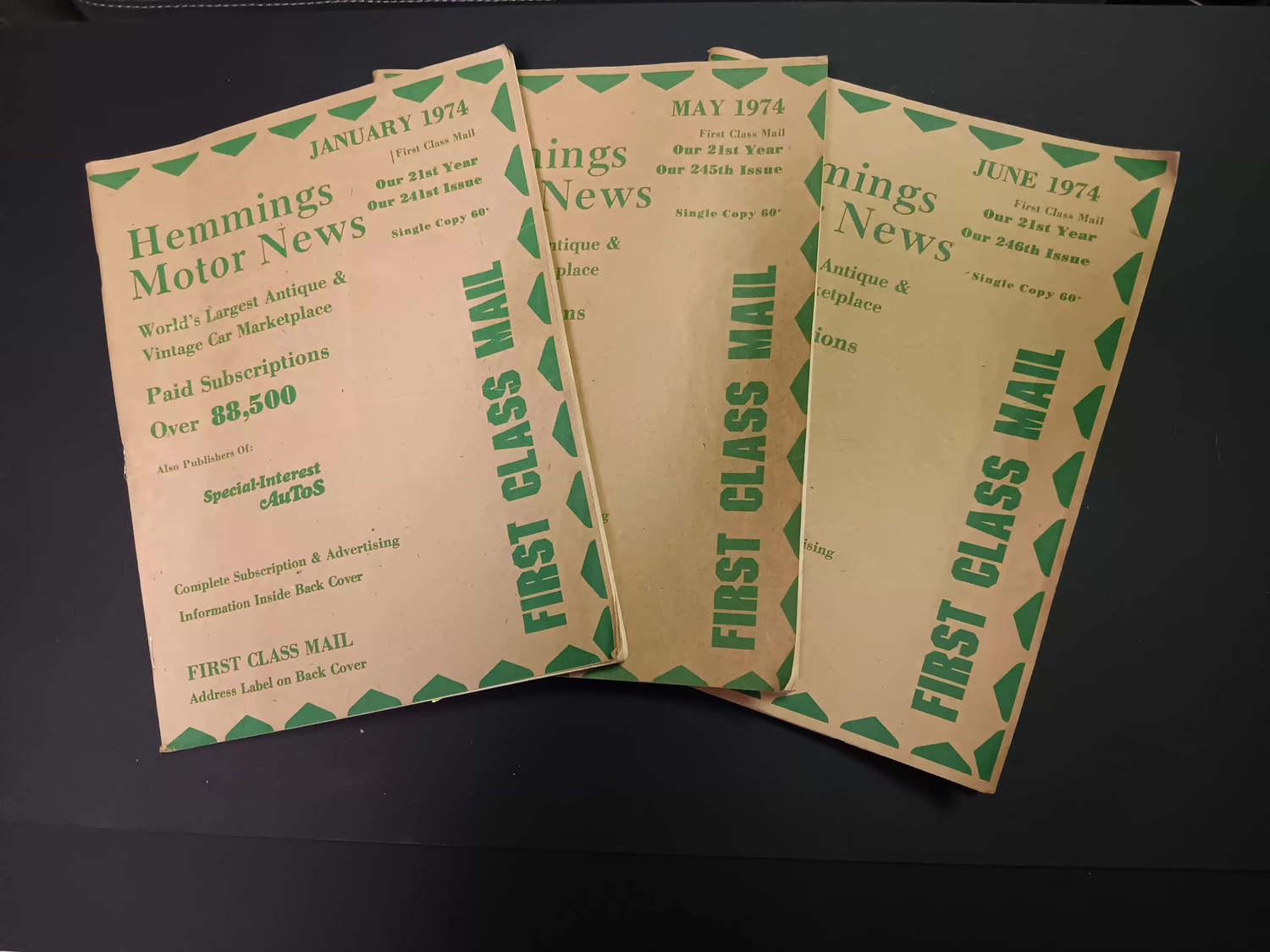
Friend of Drivin’ News Bob Austin derives great pleasure and success in mining estate sales for interesting things automotive, preferably that of the vintage variety. Once he stumbled upon an old Rolls-Royce “out back” at a garage sale. The other day, clutching a stack of vintage magazines to his chest like a school kid carrying books, Bob proudly displayed his latest find. He spread across a table, like-new copies of Hemmings Motor News from the 1970s.

With Hemmings respected as “The Bible” preaching the gospel of classic car enthusiasm, I was drawn to the mid-20th century publications pages. I found myself time traveling back 50 years to the fertile ground that would spawn the explosive growth producing today’s billion dollar global vintage car community.

So, join me in returning to a time when a Mercedes-Benz 300SL Roadster could be bought for under $10,000 and a Ferrari 275GTB-4 for under $20,000.

Revisiting Old Writings from the Hemmings Bible


In January of 1954 Ernest Hemmings launched the first issue of his eponymous Hemmings Motor News. In introducing his, then, mimeographed magazine he stated its purpose writing, “I hope it will be of real interest to the person interested in older models. I hope that this magazine will grow bigger and better as time goes on and in the future I hope to secure a better printing for it.”

Twenty years later, America found itself hammered by the 1973 to 1974 Arab oil embargo. The price of a barrel of oil had quadrupled to $12 from $3. Gas prices skyrocketed with the price per gallon increasing 35%. Simultaneously new car performance plummeted. Reeling from emissions control choked engines and awkward exterior safety designs, the 1970s inflicted a powerful jolt to enthusiasts bred in the muscle car era. The simplicity of cars produced prior to the wave of government imposed safety and emissions regulations made older cars with their high performance and good looks fertile ground for the do-it-your-self classic car enthusiast. These enthusiasts formed the audience Ernest Hemmings had in mind. By 1974 the Hemmings subscriber base had climbed to 88,100.

While high end European cars such as Ferraris, Lamborghinis and Aston Martins had a following among wealthy “collectors” as did American Olympian cars such as Duesenbergs, Packards and Cadillacs, none had yet begun to climb to the heady values witnessed in later decades. Individuals acquiring such vehicles could best be viewed as knowledgeable connoisseurs possessing a deep appreciation for respected works of automotive art, an appreciation mostly confined to a relatively few like-minded individuals. Certainly they did not view themselves as in it for the money. However, history would show that collecting desirable classic cars would, over time, prove to be an exceptionally wise investment. In the early 1970s a 1962 Ferrari 250 GTO that, today, has fetched up to $70,000,000 rated as an outdated old race car. Prices fell well below $20,000 on a good day. With that in mind one dollar in 1974 would, in 2025, be worth about $6.57, meaning that that Ferrari would have sold for roughly $130,000 when adjusted for inflation.

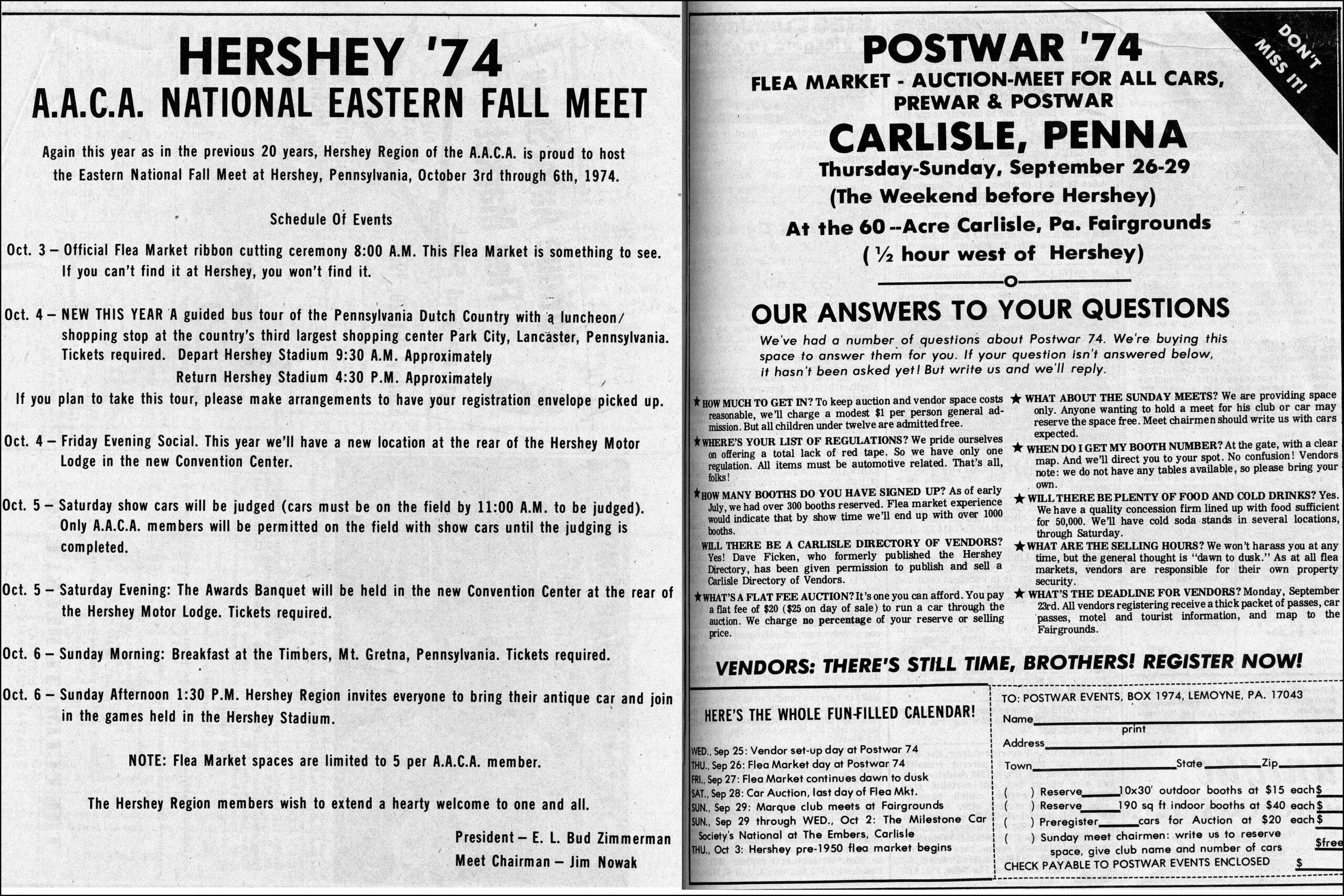
In 1974 the Hemmings readership found itself mired in an American economy suffering high inflation and recession. It was not the best of times. President Nixon resigned as part of the Watergate scandal. The stock market crashed dropping by over 30%, economic output (GDP) dropped by 5% and unemployment hovered around 7% on the way to 9%. Yet the classic car grew. An editorial note in the June 1974 Hemmings would indicate that the classic car enthusiast culture “shone as s bright spot in these dark times.” It’s “Notes from H.M.N.” editorial stated, “Over the years the Antique Automobile Club of America sponsored Hershey Meet has grown tremendously. Most of the growth has been in the Flea Market area, and we doubt if anyone would argue that it has become the world’s largest old auto Flea Market.”

As reported in the June 1974 Hemmings it had become clear that Hershey’s Flea Market, in the eyes of the gray eminences of the AACA, had become too successful. Thus, the AACA leadership decided the time had come to tighten event regulations. The changes centered on the year 1939. New regulations intended to be strongly enforced included; No post 1939 model parts, no apparel in other than time appropriate styles and no toys or model kits for cars newer than 1939. Clearly the AACA intended to circle the wagons around what would become an ever graying pool of prewar enthusiasts. Interestingly the Hemmings editorial commented, “We’ve heard rumors already that immediately preceding the 1974 Hershey Meet there may be another Flea Market organized not far from Hershey to take in a broader range of vendors.”

Not surprisingly, shortly thereafter, the September 1974 issue featured a full page ad introducing the new “Postwar 74” Flea Market at Carlisle, PA. It would welcome all cars, prewar and postwar. It would run the week before Hershey. This set the stage for the double barreled autumn classic car experience that for decades had become the Mecca drawing car enthusiasts from east of the Mississippi River and beyond. Winds of change had begun to build and they blew in many directions.

As a harbinger of coming change early 1974 saw a new company called “Computerized Antique Car and Parts Service” advertise in Hemmings. Like some ancient aquatic denizen in an early but unsuccessful attempt to venture onto land, this business sought to apply computerized search techniques to marketing vintage cars and parts. It failed. However, decades later that business’ basic idea, empowered by 21stt century e-commerce tools, resurfaced as a powerful global entity energizing the collectible car culture. It had evolved into the online auction site Bring a Trailer and its kin. Indeed, the winds of change spurred on by profound advancements in digital commerce have expanded the enjoyment and associated business opportunities associated with a global collectible car culture to heights unthinkable fifty years ago. Such changes clearly demanded adjustments in the content and character of an evolving Hemmings.
Interestingly, while over the last half century the publication has remained faithful to the founder’s goal of serving the needs of the vintage car enthusiast, the targeted market has morphed and mushroomed. The early 1970s saw Hemmings’ content display green shoots signaling the nascent beginnings of interests and enterprises that would coalesce into the juggernaut that towers as today’s collectible car universe. Looking back at the stark pages of Hemmings in 1974 reveals a much simpler world for the publication to serve. In that world purchasing a collectible car most often involved a personal interaction of buyer and seller. Any professionals involved usually operated on the higher end of the market. Individual enterprises such as Ed Jurist’s Vintage Car Store in Nyack, New York dealt with wealthy collectors on a personal basis. Auctions did not operate as national much less global enterprises. The late 1960s and early 70s collectible car world found itself at the threshold of a world that would significantly differentiate collectible cars from simple used cars. At this point in time Hemmings stood inextricably lashed to a primarily American pastime poised to blossom into a global phenomenon.

From the start in 1954, Hemmimgs focused on domestic brands with a mindset that heavily favored Ford products. This preference evidenced itself in the publication’s initial system for categorizing cars and parts for sale. Only two categories existed, Fords and non-Fords. Rolls-Royce represented the only foreign make with a significant presence. As a reflection of the changing and broadening of the collectible car culture, Hemmimgs before the end of the 1970s categorized all makes alphabetically.

Ads in Hemmings in 1974 offered tier one cars that today would startle with mind numbing prices. (Current prices are very rough approximations based on the December 2025 Hagerty Price Guide). They include:

1974                                                                                                   TODAY

1930 Mercedes-Benz SS supercharged, $60,000……………….$6,000,000

1936 Bugatti Type 57 supercharged, $50,000……………………$9,900,000

1953 Siata 208S, concours condition, $7,500…………………….$3,000,000

1955 Mercedes-Benz 300SL Gullwing, mint $15,000………….$1,600,000

1955 Chevy Nomad, gorgeous, $1,740……………………………….$   150,000

1959 Porsche Carrera Speedster, $10,000 OBO…………………$1,200,000

1959 Mercedes-Benz 300SL roadster, $8,500……………………$1,200,000

1963 Corvette split window coupe, $3,250………………………..$    143,000

1964 Aston Martin DB4, like new, $4,150………………………….$    700,000

1965 AC Cobra 289, flawless, $7,800………………………………..$1,000,000

1967 Ferrari Dino, $8,500………………………………………………..$    550,000

1967 Ferrari 275 GTB-4, $16,500……………………………………..$2,150,000

1968 Corvette, factory L88, $5,700…………………………………..$    345,000

It would be into this fertile yet largely untapped realm of classic car culture that a few visionaries would initiate a sea change.Nurtured by a Hemmings advertiser, Leo Gephart, an Ohio classic car dealer, the seeds of change had shown green shoots by the early 1970s. Gephart, whom many consider the father of the modern large-volume classic car auction, had an idea. His experience had shown that car collectors would travel from state to state looking for old cars at estate sales. Based on this he believed that a lot of collectors could be expected to gather if a huge number of cars had been assembled for sale in one place. Gephart, a long time member of the Auburn-Cord-Duesenberg Club, approached a friend Russell Kruse with the idea. Till then Kruse had specialized in the auctioning of Construction equipment. Both men like the idea. On Labor Day in 1971 Kruse Auctions in collaboration with the Auburn-Cord-Duesenberg Museum hosted the Auburn Labor Day Auction.
Based on the Auburn auctions significant success Gephart approached car enthusiasts Tom Barrett and Russ Jackson with the idea of a winter auction in Scottsdale, Arizona in 1972. The rest they say is history. A big part of that history came with Gephart’s realization that classic cars purchased in the Arizona desert by buyers from all over the country had to be taken back to purchasers’ homes all over the country. Gephart co-founded a specialty trucking line to serve that unique need and later sold it to collector Robert Pass, who renamed it Passport Transport.

Over the next 50 years, the pages of Hemmings, monitored, reported on and supported the evolution and meteoric rise of the collectible car hobby that it had nurtured from birth.

For the seasoned adult collectible car enthusiast, leafing through the pages of a Hemmings from the past creates an experience not unlike flipping through a family album that captures your life.

By 1969 the demands of writing, producing and managing “Hemmings Motor News” exceeded the capabilities of any one person. Ernest Hemmings chose to sell his Hemmings so that it could continue on adapting to and serving the collectible car community that he so valued and respected.

In living on to 2015 Ernest Hemmings’ wish for better printing had been realized. Today’s Hemmings, while keeping faith with its role as “The Bible” of the collector car hobby, now comes richly photographed and in living color.


I wish all in the Drivin’ News family a warm and joy filled Christmas and Holiday season  shared with friends and loved one. Drivin’ News will take a break through the holidays. See you in the New Year.

By |2025-12-08T15:48:06+00:00December 8th, 2025|4 Comments

Conversations With People We Value #60

Herb Benkel loves cars. Herb loves driving. Herb loves Susan whom he married on November 9, 1968. All would be impacted one week after the wedding when he was diagnosed with cancer. Though ultimately losing his right leg to osteonecrosis Herb never wavered in his commitment to leading a full life that would include a highly successful career as an endodontist, mentoring for the  Amputee Coalition and an undiminished enthusiasm for driving.

Meet Herb Benkel

A Car Guy Offers Life Lessons in Taking Misfortune in Stride


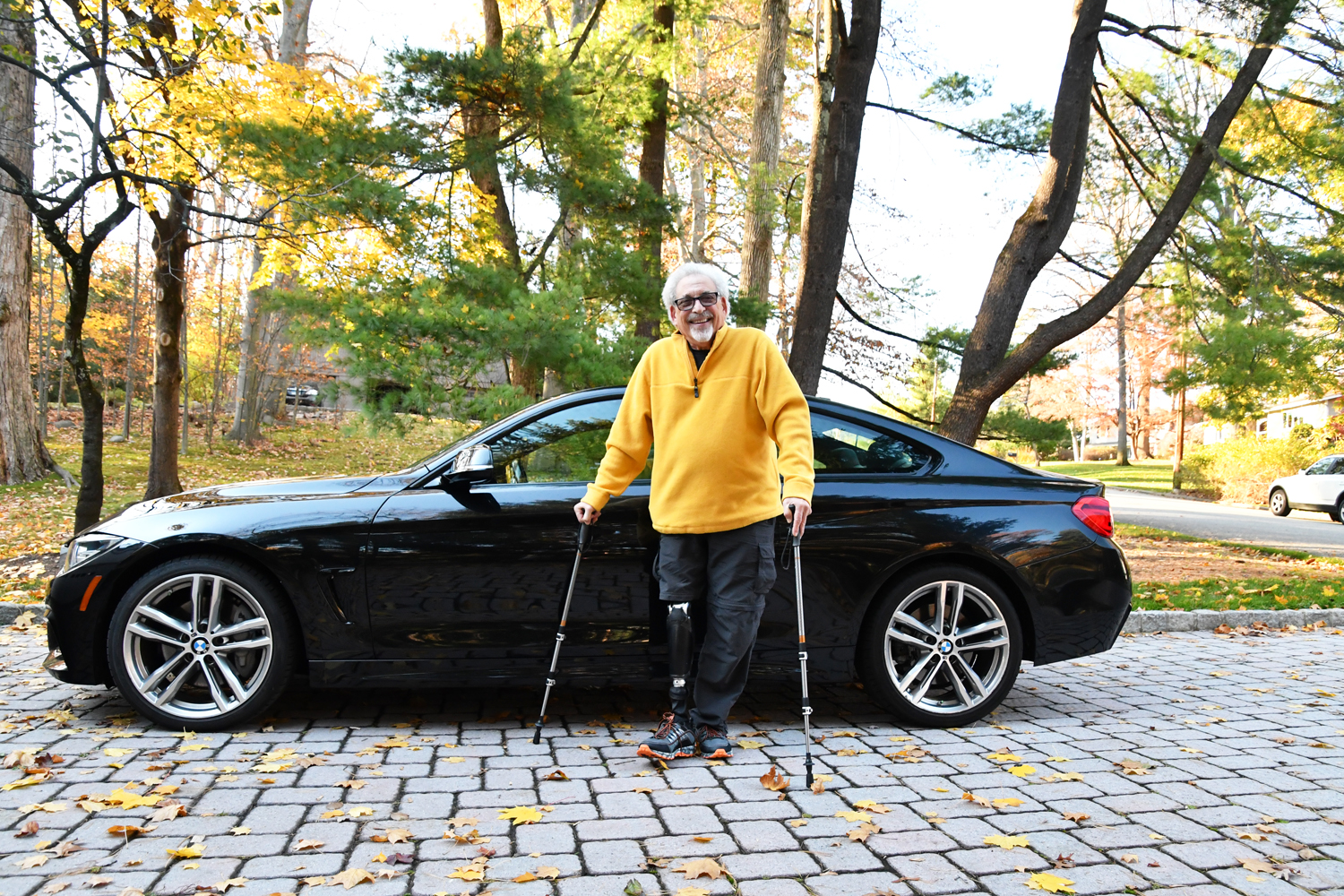
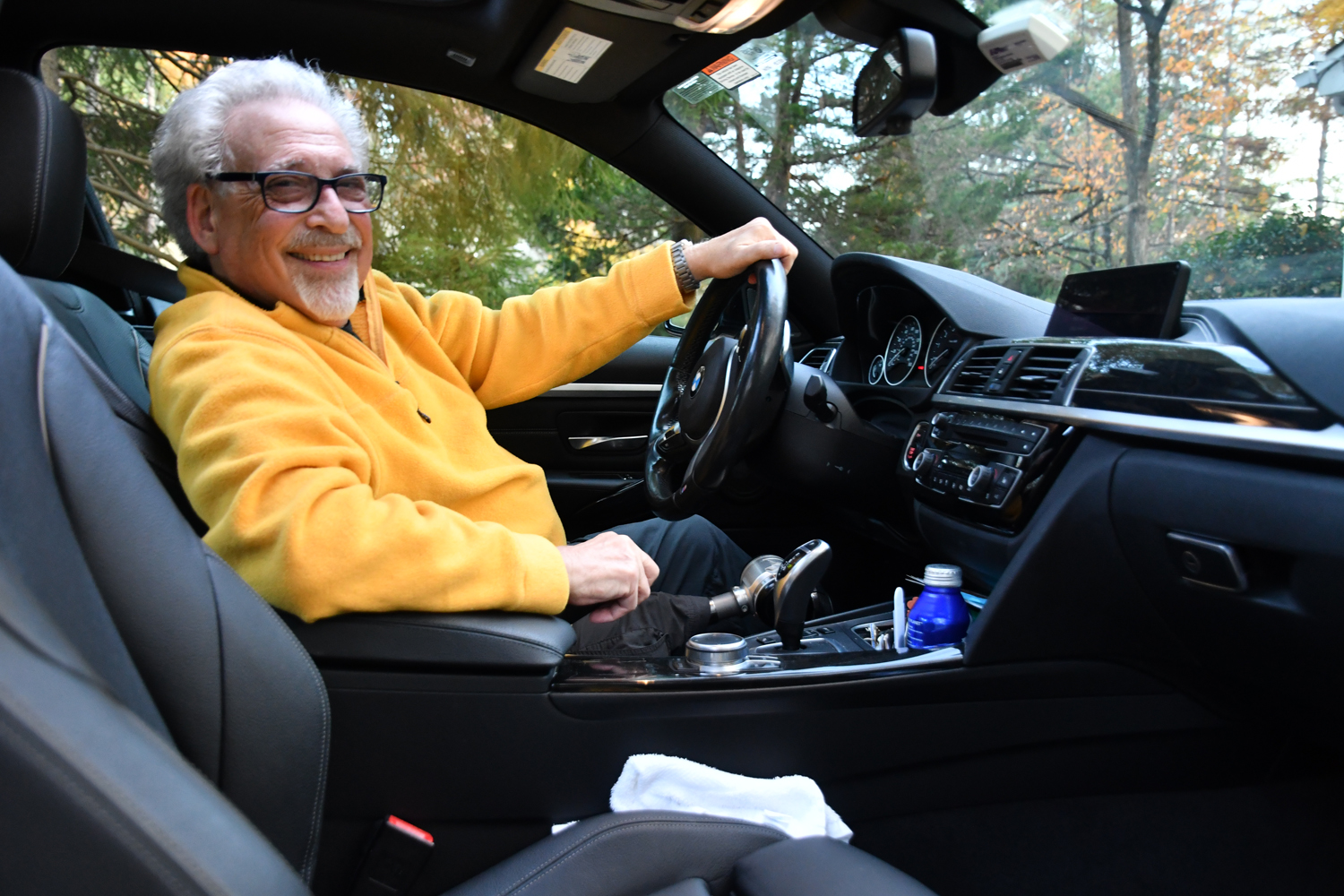
His handsome and immaculate triple black BMW 440i pulls into the parking lot. The driver’s door swings open filling the added space available in the handicap parking spot. Slowly and deliberately Herb Benkel swings his left leg out of the car. With his left leg firmly planted on the ground, he spins his body to the left and manually guides his prosthetic right leg from the car. A marvel of medical technology, it features the world’s first motor-powered microprocessor knee and cobalt chrome construction. It boasts a level of technical advancement on a par with the BMW he drives.

Using two canes for stability as he stands, Herb greets me with a broad smile and laughing eyes. He authentically projects the visage of a man who never has a bad day. In this case the day offers a festival of autumn glory.

Herb’s prosthesis leaves Long John Silver far in the dust with a mobility solution sporting a heavy dose of Schwarzenegger’s Terminator cyborg. He says, “You can hear the device when I am approaching. If you watch the original Terminator movie with Arnold Schwarzenegger, you hear the Terminator machinery going Zip, Zip, Zip, Er, Er, Er. Now that’s me. You can hear the motor when I walk. At first, it was really annoying but then I got used to it.”

The leg’s microprocessor delivers a powered motion to actively replicate lost muscle function. State-of-the-art sensors detect his movement thus equipping the knee to anticipate his needs. A powerful motor delivers active extension when standing and controlled resistance when rising. Herb says, “The sophistication of the Ossur Prosthetic is a blessing.” With the Ossur unit, a motor responds to provide active bending and straightening of the leg when walking. Thus the unit automatically returns the lower leg to the natural stance position to promote a more natural gait. Herb explains the challenge faced with his leg amputated up to just below the hip saying, “Without the motor facilitating the normal motion of the lower leg it would be hell for me to try to move just with the small stump. It would be like, trying to write your name with a full-sized pencil, just holding the eraser.” Just like other electric conveyances the leg needs to be charges every night. Because of Herb’s needs, his driving experience demands a greater integration of man and machine. Yet for the most part a simple solution provides an ideal interface connecting Herb and his BMW.

Herb says, “I discovered that there are companies that do adaptations for amputees. When they took off my leg I had first intended to get rid of my 440i and buy something else. But then, I learned I could drive my BMW using my left foot with a device available locally. What a great device.
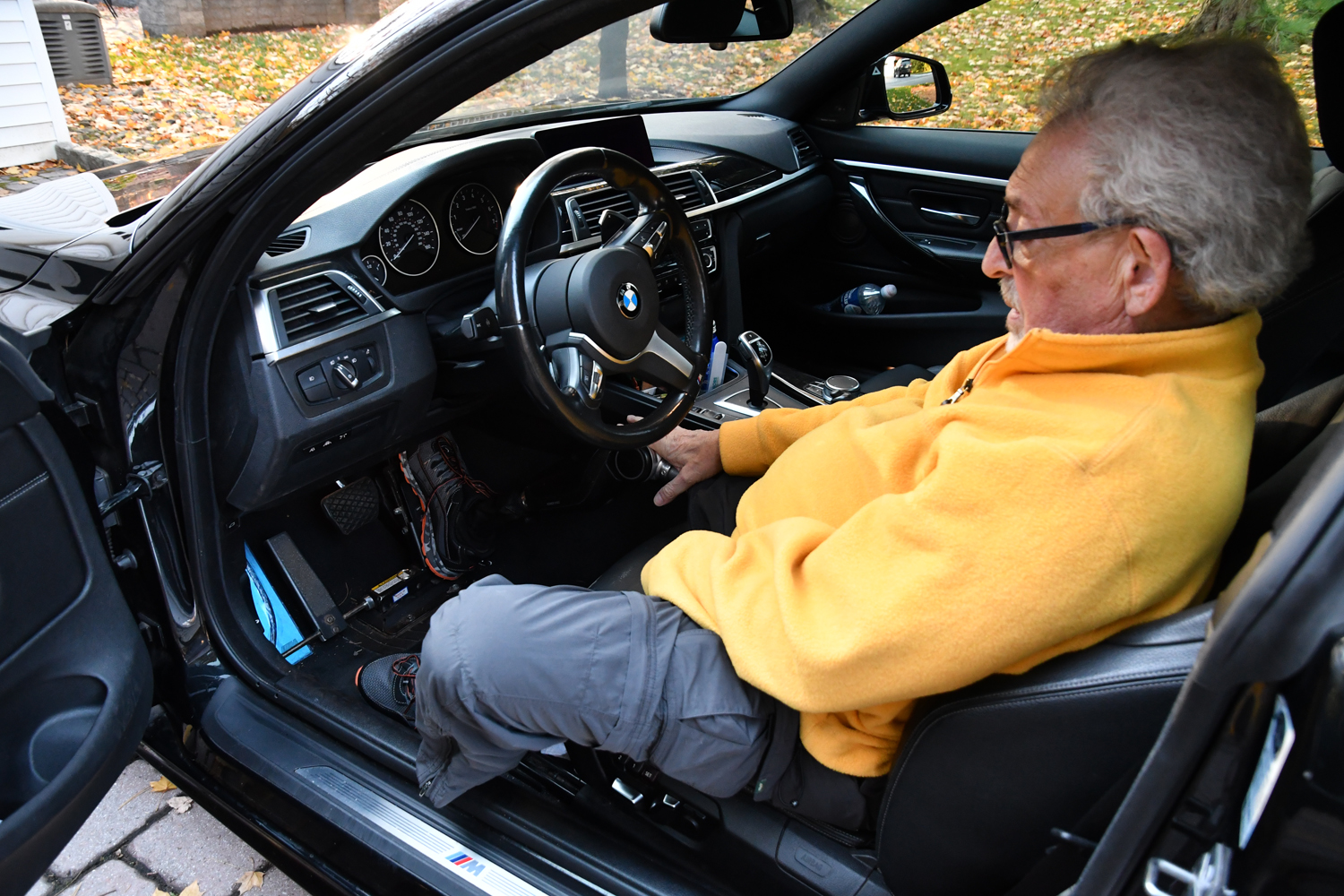
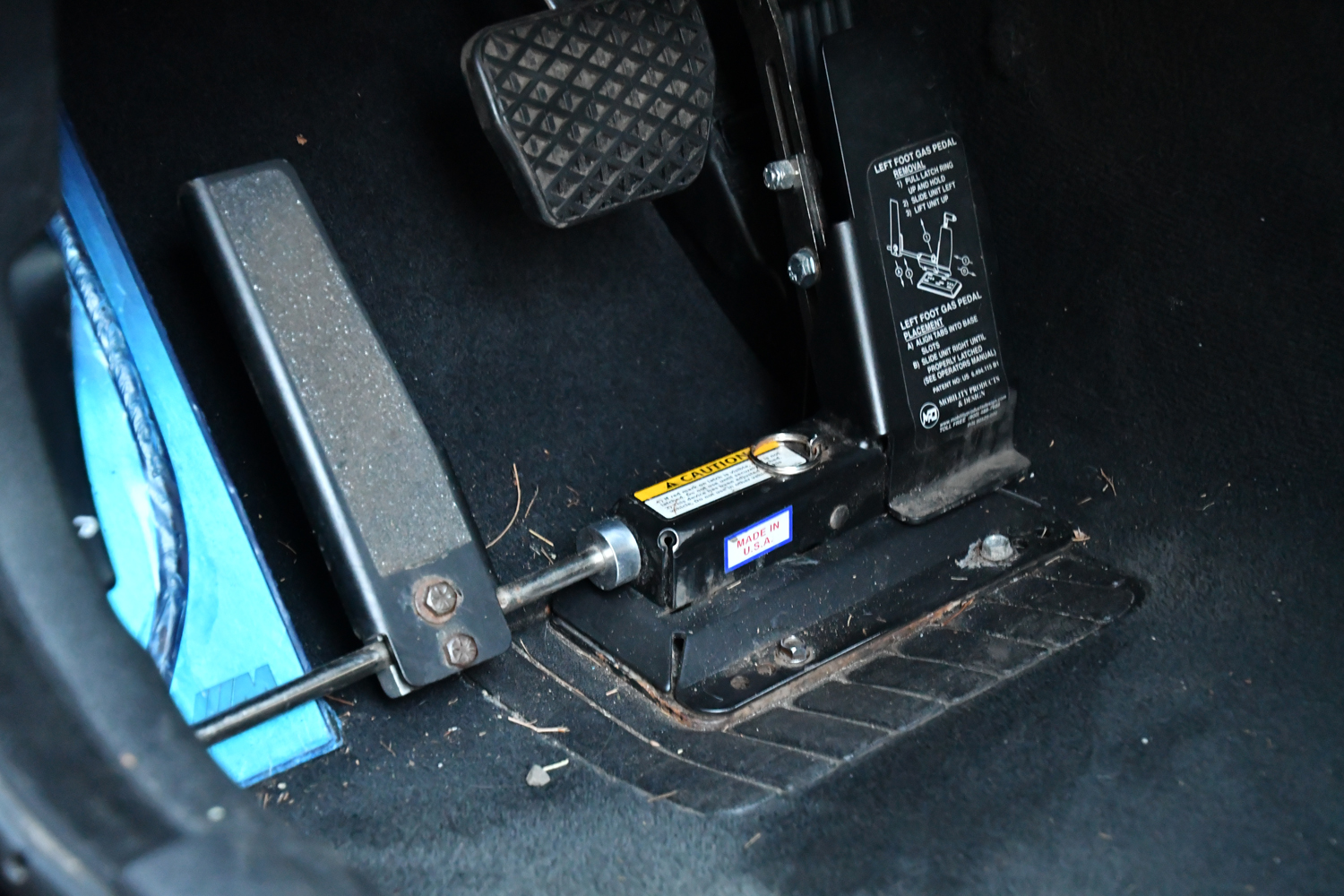
Herb says, “My right leg is amputated and the gas pedal is on the right. That is a problem demanding a solution.” The solution starts with a shield that covers the gas pedal. Herb rests the right foot of his prosthetic leg against the shield thus rendering the right leg immobile. A roller assembly affixed to the back of the shield and connected to the gas pedal attaches by way of a rod to a gas pedal on the left side of the foot well. Motion initiated on the left gas pedal translates by way of the connecting rod to motion on the real gas pedal on the right. Herb says, “My left leg has no problem reaching the relocated gas pedal and I can easily move my foot to the right to get to the brake.” Herb took three classes at Kessler Rehabilitation to become comfortable, He says, “Now it is second nature just like the way everybody else drives with the right foot. History has shown that Herb has significant experience with the go-pedal. He has earned tickets for doing 120 mph on both coasts: Highway 1 in California and Route 17 in New Jersey. With a glint in his eye Herb says, “Those tickets were before the amputation. I don’t speed like that anymore. If they took me to court I wouldn’t have a leg to stand on.” A final and important consideration concerns the car that Herb prefers to drive. For the last 40 years the answer has always been the same, a BMW.” With the amputation the choice is more specific.

“I have to have a 2-door coupe, like my 440i,” says Herb. He explains why saying, “You need a big door when you have a prosthetic leg. In my case, it’s my right leg, and I’m sitting on the left side of the car. I have to lift my right leg with my hand, slide it out and then slide my body. In order to do that, I need a big door and automatic seat settings.” To exit the car requires Herb to have the seat all the way back. Herb says, “I couldn’t drive a car that didn’t have electric seats because without a memory seat, it would be a nightmare every time I got in and out of the car.”
While a stretch of 50 years spanned the period between Herb’s bout with cancer and the amputation of his right leg, an extricable link connected the two events.

Herb says, “One of first things I gave my wife after a week of marriage was a diagnosis that I had osteosarcoma, bone cancer.” In the 1960s the choice of treatments consisted of radiation or amputation. Chemotherapy did not exist. They made the decision to treat it with radiation. Herb says, “Unfortunately in those days radiation treatment was poorly delivered.”

Decades later, on the coldest day in New Jersey in 35 years, while walking up his driveway, Herb’s right leg simply crumbled. He collapsed in a heap. No one could see him from the street. He feared freezing to death. Luckily, he could find his cell phone and called Sue. She placed the 911 call. The ambulance took him to the hospital. While the damage had had its roots in 1968, 2019 saw him lose his leg up to the hip.

In reflecting on this difficult time Herb says, “The job of getting through an amputation is the job of taking one moment at a time and trying to find something decent in that one moment and then starting to link those individual moments together. It’s easier said than done, but it’s the only way I got through it when I was in the hospital and I lost the leg before they made the prosthetic, I found Exercise bands. And I started doing exercises in the bed that gave me a sense that I had some control over my body; with everything else that was going wrong. I had control.”

When asked if the driving experience changed with the prosthetic device, Herb says, “Yes and no. I have always loved driving, however, all my cars had been stick. However, because of what happened I can no longer drive stick. But considering that pretty much all brands have stopped making them, it seems an inevitability. I don’t like the paddles. Not the same, not even close. So that’s where it’s changed. But I got used to it and I still love to drive. I mean, I get relaxation. I love being surrounded by my music. I love the quickness and toss-ability of my BMW. I rejoice in tracking on a serpentine back road. Yeah, I still take exit ramps at 60 miles an hour, you know, just to feel how the car holds the road.”
In discussing driving as an amputee Herb notes that one terrible problem plagues all amputees to some degree. That problem is phantom pain. He says, “Phantom Pain can attack you at any time and that’s a little nerve-racking. No one can really explain it adequately, that’s why they can’t treat it, but phantom pain is your body feeling that your foot is still there and sending pain signals to that foot.” In describing phantom pain Herb says, “So I don’t feel the pain in any part of my body. My stump is not irritated. Nothing is irritated, but there’s a horrific burning feeling and shocks of electricity that go to my toes and my foot. The sensation makes me feel like that foot is fully there and being tortured or ripped apart or burnt. Sometimes it feels like it is being put in hot oil. Phantom pain attacks can last between four hours and four days.”

I asked Herb what role Susan, his wife, played in dealing with his misfortune. Herb with hesitation says, “I would never have gotten through this without her. This goes all the way back to when we married in 1968 and I was diagnosed with bone cancer. She could have stayed, she could have left. I mean, the marriage could have been annulled in a minute but she didn’t do that. She stuck through it all. It was a crazy time, but we did it together.

When asked his greatest challenge Herb’s says, “To make the best of the one life God gave me.”

By |2025-11-12T16:55:34+00:00November 12th, 2025|4 Comments

Conversations With People We Value #59

You never know what you will discover at the Fall Carlisle Swap Meet. In the case of this year’s event, Elaine and I stumbled across a real find. While seated for breakfast at the historic Carlisle House B&B we found ourselves across the table from Jim Freda and his wife Kim. In a matter of moments Jim and I were confirming a lengthy list of common acquaintances populating the list of respected members of the tri-state classic car community.

Over breakfast in sharing images of custom vehicles he created in his off hours, I recognized both a possible friend and a visionary artist worthy of a Drivin’ News story.

Meet Jim Freda.

Intuitive Genius Wielding a Hammer and Chisel


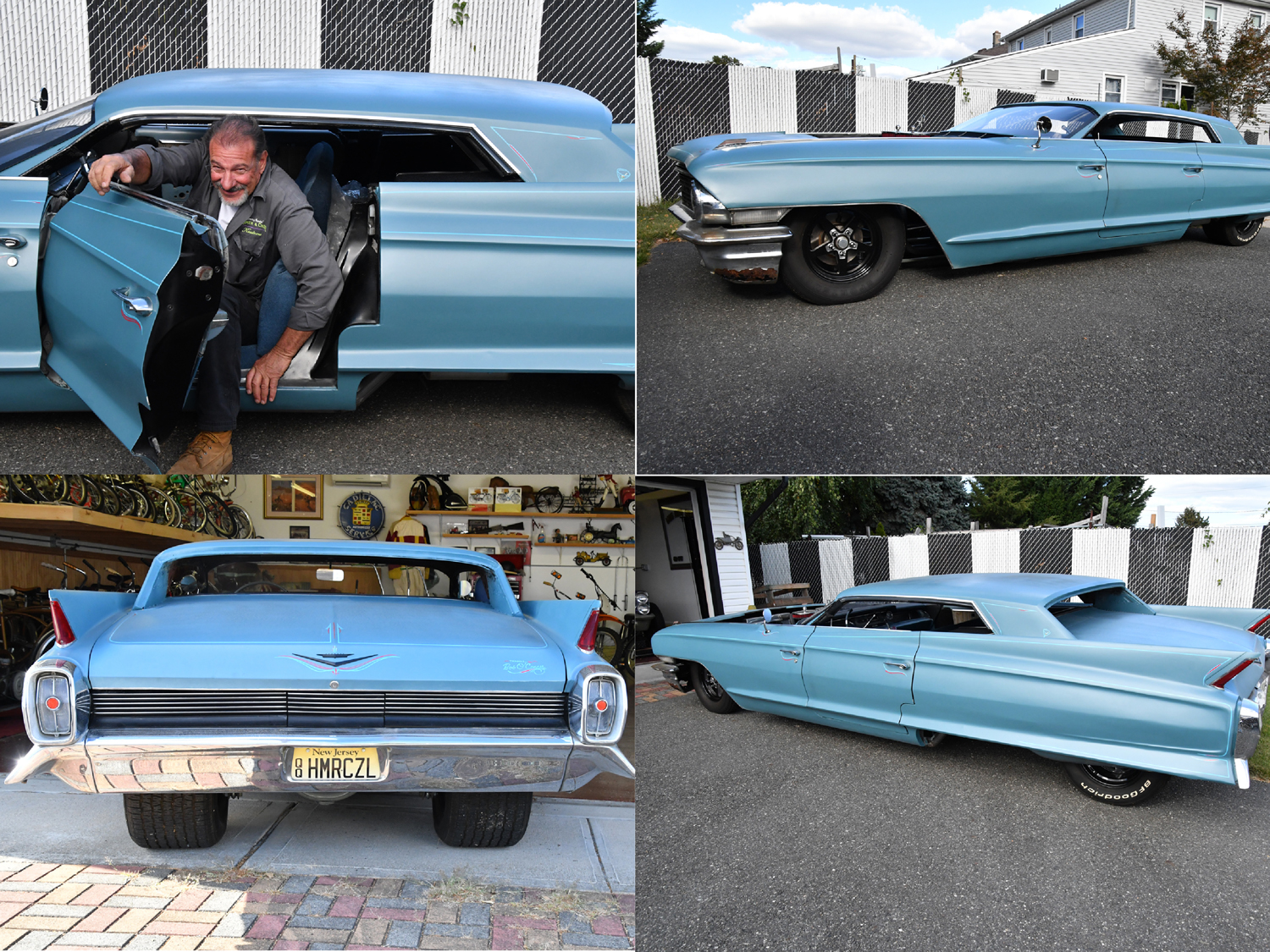
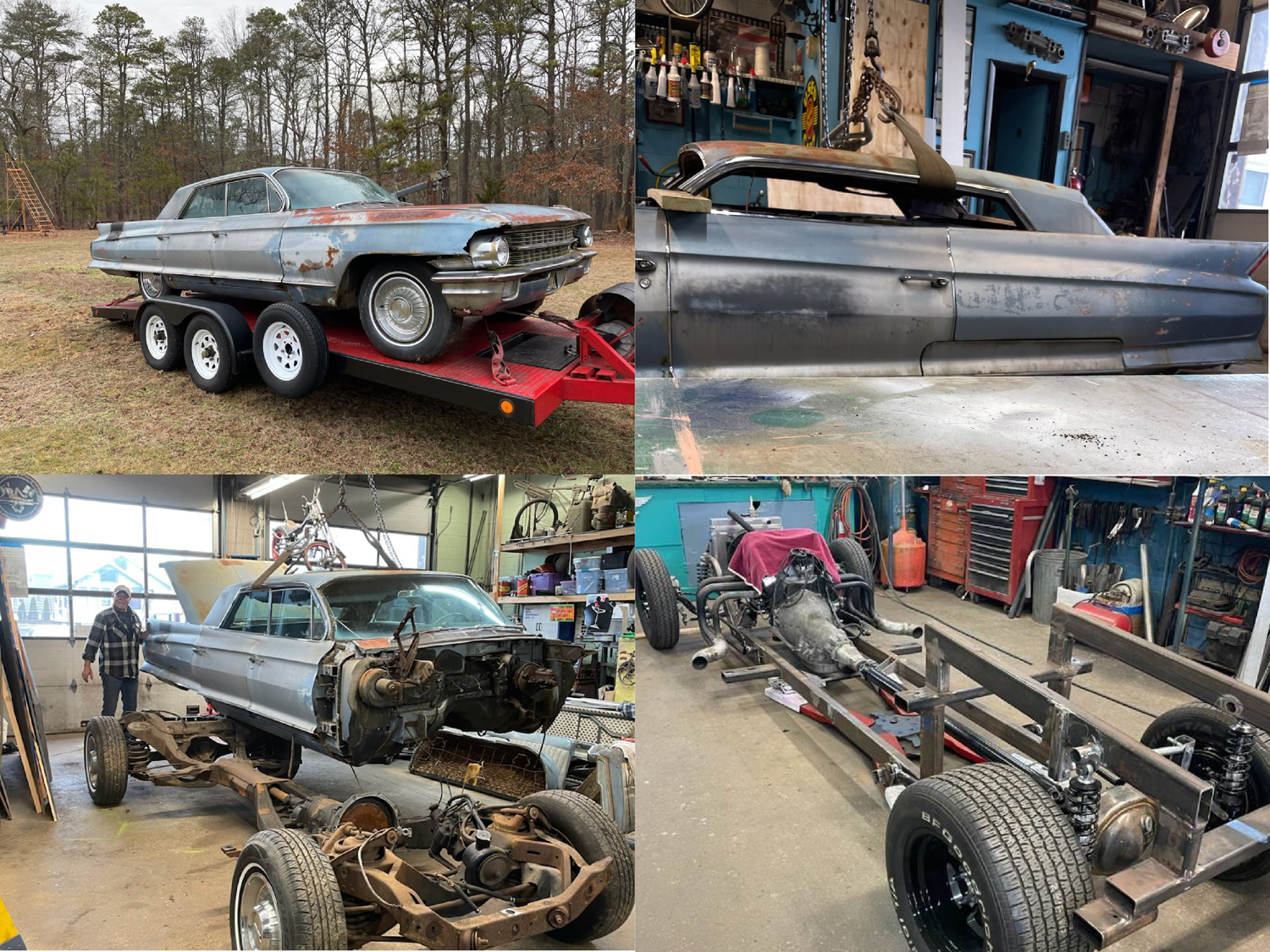
Jim’s 1962 Cadillac 4-dr. Sedan deVille

I found it inconceivable that of all the completed and striking one-off fabrications arrayed about the courtyard none had come to life with the benefit of so much as a sketch on a napkin. Yet, Jim Freda, in his 60s, retired and a full time artist with old cars as his medium, would have it no other way.

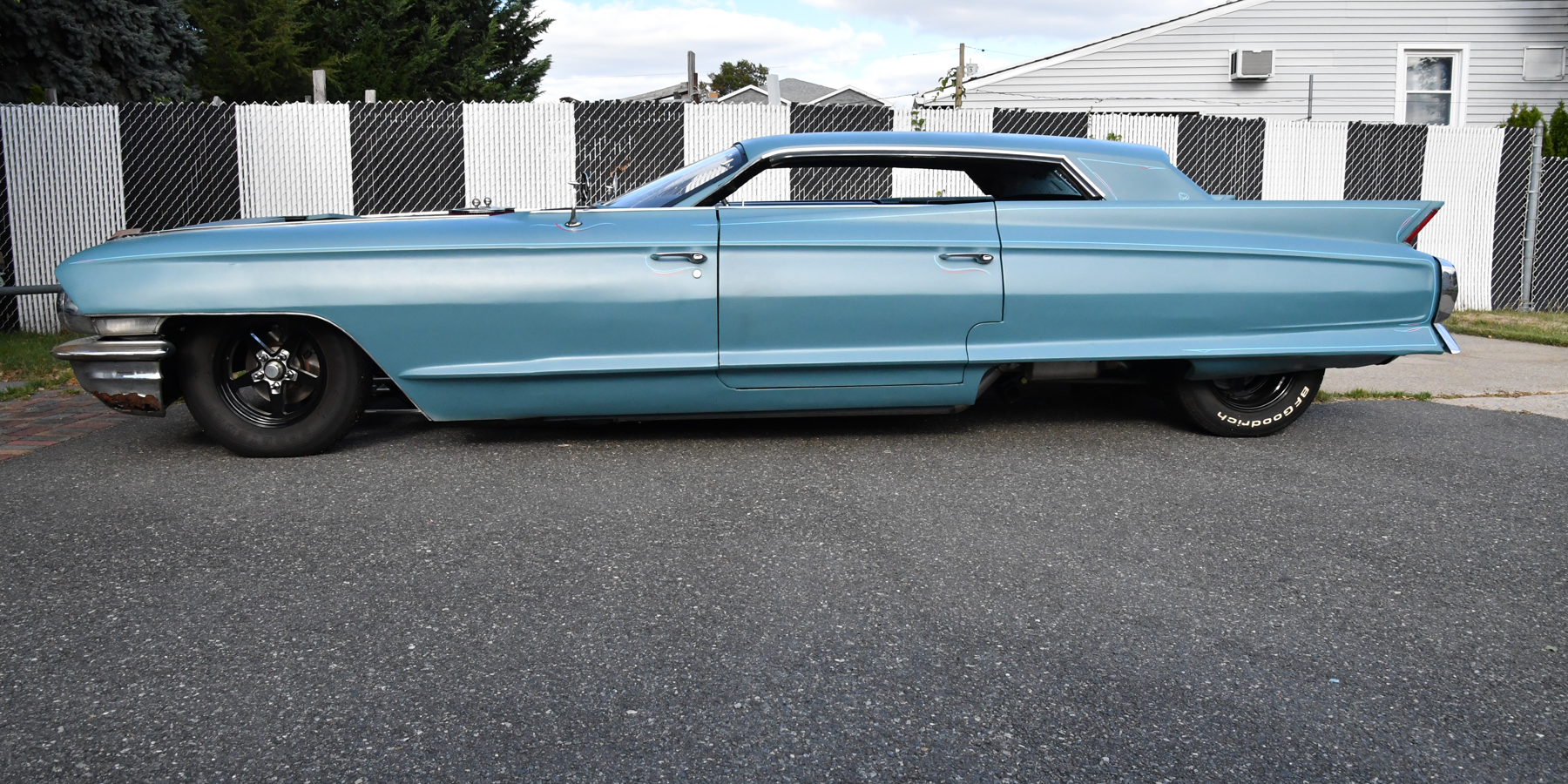
His most recent creation started as a 1962 Cadillac Sedan deVille. His initial vision centered on slicing off the roof and creating a full 180 degree Plexiglas bubble top concept. However, early on, with the roof freshly removed and hanging on straps above the Cadillac’s open cockpit, Jim lowered the roof onto the car to facilitate moving it to another part of his shop. The visual effect stunned him. The impact of the cut roof’s sinister slit-eyed glare sitting low upon the Cadillac’s lengthy swept fin body electrified Jim. With fluid ease, he pivoted to a completely new visual concept that would showcase the chopped Cadillac’s serendipitously discovered alluring menace. More about the 62 Cadillac will come later. This impromptu re-imagining reflects an intuitive genius that Jim employs as a matter of form in all of his creations. Unencumbered by any commitment to a predetermined outcome, Jim simply follows his muse to achieve a final design that pleased him.

As in Jim’s case, intuitive genius describes an innate ability to capture a desired solution in a manner that seemingly supersedes conscious reasoning. For Jim his application of this creative gift comes with the benefit of a personal build philosophy that demands that as Jim says, “If you make a mistake, you got to figure out how to cover it up and make it look, right.”


Jim’s 1965 Ford Galaxie Gasser

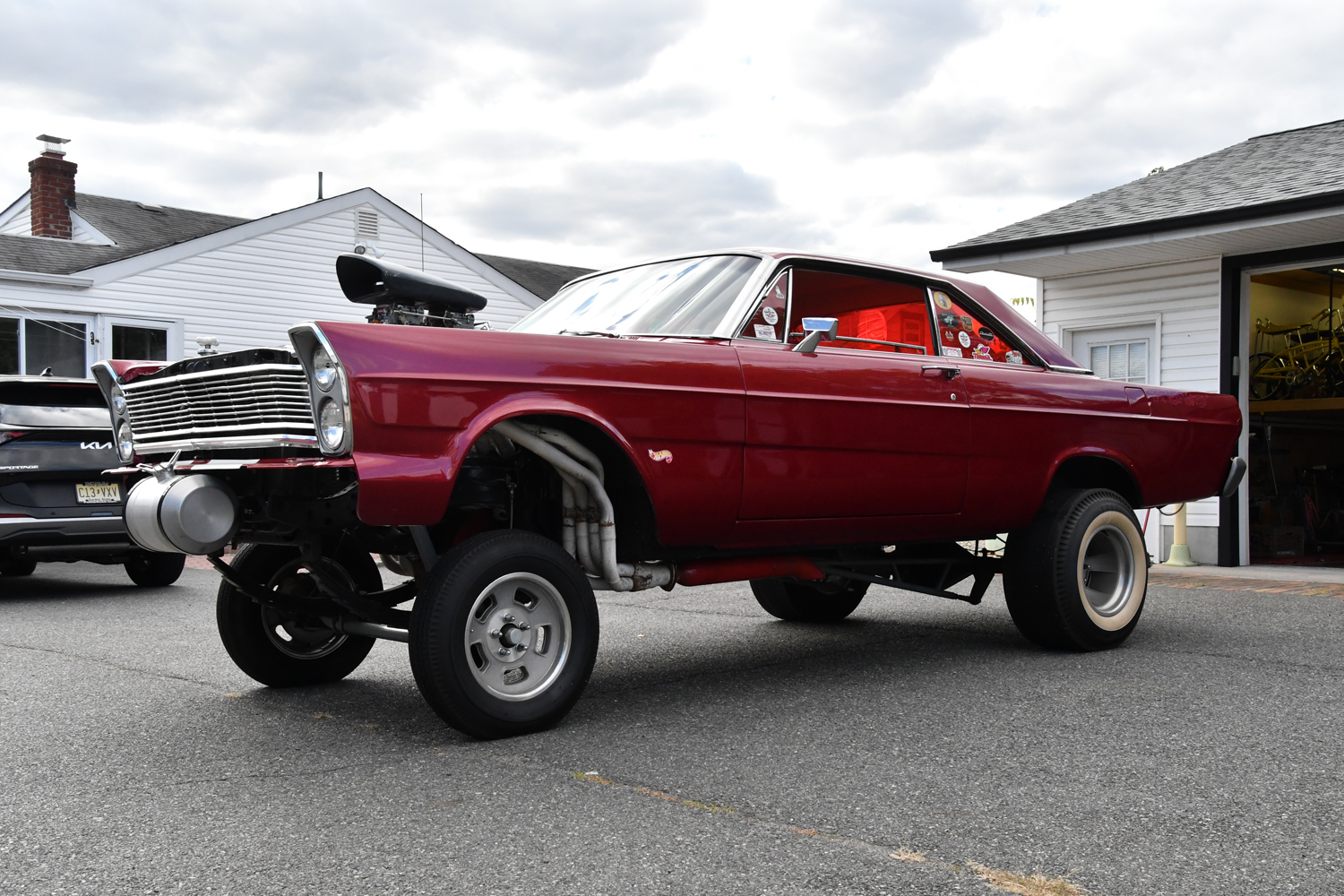
Born into a car family, Jim grew up in Lyndhurst, New Jersey where his father, Lou Freda, owned a used car lot next to the family home. While the car lot has passed into history the fully equipped two-bay workshop remains active in serving as the incubator for Jim’s unique creations. In his early years Jim and his pals had Camaros and Novas but it was not until Jim reached his 40s that he turned to building cars of his own design. He says, “It was not like I was 22 years old and ripping stuff apart.” He credits Richie Conklin owner of the famous Hot Rod Farm in Montville, New Jersey with seeding his fascination with fabrication. He says, “I went over to Richie’s Hot Rod Farm. It was filled with jacked up straight-axle gassers. It was the coolest place. I knew what you could do to a Camaro but everybody’s got that. But at Richie’s the gassers I saw were something very different.” And what exactly is a gasser? Primarily built around older production cars from before 1970, a gasser’s signature traits include high-raised front end, stripped-down body, and powerful engine. The distinctive high and downward sloping stance functions to more effectively transfer weight to the rear wheels for better traction during the launch from a standstill. Jim loved the look.

So about 20 years ago a motivated Jim Freda left the Hot Rod Farm went home, found a 1965 Ford Galaxie for $500 and started his first build. To guide his project Jim, for months to come, went back and forth to Richie’s farm just to get ideas and learn techniques.

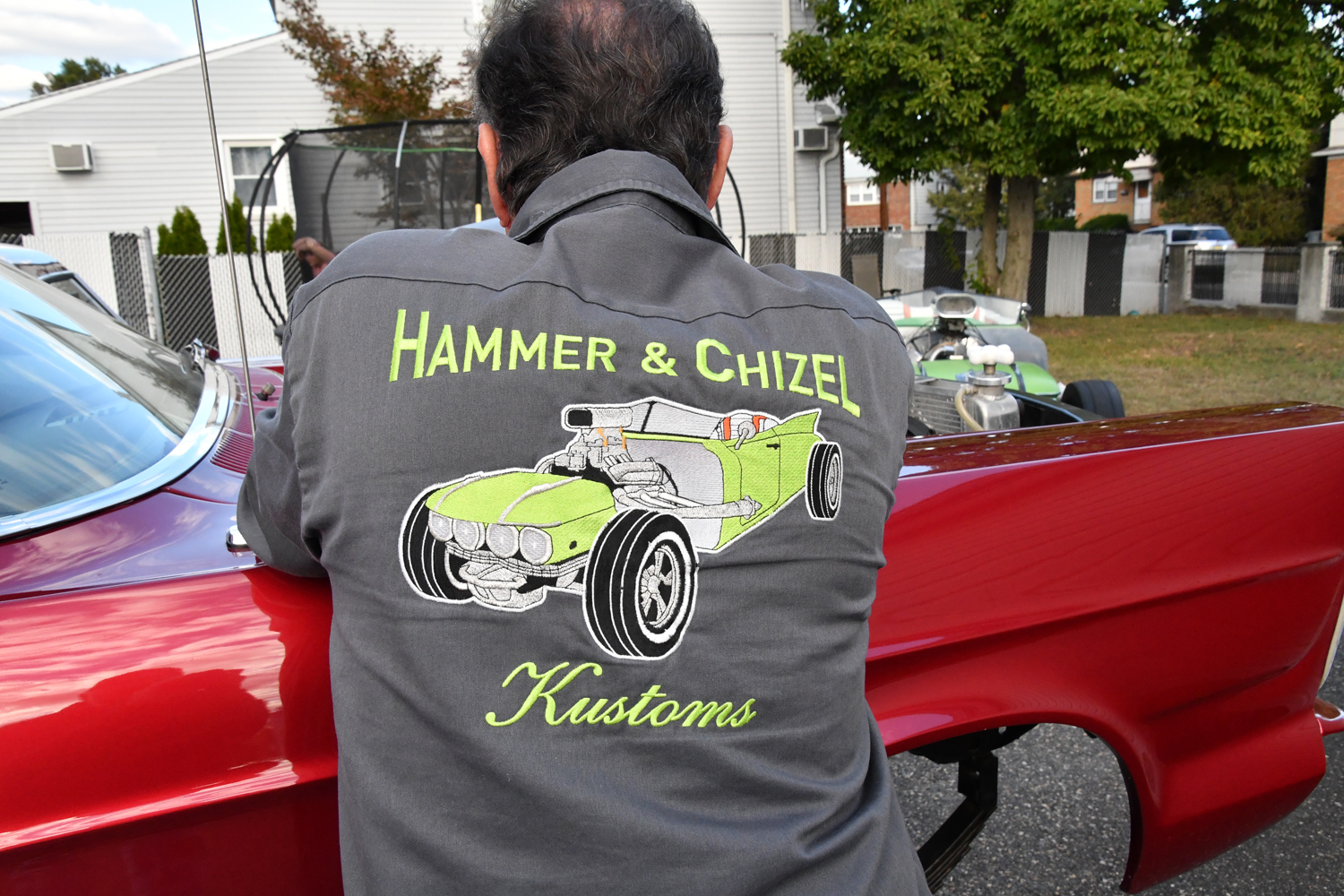
In Jim’s transformation into an obsessed practitioner in the art of custom car creation; he set about turning the Galaxie into a gasser. Its reinforced chassis hiked up over the solid front axle cradled a supercharged 454 cu. in. Chevy big block stroked out to 496 cu. in.. Dyno tested at a thundering 710 horsepower, it delivered power through a 5-speed transmission to a rear end with 389 gears. For the following 20 years it provided effortless one elbow out the window, one hand on the wheel highway speed reliability in compiling significant miles around the Mid-Atlantic States. However, while a source of pride, Jim’s Galaxie gasser only whet his appetite for creating far more radical expressions of his very personal driving dreams. Over the ensuing decades of tear-down and fabrication adventures Jim’s friends anointed the fruits of his efforts “Hammer and Chizel” Kustoms. Now we will take a closer look at two Kustoms born of Jim’s sublimely radical expression of intuitive genius. We start with the 1962 Cadillac referenced earlier in this story.


This custom design started as a forlorn 1962 Cadillac Sedan de Ville left moldering in a field. Jim says, “I was just looking for something with fins. Then I was going to develop an idea around the fins.” Jim found and trailered his donor car home on January 30th 2023. Once in the shop Jim embarked on the major surgery that had resulted in the realization that his original bubble top concept referenced earlier had been supplanted by a far more compelling design. That the more striking concept had resulted not from Jim’s personal insight but from happenstance bothered Jim not a bit. Jim says, “That was fine with me.” With the visual solution revealed to him, Jim took another year and a half to bring it to fruition. Over those subsequent months Jim pursued every opportunity to refine the handsome malevolence of his Cadillac concept’s rebirth. He massaged design elements to enhance features contributing to the cars character such as its long low profile, sharp lines and muscular stance.

While the car looks a city block long, the body is actually six inches shorter than the donor Cadillac. Contributing to this lengthening effect is that Jim re-positioned the chopped roof a foot to the rear while transforming the design into a 2-door coupe. He accomplished this by integrating the front doors into the front fender panels. Even though six inches were removed from the door width, its repurposing significantly contributed to the impression of a lengthened car. An interesting rule of thumb in automotive design states that the greater the distance between the back of the front wheel opening and the fire wall increases the perception of greater stature. Jim, of course, did all of this by eye.

To further enhance the look, Jim cleverly integrated the rear fender skirts into the body while repositioning the rear wheels further back towards the rear bumper. He did this by extending the wheelbase. He extended the wheelbase by personally fabricating a new chassis. Jim says, “It’s not a real big deal. I’m not building a formula 1 car here. I use 2 inch by 4 inch, 3/16th inch rectangular tubing. Front and rear suspensions are available in the aftermarket.” For this Cadillac, the front suspension came from Speedway Motors. Jim went to Quick Performance for the rear suspension for the narrowed rear. Jim says, “You measure the dimensions of the rear you need and they make it for you.

Jim’s designs frequently feature the absence of a hood. His choice and presentation of an engine often elevates its presence from muscular power source to visual design feature. In this case the hood-less Cadillac features a Corvette 350 cu. with dual quads.

The finishing touch to complete the visual presentation of Jim’s creation came courtesy of his go-to pinstripe legend Mr. J from Paterson, New Jersey. And, now, for something completely different.

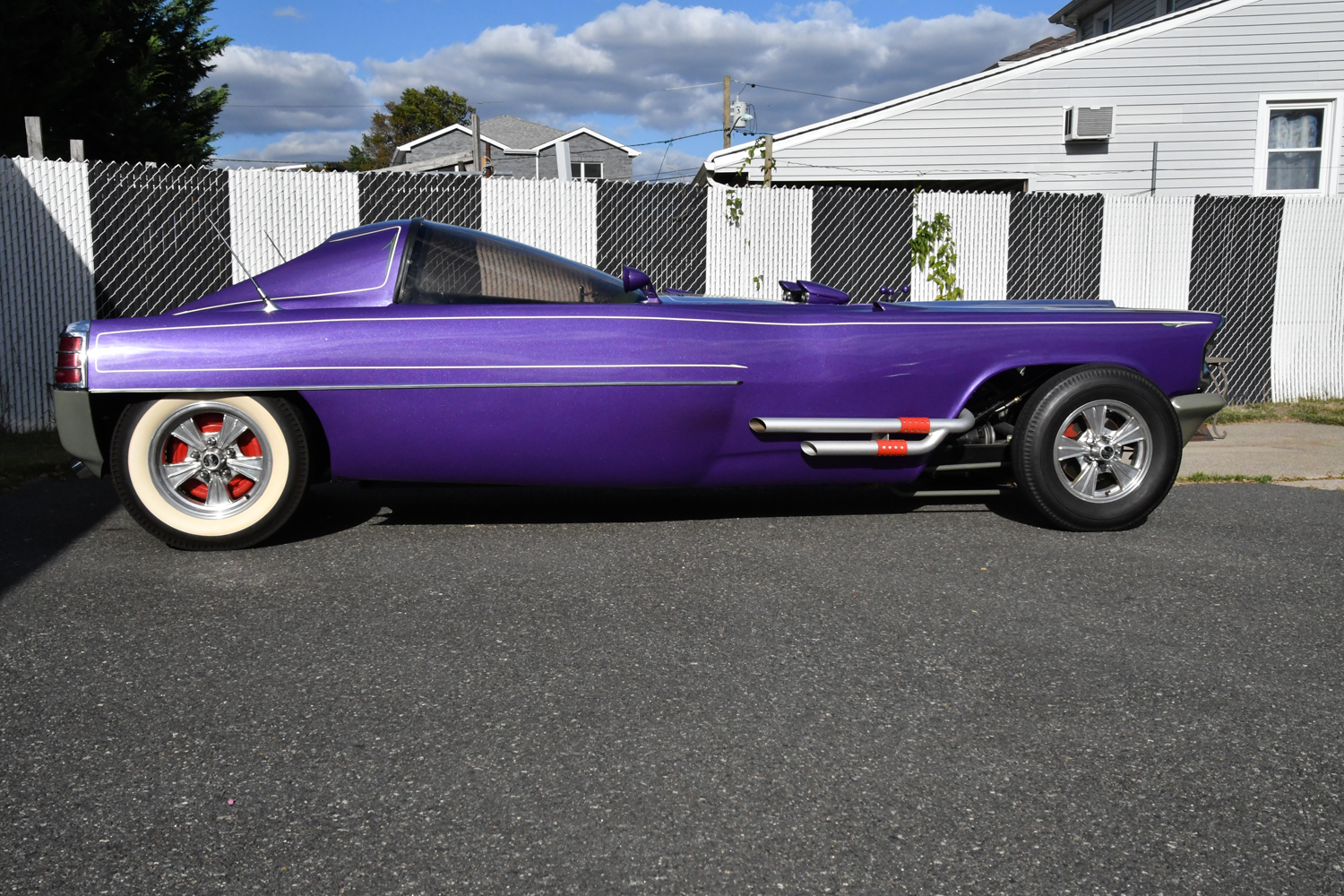
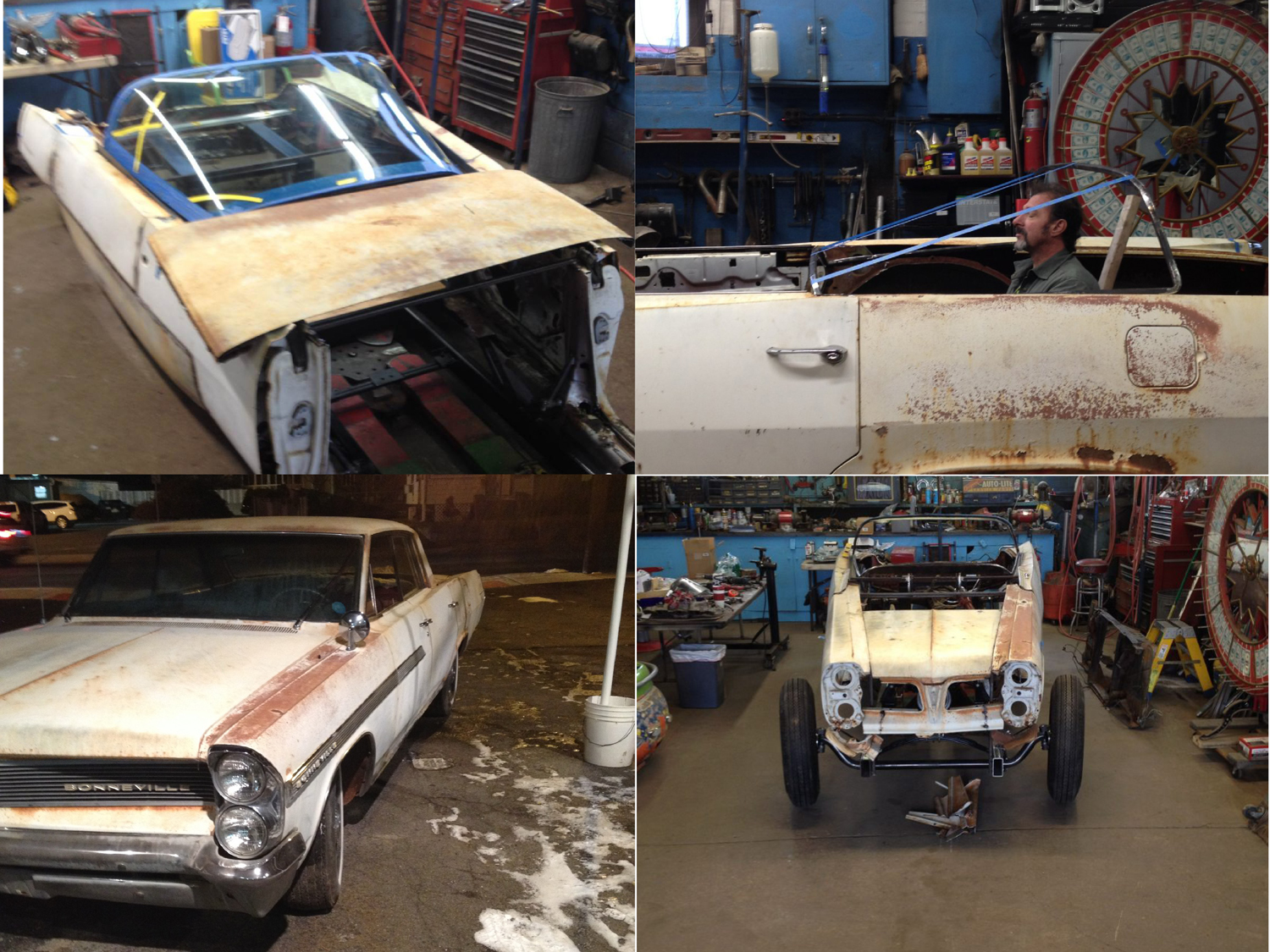
Jim’s 1963 Pontiac Bonneville 4-dr. hardtop

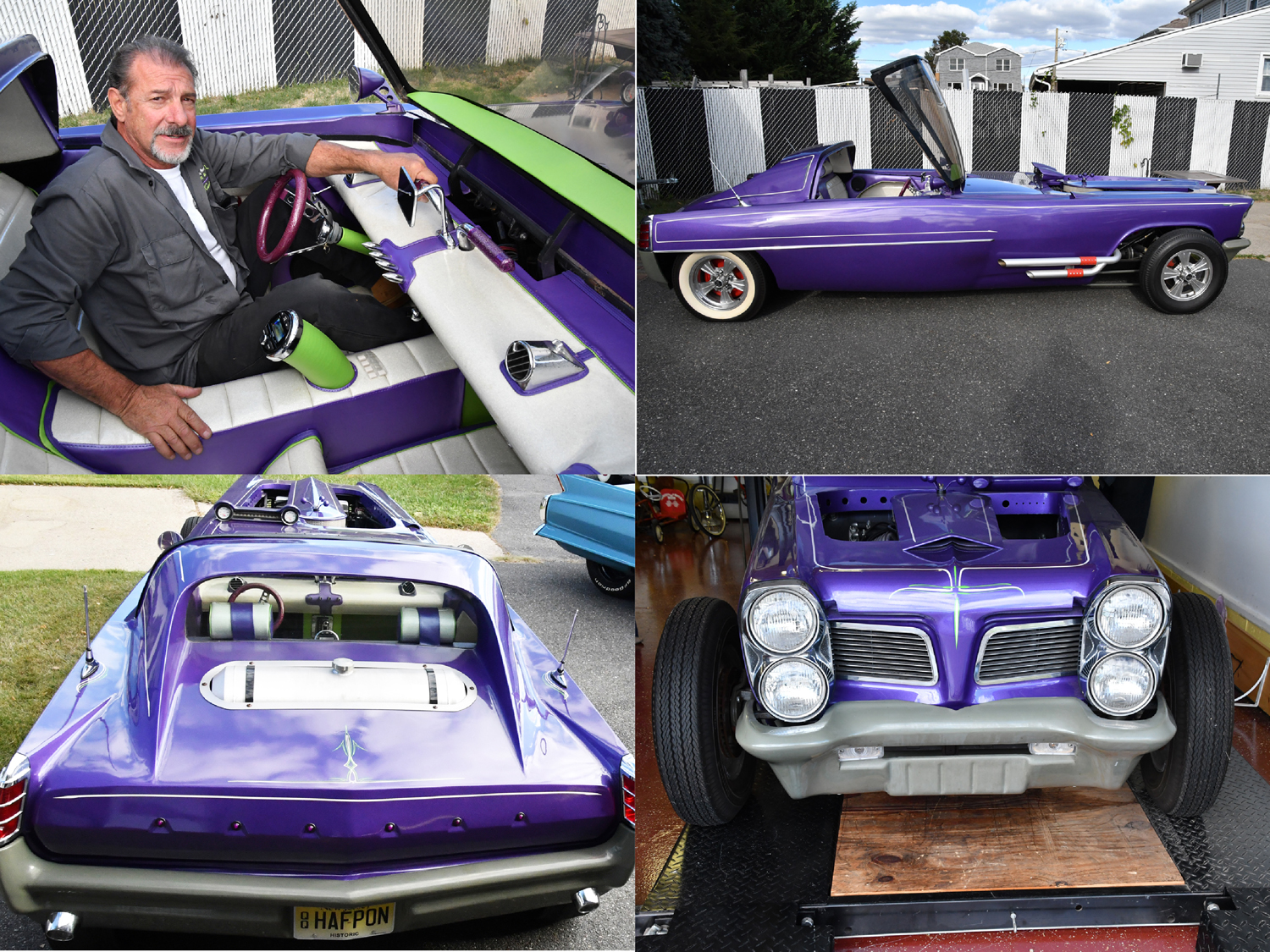
Six years before the 1962 Cadillac Coupe deVille, a 1963 Pontiac Bonneville 4-door hardtop captured Jim’s attention. Metamorphosis best describes Jim’s transformation of a classic 1960s Detroit iron land yacht into what best can be described as a sleek purple Star Wars 2-seat X-wing fighter sans wings that would stun the crowd at any Cars and Coffee. Standing before his creation Jim matter-of-factly explained the end result saying, “This was a 1963 Pontiac Bonneville four-door hardtop.

The side of the car now consists of the front fender, the rear door and the quarter panel. The front door has been eliminated. Seated inside you are technically sitting in the trunk below a Plymouth Barracuda rear window that functions as a windshield. The roof features a “flying buttress” from a 1970s Corvette. The vehicle’s width is full-size in the back narrowing to about three feet wide in the front.” Clearly this Hammer and Chizel Kustom enjoyed an ample dose of intuitive genius. When questioned about the car’s proportions Jim says, “Think of it as a slice of pie.”

It all started when Jim homed in on the rear window glass of an early 1970’s Buick “Boattail” Riviera. He says, “I decided to build a car using the rear window for a windshield.” While inquiring about a boattail window at an automotive glass store, the salesman told Jim he had something better. Jim says, “He steers me to a 1965 Plymouth Barracuda rear window, you know the “Hemi under glass” rear window. And he says it offers more side to work with. I was sold.”

Like the other Cadillac Jim fabricated a custom chassis with the axle for the half width front end from Speedway Motors. Power comes courtesy of a 350 cu. in. Chevy V8.

The custom interior features air conditioning, heat and stereo. The windshield/roof/exit employs gas struts for effortless operation. As with all of Jim’s creations, super pinstriper Mr. J got the call to place the special touches on the paint. That all of Jim’s builds enjoy street legal status pays tribute to the quality of Jim’s work.

In reflecting on his passion for hands-on car creation Jim says, “Most of my found happiness is probably through my father. He owned the used car lot that colored my early life experiences. He had the passion for cars. He is gone now but his spirit lives on through the life my work brings to his garage.” As an added bonus Jim says, “Ours is a neighborhood of close friendships. Even after my father passed, his old friends and, now, my old friends like Big Bill, Mike and Bob stop by the garage regularly to check in and maybe lend a hand on my latest project.” Jim has even continued hosting what was once his father’s annual Christmas party at the garage.”
In reflecting on what drives him Jim Says, “I have become aware that my work with cars is really about people and relationships.” Jim loves to create designs that fire people’s imagination. Jim says, “When going to car shows I have come to realize that it is more about the people I meet than the cars I see.” For Jim, each unique Hammer & Chizel Kustom car produces a vehicle (double meaning intended) that brings people together.

Jim smiles at the thought that it would make his father smile.


By |2025-11-12T16:40:27+00:00October 20th, 2025|4 Comments

Cars We Love & Who We Are #70

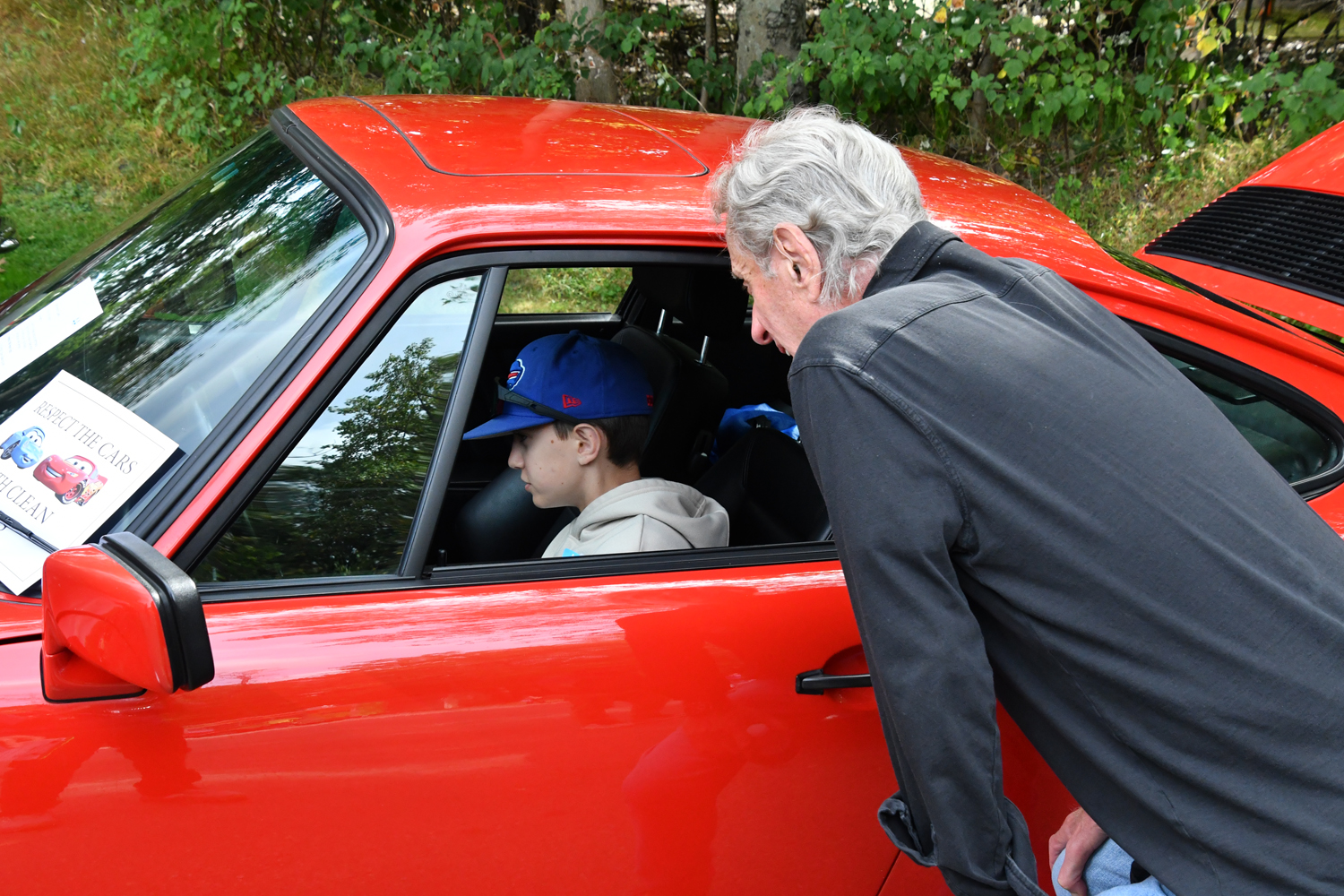
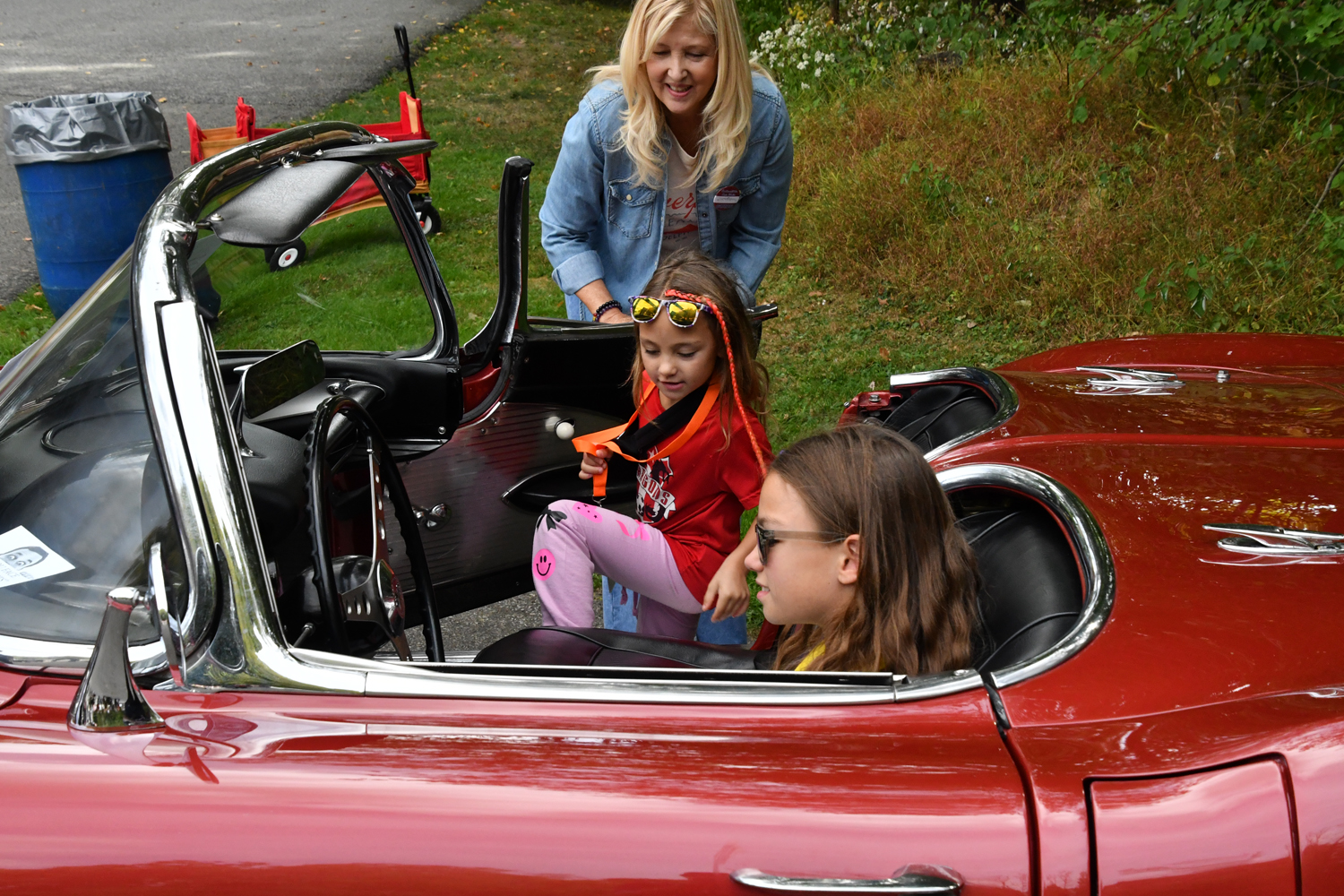
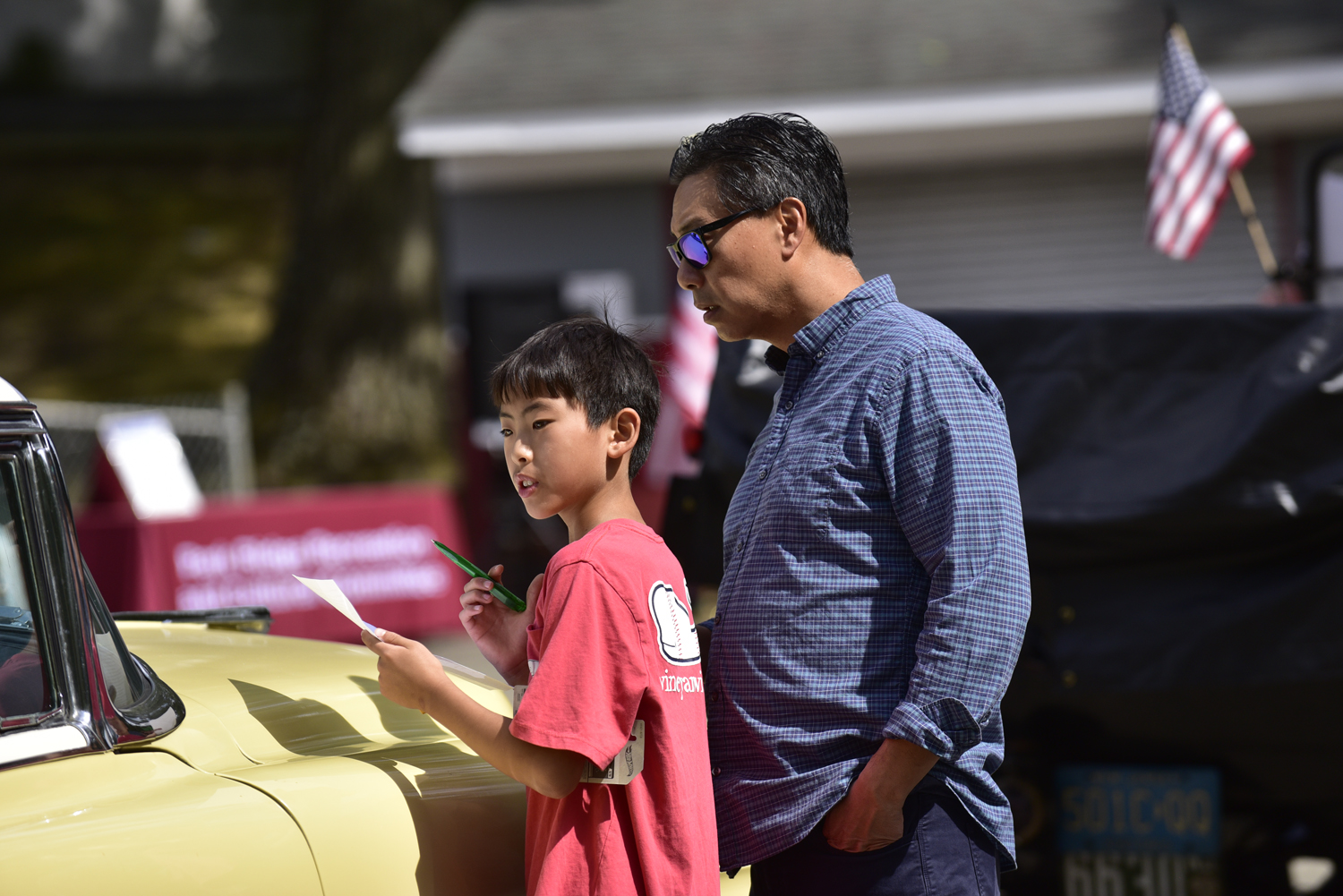
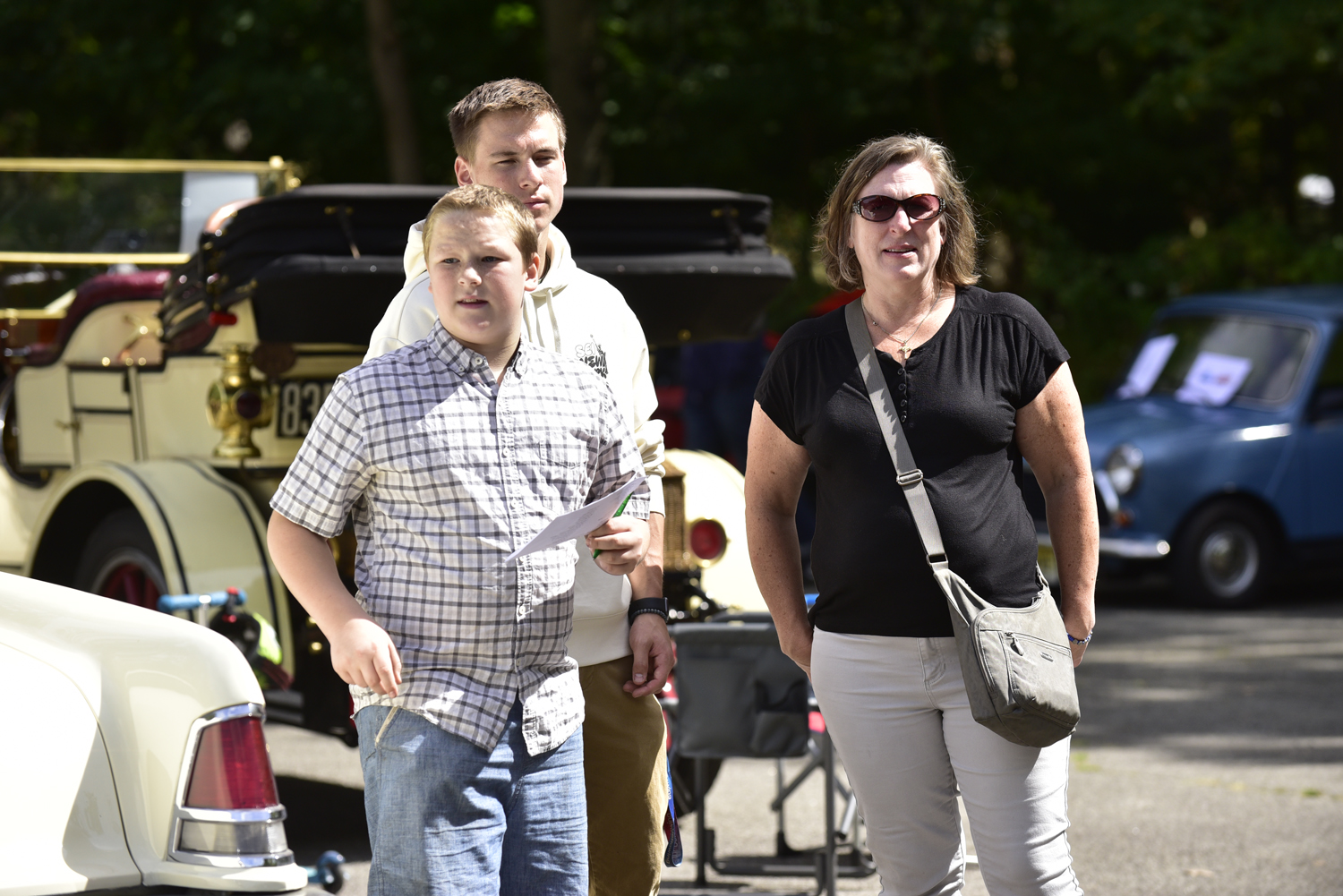
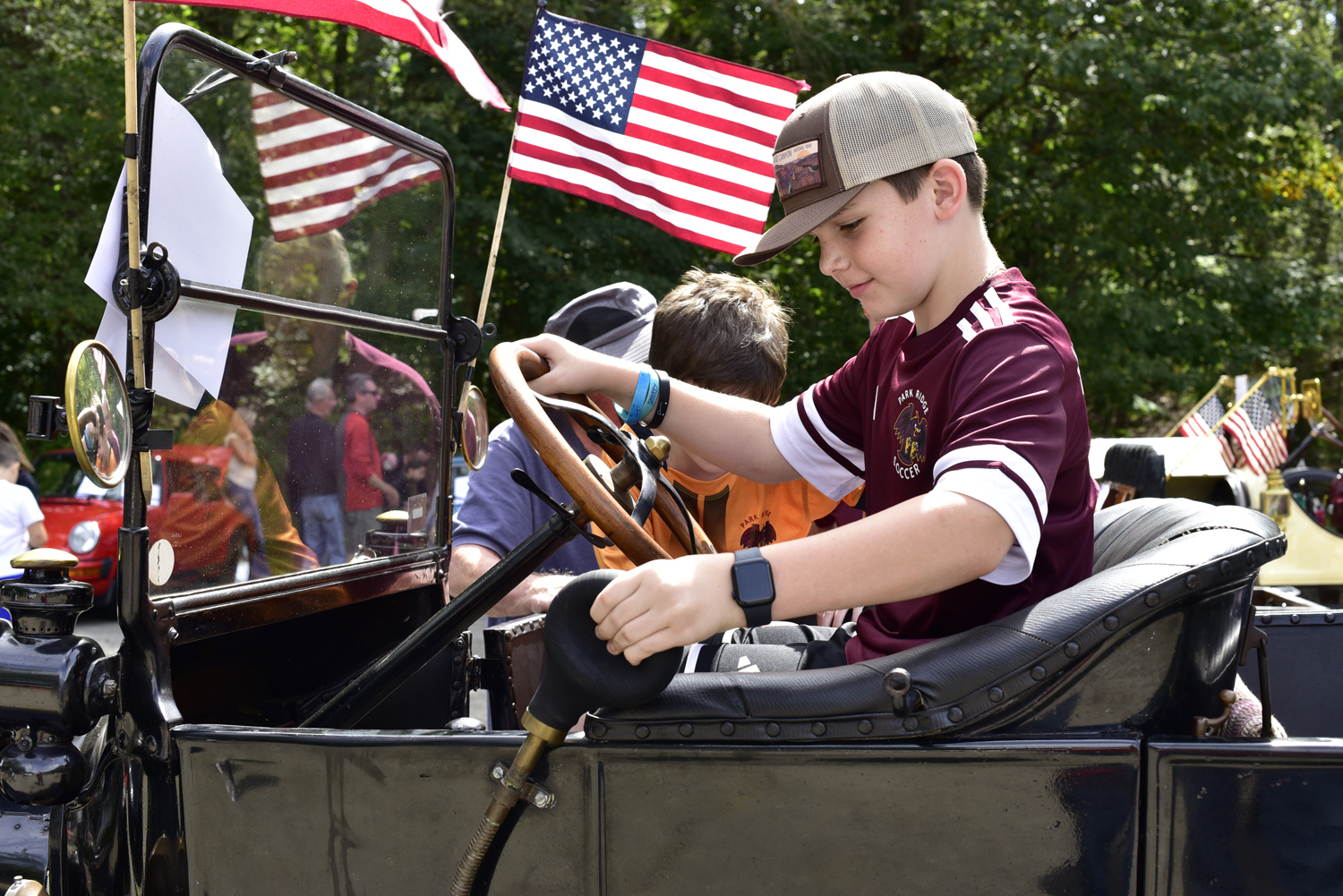
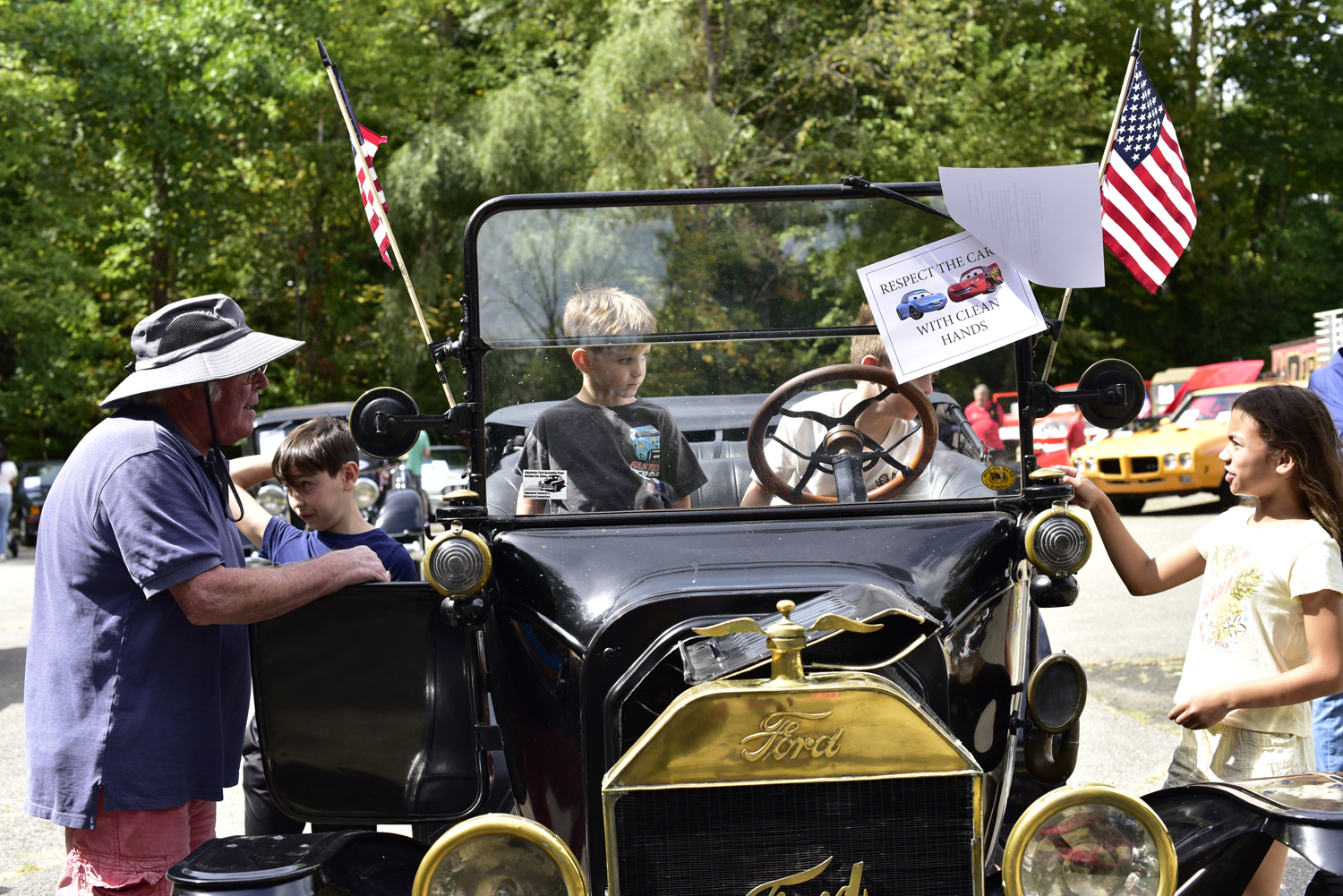
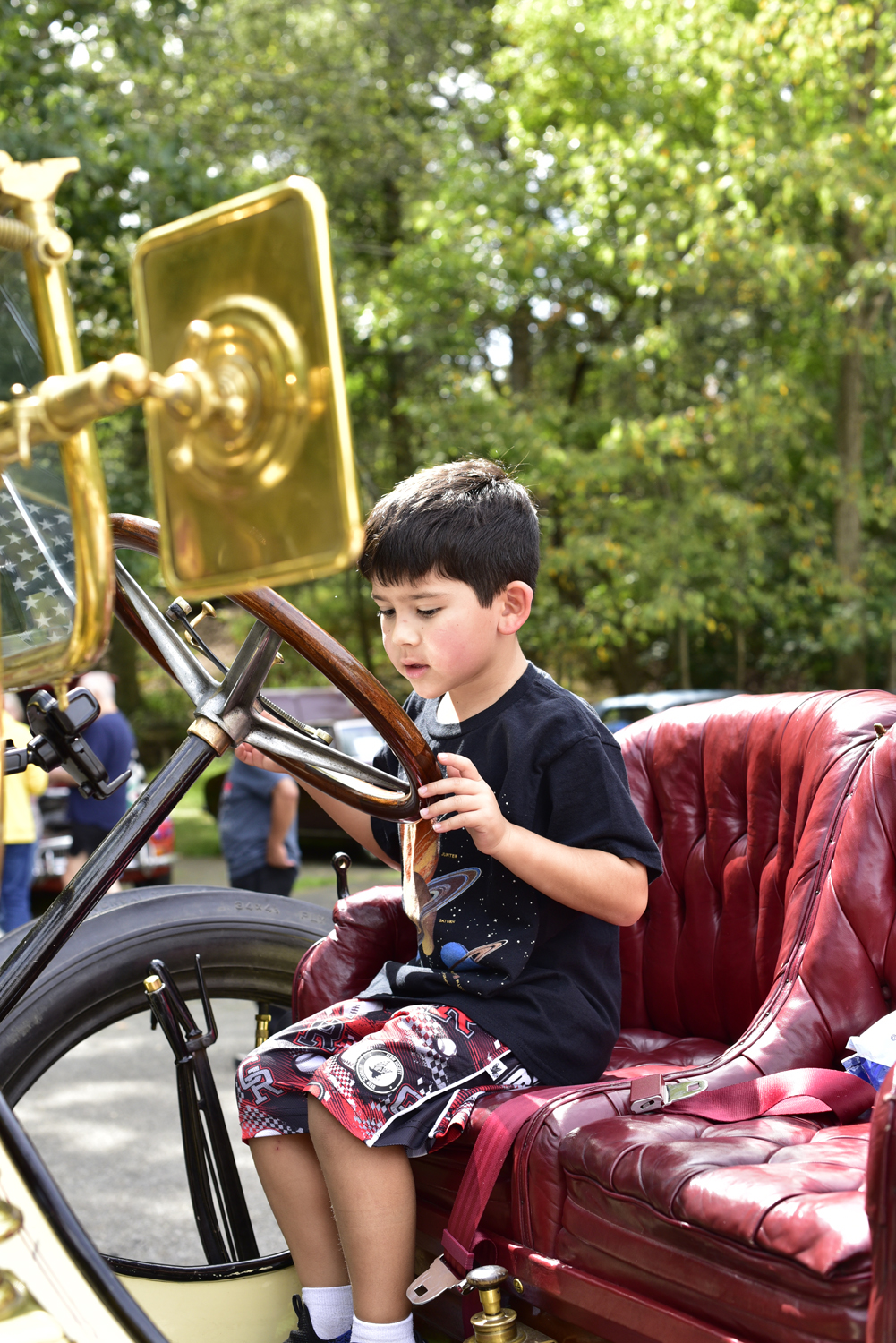
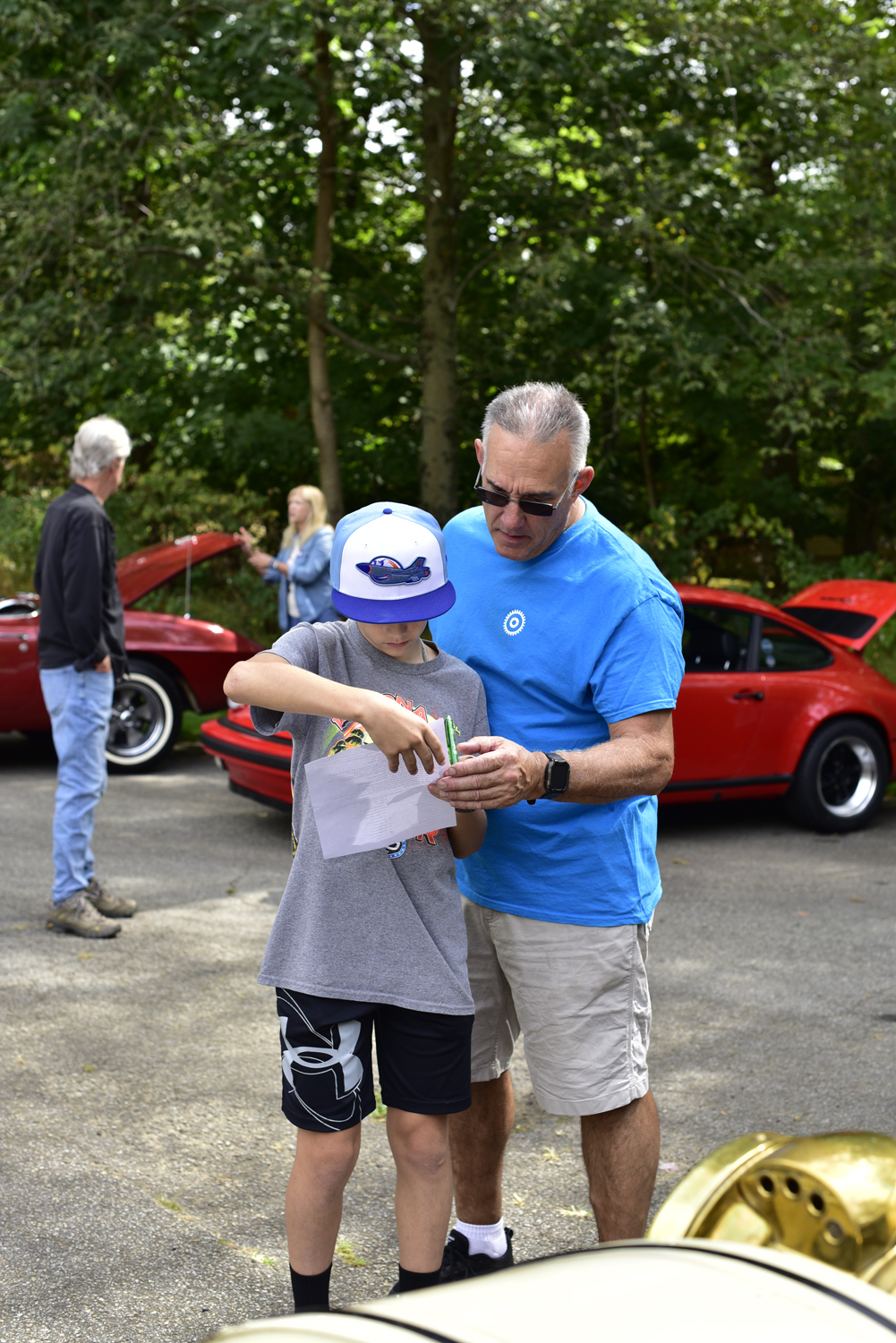
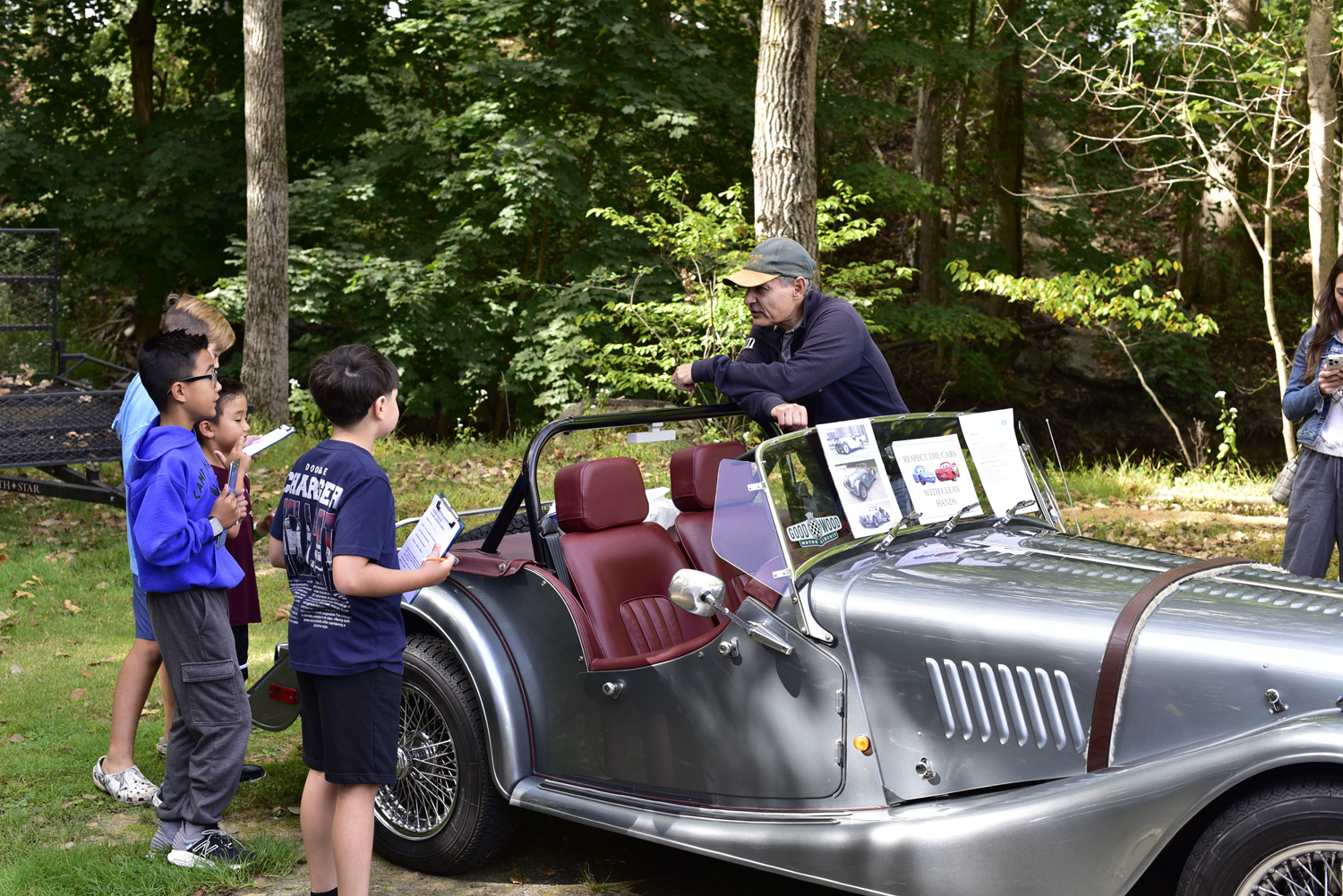
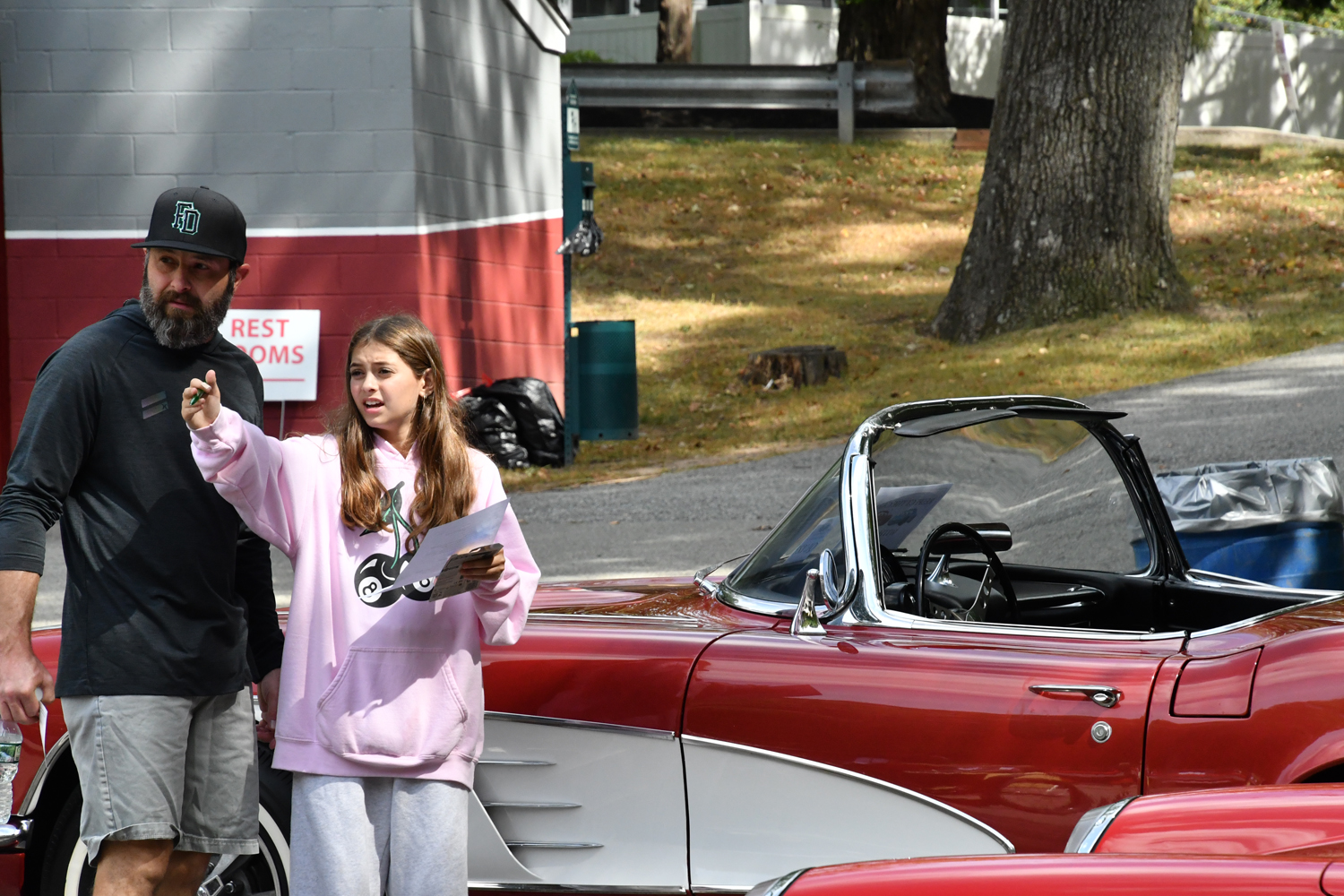
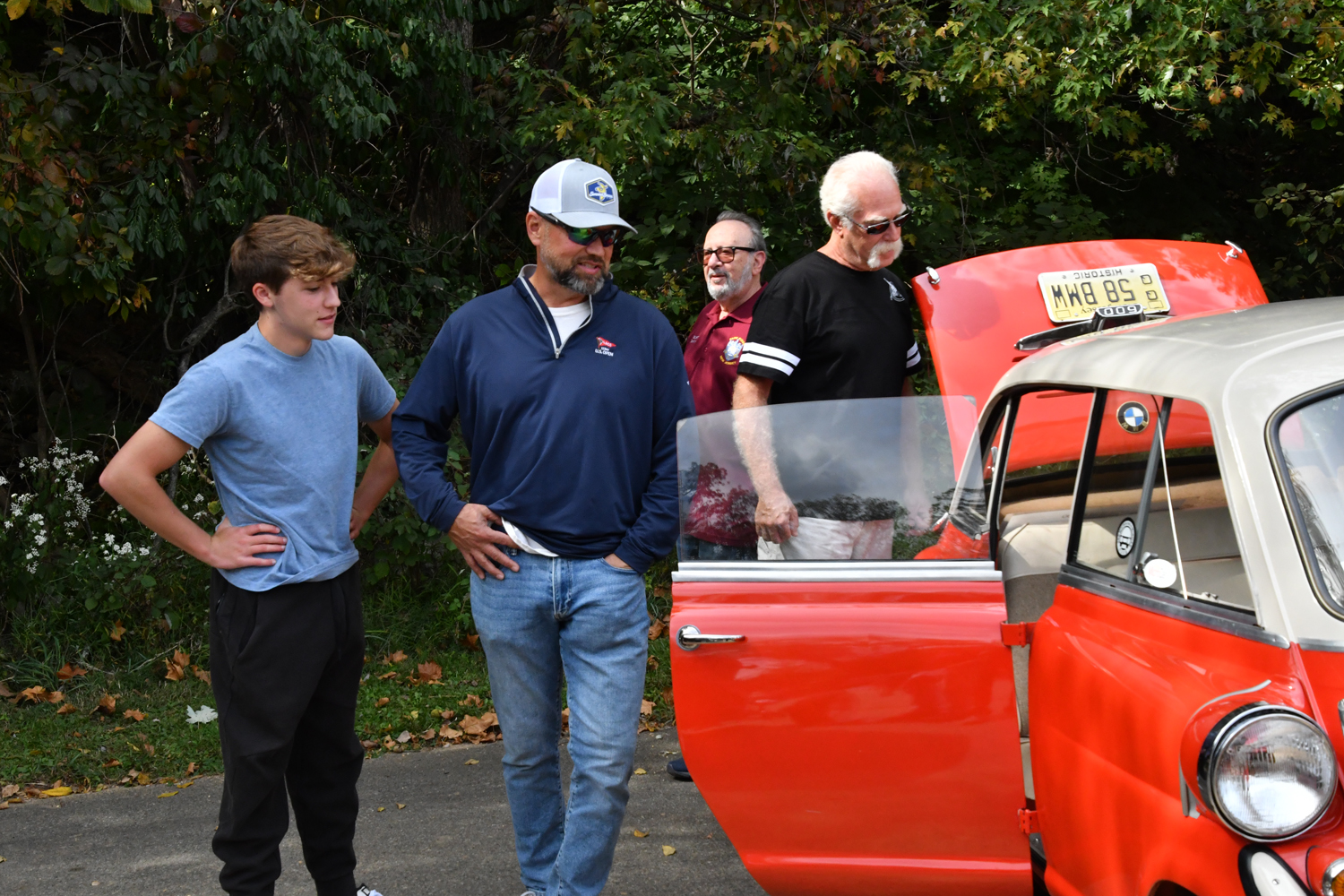
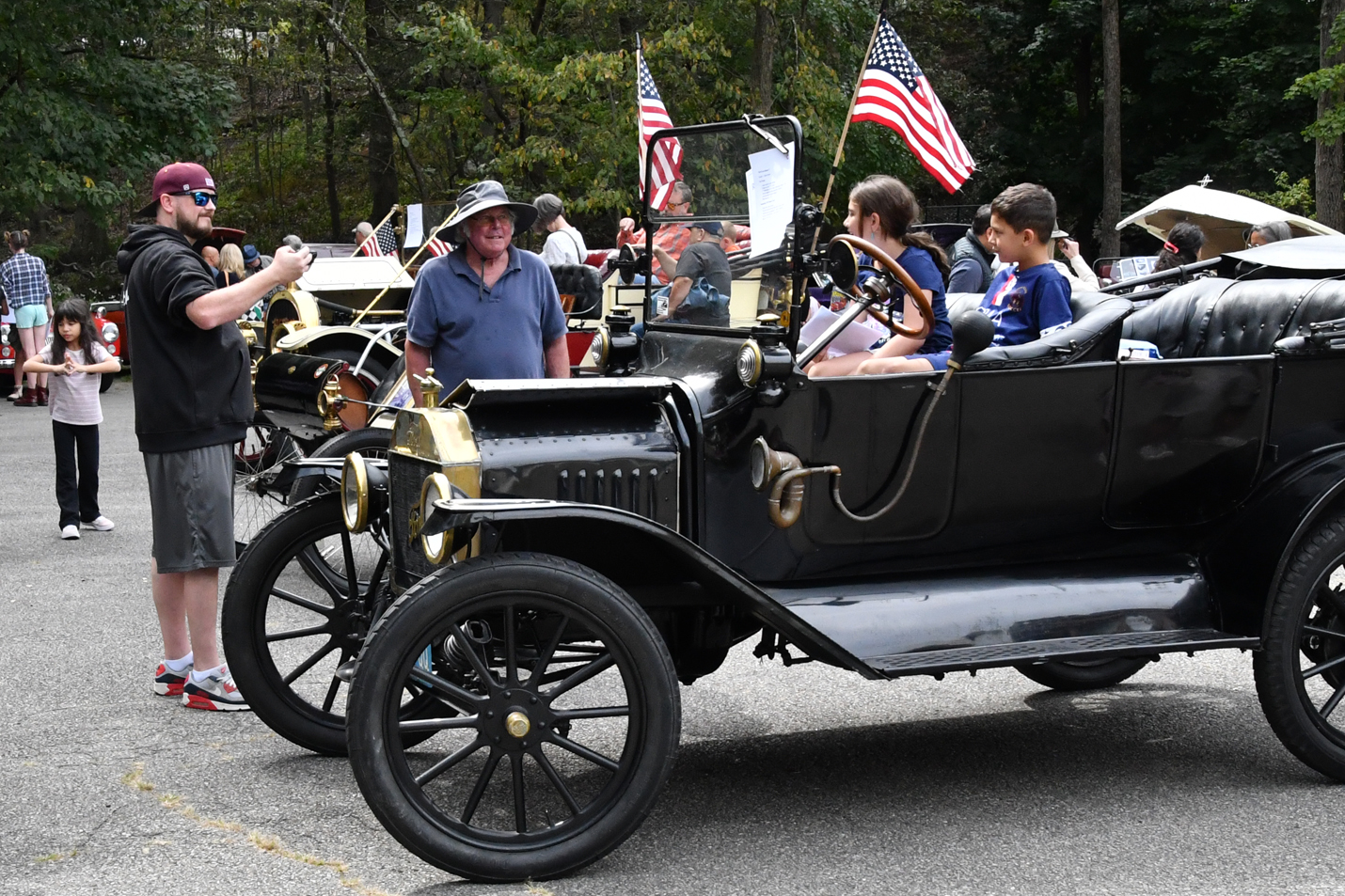
Likely the only car event of its kind in the nation, the second annual Collectible Car Fair for Kids and Teens kicked off on Sunday September 21st in Park Ridge, New Jersey. Once again students 18 and under could get up close and personal with automotive history from behind the wheel of landmark vintage cars spanning the 20th century.

One-of-a-Kind Car Show for Kids


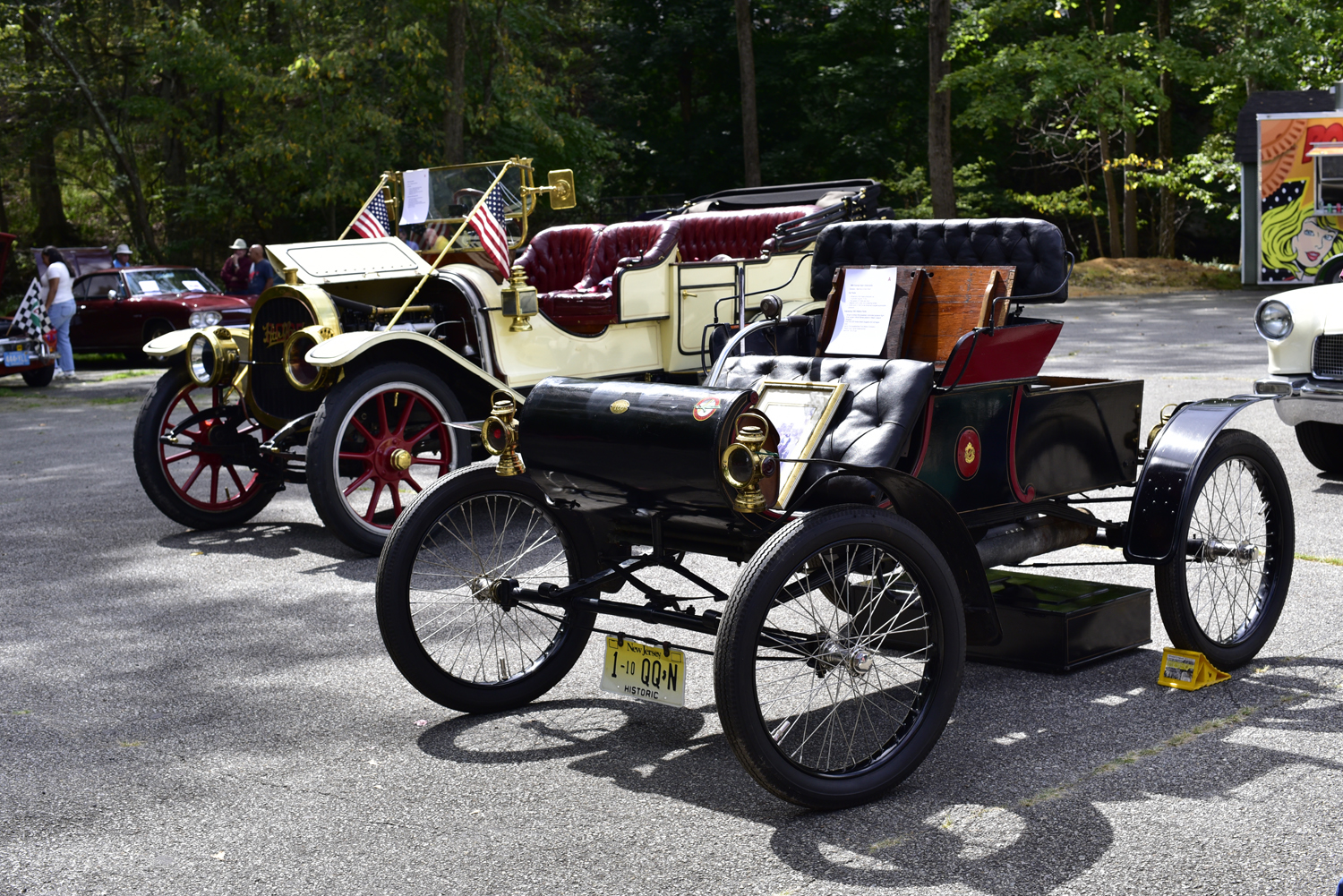
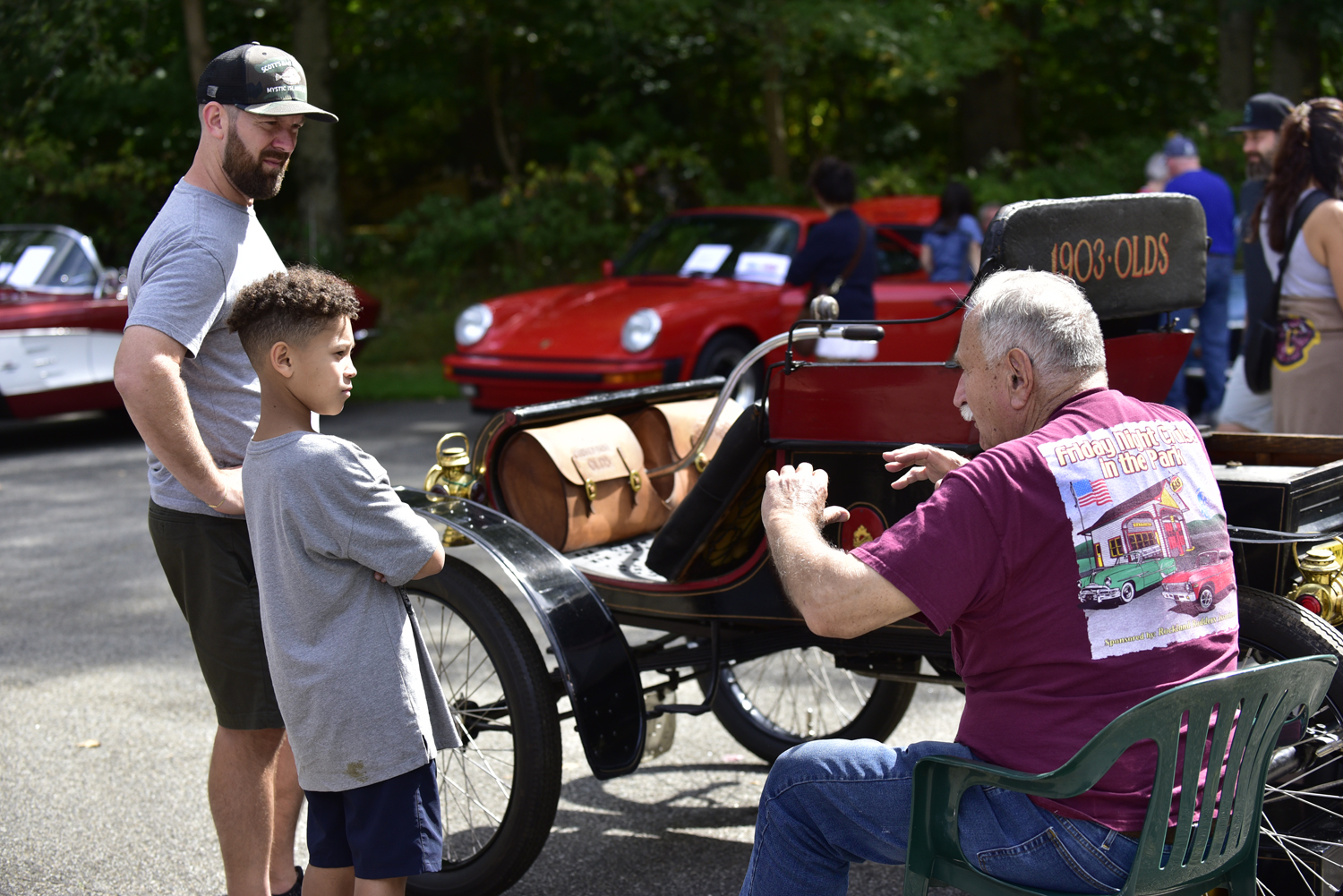
Guaranteed, the likes of this handsome white time machine had not traveled this suburban street in close to 100 years. Chugging proudly down the tree lined lane it serenaded the surrounding neighborhood with a deep throated rumbling mechanical chorus common in an earlier century. This 1908 Brass Era Pope/Hartford automobile made a striking entry onto the show field to take its place next to a 1903 Curved Dash Oldsmobile. Much like the Dawn Parade at the Amelia Island Concours, the crisp early morning light showcased an eclectic array of milestone vintage cars as they arrived.

To spark interest in a younger generation in advance of the show, local school systems were lobbied. The effort succeeded in generating the opportunity to deliver a presentation to middle school students on the significance and excitement of vintage automobiles. The effort’s intent resided in motivating children to take advantage of the coming event to experience historic vehicles first hand. In so doing they could better appreciate the character, beauty, and excitement of the iconic vehicles that revolutionized individual lives and forever changed global culture in the 20th century. The effort proved successful.
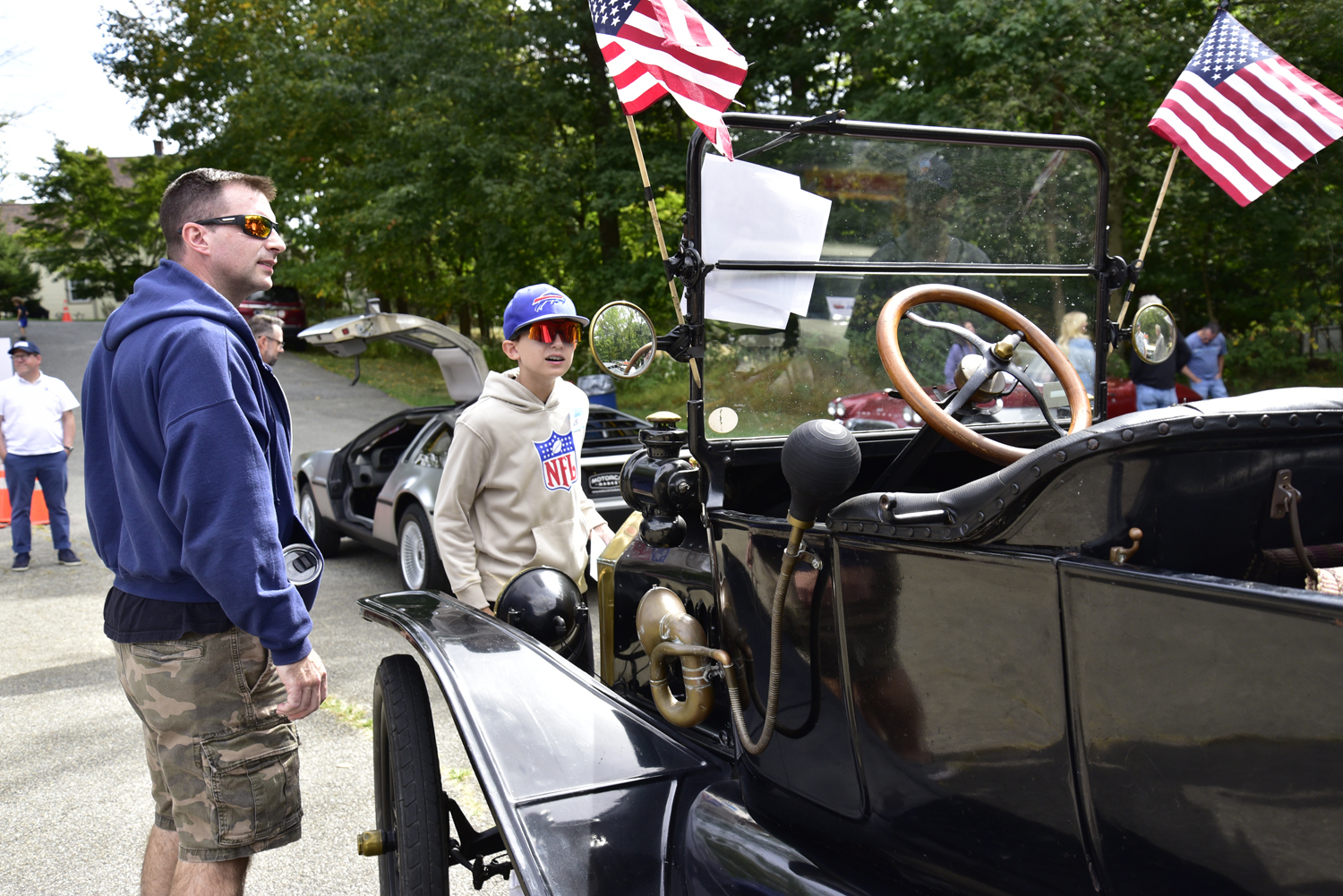
In addition to the Oldsmobile and Pope/Hartford, the curated field of 30 milestone cars included a 1915 Ford Model T, 1929 Ford Model A, 1934 Packard, 1943 Willys Jeep, 1956 Cadillac Coupe deVille, 1957 MGA, 1963 Porsche 356, 1965 Ford Mustang, 1967 VW Beetle, 1970 Pontiac GTO, 1982 Ferrari 308GTSi, 1983 DeLorean, 1988 BMW E30M, and 1996 Dodge Viper.

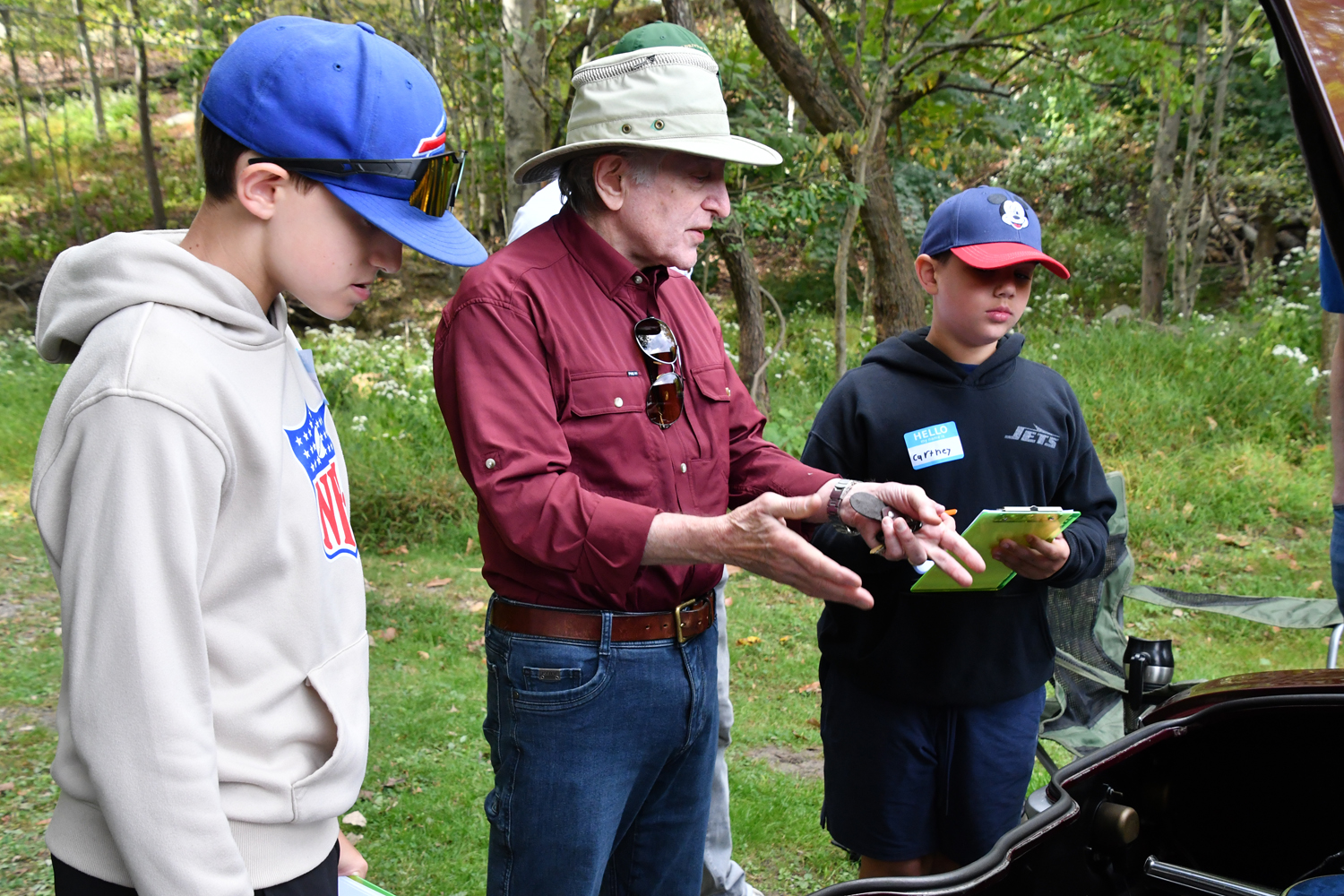
Offering far more than a passive viewing experience, the event provided children who registered in advance the opportunity to learn the basics of judging classic cars. The class, conducted on-site the morning of the show, was taught by experienced concours judge and past Director of the Rolls-Royce Owners’ Club, Bob Austin. Students, benefiting from Austin’s decades as an automotive industry icon, worked with techniques for assessing automobiles revered as generational standouts that propelled design and engineering into the future. With class work completed, students immediately would put their freshly acquired knowledge to work by judging the cars on display.

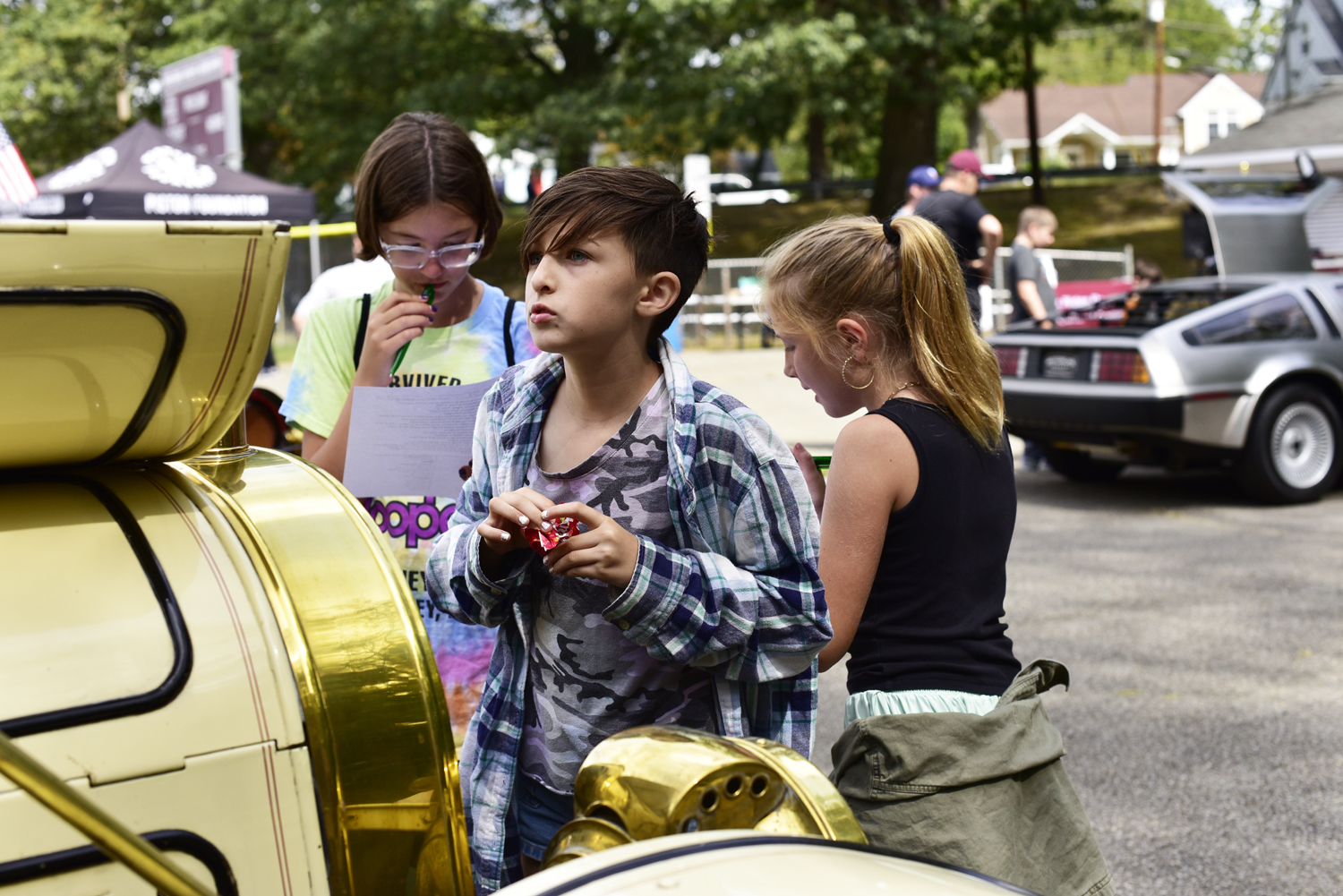
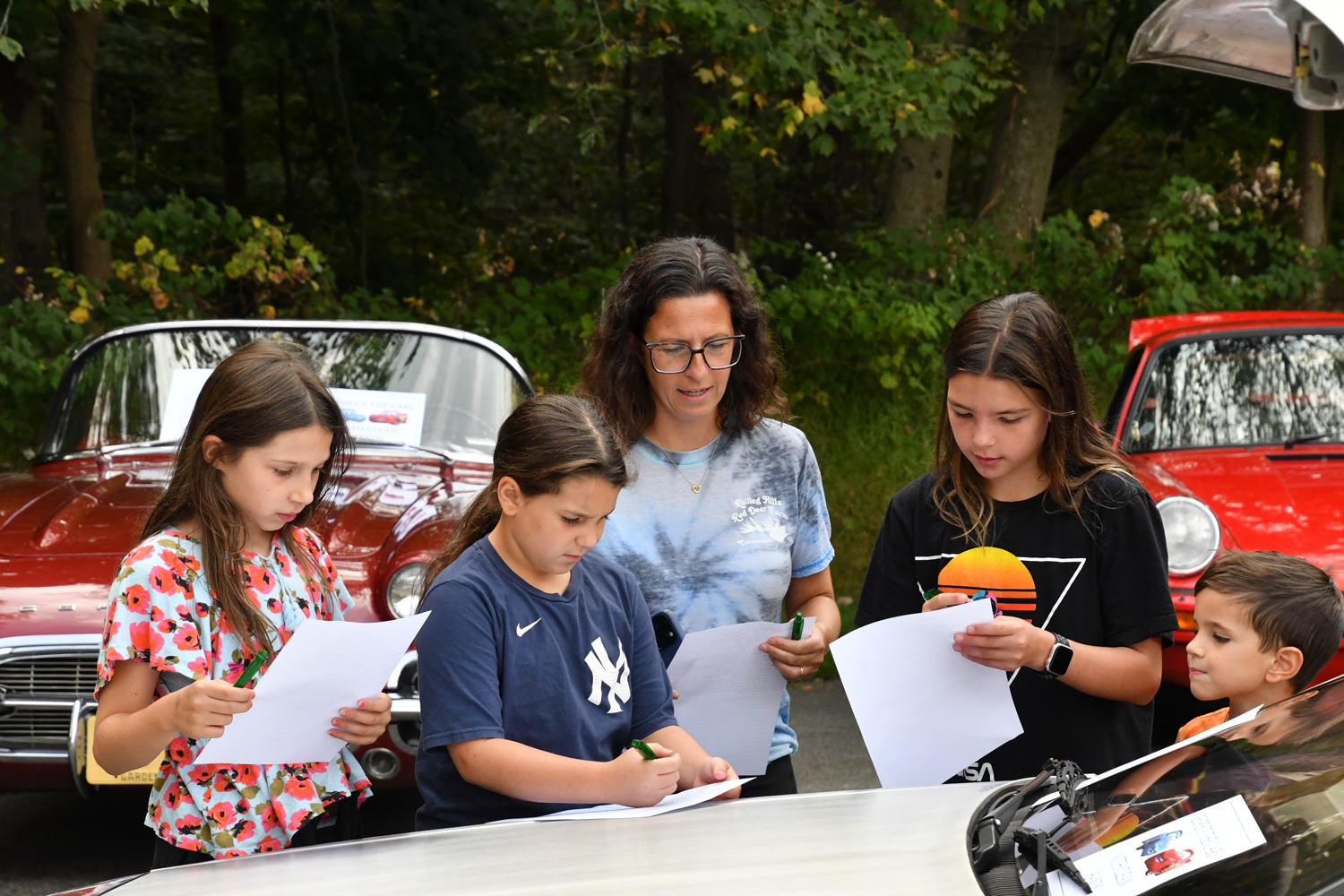
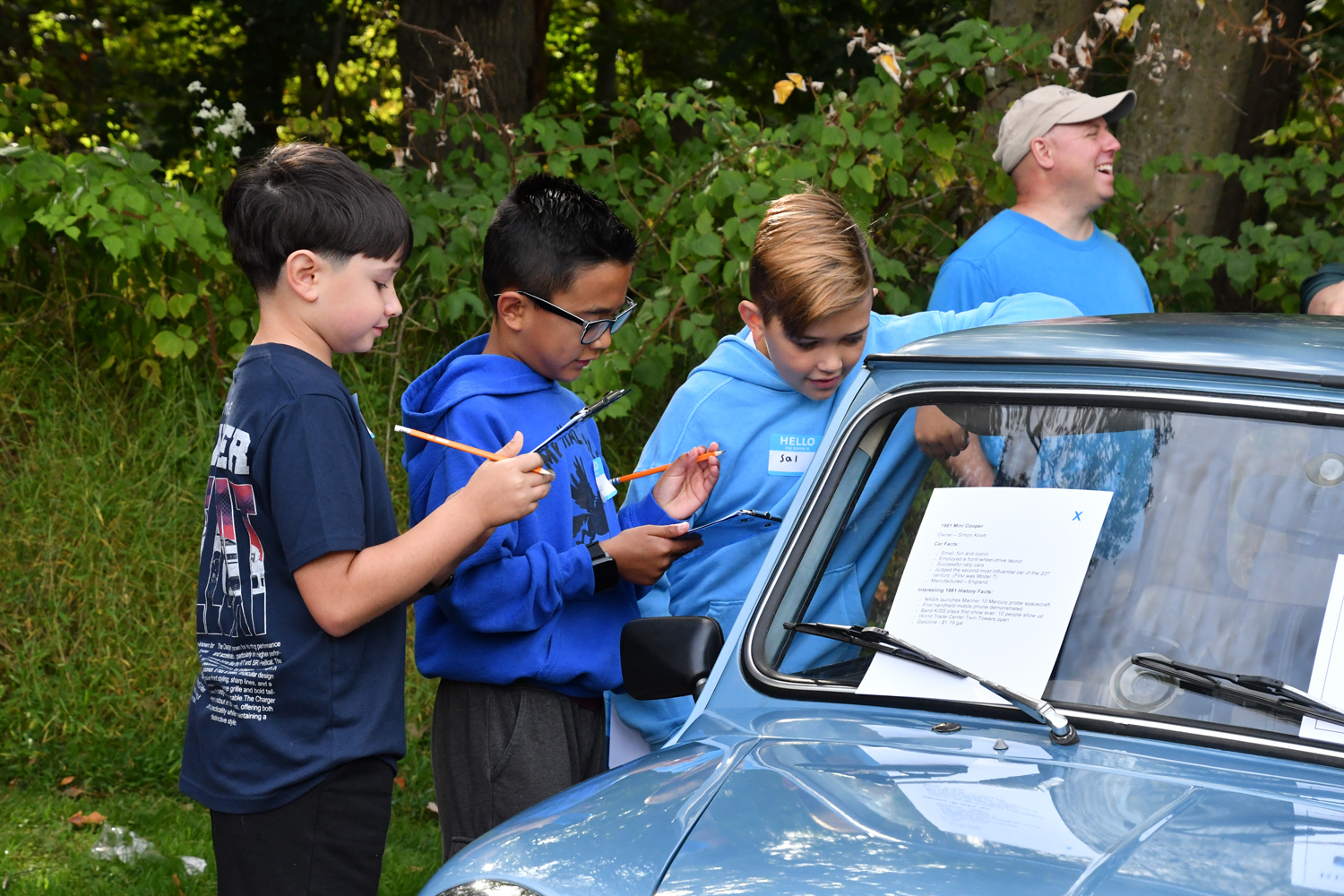
A primary interactive feature of the show and considered by many as the secret sauce for facilitating student involvement, the “Fun Hunt for Car Facts” challenged all comers with an information scavenger hunt. Centered on car specific questions, this 20-question quiz encouraged children to interact with the classic cars on display and the car owners.
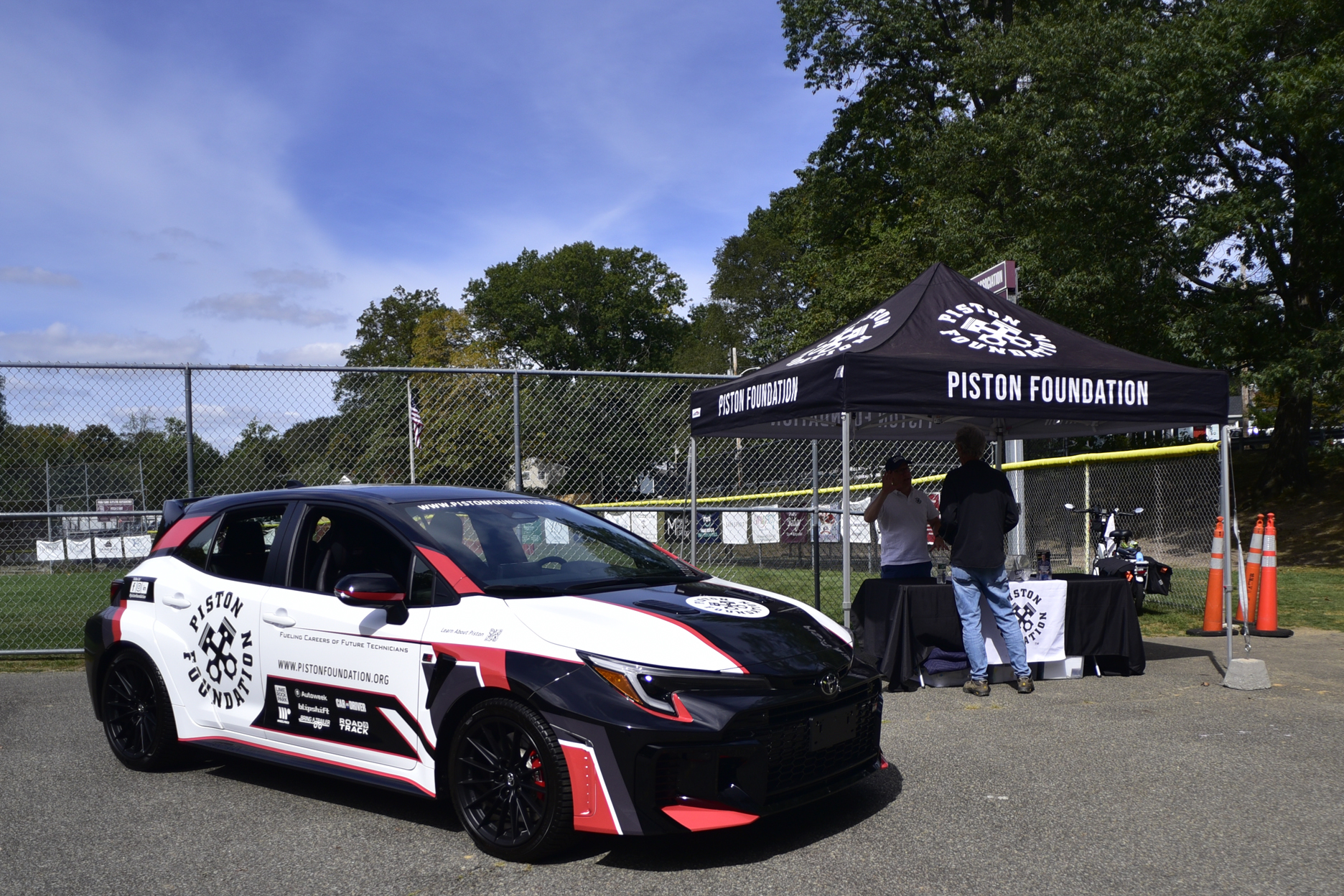
The presence of Mr. Jeff Mason, President of the non-profit Piston Foundation offered special benefit for high school age attendees and parents. Mr. Mason was there to discuss scholarship opportunities and apprenticeship programs in fields related to classic car restoration. The Piston Foundations stated mission is to bring more people into the collector car industry and help them build rewarding, successful careers.

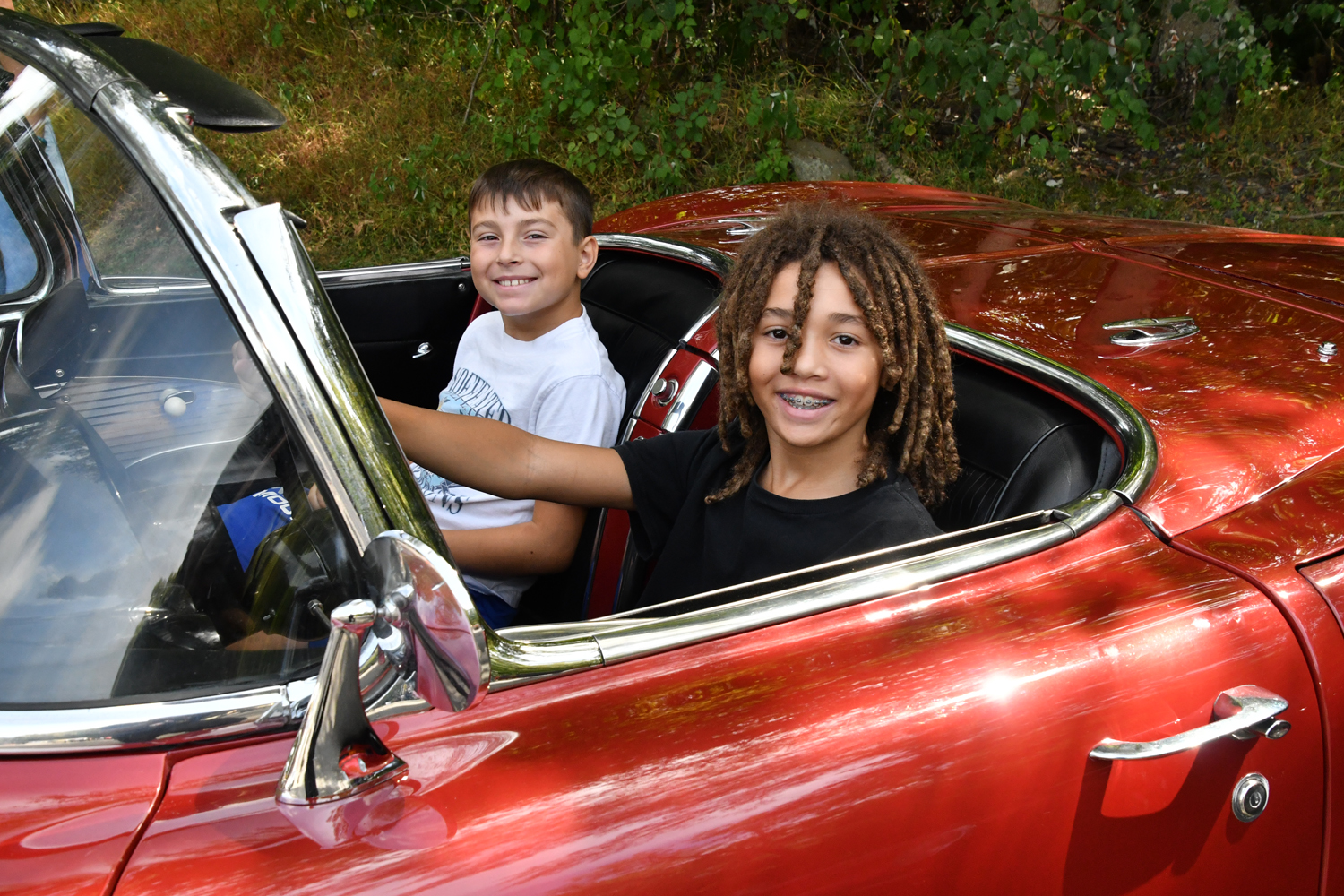
By 8:30 am the show field had taken shape with cars arranged around a central array consisting of the Oldsmobile, Pope/Hartford, Model T, Cadillac Coupe deVille and 1956 Continental MkII. The site offered excellent spacing for students to view, photograph and sit in all vehicles. And a wealth of viewing, photographing and sitting would take place.

By 9:00 am the judging class participants had taken their seats. 9:30 am saw the service window of the Pop Empanada food truck rattle open freeing mouth watering smells to perfume the air. 10:00 am show time, the display field came alive. For me, a most rewarding experience presented itself when a child approached with an adult in tow. Yes adult in tow, I mean that and not the other way around. Each adult, a parent, would introduce themselves and explain that their child had attended my presentation and insisted on being here. Parents expressed delight at the opportunity to share an experience driven by their child’s curiosity. And curiosity of young minds fueled the high energy character of the event. Fertile imaginations inspired by new experiences seized opportunities to create adventures of their own.

With the show running from 10 am to 2 pm, 11:00 am found the children darting about the show field like bees in a flower patch.Newly minted judges with clip boards circled individual cars as they studiously carried out their judging responsibilities. Mostly grouped in twos or threes, children clutching pens and answer sheets crisscrossed the open field in an honest quest to discover answers. By day’s end Over 50 students got all 20 questions right to earn the Collectible Car Fair “Genius” badge.

At 11:00 am with the energy of the crowd setting a nice vibe, it seemed a good time for the national anthem. The previous week I had attended a car show and with the singing of the national anthem, I commented to myself that this rendition certainly ranked as one of the finer recordings I had heard. It was then that I glanced at the A-V tent and saw that a young woman was delivering the anthem live. She was great. After that show a town official asked if I would like her to sing at the Collectible Car Fair. Absolutely! A week later, on the show field poised with the microphone in her hand, the A-V tech informed her that no music was available to accompany her. Her response, “All good, I’ll do it a cappella.” She nailed it. A big shout out goes to songstress Viana Harley, a student at Park Ridge High School.

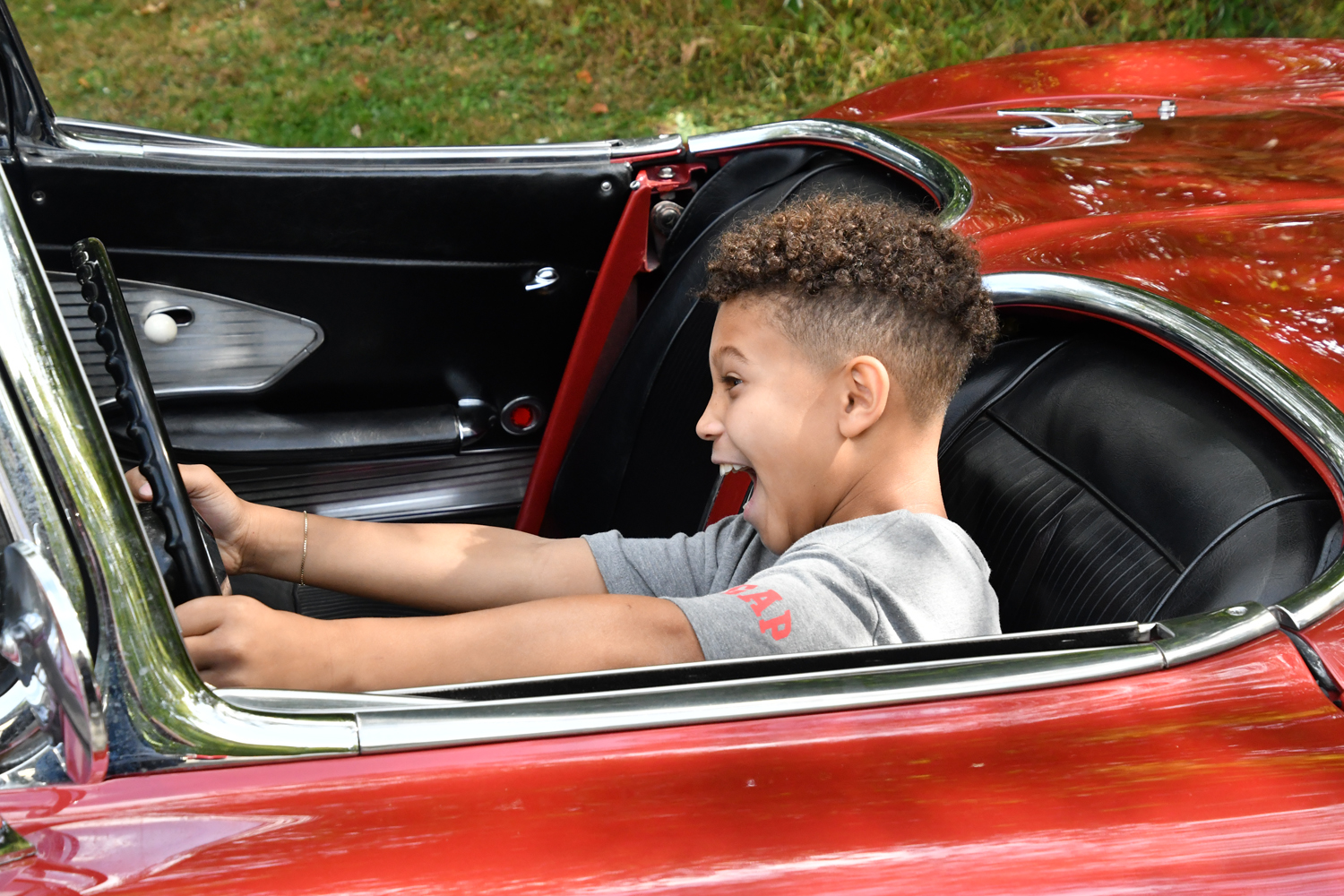
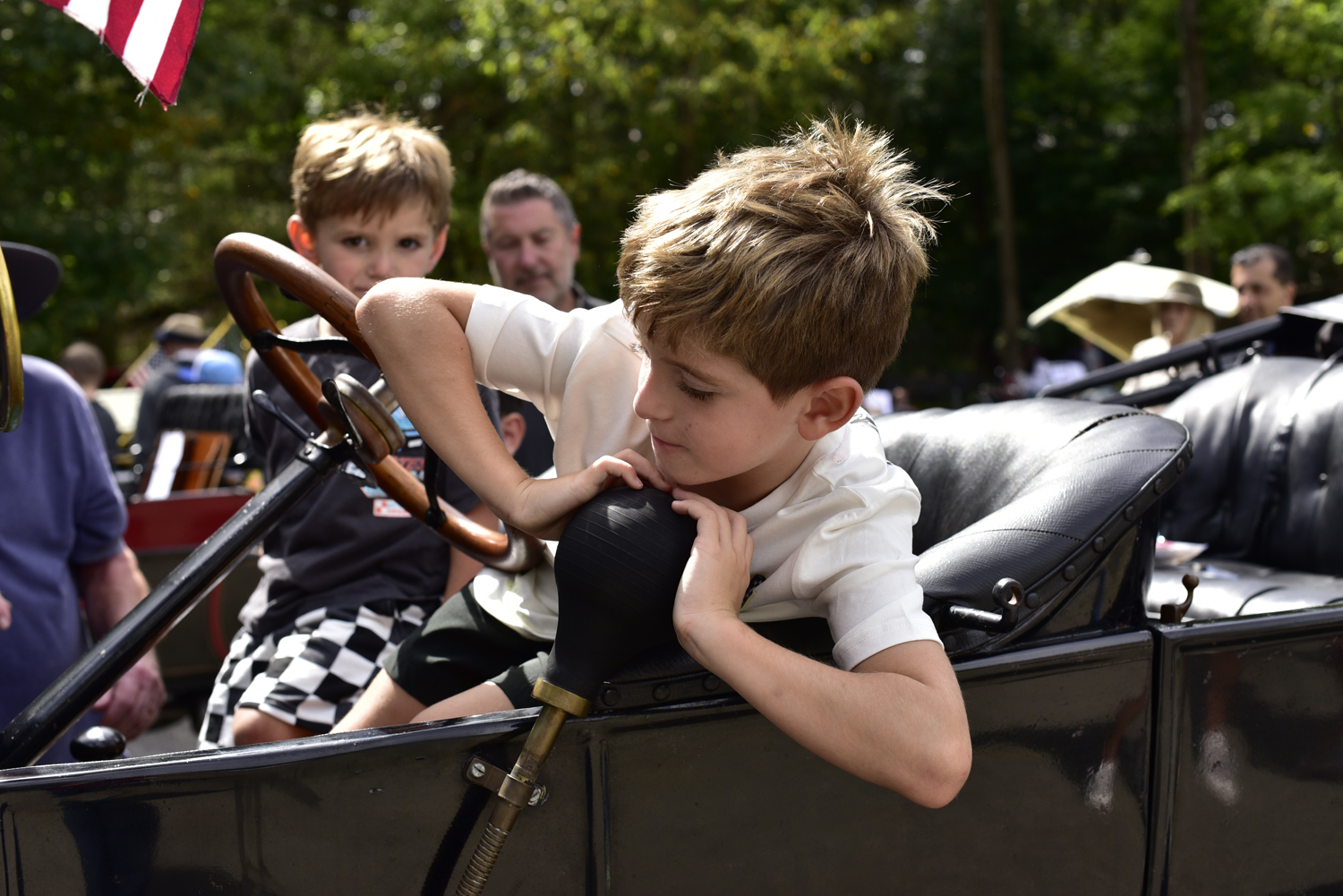
Now with the event in full swing, I watched a bevy of students drawn to the Model T. Sitting tall and proud children fired questions at Glenn, the knowledgeable owner. They found the need for a hand crank start especially fascinating and the squeeze bulb horn proved irresistible. My Corvette drew admirers but my favorite asked if he could sit in it. Once in, he gripped the wheel with both hands and made the best “I am doing 100 mph and loving it” face. Interestingly a major source of comment in the Corvette was the dashboard mounted location of the rearview mirror.
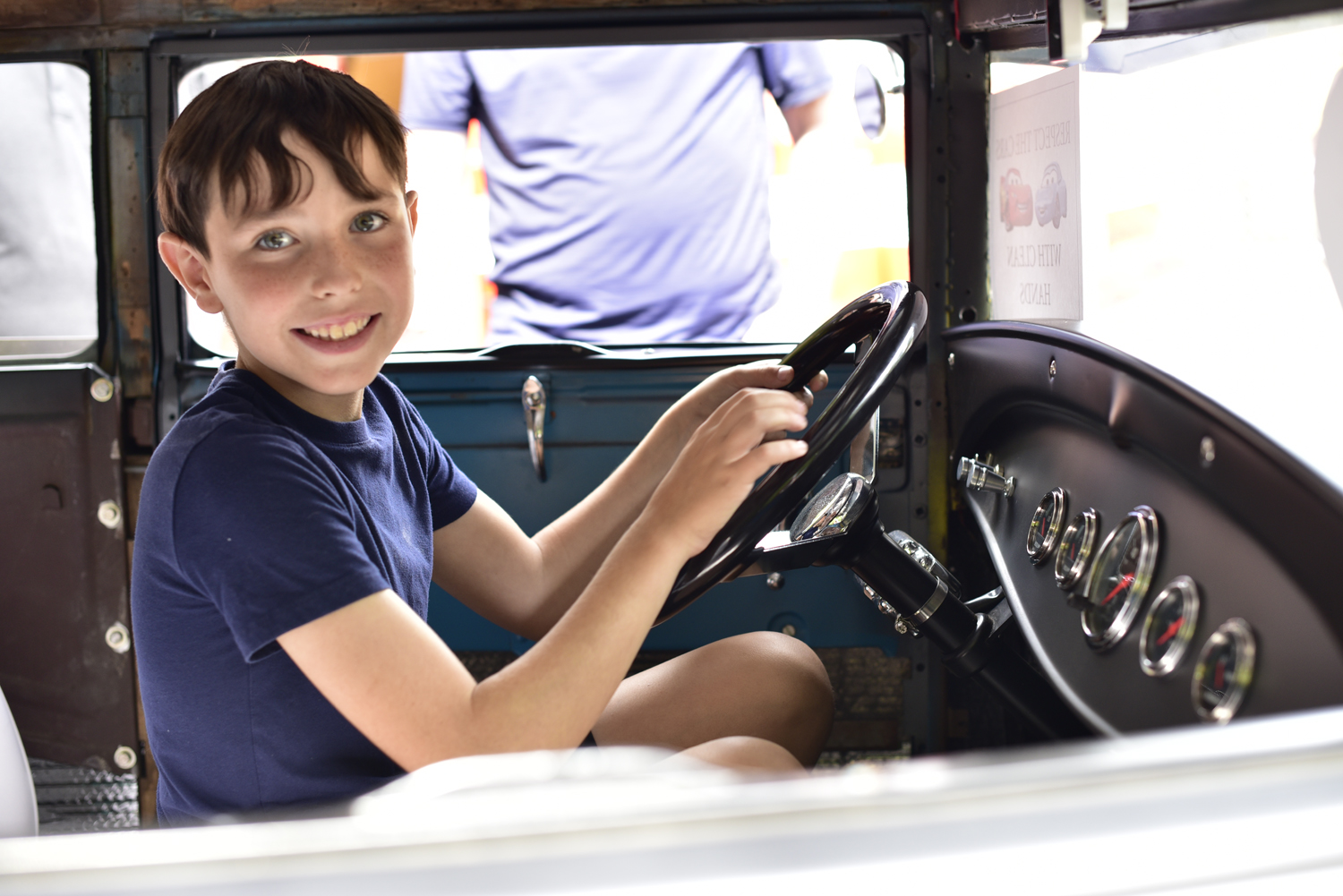
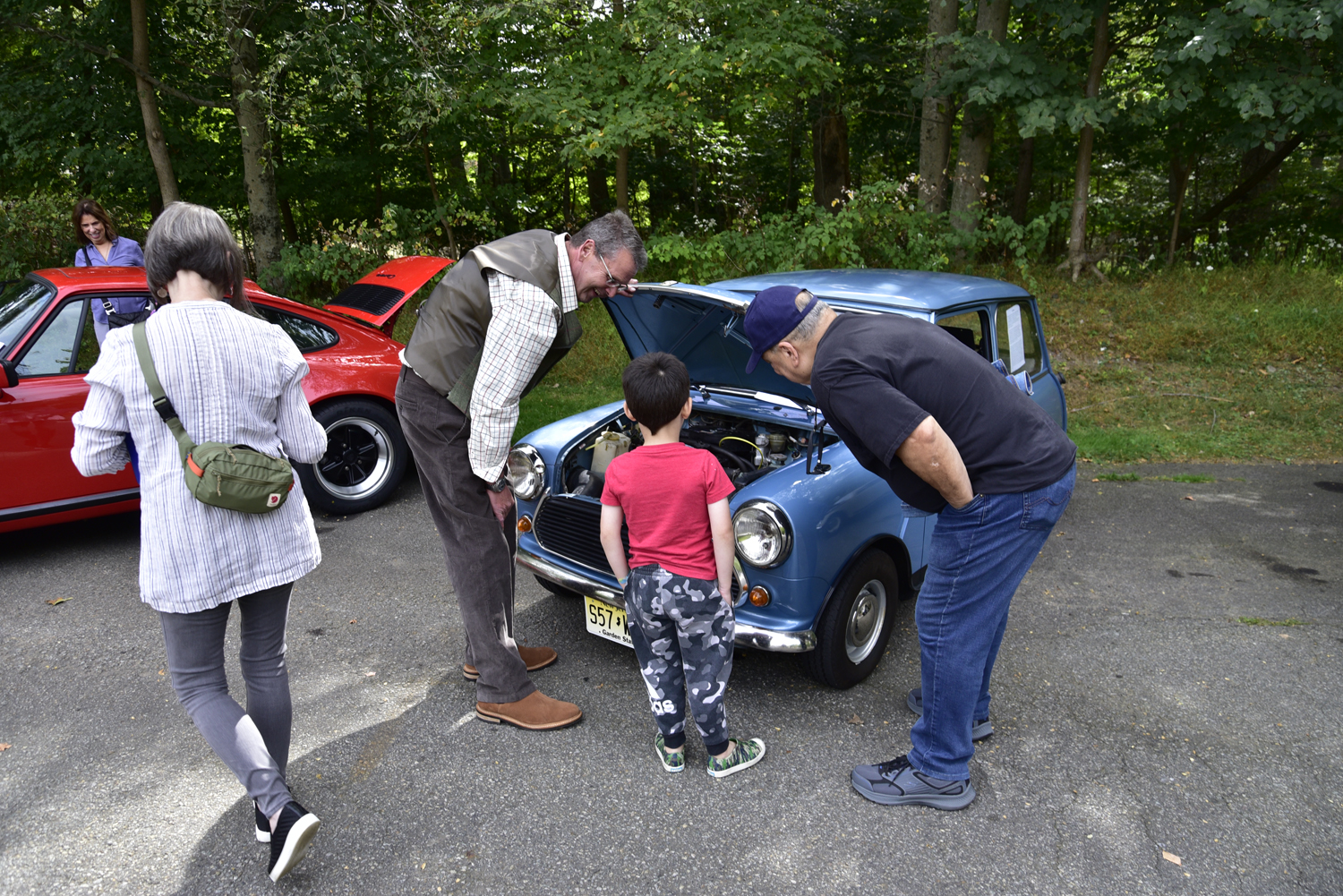
Whether a VW Beetle, Porsche 911, Chevrolet Greenbrier or Corvair Corsa, the rear engine air cooled configuration drew significant attention. Actual more attention grabbing than the engine in the rear, was that lifting the hood revealed no engine in the front.

The 1958 Isetta with it unusual front opening driver’s door, the DeLorean with its gullwing doors and Doc Brown connection, and the Mini because of its, well, Mini-ness all drew much attention for their quirkiness. Plum Crazy drew rave reviews from those for whom color mattered.

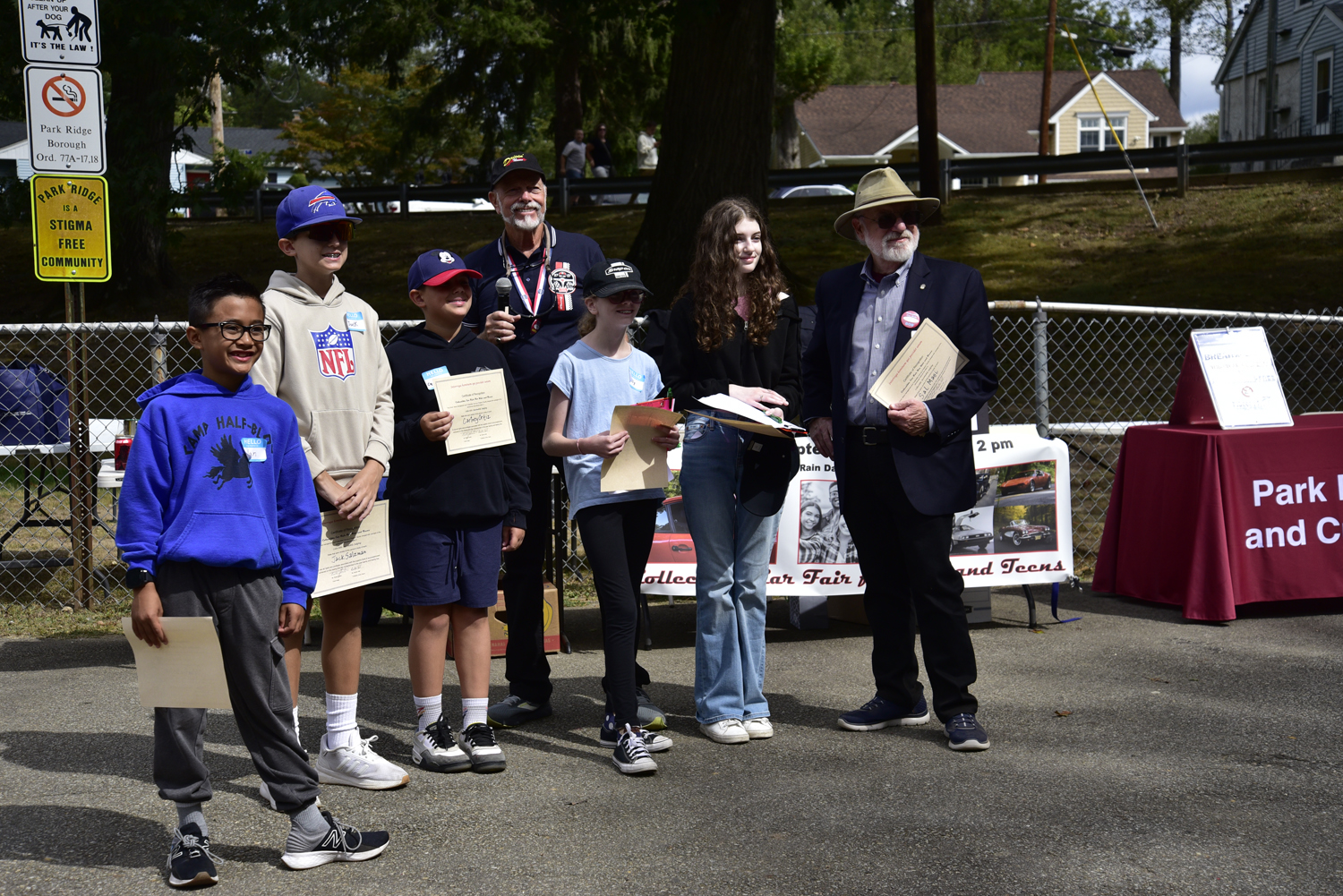
As the day moved on the tabulation of the results from our battery of rookie judges came in with admirable results. They performedextremely well considering the stiff challenge presented by the very broad field of cars they faced. Apparently Chief Judge Bob Austin had a bright class with whom to work. At that point all of the young judges received a certificate of accomplishment before Bob announced the judging tally.

Group 1 – The Early Years

1st – 1956 Continental MK II

2nd – 1915 Ford Model T

3rd – 1956 Cadillac Coupe DeVille

Group 2 – The Swinging 60s

1st – 1956 Chevrolet Corvair Corsa

2nd – 1965 Mustang

3rd – 1961 Corvette

Group 3 – Cars that Defined the Driver

1st – BMW 850CSi

2nd – 1996 Dodge Viper

3rd – 1988 BMW E30M

With all attendees now gone and a hot sun still high in the sky, car owners and event volunteers convened one last time before slowly gathering themselves in preparation to depart. All there shared smiles and stories derived from the day’s events. All agreed that it was worth it.

Interactive classic car events such as the “Collectible Car Fair for Kids and Teens” represent the extension of a critical lifeline to a future clearly in question. Will tomorrow enjoy a healthy collector car experience? Will our passion transfer to our progeny? The answer resides in what we do today to invite and entice the future to share our joy.

Unfortunately, I have found that some collector car gatherings are a sedentary affair with too many guys my age circled like covered wagons in lawn chairs and shooing kids away from the cars. At this point in time such a defensive mindset serves to “protect” the future from embracing what we love. We as car enthusiasts derive our passion from experiencing our cars. To quote Dr. Fred Simeone, “The greatest gift of the Industrial Age is the automobile.” It is imperative that we share our passion with the generations to come. Unfortunately, many among us view that thought with trepidation.

Possessing a rightful concern that kids will damage a treasured car can inspire a certain protective instinct. Having worked the big new car shows such as the New York Auto Show, I know the damage inflicted by bad kids with evil intent. That unsupervised environment differs profoundly from the local events most of us populate. Experience from Collectible Car Fairs 1 and 2 has shown kids to be respectful and appreciative. Do they need to be monitored? Yes. They may not know how to interact with a classic car. That is certainly something we as car enthusiasts can share in a friendly manner. For my 2 Collectible Car Fairs and the Autism event described in the last Drivin News story (Classic Autos and Autism, A Shared Journey to Betterment) I have brought the 1961 Corvette that I have had since 1967. After 50 years of ownership, I conducted a major restoration. It has been featured in Hemmings publication Muscle Machines. I am very protective. I have also realized my greatest gift as an automobile enthusiast is to employ my car as a vehicle (Double meaning intended) to engage those who will carry on my passion when their turn arrives.

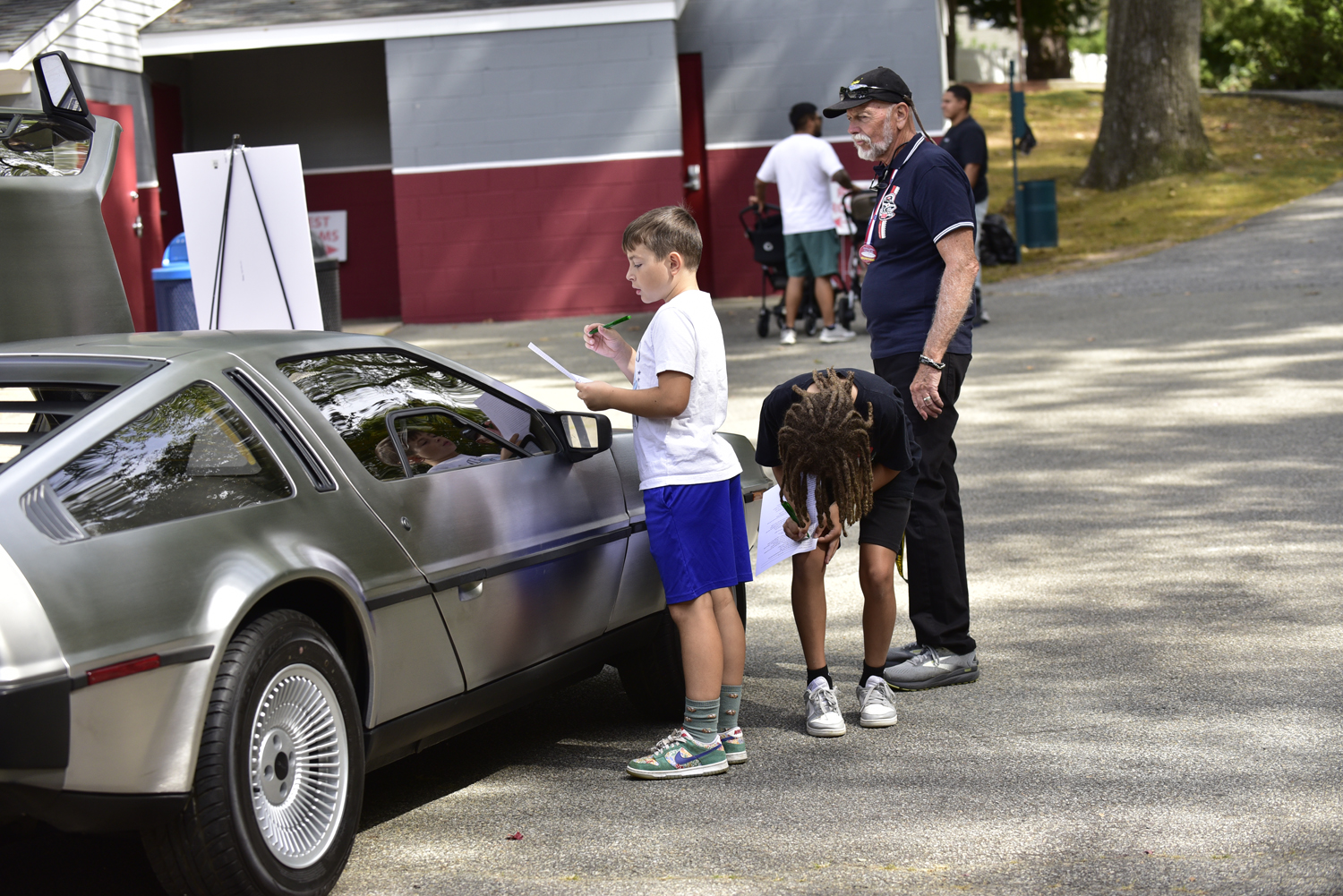
 

ADDITIONAL PHOTOS BELOW

Images Courtesy of Burton Hall and Keli Dougherty


By |2025-09-29T16:42:35+00:00September 29th, 2025|2 Comments

Conversations With People We Value #58

You never know what good a new day will bring. On that day it came in the form of an email. Sent by my friend and fellow car guy Ira, it explained that he had recommended me to a facility that served the needs of young adults on the autism spectrum. Why me? Because they wanted to do a dedicated classic car event as an enhancement to their program for treating the needs of their clients. He included the organization’s contact information. I called.

Classic cars have always been recognized as a source of worth, pride, pleasure, excitement and entertainment. Could they, as well, be a source of healing? We were about to find out.

Classic Autos and Autism: Sharing a Journey to Betterment

Photos: Courtesy of Kayleigh Gorman, Good Talking People, LLC

Three months after Ira’s email arrived, a 1915 Ford Model T rolled into the tree rimmed parking area of the “Good Talking People” care facility in Teaneck, NJ. Soon the early Ford would be followed by a 1986 Porsche 911, a 1976 VW bus, a 1967 Austin Healey 3000 and eight other classic cars, the event and the idea behind it had come to life. Good Talking People Owner/Director Arlene Rubin and Office Manager Kayleigh Gorman welcomed the car owners as the vehicles came to rest.

This Wednesday evening represented a new twist in the facility’s ongoing effort to promote comfort in social situations. At these monthly socials young adults on the spectrum can enjoy the opportunity to come together with their community of peers and practice their social skills. Arlene says, “They look forward to seeing the people that they have developed relationships with. It’s a comfortable place for them to be able to just be them.” Historically these events have included bowling, trivia night, dancing, costume parties, karaoke, crafts, etc.

The “Car Show” represented a unique activity in the ongoing effort to create engaging monthly social events. In this setting these young adults could engage with the classic cars and the owners in a social setting with familiar faces. In so doing they could develop the social skills necessary to improve their quality of life.
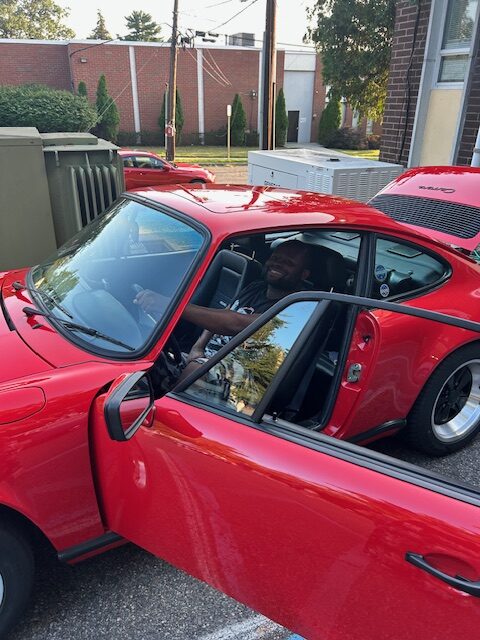
On this beautiful early evening in mid July a cluster of adults enveloped in a cloud of excited anticipation blended, hesitatingly at first, into the display of signature vehicles from the golden age of the automobile. The gathering’s predominantly male composition reflected the roughly 4 to 1 male to female ratio of the American autism population. According to the CDC, since 1970 the incidence of autism has increased from roughly 1 in 10,000 to 1 in 31 (Depending on the source these numbers vary significantly). As to why, many reasons come to the fore, not the least of which being a recent broader interpretation of what qualifies as autism as well as modified assessments and knowledge.

As the event came to life all the car owners chose to wait for the clients to initiate interest and then owners would gently enter into a social interaction. Much to the delight of Arlene, Kayleigh and the car owners the presence of the cars and the freedom to sit in each car generated a very positive dynamic that inspired even the less outgoing clients to engage.

As to the actual definition of autism, Arlene made clear that limitations in socialization skills towers as the defining criteria marker for autism. Arlene says, “You can have really very bright, strongly cognitive individuals who are very socially awkward. They don’t really read the room. They don’t really pick up on cues. They don’t understand the social world around them in the same way as others. Some very famous people that we view as highly intelligent believe they would have been diagnosed with autism spectrum disorder as a child. Bill Gates being one.”

One great example of the conflicting cognitive versus social abilities of clients occurred with Peter, the owner of an especially nice 1986 Guards Red Porsche 911 Carrera and a knowledgeable car guy. One of the clients approached to view Peter’s Porsche. Peter invited the client to take a seat behind the wheel. “Oooohhh nooo,” the young man replied as he retreated from the interaction. A while later the young man returned to ask if he could, indeed, sit in the Porsche. Peter guided him behind the wheel while taking his place in the passenger seat. Peter in delightfully describing his shock says, “This young man spoke so knowledgeably about Porsches I was completely blown away. I never expected that.”
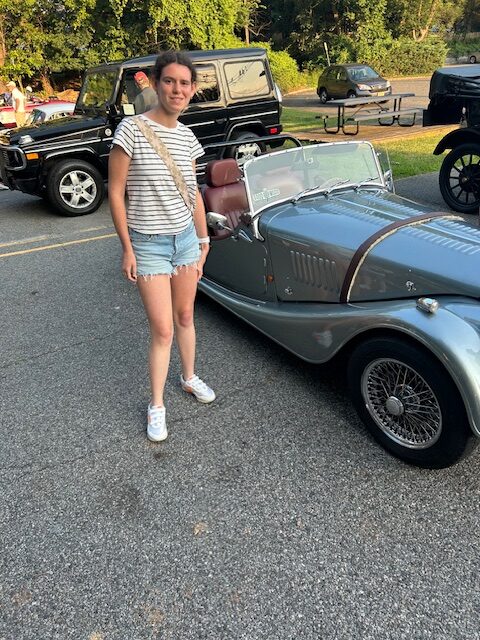
As the energy level of the event built fueled by clients asking questions and photographing cars and being photographed with cars and in cars, Arlene explained that autism cannot be cured or reversed; it is a lifelong neuro-developmental condition.  Instead the therapeutic goal focuses on helping clients manage challenges, develop skills and improve their quality of life. She explained that Good Talking People provides therapy to assist in the development of pragmatic language, social communication and social learning. Here they teach strategies for understanding social rules, what is expected in social situations, ways to increase social comfort and how to communicate and connect with others.

This evening’s “Car Show” represented a unique activity in an ongoing effort to create monthly social events. These gatherings provide a safe environment where clients can interact in a social setting with familiar faces to develop the social skills necessary to improve their quality of life.

With the event in full swing, hoods opened, horns blew, engines started and clients seemed more comfortable in their own skin. One young man approached me, looked me in the eye, presented an outstretched hand and stated confidently, “My name is Micah.” We shook as I gave my name. Apparently satisfied with the exchange Micah smiled and moved on.

Car-centric activities engaged the clients throughout the evening till the summer sun sank to the horizon. Long shadows signaled that the time had arrived for the show to end. Illuminated in the golden glow of the sweet light cast by a setting sun, the eclectic collection of classic cars individually departed to the cheers of the clients as they gathered to wave goodbye to their new friends.
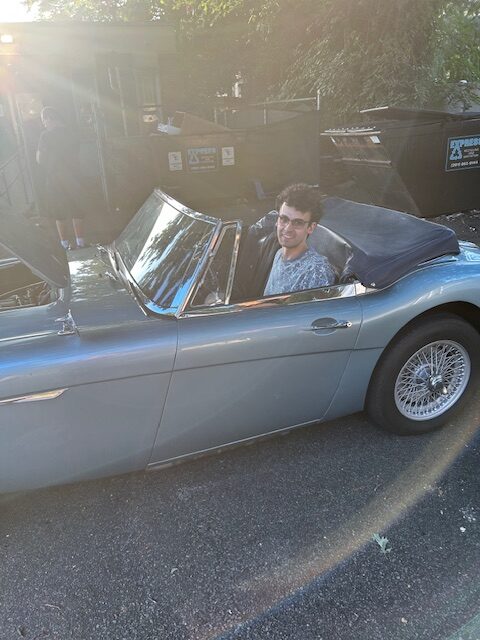
In reflecting on the success of the event Arlene said, “Our clients had a great time. When we spoke with the group directly after the event, they wanted to know if we could do it again the following week. There are some of them who I see for therapy; weeks later they were still talking about the classic car event.”

When asked if this event achieved her goals more effectively than other events, Arlene expressed the belief that indeed it did in the sense that it opened up a new experience for the clients. Arlene says, “When they came back inside after the event and, again, in later therapy sessions clients continued to ask questions about the classic car experience.” It clearly also promoted communication between clients. Both Arlene and Kayleigh witnessed clients asking questions among themselves. Arlene says, “They were discussing the different cars and having conversations among themselves about the cars.” The experience provided a focal point for them and it equipped them with a brand-new experience to explore. Arlene and her staff made it clear that the power of the event to make a difference extended well past the cars.

Both Arlene and Kayleigh praised the owners. Arlene said, “Your people were so patient. I watched and saw how some of them kind of stood back and observed. And when a client approached close enough to indicate interest that’s when the owner would slowly make his way over. He would casually go up and say, ‘Do you want to see it?’
If the client offered no questions but by his or her continued presence expressed interest, some of the gentlemen were so very intuitive they just started to talk about the car in a non-threatening way. When the owner started to talk, you could see the client listening. It was really beautiful to watch.” Kayleigh, who had organized the event said, “It was really wonderful for us to see. The owners were amazing.”

In reflecting on the total classic car event Arlene said, “This was just a brand new experience for them. It expanded their horizons. We at Good Talking People really believe in the healing power positive experiences possess. This was truly wonderful for them.” When asked if she would do it again Arlen answered without hesitation, “Absolutely!”

By |2025-09-05T00:09:20+00:00September 5th, 2025|4 Comments

Cars We Love & Who We Are # 69

Rosell’s Auto Repair’s tidy but unimposing workshop situated on a quiet woodsy intersection in River Vale, NJ appears to project a compelling gravitational force. This extraordinary power seems to exert an especially attractive draw on forlorn classic cars left abandoned but not unloved. Most of these once tantalizing treasures have for decades silently developed unmolested shrouds of dust. A hoary patina grows as these ever more weary beauties remain overshadowed by life’s greater demands, until each forgotten treasure’s place in a family’s history, like a good-natured telltale heart, could no longer be ignored.

The following offers six joy filled tales celebrating rediscovery and rebirth at the hands of Al Rosell.

Every Car Tells a Story, Here are 6 Good Ones


When asked, Al Rosell, owner of Rosell’s Auto Repair, makes it clear that he loves what he does but he does not go looking for vintage car resurrection candidates. The cars seem to find him. Al says, “I don’t have a website. I don’t advertise.” He relies on the power of third party testimonial. He references one customer who like many of Al’s loyal clients went to a car show looking for recommendations. We will call the customer, Carl. Carl came to Al saying, “I was at a car show and asked four different people where to bring my car. All four said go to “this guy,” he will take care of you. Well, Al is “this guy.” All of his business comes by word of mouth. Al sums up his successful marketing philosophy saying, “People talk.”

As of late, Al has observed a new trend developing. He says, “A guy or a guy and his son will come in to talk about a car that has sat in their garage for 30 years, 40 years or longer. Dad flat out says, ‘I’m getting old. I want to get this car going.’ Al continues saying, “I can’t tell you how much that has started to happen in the last two years. My God they are coming out of the woodwork.” Interestingly, people are not looking to sell the car. They want it to be enjoyed by the next generation and the generation after that. Al, with a mix of incredulity and resignation says, “I have six of them here right now.” So let’s take a look at the resurrection stories of 4-wheeled family treasures residing inside Rosell’s Auto Repair.


1970 Plymouth Duster

1970 Duster with Al Rosell

The story begins in 1970. Bobby, not his real name, not yet 18-years old wanted a car to race. He needed around $2000 plus to buy a new Plymouth Duster. He had half the cash. The other half he borrowed from his parents. Al says, “The day in 1970 that he got the Duster he ripped out the motor, tore out the transmission. He converted everything to accept a 426 hemi.” The upgrade included a 4-speed trans and a Dana rear.” Al continues the story saying, “He laid the green color right over the brand new Burnt Tan factory paint and, then, he raced it for the next three years until it blew up.” Bobby then pulled the blown hemi and the 4-speed to sell them for parts. Al says, “The car was never registered over the first few years. It was just raced. I think it only has about 14,000 miles.

Then, as young men did at that time, Bobby got married. As for the Duster, for the next 50 years it sat in various family member garages. For that subsequent half century, when it came to revisiting the Duster, well, life would just get in the way. Ultimately Bobby would move to South Carolina. The Duster did not make the trip with him.

Then one day Bobby’s older brother came to Al with a plan. The brother wanted to surprise Bobby on his 72nd birthday with the restored Duster. Game on.

Al recalls, “The brother brought me the engineless car in about a million pieces.” Installing a 360 cubic inch Mopar motor that Al rebuilt, a 4-speed and a new rear end, brought the old Duster back to life. They retained the vintage American Racing wheels from 1970. Al says, “It is going to be one heck of a shock for Bobby. We built him a real ‘time machine’.”

A few months later word came back to Al from South Carolina. Birthday boy Bobby is reliving some of the best days of his life. Al smiled.


1961 Corvette

1961 Corvette with 1962 parking sticker

Every time Al picks up the phone there is a good chance the caller has an old classic car and a story he wants to bring to Al’s Shop. This time a 50-year-old man explained that his 84-year old father bought a 1961 Corvette new and still has it, in storage. From new, his dad drove it to college. He took it to work. It wore snow tires for the winter. He relied on it as his everyday car. Then life got in the way. In 1973 with 76,000 miles on the odometer dad stashed it in the garage. This part of the story is the kicker. Al says, “The son told me his dad tried to sell it for $400 but got no takers. Then the son said, my dad just let it sit.” First it sat in the father’s parent’s garage. After the parents died his dad moved the car to the his sister’s garage. Recently, after 32 years, the sister passed. At that point and with no garage, the father decided to either sell it or fix it. They decided to fix it.

The son explained that the car is in good shape. An all numbers matching survivor, it retains its original 270 horsepower 283 with solid lifters, dual four-barrel Carter WCFB carburetors and Borg-Warner T-10 4-speed transmission. The original paint scheme, Roman Red with Ermine White cove, has rough spots and the bright work appears not too bright.

Mechanically the father wants to do the whole car over. For the interior he wants new seats and carpet. For the exterior they intend to have the original paint buffed out. As to the interior, they understood that new seats, new carpet and a thorough cleaning were in order. The father made it clear, he does not want a concours show car. He wants the Corvette refurbished back to where it would be a respectable driver for him and more importantly his son.

With the father and son having visited Al and his shop, the Corvette arrived by flatbed a few days ago. The Corvette’s arrival at Rosell’s Auto Repairs provides a lesson in perspective as to the meaning of the descriptive phrase “good shape.” Did this car possess a vast majority of its original parts and paint? Yes. Did the condition of said original parts provide a sound basis for an affordable return to original condition? Doubtful. Could the car be refurbished to a grade 3 quality good driver? Absolutely.


1963 T-Bird

1963 Thunderbird with Rutgers sticker

The original owner ordered this 1963 Thunderbird just the way he wanted it with black exterior and red interior. He owned it for a long time. During which time a man we will call Jerry, not his real name, started dating the T-Bird owner’s daughter. Ultimately Jerry married the daughter. By the 1980’s the original owner, who really liked his son-in-law Jerry, gave him the T-Bird.

During that time Jerry first used it as his everyday driver as a Rutgers college student. Note the Rutgers sticker in the back windshield. As time passed the T-Bird saw less and less road time until Jerry left it to sit for the past 15 years. Now Jerry has decided to make the T-Bird road worthy and pass it on to his son with the hope that it will keep being passed on to the subsequent generation.

Al observes that with the T-Bird only having 46,000 miles on it, his shop had a lot to work with. Al affords the T-Bird his ultimate compliment when he calls it an “Honest” car. For Al, “Honest car” ranks as a high accolade. He says, “It means a radio swap was never done. The bottom of the car is rock solid. The key turns smoothly. Nobody did body work. It has never been repainted. Wires haven’t been cut and spliced. Nobody put stupid antennas on it.” For Al to be an honest car means it remains the way it was from day one. With an approving grin, Al says, “This Thunderbird is an honest car.”

Once in the shop they subjected the car to a thorough inspection of all systems and structures. This resulted in a total rebuild of the brake system; a complete replacement of all fluids, replacement of the gas tank and installation of an electronic ignition system as part of a comprehensive tune-up. New tires and new shock absorbers as well as suspension bushings returned the Thunderbird to full road worthiness.

In reflection Al says, “To work on an honest car like this transcends the skillful wrenching of nuts and bolts. It means bringing back to life personal connections that span generations. Our work not only returns a classic vehicle to functionality, it revitalizes a life connection that dates back to the day this car left the showroom over 60 years ago.

Al offers a half smile and says, “The son-in-law came here yesterday with his father-in-law who is now 90-years-old. He looks 70.” In their comments and expressions you sensed the future joy they envisioned ahead like going to kids’ baseball games, out to dinner or just driving to drive.  Clearly the money spent represented a wise investment destined to return significant dividends in contributing to a life well lived.

1931 Model A

The year 1951 saw this 1931 model A cabriolet along with a 1929 Model A pickup truck purchased by the owner of DeAngelo’s Farms in Dumont, New Jersey. The pickup worked for a living making deliveries for De Angelo’s. The cabriolet enjoyed a more leisurely existence. However, as time passed both cars aged out of usefulness and took up permanent residence in a barn on the farm. Years passed and in 2013 the local and beloved DeAngelo’s farm sold to feed the court imposed affordable housing monster devouring New Jersey’s last open space and character. Ultimately the granddaughter came into possession of both vehicles. With the pickup truck, which had suffered over its years of service sold, attention turned to the cabriolet.

About three years ago the 1931 Model A cabriolet arrived at Rosell’s Auto Repair in the hope of getting it running. With the engine and manual transmission in poor shape, Al chose to replace it all with an inline 4-cylinder engine and automatic transmission drivetrain from a late 1970s Ford Pinto. When asked why a Ford Pinto drivetrain Al says, “It was the smallest Ford 4-cylinder. We then converted the car to a 12-volt system with electronic ignition, put all new 12-volt lights and horn in it. We upgraded the mechanical brakes to a hydraulic system.” As to the exterior it looks 100% original from the outside, but it’s modern now on the inside. When asked as to the exteriors  originality, Al says, “I think it had one repaint in the 1970s. Certainly the top is not original.”

In reflecting on what the refurbishment achieved Al says, “It’s a great rumble seat car. Turn the key, it fires right up like a modern car and drives effortlessly. You can comfortably cruise at 50 miles per hour.” The granddaughter is now in her 50s. She has no intention of letting it go. Seventy five years after her grandfather bought it, it continues to bring joy to the family.

Al says, “It’s just a great multi-generational story.”


1955 Cadillac

Mike Valentino the owner of the 1955 Cadillac says, “The first time I saw this Cadillac, I was riding my bicycle on Abbott Boulevard in Fort Lee, New Jersey. It was the 1960s, I was 11-years old.” Back then owning a Cadillac was a big deal. The General Motors price ladder in those days went something like this: Chevrolet sat at the low end with the Cadillac perched at the top. In 1955 when this Cadillac was new a new Chevrolet cost $2,000, Pontiac $2,500, Oldsmobile $3,500, Buick $4,000 and Cadillac topping $6,000. Around that time the average middle class working man’s salary fell in the area of around $3,500 a year. No doubt owning a Cadillac was a big deal indeed. A source of pride and the subject of affection and attention, that 1955 Cadillac not only brought joy to the life of the owner but, as well, to the young boy who would pedal by.

Time passed, Mike then 17-years old learned that ‘his” Cadillac had been sold to a man in Leonia, NJ. It would be another twenty years before Mike would see that Cadillac again. Now the 1990s, Mike, appearing in a Memorial Day Parade in Cresskill, NJ with his 1964 Cadillac found himself positioned in line behind “his” 1955 Cadillac, now driven by its third owner. Mike says, “Over the subsequent 20 years or so he and the third owner would serendipitously see each other in random encounters.”

Mike says, “In 2018 the son of a good friend who lives in my town and knows my interest in old Cadillacs mentions that his next door neighbor has an old Cadillac in his garage.” He believed it was a ’57 or a ’58. Anyway he thought Mike should stop and take a look. One morning while driving down the friend’s block Mike saw the neighbor’s garage door open. The car inside while covered in blankets did have its front exposed. Mike says, “I pegged it as a ‘55.”

Mike says, “I stopped and introduced myself to the owner Lou.” When Lou pulled off the covers it revealed to Mike “his” 1955 Cadillac that he first saw as an 11-year old. I gave Lou my whole back story and my affection for the car. Lou had purchased it from the estate of his uncle who had lived in Leonia. Mike says, “At that time I gave Lou my card and told him to definitely call me first when he decided to sell.”

Five years later Mike’s phone rang. The caller said, “Mike, it’s Lou with the Cadillac. I think I am ready.” So was Mike. And here Al enters the story.

Mike has relied on Al to maintain the Cadillac since he purchased it. Al says, “Mike has brought it here now to refresh the motor and transmission.” The car in Al’s opinion stands pretty much original. He says, “The paint is original. Mike wants to repaint it. I try to discourage that. I love the patina on it.” Al backs up his assessment saying, “Look, all the door panels and all around them are original. He just re-did the front seat.” Whatever the outcome, a half century after young Mike first set eyes on ‘his” 1955 Cadillac, it is now officially his.


1980 Corvette

Unlike all the previous stories of old abandoned cars brought back to life, this 1980 Corvette time capsule brings a significant twist to the prevailing theme. This one never left.

In 1980 a woman in her mid-30s told her husband that she wanted a Corvette. Nothing on a dealer’s lot could satisfy her. She wanted a burgundy car with a four-speed, the T-tops, air conditioning, and cruise control. She wanted the rear window defogger. She wanted every option she could get. She opted for the bigger tires. It had the L48 350 cu. in. V8 with 190 horsepower.

She had to special order the car. After a six-month wait the car arrived. From day one she only drove it on Sundays. She emphasized that it had never seen a drop of rain. Her husband never drove it. None of her kids ever drove it. No one else ever drove it. She washed it, she took care of it and she only drove it here and there. She made sure she satisfied its every need. Looking at it now after 45 years and only 17,000 miles, immaculate best describes its condition.

Al says, “I have been servicing this car for ten years. The interior looks like nobody ever sat in it. You know, she would put a towel on the seat when she drove. The original tires were replaced 2-years ago. I replaced the fuel gage when the float rotted, It has a new battery. I have changed plug wires and things of that nature.

While the Corvette still looks like 1980, the 37-year old woman is now 82 and a realist. Al says, “She really hasn’t driven it much in the last couple of years. It’s hard for her to depress the clutch.” In speaking with Al she mention that maybe the time had come to pass it on. Al could not resist. He responded to her saying, “Well pass it on to me.” So she did. Al says, “I couldn’t turn it down.”

The gravitational pull of Rosell’s Auto Repair not only seems to heal cars after long term abandonment but, as well, bring joy to the lives who endured the separation.


I will be taking the next few weeks off for vacation. Drivin’ News will return after Labor Day.

By |2025-08-11T01:57:54+00:00August 11th, 2025|4 Comments

Roads We Remember #13

From a young age old photos from Italy’s famed Mille Miglia taken in the 1950s had captured my imagination. My fascination clung to the classic black and white images showing spectacular period sports cars departing from the elevated stage area on the viale Venezia in Brescia. Dramatic in a film noir kind of way, they evoked an earlier time and place, both heroic and romantic. It always seemed that the face of an elegant Grace Kelly should be close-by overlooking a departing open sports car with a Moss or Fangio or some rakish European playboy at the wheel.

Now, I had signed on with Grandstand Motor Sports a British motorsport travel specialist. More about them later. My time had finally arrived to experience the Mille Miglia, called by many “The most beautiful race in the world.”

2025 Mille Miglia; Hot Town, Summer in the City

Blue skies and soaring temperatures welcomed me to Brescia, the traditional launch point for the Mille Miglia. Mille Miglia translates to “1000 miles” in Italian and commemorates the roughly one thousand mile length of a grueling round trip race on public roads from Brescia to Rome and back. Starting in 1927 and for the last time in 1957 the treacherous route had often been run by teams combining the greatest drivers accompanied by skilled navigators. Death of teams and spectators alike loomed as a constant possibility.

Teams faced treacherous back roads that twisted through the rugged narrow mountain passes of the Italian back country that challenged both driver and navigator. Each race witnessed head to head competition between some of the most dominant performance vehicles from companies such as Alfa Romeo, Lancia, Ferrari, Mercedes-Benz, Porsche, Maserati, Aston Martin and Jaguar. In 1957 one of those vehicles, a Ferrari 335S driven by Alfonso de Portago had a front tire burst causing him to somersault through a crowd of spectators by the tiny village of Guidizollo. Eleven people including de Portago and co-driver Ed Nelson died. The dead included 5 children. This catastrophic accident outraged the Italian public to a such a degree that it ended the Mille Miglia as a competitive race and indeed pretty much ended all racing on public roads in Italy.

In a 2012 interview racing great Stirling Moss, who held the Mille Miglia record with an average speed of 98.5 miles per hour and a total time of 10 hours and seven minutes, when asked to describe the race said, “Imagine going up a large incline towards a village and going at 185 miles per hour without knowing which way the road goes. It is the only race that frightened me, actually.” This from one of the greatest drivers ever.

How then does the modern Mille Miglia differ from the very dangerous race of 1957? That which helps make the modern version so attractive resides in the fact that only cars eligible to compete in the races between 1927 and 1957 can participate. The event, however, does not require nor reward high speed. The new Mille Miglia bases victory on the ability to maintain a specific average speed with the maximum average speed allowed being 50 km/h (31 mph). Competition involves timed stages where competitors must pass through checkpoints within set time windows. The resulting level of danger plummets while the challenge remains and the fun factor multiplies.

Walking through Brescia under cloudless skies and a blazing sun on the morning of Mille Miglia Day 1 finds a beautiful juxtaposition of timeless Italian architecture with ancient stone paved byways populated with examples of classic 20th century automobile design. Beautiful, athletic, and even some quirky vehicles of all stripes adorn the ancient city. Though many cars feature dated technology all have arrived boasting their best fighting trim. All have come to face the challenge of conquering a thousand miles fraught with inhospitable back roads in a sweltering summer heat.

Cars of prized lineage filled the often narrow side streets. Throngs of admirers milled about the spectacular examples of period technology and historic authenticity. While brilliant sunshine bathed the city, that was not the case the days before. In speaking with American Mark Fitzgerald by his open 1939 BMW 328, he described how the previous two days were spent driving to Brescia in a steady downpour. Starting with Day 1 rain would never be an issue. Heat would be.

Priceless vintage cars from the 1920s through the 1950s in motion brought the cityscape to life. Race tuned engines could be heard approaching, then suddenly appearing as they wheeled around ancient corners with full-throated vigor. Smiling and waving to spectators, goggled drivers and navigators projected an eager anticipation for the awaiting adventure. As the day moved towards the scheduled 12:30pm start more and more cars came to life to make their way to the Piazza Vittorio for scrutineering and the sealing ceremony.

Scrutineering refers to the technical review of an automobile to ensure it conforms to regulations. In the days of the competitive race placing the seal on the engine sought to avoid substantial modifications. Today the sealing ceremony is symbolic with the lead seal being placed on the steering column. Thus the term “sealing ceremony.”

Crowds packed the barriers lining the sides of the viale Venezia, the major avenue where each entry clocked in at the traditional elevated stage. With 462 entrees a fair estimate of the length of the line approached two miles. Imagine an announcement at the Amelia Island Concours calling out to the cars on display, “Gentlemen (and ladies) start your engines.” Lined up according to registration number, each entry stops on the stage to enjoy its moment in the sun and collect its starting time. Roaring off to the cheers of the crowd the entrant’s clock now ticks. I found the throaty note of the old Bugattis especially appealing.

At the start, Andrea Vesco & Fabio Salvinelli in their 1929 Alfa Romeo 6C 1750 SS and subsequent winner

As the early stage of the Day 1 route would travel through some nearby towns, I accepted an opportunity to visit the tour route in the lovely peninsula village of Sirmione on Lake Garda.  I found crowds along the route enthusiastic and engaged. The vibe imparted the feel of one very long and happy American Fourth of July Parade. Even early on in Day 1 the heat made itself known. For the first time in my life I saw the notoriously hot Mercedes-Benz 300SL Gullwing driving with its doors open. Quite a sight. Seeing the breathtaking array of Mille Miglia entrants driving through the countryside brought to mind vibrant blood flowing through a body and with it bringing life and vigor.

Adventures experienced by the participants during the magical and sunlit days along the figure eight route forged indelible memories to be enjoyed forever. Upon their return on Day 5, the somewhat weary and very warm entrants rejoiced in their accomplishment. These were a few with whom I spoke:

Car #318: Lara Imberti Radici  (R) and Martina Masoero Grattarola (L), Italy 1954 Porsche Speedster

Lara’s second and Martina’s first Mille Miglia, Martina said, “The experience was challenging, beautiful and glorious because, best of all, it provided a wonderful opportunity to reconnect with a dear friend after too much time apart.”


Car #133: Mark Fitzgerald and Craig Loucks, Denver, Colorado, 1939 BMW 328

It was Marks first Mille Miglia and Craig’s second. They agreed saying, “The Mille Miglia is an unbelievable experience. Yes, a lot of driving, a lot of sweating, a lot of heat, but visually magnificent. Like the roads. We drove through parts of Italy, We witnessed so much beauty. The problem is you’re going so fast you miss half of it, but it was amazing.”


Car #105: Neil Walker and Ian Walker, Great Britain, 1935 MGPB

Brothers, this was their second Mille Miglia. They said, “Very hot by comparison with last year but the weather was much better. It was a great experience.”


Car #96: Rob and Kim Goedmakers , Netherlands, 1934 Lagonda M45 Rapide

It is their first Mille Miglia. They said, “First no sleep. No time to eat. The whole experience was amazing. Italy was beautiful. The people are loving. A lot of waving from people. We felt like royalty. Considering everything. The car ran pretty good.”


Car #156: Henk & Marieke Van der Kwast, Netherlands, 1947 Alfa Romeo 6C 2500 SS

It is Henk’s fifth Mille Miglia and Marieka’s first. Laughing Henk says, “There was a driver who apparently did not listen to one of the event marshals and nearly bumped him. So the marshal kicked the front of his car. Puts in a big dent. Just five minutes ago. Other than that the whole experience was very very nice.”


Car #232: Jeff Lotman & Tom Phillippe, USA, 1954 Lincoln Capri

This is their 11th Mille Miglia, All in the same 1954 Lincoln Capri. They said, We had many memorable experiences. We also had some brake problem but we had great weather and it was dry, thank God.”


Car #233: Paul & Susan Haggar, Great Britain, 1950 Jaguar XK120

It is their first Mille Miglia. As to lasting memories Paul called attention to the wicked blister on his foot that he had endured for three days. Susan pointed out that after five days on the road they are still talking to each other. Paul went on to say, that his XK120 had been driven by Paul Salvidori who had won LeMans in 1959 at the wheel of an Aston Martin.”


Car #115: Daisy Chu and Ping Hsu, Taiwan, 1937 BMW 328

Both agreed they had a glorious bucket list experience saying, “This has always been a dream. The scenery was breathtaking. Maybe best of all the Italian people were so welcoming.”


To say all the drivers returned to a warm welcome ranks as a gross understatement, in more ways than one. Temperatures had reached well into the 90s during a brutal heat wave. While cars faced challenges thanks to the mountain roads and heat, the last mile subjected both cars and occupants to the greatest test.


Being the owner of a Jaguar XK120MC, I appreciate the intolerance for heat engineered into every XK120. As Day 5 approached conclusion, cars had to wait for an extended period idling in a queue under a blazing sun. As minutes ticked by and temperature gauges pegged, Many decided to simply shut down before damage occurred. I have noted that few photos of the 2025 Mille Miglia, if any, show incredibly credentialed and valuable vintage automobiles being pushed to the foot of the elevated stage. That said, I can now claim that while I never ran in the Mille Miglia, I did walk, as I helped Daisy Chu and Ping Hsu push their BMW 328 towards the finish line.

Though I did not experience the grand journey of “The most beautiful race,” I have experienced being in the presence of glorious and historic performance cars prepared to honor their heritage. With that in mind and a solid 1953 XK120MC in my garage, I paused to consider “What if?”

Indeed, what if. Though I had my suspicions, I did a cursory review of the costs involved to gain entry to the ranks of those allowed to mount the stage on viale Venezia.

One package I found included all the accommodations, food, technical and customer service support excluding a list of extras. The package also included a route book, Mille Miglia decals and a goodie bag. The cost of the full package and entry fees came to a total of £82,000 ($109,988). This did not include a Chophard Mille Miglia watch at £6,600.

Like the blazing summer sun above Brescia, considering the cost to run the Mille Miglia made me break out in a sweat.


Grandstand Motor Sports promotes itself as the UK’s leading motorsports tour operator specializing in tailor-made motor racing holidays worldwide. My experience was that they did a splendid job of doing what they promised. Tia our event coordinator was an extraordinarily capable delight.


By |2025-07-21T14:32:32+00:00July 20th, 2025|10 Comments
Go to Top