Burton Hall

About Burton Hall

This author has not yet filled in any details.
So far Burton Hall has created 143 blog entries.

Roads We Remember #8

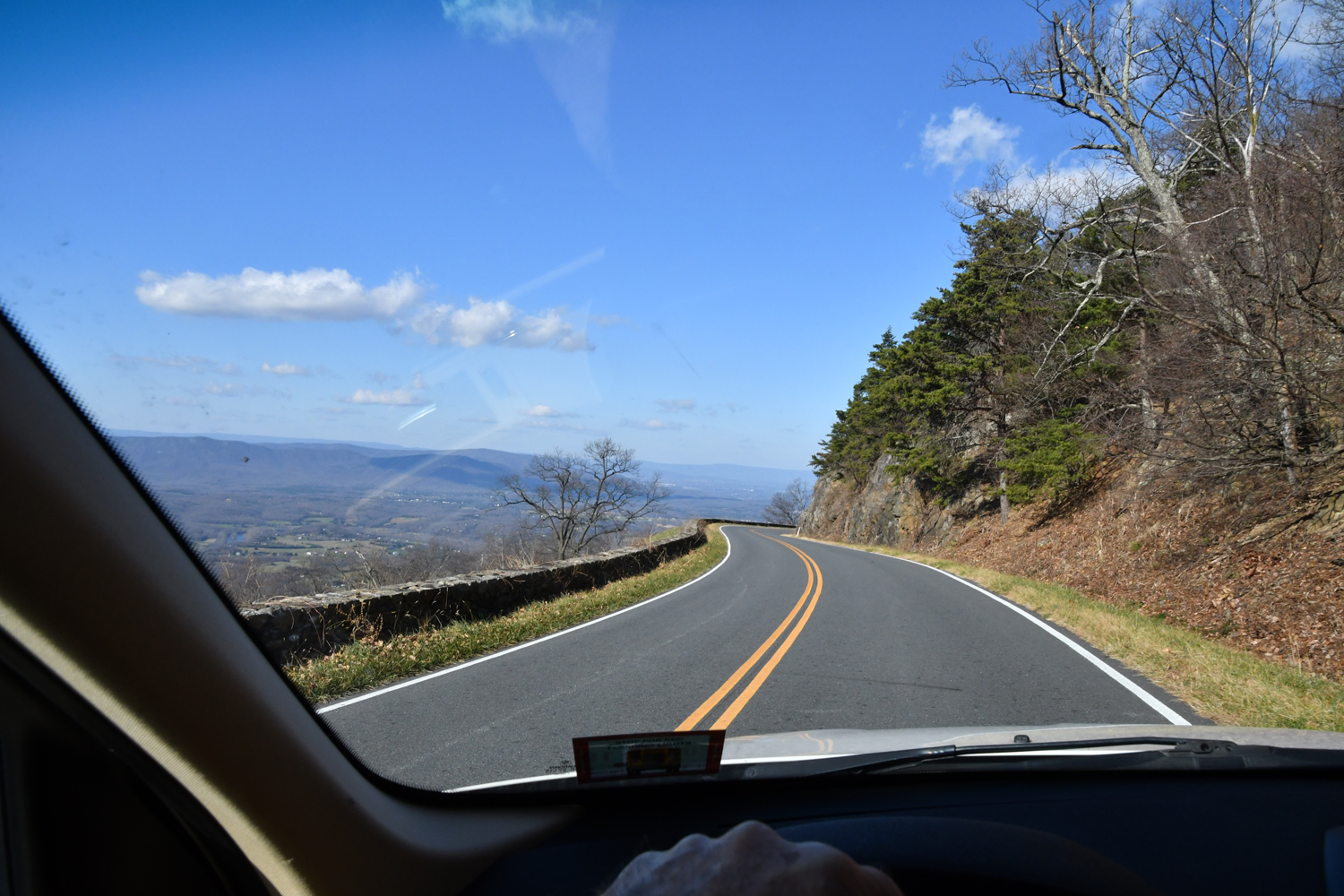
After our initial stop in Nelson County Virginia, Elaine and I remain undecided about the next step in our extended south bound four-wheel winter walkabout. Will it be east to the Outer Banks or west across the Blue Ridge Mountains?

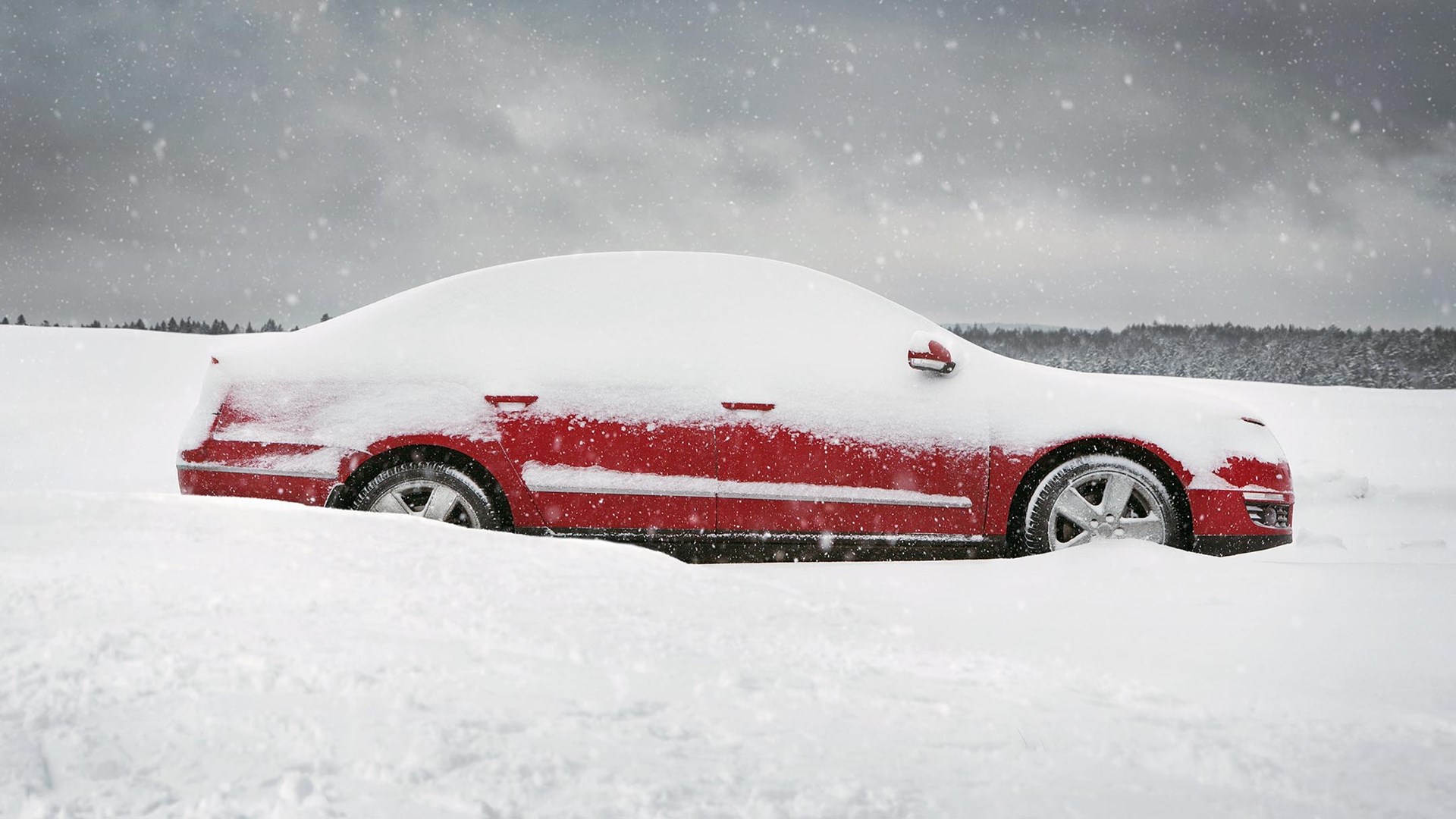
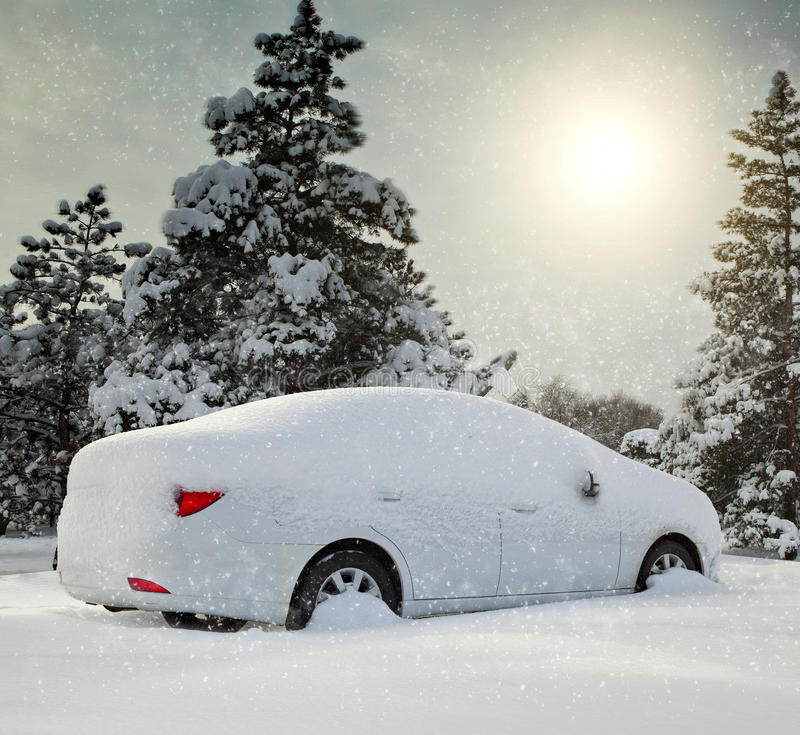
Regardless, events of January 4th in the Mid-Atlantic States reminded us of a harsh reality. WINTER CAN BE DANGEROUS! This realization came courtesy of a surprise winter storm that had frozen traffic cold, literally, for 50 miles on Route 95 in Virginia. It stranded unprepared drivers in snowbound vehicles for over 24-hours. In subsequent days new ice and snow storms as far south as the Carolinas made it clear that it did not stretch credulity that a February jaunt along the Blue Ridge Parkway or across the Carolina Piedmont could be interrupted by a powerful and unanticipated paralyzing storm. We would take the threat seriously and plan accordingly.

Tips on planning for the unexpected when winter turns ugly.


When blue highways turn white

The New York Times featured interviews with motorists that pretty much reflected the norm for unprepared travelers trapped and immobilized over night in the frigid grip of an unexpectedly severe winter storm. “It’s been so horrible,” said Arlin Tellez, 22 in an interview on Tuesday morning from her car stuck about 80 miles south of Washington, D.C.  Ms. Tellez explained to the New York Times that she had been trapped in her car since 5 p.m. Monday without any food or water, and was layering on clothes she had in the car.

Unlike Ms. Tellez, Elaine and I intend to be prepared. While we envision our trip as a party, we do not have in mind the Donner Party. As such I have assembled the Drivin’ News Winter Wander-land Preparedness Guide.

Some items for a winter survival kit are self evident, others not so much. Special emphasis will be given for considerations that may not be common knowledge. A list of all unmentioned items comprising a winter driving survival kit will be completed at the article’s conclusion.


Non-traditional winter kit items

Coffee can space heater

It is cheap and it works. It basically requires four items, an empty, clean metal (it must be metal) coffee can, candles (metal cup tea light candles are cheap and work well), matches (waterproof or wooden stick matches are easier for cold, stiff fingers to use than a match book) and a heat resistant plate.

Position the can on a flat, stable, level, fire-resistant base. Place three or four tea candles in the bottom of the can. Once lit, the tea candles will burn for up to four hours.

If alone or with one other occupant in an SUV or large sedan consider reducing the space needed to be heated by duct taping a  blanket from the headliner to the back of the front seat.

Non-lumping cat litter (5 lbs.) or carpet strips

Both provide improved traction when placed in the path of the drive wheels.

Whistle

In a blinding storm a strong whistle (120 dB and up) can alert help to your location.

Whiskey stones (Cubes of solid soapstone that when refrigerated will chill your bourbon without diluting it offer a great advantage for preventing water from freezing.)

Adding un-chilled whiskey stones to your water will help to keep it unfrozen, particularly in sub-zero temperatures. Other options include floating a ping-pong ball, a citrus peel, or another floating object that will keep the surface of your water from freezing completely over.

Bivy (Bivouac sack)

Inexpensive and rugged. Bivies pack very small, can weigh under 6 ounces and can be used as a survival blanket or sleeping bag. On the inside it has a reflective polyester coating, which can efficiently reflect up 90% of your body heat to help keep you warm even in the worst of conditions.

Cell phone walkie talkie app

Cell phone walkie talkie apps can provide the capability to turns your phone into a walkie talkie during any disaster and can help speed up rescue efforts once the storm has passed. Examples of apps: Zello, Two Way: Walkie Talkie

Newspaper

Provides great insulation when placed between skin and clothing

Crank, battery, outlet, solar power radio

Compact sized units provide AM/FM and weather bands. It includes cell phone charging jack. Contains emergency light.

LED headlight

Small high intensity light that straps around the head frees hands while providing powerful illumination.


When stranded snowbound or in blizzard conditions your safety, even your life may hinge not only on what you do but what you choose not to do.

Recommended DON’Ts

Do not panic.

Take a breath. You will think more clearly. Assess your situation. If you are within 75 to 100 yards of an occupied structure consider bundling up and making the trip. If not, set up camp in your vehicle. Hopefully after reading this article you will have some supplies on hand.

Three reasons to not drink alcoholic beverages

Danger #1  -Alcohol is a vasodilator.

Alcohol causes the blood vessels just below the skin’s surface to expand. This creates a false sensation of warmth while actually stealing heat from the vital organs and decreasing overall core temperature. Thus, alcohol overrides the body’s defenses against cold temperatures which is to constrict your blood vessels in order to keep your core body temperature up.

Danger #2 – Alcohol is a diuretic.

Alcohol causes you to urinate more. This speeds up dehydration and removes heat from your body.

Danger #3 – Alcohol impedes decision making abilities

Alcohol reduces the ability to make reasoned decisions. A bad decision in a life threatening situation is just that, life threatening.

Don’t drink coffee, tea or other beverages with caffeine

Coffee with caffeine may be hot but caffeine like alcohol is a diuretic. You will need to urinate more, thus, unnecessarily losing heat from the body.

Don’t go to sleep with the car running

A stranded car should never be left running for more than 10 minutes every hour. If no one is awake in a running car it can easily become a death chamber. Carbon monoxide, an odorless, colorless, and deadly gas produced by the engine can build up quickly inside a vehicle, poisoning anyone inside.

Recommended DOs

Stay with the vehicle. Yes, I know about Sir Ernest Shackleton and his Antarctic heroism. Few of us are Ernest Shackleton and in this day and age no reason exists for any of us to aspire through heroic efforts to prove we are.

Unless a home or building stands close and clearly reachable, stay put. The car provides shelter and protection. It is far more visible to searchers and by your having read this article it should contain supplies to help you survive until help arrives.

Clear exhaust pipe of snow

A blocked tail pipe can result in carbon monoxide entering the stranded vehicle.

Move supplies from trunk to car

As soon as you realize your situation, set up camp. Transfer all necessary supplies to where they will be easily accessible and not require going outside.

Colorful cloth on antennae

Tying a brightly colored cloth to an antennae or roof rack enhances the visibility of the vehicle.

Crack window

Leaving the two windows open slightly will assure ventilation and a supply of fresh air

Run engine a maximum of 10-minutes per hour

Run the engine sparingly to preserve fuel while generating and conserving heat.

Keep feet off floor or put paper or cloth down for insulation

Put paper or blankets on the vehicle floor or keep feet off the floor to protect loss of heat through feet.

Put on extra clothing right away

If you see that you are stranded, layer on all the clothes you have right away. Do not wait. Staying warm is much easier than getting warm.

Loosen tight clothing

Once fully dressed, loosen clothing tight to the skin. Loose cloths retain more body heat.

Remove metal jewelry

Metal jewelry can chill quickly and leach heat from your body.

Eat a snack of high calorie food before sleeping

Consuming a snack of high calorie food before sleeping will stimulate your metabolism and increase your heat production.

Tether yourself to car if you must go out

If you must leave the vehicle in a blinding snow storm tie yourself to the car with parachute cord (Paracord) or nylon rope so that you can find your way back to the vehicle.

Drink plenty of fluids

It is just as easy to become dehydrated on a cold day in winter as a warm day in summer. Dehydration makes a person more susceptible to the potential health hazards of cold weather.

Winter emergency kit content list (additional items)

Blankets

Plug in and solar cell phone charger

Chemical hand and foot warmers

Compass

First aid kit

Fresh batteries

Gloves

High energy food (Long shelf life)

Jumper cables

LED flashlight

Paper maps

Pen & Paper

Reflective triangle

Six-pack 30-minute road flares

Snow brush/ scraper

Shovel

Toilet paper

Tool kit w/Leatherman

trash bags (Large)

Warm clothes

By |2022-02-03T12:43:12+00:00January 20th, 2022|4 Comments

Roads We Remember #7

I always possessed a bit of envy for people who had a passion since childhood that swept them into the future much like a strong wave powers a surfer towards the beach. Marv Albert always wanted to be a sportscaster. Since childhood, Neil Armstrong looked to the heavens for his future. Diving before he was a teenager, Jacques Cousteau yearned to explore the ocean’s depths. For me, no powerful plan or compelling dream drove me towards a future already being shaped in my fertile imagination. At best I relied on a process. If an idea seemed to make sense and connected enough dots, I yielded to its influence and allowed it to carry me for a time until its force dissipated. Each force urging my life into the future, rather than a powerful wave, was more like an available current that helped me drift towards a better tomorrow.

Over the years as my process matured it gave birth to a simple self test when faced with dots in need of connection. I would ask myself, “if not this, what? If not now, when?”

With the arrival of 2022, I find myself facing a constellation of dots seeking order.

Blue highways, back roads – If not now, when?

Materially I have what I need in life. Some have more. Some have less. I am blessed. What I fear lurks in the rear hall of my consciousness. Its form takes shape as a lazy sameness where my soul succumbs to the dulling inertia of mind numbing predictability. No way! Figuratively and literally connecting the dots for 2022 will begin by taking Drivin’ News on the road.

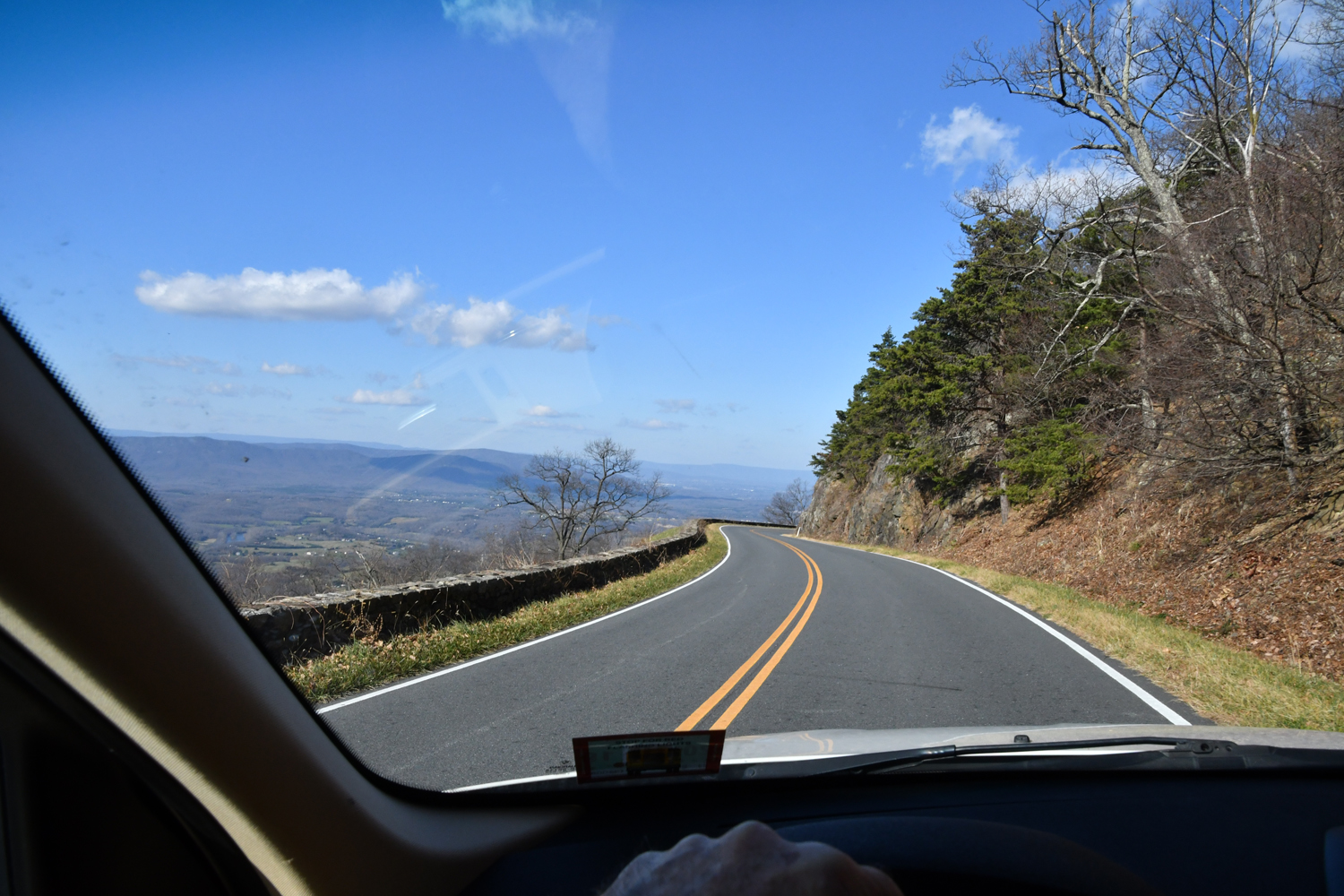
As the new year dawns, my life partner and co-conspirator Elaine and I find ourselves blessed with good health and a clear schedule. I have come to fully appreciate that my friends are my family. I derive great joy from the community that has grown around the “Collectible automobiles as a passion” class that I team teach with Bob Austin and Fred Hammond. More than anything else I hunger to keep these relationships and activities fresh and populated with the uplifting and unexpected. Over the years Elaine and I have found some of our most meaningful experiences take place as happenstance encounters along “blue highways.” For those unfamiliar with the term, “blue highways,” it represents the spider web of two-lane back roads that serve the expansive countryside bypassed by major high speed interstate traffic arteries. Unlike the hypnotically dull interstates that made blue highways obsolete for high speed transit, blue highways, with the power of an evocative piece of slower paced music, re-calibrate a driver’s mood and expectations to a rhythm more in sync with the life, energy and surroundings to which this serpentine ribbon of black top belongs. Time spent attending to the dips and curves of blue highways actually engages a driver with real life experience rather than blowing though a countryside like the blur between subway stops.
Elaine and I have come to be forever bettered when time allows us to avoid interstates by stitching together a journey on blue highways. No interstate leads to a weathered country store that stands strong, proud and alone while projecting a gritty confidence that it belongs to be exactly where it is. Such structures remind me of a bricks and mortar version of a role mastered by an aged Clint Eastwood.

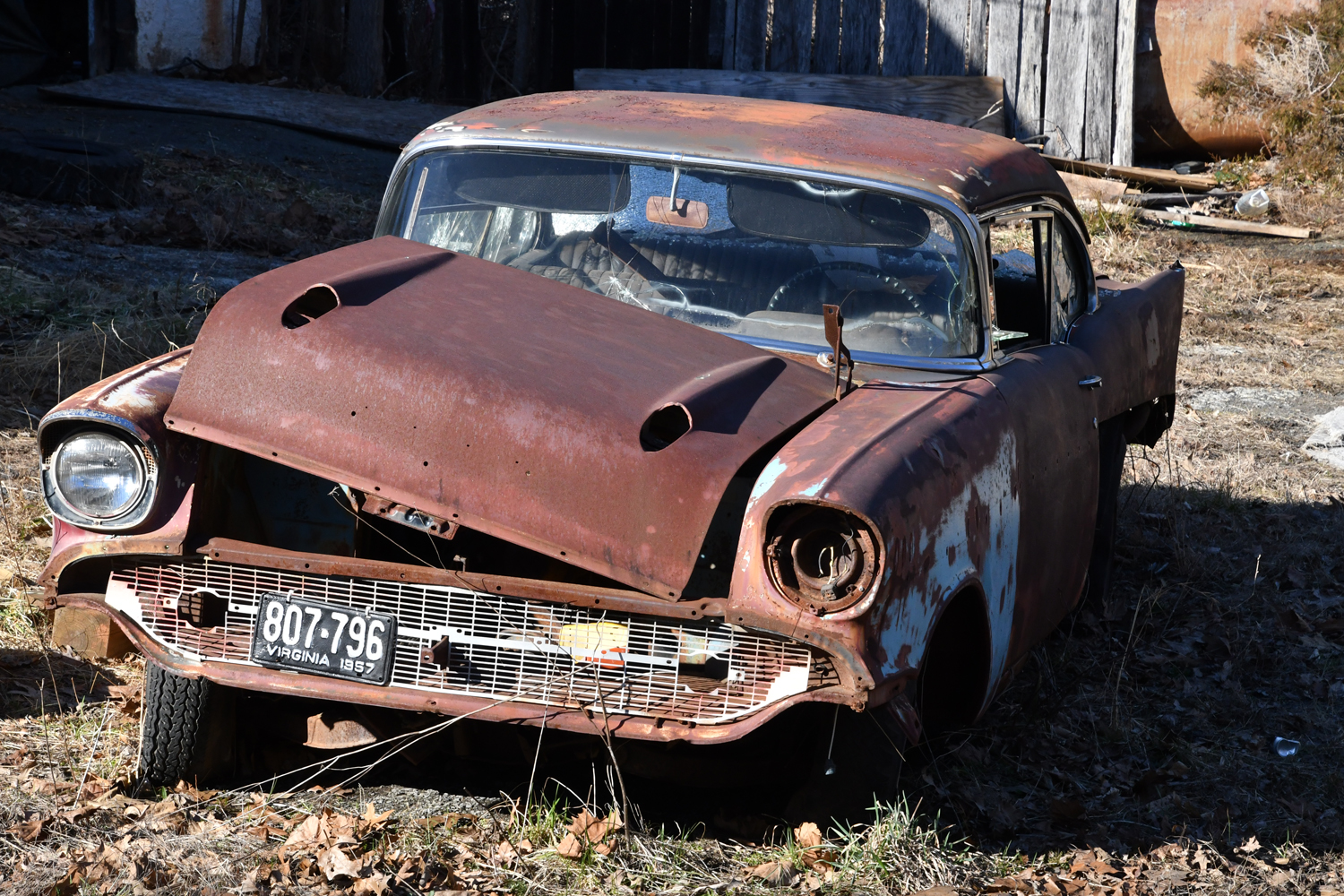
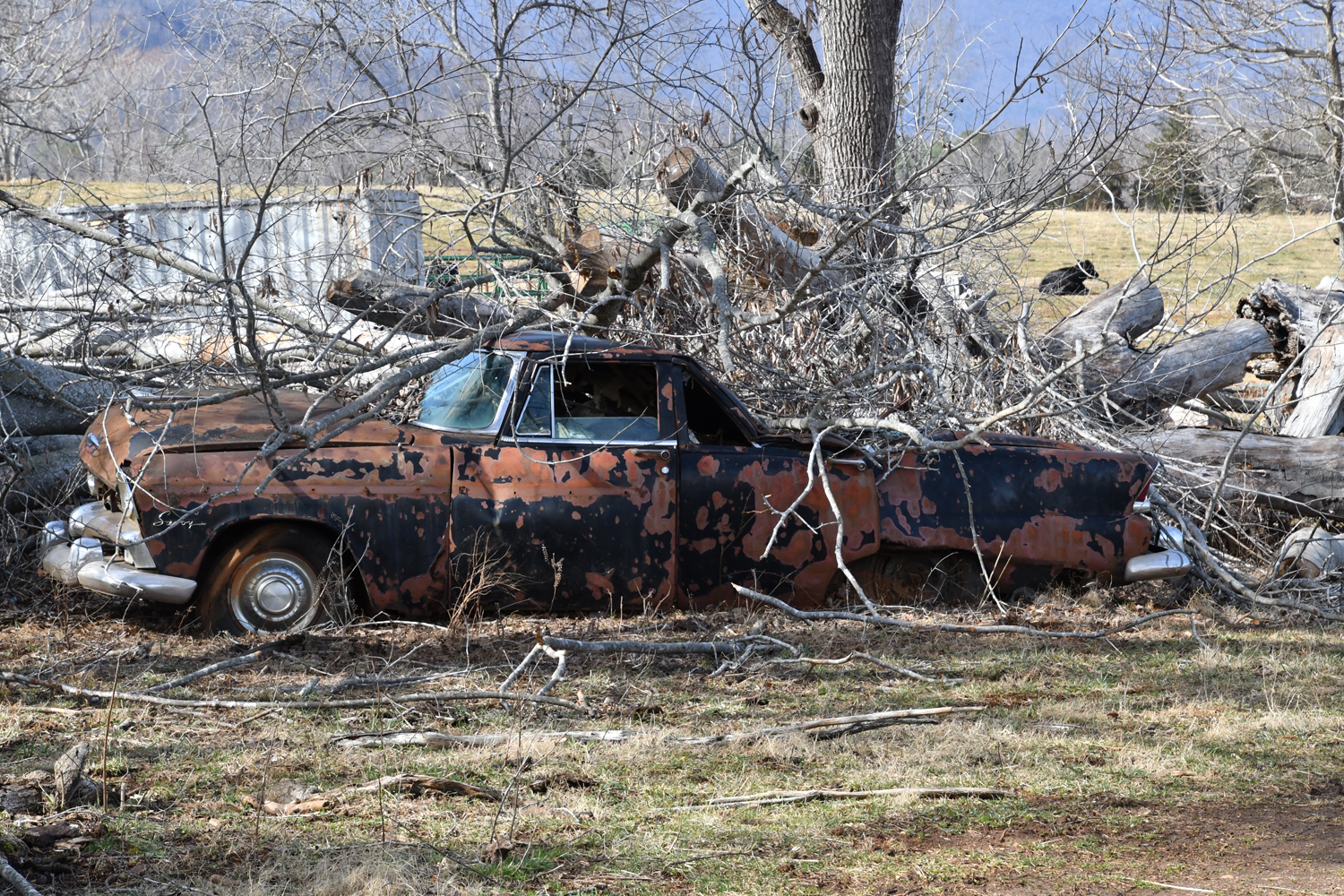
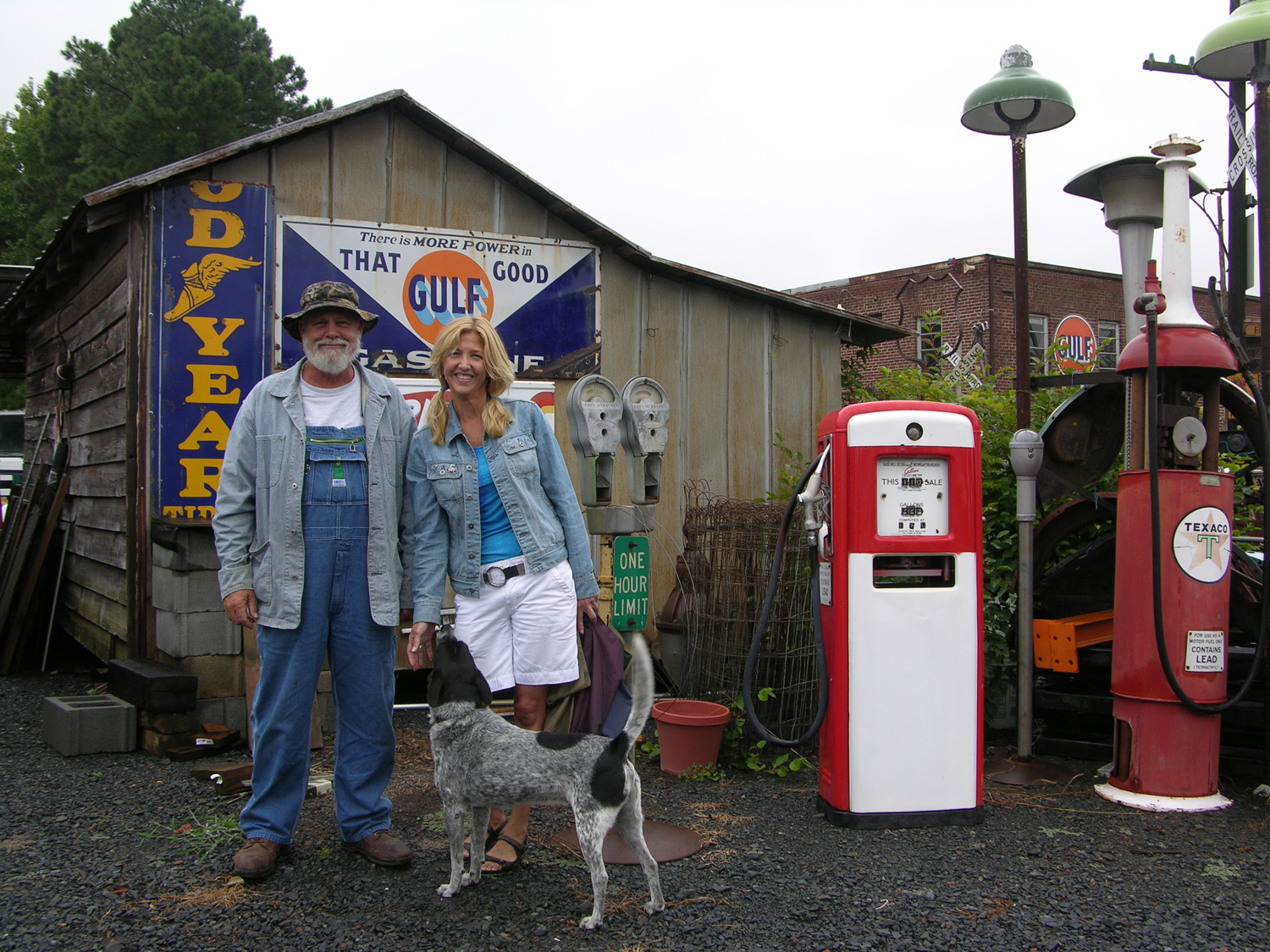
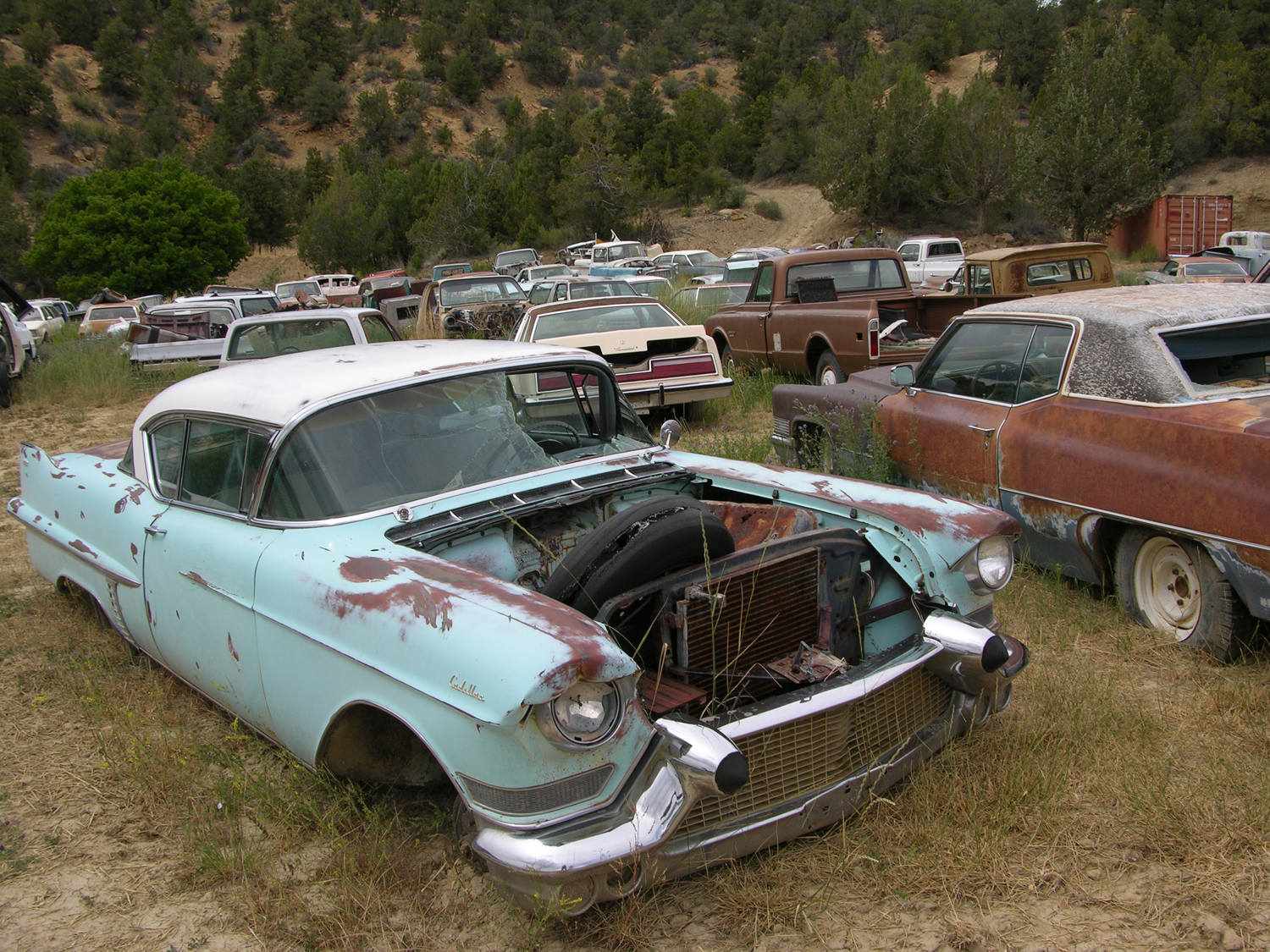
Often encountering a proprietor worthy of a Norman Rockwell illustration, my first question pretty much cuts to the chase, “What’s your story? I’ll ask. If not a general store, then a gas station with a rust trimmed Dad’s Root Beer sign or a hillside of sixty and seventy-year old Cadillacs with trees the size of schooner masts sprouting from hoodless engine bays. Regardless, there always seems to await a story ready to be shared.
Drawn by the magnetism of the rough hewn authenticity of the man or woman who calls our roadside discovery his or hers, Elaine and I with palpably honest fascination tease out personal histories. Often little known tales enrich references and characters that larger histories have already introduced. The tellers at their best weave color, character and detail into the fabric of what should be proudly celebrated as true Americana.

A late 1940’s pickup truck caught my attention while heading north towards Panguitch, Utah. Panguitch is a native American word for “big fish.” Despite my best fishing efforts, I had to take their word for it. He stood in the foreground of a vast field of deteriorating Detroit iron. As I walked up, he had his attention focused on a 1963 409 Chevy that he later informed me that he had once owned in high school. On the downhill side of 60 he claimed to be Jeremiah Johnson’s fourth great grandson. With a countenance worthy of a Dorothea Lange portrait, his sun bleached saddle leather skin framed a large and proud smile. Shy, yet deliberate in manner and presentation, he wove a great story of his life and the lives of family members that came before him.

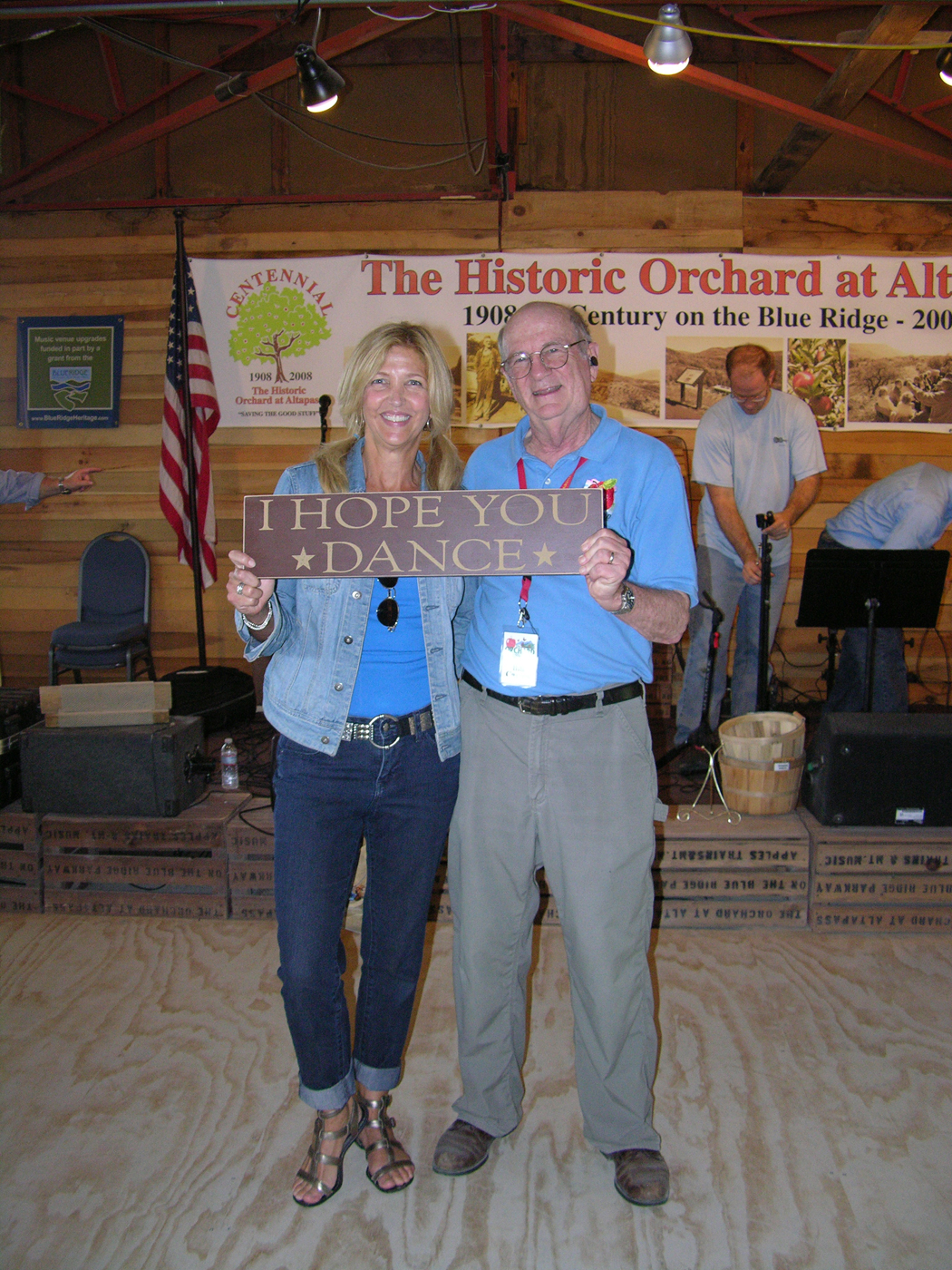
At a farm stand off the Blue Ridge Parkway, we met Bill. Genial and engaging, after introducing himself, he whisked Elaine out onto the dance floor. A terrific band of mountain musicians had just fired up their instruments and before my eyes transformed a roomful of people pleasantly chatting into a gyrating bluegrass flash mob.

Later, with band members now packing up their instruments, Bill explained how he had spent many years as a NASA engineer working on projects of some renown including Apollo 11 and a system that would later become known as GPS (Yes, that Global Positioning System). Once retired he, together with his sister, decided to buy an orchard near the Blue Ridge Parkway, make it a not-for-profit 501c3, and use it to preserve and promote the culture of the Blue Ridge Mountains. Bill explained how each year spring through fall the Historic Orchard at Alta Pass put on over 160 shows. Bill just smiled as the crowd that had packed the old red farm stand/dance hall filed out, many carrying with them fresh baked goods and all holding happy memories.

Blue highways are rich with delightful people possessing great stories that eagerly await discovery like diamonds in a DeBeers mine.

Interestingly sometimes a blue highway leads to a treasure trove of profoundly moving stories with the strength to stand on their own without benefit of a storyteller. Atop a sand dune poking above a sea of beach grass at the end of a two lane that terminates on a North Carolina island stands a mailbox. Written on its supporting post are the words “THE NOTEBOOK.”

Opening the mailbox reveals a stack of neat note books where people have left their stories to be shared with strangers. On these pages raw, honest, heartfelt feelings find a home. Page after hand written page reveals the depth of human emotion in stories of love lost and found, of children who passed far too young, of friends never forgotten, of joy found, of faith renewed.

Possibly the isolation and anonymity of “THE NOTEBOOK” empowers its story telling ability. Left behind by tellers who have been swept on to the future by the tide of life, each story possesses the strength to stand on its own.

I remember from geography class in grammar school (yes I know there are no more geography classes and, yes, that makes me crazy too. But I digress.) I learned that each year the Nile River would overflow its banks. In so doing it replenished the fertility of the soil and promoted a cycle of renewed vitality. And so I now seek the same for myself.

Elaine and I intend to pack light and hit the road. With faith in serendipity and happenstance, we will set out with the goal of missing every mile of interstate possible in an effort to flood our banks.

I hope you will find the time to join us as I take Drivin’ News on the road.

By |2022-01-21T21:39:06+00:00January 6th, 2022|13 Comments

Cars We Love & Who We Are #24

Surprises, life is full of them. Always good friends at the gym, Shane and I drifted out of touch years back when, first, her career advancement played havoc with her workout schedule and, then, the gym closed.

Years passed until recently, while at a local school where I teach a class on collectible automobiles, who walks by but my old friend Shane. Now an author, among other things, she is at the school on a book tour promoting a book she authored.

In catching up, I came to learn that, previously unbeknownst to me, there exists a rich vein of classic vehicle enthusiasm running through her family with her, her husband and teenage daughter all possessing a strong affinity for classic vehicles and the collectible vehicle culture.

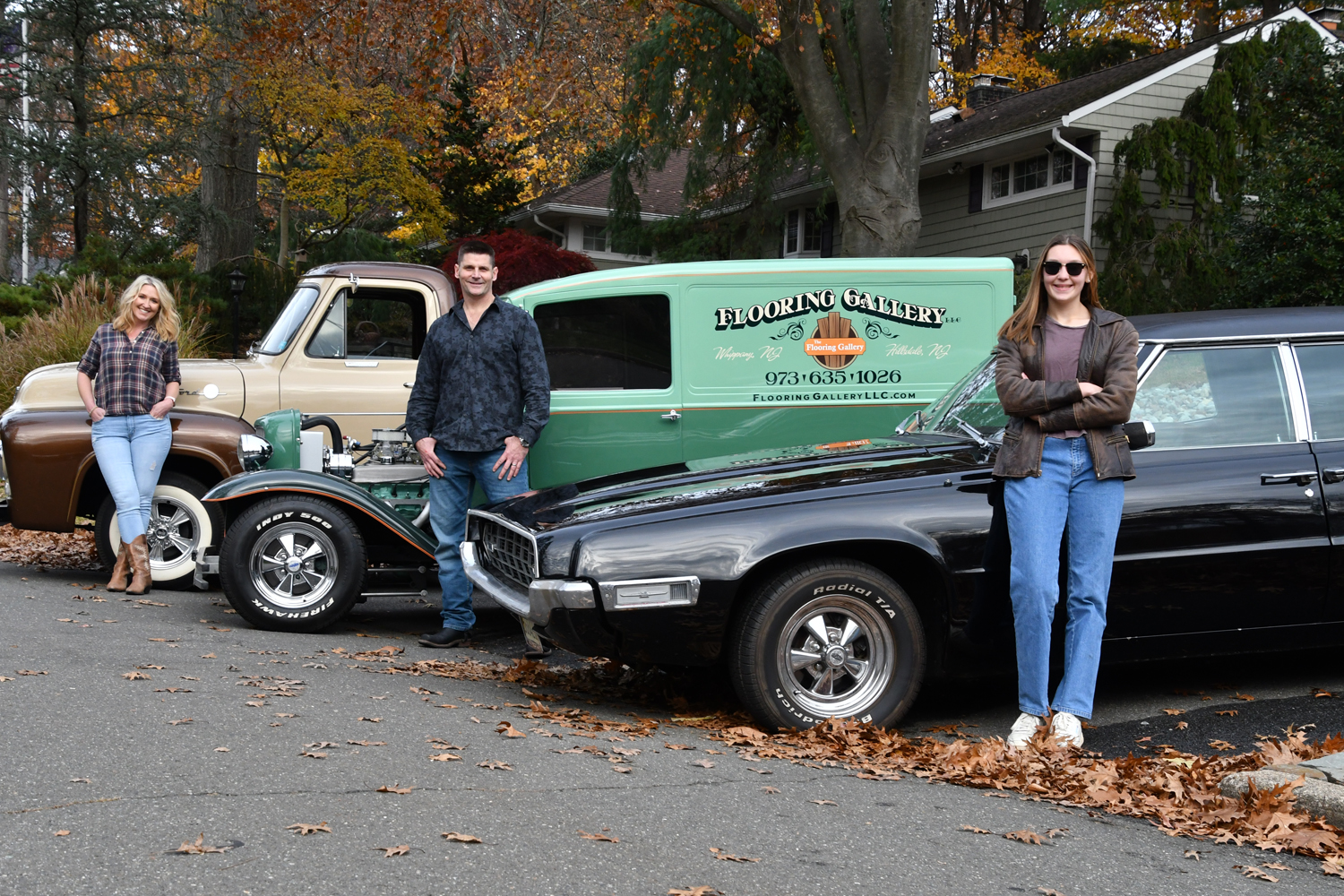
Meet Shane and Rich Svorec and their next generation of classic car enthusiasts.

Hot rod love, family style


A highly successful competitive business owner, consultant and published author, blonde, green eyed Shane Svorec carries with her an appealingly confident air of someone both accomplished yet approachable. However, before you get too far into framing an impression let’s take you out to the famous Lake George Cruise Night.

Lake George’s Autumn Cruise event exhibits an ever more powerful draw for eastern automotive enthusiasts seeking to celebrate the classic car culture. A steadily growing Adirondack version of the Woodward Dream Cruise, the Lake George Cruise Night sees people line up five to ten deep as far as the eye can see. They have gathered to share in a dazzling parade displaying classic examples of custom and original vintage cars proudly representing the full spectrum of vehicles residing at the heart of automobile enthusiasm.

The crowd boils with a frenetic energy creating a frenzy of wide eyed anticipation feeding the adrenalin of drivers eager to unleash the throbbing heart of their ride and “smoke’em” to earn the roaring cheers of the crowd.

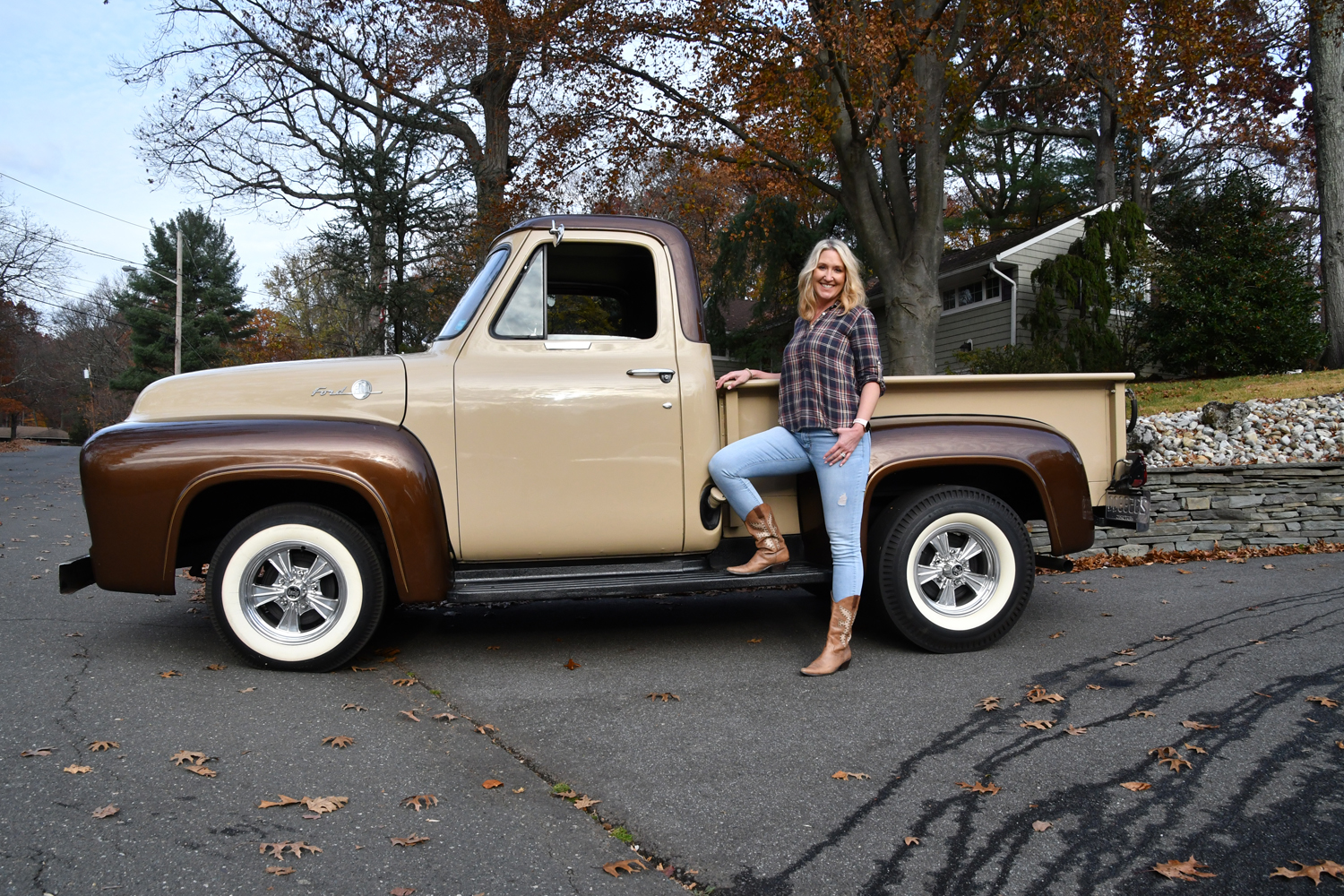
Shane with her ’55 F-100

Shane says, ”While it’s bumper to bumper, it’s kind of cruise etiquette to give a guy a little bit of space so that he can get on it and smoke the tires. The crowd goes crazy and chants ‘do it again, do it again.’” So as Shane sits at the wheel of her rumbling, not stock,1955 Ford F-100 pickup she gets caught up in the vibe of the crowd. Shane finds herself revin’ up the husky Mopar V8 that had taken up residence were the Ford inline 6 used to live. She says, “I start to really goose it. You know, gettin’ on it.” The crowd spots this pretty blonde at the wheel of a fat tired, snorting pickup truck. Shane says, “The feeling seemed to be that I was some gal at the wheel of my husband’s truck. That I was just gunning it but wasn’t going to smoke ‘em. I just smiled.” She let space open up in front of her eager F-100. She pinned the throttle and unleashed all that the Mopar 383 under the hood had to give.” She left about a thousand miles of rear tire tread across a long stretch of the boulevard. She smiles again as she says, “The crowd went wild.”

Shane says, “I love to prove people wrong. I love to break barriers. I love to deliver the goods in the face of low expectations. Hey you know, a woman? A woman who loves an old pickup truck. Yes and why not. I love classic cars and trucks.”

It was Shane who actually got the classic car ball rolling in her family. That said she had the benefit of a very strong wind at her back. That supporting force existed in the person of Paul Svorec, her father-in-law who passed on a love of classic cars to his son, Shane’s husband, Rich.

Shane’s husband, Rich, talks about his dad with a reverence for the engineer father’s technical acumen, native intelligence and his penchant for plunging fearlessly into any car problem in any car and come out the victor. Rich says, “So many car problems loom like those teenage horror film scenes where everyone fears descending into the dark unknown of the basement. Not my dad.”

Rich in speaking of his father says, “Growing up, none of my friends had fathers like mine who were serious hot rodders, who got their kids into it. And hot rodding is something that, once you get into it, that’s it. It’s like a wonderful sickness. Once you get it you can’t get away from it. And don’t want to.”

Teenage daughter Lainey clearly has inherited the gene from her grandfather. She says, “Well, my grandpa, he’s always been a car guy, always fixing up cars and he taught my dad everything. He knows my dad kind of passed that all along to me and I’ve always been interested in old cars.”

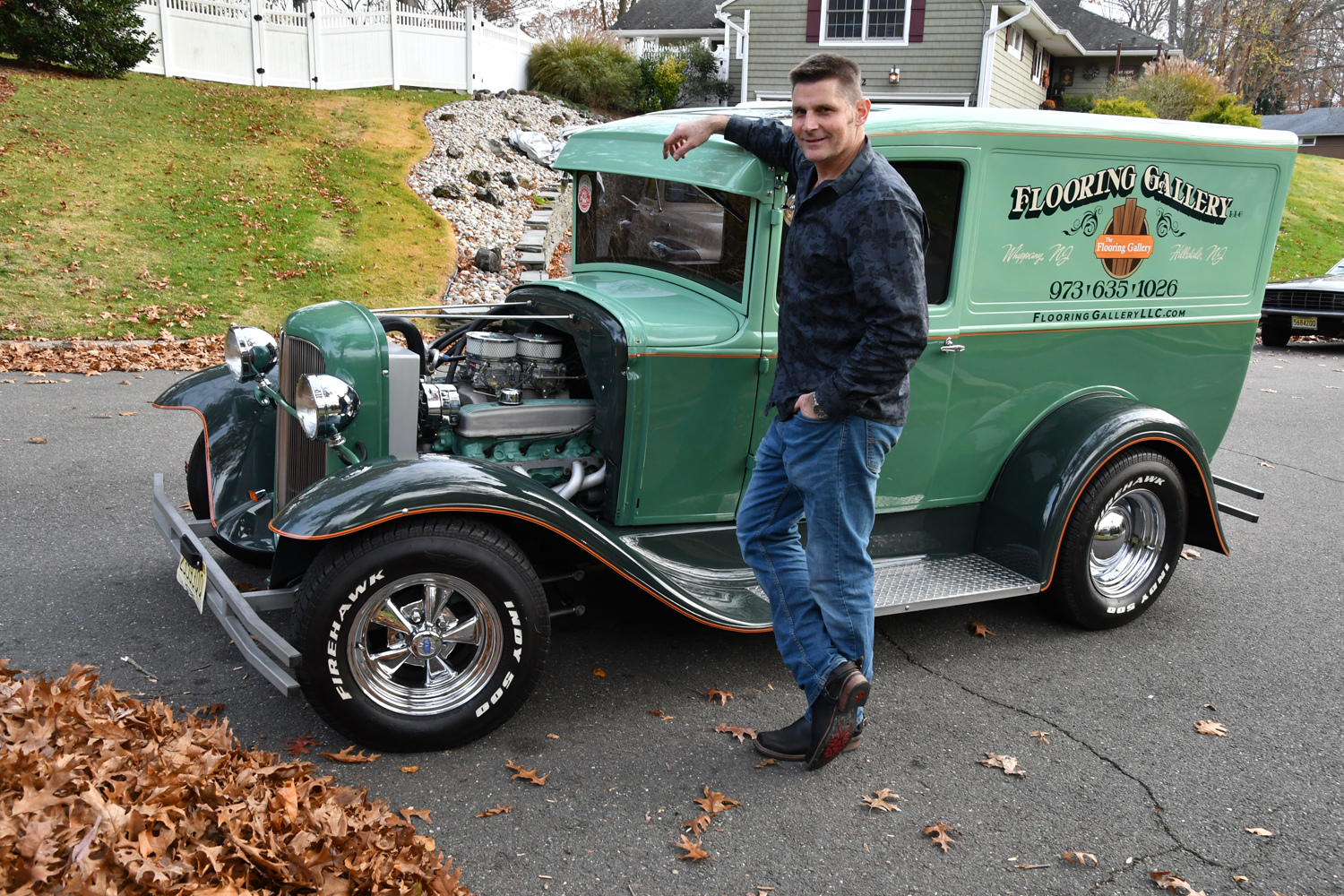
Rich and his ’31 Ford panel truck

Clearly the Svorec family tree was rooted in fertile ground to allow Shane’s suggestion to bear fruit.

Rich says, “I mean how good is this. I married a woman who loves old cars. I’ll never forget the day. Shane comes home, probably eight years ago and says, “you know, I was driving through town and I saw an old pickup. It reminded me of growing up in Nebraska. I would really like a classic pickup truck.”

Shane says, “You know, for the people out there in Nebraska, that pickup truck, that’s a part of your life, Right? Still to this day, you’ll find classic cars and old pickup trucks on people’s properties and in barns, you know, what are they called, Barn Finds? Those pickup trucks, though, I grew up with them. That was just a way of life. So it’s always been a piece of nostalgia for me. I grew up with family members having pickup trucks. Not only was it practical, but it was fun. And to me, unlike,  maybe some women, I found it to be very empowering to drive a pickup truck. I found a strength in a pickup truck. You know, an American made Ford, you know, this was America. That’s why I love my truck.”

Rich, whose first car at 17 was a nasty 1970 AMX with a worked 401, says, “You know what I was thinking. I find her the right classic pickup and to maintain family balance I will need to find something for me.” Game on.

Shortly after Rich found Shane’s pickup, Paul offered his son a deal he could not refuse. The senior Svorec told Rich, “I’m looking for my 66 Plymouth Satellite Hemi or a 67 Corvette. If you can find me one, then you can have my 1931 Ford panel truck hot rod.” Paul had owned the rare truck since the 1960s. It was totally original. Paul personally carried out the stunning green on green rebuild.

The limbs of the Svorec classic car family tree had begun showing fruit.

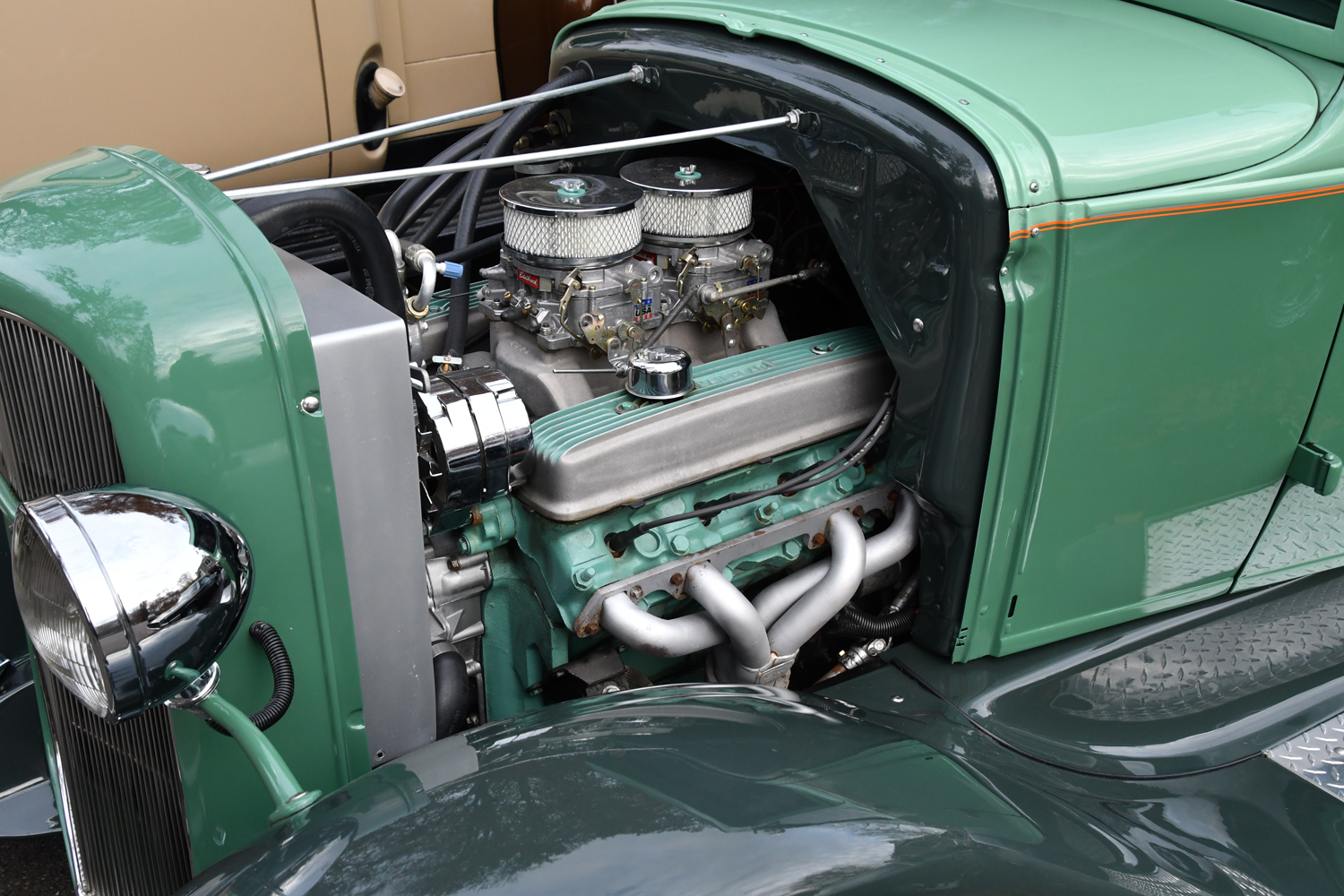
Pulling up alongside Shane’s 1955 Ford F-100 came Rich’s 1931 Ford panel truck with a powertrain out of a 1966 Buick Electra. It included a worked 425 cu. in. nailhead V8 with dual quads putting out over 400 horsepower. But wait there is more.

Shane speaks lovingly about her oldest child Lainey. Shane says, “Yeah. I always felt like she would be the one that would connect with classic cars. She has an old soul which is beautiful to behold when watching a young woman blossom. Especially one you love dearly. Lainey came into this world with big, big eyes. Just curious about everything, and you could tell she was from another time. So it didn’t surprise me. One bit. You know, she loves Elvis, she loves classic music. That’s just her vibe.”

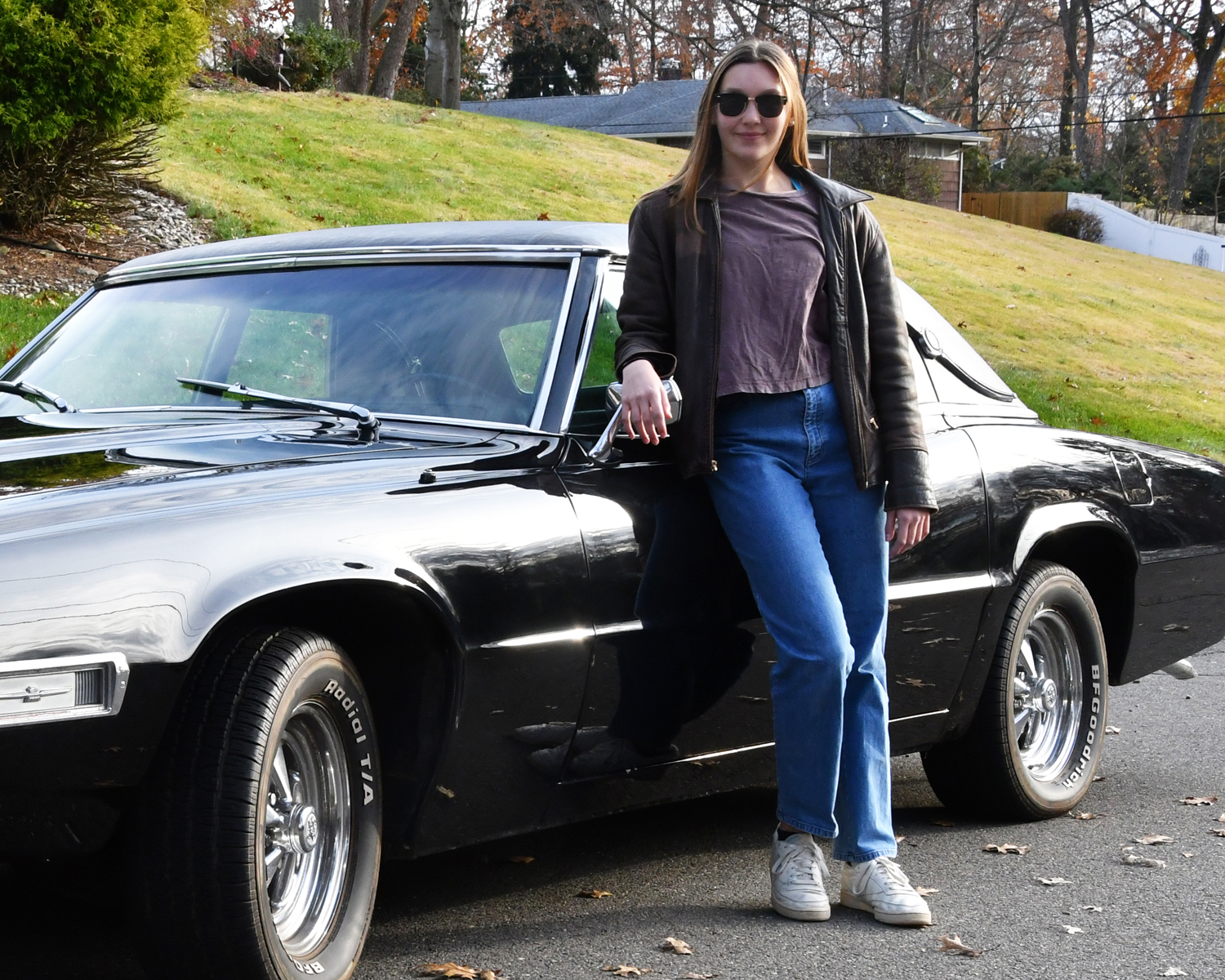
Lainey with her ’68 T-Bird

Lainey, though at the time still too young to drive, had her heart set on getting a classic car. And she would buy it with her own money she had earned, thank you very much. When asked why a classic car Lainey says, “Well, I was never really a fan of the way these newer cars look. There was always so much technology. And I mean, my dad’s new pickup truck, he has this big IPad in the middle of the console. I just I didn’t like it. The old cars were just always nice looking to me.

What did Lainey’s search look like? Certainly reality reared its ugly head when she showed her father a picture of the car she had settled on, a 1959 Cadillac. He gently inquired if she had six figures in her piggy bank. While Lainey seemed drawn to mid-fifties vehicles with fins, tri-five Chevies especially, she found her true love in the form of a 1968 Ford four-door Thunderbird Landau Sedan.

Lainey says, “my dad found it and showed it to me. it looked pretty badass. Black interior and exterior, leather seats, four-door, suicide doors, 429 cubic inch V8. I really love that car. It’s really fun. I can’t wait to take my friends driving in it someday.”

425 cu. in. Buick V8

As to the Svorec’s two younger children son Jack, age 14, and daughter Destiny, age 15, signs exist that they too carry the gene.

In summing up the Svorec family affair with classic cars each member has a perspective.

Rich says, “In reflecting on my relationship with my father and his old school craftsman friends, I can only wish that I could become as skilled as they are. The would love to spend more time with them. To learn what they do and how they do it and then try to pass it along to my children and have them keep going and pass it on. With classic cars as a common interest it is my hope that our values and these vehicles are around forever.”

Shane says, “I could not be more grateful, more blessed by the family I have. That I met a husband who came from such a rich family history with a father who loves classic cars. And that we’ve instilled in our children, respect and appreciation for real traditional values and craftsmanship.”

Lainey says, ”I think life’s too short to drive boring cars.” Old soul indeed.


Drivin’ News will be taking a holiday break. We will be returning in the new year.

My best wishes for a 2022 noteworthy for peace and joy

Merry Christmas to all

By |2022-01-06T18:58:52+00:00December 10th, 2021|1 Comment

Conversations With People We Value #31

Cars & Coffee, Caffeine & Carburetors, Cars & Croissants, you get the idea. Starting somewhat organically in 2006, the original Cars & Coffee came to life on a spacious (organizers thought) corporate parking lot in Irvine California. It’s astounding and fatal success created a new class of casual auto event. In the case of Cars & Coffee Irvine, its demise came abruptly on December 20th of 2014 when 2,000 classic cars showed up. Cause of death – too popular.

In 2013 an enterprising 20-something Jerseyite decided that North Jersey needed a branded source of events with its own distinctive character. Thus was born Cars & Caffe. Caffe is Italian for coffee. Hey, this is Jersey.

Meet the man behind Cars & Caffe, Tony Boniello

Cars & Caffe’s Tony Boniello is always looking to

brew up something new


So, what if you threw a party and 10,000 cars showed up. Ask Tony Boniello. In the fall of 2017, Boniello in partnering with other groups held a Sunday Cars & Caffe event that filled a major North Jersey shopping mall parking lot and drew 20,000 people in addition to the 10,000 very cool cars. Tony openly admits that that event stands out as an outlier significantly contrasting with the 500 to 1,000 car events associated with the Cars & Caffe name.

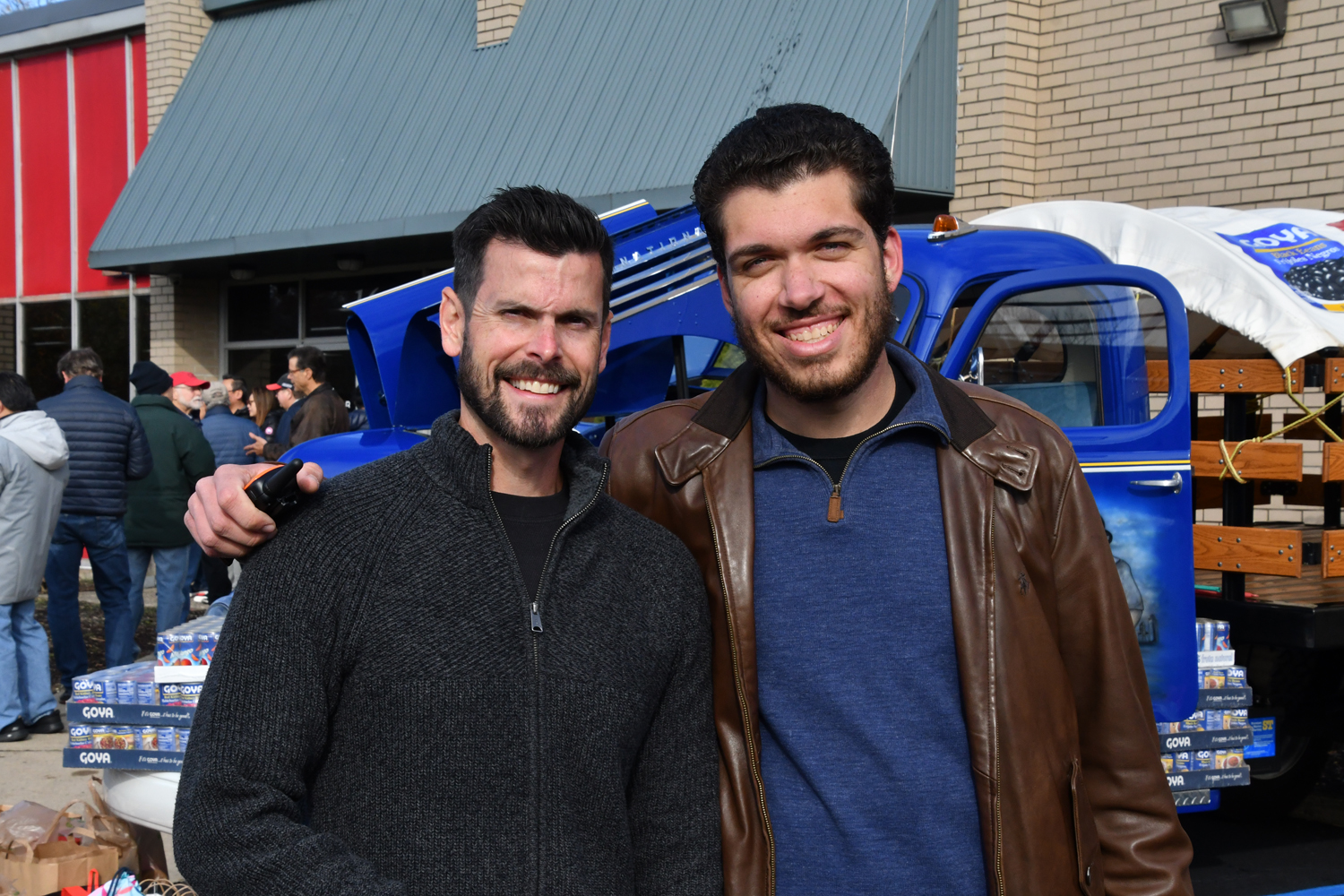
Matt Maisano and Tony Boniello

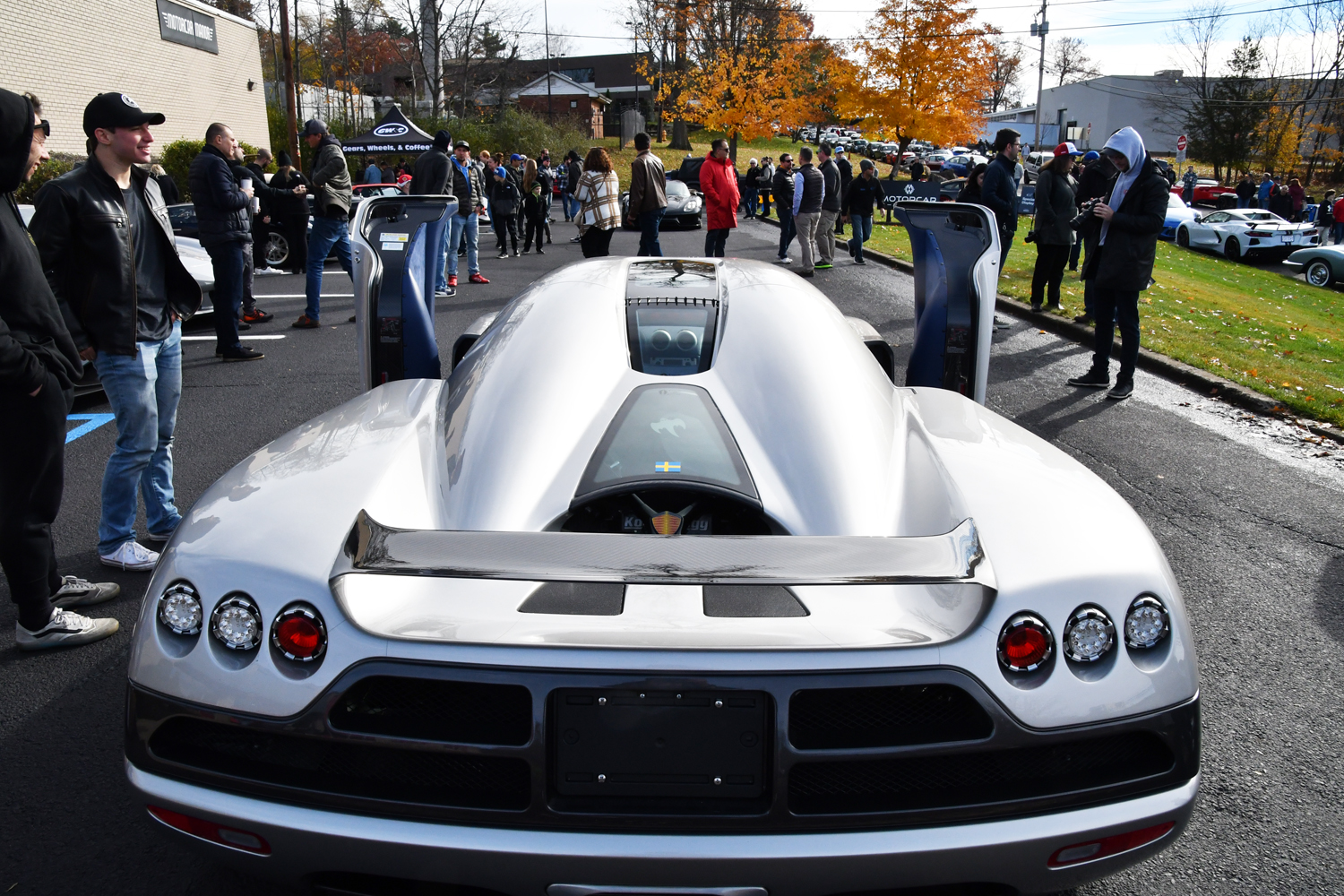
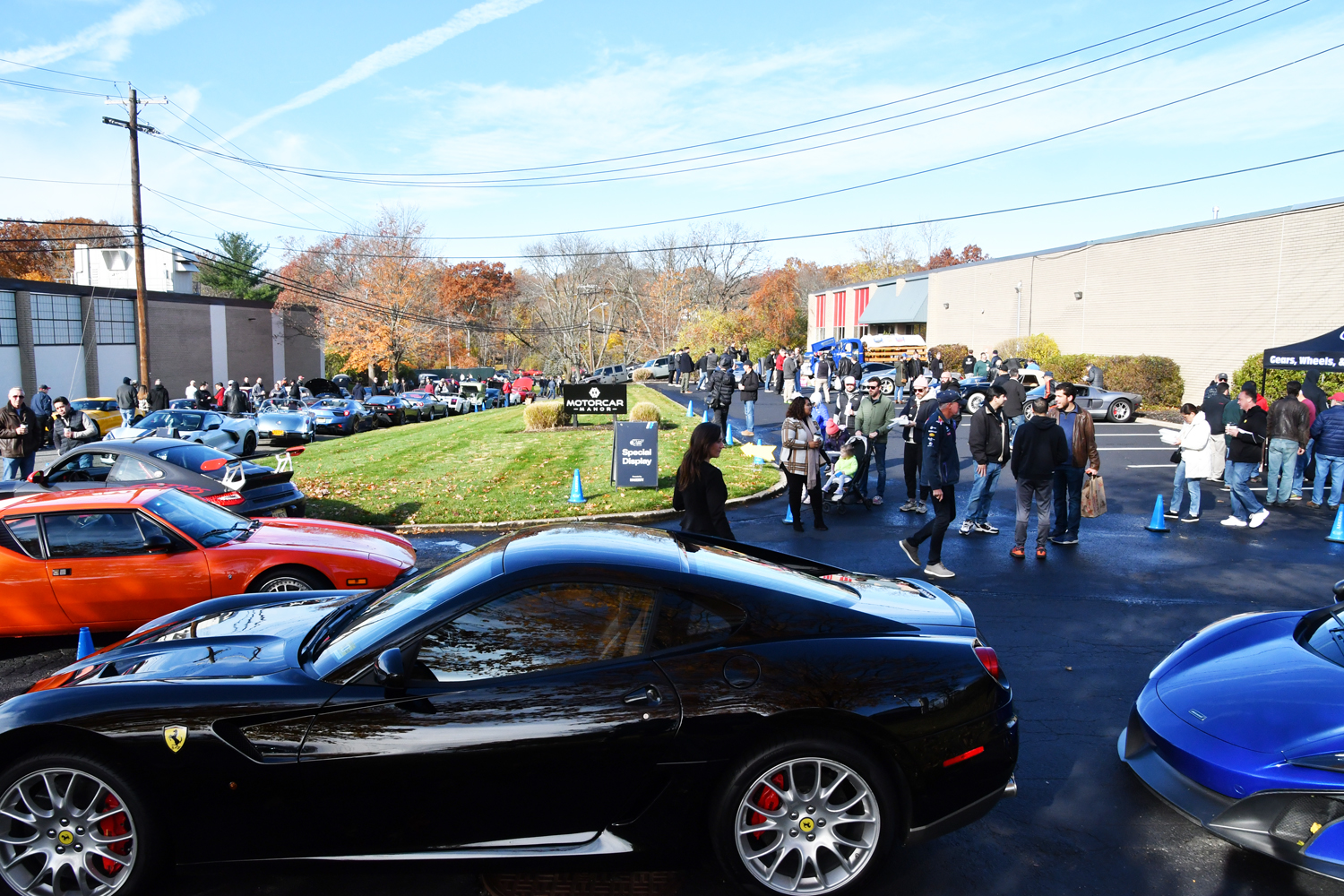
Drivin’ News caught up with Tony at this year’s final Cars & Caffe event. Taking place at well known classic car storage facility Motorcar Manor in Ramsey, NJ, and co-hosted by Motorcar Manor owner Matt Maisano, it provided a perfect venue to display Tony’s vision of a classic Cars & Caffe event.

Tony’s path to staging an eclectic array of distinctive classic car events began as a pre-teen. A fascination with automobiles at an early age evolved into a driving (literally) passion as Tony aged through his teens becoming a true automobile enthusiast. During the journey his desire to classic car event manage took shape.

The essence and attraction of the original and oft copied Cars & Coffee concept resides in its simplicity. It many ways it resembles a slow motion classic automobile flash mob. Tony explains saying, “it’s really intended for like-minded car enthusiasts. The crowd is welcome, but it’s really a car event for car people.“  For the event, enthusiasts’ cars casually assemble at a designated gathering site. Tony says, “It is a very laid back gathering of automotive enthusiasts from across all spectrums of the car world, muscle cars, exotic cars, hot rods, pre-war, post-war, brand-new and JDM (Japanese Domestic Market).” The event exists to provide a communal assembly for like minded enthusiasts. Tony says, It is not a cruise. It is not a concours. There’s no judging. It’s car people engaging, enjoying and bonding with other car people.” Events normally do not promote to spectators though they are welcome. Events take only a few hours on a Sunday morning, never past noon.

Co-Host Matt says, “Enthusiasts drive their car to the event. They hang out for just a couple of hours and then they leave. There’s no entry fees, no registration, no trophies, no ceremonies, no DJs it’s all about the cars. There’s nothing but car people enjoying each other’s cars and conversation. It’s pure. It’s a quick event. You can leave whenever you want. It’s perfect. You can enjoy a great car event and still have time to get stuff done with the rest of your day.

As a teenager Tony witnessed first-hand the promise and problems by attending the original Cars & Coffee Irvine event. Back on the east coast a very successful version of the Cars & Coffee concept called Caffeine and Carburetors blossomed in New Canaan Connecticut. Tony recognized the New Canaan groups commitment to the concept and their professionalism. It all came together when at the age of 20 Tony decided to bring the Cars & Coffee concept to Bergen County. So why not Cars & Coffee?

Tony Says that the owners of the Cars & Coffee brand wanted a five-figure licensing fee. As a college student, the idea of a debt that size held no appeal. Tony decided that he would develop his own branded event.

Tony says, “I didn’t see the advantage of shouldering that debt. I chose rather to build my own brand. I created my own database, my own network and my own business model.” He admits that it remains a work in progress.” His attitude embraces the “Build it and they will come” philosophy with a version that states “Keep building it better and more will come.” And what about the name?

Tony says,  “I wanted to do something unique, something with a little Italian flair. There’s a lot of spin-offs of Cars & Coffee. Being Italian I had a fondness for the Italian word for Coffee, Caffe.

Tony believes that over his eight years in operation, Cars & Caffe has developed a reputation not unlike Caffeine and Carburetors which he clearly respects. Tony says, “The New Canaan event is synonymous with upscale collectible vehicles old and new in the Northeast. I like to believe that Cars & Caffe is at home in that category.”

Tony acknowledges that rules, control and being a good neighbor play a critical role in the ongoing acceptance and success of an event. Rules, if violated will result in a person and vehicle being banned. Rules are simple: No engine revving, shut your audio system off, no burnouts, no donuts (They don’t mean the Dunkin kind) and no speeding.

Tony has incorporated fund raising and food donation as an integral part of the Cars & Caffe culture. His first show featured a Hurricane Sandy fundraiser. The event at Motorcar Manor combined a very successful food drive and a fundraiser to help defray the medical costs facing an 8-year old stroke victim.

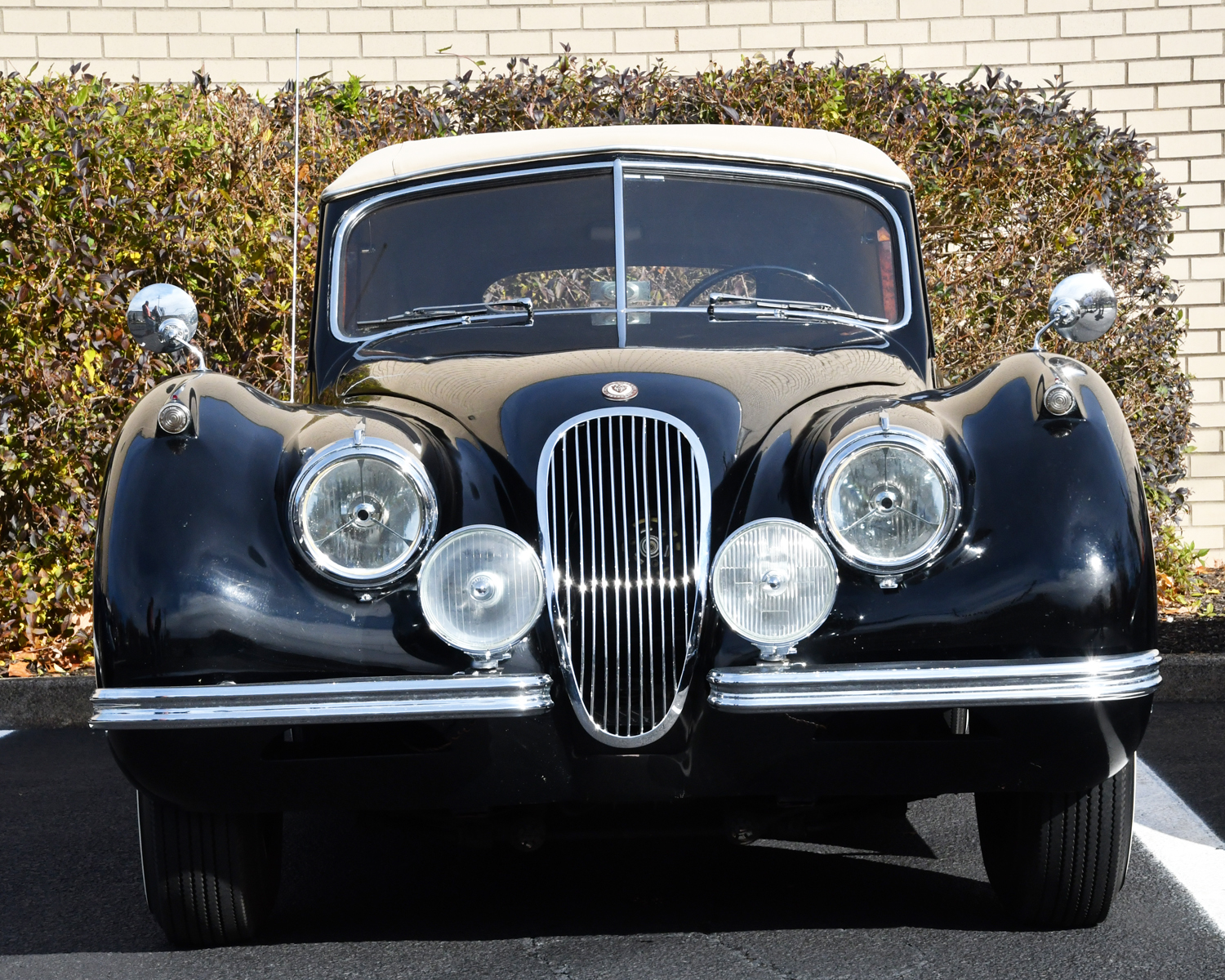
Over the years Tony has shepherded the character of Cars & Caffe events with the goal being to promote an ever more eclectic composition. He notes that early on the location of the event would significantly impact the type of cars that would show up. Tony says, “When we were at Ridgewood High School early on, we got a lot of vintage American cars and vintage European cars. As I moved the events around it became more Supercar heavy.” As Cars & Caffe has developed its personality, it has become a more consistently eclectic event. Tony, clearly pleased, says, “Now at any event you might have a Jaguar XK120 pull in next to a Porsche 918 or a ’55 T-Bird alongside a LaFerrari, a brand new Corvette next to a “63 split window fuelie. It’s great.”

Clearly, Tony possesses a vision that extends beyond his Cars & Caffe events. He has set his sights on developing a regional presence. His efforts already evidence themselves with events such as Festival Italiano a judged event with over 100 cars of Italian heritage, RennZeign German heritage concours and “Cars on the Lawn,” a curated eclectic display of 150 cars at the ex-Vanderbilt Florham Mansion.

Tony says, “I think there’s a demand for a large-scale high-end  family of events in the Northeast. I would like to bring that to reality and I’m working towards that every day.

In closing Tony says, “I have found that Cars & Caffe is more about the people than the cars. I think that the community and the friendships that have been made help pass our passion, appreciation and respect for the classic automobile on to the next Generation. There’s a lot of younger people, high school kids, even middle school and younger that their parents bring. I see these kids grow up. I see these kids get their driver’s license and continue with the interest they have developed though our events.

Clearly Tony has found the rewards of Cars & Caffe to be his cup of tea.

By |2021-11-25T17:38:35+00:00November 25th, 2021|Comments Off on Conversations With People We Value #31

Cars We Love & Who We Are #23

When encountering an old friend and the conversation wheels around to a person we once knew, it feels so good to find that, decades later, he continues to produce magic.

This has been the smile generating case during a conversation with my long time friend, David Tookmanian. As a long tenured Parts Manager pre-Y2K for the performance oriented Brahms Chevrolet in Palisades Park, New Jersey, David stood tall as the “Go-To” parts guru for hot rodders and street racers across North Jersey and beyond.

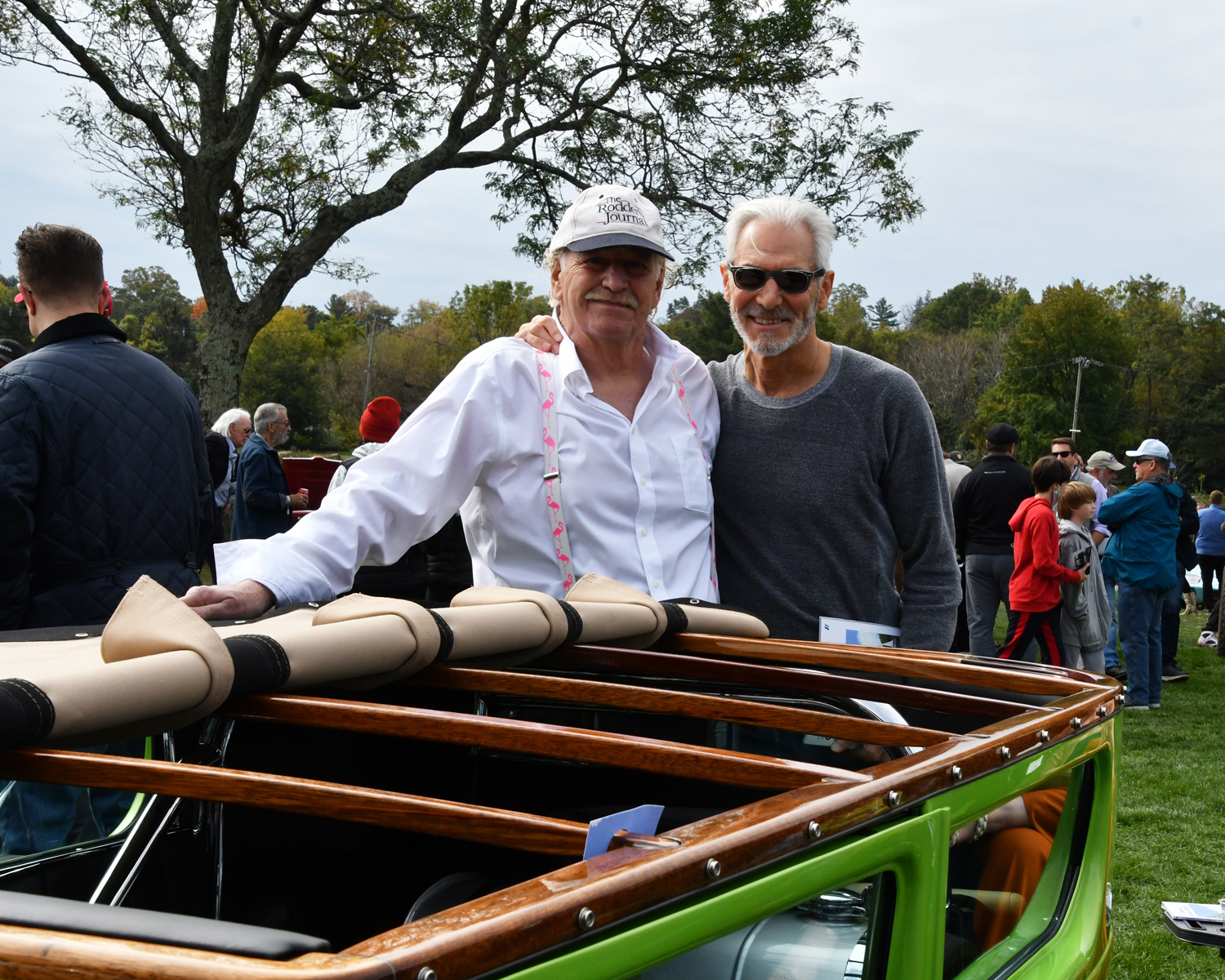
In speaking with David the name of a great hot rod designer from back in our youth came up. Whatever happened to Randy Bianchi I asked? David with a proud smile replied that Randy just finished a 21-year long hot rod build that had just been invited to show at the 2021 Greenwich Concours. Indeed, Randy had continued to produce magic.

Meet retired Parts Manager extraordinaire David Tookmanian and Hot Rod legend Randy Bianchi.

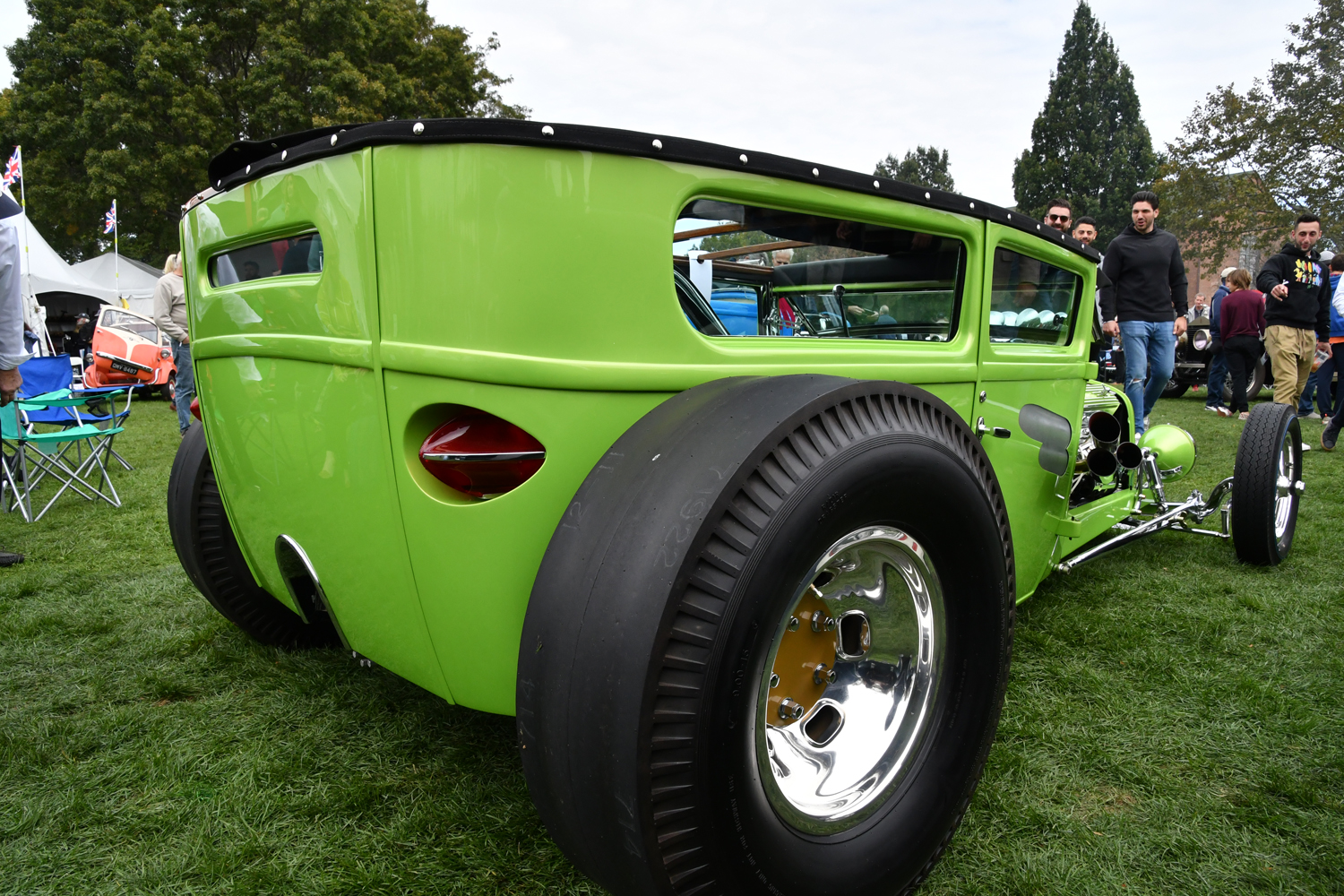
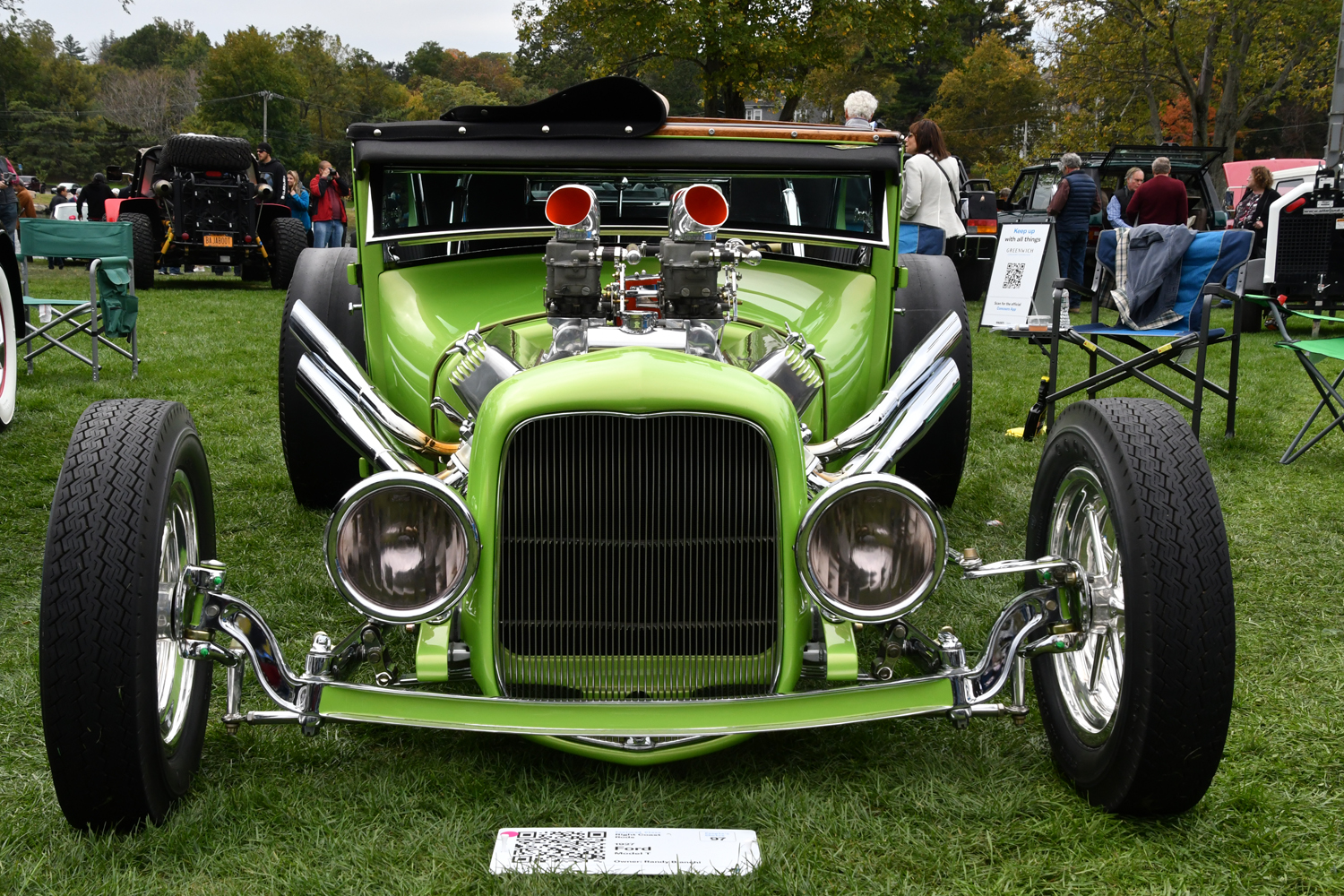
Randy the Rodfather and his Green “T” hot rod


With names like Sunkist, Moonkist and Tuff 32 among many of his hot rod creations, Randy Bianchi has maintained a status as a visionary designer and fabricator of landmark hot roads for decades. During that period he also outfitted, spec’d and at times restored offshore racing boats from Donzi, Magnum and Fountain.

Randy Bianchi and David Tookmanian

In pursuing his hot rod passion, Randy had a voracious appetite for performance parts and engineering solutions to satisfy his Chevy powered creations. In fulfilling that need, Randy developed a strong relationship with David Tookmanian that has lasted 50 years. Though David left the parts business at the turn of the century, their friendship and mutual admiration have endured.

Randy laughs as he says, “Dave enjoyed a great reputation among the go fast guys as “The Man” when it came to dispensing Chevy performance parts answers. Ya know, you’d inflict grievous harm to your big block Rat motor on Sunday and be at the Brahms parts counter on Monday.”

Invited by the selection committee to show at Greenwich and to appear in the glossy program, Randy’s visually compelling Green “T” hot rod started life as a solid but weary 1927 Ford Model “T” sedan. The inspired vision that would earn entrée TO the Greenwich field took shape in 1999 with a sketch that, 21-years later, came to life as a Lamborghini green radical reality that remained quite faithful to Randy’s original concept.

Randy says, “I have kept it as close to the original sketch as possible.” Wild side pipes were drawn on the car initially. To keep them that way Randy says, “It required me to incorporate releasing panels in the doors to accommodate the pipes while allowing the doors to open so you could get in the car.”

“Yes,” Randy admits, “it is slightly impractical, but that was the plan and one of my building principles is to stay with your initial idea regardless of the challenges, curve balls and problems that could arise to get there.”

David in reflecting on Randy’s Green T says, “Randy took a classic old school look and applied his DaVinci genius to elevate it to a ten on the outrageous scale.”

David noted that Randy will focus on certain parts that are personal expressions that go to his core and integrate them into the build. An example on Green T are the 1956 Oldsmobile Starfire taillights. Randy believes the year of the taillights should match the year of the engine. A 1956 Oldsmobile V8 powers Green T.The inspiration for Green T originated with his, then, young son Randy, suggested doing a hot rod together. Working on a tight budget, as it always seems to be for hot rod builds, Randy decided to go non-traditional. Instead of a 1932 Ford coupe or convertible, Randy selected a 1927 Model T sedan as the canvas for his masterpiece. By selling off all the parts he would not need, Randy was able to recoup the $1500 cost of the car. Always thinking that Randy.

Randy confesses to Green T enjoying a cartoonish flair. He acknowledges that he often strives for the outrageous. He says, “A lot of my builds are very overstated high-impact vehicles. I like to design outside the traditional design box so that the end result stands out.” He laughs self-deprecatingly saying, “My stuff is mostly impractical and outrageous. That’s what makes them what they are.”

Randy believes in remaining faithful to the old school roots of hot rod building. In no place in Green T’s build does this evidence itself more than in the powertrain.

That 324 cu. in. 1956 Olds engine that deserved matching taillights has been seriously worked to put out a conservatively estimated 400 horsepower. It benefits from a custom ground Engle cam, 11 ½ to 1 compression and a very rare Weiand high rise intake manifold that took Randy years to find. Carburetion comes courtesy of six Ford 94 carburetors.

A 1937 LaSalle Transmission and a Halibrand 301 quick change rear end qualify as “Unobtainium” (Hard to find:) but Randy located them to nicely round out a true old school execution.

Original 1927 T body

Green T sits on a 1932 Ford chassis narrowed in the front, widened in the middle, narrowed in the back and Z’d to lower the back 13 inches.

When asked about how many hours went into the build Randy says, “There’s no clock when you’re building a car of this caliber.” There are never-ending but necessary lost hours demanded for me to design in the beauty or function of a part. Randy says, “First you find a way to make a part better. You spend a month to bring it to life. Then you get a better idea, throw this one in the garbage, and start over. It happened all the time.”

No matter how much time we have to do something, life always seems to bring us up short when the deadline arrives. So for  all of the 21-years spent creating Green T, it had not yet been driven when show time arrived. Randy says, “It was a grind at the end. It still isn’t exactly finished but I had made sure it was mechanically perfect.  No time for trial and error. My son fired it up. I timed it and he drove it around the block several times.” Randy asked his son how their 21-year project performed. His son responded, “It’s perfect dad.” Randy says, “That made everything worthwhile and perfect for me.” Next stop, The Greenwich Concours.

Green T early in the build

Genius does not come without what might politely be called personal “character.” Viewers of an episode of Jesse James’ Monster garage witness Randy expressing himself when he felt his work was not being respected.

James had five all-star East Coast hot rod builders join him for a build based on a 1929 Ford Model A sedan.

Randy says that a steady elevation of tension between he and Jesse developed over how the project should be carried out. With the tension becoming palpable, Randy found a way to resolve the issue. He says, “I felt he displayed no respect for other craftsmen and the talent they brought to the project. I had enough. So I faked a heart attack to get off the show.”

Whether it is his hot rods or his television persona, if it involves Randy, clearly, the results are heart stopping.

By |2021-11-11T13:09:33+00:00November 11th, 2021|Comments Off on Cars We Love & Who We Are #23

Conversations With People We Value #30

It is said that there are, now, more GTOs and split window Corvettes than ever left the factory new. Many have been fabricated from modified versions of less expensive but very similar models. This fact matters to a lesser degree when looking for a good driver and paying a good driver price. However, when authenticity and factual accuracy factor in as concerns for rarity, desirability and price, then, “provenance” becomes a major issue. Provenance describes the documentation of the history of ownership and authenticity of a valued object such as an automobile. Needless to say provenance determines in large part both the asking and selling price of a premium collectible automobile. It goes without saying the higher the price the more provenance becomes a factor.

To understand the many challenges in establishing provenance and the significance of making an accurate determination of provenance, Drivin’ News spoke with provenance expert Mr. Jeff Murray of Vintage Car Research, LLC.

Provenance – Uncovering your car’s backstory


What to do upon retirement often poses a significant challenge if facing 6-hours of golf a day for the rest of your life does not set your heart aflutter. When retiring as an attorney and college professor, Jeff Murray looked around his office and faced a library of vintage car books that he had started collecting in 1959. The bulb lit in his classic car filled brain and illuminated the idea for a company that would research classic car provenance. Thus was born Vintage Car Research, LLC. Its purpose would be to research the history of a rare vintage automobile for a client considering purchasing that automobile. In the subsequent 18-years Jeff’s idea has blossomed into both a profitable enterprise and a pursuit that affords him great satisfaction from working in a field built around a personal passion.

Jeff’s research sends him far and wide to pursue the many facets of his provenance research. His research covers identifying original production specifications, title searching, identifying true ownership, determining clear and clean title, possibility of a car being stolen, tracking down a previous owner and finding research material.

Jeff prefaces all his comments on the value of provenance research with this mantra for when buying a vintage car: Ready – Set – Aim – Fire. He bemoans that he has many customers who follow a different sequence. He says, “Ready, set, fire.” He references one gentleman who spent $200,000 on a Mid-sixties Corvette. Jeff says, “Never checked the provenance. He shows up at a Corvette show to have it judged. They showed him proof of its inauthenticity.”

Jeff points out another example. He says, A fellow brought me a Porsche supposedly worth $500,000. Car was a fake.” It had been entirely assembled from parts. It looked good but failed scrutiny. From this experience Jeff points out a very interesting feature about Serial numbers. He notes that whoever stamped the engine number used a proper number but used the wrong type font.

While on the subject of inauthentic serial numbers, Jeff identifies one of his most valuable resources on this topic to be firearms examiners. Jeff says one expert told him, “If a serial number is ground down you can always find the original.” The expert said, “It is not rocket science. Stamping reorganizes the molecules, and there’s always some evidence of the original stamping.”

In this case the firearms examiner came with his tools to inspect a 1969 Model Year vehicle. The inspector’s assessment was that the stamping was done the week before.

Jeff notes that Vehicle Identification Numbers (VIN#) offer access to a mother lode of vehicle-specific data. Starting with the 1981 Model Year every new car in the world has a 17-digit VIN number.

Jeff says, “If you’re interested in buying a car, Google the four letters N-I-C-B.” It stands for the National Insurance Crime Bureau. There will be a place to enter the VIN number for the NICB VINCheck.” Jeff says, “Double check to make you’re your copied the VIN number correctly.” VINCheck is a free lookup service provided to the public to assist in determining if a vehicle has been reported as stolen, but not recovered, or has been reported as a salvage vehicle by participating NICB member insurance companies. As an additional benefit NICB sells a CDROM showing the location of VIN numbers for every car from 1937 to 2011. Jeff says, “It is $100 and includes a VIN# decoder.”

Another source providing title data may be found on the National Motor Vehicle Titling System www.vehicle history.gov/. This site offers several research services. Jeff uses InstaVIN. Examples of other valuable sources include the Corvette C1 registry (www.c1registry.com) or the XK Jaguar registry (www.xkdata.com) or the Porsche 356 registry (www.porsche356registry.org/). Many marques have similar registries.

Another rich resource for important vehicle information is what Jeff calls “The keeper of the flame. There is always somebody out there who knows a lot about the car you are researching. Almost every marque has one. Check with the specific marque club to find him or her.” That person keeps the interest in the vehicle alive. He keeps records. He will be pleased to answer the phone to satisfy a question about the vehicle that ignites his passion.

According to Jeff, “Don’t screw around with car titles.”  A car title is one of the most important documents because it is the legal form that formally makes you the owner of your vehicle. You receive a title whether you buy a new or used vehicle from a dealer or a private citizen. Jeff says, “When you buy a car you want the title. No title, No deal.”

A title will provide information such as identifying information for the vehicle such as the VIN number, make, model, and year. It will also provide technical information, such as the gross weight and the owner’s name and address.

Jeff says, “Clear title and clean title identify two very important descriptors when buying a car. A clean title means a car does not have a salvage title. A clear title means that the car has no liens or outstanding bank loans.

Jeff provided an example of the importance of knowing what title you are getting. Jeff described a call from a French investor. He has just bought a confirmed authentic 427 Cobra. It is crated up and ready to be shipped back to his home in France. The buyer tells Jeff he wants to confirm that the title is both clear and clean. Jeff says, “I checked very quickly by going to www.cscglobal.com/service/cls/ucc-search to check for liens in all 50 states.” For a small fee Jeff found out that the selling owner still owed $500,000 on the car. The buyer froze the deal until the lien was satisfied.

Finding and vetting people represents a challenge that often must be faced in researching a car. Jeff recommends a low cost system called Whitepages premium. They provide the current address, past addresses, land lines, mobile numbers and the person’s age. They can also do a reverse number search. He also recommends ancestry.com and in the UK genealogy.com.

If you suspect that the party you seek has passed away www.stevemorse.or/ssdi/ssdi/html offers, free, the Social Security Death Index. The index does not list a person until three years after their death.

Of equal or even greater value comes with vetting people with whom you may do business. Said another way, how can you prevent doing business with a felon? Jeff suggests www.searchsystems.net/springapp/premium as a source. However Jeff strongly recommends leaving this task to professionals. He says, “A good attorney is the best choice.”

Lastly Jeff finds rare books a priceless resource for which he does not wish to pay the price. He therefore recommends a resource called www.worldcat.com. To use, simply enter the book title in the search bar and up will come addresses of libraries having that book starting with the one closest to you. If the book resides in a far away library Jeff suggests calling the librarian and ask if they could do the research for you. Jeff has found librarians to be extraordinarily willing to assist.

So remember when buying a classic car – Ready, Set, Aim, Fire – and you will be far less likely to shoot yourself in the foot.

By |2021-10-28T15:55:28+00:00October 28th, 2021|2 Comments

Conversations With People We Value #29

For some of us of a certain age, recalling the 1960s and 1970s rekindles recollections of passionate pursuits of cars we desperately wanted though not necessarily needed. In those days the path to finding a used high performance or collectible car passed through the dog eared pages of the regional Want Ad Press, the local newspaper classifieds or the classified section of the Sunday New York Times. Except for national magazines (Well beyond consideration for most of us) nothing else existed except maybe the bulletin board at the entrance to the local auto parts store, back when locally owned parts stores existed.

Want Ad Press

Back then good cars when advertised were gone in hours. Wildly eager to beat everyone else to that clean Corvette or 240Z or whatever it was that made our pulse race, we would impatiently troll the newsstand waiting for the bundle of Want Ad Presses to land at the curb. I personally spotted and followed a New York Times delivery truck until it reached its next stop at Rockland Stationers in Teaneck New Jersey to toss out its bundles of Sunday editions that contained the precious latest auto classified ads. It was 1:00 am on that Sunday morning.

Today the classic car buying world would be unrecognizable to our bell bottomed selves of yesterday. Choices of platforms for making vehicles available for sale fill communications channels some of which did not even exist a few years ago.

With that in mind Drivin’ News will take a look at today’s marketplace and compare the platforms now available for finding the vehicle we want. To help us in our journey will be friend of Drivin’ News, owner of Motorcar Manor and experienced classic car sales agent Matt Maisano.


Comparing classic car sales platforms

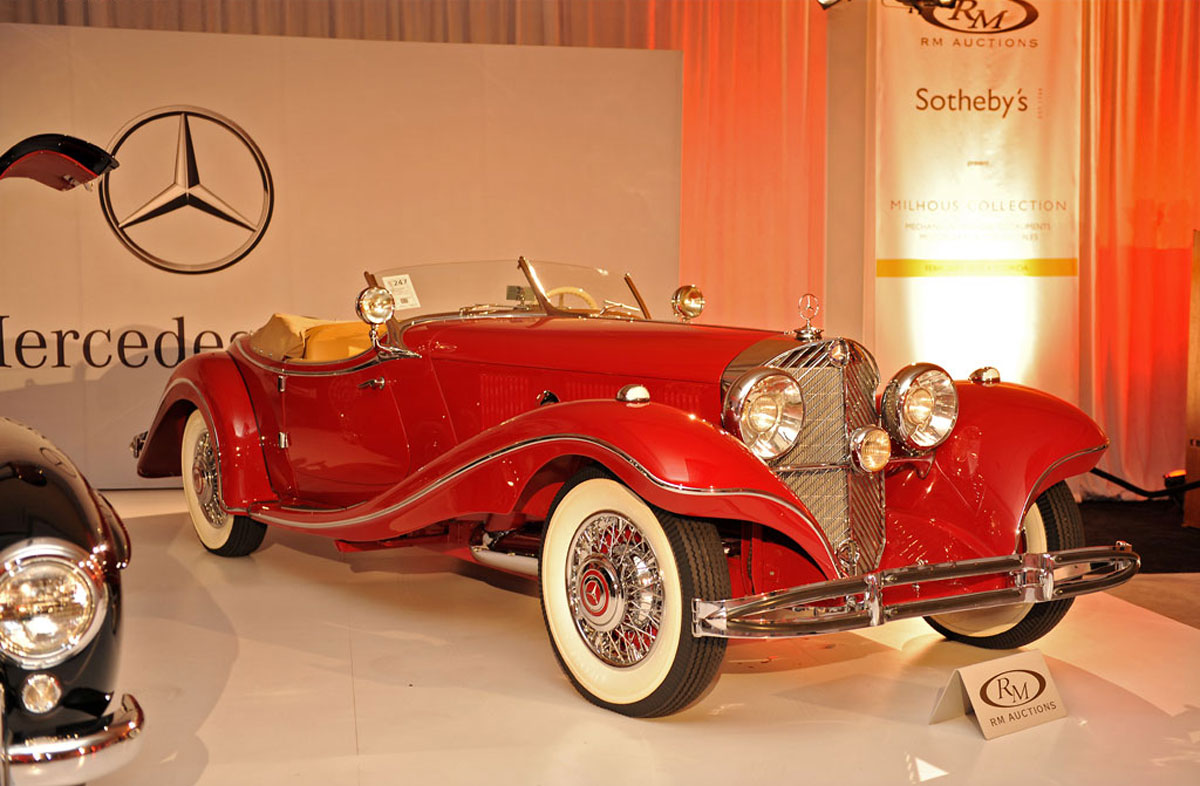
RM Sothebys auction

Today, whether looking to sell or to buy a classic or performance vehicle, the variety of platforms available offer significant choices far beyond anything we dreamed of in our early car buying days. A broad array of venues utilizing the full spectrum of available media exist with each platform possessing its own unique personality designed to appeal to a market segment with specific characteristics.

The mind boggles when considering how many classic vehicles change hands every day and the vast amounts of money associated with those transactions. It does not boggle the mind of any sentient being that with this vast amount of money in play that the number of platforms for advertising, promoting and facilitating these transactions in recent years has exploded. As always, with the introduction of choice comes the potential for confusion. In the days of the classified ad, the choices were few. Basically it fell to deciding what publication to choose for placing a few lines of copy and should a few extra dollars be spent to include a fuzzy black and white photo.

Matt Maisano of Motorcar Manor with Nash-Healey headed to Bonhams auction in Greenwich

Today websites, on–line auctions, in-person live auctions, social media (Facebook Market) and some print offer what can be a confusing constellation of choices when considering the best place to buy or sell a specific vehicle.

Matt Maisano of Motorcar Manor has for over a decade provided concierge services for classic and performance car enthusiasts looking to buy a car or sell a single car or a collection of classic cars.

Matt has extensive experience counseling on the purchase and sale of premium vehicles across the full spectrum spanning from vintage Ferraris, Lamborghinis, Porsches and Maseratis to American Muscle cars and low volume special edition vehicles such as Nash-Healeys and Kaiser-Darrins.

When asked about the state of the market, Matt simply says, “The classic car market is insane. Cars are selling like crazy.” Matt also says, “What some call modern classics are skyrocketing.” Matt considers Modern Classic Cars dating from 1982 on. He acknowledges that most consider the starting date as 2002.  Matt’s opinion about the overall market is mirrored by the latest Hagerty Market Rating for September 2021. Hagerty says, “As we near the end of the second Covid Summer, it’s amazing the difference a year can make. This time last year, the rating was at an all time low, but now the Hagerty Market Rating has increased for a sixth consecutive month to its highest point in over 5 years. After a strong showing at Monterey, auction activity is back to pre-pandemic levels and optimism among our industry experts is at its highest point in over seven years.”

Gooding Company Auction

Without a doubt the expanded democratization of the buying process has benefitted from Covid’s creation of legions of bored, house bound people. Exploring the web, these home bound denizens of the internet armed with computers and money discovered the excitement of online bidding. Game on. An equally important contribution to expanding the market has come courtesy of the increasing number of venues affording access to the buying and selling process and the ease each brings to that process.

Clearly, today, websites and live in-person events dominate the business of selling collectible vehicles. They have almost totally replaced print. Websites, on-line auctions, live auctions and to some degree social media in the form of Facebook Market presently reign as the preeminent players.

While the opportunity still exists to place an ad in print, newspapers and penny savers no longer have much value. Print ads are best placed in auto themed national publications, marque specific club publications and the still reigning king of print car ads, Hemmings Motor News. While Hemmings Motor News still stands as a worthy go-to resource, most other placements do not have the broad reach of the web or pack the concentrated sales power of an auction whether in-person live or online.

For the lower end of the market websites are where much of the  action is. Sites like eBay, Facebook marketplace (Craig’s list), Classic Car.com. and Classics.Auto Trader.com offer affordable access to mostly five figure collectibles.

Bring a Trailer website

P-Car Market website

Certainly some sites rank higher, sometimes, significantly higher than others. Two that have lost much of their early luster are eBay and Craig’s List. eBay, infected with so many scams, and petty annoyances has turned a lot of people off. Though it still has national reach it has suffered from a considerable decline in respect and business. As for Craig’s list, Facebook Marketplace basically has eaten Craig’s lunch. Facebook Marketplace offers a lot of vehicles and benefits. Most significantly it integrates with Facebook’s huge   audience’s social media activities. With people constantly on their phone it offers a powerful opportunity for passive exposure. Most appealing, it costs nothing.

Classics.Autotrader.com provides a collectibles version of the traditional Autotrader site. Both work the same way. When looking for a vehicle one simply keystrokes in the what you are looking for and the site calls up any matching vehicle from its large inventory of actively available cars.

However, significant short comings exist for these low cost platforms that can hinder getting a true a understanding of the vehicle. Content suffers from the amateur writing and photographic skills of most individuals placing the ads. Information is incomplete compared to on-line auctions or in-person auctions. Supporting photographs are few, maybe 30 at most. Asking price often suffers from amateur best guesses or hopeful dreams. As well placing a car on the site can produce a frustrating bevy of time wasting tire kickers and robocalls offering to help sell your car.

Autotrader.com website

For Autotrader.com the fee for placing an ad depends on the term and ranges between $40 and $100.

Classiccar.com offers a site functionally similar to Classics.Autotrader.com but provides a dedicated site rather than an offshoot from the main site. As such classiccars.com is probably a better bet for your tri-five Chevy.

On-line auction sites have truly been where the action is. Established with an offering of three cars in 2014, the Bring a Trailer on-line auction has become the gold standard of digital on-line auction platforms. This year BaT has over 450,000 users and 200,000 bidders. Both figures continue to grow. In 2019 BaT sold over 11,000 cars. In 2020 BaT car sales exceeded $400 million. For 2021 both numbers are trending significantly higher.

While BaT has some issues it is widely considered the go-to site. BaT features an inexpensive listing fee of $99 and an optional added $250 if photo service is desired. With listings running for 7 or 10 days depending on the car, BaT offers a significant benefit for a seller with the ease it provides for posting hundreds of photos of the car from every angle as well as videos showing a walk-around or the car being test driven. No sales website offers that. In theory and most often in practice, this extensive visual reference reduces the need for a distant buyer to personally inspect the car, though a PPI (Pre-purchase Inspection) is always advisable if possible.

A downside to BaT results from its success. First your car must be accepted. Just cause you want to list on BaT does not mean your car will be accepted. A bit of work goes into the submission process. Then, if you want a reserve it requires negotiating with a BaT staff member. Finally if you pass all of the hurdles, you will have to get on a significant line and wait for weeks or months to have your listing posted.

Buyers pay a 5% fee on top of the final sale price to BaT, with a minimum of $250, and capped at $5,000.

Unlike websites with cars for sale the BaT and all other on-line auctions have a bidding process that usually lasts seven days. One nice feature of BaT is that, unlike eBay, sniping with a last second bid is prevented by having two minutes added to the bidding time after any last minute bid.

1999 Ferrari 355 Spyder headed for BaT

One element initiated by BaT and unique to on-line auctions is the comments section. Here users can write comments about a car that has been listed. While some comments provide constructive insights about a car, Matt says, “Primarily on Bring a Trailer, you definitely have people bid a $1,000 on a car just so they can claim that they’ve bid on cars before just to do comments. Some of which are just ridiculous. You know they had one situation or  heard from a friend. They write as if they were experts. The downside is that you get guys with the negative comments. They could hurt the sale. It takes one comment from a guy trying to sound like an expert that kills the sale.”

On-line auction fees compare very favorably to the 10% to 12% charge common to in-person live auctions.

New on-line auction sites playing off the highly successful BaT model appear on the scene with regularity. The most popular include Cars and Bids, Hemmings, P-Car Market and RADwood. All impart their own special flavor to BaT functionality.

Cars & Bids spun off from the large following of blog personality, the knowledgeable and entertaining, Doug DeMuro. C&B adapts the basic functionality of BaT with its own special treatment. C&B limits itself to listing vehicles it describes as anything cool and exciting from the 1980s to 2020s. As well, playing off the popularity of DeMuro, your vehicle, if selected, will benefit from the extra eyes and extra buyers DeMuro will bring to your listing by reviewing your car on C&B.

Barrett-Jackson Auction

Less expensive than BaT, Cars & Bids buyers pay a 4.5% commission, capped at $4,500. Sellers list for free and receive 100% of the sale price.

Reading the hand-writing on the digital wall, historic friend to the collectible car enthusiast, Hemmings, entered the on-line auction fray in 2019. Basically conforming to the Bat functionality with less of the BaT panache, Hemmings Auctions offers anyone listing on the auction six months of Hemmings classified ad space for free if the car does not sell at auction during its 14-day listing. To qualify for a Hemmings auction, the car must be roadworthy and you must submit to an assessment with a listing specialist.

Hemmings auction listings offer an eclectic mix of vehicles  across a range with some modern but usually more classic cars including brass era every once in a while. Listing backlog is usually two to three weeks. Far better than BaT. The seller’s cost to list is $99.95. Buyers pay 5% with a minimum of $500 and a $10,000 maximum.

P-Car Market initially started as a dedicated Porsche site, but now, they do everything. Sellers have a choice of listing options and associated fees ranging from $99 for either a traditional Reserve or No Reserve listing to $500 for a Blind Auction that hides the bid amounts until the reserve is met. Buyers pay a 5% non-refundable buyer’s premium with a (minimum of $500.00 and a maximum of $5,000.

RADwood presents a platform focused on the automotive lifestyle and culture of the 80s and 90s. It will list cars, trucks and motorcycles from 1980 through 1999. Sellers pay from $45 to $125 based on the terms of the listing. Duration ranges from 7 to 10 days. Buyers pay 4.5% with a minimum hold of $150 and a maximum of $4500.

Mecum Auction

In-Person live auctions represent the red carpet events of the classic car selling world. Gooding, R&M Sothebys, Bonhams, Barrett-Jackson, Russo & Steel and Mecum represent the big players with many other smaller operations filling the field. The big auctions present elaborate shows rich with theatrics and a robust party atmosphere often tied to a high visibility event such as Amelia or Pebble Beach. Though the auction itself is a destination.

Every auction has a personality expressed by the nature of the cars it fields. Matt says, “Gooding – High end more modern cars, race cars, 1970-80-90. German, M-B, Porsche, Ferrari. Not brass. RM Sothebys –  Top notch venue, older vehicles Rolls-Royce, Bentley, Jaguar, a good mix. Bonhams – Similar to RM. Mix, 60s and older, more brass, some RH drive. Barrett-Jackson – Muscle cars or a restomod. Traditional American classic cars. At certain locations. You might be able to get a foreign sports car in there but you’re not selling a 356 Porsche Speedster at Barrett-Jackson. Mecum – basically the same as Barrett-Jackson, except one advantage that makes Mecum different is you can put a reserve on a car where at Barrett-Jackson you can’t. Russo & Steel – Mix, modern, high mileage Ferraris.

Bonhams Auction

Live In-Person auctions possess a visceral electricity because you have buyers in the room. Matt says, ”The buyers are there nine times out of ten. They do have bidders on the internet and on the phone, but essentially the buyers are there.” Auction houses typically do a great job in marketing. They will market an event, three to four months in advance. Matt says, “They’re going to market individual cars as well as the event itself. For example, look at this great Bugatti that’s going to be auctioned.”

At an In-Person Live auction the auctioneers are professionals and experts in their field. They have gone through every car and know everything about each specific car going through auction. Matt says, “A potential bidder can ask them a million questions without having to go to the owner where the owner is emotionally attached to the car and might embellish things. The auctioneer will tell you everything you want to know without any of the stories,  smoke, and mirrors.

Here one can find the truly unique and special high value vehicles. Matt says, “Chances are the individual considering buying that car already knows about that car. They already know who owns it. Now that potential bidder may talk to the auctioneer and discuss everything about that car. He might be able to take it for a test drive. The auctioneer is going to relate the entire history of the car. And again, these cars are vetted by the auction house. They’ve gone through it. They know everything about it. They’re not going to put in a Bugatti that potentially is not a real Bugatti.”

While it is often felt that a vehicle can sell for more at an In-Person Live auction, compared to other platforms buyers fees are considerable. Until recently the buyer’s premium stood at ten percent. Matt says, “Now from my understanding certain locations have gone up to 12%. It depends on where. Scottsdale is 12%. I think Amelia Island is 12%. I’m going to say, Greenwich is probably still 10 percent.”

Regardless of the platform selected when looking to purchase a collectible vehicle the best advice is to do your research, make a plan, set a budget and, most important, exercise discipline.


By |2021-10-14T16:05:52+00:00October 14th, 2021|Comments Off on Conversations With People We Value #29

Conversations With People We Value #28

A number of weeks back Drivin’ News took a look at the birth and adolescence of the printed new car brochure from 1900 up to World War II.

Mirroring the explosive advancement in automobile design and execution as the Depression ebbed, the new car brochure came of age just as the world plunged into global warfare.

The creative outpouring poised to blossom in automotive literature would stall until millions of men and women would march off to war to save the world from the greatest tyranny civilization had ever faced.

Marked by the exhilaration born of war’s end, American consumerism exploded with an insatiable appetite for things decidedly modern, exciting and innovative.

With a population exhibiting a manifest destiny-like determination to create a better future, the years following WWII ushered in the dawn of the pinnacle period for a dominant American automobile culture and the accompanying golden age of the new car brochure.

As noted in Part I, the dawn of 21st century digital delivery efficiencies would doom the high quality, brilliantly photographed, aesthetically striking and increasingly expensive print bibles of the new car sales effort.

In Part II, Drivin’ News looks back at the high point of the new car brochure genre in the latter 20th and early 21st Centuries.

Evolution of the new car brochure, Paper to Pixel –

Books that sold the American dream

(Part II 1946 to 2010)


1952 Buick brochure

Just like the postwar automobiles they featured, new car brochures in the 1950s radiated a bold vitality with vibrant colors and striking presentations. They embodied the fruits of greater graphic design sophistication, the ready availability of high quality art and the emergence of photography as a powerful creative tool. Brochures grew in size. Artistic representations of new car models grew in size and in scale when compared to the stature of their blissfully confident diminutive drivers and passengers.

Lifestyle dominated every spread with family an important theme. Images on the page in the fifties displayed greater color saturation but continued to be lacking in detail due to period limitations of the printing process.

By the mid-1950s four-color photography gathered support as a tool considered superior to high-end illustration as a source of hero imagery. Research decidedly favored photography over illustration as the superior technique for delivering visual impact.

1956 Thunderbird brochure

Post WWII America, confident, motivated and determined, embraced the automobile. The automobile empowered millions to fuel the explosive growth of suburbs where they could enjoy the fruits of their efforts and live the good life. It was a life vividly displayed throughout period new car brochures. 1950s new car brochures not only sold cars, they trumpeted the achievable rewards of pursuing the postwar American Dream.


1960s to 1974, Muscle cars to gas lines

1960s drag racing

As all those postwar babies started growing up, American culture would convulse through seismic shifts that reconfigured social, environmental and automotive values. Early on, muscle cars burst onto the scene sparking an intense love affair with power, performance and aggressive automotive design. Horsepower wars sounded a steady and loud drum beat heralding escalating competition on the track and on the street. At the same time other Americans gave their hearts and loyalty to small cars especially the Volkswagen. In many ways consensus splintered as perspectives and paths diverged. However, by decades end with environmental and safety restrictions winding down the horsepower, performance and land yacht party, the stage was set for the last nail in the coffin of the mid-century performance joy ride. Enter “The gas crisis.” For new car brochures it was, at first, the best of times and then abruptly the worst of times.

The 1960s witnessed photography supplant illustration as the dominant source of new car brochure imagery. That changing of the guard coincided with two partnerships that stood above all others as giants in the history of automotive promotional imagery.

Fitzpatrick and Kaufman Pontiac art

Illustrators Art Fitzpatrick and Van Kaufman and Boulevard Photographic founders Jimmy Northmore and Mickey McGuire reside in the pantheon of automotive artistry. Fitzpatrick created deliciously distorted visualizations that powerfully expressed a stylized vision of a vehicle’s attributes. Kaufman, a former Disney animator, created evocative lifestyle imagery employing exotic places and attractive, active people. The two then collaborated to combine their separate creations. They did so brilliantly. Their work in creating and promoting Pontiac’s “Wide Track” promotional imagery stands as the signature representation of their artistic genius. In viewing Fitzpatrick’s and Kaufman’s work, most notably for Pontiac from the late 1950s to the early 1970s, there is no doubt who did it.

Boulevard Photographic towered as a creative force thriving on photographic challenges. Boulevard, powered by the collective visionary genius of Northmore and McGuire, literally willed photography into the forefront of automobile commercial imagery.

Printing’s ability to put ink on paper improved significantly during the 1970s as did the finishing process. Breathtaking imagery and exciting graphic design supported by exquisite typography transformed the new car brochure into a dynamic sales tool that offered a new fresh perspective.

Powerful photographic images displaying a driver’s point of view demonstrated a greater emphasis on interior design. The use of coated glossy paper stock with a richer feel became more prevalent. Full color gatefolds pulled out for more powerful presentations.

During this period American showrooms witnessed the appearance of foreign cars, predominantly European. Initially brochure work for imports reflected a conservative approach to layout with design featuring photography that offered a straight forward depiction of a product usually fairly well devoid of romance. This would change as American attitudes towards brochure imagery migrated to Europe. To quote Mickey McGuire of Boulevard Photographic, “We introduced Europeans to sex and romance…at least as far as car advertising is concerned.”

Boulevard Photographic photo for Jaguar

1975 to `1990, The thrill is gone

By the mid-1970s the execution of the traditional automobile new car brochure had reached a point of maturity in design, production and printing. Brochure production had found its groove. The automobile business, on the other hand, was anything but groovy. America’s gas crisis of 1973 and the ensuing 1975 government CAFÉ standards disoriented an automobile industry already stumbling in its response to the restrictions imposed by the creation of the NHTSA in 1966 and the Clean Air Act of 1968.  America’s automobile marketplace would, now, for the most part, offer for sale smaller, slower, often odd looking and frequently badge engineered products often at odds with the traditional interests of the new car buyer.

1982 Cadillac Cimarron

For the new car brochure, the challenge was daunting. Faced with significantly less steak to sell, new car brochures offered a double dose of sizzle with efforts that often emphasized and aggrandized the trivial. Copy sought every possible way to impart excitement to features like smaller engines, overdrive, improved efficiency, weight reduction and the mini-spare. In these dark times for automotive excitement the new car brochure served as the metaphorical “Potamkin Village” of automobile marketing.

After 1975, new car brochures grew larger as horsepower and vehicle dimensions shrank. Bold photography of boring cars filled oversized brochure pages. Striking gatefolds, improved printing, sophisticated page coatings, and perfect bindings did their best to infuse anemic products with life. For some niche brands such as Volvo, the new age of increased safety awareness and clean air concerns benefited sales.

1986 Volvo brochure touting safety cage

Volvo trumpeted its safety design and Lambda-sond emissions control with showroom brochures that were well executed but reserved, just like the brand. Others such as GM suffered from short cut attempts that resulted in underpowered and unreliable diesel engines and unadvertised brand mingling of parts that resulted in embarrassing and apologetic mea culpa copy. However, on the horizon technological advancements in materials, technology and design brought hopes for the light at the end of the dark tunnel of boring cars. However, for the traditional new car brochure, that light would be attached to a distant but onrushing train.


1990s to Today  – Evolution to Revolution

The 1990s ushered in three transformational forces that would challenge the very existence of the new car brochure.

  • Digitization of print design and production
  • Elevated environmental consciousness
  • Rise of the web


DIGITAL REVOLUTION

Revolutions produce casualties. Digital revolutions are no different. By the turn of the 20th century dead professions littered the field of print design and production. The old ways stood defenseless before the powerful onslaught of digital technology. Digital-based desktop publishing, PageMaker in particular, by the start of this new century would dominate print design and production. Simultaneously CGI or Computer Generated Imagery revolutionized image creation resulting in a profound change in creating product photography. By the early 2000s, CGI made it unnecessary to have the real car to produce a high quality photograph of the car.

Computer generated Image (CGI)

With CGI, brochure images, at most, only needed a background into which a CGI created car image could be placed. As well, the first decade of the 2000s witnessed the ascendance of digital photography (No film, no Polaroids, no processing, no waiting). At the same time, Photoshop revolutionized image modification. Now an already digitally produced photo could be manipulated to reflect a designer’s vision, if not reality.

By the second decade of the 21st century digital presses employing Variable Data Printing equipped a print run to personalize each individual brochure to target a different person. Digital printing quickly supplanted traditional print for short runs and variable data applications.

By 2010, technology allowed for a digitally created PDF of a brochure to be posted to a website where anyone with a web connection and a color printer could download and print the brochure. While of significantly lower quality than a professionally printed brochure, the download gave manufacturers a significantly cheaper alternative to the printed brochure.

ENVIRONMENTAL CONSCIOUSNESS

Environmental concerns as related to printed matter first moved to the fore in middle 1990s new car brochures. Initially some new car brochures would contain copy proclaiming their efforts to be environmentally responsible.  Next, recycling Icons showed up on back covers. With the dawn of the 2010s the FSC (Forest Stewardship Council) icon approached ubiquity on new car brochures. A voluntary program, The Forest Stewardship Council set standards for responsible forest management.

As we approached the third decade, “carbon footprint” has stepped to the fore in the environmental conversation with profound implications for the printed new car brochure and its important role as a messenger of history for future generations.

A peek at the future may have been provided by a columnist for the Wall Street Journal covering a recent World Economic Forum in Davos. He was informed by an aide at the registration  desk that, ”no paper maps of the town were being distributed to reduce the event’s carbon footprint.”

We will return to the implications of that mindset shortly.

THE WEB

Around the late 1990s web addresses began quietly appearing on new car brochure back pages. Initially, websites peacefully coexisted with 1-800 customer service numbers and Business Reply Cards. However, as a new, fertile and promising mediascape for creative applications, websites were quickly embraced and thrived. By the mid-2000s the auto industry fully embraced the power of the web. By the early teens the auto industry harnessed the web with QR codes, e-brochures, configurators and social media networks.

Mercedes-Benz social media page in 2007 brochure

Social media rapidly expanded its influence into automobile marketing. Model year 2012 saw icons for Facebook, Twitter and You Tube prominent on back covers. By 2015 social media had fully embedded itself in the new car buying experience.

Virtual reality headset

Today, analytics reign supreme like a metric tail wagging the marketing dog as manufacturers struggle to harness the potential power resident in the available flood of marketing and social media data. Tomorrow is already knocking on the door with Augmented Reality and Virtual Reality applications.


Looking Ahead – The Perfect Storm

Digitization, carbon footprint and the web, Is this the perfect storm that will doom the new car brochure as the ubiquitous sales tool for enticing new car prospects. In a word, yes.

What does the future have in store for the new car brochure? At present, there appears two divergent paths.

For most mass market product lines, the print new car brochure has been replaced by the downloadable e-brochure. Alternatively, hypercar brands distinguished by their performance and exclusivity will offer premium, frequently hard cover print pieces. However, rather than traditional new car brochures, these pieces offer detailed and exciting brand profiles employing production values consistent with the superior quality of the exclusive product.

e-brochure

In our current world where bean counters outrank any individual concerned with quality at the cost of an extra nickel spent, the life prospects of the print brochure equate with the proverbial snow ball’s chance in hell. The wasted money from discarding outdated literature in inventory, the inability to immediately adjust to product changes and the cost of printing and shipping in the face of digital technology efficiencies ensured the rapid disappearance of the new car brochure.

As with all profound changes, the law of unintended consequences rears its head in the disappearance of the new car brochure. While not the intent of the manufacturers, its value as a meaningful record of history cannot be dismissed.

Archiving solutions may require museums and libraries to develop closer relationships with manufacturers in the hope that the OEMs can transfer files to ensure that our museums and libraries have the digital records necessary to continue the valuable role new car brochures fulfilled as messengers of future automotive history.

By |2021-09-30T11:46:13+00:00September 30th, 2021|5 Comments

Cars We Love & Who We Are #22

What is it about a life that defines a person? I have come to believe that the world around us mimics how we define ourselves. While at a large regional classic car and hot rod event, I encountered a man showing a stunning 1912 C-Cab Ford truck hot rod. Knowledgeable, affable and friendly to all, he offered me a look at a gallery of photographs displaying vehicles he had designed and built as well as others he had modified after purchasing them for his collection. He possessed a visionary flair for bringing all types of mobile machinery to life. Clearly from his interactions and conversations with others that I observed, the world viewed him for the respected and gifted hot road visionary and fabricator that he is. Oh yeah and he was in a wheelchair. No big deal, certainly not for him. Meet Rory Sevajian.

A hot rod life defined by abundance not lack


Rory Sevajian with 1912 Ford C-Cab

When Rory Sevajian flashes his ready and welcoming smile, you find yourself drawn in and comfortable in his engaging company. The fact that regardless of the event, he has brought some stunningly unique thundering eye candy that he designed makes him and his creations a magnet for interested observers and show trophies.

His passion for building unique performance and special interest vehicles came to life in Rory’s early teen years.

Rory says, “As a little kid, I was always interested in all these things. I hung around with all the older kids that had cool cars and learned from them.” Also, Rory’s father used to take him to the New York Auto Show at the New York Coliseum in the early 196os.  Rory recalls saying, “I was really young. The cars there were nothing like you’d ever seen before. Even to this day, today when you go to auto shows, there’s no comparison to what was done in the 50s and 60s.”

As a young guy without a lot of money, Rory developed a  philosophy that continues to guide his efforts today. Quote: “Start out with junk and make it into something special.” Almost as a design principle, even Rory’s most striking creations humbly start out as “junk. Then, benefitting from the magic of his transformative vision he brings to life something very special.

So for almost 30 years Rory had transformed “junk” into spectacular vehicles and motorcycles. Then “it“ happened, the accident.

Billet cut rims for Rory’s wheelchair

Rory had, and still has, a tree service business. While on the job, one of his workers, the “saw man,” positioned himself to cut a limb leaning against a second tree. The saw man believed that the second tree was strong enough to hold the limb. It was not. The base of the second and very large tree gave way. Rory says, “The large tree got me from behind. It crushed me on top of a rock garden and exploded my body.” At the hospital doctors told him he was lucky to be alive, but that he would never walk again. As others have related the story, Rory responded saying, “That’s fine with me”. He would not dwell on his loss. It would not stop Rory from building spectacular vehicles and having cool toys.

To continue in the pursuit of his lifetime pleasure of building eye popping vehicles, Rory did have to adapt.

Rory says, “The only thing where I really have a problem is with the body work and paint.” In the old days he would do all of that himself, however with the limitations of the chair, he now sends it out to be done. He concedes that his only other limitation is faced when trying to get things down from the high shelves. As before his accident, anything he does not know how to do, he has friends who do.

When it comes to fabrication and building, Rory designs, creates and assembles most of the pieces that give his creations their unique character. Rory says, “The visual magic resides in the details and the execution.” He will spend months refining an idea to enhance a creation and then seamlessly integrate it into the design. Emblematic of Rory’s creativity and attention to detail evidences itself in his 1912 Ford C-Cab hot rod.

“I always wanted a C-Cab. I love the way they look, “Says Rory. Over the years Rory always had his eye out for a steel body not a fiber glass repro. Then about six-years ago, one surfaced in upstate New York. He could not resist the siren’s song of an available steel body C-Cab. He drove upstate. Taking one look, love filled his heart and a vision stirred his soul. Rory says, It was rough and the suspension was falling out of it.” Undaunted he negotiated a deal and trailered the truck home. Rory smiles as he repeats his mantra, “Remember, start with junk end up with something very special.” He certainly did.

Job one had Rory totally dismantle the vintage truck. With the truck apart, his vision took hold. With a chassis rebuild that included a totally new suspension completed, his attention turned to the power train.

The big block 460 cu. in. V8 that came with the truck had side pipes. “Rory says, “I chopped them off because I couldn’t get in and out of the truck with my wheelchair.” Historically Rory always liked the gasser look with headers sporting a big bell on the end. Why not on the C-Cab he thought. He had the stripped down pipes, the flanges and the bell. Rory says, “It took me five hours to heat up and bend the contour and complete welding the pipes to the Bell, but it came out perfect. I sent it out for chroming. Once back I put some motorcycle baffles in it. And that was it.”

For carburetion the name of Drivin’ News fave “Carburetor Steve” plays a significant role. Rory took off the old four-barrel and installed a rare one-of-a-kind tunnel ram designed by a NASA engineer with a manifold that accepted three Holly 550 two-barrel carburetors. Carburetor Steve played a significant role in fine tuning the system.

Throughout the completed execution, Rory’s signature jeweler’s eye for detail and visual impact is in evidence from the unique wheels to the paint and pin striping.

Looking at his creation Rory says, “I love that truck. I love the truck. It’s more of a driver than something for really racing. However, see it coming down the road, it’s spectacular. It snaps necks.” He continues, “It has that, you know. Sex appeal.” He just smiles. But for generating bystander smiles nothing outdoes Rory’s “Train.”

The Train story begins with Rory’s custom motorcycle that he transformed from a two–wheel bike to a three-wheel “trike” after his accident. The story concludes years later with a custom articulated train of four trailered vehicles and a custom tow car that Rory drives to hot rod shows.

After his accident, Rory, a died-in-the-wool motorcyclist, looked at his custom personally designed two-wheel creation and knew he must transform it into an even more outrageous three-wheel “trike.”

Rory admits his final creation is more about looks than ridability, but oh how it looks!

Rory does acknowledge that a lot of money has been spent in places no one can see. Rory says, “All the real money hides inside the engine on this trike – S&S flywheel and rods, S&S oversized barrels, a really nasty Leineweber cam, Manley tulip valves and Manley triple valve springs.” Then he decided that he wanted more juice. So he went with 80-inch heads and drilled them for four spark plugs and put a Dyna III Electronic Ignition in it. Rory says, “I’m running dual coils to deal with the four plugs. The trike also has an open belt drive and high performance clutches.

When it came time to make it a trike, Rory simply pulled out a Sawzall and cut the back off. Rory’s first attempt grafted on a servi-car rear end. Police trikes and ice cream trikes used them. However, they did not suit Rory’s three-wheeled beast. Rory says, “When I let the clutch out it was idling at 50 mph. It was not a good thing.” Rory found a good solution in mixing and matching rear axle parts and tire sizes. Now, he can cruise down the highway at 60 mph without the motor screaming. Above and beyond traditional upgrades Rory has innovated some very special adaptations so that he would be able to ride the trike since he was paralyzed from the ribs down.

Rory says, “When I got hurt, I had to figure a way to ride since I couldn’t put my foot down.” Rory‘s solution provided for a handbrake on the handlebars and his own custom made shifter and clutch on the shifter. To do this he needed to incorporate a big bore master cylinder to compensate because the hand does not have the power of the foot necessary to squeeze the dual piston brake caliper on the rear wheel. Other than that the only other adaptation required was floorboards because he has to strap his feet down. Rory says, “When you’re paralyzed like me, you have to strap your feet because if your foot falls off, you don’t know it. You then can run over it like I did with my trike. I shattered my ankle. I learned the need for that adaptation the hard way.”

Which brings the story back around to the Train. Some years back Rory brought his trike to the Waldwick New Jersey Car Show. He says, “It all started when I took the trike to the show. I didn’t even enter and they handed me a trophy. I thought that’s pretty cool.” Rory really liked the people at the show. Since he was building a hot rod that would be done next year he thought  maybe he would do something special for next year’s Waldwick Show. The following year he brought his custom 1931 Ford sedan towing the trike. After winning at that show he realized that he wanted to bring something new each year. Thus, the idea of the Train came to life. Now, for seven years he has brought something different every single year. He just keeps adding on. All vehicles share an eye grabbing red metal flake, black and chrome theme enhanced with tasteful pin striping and bold graphics.

1931 Ford sedan hot rod tow car   

Rory says, “Some years back a friend of mine says, you need a four-door car so you can put your wheelchair behind the seat.” The search began.  Soon another friend found a suitable sedan in California. It was in rough condition. Perfect! Start with junk. Rory says, “ It was a little bit twisted, a little banged up, could use a floor. Sold! It turned out to be an unusual 1931½ Murray bodied Ford sedan made in Canada. Rory especially liked some of the more refined details on the Murray body. He says, “I just loved it. I thought I gotta have this.”

An enormous amount of time and hand crafting proved well worth the effort with the end result being a unique red metal flake hand crafted sedan with sunroof, custom stitched interior and a Chevy small block with a radical cam, Sanderson headers and three deuces set up by “Carburetor Steve.”

For the rear, Rory hand shaped a custom tow hitch for the trike’s front wheel.

THE TRAIN

All elements of the TRAIN started as discards in a state of disrepair better known as “junk”. Each vehicle’s exquisitely finished form shares a red metal flake, black and chrome color scheme with pin stripe accents, bold graphics and a name.

1931 ½ Ford sedan hot rod tow car –  (DRAGIN’)

Custom trike – Assembled from pieces collected over the 45 years (MOVING VIOLATION)

1964 Chaparral go-kart – Resurrected from North Carolina junk yard (OUTCAST)

1981 Mini Bike – Rusty castoff (JUVENILE DELINQUENT)

1965 Speed boat – Battered hull found in Mays Landing, NJ (MISS BEHAVIN)

The greatest surprise for most people comes when hearing Rory explain how easy the Train is to maneuver. Rory says, “It is the most comfortable thing to drive. I could turn around in a 20-foot area.” Unlike a tractor trailer, all trailers in the train are short trailers. Each individual axle simply follows. Rory says, “You can make unbelievable, tight turns, as tight as you could turn the car.

Rory setting up the Train

Even more unbelievable? Rory can set up the whole train by himself. His sedan with a back seat for his wheelchair makes him totally self-sufficient. He can hook up all these trailers himself and with no problem because they’re all lightweight trailers. He can pick up the trailer tongue by himself and use his wheelchair like a yard tug to maneuver each trailer. Rory says, “I put it on the footrest between my legs, right? And I can actually maneuver around and roll them around. They go where I want them to go.”

In reflecting on his life as a hot rod designer and fabricator Rory says, “You got to love what you do. You got to be able to sit there and make your own parts and be resourceful. You have to seek solutions that look cool that you can transfer to enhance the vehicle that you are making.”

When it is pointed out that some people, maybe most people, would not have such a great attitude as he, Rory says, “I hear that all the time. You know, I was always a crazy kid, always doing something wild and having fun and enjoying myself. You know, okay. I got hurt. I’m still alive. I’m still breathing. I’m just going to keep having fun till I die.


The “Train” with Rory’s friend Vinny Polina watching out

At the large regional Hot Rod Show that Rory can be seen driving to in the above photo he returned with trophies for:

  • 1st PLACE PRE-39 MODIFIED

  • BEST PRESENTATION

  • BEST IN SHOW


By |2021-09-16T12:13:34+00:00September 16th, 2021|11 Comments

Conversations With People We Value #27

Many things that were once commonplace, today, we now hold dear for their rarity. Such things as having a live and informed person respond quickly when we call customer service, or an auto parts store owned by a family not a franchise or a gas station attendant not speaking on an ear bud to a friend 10,000 miles away, all were once accepted as a given.

Now for those of us old enough to remember a time when superior craftsmanship merited respect and a plentitude of business, we sadly note the dwindling presence of those practicing craftsmen. That so few of these skilled experts at combining art and engineering exist seems incomprehensible in a way that shocks our sensibilities.

Drivin’ News believes in the importance of recognizing the remaining gifted and dedicated craftsmen who sustain our passion for the enjoyment and preservation of classic vehicles. Meet Charlie Olsen, owner of Olsen Engines.

The man they trust to rebuild history

Charlie Olsen with Ferrari Daytona engine

Disarmingly genial and engaging, Charlie Olsen resides within the sparse ranks populating the pantheon of active “go-to” machinists and classic vehicle engine rebuilders.

Charlie Olsen working on Honda 250cc engine

Though chockablock with exotic engines, parts and pieces, Charlie’s Olsen Engines shop somehow projects a reassuring sense of confident orderliness. Since opening for business in 1982 Olsen Engines, has been entrusted by some of the world’s most famous people and most respected professionals to work on some of the world’s most treasured automobile, motorcycle and inboard marine engines.

Maintaining a shockingly youthful exuberance for his passion to bring mortally wounded high performance and exotic engines back from the dead, 67-year old Charlie was born to excel at the work he loves.

Charlie says, “I always had a love for gas engines. By eight or nine-years old I was fixing all of the lawn mowers on the block.” If he found a mower that did not run, he would make it run. By the age of twelve Charlie had graduated to motorcycles. He says, “I bought some old cycles cheap and got them to run.” From then on Charlie’s budding talents for curing the ills of anything that ran on gas blossomed into full bloom.

Ferrari 4-Cylinder

In high school a stint at a local gas station exposed him to the challenges of rebuilding transmissions. He excelled. By 1976 Charlie’s employer at the time, Competition Research of Nyack, New York, closed and a Suzuki dealership took its placed. Charlie accepted the new owner’s invitation to stay and took the opportunity to work on the dealership’s motorcycles and the cars that the owner raced. The experience allowed Charlie to hone his engine rebuilding skills. When the Suzuki dealership closed in 1982, Charlie took over the facility, opened Olsen Engines and the rest is history.

When entering Charlie’s shop one never knows what museum worthy piece of motoring history will be awaiting final touches in advance of shipping. On one prior visit when I was bringing the heads for my 1961 Corvette small block to be rebuilt, I spotted three extraordinary and completed engines poised to bring to life significant examples of the mid-twentieth century’s golden age of motoring.

Glickenhaus GT40

All painted, plated and perfect, there sat a 1972 V-12 for a Ferrari 365 GTB/4 Daytona, a 331 cu. in. hemi for the first Chrysler 300 and a truly rare Aurelio Lampredi designed dual distributor 4-cylinder for a mid-fifties Ferrari 750 Monza. For Olsen, these extraordinary power plants intended for automotive royalty represented just another day. More about these gems later.

Emblematic of Charlie’s easy going self-effacing nature, he explains his philosophy saying, “I just try to do it as best as I can, maybe try to do it even better than I have done it before. Certainly I want to do it better than anyone else.”

When asked about the difficulty of working on a vintage engine that he may never have seen before, Charlie’s response innocently betrays his humility in addressing how his natural gifts,

Ferrari Daytona

years of experience and work ethic inform his approach to accurately resurrecting a piece of engineering history.

He says, “It is all about paying attention to detail.” He speaks about the existence of subtle nuances present with every engine. He says, “If you know of them it becomes mechanical. You can figure it out. After all a four-stroke engine is a four-stroke engine.”

When asked about the kind of nuances other people might miss Charlie easily rolls off a litany of subtle yet meaningful attributes. They include cylinder wall finish, honing procedures, valve guide material, valve seat material, material used in cylinder heads, fastener torque, sizing for crank bearings and roundness of main bores and rod bores.

Chrysler 300

In applying his expertise for famous restoration shops and famous people like Billy Joel, Jim Glickenhaus (Glickenhaus Collection), Craig

Jackson (Barrett-Jackson), Ralph Lauren, Michael Strahan and David Letterman among many others, Charlie has put his stamp on extraordinary milestones in automotive history.

Over its almost 40 years in business, Olsen Engines has seen a wide diversity of exotic and historically significant engines pass through the hands of Charlie. The following examples offer a taste of the performance bounty that has benefitted from Charlie’s touch.

1966 Ford GT40

In sorting out the exact provenance, it has been represented that this big block GT40 identified

Ferrari 750 Monza

as car #4 was one of the three that finished one, two, three at LeMans in 1966. Later research may have indicated that it was one that ran in 1967. At that time of the rebuild it was the only one of the GT40s that had the engine rebuilt. It had been sent to Charlie to do balance work, crank work and block work

Mid-1950s Ferrari 750 Monza

Though a 3-liter 4-cylinder, the engine was a strong performer that ran nearly as fast as the V-12 cars. Charlie says, “I just did the top end. I was getting the clearances right on the bevel drive for the whole front of the engine with the bevel drive operating the generator and both distributors. That engine had two distributors. Finally I had to set up the valve clearances.

That engine was pretty different because it’s a roller cam. It was something I had never come across before.”

Vector

1955 Chrysler 300

Charlie has done a number of early hemis. He says, “They have their idiosyncrasies, a couple of little oiling issues and strength issues.” For the most part the ones he has done were rebuilt for stock performance.

Ferrari 166M

Powering a very rare Ferrari, this engine comes from a late 1940’s model produced before Enzo Ferrari got into the street car business. With a 2-liter Colombo V-12, It’s intention was for racing in events such as the Mille Miglia. Charlie says, “The small bore, small stroke Colombo engine was quite interesting.”

The old Colombo style valve springs on it offered a very unusual “mousetrap” design.

Ferrari 166M

It differs from your usual coil because the spring has two arms that come around to hold the valve up.

1990s Vector

Currently Charlie has turned his attention to the engine of a very interesting rare supercar from the early 1990s, a Vector. The 358 cu.in. fuel injected Chevrolet power plant features a twin-turbocharged design. Charlie says, “ I think there may only be 10 or so of these cars in existence.”

Honda 250cc motorcycle engine

This six cylinder motorcycle engine represents one of only three made and the only one not in the Honda museum.

Raced in 250cc class and GP motorcycle racing during the early 1970s, it is a 250cc, 6-cylinder, four-valves per cylinder engine with a 7-speed transmission. It idles at about 11,000 RPM and will run up to seventeen or eighteen thousand RPMs.

Big Block Grenades

Charlie has done his part for outrageous engines with four figure horsepower builds. He built a number of 2,000 HP turbocharged and blown race engines for Camaros and Mustangs. However, his most vivid description of work he did he describes as “Big Block Grenades.”

Reasons for a rebuild

Charlie recalls in the 1990s how clients for really high horsepower drag race engines wanted to have 4 to 6 thousandths of main clearance. Charlie recalls, “The customers wanted to have a bit more freedom to allow things to move around inside the engine.” Charlie continues, “ I would take these engines apart and you could just see how hard the engines had been working.” At the most these engines stood to hold up for 10 to maximum 20 runs.

Often in engine building the topic of balancing and blueprinting comes up. Charlie certainly shared some interesting insights. He says, “Back in the 1980s when I was running in the IMSA Fire Hawk series I could go through blue printing processes on a 305 cu. in. 200 HP Chevy small block and get an additional 125 HP without changing any parts.” It simply stood as a matter of maximizing compression within the rules and getting all cylinders equal. He did a lot of flow test work to achieve that balance.

Balancing called for individually balancing all rotating and reciprocating parts both statically and dynamically for the smoothest possible operation. Blueprinting called for rebuilding an engine to the precise OEM specs by re-machining each component to the precise measurement in the factory blueprint.

In discussing engine rebuilding for 21st century modern engines Charlie says, He does not recommend rebuilding an engine for a stock production vehicle. He recommends simply buying a new engine.” Interestingly Charlie says that OEM production techniques have improved so much that modern engines are close to blueprint quality due to the superior production and inspection technology used today.

In reflecting on the his ongoing goals Charlie says, “I hope I never stop learning. I hope that I can always keep trying to improve so that my engine work reflects the pinnacle of my capabilities.” Smiling and showing a sliver of self-satisfaction Charlie says, “I just love it. It’s a passion.”

In reflecting on his future Charlie says, “I’m thinking about slowing down a little bit and maybe just taking on, you know, a couple of projects a year. However, I don’t think I’m gonna ever stop as long as I am capable of doing the work.” Flashing a big grateful smile He says, “I just love the diversity of all the different engines that I get to work on. Almost every day I get something unique come through the door.”

While Charlie acknowledges that what he does can be taught, he clearly believes that, like the art of great musicians, much of the magic he brings to his work is realized through gifts with which he was born.

Undeniably, audiences of classic car owners and drivers revere the tune that an engine rebuilt by Charlie Olsen sings on open roads and closed tracks alike.


By |2021-09-02T12:45:22+00:00September 2nd, 2021|5 Comments
Go to Top