Burton Hall

About Burton Hall

This author has not yet filled in any details.
So far Burton Hall has created 144 blog entries.

Conversations With People We Value #54

A passionate car guy with a generous heart, my friend Bob never can seem capable of saying “no” when a friend needs a hand. Though he may not admit to it, I feel comfortable saying that Bob brings a wealth of knowledge and savvy to the table thanks to decades in automotive public relations, marketing and wrenching as well as years as a respected concours judge. Recently a friend reached out to Bob for help in creating an online listing for a vintage Jaguar. Being comfortable with the process as Bob had listed other cars before, he dove right in. Within 4 weeks of posting the ad on Hemmings Auctions the Jaguar had sold…but on eBay. Unfortunately Bob had never listed the car on eBay.

Bob’s distressing experience provides a painful cautionary tale for online sellers and buyers alike.


When Car Rustlers Stalk eBay, What Does eBay Do?

Bogus Jaguar Mark V listing on eBay

Striking in its subtle two-tone grey livery, this 1950 Jaguar Mark V Drophead Coupe did not project the conventional vintage Jaguar image of the lithe 2-seat English sports car proudly boasting seductive feminine curves that cloaked the power and speed of a jungle cat. Not so this Jaguar. Stately and elegant with seating for five, this finely finished Mark V screamed (Assuming one can scream with quiet dignity) high end motoring luxury ideally suited for cruising along country lanes in transit from the townhouse to the country manor. Powered by a 6-cylinder engine of pre-WWII design delivering 126 horsepower, its performance, though not spirited, could be described as adequate.

The Mark V’s handsome upright stature draped with voluptuous fender lines and rear fender spats would fit easily among spirits of ecstasy and flying Bs of the period. Its handsome presence would attract more than a few admiring glances.

Its three-position drophead convertible design allowed the car  to be driven with the top fully erect, fully stowed or partially retracted to expose the front seats like a sedanca. A lavishly trimmed interior featured a full gauge array set in a highly polished burled walnut dash. As well, burled walnut trim adorned a warm and inviting interior bedecked in rich Connolly leather and deep wool Wilton carpet.

Treasured for many years, the time had come for the Mark V to change hands.

Charged with the responsibility of its disposition, Bryan who had serviced the car had been called upon by the Mark V’s octogenarian owner to arrange its sale. Bryan, with decades of Jaguar experience operated of one of the most respected Jaguar restoration and repair shops in the country  While gifted with exceptional restoration and technical skills, Bryan did not claim the same mastery with the writing and photography skills necessary to properly market the vintage Jaguar. He wisely reached out to his long time friend and fellow car enthusiast Bob. With Bob’s extensive experience in photography, copy writing and sales, he gave Bryan a high level of comfort and rightfully so. October 2023 witnessed Bob enthusiastically embark on the requisite preparation to list the Jaguar.

Having enjoyed prior success with Hemmings Auctions, both felt comfortable in trusting the sale of the Jaguar to the online arm of America’s car bible, Hemmings Motor News. While a later entry in the online marketplace Hemmings with its legions of trusting followers built over decades quickly gained momentum and market share. With the car being shipped to Florida for its owner’s use over the winter, Bob and Bryan acted quickly to prep the Jaguar for creating a full battery of images to provide a comprehensive photo profile detailing all features of the Jaguar.
Bob says, “We selected carefully from the wealth of images taken.” He continues on saying, “Buying decisions are often made based on the high quality and comprehensive nature of the photography. A buyer may never see in person the car on which he is bidding.” As well as capturing the beauty and craftsmanship evident in the car, Bob made a great effort to highlight the sound nature of certain features under the car that serious prospects would want to see, would need to see, if they harbored intentions to buy this vehicle. Bob also points out that showing everything ranks high on the must do list. He says, “As well, showing deficiencies goes a long way towards ensuring a seamless sale.” Little did Bob suspect what lay ahead. How could he? Confidently he moved forward.

Bob says, “We wrote up all of the car’s critical specifications.” He actually wrote all the necessary copy right up to the ad itself.” By November everything needed to launch sat ready. Being pre-holiday November Bob decided to go live on Hemmings Auctions after the coming seasons collector car winter kick-off with the big auctions in Kissimmee, Florida and Scottsdale, Arizona. Bob’s ad would go live on March 1, 2024. With a time frame set they reached out to the good folks at Hemmings.

Impressed with Hemmings professionalism Bob moved deliberately through the listing process. With an established reserve agreeable to both parties and a document confirming the agreed upon reserve signed, Hemmings accepted the photography and copy. With materials in hand the Hemmings staff selected images, edited Bob’s copy and created the ad that would appear on the auction site. Bob felt comfortable thanks to their thoroughness. He said, “Hemmings even asked to see a copy of the title, both the front and the back to confirm it was clean

Mark V listing on Hemmings $63k

and to corroborate the name of the owner.” What could possibly go wrong? Indeed. March 1 the ad went live on Hemmings Auctions.

One of the benefits when listing with Hemmings Auctions comes with the provision that if your vehicle does not meet the reserve in the two weeks of bidding the seller can, at no cost, switch to the Hemmings “Make Offer” site. Over the two week auction listing the bidding got close but did not meet the reserve. Bob, then chose to list it on the “Make offer” site. After about a week or so with offers closing in on the reserve Bob heard from a Hemmings’ Auctions bidder.

In a private email a party interested in the Jaguar stated the following,

“I see your Hemmings ad and I think you have a lovely car. I could be interested in it. But I have a question for you. And the question is I saw a car that looked exactly like yours and had exactly the same photography on eBay. It was on eBay for like three days in March after your ad (in Hemmings)turned from an auction to a “make offer” around March 23rd. Now, I see that that car was sold on eBay. Is that your car? Was that your car? Is your car still for sale? And what’s the story on that eBay ad?”

Gobsmacked by the message, Bob knew nothing of an ad placed on eBay. He never placed it. But when he checked eBay he found his car, his photos and his copy and the car listed as “sold” for $35,677, a fraction of its legitimate Hemmings reserve. Something had gone wrong. Very wrong and potentially very damaging to the market value of the Mark V.

Very damaging because though no one had taken possession of the Jaguar Mark V, this bogus transaction with its false lowball sales price had been archived by eBay. This false data point presently stood as part of the Mark V sales history and would corrupt value estimates forever if it could not be removed.

Bob says, “At this point the next time anybody looks up the value of a 1950 Mark V Jaguar in the way people do when considering purchasing a similar car, this false data point will put downward pressure on the Mark V’s perceived value.” Equally disruptive for professional collectible car publications and sites that track pricing trends, this false data point corrupts the accuracy of their reporting.

Bob found it infuriatingly distressing that, unlike Hemmings, eBay posted the ad without any ownership paper work or authorization to sell the car. He now set about to contact eBay. A daunting task as Bob would soon find out.

Initial eBay response

In discussing his effort to contact eBay Bob says, “First of all, it’s not that easy. In trying to communicate to eBay that you have a problem realize that eBay avoids human contact at all costs. eBay has a system that basically connects you to a computer.” Completing the online form requires the transaction number, the ad number and so on. Bob says, “On the form you describe your problem. When you have finished, you hit submit.” Shortly thereafter a cheery computer message thanks you for submitting your claim. I found it less than comforting when receiving a quick response stating, “’We will review this and we will get back to you.”’ Not exactly a confidence building interaction. But Bob had faith and gave them time to respond. Two months to be exact.

When asked as to what Bob has heard after two months, Bob responds, “Crickets.” He has heard absolutely nothing. To say Bob calls eBay’s response, or lack thereof, disturbing does not scratch the surface. Bob says, “Due to their lack of due diligence there is now a documented history for a fraudulent transaction that can have a negative effect on the value not just of the car that I am trying to sell but of essentially all 1950 Mark V Jaguars because it shows that one sold for $35,677. Which it did not. But that uncorrected error will compromise the average value of everyone’s Jaguar Mark V. I find it personally shocking that eBay has such little regard for the people who trust it as a worthy means for offering large ticket items for sale.” That eBay clearly does not care became evident to Bob while subsequently teaching a class on collectible automobiles.

Bob says, “After this all came down my first assumption was how could I possibly be the only person in the world to be so unlucky and have a problem like this on eBay. I figured there could be no arguing considering eBay’s success. Then during a class that I teach on collectible automobiles I shared my eBay experience. Most people in attendance sat there slack-jawed, completely stunned by what had happened. Then one guy raised his hand and said the same thing happened to him.” The possibility that the only two guys in the world victimized by this eBay-based scam would be sitting in the same classroom stretches credulity beyond the breaking point. It seems clear eBay has a big problem that it refuses to address.

How does the scam work when the scammer has no car to sell? It seems hard to believe that a buyer would fork over $35,677 without proof of ownership, but you never know. For some trusting people being instructed to ship twenty pounds of CVS gift cards to Bucharest may not raise concerns. More likely a buyer may have responded to a request for a deposit or maybe the scam facilitates money laundering.  No matter, there clearly exists some scam-worthy payoff to be had.

Sadly eBay refused to respond to complaints much less do basic due diligence, such as confirming ownership by a seller. Apparently as eBay suffers no loss, it could not care less. eBay did not even respond when Hemmings reached out.

For now, the octogenarian Jaguar owner still wishes to sell the car. To this day Bob and Bryan have never heard from eBay. Interestingly though, while no follow-up response has ever come forth, the latest check of eBay “Sold Items” reveals that the record of the fictitious sale has disappeared. So in a quasi happy ending, Bob and Bryan have gotten what they wanted with removal of the scam eBay ad. However, eBay has done nothing to demonstrate that they have tightened up their listing requirements. Happily Bob will be relisting the Mark V on Hemmings Auctions this month. The striking British beauty will return to the marketplace unsullied by a false history.

In reflecting on his experience with eBay Bob says, “Will I ever do business with eBay? Probably, but you can be sure that I will limit it to low dollar items. I am changed forever as a result of this incident.” For Bob, when it comes to high ticket items eBay has poisoned its own well.

By |2024-06-06T13:23:00+00:00June 6th, 2024|8 Comments

Roads We Remember #11

Like a tour in a time machine through a beautiful natural yesterday, traversing the Blue Ridge Mountains and its foothills presents a calming feast for all the senses. Years back Elaine and I favored including the Blue Ridge Mountains as part of our backroad adventures. Some years later, during Covid, Elaine had the opportunity to acquire a secluded deep forest retreat in Nelson County, VA just minutes from the Blue Ridge Parkway. It presented a once in a lifetime chance to stop and stay for a while rather than grabbing the fleeting glimpses captured during past drive-bys. Located on 16 wooded and isolated acres it promised a full immersion into the magnificent beauty of the Blue Ridge. Three years later we love the Blue Ridge and we are leaving. Why?

Loving but Leaving the Blue Ridge

Loading up and leaving

Rattling down, the rolling cargo door slammed shut triggering the clatter of the self latching lever. With a reassuring snap a keyed master lock secured the load. Packed to the gills the U-Haul box truck stood ready for the journey home.

Bird songs filled the air. The surrounding paulownia trees brimmed with pale violet springtime blossoms. Nestled amidst the beauty, the U-Haul truck packed with belongings presented a seeming anomaly in this bucolic wonderland destination. Counter intuitively to what one might expect, Elaine and I had opted out of this woodland adventure in paradise that resides in the shadow of the Blue Ridge Mountains.

At the Blue Ridge Parkway’s northern origin the picturesque 105-mile Virginia Skyline Drive concludes at Rockfish Gap. There it tees-up the Parkway’s 485 miles of glorious natural beauty, rich vast forested expanses and breathtaking views. Situated at the southern terminus of the Blue Ridge Parkway resides America’s most visited natural destination, The Great Smoky Mountains National Park. Rockfish Gap overlooks the rushing Buffalo Creek that traverses the soon-to-be sold 16 acre spread. It lies no more than 10 minutes from where the Blue Ridge Parkway and Virginia Skyline meet.

View from Rockfish Gap

A great place to be a horse

Gravel crackled under the heavily laden truck as it eased forward in a slow descent from the elevated perch where the recently sold home sat. In the meadow below, the midday sun illuminated a broad field of brilliant yellow buttercups. The ever present song of the Buffalo Creek’s fast rushing waters supplied its soothing background soundtrack.

Closing would be in a week. We chose to simply look ahead. No need to look behind.

Having spent most of my life in the New York metropolitan area, land of rapacious overdevelopment, I fear for Nelson County’s survival as a place of natural beauty and agrarian character. To its credit Nelson County features a largely agrarian society with cattle and horse farms and an appreciation for what they have. I also believe the county offers the potential to be the Napa Valley of the east. Presently the region features numerous vineyards and wineries in this the heart of Virginia’s nascent viticulture efforts.

12 Ridges Vineyard off the Blue Ridge Parkway

In Nelson County a handshake means something.

Largely a family oriented community, it features individuals skilled in both trades and survival. It has been said that at its simplest, peoples’ occupations can be divided into two groups. The difference being whether you shower before work or after. Nelson County definitely features an after work shower character. Whoa there! Is this some kind of an elitist cheap shot remark? Far from it. I believe if things ever, God-forbid, went sideways, the residents of Nelson County would fare far better than members of our “shower before work” urban latte, Uber eats crowd. Build a house, fix an engine, drill a well, farm a plot, can for winter, make cheese, raise livestock, hunt for food, butcher what you catch, it is all part and parcel of life in Nelson County.

Elaine and I enjoyed the good fortune of meeting many trades people in the process of upgrading the home. As well, our volunteer work at the Rockfish Community Center together with quality time spent at the local farmers’ market and the well attended monthly Rockfish Community Pancake Breakfast afforded insights into local life about which we would otherwise have been ignorant. While being a skilled plumber, electrician, tree surgeon, well driller, etc. locals would simultaneously be raising and butchering livestock, running a saw mill or farming a plot. One heavy equipment operator shared with us the sausage that he produced on the side from his own pigs. Delicious!

A great Farmers Market


Pancake Breakfast with Elaine serving

While local folk seemed friendly by nature, we found most socializing limited to family and friend-based home activities. For me that explained why few local venues existed for evening entertainment gatherings. One friend, Wild Man Dan, owned a B&B&B. Yes, Dan offered a unique Bed and Breakfast and Brewery experience. A skilled brew master, beer judge and host, Wild Man Dan said that for most businesses targeted to entertainment and socializing the locals did not represent a large part of the business. Dan said, “Local folks pretty much socialize within their circle of family and friends.” Considering the tight social circles and a population of 14,700 in a 472 square mile foot print, the county did not provide a significant home market from which socializing venues could draw. This brings us to our decision to leave.

At the outset of this story I used the phrase immersion into the beauty of the Blue Ridge. Another way of saying that might be drowning in a sea of trees. Located at the dead end of a half mile dirt road, the only traffic past the house consisted of the postman’s jeep, period. One can use words like, sanctuary, retreat, hideaway and, yes, I know it did wonders for Buddha. Buddha, however, did not have to spend all his time rebuilding the banyan tree.

Burn pile seen from space

We committed to making the house the best it could be. That said to do so proved to demand our constant undivided attention. Built into a granite hillside that had been blasted out to make room for the house, the property had more connecting decks than a cruise ship. It had a separate two-story carriage house with an upstairs apartment also set into the granite hillside. Together everything took on the character of the world’s largest tree house. In so doing, its intentional integration into the surrounding environment appeared to pose a blunt challenge to Mother nature to reclaim what once had been hers alone.

Nature proved to be a possessive lover determined to prevail at every turn. We fought back. We rebuilt. We replaced. We trenched. We sanded. We stained. We repainted. We rewired. We built and burned mountainous brush piles that could be seen from space. We never stopped. Elaine is a talented interior designer with a great eye for what works. I am an engineer that needs things to work properly. With this 16-acre piece of paradise in Mother Natures backyard, we had found ourselves in a sadomasochistic home owning relationship with Mother Nature and Mother nature held the whip. Tree debris fell everywhere. I carried a chainsaw like a six gun. It seemed we only left the house for trips to the hardware store. Then an innocent comment by one of our friends drive this point home like a mule kick.

Local tradesmen Dave McGann and son Willard became good friends

In casual conversation, our friend Willard, while enumerating some of the many local natural wonders that should be seen, quizzed us as to which we had visited during our time there. The bright light of realization authored our pained response, “Few if any.” We had been buried alive in a forested work camp. Basically we had been starring in “Cool Hand Luke” surrounded by a seductive beautiful forest rather than a cruel prison camp. Clearly we had bitten off more than we could comfortably chew and found ourselves choking on it. At a time in life when we should have been stopping to smell the roses, we had unwittingly taken on maintaining a sprawling rose nursery. Thanks to our friend, his observation cured a failure to communicate. We got the message.

Frankly, personal isolation loomed as a problem as well. Elaine and I brought no family with us. Back home our dear friends were our family. However, the family-centered nature of life in Nelson County severely disrupted out social dynamics comfort level. In modern life having no neighbors is a blessing except when it is not. When new to an area, building true friendships takes time and proximity. We had no neighbors in sight of our home. Such seclusion presents no challenge when nearby places to socialize exist. However in our neighborhood, good luck going out to dinner after 6:30 pm. You would find the food truck closed.

Dining at the Wood Ridge Farm Brewery food truck

Two of the three main restaurants in the local very quiet county seat just closed. A formal night out (Translation: maybe a collared shirt) meant a trip over the mountain at Rockfish Gap to Waynesboro. I do not mean to imply that no places are open. Wineries are aplenty. Unfortunately, local laws mandate that they must close by 5:00 pm. However, even when open, few offer food other than snacks. A plenitude of cideries and breweries exist. However, if your tastes do not run to hard cider or beer you feel like a martini glass in a longneck world.

In an experience worthy of a Seinfeld episode, a recent New Year’s Eve delivered the knockout punch to any dreams we had of local opportunities to expand our social circle. In Early December, notices appeared announcing a local New Year’s Eve bash at a venue in the county seat. Excellent! Even better, it would be a roaring ‘20s themed costume affair. Game on! All in, we drove to a renowned vintage clothing store in Richmond. Elaine scored with a glorious perpetual motion flapper dress and accessories. I got what I needed. I just wanted to be period correct because no one would be looking at me anyway.

Elaine, ready for a Roarin’ 20s New Year’s Eve

New Year’s Eve arrived. We decided that entering at 10:00 pm would allow for a crowd to have gathered affording us the opportunity to blend into the ongoing festivities. We had correctly assumed that the crowd would have assembled by then and they had. All twelve of them. None in period costume. All smiling and friendly people but barely enough to field a softball team much less reach critical mass to ignite a rocking New Year’s Eve bash. Then with a wincing realization we suddenly felt like we had just joined the exclusive gathering of the only other people in Nelson County who lacked a family event to attend.

With no close neighbors and only a few friendships having been established, the absence of a community of friends offering meaningful social contact proved troubling. Strong family ties grew deep and strong in the area and shaped the nature of social interaction. Possessing no local history or family left our fledgling societal roots stunted.

We found so much to like in the verdant hillsides and good people of the family friendly Blue Ridge foothills. We simply had not planned for too much of the former and too little of the latter. The combined effect of choking on forest and starving for social contact put us in a U-Haul kicking up dust and heading out that dead end dirt road. For good? Can’t say. At least for now.

By |2024-05-19T14:10:19+00:00May 18th, 2024|8 Comments

Conversations With People We Value #53

I am part of a trio of experienced car enthusiasts that host an adult school class called “Collectible Automobiles as a Passion.” Now, in its twenty-first 9-week semester, it has created an ongoing and expanding community of car enthusiasts for more than a decade. Much like a pebble tossed in a pond, I have found its impact ripples far beyond its own existence.

It has attracted an extraordinary and thoughtful group of men and women of all stripes united in their shared fervor as automobile enthusiasts. Over the life of the class and for the broad spectrum of its many and varied participants one concern has risen above all others. This year the expression of that concern by the class has reached a crescendo that has given birth to a call for action. The concern? As the current population of automobile enthusiasts approach a time when they will begin to age out, to whom will they hand the reins? Who will continue the preservation and promotion of the art, culture, history and joy of the classic automobile? The obvious answer lies with the coming generations. At the heart of the expressed concern resides the fear that today’s youth have not been exposed to the experiences and attributes of classic automobile enthusiasm that fired our generation’s passion. Our class in some small way wanted to do something to address this disconnect. I have an idea for my class to consider. The idea is the:

“Collectible Car Fair for Kids and Teens.”

Collectible Car Fair for Kids & Teens


December 12th of 2009 saw the museum celebrating the once fabulously famous cowboy, Roy Rogers, close its doors for the last time. The museum shuttered for lack of enough fans to support it. So it was the end of the trail for “Happy Trails to you.” At a Christie’s auction Nellybelle, Roy’s 1946 Willys Jeep sold for $116,500. Trigger, Roy’s stuffed Golden Palomino stallion, went for $266,500. What could all this possibly have to do with today’s comfortable world of car enthusiasts’ multi-billion dollar passionate pursuit? The answer, plenty.

It serves as a cautionary tale deeply unsettling for those thoughtful enthusiasts peering across a radicalized cultural landscape populated with a seething hatred for fossil fuels, a governmental love affair with electric cars, futurists cheerleading neutered, self-driving transportation, school systems devoid of any education in technical skills in general and auto shop in particular and the cost of “collectible cars” far exceeding the means of today’s younger generation. Case in point I bought my six year old 1961 Corvette in 1967 for $1,300. Today a six-year old Corvette tips the money scales at around $60,000.

Once unthinkable but, today, many teenagers exhibit little interest in getting a driver’s license. Presently cultural tides offer a powerful array of currents diverting youthful interest away from classic cars. They cannot afford them. They do not drive them. The digital age has no place for printed car brochures. Few local dealerships exist where a kid can walk unchallenged across a showroom floor to admire a car he or she could not afford. A “stick” is something your dog chases.

Keep in mind that the original Concours d’Elegance (French: competition of elegance) came to life in 17th century France. There wealthy members of the French aristocracy paraded their finely crafted and exquisitely turned-out horse-drawn carriages through the Parisian parks on sunny summer weekends for the purpose of display and competitive judging. Today, outside of tourist centers in large cities, how frequently does one encounter a horse-drawn carriage?  Indeed, times do change. And change includes the avocations supported by the existing culture.

In today’s world, horse-drawn carriages still compete but rarely if ever in public. Save for the Budweiser Clydesdales, the general public has precious little interest and even less understanding of four-in-hand carriage dressage events. These  occur in the cloistered settings of equestrian centers for the well-to-do. Could this be the future that awaits today’s now vibrant collectible car culture? The answer could well be, yes, if viewed in some future society lacking green shoots of interest springing up among those destined to inherit tomorrow. What to do, then, today?

While organizations such as Hagarty have committed significant energy and resources for programs dedicated to cultivating collectible vehicle interest in today’s youth, I believe it is through local grass roots efforts to nurture youthful interest that green shoots will sprout.

I had an idea that brought me to the best source when searching for answers, the local library. There I sought out Dave the Library Director. Dave enjoys a well earned reputation for promoting energetic and creative engagement with the community, especially children. Dave, attentively listened as I pitched my idea for the “Collectible Car Fair for Kids and Teens.

The basis of my proposal called for activities where “Collectible Automobiles as a Passion” (henceforth referred to as the class) members and library staff would interact with the event’s youthful attendees and explore common interests that would be associated with the collectible car hobby.

His interest piqued, Dave listened intently as I described how the plan called for a special opening of his library during the warm weather on a Sunday when the library would normally be closed. Members of the class would populate the library parking lot with a curated array of their personally owned collectible vehicles. Each owner would be prepared to talk about his or her vehicle. Each owner would have a comprehensive knowledge of their car and, as well, would be conversant about the time period when their car was new to provide an historical perspective. Cars would be arrayed in a manner that offered easy access for children wishing to sit inside and have a parent or friend take a picture.

The class membership reflects a wide variety of professional pursuits including law enforcement, medicine, advertising, automotive technology, finance, education, automotive marketing and promotion, and many more. As well, they possess significant experience in the collectible vehicle hobby with interests including car collecting, racing, concours judging, hands-on restoration experience, art, journalism and collectible car sales. Many members have first-hand experience dealing with giants of the 20th century automotive world such as Carroll Shelby, Donald Healey, Nuccio Bertone, Bob Lutz, Brian Redman, Derek Bell, Nicola Bulgari and Dr. Fred Simeone to name a few.

The following suggestion stirred Dave’s creative juices as I suggested that the event would integrate library activities available to all children. This would include promoting a summer reading program that among other titles would feature books with automotive themes including art, history, driving, racing and travel. Dave commented that his library featured a highly developed “Makerspace” program, it could offer “maker” activities consistent with the event’s automotive theme. I had a good feeling that I might be sensing “buy in” from Dave.

Children interested in learning how to judge a car show could pre-register for a “how to judge” class (Possibly 2 groups broken down by age, 8 to 12 and 13 to 17). They would receive instruction before the event from class members who have judged at national events such as Amelia Concours d’Elegance and the Greenwich Concours d’Elegance. Children completing the training would then judge the cars at the event. All children participating as judges would receive a certificate of recognition.

Children attending the event who exhibit an interest in art and design could sketch any car they wished or create a design of their own. An effort could be made to publish the winner’s(s’) artwork in the local newspaper. Professional automotive artists have been class members over the years and we would seek to have them speak with students sharing their professional insights. Children with a flair for photography could have the opportunity to attend a library event featuring instruction from an experienced automotive photographer. The session could provide guidance on how to take a better photograph of a friend when seated in one of the cars on display whether using a camera or a phone. Dave smiled.

As class membership includes female car enthusiasts, a special effort would be made to address opportunities in the collectible automobile arena for women as well as men.

One of the younger class members recently earned a 4-year degree in automotive restoration technology from McPherson College, the only college in America offering a degree in Automotive Restoration. He possesses a wealth of information and experience to share with any child interested in pursuing a degreed  program.

A final feature, if allowable, would provide for a lottery with five winning tickets drawn. The winning youngsters would then get a ride in the collectible car of their choice.

As an extension of the event, if the local high school expressed interest, our class could use our relationships with institutions such as the NB Center for American Automotive Heritage in Allentown, PA or the Simeone Foundation Museum in Philadelphia, PA on a “Demo Day” when selected display cars come outside for driving demonstrations.

In describing the automobile, world renowned neurosurgeon, car collector and founder of the internationally revered Simeone Foundation Automotive Museum called the automobile, “the greatest gift of the Industrial age.” The automobile’s dynamic, ever changing story fills volumes with accounts of people and events replete with a relentless, no holds barred battle for performance supremacy and market advantage, breathtaking adventure, stunning design, breakthroughs that stand out in the telling of human history, personal tragedy and triumph, and a central role in war, wealth and global financial over the past 150 years. Stories rich with personal drama and historic significance await the children who will attend the Collectible Car Fair.

With the pitch completed, the focus turned to Library Director Dave. “What say you,” I asked.

Dave responded with an enthusiastic “Yes!”

Now, I will return to class bearing an idea that hopefully will be accepted as worthy of the labor necessary to plow a field that will yield green shoots.

By |2024-03-28T12:07:03+00:00March 28th, 2024|6 Comments

Conversations With People We Value #52

I view him as the poster child representing engineers who do not accept good enough as, well, good enough. I first met Dominick Carluccio a few years back in his capacity as a young engineer assigned to me as my technical liaison for a client. His role called for assisting my creative services agency in developing promotional and educational materials for a company specializing in cutting edge inhalation and particle exposure systems.

His clearly insatiable appetite to achieve mastery of what he already understood well impressed me. To his credit, he did so with a genial, unflappable confidence.

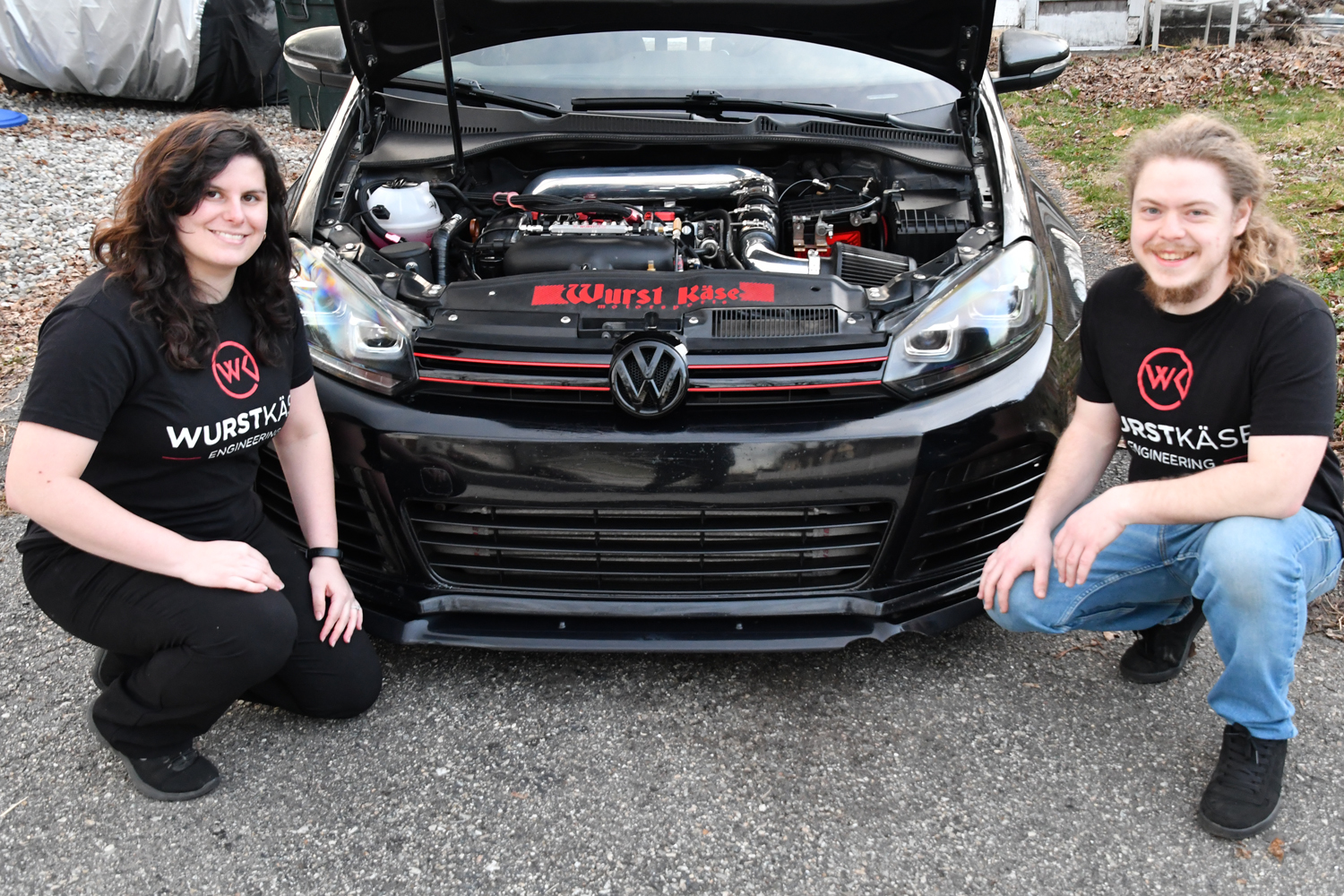
I recently learned that Dom had started his own company, Wurst Käse Engineering. You have got to love the name. I do. For his first product he directed his laser focus on what he considered to be the significant shortcomings of methanol injection systems available in the market.

Meet Dom and his kick-ass methanol injection system.

A sharp engineer’s insights inspires a quantum leap in methanol injection

Kelly and Dominick

Dom’s 2011 2-liter, 4-cylinder Volkswagen GTI came stock with 200 horsepower. Under his stewardship it presently pumps out a shade under 400 horsepower. It will easily plant your eyeballs against the back of your skull. Dom, however, has yet to be satisfied. Nonchalantly, he projects quiet confidence in his ability to extract even more power from his willing German 2-liter 4-banger. Methanol injection placed high on his list of intended upgrades.

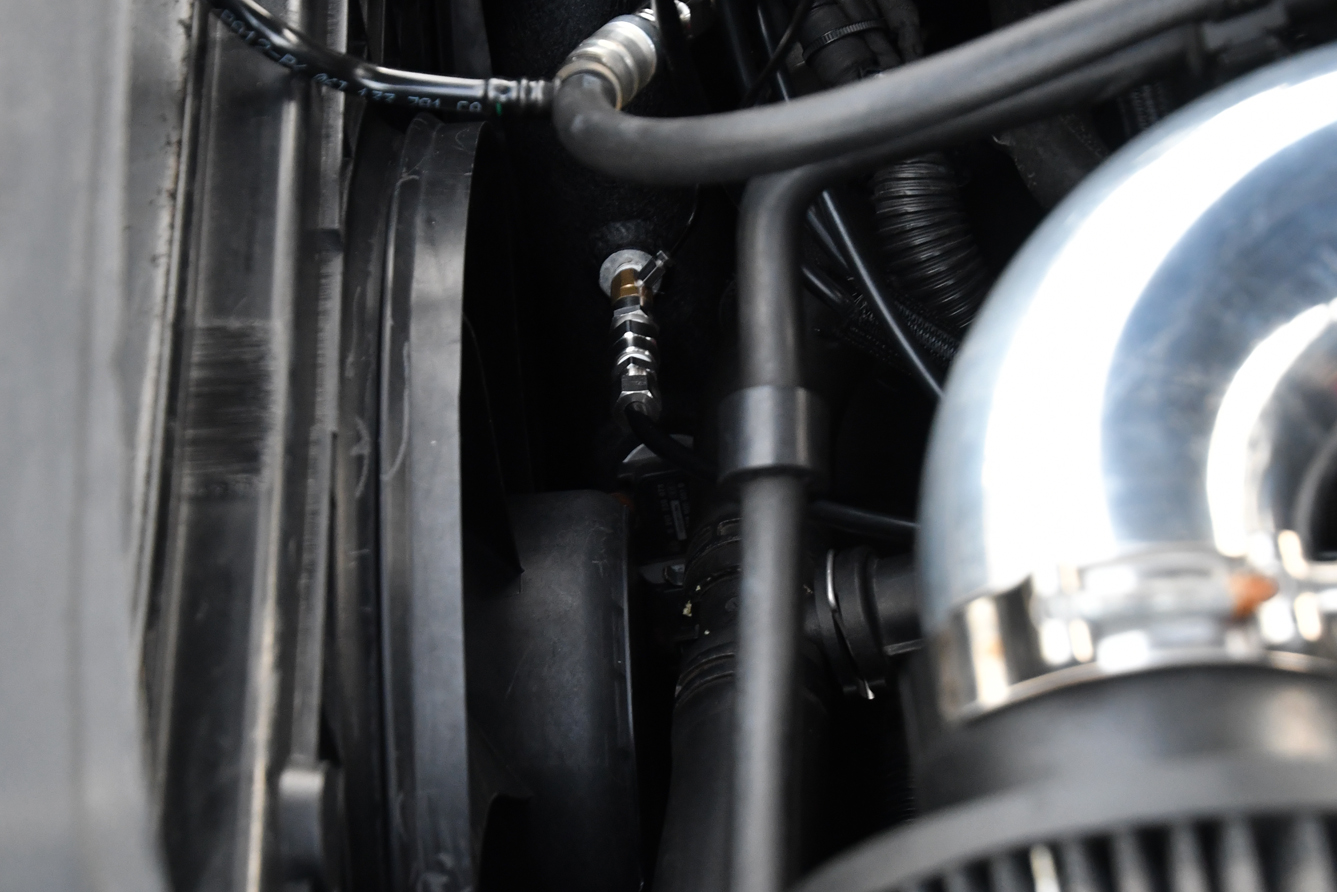
An especially attractive upgrade for turbocharged And supercharged engines, methanol injection delivers a finely atomized mist of a water/methanol mixture to an engine’s cylinder fuel charge. The cooling effects of the mixture, lowers the temperature inside the combustion chamber. This reduces the likeliness of detonation (knocking) that can reduce performance, fuel economy and, worse, severely damage a high performance engine. As well, methanol provides the added bonus of increasing a fuel’s octane rating. This pays off with increased horsepower with proper tuning.

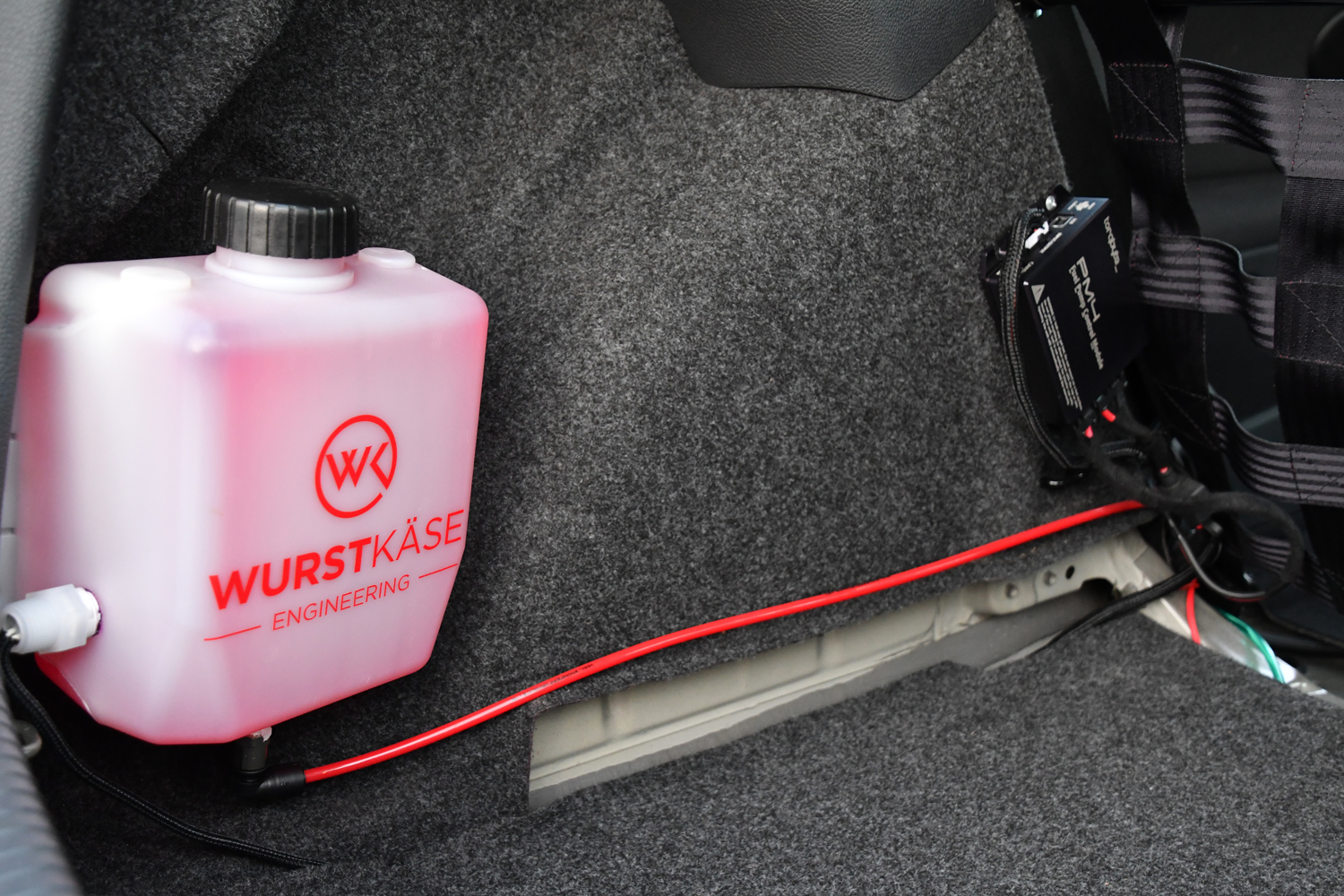
Wurst Käse  Water/Methanol Tank

Unfortunately, Dom experienced great dismay upon surveying the quality of the methanol injection systems available in the marketplace. Upon expressing his disappointment to his, then, girlfriend Kelly Moran, her response makes clear why they are about to, now, become man and wife. Kelly says, “’He’s the kind of person that’s always looking to change the world with his inventions and always looking for that kind of outlet. And he loves cars and he’s always trying to make his car the best it possibly can be. When this opportunity came about, he saw the need for a better system in the marketplace. We discussed the opportunity and I said ‘you could do it better.’ Like, there was no doubt in my mind that he could do it.”’

In naming his burgeoning automobile high performance tuner friendly company, Wurst Käse Engineering, Dom displays an elevated sense of humor, a welcome but uncommon attribute among engineers, not unlike finding pearls in oysters.

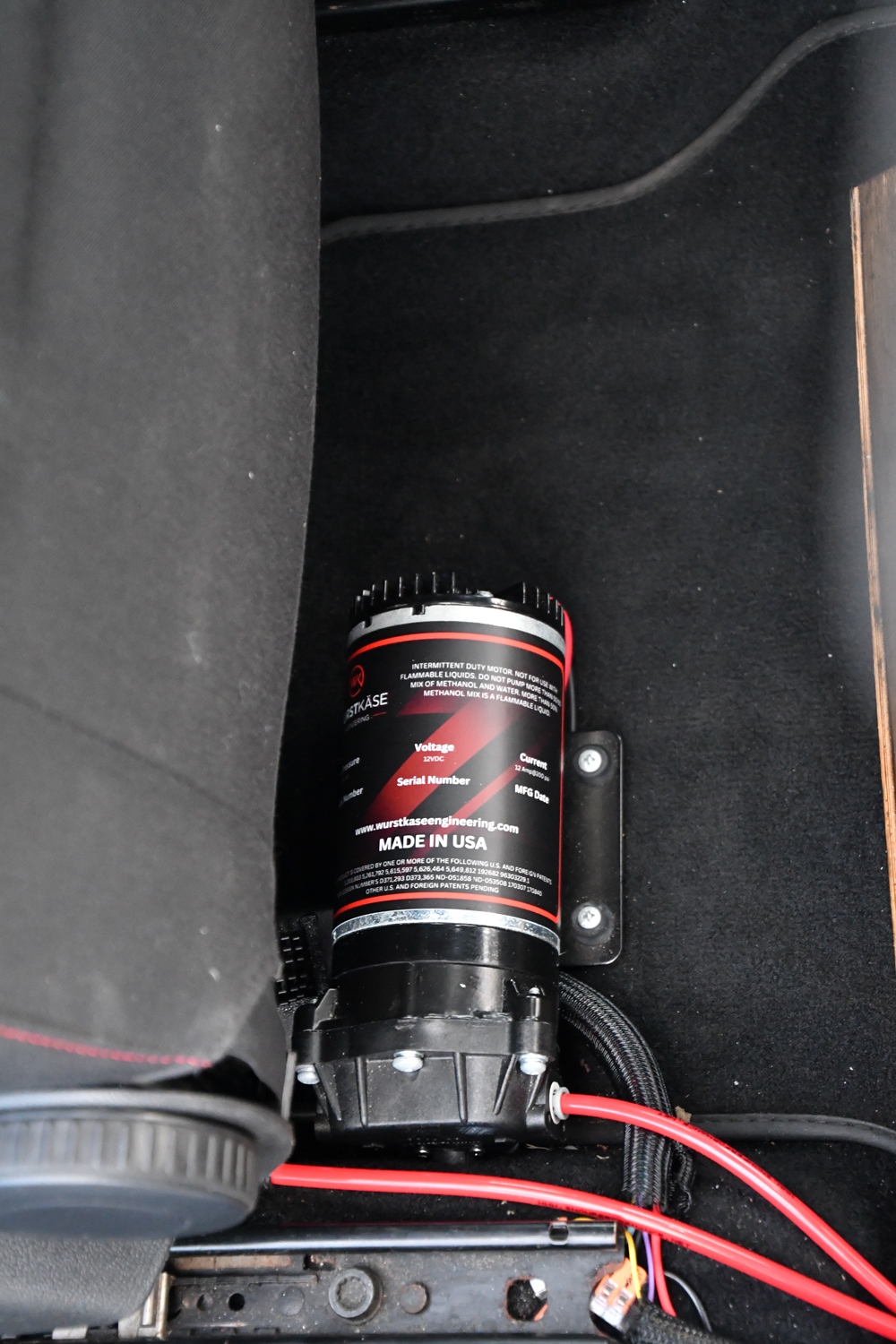
Wurst Käse Methanol Pump

As a gifted aerosol engineer, Dom possesses years of experience conducting research with applications including filtration, e-cigarettes, cigarette smoke, emissions, and environmental pollutants with particle sizes down to 2.5 nanometers in size. One nanometer equals one billionth of a meter (0.000000001 meter or .00000004 inches). You will not find either on your average ruler.

To be clear, an aerosol exists when tiny particles of a liquid or solid are suspended within a gas. When under pressure aerosols can be released in a fine mist as with a spray room deodorizer or exhaust emissions. Clearly Dom’s comfort in the micro particle aerosol

world uniquely qualified him to explore advanced solutions to aerosol applications like methanol injection.

When Dom’s aerosol engineer experience and tuner-skilled car guy interests collided with his disappointment in available methanol injection systems it produced a perfect storm. An inspired and revolutionary product ensued.

Ever the engineer, Dom says, “When I first started getting into methanol injection and thinking of actually implementing it, I inspected the nozzles of existing systems in regard to their performance and efficiency. I was not impressed.” Dom knew of the extensive research that had been performed on fuel injection nozzles. He says, The key to superior nozzle design is to facilitate creating the most surface area of the fuel being injected.” The logic being that the greater the surface area the more thorough and efficient the resulting combustion. Dom, knew that the best way to achieve that efficiency demanded a really good aerosol generator. In inspecting methanol injection kits on the market, the frequently crude designs surprised him. Dom says, “Not only did we see a lot of big droplets resulting in low use of available surface area but plenty of nozzle designs with all sorts of shortcomings.” Dom found nozzle designs relying on moving parts that could degrade resulting in wasted fluid and corrosion. Upon closer scrutiny Dom found systems relied on old nozzle designs used in home

Wurst Käse Throttle Pipe Injection

heating oil burners with modifications to support methanol injection. Aghast at his findings and confident in his abilities, Dom set about to create and market a superior system.

In a wise first step he enlisted his market savvy chemist girlfriend and soon to be wife Kelly. In addition to being a social media digital native, Kelly possessed significant experience in test bench analysis for product assessment.

Together Dom and Kelly embarked on a close to 2-year research journey exploring the fine details of systems presently being sold. Dom says, “We identified the best products currently available and bought their kits. We built a test bench that simulated intake air and how quickly that intake air could decrease in temperature when injecting various amounts of water with different methanol injection kits.” Over the 2-year research period they succeeded in developing a standard for assessing performance and quality and the target specifications for what would become their system. At last the time had arrived to design their own.

Dom says, “All testing was conducted using my Volkswagen GTI as a test mule. Under heavy load, I observed the presence of some knock and pre-ignition. It demonstrated to me that a lot of opportunity existed for a better system.” It became evident that technology he had previously employed in biomedical research offered significant promise for an automotive application. This early work gave birth to the Wurst Käse Engineering tagline, “Science Meets Performance.”

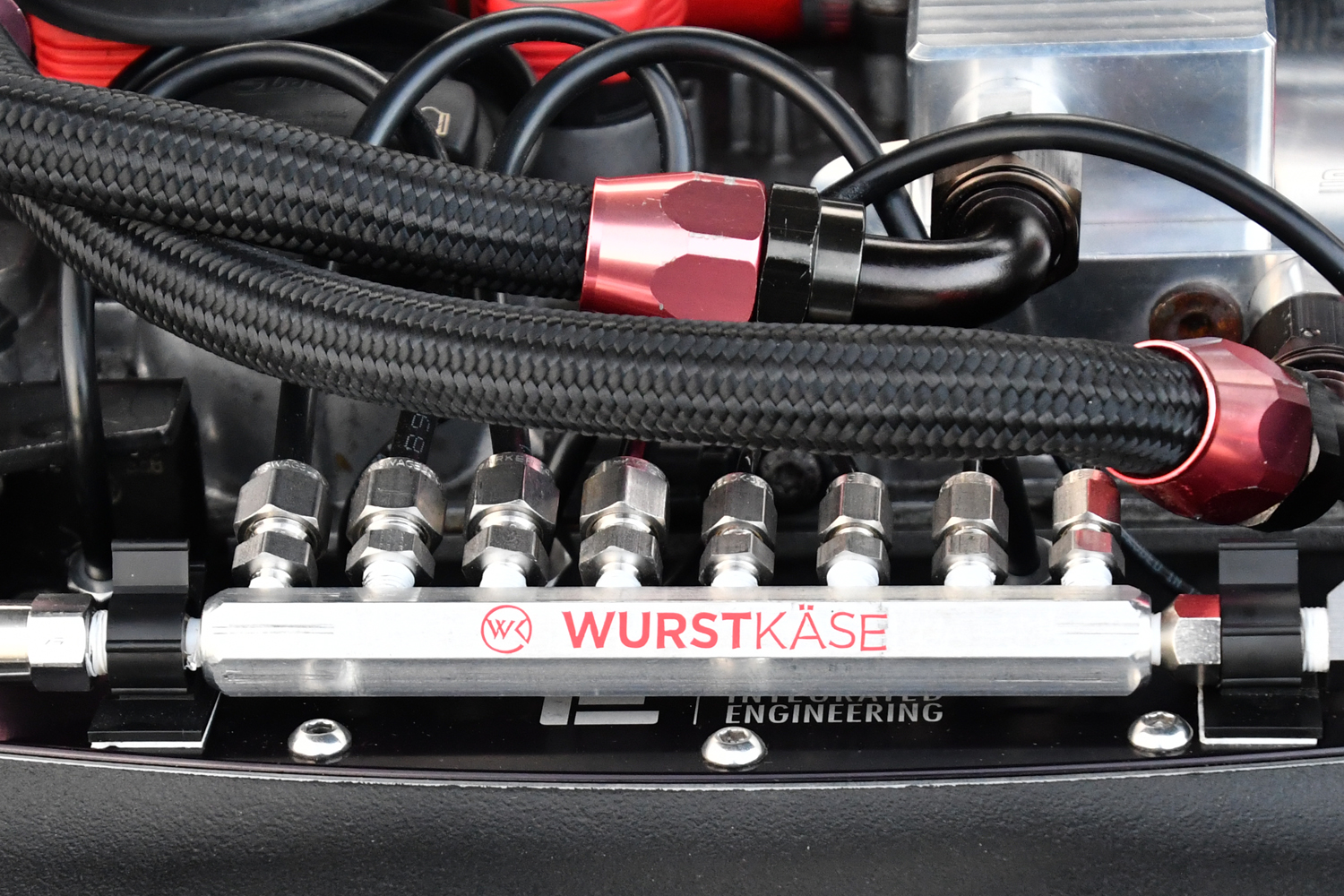
Wurst Käse Direct Port Injection Manifold

Dom says, “One such breakthrough courtesy of our bio-engineering  test bench experience came with regards to determining the right particle size and the right concentration to achieve the best cooling capability with the least amount of liquid injected.” In other words Dom had a tool to research how to maximize the cooling effect while using the least amount of methanol mix. It resulted in a uniquely precise and efficient nozzle design.


Kelly and Dom dedicated two years to developing, refining and perfecting a nozzle that significantly elevates the bar for system efficiency, durability and simplicity. Dom says, “Based on the science we had to create the nozzle that would support our findings.” To start, Dom modeled his concept on SolidWorks 3D CAD design software. Then he and Kelly spent countless hours machining brass prototypes, testing different hole sizes, depths and combinations until they found themselves going in the right direction. With a working prototype completed they sent it to a gifted machinist and placed an order for their prototype in stainless steel. If seeing the first prototype in stainless did not make all the years of work worth it, putting it on the test bench surely did.

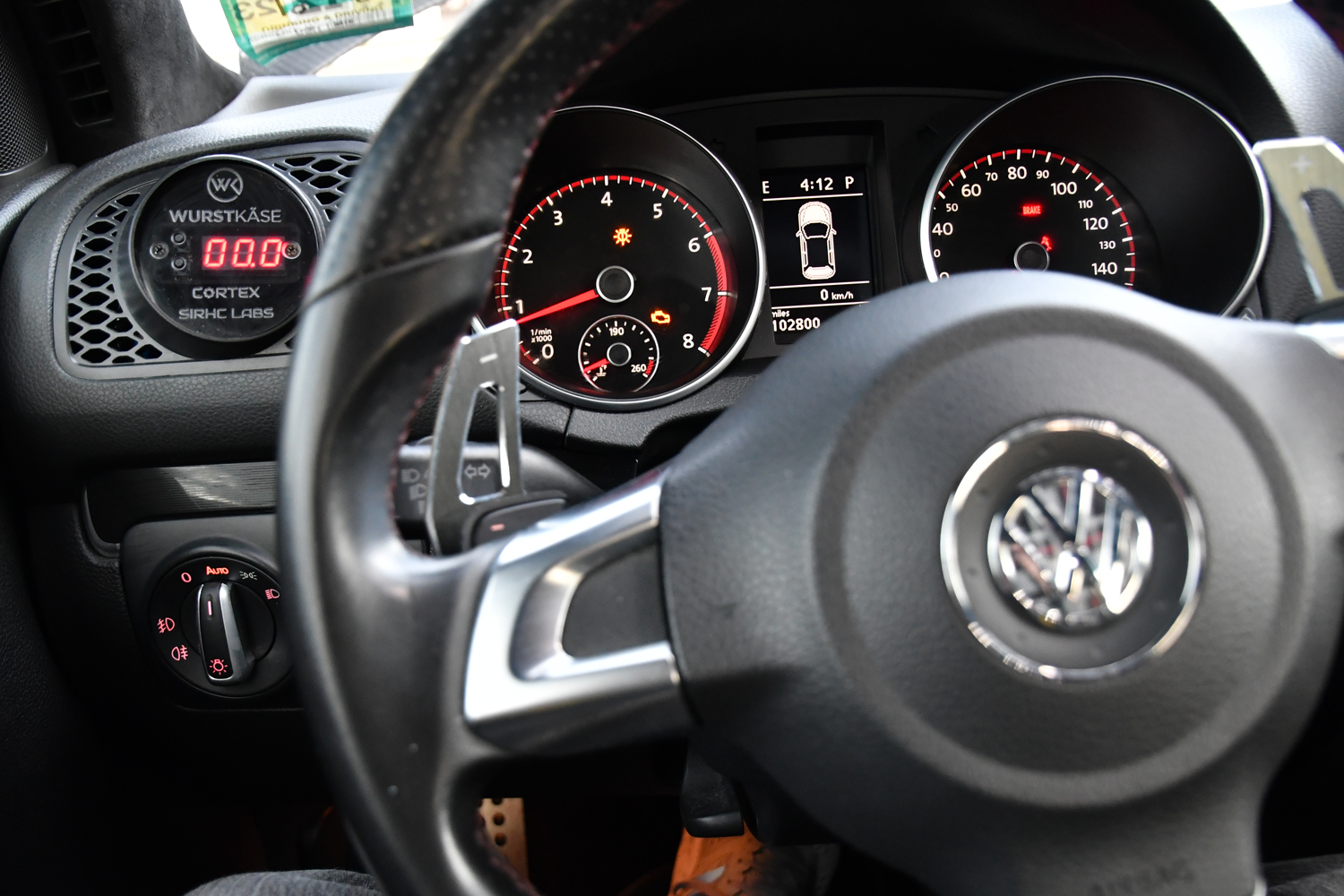
Wurst Käse Variable Injection Controller

Dom says, “Our testing confirmed we had designed the best nozzle for optimizing methanol injection based on delivering small particles that cooled most efficiently.” However, with testing it became evident that different solutions and benefits had different types of performance gains.” Achieving the best performance demanded optimizing to deliver the right benefits, for example providing for more fuel, more air or both. Systems on the market with varying droplet size including some very big droplets lack the ability to provide the optimum cooling associated with homogeneous mixture ratio. Far surpassing the competition, Dom’s new methanol injection system possesses the ability to inject on and off very quickly combined with the capability to deliver consistent performance over a wide range of injection pressures. It does so by delivering a charge of consistent water/methanol solution to each of the runners feeding the cylinders. Dom, in thinking outside of the box, harnessed his scientific acumen in bio-technical aerosol engineering to advance automobile performance.

For the serious tuner or the serious car guy, the Wurst Käse methanol injection system delivers:

  • Quicker evaporation and efficient cooling
  • Better homogeneity of sprayed fuel resulting in equal delivery to different cylinders
  • Greater efficiency by delivering the same cooling characteristics while using half the methanol/water mix.
  • Greater cost effectiveness by spending less money on methanol
  • Greater range on the same tank or use of a smaller tank
  • Better atomization at low pressures to make the most of a variable flow system

Now, after almost three years Dom and Kelly stand ready to bring Wurst Käse Engineering’s methanol injection system to market. In reflecting on all that future newlyweds Kelly and Dom put into making the Wurst Käse methanol injection system a reality, Kelly laughs and says, “We have far more planning time in Dom’s system than our wedding, and that’s fine with me.”

Click to view very cool video of Wurst Käse bench testing

By |2024-03-14T17:20:33+00:00March 14th, 2024|Comments Off on Conversations With People We Value #52

Cars We Love & Who We Are #50

In “Betraying the Brand or Smart Business? Part I” Drivin’ News sought to explore the impact of BMW’s new oversized grill and new design badge on the BMW brand. In examining the nature of branding, Part I looked back at how Mercedes-Benz in the 1990s had responded to market forces for which its engineering focus had been deemed untenable. How they dealt with it required many broken eggs to create the new Mercedes-Benz brand omelet of the late 1990s. The resulting outcome, though painful, did seek to morph the brand into representing a more consumer oriented maker of luxury automobiles while preserving its iconic 3-pointed star.

Part II visits Volvo and its branding challenges in the years just before and after being purchased by Ford in 1999.

Betraying the Brand or Smart Business? Part II


The experience of another great brand, Volvo, with its iconic Iron Mark logo offers important lessons in the value of fidelity to brand values.

When I came on board with Volvo Cars of North America in 1980, the previous decade of the 1970s had seen Volvo featuring taglines like “The car for people who think,” and in 1978 “A car you can believe in.” Reflecting the somewhat cerebral nature of its taglines’ appeal, Volvo courted a niche to which it played well. Its accessory catalog could easily have included Volvo branded leather elbow patches and pipe cleaners.

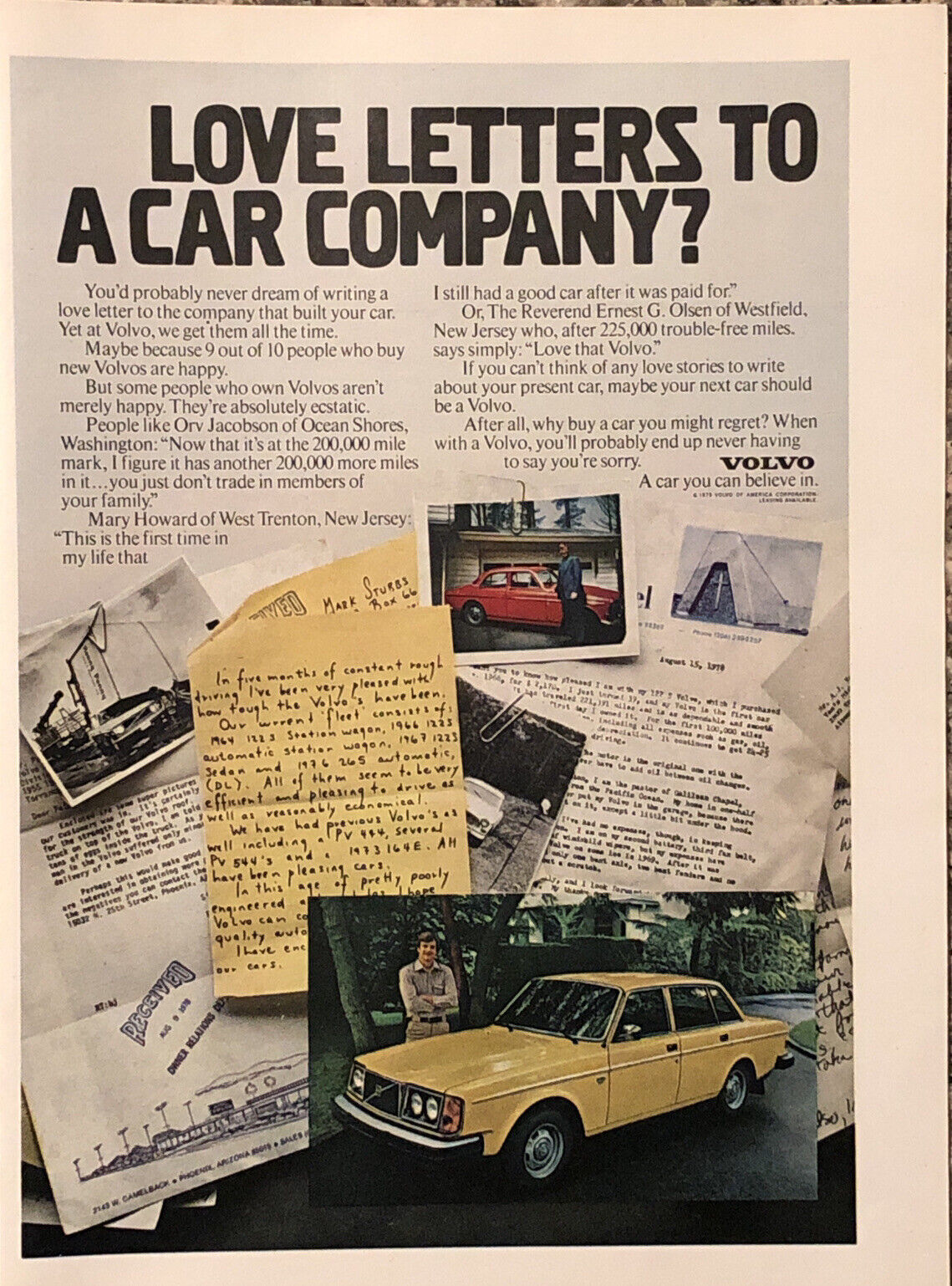
1979 Volvo “Love Letters” ad

With the 1980s, it seemed the world discovered the safe, durable, reliable, rugged, environmentally conscious and comfortable Swede. While always a small player in a much larger automobile universe, Volvo always punched above its weight. It enjoyed extraordinary brand recognition, far beyond what its modest sales volume would normally merit.

To think of any other car brand proudly displaying an “I Love my car” bumper sticker would have been unthinkable. I love my Lincoln? I love my BMW? I love my anything? It did not work. But “I love my Volvo,” absolutely. Owners loved their Volvos. So much so that they would pen love letters to Volvo headquarters especially ones featuring a common theme. Safety! Unsolicited, Volvo owners would send photos of terrible accidents they had experienced accompanied by letters thanking Volvo for the safe cars they built while proclaiming, “Volvo Saved My Life.” A steady stream of such letters inspired Bob Austin, then, Director of Marketing Communications at Volvo Cars of North America to start the “Volvo Saved My Life Club” in 1990. Austin said, “The club was a way to recognize a very special group of people and say thank you in a very respectful way.”

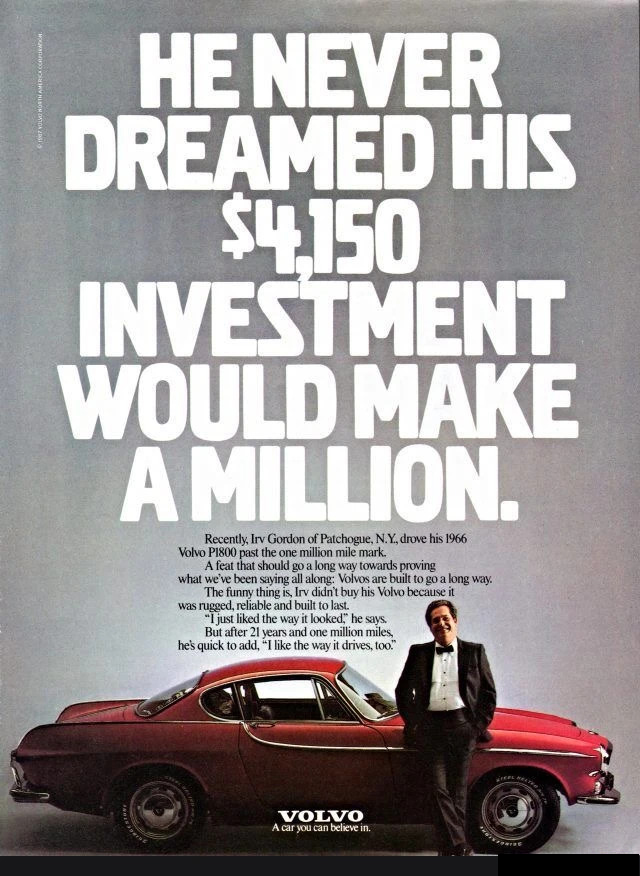
At the same time Volvo delighted in recognizing another group of owners. This group shared a very different Volvo attribute, longevity. These Volvo owners put hundreds of thousands of miles on the Volvos they loved. This lead to Volvo establishing the Volvo High Mileage Club that awarded handsome badges in 100,000 increments to drivers with high mileage Volvos. One such driver stood tall as a renowned figure among car people in general and Volvo people in particular. His name was Irv Gordon. Gordon had long held and most likely will always hold the Guinness World Record for most miles driven in a single car. Over the span of six decades Gordon put 3.2 million miles on his 1966 Volvo P1800.

Irv Gordon and his 1966 Volvo P1800

By the early 1990s, I had started my own business which enjoyed Volvo as a client. Still Swedish to its core, Volvo offered a new family of good looking and popular 850 sedans and wagons that all remained faithful to the Volvo brand values.

Volvo’s tagline of the 1990s “Drive Safely” proffered friendly and thoughtful counsel. In reinforcing long held brand values, the tagline really cut to the chase. In the Pantheon of Volvo core values intelligent comprehensive world class safety design stood the tallest. Going back to the very beginning in 1927, safety stood foremost in the minds of Volvo founders Assar Gabrielsson and Gustaf Larson when they stated, “Cars are driven by people. Therefore, the guiding principle behind everything we make at Volvo is, and must remain, safety.”

If asked, “What do you think of when you hear the name Volvo?” For all members of the Volvo family of employees and much of the public the answer would be “Safety, durability and quality.” In 1995 Bill Hoover, then Volvo Cars of North America Executive Vice President, speaking for all those Volvo executives who had come before him in carrying the Volvo banner, was asked. “How does a company with such relatively small annual sales get such high brand name recognition?” Hoover said, “We are not trying to be the auto du jour. Our image has consistently been one of safety, durability and quality.” Researchers at Yankelovitch Partners, a major research firm at the time, assessed the reason for Volvo’s success. Their conclusion? “Volvo promoted their car as the choice for safety, durability and quality and they delivered.”

However, during the 1990s winds of change started buffeting Volvo in North America. Traditional Volvo brand advocates had been organized out of the North American operation. Longtime CEO Joseph Nicolato retired in 1991. Hoover was provided an “opportunity” to manage Volvo’s Asia/Pacific marketing operations in Singapore and Austin chose not to join Volvo in its move to Irvine, California after Ford, under CEO Jack Nasser, bought Volvo in 1999. The cost, $6.5 Billion. Ford’s purchase of Volvo represented a watershed moment. By relocating Volvo to the west coast Ford intended to package it into Ford’s newly created Premier Auto Group (PAG) with Wolfgang Reitzle at the helm. PAG membership would consist of Volvo, Jaguar, Aston Martin, Mazda, Lincoln-Mercury and Land Rover, all Ford owned marques.

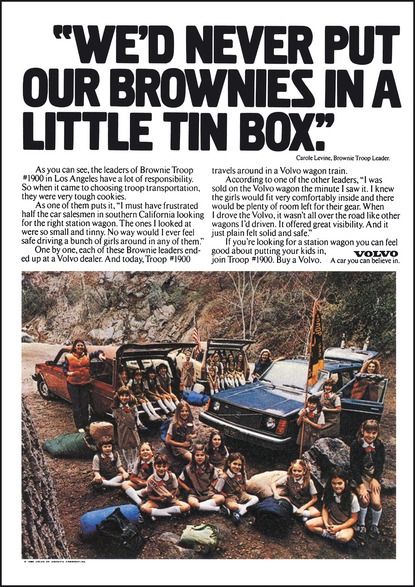
1981 Volvo “Brownies” ad

Unfortunately, Volvo’s relocation from Rockleigh, NJ to Irvine in 2001 gutted the corporate culture. Purged from the loyal Volvo ranks, a large number of longtime experienced employees with extensive product knowledge either did not get invited or chose not to uproot and move across country. Sadly, seven years later when PAG failed and with most of its pieces sold off, Ford would return Volvo to New Jersey. Regrettably it could never reclaim the lost and invaluable experience and expertise that had been willingly sacrificed. Ford ran Volvo off a cliff and without safety, Volvo would not survive the crash as a Ford owned brand.

With the demise of the old guard (Literally, like the three Grail Knights in “Indiana Jones and the Last Crusade” Austin, Hoover and Nicolato, had protected the Volvo brand) a drum beat emanating from Sweden first heard in the mid-1990s grew louder. The message, now, arrived loud and clear. Volvo should move up in the luxury ranks to be priced like Mercedes-Benz and BMW. In the March 23, 1998 Automotive News, a front page photo of Volvo senior management accompanied a story trumpeting “Volvo adds spice to image of safety.” The first paragraph said it all in describing global management’s stated belief that, “(Volvo’s) safety-laden reputation may be too square for today’s buyers.” The corporate mindset of Volvo’s, then, new owner, Ford, proved richly fertile ground for navigating a sea change in brand messaging driven by powerful winds of competitive brand envy.

It became a given by management that, “Safety was “understood” by all customers and, thus, did not need to be promoted. In word and deed it seemed new Volvo management espoused opinions of old Volvo brand values with a palpable disregard bordering on contempt. At a time when the Ford Explorer had a well publicized rollover issue, Volvo, had a suspension design in its newly introduced XC90 SUV that offered greater rollover protection. Volvo had to limit its advertising to avoid comparing its superiority to other brands.

1980 Volvo “LOVE” ad

From the new millennium’s early aughts to its early teens the market witnessed a Volvo intentionally transformed into a brand unintentionally adrift. Where once Volvo advertising resided at the pinnacle of wry humor (We’d Never put our brownies in a little tin box and What four-letter word best describes your car?), its efforts now seemed more “awry humor” that unwittingly insulted the very people to whom Volvo wished to sell.

Volvo’s iconic High Mileage Club’s substantial metal medallions awarded at 100,000 mile increment (Up to 1,000,000 miles) were shelved in place of a decal for every 250,000 miles. The prevailing management thought, then, called for not incentivizing people to keep their Volvos in the hope that they would more frequently buy new ones. Another high mileage Volvo association, the promotion of Irv Gordon, the beloved and world famous million mile driver went to the far back burner.

Volvo’s new direction witnessed co-branding promotions whose intent bordered on the threshold of incredulity. Volvo reportedly poured funds into the vampire themed Twilight Saga series of romance fantasy films. The Twilight films targeted young audiences comprised of a significant percentage of teenage girls, many too young to drive. However, Paul Walder, Global Marketing Manager at Volvo Cars said “More younger people think that Volvo is ‘cool’ because Edward drives one and this will impact on their future car buying decision making.” Contestant winners, young women ages 18 an 19 took home new XC60s.

Volvo committed significant dollars, as well, to its association with the film “Pirates of the Caribbean.” This involved people following clues to finding a Volvo buried by a salt water beach in the Bahamas. It is said that the size of the expenditures on the film promotions left little remaining to support North American advertising. Tracking data showed no association between promotional money expended and additional vehicles sold.

Coco Framboise

In a truly head scratching move, Volvo launched a “Naughty Volvo” S60 model promotion possessing the power to drive a stake through the heart (Apparently the vampire thing has stuck with me) of any lingering “family values association” remaining in consumer memory. Promotional events showcased the “Naughty Volvo S60” in venues such as a make-shift “Red Light” district in Toronto featuring “Burlesque star Coco Framboise with sounds provided by DJ Dopey and Poizonus.” The campaign included slogans like “Spank the competition” and “Naughty Volvos are coming.”

The start of the new millennium and the promotion of new values begun under Nasser and Reitzle did not go well for Volvo. From MY2000 with sales of 123,178 to MY2010 where sales had plummeted to 53,948 Volvo had lost its way. For the purpose of this article, the year 2010  will serve as the point in time where the decision on brand betrayal or good business will be determined. Why?  By the end of 2010 Ford would have sold Volvo to Geely of China. The price, $1.8 billion. $4.7 billion less than it had paid. The Geely purchase presents a whole new story for a later date.

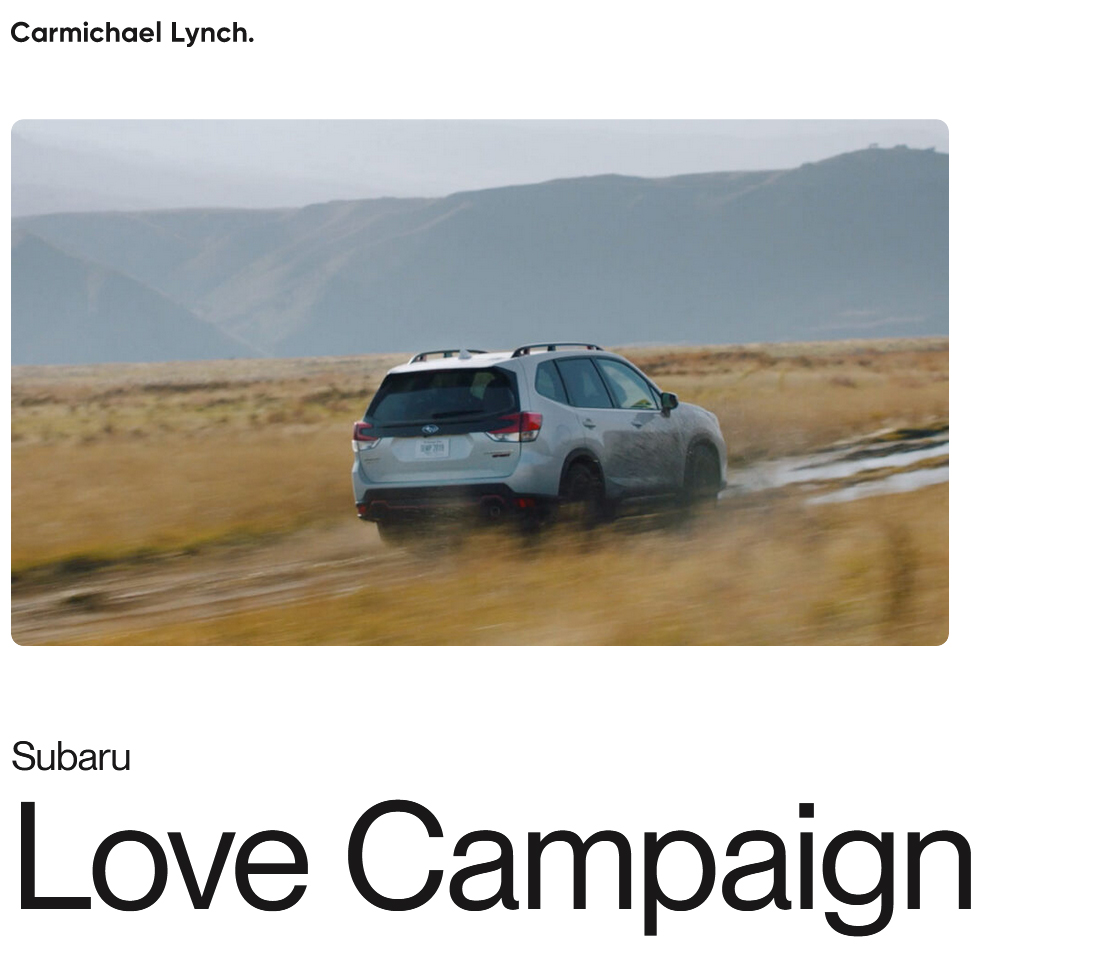
Brand betrayal or smart decision? The plummeting sales volumes and the subsequent sale of the company screams betrayal. However, the good news for the traditional Volvo brand values comes with the success it once again enjoys, but not with Volvo. When Volvo dropped it, Subaru snatched it up and ran. The following quote comes from Subaru’s agency of record, Carmichael Lynch:   “How do you stand apart when your competition is spending literally billions of dollars? By connecting with what’s truly important to your audience — not just features they might like, but the life that they love. Their families. Their pets. The great outdoors. Even the venerable old Subaru they’ve been driving forever. In 2007, we introduced the “Love” campaign. In the years since, sales and market share have more than tripled and love has spread to every level of the brand.”

Many industry people recognize that Subaru has drawn heavily from the original Volvo playbook with great success as its reward. Themes like the “Love” Campaign, fund raising, golden retrievers, driver’s stories, environmental concerns and, above all, safety, all masterfully interwoven with a consistent voice and narrative have served Subaru well. From 2009 to 2019 Subaru sales in the U.S. increased 200% from 216,652 units to 700,117 units. Such success has many parents, but the Volvo themes sit at the head of the table.

A humorous aside. Austin, now, Past Volvo Director of Marketing Communications, has a good sense of humor. A number of years back he complimented the Subaru Advertising Manager on Subaru’s wrecking yard “They Lived” TV commercial. With a smile he added, “In fact I liked it when I did it 10 years ago.” Both laughed.

Now what of BMW? Brand Betrayal or Smart Business?

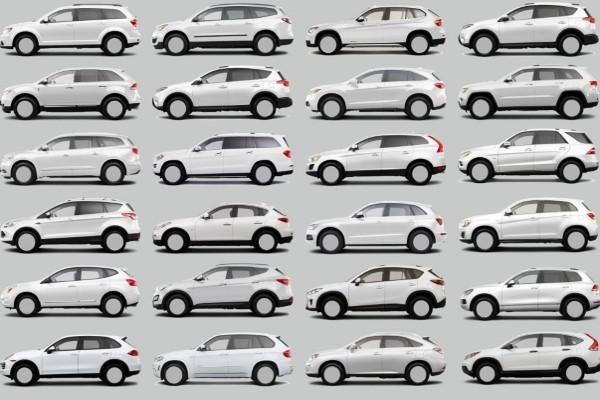
All different model SUVs

BMW, as the Ultimate Driving Machine, despite considerable success faces many challenges in a world racing – some might say hurtling – towards autonomous cars and where visual identity is increasingly harder to come by. (See nearby image of two dozen recent white SUVs from different manufacturers. Can you tell them apart?). BMW does not face this threat to individuality alone. And to be fair, BMW does produce designs a notch above. However, for the most part, unlike years back, today, all of one manufacturer’s model line looks pretty much the same as every other manufacturer’s offerings. Basically everything looks like a jelly bean with a few razor edges added for character. Just sayin’. This causes manufacturers to take desperate measures to distance themselves from the crowd. Have you noticed the more that car designs suffer under imposed hard points accommodating global market homogeneity demands, fuel economy demands and corporate packaging the larger grills have become? As an apparent natural byproduct of big grill disease, the ugly bordering on downright disturbing aesthetics of some creations produce, in the viewer, a kind of curious morbid fascination like seeing a two-headed cow and wondering how could this be? Case in point, the Lexus “Predator” grill design. Really?  Don’t laugh Audi your grill offers no visual feast for sore eyes either. But BMW? It already possessed what many consider one of the most recognizable grills in the business.
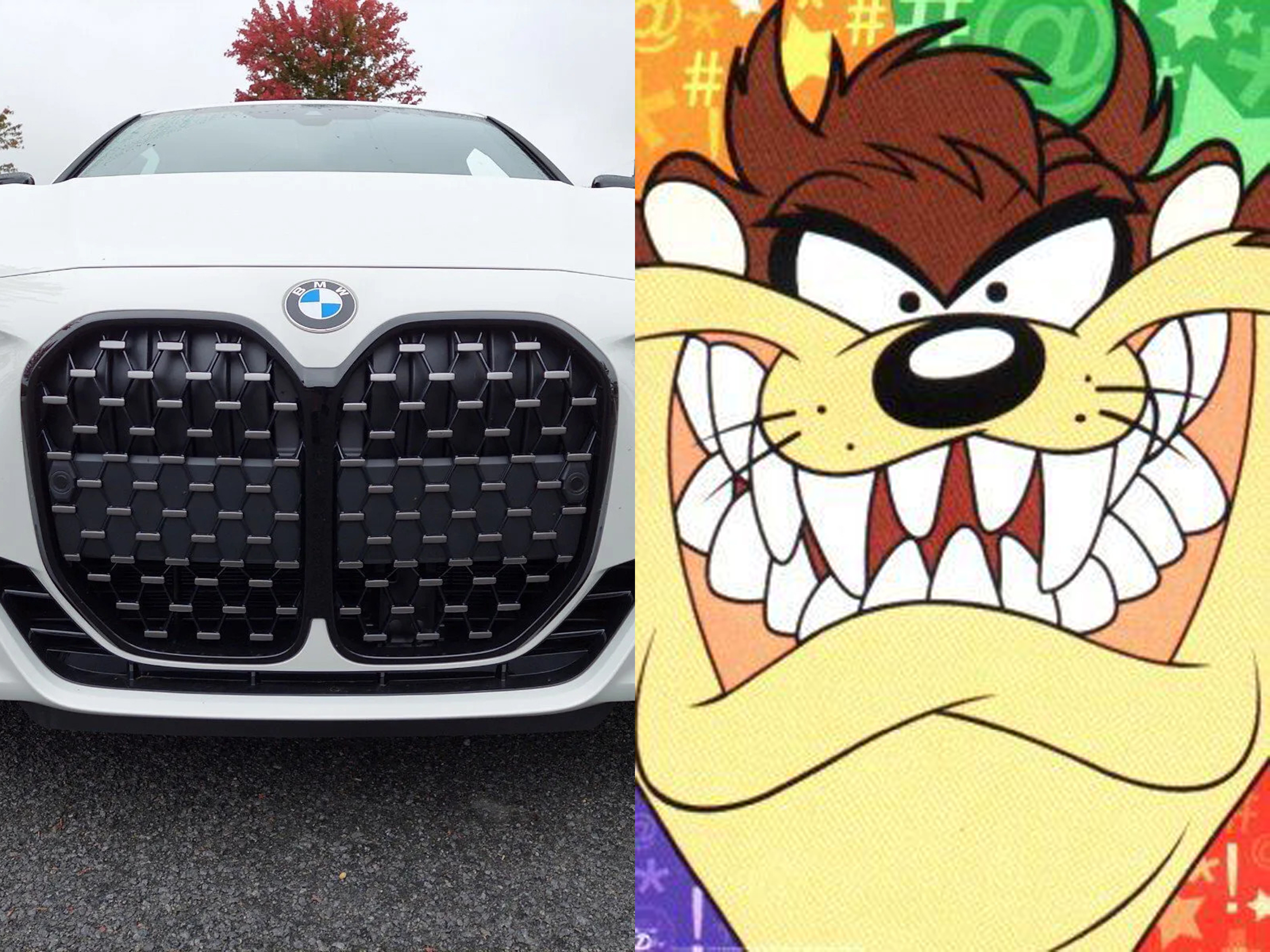
This brings me to BMW issue number one, the God-awful smiling Tasmania Devil grill. To put things in perspective while it doesn’t quite make me want to scratch my eyes out, it does make the “Bangle Butt” and the first generation Z4 front fender “Z” line border on being fond memories. Yes, a frontal feature that distinguishes and differentiates a design serves a valuable purpose when it does so in an attractive way. However, the Phantom of the Opera wore a mask for a reason.

Does BMW believe that its iconic grill design suffers from being so indistinguishable that “better to be ugly and noticed” offers valid defense of its questionable execution?

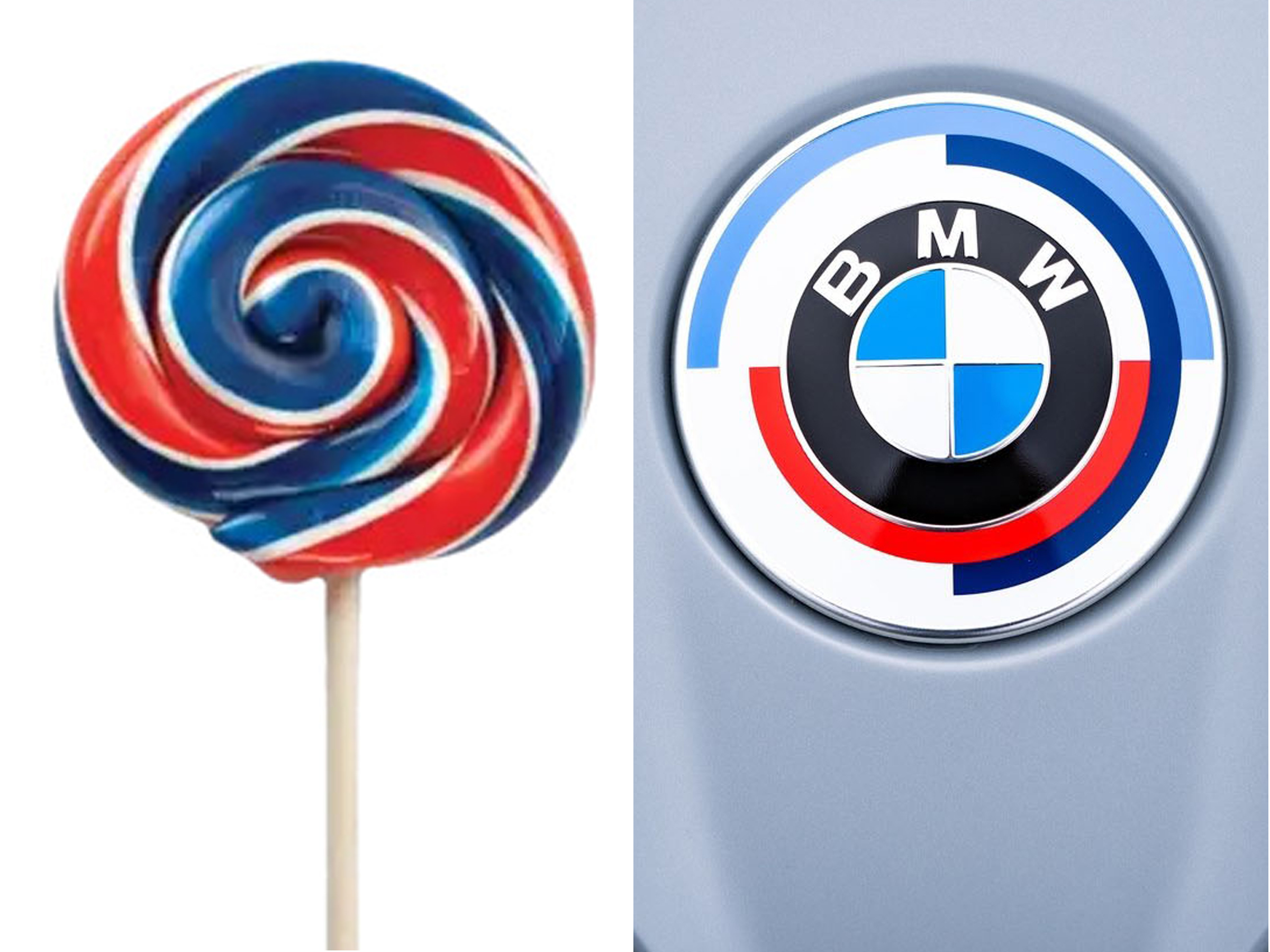
Secondly, the lollipop Roundel. Logos such as Ferrari’s prancing horse, the Rolls-Royce “Spirit of Ecstasy” and, yes, the BMW Roundel trigger a conditioned customer response. A product bearing that badge confirms that that car fulfills that long established brand’s promise. Research suggests that it takes five to ten years for a brand to be established in market consciousness. Common sense would suggest it takes one look at a distortion of the brand icon to confuse the observer. When the revered iconic badge undergoes change, the natural course of thought calls to question what other changes this new symbol might augur?

In the 2004 Automotive News World Congress Helmut Panke, then Chairman of BMW said, “A brand is a promise, a promise that the products of a brand provide substance, authenticity, emotional appeal and heritage.”

Does the jumbo grille and the pin wheel badge seem frivolous and unworthy of the BMW brand in light of Panke’s words.

What do you think?

For those interested in reading that offers insight into Branding and the automobile industry, the following are three recommendations:

  1. Where the Suckers Moon, An advertising story. Randall Rothenberg, Alfred A. Knopf, 1994
  2. Branding Iron, Branding Lessons from the Meltdown of the US Auto Industry. Charlie Hughes and William Jeanes, Racom Books, 2007
  3. Car Guys vs Bean Counters, The battle for the Soul of American Business. Bob Lutz. Penguin Books, 2011
By |2024-02-29T13:01:04+00:00February 29th, 2024|6 Comments

Cars We Love & Who We Are #49

Good fortune allowed me to enter the U.S. import car business in the later part of its formative years. For a subsequent period touching 5 decades I had the privilege to write for the vast majority of European automobile brands including, for over 30 years, Mercedes-Benz, Volvo and BMW. It afforded me the opportunity to work with some of the best and brightest professional men and women to grace the import automobile industry. I learned from these experienced, insightful and wise individuals the meaning and importance of “brand.” I admired how they would passionately defend “the Brand.” My time in the business also allowed me to witness corporate decisions that tacked a marque away from their traditional brand values.

This two-part issue of Drivin’ News will ask can “Betraying the Brand be good business?”

Betraying the Brand or Smart Business? Part I


For a product, a brand is a promise. A strong brand adheres faithfully to a set of values highly prized by a targeted market segment. Building a powerful brand image takes time and consistency because building trust takes time (five to ten years is a number quoted) and consistency. A brand that has established a high level of trust usually features a slogan and/or logo, the Mercedes-Benz 3-Pointed Star, Volvo Iron Mark or BMW Roundel that functions as a beacon signaling to targeted customers that this product will fulfill their expectations. A brand that customers have grown to trust represents a hard earned and invaluable asset. A product sending off-brand messages confuses the customer and undermines the brand. It raises questions.

Recently I noticed a new BMW with a redesigned version of the iconic blue, white and black BMW badge. The new iteration called to mind a child’s multi-color swirl lollipop. That together with BMW’s recent addition of the oversized smiling Tasmanian Devil grill gave me pause. I realized that I had witnessed this manifestation of questionable branding efforts before. As a “car guy” such moves always engendered personal doubt and discomfort. As an exercise in retrospection I chose to revisit examples of brand infidelity I had witnessed and dig deeper before I explore two of BMW’s recent curious measures and their potential impact on the BMW brand.

Rather than looking first at BMW, Part I will start on the other side of the Strasse, with BMW’s arch rival Mercedes-Benz and in Part II, Volvo.

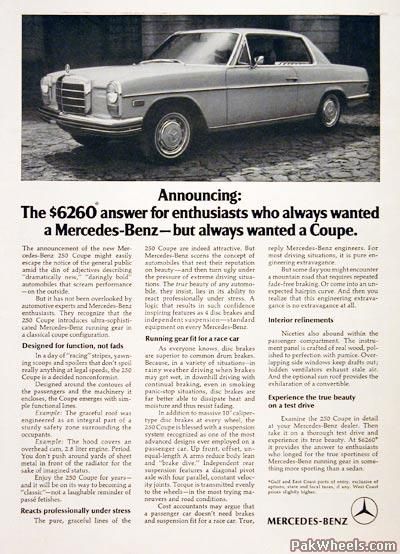
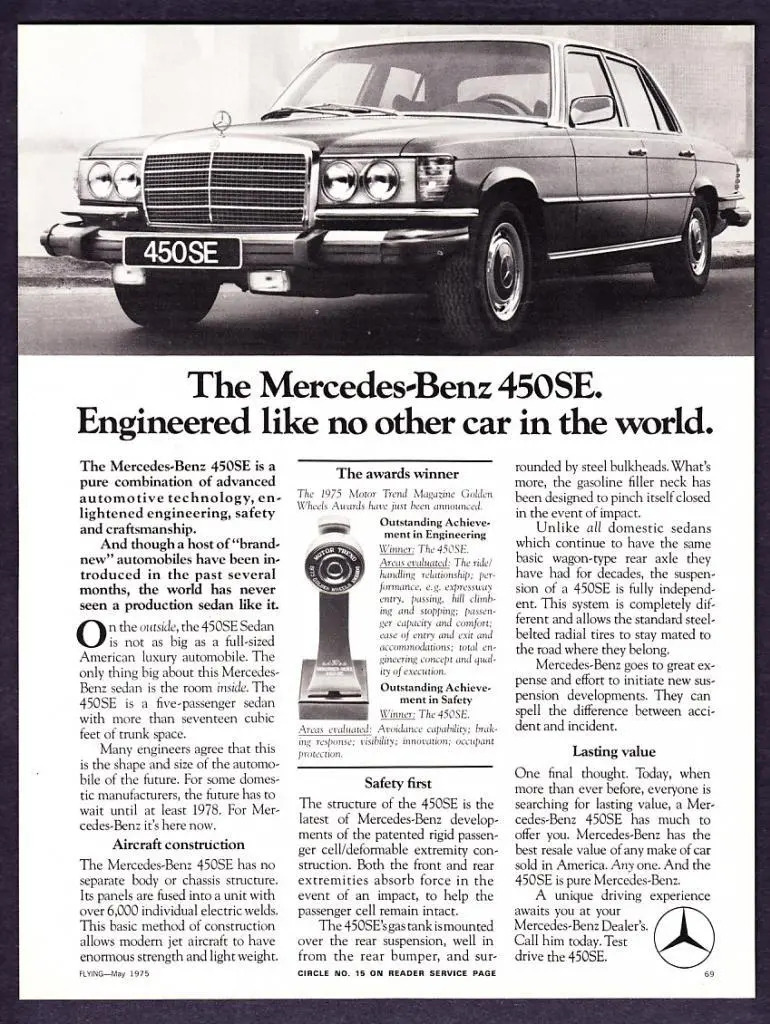
I began working at Mercedes-Benz in 1976. Then, the Mercedes-Benz boldly confident slogan “Engineered like no other car in the world” succinctly captured the Mercedes-Benz commitment to engineering excellence, quality, and luxury. It proudly advanced without equivocation the Mercedes-Benz brand values. As an organizational culture most everyone in the company embraced the passionate self-assessment of Mercedes-Benz as a builder of superior luxury automobiles for customers who understood, respected and could afford superior quality.

In the early years the business plan expressed by Mercedes-Benz management actually considered restricting overall Mercedes-Benz sales to 100,000 units to maintain its limited availability and support premium pricing and healthy margins. It is said that in the 1960s Executive VP of Sales Heinz Waizennegger laughed at the thought that consumers would ever consider paying $10,000 for a new passenger car. By the time I joined, company insiders laughed at the idea of people paying $20,000. By the 1980s nobody laughed any more.

Back then Mercedes-Benz as a company benefited from a workforce populated with skilled and dedicated car guys, both male and female, who, as a group, displayed a quiet and prideful confidence born of their perceived association with an internationally admired, stable and prosperous organization where the employees place and future seemed assured. Gifted engineers and technicians held respected status.

Many employees bought a new Mercedes each year at a favorable discount. Often the following year they would sell their year-old sedan for a profit. For longtime employees the annual profit could build to a cumulative sum where they were buying their annual new Mercedes with what felt like “house money.”

The Mercedes-Benz early North American business model succeeded based on a system where cars were designed, developed and perfected in a timely manner. Much like the aging of a prime steak or the maturing of a fine wine, Mercedes-Benz would bring without great haste well engineered and assorted superior vehicles to a loyal but limited market. However, the late 1980s witnessed U.S. sales volumes and margins declining. Word filtered out of internal management discussions considering the advisability of moving Mercedes-Benz product upscale into higher cost/higher margin but lower volume Rolls-Royce/Bentley territory.

Then Mike Jackson took the helm in 1989. He passionately preached to Stuttgart a message advocating reduced prices with more exciting product and advertising designed to reach a younger and broader market slice. To keep this in context, realize that M-B home office in Germany and M-B North America did not always see eye to eye. In their early years in America the mindset of the predominantly conservative post-war German Mercedes-Benz management in Stuttgart found the North America market baffling and at times infuriating. Especially humorous and emblematic of the disconnect surfaced in the early years when Mercedes-Benz in America pressured Stuttgart for a sunroof as a product feature. The German’s did not see the need when you could simply open the windows but, over time, Germany yielded to the demand. Shortly thereafter America wanted air conditioning. Home office in Stuttgart lost its mind. “The Americans had gotten their sunroof with the fresh air and sunshine now America wanted to close the sunroof and have air conditioning. By the 1980s, however, times were indeed changing with Mercedes-Benz having a more international character.

At the close of 1980s, U.S. sales had dropped for most European luxury car makers, including Mercedes. The economic recession, the luxury tax, and the dollar/mark valuation all played a part in the problem.

A 1991 study by J.D. Powers & Associates found that American luxury owners appreciated prestige but bought reliability, a Japanese brands’ strength. One particular reason for Mercedes’ maintenance issues, as compared to Japanese brands, emanated from Mercedes-Benz emphasis on cars being crafted more than mass produced. The Mercedes-Benz mindset at that time was expressed by Edzard Reuter, then chairman of Daimler-Benz, who said, “We constantly study our position and we always come to the conclusion that we should stay away from mass production. The economies of scale wouldn’t help us. Besides, we have a culture of engineering and product differentiation that would make it difficult.”

However, it had become increasingly apparent that Americans viewed Mercedes’ signature over-engineering as irrelevant. By 1991, Mercedes had started to pay attention to what the American customer and baby boomers in particular, wanted. This sea change in mindset resulted in Mercedes redirecting its focus away from engineering and towards marketing. Germany had listened to Mike Jackson. Mercedes-Benz would respond to a new reality by retaining the 3-pointed star but changing the value proposition it represented.

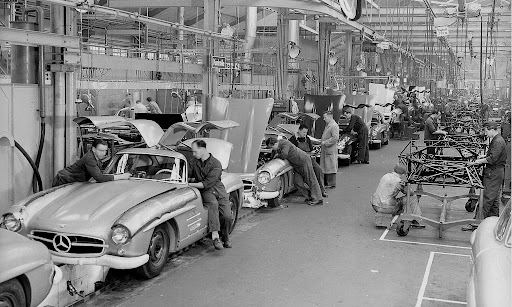
300SL factory craftsmanship

Like the canary in the coal mine, the slogan “Engineered like no other car in the world” would no longer sing the praises of Mercedes-Benz automobiles. The old brand values buckled under the pressure making way for a new paradigm intent on defining a new path to broader success.

Mercedes-Benz of North America retreated from its engineering-centric heritage to that of a North American marketing function. The retreat created pain. Notorious international business consulting firm McKinsey came in to plan the desired organizational changes with one of the results being a mass layoff of staff members that became known as “Black Tuesday.” This purging of experienced and loyal employees devastated company morale and weakened the foundation of the corporate culture. McKinsey interventions often left such organizational detritus in its wake.

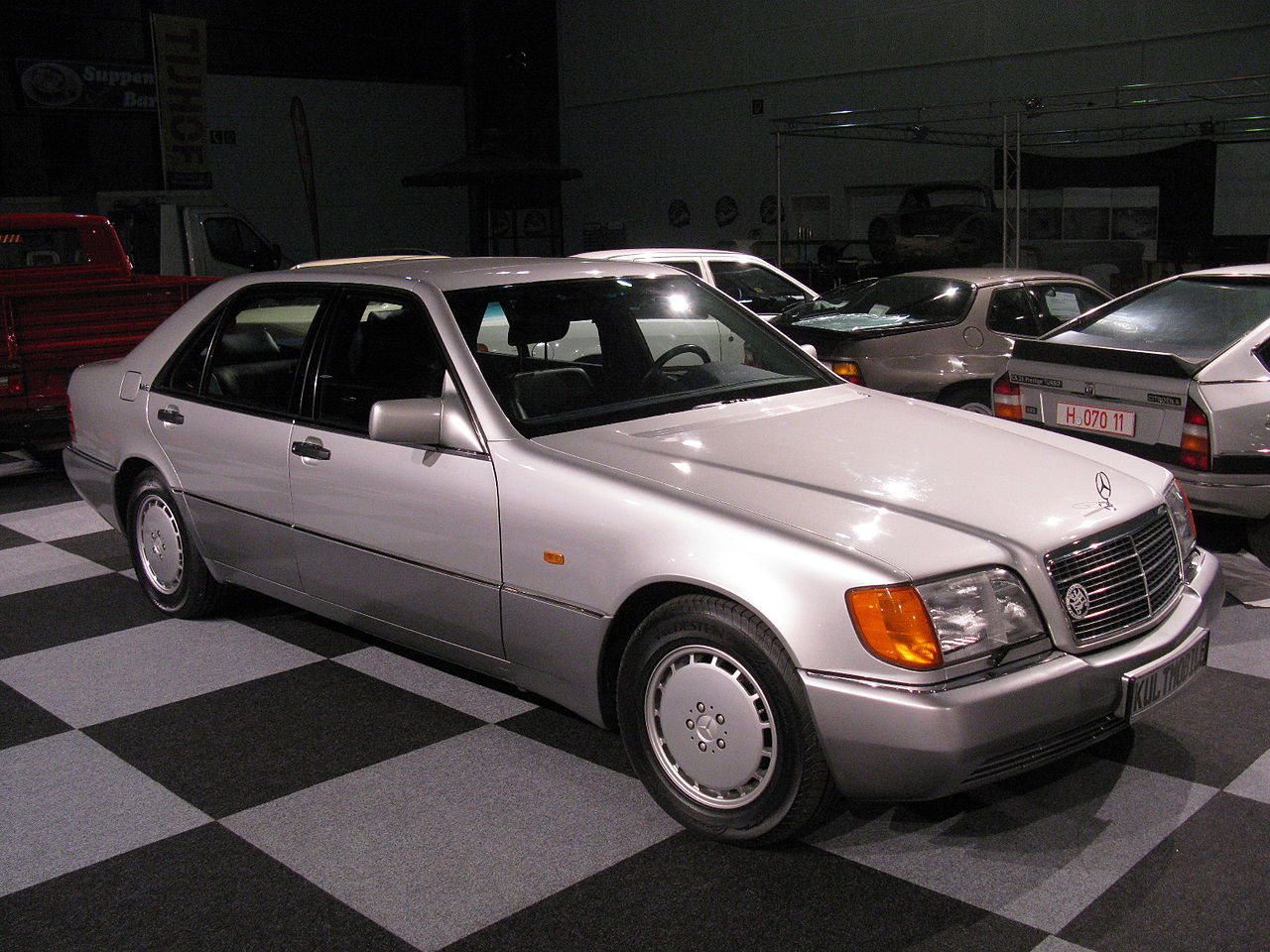
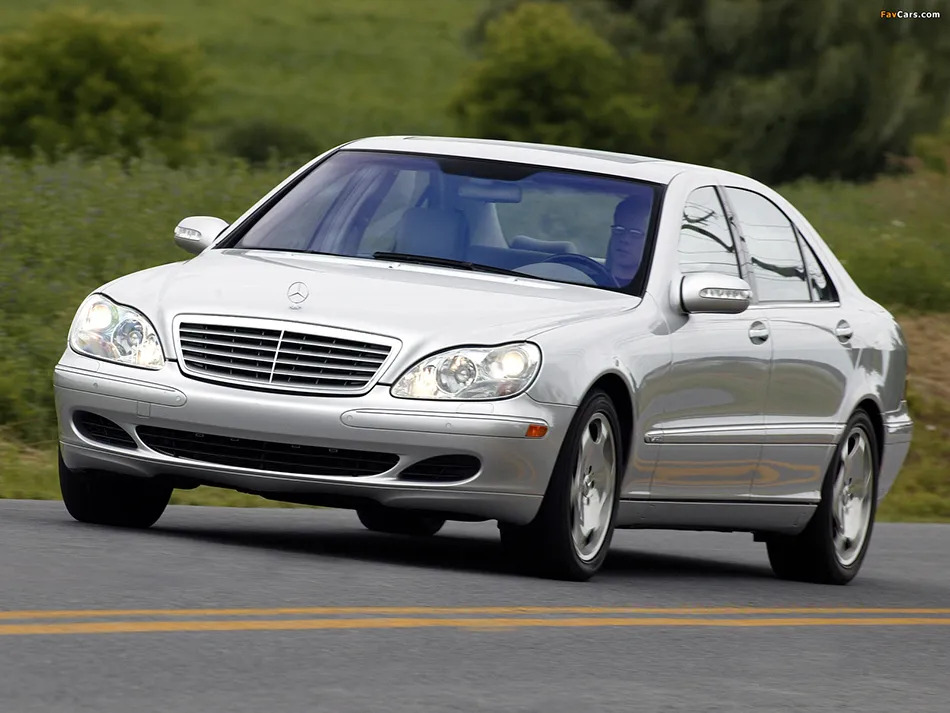
W140 S-Class

The radical departure from past practices would evidence itself when comparing the MY1992 W140 S-Class with its replacement the MY2000 S220 S-Class. With the W140, initial development started in 1981 with it coming to market in 1991. It should be noted that the final product caused much consternation in Germany. The impact of significant cost overruns associated with the project’s over-engineering (Estimate, approx. $1 billion) would ripple through the organization with lasting effects. That said, in the case of the W140, save for a later developing issue with the car’s biodegradable wiring insulation, its excellent build quality and noteworthy expression of over-engineering received wide praise but lukewarm buyer interest. Certainly, new competition contributed to Mercedes’ disappointing sales. Japanese luxury in the form of Lexus and others had burst onto the scene swinging polite but sharp elbows. It forced the staid luxury market including Mercedes-Benz into a period of wrenchingly painful self-examination.

Development of the S220 began in 1992 at the dawn of marketing taking dominance over engineering at Mercedes-Benz. In comparing the S220 replacement for the W140, Motor Trend wrote, “Though hard to pin down, there was something about the S220 that suggested it was developed in an era when the engineers no longer held sway at Mercedes.”

S220 S-Class

Doug Munro, the respected online car reviewer and founder of “Cars and Bids” in comparing the S220 and W140, said, “It represents a low point being the product of cost cutting and simplification in production and engineering.” Munro went on to say, “The earlier goal in producing the W140 was to make the greatest car in the world and they did. In the case of the W220 cost cutting was the name of the game.” The 2000 S500 cost roughly 15% less than the 1992 S500.

So was the Mercedes-Benz course of action that of a brand betrayed or a smart business decision necessitated by a changing market?

The answer may well depend on your point of view. Are you a pure car guy or a business guy? A car guy savors great automobiles built with passion, brilliance, excellence and a cost be damned attitude. Business guys savor a great car that makes money. Car guys love Duesenbergs, Cords, Tuckers, Ferraris, Lamborghinis, Bentleys, Rolls-Royces to name a few. Unfortunately, all went bankrupt or were sold.

As to whether brand betrayal or smart business move, by the year 1998, one would have to say a necessary business decision. Why 1998? Because that year Daimler-Benz swallowed Chrysler and initiated a boiling cauldron of brand confusion and chaos. But that is story for another day.

Did Mercedes-Benz financially benefit from the brand’s redirection? Sales volume would seem to say yes. From Model Year 1991 though 1999 Mercedes-Benz unit sales increased from 58,868 units to 189,437 units. Certainly many factors such as more models, sportier offerings, the competitive set, exchange rates, manufacturing techniques and market conditions impacted sales as well. Furthermore, in considering the earlier fate of pinnacle brands such as Rolls-Royce, Bentley and, later, Mercedes’ own effort with Maybach, the idea of the upmarket move Mercedes-Benz management once considered, would seem to have been destined to fail. Furthermore, based partly on the success of Mercedes-Benz who industry insiders viewed as having been revitalized by Mike Jackson, Jackson now resides in the Automotive Hall of Fame.

In speaking of the old Mercedes-Benz brand, then, it may be best to say, “The king is dead. Long live the king.”


Betraying the Brand or Smart Business? Part II will focus on Volvo and BMW

By |2024-02-15T15:19:41+00:00February 15th, 2024|12 Comments

Cars We Love & Who We Are #48

It ranks high on the list of last places to look for classic Rolls-Royces and Bentleys. The meandering country two-lane bisects a large expanse of Mechanicsburg, Pennsylvania farmland. Upon cresting a berm saddled with a railroad crossing, the road descends to reveal a well tended but non-descript collection of linked single story beige structures with the character of warehousing. Au contraire, one has arrived at the Rolls-Royce and Bentley Museum and home to the Rolls-Royce Foundation and Rolls-Royce Owners’ Club. Much like an automotive Clark Kent there is far more here than first meets the eye.

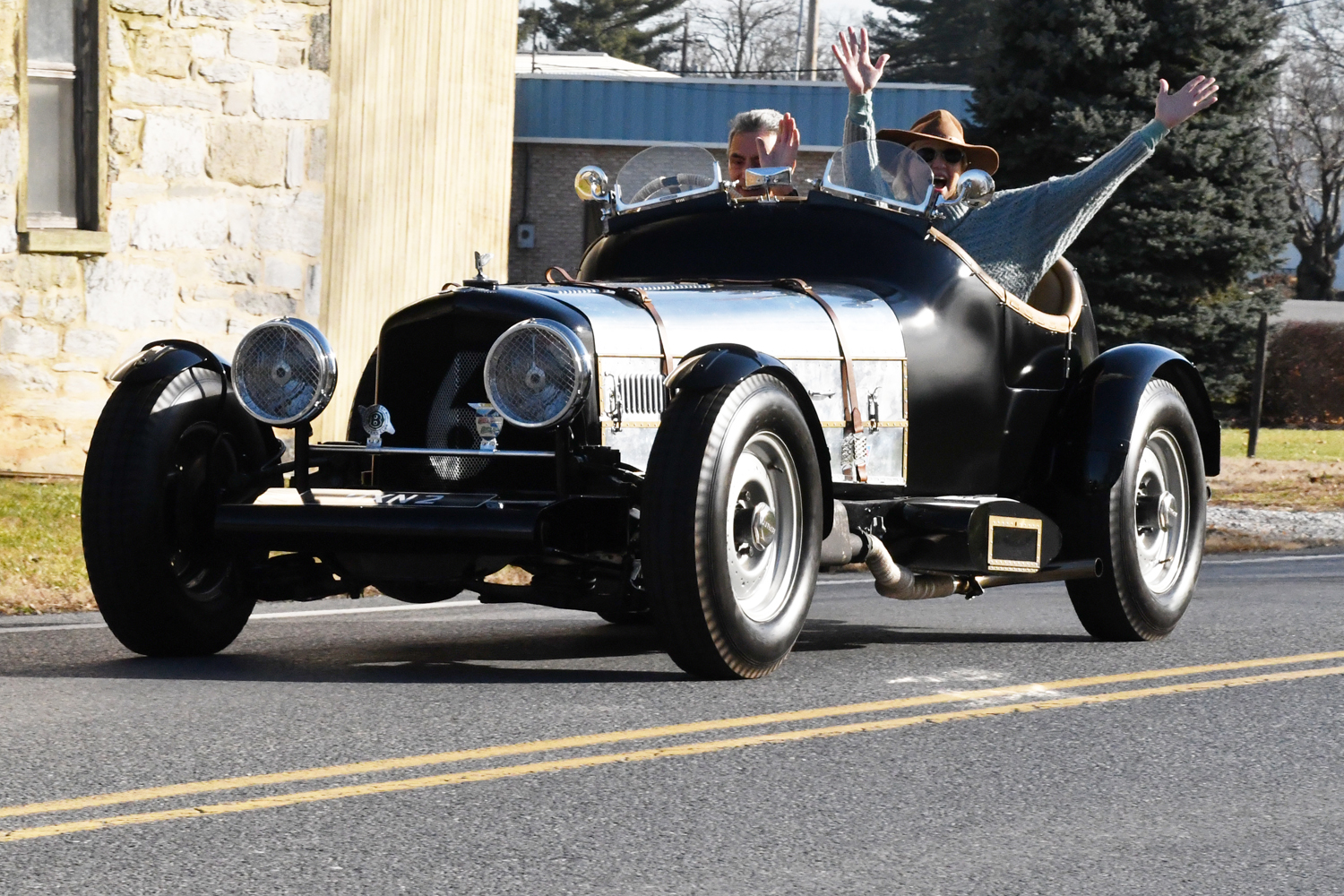
On this particular clear and crisp late autumn day turning into the front parking area reveals an array of vintage and classic Rolls-Royces and Bentleys. One in particular snags the eye and demands greater scrutiny. A striking black and silver open wheel hot rod sporting a Bentley Flying “B” vibrates in place, poised to launch.

Meet the Black Adder VI Bentley Special.

The Black Adder VI, an Outrageous Hot Rod Bentley

Alex and Elaine in the Black Adder VI

Daresay that the chances approached nil. Surely Baron Henry de Blonay of Villa Favorite in Chembésy, Switzerland never thought about it at all. What were the chances that his new 1947 Bentley Mark VI would, 70 years later, be a cycle fendered, open cockpit hot rod named after a poisonous viper and seen cruising the back roads of Mechanicsburg, Pennsylvania.

While tracking ownership history of early postwar Bentleys ranks high on the frustration scale, much of the Black Adder’s last 75 years is known. Most of it resides in Mechanicsburg, PA.

My friend Henry Uiga greeted me. A Rolls-Royce owner, club member and Drivin’ News reader, Henry had extended Drivin’ News an invitation to the Rolls-Royce Club’s monthly Volunteer Saturday. On this scheduled day club members gathered at the Museum to service the Rolls-Royce and Bentley vehicles in the collection. Watching the members in action quickly dismissed any preconceived notions of an elitist membership dominated by the white glove crowd depicted in the iconic Grey Poupon Mustard ads. The men and women present and immersed in their hands-on work displayed a hardy respect for the 100 plus-year heritage of Rolls-Royce and Bentley automobiles including that featured in the fabled mid-century “Loudest thing is the clock” ads.

As I entered a workshop lined with vehicles representing a century of British engineering excellence, I had found Henry working on an open wheel roadster the likes of which I had never seen. It sported the Bentley Flying “B.”

Displaying an apparent Dry Lakes Racer/T-Bucket inspired visual execution and chassis number B46AK, this right-hand drive Bentley hot rod pleased the eye with a striking livery of a black passenger tub with saddle tan interior, black cycle fenders and silver aluminum bonnet. With Brooklands Type Racing Screens, leather hood straps and an athletic stance, this well conceived custom execution represented a consummate example of a breed of collectible Bentley, the modified Bentley “Special”.”

Starting life as what might be described as the entry level 1947 Bentley Mark VI, the Bentley Special concept came to life in the early 1960s. At that time, the poor quality sheet metal used in the early Post WWII Mark VI had almost universally fallen prey to the tin worm. In sharp contrast, owners found their Bentley Mark VI’s seriously deteriorated steel bodies to be mounted on rugged and reliable chassis with an equally capable drivetrain.

As a restored Mark VI did not possess a high value comparable to a Rolls-Royce Phantom or a Vintage Bentley, owners saw little merit in committing large sums of money to the restoration of a rusted hulk. However, the Mark VI did possess a rugged drivetrain and chassis pretty much regarded as bulletproof. The solution? Re-body and upgrade the remaining chassis to create a “Special” that reflected the personal tastes and interests of the individual who commissioned the restoration.

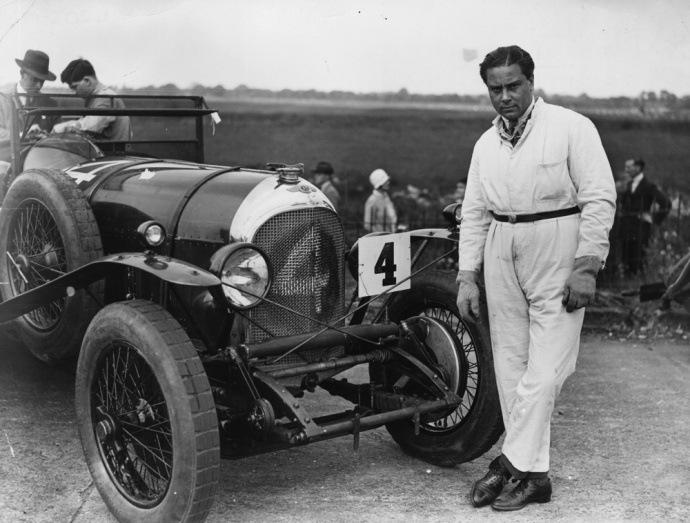
Woolf Barnato

Starting around 1963 in the UK, Bentley Specials became very popular. Many of the first re-creations emulated the vintage racing Bentley’s of the late 1920s and early 1930s. During that period Bentley had made its name in competitive motorsports with numerous victories including multiple wins in the 24-Hours of LeMans. At the same time, this period witnessed the heyday of adventuress part-time drivers, more sportsmen than professionals. They became known as gentlemen-drivers who would race their cars at the track and then drive the same cars home. Their ranks included Bentley drivers like Woolf Barnato, John Duff and Glen Kidston. These men, though not professional drivers, piloted Bentley’s to many impressive victories in the 1920s and 1930s earning them the name, the “Bentley Boys.”

Bentley “Specials” today offer non-professional drivers great enjoyment in vintage racing as well as rallies and tours. Utilizing open style bodywork and Bentley sourced performance upgrades, one prominent auction house states, “We admire these MK VI Specials, and think they best represent what a true British gentleman might create in lieu of an American hot rod.”

To get the real story behind the Museum’s chassis number B46AK Black Adder VI Special, Henry directed me to Mark Lizewskie, the Executive Director of both the Rolls-Royce Owner’s Club and the Rolls-Royce Foundation. Mark said, “As with all the vehicles in our collection this Special came to us as a donation. Presented to us by the married couple of author, military historian and decorated Special Forces veteran James Stejskal and Ms. Wanda Nesbit, a United States diplomat and career Foreign Service Officer. the Black Adder VI entered the collection in 2017.”

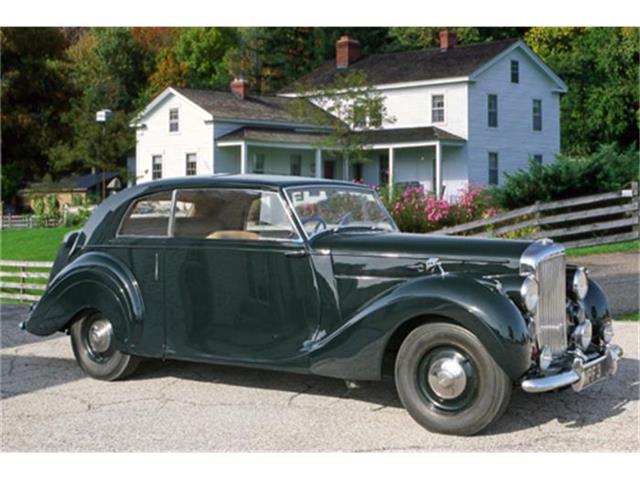
James Young Coupe bodied Mark VI

The record seemed to indicate that chassis number B46AK started life in 1947 as a James Young Coupe bodied Mark VI. The subsequent search for any records covering the next 25 years drew a blank. Fortunately its history resurfaced in the 1970s when Johnard Engineering, located in Blandford, Dorset UK, re-bodied B46AK as a Bentley Special. Johnard possessed considerable renown for the superior technical and aesthetic execution of its Bentley Specials. Elton John owned one and another finished 4th in class in the 1997 Peking to Paris Challenge.

The 21st century saw B46AK experience a second re-bodying by the late Victor Yordy of Metal Works in Dewart, Pennsylvania. Many regarded Yordy as an artist who at times would create new art in the form of an automobile. B46AK’s beauty extended beneath the skin with all mechanicals undergoing a comprehensive performance upgrade by the Rolls-Royce specialists Pierce Reid and Billings Cook at The Vintage Garage in Stowe, Vermont. Billed as purveyors of superlative engine rebuilding, mechanical restoration and service since 1963, the end result affirmed their reputation. And so, the Black Adder VI came to life. As reported in The Flying Lady, “ The Black Adder VI is a formidable performer, with 90+ mph available in third gear alone; no one is exactly sure what the top speed is on this car. Equally at home on the track or on the road. It is in outstanding condition and a formidable performer. In short it embodies everything a Bentley Special should be.” In 2015 it received a Touring Class award at the RROC Annual Meet.

Mark in describing some of the technical upgrades said, “As with all Specials it reflects the owner’s specific taste and preferences. Mark continued saying, “It’s certainly not original. And after all, that is the point of a Special.”

In enhancing the original Bentley 4.3-liter inline 6-cylinder, the Black Adder features an R-type Continental big valve head and highly desirable R-type Continental manual center shift gearbox. Mark added to the list saying, “It’s upgrades include disc brakes, larger SU carburetors and numerous drivetrain tweaks.”  As to the actual engine and performance specs, Mark says, “It has never been on a dyno. But, together with the engine upgrades and the significant weight reduction due to the open cockpit re-body, performance has improved significantly.” Interestingly no base performance figures exist as Rolls-Royce/ Bentley never would publish them. With true British reserve, the corporate answer to questions about horsepower and performance was, “Adequate.”

Now came the time to bring the Black Adder out to play. Climbing behind the wheel would be Foundation volunteer Alex Sharpe. Alex said his lean physique, comfort with the right-hand steering and the four-speed found him taking the Black Adder out with the greatest frequency.

Elaine, my partner in crime, would be taking the passenger seat for the test drive. She noted that the interior while very nicely trimmed did feel quite confining. She said, “The tiny doors provided minimal easing of entry. I am glad I do a lot of yoga otherwise getting in and out would be a challenge.” In referring to my size twelve feet she just shook her head and said, “No way.”

Alex agreed saying, “The cockpit itself is very tight. It’s very shallow at the end so your seating is much more constrained and the relationship between you and the steering wheel is much different than people are used to in a modern vehicle.” Alex continued saying, “You sit tall in the seat with the door top in line with your kidneys. That together with the fact that instead of having a conventional windshield you have the Brooklyn screens makes for a very open cockpit.

Twitchy might be the best word for Alex’s description of the Black Adder’s handling. B46AK’s close coupled design positions the driver just forward of the rear axle while, much like an XK120 (Alex owns and drives one), the front end feels a mile away. Alex said, “It can create a dynamic that produces over steer.” With a wry smile Alex laughed saying, “I have not pushed it to the point where I can confirm my suspicions. I like being a volunteer here.”

In closing, when asked for any other comment he would have on the experience of driving the Black Adder VI Bentley Special. Alex said, “I just can’t wait to get out there and enjoy it more.”

Apparently being snake bit is not always a bad thing.

By |2024-02-01T15:00:16+00:00February 1st, 2024|1 Comment

Cars We Love & Who We Are #47

As announced in the last Drivin’ News posting, I have chosen the depths of winter in New Jersey to produce a Collectible Car event comprised of a photography show, raffle, wine tasting and panel discussion. Its purpose, to benefit North Jersey’s decades-old and respected Tri-Boro Food Pantry.

The logic inspiring my seemingly counter intuitive plunge into the heart of Winter Pattern SAD (Seasonal Affective Disorder) resides in the fast fading joy of the increasingly distant holidays and the associated ennui of a large population of car enthusiasts Jonesing for something, anything car related to do. I am placing my bet on a sunny day in January that together with a fun and interesting Collectible Car event will entice a boatload of enthusiasts out of their man cave hibernation.

As my esteemed panel of experts comprised of Dave La Chance, Bob Austin, Bryan Maletsky, Fred Hammond and Matt Maisano will be wrestling with the topic of “The Future of Collectible Automobiles” I have decided to explore just what makes an automobile collectible.

Defining “Collectible Car.”

Vinny Plotino with his ’70 Plymouth Superbird and ’62 Ford Falcon

So What defines a collectible vehicle?

In the broadest sense, a collectible car is one you do not need in the least but would most love to have. Much like asking opinions on who makes the best pizza, the  definition of a Collectible automobile can vary. In the case of Jay Leno, he says, “It should be of technical or historical interest, fun to drive and pleasant to look at.” Others such as renowned car enthusiast Miles Collier, founder of the Revs Museum and Dr. Fred Simeone founder of the eponymous Simeone Automotive Foundation Museum both put a more a much finer point on what determines a true collectible automobile. For the sake of this article, I would like to take everyone to my friend Vinny Plotino’s garage.

Opening the garage doors reveals a pristine B5 Blue 1970 Plymouth Superbird and a severely distressed 1962 Ford Falcon. Few cars could stand farther apart on the collector car spectrum. Vinny’s Superbird towers as an unmodified, low mileage, highly valued iconic beacon of visually outrageous high performance.

His lowly, bland Ford Falcon displays a level of patina that crosses the line into structural decay. As to its cash value, it has none. Vinny pays more each year for a place to store the car than the car is worth. However, value to the wallet can be trumped by value to the heart. ToVinny, this Falcon belonged to his beloved and deceased childhood neighbor Mrs. Olesko. This 85-horsepower budget coupe never got more than 20 miles out of town and never did so at great speed. However, while traveling within that tight circle it played a huge part in Vinny’s life since he was seven-years old. He treasures that little blue Falcon for all the love and memories it holds for him but for him alone and no other collector. However, what of other vehicles that do not rely on tender memories to have value? These special interest vehicles merit love and admiration as subjects of desire for what they represent within the broad universe of Collector Car enthusiasts. Using Hagerty and other respected sources, I have segmented such special interest vehicles into three specific groupings as automobiles desired in primarily unmodified form.

In the case of Collier and Simeone, the emphasis placed on a car’s proximity to its original unmodified form is of paramount importance, with its worth determined by a rigorous assessment based on a specific set of attributes.

Roughly based on Collier’s and Simeone’s benchmark’s for collectability, the following four primary attributes and three attribute enhancements represent the primary drivers of a vehicle’s worth as a Collectible car.

PRIMARY ATTRIBUTES

  1. Evidence of past design innovation, style, construction technique, etc (1971 Hemi Cuda, 1938 Alfa Romeo 8C 2900B, 1957 Corvette)

    Plymouth Hemi ‘Cuda


    1938 Alfa Romeo 8c 2900B


    1957 F.I. Corvette


  1. Political, cultural or spiritual significance for a particular segment of society (Bullitt Mustang, James Bond’s 1964 DB5 Aston Martin)

    1968 Bulltitt Mustang

    1964 “James Bond” DB5 Aston Martin


    3. Association with a particular event or individual (Bonny and Clyde’s Ford V8, John Lennon’s Rolls-Royce, Clark Gable’s Jaguar XK120)

    Bonny and Clyde’s “34 Ford V8


    John Lennon’s Rolls-Royce


    Clark Gabel’s 1952 XK120 Jaguar


    4. Exceptional aesthetic qualities of form and decoration (1961 Jaguar E-Type, 1936 Bugatti Type 57 Atlantic Coupe, 1963 Corvette split window coupe)

    1961 Jaguar E-type


    1936 Bugatt1 Atlantic


    1963 Corvette Sting Ray

    ATTRIBUTE ENHANCEMENTS

    1. Popularity that increases desirability in the present marketplace (1st Generation 1970- 1972 Datsun 240Z, 1st Generation 1966 – 1977 Ford Bronco, 1st Generation 1986 – 1991 BMW E30 M3)

    1st Generation Datsun 240Z


    1st Generation Ford Bronco


    1986-1991 BMW E30 M3

    3. Originality, condition and extent of remaining original material (Tom Cotter Barn Find 1967 Big Block Shelby Cobra, 1966 Ferrari 275 GTB, Seinfeld’s 1958 Porsche Speedster)

    Barn Find Original, 1966 Ferrari 275 GTB and 1967 Big Block Shelby Cobra


    3. Rarity as a survivor. Probably fewer pristine 1977 Mavericks exist than the thirty something early 1960s Ferrari 250 GTOs. However, the Maverick has no value while recently a 250GTO sold for $51.7 Million.

1962 Ferrari 250 GTO

The following three specific groupings offer special interest cars where the determination of value resides to a significant measure on the degree it possesses Primary Attributes and Attribute Enhancements:

Brass Era – Vehicles from 1903 to 1918 named for the prominent brass fittings used during the period for such features as lights and radiators.

1907 Thomas Flyer


Brass Era 1912 Buick


Vintage Cars – Vehicles produced between 1919 to 1969.

1935 Duesenberg

356 Porsche

1969 Camaro Z28

Classic Cars – Vehicles at least 25 years old but not older than 50 years, So roughly 1970 to 2000.

1987 Buick Grand National GNX


1990 Porsche 911


Three other families of cars have been excluded (some may say arbitrarily) from the value discussion as the means for establishing their worth does not conform to the determinants defined by the Primary Attributes and the Attribute Enhancers. Their exclusion does not mean that these cars have no value, many have significant value, or that that enthusiasts do not collect them. Many do, but these segments of the enthusiast universe do not, at this point, enjoy the broadest appeal.

The first two segments are Hot Rods and Restomods, not because they are not collected, they certainly are, but because they are for the most part individual expressions of personal taste.

Hot Rods

Hot Rods traditionally are early to mid-20th century automobiles stripped down, rebuilt and modified according to an individual’s personal taste for high speed, fast acceleration and at times, trumping the first two, design.

The operative phrase in assessing their value is “personal taste.” Creating a unique hot rod has its greatest appeal to a market of one, the builder, which is not to say that they do not appeal to others. But for the most part they do not appeal to the broadest audience.

1927 Ford Model “T” Sedan


1950s Mercury

Restomods

Restomods are a newer entry on the car enthusiast scene. Primarily Vintage or Classic Cars subjected to both restoration and modification. They combine classic looks and modern convenience. Restoration returns a vehicle to a state representing its original condition. Modification can introduce body alterations and extensive upgrading of suspension, drive train and interior with new non-original specification components. The nature of the modification rests solely on the basis of the restomod owner’s personal tastes and desires.

Again the operative phrase in assessing value is personal tastes. As with Hot Rods a Restomod often targets its greatest appeal to a more limited market. And while they are gaining in popularity, they remain a special segment within the broader market.

Restomods pursue the incorporation of the latest features in a classic body. The question can be posed as to whether an older restomod as it ages with dated technology will appreciate. In the case of an original classic Corvette, Porsche or other vehicle, it will never need to change its dated engine or chassis to maintain its collectability.

1961 Corvette Restomod


1957 Chevrolet Bel Air Restomod

The third family of cars are Hypercars

The hypercar arrived on the scene with the 21st century. In essence the term hypercar describes an absurdly powerful, outrageously expensive, limited edition sports car. All hypercars have theoretical top speeds approaching or exceeding 300 mph and prices well into seven figures.

To quote The New Yorker magazine some motoring aficionados view driving a hypercar like cracking a nut with a diamond-encrusted sledgehammer.

On the rare occasion when mingling on public roads with we common folk, hypercars and their, notch lower but still outrageous, supercar brethren are often driven in a manner that leave behind a wake of single finger salutes.

They are rare, they are fabulously expensive, they are contemporary trophies to excess and people do collect them, however they do not fit into this article’s Collectible segments of Brass Era, Vintage and Classic segments spanning 1903 to 2000.

2023 Bugatti Divo


2024 Czinger 21C


It should be noted that not all cars from any period merit Collectible Car status. A good indicator of a car deserving of such recognition occurs when, over time, its price declines from new and after hitting a bottom appreciates to a point far exceeding its original cost due to its being recognized as highly desirable.

Basically, emotional appreciation of a car by car enthusiasts translates into monetary appreciation in the car’s value. Thus defines the difference between a Collectible Car and a used car.

By |2024-01-18T15:04:11+00:00January 18th, 2024|4 Comments

Conversations With People We Value #51

Returning from a too long deferred journey to visit the hallowed grounds of the Gettysburg Battlefield, I found myself on the old Lincoln Highway and in the heart of Amish Country. In possessing no meaningful contact with the Anabaptist community, reliance on contemporarily derived depictions like Harrison Ford’s movie “Witness” shaped my life view. That void left me unsatisfied. I had increasingly desired a better understanding of their chosen path. Now, writing Drivin News afforded a context for me to explore the seemingly simpler path chosen by these gentle people.

Join me for a buggy ride in Amish country.

Amish Buggies, Where Worlds Collide but No One Crashes


The approaching rhythmic clop-clop sound of horse hooves created a calming sound track while triggering learned memories of a simpler time before our birth. Fittingly, a hunched, weathered, gray bearded man in dark trousers, white shirt and black, flat brimmed hat gently eased the wooden-spoke buggy to a halt in an open barn yard. Pulled by a handsome sweat glistened black Morgan cross breed, the Amish buggy presented a timeless image that, save for safety lights and a windshield wiper blade, would seem appropriate to any day over the last two-hundred years. As  tourists departed the buggy, a man of similar age and dress as the driver appeared at the opening of a nearby barn. Reserved but open, he introduced himself as the owner of this tourist buggy ride business. Hearing of my intention to write about driving an Amish buggy in the modern world, he willing agreed to the interview.

Before proceeding with the story, attention must be directed to what will prove to be the complete absence of names and/or photos of the Amish men and women who agreed to be interviewed. Their religious views and cultural imperatives precluded,, such perceived expressions of ego.

The unwavering Amish reliance on the horse drawn buggy serves as a perfect metaphor for the their culture’s steadfast commitment to a simpler life. As well, their favored mode of personal transportation stands emblematic of their passive and powerful resolve to defy the pressures of a modern world. One cannot help but be curious as to the nature of life lived by the Amish at the intersection of their chosen path and that of a frenetic modern world that compels the vast majority of its members headlong into an uncertain future.

Amish Buggies serve as the hood ornament for our modern society’s clichéd objectification of an Amish culture rich in tradition. Originally called Anabaptists (meaning to baptize again) the Amish embrace the practice of baptizing members as adults rather than children. Primarily an agrarian society, the Amish adhere to the teachings of Jesus Christ, particularly the Sermon on the Mount which calls for a rejection of violence and a commitment to mercy, forgiveness, and nonresistance.

These beliefs did not necessarily endear them to those of other Christian denominations who in 18th century Europe believed differently. To escape religious persecution, the Amish embraced William Penn’s holy experiment of religious freedom centered in Pennsylvania (Penn’s woods). The early 1700s saw them establish their roots in American soil. In understanding what some may view as their peculiar ways one Amish gentleman explained it this way saying, “Jesus’ words remind us that our good deeds should be done in an effort to glorify God, and that, through our conduct, people will see Him.” In that vein, the Amish believe that worldliness keeps one from being close to God. Thus, they choose to live without many modern conveniences and technologies such as automobiles, television, etc. Rather than using electricity, bottled gas stoves and refrigerators serve their needs.

Humility, a core attribute central to the Amish culture, gives substance to the Amish aversion to being photographed and certainly to having ones image used for promotion. One Amish gentleman explained saying, “The danger here is the exaltation of the person. The fear is that the photograph is an attempt to preserve and make permanent that which God has decreed shall pass away.” As Amish author, Elmo Stoll warns saying, “Let us beware lest we permit self to be exalted becoming unto us a graven image.”

So here we have a hard working, God loving society built around mercy and forgiveness conducting an alternate merge with a modern world that has spawned phrases like “Road Rage.” They name towns like “Bird-in-Hand.” Modern society coins phrases like “Flip the bird.” So Mr. Amish person, “How’s that merge working for you?” Apparently according to the Amish with whom I spoke, pretty well. But that said, confirmation demanded a road test.

Eli with Paul holding buggy “accelerator”

Luckily, I engaged a buggy driver named Paul, a Mennonite and good story teller who did not mind being photographed. Mennonites are also Anabaptists but more liberal, kind of Amish light.

Paul with a charming Pennsylvania Dutch flavor spicing his stories explained the different types of buggies with models that include the closed “family wagon”, open “spring wagon” , runabouts and pickups.

All Amish carriages derive their motive power from a one horsepower, well, horse. Handsome, powerful, sturdy and even tempered, crossbreeds of the versatile and athletic Morgan and the hard working Percheron draft horse seemed favored when observing the local Amish buggies. Paul explains the cross breeding saying, “We don’t need speed. We just need the power.” On the road, horse drawn buggies cruise at about 5 to 8 mph. A short sprint can produce a top speed of 20 mph.

Buggy specs include a braking system utilizing a 7-inch drum brake on a front or rear axle. The driver’s position has a single pedal, to apply the drum brake. Though infused with a certain church pew quality, buggies offer somewhat comfortable upholstered seating, though a Recaro upgrade would be welcomed. Concessions to modern technology have been made in the name of safety. Battery powered electric lights mounted front and rear, thanks to more efficient LED lighting, no longer demand a deep-cycle marine battery for power. Now, a single DeWalt 20-volt/6-amp battery, the type that powers a cordless electric drill can run the whole electrical system for two to three hours on a charge. Those traveling for longer periods carry spare batteries. Diesel generators at home take care of recharging. The Amish do not hook up to the grid.

Before hightailing it out on the highway (I could not resist. For the first time in my life my ride actually possessed the ability to hightail.) I had taken the opportunity to visit a nearby manufacturer of Amish buggies. My only disappointment came with my acceding to the gentle owner’s wishes. He requested that I not promote his company by name in my story. His world and mine, different, neither wrong, most important, both respected.

Used buggy lot

Outside the factory’s orderly paved courtyard fronting the clean brick two-story edifice stood an angled line of refurbished buggies. OMG, This new buggy factory offered CPO (Certified Pre-Owned) buggies as well. The austere product presentation spoke of an understanding that those in the market would know where to go. Apparently a reputation built on history and performance served as the only marketing effort necessary. Did this profoundly understated business model need an upgrade, considering the Amish value system, probably not. Tall flapping Gumby-like attention grabbing roadside promotional balloons with arms whipping in the air would have been terribly out of character.

Upon entering a side entrance, I encountered an Amish gentleman with an easy, engaging demeanor. I hoped to get a brief overview of the operation. Upon explaining my intention to write a story he, without skipping a beat, offered a complete tour. Exhibiting an encyclopedic knowledge of the manufacturing process, he wove a path from floor to floor that touched each work station. Once there, he explained the function in detail and introduced the gifted craftsman plying trades including metal working, paint, upholstery and wood working.

Clean, orderly and busy, the facility showed a fascinating amalgam of hand craftsmanship, functional technology and ingenuity. With no access to the grid, the operation displayed a fascinating application of compressed air and hydraulics. The factory seemed to be doing quite well. Confirmation came with learning that all new buggies built had confirmed buyers. Other than new buggy construction, the shop of Amish workers kept busy refurbishing used buggies for existing owners or for sale.

I understand that some city types exposed to this experience might view it through the lens of a tourist at a quaint Disney staged experience. If so, how unfortunate to deprive one’s self of an appreciation for the existence of true craftsmanship actively engaged in supporting daily lives in a productive society manifestly different from their own. Bidding my tour guide goodbye, my carriage and Paul awaited.

In a somewhat awkward fashion, I squeezed my long limbs into the confined buggy cab to be shared with Paul. Uttering a gentle chk-chk he alerted Eli our Chestnut Morgan crossbreed. We headed out onto Route 340 with its speeding tourists and rumbling truck traffic. Paul scanned the presently open road and guided Eli to carve a large arc defined by the big harnessed horse and the buggy he pulled. Main arteries in Amish country offer a buggy-width shoulder that serves Buggy drivers well. Off the main thoroughfares, however, unforgiving narrow roads abound.

To employ a very forgiving description, our buggy had now entered the traffic pattern. More to the point, sharing the road with Class 8 trucking felt like the tortoise racing an 80,000 pound GVW hare. This seemed like a good time to pop the question to Paul. His response when asked “How do other drivers react to sharing the road with an Amish buggy” came as a surprise. Paul said, “When it comes to the truckers, they respect who we are and they give us room. We have very few complaints if any.” When asked what advice he would give to someone unaccustomed to sharing the road with Amish buggies, Paul smiling reflectively, said, “It’s important to be mindful that compared to them we are going slow, really slow.” As long as room to pass exists, the law allows a driver to cross a double line.” The biggest problem for automobile drivers and thus for us comes when they do not watch their speed. Paul with a slight wince said, “When accidents do occur they often result from drivers not appreciating how fast they are going versus a buggy’s slow speed. Especially when climbing a hill when a driver does not pay attention then suddenly, POW, they are on top of a buggy. Luckily that does not happen often.”

In reflecting on driving manners especially of tourists, again a surprise. Paul says, “Basically we find people very respectful.” Amen to that.


Follow -up on Ford F100 sale on Facebook Marketplace


Earlier this month the Drivin’ News story “An old car guy goes face-to-face with Facebook Marketplace” described my decision on where to sell my 1953 Ford F100 Pickup truck. I am here to briefly describe the outcome. Rather than choosing one of the popular auction sites, I chose Facebook Marketplace, and because I am not a Facebook guy, I engaged Navarro Automotive Consulting (NAC) to assist me.

In a nutshell NAC:

  • Provided guidance in creating a four-paragraph vehicle description and appropriate photograph.
  • Provided masterly navigation with a site where I had no experience.
  • Shielded me from online tire kickers and hassles. NAC only sent me vetted prospects.
  • I had full control of the listing from creation to sale.
  • The listing offered the potential to be viewed by more eyes than other classic consignment sites. Granted Facebook delivers a much broader audience than a car-centric BaT or Hemming’s, etc.

The result:

  • Viewed 27,128 times
  • Saved by 631 people
  • Shared 135 times
  • Direct messages 70+
  • With an asking price of $23,500. It sold within the week.

If you are considering selling a vehicle and want a hands-off quality experience, I would highly recommend NAC. It translated a normally painful process into a smooth sale.

By |2023-11-30T16:26:26+00:00November 30th, 2023|2 Comments

Conversations With People We Value #50

Though not exactly Sophie’s choice, the decision to sell my 1953 Ford F100 Golden Anniversary Edition pickup left me torn and uneasy. Grudgingly working through the process of winnowing down my small collection of vehicles left standing alone my able and eager Meadow Green F100 work horse of the 1950s. Consideration of my other vehicles found them either worth too little or meaning too much. Now, the question facing me required deciding on how to sell it. Park it on a busy street sporting a for sale sign? Maybe an online purchase site. Certainly myriad online auctions beckoned. Finally based on a friend’s suggestion, I turned to Facebook Marketplace. Let me say upfront, I consider Facebook to be the Devil’s work. That said, I figured why not let the Devil work for me.

Going face-to-face with Facebook Marketplace

An old school car guy goes face-to-face with Facebook Marketplace

Unlike billions of other Earthlings I did not spend time on Facebook…until last week. Enlisting the aid of friend and online sales maven Nick Navarro of Navarro Automotive Consulting (NAC), I elected to go where millions of people have gone before, just not me. I entered Mark Zuckerberg’s digital bazaar.

My friend Nick represents the “Hope” side of what I call “The History and the Hope” spectrum of automotive enthusiasts. The “History” side of the classic vehicle obsession makes itself painfully evident with the departure of the many skilled craftsman and passionate collectors we witness melting out of the culture. Nick conversely represents one of the many young men and women who share the passion and willingly accept the baton we of the  “History” side happily hand off, grateful for their youthful interest.

With a Bachelor’s degree in Automotive Restoration from McPherson College and, after post graduation work in high-end classic car restoration including work for the Museum of Modern Art (MOMA) and the Audrain, Nick began his own company, (NAC) focusing on restoration consulting and brokering.

Nick, being both a dyed in the wool car guy and an accomplished digital native, represents the future of classic car enthusiasm. To better understand those comprising the “Hope,” one should recognize an attribute, that of “Digital Native,” common to those like Nick. Think of digital communications as a language. Rare is the older person who learns a language without retaining an accent as compared to a person who learned a language as a child. So it is with digital communications. Those who have learned to navigate social media outlets from childhood, like Nick, employ it’s refinements with a natural ease and artistry. An ease, artistry and interest which I, as part of the history, frankly lack.

At the start Nick suggested posting my F100 using his site. He offered that this would relieve me of significant phone drudgery. Nick Says, “For most sellers, it is best to channel initial inquiries through my site. It allows me to vet the contacts and weed out the tire kickers, scammers and kooks.” Nick’s functioning as a buffer benefits sellers like me by limiting their involvement to dealing with serious prospects. I agreed. Now, on to creating the posting.

Interestingly, especially for those preferring computers (desktops, laptops) versus mobile devices (phones and tablets) Nicks notes that Facebook Marketplace, counter intuitively at least for non-digital natives, actually offers more features when accessed through a mobile device.

Anyone can access Facebook Marketplace to browse, though one needs an account to engage. Nick cautions saying, “Anybody can do this on their own personal page. It can be done on select commercial pages too, but it requires registering and it involves more of a process.” So, to begin.

Select marketplace

Start by logging on to your Facebook page and click on the Marketplace icon to begin creating a new listing. It offers three choices, Item, Vehicle or Home. Select Vehicle.

A prompt comes up requesting photographs as well as specific information including type of vehicle, location, model year, make, model, price and description. Additional prompts may request type of fuel, transmission, interior and exterior color.

In referring to writing the description Nick says, “I prefer to keep it broad because the Facebook audience is a broad audience.” He believes a broader description may offer a greater appeal to a first time buyer or someone new to the hobby. He continues saying, “However, I do like to include a few specifics that will resonate with a more knowledgeable reader.” In the case of my truck he calls attention to the hard-to-find under-bed spare tire hanger and wing nut. Nick says, “Marketplace does not offer as sophisticated a platform as, say, Bring-a-Trailer with BaT’s space for hundreds of photos, expansive copy and comments.” He does emphasize that photography remains an important feature essential to creating an effective Marketplace posting.

As to photography Nick says, “You want high quality, sharp, well composed images clearly showing all the specific areas such as underneath, engine compartment, interior and exterior from all sides of the vehicle and all angles. Three-quarter shots are a must. Videos of your vehicle can also be posted. Nick says, “Videos, if available, showing the vehicle running, etc. can add to the power of your post.”

Accompanying the crisp, and clear photography must be a written description equally clear. Copy should provide the basic vehicle history and important attributes in clear succinct paragraphs. Not too long, not to brief, it should simply provide enough detail to make an interested party more interested. A written description should provide what you as a buyer would want to know. It should not so much sell, rather it should accurately describe. Good writing does not tell. It shows. Copy like “WOW, a super powerful tire smoker” would better be written as “Dyno tuned 426 Hemi.” Trust that the buyer has a brain. While some callers may make you question that assumption, a real prospective buyer will not. Have faith.

Accompanying the “DOs” for a quality Facebook Marketplace experience are a number of DON’Ts.”

Be mindful that certain precautions should be taken as you are attaching this post to your social media platform. Nick says, “You shouldn’t have any personal data on either the listing or your personal profile page. Strangers can link both of them.”

With all bases touched Nick launched the competed post. An important reminder, a post will last for seven days. At the end of the week it must be renewed, not recreated, just renewed.

Always know that anything posted goes public and lasts forever even if deleted. Do not include your phone number or your address. Social media company Meta owns Facebook and Instagram. They make money off your data. With every click you make, Meta creates a file. Presently this reality rules the social media world. If this makes you uncomfortable do not use it. Or, as I have done, have Nick and NAC do it to keep the seller anonymous.

That said, Facebook does offer the ability to access over three-billion users world-wide. Does that mean you post will be seen by potential buyers from the town next door to across the globe? No. However, anybody on Facebook can access your post whether your neighbor Tony on the next block or Sven in Gӧteborg, Sweden. Marketplace offers multiple paths to your posting.

When listed your posting will be made available to your Local area much like Craig’s List. Areas such as Northern New Jersey or Southern New Jersey. So if someone in Carlisle, PA is looking for an F100 pickup but they are only searching their local area my F100 would not come up. However, again like Craig’s List, that buyer can expand the search area around his location by 500 miles, then my F100 would show up. Or Maybe someone in Vermont thinks he or she can get a cleaner example of the vehicle they want in California. That person can set their geographical position to California to conduct their search there. This represents an enormous advantage over Craig’s List.

As a seller I can boost my exposure a number of ways. I can join a national or international group focused on a certain vehicle. In my case Ford F100 pickups. Nick says, “Hypothetically, you can share your listing with groups around the world focused on what you are selling. As a sales tool, if used properly, it can be very effective.”

NAC offers a clean vetting process. Nick says, “Prospects contact us via Facebook Messenger, with a message basically stating an interest in the vehicle. First thing we do is request a contact phone number. When we get a number, it tells us two things. It proves that they are real and that they are interested. With that, a call can be used to vet them. Through that process of separating chaff and wheat we can provide prospects worth the sellers time.”

Planning for success can create success. However, without a good plan problems can arise. Some quite bad. In this day and age setting up the right location to show a vehicle to a prospective buyer is important.

Nick’s key points:,

  • Unless you know the person, Nick suggests picking a busy populated place to meet a stranger. Outside Starbucks works. Next to a police station is better. Many police departments have a dedicated “Meet” space with cameras for citizen transactions.”
  • Cash is king. If the buyer needs to come back with the cash. He must leave a non-refundable deposit, $1,000 works. As seller, write up a simple contract with amount of sale, amount of deposit and date due final payment. Dealing with payments from out of state best involves establishing a third-party escrow account. Check with your bank or attorney for details
  • Accompanying a buyer to his bank for a withdrawal can work.
  • Always trust your gut!

Decades ago when breathlessly scanning the latest local WantAd Press, gut instincts, learned from experience, served buyers and sellers alike. However, the WantAd Press and its beloved ilk are gone. Supplanted by a digital landscape that has wildly reconfigured the structure of the selling function, the process remains reliant on the same timeless gut instincts to achieve success.

Today, my F100 entered public consciousness by way of the  Zuckerberg digital bazaar. A few hours later a meeting with a prospective buyer had been arranged. Time will tell. So will my gut.

By |2023-11-09T21:04:01+00:00November 9th, 2023|2 Comments
Go to Top