Burton Hall

About Burton Hall

This author has not yet filled in any details.
So far Burton Hall has created 143 blog entries.

Cars We Love & Who We Are #21

Crossing from New Jersey and meandering north on old Route 17 surrounds one with a picture of a region that for decades lived frozen in a faded past but recently began experiencing a quantum leap into the now. Still very much a work in progress, the scene along Route 17 features stretches of old buildings tightly snugged up against a patchwork paved narrow four-lane. Safely navigating the bumps, twists and turns demands a firm hand on the wheel and a steady eye on fellow drivers often found wandering about the narrow lanes.

Clearly, this trek offers a decidedly unglamorous journey on the way to enjoying an extraordinary classic car experience. Today the grounds of an architectural pearl of the Gilded Age will feature a delightfully understated concours.

Approaching the handsomely crafted stone guard station, I am waved though. I have entered an enclave of aesthetically integrated architectural and natural beauty born in the 1880s. I have entered a world worthy of a modern day Gatsby. Navigating the winding country roads leads me to the manicured grounds of the Tuxedo Club in Tuxedo Park, NY.

Bring what you love

Tuxedo Club “Field of Driving Dreams” registration


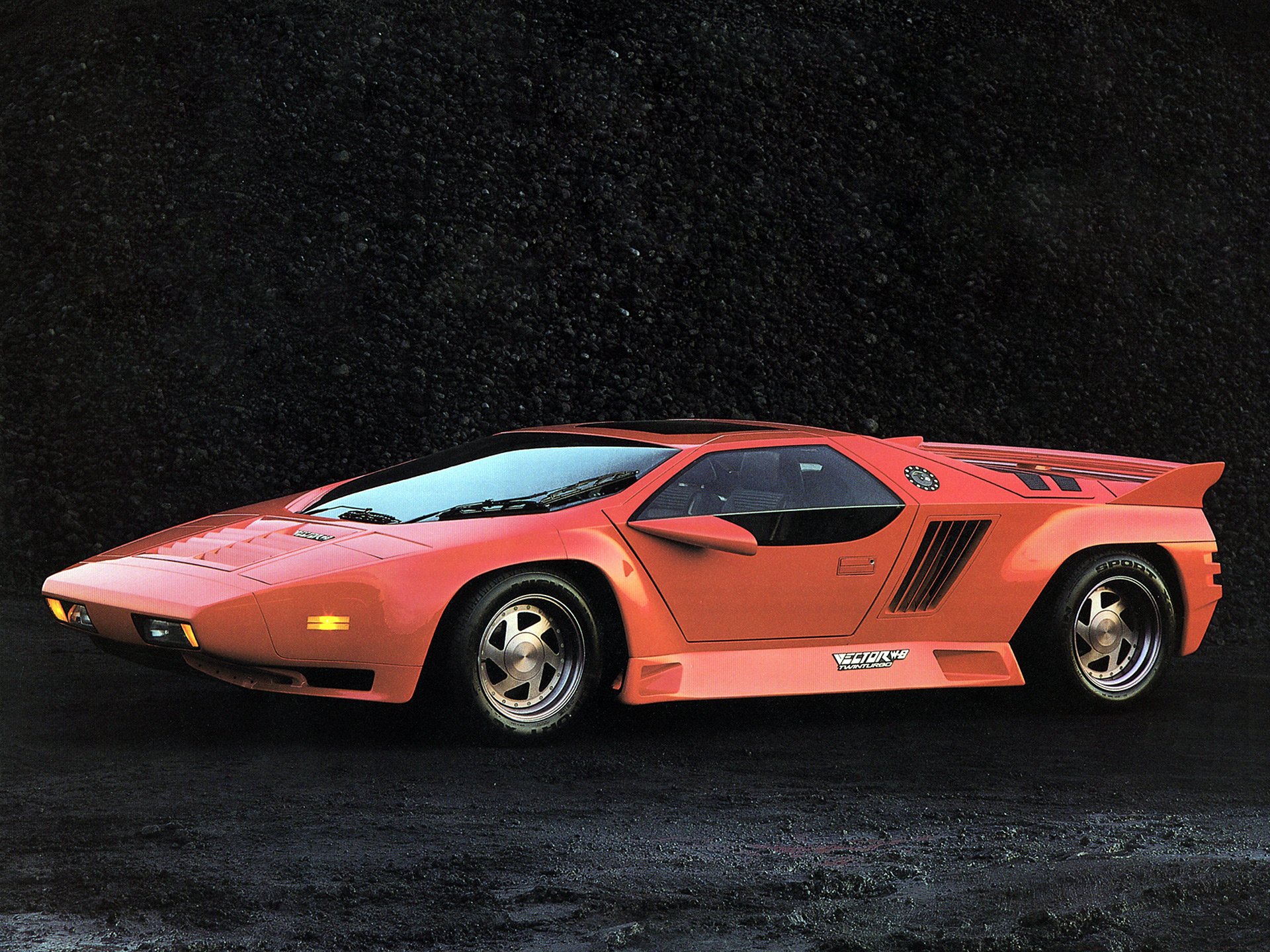
Gordon Borteck with his Pantera

Raising its German voice with the elevated revs courtesy of a downshift, my BMW descends the hill. As my trusty sports sedan hugs the curve of the narrow West Lake Road, the Tuxedo Club comes into view. Surrounded by a finely groomed lawn, overlooking Tuxedo Lake and set against a forested hillside, the grounds offer a spectacular backdrop on which to display priceless automobiles.

Pulling off to the side of the circular driveway at the club entrance, I am greeted by Gordon Borteck, the driving force behind the Tuxedo Concours officially titled “The Tuxedo Club Field of Driving Dreams.”

Borteck a Tuxedo Club member and guiding force behind the Tuxedo Park event conceived of the idea about eight years ago as a great Father’s Day celebration. Its instant popularity proved Borteck possessed 20/20 foresight. As with such good ideas, they exhibit a dynamic character that seeks to expand to ever greater proportions. Borteck has felt the pressure to expand which he has resisted.

Here comes a Ferrari La Ferrari. There goes a Lamborghini Countach. Step aside for the Chaparral race car. Make room for the Bentley Continental Coupe. Make way for the BoCar. As an amazing array of predominantly iconic German, Italian, English and American rolling artwork begin to populate the lush green hillside, I had the chance to ask Borteck about his unique event.

“I have sought to emphasize a theme of ‘bring what you love,” says Borteck, he continues, “I am not looking for the fanciest, the fastest or the oldest.” To realize his objective, Borteck has striven to achieve a feeling similar to that of an invitation only art exhibit. Borteck says, “My goal is to keep the show relatively small.” Eighty some cars comprised those invited to complete the field this year. He wants the owners to share the cars they love with the other car owners and guests. Much like one artist discussing his work with others. He says, “I strive for the event to be both a learning experience for viewers and a teaching experience for the dedicated owners. Here, people can share with each other without crowds or craziness.”
Despite a promise of showers, the sun has come out to stay. Borteck admits he would have sold his soul to the devil for this weather. After cancelling because of Covid last year, missing a second year in a row loomed as a crushing disappointment.

The colors of the assembled “Field of Driving Dreams” entrants pops off against the verdant lawn. Colorful as well could describe many of the car Owners.


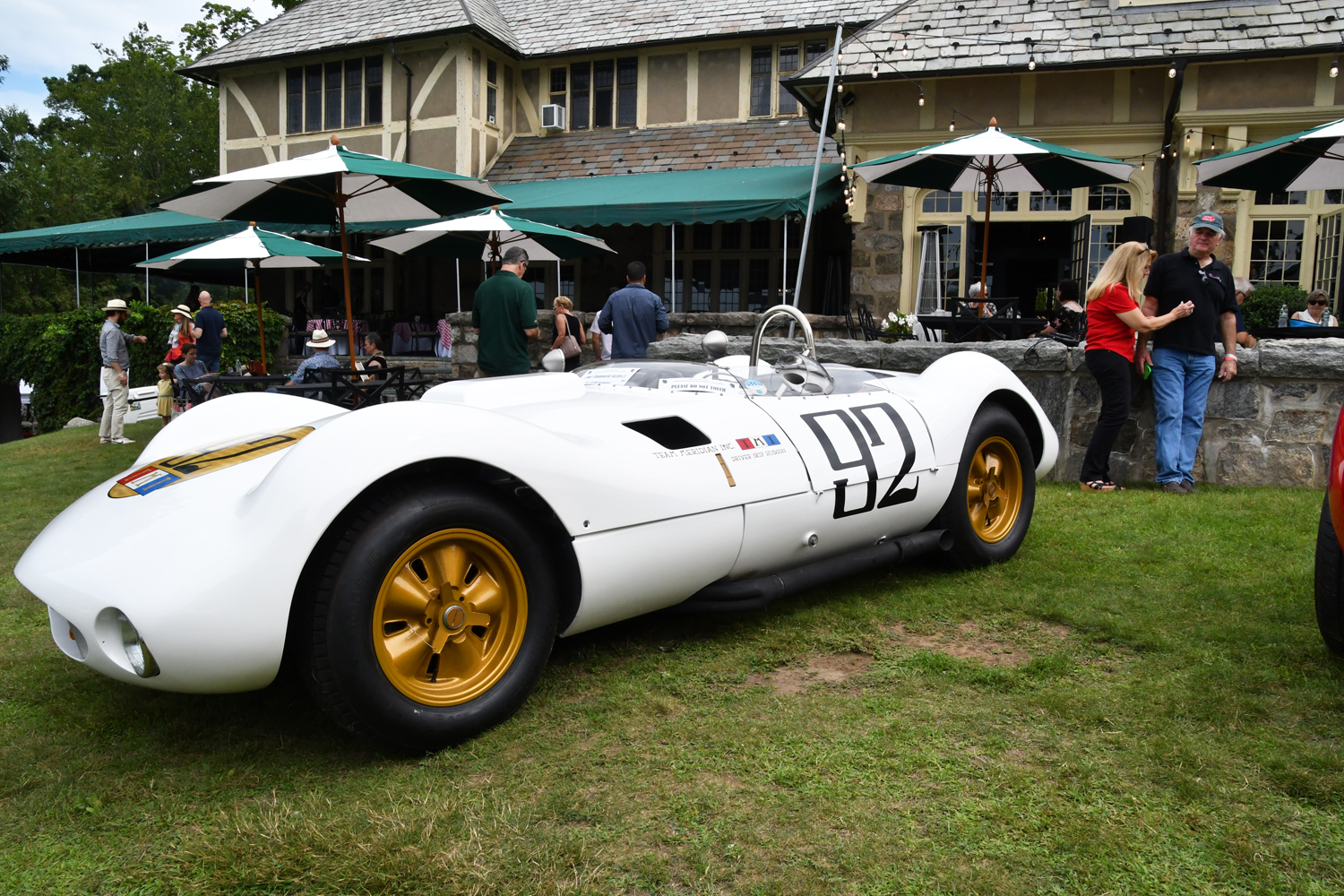
Bruce Amster – 1961 Chaparral

1961 Chaparral

Bruce Amster a classic car aficionado is no stranger to the Tuxedo event. He consistently delights with the unique entrees he brings. This year he did not disappoint by bringing a 1961 Chaparral race car. Amster says, “This Jim Hall developed Chaparral is a real race car. Race cars that look perfect and have always been perfect are not real race cars. A real race car has got to have gone through hell driven by a driver who has gone through hell.” This Chaparral truly qualifies by that standard. Built in 1961 by Troutman and Barnes, it was first driven by 2-time Indy 500 winner Roger Ward. Powered by a stroked Chevy small block with 4-wheel disc brakes and fully independent rear suspension the Chaparral presented an able competitor for facing the potent Maseratis and Listers of the day. Amster says, “The car has a great history. It was crashed by Roger Ward. Totally rebuilt it would be campaigned by a new owner and would set a lap record at Laguna Seca in 1962.” The car is still raced heavily overseas at Goodwood and Silverstone. It will be returning to England to campaign next season.


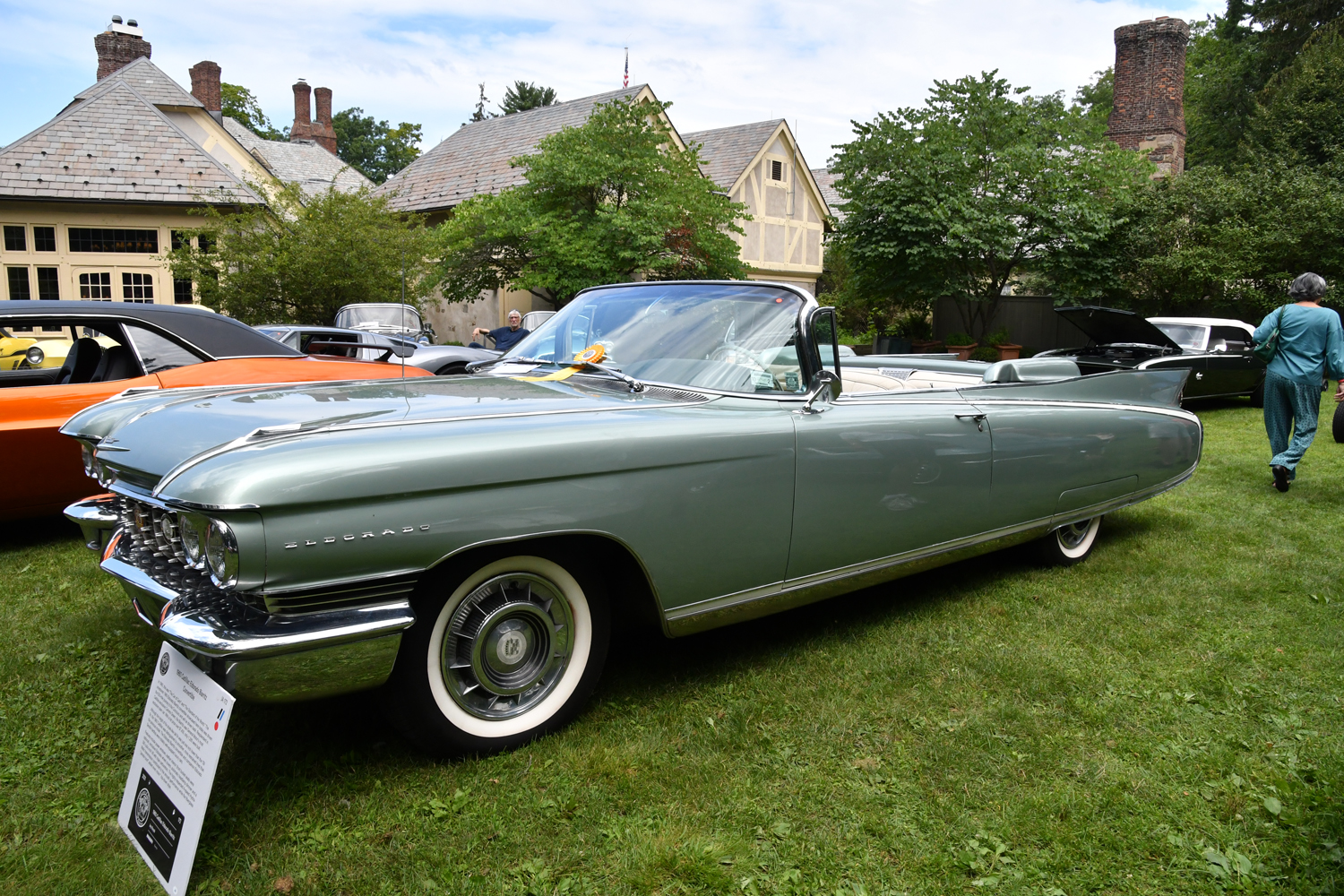
Jay Hirsch – 1960 Cadillac Eldorado Biarittz convertible

1960 Cadillac Eldorado Biarritz Convertible

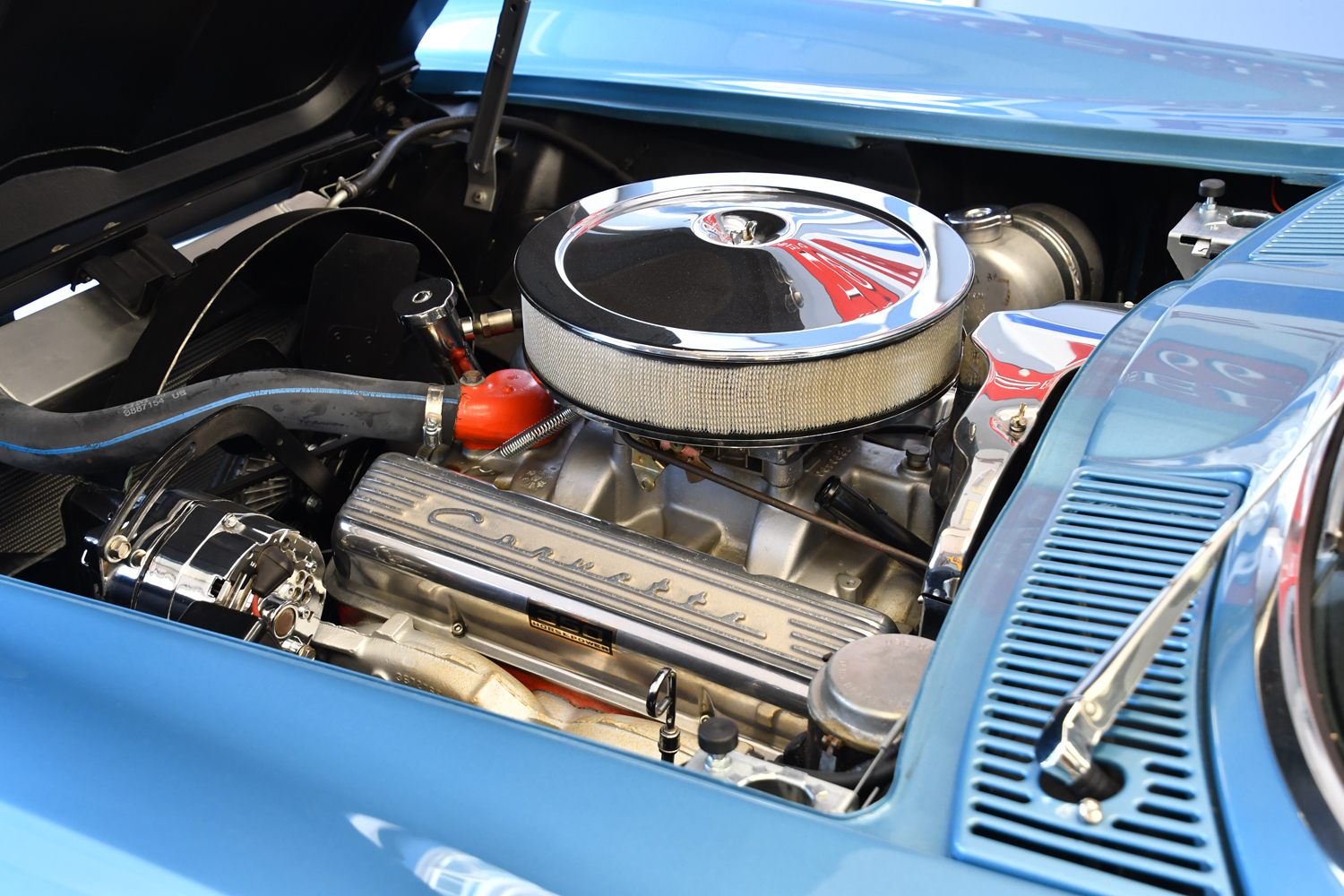
Like recalling Howard Cosell at a boxing match, sighting world renowned automotive photographer and journalist Jay Hirsch at a car event goes without saying. A fixture at any meaningful classic car experience, the genial and engaging Hirsch not only photographs classic cars for calendars and books but collects them as well. At Tuxedo this year Jay brought his original Carrera Green 1960 Cadillac Eldorado Biarritz Convertible. Truly “The standard of the world” when it meant something, this stunning period piece rolling sculpture featured a 390 cu. in. V8 with three deuces and a 4-speed Hydra-Matic transmission.

For Jay his Cadillac’s story goes back to the day a family friend bought the car new. Jay says, “It was 1960 and my father bought a Fleetwood. At the same time a family friend bought this car. Years later he sold it to a friend who ran the Cyclone in Coney Island.” Back in the 1980s that friend asked Jay if he would he be interested in the Cadillac should the friend ever decide to sell it? Absolutely, came Jay’s reply. Fifteen years later Jay got the call and Jay bought the car.

Jay says, all through the years it was never driven in winter, only in the summertime on weekends. It has never been restored. Not afraid to drive it, Jay recently drove it 630 miles to Plymouth Michigan to show the car at the Concours d’ Elegance of America at St. Johns where it won “Most Original Car.”

Jay put over 1500 miles on the Cadillac for his trip. Jay says, “I cruised all day across a good stretch of America in this glorious piece of automotive history at 80 miles per hour averaging 17 miles per gallon for a 5,000 pound car. I’m happy.”


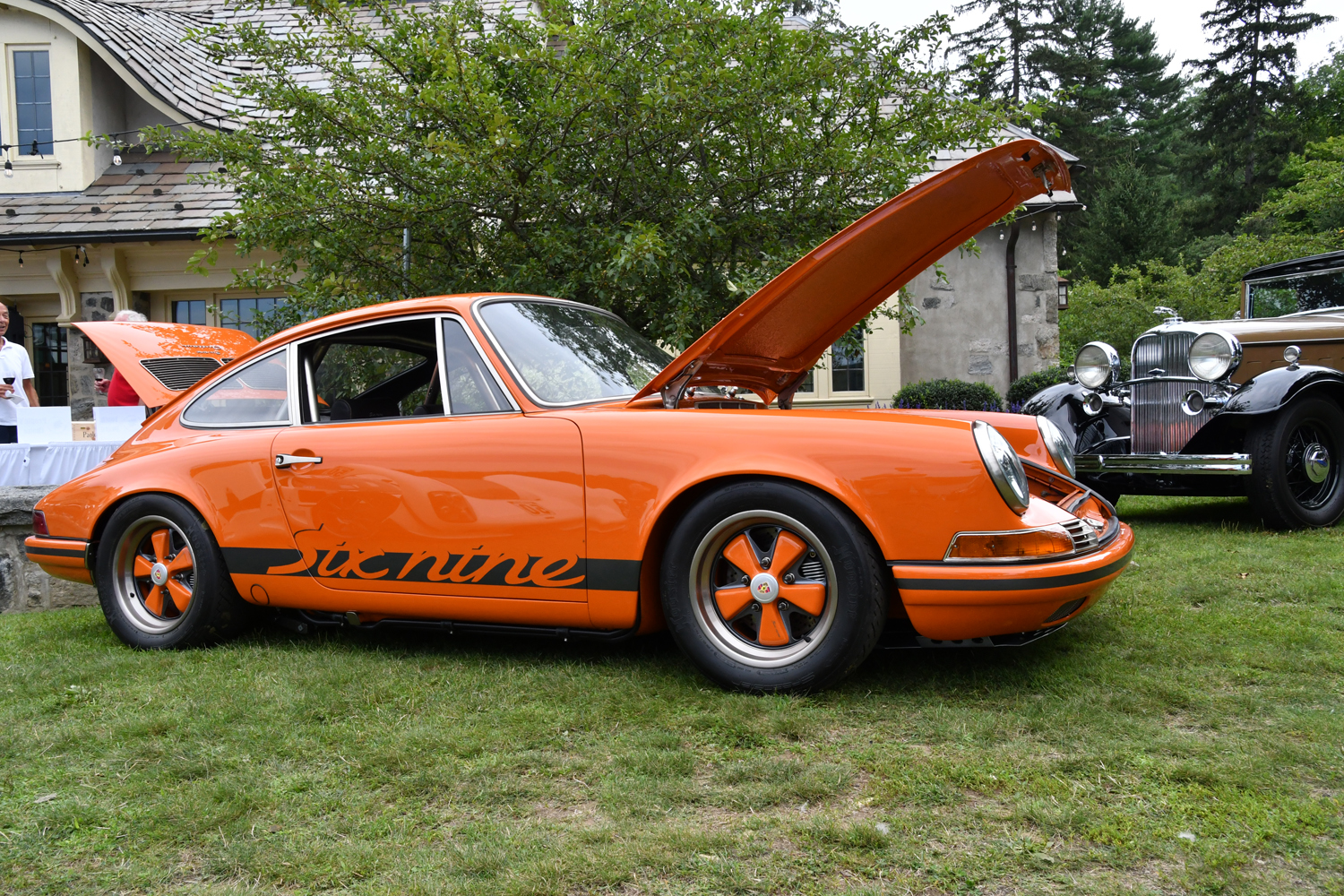
Dr. Charles Lennon – 1969 Porsche 911 Outlaw

1969 Porsche 911 Outlaw

Dr. Charles Lennon’s place in the Pantheon of vintage Porsche crazies was concretized when he chose to rebuild his house to provide for five working bays in the basement to accommodate 356 and 911 Porsche restoration. For Tuxedo, Dr. Lennon brought a 1969 911 Outlaw on which he has been working for the past four years. Just looking at the quality of work and attention to detail tells you all you need to know about how he approaches his vocation as a prosthodontist (specialist in dental restoration).

1969 Porsche Outlaw custom badge

In explaining the Porsche Outlaw concept Dr. Lennon says, “It started with John Von Neumann and his 356 Porsches back in the 1950s. Von Neumann would show up at the track with modifications such as better brakes and bigger motors. Stuff beyond factory spec. These upgraded non-factory spec’d cars became known as Outlaws.”

Dr. Lennon goes on to say that he likes to build Porsches that scare him. He loved the idea of building an Outlaw and he had the perfect subject, a 1969 911. He set his heart on building a better Porsche. He says, “Bigger brakes, bigger motor, better suspension. It would be a Porsche Plus.”

He also wanted his outlaw to honor the basic shape of his subject 911. Dr. Lennon says, No front air dams, no flares, no tails, nothing just the original shape.” Just about everything else would wear this surgeons touch. He says the brakes are 917 units that took him two years to get. The original motor swept two liters. His outlaw gets its push from a naturally aspirated twin plug 3.4 liter engine with mechanical fuel injection. Dr. Lennon says it puts out roughly 315 horsepower with a vehicle weight of 2,160 pounds. He acknowledges that remaining faithful to the body originality limits the size tire which certainly elevates the scare factor.

The detail that Dr. Lennon has put into the smallest features including the badging clearly shows it has been a labor of love. He says, for me in my lifetime this has been the best creative experience I’ve ever had.”


Rich and Chris Varjan – 1972 Dodge Challenger

1972 Dodge Challenger

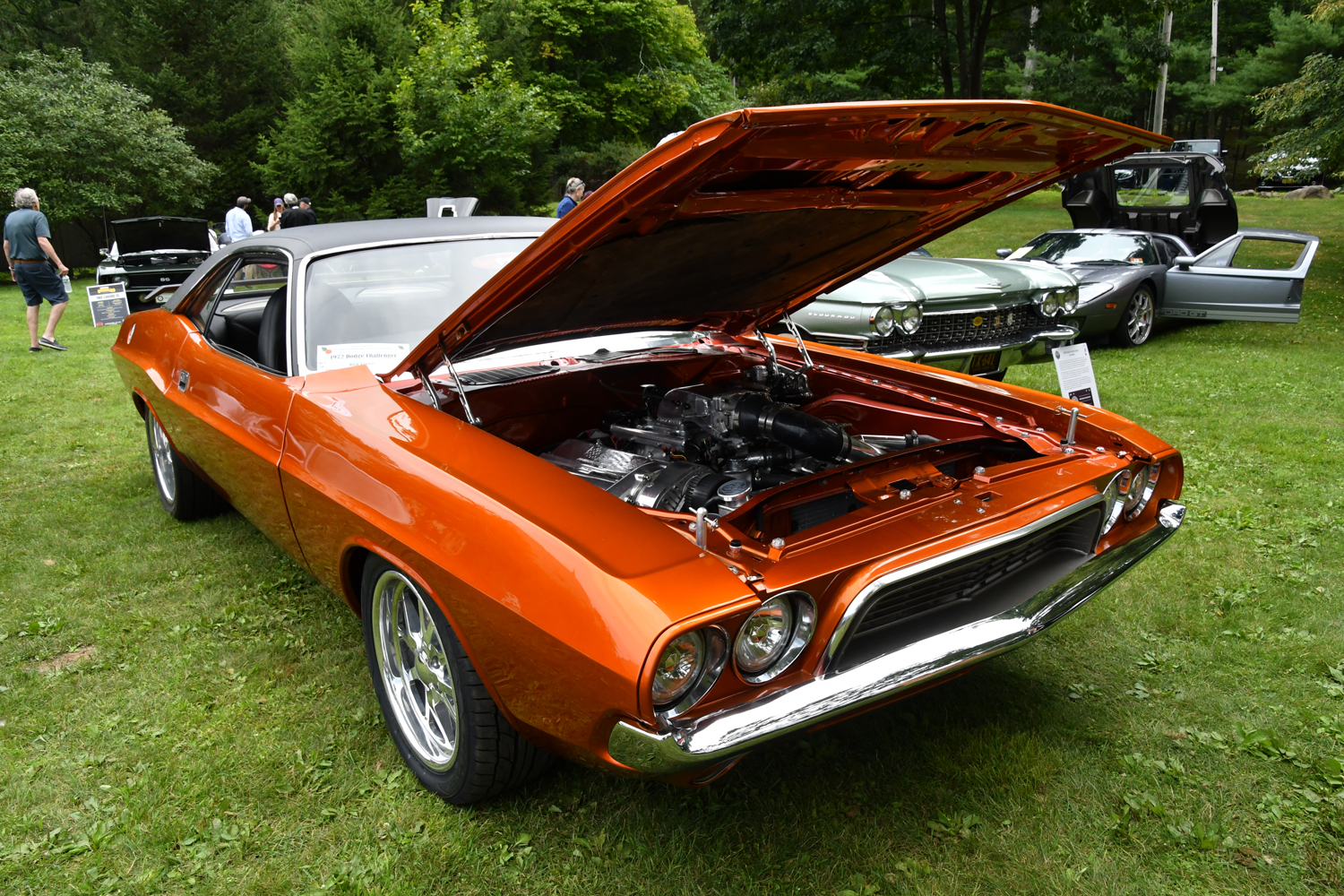
Rich Varjan’s R-M three-stage orange over silver 1972 Dodge Challenger began as a project car that he found in Toronto Canada for his 14-year old son, Chris. Today, standing by the car that has experienced numerous rebuilds as the Varjans have pushed it up the performance ladder one sees Chris who is now 34 years old.

Both gregarious and genial, father and son banter back and forth as they describe the adventure in engineering that their Challenger represents. Basically its present iteration represents an eight-year trial and error journey that has culminated in a 900 horsepower well mannered beast. Well mannered that is unless, as the senior Varjan says, “You put your foot to the floor? The you buy new tires.” “But it tracks straight as an arrow,” adds son Chris Varjan, remarkably straight for what it is.”

Rich Varjan explains that at the heart of his beast of the street resides a worked 422 cu. in. low compression race block with a Procharger supercharger and electric fuel injection.

Rich Varjan speaking about the suspension says, “Front suspension is Riley with four link coilovers on all four corners and tubular control arms. It’s all Riley Motorsports.”

When asked if the project was worth the eight years, both father and son just smile.


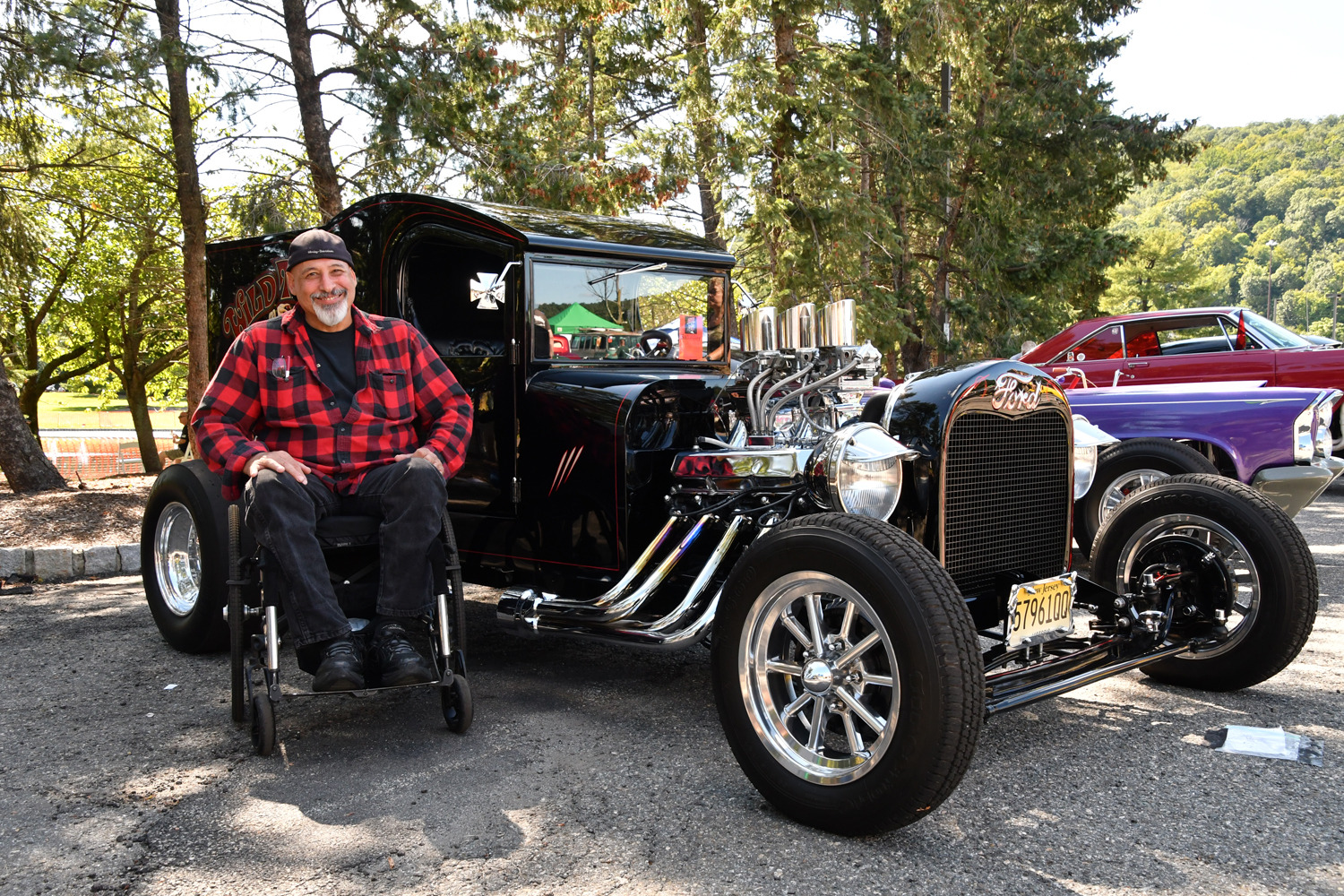
Hank Bernstein – Zipper lakes tribute hot rod

Zipper Lakes tribute Hot Rod

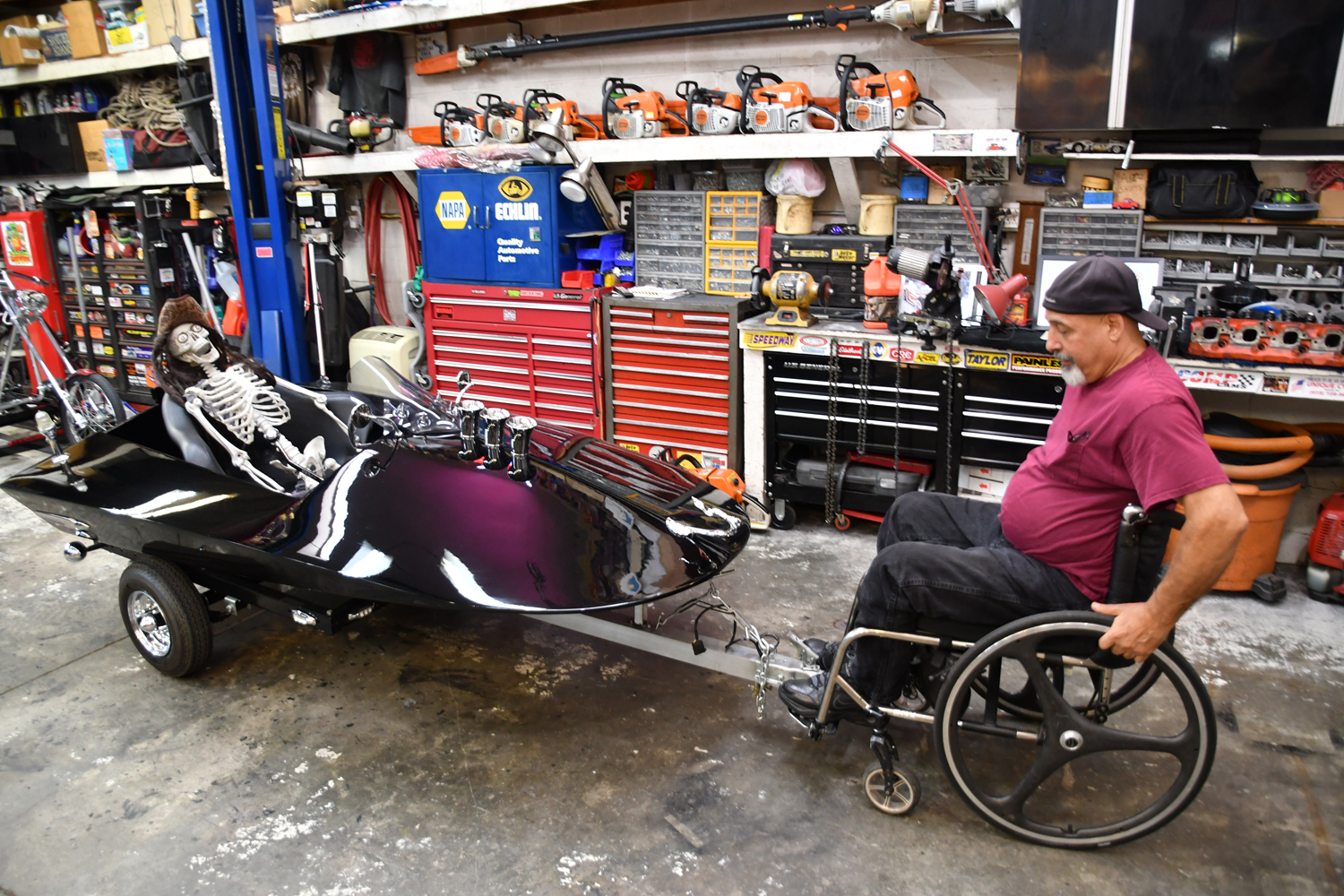
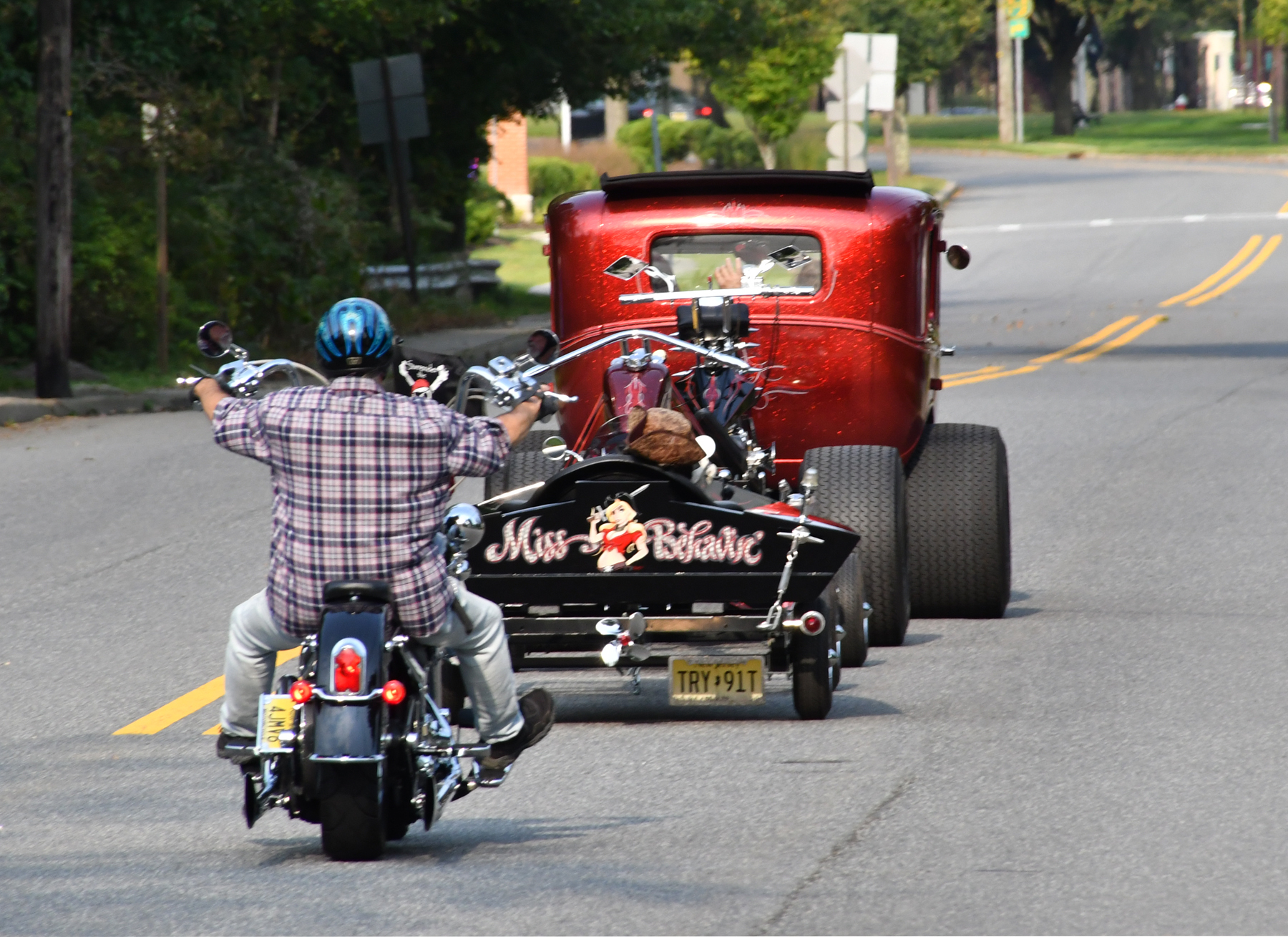
“It’s a lakes modified roadster,” says owner Hank Bernstein. He has built it to pay tribute to the early post WWII southern California dry lakes racers. Before drag strips, even before Bonneville, people would bring their Model Ts and Model As out to El Mirage, take off the fenders and race all weekend. Bernstein says, “They built these cars with skills they mostly learned in the military during WWII, primarily aircraft.”

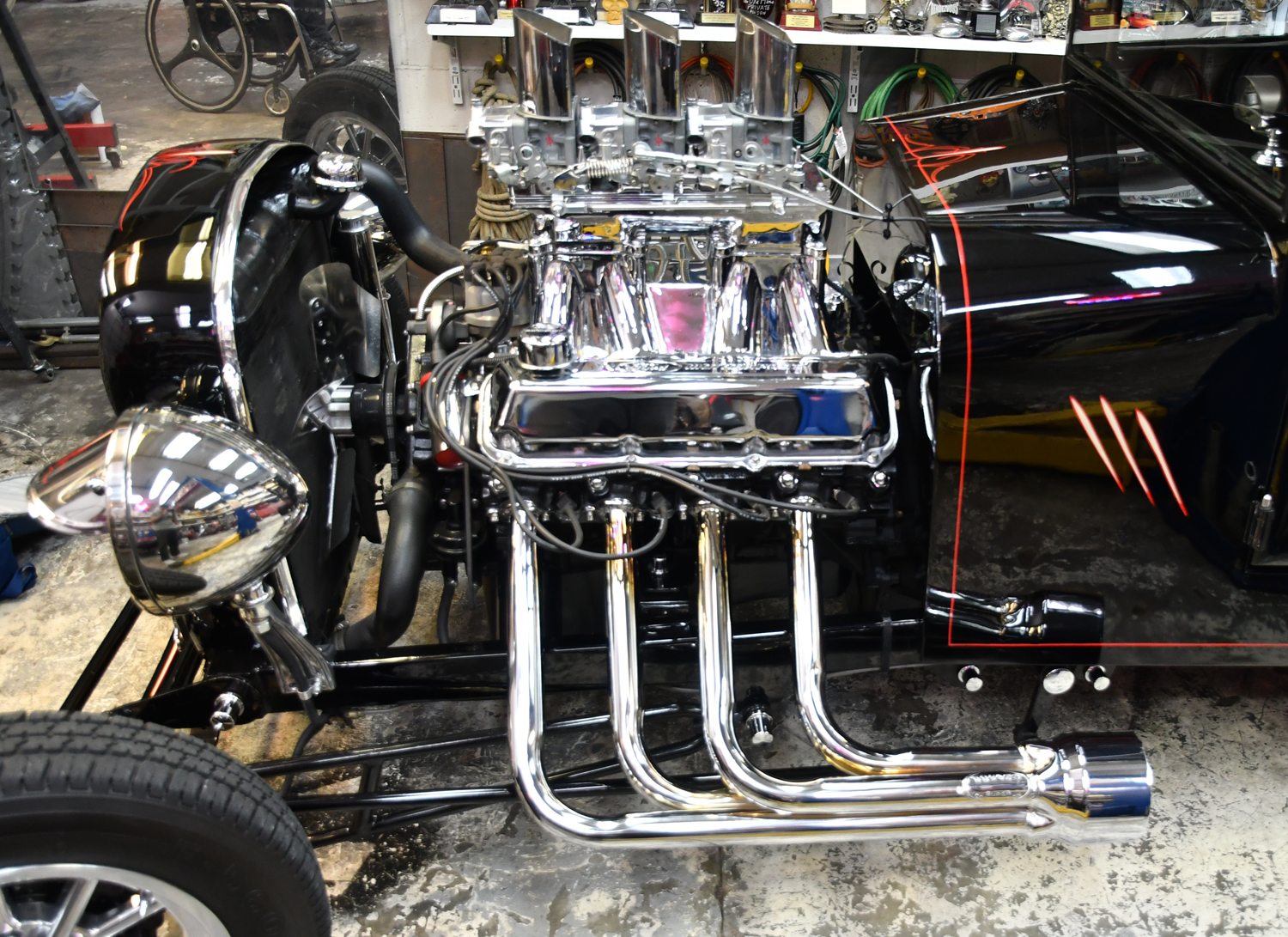
Bernstein’s tribute roadster which he built himself features some unique attributes. The strikingly handsome body and frame feature a design by Darrell Zip who used to work for Revell, the model company. Power comes from the Alfa Romeo V6 introduced in the early 1980s with the GTV6. Bernstein’s familiarity with Alfa Romeo power plants comes from his years with the Alfa Romeo engineering group.

Carburetion comes from Holley 94 carburetors found on Ford flatheads. Rather than using Strombergs that had a reputation for leaking, Bernstein travelled through four states to find five Holley 94s from which he could make three good ones. When he built the car reproductions of Holley 94s were not available. Bernstein even designed the engine turned dash. For the machining he located a retired and skilled machinist.

When asked about his creation’s top end, Bernstein says it is faster than he will ever drive it. He says, “To put it in perspective, in the 3,200 lb. Alfa GTV6 the top speed peaked around 130 mph. My roadster weighs 1,880 lbs.” The fastest Bernstein has gone in his roadster is 95 mph. Bernstein says, “ I am an old drag racer. I don’t have anything to prove.”

When asked for any final thoughts Bernstein smiled and said, “Life’s too short. Build a hot road.”

“Field of Driving Dreams” registration

While the objects of their affection differed, the prevailing sentiment at Tuxedo that day spoke with one voice and it said “Find what you love and drive it.”

By |2021-08-19T11:58:21+00:00August 19th, 2021|4 Comments

Conversations With People We Value #26

Please allow me this digression from my normal Drivin’ News themes.

Recently while at the gym I encountered a friend who is both a dedicated nurse and a thoughtful student in the school of “what’s happening now.” Our conversation quickly evolved to acknowledging a disturbing undercurrent that stains the space in time that the collective “we” presently occupies. Much like a disquieting subsonic tone, it seems to reside on the edge of our consciousness while shaping the character of the times in which we live. “I pray every day,” she said.

Yes, Covid certainly exacerbated it, but only like a hobo joining a disparate cohort all hitching a ride on the same runaway train. Though many among us acknowledge our gratitude for what we have, few if any seem to be blowing noisemakers at a party thrown by life. It seems that the content, perspectives and attitudes dominating our culture’s information channels and shaping the zeitgeist offer little solace to the inner “us” that seeks joy and peace and benefits from the emotions generated by words like love, inspiration, happiness and hope. That inner, decent us, longs for sanctuary from a steady diet of self-doubt, disappointment, anger, betrayal, anxiety, conflict and a host of other unhealthy negative feelings foisted upon us by our environment and our own thoughts. It creates a lens through which we view the world, shape our future life and potentially harm ourselves. What to do?

Personally, I pulled the emergency cord on my life train and stepped off to attend a retreat and explore the unconventional beliefs of a visionary neuroscientist. I would experience a week with 12 to 14 hour days of high intensity immersion in the power of meditation and mindfulness at an event entitled “Piercing the Veil.” The following thoughts are not intended as the advocacy of an apostle. I retain a healthy skepticism. However, they do represent the impressions gained by an open mind exposed to beliefs once dismissed by a scientific community that is now taking a very serious second look.

Meet Dr. Joe Dispenza, doctor, scientist and, for some with a metaphysical streak, modern mystic.

Exploring our power within


Clinging for dear life to the front bumper of a speeding Ford Bronco seems like a curious point of origin for a revolutionary vision with the potential to profoundly advance the physical and psychological betterment of the human species.

It began in the biking leg of a California triathlon in 1986. Trim and fit, 23-year old Dr. Joe Dispenza cranked through the corner as the police officer waved him on. No one saw the red Bronco fast approaching. It hit Dispenza’s bicycle square from behind sending him airborne forward. Not slowing, the Bronco kept coming hitting him again. He clung to the front bumper till the elderly driver came to a stop.

Attending physicians found six broken vertebrae, compression fractures in the spine spanning from the shoulder blades to the kidneys with the damage compounded by a large amount of shattered fragments pushed toward Dispenza’s spinal cord. Their findings presented a harrowing expression of skeletal devastation. Numbness, tingling and difficulty executing basic movements accompanied the physical damage.

Attending physicians left no doubt. Repair would require cutting away damaged vertebrae and then screwing and clamping two twelve inch stainless steel roads along both sides of Dispenza’s spinal column. Left unrepaired the spine would collapse if left to bear his body weight resulting in paralysis from the chest down.

Dr. Joe Dispenza

However, Dispenza says, “I decided against the expert’s pronouncements.” Dispenza held a strong belief in an intelligence, an invisible consciousness that maintains, protects and heals each one of us every moment. He would test his beliefs with his life. He decided that he would take his attention off the external world and focus within himself to connect with that healing power.

Nine and one half weeks after the accident Dispenza walked back into his life having no body cast or surgery. At twelve weeks the recently shattered tri-athlete had returned to training and weight lifting.

Those 3 months launched Dr. Joe Dispenza on a journey of discovery and enlightenment that at first met with contemptuous disregard by traditional scientists. Now, decades later, recognized for its profound promise to promote healing and mental health, Dispenza’s carefully documented findings find themselves the subject of serious research by respected scientific and academic institutions worldwide.

Much like taking a drink from a fire hose, the torrent of data and profound experiences associated with my week long exposure would quickly overwhelm the ability of this brief overview to provide a properly thorough explanation. Thus, I will selectively address subjects I find meaningful as well as provide links affording a deeper understanding of the limitless possibilities that exist when the mind, body, and spirit—of both an individual and a community—merge into one field of consciousness.


MEDITATION

An eclectic gathering of 1500 people filled the Gaylord Resort ballroom. The vibe given off by the group filled the room with a an eager anticipation and a visceral sense that they would be experiencing something special. Indeed they would.

Meditation resides at the heart of Dr. Joe Dispenza’s efforts to revolutionize how people can develop and call upon the natural power resident in the human mind and body. As Dispenza says, “the purpose of meditation is to move beyond the analytical mind so you can access your subconscious mind, That’s crucial since the subconscious is where all the bad habits and behaviors that we want to change can be found.”

Dispenza’s life changing recovery experience that sighted the path for his future teachings taught him to put all of his conscious attention on the intelligence of his body and give it a plan with very specific orders. Having done that he would surrender his healing to that greater mind as he honed his meditative capability to tap the mind’s unlimited power.

I did not come to this retreat as a seasoned meditater or, frankly, a meditater of any kind. However, I certainly left with a profound respect for the power and the promise of the practice.

For individuals such as my self, meditation represented a passive means for escaping the day’s slings and arrows. In the hands of Dispenza, however, it has been transformed into a mental earth moving tool with the power to reconfigure the world you experience. Dispenza had us meeting at 4:00 am and put us through breathing exercises to keep us on the brink of sleep to get the benefit of optimum early morning hormonal balance for a special meditation. During the week we meditated seated, walking, laying down and standing.

Dispenza views the arena where our lives play out as an expression of one of two worlds. Depending on how we chose to live our life the choice offers either a Newtonian world (named after the view of the physical world advanced by Sir Isaac Newton of the falling apple fame) or the curious world of quantum physics.

In essence The Newtonian world offers a predictable future based on the old model of reality as a subject of cause and effect. It is all about waiting for something outside of us to change how we feel inside of us.
However, the curious world of the quantum field states that any event has an infinite number of possible outcomes. The ultimate outcome only becomes real when it is observed.

Here comes the kicker. Dispenza advocates for the belief that the Newtonian material world of objects, people and things is a low energy three dimensional visible world where making changes demands expending energy and time to create or move things in three dimensional space. For example, let’s say you want to acquire the wealth that will allow you to open a yogurt cafe. You have to plan, get loans, find a location. All the while as you prepare to get the funds for your yogurt shop, you live in a state of lack waiting for the outcome. In Dispenza’s Quantum world the experienced meditater elevates his or her consciousness to a high level where that person experiences no one, no body, no where, no thing, no time. This high frequency meditative state the individual achieves pure consciousness. In this state the mind manifests what the future outcome will be. For example, I will need a certain amount of money to achieve my dream of opening a yogurt cafe. In this high state of consciousness the individual will have aligned his or her thoughts with the one frequency among the infinite possible outcomes in the quantum field that matches the future the person desires. When the person returns to the 3D state in which we live they will experience life as if they have already achieved their goal. They do not experience a life of lack. SKEPTICS ALERT! I Get it.

It may sound crazy, but there existed enough examples in the room among the 1,500 attendees present to give one pause. It is not necessary for you to believe it only to be aware of the potential power and be mindful of supportive evidence that you may come across.


PAST THOUGHTS DISRUPTING YOUR PRESENT LIFE

A large percent of attendees acknowledged that past thoughts had a detrimental effect on their ability to function as they would like.

Problematic past thoughts troublingly draw attention away from the present where the energy could be constructively directed towards creative pursuits. Whatever gets your attention gets your energy. If you are focusing on the past you have decreased the energy you can direct to your present. It makes sense.

Walking meditation

A traumatic memory whether caused by a person, experience or event takes a certain time to get over. This bounce back time is called the refractory period. The stronger the emotional reaction to the trauma the longer the refractory period. It is an insidious process as one can literally become addicted to one’s negative thoughts. How? Read on.

Interestingly the body cannot tell the difference between an actual original occurrence and a memory recalled. When a person recalls a past event the body produces the same chemistry produced by the original event. The body then reacts as if the original event is occurring. It is firing and wiring the same circuits. Sending the same emotional signature to the body. When this happens repeatedly the body becomes the unconscious mind. It does not know the difference between the original event and the memory. In recalling the traumatic experience, the body is living in the same past. It can go into a loop 24/7.

The emotion from that past experience gives the body a rush of energy. People can become addicted to the rush from that emotion. When the past event looms so large in the mind some people welcome the pain because at least they can feel something.

So when those past derived negative emotions influence certain thoughts, the thoughts create the same emotions. They create the same thoughts. Resulting in a person’s entire state of being trapped in the past.

So how do we go from, I have this negative emotion. It’s controlling my life. It’s got me in this cycle where I think about the emotion which then triggers a chemical reaction which trains my body to feel that way. This makes it more likely that I will do it again. So, now, I find myself in this unconscious vicious cycle.

The same power of imagining can help build a better future. Meditate, close your eyes and mentally rehearse the positive action of what you want. If you are truly present, your brain does not know the difference between what you are imagining and what you are experiencing in the 3D world. It makes you brain not a record of the past but a map to the future.


STRESS, A KILLER

All organisms in nature can tolerate short term stress. A deer grazes quietly. Chased by coyotes, the deer outruns the coyotes. The deer then goes back to grazing. The stress response is what the body does to get itself back to order.

Your driving down the road and get cut off. You react and then settle back down to driving. However, what if it is a co-worker who stresses you out, sitting next to you. All day long his mere presence turns on those stress chemicals because he just pushes all of your emotional buttons. This, as well as any other unrelenting stress, presents a serious problem.

No organism in life can live in emergency mode for that extended period of time. When you turn on the stress response and can’t turn it off. It can trigger a disease. It is a scientific fact that long term the hormones of stress down regulate (degrade) genes and create disease.

The size of the human brain further exacerbates the issue for people. Just by the nature of its large size, the human brain can turn on the stress response just by thought alone. Humans can simply think about those problems and turn on those harmful chemicals.

This means that our thoughts can literally make us sick. Conversely if our thoughts can make us sick is it possible that our thoughts can make us well?

Emotions connected to survival anger, aggression, hostility, hatred, competition, fear anxiety, pain suffering, guilt, shame, unworthiness, envy, jealousy create hormones of stress.

If survival gene is turned on, you could have 10 great things happen in a day and one bad thing. However you cannot take your attention off that unhappy thing because the survival gene is turned on.

Research conducted at one of Dispenza’s earlier advanced events, like I attended, measured 7,500 gene expressions. Participants Meditated seated, walking, standing up and laying down. At  the end of four days of the common eight genes that were regulated 2 were genes to suppress cancer cells and tumor growth, 2 genes promoted neurogenesis meaning they supported the growth of new neurons in response to novel situations. One gene signaled stem cells to go to damages areas to repair them. One gene for oxidative stress was up-regulated. In 4 days it strengthened genes that caused the body to flourish. Imagine after 3 months.


COHERENCE HEALING

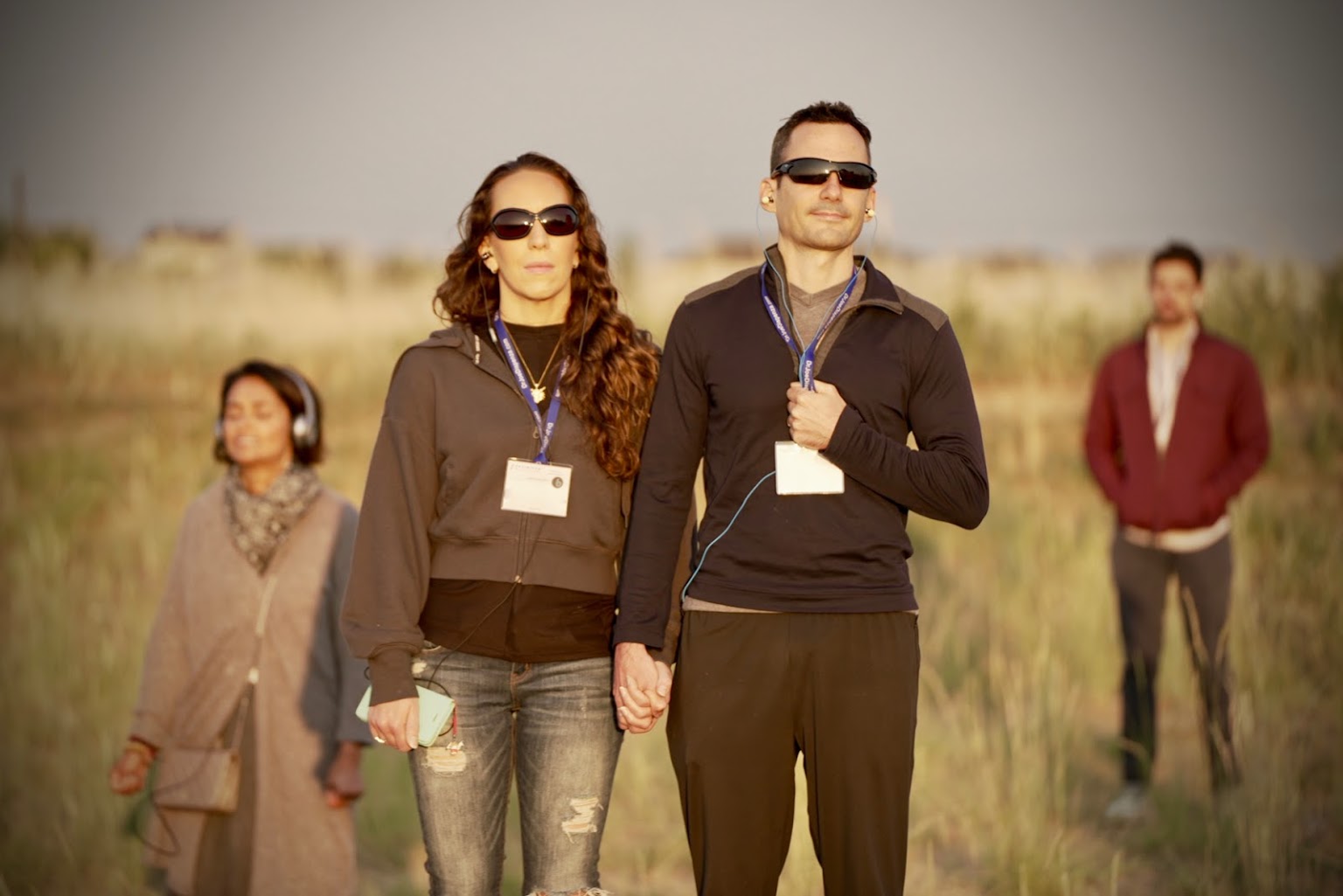
In an emotionally charged coherence healing event, fifteen hundred people slowly exited the Gaylord Resort ballroom to enter the glaring Denver sunshine. Their shared intention would focus 1500 hearts and minds on achieving coherence with the goal of focusing this coherent energy as a force of mind and nature with the purpose of healing individuals around the country suffering from severe afflictions.

The solemn assemblage slowly, quietly circled the courtyard of the building. Many participants moved with hands pressed on hearts. Reentering the ballroom each attendee found a photograph on their seat. There would be ten identical photographs clustered around the massive ballroom, one each for every person in a group of ten. The subject in the photo would be in need of healing for a serious affliction. People solemnly held the photos to their breasts as Dispenza guided the meditation.

Coherence Healing in person

Hands would briefly leave the photo momentarily as lumberjacks and light-weights alike wiped tears suddenly discovered to be running down cheeks. I know. My photo reminded me of someone I loved dearly. At the conclusion of the meditation, each of the ten photos were placed in an envelope which would be signed by each of the ten members in the group. Each signee would receive a letter with the describing the change in the condition of the subject subsequent to the coherence healing meditation.

For a compelling look at subjects of coherence healing you can go to the following link to watch and listen to stories of personal breakthroughs, miraculous healings and profound transformations.

https://drjoedispenza.com/pages/coherence-healing

https://drjoedispenza.com/pages/stories-of-transformation


RESEARCH

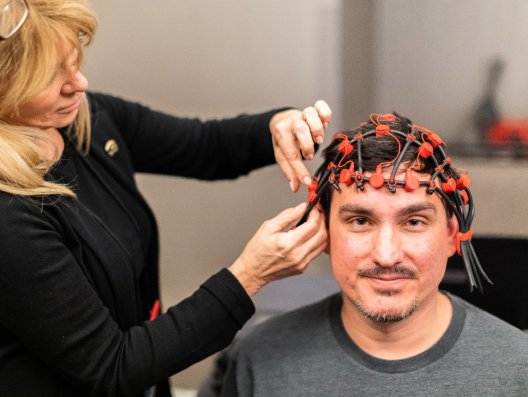
Brain scan

As Dispenza’s work enjoys rapidly mounting recognition resulting from the sheer power of its compelling findings, scientific and academic institutions have turned their focus on substantiating his claims. The following link provides a look at the research surrounding Dispenza’s work.

https://drjoedispenza.com/pages/scientific-research


REFLECTIONS

I left “Piercing the Veil” drenched in knowledge, observations and questions delivered by the relentless Dispenza information fire hose. I learned much about myself. My observations both provided convincing affirmations and generated questions that marked a path forward to personal growth.

The people I encountered displayed an appealing mixture of self effacing personal awareness, minds hungry for knowledge and deep appreciation for the potential and reality of the breakthrough work spearheaded by Dr. Joe Dispenza.

Back home I have begun working with guided meditations led by Dispenza. I also have humbler but maybe no less important goals like reminding myself to stay in the present, I find so many more good things happen there.


By |2021-08-09T20:17:47+00:00August 5th, 2021|4 Comments

Conversations With People We Value #25

It would be my first job in the automobile industry. It was 1975 and Mercedes-Benz of North America hired me to create their first audio-visual technical training system. I would be creating educational programs to train technicians at the dealership. I was thrilled to be working for the iconic three-pointed star – A good company, with good people and great cars. I had no clue that I stood on the brink of what would be a  lifetime avocation.

It happened so serendipitously. One day early in my career at Mercedes-Benz I encountered the very polished Count, yes Count, Marcus Clary a Public Relations executive. He was discarding new car brochures from previous years. I asked if I could take some. Help yourself was the reply.

Thus began a lifetime of opportunistic dumpster diving at North American car companies as decade after decade I witnessed most automotive manufacturers indiscriminately discarding what they viewed as outdated sales literature and I saw as important future messengers of history.

Over 100 years ago the new car brochure came to life in a world cluttered with expensive hand built cars desperately seeking to be noticed.

Over coming decades the new car brochure would evolve as a powerful 20th century sales tool and a valuable reference for the future study of automotive history.

Now as we witness, with some sadness, the sacrifice on the altar of digital efficiency of the high quality, brilliantly photographed, aesthetically striking and increasingly expensive bibles of the new car sales effort, I would like to take an admiring look back at whence they came.

Evolution of the new car brochure

(Part 1 – 1900 to 1940)

1936 Ford

In the early 1900s the emergence of the automobile as a commercial venture demanded printed material that would help present, position and promote this new contraption.

Over roughly the next one hundred years the new car brochure would tide a wave of evolution and sometimes revolution in design, technology, socioeconomic conditions, societal values, editorial style and graphic delivery.

One need look no further than the very first page of the very first Cadillac catalog to see the role set aside for the new car brochure. The year was 1903.

1903 Cadillac

“Being unable to reach the majority of prospective purchasers of automobiles by Agencies or personal calls we hand you this catalogue which, in a measure, gives a knowledge of the Cadillac and its most important features and at the same time illustrates and explains the vital points so that comparisons may be made with other vehicles and thus enable you to satisfy yourself as to our claims for superiority over all others.”

Granted while that explanation makes for one hell of a sentence, buried within that mouthful of wordy formal prose resides the essence of the new car brochure for the next 100 years. Its purpose was established as a means to “provide a tool to engage, inform and persuade prospects to purchase the product.” Its progress would be marked by increasingly higher quality materials, idealized imagery and persuasive copy integrated ever more professionally to motivate a new car prospect to be a new car buyer.

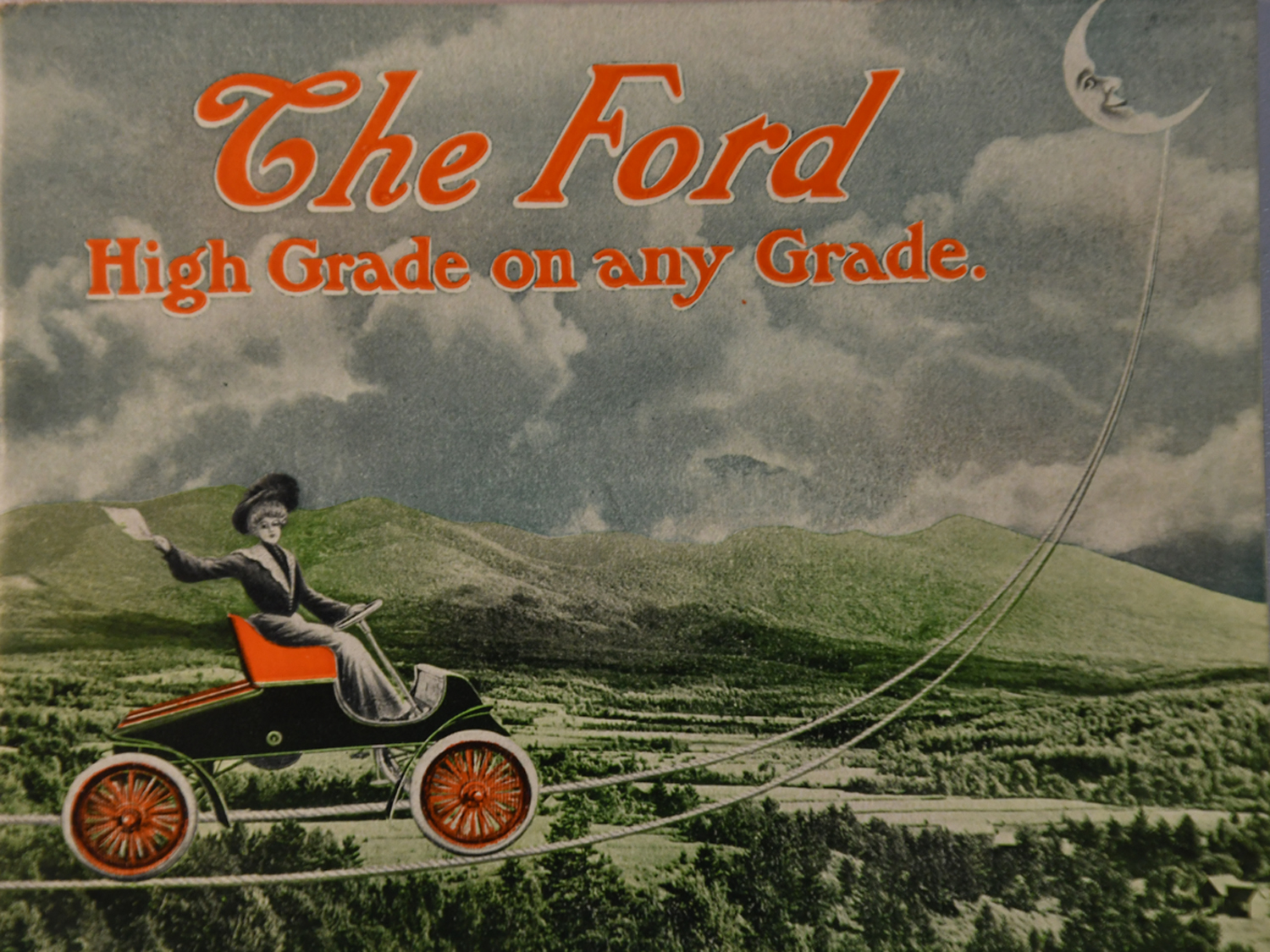
1903 Ford

It would do so, in part, with an emotional appeal that paired the purchase of a new automobile with a romantic vision of the real life experience that that automobile would deliver.

When the automobile arrived on the popular scene in the 1900s, it cost an average of $2000 to $3000 and up at a time when the typical American worker made around $500 a year.

In this early age of motoring most everything associated with the automobile, its operation and its value was an unknown. Skeptics abounded. Many viewed automobiles as the rich man’s toy and a passing fad. This skepticism posed a daunting challenge for those tasked with writing persuasive copy for the print automobile brochure. The challenge posed demanded that the early new car brochure advance a strongly substantiated value proposition to an often dubious populous dismissive of this new mode of autonomous mobility.

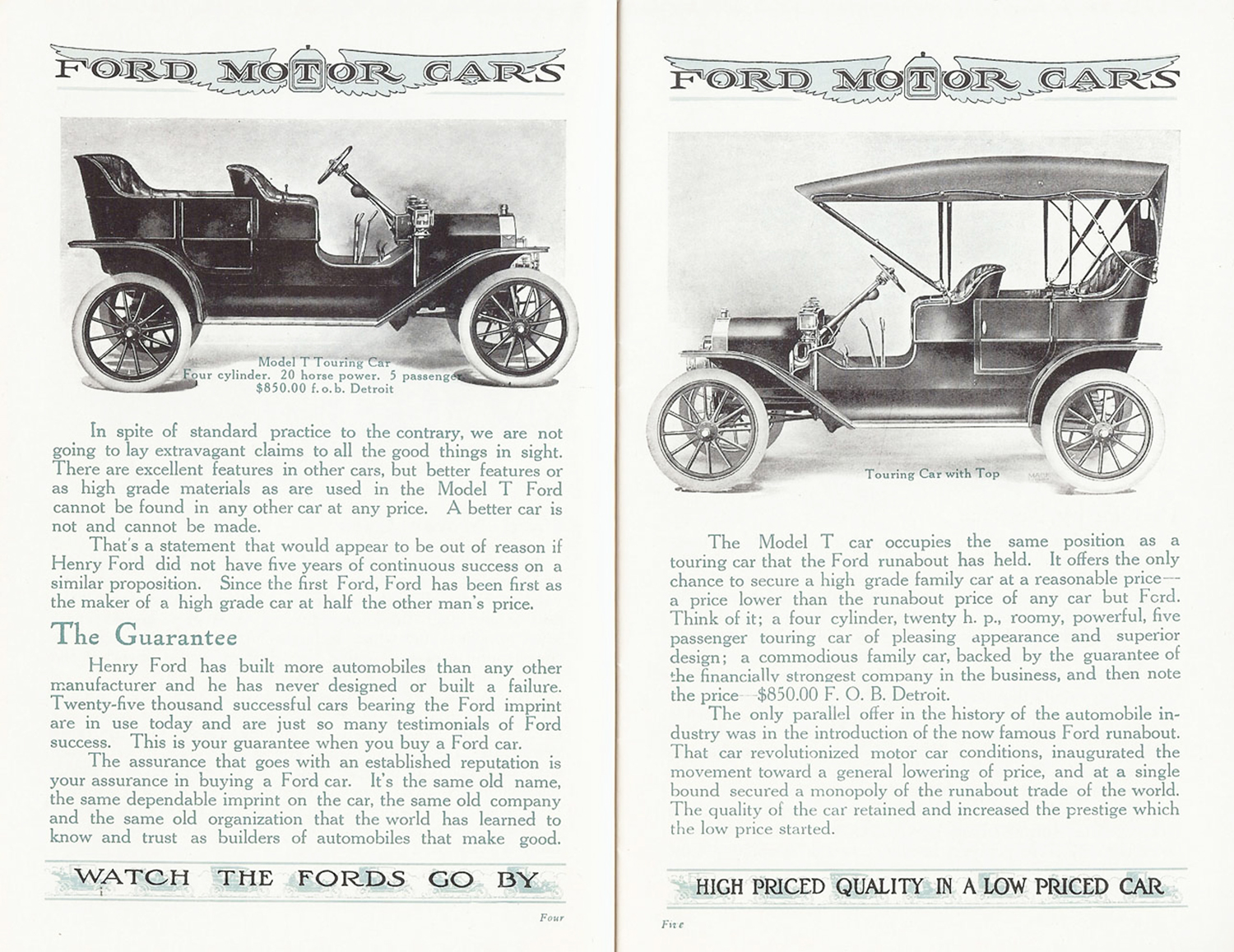
1909 Ford

Early new car brochures displayed the work of journeymen graphic designers whose names have been lost to history. Brochure content displayed a visually staid countenance featuring a forthright presentation of product and corporate stability.

1906 Cadillac Factory

An image of an imposing factory was often a prominent feature to assure a wavering prospect that this manufacturer was stable, substantive and here to stay. Even then, the very concept of and need for the automobile required explanation.

Designs featured basic type with custom hand drawn fonts for graphic interest. Art was predominantly illustration. Color was used sparingly, Image reproduction employed the recently available half-tone technique. From this basic beginning would evolve a century of ever improving methods of putting ink on paper.

Henry Ford

In this unsteady beginning all the automobile companies struggled. Then, late in the 20th centuries first decade came Henry Ford’s announcement, “I will build a motor car for the great multitude.”

The game was about to change. The age of the automobile was about to dawn and with it the selling power of the printed brochure.

Between 1908 and 1913 Henry Ford revolutionized the automobile with the model T and automobile production with assembly line mass production. Together those two achievements launched both the American consumer and American society into the automotive age.

By 1915 America was home to 100 million people and most everyone wanted an automobile.

Between 1903 and 1917 yearly new car sales skyrocketed over 1000 percent from roughly 18,000 units a year to 1.9 million units a year.

1920 Ford

Through the teens the meteoric rise of the automobile business coincided with the ascent of the advertising agency foreshadowing a coming marriage made in sales and marketing heaven.

New Car brochures would soon reflect the increasing influence of professional copywriters. Copy now emphasized a more detailed, competitive, brand-specific, Feature-Advantage-Benefit message. Riding the tidal wave of automobile acceptance, brochure content, while still wordy, had started a decades-long journey to delivering a more crafted and focused message.

Paper quality received more attention for both its feel and visual appeal. Printing quality improved. However through the teens visual treatments continued to feature forthright mostly staid presentations of the product. The preponderance of images for the most part remained high quality illustration. This was about to change.

The Roaring Twenties arrived fueling a profound transformation of automobile ownership from the exceptional to the commonplace. Automobiles were not only for the wealthy, adventurous or early adaptors, the automobile was for everyone.

Model T price

1908 – $800          1914 – $490          1921 – $310          1924 – $265

By 1925 40% of the work force earned $2000 or more. The average work week had shrunk from six days to five. People had more time, more money and America had 700,000 more miles of paved roads. And just as more people had more money to spend, Henry Ford was lowering the price of new car ownership

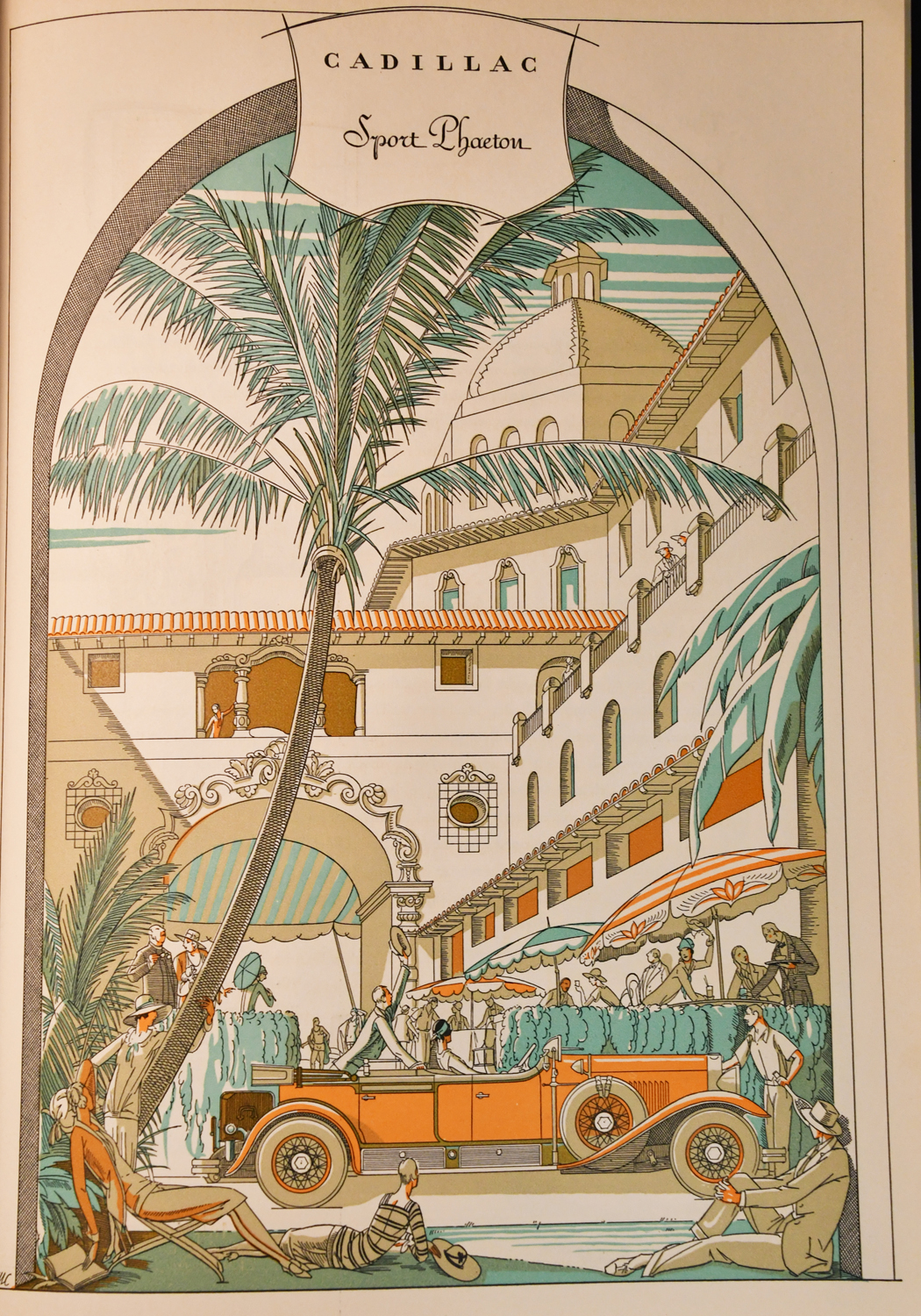
1928 Cadillac

New car brochures entered the decade employing an almost clinically cold display of technical features. That would quickly change. With the suddenly booming economy and exploding appetite for new cars, brochure graphic treatments fanned the flames of desire by displaying automobiles not just as sturdy servants but as sources of excitement, pleasure and fashion. Evocative graphic treatments linked automobiles and lifestyle.

The emergent advertising industry to which manufacturers had delegated much of the responsibility for new car brochure production rose to the challenge and embraced the opportunity with creativity and skill. Visual presentations employed exceptional artistic executions including illustration, etchings, photography and a more compelling use of color.

Automobile ownership soared in the 1920s

YEAR             NUMBER OF CARS SOLD

1910         0.45 Mil

1915         2.30 Mil

1920        8.10 Mil

1929      23.10 Mil

America’s love of the automobile had forever changed American life. Depression and war was about to change the world.


“We are the first nation in the history of the world to go to the poorhouse in an automobile”

Will Rogers

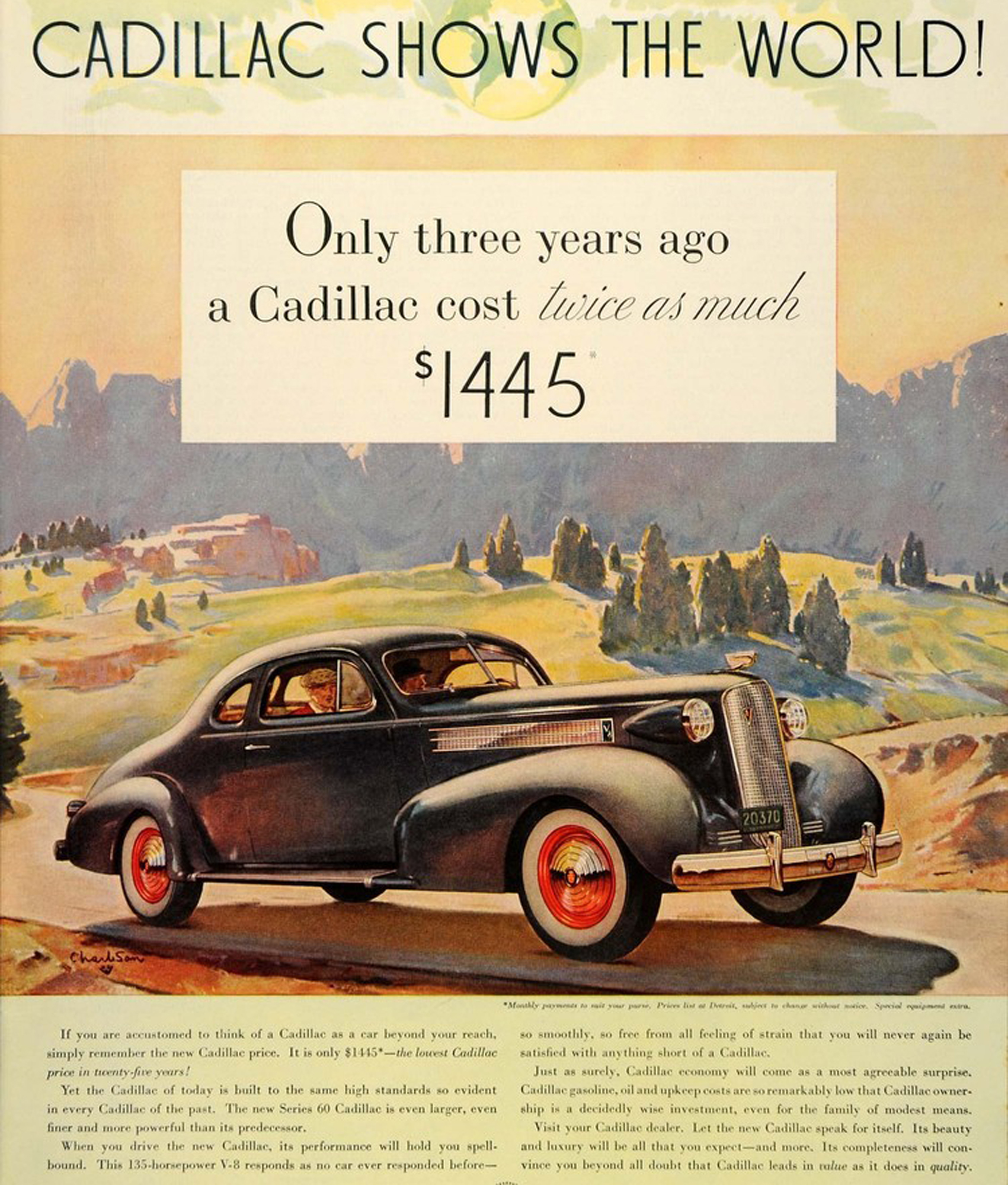
1936 Cadillac

Just at the point when the North American new car brochure was coming into its own, the American economy hit the wall. The depression crushed the automotive industry. By 1932 new car sales plummeted by 75%. Luxury automobile sales literally dried up. Over 30% of the American workforce was unemployed and 40% of nation’s mortgages were in default.

Faced with the challenge of economic conditions, new car brochure copy reflected both an economic reality and, some might say, a Pollyanna-like optimism. Reference to de-contented models, reduced prices, high value, promotion of trade-ins, and financing from GMAC and Ford credit all spoke to the economic truth of the times. However…

1936 Dodge

As the 1930s progressed, new car brochure content, not unlike the glamorous fantasy world portrayed by Hollywood, displayed a comfortable even luxuriant lifestyle that for many was at best a memory.

When present, people depicted in new car brochures were decidedly of the upper middle class or higher. Even lower end brands such as Ford utilized imagery that portrayed the product with a bold countenance.

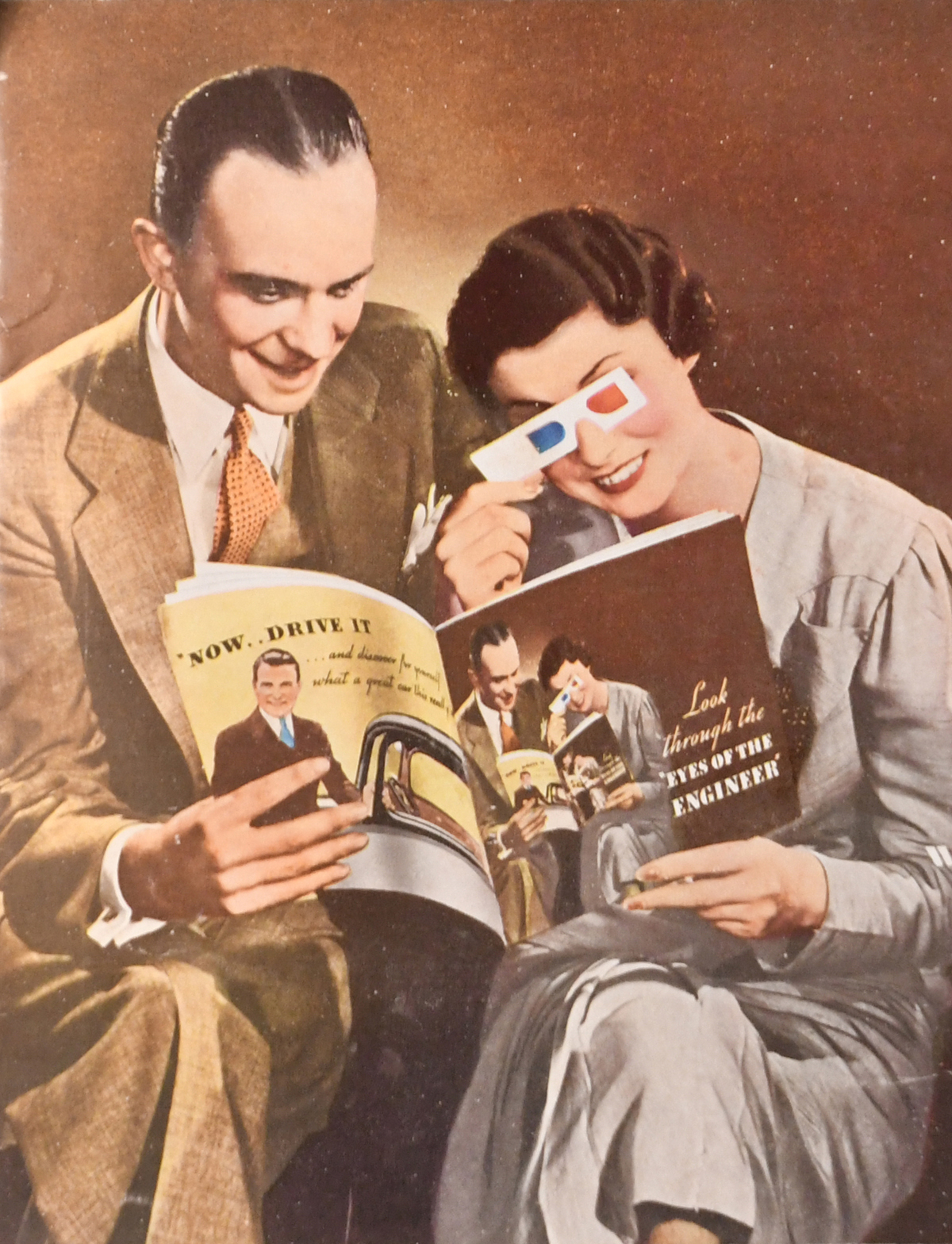
1934 Ford 3D catalog

Luxury makes such as Cadillac employed richly illustrated depictions of life being enjoyed to the fullest. Stronger visual imagery and more graphic layout design gave new car brochures vitality that foreshadowed the evolving visual character that would continue in the post war years.

The creative use of embossing, foil stamping, even 3D imagery together with photography, illustration and true 4-color printing sought to bring glamour to a marketplace and world that was anything but glamorous.

Through the Depression, the automobile industry had battled to fight its way back to solvency with technical innovation. As well, the sales literature that promoted those new products displayed a sophistication reflective of the same level of advancing capabilities. But, now, the automobile industry and the world were about to face an even more virulent challenge – World War II.


Part 2 – 1941, War and beyond (Coming later in the year)

By |2021-07-22T10:48:39+00:00July 22nd, 2021|8 Comments

Conversations With People We Value #24

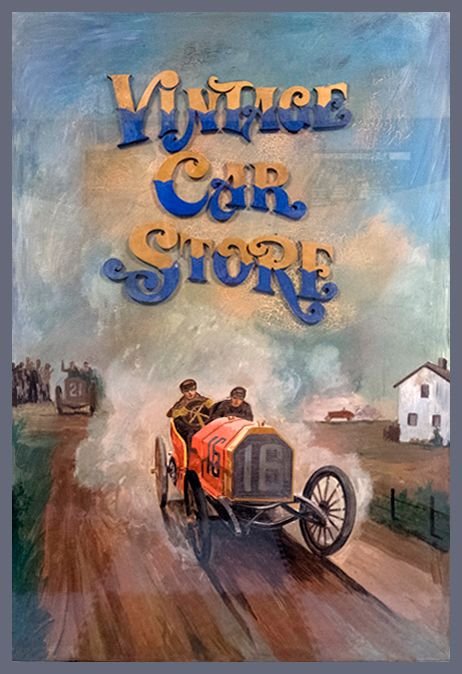
Entering Ed Jurist’s Vintage Car Store in Nyack, New York offered a visual wonderment of not only vintage automotive but, as well, vintage aircraft art and artifacts. A 12-cylinder Merlin engine, the type famous for powering the P-51 Mustang, sat proudly cradled where it could be viewed through the building’s large front window that faced the street.



On this day in 1982, I had originally strolled in to interview Jurist about a Sherman tank he had sold to a Hollywood rental business years before. As the interview wound down to allow Jurist to depart for dinner, the topic of vintage aircraft surfaced. Suddenly dinner could wait as an animated Jurist held forth on his experiences purchasing vintage war planes from around the world. While the tank story was written and published, the telling of Jurist’s vintage war plane exploits never made it to print, until now.

Buckle your lap belts and hang on for the story of the sputtering Mosquito and the Virgin Loretto.

The sputtering Mosquito and the Virgin Loretto

DeHaviland Mosquito


Though pilot and copilot alike had faced death before while flying bombers in WWII, concern tinged their voices as their eyes flicked across the dead black skies above the jagged, unforgiving and equally black Pyrenees mountains somewhere below. As to how far below, they could only venture a sweaty guess. Spotting a light, any light filled the content of their unspoken prayers as an engine of the vintage WWII DeHaviland Mosquito twin engine bomber sputtered and coughed in what portended to be a death rattle if the plane could not find a place to land and land soon.

Jurist was never a stranger to aircraft adventure starting with his exploits as a wartime B-17 bomber pilot with the Eighth Air Force. Shot down over Nazi Germany, Jurist actually escaped from the Nazi prisoner of war camp where he had been held. In later years Jurist set up business in an old Cadillac dealership built in 1927 that was home to his Vintage Car Store. There, in addition to travelling the world in search of rare and valuable automobiles, he dedicated himself to finding and preserving vintage aircraft, primarily of the military variety. Jurist during his years of searching out vintage war planes brought in more vintage military aircraft to the United States than any other single private individual in America.

Hawker Sea Fury

In 1979 when Iraq was upgrading its air force to jets, Jurist arranged a deal with the Iraqis to purchase 24 of the propeller-driven Hawker Sea Fury fighters being retired. Jurist virtually lived in Baghdad to shepherd the deal. He oversaw the negotiations, watched the planes loaded onto a freighter and, once arriving in America, unloaded at Cape Canaveral.

It was in 1971 that Jurist located a WWII Mosquito fighter bomber. Purchased from its owner in England, the Mosquito, which had appeared in British films, had been maintained in flight worthy condition.

Known as the “Wooden Wonder,” the Mosquito began life as the subject of ridicule primarily because many viewed its wood construction as unworkable. Predominantly made of plywood, Its fuselage consisted of a frameless shell of balsa wood pressed between sheets of birch. However, the shortage of the light metal alloys required in airplane construction made the Mosquito’s reliance on wood a major advantage leading to its acceptance by the RAF. That decision proved to be a very good one for the RAF. By the end of war, the Mosquito’s speed, rate of climb, versatility and durability had made it one of the most respected and admired war planes of WWII. As a testament to its durability, elusiveness and ruggedness, the Mosquito experienced the lowest loss rate of any aircraft in the RAF Bomber Command Aircraft.

Powered by two Rolls-Royce Merlin engines, the Mosquito had a maximum speed of 415 MPH that made it the fastest aircraft on either side during much of the war. It had a range of 1,500 miles with the ability to carry a bomb load of 4,000 lbs. That bomb load equaled the capability of the four-engine B-17 flying fortress. With a crew of two consisting of a pilot and navigator/bombardier, the Mosquito filled a broad range of roles including bomber, fighter and special operations specialist. One wonderful Special Ops example highlighted the Mosquito’s ability to execute high speed, pin-point, low level attacks. It took place on the morning of January 31, 1943 at a parade in Berlin billed to feature an address by Hermann Goering. As head of the Luftwaffe, Goering had boasted that no enemy aircraft could fly unscathed over Berlin. As Goering prepared to present to the assembled crowd, a squadron of Mosquitoes appeared out of nowhere and effectively put an end to the morning’s festivities. Later that afternoon a second squadron of Mosquitoes  put an exclamation point on the RAF’s refutation of Goering’s claim of enemy free skies when a second parade intended to feature a Goering address received the same treatment as the morning festivities.
Squinting into the darkness blanketing the Spanish mountains below, the glorious history of the Mosquito ranked very low on the crew’s thoughts. One of the high performance 12-cylinder Merlin engines spewed bad noises that reflected declining performance. Though brave and stalwart men, the point of furrowed brows and sweaty palms had been reached. Almost like a cross between a curse and a prayer, Jurist recalled barking out in frustration, “There has got to be a God damned town somewhere down there.” At this point their greatest hope resided in finding a space big enough so they could crash land with some possibility of surviving.

With both hope and eyesight strained to the limit, Jurist spotted a faint blur with the luminance of a distant star. No doubt existed in either crew member, their fate would hang on the ability of that distant blur to be their salvation. The faltering engine would not tolerate a plan B.

As the Mosquito limped on above the unseen but none the less foreboding mountain peaks below, the dim blur began to acquire definition. Initially unsure of what they saw, it became shockingly evident that the character of the dull blur now taking shape came from two rows of torches that framed the full length of, unbelievably, a runway.

Jurist set the faltering Mosquito down squarely on a remote mountain airstrip at the center of a joyous celebration. As the crew left the ailing Mosquito and surveyed the robust life and jubilation that surrounded them, their abilities to comprehend were sorely challenged, and then the priest appeared.

The priest welcomed the unexpected visitors to the festival where the Aeroclub of the  village of Vigo, Spain was celebrating the Feast of the Virgin Loretto – The patron saint of pilots.

As joyous celebrants encircled the Mosquito crew someone placed a Virgin Loretto metal around Jurist’s neck. For the rest of his life Jurist never took off that metal.


A side note:

Hanging on the wall by the front door of the Vintage Car Store was a very large framed photo of the Mosquito crew, the priest and a few villagers in front of the Mosquito. I have never been able to track that framed photo down. I believe it was sold when the stores contents were auctioned off in the 1980s. If anyone has any information relating to that photo please let me know.

By |2023-10-14T14:56:06+00:00July 1st, 2021|7 Comments

Conversations With People We Value #23

All Americans had been warned. No meaningful correspondence should be tossed into a hotel waste basket. Assume that your room has a listening device. Any private conversation should be held outdoors in the open square. These warnings were to be taken seriously when working behind the Iron Curtain during the cold war. So recalls Patty Moore a member of a unique team of exceptional design talent assembled by 20th Century industrial design icon Raymond Loewy. Talented and brash, the team faced the daunting challenge of creating a world car for the Soviet Union to market around the globe in the 1970s.

Though an American citizen, Mr. Loewy was French by birth and thus acceptable to the Soviets. However, the small team he assembled to create the design was 100% American.

For American and Soviet alike, pronounced egos and sharp elbows bruised at every turn. Conflicting creative styles and attitudes born of clashing ideologies destined the project to be equal parts car story and John le Carre novel.

In the early 1980s, I had been in contact with Mr. Loewy as well as members of his design team. I have taped interviews conducted in 1982 with design team members as well as what may be the only existing images of the concept car.

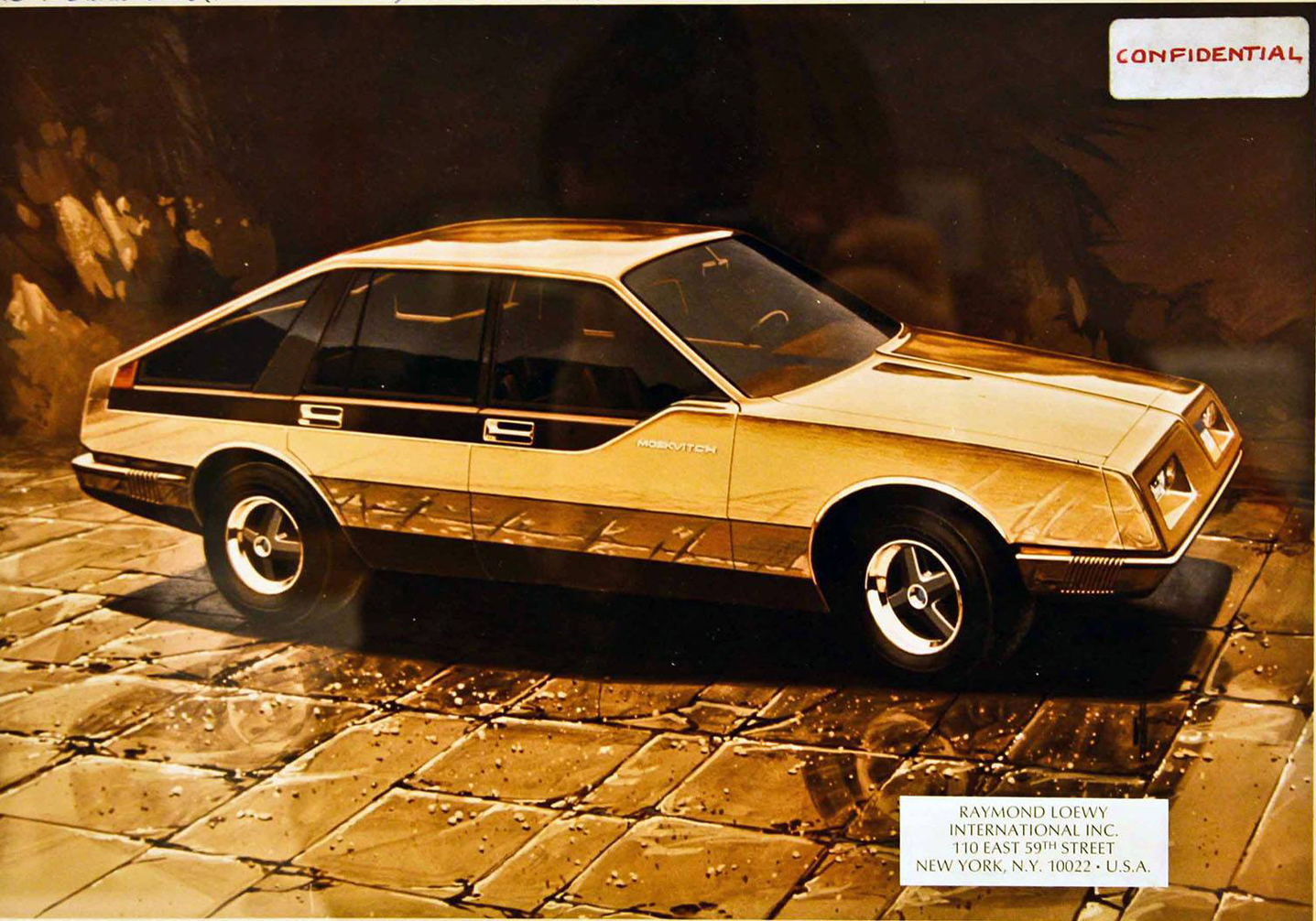
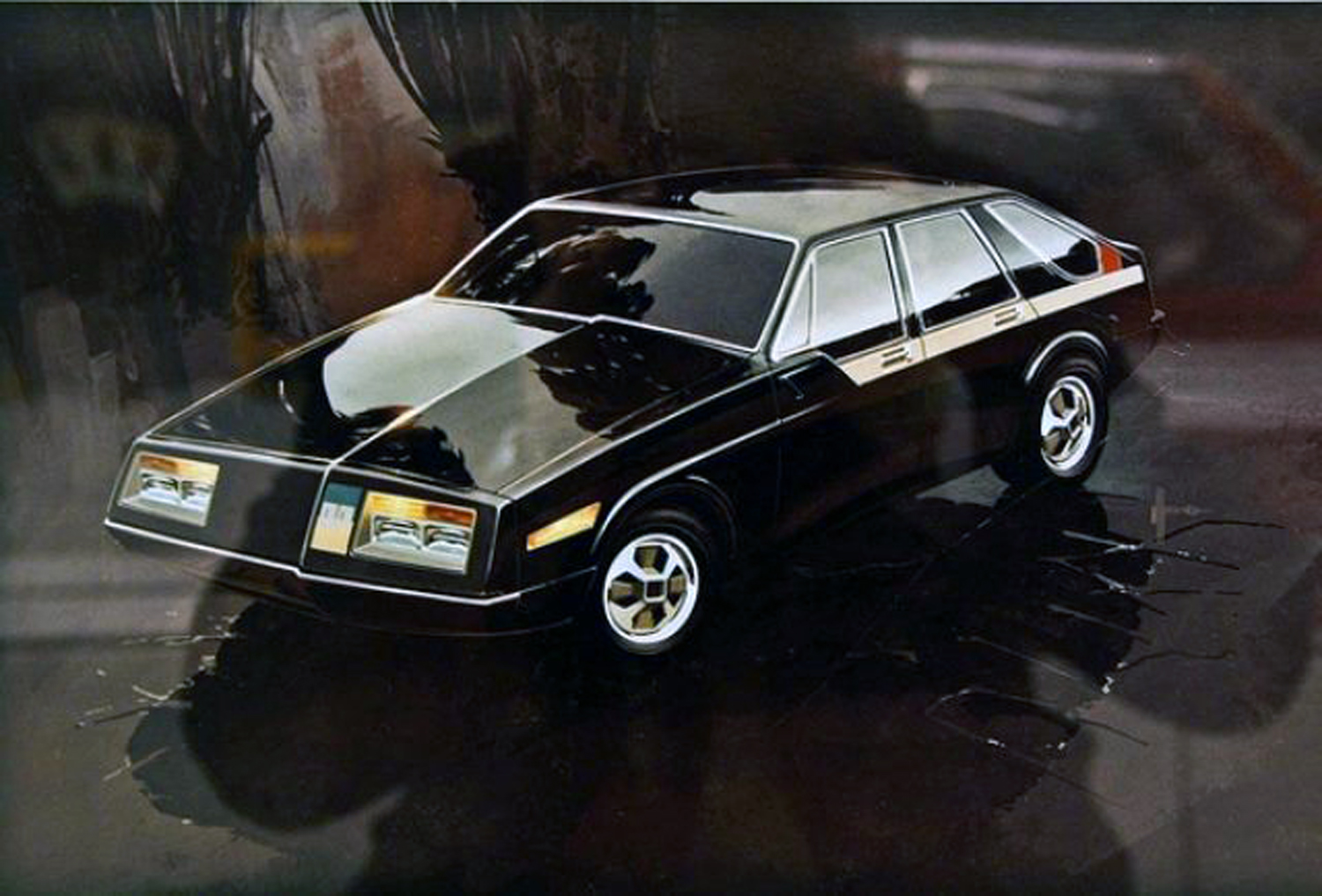
What follows is the birth story of the ill-fated Moskvitch XRL.

Raymond Loewy’s 1970s Soviet world car adventure

Initial version of Moskvitch XRL


For the Soviet Union in the 1970s, it was a bold undertaking. The Soviet plan called for producing a family sedan, the Moskvitch, to sell in the new car showrooms of the western economies. To pull it off they reached out beyond the Iron Curtain to a Frenchman by birth and a naturalized American citizen by choice. He would be the man bold enough to succeed. He was Raymond Loewy, father of industrial design, creator of the Avanti, Studebaker starlight coupe, Shell logo, modern Coca-Cola bottle and hundreds more cultural icons.

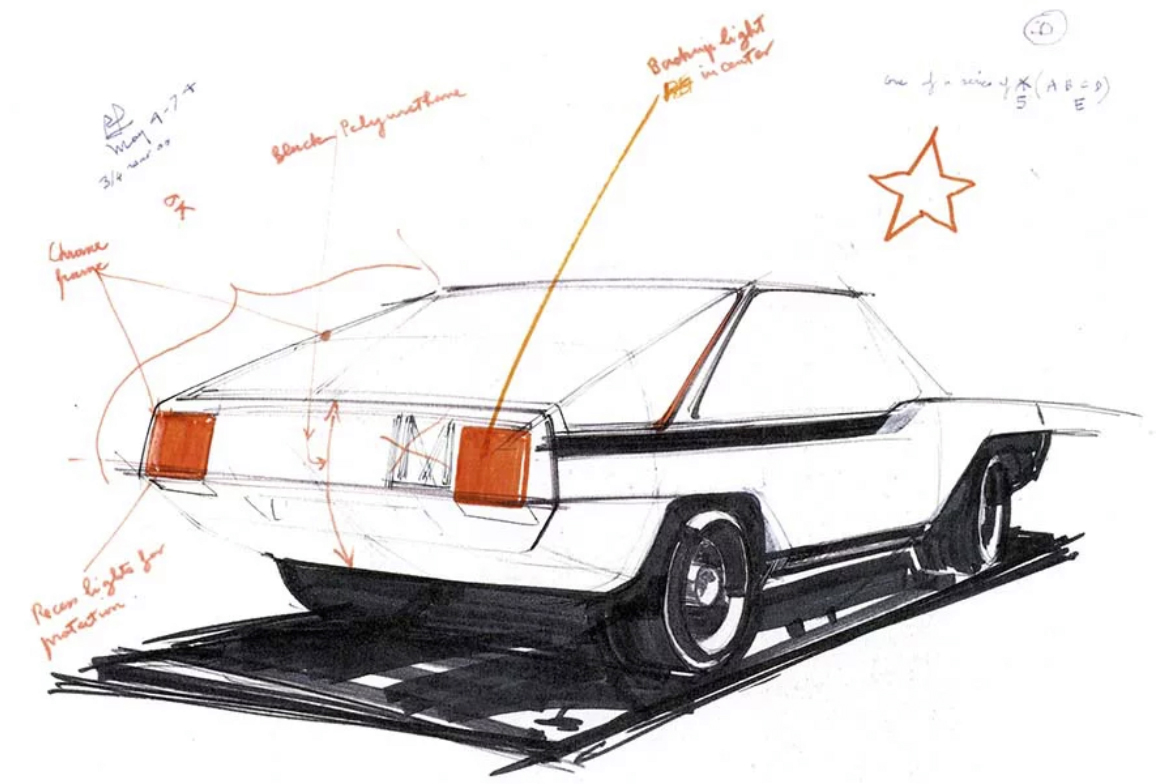
Early Moskvitch sketch

In this era of Nixon and Brezhnev, Détente was in bloom. This warming of relations coincided with a Soviet 5-year plan that emphasized aggressively marketing consumer goods to the West. The red stars had aligned to create a profound need for a serious upgrade of Soviet consumer product aesthetics.

Loewy anticipated the extraordinary opportunity. As the creative genius who fathered the field of industrial design, he enjoyed a good relationship with the Soviets that dated back to the early 60s. The Russians liked and respected Loewy. Loewy had cleverly positioned himself to achieve something no one had done before or would do again.

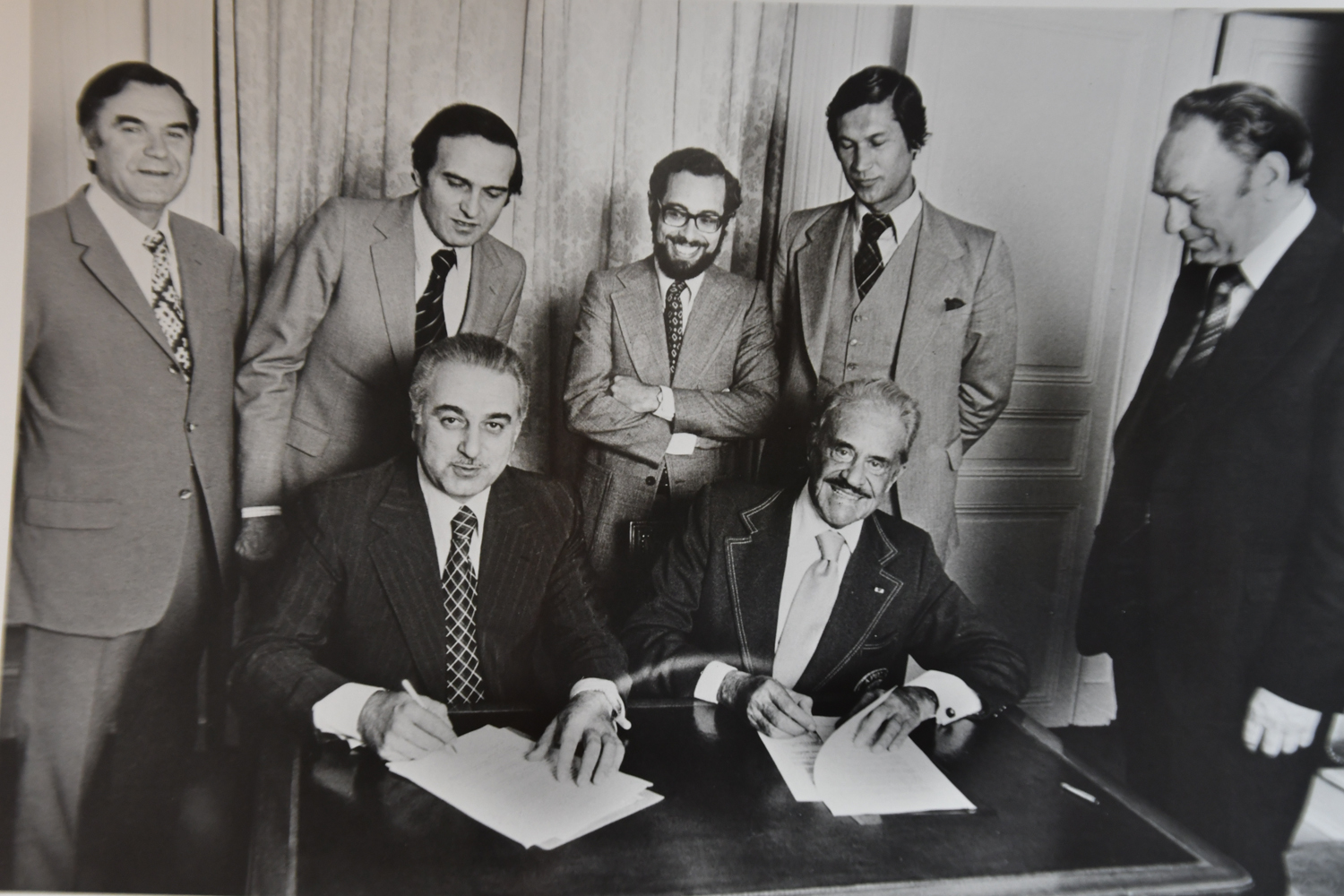
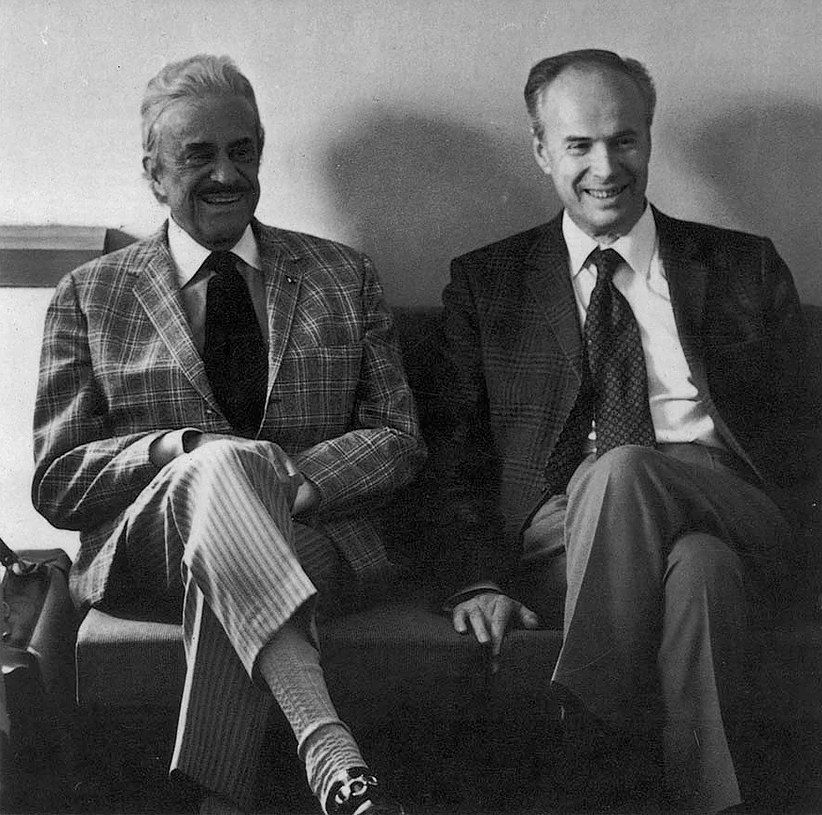
Signing of 5-year agreement with Dr. Jermen Gvishiani of VNIITE

In signing an historic design services contract with the Soviet Union, Loewy stands as the first and only person to direct a design exchange between an American company and the Soviet Union. In his own words Loewy called this design exchange, “the most important achievement of my long career.” In addition to the Moskvitch, the contract called for the design of a broad spectrum of products including clocks, cameras, motorcycles, hydrofoils and more.

1974 witnessed Loewy assemble a unique collection of gifted American designers in their 20s and early 30s to create the Soviet dream car, the Moskvitch XRL (X – experimental, R – Raymond, L – Loewy).

Team members included Patricia Moore, then in her early twenties, and responsible for the interior. Moore would go on to be named the Most Notable American Industrial Designers in the history of the field. And in 2000, was honored as one of The 100 Most Important Women in America.

Raymond Loewy and Yuri Soloviev

Syd Mead served the team by creating contextual visualizations of the Moskvitch design. Mead would later become famous as a neo-futurist concept artist who visualized environments for science fiction films such as Alien, Tron and Blade Runner.

Though well respected by the Soviets, Loewy held no great admiration for their political system. Loewy’s impressions from his Soviet experiences where sharp and divided. He had great respect and admiration for many of the individuals and professionals with whom he dealt. Yuri Soloviev the Director of VNIITE (The Soviet All-Union Scientific Research Institute of Industrial Design) was one. However Loewy felt nothing but loathing and contempt for the communist system of governance. In a letter to partner William Snaith following Loewy’s first visit to the USSR in 1961, Loewy wrote, “In spite of the wonderful welcome, we returned more than ever convinced that communism is the greatest hoax in the history of the world. I cannot tell you the dreariness, the gloom of life under this system.”

Loewy after signing of 5-year agreement standing with iconic Avanti designed by Loewy

When worlds collide might best describe the cross cultural interactions between the two decidedly different cultures.

It evidenced itself dramatically when a young Patty Moore took a team of six visiting Soviet Project Managers and a Soviet psychologist on a walking tour of Manhattan. The Psychologist viewing the experience from a psycho-social basis was interested, intrigued excited by everything.

The Soviet engineers and scientists, however, displayed the attitude that the Soviet Union unquestionably stood superior to America. They clearly viewed America as the enemy and a competitor.

As the late afternoon sun lengthened shadows, the Russian Managers crossed Manhattan’s 5th Avenue. Like Darwin first touring the Galapagos, they faced a world both foreign and fascinating. They swam through waves of American culture swirling in the canyons of New York City. High heels, long legs, bell bottoms and bright colors. Late summer of 1975 greeted them. They had come to see the automobile that Raymond Loewy, iconic father of industrial design has created. They ended up getting much more than they ever could have dreamed.

During the walking tour the Soviet psychologist would frequently become excited and animated at the New York experience. His exuberance would be quickly and consistently squelched by senior officials sharing the tour. In Russian he would be directed to refrain from speaking in such positive terms.

Final Version of Moskvitch XRL

American team members when visiting Moscow had significantly different but equally telling experiences. Never relaxed, team members would purposely leave important looking but useless documents in their hotel trash cans. Conversation outside of buildings enjoyed a significantly different flavor. Inside meeting rooms, positive comments highlighted deadlines being met and schedules moving according to plan. Conversations in open air parks revealed a totally different truth comprised of missed deadlines and poor follow-up. Still, under Loewy’s stern and sharp oversight the Moskvitch XRL concept itself moved on as promised.

Loewy, both confident in and adamant about his vision of the world car his team would create for the Soviets, envisioned the Moskvitch with wide tires and a wide body with flush wheels set out at the corners and a low beltline with a forward slanted body silhouette. However, having provided that direction he said, “Let’s see what the kids have on their mind when given leeway.” Those “kids” were his highly talented team of youthful American designers in their 20s and early 30s all who would speak  deferentially of Mr. Loewy throughout their lives.

Loewy, with steely conviction, directed the final concept accented by a color pallet featuring gold and a signature sharp slash at the “A” pillar. Loewy envisioned the driver’s seating position as a cockpit, executed in darker richer leather. In his mind the driver’s seat would be a throne superior to the other seating positions.

While delivery of the completed Moskvitch XRL concept received a warm welcome from the approving Soviets, it coincided with a perfect storm whose winds blew no good for the future of Loewy’s concept.

Moskvitch XRL Interior

As Loewy noted in a discussion of Soviet manufacturing capabilities, “In nucleonics, rocketry, steel plants, and heavy machinery, they do outstanding things. Consumer goods on the contrary are terrible, only fit for a captive market.”

Stated simply, the Soviets did not presently possess the ability to build Loewy’s design. The Loewy team had designed a dream for the Soviets which they were incapable of making. At the same time a new Soviet 5-year plan with a reduced emphasis on foreign markets now held sway. Loewy’s Moskvitch XRL would not be built.

Loewy’s greatest professional achievement proved to be his final professional achievement. Financial problems had surfaced with maintaining such a large operation on multiple continents. By 1977 Raymond Loewy International had filed for bankruptcy.

In retirement Raymond Loewy and his wife Viola moved to France where they continued to live an active life where all was art. Raymond Loewy died in 1986 at the age of 92.

After Loewy’s death two of his former associates wrote in the New York Times saying, “Raymond Loewy altered the look of American life by bringing his streamlined style to nearly every aspect of our lives.”

Loewy at the age of 82 boldly sought to do the same for the Soviet Union. While his designs for the Soviets did not make it to the marketplace, Loewy profoundly advanced the field of industrial design in the Soviet Union by introducing a new language of design and fresh insight into the importance of user-friendly solutions.

By |2021-06-17T10:42:52+00:00June 17th, 2021|10 Comments

Conversations With People We Value #22

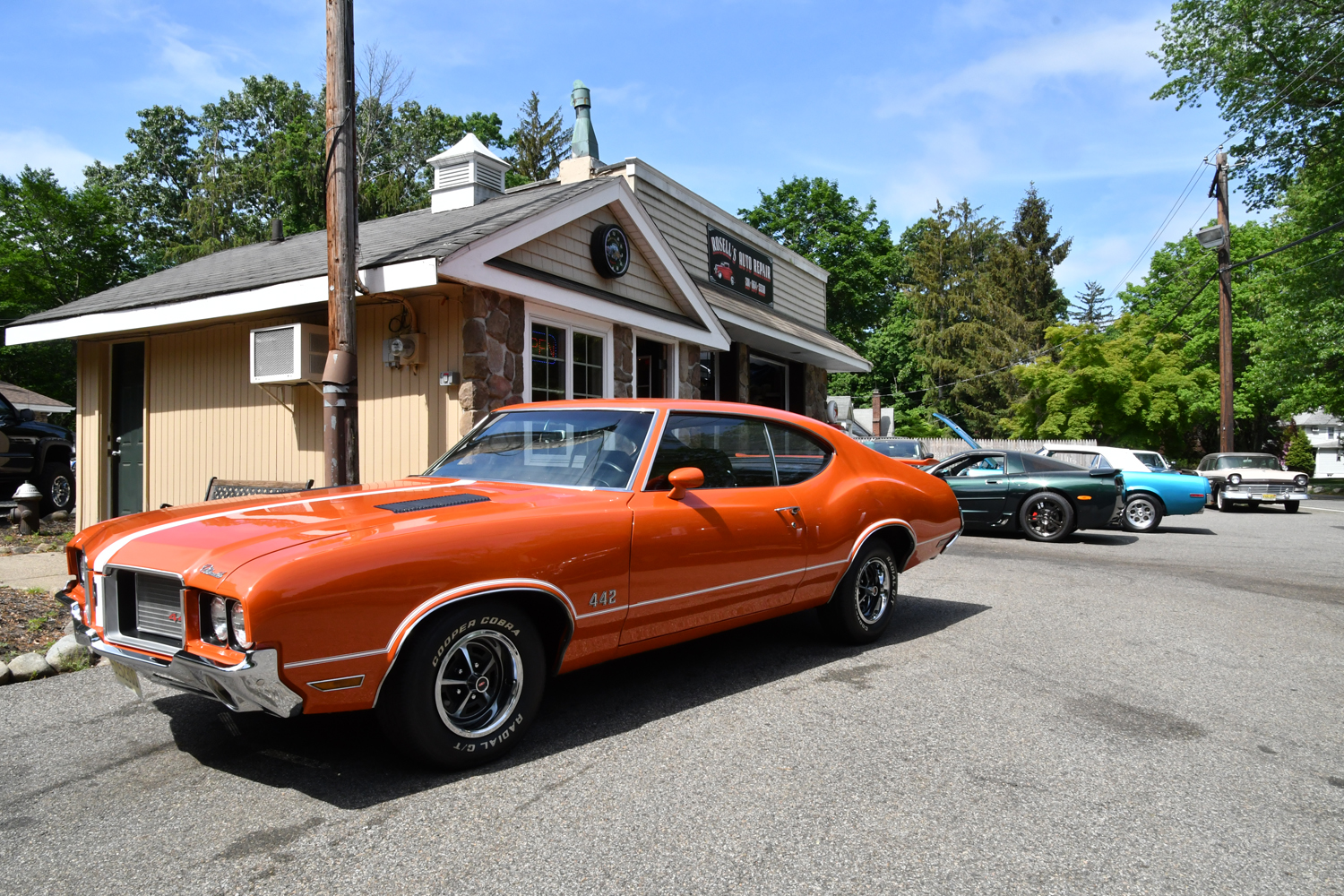
For decades Rosell’s Auto Repair has been a Muscle Car eye candy treat that snapped you to attention, compelled you to slow and maybe linger a little too long as you digested the visual feast, and only then, to move on. The small neat structure sporting two bays housed in an immaculately maintained shop, sits on neatly groomed grounds populated by an ever changing eclectic assemblage of really interesting special interest automobiles. Solid examples of rust prone mid-fifties Detroit iron, such as 1957 Fords and Forward Look Plymouths often grace the grounds as do hot rods, tweaked Model Ts, Mopar muscle, Corvettes, 442s and Pontiacs, lots of Pontiacs. The owner is a classic as well, he is as genuine a New Jersey product as Taylor Pork Roll and Bruce Springsteen. Meet Al Rosell.

90 GTOs, 30 Corvettes and counting


If there can be a middle of nowhere in Northern New Jersey, Rosell’S Auto Repair can be found in it. Like a collectible car oasis situated in a wooded sprawl of forest and fine homes, Al Rosell’s four acres of automotive finery, years ago, served this once rural area as an off the beaten path, back road Citgo Service station. To this day no other commercial property exists for a mile at least in any direction.

Raised in Westwood, New Jersey, Al harbors a real passion for Pontiacs. It all began at the age of eleven in 1974 when his sister’s boyfriend, now husband, blew the engine in his 1965 GTO and parked the dead Pontiac in Al’s family driveway where it sat all summer. Throughout that summer young Al could be found sitting in that GTO for hours at a time stoking the fires for his future Pontiac passion.

At the age of sixteen Al bought the first of his 90 (and counting) GTOs, a 1966 hardtop with no drive train. He swapped in a Chevy V8 by himself with sufficient expertise that he enjoyed driving that car for a year until someone offered to buy it for twice what Al had in the car. Sold! In that same year young Al started pumping gas at a local service station. Within a few months the skilled beyond his years teenager had been taken inside to apply his considerable talents to ever increasingly demanding projects. A few years passed and Al moved on to a repair shop with higher level challenges including electrical trouble shooting, air conditioning and some custom work. With a few more years of experience under his belt, Al knew the time had come to go out and run his own shop. 1n 1996 Al purchased the little back woods Citgo station in River Vale, New Jersey. While having  high hopes Al had no idea of the bright future in store for the little gas station as a classic car Mecca.

Given the opportunity to buy all four acres surrounding the station, Al jumped at the chance. He knew this would afford his business the opportunity to grow. Grow it did, but never to where it lost the appeal and high octane charm of Al’s small “can do” performance boutique dedicated to delivering a very personal and consummately professional experience.

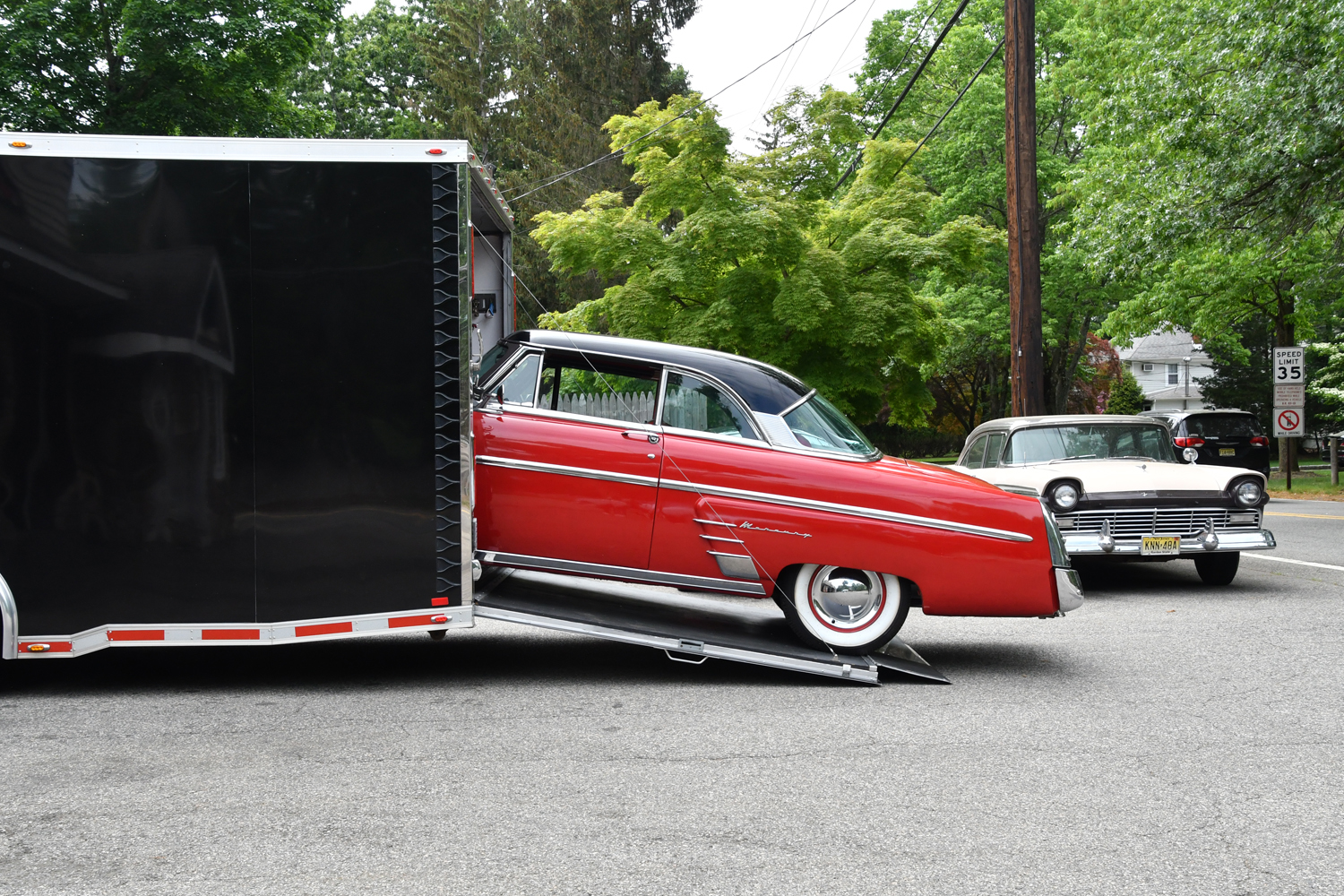
Brokered car off to buyer

Rarely if ever caught without a lit Marlboro wedged between index and middle fingers, 58-year old Al, now a seasoned and gifted classic car technician and shop owner, moves through work areas cleaner than most kitchens with the poise of a relaxed predator scouting for a target. In Al’s case he stands ready to contribute to the efforts of his two expert mechanics Greg Martino and Scott Jodzio.

Al’s approach to business has earned him the respect of the classic car community as both a skilled resource and an honest partner in advocating for what he sees as the proper course of action even if it means turning the job down.

Al notes that less and less of his shop’s clientele involves the traditional everyday work associated with keeping the family vehicle running. With his reputation for skill and ease with conquering high performance and vintage vehicle challenges, the working lifts in his bays most of the time serve a second purpose as classic car display pedestals.

“We do everything except body and paint”,” says Al. Rosell’s Auto Repair eagerly accepts power train and chassis challenges. Al says, “We do new engines, great motors for speed, a wide range of conversions, suspension upgrades, disc brake work, all of that kind of stuff. We also do interior work.” In describing his favorite work Al says, “I love doing engines. We will pull an engine, rebuild it, dyno tune it, detail it and if the customer wants, we incorporate chrome touches to whatever degree desired. When finished, that engine stands out as a work of art that can smoke the tires through all the gears.”
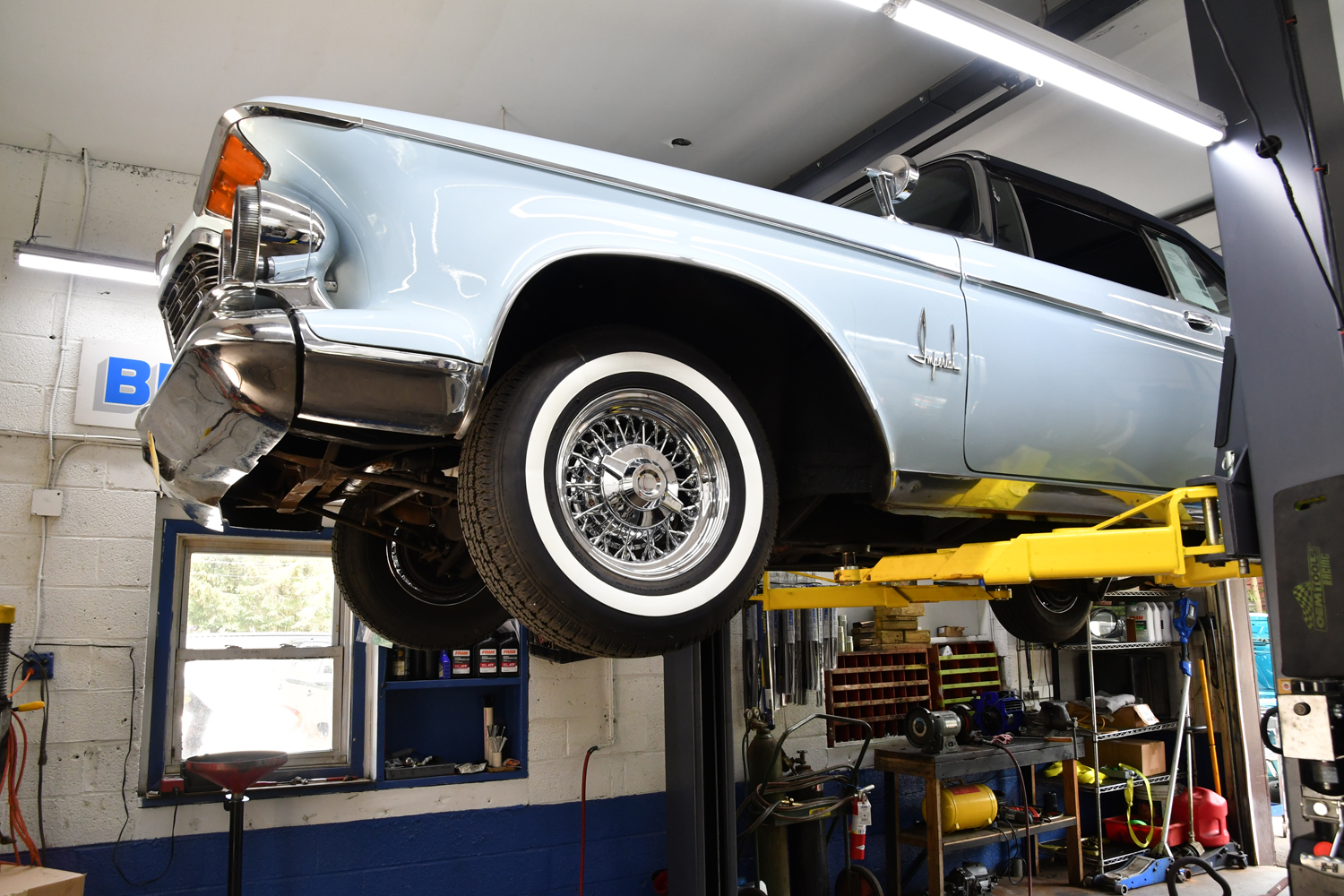
In observing the state of the performance shop industry, Al bemoans the relentless disappearance of the machine shops, true auto parts stores with knowledgeable staff and the expert craftsmen that reside at the heart of custom performance solutions. Al says, “These guys are the very soul of the business. I am watching their numbers melt away without any replacements.” He also notes that the really good auto parts stores are disappearing. He says, “There is no money in it. Nobody has bearings pressed on and off anymore doing U-joints and such.”

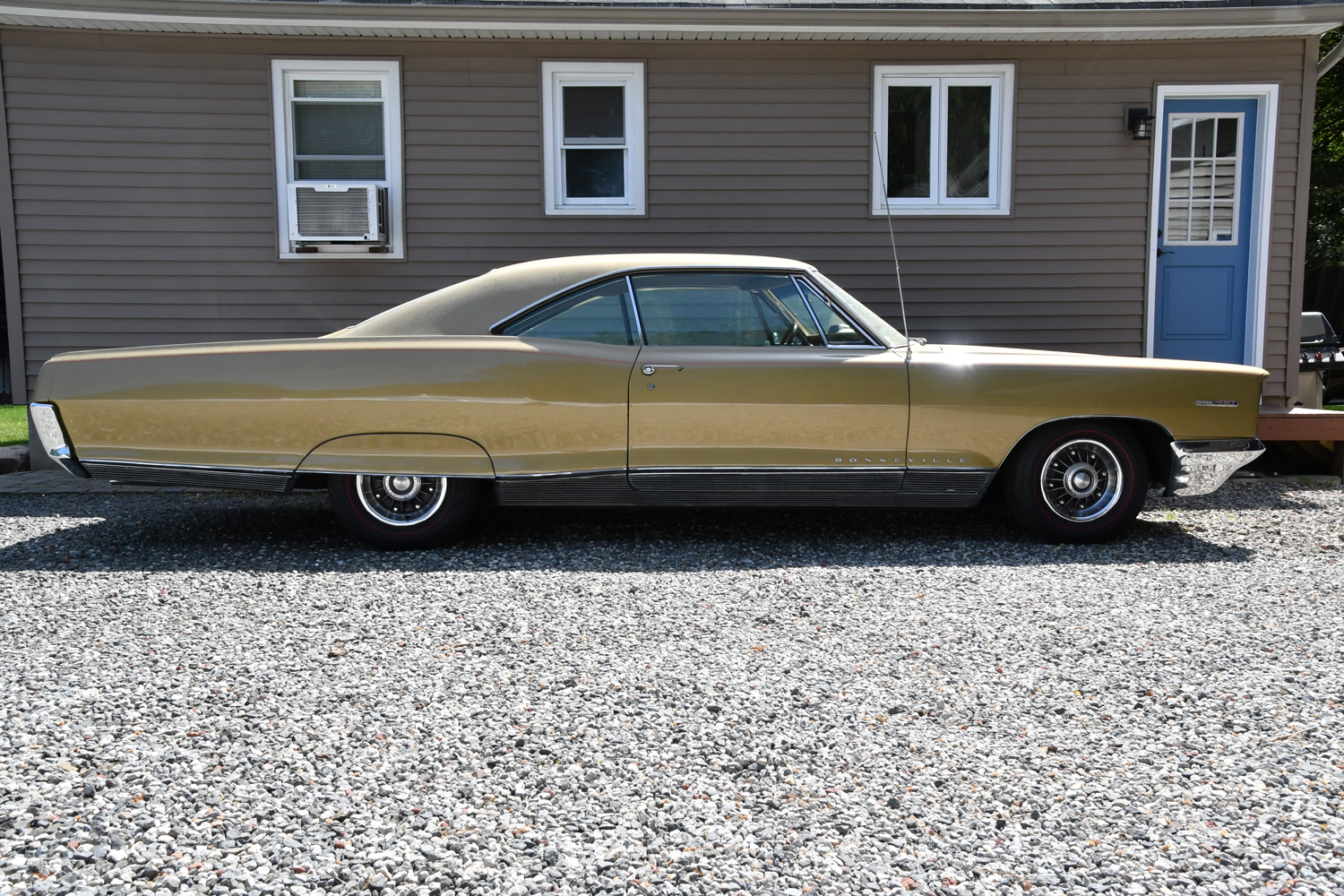
1965 Bonneville 421 cu. in. tri-power 4-speed

In recent years Al has expanded his services to address the desire of classic car owners to separate themselves from the sale of their vehicles.

Al  says, “I have found myself selling more and more collectible cars for people.” Unlike earlier times when car guys bought and sold their cars, a new generation of owners don’t want to be troubled. They have the money to buy what they want. When they grow tired of it they want somebody else to deal with the inconvenience of its disposal.  Al says, “People with money come in expressing an interest in having me assume the process of selling their classic car. The reasons are always the same. ‘I don’t want people in my house. I don’t want to deal with scheduling. I don’t want to negotiate.” For Al it offers a double benefit. He brokers the deal and becomes the “Go To” guy who people come to rely on when they look for their next collectible car. Al says, “It’s like an annuity. Some people develop a pattern of short term fascination with a classic car and then quickly tire of it. I can benefit on both ends of that romance.”

One significant trend that Al has observed over the last few years is the ascendance of the restomod as a preferred choice by many enthusiasts versus the traditional classic car with its original equipment.
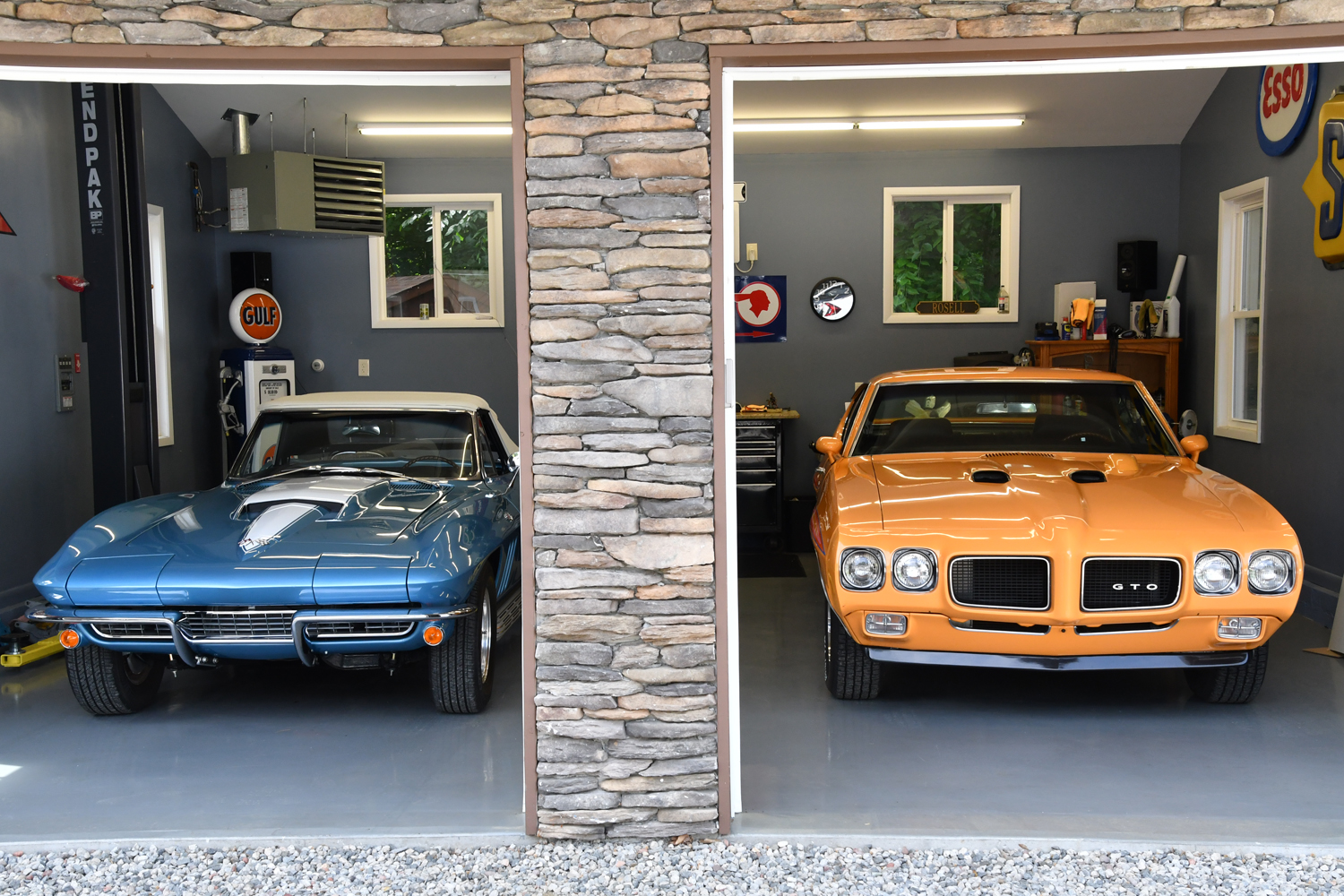
Pointing to a nice mid-sixties Corvette Al says, “If you took this car and put an LS motor in it, it would increase its value by $50,000. More and more that is what the new generation buyer wants today.” Many, now in the market, instead of seeking originality want reliability, handling, comfort and air conditioning. Al says, “They don’t want the old stuff. People are different today. They want all the creature comforts of their new car, but the look of the old. The demand is there.”  When asked when the market changed  Al indicates that the change in priories became evident about five years ago.

When asked about interesting cars that came out of his shop, Al recalls a 1930 Model A. He ripped out the original drive train and replaced it with a Ford Pinto four-cylinder motor with a C4 transmission. He used the same rear, put in an adapter kit and got rid of the torque tube. Al says, “Car’s phenomenal 90 horsepower versus 40, electronic ignition. Thing runs beautiful.”

Two very interesting cars reside in a special place in Al’s heart. In 2015 an older gentleman approached Al describing a 1966 Corvette that had been in his garage since a bad accident in 1971. Al saw the car. It rested under a deep shroud of dust. Al bought it. He did a complete frame-off restoration. Al says,  “Every piece of the car is new except the antenna and the grill. “The  Nassau Blue beauty sits proudly in Al’s personal two-bay garage he built on his 4 acres. The other bay holds the subject of a love lost and found.

In 1996 Al bought a 1970 Orbit Orange Pontiac GTO Judge. He then sold it to a friend who had it for fifteen years. It was sold again with the next owner keeping it for 7 years. When it went up for sale again Al bought it back. Since he first sold the car, the two subsequent owners had driven the car a total of two times. Of his 90 GTOs the Orbit Orange Judge ranks at the top.

In reflecting on his years running Rosell’s Auto Repair, Al displays a balanced perspective. He says, “I have a great group here. I love my business. I even still have 30% of my hair.”

By |2021-06-03T11:11:11+00:00June 3rd, 2021|8 Comments

Conversations With people We Value #21

Nowadays conversations about things that have traditionally mattered to those having the discussion often deteriorate into a bemoaning of the unchecked disappearance of the topic of interest in question. Whether products displaying exceptional craftsmanship or the skilled craftspeople possessing the ability to produce the superior product, both seem to live in the crosshairs of a culture fast losing its appreciation for hand crafted excellence.

In the face of such a perceived depressing trend, a rare feel good story came out of the pandemic that featured a world-class company renowned for producing premium trade show displays.

Though suffering a considerable loss of work from Covid-19 cancellations, the business, with a belief in better times returning, turned its attention to ensuring that it retained its staff of highly skilled craftsmen. With great hope for a better future when the world would return to normal, they allowed their imagination to stray way outside the box. Their brainstorming gave birth to an inspired plan to keep their highly respected craftsmen working, preserve a part of iconic Americana and possibly creating a new market opportunity. They would turn their craftsmen loose on restoring and updating vintage Airstream trailers.

Meet Dimensional Worldwide.

An inspired venture to preserve American craftsmanship and vintage Airstream trailers


Unbeknownst to all involved, the actual seminal moment for the vintage Airstream venture came when Dimensional Worldwide executive Lee Martindell asked Company President Doug Fixell if, during the Covid downturn, he could employ the company’s presently underutilized stable of skilled craftsman to rebuild his personal 1959 Airstream trailer. Martindell says, with the great skills our guys have, there was no reason our guys could not do the whole thing.” Fixell agreed saying that hours would be logged and Martindell would be billed. The agreement poised to unleash a torrent of talented carpenters, cabinet makers, metal workers, electricians. painters and printers on Martindell’s 1959 Airstream.

In recognizing the potential of this suddenly activated high quality Airstream restoration juggernaut, Martindell’s imagination took a leap. He approached fellow company executive Karen Samnick with one of those “this may be crazy but, what do you think” blue sky thoughts.

1936 Airstream trailer

Historically the original brainchild of Oregon native Wally Byam, Airstream trailers always had a following dating back to Airstream’s beginnings in 1931. They originated with a DIY Popular Mechanics article written by Byam on how to build the trailer. Soon people asked him to build the trailer for them. Airstream as a business came to life.

Since the beginning, Airstreams have earned an extraordinary reputation for longevity built on the quality of their materials and construction. Byam’s design focused on function with aerodynamics and low weight being critical design objectives. Airstream’s signature steel frame featured a riveted aircraft quality aluminum hard shell ensuring Byam achieved his desired superior strength and light weight.

Martindell suggested to Karen, “What if we went down the rabbit hole and restored vintage Airstreams as a business?” Initially aghast, Samnick’s says, her first thought was, “We are going to search for and work on trailers that have had more mice in them than people in the last, you know, decade or two?.”

However, Samnick quickly warmed to the idea as Airstream owner Martindell’s deep affection for Airstream trailers and the associated culture of quality and commitment that surrounds them took hold of her imagination. Samnick says, “So I am listening to Lee tell the story of why people like these trailers and what this world of Airstream people is really like. Then, the next day we are going to a meeting out in Montauk. We pass an RV trailer park, and there’s literally a bazillion Airstream trailers. I do a little quick research and find that you can’t even get a reservation. It’s all booked.”. That was enough for Samnick. She was sold on the idea.

With Karen on board Martindell pitched it to President Fixell. Without hesitation Fixell’s replied, “Great let’s do it.”

However, Martindell and his team quickly realized that the search for a solid east coast trailer would closely parallel the search for a solid vintage car not riddled with damage and deterioration. That said, the Airstream aluminum body represented a significant plus.

While being very particular in the quality of the trailers selected, success was realized with three being purchased. (1968, 1975, 1978)

At this point President Fixell had an epiphany. Fixell realized that it did not make sense for Dimensional to sell the trailers. They needed to establish a brand. They needed to create an entity dedicated to marketing and selling the restored Airstreams. Thus, Rivet Custom LLC came to life as the home of high quality restored vintage Airstream trailers.

As the Rivet vision morphed into reality the wisdom of its creation quickly displayed itself.

Martindell says, “We knew that even with no work in the shop or on the horizon, these guys were so talented, so special, that if we laid them off we were not getting them back. Not only are they skilled craftsman but, they are also really good people. The kind of quality individuals you want as the foundation of your organization.”

Fitzroy Hutchinson

Craftsman Fitzroy Hutchinson says, “ With the Covid lockdown we were all scared that we would lose our jobs.” Hutchinson’s last employer closed for good in 2009 when the economy took a nose dive. Hutchinson had worked there for 17 years. Being laid off deeply concerned all of the Dimensional staff.

Plant manager and super skilled craftsman Jerry Cardillo says, “As to Lee’s crazy Airstream plan, needless to say it excited the guys to have an alternative to having no work.” Initially some of the guys had known about Airstream trailers, other guys had no clue.

Hutchinson ads, “We quickly got the hang of it and, then, the fun began.” The Airstream adventure brought an added source of pride to already highly accomplished craftsman. Hutchinson says, “The guys love it because it’s like bringing a classic car back to life. Cardillo laughs saying, “Maybe we can get our own TV show, Trailer Tales.”

Jerry Cardillo

It soon became evident that the Airstream project not only provided meaningful work, but work that inspired already accomplished craftsmen with an elevated sense of purpose born of preserving recognizable and treasured pieces of American camping and highway history. And while the focus had been on preserving jobs, It became evident that Rivet may have stumbled upon a concept with significant sales potential.

Right now there is a two-year waiting list for a new Airstream. At this time Rivet can provide a totally rebuilt vintage Airstream for about half the cost.

A well spring of curiosity has bubbled up from commercial interests. Martindell with a smile says, “We would like nothing better than an order for a half dozen custom Airstreams from Corona Beer or a similar number from a glamping site looking to permanently station them for nightly renting.”

Each one of the Airstream trailers provides Rivet with a one-of-a-kind opportunity to preserve the past and at the same time introduce new families into a brand new “vintage” camping experience reflecting a past distinctively American lifestyle. Martindell says, “We believe Covid sensitized families to the value of being together.” He sees a real interest for the unique combination of high quality and the more traditional character of Revit Airstreams.

Martindell goes on to say, “I’ve got hundreds of thousands of dollars worth of TVs in inventory. None will go into a Rivet Airstream as a standard install. We have the ability to give you Wi-Fi so that the kids can have their iPads and their iPhones. Our Airstreams will have none of it. We believe Rivet Airstreams offer people a unique opportunity to personally reconnect with each other. I believe in these times it is a most worthy goal to pursue.” If people request an Airstream to be equipped a certain way, Rivet will of course integrate a quality installation.

Martindell’s own experience illustrates the powerful attraction of vintage Airstream ownership. He says, “With log books often available, we would love to provide new owners with a diary of the journeys experienced by the original owners. We want to  share the lives these trailers have already lived as part of the Rivet vintage Airstream experience. Connecting with the people and experiences once enjoyed paves the way for a new round of adventures and delivers a powerful emotional connection across generations.” Rivet offers products with the exceptional and unique power to generate fresh memories for a family afforded the joy of continuing in the spirit of the earlier family’s wanderlust.

Martindell personally owns a 1959 Airstream that came with a log of the campgrounds that the prior owners visited. Martindell says, “This September I’m intentionally taking the trailer back to Maine to the same camp grounds that they had visited in 1961.

Right now there is a two-year waiting list for a new Airstream. Rivet can presently deliver a totally rebuilt example for about half the cost. Examples will be on display May 22nd At Dimensional Worldwide in Mahwah, New Jersey.

Rivet’s motto  says it all, “preserve the past, plan for the future, build for now. But above all enjoy the journey.”

By |2021-05-20T11:43:25+00:00May 20th, 2021|2 Comments

Cars We Love & Who We Are #20

Visual acuity of eagles to site targets at great distances far exceeds any capability possessed by man. However, one select group of homo sapiens demonstrates an extraordinary ability to utilize their peripheral vision. That subset would, of course, be Car Guys.

Car Guys possess the ability to be weaving through a chaos of bouncing steel scrap unleashed from the back of a poorly stacked semi while still checking out from the corner of their eye the contents of an old barn behind a rickety farmhouse in a distant field.

Locating a barn find resides on a pedestal in the pantheon of Car Guy dreams. However, for one Car Guy in search of storage in garage starved New Jersey, his sharp eye caught site of a barn that would soon house his collection.

Meet Carl Grady.

When the find is the barn


Born and raised in Sydney Australia, Carl Grady emigrated to the United States right after 9/11. Always a car guy even as a young boy, Carl says, “On family rides in the countryside outside of Sydney, I’d be sitting in the back of the family sedan. I’d look out at the farms and the garages and barns and hope I’d get a sneak peek of something. You know, something sitting out there waiting to be discovered. I loved doing that.”

1937 MGTA

Once in America, Carl enjoyed and took advantage of vintage car prices considerably more reasonable than those for comparable British and American cars in Australia. As a result he began to build a collection. However as all Car Guys know, when building s collection, space is the final frontier.

Carl’s “barn” find did not demand a long journey to the back country. Carl actually had a home in walking distance from where he found the barn three years ago. He says, “At the time I had a few cars. Unfortunately, I only had a single-car garage.” This resulted in his eclectic collection of American and British vehicles being strewn about the grounds of his home. He had cars parked in the driveway and around and about under covers. Then, Carl says, “We had a pretty bad winter. I knew I had to do something about protecting them.”

In the midst of a Google search for available garage space, a reference to a house with a four-car garage close to his home popped up. He laced up his sneakers and strolled from his home to take a look.

Hidden away behind the home being sold stood a 3 1/2-story barn built into sloping property with vehicle access on two levels. Carl says, “I told my kids to meet me for a look.” He did not even look at the house. When his kids got there he simply told them “We are moving.” Carl says, “It was just too good to pass up.”

Built in 1902, the barn served as a kind of parking garage for the horses and carriages that transported people around the town of Ridgewood, NJ when they came by train from New York to visit.

Model A and TR3

The barn’s second floor that opens to the driveway actually served as the main level providing the area where the wagons would be parked. The gravel path leading down and around brought the horses to stables on the first level in the rear.

Carl says, “It’s still pretty much the original barn. You can see the tree trunks that hold it up. I’ve tried to keep it as rustic as possible. If you go downstairs, you’ll even see some of the horse stalls and some of the original harness paraphernalia.” In fact a buggy that was built in 1902 is still on the ground floor in its original unrestored condition.” Until Carl the barn had never housed a vehicle.

As all Car Guys know, there is no such thing as an empty garage bay, its more accurate description is that of a place holder for the vehicle yet to be purchased. In Carl’s case his spacious barn quickly filled. With the recent sale of his 1960 MGA fixed head coupe and TR6 and the addition of a 1930 Ford Model A coupe and 1948 Austin 840 Devon Sedan his collection consists, together with the Model A and Austin, of a 1937 MGTA, 1960 Triumph TR3, 1960 Triumph Herald Coupe, 1960 MGA roadster and a 1963 Ford Thunderbird.

Carl admits his passion resides with American and English makes based on his youthful exposure in Australia where English makes provided the majority of road traffic with American models enjoying the stature of almost an exotic. His passion for Anglo Saxon brands accompanies an equal passion for using the cars in his collection as they were intended and that means his cars are driven. Carl says, “While I view them all as pieces of art, I believe their beauty stands out best when in motion.” For Carl the best part of car shows comes with driving to them and back home. He says, “I’m not interested in concours shows that demand hours of cleaning. It’s just not my deal, I don’t care necessarily about a hundred point car. I just like a car to look neat and original without getting too carried away.” He feels his blue 1960 MGA roadster displays his philosophy perfectly. Like battle scars, the nicks and dings acquired through spirited driving on real roads enhance the spunky blue MGA’s well earned patina.

When asked about his favorite ride, Carl falters a bit in committing saying, “The MGA roadster was my favorite, but now it competes for attention with the MGTA and the TR3. Last summer, I drove the TR3 more than any of the other cars.”

Carl says, “I have  always liked the MGA. It has the MGB engine in it. It goes. It moves. It’s just noisy. It has a 4-speed and is just a lot of fun to blast around. Carl with a self-deprecating smirk goes on to say, “It’s broken down so many times on the road, but hey that too represents a signature quality of the British sports cars motoring experience.”

TR3 and MGA

Carl’s affection for the TR3 begins with the cut down doors and the feeling that it delivers a more relaxing and less intense driving experience than the noisy MGA. Comparing the two, Carl says, “The TR3 is just as enjoyable but instead of delivering the intensity of a sprint, the TR3 delivers the more relaxing experience of a long leasurely run.”

In speaking about the 1937 MGTA Carl says, “Just the novelty of driving a pre-war vehicle in itself is cool. Plus it’s right-hand drive. It’s a beautiful car. Granted, you don’t drive fast, but with the windscreen and windows all down the driving experience transports you with a stirring time behind the wheel of a time machine. It really delivers a cool nostalgic drive.”

Again demonstrating the powerful draw presented by open and readily fillable space, Carl’s barn features an extraordinary array of pedal cars and automobilia.

While always attracted to pedal cars Carl never thought about collecting them. However, under the constant urging of his friend Buz Korn, a skilled and dedicated collector of all things automotive, Carl took the plunge. After buying a French pedal car that had caught his eye, Carl’s pedal car pursuits were off and running. As Carl says, “I just started to look and then got a little crazy.” Two of his favorite pedal cars are an Austin J40 and an Auto Union Type C pre-war Silver Arrow Grand Prix.

Auto Union and J40 Pedal Cars

Like it drove out of “Who Framed Roger Rabbit” its curvy voluptuous body style makes the J40 a kid and collector favorite. Carl says, “There is an event every year at Brooklands. The kids run to the cars, jump in and race down the track to win a prize.”

The original concept for the pedal came as an act of the British Parliament in 1943. The act recognized that coal miners were being struck down with the black lung disease. The plan for providing work for these stricken miners was to have them build a toy pedal car based on the Austin Devon and made from the scrap metal left over from the production line. Production ran from 1950 to 1971 with 32,098 models being produced.

Carls’s Auto Union Grand Prix pedal car plays to his strong interest in the Grand Prix cars of the pre-WWII era.

1963 Thunderbird and Austin 840

Commissioned by Audi in 2007 as a promotional item with a limited run of 999, it provides full racing bicycle mechanics and rear wheel drive gearing. Anyone who can fit in it can pedal it.

On a far more altruistic plane, Carl envisions his barn offering the opportunity to gather far more than interesting vehicles, he sees it as a meeting place to foster camaraderie among people of like interests. Carl says, “I would love for the barn to serve as a welcoming venue to promote the gathering of car enthusiasts.” He would have it become a casual arena for the sharing of stories, information and friendship.

As we come out of the age of Covid, Carl’s vision offers a wonderful inspiration to escape the no longer forced isolation.

By |2021-05-06T10:49:55+00:00May 6th, 2021|10 Comments

Conversations With People We Value #20

Covid has not so much made time stand still as it has made everybody and every event stand down, nowhere more so than in the crowd oriented classic car venues. Car show after car show, concours upon concours, swap meets and cruise nights all fell victim to pandemic panic.

Like the freak year-long winter of 1816 caused by the eruption of Mount Tambora, the 2020 classic car season fell victim to the icy chill of pandemic fears. Now in 2021, like a green shoot in early spring, the Korzinski family of Paul’s Motors in Hawthorne, NJ boldly struck a blow for a return to normalcy when they hosted the April 10th Man Cave Garage Sale.


Man Cave Garage Sale unmasks covid boredom

With a vigor just short of children departing school to start summer vacation, car enthusiasts eagerly flocked to Paul’s Motors’ Man Cave Garage Sale to experience, after more than a year long drought, an honest to goodness car event. Granted, masks adorned every face, yet it had a familiar social feeling that felt so good.

96-year old Paul Korzinski with daughter Diane and son Paul

Adding to the upbeat atmosphere was the opportunity to spend time with 96-year old Paul Korzinski whose father started Paul’s motors 101 years ago. Daughter Diane Korzonski says, “My grandfather began the business as a repair shop in 1920. My father took over after the end of WWII. He has worked here all his life.”

In 1957, the first year Volvo came to America, Paul took on a Volvo franchise. He liked Volvo because of its concern for safety. In a sign of the times, Paul’s Motors turned in its Volvo franchise after 60-years in 2017 as the corporate franchising demands placed on the small family run operation made for a money losing proposition. Always known for high quality used cars Paul’s Motors continues to be the go to place for a used vehicle.

The inspiration for the early season sale came out of a conversation between Diane and big time car enthusiast Bob Austin.

Diane says, “Bob and I were talking about how we have collections of things. As I showed him a great anvil and an old scale from one of our shipping containers, I mentioned that we’ve been here for a hundred and one years. We have a lot of old stuff. So Bob said, well, I have a lot of old stuff. Maybe we should have a Man Cave Garage Sale. What a great idea, I thought.”

While clearly car flavored, various vendor offerings provided an eclectic array of goods. Man Cave organizer Bob Austin says, “We had some interesting vendors with everything from gumball machines to airplane propellers and fur coats.” With a good size crowd throughout the day the feeling was festive and the selling was brisk. A smiling Austin says, ”Absolutely a fun day and for some of us it afforded a great opportunity to reunite with friends that we haven’t seen for the better part of the year.” As for Covid concerns, with a good breeze and everyone wearing a mask confidence ran high.

Vendor Rocco Scotellaro was clearly happy to be at the Man Cave sale. When asked about being there, Rocco said, “Excellent, historically as a vendor I usually do about two or three shows a year. Last year I did none. It’s great to be back in business.” When asked to evaluate buyer action, Rocco quickly offered that the show was much better than he expected emphasizing that the turnout was quite good. Rocco says, “A major challenge for vendors like me is deciding what to bring. It’s always a guessing game.” Sporting a big smile, Rocco went on to say, “I guessed right for the Man Cave sale and did very, very well.

Clearly people savored the opportunity to share space and time with others in a non-Zoom real world environment. Diane commented that, “I think a lot of people came in looking for something free of Covid gloom, something to make them happy. We’ve all been kind of cooped up all winter. Watching the news certainly hasn’t helped.”

Jaguar Land Rover Archivist Fred Hammond brought a treasure trove of classic car models and automobilia. Fred says, “The Man Cave Sale has been a tremendous success in so many ways. I mean one can put it in the context of saying that I sell stuff. Yeah, you bet. I sold a lot of things but the real enjoyment here was seeing friends, fellow car enthusiasts and talking to people sharing the joy of being outside with others, at last. Everyone seemed to be  basking in the joy of feeling a kind of normalcy.”

Pieces, parts and even a very clean 1996 Mustang Cobra changed owners thanks to being on display at the Paul’s Motors event.

Clearly, everyone has suffered through serious cabin fever with a nasty Covid hangover and could not wait to rub elbows with their fellow man. If the Man Cave Garage Sale represents any indicator, social distances show every sign of shrinking as humanity pokes its collective head out from under the Covid rock.

By |2021-04-21T13:47:40+00:00April 21st, 2021|6 Comments

Cars We Love & Who We Are #19

The Drivin’ News theme of “Cars we love and who we are” invites the reader into experiencing great cars and learning about the interesting people associated with them. Normally the motivation behind the “why” that inspires the great affection is taken as a given considering the desirability, beauty and provenance of the classic cars in question. However, some times the “why” leads us down an even more interesting path revealing a vehicle made beautiful by a patina of sweet memories. Such stories rooted in personal history often involve love, loss, salvation and heartwarming resolutions.

In the garage of Vinny Plotino resides an incongruous pair of treasured vintage cars with very different “whys.”

The odd couple in Vinny Plotino’s garage


Vinny Plotino and his “Odd Couple”

Housed in an orderly and well equipped 2-bay garage both cars make a statement. For the 1970 Plymouth Superbird on the right, the “why” screams at you, for the other, a quite pedestrian and weary 1962 Ford Falcon the “why” softly asks “why?”

Indeed, screamingly obvious in its attraction, the Superbird sports a nose cone front end and outsized rear spoiler with signature “Roadrunner” graphics. Resplendent in 1970 Plymouth Blue Fire Metallic or B5 Blue (color code) as it is known throughout Mopar circles and among collectors, Vinny Plotino’s Plymouth Superbird leaves no doubt as to what inspires the love. With the original 440 cu. in. V8 fed by a single 4-barrel and delivered through a 4-speed manual trans Vinny’s Superbird delivers 375 horsepower. It reigns as an iconic presence in the pantheon of muscle cars of the golden age.

Created by Chrysler corporation purely as a means to dominate NASCAR racing for the 1969-1970 season, the Superbird with its 19-inch extended bullet nose and car wash nightmare, outsized rear wing did not move especially well out of the showroom as a retail money maker. For homologation purposes 1,920 Superbirds came from the factory for retail sale. It did, however, achieve its intended dominance by exceeding 200 mph at Talladega Superspeedway to set a NASCAR record. In NASCAR race trim, powered by a 426 Hemi V8 with a 0 – 60 mph time of 4.8 seconds and a drag coefficient of 0.28 (still an impressive level of slipperiness 50-years later) the Superbird with Richard Petty at the wheel won eight NASCAR races and finished high in others.

Right around that time as a 16-year old teenager pedaling his bike past Frey Chrysler in Bergenfield, New Jersey, young Vinny fell under the spell of the new Superbird in the showroom window. He would just stop and stare at the outrageous Roadrunner on Steroids and dream. One day Vinny knew he would own one.

History would prove Vinny right, twice. He found a B5 Blue Superbird in 1979 and grabbed it. However with the birth of his daughter Vinny’s first Superbird left to feather the nest for the expanding Plotino family. While appreciating the necessity for the move, Vinny immediately regretted it.

It would be another ten years before the second opportunity arose when Vinny could again own his dream car. In 1989 a B5 Blue Superbird appeared on his radar and shortly thereafter arrived in his driveway and with 36,000 original miles rolled into his garage. Today, 30 plus years later that B5 Blue numbers matching Superbird now with 40,000 miles, receives with great frequency the same loving gaze that first inspired the dreams of a teenage boys heart.

When asked for any stories of interest relating to the Superbird, Gina Plotino, Vinny’s wife, offered a small story that spoke volumes about relationships, priorities, love, friendship and understanding, not necessarily topics one immediately associates with iconic muscle cars. Gina recalled when Vinny faced a challenging task that involved replacing the Superbird’s exhaust system.

Gina said, “I watch him at car shows when a father and son or daughter come by his car. It is so important to him that he provides an opportunity for the father to engage with his children. Vinny really cares about others. He is such a good person. Now, I always take good care of myself and I love my nails, but, Vinny needed help with the exhaust system. I cut my nails off so we could do the job together. I love him.” They have been married 40 years.

Worthy of inspiring a softly quizzical “why”?, a fairly forlorn 1962 2-door Ford Falcon with a level of patina edging ever closer to crossing the line to perforated corrosion nobly plays the role of sidekick to the bigger than life hero Superbird.

Told with warmth and feeling, Vinny lovingly shares the story behind his deep affection for “Mrs. Olesko’s Falcon.”

“I grew up in Bergenfield, New Jersey, says Vinny, “I was 9-years old when my friend Ron Olesko’s mother bought a 1962 Falcon.” From the day she took delivery until today, it has never left Bergen County. Ron was the only child and the car serviced all the family needs by going to church, the grocery store and taking Ron to and from school. Vinny says, It probably never took a longer ride than 20 miles.”

Since in years later Mrs. Olesko had a concern about mice getting into the car inside the garage, the Falcon stayed outside exposed to the elements from around 2002 to 2017. After Mrs. Olesko turned in her driver’s license due to poor eye sight, the Falcon sat idle for a few years. Despite Vinny’s most passionate pleas she refused to sell the car. She wanted it out in front to let potential burglars know that someone was always home. Son Ron Olesko says, “Despite my best efforts I could not persuade her that a rusty car with four flat tires would not fool anyone.”

After taking a fall Mrs. Olesko moved into a nursing home. Her first thought expressed when she moved was, “Give the car to Vinny.” When contacted by Ron, Vinny asked how much Ron’s mom wanted for the beloved Falcon. Ron said, “All she said was maybe Vinny could get it running and someday ride it in a parade.” Mrs. Olesko passed away in 2017.

1962 Falcon refurbished interior

Interestingly the original purchase paperwork and window sticker accompanied the car. As displayed on the window sticker, the Olesko family purchased a 2-door model with the 85 horsepower 6-cylinder engine and 2-speed Ford-O-Matic automatic transmission. Vinny says, “The only option it had was the deluxe package which gave you some chrome trim on the sides and behind the wheels and those little guys on the top of the fenders. No radio (Vinny still has the little radio opening block-off plate). No power steering. No power brakes.“ The paperwork indicates a payment of $45.99 a month for 36 months.

Transporting the Falcon to Vinny’s garage posed some major challenges. Wheels had bonded to brake drums and would not turn. Vinny finally freed up the wheels and with the help of his Cousin Frank rolled the Falcon onto Vinny’s trailer. Changing all fluids and replacing all brake lines allowed the Falcon to slowly rise like the Phoenix from its past as a dead rusted hulk. Inspired by a ,now running car, Vinny found NOS 1962 Falcon upholstery and installed it.

When Mrs. Olesko passed away Vinny drove the refurbished faded blue Falcon to the church and followed the hearse as they drove one last time past her house.

Vinny says, “I do not want to remove the rust and repaint the car. I want to retain the patina that represents the loving life of Mrs. Olesko. While some may look at it and see only rust, I see a big part of a person’s life and memories that can never be replaced.”

Son Ron Olesko is quoted as saying, “Thanks Vinny, you do fine work. My mom got her parade.”

Loved for very different reasons but with equally heartfelt affection, Vinny Plotino’s odd couple sit side by side emblematic of the very human connection bonding people, the cars they love and the emotional charge that seals that bond and expresses human values far deeper than the attraction of horsepower and chrome.

By |2021-04-08T11:31:38+00:00April 8th, 2021|12 Comments
Go to Top