Yearly Archives: 2026

Cars We Love & Who We Are #73

My 2008 BMW X3 “Refresh or Replace” “Drivin’ News” post garnered significant feedback sympathetic to and supportive of my decision to refresh. An appreciable number of people shared that they too had lately mulled the same question. Some had already made the commitment to refresh. Maybe not surprisingly, I found those seriously considering undertaking this fairly costly preservation effort bore many similarities and shared concerns. For me, reader comments drew attention to an evolution in the character of car enthusiasm that I found quite telling.

Let’s see if you agree.

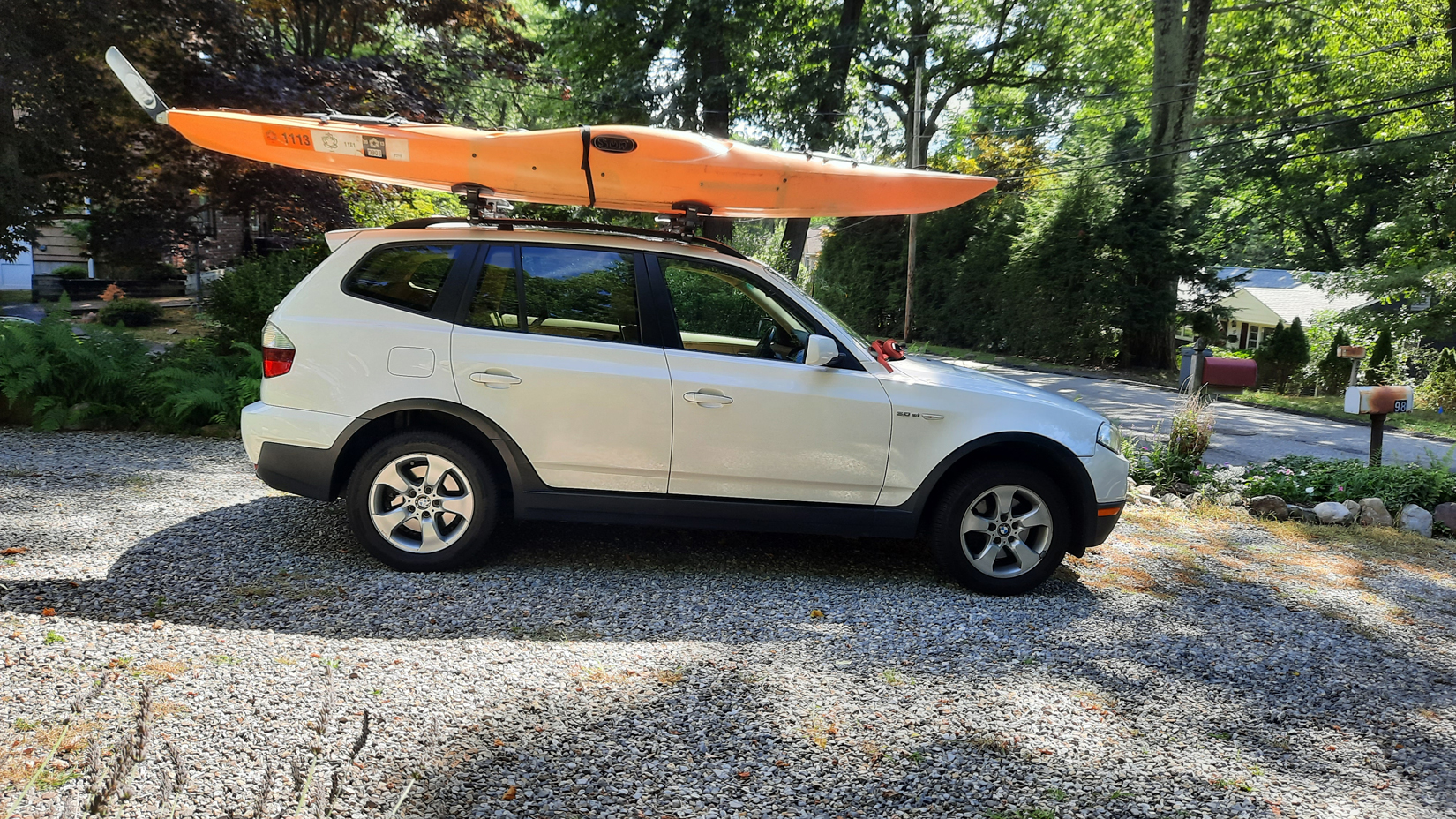
My 2008 BMW X3 Refresh, Going all in on another 50,000 miles

Valentines Day present. Just got my X3 Refresh back

Defining a Refresh demands focusing on functional excellence as compared to aesthetic perfection when applied to a long time daily driver. It is not a restoration. When successfully executed it does not target attracting huzzahs from admiring Concours judges. It does reward an owner’s investment in a long held daily driver by providing additional years delivering the driving experience that earned the owner’s loyalty in the first place. My experience has identified three requisites necessary for a vehicle to merit consideration for a Refresh: Good bones, an owner with a comprehensive knowledge of the car and a marque astute shop to entrust with the work.
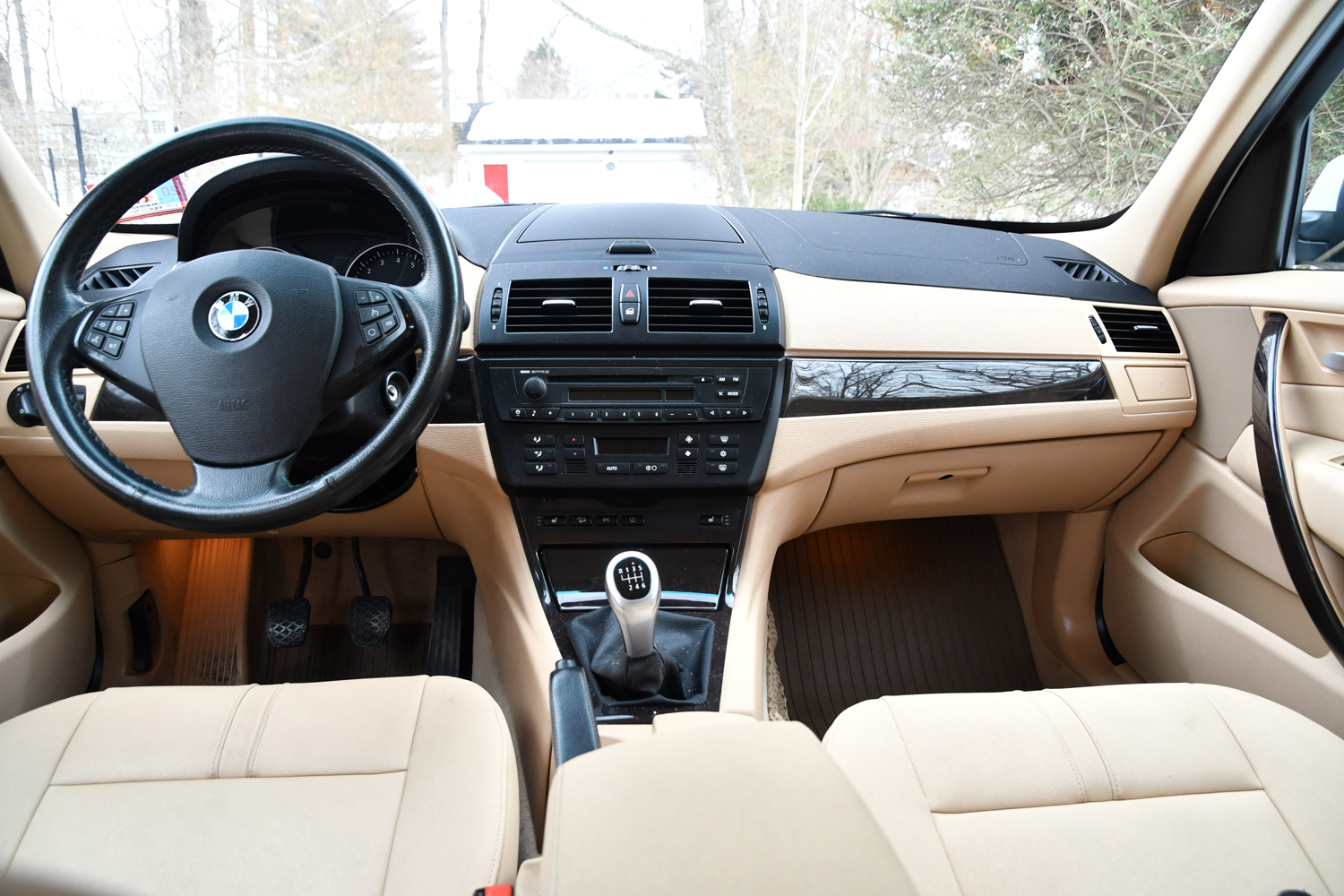
The quality of the car being considered for a Refresh ranks first and foremost. Good bones, proper treatment, regular maintenance and a proven track record over its driving history all determine if a vehicle merits the investment. Good bones displayed in a car bear similarities to the desirable qualities bred in a horse. Over time, the quality of materials, construction integrity and design of a specific make and model imparts a reputation; sometimes good, sometimes not so good.

Step one demands knowing if the car deserves the love and money a Refresh will demand of its owner. Other than the general attributes that history has shown the car to possess, the specific vehicle’s track record means everything. Thus, long time ownership by the present owner ranks very high. Only he or she will know how the car has been treated; how it has been maintained and all or at least a considerable portion of its driving history. In my opinion, a serious accident in a car’s past disqualifies it for consideration as a Refresh. Contemplating a Refresh on a car that you just purchased introduces too many questions, any of which could produce an answer that would disqualify the car.

Finally, the third leg to support a successful Refresh, and very possibly the most important, resides in the shop entrusted with the Refresh. The guy who changes your oil or can fix “any car” has no place in the conversation. You must do your homework. If you are looking to get off cheap, it will be the most expensive mistake you could make. You are lucky if a marque specialist already services your car. In my case MotorWorks West has previously worked on my 2003 E46 BMW 330. It features a very professional exclusive BMW facility and enjoys a very positive reputation. For a Refresh, consider the shop you choose as your partner in the project. As well, the shop, too, should view this relationship as more than just another job. It certainly will be more expensive. Finally, thoroughly review the vehicle with the shop owner. This review must include both an under the hood and an up on a lift visual inspection. Before proceeding you should have a written estimate from the shop detailing all aspects of the project. This is when you decide if the Refresh merits the cost. If yes, establish a budget before proceeding. It should include a contingency of maybe 15% for legitimate work not foreseen. Have the shop save all of the old parts removed for your confirmation and inspection. Remember this job will dent your wallet. Know and respect the limit of yours.
With my X3’s Refresh completed Steve Smith owner of MotorWorks West reviewed the final invoice. the absence of any surprises delighted me. To my BMW’s credit the clutch and flywheel, both with 155,000 miles of wear, remained fully functional. However, inspection clearly showed that future failure fast approached. As to the engine Steve provided me the individual cylinder wave form printouts of my compression test. These graphic representations confirmed my engine’s health as did the results of the other diagnostic tests. They supported a decision to proceed with the Refresh. Should the diagnostics have shown serious engine problems, I would not have proceeded. Either way the diagnostics would have been worth the cost in providing evidence supporting a go/no go decision.
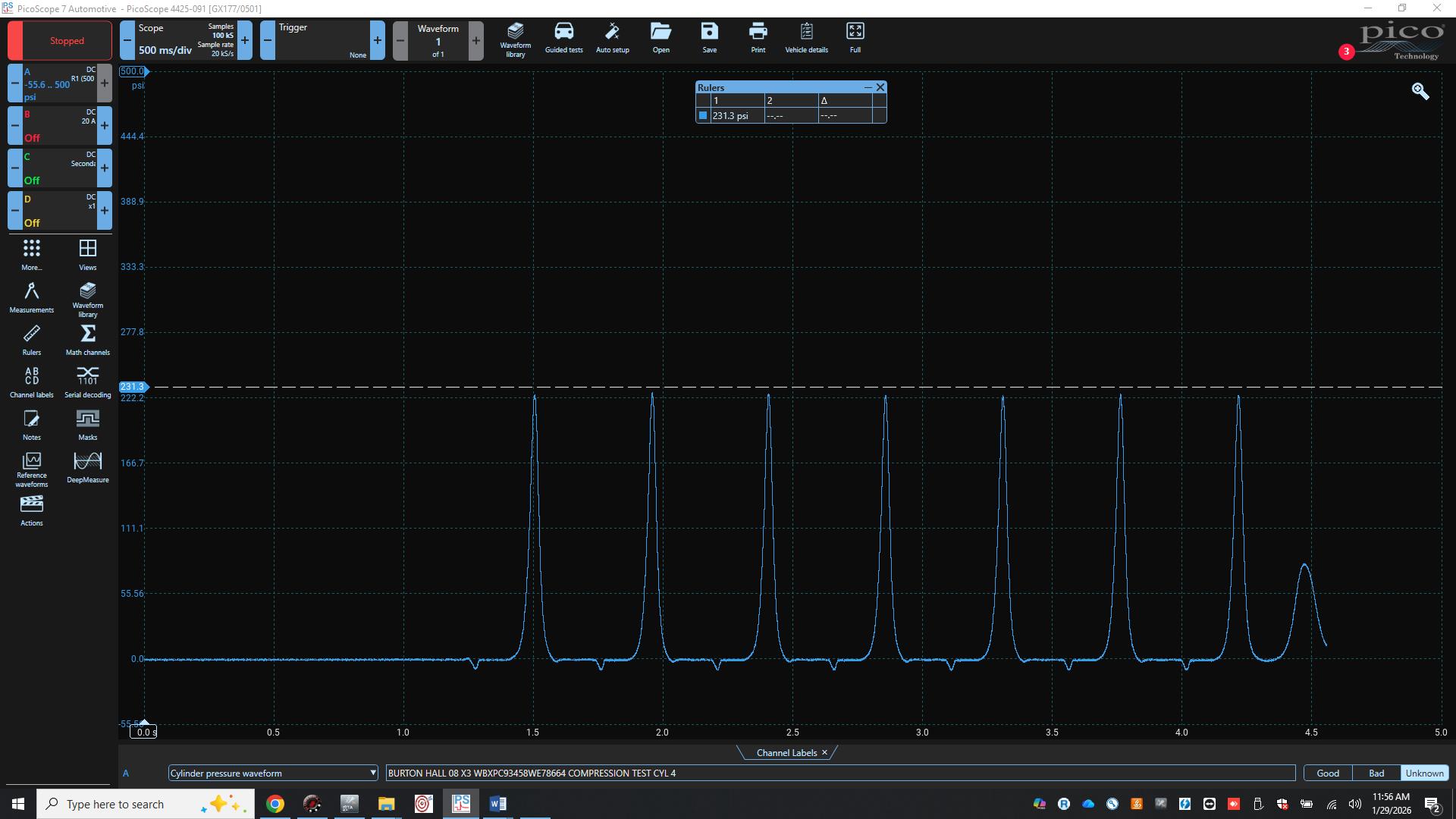
Compression test wave form #4 cylinder

To add perspective to the wisdom of refurbishing a long time daily driver, I interviewed five seasoned car enthusiasts and friends of Drivin’ News who have or are considering giving new life to their high mileage daily driver.

Jim El Nabli loves his 2011 BMW X5 with 135,000 miles and recently conducted a major refresh to keep the love alive. Once upon a time an automobile technician, now an attorney and passionate BMW enthusiast, Jim, a multiple BMW owner, has for the past decade, immersed himself in a 100 point restoration of a 1999 BMW Euro-spec E36M he purchased new.

Peter Desbets cannot say good bye to the 2011 Volvo XC60 daily driver with 173,000 miles he has owned since new. He has spent over 40 years as an executive in the automobile industry and president of a media company serving the automobile industry. A dyed in the wool car guy he presently owns a pristine 1986 Porsche 911 Carrera and an eclectic track record of classic car ownership.

Bill Hoover bought his 2015 Volvo XC70 T-6 daily driver new. He describes it saying, “It’s the last of the in-line 6’s with just the right level of technology. A Polestar performance upgrade adds some fun to the experience.” Now, with 100,000 miles recently showing on the clock he looks to do whatever is required to provide another 100,000 miles of high-quality motoring. An auto industry executive in both the United States and Asia he has an SCCA racing history and a significant roll call of classic cars owned now and in the past.

Each of these men champion a perspective that embraces an analog, tactile driving experience left in the dust if not for dead by today’s new car offerings. Possibly the leading edge of a movement, the cohort of individuals rejecting today’s expensive, technology drenched automobiles appears to be growing.

Jim says, “I’m the original owner of my 2011 X5. I bought it brand new. I special ordered it with pretty much every option. It had everything that I want.” Upon hitting 130,000 miles he looked into a new replacement. He ran the numbers to cost out buying an equivalent new X5. Jim says, “I was shocked to find myself looking at a price well into the 90s, maybe even higher, which sounds crazy, but that’s where the prices are today. That’s a huge pill to swallow financially.” He even notes that prices for a used X5 go through the roof as well. Luckily for Jim his X5 enjoys life being owned by a fastidious owner. For the decision on doing a Refresh, Jim’s X5 checked all the boxes. He has owned it since new. It had enjoyed all scheduled services and been maintained to keep it in peak running form. It had good bones. He started on his Refresh by addressing all recognized weak points such as the harmonic balancer.

Jim estimates that the Refresh made great financial sense. He says, “If I can get another hundred thousand miles out of it. I’d be very happy. I think that would have been well worth the cost. When it comes to dollars you can’t look at it as I’m putting in ten thousand, twenty thousand dollars and I’m going to lose that money. You have to amortize that over time so let’s say I hold on to the car now the five years. So, how much am I really spending per year?

A universal concern among all the men interviewed played a significant role in Jim’s decision to refresh. He says, “Complexity towers as a growing concern for automobile longevity. The past 15 years have witnessed a profound reengineering of automobile functions utilizing sophisticated electronics. Jim has an opinion saying, “Cars are far more complicated by the integration of digital technologies and electronics. In my experience electronics don’t last. Today’s cars are so complex that when things go wrong, diagnosis can present a formidable, frustrating and costly challenge.”

Jim acknowledges that his car while considered cutting-edge when new, today, ranks as a dinosaur based on today’s technology. That said, he responds saying, “Dinosaurs did last for 75 million years. I’ll take my chances on my X5 not being wiped out by a meteorite.”

Bill, in describing how he feels when he slides behind the wheel of his 2015 Volvo XC70, says, “There is a comfort factor when I jump into that car in the morning. It feels like an old friend. The feeling brings to mind the old Mastercard tag line, that feeling is priceless.” Bill finds much of that comfort in the smooth robust power delivered by the Polestar tweaked Turbocharged inline 6-cylinder engine putting out 370 horsepower.  With his home in Tucson 200 miles away from a mountain getaway at an altitude of 7200 feet Bill savors his Volvo’s elevation eating performance.

Bill says, “With power to spare, it’s great for my drive up to the mountain house. It’s a car that is reliable. It’s not going to have suspension issues or brake issues. It’s basically going to perform like a new car. Yeah, it’s priceless.” Bill is confident in the longevity inherent in his 2015 Volvo’s bones. He expresses concerns about the product life inherent in today’s maximized low displacement engines and the reliance on sophisticated complex technology, engineering solutions upon which contemporary automobiles rely.

Bill, while accepting some technology such as parking sensors and blind spot warning, lacks any passion about wanting every next new thing that comes along. Actually he comes across as being quite sanguine about all of the latest things absent in the 2015 Volvo XC70 that he loves. To his driving delight one of the newer things his XC70 lacks is EPS (Electronic Power Steering). It does have the old traditional hydraulic power steering which features exceptional driver feedback. EPS on the other hand provides the means for enabling the inclusion of advanced driver-assist features like lane-keeping assist and automatic parking. Bill clearly favors his XC70’s old school hydraulic. He says, “I occasionally drive my partner’s car with EPS. For me it has nowhere near the same road feel as my XC70. It’s too light. It drives me crazy. They have the software dialed in to prevent torque steer. The steering angle also controls the throttle response. I find myself pressing on the accelerator and not going anywhere. It’s like wait a minute, wait a minute. Now, unwind the steering wheel. OK, now we’re going. It frustrates the crap out of me. As for my partner, she sees no problem other than my complaining.”

In recent years Peter has casually explored a suitable replacement for his limited edition Cosmic White Metallic 2011 Volvo XC60, but to no avail. In reflecting on his long time daily driver it features a 3.2 liter non-turbo inline 6 cylinder engine with a 6-speed Geartronic transmission and Haldex all-wheel drive. It ranks among the last of Volvo’s non-turbo sixes.

He says, “I like the way it looks. I love the way it drives. Great suspension, it’s all been rebuilt over time. Marvelous seats. It’s an R design. Its 20-inch wheels and stance look great.” But, now with 15 years and 173,000 miles on the clock, Peter finds himself at a crossroads. He says, “I’m the original owner. I’ve had it for 15 years this February. It runs great. All the known quirks have been addressed including oil consumption issues and a leaky windshield. It has been meticulously maintained. Frankly, no real necessity demands a Refresh or Replace decision. All that exists is that nagging 173,000 on the odometer.”

Peter’s first move took him to the new car marketplace. He has a new car in the family, his wife’s Acura. Reflecting on the new Acura he says, “Pricing is ridiculous.” With that in mind he decided to explore CPO (Certified Pre-Owned) used cars. He looked in the $25,000 to $28,000 range. About his CPO search Peter says, “Cars in that range have 80,000 miles to 100,000 miles. I look at that and think has it been serviced properly? Have the brakes been done and when? Have this and that been done.” The idea of leaving a good car that he knows well and jumping into something that he knows little about haunts him. And, then, comes the complexity kicker: Newer cars possess much more sophisticated electronics. He expresses his concern saying, “This is all great. But what will the sophisticated electronic features be like five years down the road?  And if you look at something with a high degree of complex technology what happens seven, eight, nine or ten years down the road. Will that technology be supported? Software changes constantly. What if the software running something in your car is no longer viable like a cell phone that is no longer viable or your laptop can’t be upgraded. What do you do?” After due consideration, Peter’s decision called for keeping his XC60.

Peter says, “It has been so well maintained I don’t see any major investment needed in the foreseeable future. God forbid, the transmission goes. Still, I’ll probably get it fixed and continue to use it. Certainly from a cost of insurance standpoint money savings versus a new car is huge.” Echoing the sentiments expressed by Bill about his beloved XC70, Peter says, “I love my Volvo. Settling into the great Volvo seat, my XC60 fits like a great pair of old sneakers.” Similarities common to each individual’s experience painted a fairly clear image of Refresh minded owners.

Clearly an older group, predominantly but not exclusively male, all gained their driving chops in the late 20th century’s “Golden Age” of the automobile. They cut their motoring teeth when feeling the road qualified as a good thing. All possess confidence in their skill behind the wheel and frequently find high tech driver aides an annoyance or worse a distraction. They know what they like and they like cars designed to enhance the driving experience not dull it.

By |2026-02-19T12:41:48+00:00February 19th, 2026|0 Comments

Cars We Love & Who We Are #72

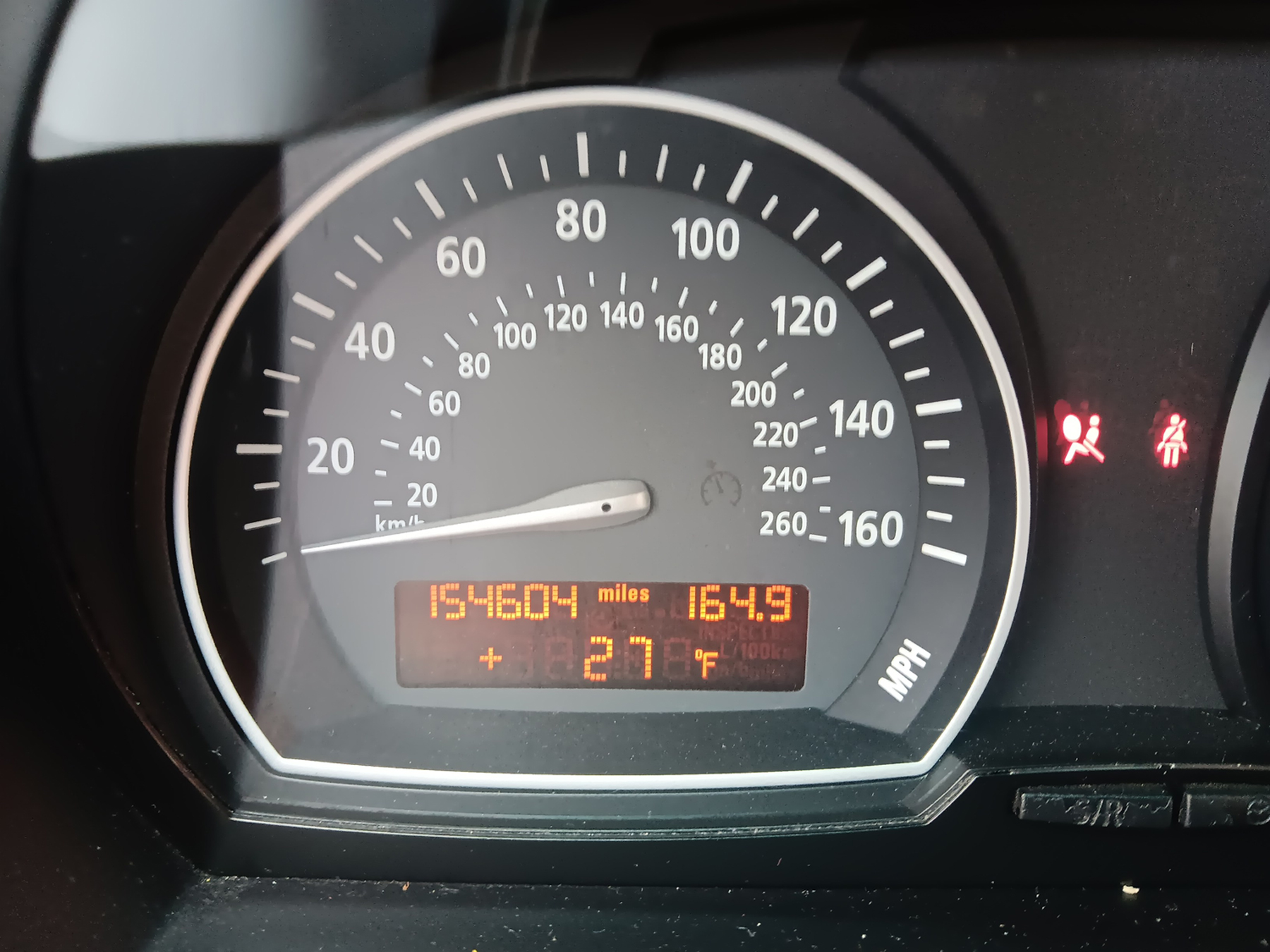
With 18-years and 155,000 miles on the clock my well maintained 2008 BMW X3 has performed nobly. It owes me nothing. That said, with it being the last BMW SUV with a manual transmission, I wanted more. While it owes me nothing, I have decided I owe it to myself to refresh this excellent ride. If my initial assessment proves valid, I will lay down the money necessary to recondition a sporty and functional vehicle I cannot replace. As I have, now, explained the “why,” the following describes the “what.”

A Winter Rebirth? Deciding Whether to Recondition My Aging Daily Driver

Its bones are quite sound with its solid body, good brakes, fresh tires, new shocks and regular servicing, though I am still on the original clutch after 155,000 miles. My daily driver’s needs reflect traditional flaws endemic to the E83 X3 including valve cover gasket oil leaks, oil filter canister gasket leaks and cooling system plastic part failures. Needless to say, high mileage on the original clutch with the notoriously expensive dual mass flywheel screams for attention. However, simply addressing known problems falls far short of my intentions for this rebirth. I wanted the insight of a specialist with the experience, feel, and passion for the BMW brand. I chose Steve Smith owner of MotorWorks West a BMW-Exclusive specialist in Wyckoff, New Jersey.

Steve, 1-month short of his 32nd birthday, with a wife and three children stands out as the kind of youthful respected skilled professional that long time car guys fear will be painfully absent in the fast approaching future.

In 2012, with the benefit of a four-year automotive technology apprenticeship program, Steve developed his taste for BMWs while quickly climbing the ladder towards Master Technician at a respected Northern NJ BMW dealership. With his eyes looking ahead to greater things, he built a cash stash by servicing three to four cars a night in his back yard after work.

By 2018 Steve purchased MotorWorks West. His goal focused on creating the ultimate BMW service facility. Steve says, “I resolved that my shop would never be hamstrung by outdated technology. At the outset I invested a ton of money into the latest diagnostic equipment and, today, continue to maintain that edge.”

Steve wants his customers to know and trust the technician working on their car. He promotes clients discussing their car one-on-one with the technician charged with the responsibility of making the repair. He says, “I rely on my customers being happy with their MotorWorks West experience. They should be confident that my technicians are not trying to rip them off.” Steve not only knows what he wants in a technician. He has a clear understanding of who he favors as a customer. Steve wants to build a customer family. In servicing the parents’ BMW he strives to know their children; children who, when old enough to drive, will trust MotorWorks West to service and maintain their BMW. He says, “I don’t try to sell them everything under the Sun.” He points out that me and my X3 are the exception. He says, “You came in wanting everything under the Sun.”

VISUAL INSPECTION

With the bitter January wind howling behind the closing front door, I entered Steve’s well organized and superbly equipped automotive shop featuring a handful of active bays populated with BMWs of varied vintages.

Steve welcomed me with a smile and a meaningful handshake. His office, adorned with BMW racing graphics and models of classic BMWs, left no doubt as to the focus of his considerable technical acumen and passion. With Steve having read my Drivin’ News post “Aging Beloved Daily Driver Quandary: Refresh or Replace” he immediately dove into the challenge at hand. To my pleasant surprise he spent the next few hours conducting a preliminary diagnosis of my X3’s health. He began by scanning for faults. With the codes printed down for reference, he moved on to conduct a thorough visual inspection. Under the hood the engine bay revealed a considerable curtain of oil bleeding down from the valve cover. Engine oil seen pooling around the injectors raised concerns that the oil might have found its way into the cylinder head intake ports. Upon inspection the concern proved proved unwarranted. Moving on to the oil filter canister Steve used a laser pointer to show me where the oil leak had created a condition that would ultimately compromise the serpentine belt. He explained that with the belt shifting noticeably off center on the pulley, little doubt existed that, left unaddressed, the oil weakened belt could shred and be sucked into the front crankshaft seal causing severe damage.

Continuing on, evidence of failing plastic coolant system parts confirmed a need to be addressed. Steve noted that this X3 has a one-piece thermostat built into a plastic housing that frequently goes bad. He indicated that replacement of the radiator loomed in the near future.  He says, “My rule of thumb on this N52 engine is that you do a thermostat and a water pump together and when you do a radiator you do the upper and lower hoses together.”

Opening the power steering fluid container should reveal a fluid with a greenish clear color. Mine showed brown. Steve says, “I’m not a big fan of selling power steering flushes but when I see something like that, let’s get out the old. Replace the fluid to try to just make these parts last longer.” He makes clear that normally as a repair shop; he cannot sell all of these recommendations to one person. However, in my case I requested this level of detail.

With the car on a lift Steve commenced to give high grades for body integrity, brakes, tires and suspension components. Moving towards the front he noted two ground cables worthy of replacement before addressing the issue of the clutch. He noted that, sadly, there exists no effective way to check the clutch without significant labor. Considering the cost I pressed the issue. I understood that, with 155,000 miles on the clutch, a replacement with all the associated parts seemed likely in the not too distant future. That said would there be a cost benefit to do it now before it starts slipping. Steve explained that there exists the possibility that doing it now could produce a significant savings. How so? He says, “Your X3 has a wickedly expensive dual mass flywheel. By the time the clutch gives its first indication of slippage, the flywheel is cooked.” A decision needed to be made.

We moved along with findings being quite positive, until. Until Steve froze me with an order delivered with the authoritative tone of a cardiologist calling out a heart patient washing down a bacon and nacho cheddar hoagie with a Slurpee. Turning towards me while holding the tail end of the front drive shaft, Steve said, “You can’t drive this home.” The U-joint shook with the confidence draining sound of a baby’s rattle. Clearly poised to let loose any moment, the weighty arm’s-length drive shaft would have spun like a savage fan blade at engine speed quickly destroying all in its reach. I chose to have it repaired immediately. He would have it replaced by the next day. Having completed the inspection of issues we could observe, we moved on to the testing for problems that could not be seen.

My go/no-go “Refresh” decision would be predicated upon the results of a battery of tests that measured my X3 engine’s conformity to proper operational specifications and functionality. A strong engine rated as a major factor in making my decision.

COMPRESSION TEST

An engine compression test measures the pressure in each cylinder to evaluate overall engine health. It assesses how well each cylinder seals and holds pressure. This indicates overall engine power and efficiency. Steve explains saying, “We conducted our compression test with the engine hot. All of your pressures were in the 220s. It was like a rate of 20 to 22 24 to 25 across the board between all the cylinders.” Interestingly, while old school shops use a pressure gauge, MotorWorks West performs their compression test using a lab scope and pressure transducer that enables in-depth diagnostics without requiring a full engine disassembly. Steve says, “We read the pressure like a wave form. Every time the engine completes one full revolution, unlike an old school pressure gauge that simply shows a final maximum pressure. Our system creates a printout that details individual cylinder pressure on the way up and the way down for each revolution. I want to see each cylinder enjoy a perfectly smooth up and down wave. If an anomaly appears, I know where to look. It’s just like the EKG you get at your doctor’s office.” Steve summed up the results saying, “For this engine the wave forms looked really great.” Yippee, my engine got a clean bill of health.

LEAKDOWN TEST

Reinforcing the findings of the compression test, the leakdown test checked each cylinder’s ability to hold air pressure. Leakage by way of escaping air can indicate internal engine problems such as bad piston rings, leaking valves, or head gasket issues. In the case of my engine, Steve found the leakage fell well within the acceptable range.

SMOKE TEST: INTAKE SYSTEM

The procedure employs a smoke machine that injects a visible vapor into the engine’s intake system. A technician can then visually inspect for escaping smoke that would indicate leaks in intake hoses, vacuum lines and intake manifold. In the case of MotorWorks West, their smoke machine actually displays a digital number. In the case of my engine the system indicated a leak so large that the display could not even achieve a reading. The cause proved to be a massive leak pouring out of a crack in the valve cover; the valve cover already on the list of intended fixes.

SMOKE TEST: DMTL TEST FOR VAPORIZATION SYSTEM

A DMTL (Diagnosis Module Tank Leakage) smoke test specializes in locating small, hard-to-find leaks in the EVAP (Evaporative Emission Control) system, In this case Steve found that the smoke test revealed absolutely no leakage in the evaporation system.

CRANKCASE PRESSURE TEST

A miserable failure! But wait. This test checks for excessive pressure from blowby due to worn piston rings or issues with the crankcase ventilation system such as a clogged PCV valve. Steve using the lab scope and a pressure transducer had hoped to see a smooth up and down wave form with a maximum reading of around 33 millibar (0.48 PSI). Instead of a wave the readout showed a straight line at 50 millibar (0.73 PSI). This amount of vacuum could actually suck crankshaft seals into the engine. Steve assessed that the malfunction could again be attributed to the cracked valve cover already targeted for replacement.

CONCLUSION

Prefacing my final decision, the subject of parts deserves a bit of attention. For this project only OE (Original Equipment) or OEM (Original Equipment Manufacturer) parts would be used. The difference or lack thereof, merits explanation. The fundamental difference between OE and OEM is branding. OE parts bear the part manufacturer’s name such as Bosch. OEM parts carry the vehicle manufacturer’s name such as BMW. Both are the same part though the one with the manufacturer’s name always costs more. In my humble opinion, especially with German car parts, pricing uses the basic formula of 50% above outrageous. Parts for this project would be OEM or OE with OE being the first and cheaper choice.

With the good bones of my car  confirmed and the issues needing to be addressed and agreed upon with MotorWorks West, I have decided to recondition my 2008 X3. I have provided a budget of $12,000 with a 10% contingency. Unlike an aging beloved family dog, for this family member I believe I can buy a longer life .

By |2026-02-02T16:25:45+00:00February 2nd, 2026|6 Comments

Cars We Love & Who We Are #71

With about 155,000 miles on my very clean 2008 BMW X3, my quandary appears to be shared as of late by many fellow car owners of a variety of brands. We find ourselves clinging to a long held daily driver with a passion normally saved for the family dog. Unfortunately we see this beloved vehicle getting quite long in the tooth.

I really like my X3. I mean, really. I have enjoyed multiple BMWs for decades. My E83 X3, sturdy and reliable at 18 years of age offers many appealing features no longer available on comparable contemporary BMW X3s or, for that matter, any other new X3 competitors like the M-B GLC, Audi Q5, Lexus Rx or Volvo XC60. As well, it delightfully lacks many features unavoidable in today’s high priced digitally infected offerings.

However unlike Rex the family dog, a treasured daily driver can have its life extended. In my case my goal would be to add another 50,000 miles of high quality driving. Refresh or replace my X3? That is the question explored in this Drivin’ News post.

Aging Beloved Daily Driver Quandary, Refresh or Replace?

The following paragraph comes with apologies to Julie Andrews: Knobs on my radio, buttons on dashes, shifting a 6-speed for lane changing passes, no need for oil of zero weight grade, this is how my favorite car would be made. Sadly none so equipped can be found anymore and that makes me feel so bad.

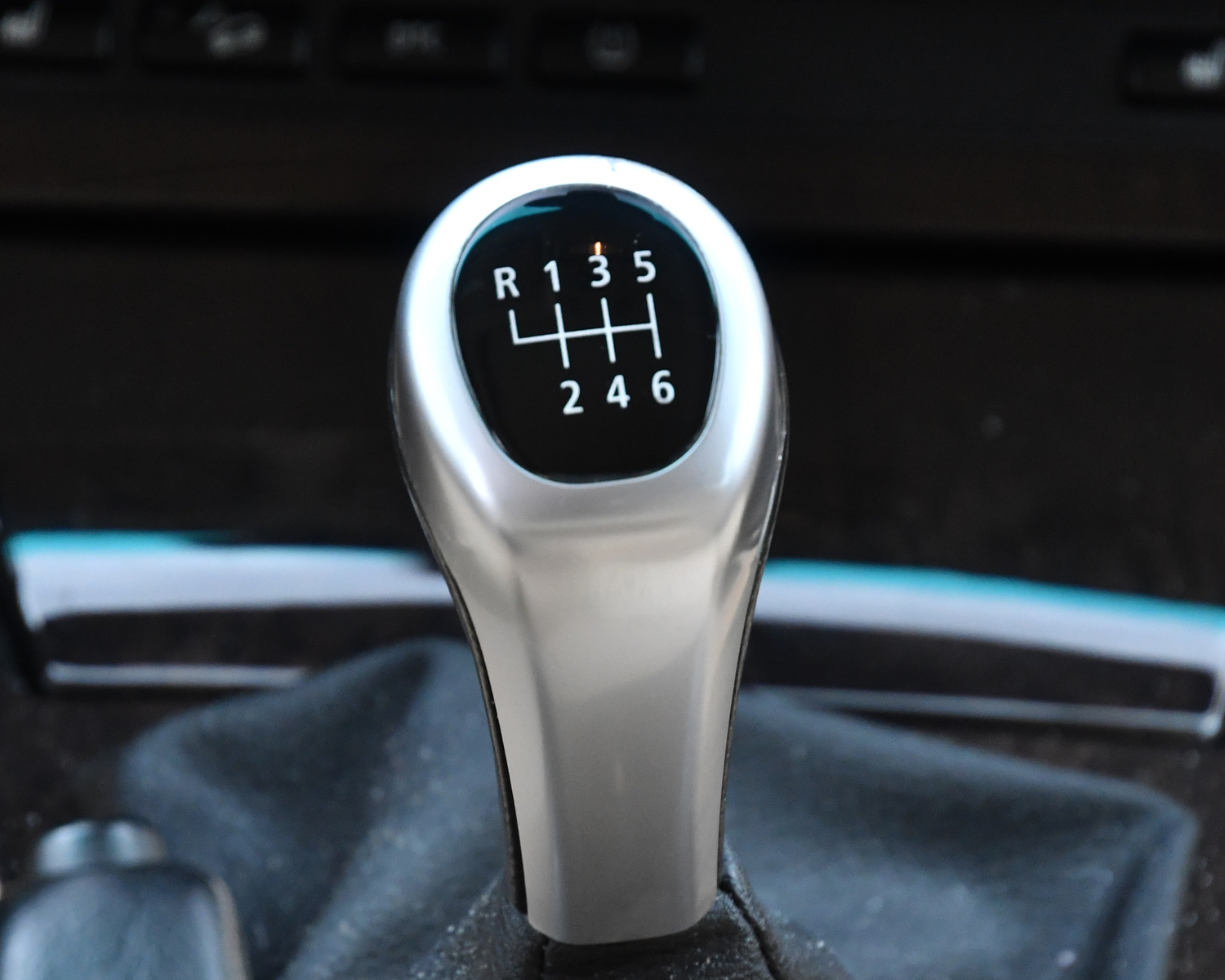
I purchased my 2008 X3 in 2017 from the original owner. It had 67,000 miles, a clean Carfax and all service records. It featured BMW’s acclaimed 3.0-liter 260 horsepower N52 naturally aspirated inline-6 coupled to a 6-speed ZF manual transmission. I can attest that my X3 translates the essence of the once renowned BMW driving experience into an SUV. To emphasize that point BMW embraced the descriptor SAV (Sports Activity Vehicle) to highlight the X3’s ability to fuse the practicality, space, and ruggedness of an SUV with the spirited performance, agile handling, and driver-focused feel of its signature sports sedans. BMW’s basing the 2008 X3 architecture on a 3-Series platform confirms that assessment. To quote Edmunds.com, “Given its very athletic personality, calling the 2008 BMW X3 the “3 Series of SUVs” wouldn’t be a stretch.” “Interestingly, of the 17,622 new 2008 X3s sold in America only a very small fraction came with the manual transmission found in mine. Today, locating a clean X3 with a manual transmission ranks as a rare and desirable find.

Considered the last of the legendary naturally aspirated inline-6 engines upon which BMW built its reputation, the N52 in my X3 with its inherently balanced inline-6 configuration, advanced features like Valvetronic, Double VANOS and lightweight magnesium-aluminum block boasts smooth, linear power and superior reliability compared to the more complex B48 turbocharged engine found in newer BMWs.

So, what shakes out when comparing the N52 against BMW’s B48 2.0-liter turbocharged engine introduced in the 2016 BMW X3 and continuing on today? One must consider that the Turbo B48 is quicker, more efficient and far easier to tune to a higher performance level. The downside comes with the complexity that can be associated with forced induction. For me the N52’s smooth, reliable and traditional feel when partnered with the robust ZF 6-speed known for its reliability and precise shifting suits my tastes and needs better. And, Oh yes, my X3 runs well on regular grade gasoline saving roughly one dollar per gallon at fill-up.

Compared to my X3, a new BMW X3 or any in its competitive set would provide for a far more modern vehicle and driving experience in terms of technology and sophistication. However, considering my preference for engagement and the associated simple pleasures enjoyed when behind the wheel when engaged, the character of the new X3 and the like might be off-target for my tastes.

Clearly among the automotive literati and traditional BMW enthusiasts, the 21st century has found voices expressing considerable concern that BMW has veered from the course set by the brand’s earlier classic models. These voices express a belief that BMW has abandoned its sporting heritage to emphasize an elevated level of luxury and advanced technology in an effort to appeal to a broader consumer base. Indeed such criticisms do resonate with me. Based solely on my driving preferences, the following concerns about the 2025 X3 actually make my 2008 more appealing. Keep in mind the very personal nature of my assessment. BMW by building cars to my tastes would most assuredly bankrupt the brand.

Engagement resides at the heart of the driving experience that defined BMW’s claim to being the Ultimate Driving Machine. Most obviously the new X3 does not come with a manual transmission. Indeed, the new X3’s mandatory electronic 8-speed automatic may shift quicker and smoother than my X3 with me at the controls. However, that absence of the third pedal, for me, succeeds in purging a richly tactile and rewarding enhanced driving experience. Another concern expressed by many focuses on BMW’s Standard electronic power steering (EPS) introduced in the 2014 model year. Though EPS enables seamless integration with driver aids like lane assist, custom steering modes and eliminates the need for hydraulic steering fluid, critics bemoan that it lacks the natural road feel and driver feedback considered a signature feature of the classic Ultimate Driving Machine. Other big problems exist as well.

For my needs the new X3 suffers from the common problem of “biggerness.” Like so many evolving brand models, each generation of X3s has grown. Compared to the 2008 X3 the 2025 X3 has grown 8 inches longer, 3 inches wider and 350 pounds heavier. Moving to the inside of the new X3’s tech-heavy interior one finds a passenger cabin replete with seemingly every application of advanced automotive digital interactive communications technology. While opening myself up to consideration as a borderline Luddite, I say for those who love a total immersion in tech; knock yourself out. For me, I prefer my dashboard to feature an analog interface rather than a sprawling IMAX screen. In scanning the new X3 dashboard, its 14.9-inch center iDrive9 infotainment display features a 12.3-inch fully digital gauge cluster. I find it demands my attention in the event I wish to change my heater setting or turn on the radio. And yes, I know to activate some new X3 functions I can talk to the car with the BMW Intelligent Personal Assistant. I have enough friends thank you. Wow, I am sounding a bit curmudgeonly I must confess. But, hey I just want a car I enjoy driving not a mobile video game.

Tactile friendly latching pushbuttons and knobs feature prominently on my list of dashboard actuators fondly recalled and absent in a new X3. For the latest X3, haptic, capacitance sensing, buttons rule the interface. On the steering wheel and across the center console these touch-sensitive surfaces deprive the driver of the satisfying tactile feedback of an intended action confirmed. While on the subject of cost cutting, road tests and customer feedback offer scathing criticism of the “cheap” and hard plastics employed throughout the interior. To boot, unlike my old X3 the new X3 no longer offers a sunroof that opens.

Other considerations impacting the Refresh or Replace decision include insurance and replacement cost. Presently, insuring my 2008 X3 cost $540 for a 6-month period. I do not have collision or comprehensive with the book value being roughly $2200. Maybe it goes for $5000 retail. With the cost of a low end new X3 30 with sales tax being well over $60,000, my insurance for the 6-month period with comprehensive and collision would be an estimated $2,737. This would make my new X3 insurance 500% of my present insurance or roughly $4,400 more per year. If you have an older car you like and it has good bones it does make you think. And I am thinking enough to move to the next step.

At this point in the Refresh or Replace decision process my honest evaluation of my X3 reveals problems associated with all of the classic 2008 X3 faults including: Valve cover gasket oil leaks, oil filter housing oil leaks and coolant system plastic parts failure. For more professional scrutiny, the next step calls for visiting my longtime trusted and respected BMW specialty shop. Here performance of a few basic tests will indicate the wisdom of pursuing the Refresh. In addition to a thorough visual inspection, a compression test will reveal the presence of any worn piston rings or leaky valves. A leak-down test will pinpoint with pressurized air the exact location of any power sapping engine problem. The compression test is a quick check to see if a cylinder’s compression is low while a leak-down test is more diagnostic, revealing the fault causing the low compression. Finally a smoke test injects smoke into a sealed engine intake system. Any escaping smoke pinpoints leaks from cracks, loose hoses, compromised vacuum lines or faulty gaskets.

So I stand poised at the precipice. With the goal of an additional 50,000 miles of high quality personal driving pleasure do I invest considerable dollars that I will never recoup whether sold or, God forbid, totaled? Clearly plowing money into a car with eighteen years and 155,000 miles on the clock will not address every component subject to failure. That said we are not talking a Chevy Vega here. This is the product of a proud design and manufacturing culture when it boasted products where 200,000 even 300,000 miles did not peg the exceptional performance needle. I am confident my 2008 BMW E83 X3 boasts the bones to be worthy of the effort. That assumes the preliminary inspection supports my confidence.

When they no longer make the car you love, does it make sense to love the car you have got. While the Beatles sang “Can’t buy me love,” applying to hearts, it may not hold true for cars. At least I intend to find out.


STAY TUNED IN THE COMING WEEKS FOR PART TWO “MAKING THE DECISION.”

By |2026-01-11T21:36:14+00:00January 11th, 2026|4 Comments
Go to Top