Yearly Archives: 2022

Conversations With People We Value #36

Among classic car enthusiasts, the time was when referring to a specific vintage automobile as “original” was synonymous with the most valuable version. Today, that no longer can be assumed as a given.

Welcome to the ascendant age of the “Restomod.”

Restomods – Does original matter anymore?


1961 Corvette original $85K-$95K                         1961 Corvette Restomod $467K

Clean, numbers matching muscle cars and Corvettes are no longer a given as the most prized examples on the auction block? That’s crazy talk. In years past, yes. Today, not so much. For those who have not noticed, recent times have witnessed a profound sea change in the vintage vehicle attributes that translate into the big dollars when crossing the block at auctions like Mecum and Barrett-Jackson. Restomods have supplanted numbers matching and very clean originals as stars on the auction stage.

Restomods are best described as domestic and import cars that retain their original classic look, but have been restored, modified and upgraded with the latest technology, power trains and chassis. Period correct technology like carburetors, distributors and dated suspensions have no appeal to the restomod buyer. Restomod buyers love the classic look but want the handling and performance technology bristling with modern capabilities.

Watching restomods’ startling rise to pinnacle status reflects not only a revolution in tastes, buyer demographics and perceptions of value but an even more fundamental change seen rippling through the very heart of the restoration industry. What can only be described as a tectonic shift is transforming the character of the builder community itself.

Jeff Buchak

To better understand the buyer and builder in the brave new world of restomod ascendance Drivin’ News reached out to restomod builder, Jeff Buchak, owner of Paradigm Auto Restorations and Matt Maisano owner of Motorcar Manor and a classic car purchasing consultant.

Matt starts off by noting that the car market in general took off around 2013 as the economy picked up. He says, “2013 is when we started seeing cars selling for what we thought, then, were ridiculous prices.” Matt points out that during that same period restomods started selling for descent money. That said, Matt makes the point that even five or six years ago at a Barrett-Jackson auction a restomod would sell for significantly less than an original version of the same vehicle. Matt gives an example saying, “Five or six years ago a standard 1967 big block Corvette would sell in the area of $160,000 while a restomod of the same model in similar condition would go for $125,000.” Matt continues to explain that today that same big block Corvette might go for $200,000 to $250,000 but a restomod based on a lesser 327 version might go for $375,000. When asked when did this big turnaround happen Matt points to 2017.

In reflecting on the restomod buyer Matt says, “A lot of people in the under 50-year demographic want to take it easy. Maybe they are a bit more lazy when it comes to driving and don’t want to deal with tune-ups and tweaking. These new restomod aficionados, unlike the traditional older car enthusiast, may not view the “joy” of maintaining a classic car as part of the fun.” Matt also notes the younger generations prevailing need for instant gratification. He or she wants the car to use, NOW, not after having to fiddle with a carburetor or such.

Are restomods a passing phase? Not in the opinion of Matt. He says, “Restomods are here to stay.” Interestingly he sees restomods becoming more desirable because they will be worth more and will hold their value. He says in the old school world none of this makes sense, but it’s a new world.” Matt gives the example of a standard 1966 327 Chevelle, not a Super Sport, that is all original including paint. He says, “That may be a $70,000 car based on its originality.” If you restomod that car it can become a $200,000 even a $300,000 car.

What then goes into making a restomod that so significantly increases the value of the base vehicle. For that we spoke with restoration shop owner, Jeff Buchak. Jeff has done a number of restomods and is presently starting on a 1979 Camaro with a 1970 Corvette waiting next in line.Jeff makes the interesting observation that around the early turn of the century, 2003 to 2004, the stock restoration of muscle cars reached its peak as enthusiasts became heavily invested in restoring these cars to their original form. However, Jeff notes that after pulling out of the Great Recession around 2012 people displayed an interest in exploring a different style of collector car. Jeff says, “Lots of new advanced technology came on the market creating a fertile environment to create a new class of collector car for people who liked the classic car look but loved the drive qualities of the latest performance technology.”

Seminal work on the restomod concept originated with the builders who had been focusing on “restoration to original condition” projects. Up until The Great Recession, 2008, restoration shops witnessed the hot market for restored muscle cars and thrived on the work. However, Jeff notes, “Builders saw that their beautifully restored classic cars, by contemporary standards, often drove horribly because of the authentic but dated technology.” According to Jeff, builders started exploring answers to the question, is there a better way?

Builders found the answer in the hybrid build combining classic car looks and contemporary performance technology. Then the tumbling dominoes of interest started to pick up speed. First builders created these classic cars with contemporary underpinnings for themselves. It then did not take long for collectors to notice and decide this combination of an old look  and modern drivability was pretty cool. At that point collectors started pressing builders to create these restored and modified (resto-mod) creations for the collector himself. Jeff says, “Then it just started to accelerate.” From around 2012 to 2017 a lot of engineering and development trial and error took place. By 2017 the restomod build had been sorted out and blossomed into a full blown and accepted and increasingly prominent new class of collector vehicle. The question then asks what accepted solutions had been distilled during the sorting out process that made the restomod so successful as a new category of collectible car.

BODY

A solid clean body means everything. A good body saves an immense amount of money. Jeff says, “It is conceivable that you could save $30,000 to $40,000 with a nice body that needs minimal body work and rust repair.” In the case of Jeff’s ’79 Camaro project the body, from out west is solid with minimal needs.

For the ’70 Corvette Jeff will do next, the whole car is an original one-owner car. Basically the customer paid $35,000 to get a great body and good VIN#. He said they made money selling the motor, drivetrain and chassis. Being a solid body they saved thousands on unnecessary fiberglass work.

An interesting sidebar to the importance of a solid body is the growing market for a clean title and VIN # that matches the car from which a restomod will be created. Jeff says, “People are paying crazy money for a title because as long as you have a title and VIN# you can build anything.” With a good VIN# you can call up Auto Direct and order a full Camaro body or Tom’s Bronco in California for a Bronco body. Jeff has seen people pay eight to ten thousand dollars on a car just to get the VIN plate.

CHASSIS

For his ’79 Camaro project Jeff is using a Roadster Shop brand chassis. Jeff says, “It is a great product and a smart way to control costs instead of custom fabricating a chassis.” On Jeff’s end, the client avoids a significant custom labor cost. Jeff says, “I’m going to call up Roadster Shop. I’m going to order a roadster shop chassis specific to the ’79 Camaro. It comes already set with the proper motor and transmission mounts.”

Before ordering the chassis it is critical to explore what the client wants because the chassis will come completed to match his specs. Is the intention to race or drive it on the street? Important questions include the stance desired, type of suspension and braking.

Costs can add up quickly. Jeff says, “If the customer intends to be road racing and wants an independent rear suspension, that is  Ten thousand dollar upgrade. If you want a billet aluminum CNC-machine center section, Throw another 5,000 on. Eye candy options abound. For a 68 to 72 C3 Corvette, you can get a really great driving powder-coated chassis delivered to your door for twenty seven to thirty thousand dollars. You can get it with an independent rear suspension, Billet CNC’d Center section, all the works, huge brakes. And it’s an additional twenty to twenty five thousand dollars.

ENGINE

Jeff notes that, in most cases, for engine choices there exist three options. The Hemi crate motor from Chrysler performance comes as the 5.7-liter, 6.4-liter or Hellcat motor. Its guaranteed from 400 to 1,000 horsepower.

Secondly, You can call up Ford performance and order a 5-liter coyote motor out of the Mustang.

Then there are the GM LS Motors. Jeff says, “The LS motors are probably the most desirable because of their potential. The aftermarket is endless. So many different manufacturers make every single product. I like Texas Speed and Performance. They have a really nice formula showing how to achieve different stages of power. They can guide you.”

TRANSMISSION

Choice of transmissions almost exclusively centers on 6–speed Tremecs as compared to 5-speeds and automatics. Part of the allure comes with the reality that very few new performance cars even come with a manual transmission available.

BRAKES

Jeff says, “For a strictly street use application roughly $1100 dollars can get you 11 inch or 12 inch rotors and 4-piston calipers front and back from Baer. If you’re going to be constantly pounding the brakes doing a pro touring circuit track, then you’re going to go to a 14-inch ceramic-coated rotor and a 6-piston caliper from a new Z06 and that brake package is around ten thousand dollars.”

UPHOLSTERY AND PAINT

As the saying goes “it’s a matter of taste.” Purely customer choice, an interior can be the focal point of a restomod or a purely functional treatment.

So too with paint. Jeff’s true art and passion resides in his commitment to perfect paint. The idea of an “OK” paint job on a one-off restomod passes well beyond the line of bad choice to crazy. In Jeff’s mind, a bare restomod body offers a blank canvas crying out for an artist.

1979 CAMARO PROJECT

In the future, Drivin’ News intends to revisit Jeff’s completed ’79 Camaro restomod. For now the plan calls for a Roadster Shop chassis, 525 horsepower LS engine, 6-speed Tremec T56, 20-inch aluminum snowflake wheels from Forgeline painted gold polish finish that recalls the original Camaro wheel and a custom brown paint.


An interesting and final thought brought to mind by Jeff questions the future of auto restoration. Jeff says, “Eventually I believe most auto restoration will fade out. Restoration will be replaced by the building of individual cars utilizing superior contemporary technology.”

Jeff sees that, today, people really are not restoring vehicles to factory spec unless they have a lot of value.

Jeff believes the future will see people starting with a classic shell and contracting with a shop to build it to their specifications.

He thinks that a few cars worth a lot of money will continue to be the subject of a restoration but there are not that many original vehicles left to be restored like that.

Jeff says, “How many original un-restored L88 Corvettes are there left to restore?. I mean there’s a lot of regular 64 Corvettes that just came with 327s. But even now these are the cars that people are using as the basis for a restomod.

Jeff believes they are doing the right thing. Do you?

By |2022-07-07T11:57:45+00:00June 23rd, 2022|2 Comments

Cars We Love & Who We Are #28

What matters? As a culture what objects should we, as Americans, care about enough to protect? What should be recognized as a defining element of our culture’s evolution worthy of recognition and preservation? In 1966 by an act of Congress, the Federal Government established the National Register of Historic Places. This act authorized creation of an official list of historic places in America worthy of documentation and preservation. Today, the list includes almost 100,000 properties  comprised of buildings, sites, districts, structures, and objects, but no automobiles.

No automobiles!!! What single object has played a greater role in the evolution of American culture than the automobile?

This glaring oversight received remedy in 2013 with creation of the National Historic Vehicle Register (NHVR)through the collaboration of the U.S. Department of Interior, the Heritage Documentation Programs, the Library of Congress and the Historic Vehicle Association (Recently renamed the Hagerty Drivers Foundation, HDF). Tasked with the recognition and documentation of the most historically significant automobiles, motorcycles, trucks and commercial vehicles in America’s past, the NHVR faces a daunting task. As of today 32 vehicles have been honored with recognition.

Let’s take a look at what makes them so special.

Judged the 32 most historically significant cars in America. Do you agree?
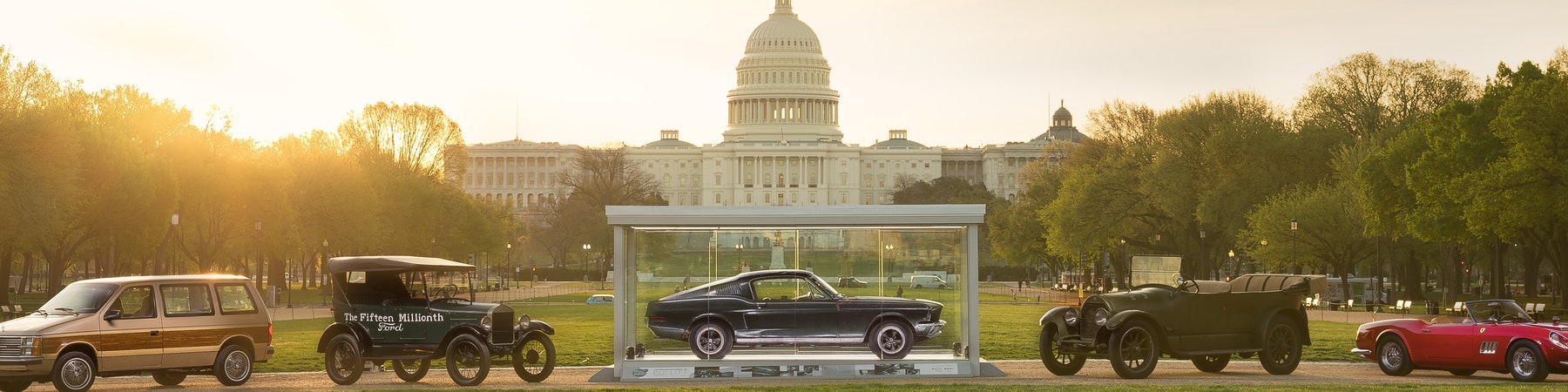
 

How to pick the vehicles that matter most? Right off the bat inclusion does not necessarily require the vehicle to be the best of its breed.

NHVR has established four defining criteria that affords eligibility to the register. A vehicle only has to meet one of the criteria to be considered eligible for entry.

Criteria

1.The vehicle must be associated with a meaningful trend in American automotive history or culture or a significant event or events.

2. The vehicle is associated with the life or lives of a person or persons who played a significant role in American history or culture.

3. The vehicle must achieve distinction based on design, engineering, craftsmanship or aesthetic value.

4. A vehicle of a particular type that was the first one produced, the last one produced, is a rare or the sole example or is among the most well-preserved or authentically restored surviving examples.

These four criteria go a long way in making sense of what could otherwise be a list possessing considerable mystery. It certainly can provide clarity in explaining why your pristine 1967 427 Corvette is doubtful to make the cut but a 1964½ Mustang coupe with a straight six, automatic transmission and the lowest VIN# known would seem to be a lock.

Diane Parker, Vice President of the Historic Vehicle Association, speaking in 2019 said, “The National Historic Vehicle Register was created to fill a gap in our history. As you can imagine, we have a little bit of catching up to do,” Parker said. “There are over 2500 makes of vehicles out there, but we’re going to do this one vehicle at a time. For us, the National Historic Vehicle Register isn’t our mission, it’s our passion—it’s our purpose.”

Once selected, a chosen vehicle experiences a breathtaking level of documentation to assure that every attribute will be available to scrutinize for future generations.
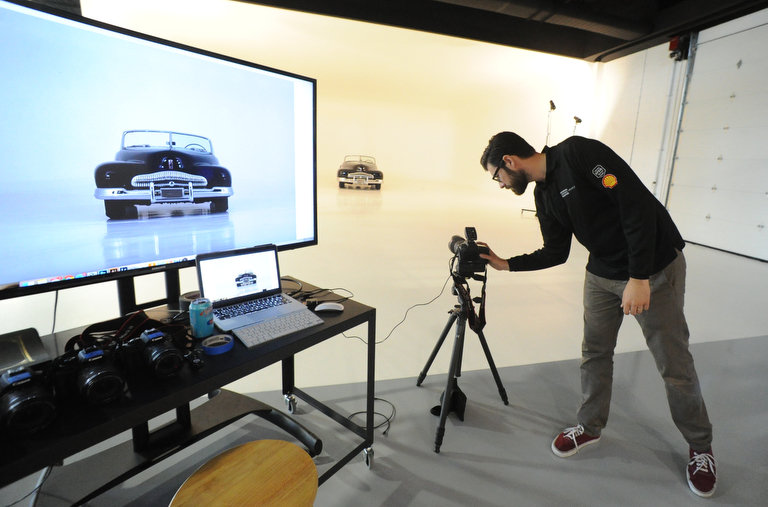
A significant benefit to that goal resulted from an extraordinary act of selfless generosity in support of the NHVR that would save countless hours and dollars.

Documentation demands a venue affording an extraordinary level of technical sophistication and cleanliness in a spacious environment. At the outset, documenting the first few cars demanded finding a warehouse or studio near the subject vehicle to which all necessary equipment had to be transported. Realize that meant transporting and setting up all the equipment to conduct the photography, photogrammetry (the science of obtaining reliable information about physical objects by recording, measuring, and interpreting using noncontact sensor systems), 3D scanning and videography. Needless to say the need for such mobility posed an arduous and expensive task.

Now comes the generosity. When hearing of this logistical nightmare Nikola Bulgari, founder of the NB Center for American Automotive Heritage in Allentown, PA, simply said, “Do it here at the N-B Center. We will build a permanent studio with the all the technology hardwired in and positioned.” From then on it was game on.

As of today these 32 Vehicles have been selected for inclusion in the NHVR list. Do you agree?

1964 Shelby Cobra Daytona Coupe
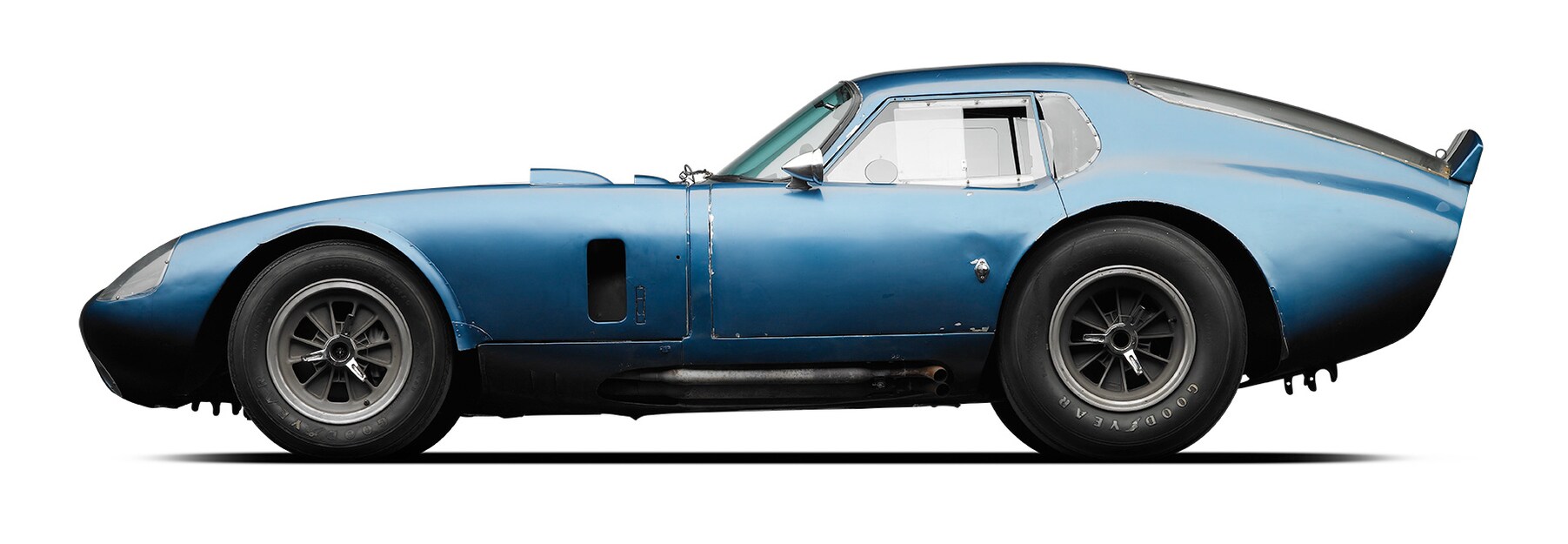
The initial entry to the NHVR, the Daytona Coupe touched every base for criteria meriting selection . Created by Carroll Shelby, designed by Peter Brock, this, the first Daytona Coupe, powered by a 289 cu. in. Ford V8 delivering 375 horsepower was capable of speeds over 180 mph. Known as the CSX2287, it stands tall in the pantheon of most significant American vehicles in history. In 1965 in winning an FIA-sanctioned international series, this Daytona Coupe made a major mark in US automotive history.
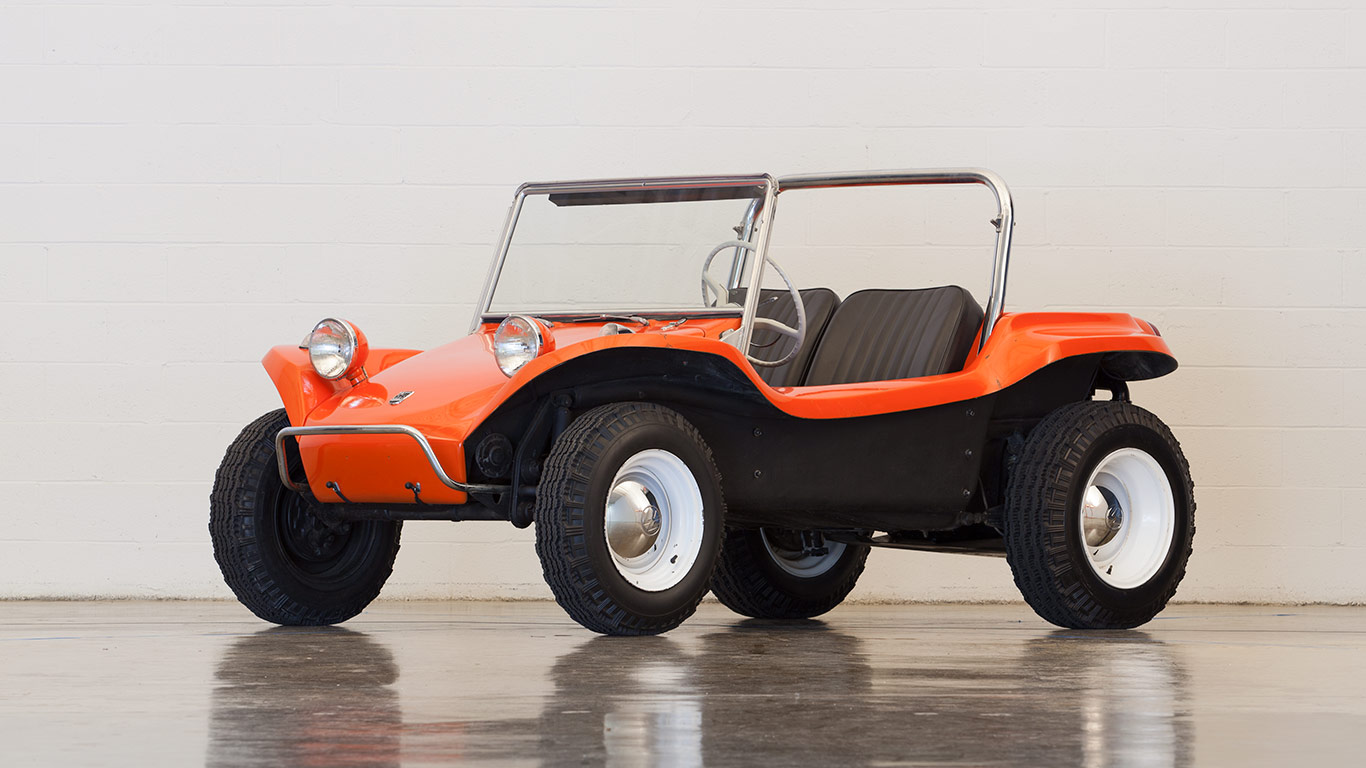
1964 Meyers Manx “Old Red”

Built by legend Bruce Meyers, “Old Red” was the first fiberglass dune buggy and the prototype rear-engine VW powered Meyers Manx that inspired the dune buggy craze. While Meyers built roughly 7000 Meyers Manx dune buggies it inspired over 250,000 copies making it the most replicated car in history.


1938 Maserati 8CTF “Boyle Special”
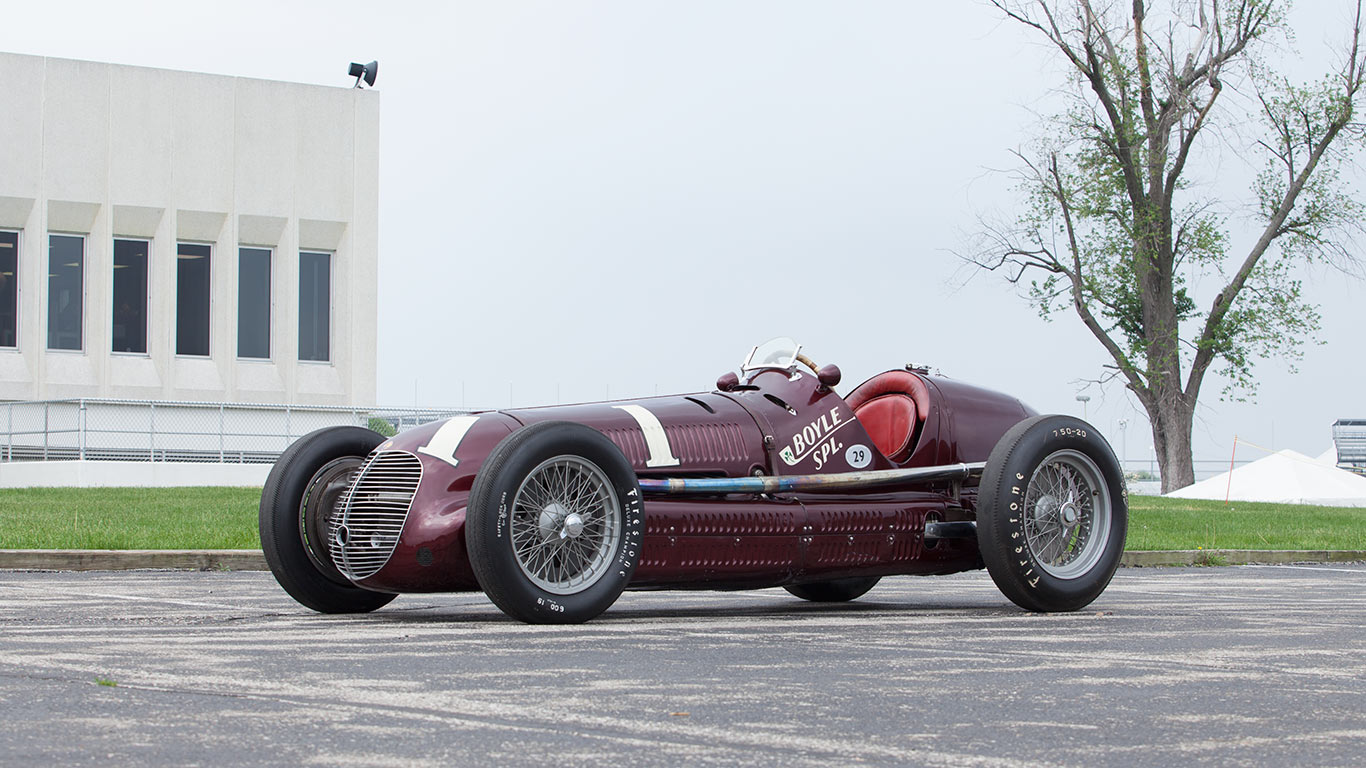
The most successful car to ever compete at the Indianapolis 500 race, the Boyle Special with its two wins, two third places, and one fourth place in a racing career that spanned the late 1930s to 1953 established its exalted place in American racing lore.


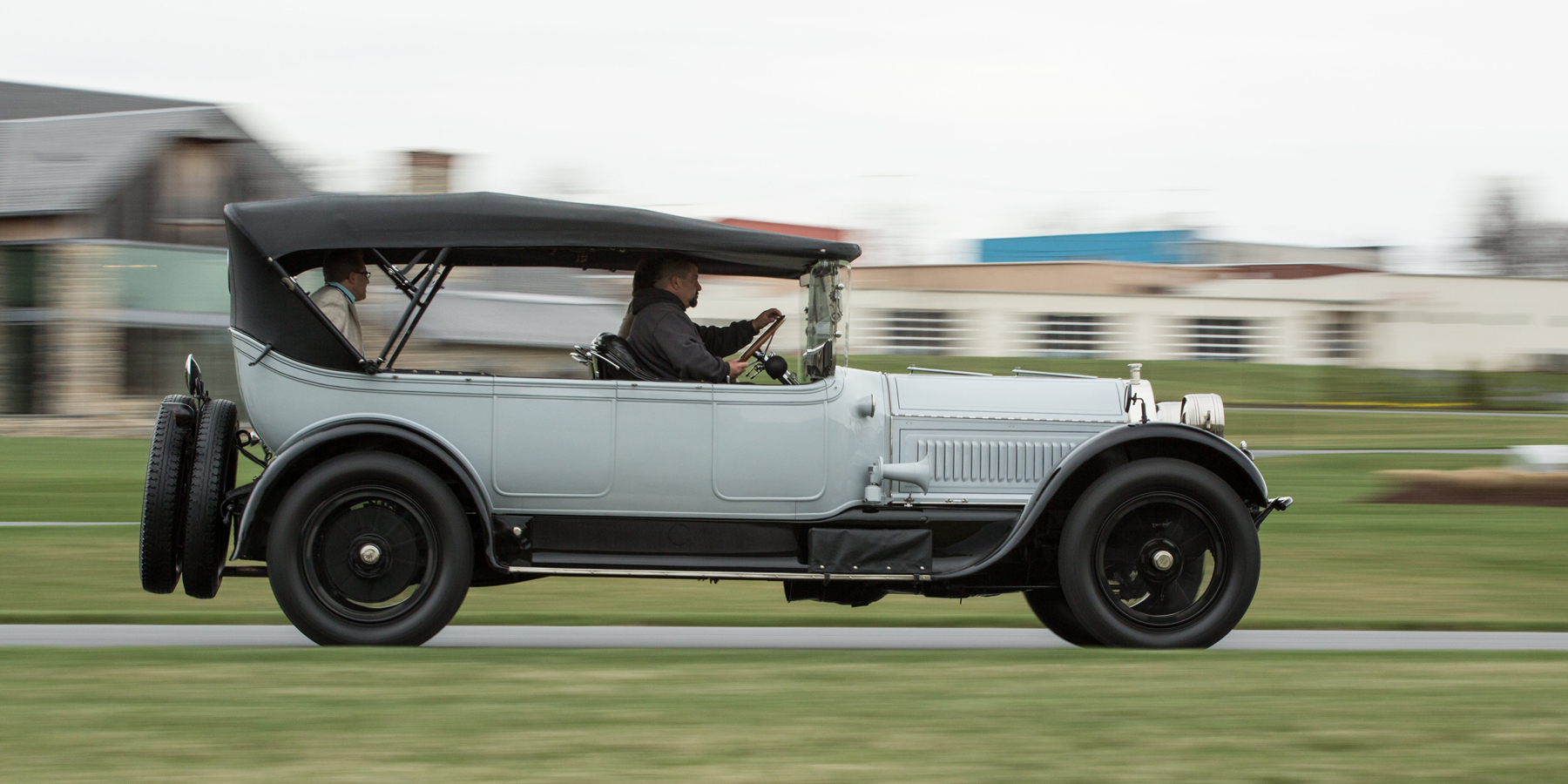
1918 Cadillac Type 57

The only remaining passenger car that served in WWI in France. Steeped in historic value and wartime service this 1918 Cadillac saw extensive use across war-torn battlefields of Europe while driven in support of The American Expeditionary Force by its owner and YMCA volunteer Rev. John Hopkins Dennison.


1947 Tucker 48 Prototype
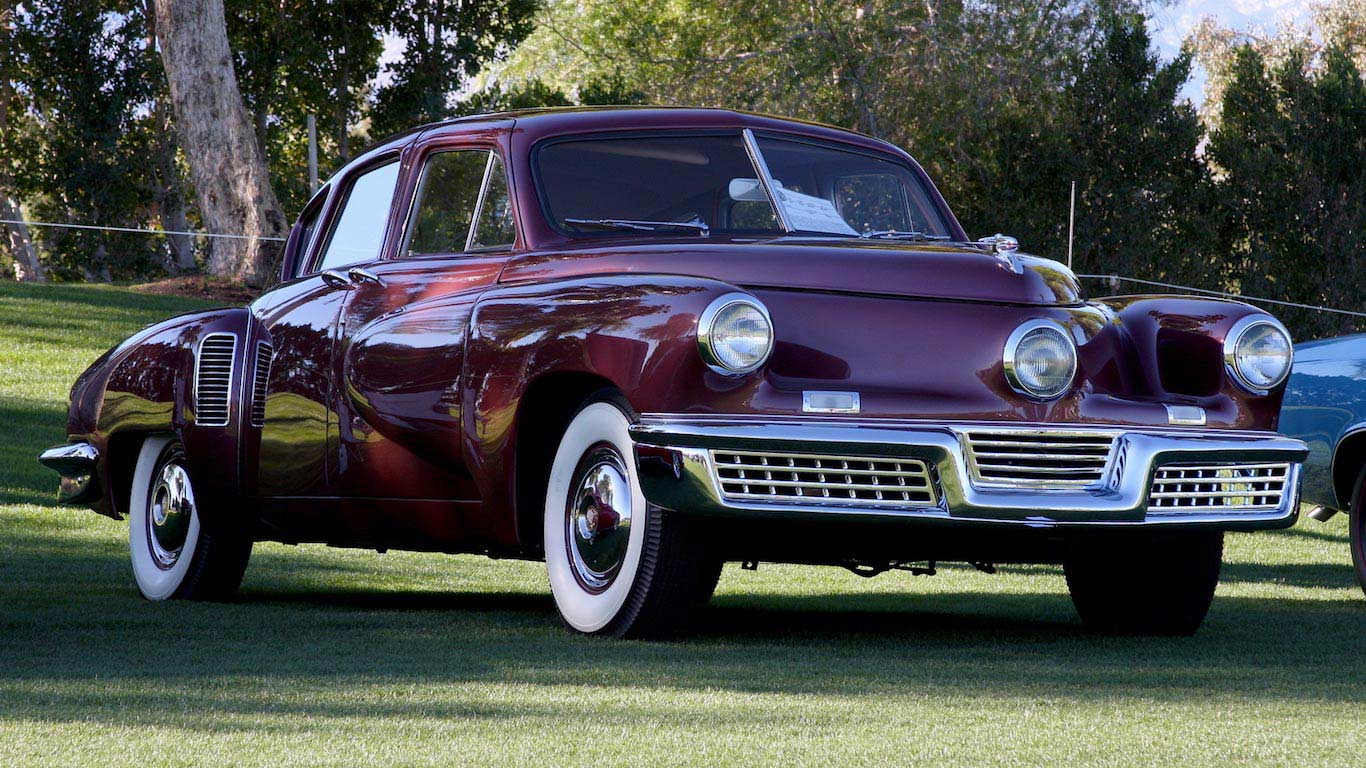
Created by Preston Tucker, the Tucker, certainly holds a brief but outstanding place in American automotive history and design. Though only 51 cars would be produced, the Tucker’s impact on the automobile industry, automobile innovation and automobile lore far exceeded its limited life.


1940 GM Futurliner
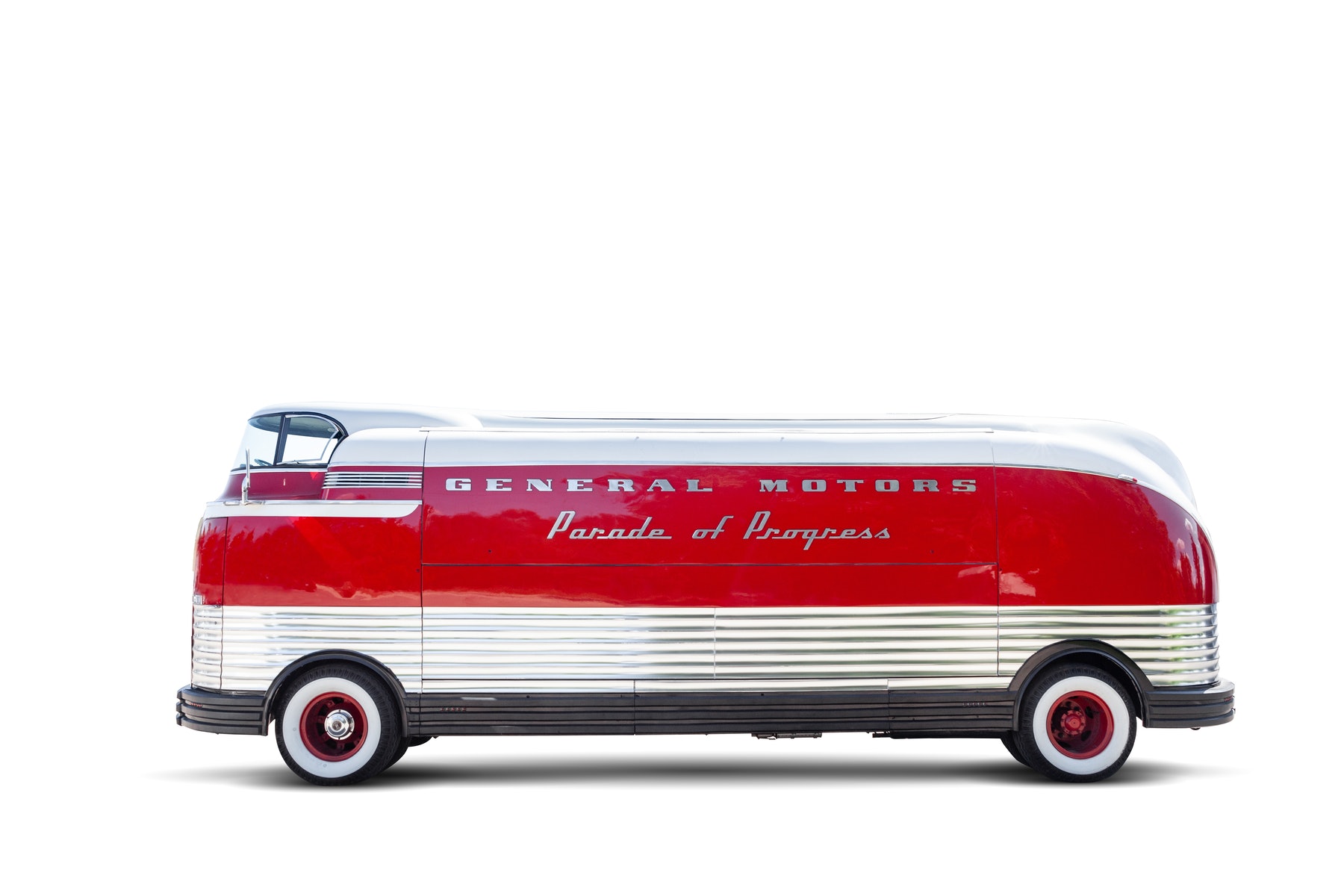
GM launched the Parade of Progress in 1936 to promote the scientific and technological achievements of America as part of a traveling educational show. The Parade of Progress featured three distinct “tours” from 1936 to 1956. This is one of twelve Futurliners created in 1940 for the second tour of the Parade of Progress. All Futurliners served as transport trucks and display stages for the exhibits.


1954 Mercedes-Benz 300SL

Brain child of Max Hoffman, notoriously aggravating but savvy, distributor of Mercedes-Benz automobiles in the 1950s, the very expensive 160 mph 300SL offered a road-going sports car based on the Mercedes-Benz W194 race car. It achieved its goal of targeting the U.S. market with over 80% of Gullwing production was sold in America. Clearly Max got this one right. Today it remains one of the most desirable classic cars in the world


1940 Ford Pilot Model “Jeep”

In 1937, with clouds of war forming, the US Army invited bids on designing a quarter-ton lightweight utility vehicle. Manufacturers were invited to submit prototypes to meet the Army’s specifications. Ford, American Bantam, and Willys-Overland were left standing for the final cut and were charged with producing more prototypes for further evaluation.

Willys-Overland would actually win the Army contract but, due to the needs for a lot of jeeps to be produced quickly, Ford with its superior production capabilities was awarded the contract to produce the Willys-Overland design. The critical role played by the rugged jeep in WWII is now legend.

1909 White Model M Steam Car

As 27th President of the United States, William Taft possessed a great interest in automobiles. He converted some White House stables into a four-car garage which held an electric vehicle, two Pierce-Arrows and this White Model “M” Steamer. Recognized as the first Presidential Limousine, it is the only remaining car used by Taft.


1962 Willys CJ-6
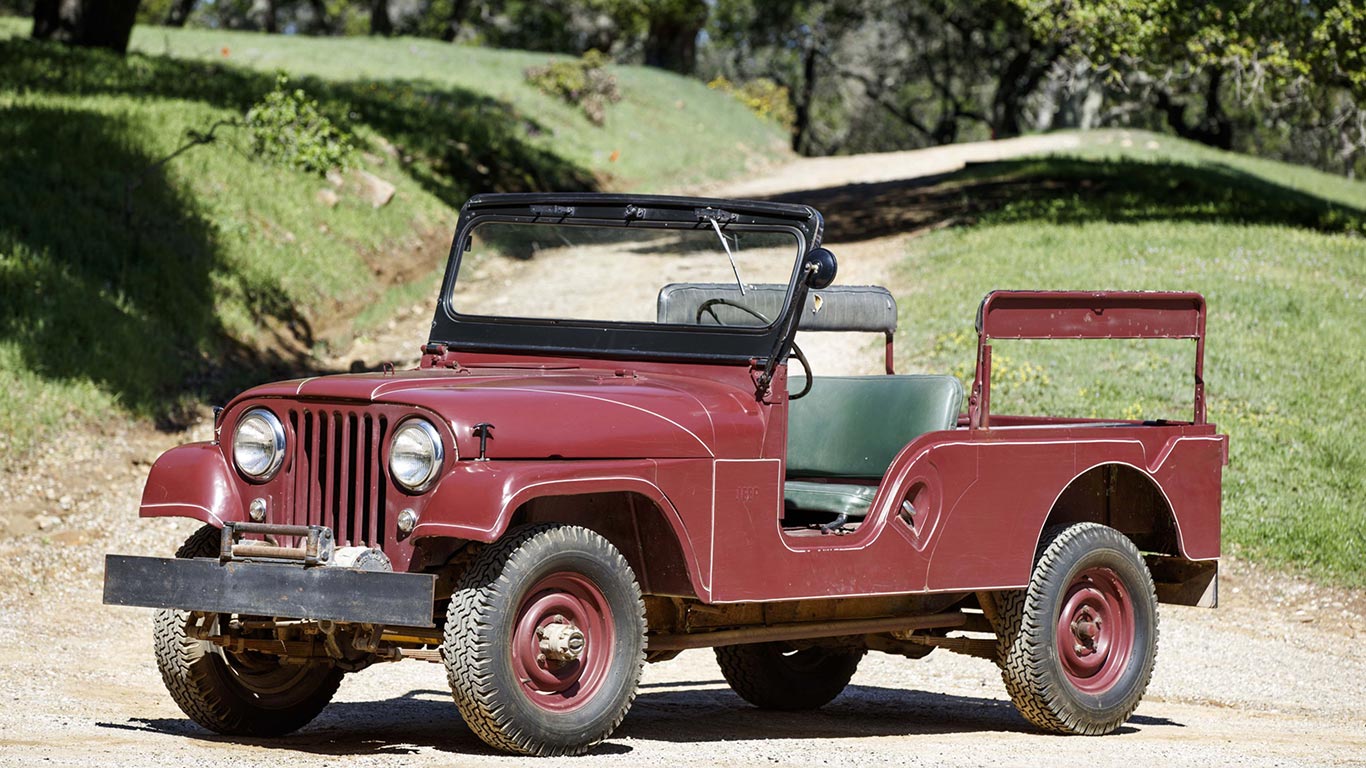
This 1962 CJ-6 was the personal vehicle of Ronald Reagan, 40th President of the United States. He favored its use at his 688-acre ranch near Santa Barbara, California. While not a favorite of Nancy’s, Ron loved using the scruffy red jeep for heavy duty ranch work. Due to Reagan’s declining health the CJ-6 was sold to the Young America’s Foundation in 1995.
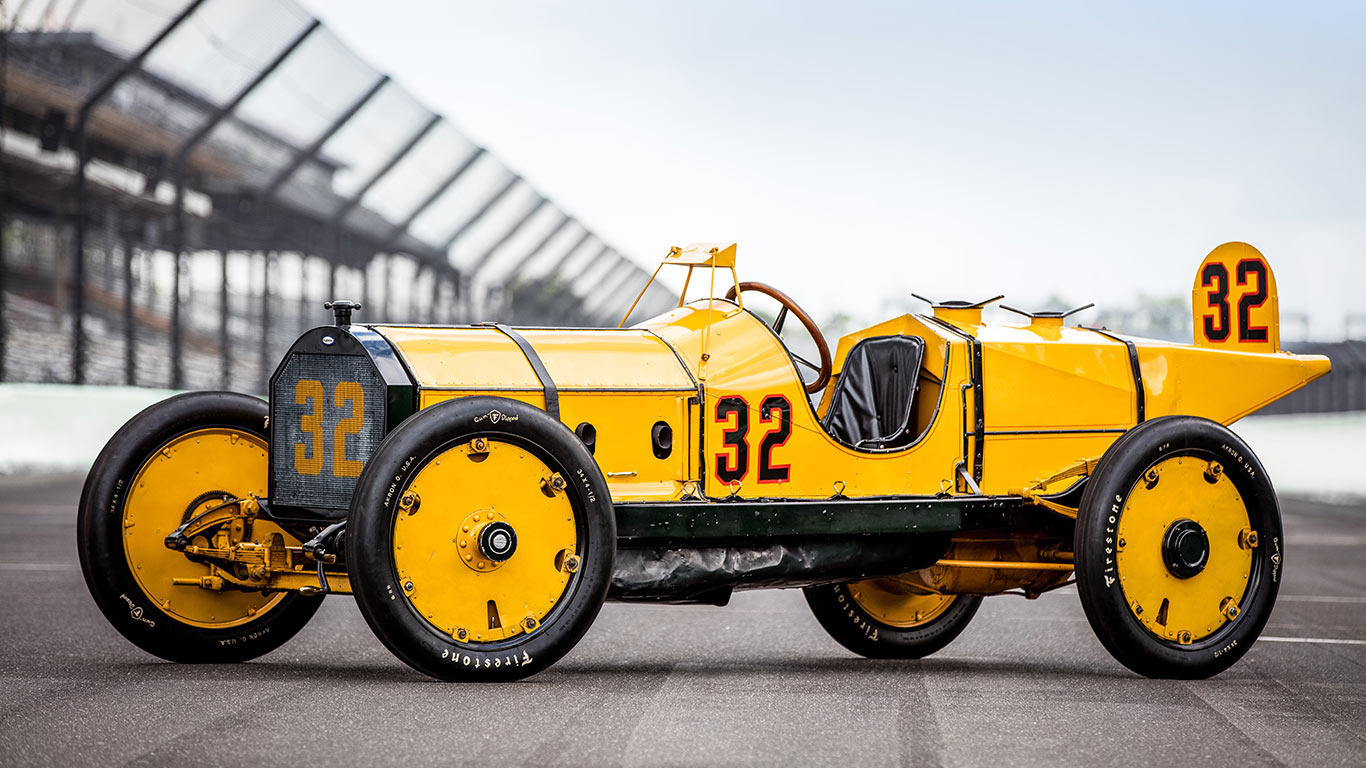


1911 Marmon Wasp

Winner of the first Indianapolis 500 in 1911, the Marmon Wasp driven by Ray Harroun averaged a speed of 74 mph with the whole race taking about 6 hours and 42 minutes. Aside from winning the first running of a great historic race it also features the first documented use of a rear-view mirror on a race car.


1907 Thomas Flyer 4-60
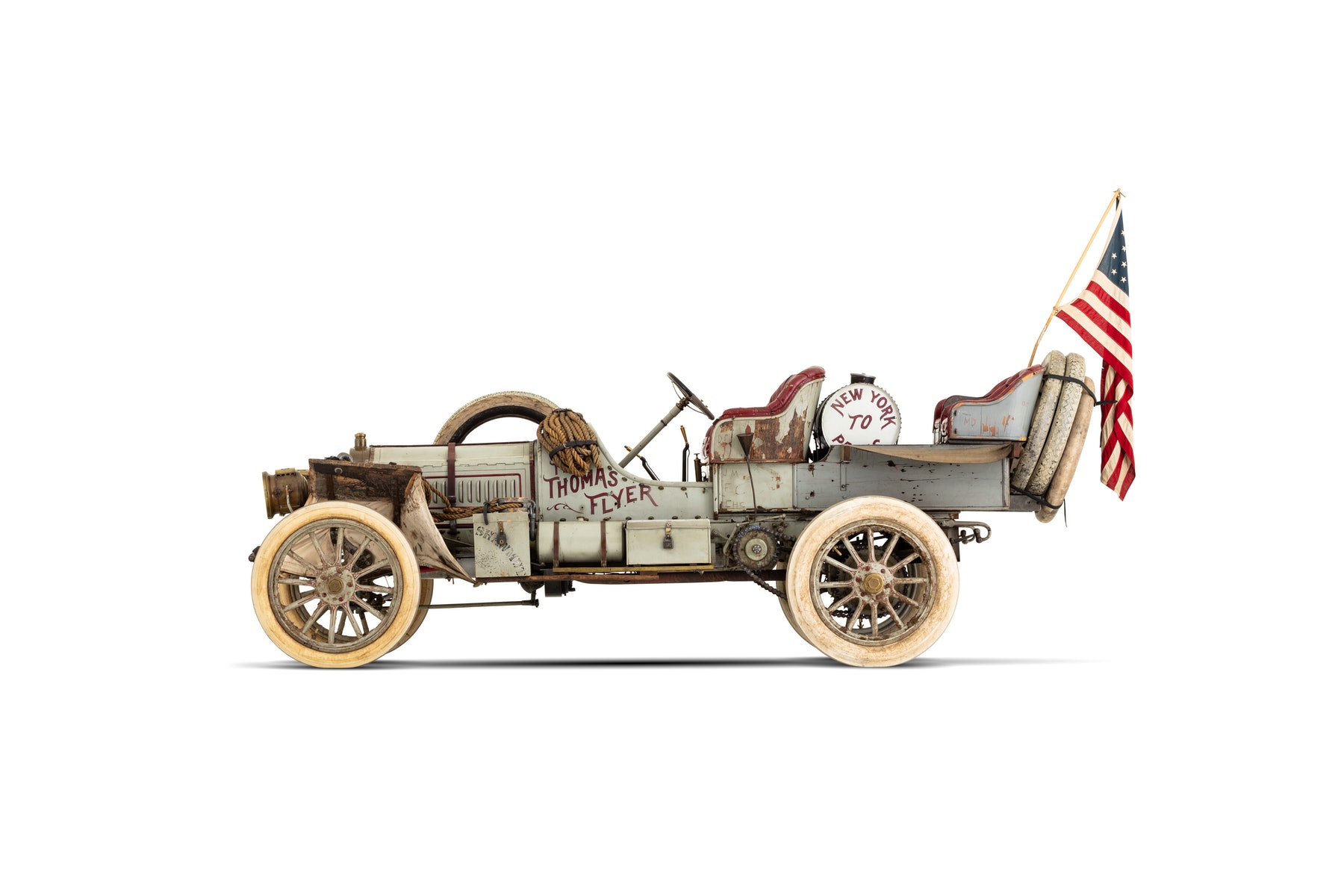
This Thomas Flyer won the 1908 New York to Paris Automobile Race. In traveling over 22,000 miles in 169 days, it is one of only three of the six competitors that completed the competition and was the only American car entered. Its margin of victory over the second place finisher was 26 days. The victory drew great attention to the early American automobile industry and world-wide recognition to America.


1920 Anderson Convertible Roadster
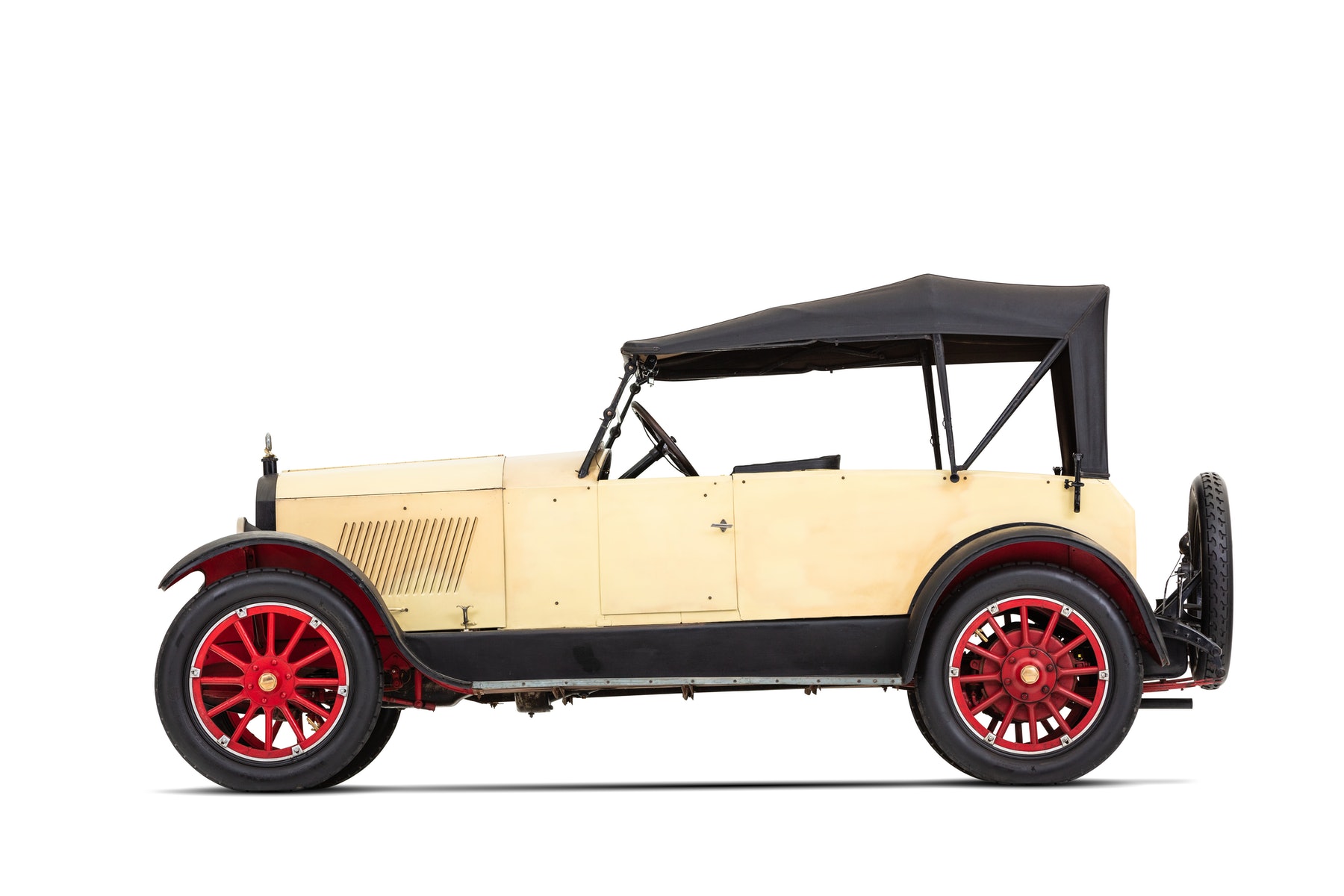
In the age of Detroit dominance in automobile manufacturing, Anderson stood out as a  manufacturers based in the South. Between 1916 and 1925 Anderson produced over 5,000 cars in Rock Hill, South Carolina with the aim of attracting local buyers.

With few examples of Anderson products existing today, this is believed to be the sole surviving example of the Convertible Roadster design. It’s patented design which allowed it to switch between two or five-seater configurations, along with its rarity, made it a prime candidate for register inclusion.


1938 Buick Y-Job
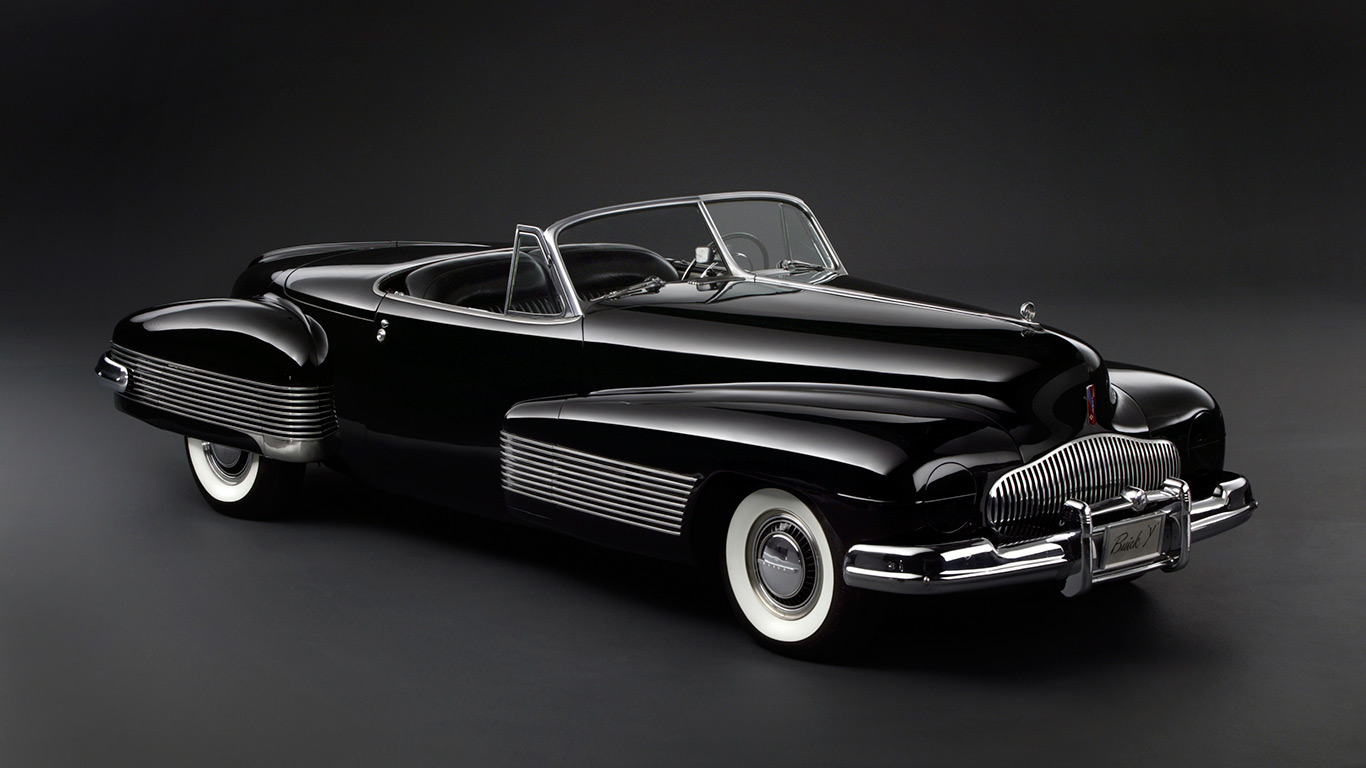
Until the Buick Y-Job, auto shows never featured concept cars. The Buick Y-Job was the first. Styled by the famous GM head of design Harley Earl, the Y-Job sought to create a design language for future Buicks.

Possessing power-operated hidden headlights, electric windows, and wrap around bumpers the Y-Job bristled with features, concepts and executions that would inspire automobile designers for years. It also paved the way for the legion of concept cars to come. A fully functional vehicle, it would be driven by Earl for many years.

1967 Chevrolet Camaro
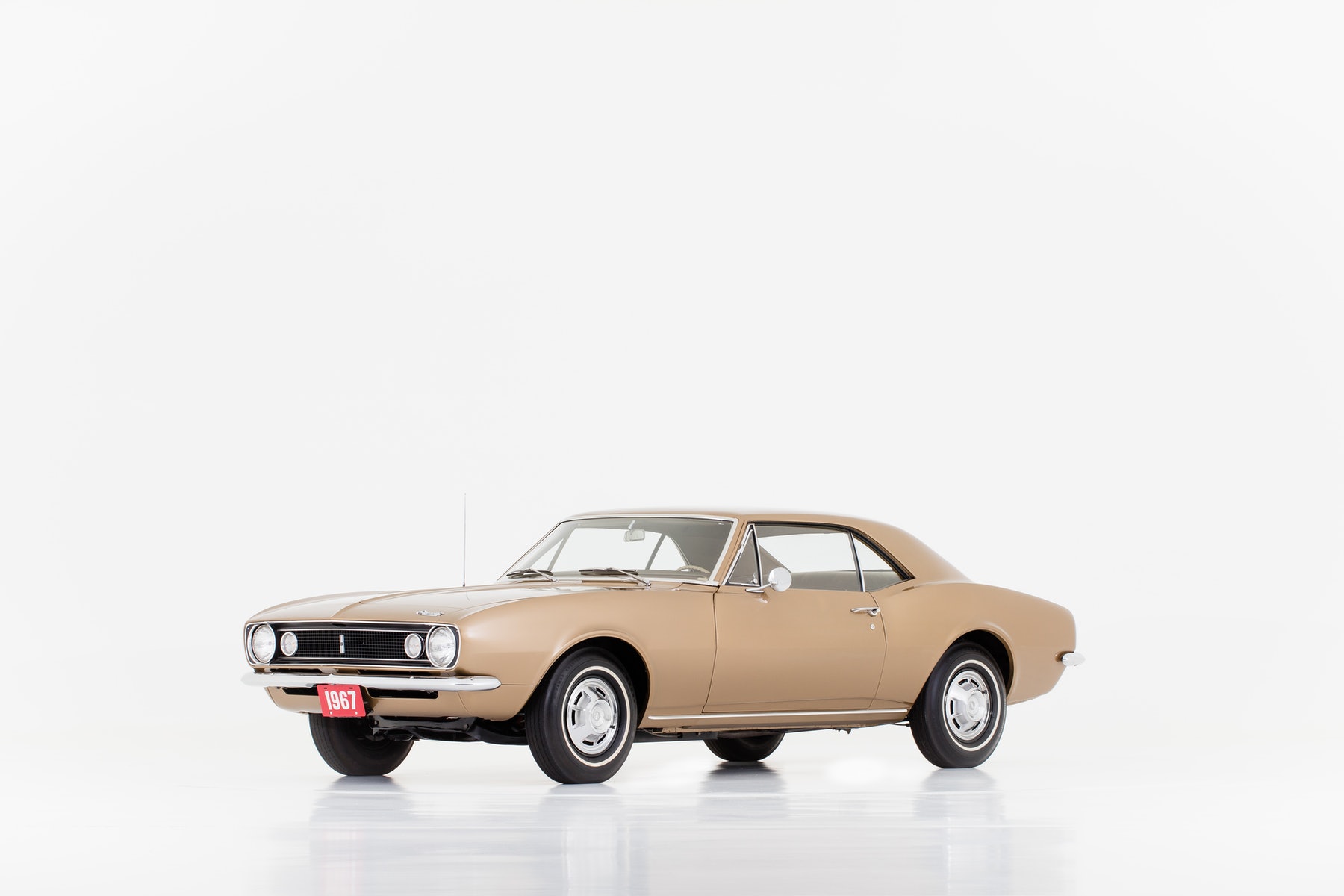
In responding to the dynamic success of the Ford Mustang, Chevrolet worked quietly on a response that in itself would significantly impact the pony car market. Released in August of 1966, the Camaro began a storied and highly successful career. After being left to deteriorate, this Camaro was identified as the very first model to be produced and subsequently enjoyed a total restoration returned it to its original condition.


1932 Ford Model V8
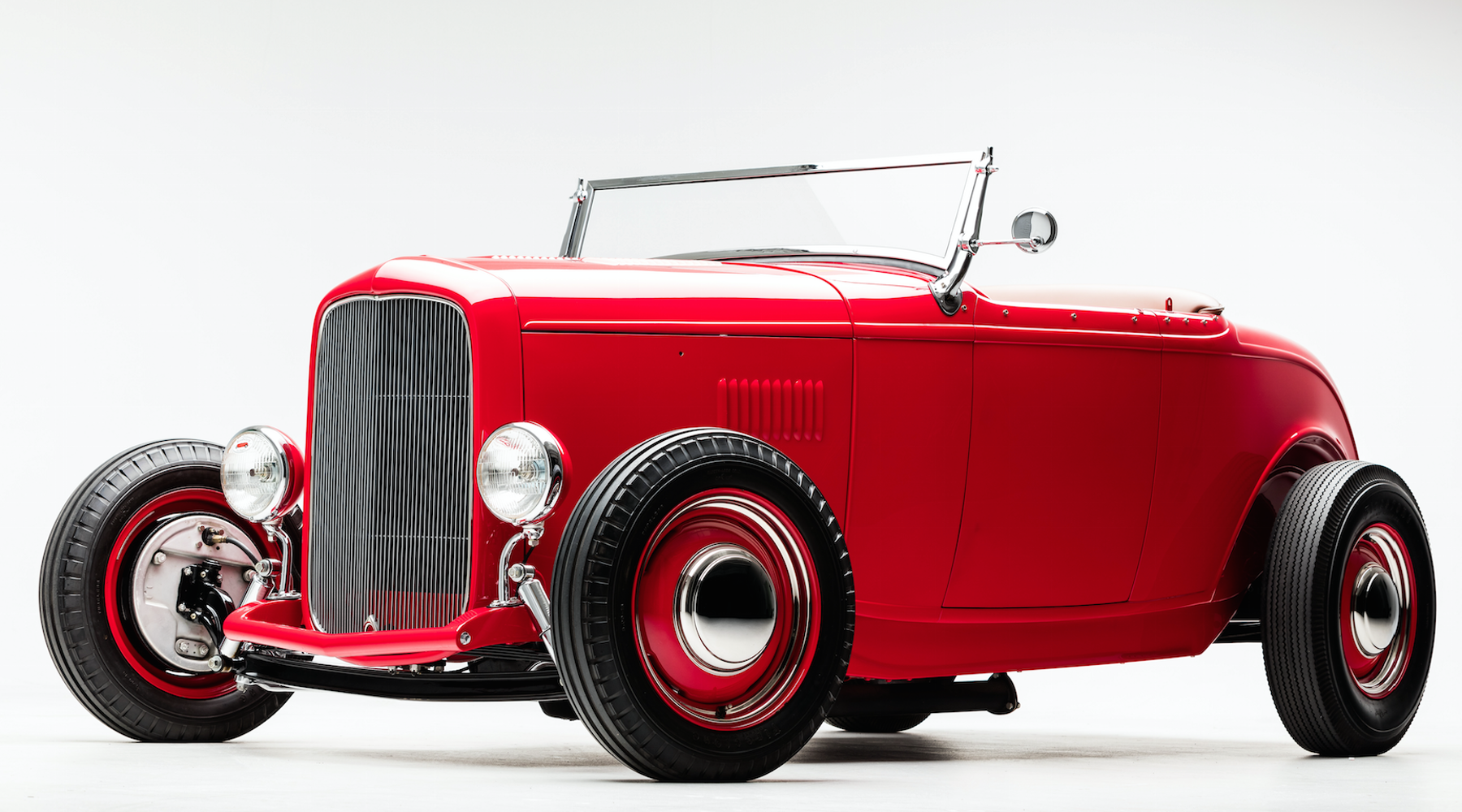
A landmark execution of that established the benchmark  for the hot rod as a stripped down V8-powered Ford roadster. The creation of Bob McGee who upon returning from serving in WWII returned to his first love, hot rodding. This definitive example of a trend setting concept took a 1932 Ford roadster and transformed it by cutting and shaving the bodywork, lowering the suspension, upgrading the engine, installing custom upholstery and treating it to a custom red paint job.


1951 Mercury
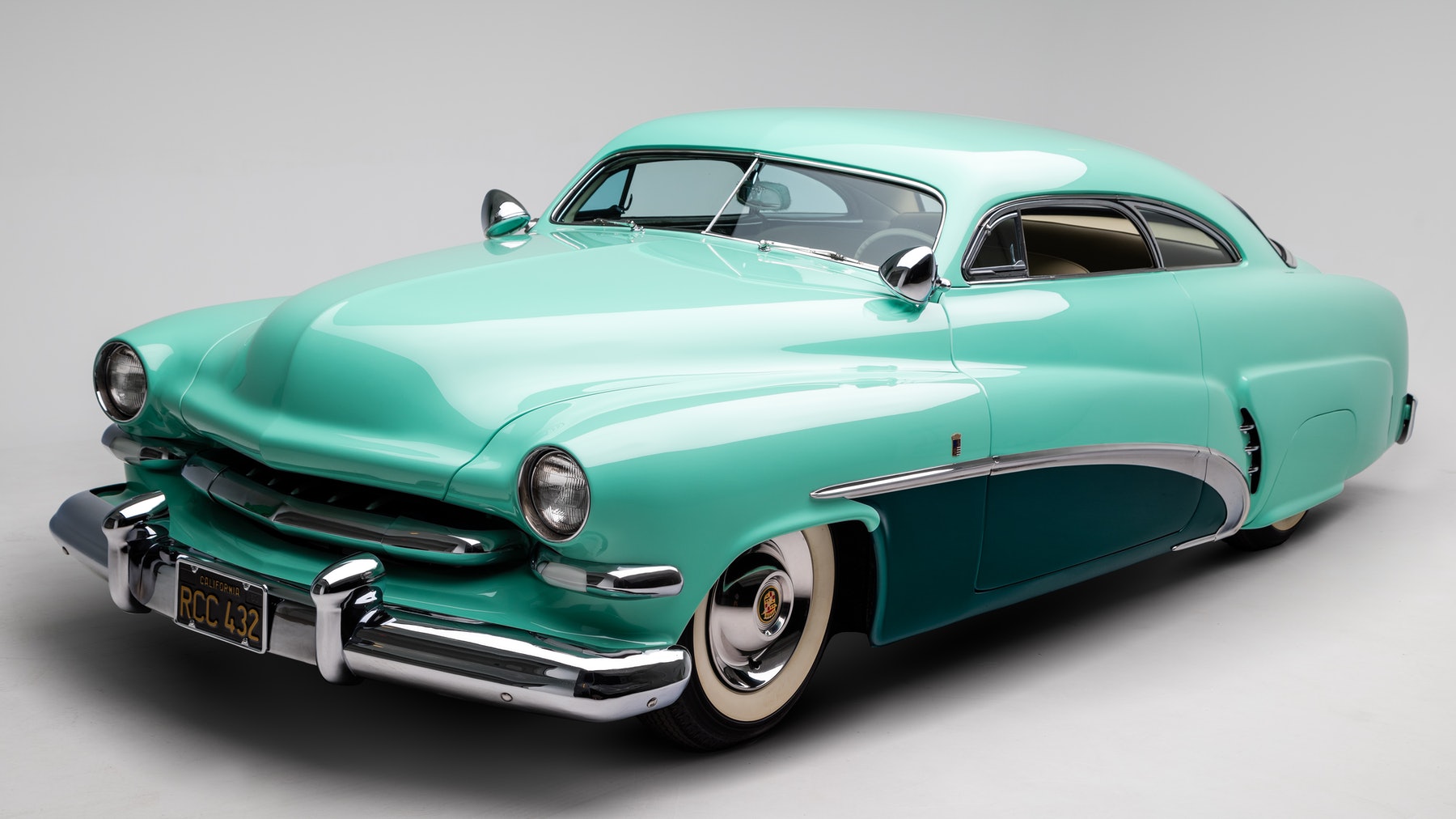
Masato Hirohata returned from the U.S. Navy in 1952 and let Barris Kustoms of Los Angeles loose to pursue their passion in what he wanted to be the world’s wildest custom Mercury Coupe. Chopped and dropped to the ground  with extraordinary and meticulously executed  design details and outrageous paint this coupe continues to wow people 70 years later. The Hirohata Merc won ‘best in class’ for custom Mercurys at the 2015 Pebble Beach Concours d’Elegance.


1964 Chevrolet Impala
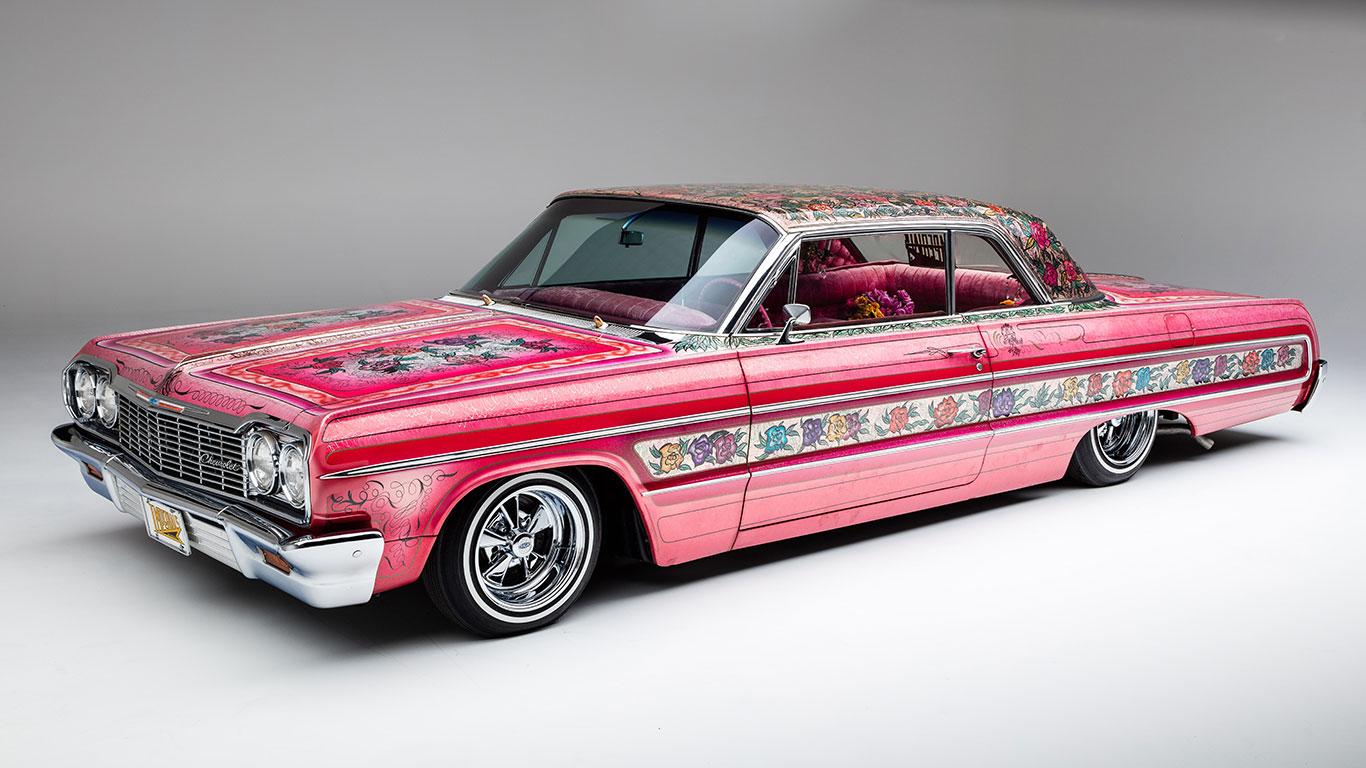
Capturing the creative vision of the late Jesse Valadez this 1964 Impala stands as the gold standard for the low rider community that originated in Los Angeles in the early 1970s. This example is the third of three cars built by Valadez and named Gypsy Rose. Over 20 gallons of clear lacquer cover the candy red and pink paintwork. Hundreds of rose details create a unique exterior. A crushed velvet interior, complete with cocktail bar and chandelier round out this one of a kind featured on just about every custom car magazine of its time.

1933 Graham 8 Sedan “Blue Streak”
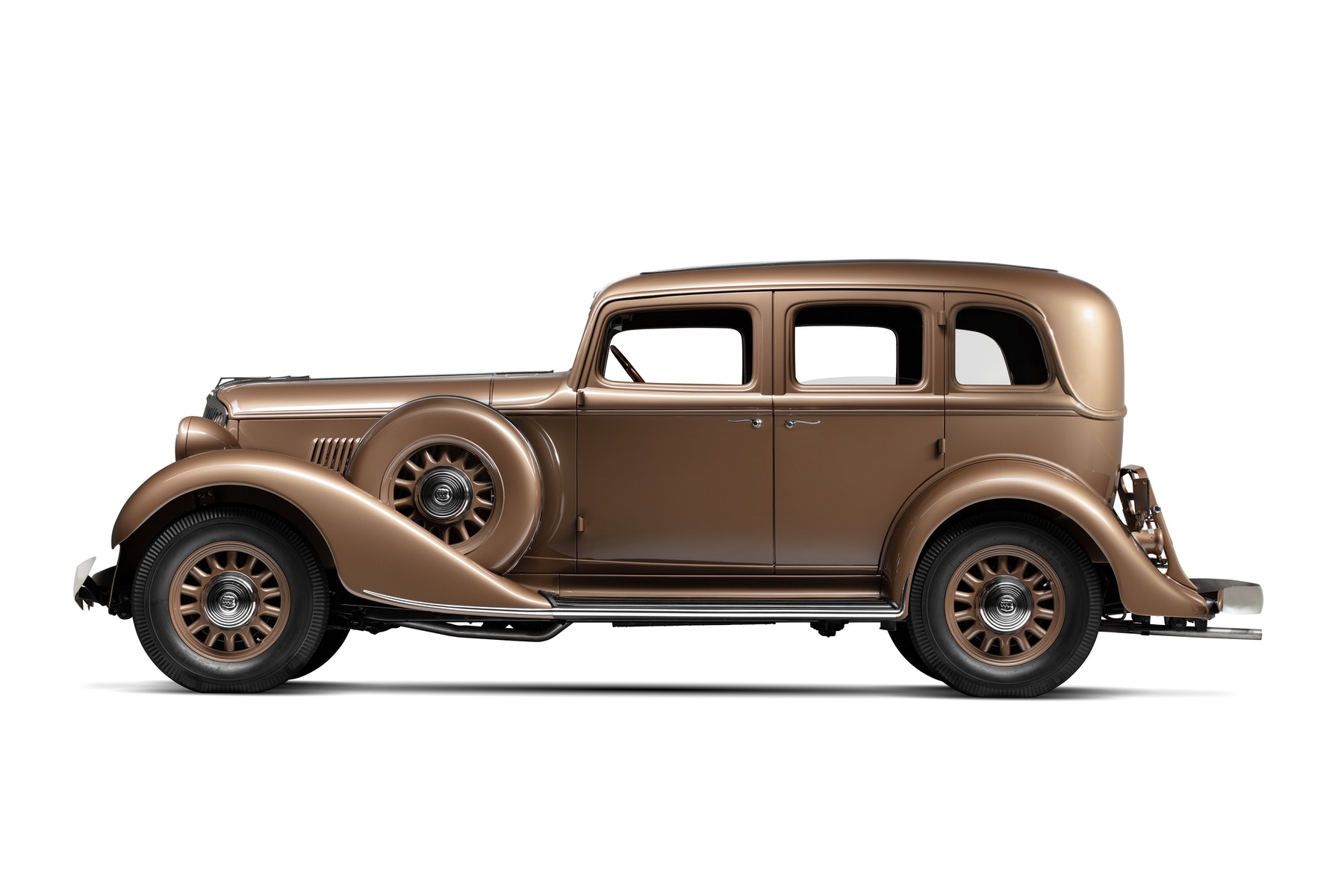
A significantly transformative design, the Graham Blue Streak ,released in 1932, incorporated streamlined styling featuring a laid-back grille, innovative chassis design, body-colored headlights, wrap around “skirted” fenders, pearlescent paint and a totally concealed frame. So obviously appealing, these design features were quickly adopted by other manufacturers. By 1933 Graham advertised the “Blue Streak” as the most imitated car on the road.


1896 Benton Harbor Motor Carriage

The Benton Harbor is significant as one of the oldest intact automobiles built in the United States. The Benton Harbor Motor Carriage or “motocycle” was designed and built by Albert and Lewis  Baushke of Benton Harbor, MI, owners of Baushke Carriage Works, and William O. Worth, an engine builder and inventor from Chicago, IL.


1968 Ford Mustang
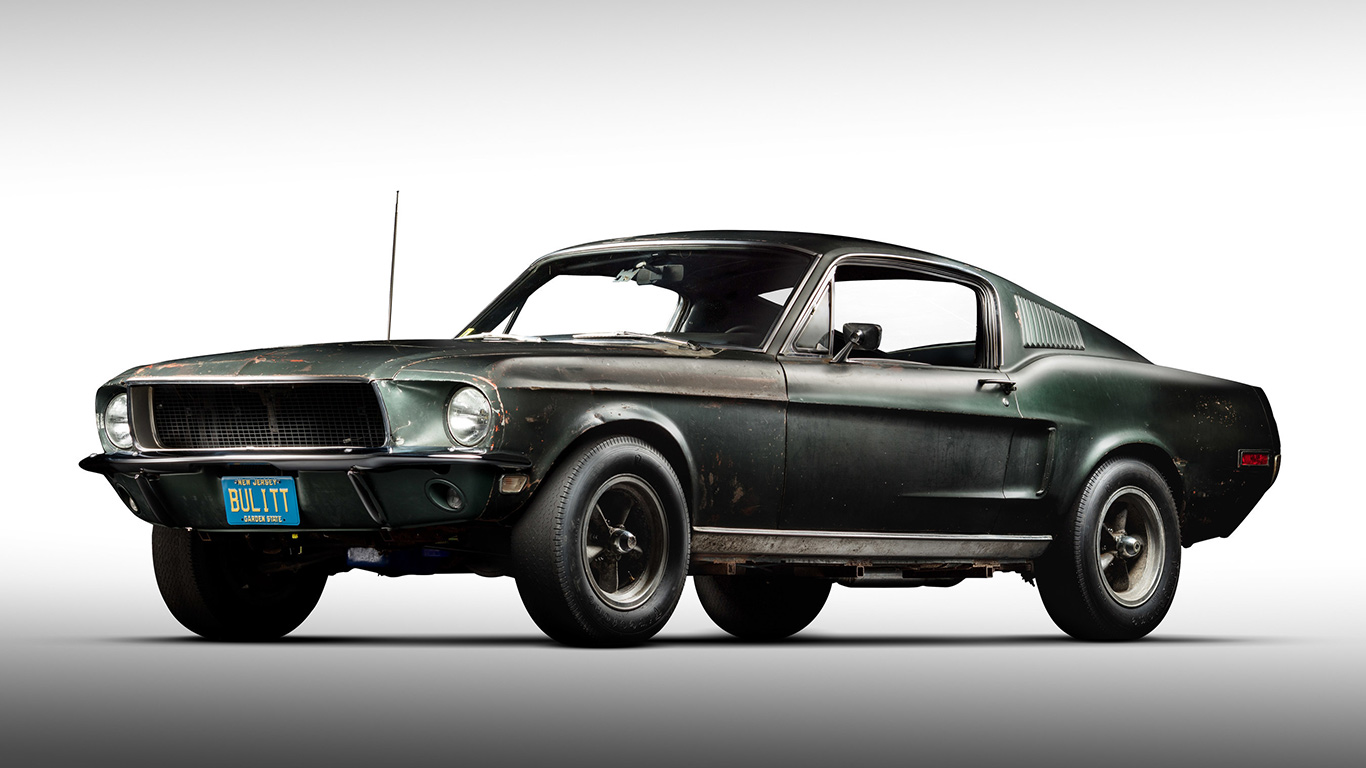
The long lost 1968 Mustang fastback driven by Steve McQueen in the movie Bullitt. What more needs to be said?


1985 Modena Spyder
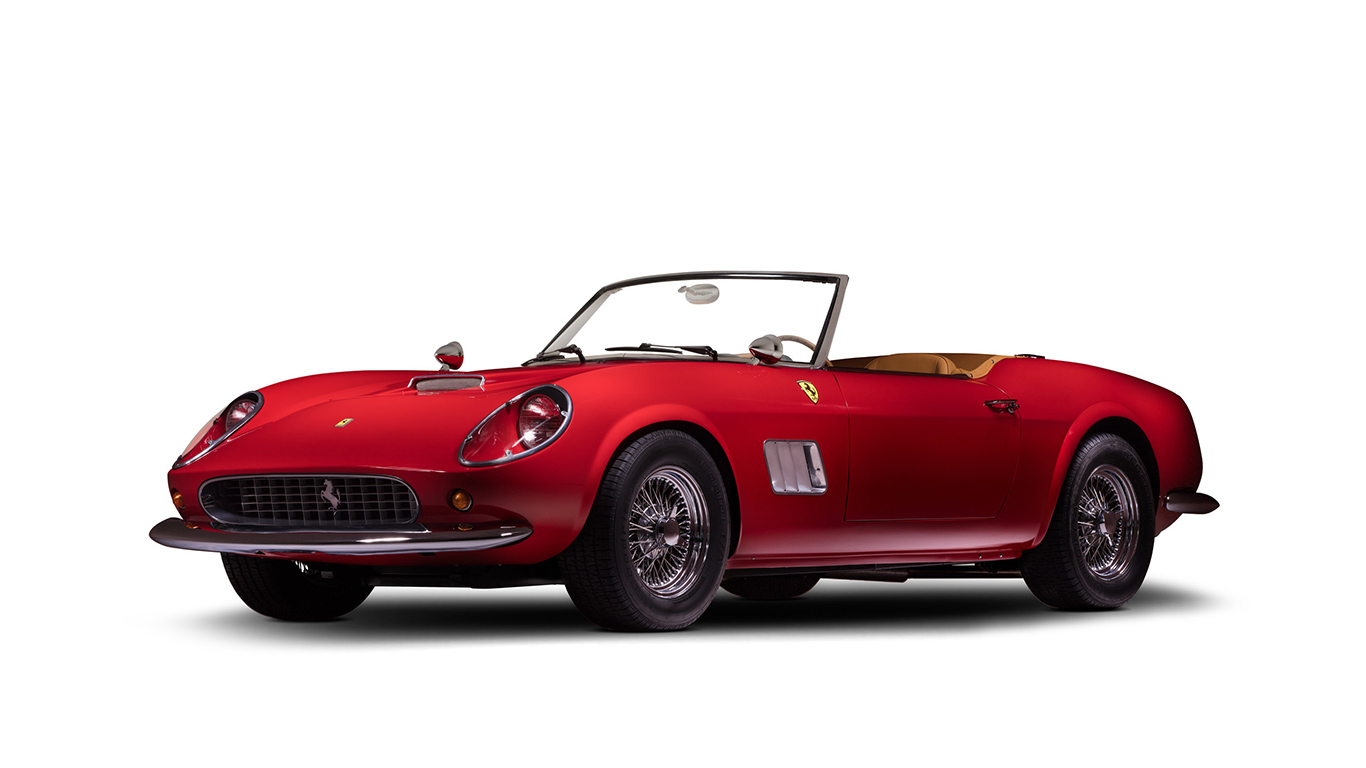
This Ferrari 250 GT California replica was made famous for its starring role in the 1986 film “ Ferris Bueler’s Day Off.” Like the Bullitt Mustang, what more needs to be said?


1927 Ford Model T
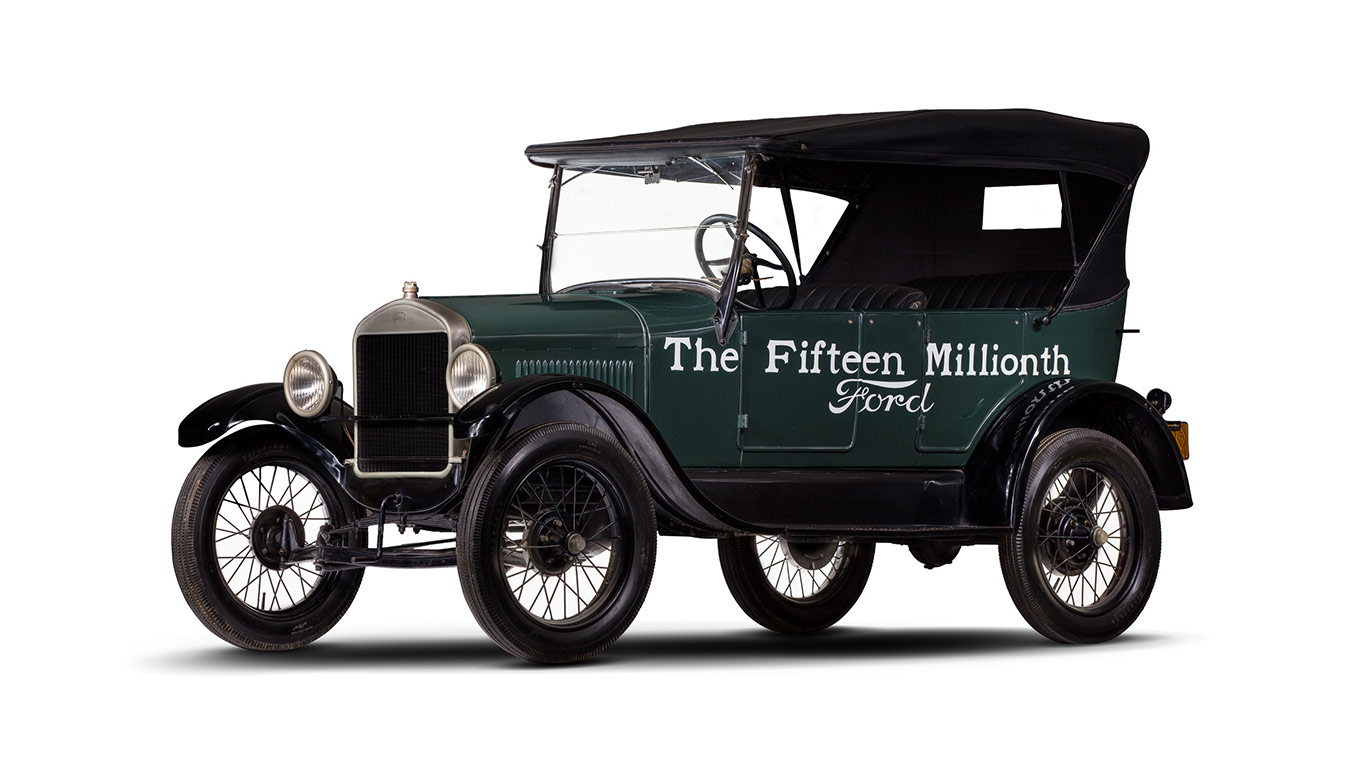
This is the fifteen-millionth and final Ford Model T to be produced, this car rolled off the revolutionary assembly line driven by Henry Ford himself in 1927.


1984 Plymouth Voyager
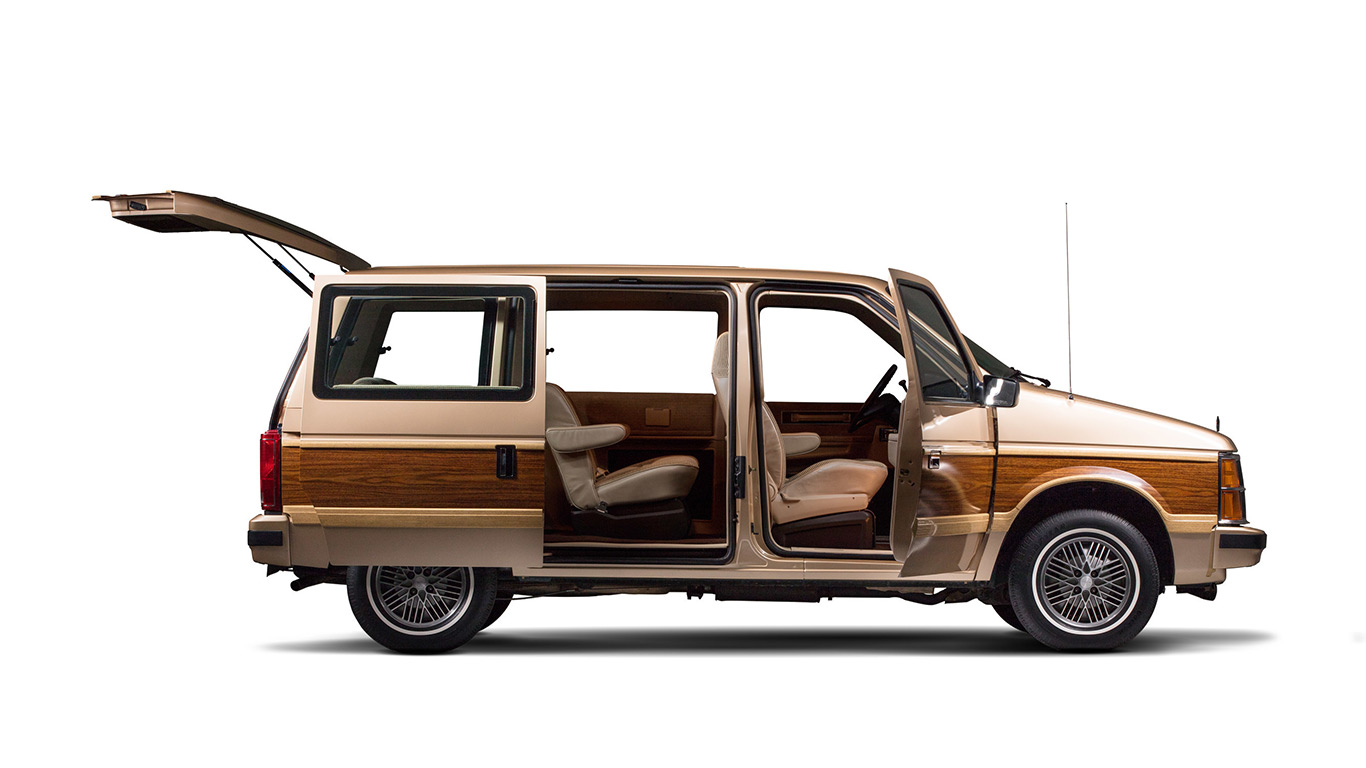
As the first car-derived minivan the Plymouth Voyager and its sister Dodge Caravan literally created a new class of automobile that transformed consumer tastes and the car business. American families no longer had to rely on giant station wagons for transport.

This particular Plymouth Voyager was the first to roll off the assembly line and was kept in its original condition by Chrysler Corporation.


1969 Chevrolet Corvette

In 1961, General Motors piggybacking on the popularity of astronauts worked with Jim Rathmann Chevrolet on a leasing program for the astronauts – lease a Chevrolet of any type (including Corvettes) for $1/year. Most astronauts preferred the Corvette.

By 1969 the third group of astronauts now with the Apollo program were landing on the moon. In 1968 the trio for Apollo 12 astronauts Alan Bean, Pete Conrad and Dick Gordon leased a matching trio of 1969 Corvette Coupes. Each was Riverside gold with custom black “wings.” By appearing on the cover of Life magazine, these became the most famous of the “astronaut” Corvettes.

1966 Volkswagen Transporter
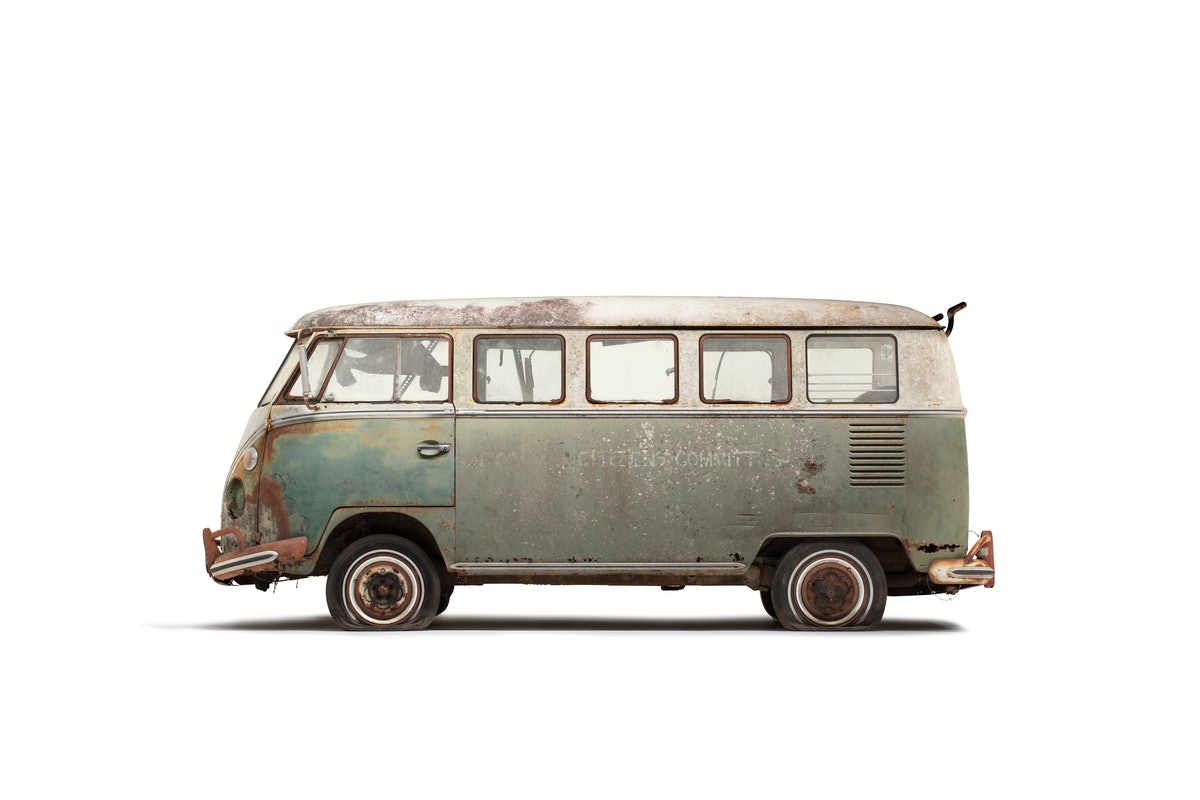
This VW Transporter was the property of civil rights pioneer Esau Jenkins and his wife Janie B. Jenkins in Charleston, South Carolina. Successful business owners and parents of 13 children, the Jenkins became leaders in their community. Throughout their lives, they strove to better the economic, cultural, and political situation of African Americans on Johns Island and the surrounding area.

In approximately 1967, Esau purchased this used 1966 Volkswagen microbus. It was utilized by the Jenkins as their primary means of transportation and to support their various initiatives where it became a fixture in the Charleston area.

1921 Duesenberg Straight Eight

Up until 1919 the Duesenberg brothers focused on engineering excellence and racing. At that point they decided to expand into production of passenger cars. In 1919 Samuel Northup Castle placed an order for a Duesenberg Straight Eight and, thus, was destined to  become the first owner of a Duesenberg passenger car when he took delivery of his Straight Eight in 1921. Technically advance far beyond its competitors, this is the first Duesenberg passenger car.


1970 Dodge Challenger

In 1969, 27-year-old, combat veteran, Purple Heart recipient and Detroit Police Officer, Godfrey Qualls special ordered this 1970 Hemi Challenger. Qualls pretty much checked all the options boxes and Special Edition (SE) packages including a 426 HEMI engine, “Super Track Pak” with four-speed manual transmission, shifted via a floor mounted Hurst pistol grip sending power to a Sure-Grip Dana 60 with 4.10 gears. Known as the “Black Ghost” because he would seemingly vanish for months after making a few runs on Woodward, Telegraph or Stecker St., Qualls was rarely bested in his street racing days.


1981 DeLorean DMC-12
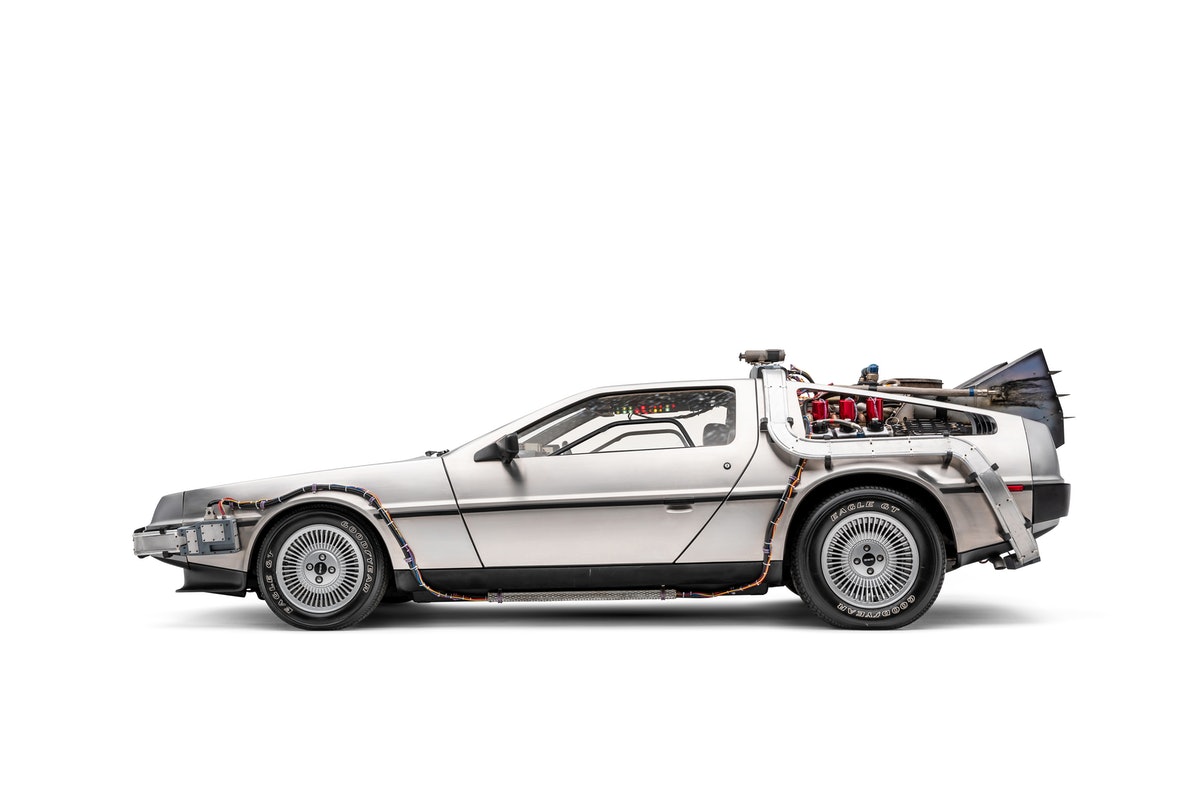
Doc Brown’s time machine in the 1985 hit film “Back to the Future.” Again what more needs to be said?


1979 Lamborghini Countach
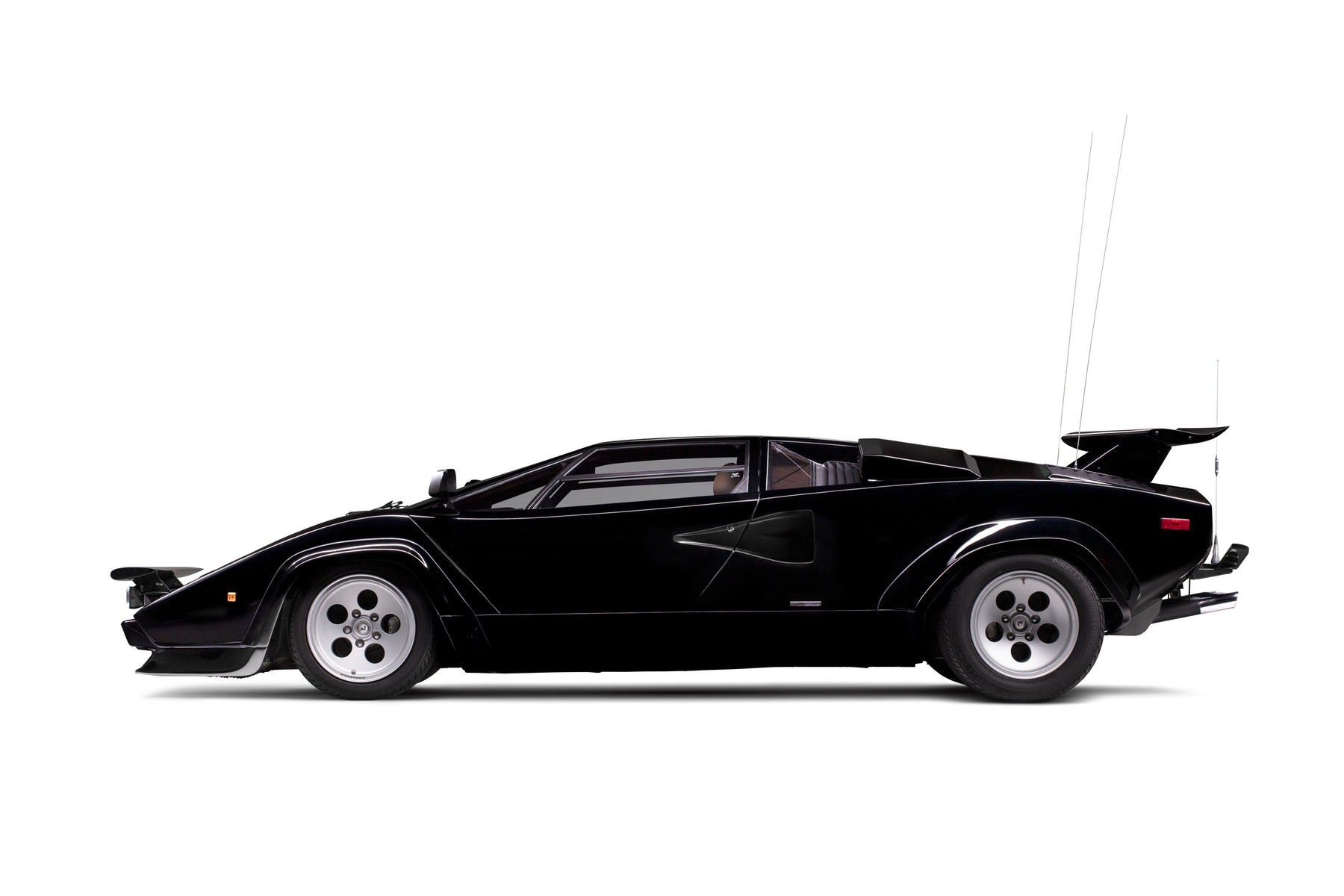
Poster art for just about every kid of that period, this 1979 Lamborghini Countach LP400 S, represents generations of car enthusiasts’ passion for speed and the open road. Introduced in 1971, the radical mid-engined exotic Countach fired the starting gun for the race to produce the ultimate super car just when, counter intuitively, economy and practicality were coming into vogue.

This particular Countach gained fame in the 1981 film “The Cannonball Run.”


1963 Chrysler Turbine Car

The Chrysler Turbine Car featured a turbine jet engine housed in a Ghia body and was the latest iteration in Chrysler’s decades-long attempt to bring a turbine-powered car to the market. Fifty of the 55 original cars wearing identical metallic bronze paint, black vinyl roof, and bronze interior—were distributed to households in the U.S. as part of a consumer research project. The results were promising, but the cost to mass produce the vehicles was not.


1952 Hudson Hornet
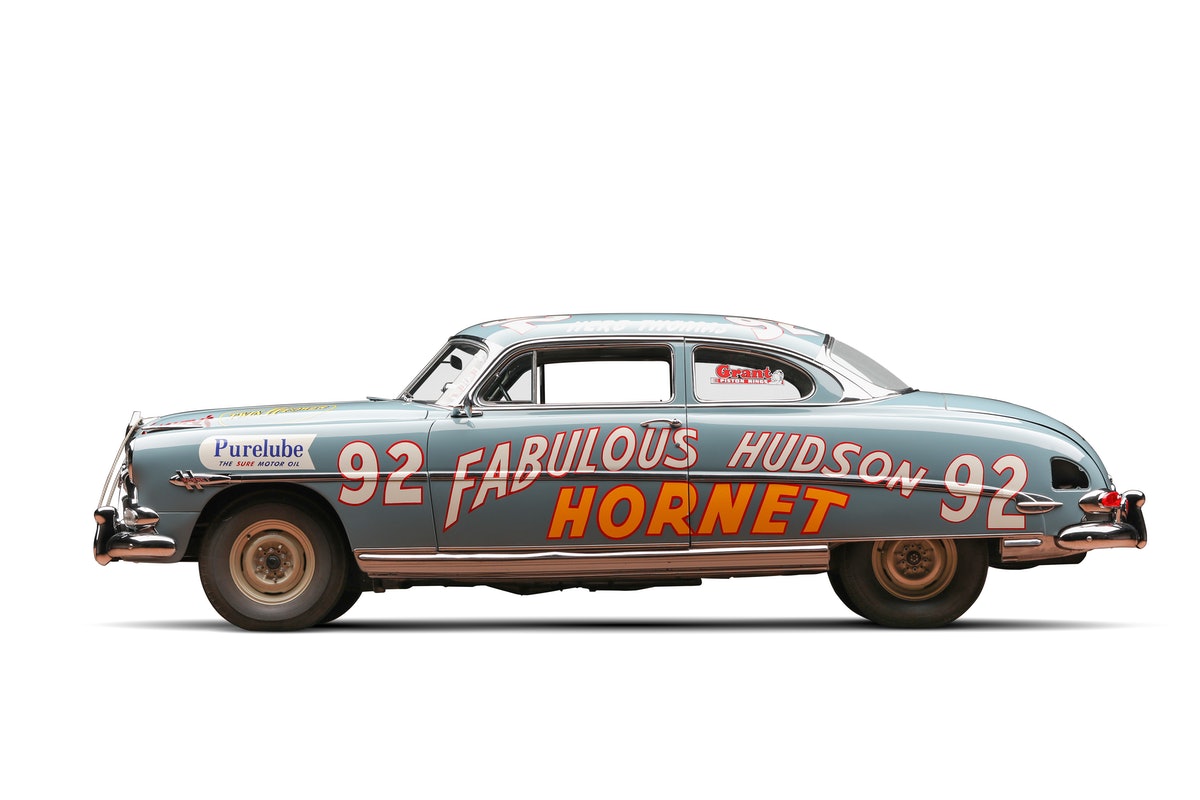
From 1951–55, Hudson dominated stock-car racing just as the sport was beginning to take off. This one, prepared by legendary mechanic Smokey Yunick went to the track in the 1952 season. This Hudson is the only NASCAR-raced Hornet known to exist.


If asked my opinion for vehicles worthy of inclusion in the NHVR my two additions would be:

1949 – 1954 Jaguar XK120
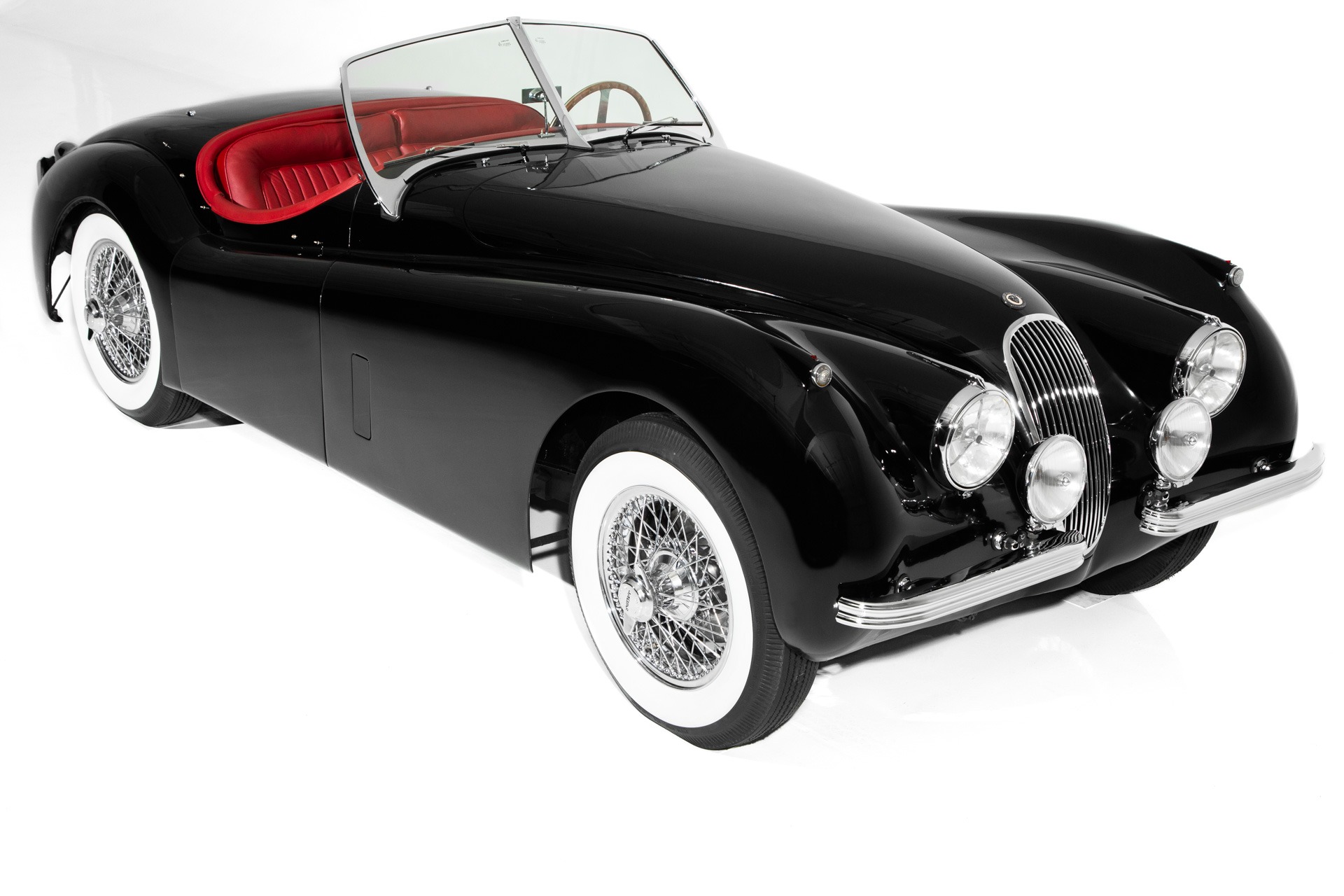
While the MG introduced sports cars to service men, It was the sexy and fast Jaguar XK120 that offered a beautiful car for a date on Saturday and a performance car that could be driven to the track where it could win on Sunday, all in one. Its beauty appealed to those with money and its affordable was very attractive to those who wanted to race.


1966 Volvo P1800
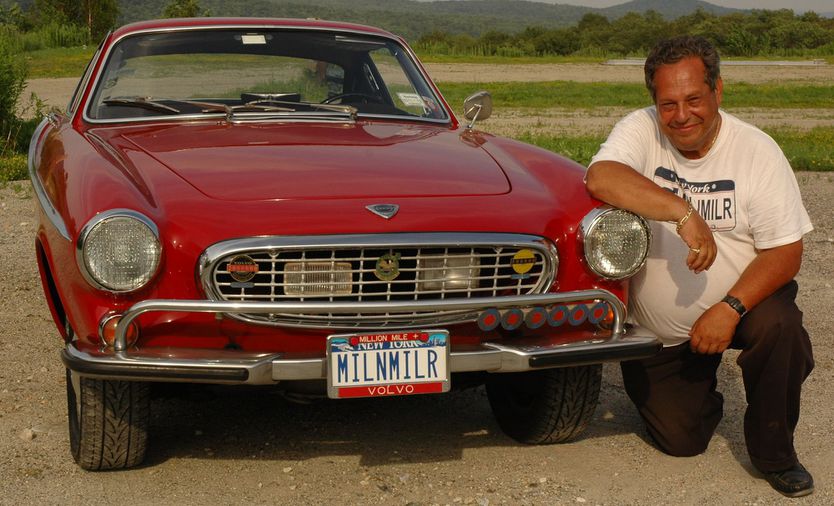
Irv Gordon’s 1966 Volvo P1800 that the Long Island School Teacher bought new covered well over an honest 3,000,000 miles with Irv at the wheel during a period of 52 years till he passed away in 2018. Irv and his P1800 was an advertising God send for Volvo and its story of Volvo durability was known around the world.
By |2022-06-09T15:06:02+00:00June 9th, 2022|6 Comments

Cars We Love & Who We Are #27

It just seemed too good to be true. The event, to be conducted at the NB Center for American Automotive Heritage in Allentown, PA in April of 2019 would pack three-days with a rich mix of high quality historic vehicle themed presentations, live activities and behind the wheel vintage vehicle driving events. Attendees would include curators from world renowned automotive museums, university professors focusing on historic preservation and keepers of the vintage automobile flame from around the globe. Objectives of the conference stood out as refreshingly simple, engage, teach, learn and have fun.

With the concept and execution polished over the prior two years this third year promised to bring to fruition the total experience organizers had envisioned. As a long time member of the Society of Automotive Historians I was eligible to attend. This third year would be special. However, just how special would be impossible to foresee.

The amazing Third (and final?) International Drive History Conference

Hagerty automotive heritage dream conference. Gone for good?

1910 Packard

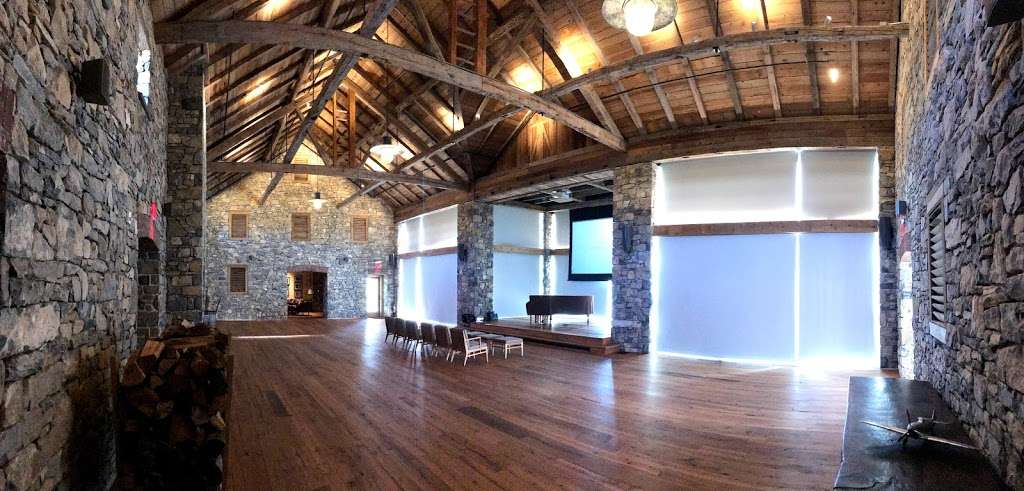
A buzz of excitement built as attendees from both sides of the Atlantic filed through the NB Welcome Center better known as The Lodge.  This handsome structure communicated a feeling of handcrafted rough hewn elegance. Constructed of stone and wood reclaimed from dismantled farm structures from the surrounding area, it embodied the preservationist character and philosophy that ran deep through the NB Center and in the heart of the host for this extraordinary gathering, Mr. Nikola Bulgari. Indeed, the NB in the NB Center’s name stands for Nikola Bulgari. He of the famous Bulgari Jewelry family.

The Lodge

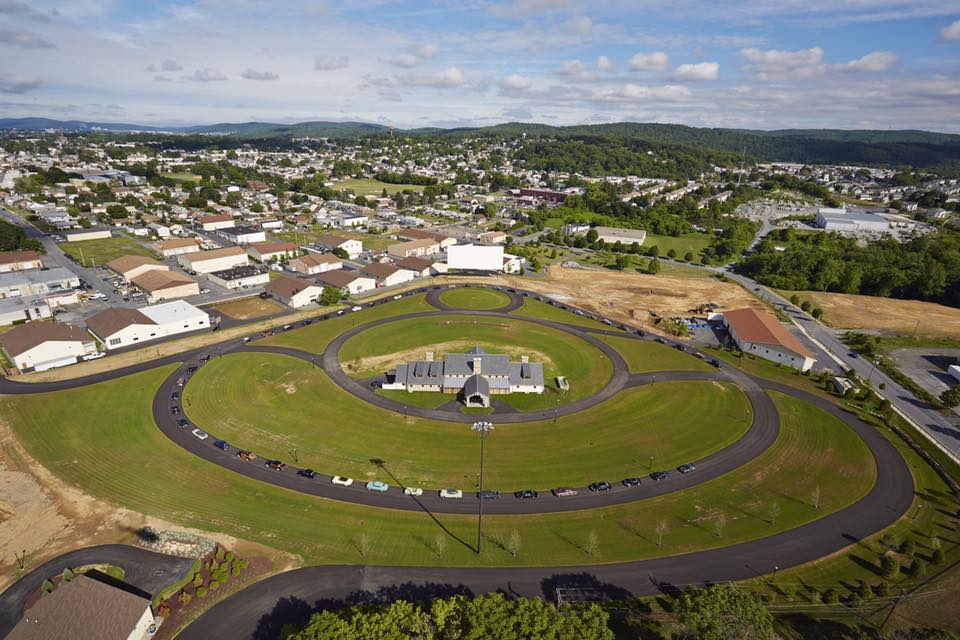
In 2017 Mr. Bulgari a passionate advocate for preservation of 20th century American automotive history, joined with the Hagerty supported Historic Vehicle Association, The Society of Automotive Historians and the College of Charleston to launch the International Drive History conference concept. For the conference site Mr. Bulgari generously provided the perfect home, his beautifully manicured 27-acre NB Center grounds. His facility included a dedicated track, fully restored drive-in theater and a campus that served as home to workshops capable of executing the highest level of restoration, fabrication and refurbishment. Only a few years back Mr. Bulgari had resurrected this property after it had languished for years as a trash strewn abandoned drive-in theater in Allentown, Pennsylvania. The story behind the NB center offers a wonderful tale of the magic that can be conjured at the intersection of serendipity, talent and passion. The International Conference concept, represents one of the many meaningful creations resulting from Mr. Bulgari’s preservationist vision. Mr. Bulgari’s vision extends to focusing the magnetic draw of the NB Center and his car collection as a powerful tool to promote fund raising events for worthy causes.

NB Center, 27 acres

Gathering for the welcome breakfast at the Historic Vehicle Association National Laboratory housed at the NB Center, attendees walked about among examples of the 24 (as 2019, more have been added since) culturally significant vehicles that had been recognized by their inclusion in the National Historic Vehicle Register. The Tucker Torpedo hand built prototype, Ferris Bueller’s faux Ferrari, the 1964 Shelby Cobra Daytona Coupe designed by Peter Brock, a 1918 Cadillac Type 57 (the only remaining passenger car that served in WWI in France), all represented the automotive history that the men and women in attendance work so hard to preserve and promote as fundamental to understanding the American automobile culture of the 20th Century. The wonderful story of the National Historic Vehicle Register will be featured in an upcoming Drivin’ News feature.

Mingling among the attendees making new acquaintances and rekindling old friendships strolled guest speakers Nicola Bulgari, Dr. Fred Simeone, Ed Welburn and McKeel Hagerty. A sample of presenters scheduled to speak on topics specific to vintage automobile history and preservation included senior representatives of The Henry Ford Museum, GM Design Center, Hemmings Motor News, National Corvette Museum, Indianapolis Motor speedway Museum, The Studebaker National Museum and professors from 10 colleges and universities including Stanford and Bucknell. An extraordinary wealth of knowledge all sharing a preservationist mindset filled the room. And then the fun began as attendees walked out into a sunny and brisk April morning.

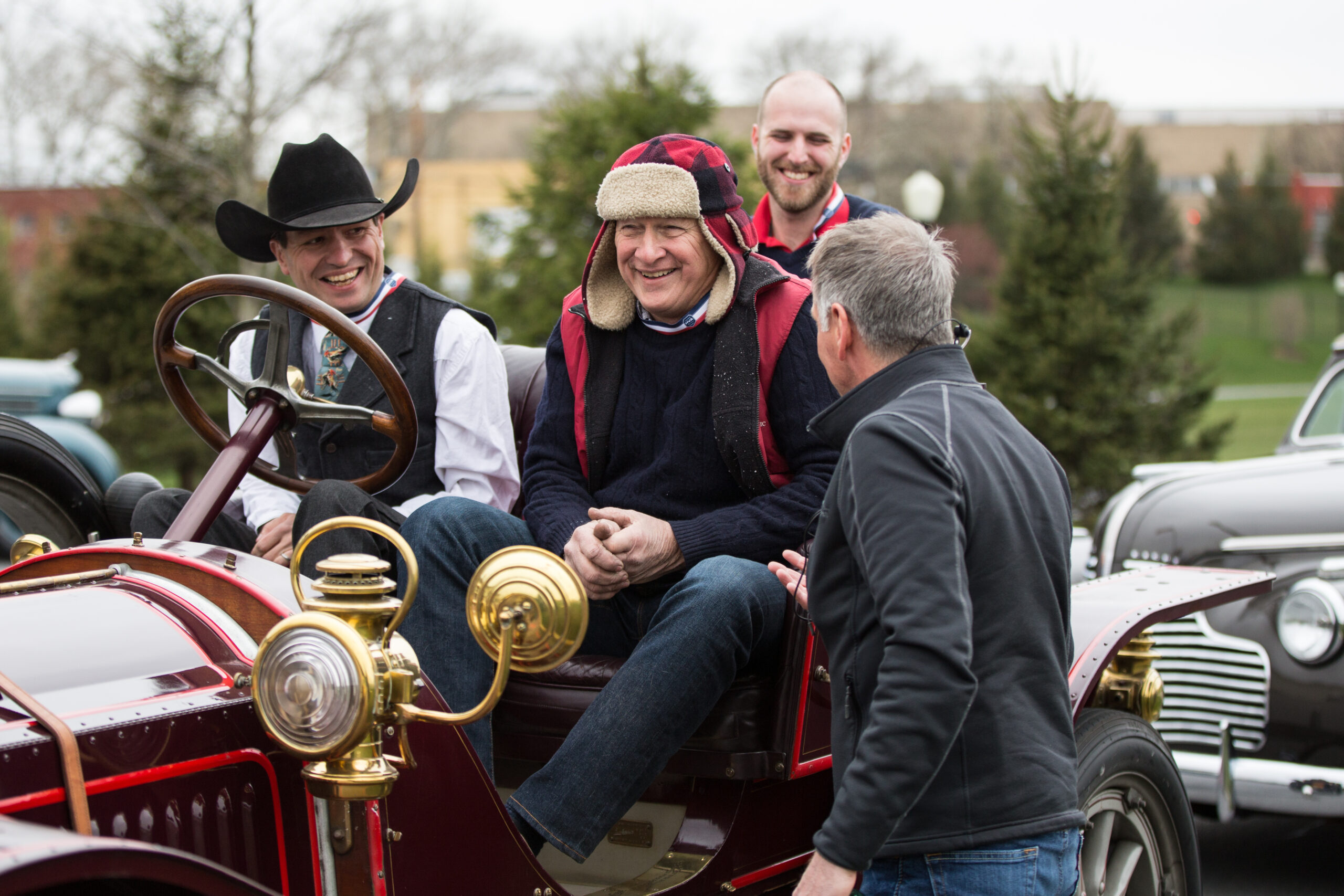
Stephen Babinsky and 1910 Packard

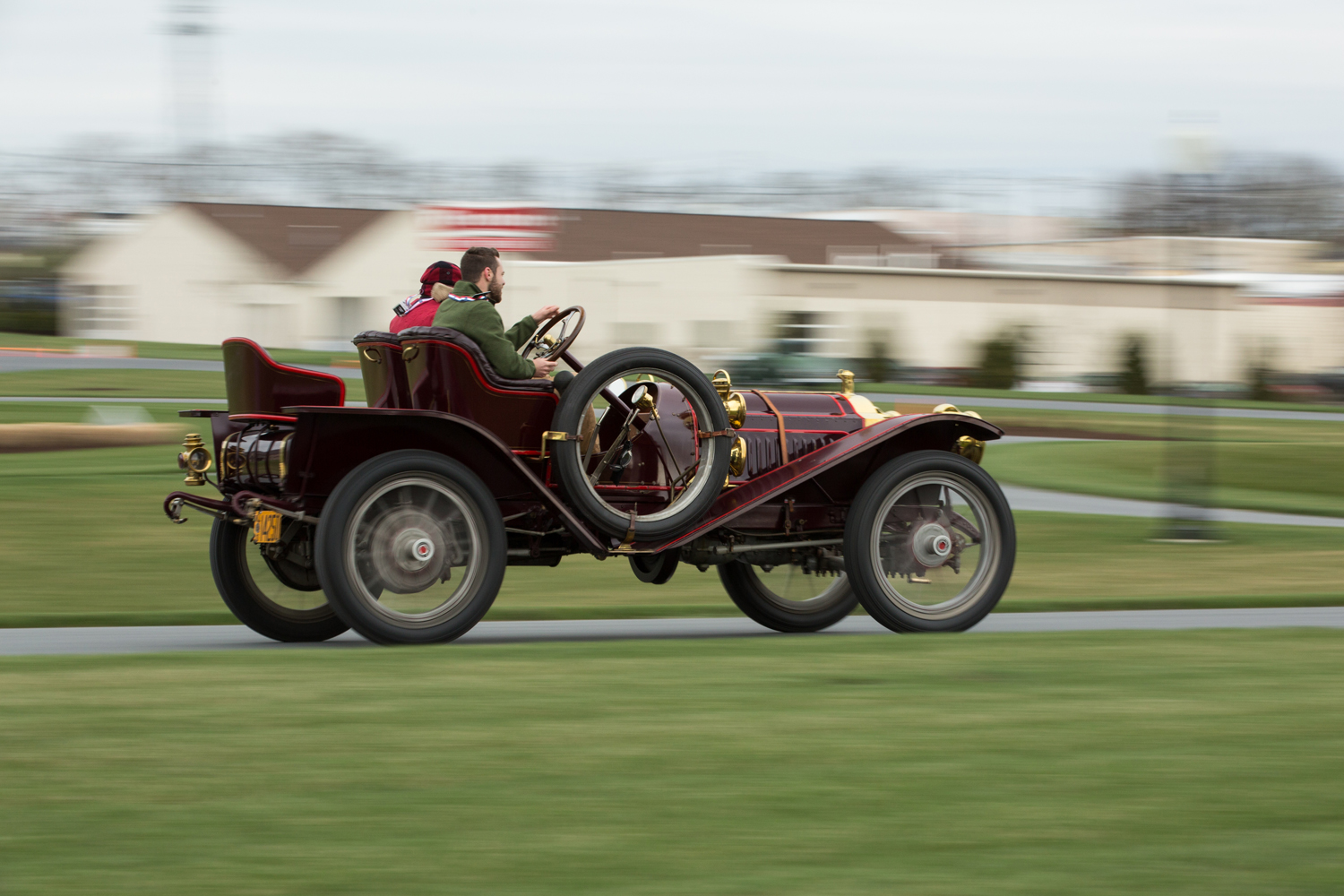
There, cars from the 20th century dating from the early teens through the 1960s stood idling by the NB center’s driving track poised to begin the day for conference attendees in a most extraordinary way. Here, participants would have the opportunity to drive these beautifully restored time machines primarily sourced from the Bulgari Collection.While Mr. Bulgari is known to save his greatest fondness for Buicks, an affection that dates back to his childhood in post-WWII Italy, he has preserved a broad spectrum of 20th century American makes and models.

Mr. Bulgari cheering on happy drivers

In 2019 Bulgari’s Allentown Collection numbered around 150 vehicles, predominantly American cars from the 30s, 40s and 50s. Very possibly the most astounding aspect of his collection resides in the nature of the vehicles upon which he has bestowed his loving stewardship. His interest does not focus on the Olympian cars of the past such as Duesenbergs, Packards, Cadillacs and others favored by the wealthy. He knows they have their patrons and will be preserved. Mr. Bulgari has trained his attention on the everyday vehicles that populated the general public’s experience during their mid-20th century lives. He believes that preserving these once, but no longer, common place and affordable cars from yesteryear serves a critical role in understanding the profound

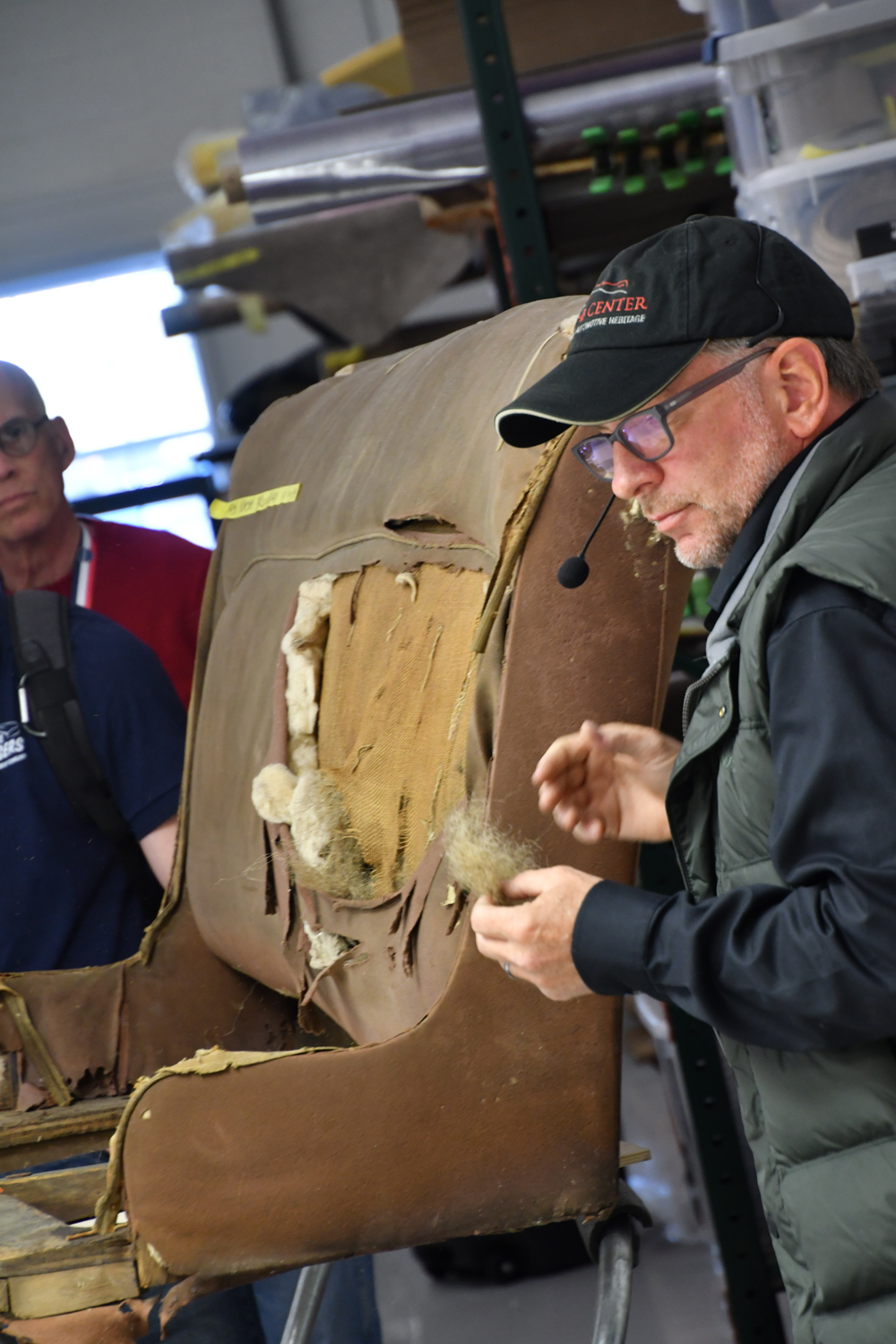
Keith Flickinger in upholstery shop

impact of the common place automobile on everyday American life of the period.

Stunning proof of Mr. Bulgari’s deep conviction to preserve these once common and now rare vehicles in their original condition evidences itself in the comprehensive restoration complex located at the NB Center. Every detail benefits from the highest quality restoration. For example, a 1940 Hudson with a value of roughly $40,000 for the best one in the world could receive a $200,000 restoration. This might entail finding a manufacturer somewhere in the world that could accurately replicate the original cloth covering the door panels. At the NB Center’s restoration campus money does not halt the pursuit of originality.

Fidelity to the original construction reigns supreme. As an example, the wood and joints in the roof of a 1934 Nash Brougham under restoration has to be a perfect match to the original even though, once covered by the headliner, the structure will never be seen.

Once restored, Bulgari’s cars benefit from constant monitoring, maintenance and track time. After being driven every car enjoys a thorough inspection. Periodically every engine has its oil subjected to testing for contaminants that would indicate unacceptable engine wear.

1917 Pierce-Arrow

It should be mentioned that the whole restoration operation benefits from the brilliant and personal oversight of two brothers, Keith and Kris Flickinger. Starting with Keith in 1995 both have earned Mr. Bulgari’s complete and total confidence. Both brothers possess the full spectrum of technical skills to carry out superior restorations and an easy communication style allowing them to educate visitors in a clear and entertaining fashion as to exactly what they and their roughly dozen elite craftsman do.

On this brisk April morning an array of meticulously restored vehicles awaited eager drivers lined up for pretty much a once in a lifetime opportunity. From a 1910 Packard Runabout, a

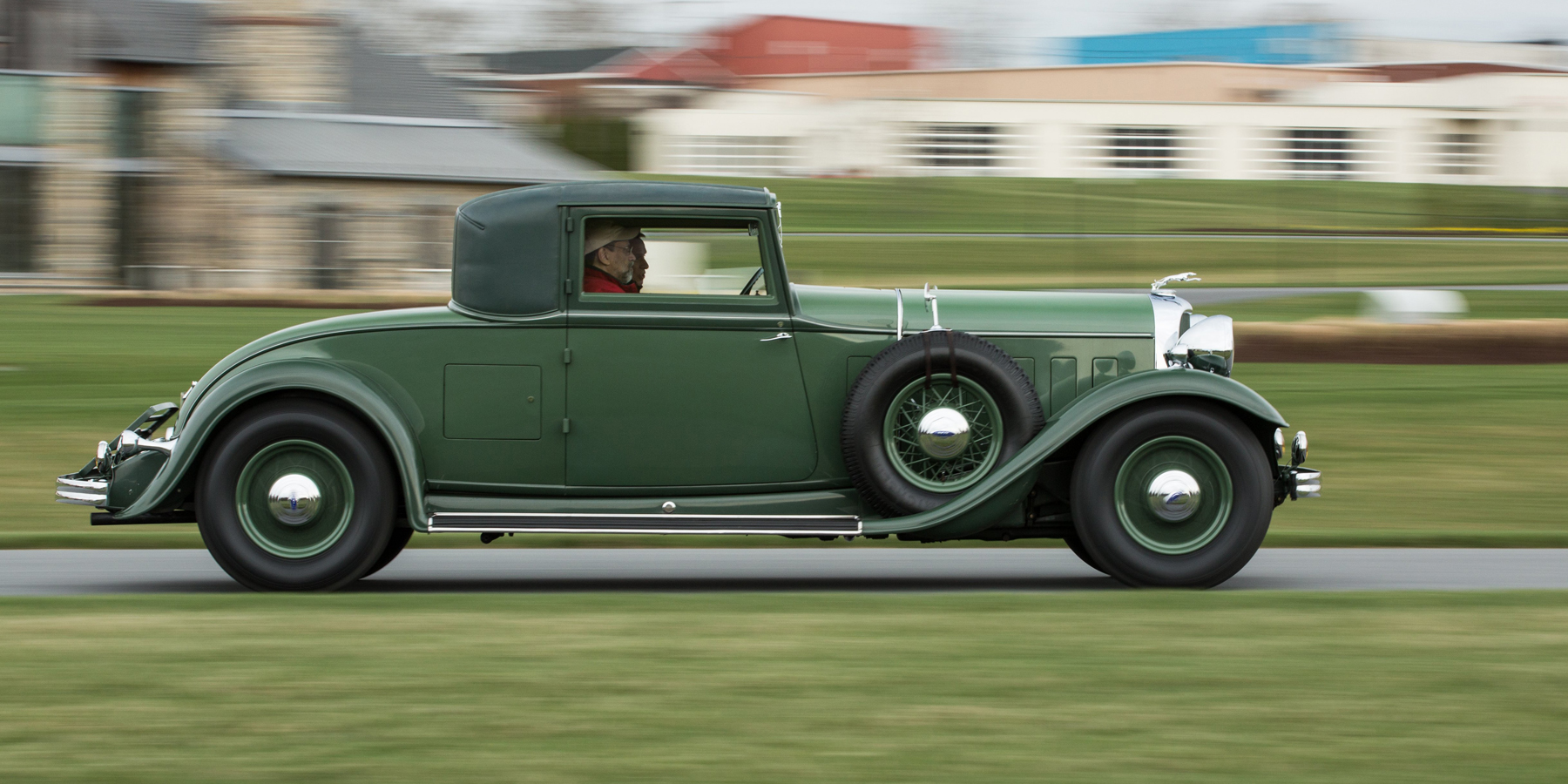
1929 Lincoln

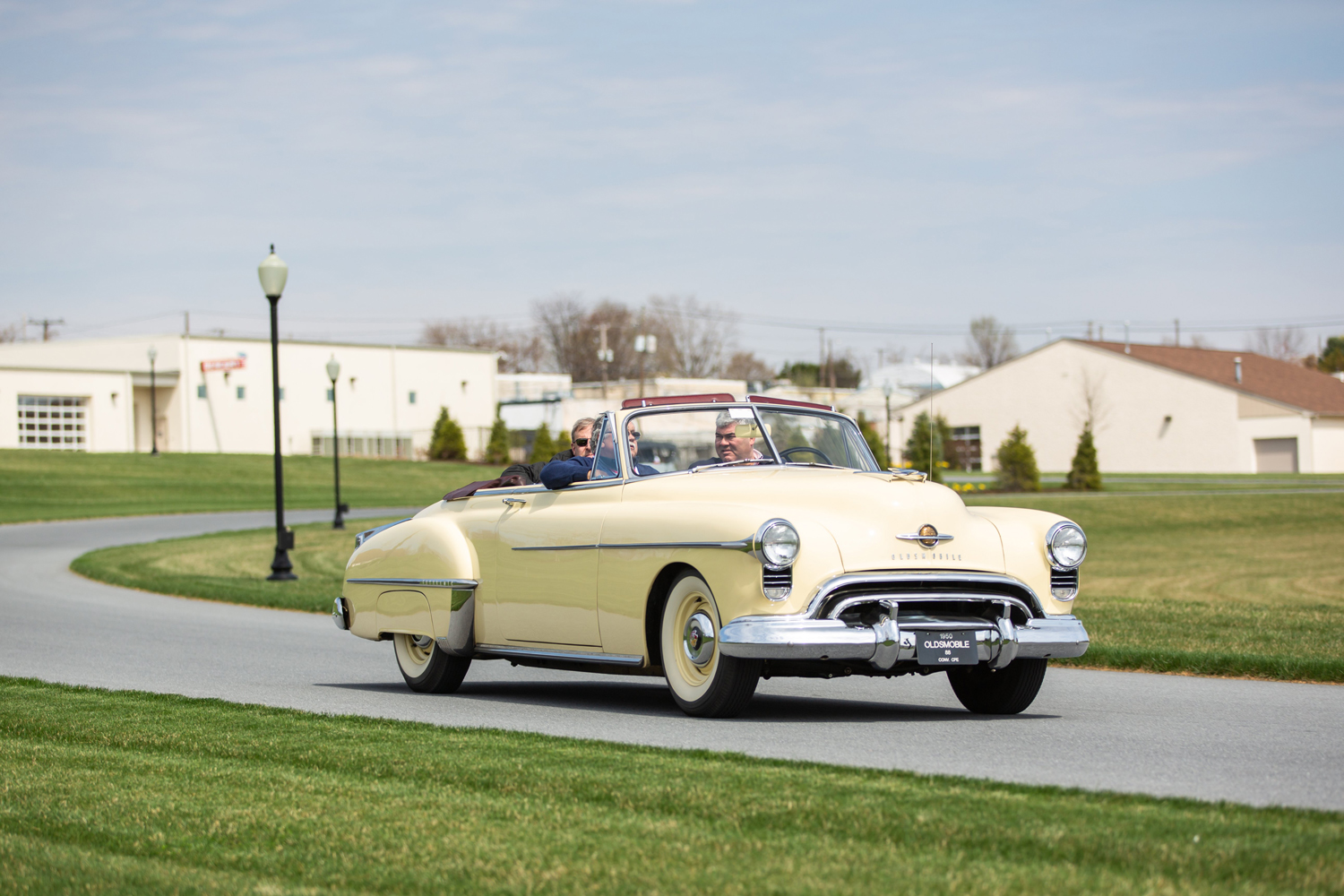
1917 Pierce-Arrow, through a 1930 Lincoln, a 1936 Plymouth, a 1940 Buick convertible up through a 1950 Oldsmobile convertible and many others provided a visual banquet and a rolling and deliciously interactive automobile history lesson on the first half of the 20th century.

Leaving the driving experience behind, participants enjoyed strolling through the pristine Collection Buildings holding the immaculate vehicles comprising the Bulgari Collection. Over the next two days an information rich menu of presentations were offered on two parallel tracks from which participants could choose to tailor the conference offerings to their personal interests. Track one focused on Preservation and Conservation. Track two featured subjects specific to Documentation and Interpretation.

A sampling of topics included:

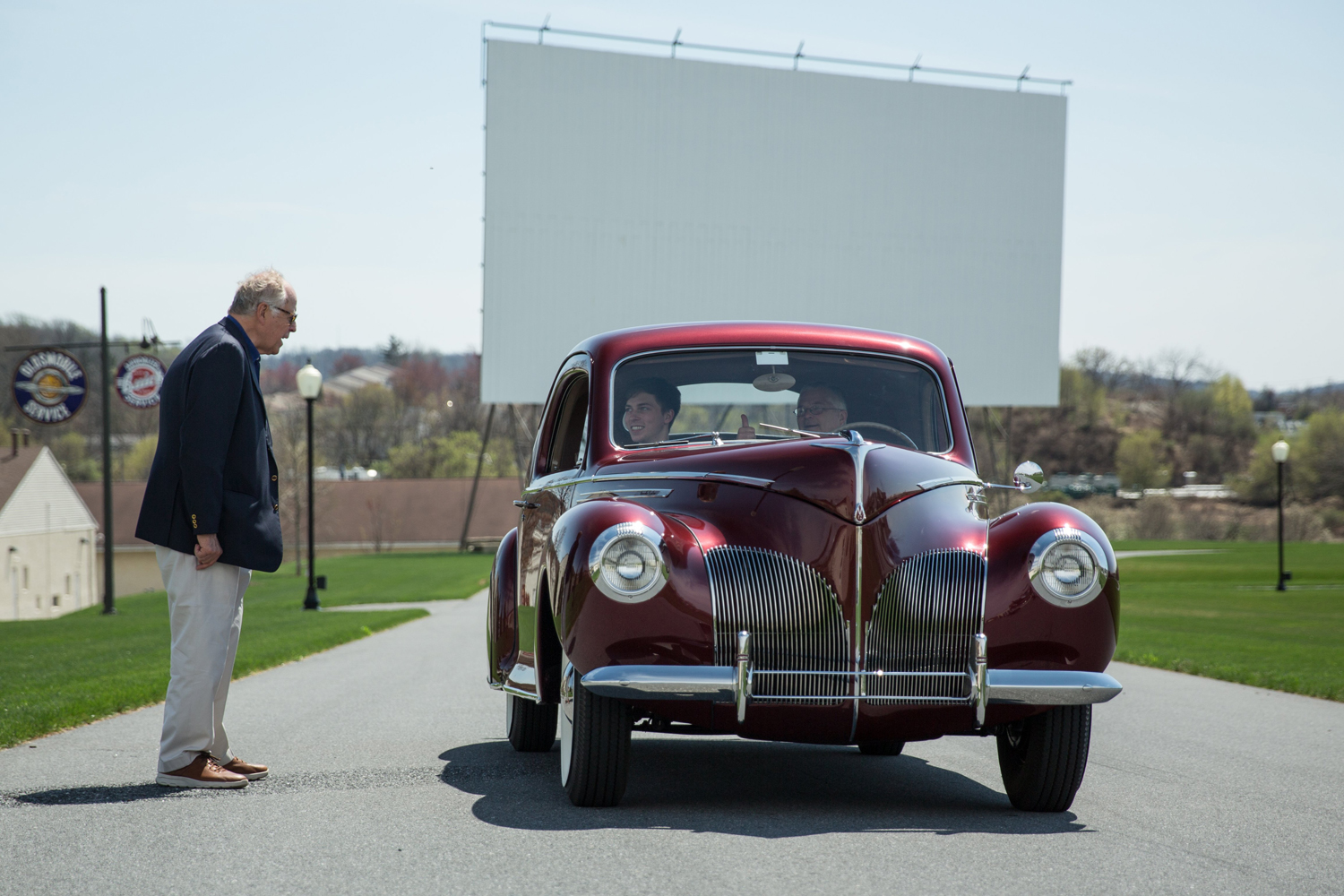
1950 Oldsmobile

  • A round table discussion on Design, engineering and Performance with Mr. Bulgari, Dr. Fred Simeone founder of the Simeone Museum and Ed Welburn retired GM Vice President of Global Design.
  • Diane Parker, Vice President of the Historic Vehicle Association presenting the Civil Rights story behind the inclusion of a 1966 VW Type 2 T1 Microbus in the National Historic Vehicle Register.
  • Guest Speaker McKeel Hagerty
  • Simeone and Jonathan Sierakowski explaining the intricacies of Vehicle Provenance: Investigation, verification, how and why.
  • Preservation of the original Tucker
  • GM Heritage Center Preservation Practices
  • Interpreting the automobile in history- a group discussion featuring senior representatives from:
    • The Henry Ford Museum
    • National Corvette Museum
    • Indianapolis Motor Speedway Museum
    • Studebaker National Museum
    • Boyertown Museum

The International Drive History Conference represented a glorious success on so many levels. Like minded and well informed car enthusiasts enjoyed a content rich environment within which they could meet and benefit from others in attendance.

LeSabre hot laps

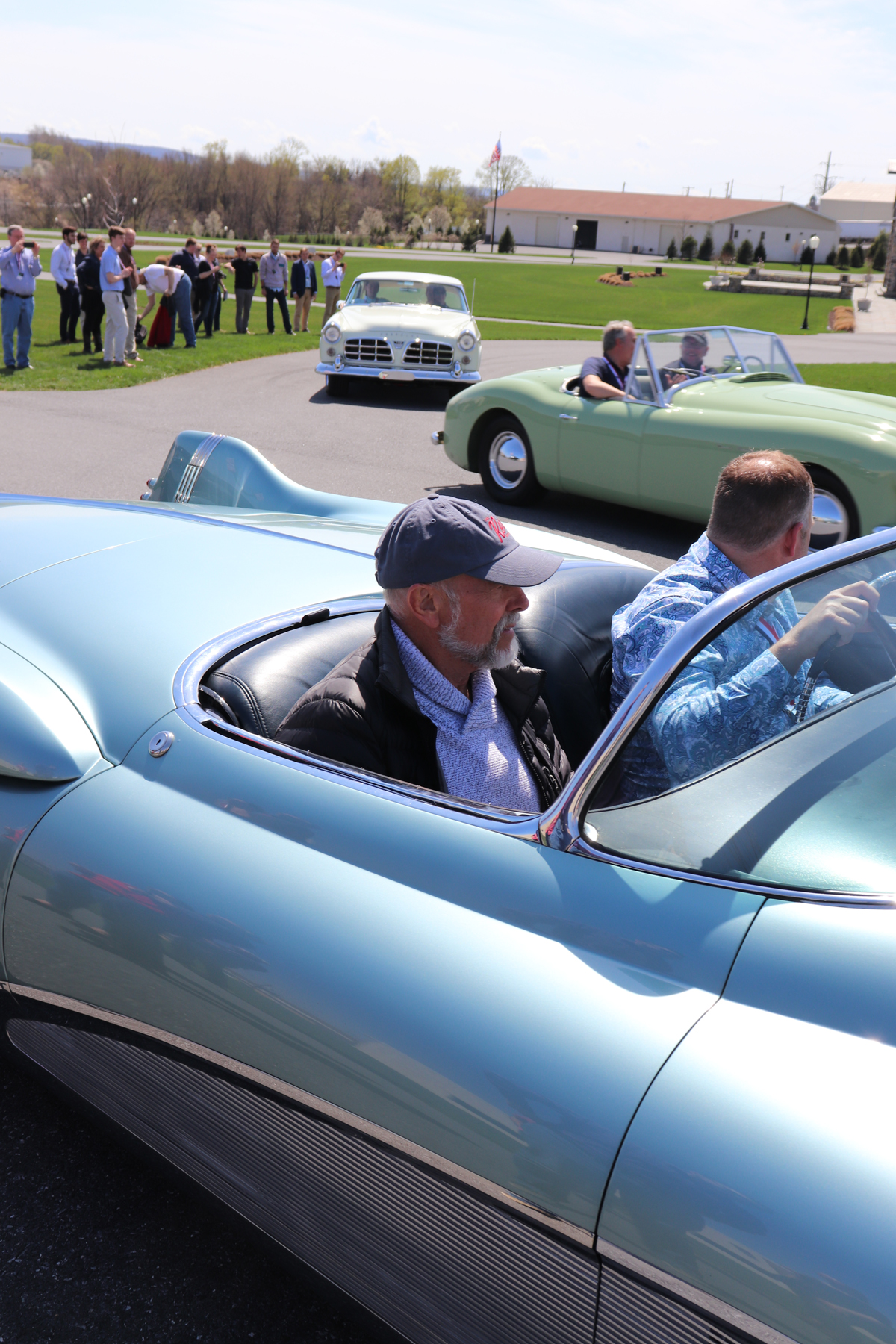
Possibly the most striking experience in which I participated occurred after the end of the formal conference. Having lingered a bit, I made my way across the track to my car when I realized that a number of staff members and Mr. Bulgari had cars out on the track doing hot laps. Yes hot laps in a 1950s Nash-Healey, a 1955 Chrysler 300, and yes, the 1951 GM Le Sabre Concept Car among others. What glorious fun. Laughter, smiles, good vibes the smell of tortured tire treads and screaming vintage engines reclaiming the joy experienced decades ago. All present seemed imbued with an infectious innocence. And then Covid came to town. With it came cancellation of the 4th Conference in 2020. Much the same story cancelled years 2021 and 2022.

During this time of change Hagerty has been ensnared (possibly the choice of words betrays feelings of concern held by some in the classic car community for what has been the Hagerty gold standard) by the Wall Street SPAC financial engineers. Hagerty has gone public.

In researching this story I found that the HVA has subsequently gone away. It has been replaced by the Hagerty Driving Foundation (HDF). My hope falls into the “A rose by any other name smells as sweet” category.

That said, In researching the HDF site, I found no mention of the International Drive History Conference concept. I followed up on my concern with a respected and knowledgeable friend in the industry. Based on his remarks it seemed evident to me that I may have experienced the best and sadly the last International Drive History Conference. I hope I am mistaken.

A small but respected automobile enthusiast conference promoting learning, preservation and excellence should not be thrown aside. It deserves a place in the HDF business plan. Hagerty always seemed to get it. I hope HDF still draws from its Hagerty roots. I have no reason to believe otherwise, yet.

By |2022-05-27T16:57:24+00:00May 26th, 2022|Comments Off on Cars We Love & Who We Are #27

Cars We Love & Who We are #26

A few years back while speaking with my good friend Bob Austin the topic of his brother’s unique sports car came up. He explained that his brother Rick’s 1964 Devin C, purchased in 1973, represented one of literally a handful of custom performance cars made by a man named Bill Devin. When Bob shared a photo of his brother’s car, I realized that I knew that car. I had seen it parked on the main street of Teaneck, New Jersey over 40 years ago and never forgot it. Clearly a Devin’s bantam weight and sporting character had left a lasting memory.

Now, to celebrate the fast approaching 50th anniversary of Rick Austin’s continued Devin ownership, the story of Rick and his Devin C.

A Devin’s 47-year journey from scrap heap to Pebble Beach

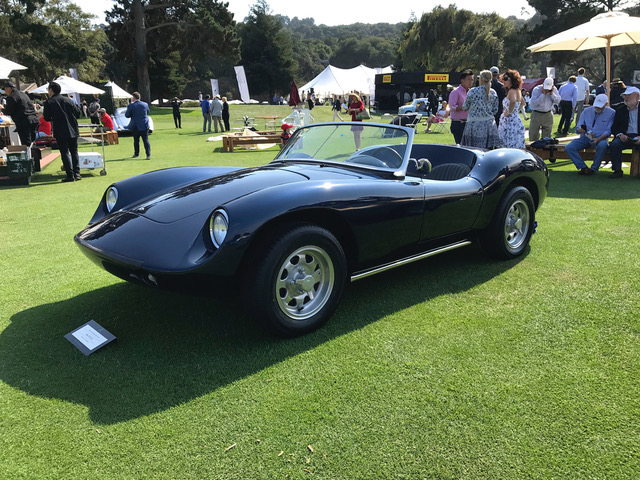
Rick with his Devin C at the Quail                                                           Photo: Brian Miller

August 2017 found Rick Austin luxuriating on the manicured grounds of the Quail, the most exclusive of all Pebble Beach Concours d’Elegance events, he and his Devin enjoyed the spotlight as honored invitees. This being the world’s pinnacle event to recognize classic car royalty, it is doubtful that his fellow celebrant’s cars began their Quail star turn in similar fashion, which would be at a DPW scrap yard in Nanuet, New York.

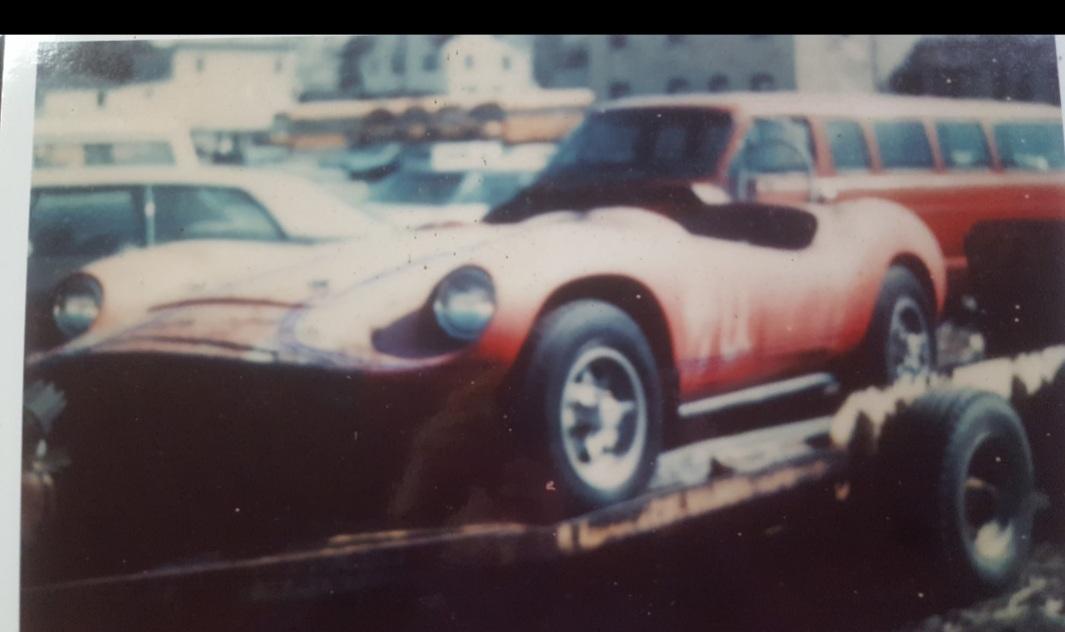
At the Nanuet, NY DPW

First spotted by Rick’s brother Bob in 1973, the rather forlorn red Devin resided on a construction trailer at the Nanuet DPW scrap yard. At the time, Bob told brother Rick about his sighting and thought it interesting. It should be noted that the Austin brothers share a marked lifelong affection for unusual vehicles. Morgans, Crosleys, Jeepsters, Avantis, MGTDs, Minis, all have graced Austin driveways. The Devin fit the mold perfectly. As Bob now tells the story, he meant that it held interest as something Bob, himself, would buy down the road. Rick, however, took right to the road and drove up to the DPW yard the next day to inquire as to the Devin’s availability.

“How much?” Rick asked. “$400,” came the response. “Sold,” came his reply. Adding insult to injury, Rick used Bob’s trailer to bring the Devin to Bob’s house where both would work on carrying out the rebuild. It should be noted that Rick’s jumping Bob’s claim produced no strain in the Austin brothers’ lifelong friendship.

The Devin back story offers an interesting version of a tale oft told of a young man returning to California from WWII with talent and a passion. In this case the young man was Bill Devin and he held a passion for sports cars and racing. Possibly a precursor foretelling the Austin brothers fondness for Bill Devin as a kindred spirit came with Devin’s early success racing a Crosley Hotshot.

After the Crosley victories, Devin quickly moved up the race car food chain. By 1953 Devin had found Ferraris to drive including the ex-Phil Hill 212 that he bought from Luigi Chinetti and drove to a 3rd place at Palm Springs. Shortly thereafter, his plan to drive a new Ferrari at the 1953 24-Hours of Le Mans was derailed by a production back-up at the Ferrari factory. Devin clearly was the real deal and not just as a race driver. He had a serious vision about how a winning car should look and perform.

Bill Devin                Photo: John Priddy

By 1956 Devin had created a chassis that housed a twin-cylinder overhead cam engine wrapped in Devin-Panhard bodywork. He built twelve of them. One won its class in the 1956 SCCA national championship. By now, Devin had become a player in the fiberglass body business. He sold bodies to fit Porsches, Healeys, Triumphs, VWs and more.

With success, came Devin’s greater dream of building cars of his own. Working with an Irish chassis builder specializing in fabricating rolling chassis ready for a body, Devin’s dream materialized. With a frame from Ireland married to a fiberglass body by Devin and powered by a Corvette small block V8, the spirited Devin SS came to life. Weighing almost a half-ton less than a period Corvette, its performance was breathtaking. Unfortunately so was its price. All the Devin SS high-tech handcrafted powertrain and suspension technology came at a steep cost, roughly $10,000. Sales proved elusive. A return to the drawing board gave birth to the ultimate Devin, one both fierce and relatively affordable.

It featured a new tubular frame design sporting a shorter wheelbase than the Devin SS to provide an optimized geometry for utilizing Porsche and VW suspension components. By accepting, as well, both Porsche and VW rear engine drivetrains, it provided both high performance and more affordable versions. Named the Devon D. The D, for Deutschland, indicated the intended German componentry. It cost about $3,000. What then defines Rick’s Devin C?

At  the Quail                  Photo: Brian Miller

Whether true or not, the story told speaks of the Porsche powered Devin Ds beating Porsche’s own cars. This apparently did not sit well with the Porsche folks. Word on the street had any Porsche dealer selling engines to Devin losing their franchise. Undaunted Bill Devin knew Chevrolet had just developed its own air-cooled rear-engined car, the Corvair. Not only was Chevrolet’s new boxer engine air-cooled but it featured six, not four cylinders. Devin adapted the chassis to accept a modified Corvair powertrain and rear suspension bringing the Devin C (for Corvair) to life with a price tag of roughly $4,500. That life would end shortly before the close of 1964 due to market pressures. With all said and done, Devin had built 25 complete Devin Ds and 23 Devin Cs.

When asked what had originally attracted him to the Devin, Rick says, “The curves were just beautiful, even in the scrap yard. It was a Ferrari for me.” Rick had no idea what it was. He says, “If it wasn’t for the badge I never would have known.” He just saw it as an amazingly cool car. Together with the fact that he had nothing to work on at the time made the buying decision a slam dunk.

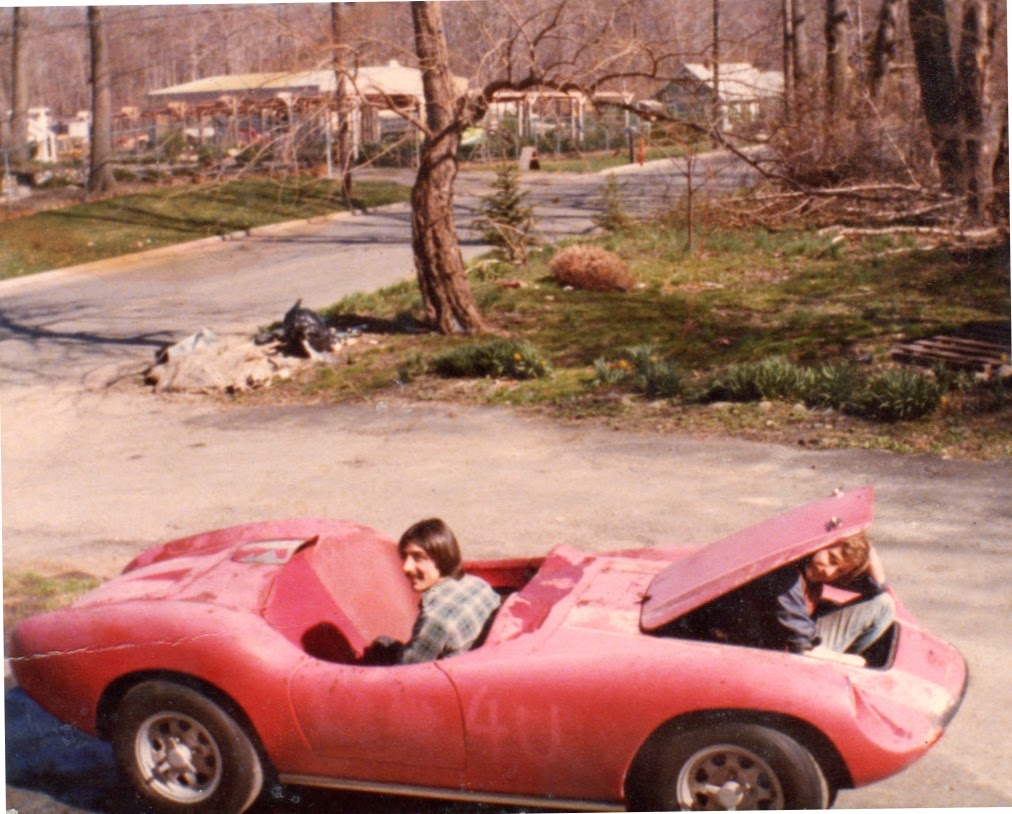
Rick under frunk lid and friend Dennis Grable during rebuild #1

By purchasing the Devin, Rick ensured he had plenty to work on for what would be a long time to come. Starting with a blown engine, a damaged front end, holes in the body created for affixing scoops to increase air flow to the engine, no seats, no windshield and a wealth of scrapes and dings his scrap yard Devin demanded a complete rebuild of the engine and a total redo of the body.

During this early rebuild period brother Bob, while driving through the neighborhood, amazingly stumbled across another forsaken Devin. This being one of the 25 Devin Ds built. Trailered home, it would serve as a very useful parts car. Rick says, “That second Devin is where the seats came from as well as the hood, the trunk lid and both doors.” Bob with a self deprecating laugh acknowledges that he cannot believe that with the needed parts scavenged he threw the rest away.” With a shrug he says, “Who knew?”

An interesting bit of accidental provenance research came about when Rick realized that his serial number “D.C. 1-6” had no buyer notation in the Devin company records. In these days of 17 digit VIN#s, Rick’s Devin serial number is a pointed reminder of how things have changed, as if we needed a reminder, since the mid-20th century.

In later years Rick with the help of respected Devin authority John Priddy concluded that Rick’s car had been on display at the 1964 New York Auto Show and that it had been sold at the show. This explains a couple of facts. One it explains how Devin serial number D.C. 1-6 got to New York from L.A. Secondly, all of the other Devins except Ricks D.C. 1-6 had names next to the serial number indicating the purchaser. As Rick says, “Bill Devin was a great guy but not necessarily a great record keeper. He sold mine at the New York show and never recorded the buyer.”

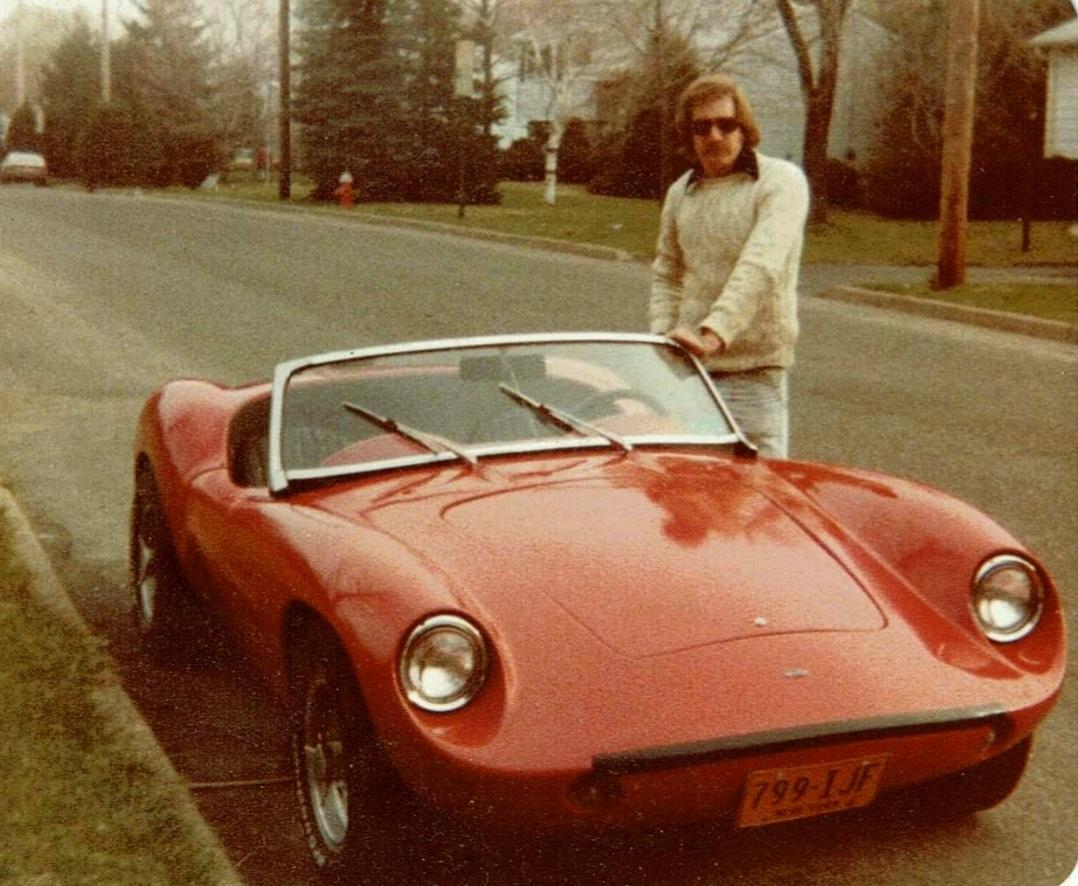
Rick and rebuild #1 in 1975

Picking up the story in 1974, Rick enjoyed the fruits of his first rebuild and drove his red Devin until 1979 when he got married. His new family responsibilities banished the Devin to a distant corner of Rick’s life where it sat untouched until 2000 except for a brief period of operation in 1989.

With the arrival of the new millennium, Rick set about to do a second rebuild. With all good intentions but little time, the process would extend to about 15-years. In 2005 the Devin, now pretty much gutted, received the Chrysler Patriot Blue paint that still shows well today. Over the next ten years all the internals received the attention Rick would have liked to have lavished much quicker. With all the bills to show, Rick totally rebuilt a 1967 Corvair engine. Machined .040 over with a 288° cam and four Rochester 1-barrel carburetors, it delivered 140 horsepower.

When asked about the speed and stability of his completed Devin, Rick, admitting to achieving 110 miles per hour, responded with brutal honesty, “At 110 miles per hour stability is horrible.” Weighing in at breathtakingly light 1240 pounds Rick actually welded in a piece of Volvo truck chassis forward of the front suspension as a location to mount the battery and add weight.

Almost simultaneously with completion of the second rebuild, Rick received notification from co-chair of the Devin Registry, Brian Miller, that for Pebble Beach 2017, Devin would be the honored marque. He asked if Rick could attend with his Devin.

Rick says, “I immediately contacted Bob and he was all in. I was thrilled to be able to share this experience with my brother.” Rick started road testing his Devin the week before shipping it to Pebble Beach.

Bob and Rick Austin at Pebble Beach

In describing his Pebble Beach experience at the Quail Rick does not hold back. He says, “It was the most amazing event in my life. The number of phenomenal vehicles was simply astounding.” He goes on to say, The people were lovely. The food was fantastic.”

In assessing the crowd response, Rick first acknowledges that Devins adorned with numbers and stripes drew a decidedly younger group of admirers. As he describes it, his Devin with its dark blue, more reserved, presence drew the attention of an older demographic. However, Rick says, “Regardless of age everybody looked at all the Devins on display.”

Back home Rick enjoys his Devin as his daily driver pretty much weather be damned. While he acknowledges that, today, any kid with a built up Honda Civic can go faster, Rick says, “My little Devin stands tall as the most exhilarating car I have ever driven.”


By |2022-05-12T19:03:06+00:00May 12th, 2022|Comments Off on Cars We Love & Who We are #26

Conversations With People We Value #35

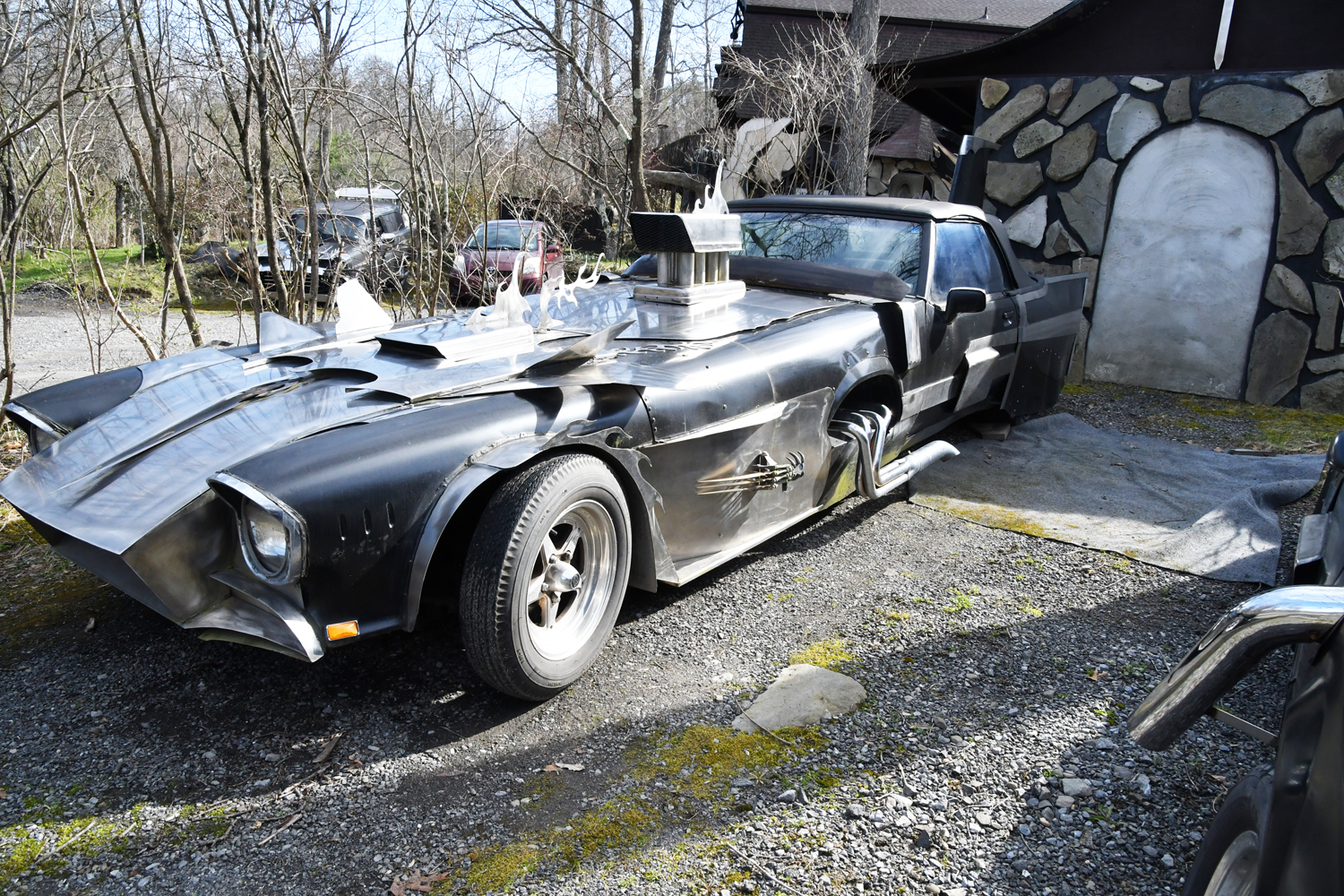
“Really it’s like nothing you have ever seen.” With those intriguing words, my gym buddy Chris lit a fire under my curiosity. He told me of a skilled and, some night say, eccentric car fabricator with tastes that blended Batman, Mad Max and George Barris. Residing on a rural spread of land, he brought to life blown, big block monster executions born of a wild imagination.

His name is Gary.

Hot Rod Missionary and his monster machines

Dragon Express


Gary

Any doubts about Gary giving an “interesting” interview quickly dissipated when he prepared to speak by pulling on a leather biker’s helmet with a fake black pony tail. No question, for creativity and passion, Gary, by far more than anyone I have ever encountered in my life, embodies the defining qualities of Doc Brown of “Back to the Future” fame.

Bedecked in helmet and ponytail Gary unleashed an uninterrupted and interwoven torrent of one-off car descriptions, mind bending technical “how to” and personal philosophy. He projected a firm determination to create the most content rich and complex sentences. He succeeded.

I use Gary’s first name only because he prefers the anonymity that his backwoods location affords. He says, “I like to be a good neighbor so I maintain my property with vehicles neatly arranged amongst the concrete and steel life size statues of horses and angels. That being said, I know it makes for an attention grabbing display. Locating my place on a map would flood the neighborhood with Japanese tour busses and throngs of camera happy tourists. Like I said, I want to be a good neighbor.”

Pretty much a self-made man, Gary retired young after a successful career in home building and real estate. Possessing a natural gift for fabrication skills, he mastered a full palette of capabilities that equipped him to bring to life the fruits of his wild imagination.

The well tended grounds containing Dave’s assemblage of Monster machines presents a fascinating landscape of coordinated chaos.  It is populated with open barns stocked with wild gothic themed engineering marvels, sheds stocked high with power equipment, tools of all stripes, parts and pieces and more, much more.

When asked where he finds the materials and power train components for his projects, Gary points to two brand new refrigerators in the rear of a shed to illustrate his answer. He says, “For decades I have bought good things when they were on sale or cheap, not when I needed them.” He has always possessed total confidence in knowing what he would need someday. Big block engines, whole power trains, name it and he has stockpiled it. He says, “If I don’t use it, it’s still here. It’s not bothering anybody. So in the end I don’t have to go looking for something. I already have pretty much whatever I need here.”

The answer to what has motivated Gary’s 40-year obsession to construct a sprawling farm yard populated by thundering high performance beasts catches one by surprise. Gary possesses strong religious beliefs and has constructed his eye-popping array of Monster Muscle as a means for attracting people with whom he can share his religious beliefs. As the self proclaimed “Hot Rod Missionary,” he has dedicated himself to connecting with people that might not regularly find themselves in a house of worship.

Alien

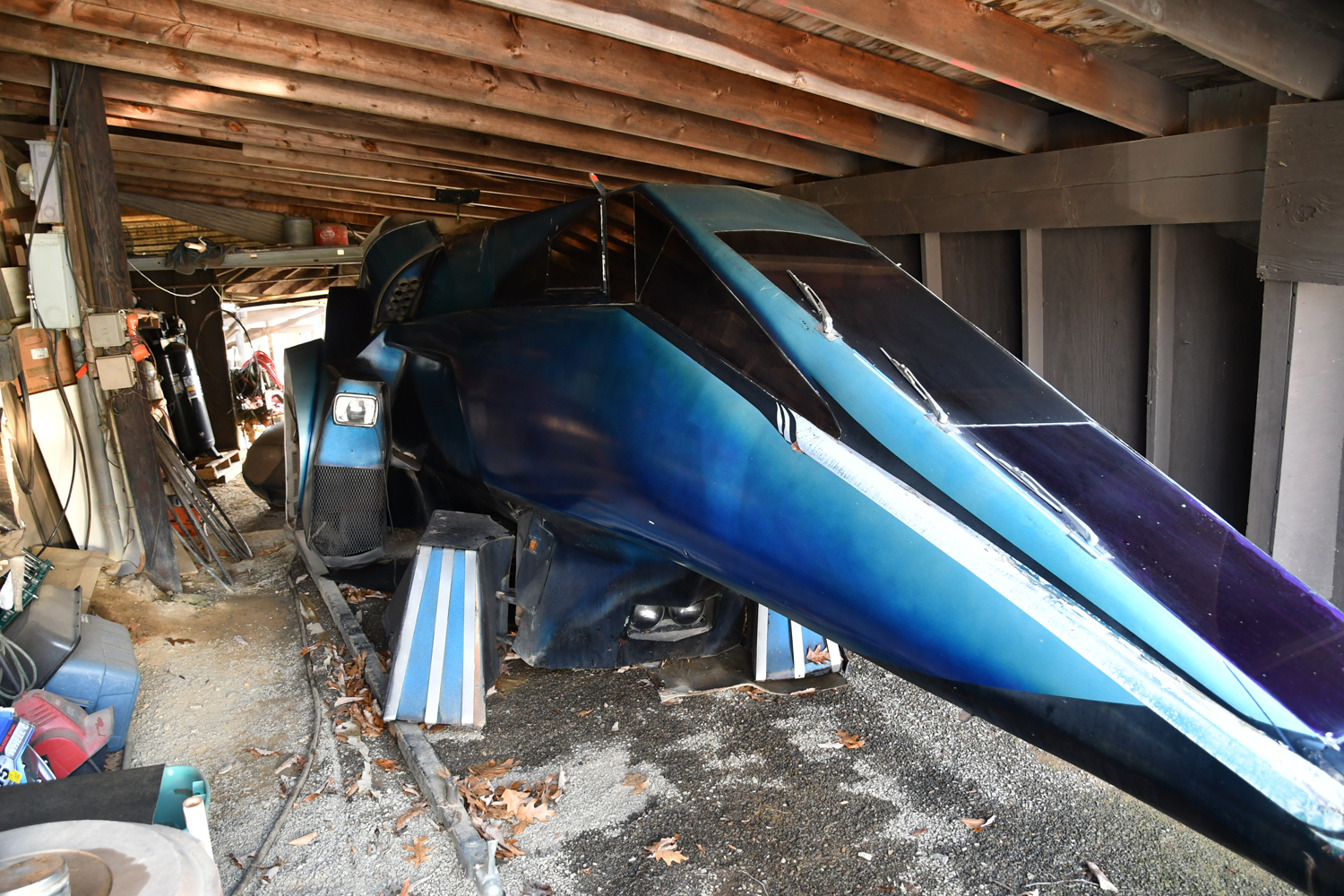
Showmanship leavened by a sense of humor complements Gary’s strong religious leanings as evidenced by his space ship themed hot rod “the Alien.” By the way, all of Gary’s Monster Machines have names. Alien, fully fabricated by Gary from scratch, sports a 400 plus horsepower 455 cu. in. V8 big block. It is street legal as are almost all of his creations.

When first built, Alien took first prize for Special Interest Automobiles at a World of Wheels Auto Show. Gary, when interviewed at the time, explained that his intention called for adding booster rockets to facilitate possible future space travel. In reflecting on Alien’s present earthbound limitations, Gary acknowledged that, “Its primary use now is taking it to town to buy pizza.”

For night time events Gary mounted equipment on Alien that would shoot large plumes

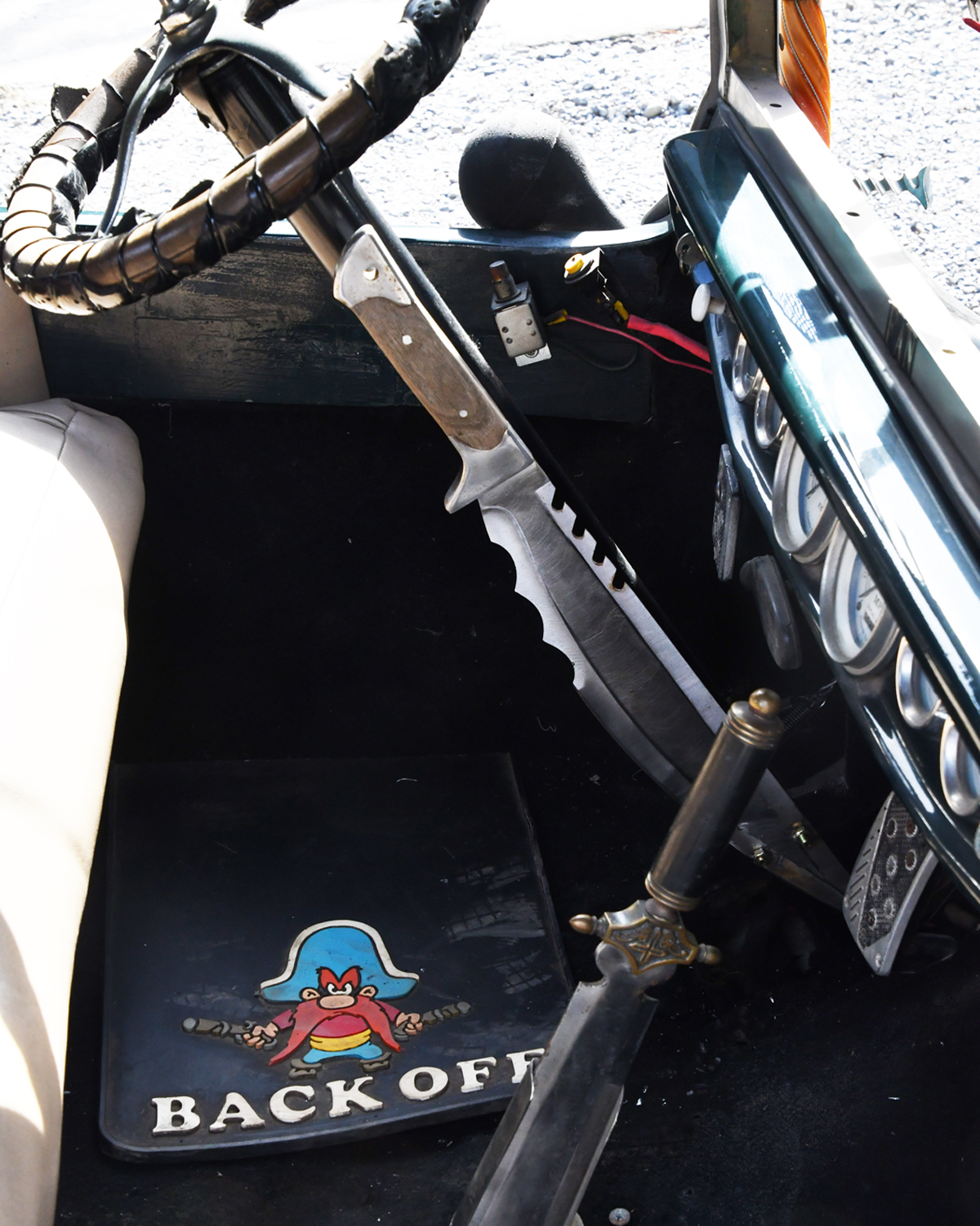
Gary likes to use swords as design elements

of flame out the back. It proved to be a big fan favorite when the Sun went down. However, when an inattentive parent asked Gary to fire up the flames and Gary realized the fan’s child was standing behind the Alien a shaken Gary literally cooled the Alien’s jets for good.

Housed in bays, barns, containers or simply exposed to the elements, Gary’s hand fabricated Monster menagerie truly inspires fascination of the eye-popping variety.

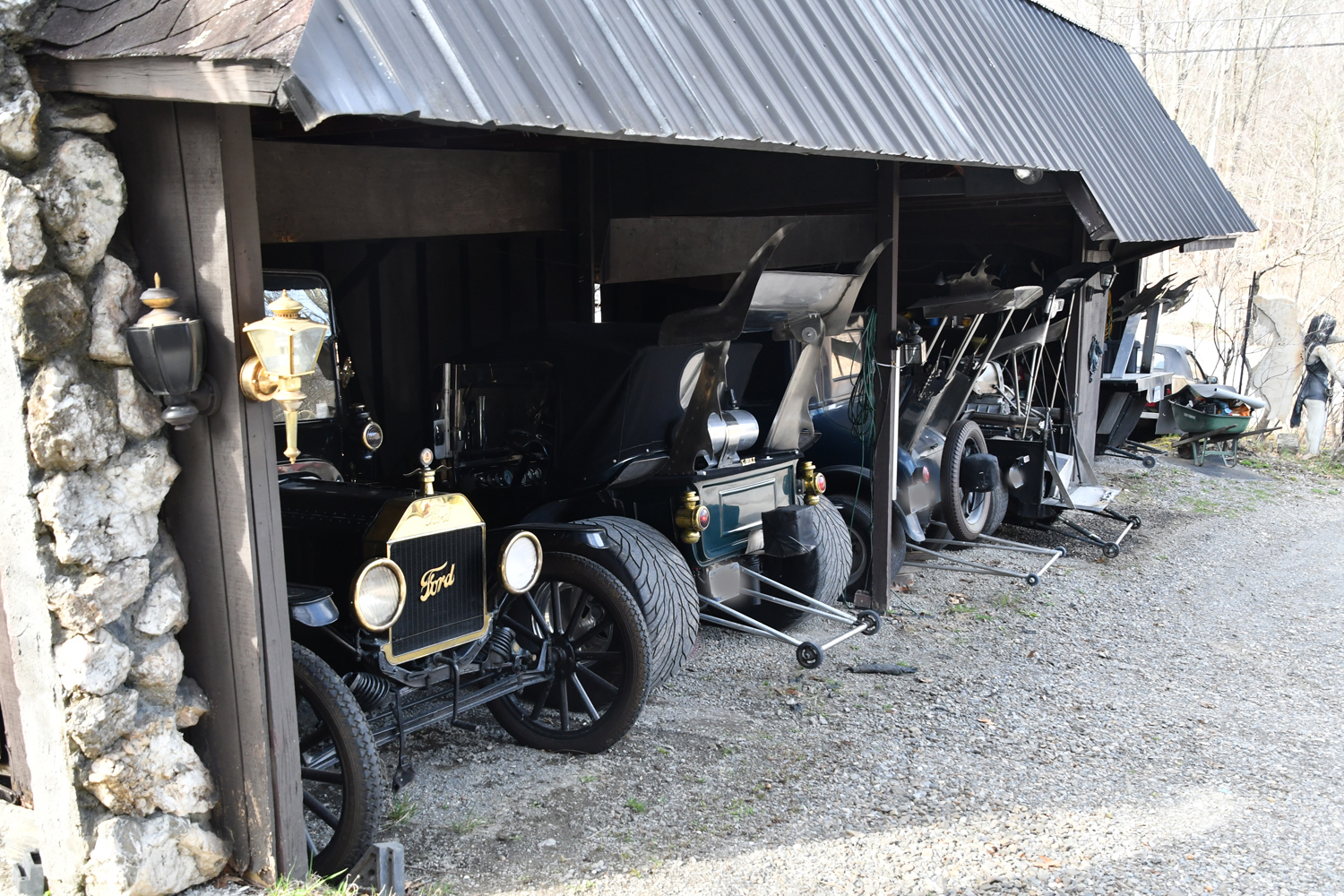
An open stable building teases the imagination with a glimpse of four Model Ts. Three of them boast enormous rear tires clearly made a necessity by the mammoth engines that provide the giddy up.

The stable structure opening to a courtyard reveals the spectrum of Gary’s passion. The first bay houses a pretty much bone stock 1915 Model T Touring car. Interestingly Gary’s taste in vehicles in large part involves either totally stock or radically modified Model Ts. To that point, despite his collection of otherworldly monster modifieds, Gary’s favorite may well be his totally stock Model T convertible pickup truck.

Next to the Touring car resides the decidedly non-stock “Wild Man” which Gary fired up and, accompanied by ground shaking exhaust notes, pulled out into the court yard. With enormous tires on the rear and brutally wild metal adornments punctuating its hot rod T

Model Ts

character, Wild Man just screams and thunders FUN! Gary who does sell some of his creations says, “Wild Man is special and I won’t sell it because it is special. You sell the stuff that isn’t fun. You drive the stuff that’s fun. This is fun.”

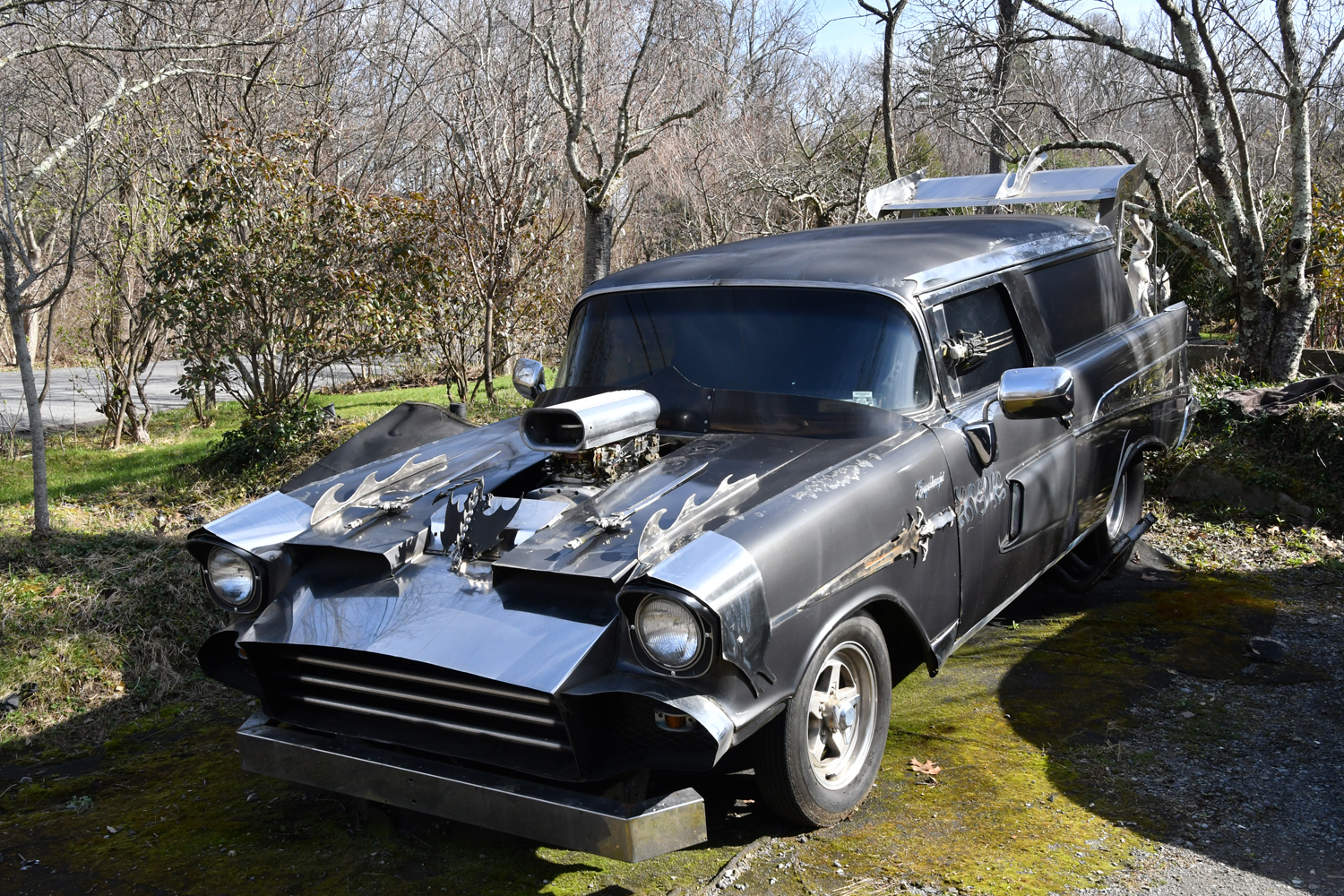
Across the courtyard a 1957 Chevrolet station wagon, like no other, menaces the nearby street. The wagon named “Dragon Express” with its cobra nose and Adam’s family visual treatment features a worked small block with two-fours and an 871 blower. Street legal, the tubbed out rear and racing tires tells you all you need to know about available performance.

Starfighter

“Star fighter”, another denizen of Gary’s Gothic Garage, started out as what he describes as a Rustang(Badly rusted Mustang).

Laughing he says, “Enough daylight passed through its panels that you could get a tan.” Undeterred Gary fabricated a complete frame, installed a power tilt stainless steel cobra nose and ’57 Chevy front fenders. Chassis-wise Gary created a split Model T independent front suspension with disc brakes. Starfighter’s visual presence bears the signature Gary look with the ever popular skeleton forearm trim pieces and machined stainless steel flame shaped attachments.


Rocky with extending nose

With the look of a fuelie dragster from hell, Rocky, features a 426 Hemi, airbag suspension and a split Model T front axle with disc brakes. However, Rocky has much more to offer. Amazingly Gary designed and engineered the long dragster nose to extend an addition fully functional eight feet significantly increasing the wheelbase. Yes, brake lines, steering mechanism everything needed for a totally operational and drivable vehicle extends an additional eight feet out front.

Why? From Gary’s point of view, why not?

By |2022-04-28T11:24:30+00:00April 28th, 2022|2 Comments

Conversations With People We Value #34

Creating a media frenzy over thirty years ago, it could have destroyed a globally respected brand. To recall just what happened, I interviewed retired Volvo PR Manager Bob Austin, a key player in what proved to be a template for effectively managing a potential corporate crisis.

The monster truck that nearly crushed Volvo


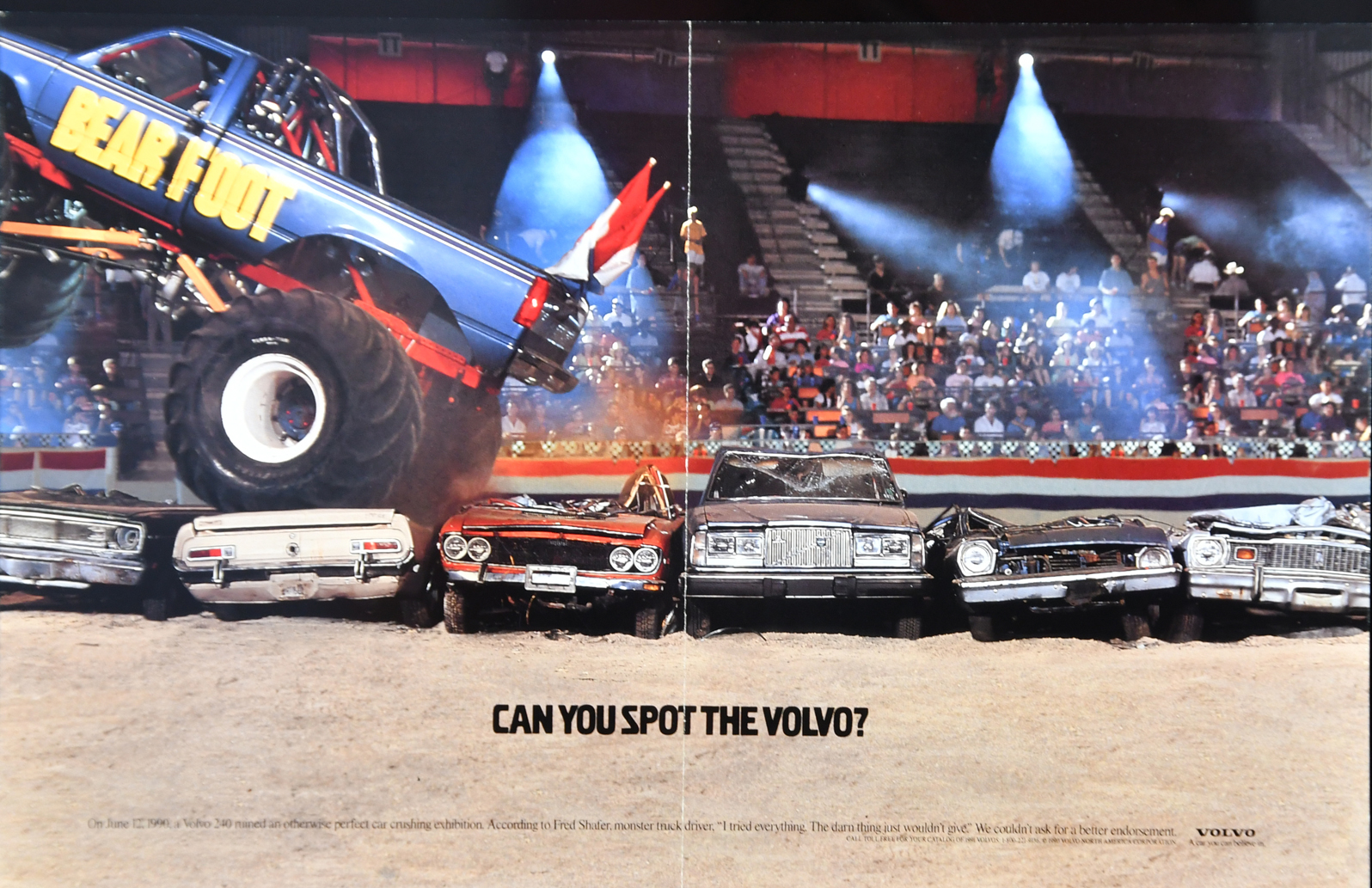
Inspired by car punishing monster truck events exploding on the scene in the late 1980s, Volvo in October of 1990 released a compelling TV commercial intended to promote its legendary rugged construction. Once broadcast, the ad would instead plunge Volvo into crisis.

On what should have been one of life’s better days, Volvo PR Manager Bob Austin’s honeymoon was interrupted by a phone call from Volvo Corporate Counsel, Bob Mercer. Mercer quickly popped Austin’s bubble of bliss and cut to the chase saying, “Can you be in the office tomorrow?” “What’s up?” asked Austin. “Better you should come in,” Mercer replied. Thus began what Austin, decades later, would recall as three of the most stressful months of his life.

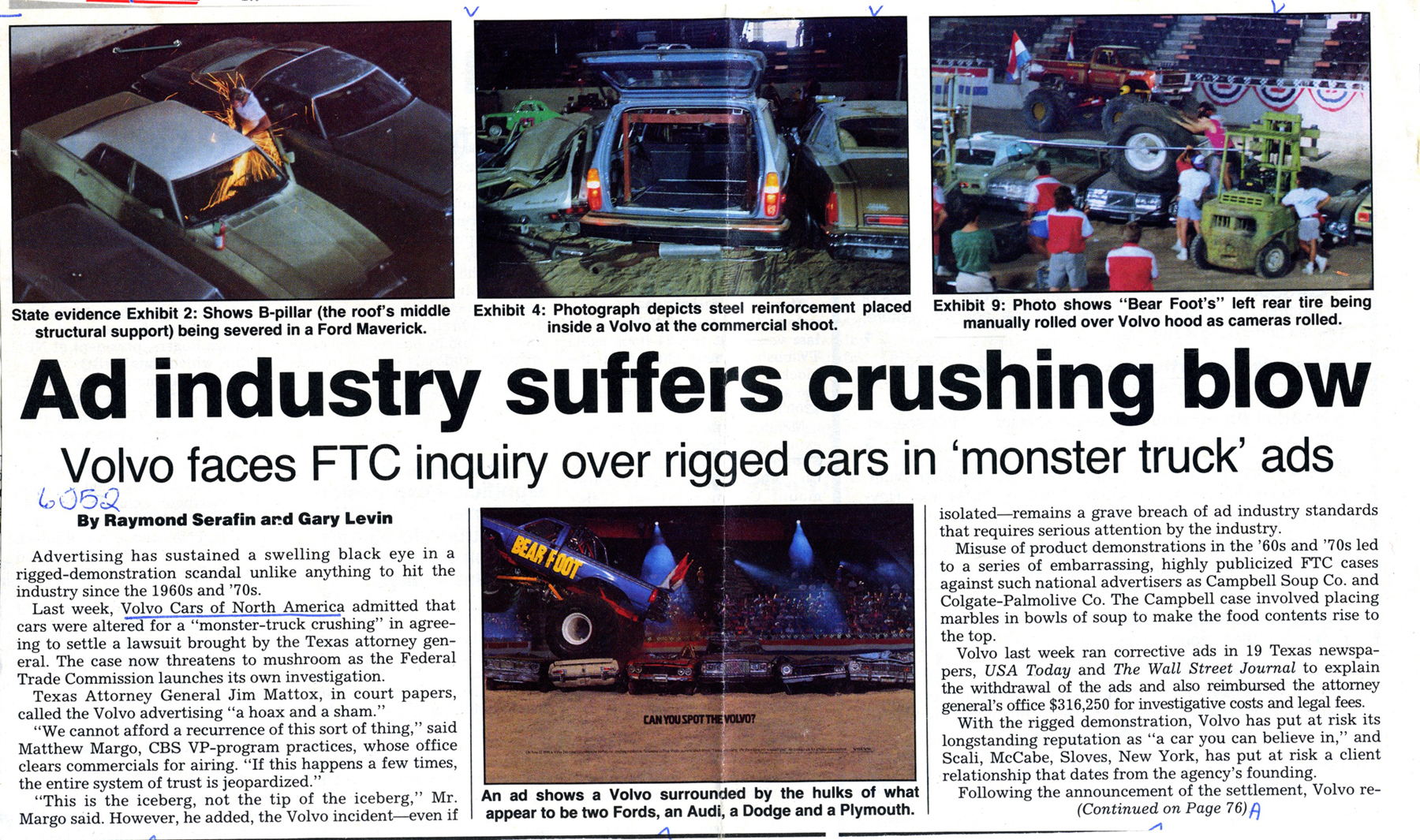
At Volvo headquarters, sitting across from Mercer, Austin learned that the office of the Texas Attorney General, Jim Mattox would be charging Volvo with knowingly creating a fraudulent and misleading television commercial.

Looming as exhibit 1 supporting Mattox’s startling accusation stood the Volvo television and print campaign that would forever be known as “Monster Truck.”

Concerned to say the least, Mercer asked Austin if he knew anything that could account for this accusation. Austin stated that he was unaware of any problem. Mercer quickly changed that by dumping it squarely in Austin’s lap.

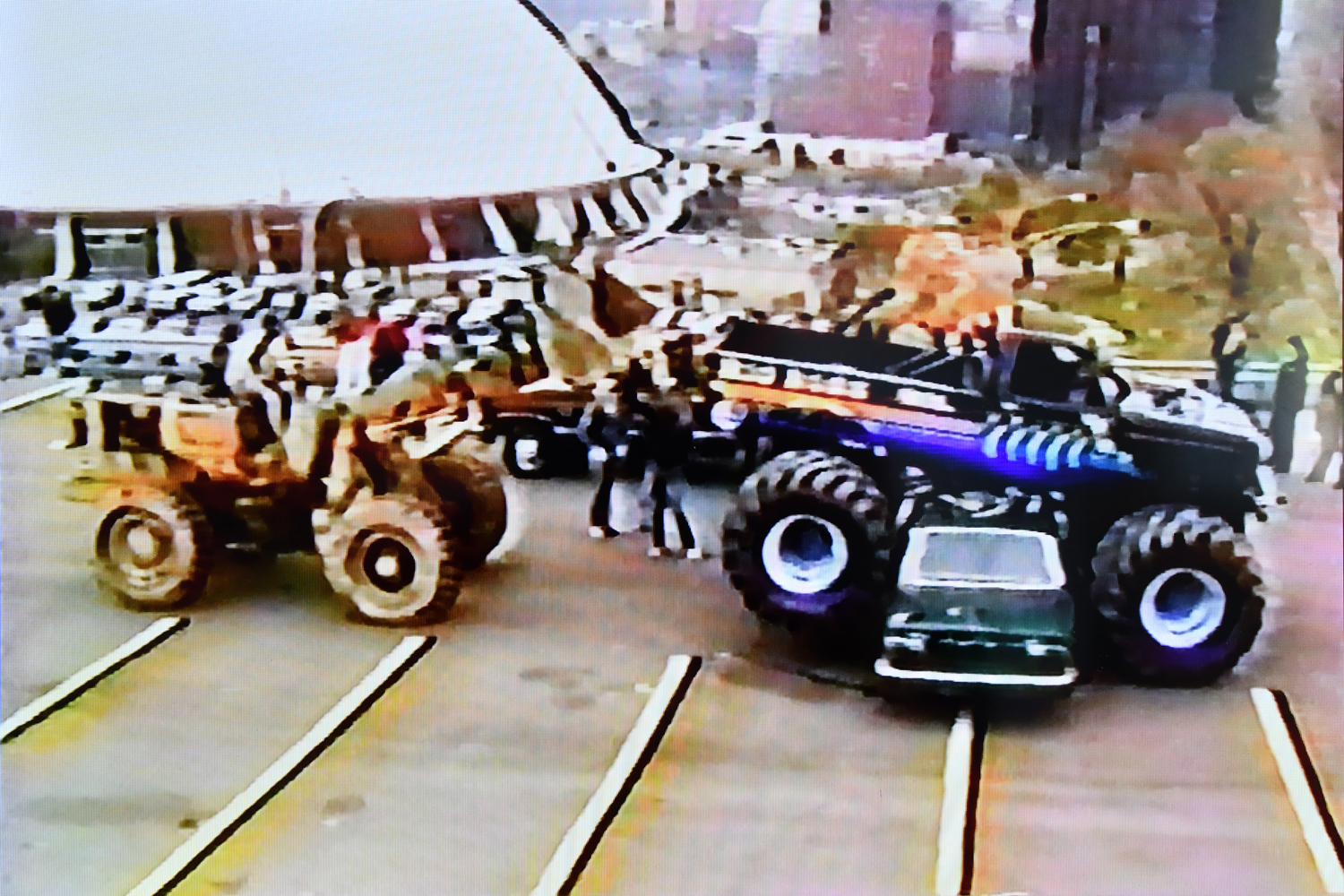
“Monster Truck” as a concept found its inspiration in an actual monster truck event held on September 11th 1988 in Essex Junction, Vermont.

By happenstance a person associated with Volvo’s ad agency at the time, Scali, McCabe and Sloves, while on vacation had attended that Essex Junction event. On that September day in a dynamic flurry of flying dirt, waving flags, and bleachers filled with screaming fans an airborne monster truck set out to crush a row of cars. After a few passes by the massive monster truck the agency employee realized that, unlike the other vehicles in the row of sacrificial cars, a lone Volvo had stood up to the pounding with its roof remaining defiantly upright. Inspired by what he witnessed, the vacationing employee acquired video of the event. Back home, he shared it with the agency’s Volvo account staff and quickly set creative wheels in motion.

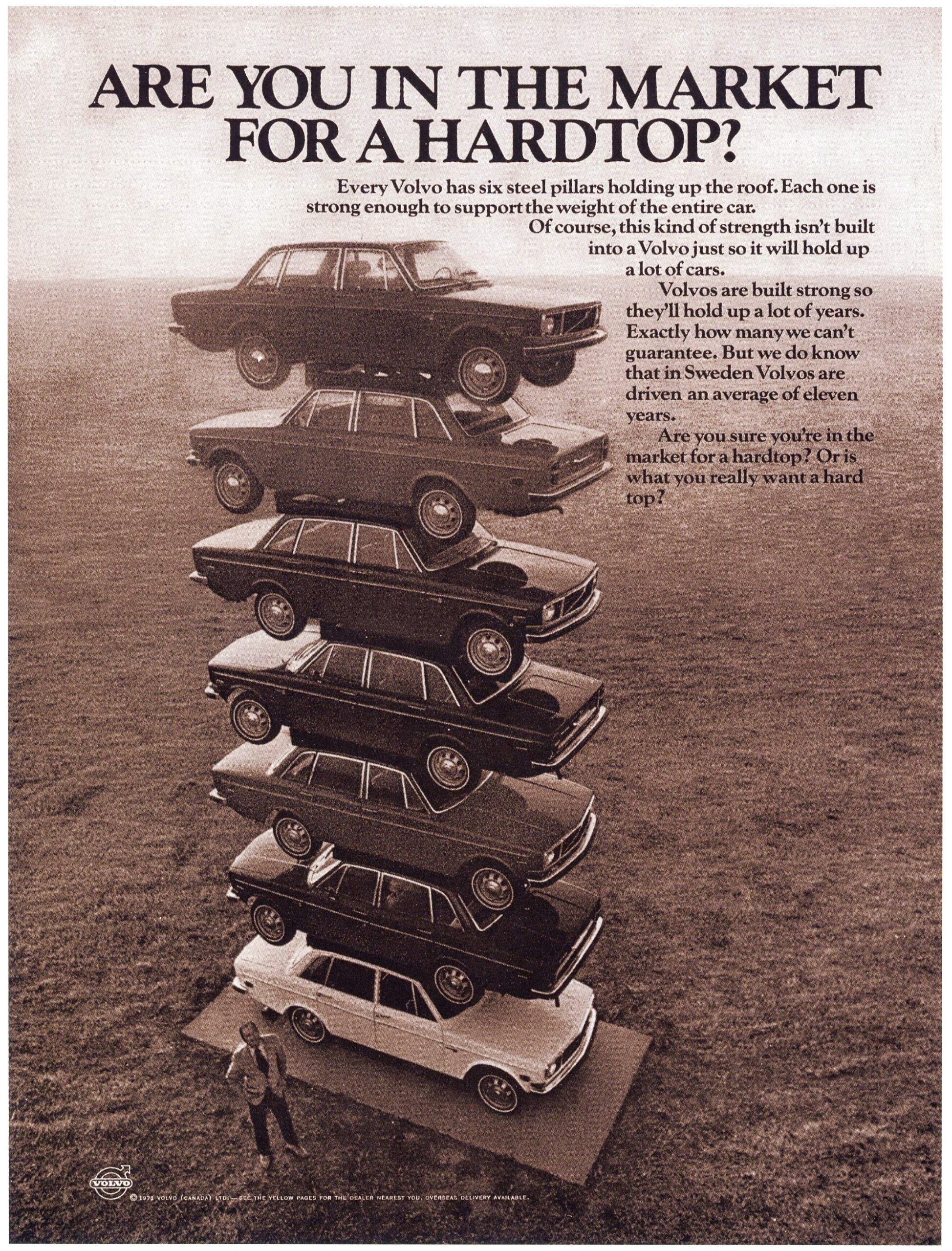
Historic Volvo ad touting roof strength

When Scali, McCabe & Sloves pitched the “Monster Truck” idea, a very interested Volvo responded by first reaching out to its engineers in Sweden to confirm that a Volvo 240 could indeed withstand such punishment.

Sweden responded with a resounding “Ya Sure.”. Engineers confirmed that each of a Volvo 240’s roof pillars had been designed to support the total weight of the entire vehicle, roughly 3,000 pounds. Doing the math, a Volvo 240 wagon with its 8 pillars should support about 24,000 pounds. Confidently, Volvo engineers concluded that the Volvo roof could easily support a typical monster truck weighing roughly 12,000 pounds.

Armed with those assurances Volvo gave its approval. “Monster Truck” would be produced as a cleaner, clearer re-enactment of the original 1988 Vermont event.

According to Austin, Scali, McCabe and Sloves awarded the project to a production company which while relatively new enjoyed a high level of confidence with the agency as it was populated with trusted past employees of the agency. It also came in with the low bid.

With concept and team in place, attention turned to location. It had to have a dirt floor. Flying dirt would dial up the drama of the monster truck making rampaging bull charges at a stationary line of cars. Another “must” was bleacher seating to accommodate the wildly screaming fans cheering the mayhem. With slim pickings in the New York metropolitan area, an expanded search located an ideal venue. A rodeo arena in Austin, Texas fit the bill perfectly.

Vehicles gathered for the shoot included the monster truck, over a dozen random used cars and three used Volvo station wagons. The need for more sacrificial vehicles than would ultimately appear in the ad was necessitated by the nature of film making. Multiple takes of the same scene often occur in order to get the best shot. When the repeated action requires a monster truck to punish a car, wear and tear can take a serious toll on the cars.

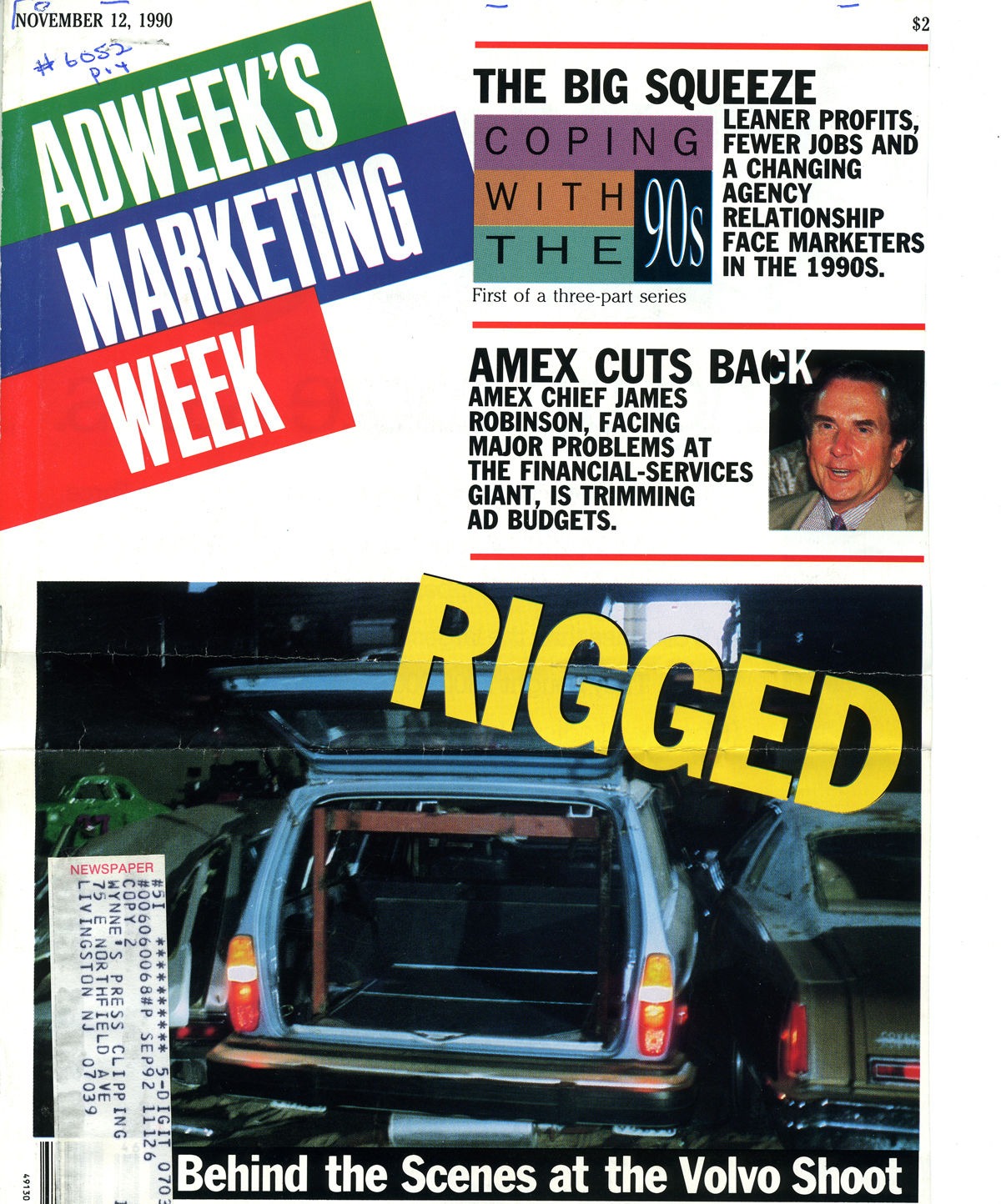
AdWeek front cover

To fill the bleachers with screaming fans, ads appeared in the local newspaper inviting people to participate in the filming of a Volvo commercial. Many people came. They fulfilled their role as rabid monster truck fans admirably. As directed, they wildly cheered for the destruction of helpless vehicles only to dissolve into a disbelieving cohort when confronted with a defiant crush resistant Volvo.

Once completed, Volvo management understood the filming to be uneventful and highly successful with the result being an attention grabbing television commercial dramatically and humorously promoting the signature strength and durability of Volvo cars. In other words, “Monster Truck” would add yet one more classic Scali, McCabe and Sloves execution to their Volvo commercial reel. Alas, it would not be so. Volvo, the company, now faced the even more punishing slow turning wheels of the Texas State Department of Justice.

With the threat of legal action looming over Volvo, Austin and Mercer, after speaking with agency management, sat down with members of the production team. They asked pointedly, did anything unusual happen during the production. Interviews with the production team affirmed that nothing of note was done to the cars. With due diligence completed, Austin, Mercer and the agency felt quite comfortable with their understanding of what had happened.

As Austin says, “We concluded that some of the extras who had been hired to be the audience had expected to see an actual “Monster Truck” event, one that takes place in real time. If an audience member had no experience in film production, he or she might have been confused by seeing the filming of one shot multiple times and the order of shots filmed in a non-sequential fashion.”

Volvo’s team confidently believed that surely this must be the cause of any misunderstanding.Creating a media frenzy over thirty years ago, it could have destroyed a globally respected brand. To recall just what happened, I interviewed retired Volvo PR Manager Bob Austin, a key player in what proved to be a template for properly managing a corporate crisis.

“Back then it was understood that being contacted by Texas AG Jim Mattox was a serious matter. That said, we felt pretty good,” says Austin. We were confident that we could explain that it was just a misunderstanding. Volvo’s team comprised of Austin, Mercer, Volvo’s Ad Manager and agency representatives prepared to fly to Texas to meet with Mattox. Actually, the Volvo team would be meeting with a member of the Attorney General’s staff William Goodman.

Austin recalls being greeted by a pleasant woman behind a desk who, upon welcoming the Volvo team, turned over her shoulder and with the signature regionalism of a Texas native called through an open door, “Bill, the boys from New York are here.”

With that auspicious welcome, Austin’s first thought was “Oh s%*t, we are in trouble.”

Image taken at filming

As the group turned to the open door, a man behind a large desk motioned them in with a distinctive Texas flair. Austin recalls, “He was dressed in a classic western style shirt with the snap flap pockets, he invited us to take a seat.” Three rows of chairs faced Goodman’s desk. Mercer and Austin, who would be representing Volvo, sat in the first row, the others retreated to the rear.

Mercer led off by reviewing the charges and Austin followed-up confidently explaining Volvo’s belief that it all was a misunderstanding based on some audience members’ unfamiliarity with the process of film making.

Seeking to clarify or some might say to firmly set the hook, the Goodman restated Volvo’s position that it was simply a misunderstanding. Austin confirmed that that was correct.

Like a fast hand gunslinger in a barroom shoot out, the attorney pulled out a stack of photos and said, “Then perhaps you can explain these.”

Image taken at filming

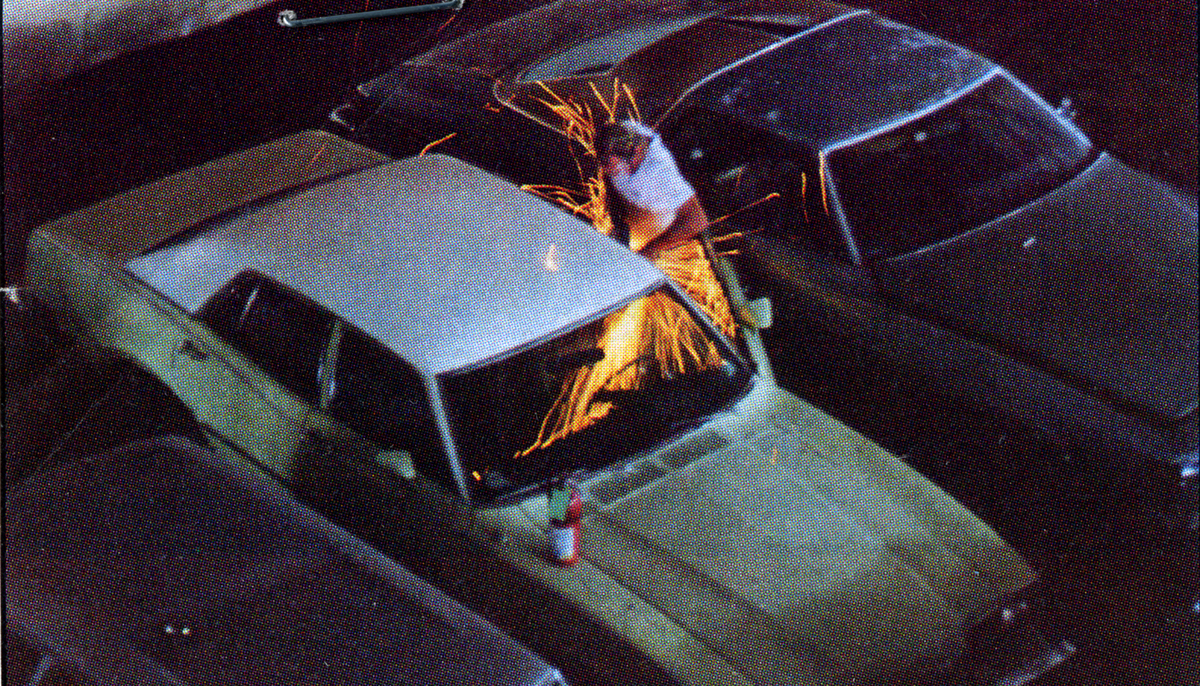
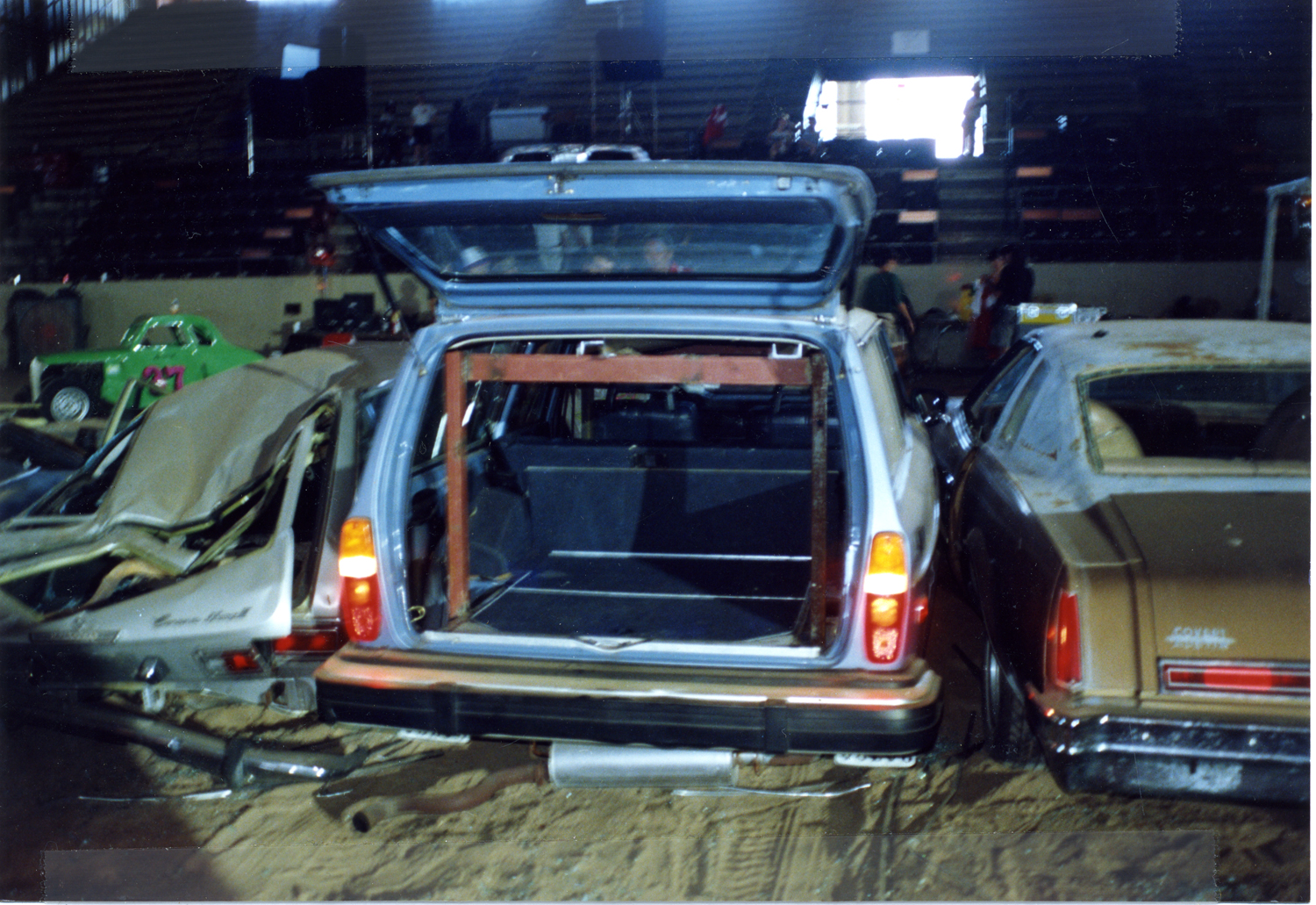
A tense silence filled the room as Austin slowly silently reviewed each photo before passing it to Mercer on his left. First came an image of the open tailgate of a Volvo 240 wagon with three 2-inch diameter tubes running from the floor to a cross member positioned horizontally under the roof. Next photo showed a man standing behind the side of a non-Volvo sedan with his shoulder raised as if he held a heavy object. A large ribbon of sparks shot out from the car past him. The next photos proved to be no less disturbing.

Accepting each from Austin, Mercer inspected each photo slowly in silence for what, Austin says, “Seemed like an eternity.”

Mercer broke the spell. He pushed back against the Texas attorney’s assumptions, saying, as Austin recalls, “I know you would like me to believe that these three tubes are there to support the roof. However, for all I know these three tubes could be a camera mount.” Mercer went on to suggest that the ribbon of sparks rather than caused by an effort to compromise the non-Volvo could be caused by the removal of a badge or other recognizable feature so that the car could not be identified.

While Mercer blunted the initial attack, the embarrassment and disbelief caused by these disturbing photos hung heavy in the room for the Volvo faithful. Agency members in the room sat mute and terrified. They too thought it had been audience misinterpretation.

As Austin recalls Mercer continued asserting that the two parties stood at an impasse. Mercer suggested that having the cars to view would certainly be a help. “No problem” fired back Attorney Goodman with a speed and finality not unlike a triggered leg trap. He continued, “We have them in storage close by. When do you want to look at them?”

All parties agreed to reconvene at the storage facility with Austin and Mercer alone representing Volvo.

After lunch the group assembled at the storage area where three battered Volvos awaited them. Two had not been altered in any way, but the third clearly displayed marks where pipes had been welded in. “As we left the facility,” Austin says, “Mercer and I agreed there was sufficient reason for someone who attended the shoot to question Volvo.”

This latest and disturbing turn of events demanded that Austin and Mercer confer with the passionate and fiery President of Volvo Cars of North America Joseph L. Nicolato. Austin says, “Cut Joe Nicolato and he bled Volvo blue. Take an action to hurt Volvo and Joe would defend the brand like a pit bull.”

A true old school, skilled and colorful leader, Nicolato, a former marine, once, at a WWII USO themed Volvo national sales meeting, arrived in a helicopter accompanied by Wagner’s “Ride of the Valkyries” wearing George C. Scott’s uniform from the movie “Patton.”

While Austin enjoyed Nicolato’s respect and confidence, Austin’s thick skin helped facilitate their good relationship. Austin understood that the possibility always existed for the messenger to take the initial heat for the message.

Joining Nicolato on the Volvo headquarters end of the conference call would be Executive Vice-President of Marketing William Hoover. Cool and controlled compared to Nicolato’s passionate and direct approach, Hoover shared Nicolato’s unwavering dedication to the Volvo brand.

“Neither Nicolato nor Hoover spoke as we debriefed them for the first third of the call,” recalls Austin. Both Nicolato and Hoover had dedicated their working lives to building the Volvo brand in North America. Now, what they heard had the potential to destroy much of what they had accomplished and seriously compromise one of the world’s most respected marques.

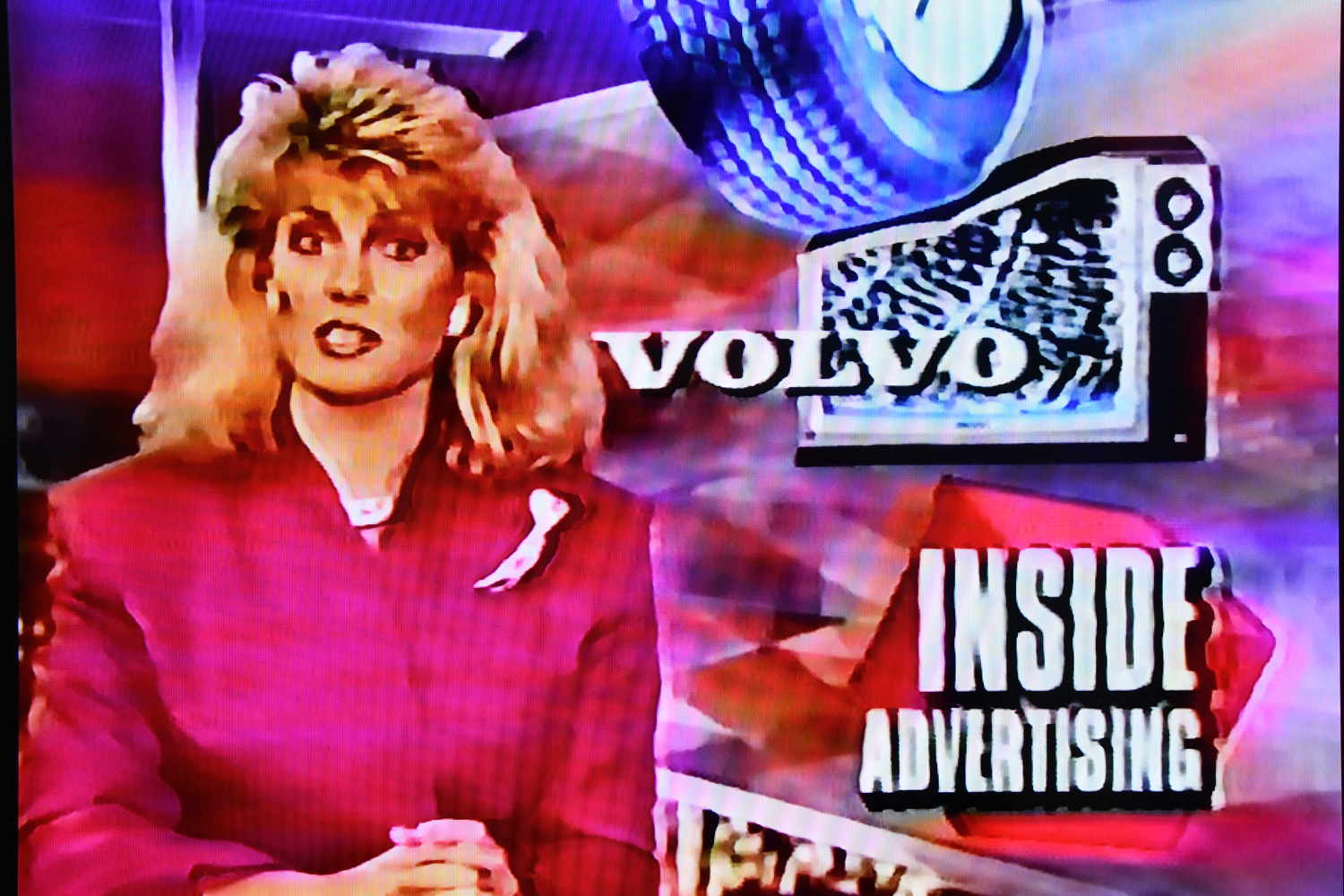
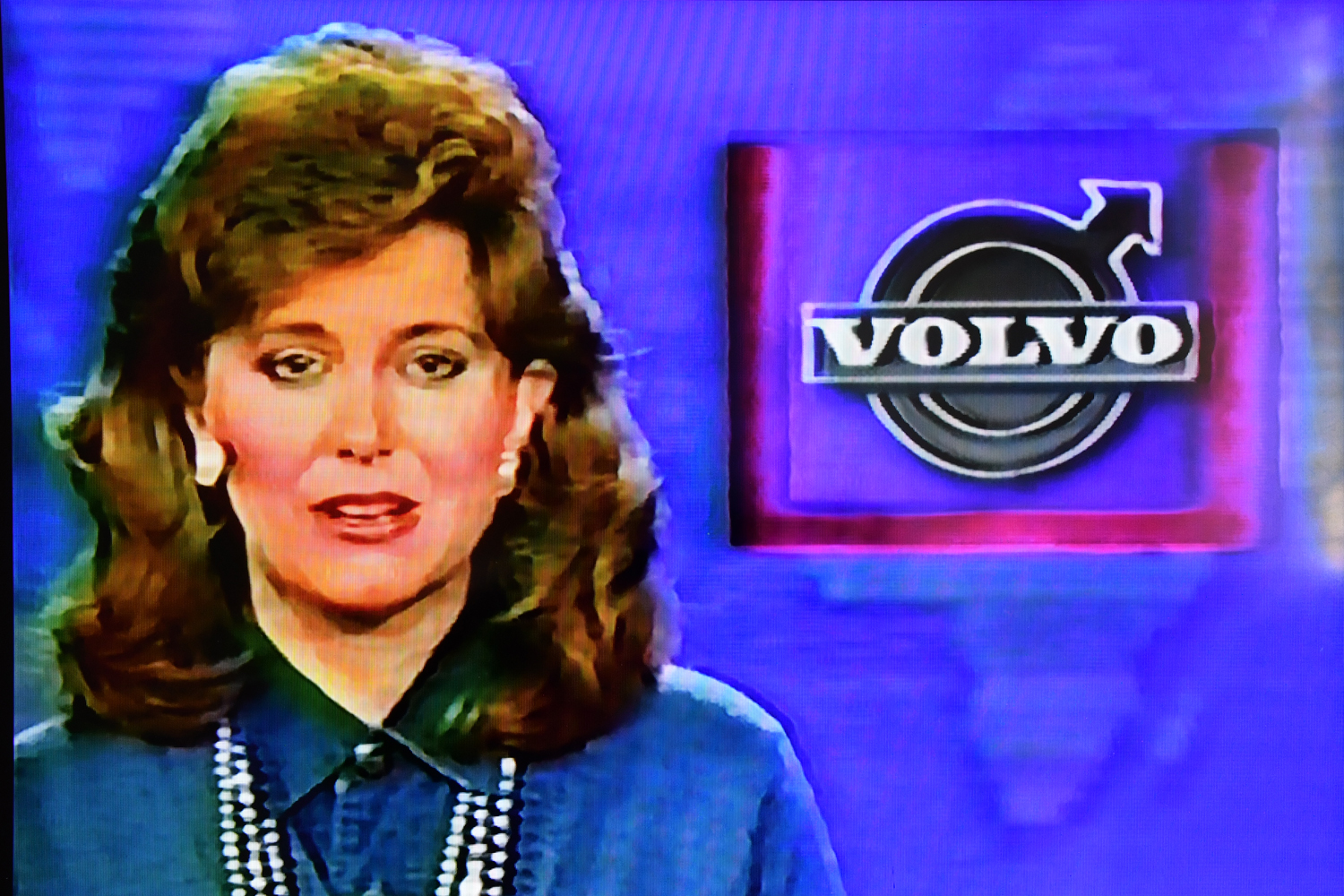
Television coverage

Horrified best described Nicolato’s and Hoover’s reactions. Infuriated and deeply concerned, Nicolato was not so much angered by the actions of the Texas AG as by this needless self inflicted wound. He was incensed by the apparent and unnecessary buttressing of a Volvo car by people who should have known better. Austin says, “Joe being Joe, the first moments of the second third of the call basically blistered the paint off the phone.”

However, Nicolato’s passion never interfered with his ability to get down to business. His storm quickly subsided. Nicolato knew important decisions needed to be made and make quickly. For Nicolato traditional corporate responses held no appeal.

Nicolato made it crystal clear that there was no way Volvo would retreat into the black hole of denial without closure. He believed such a “gutless” response could suck the life out of the proud Volvo name and it plain and simple did not represent the character of the Volvo brand or its people. All agreed.
A second traditional response felt equally distasteful. Volvo could accept the allegations, pay a hefty fine and be left to slink off in disgrace while dragging Volvo’s good name behind it. Such an approach stood especially galling as the accusation of a willful intent to deceive was not true.

Nicolato wanted offense. Austin and Mercer delivered it with a proposal that defied tradition. Their approach took AG Jim Mattox by surprise. Volvo would acknowledge that mistakes had been made in the production of the commercial and take full responsibility. Crucially, Volvo’s position would be that the mistakes made did not alter what would have been the outcome had the mistakes not taken place.

Furthermore, to Mattox’s disbelief, Volvo executives volunteered to stand at the attorney general’s side and acknowledge those mistakes at a press conference. In addition Volvo would voluntarily produce advertising acknowledging the mistakes for both Texas and national markets.

Volvo also made clear that it would not admit guilt to intentionally producing a misleading ad. As such, no fine should be levied. Attorney General Mattox agreed, though he noted a considerable sum had been spent in pursuing the investigation. Volvo agreed to reimburse the AG for those expenses, a sum of $350,000.

At the subsequent AG’s press conference Executive Vice President Hoover stated, “A mistake was made in the production of a Volvo commercial,” “Do not confuse this with the fact that Volvos are strong and rugged. This commercial may have issues, but our cars do not.”

Today, in looking back, Austin, now retired, believes that the alterations initiated by the production company resulted from panic born of a confluence of difficulties unforeseen by the production company. One of the three Volvos sustained visual, but not structural, damage very early in the filming making it unusable. Additionally, as a new production company highly desirous of getting such a plum job, they bid the project with a sharp pencil and little room for error. Above all, they had to go home with a commercial using what they had and the clock was ticking, quickly. Discipline suffered. The production company reverted to the less restrictive set of requirements used in making a theatrical movie rather than those required for an authentic recreation of an actual event. In other words, movie magic. In this case magic spelled trouble.

“I don’t even know if the reinforced Volvo actually appeared in the finished commercial,” Austin says. It didn’t matter. “The new production company’s lack of faith in the strength of our car, combined with the fear of failing to complete the shoot with the resources they had on hand, compelled them to make some unfortunate choices.”

Volvo defies monster truck

In the wake of “Monster Truck,” Volvo adopted a strict policy stating “not a single foot of film for a Volvo commercial could be shot without a senior member of the Volvo advertising staff present.” No such staff member had been on location for the entirety of the “Monster Truck” shoot.

While Volvo would survive “Monster Truck” its storied relationship with Scali, McCabe, Sloves would not. On November 12, 1990, Scali, McCabe and Sloves resigned the $40 million Volvo account after producing 24-years of award-winning advertising.

Broken Monster Truck removed from defiant Volvo

Counter intuitively, Volvo 240 monthly sales increased 19 percent that November; sales increased another 38 percent the following month. It would seem that customers still believed in Volvo and said so with their checkbooks.

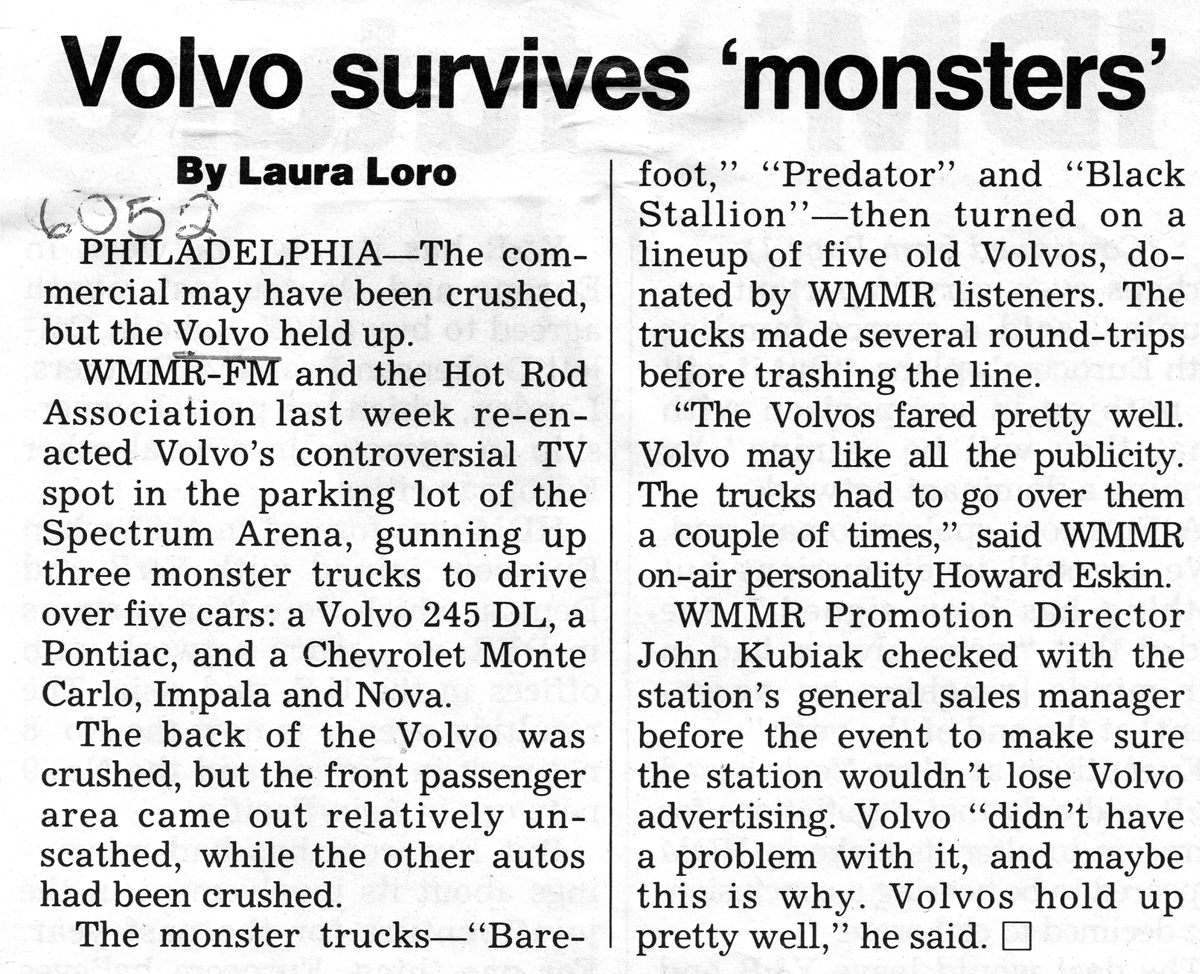
Beyond the media buzz, there was great irony in the “Monster Truck” saga. In the months after the story broke, the United States Hot Rod Association, the sanctioning body for monster truck events, embraced the global media frenzy. Around the nation the USHRA scheduled “Crush a Volvo” events as a headline grabber. However, the crushing didn’t go as planned. Even without that movie magic, and just as the Swedish engineers foresaw, Volvos really could withstand a monster truck’s abuses. As reported in the Pittsburgh Press after one such event, “Volvo was grudgingly declared the winner this morning after a monster truck trying to crush it ended up with a broken drive shaft.”

It appeared that not only could Volvos withstand brutal punishment, Volvos could even fight back.

In covering the event, USA Today reported that Volvo Spokesman Robert Austin stated, “Volvos really are tough. In fact we wouldn’t mind if they featured “new” Volvos for these events.”


LINK TO VOLVO MONSTER TRUCK COMMERCIAL

By |2022-04-14T15:46:20+00:00April 14th, 2022|2 Comments

Conversations With People We Value #33

While driving north along Virginia Route 29 I spotted a forest richly populated with orphaned trucks from the 1950s. I quickly pulled over to a clean white two-bay shop that resided on the high ground above the forest. A hand lettered sign identified the business as Melvin’s Used Cars. I drove up in the hope of finding Melvin and asking, “What’s your story?”

Well groomed and neatly attired in crisp work clothes, the man I came to know as Mel stood by an open bay. Friendly and engaging, Mel indeed had a story. He had a field of old cars that once numbered almost 500. Interestingly when I expressed my interest in writing his story, Mel repeatedly redirected the conversation to his friend R. J. Pinto who he clearly felt had better stories. As luck would have it, in mid-sentence Mel yelled, “It’s him. It’s Pinto,” as R. J. Pinto pulled in off the highway. In short order it would become evident that Mel’s story would be written another day as I was about to meet Pinto. And, now, so are you.

Drank with Arlo, Dated Alice, Tuned Evel’s motorcycle and much more. They call him Pinto.

Pinto and Mel

Pinto bundles the vigor of a colorful yarn spinner in an 85-year old, burly, gregarious, engaging and earthy package. Pinto still communicates the vitality of a young man who savors grabbing life by the horns. At the same time he reflects on life with a mellowed perspective and insights refined through eight decades of having ones heart and soul polished by the abrading rapids encountered while navigating the river of life.

A brief introduction by Mel tees up what will be a fast moving morning of storytelling. Belying Pinto’s approaching 86th birthday his memories possess a crispness that brings them to life. Being on the receiving end of Pinto’s rapid fire delivery feels like taking a drink from a fire hose.

Born in Middletown, New York, Pinto, a Korean War Veteran, began a lifelong love for all things motorcycle in the 1950s. It would be an affection that would lead down many paths and involve him in iconic events of the 20th century American culture.

In the 1960s his passion for motorcycles brought him to a little restaurant called “The Back Room” in Stockbridge, Massachusetts. Purchased by the owner in 1966, it could be found around the back “just a half-mile from the railroad track.” In American culture The Back Room is more fondly remembered as “Alice’s Restaurant.”

He and his motorcycle racing buddies knew the owner, Alice Brock, and Pinto says, “As a group we all comprised a family.” That family had celebrated Thanksgiving in 1965 at the de-consecrated Trinity Church in Great Barrington, Massachusetts that Alice had bought for her home in 1964.

Trinity Church 1966

Pinto’s motorcycle family grew out of his very successful racing career on dirt tracks east of the Mississippi. If he ever chose to have a trophy room, Pinto would have had no trouble filling it with the trophies from over 100 wins.

Pinto with a great affection for the Triumph motorcycles with which he competed says, “Scrambling on dirt was in the DNA of Triumph. Back in the 60s Triumph-powered machines dominated.” His is, indeed, a deep affection. He has kept the Triumph he raced for over 50 years. He says, “My Triumph TT (Tourist Trophy model) has been very good to me.”

The paths of Pinto’s dirt track racing and Alice’s Restaurant intersected in the mid-1960s at the Trinity Church.

Pinto says, “I had done a lot of racing in the Schenectady area. One track in particular, a beautiful track with a little chicane and a jump I found especially friendly.” The tracks friendly environment and Pinto’s showmanship bred a family of supporters that became the Trinity Racing Association. Pinto says, “Alice’s, then husband, Ray Brock and I designed the logo for the Trinity Racing Association that consisted of a yellow circle, red triangle and infinity sign representing the Father, Son and Holy Spirit. Away from the track, the epicenter of team member activity centered on the communal environs of Alice Brock’s Trinity Church home.

Life Magazine   Top – Ray Brock    Middle – Pinto    Bottom – Doug Campbell    Standing Jimmy J.

Pinto says, “I made many friends, many of whom I still know till this day.” On one especially big racing day they all decided to come see Pinto race. Pinto says, “I happen to win that day. So I handed Alice the checkered flag and she hopped on the back of the bike for the victory lap.

Husband Ray taught a shop class and Alice was the school librarian at a local boarding school. Pinto says, “They were gifted creative people.” Being who they were, they attracted a number of students who shared their idealism and their creativity. Arlo Guthrie was one of them.”

Son of American folk legend Woody Guthrie, Arlo graduated from high school in Stockbridge in 1965. After a brief stint in  college, Arlo returned to the Berkshires in November of 1965. He stayed with his friends, Ray and Alice, at the church during the Thanksgiving holidays. A holiday celebration that will forever be memorialized in song.

Alice Brock & Arlo Guthrie

Sometime during the span between the 1965 Thanksgiving dinner at the church and Arlo Guthrie’s July 16th, 1967 Newport folk Festival live performance of his opus, Alice had called Pinto to come to dinner to meet a young friend of hers named Arlo Guthrie. Pinto says, “I had no idea who Arlo Guthrie was.” At the time I saw a young kid making a living as a troubadour traveling around the country hitchhiking and playing all the café’s and bars in New York and wherever else he could make a few bucks.

Once Guthrie’s monster hit captured the public’s attention the family members peaceable life would be forever changed. Among others Alice would resent her unwanted fame and divorce her husband, Ray. Pinto would find work in the movies.

Pinto played himself in Alice’s Restaurant, the movie, having parts in scenes of the motorcycle race and getting a tattoo. In the process he developed a good relationship with director Arthur Penn. Out of that relationship came other film work involving motorcycles with the likes of Sean Connery and Clint Eastwood.

By early 1969, Pinto and Alice had become a couple. Eight months later the Alice’s Restaurant experience would peak with the release of the movie. Pinto would appear in 1969 issues of Life Magazine and Playboy that profiled the Alice’s Restaurant family. August 18th Woodstock had exploded on the global consciousness. August 19th “Alice’s Restaurant” the movie appeared in studios across America. A week later Pinto and Alice left their relationship behind and entered a friendship that continues today.

Pinto racing his Triumph at age 79

In the early 1970s Pinto had moved on to owning a motorcycle tuning operation. Called North Bergen Cycle Shop in Mahwah, NJ it specialized in building and rebuilding motors and optimizing motorcycles for the owner’s intended use. With some humility Pinto says, “If somebody came in with their BSA, Triumph, Harley, Ducati, whatever, if they came in and said I want this set-up to do such and such, make it magic, they came to the right guy.” Fifty years later and now living in rural Virginia, Pinto continues to tune the motorcycles brought to him from far and wide. Pinto smiling with the honest confidence of experience says, “I am still the right guy.”

This brings us to Pinto’s dealings with Evel Knievel. Pinto recalls a man entering North Bergen Cycle in the 1970. Pinto says, “This guy comes walking into my shop. He was a perfect gentleman. He was very honest. He was very honorable. I really liked him.” Evel Kneivel’s manager, through his connections in the motorcycle world had come to Pinto to have Kneivel’s bikes tuned for jumps he would be doing in New Jersey and Pennsylvania. Pinto says, “For me this recognition ranked high on my list of professional “WOW” moments.” Pinto said yes. Shortly thereafter a monstrous Peterbilt decked out in striking red, white and blue Evel Kneivel art thundered into his parking lot.

Up until then Kneivel had used Harley Davidsons and then Triumphs for his jumps. No more. Out of the Peterbilt rolled  seven brand new Laverda 750cc American Eagle Model motorcycles. Pinto says, “They were a very well built high quality Italian motorcycle. I just did everything to assure that they were right on spec. My job demanded that I go over every nut and bolt. The Laverdas were a beautifully designed and built motorcycle. My job was to make sure each delivered peak performance.”

Evel Kneivel after crashing at Pocono Raceway

After being so impressed by Kneivel’s manager, Pinto admits to finding Kneivel to be a rather arrogant and unpleasant individual. Pinto says, “Maybe I just caught him when he was having a few bad days.”

Pinto, in recalling Kneivel’s jump attempt at Pocono Raceway ended in a terrible crash resulting in serious injury says, “ He missed the jump and wiped out. I could not help but think of his reputation as a heavy drinker.” It was documented that before every jump Kneivel would take a shot of Wild Turkey for good luck. Sometimes it would be two or three shots if he felt the need for extra luck. “Maybe this time the extra shots brought bad luck,”says Pinto.

In reflecting Pinto says, “What is the saying, If you love what you do it is never work. My life and my profession, in large part revolved around my passion for motorcycles. All those involved with my passion I loved and continue to do so.”

Pinto concludes motioning towards Mel saying, “Mel here shares my passion. I love him like a brother. I am blessed.”


By |2022-03-31T11:35:20+00:00March 31st, 2022|6 Comments

Cars We Love And Who We Are #25

My eye had first been caught by a two-tone 1962 pickup truck version of the T1 VW Bus. Resting in a bed of dead weeds, it resided in a distant field far below my rural mountain road vantage point. However, while the iconic VW held my primary interest, my inability to identify the pair of battered Porsche-like sports cars accompanying the VW on that overgrown field began to gnaw at me.

I had to go back for the story. Little did I know the extent of the story that awaited me.

Mr. Thomas’s forest of old Porsches, VW buses and more

Cameron Thomas and his 1962 VW pickup

My determination took me down to the base of the steep slope in search of answers and access to the, apparently, once loved but now forlorn trio. I snaked my way along a narrow descending dirt road that brought the field closer. Arriving at a rustic country home, I sought someone capable of answering the question ”what’s the story behind the orphans in the field?”
Met by a pleasant woman with a phone to her ear, I explained my interest in abandoned classic vehicles for a Drivin’ News story. She forthrightly explained that her husband owned the cars and he would have all the answers to any questions I might have.  She directed her attention to the phone and then back to me. He would be waiting in their large hay field down the road, she explained.

As I rumbled down the dusty gravel access road that traversed the hay field, a moldering but quite complete 1963 Buick Riviera and a distressed T2 VW van came into view. I sensed that there would be much more to the story than I had anticipated.

A walk in the woods

There waiting to greet me, stood master stone mason Cameron Thomas. A slender wiry man who, though in his late 70s, possessed a handshake like a leather skinned vice that left no doubt that he remained quite active in the day to day operation of his stone business. With a ready smile, a quick wit and an easy southern accent, Cameron said, “My wife tells me you have an interest in cars.” Then, with a friendly gesture he directed me toward a wide path into the nearby forest. Cameron said, “You might find this interesting.” Interesting indeed.

We turned our backs to the Riviera and VW van, both left for later discussion and moved into the woods on a single lane width trail. Early on, the view through the leafless trees of a forest in winter showed glimpses of shapes and colors that hinted at what awaited. Shortly thereafter, the path widened to reveal my first glimpse of multiple clearings where an eclectic array of vehicles possessing a heavy German accent lay strewn about the landscape.

Porsches of numerous flavors, VW Westfalias, Beetles, and Rabbits together with a sprinkling of British sports cars and a stray Jeep, all in various states of disrepair and degeneration populated the woodscape.

Staring at this assemblage, it appeared to be the land where air-cooled and German vehicles came to die.

Cameron explained that he began amassing his collection of over sixty automobiles about 50 years ago. Back then in his 20s he had formulated a retirement plan that called for accumulating desirable automobiles with the intention of building a workshop where, when he had the time, he would refurbish the cars and sell them.

Cameron admits to being partial to air-cooled German cars. He says, “ The air-cooled stuff was more of what I was looking for. My interest kind of transformed into a hobby.”

Many of the cars came to Cameron in good or at least running condition. So what happened? When asked the 64 thousand dollar question “why were they left outside,” Cameron says, “With the demands of my business, I never got around to building the workshop and we were too busy buying to do any selling. If a car experienced a problem, there always was a place for it in the woods.” With Cameron owning a large expanse of fields and woodlands there clearly existed an element of out of sight out of mind.

T-Boned Westfalia

Entering the opening in the woods a battered 1972 Type 2 VW Westfalia greets us. Cameron explains that he purchased it and together with his son Jon refurbished it for Jon’s high school transportation. Leaving school one winter day Jon fired up the Westfalia and without letting it warm up made a dash to leave the school parking lot in front of a school bus that was descending from a good way up a hill. Cameron says, “My son made his move and made it to the middle of the road when the cold engine stalled. After leaving a 70-foot skid mark the bus T-boned the VW on the driver’s side.” The energy of impact delivered a blow sufficient to deposit some of the chrome letters from the hood of the bus onto the VW’s front seat. As for his son, he walked away with a few bruises. Lucky kid.

Next to the Westfalia a 1984 928 Porsche, one of two Cameron has accumulated, had a history of outrunning the local Corvettes. Cameron says, “It had a good bit of work done on the engine.” Cameron drove it for a year or so around 2005. In thinking back he says, “I can’t really think of a good excuse for parking it in 2007.”

Behind the 928 can be found the T2 Westfalia that Cameron bought right after his son’s accident. He says it was a good driver, that it was pretty much complete, including the original interior, when he bought it in 1980. It has sat unmoved in the woods since Cameron bought it.

Moving to our right brought us to another Werstfalia. Camerson acquired it in 2000 and except for winters drove it fairly regularly. Then after sitting for the winter of early 2005, he sought to fire it up in the spring of 2005. The engine locked up. Banishment to the woods quickly followed. On the plus side it remains a Westfalia with a solid and an original interior. On the down side, some windows are broken or gone and it features first class spider webs.

Cameron and his row of 944s

At this point evidence of a clear pattern has taken shape. It appears any vehicle that suffers failure merits banishment to the Cameron Thomas forest trail.

The fate of Cameron’s five 944 Porsches gives strong substantiation to the one strike and your out in the woods theory.

Arrayed in a neat row of five 944s, the first and last in line rated as good drivers when purchased. Others came from junkyards or the garages of people who had given up on their restoration.

One of the 944s had jumped the camshaft and bent all of the valves. Cameron and friends removed the head and reassembled the engine. When they fired it up as Cameron says, “It started screeching like a banshee and that was that. We must have missed a bent part in our rebuild.”

1963 Buick Riviera

Upon returning to the hay field, I asked about the Buick Riviera. Purchased in the early 1970s, Cameron says, “It was in good unrestored condition and a fine driving vehicle. Up until he had bought it the Buick had never spent a night outside of the garage.

What happened? Apparently that Buick had a two-piece drive shaft with a center U-joint. The U-joint went bad. Cameron says, “At the time I had a great deal of difficulty finding a replacement. By the time I found one my interest in the Riviera had passed.” The Riviera has sat ever since.

As we approached the end of the abandoned car trail of tears a 1963 Willy’s Jeep came into view. Cameron had come found it in Florida years back and trailered it back to Virginia. It has spent considerable time in the woods. Cameron says, “It is solid with less than fifty thousand miles on it.”

Chalon re-body

And at last we come to the trio that initially captured my attention. The two sports cars left for dead in the field are two Chalon rebodied 1972 914 Porsches. The brainchild of a California parts distributor, the Chalon kit imparted a 914 with a more aggressive slant nose presence.

The engines in Cameron’s two Chalon 914s remain 4-cylinder but brakes and suspension components reflect significant upgrades. Both cars ran strong when purchased and Cameron drove both with pleasure until the large tree fell crushing both.

Interestingly the most functional and except for his 1941 International military truck the oldest in Cameron’s collection is his 1962 T1 VW pickup. Purchased in 1985 the pickup features a 1600 cc beetle engine, upgraded brakes and a later transmission. Unlike its brethren in Cameron’s collection, with current antique vehicle tags, this VW stands poised to hit the road.

In honest reflection Cameron realizes his retirement plan, like a garden untended, took on a life of its own. He admits that he didn’t appreciate how much the cars would deteriorate over time.

1963 Willys Jeep

Now what? At this point Cameron says, “My son has made it clear that he does not want to live on a junk yard. He would like to see everything gone except the orange VW Westfalia we purchased to replace the one T-boned by the school bus.” Cameron acknowledges that there will be some head butting between he and his son on the issue. Cameron also accepts reality, saying “I accept that they need to go. I’m not going to live long enough to work on them all now.” Of the sixty he accumulated he has sold twenty. He says all are available. Anyone with a serious interest can contact him by email (cameron22959@yahoo.com). When asked if he could only restore one of his cars which would he choose, interestingly he chooses the 1963 Willys Jeep. He says, “It is solid and simple which translates into an ideal candidate for refurbishing.”

Having seen a lot in his 78 years, Cameron in his easy southern way and with a reflective knowing smile says, “Time takes its toll. It comes along slow, but it is always coming.”

By |2022-03-23T01:57:58+00:00March 18th, 2022|10 Comments

Roads We Remember #10

With interstates fading in the rear view mirror and blue highways taking their place, complex pinks and oranges paint the sky as the sinking sun of the fading afternoon ushers my driving day to a close. As I descend from Virginia’s Skyline Drive, my journey comes to rest in the bucolic embrace of Nelson County, Virginia. Tomorrow promises to be sunny and unseasonably warm as I seek a taste of the car culture of the Shenandoah Valley.


Taking the Skyline Drive to explore the dusty attic of Virginia car culture

Exiting at the southern end of  Virginia’s Skyline Drive and proceeding down the east face of the Blue Ridge Mountains introduces a beautiful tangle of serpentine two-lanes, some paved, some gravel. Welcome to Nelson County.

Delivering a delightful shock to a bored suburban driver’s system, Nelson County possesses a wealth of wonderful roads and a dearth of stop lights. The whole of Nelson County contains exactly one (yes, 1) traffic light.

For those of us whose daily driving environment consists of thoroughfares that, for the most part, resemble a transposed graph paper grid, which is what they basically are, the whole of this region of Virginia pretty much presents itself as a Disney World for people who fantasize about driving on one grand “Tail of the dragon.” Great roads with character and curves, old barns, abandoned buildings, and, it is said, lots of nice stuff tucked away and cared for.

Recreation and agriculture in the form of logging and vineyards dominate the area. No belching factories here. Rich in history as well, historically significant Civil War sites populate the area as does the shadow of Thomas Jefferson with Monticello and the University of Virginia in close proximity.

Virginia’s Skyline Drive

For enjoying Skyline Drive, summer with its lush foliage and autumn with its spectacular colors seems the no-brainer choice for a visit. That said, should one chose to tour in winter, the roads unless closed because of snow, offer a sparse beauty unavailable in other seasons. With trees free of leaves and roads free of tourists, stunning vistas otherwise hidden in high season exist aplenty. Gateway to the Blue Ridge Mountains Virginia’s Skyline Drive offers a very tasty driving appetizer to enjoy prior to the Blue Ridge Parkway entre.

Wherever you drive on these narrow mostly shoulderless country roads, folks outside their homes that dot a terrain defined by fields and forest wave and, unlike my home state, New Jersey, they wave with all the fingers on one hand. Indeed, the locals exhibit a down-home country openness that causes one to pause and wish it caught on elsewhere.

If one chooses to start the day with no itinerary, an eager curiosity and a full tank of gas or electrons, discoveries await for those in no rush to find them. On this day the blue highways did not disappoint.

While enjoying an easy cruise through a forested stretch, an opening within the trees revealed an abandoned service station. Exploring behind the “high security” torn and flapping tarp where a bay door once existed revealed a passage way to two more bays. Despite the stacked mounds of tires it did not take long to identify a heavily dust covered 60s Camaro. Old plates showed it to have been in residence for quite a while.

At a quiet intersection a rusted and dilapidated 1957 Chevy Bel Air sat askew and forlorn. Not a part remained that could be used. But there it rested, too worthless to save to precious to junk. Dust to dust.

To the side of a dirt farm road, a long forgotten early 1950s Plymouth Savoy clearly fared the worst in a face off with a falling tree. A sunny field on Rt. 151 appeared to be where, years back, 1952 two-door Fords went to die.

Earlier in the morning a glance to the right revealed an expansive meadow where an agrarian windmill towered over the rusted remains of a trio of hulks from the 1930’s and 40s. For the uninitiated, one or two of the carcasses could spark the tinder of restoration dreams. For those possessing restoration history and the skinned knuckles to prove it, wisdom would counsel to keep on driving.

However, simply looking would not satisfy the hunger for a backstory. Further investigation demanded turning onto the gravel driveway that lead to a sturdy fieldstone structure surrounded by an eclectic array of once useful items sadly past their “use by” date.

Plymouth Savoy

Gravel crackling beneath the tires drew into view from behind the open back hatch of a 2002 Ford Explorer the man who called this home. Sporting a badly weathered narrow brim cowboy hat, with a lined face worthy of a Dorothea Lange portrait and the animated presence of comedian Professor Irwin Corey, 62-year old David Matheny could not have been more welcoming. Approaching, he offered an easy grin accompanied by a firm and honest handshake.

Resident of this verdant valley his whole life, David spoke with an energetic ease about himself, friends, family and cars. When asked if those rusted hulks belonged to him he responded, “They are for sale.”

Learning that the interested expressed focused on their value as for a story, he asked, “If you are interested in cars want to see some more?” Absolutely shot back the reply.

1939 International Panel truck

Directing me inside the stone structure, he opened a door to a garage containing a very clean burgundy 1940 Ford coupe and a 1939 International panel truck in primer that had been a hearse for a local church years back. Having found common ground and

a ready listener, David held forth on stories including a family classic involving a 1931 model roadster that his father had raced over sixty years ago. It remained in the family and presently resided at his nephew’s speed shop undergoing a restoration. Time sped on and David had people to meet. The sound of gravel crunching under departing tires marked the end of a wonderful history lesson.

For some it can be disquieting to have the rapid passage of time abruptly brought to one’s attention e.g. discovering that a car you personally drove when new now merits being judged at Hershey by the AACA. Much the same can be said for forty and fifty-year old future collectibles spotted in fields and under canopies. They too can be found moldering in the verdant hills of Virginia. Interestingly, they now include a distinctively foreign flavor.

While making a steep climb in Nelson County a causal glance down to the valley below revealed a field with a decidedly European flair.  Exposed to the elements, a Type 1 VW pick-up and two faux Porsche 914s slowly oxidized. Apparently left for dead, the VW pickup generated an especially strong lingering desire to find some way down that steeped ravine.

Meandering vigilantly, can enrich a blue highway experience that others, not predisposed to savor, might blow by like a subway between stops. That said, all worthy discoveries are not the exclusive province of interesting vehicles alone. People and places greatly enrich the blue highway experience.

Cruising along through the town of Schuyler brought a Model T pickup into view and with it the home of author Earl Hamner. Strike a bell? He wrote Spencer’s Mountain which television turned into “The Waltons.” Next door to Hamner’s home and across the street from the Walton’s museum could be found a handsome Bed & Breakfast displaying a period correct 1931 Model.

Conversations with local folks always explores the names of knowledgeable car enthusiasts with whom to speak. One name, Dick Carroll, came up with regularity. Reaching out resulted in a meeting with Dick and his friend Don Vey, both retired. Dick and Don possess a real fascination for special interest automobiles. A number of years back Don pursued his passion by diving head first into full restorations.

1949 Baby Lincoln Coupe Restomod

He first focused on a  1938 Buick and subsequently moved on to 1949 Baby Lincolns which came in three models, 2 Door Coupe, 4-Door Sedan and Convertible. He has one of each. He intends to recreate each as a pristine restomod. The Coupe has been completed. Built from 1949 to 1951, Baby Lincolns shared their basic body style with the Mercury of that period. What made it a Lincoln came from the firewall forward. Dick’s plan for putting his stamp on the baby Lincolns calls for a high performance power train. All three will have Corvette LS motors.

Beyond his own cars Dick has a grander vision. He appreciates not only his vehicles but those of a wealth of classic car enthusiasts in the surrounding area. To celebrate those like-minded individuals he hosts a car show on his property that looks like a mini-Amelia Island. This will be his seventh show. Covid cancelled last year.

Car Show at Dick Carroll’s

Don Vey enjoys a vintage car history starting in the early fifties. Over the years he has owned and restore a wide array of classic cars starting with a 1957 Corvette he bought in 1959. While his years of restoring and collecting have been a source of joy, they have taken a toll as well. Working with toxic paints has left him at the age of 82 dependent on a portable oxygen supply. While this may have diminished his ability to work on cars he loves, it has had no effect on the joy he derives from driving them. He came to the meeting driving a Zeus Bronze Metallic C8 Corvette. Pushing 495 horsepower with the Z51 performance package it does 0 – 60 mph in under 3.0 seconds. “God I love great cars,” Don says.

Sitting in at the Side Bar

After the last day of exploration, I looked for a local watering hole to toast the good fortune of my experiences. Passing through Lovingston, Virginia, I found a pub called the Side Bar that on this evening invited local musicians for an Open Mic Night. Another great surprise. The musicianship on display excelled. These guys could play, mostly country. Then they moved on to the blues. I always bring my harps to relax on blue highway adventures. No harp players had come to back these guys up. The energy felt so right, I asked to sit in. They welcomed me.

Apparently, at least at the Side Bar, there are no strangers in Lovingston, only friends you had not yet met.


By |2022-03-03T13:38:29+00:00March 3rd, 2022|2 Comments

Conversations With People We Value #32

Tomorrow will commence my Charles Kuralt blue highways, back roads tribute tour. As such, I am yet to have exciting tales hand-picked from road side discoveries to be served up like farm fresh delicacies for your personal consumption.

If one can will the future though, I would love nothing better than to manifest glorious surprises. As my mind wanders I imagine stumbling upon a shabby yet substantial barn nestled in a wooded expanse “out back” of a weathered farm house. Parting the barn’s feeble creaking doors reveals it to be chockablock with classic contents, each resides under a blanket of fine dust that speaks to a rich past like tree rings. All possess histories of once being driven by mid-century Hollywood royalty. It would be enough to make Tom Cotter cry. Hey, you have your fantasies, I’ll have mine.

However, while organizing my back country journey I did come across a fascinating stolen car story with its roots in the closing days of WWII and its resolution well into the next century with a conclusion worthy of O’Henry.

The following offers what I believe to be the best multiple decade stolen car story with an “I did not see that coming” conclusion.

Return of the Zipper King


Threads that interweave to create the fabric of this 21st century ownership puzzle are many and involved. It all began at the 1935 Berlin Motor Show. Heroically displayed as the centerpiece of the Mercedes-Benz exhibit and indeed of the whole event, stood the gleaming

1935 Berlin Motor Show

Mercedes-Benz 500K Special Roadster, chassis number 105380. Built in 1935 during the 1934 and 1936 model run, it shone as a gleaming jewel of advanced engineering and design. Recognized as one of the greatest performance automobiles of the pre-war era, Mercedes-Benz produced a total of 342 500Ks with only 29 being Special Roadsters. Its supercharged (thus the “K” designation) 5.0-liter inline-8 cylinder produce 160 horsepower. Blazing fast in the context of the time, it could easily top 100 miles per hour. The 500K’s advanced engineering extended to the chassis which featured a sophisticated 4-wheel independent suspension with double wishbones at the front, a double-joint swing axle in the rear as well as coil springs and dampers.

As The Autocar wrote in 1936: “This is a master car for the very few. The sheer insolence of its power affords an experience on its own.”

Everybody loved it. However, a precious few could afford it with its 1935 selling price of 28,000 Reichsmark ($11,200). One person who did love it and could afford it was industrialist Hanz Prym. He purchased the car new after the Berlin Motor Show in 1936.

Hanz Prym

Prym known as the “Zipper King,” lead the oldest family-owned business in Germany. For 12 generations the Prym family specialized in the manufacture of haberdashery and copper and brass products such as zippers and buttons. During the war Prym industries supplied the war effort with turbine blades as well as buttons and zippers. It should be noted that while a German industrialist and briefly imprisoned by the allies in 1945, Prym held no sympathies for the Nazi’s. He supported the Weimar Republic and actually advocated for the return of the monarchy.

When World War II came, Prym retreated to his estate in Stolberg Germany taking the 500K with him and secreting it away on the estate grounds. The 500K quietly resided in its sanctuary while the war raged until late fall of 1944 when the collapsing German war effort saw allied troops in the form of the 3rd Armored Division (known as the Spearhead because they always like to be out in front) cross the Siegfried Line and set of camp in Stolberg at the Prym estate mansion.

First hand commentary by soldiers in the 3rd Armored Division confirmed Spearhead occupation of the Prym estate.

“The division ensconced its headquarters in the plush luxury of the Prym Mansion, just south  and east of Stolberg. The rainy winter weather soon turned the entire Division area into a sea of mud.  There were daily skirmishes and firefights, and at night patrols probed for information. Artillery  action was continuous. The men were tired and the machines needed maintenance in the worst way. Shellfire was the bane of  existence  at Stolberg and in the surrounding towns. German guns located in the Duren area constantly shelled “Spearhead” positions.”

Bivouac style encampment on Hanz Prym’s estate September 1944

During this time the car disappeared from its hiding place on Prym’s estate. Early versions of what happened told of the 500K being sold to an American soldier. Once released by  the allies after a short detention, it is said that Prym, who died in 1990, was furious upon learning that his prized Mercedes was gone. The Prym family vehemently rejected the story of the car being sold as an outright lie. The version that subsequently gained traction and stuck described the car as being spirited away by a U.S. Army Colonel and shipped to the United States while Hanz Prym was being held in the custody of Allied forces. Regardless of the reason, the 500K had vanished. Decades would pass until in 1976 when it appeared in the collection of Russell Strauch in Toledo, Ohio. From that time until 2011, Prym’s 500K changed hands with some regularity. During that period in the early 1990’s it underwent a complete restoration.

2011 RM Auctions

Then, in 2011 it starred center stage at the 2011 RM Monterey auction. There it changed hands for the princely sum of $3.7 million gleefully spent by Dutch classic car aficionado Frans van Haren. Joyfully, van Haren prepared to share his magnificent acquisition with the automotive world on Europe’s biggest stage. He intended to ship his prize to Techno Classica in Essen Germany in 2012. And he did. And that is when the Scheisse hit the fan.

Beautifully bathed in photogenic light for all to see, just not for long. Within a few hours the German authorities set eyes on the gleaming 500K and summarily seized it. Frans van Haren had been accused by the descendants of Hanz Prym of possessing stolen property. Their property. By bringing Prym’s 500K back to Germany van Haren had subjected his prized possession to German law, law that could only be enforced if the car was in Germany.

With frenzied bewilderment thick in the air along with $3.7 million disappearing into thin air, fingers seeking targets to blame flashed about pointing in all directions. At this point it would seem timely to mention that, at auction, RM Auctions stated, “Interim history is unknown.” More than 20 years of history resided in darkness and, oh yes, there was no title involved in this or any of the earlier transactions. Game on.

By the end of 2012 a German court in Hamburg ruled that the allied soldier did not have the right to take possession of the car. The 500K Special Roadster belonged to the Prym heirs not van Haren. As to what satisfaction van Haren can get from those who sold him the car, that is a story for another day.

As to the Prym progeny, in 2016 Bonhams auctioned the Prym family’s Berlin Motor Show 500K Special Roadster at the Bonham’s Chateau de Chantilly auction. It sold for $5.29 million.

As to any complaints van Haren may have, the Prym family says, “zip it.”

By |2022-02-17T04:02:02+00:00February 17th, 2022|6 Comments
Go to Top