Yearly Archives: 2020

Cars We Love & Who We Are #7

Elaine Larsson leaves no doubt as to the priceless and joyful life lessons learned in the 1970’s cross country teenage adventures she shared with her parents in their 1970 Volkswagen Westfalia.

Decades later, a serendipitous sequence of events, allowed the woman Elaine has become to again enjoy the driving experience that enriched the life of the young girl she was.

The woman picks up where the girl left off
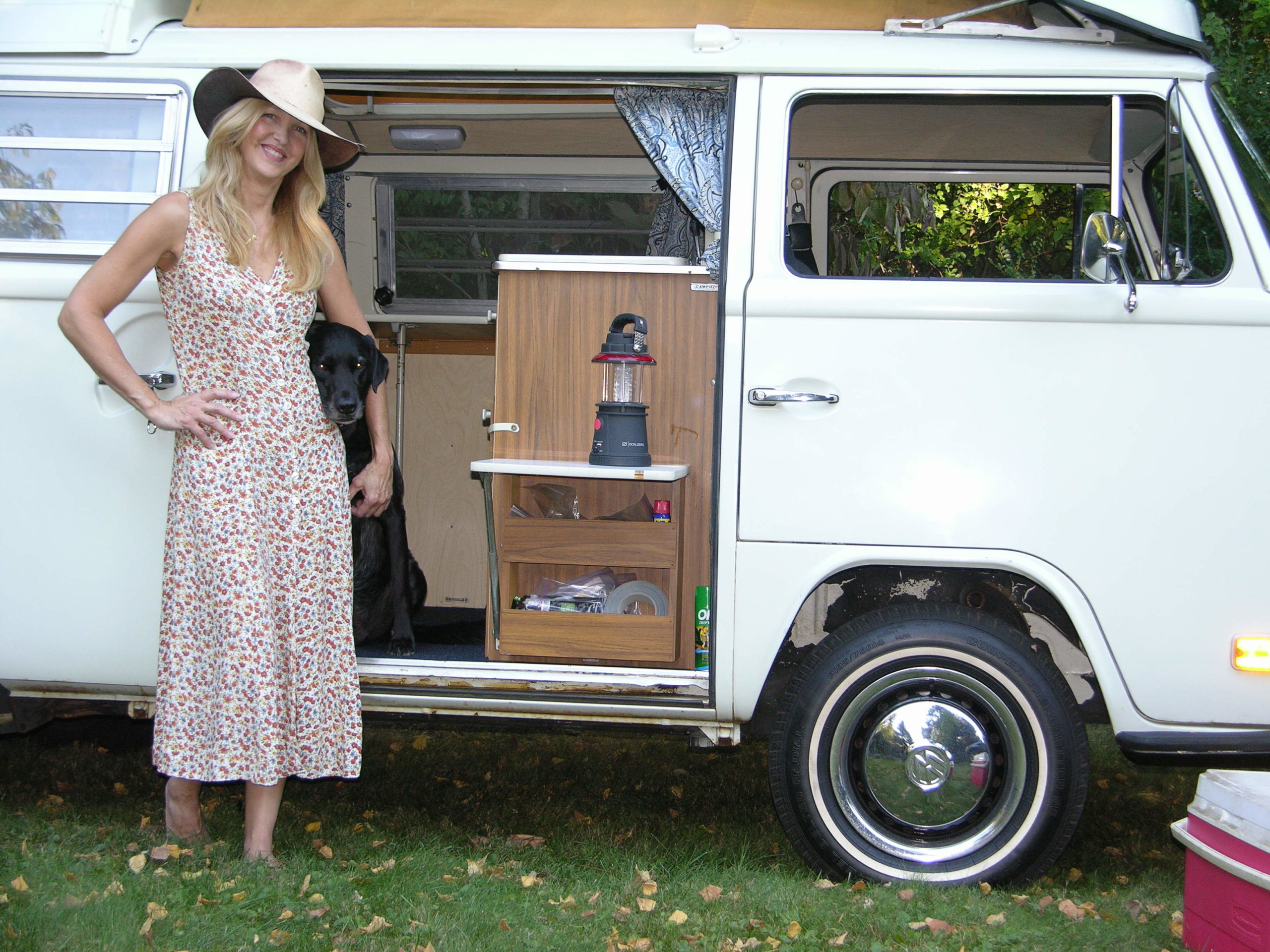
 

“1972 Volkswagen Westfalia, pastel white, 58,000 original miles” read the 2014 ad found while I surfed The Samba.com website. “What country is it in?” Elaine asked with conversational interest. While not a “car guy,” Elaine always waxes fondly when recalling teenage cross country family road trips in her family’s 1970 Westfalia.
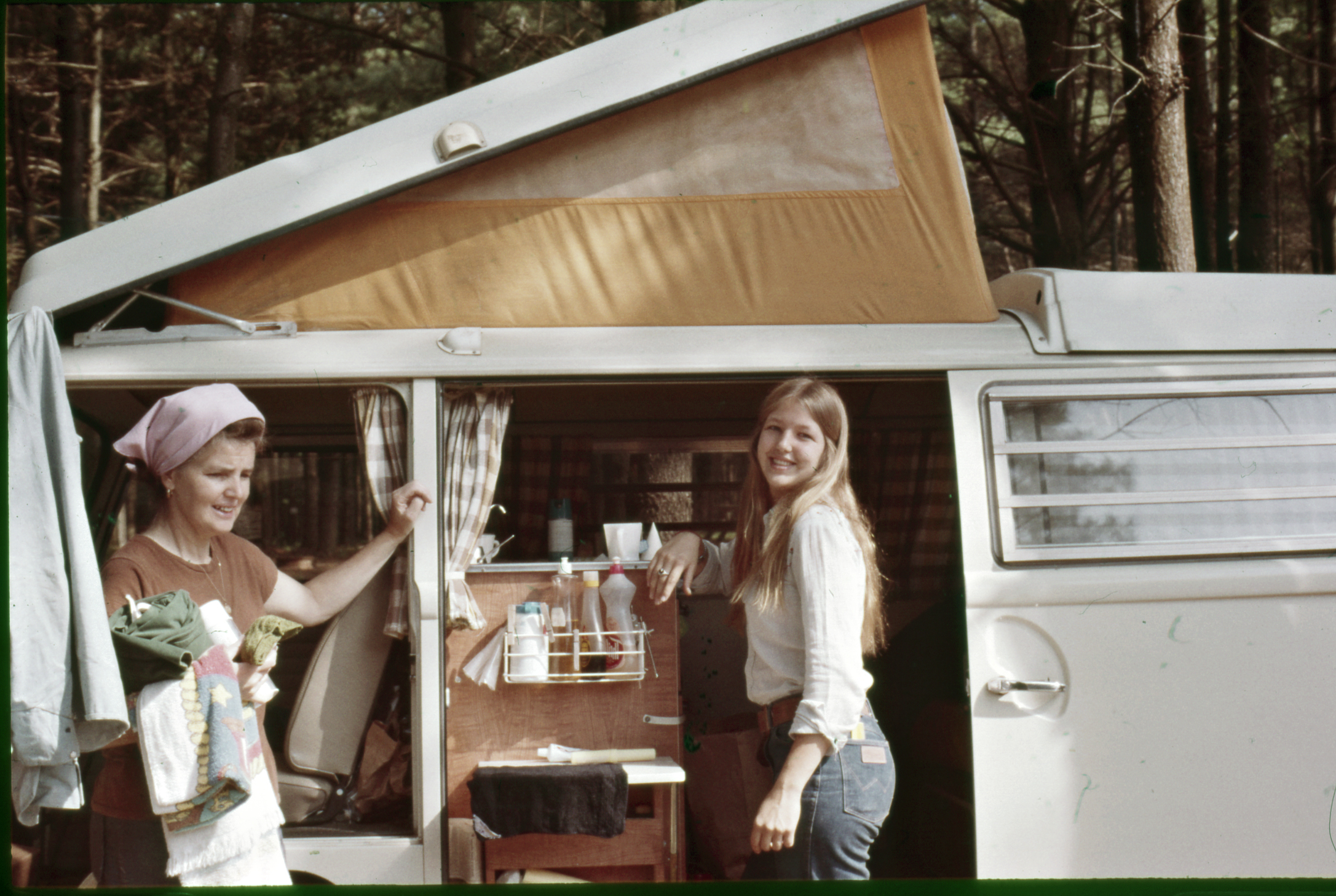
Over the years Elaine would from time to time try to track down the old van. It had been sold in the late 1970s. Her efforts gave strong indication that it had long ago moved on to the old van burial ground. However, while gone, the memories it inspired remained undiminished.
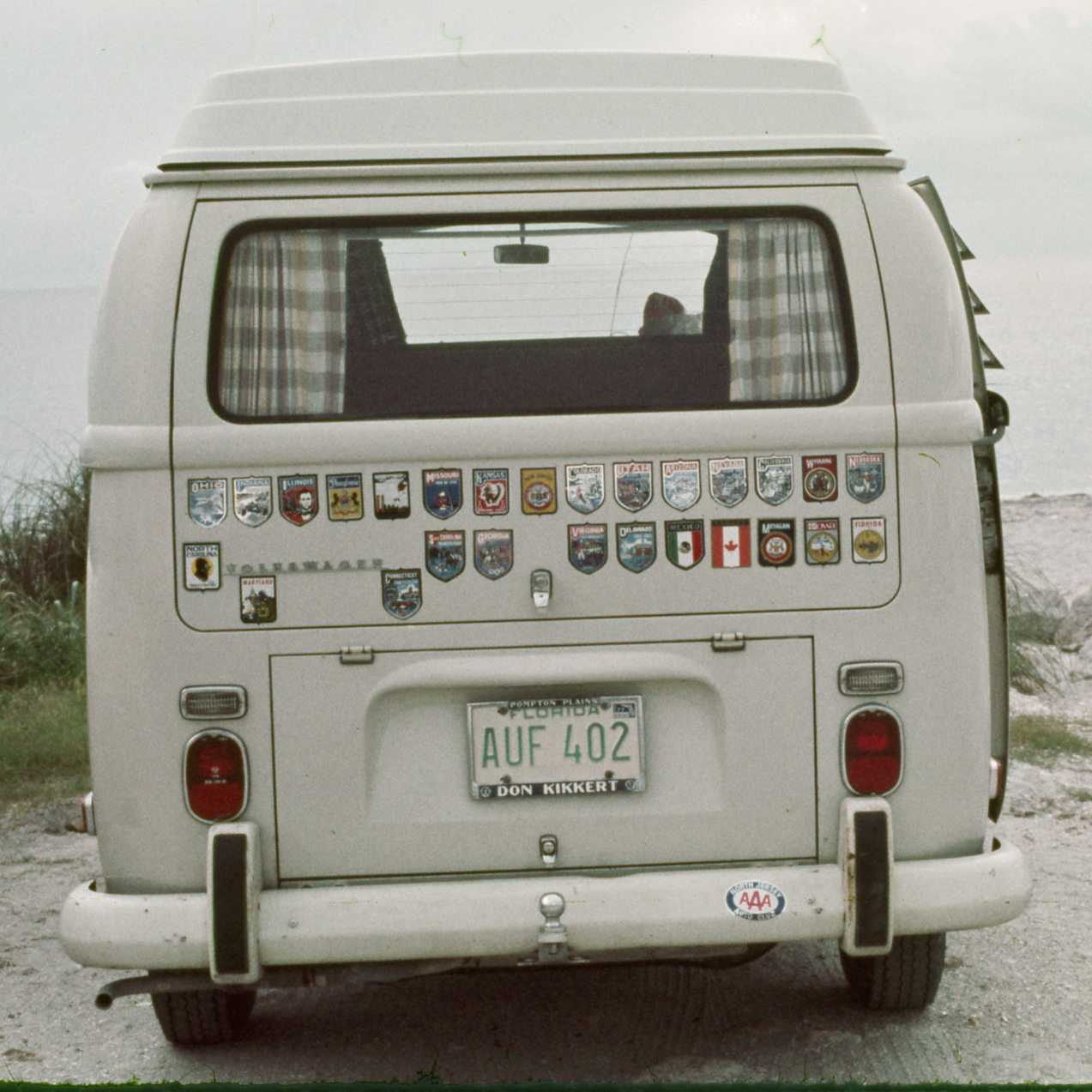
Memories of her father, a retired Jersey City motorcycle cop, her adventurous mother and BFF brother generate nothing but smiles when Elaine recalls 6-week escapes in the early 1970s where the family visited mountains, prairies, and, yes, oceans white with foam.

I showed her the images accompanying the ad for the van. Same model, same color and solid original condition. Her interest perked like coffee ready to pour.

The Samba.com website provides an extraordinary global marketplace offering vans aplenty from Africa, Europe, Canada and the western US. East coast, not so much. “Where is it?” she asked with a bit more edge to her voice. “New Jersey” came my reply.

Packing a large wad of hundreds, Elaine walked the mile between her home and the van owner’s house.
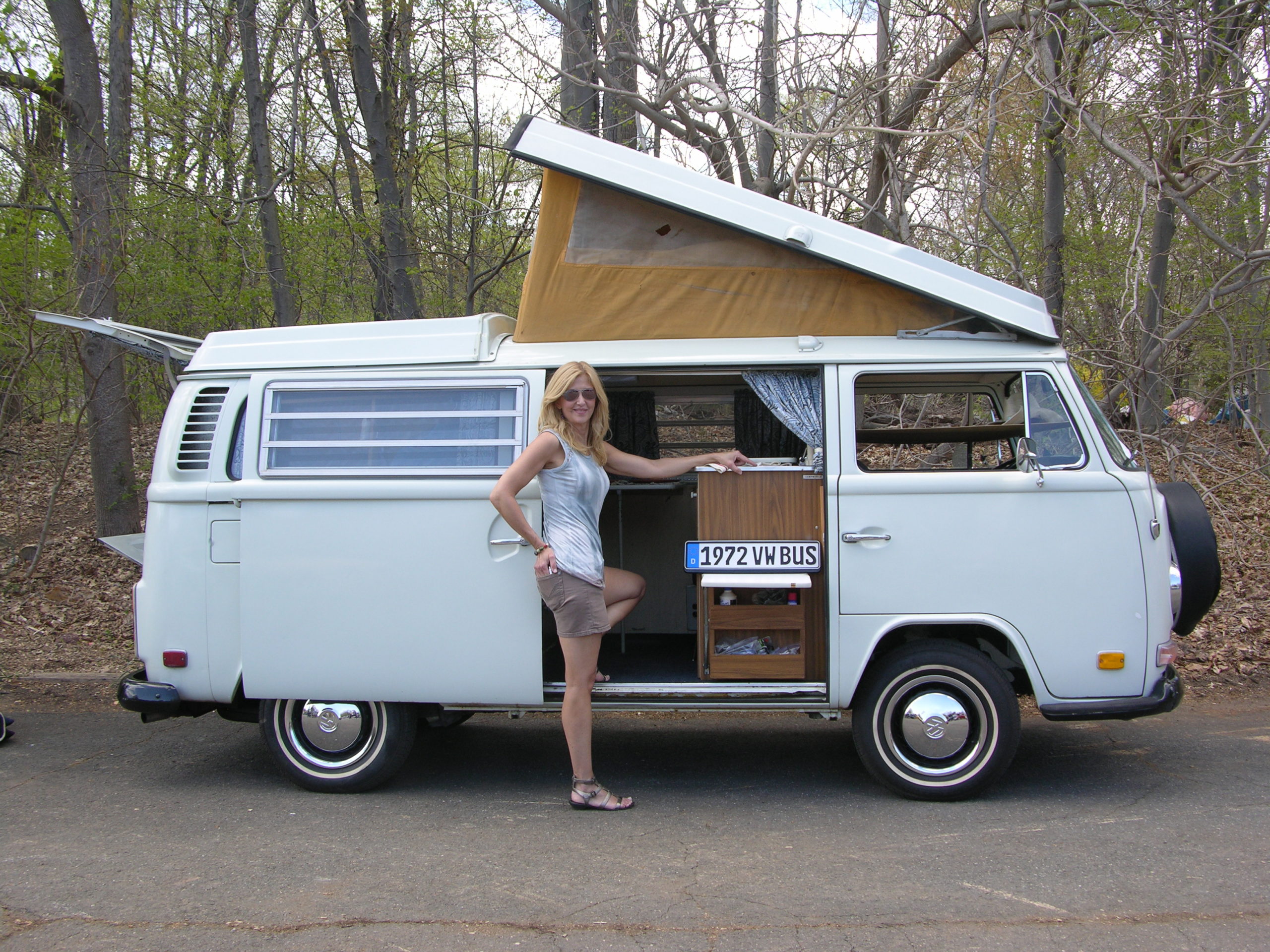
“Do you want me to show you how to drive it?” the owner asked. Elaine’s knowing laugh betrayed a “you never forget how to ride a bike” level of confidence as she slid behind the same controls on which she learned to drive. Originally purchased in 1971 by an Air Force officer stationed in Germany, this van had a diary with  comments from every past owner. It had spent 20 years in the desert of the southwest.

The last nine years found it sequestered in a New Jersey garage waiting for a once newlywed bride to finally change her mind about the joys of camping.  Finally acknowledging defeat, the camping enthusiast husband had the van headed for a buyer in the UK. Then, with the joyous precision of serendipity, Elaine showed up at the door shortly after the British buyer reneged. Elaine drove the Westfalia home.

A week later while attending her first car show as an owner, she found an endless stream of visitors eager to sit inside the van. Little kids, parents, police officers all shared a common fascination. As the roll call of awards rang out over the sound system, the final award went to the “People’s Choice.” The people had chosen Elaine’s van.
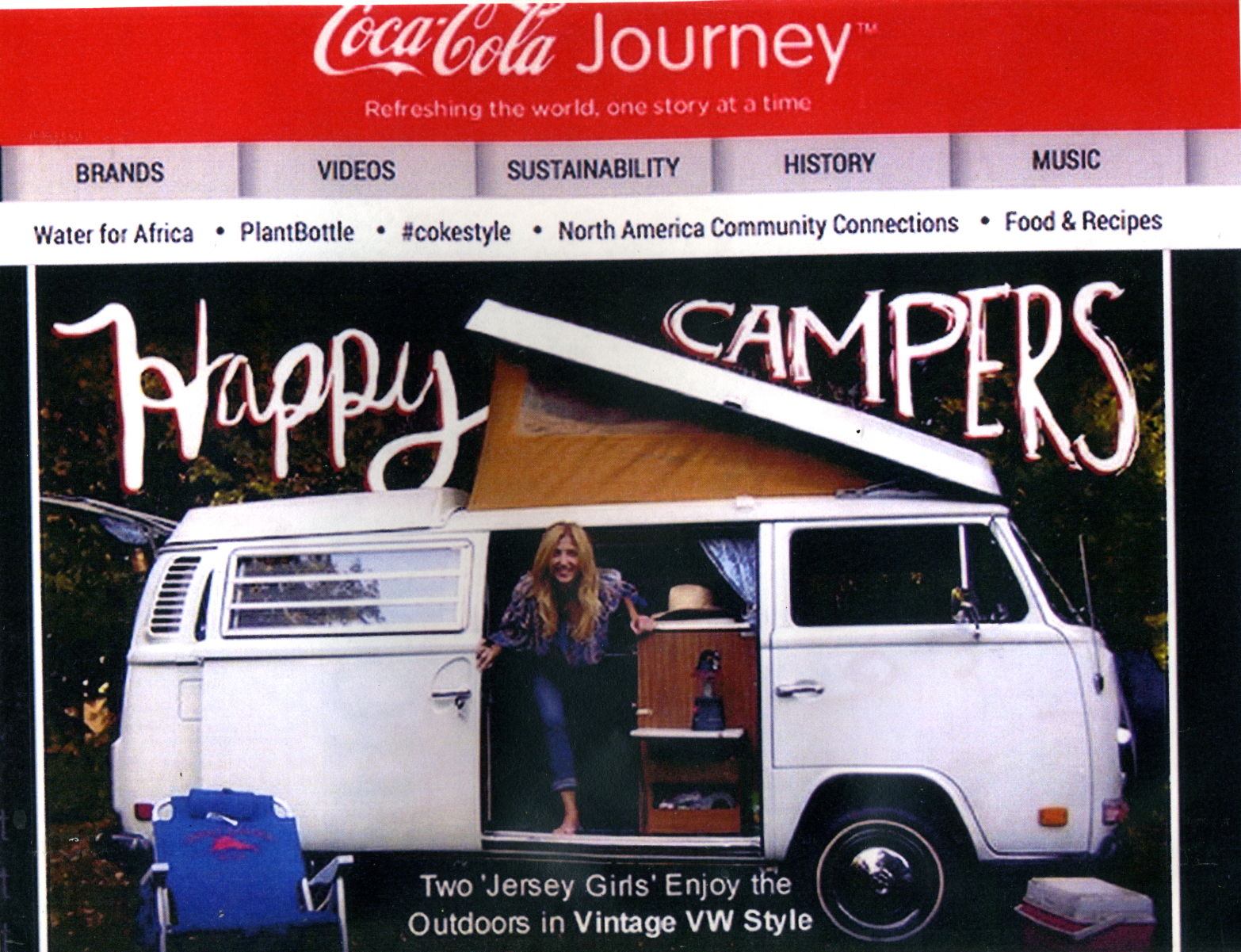
Shortly thereafter, Elaine encountered an automotive journalist, Jim Koscs, who believed Elaine and her van had a story to tell. Coca-Cola agreed. Months later Elaine and her Westfalia took center stage replacing Lebron James on Coca-Cola’s Journey Global website.

As time has passed, the blonde in her van has become a locally recognized fixture as, together, they traverse the county in search of interesting garage sales and more importantly to manifest quality yoga experiences. Training as a yoga teacher, Elaine will incorporate her Westfalia in offering an open air yoga experience she has developed called “Roadhouse Yoga.”
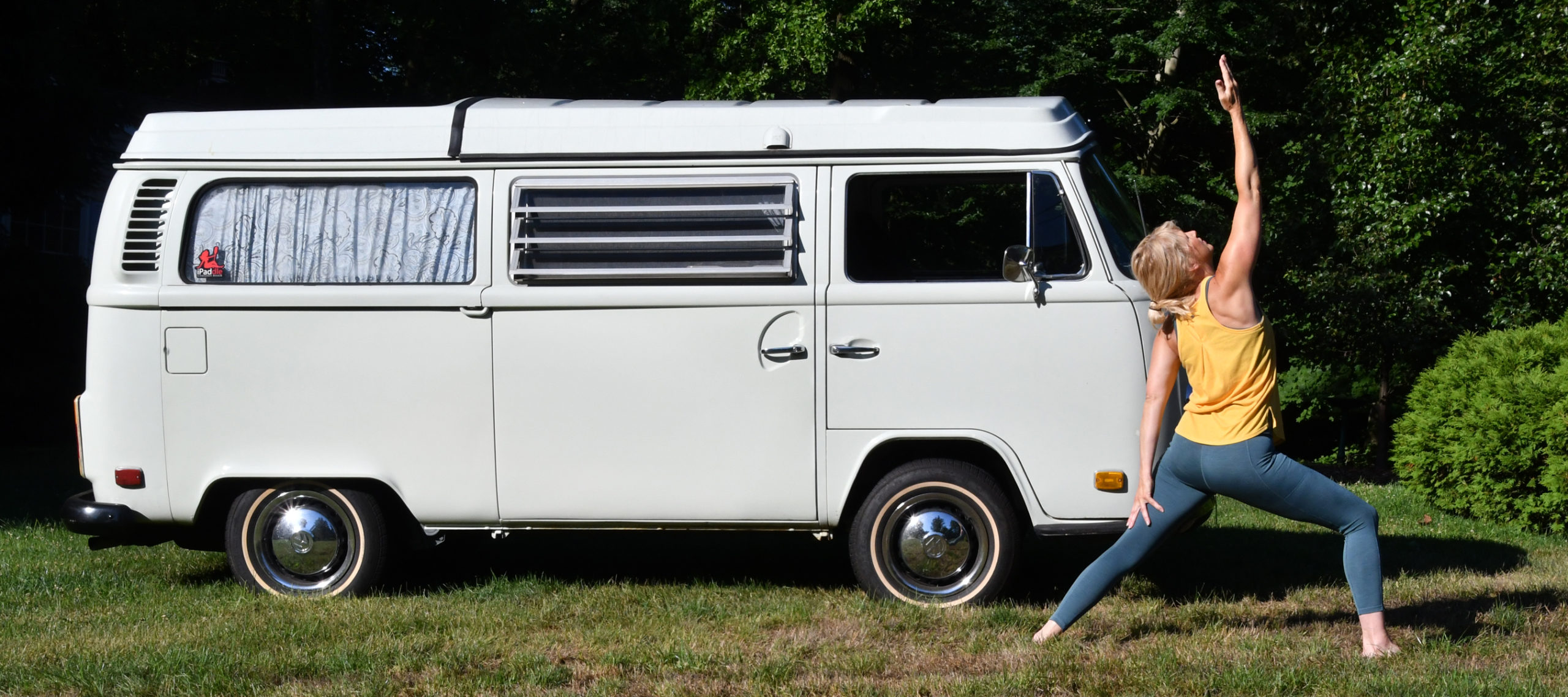
Imbued with her father’s wisdom, her mother’s kindness, her brother’s friendship and my love, Elaine’s Westfalia with each new mile carries treasured memories of a joyous past and hopeful dreams of a beautiful future.




By |2020-07-15T22:32:01+00:00July 15th, 2020|6 Comments

Cars We Love & Who We Are #6

Firing up a classic car with over a half century of history always brings with it a high probability of adventure and the unexpected.


When time and other things stand still


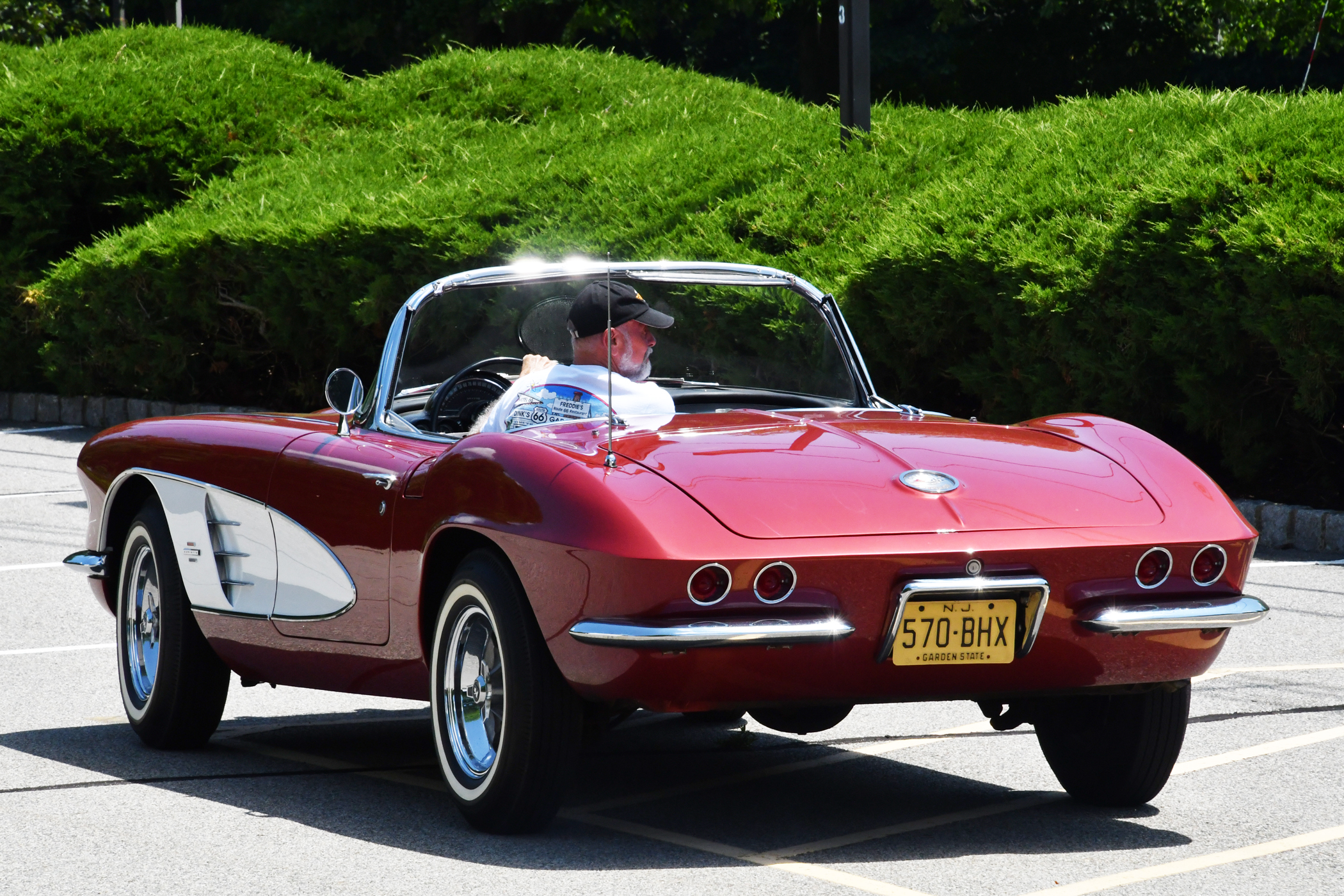
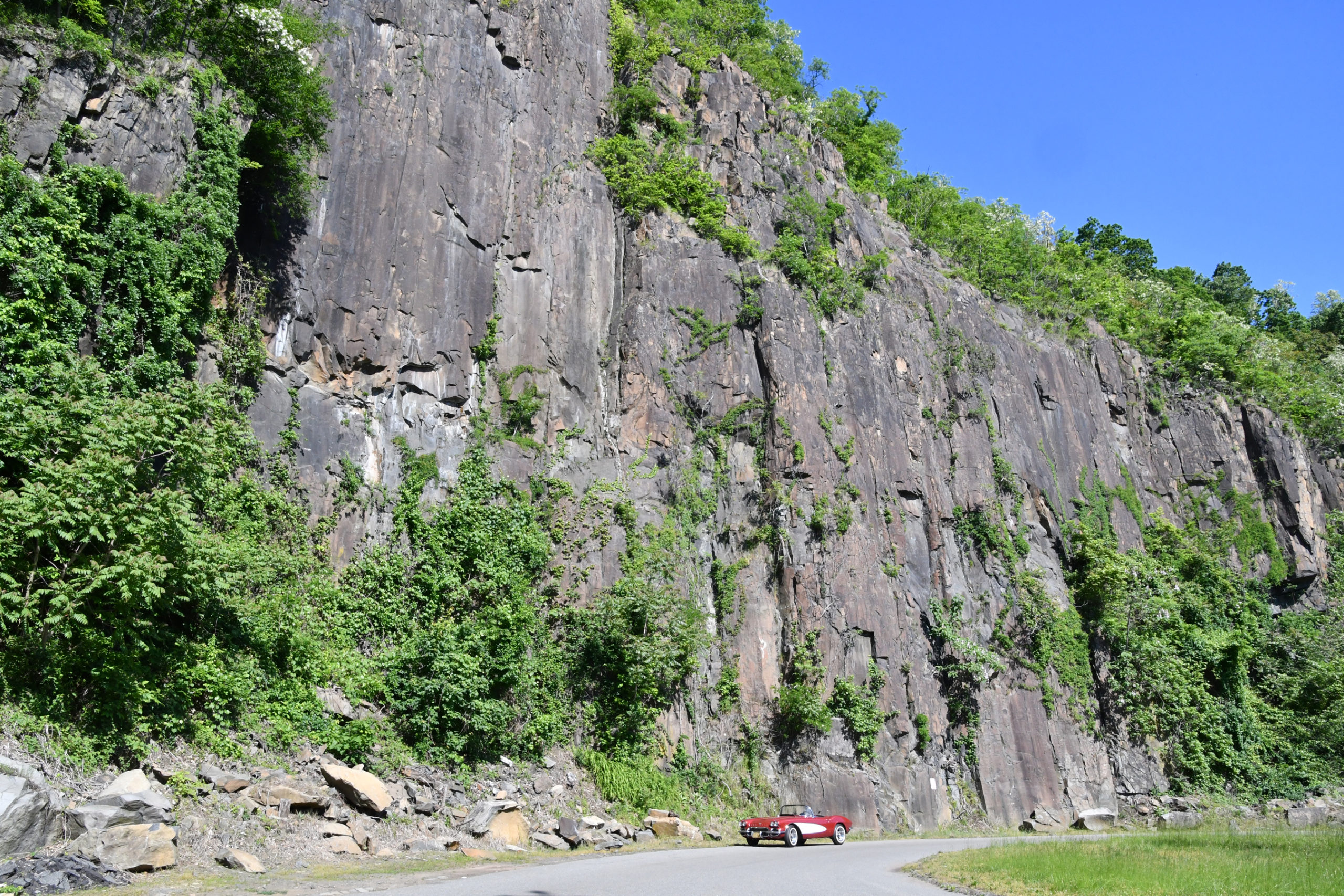
Dappled sunlight leaking through the forest canopy dances on the Corvette’s hood. It is a glorious morning on a twisting two lane that snakes through a state park. Elaine, my co-pilot for life, notices that the odometer on my recently restored 1961 Corvette stands poised to roll over to 59000.0 Actually it will be 259000.0, but in 1961 odometers only had 5 places preceding the decimal point.

A coordinated dance of digits that soon will resolve into a chorus line of zeros spin like a slow motion slot machine. Elaine, poised to nail the 59,000.0 money shot never gets the chance. At mid “.9” the odometer, as John Cleese might say, ceases to proceed.

Back home at the garage. The odometer might as well be a decal.

In planning my Corvette’s restoration, I never wanted an overlooked detail to haunt my post-restoration driving experience. With over a quarter of a million miles on my totally disassembled Corvette, I knew this was no time to cheap-out on rebuilding the instruments. The last thing I wanted was a fresh and eager car with tired instruments just waiting to crap out.

After contacting a Corvette instrument specialist on a recommendation from a respected source, I bundled up the speedometer, tachometer and clock for shipment confident that when my resurrected Corvette returned to the road it would do so with a freshly renewed set of instruments.

With a burst of Pollyanna-like optimism, I thought maybe the frozen odometer was just an anomaly, waiting for a second chance to cure itself.
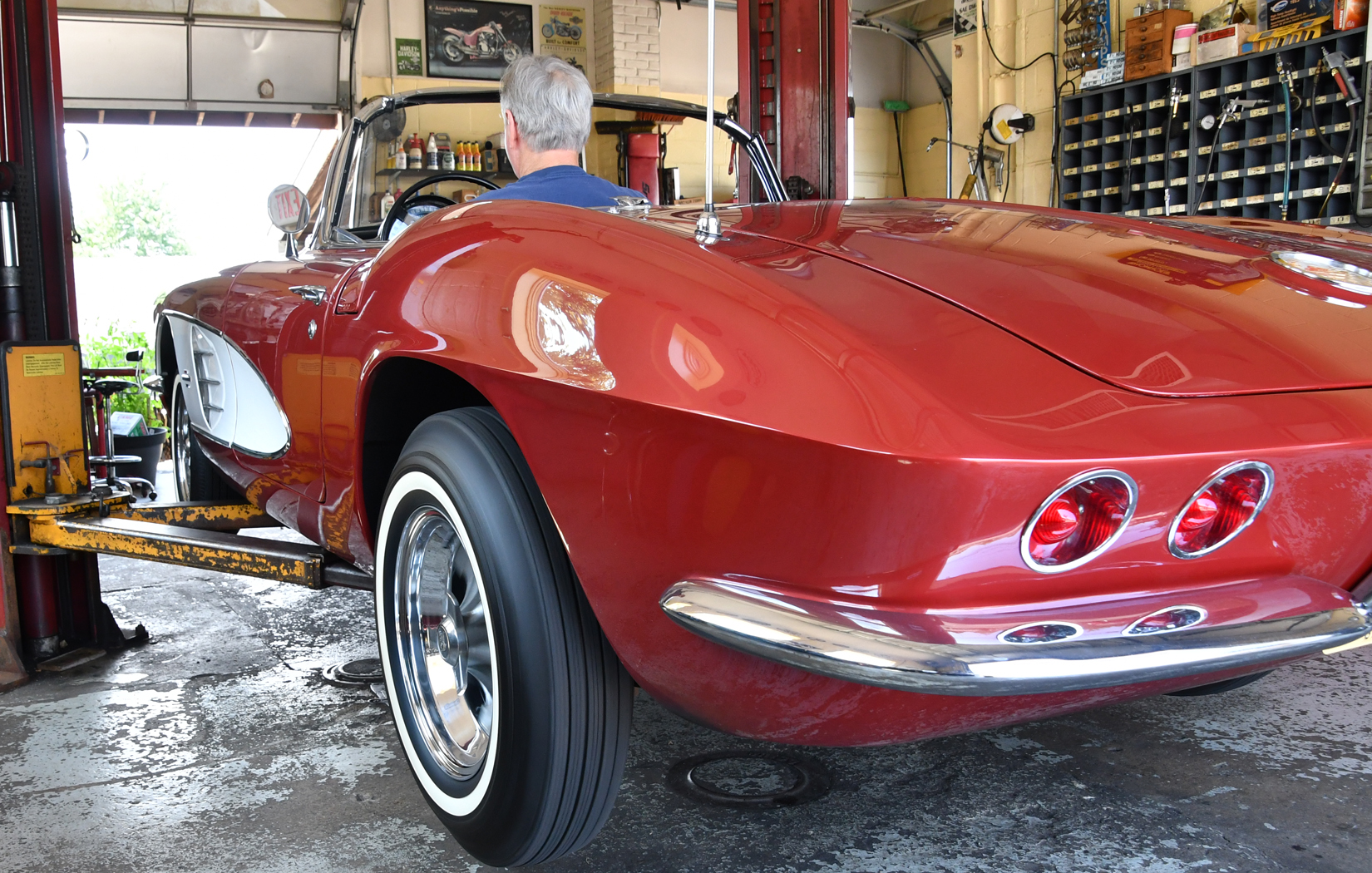
Security guards at the local industrial park must have watched with incredulous awe as this Honduras Maroon and Ermine White jewel circled the empty service road in reverse. Yes, the odometer would go backwards. Having rolled in reverse a good mile, I, like a knight in a joust, briefly paused then kicked the stirrups on the hearty small block and burst forward with speed and conviction. This time I would conquer the barrier and enter the realm of 59,000.

Barrier 2, Corvette 0.

Clutching at my final straw, I drove to Park Ridge 66, the shop owned by my friend and vintage car expert, Bob Tasman. Up on the lift went the Corvette. Under Bob’s doubtful but supportive eye my plan of peeling off 10 miles to “free” the odometer commenced. I surmised that rewinding two of the rotating number barrels would do the trick. Ten backward miles later, I left Bob’s shop to get a high speed highway head start at pushing that odometer through the 59,000 mile barrier. Bob in a friendly kind of way expressed his complete doubt at any chance of success. “One of the tangs in the head unit got broken or was improperly installed,” Bob said as I rumbled off with a shaken faith not unlike that of a small child seeing Santa drawing on a Marlboro behind the Macy’s Christmas display.

Barrier 3 Corvette 0

Time for a phone call.

Truth be told, I had overlooked the earlier failure of the Corvette’s freshly rebuilt clock. In retrospect, it clearly  foreshadowed dark clouds on the instrument horizon. However, I was so thrilled to finally have the Corvette back that I chose not to notice it.

Realizing that taking the speedometer out of the freshly but not easily reassembled dashboard was out of the question, my hopes hung on getting useful information from the instrument restorer himself.

“They never break,” said the man with whom I had entrusted my instruments and my mental health. The essence of my response included the information rich nugget, “well mine broke!”

Had he replaced the 60-year old odometer mechanism that was on its third time around as I had assumed he would? “No,” he responded, “We simply inspect and clean odometers.” He then added the kicker, saying, “replacing the unit would have added $50 to the job.” An additional $50 for a part that could now easily require thousands of dollars to replace and countless weeks of downtime. Did he not think that decision should have been left up to me? His response, “Well, they never break.”

As a chaser for that bitter pill, I asked about the clock he reconditioned that, now lifeless, only gives correct time twice a day. Oh they always break,” he says, “You get a year at most out of one.”

While I think I would have had a good case for justifiable homicide especially with a jury of vintage car owners, I instead have opted to simply enjoy my beautiful rumbling living recollection of mid-century American sports car history. Maybe the odometer will heal itself. If not, I am going on record for posterity that as of June 28th 2020 my 1961 Corvette had an honest 258,999.9 miles. I do not foresee ever selling it.
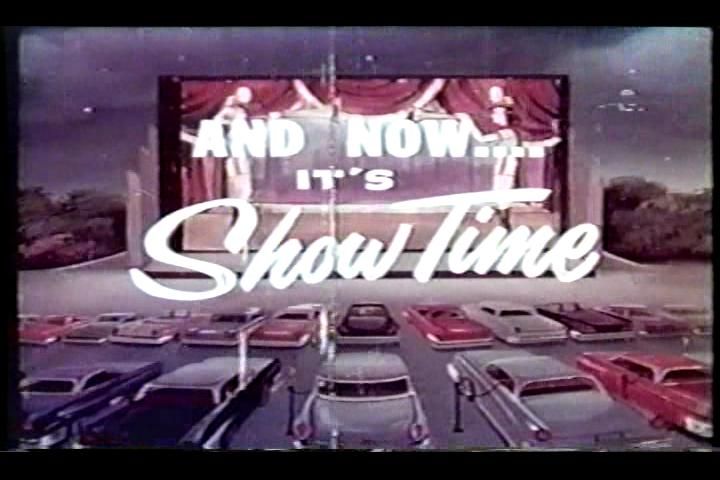
One of the joys of my bias ply shod, drum braked, dual carbureted, tube radio equipped Corvette resides in its ability to transport me back in time. Sometimes it even seems to make time stand still and, now, apparently the same will be said for its mileage.

By |2020-07-09T16:33:46+00:00July 9th, 2020|6 Comments

Roads We Remember #4

Not so much a favorite road as a favorite destination, drive-in movies recall memories of family fun and fun that ended up creating families.

Peaking in the late 1950s with over 4,000 theaters across America, drive-in movies continued in their heyday until the late 1960s. From there drive-ins experienced a precipitous decline that by 2020 left but 321 drive-ins nationwide…and then came Covid-19.

Drive-in movies- back to the future


Popping up like mushrooms born in the dark of a world suddenly deprived of multiplexes, drive-in movies are staging a breathtaking revival. Social distancing, cabin fever, binging on bad TV, the sun finally came out in New Jersey, all this coalesced in a perfect storm of desperation and desire to get the hell out of the house.

Emerging from the mist of a life long gone by, the drive-in movie has come to the rescue. Local town pool parking lots, farm stands, malls, any place with a flat surface that can fit at least 75 cars seems to have a portable screen  and people are loving it.
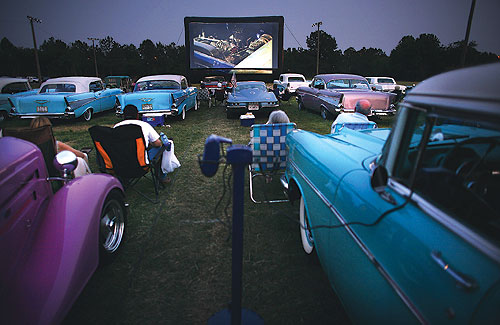
Mention portable movie screens and I immediately betray my age by recalling those tripod based shaky jobs necessary when the health teacher broke out the Bell and Howell projector.

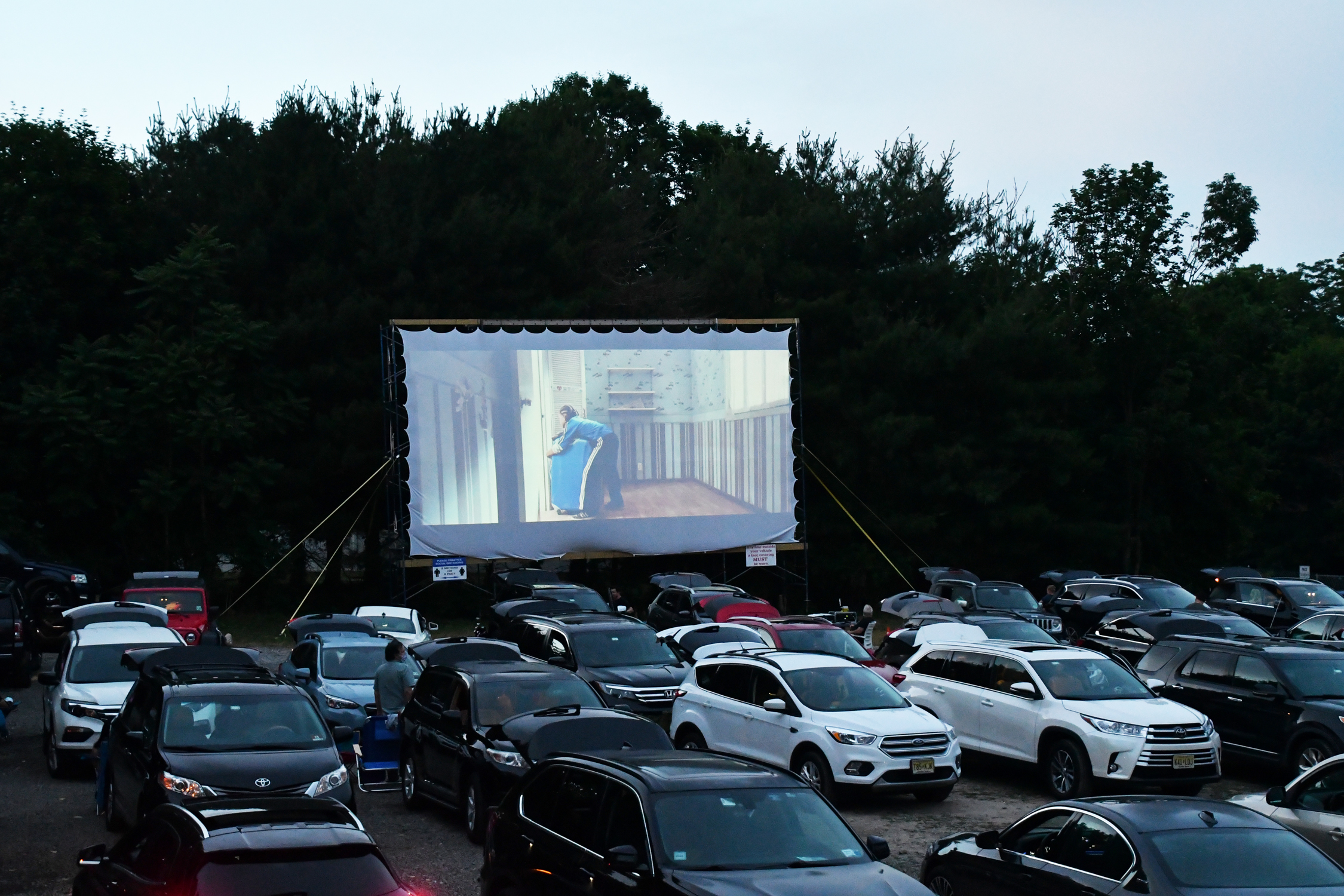
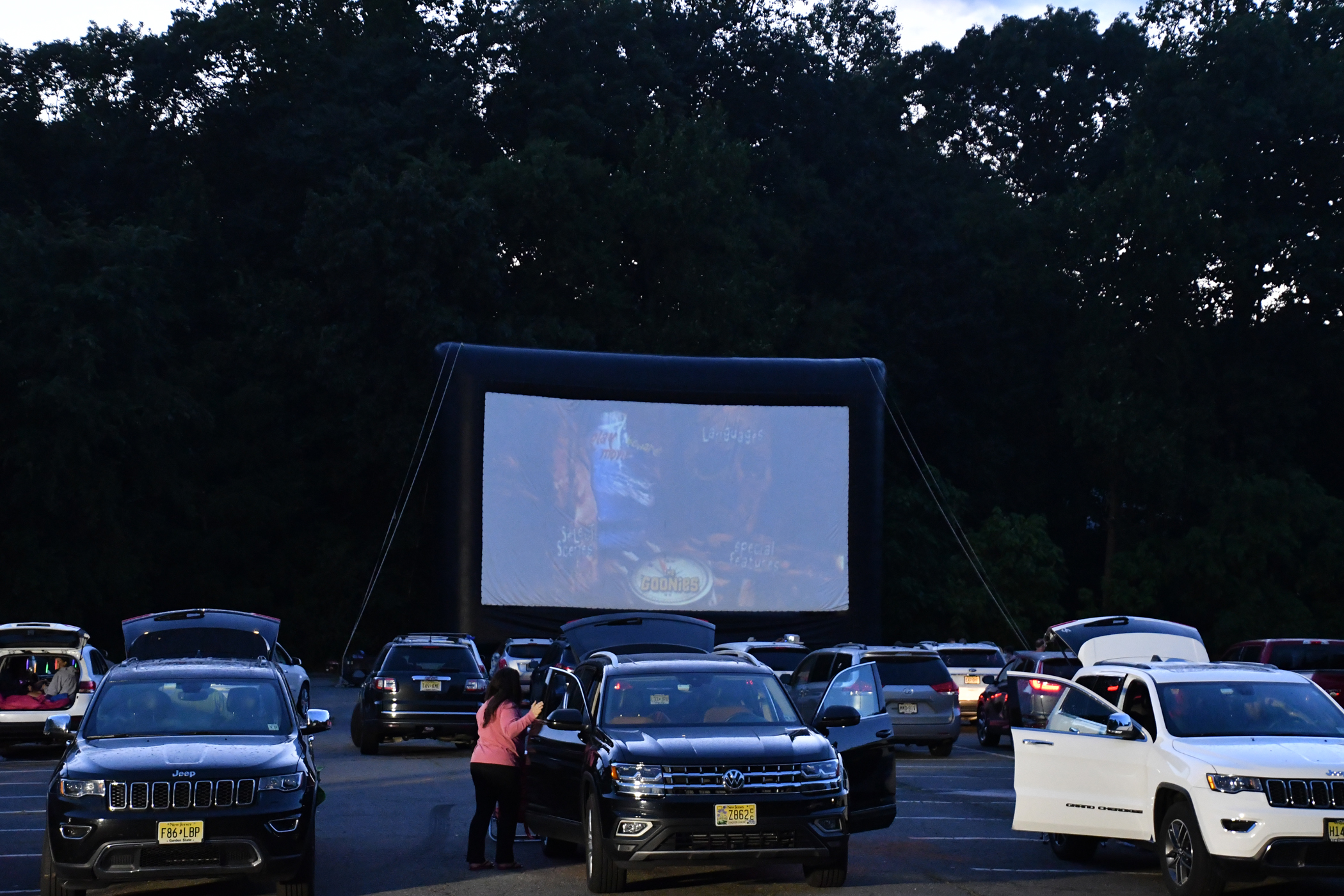
Instead, in my town of Park Ridge, NJ, a Macy’s Day parade balloon-size monolith with a 40 ft. by 30ft. screen swelled up in 15 minutes. As twilight advanced, cars filled the town pool parking lot taking positions eight feet apart with the precision of a marching band preparing for halftime. Movie audio played out through patrons’ premium Harmon Kardon, Bowers & Wilkins, and Bang & Olufsen Audio systems. Event producer Monte Entertainment provided everything except food. Rather than the dancing hot dog snack bar, movie goers ordered food from a local restaurant that delivered.

Choosing to screen “The Goonies”, Park Ridge Recreation Director Liz Falkenstern skillfully employed the three “Fs” of successful town events, family, fun and fresh air. No submarine races to watch here.

In surveying the arrayed cars and audience, a slight twinge of personal nostalgia bubbled up but slowly eroded as my mental check boxes denoting favorite memories remained unmarked. Cars not only lacked the character lines of rolling stock from the drive-in heydays, but most now faced the wrong way. Over half of the vehicles where SUVs facing away from the screen with rear hatches raised. In the 60’s my VW microbus, alone, stared defiantly in the opposite direction allowing for my uplifted hatch to afford fresh air and a fully reclined viewing position on the mattress in back.
As to be expected and for the organizers to be commended, this one-off drive-in experience projected a sanitized joyously family friendly, 4th of July parade-like, Hallmark moment. Well done.

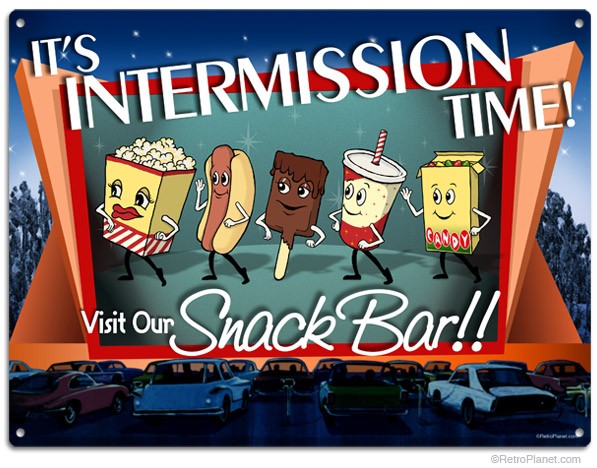
However, my recollections, like woulda, coulda, shoulda memories defied resurrection. Today’s sanitize pop-up drive-in experience lacks the yesteryear tackiness of the neon rimmed refreshment stand, crunchy gravel sound as you positioned your vehicle on the viewing berm, car mounted speakers, 60-second dancing hot dog snack bar promo films, the chorus line of salty, sweet, greasy and crunchy treats arrayed across the screen under the “It’s intermission time” banner and of course mastery of the discrete wandering eye as, with cardboard snack tray of goodies clutched in both hands, you weaved your way back through the aisles of mid-century Detroit iron with no air conditioning and fogged windows.
By 2020 the dancing hot dog snack bar promos, car mounted speakers and double feature submarine race watching has disappeared into the mist of times gone by as the ranks of full-time drive-in theaters across the nation have withered to a paltry 321.

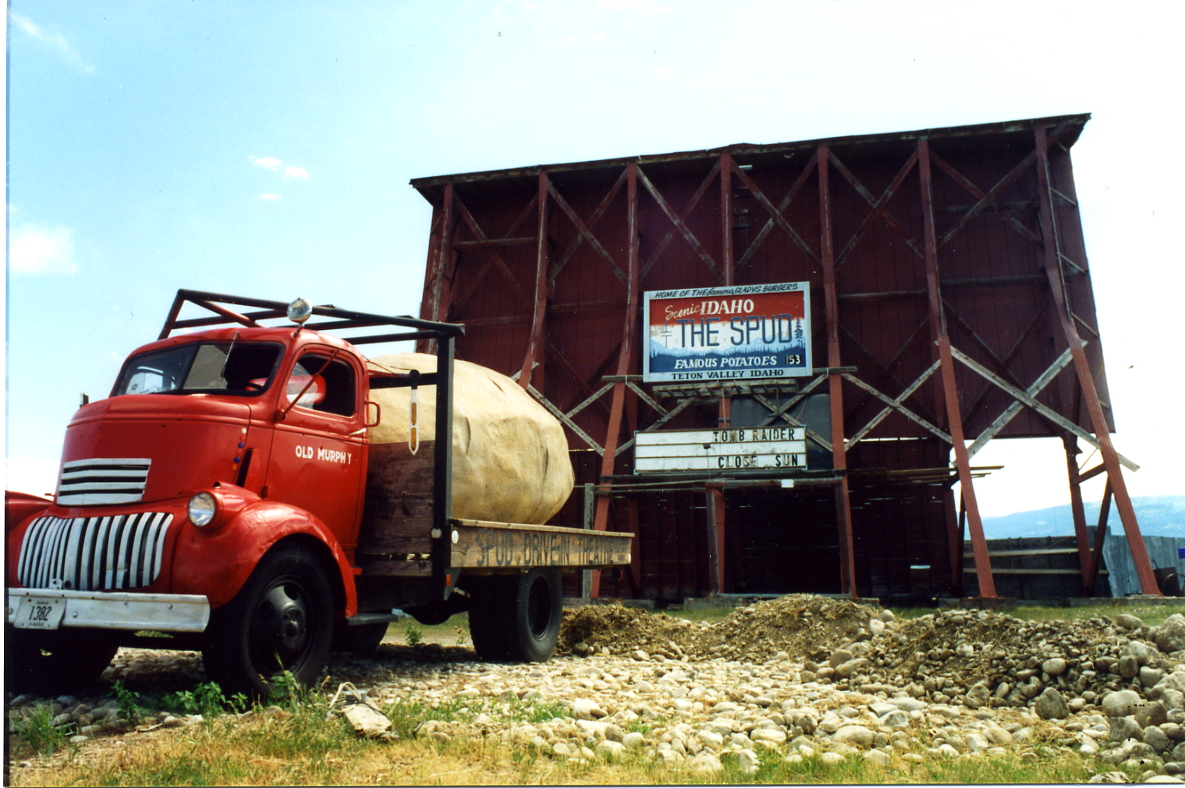
However, among that paltry rank exist drive-ins exhibiting a creative bold conviction that fortifies them in the face of extinction. I have two personal favorites. One is the Spud Drive-in in Driggs, Idaho, population 1,600.

Photographed by travelers from around the globe, “Old Murphy” a 1946 Chevy cab-over truck proudly displays a 15-foot long 2-ton potato on its flatbed. Welcome to the Spud Drive-in.

Opened in 1953, the Spud with a capacity of 100 cars may be the smallest remaining drive-in theater in America. With the Grand Teton Mountains in the distance and surrounded by some of the best trout fishing in the world, the Spud features a single screen and a ‘50s themed down home snack bar as colorfully unique as “Old Murphy.” Window speakers remain available for those wishing to enjoy the movie in a time capsule.

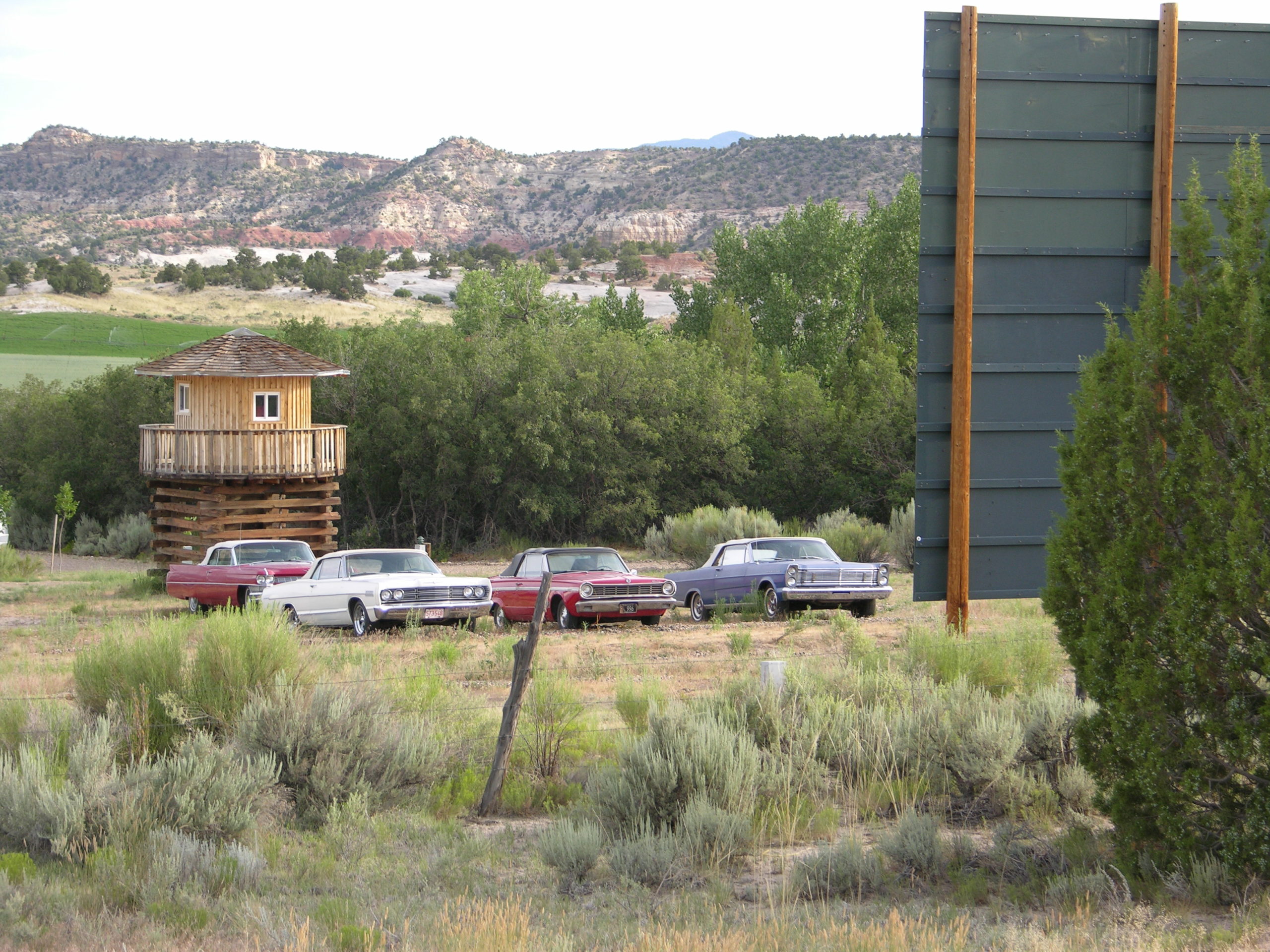
A good days drive south will get you to Escalante, Utah and the Shooting Star Drive-In. Uniquely situated along a green stretch of the breathtakingly beautiful and drivable Utah State Route 12, the Shooting Star offers a drive-in experience like no other. Surrounded by views of The Grand Staircase, Escalante Mountains and Dixie National Forest, the Shooting Star features Airstream trailers with Hollywood star dressing room themes for overnight accommodations and 1960’s era convertibles positioned before a drive-in movie screen that features vintage cartoons and films produced between 1946 and 1969.

Best movie for pop-up drive-in night? Has to be “Back to the future.”

By |2020-07-09T16:34:16+00:00July 2nd, 2020|8 Comments

Roads We Remember #3

As cultural icons, certain local roadside features past and present possess a mythic life of their own. Over the course of our lives they become universal reference points integrated into our personal story.

The “Evil Clown” of Middletown, NJ and the Red Apple Rest in Tuxedo,  NY are two. Without doubt, high on that list resides the Indian Motorcycle sign of Palisades, NY.


Mystery of the vanishing

Indian Motorcycle sign

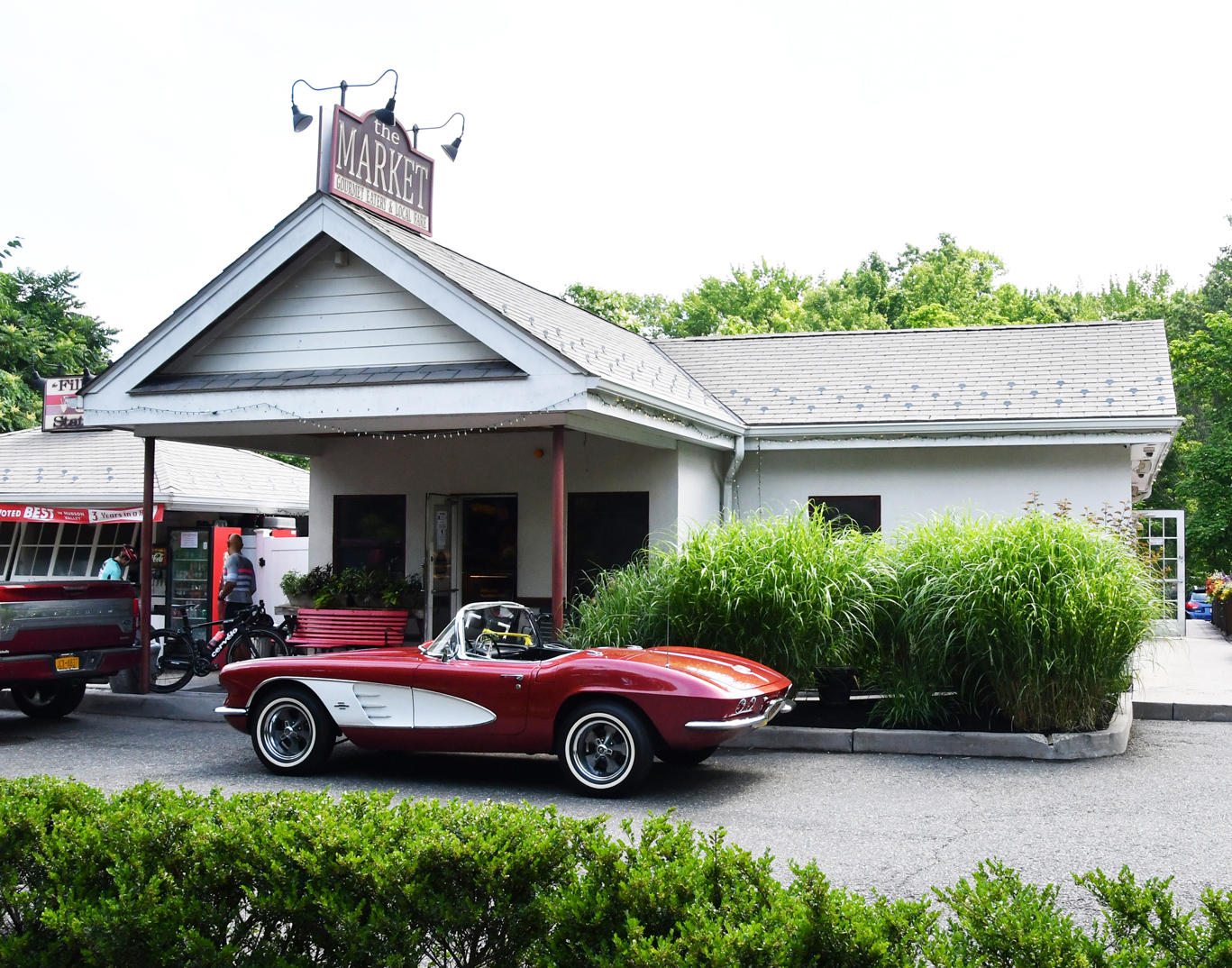
Hugging Route 9W North on the New Jersey side of the Hudson, the 9W Market offers a  gourmet food oasis that has become a magnet for bicyclists from all over the Tri-state area. It is doubtful that anyone enjoying their pan fried organic egg sandwich has a clue about the structure’s first life and its starring role in one of the boldest automobilia thefts in local history.
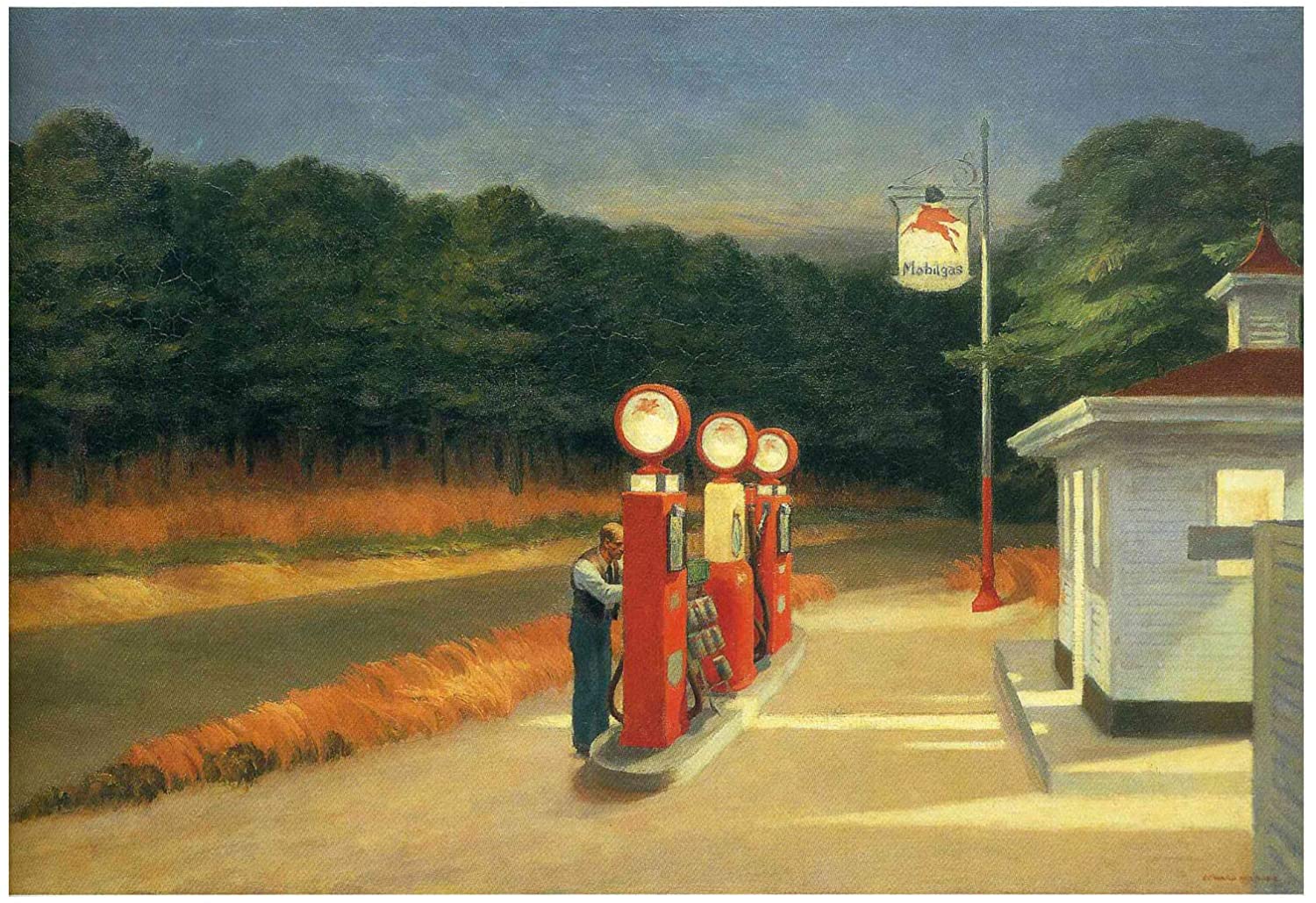
Even from my early boyhood viewpoint in the back seat of my family’s 1948 Chevy Fleetline Aerosedan, our Sunday drives north on Route 9W never failed to entertain. Craning my neck like a hungry hatchling to peer out the small teardrop rear window, I loved the old roadhouse bars that seemed to defy gravity as they clung to the steep face of the great Palisades. For me though,  I derived special delight from the old homey gas stations as they appeared through my back seat porthole.

Of all the wonders of roadside Americana that my family Sunday drives afforded, none gave me greater joy than a weathered white Gulf station with a snack bar. Like the little engine that could, it stood proud and alone in its diminutive glory each time we motored by, and we always motored by because my father only used Sunoco gas.

Years later I learned that the little Gulf station enjoyed another admirer in the person of iconic American artist Edward Hopper. Born and raised in nearby Nyack, New York, Hopper is said to have drawn inspiration from the little station for his iconic 1940 work “Gas”.

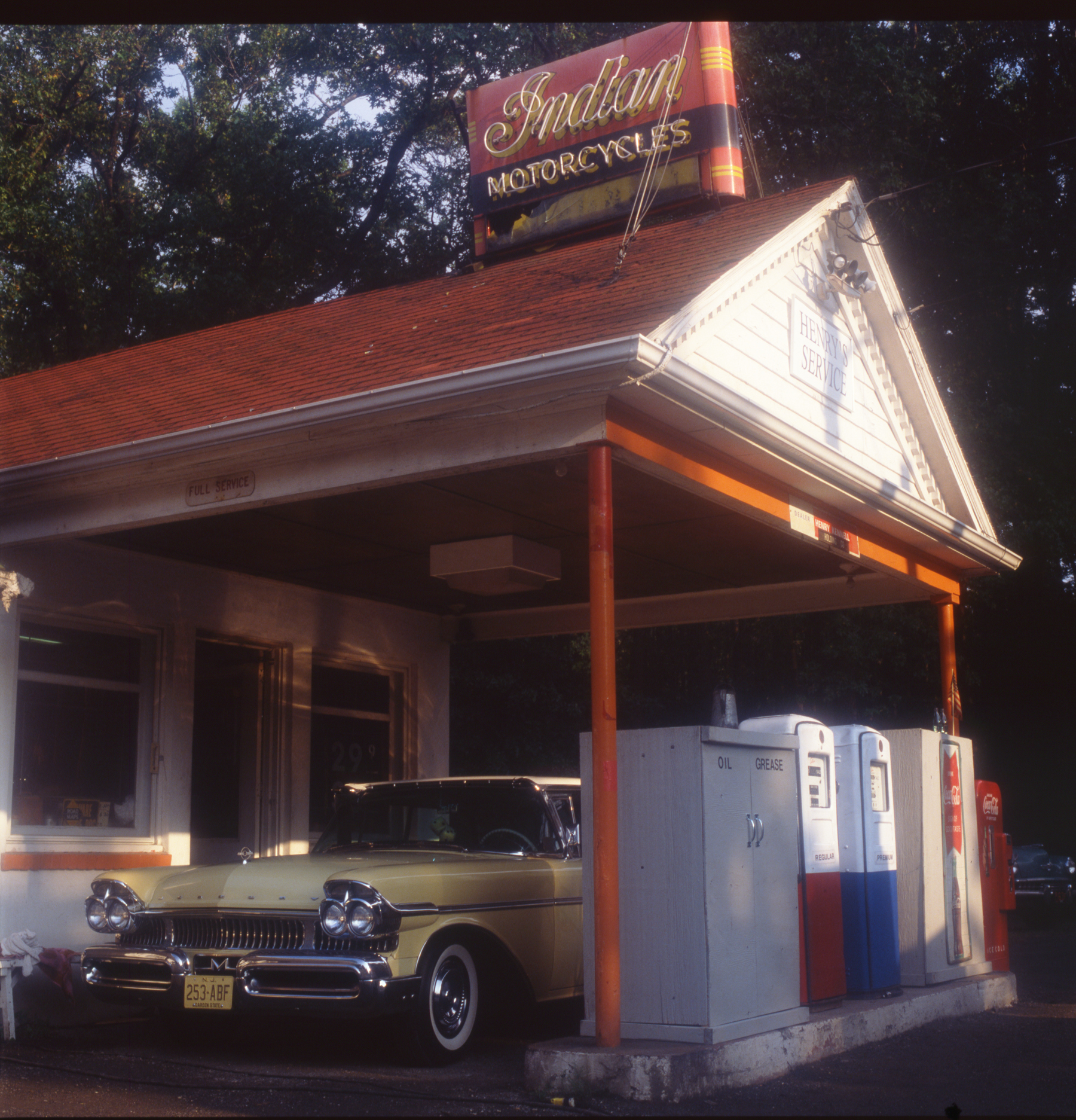
The little Gulf station began life in 1939, when a towering rawboned motorcycle enthusiast named Henry Kennell built it as a sales point for Indian Motorcycles.

Time passed in decades. The world around Henry’s Gulf morphed into the frenetic Tri-state area. However, Henry’s Gulf remained a constant and his section of 9W seemed content to linger in 1939. One part of Henry’s Gulf though, while remaining unchanged, did steadily grow as an object of desire. Firmly affixed to the ridge of Henry’s station sat perched the crown jewel of Henry’s Gulf. There reigned the king of all signs, a roughly five foot by three foot glorious two-sided neon masterpiece that in 1939 proclaimed that beneath it could be found a genuine Indian Motorcycle dealership.

I met Henry in 1989 when I negotiated with him to film a Volvo Finance commercial set in 1961 at his, then, still active Gulf station.

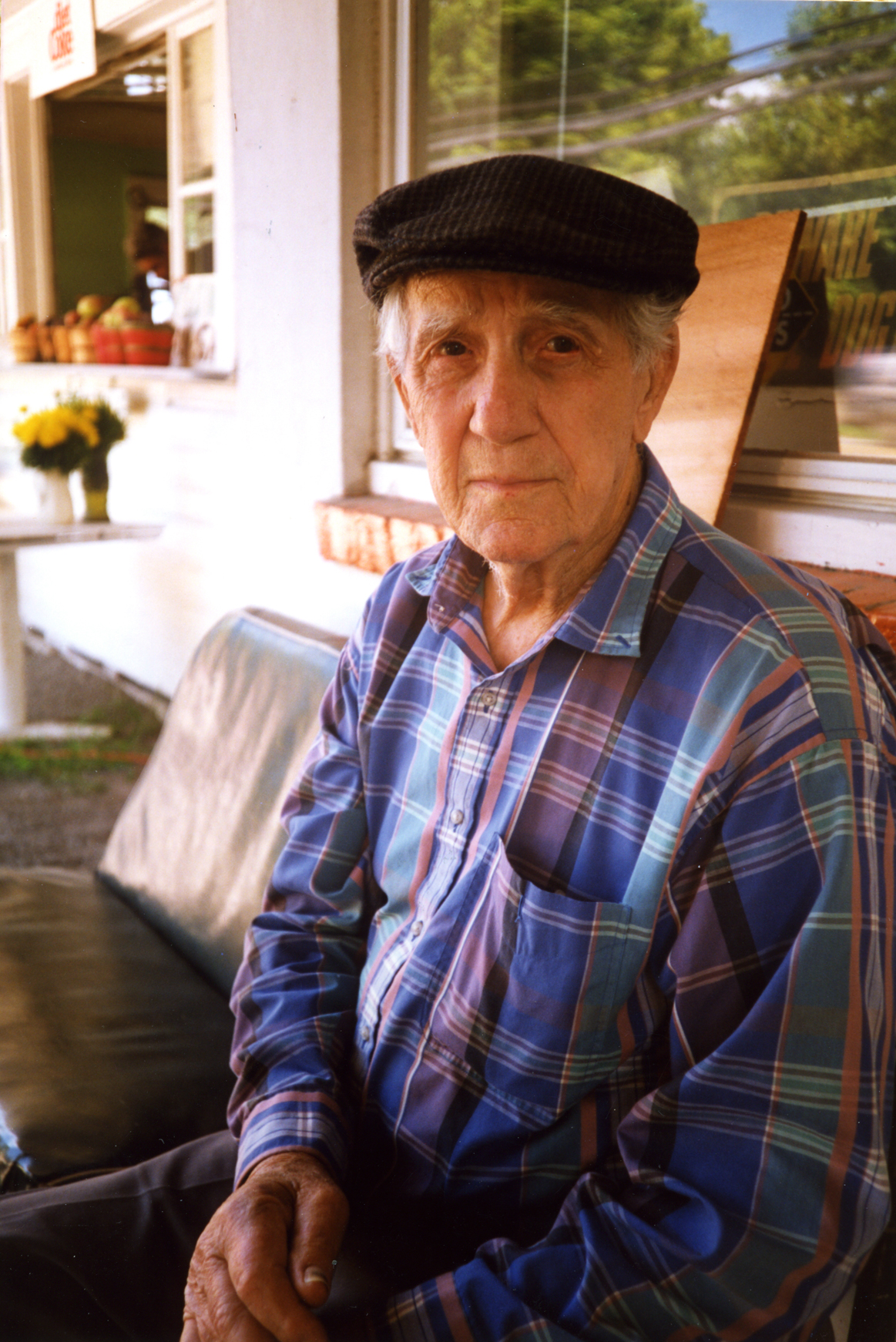
Henry Kennel in spite of his 92 years maintained a gentle giant countenance. Warmly greeting you by extending a massive hand, the firm handshake seemed to extend past your hand and carry up to your elbow. His kind and affable manner like his Gulf station made you feel welcome.

From time to time during filming of the commercial Henry would saunter over from his house across Route 9W. During the breaks he would respond to my urgings to share some history of his station. He knew his Indian sign was special and he loved it.

Henry’s sign constantly generated inquiries.

Interest would often come from members of a motorcycle group called “The Sons of Danger.” A gregarious and fun loving collection of serious motorcycle enthusiasts, “The Sons of Danger” originated in the 1970’s as a creation of two pillars of the automobile advertising community. Its membership included executives of numerous automobile companies, journalists, and drivers. Names like Dan Gurney, Brock Yates and Paul Newman populated its roster.

Since the North American headquarters of Volvo resided barely a few miles away, “Sons of Danger” members including one of the two founders were keenly aware of Henry’s glorious sign. Many offers were made. Henry would not budge. Years turned to decades all the while the great Indian sign proudly anchored the present to the past from its position on high.

In 1991 Henry Kennell passed away. In a fitting continuation of ownership by kindred spirits, Henry’s Gulf station would be purchased by a legendary local vintage car owner and supplier of vehicles to the film industry, Jerry McSpirit. Owner of Cars of Yesterday Sales and Rentals, McSpirit’s involvement in supplying vintage vehicles to the film industry dates back to 1970. He provided a vehicle for my film shoot in 1989.

During McSpirit’s ownership much stayed the same. Certainly the Indian sign maintained its exalted and coveted status.

“An ill wind blows no good” goes the adage. For Jerry McSpirit Tropical Storm Floyd in 1999 fits the bill.
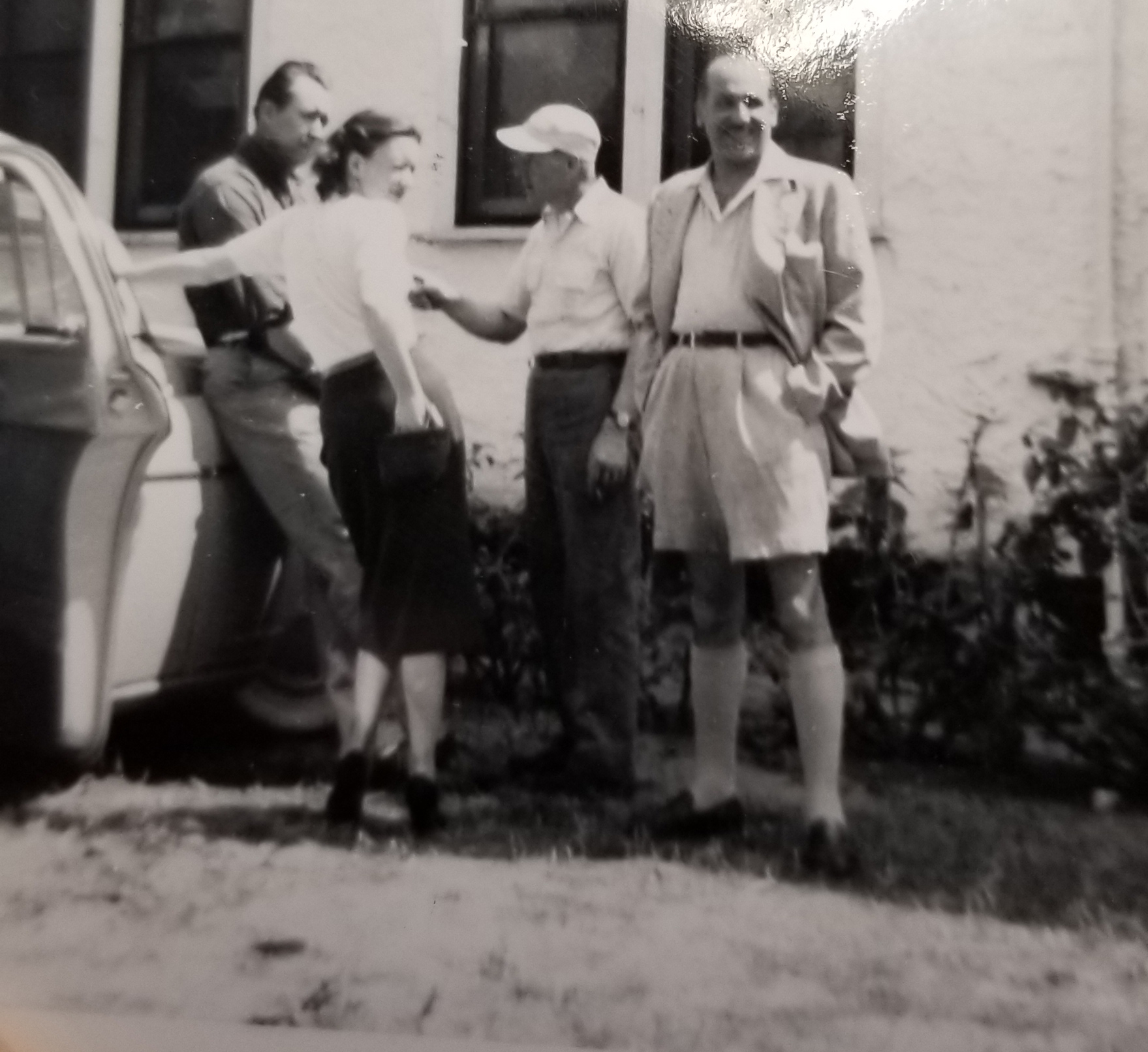
Beginning as a Category 4 hurricane in the Bahamas,  Floyd was a tropical storm by the time it reached northern New Jersey. The tropical storm packed punishing  torrents of rain. September 16th 1999 witnessed record flooding and Dams bursting across New Jersey. It also marked the last time Henry Kennell’s Indian Motorcycle sign was ever seen.

When McSpirit went to assess the storms impact on his little station, the only damage to be seen was where the Indian Motorcycle sign had been carefully removed. During one of the worst storms in New Jersey history and after 60 years in place, Henry Kennell’s treasured Indian sign disappeared.

Jerry McSpirit sold the little Gulf station shortly thereafter.

Despite the offer of a generous reward, the last 21 years has not produced one word as to the fate of Henry Kennell’s Indian Motorcycle sign.

By |2020-07-09T16:34:44+00:00June 25th, 2020|15 Comments

Cars We Love & Who We Are #5

If only cars possessing historic significance could talk. What stories they would tell. However, though beautiful, they remain sadly mute leaving it up to us to find their voice.

For the owner of a Sebring-raced XK120 it took 48 years for history to speak up.

Dagavar’s Jaguar, The truth at last

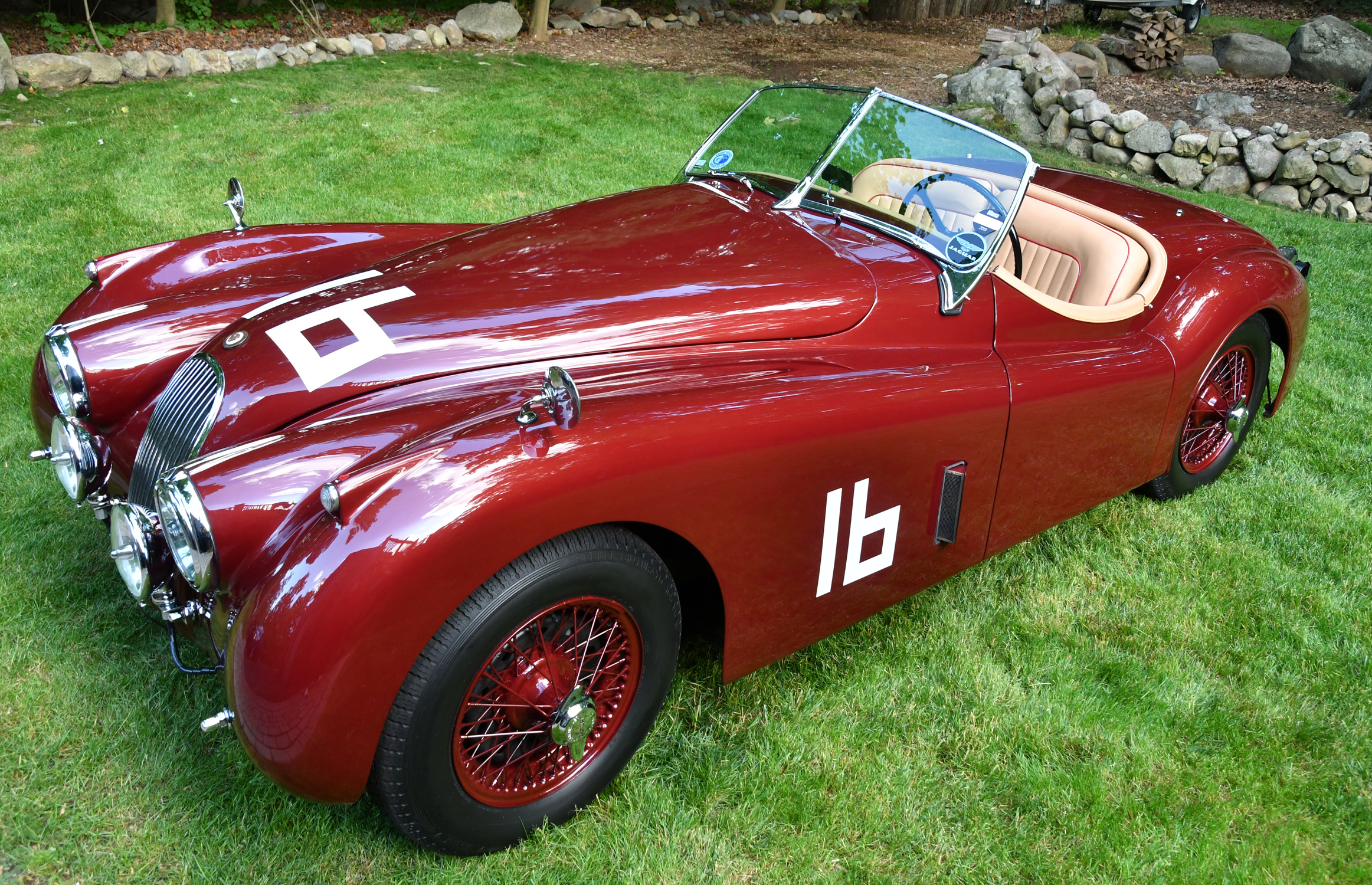
Since buying the 1954 XK120MC in 1971, Dr. Dick Santucci appreciated that by its very nature this Jaguar was special. It would take a phone call 48-years later for him to find out just how special.

Throughout Dick Santucci’s childhood, Fred Dagavar’s 1954 XK120 roadster filled the young boy’s dreams thanks to Papa Santucci’s prolific storytelling abilities and great friendship with Dagavar. Rich with grit, bravado, exotic cars and famous drivers, stories about Dagavar racing his Jaguar filled the Santucci’s Bronx kitchen and gave substance to a child’s dreams of adventure.
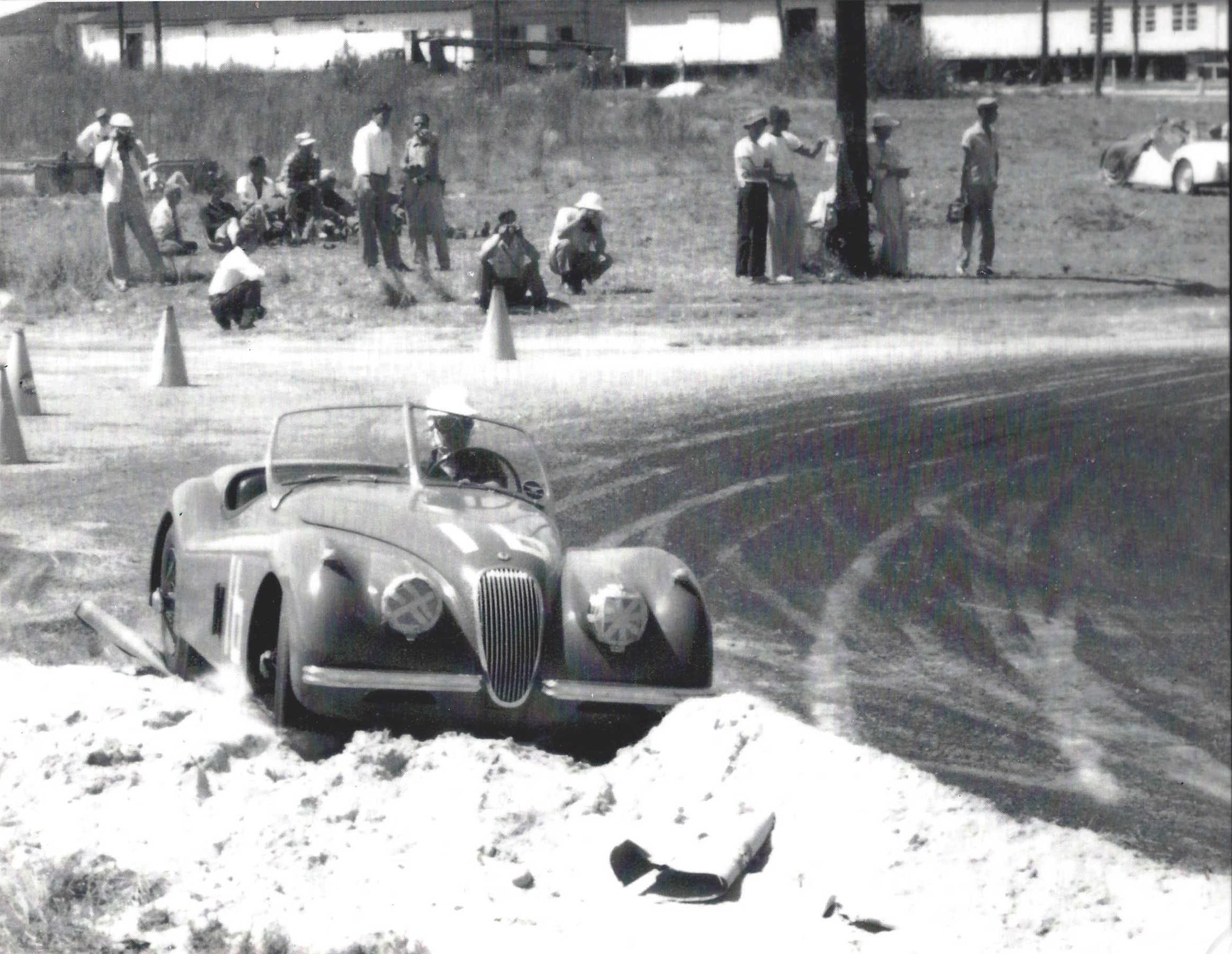
Years later, Dagavar, now in his ‘70s, considered selling his long retired and battered Jaguar. Santucci jumped at the chance to own the British sports car that had starred in his childhood reveries. However, with little spare time available or money remaining, Santucci knew that the severely distressed sports car would have to wait years for resurrection. College and chiropractic school would come first.

By 1978 Santucci had established his chiropractic practice. By 1981 the Jaguar returned to the road, reborn.

Having dueled against a pantheon of driving legends such as Briggs Cunningham, Stirling Moss, Luigi Chinetti, Phil Hill, Carroll Shelby and Mike Hawthorne; it was only fitting that Dagavar’s Jaguar, in an age of trailer queens, would benefit from Santucci’s passionate desire for the Jaguar to run strong and free.
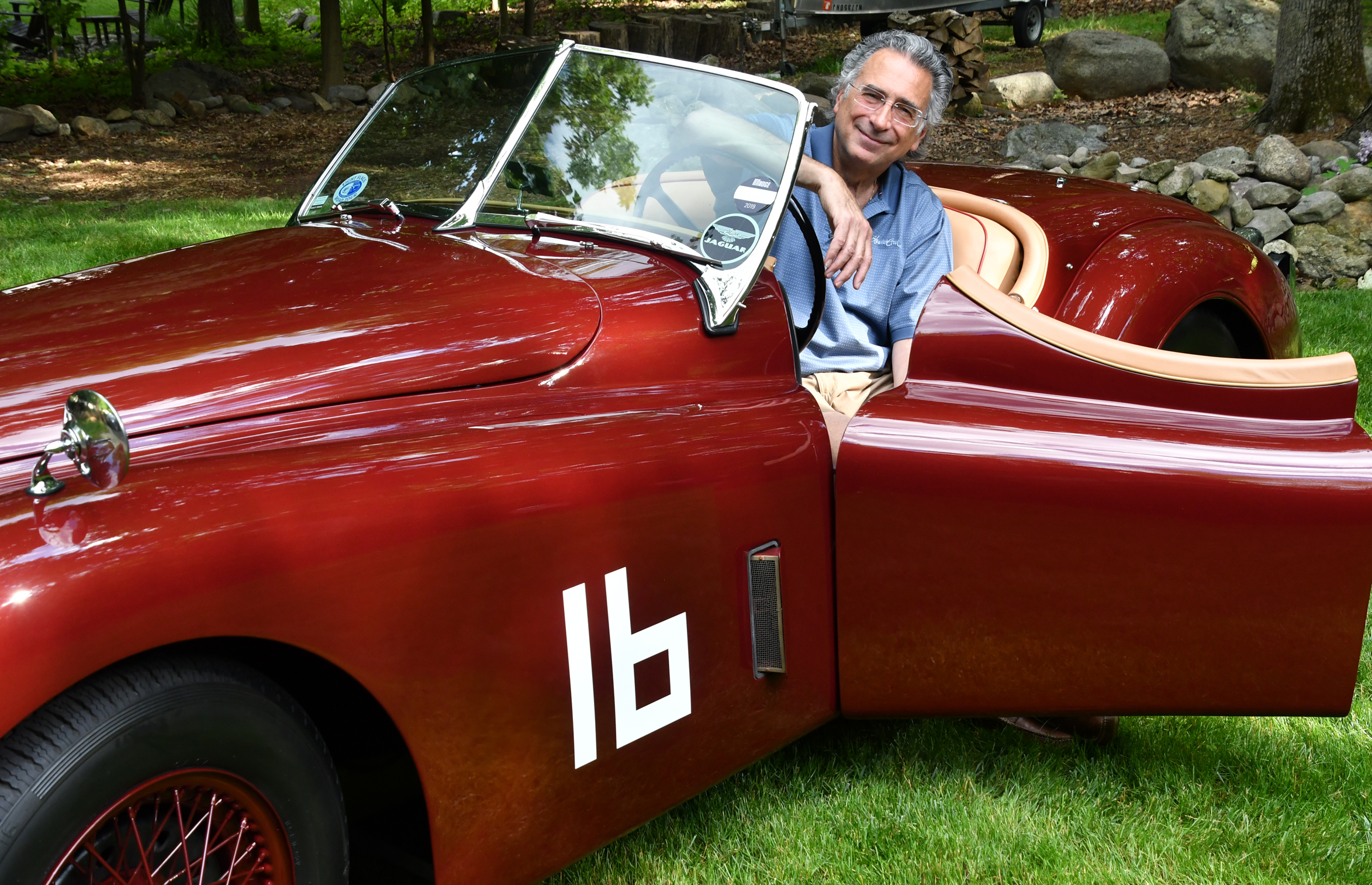
Decades of driving pleasure and a total restoration, thanks to a deer that did not look both ways, culminated in 2019 with Santucci’s Jaguar being invited to the Amelia Island Concours d’Elegance. Santucci took great pleasure in witnessing what he believed would be the Dagavar Jaguar’s pinnacle achievement and confirmation of its special qualities. He had no way of knowing the secrets Dagavar’s Jaguar had yet to divulge until, back home, his phone rang.

“Do you know what you have,” asked the caller. “I am pretty sure I do,” Santucci replied. The voice of vintage Jaguar owner John Strader of Colorado spoke with confidence and conviction about the few XK120 Jaguars that went back to the factory for special attention. Strader explained that he had seen Santucci’s car on the Amelia Island website and that very few of these cars were ever produced. Actually Strader said he owned what he believed was the only other one of its kind in existence.

In the course of multiple exchanges, Strader, put Santucci in touch with Roger Payne of Perth, Australia. Payne a retired engineer and Jaguar historian was a fountain of Jaguar information.
Learning of the Dagavar Jaguar’s existence, Payne displayed a ravenous appetite for serial numbers and photographs. Like an Egyptologist in a newly discovered pyramid chamber, Payne immersed himself in researching his discovery.

Coming up for air, Payne awarded Santucci with the knowledge that only a handful of 1954 Xk120s returned to the factory to be custom equipped and factory-tuned with one of the spare second generation C-Type heads meant for the LeMans racing team.

It appeared Dagavar, who was a founding member of NASCAR and good friend of Bill France, met Jaguar’s legendary LeMans racing team manager Lofty England through Bill France at Sebring. At that time England promised to arrange a factory upgrade that included a spare C-Type head from the racing team. Santucci, Payne announced, owned one of two matching number examples in existence. Special indeed.

Associating this extraordinary provenance to the already stunningly restored vehicle proved to be the special sauce that enticed the Greenwich Concours d’Elegance to invite the Dagavar Jaguar to display on Sunday June 2nd 2019.
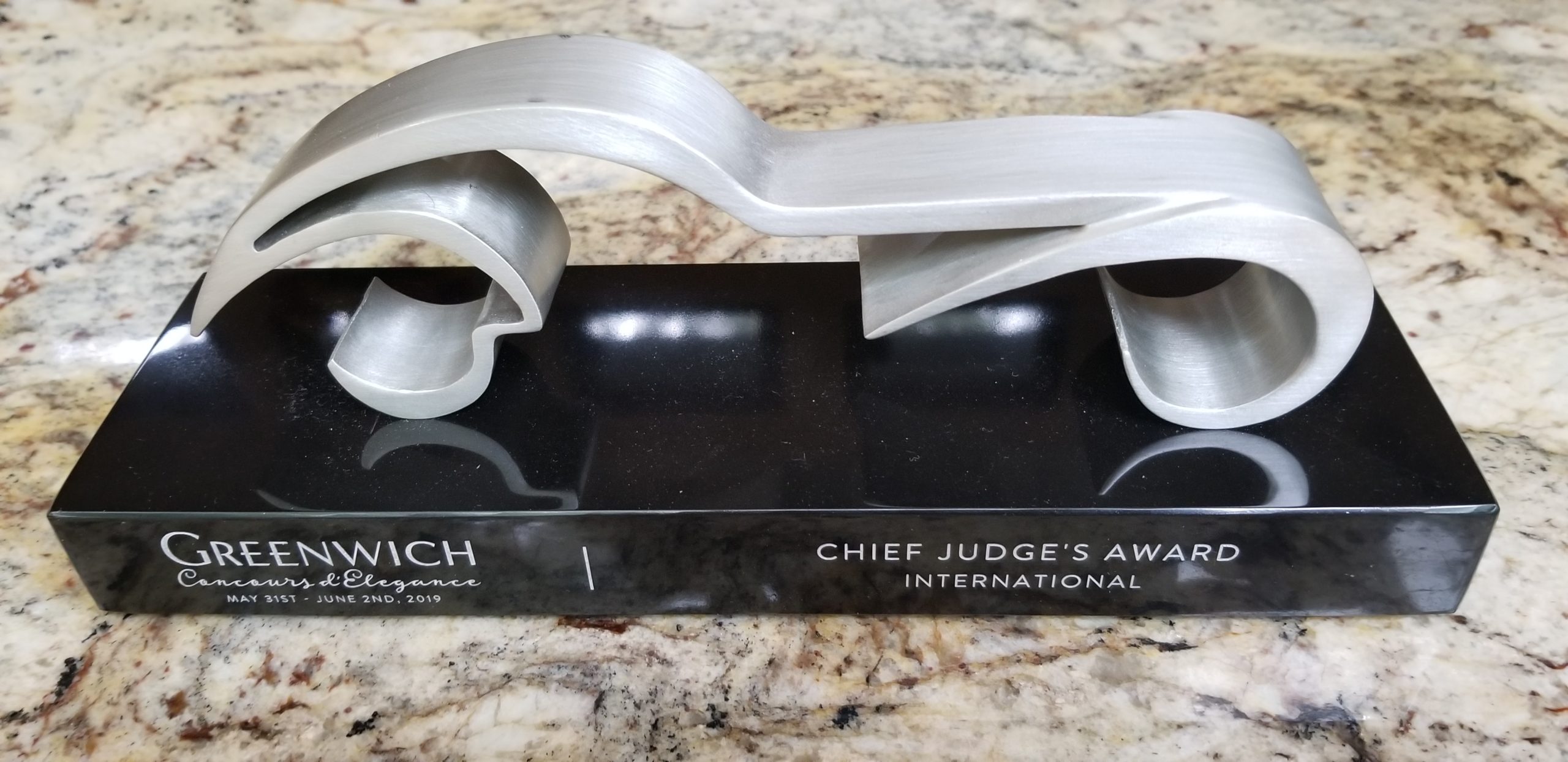
That Sunday at Greenwich, the Dagavar Jaguar, received the Chief Judge’s Award – International. In accepting the award from historians Ken Gross and David Schultz, Santucci smiled acknowledging that Dagavar had planted the XK into a sand bank at Sebring in 1955. Thus, this was the first win for the Jaguar since Dagavar bought the car in 1954.


Dick Santucci has entered his XK120 in the American Collectors Insurance virtual car how. It is in the “Foreign” category. If you would like to vote for Dagavar’s Jaguar the link is:

https://americancollectors.com/virtual-car-Show/?app_data=entry_id%253D247575938&category=foreign

By |2020-07-09T16:35:09+00:00June 18th, 2020|4 Comments

Conversations With People We Value #3

Belted out with vigor and a smile, the words “Let’s go for a ride” have launched many a wonderful open road adventure, one which often concludes with dinner at a favorite restaurant. Such an afternoon escape, not long ago ranked in the higher echelon of simple pleasures. Who could have foreseen that restaurants, especially “your” favorite restaurant would be an endangered species. It appears that the pandemic has placed many favorite eateries in the cross hairs of potential extinction before the new normal arrives.


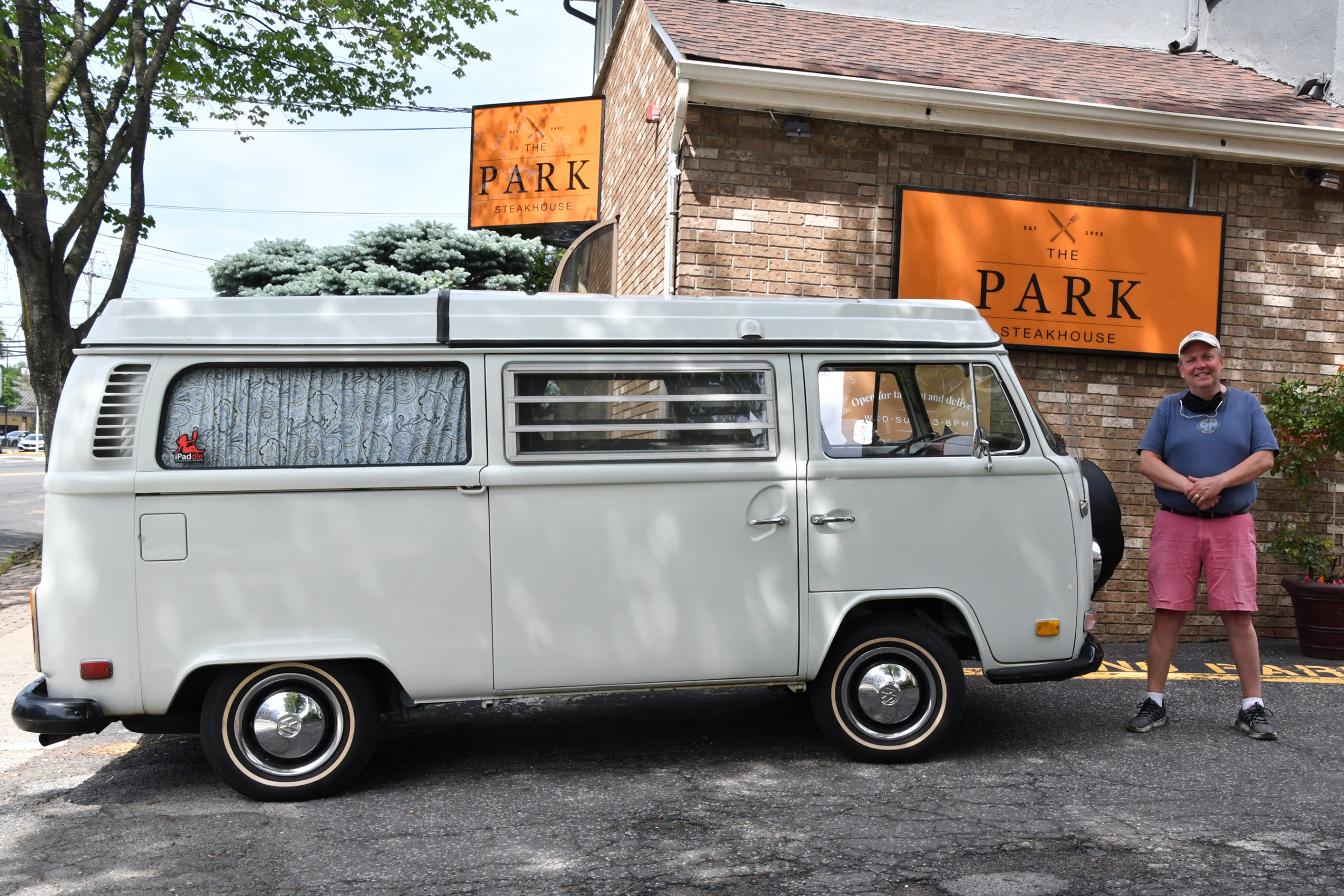
We took the Drivin’ News 1972 VW Westfalia out to get dinner and answers at some of our favorite local restaurants. What we found revealed the strong bond between communities and their restaurants and the profound impact that that relationship would have in shaping the character of our communities when the new normal arrives.


TAKE-OUT – A lifeline to the future

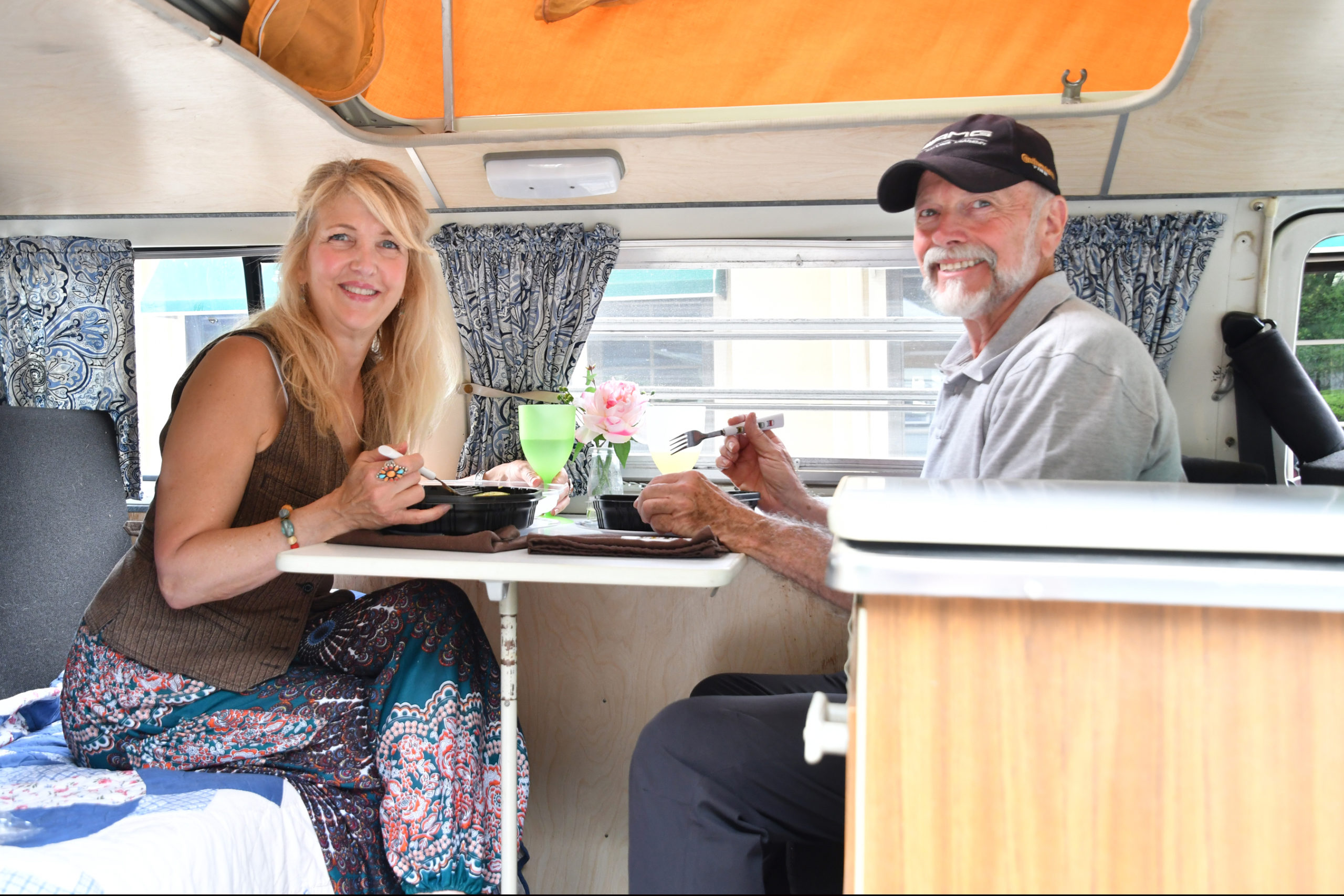
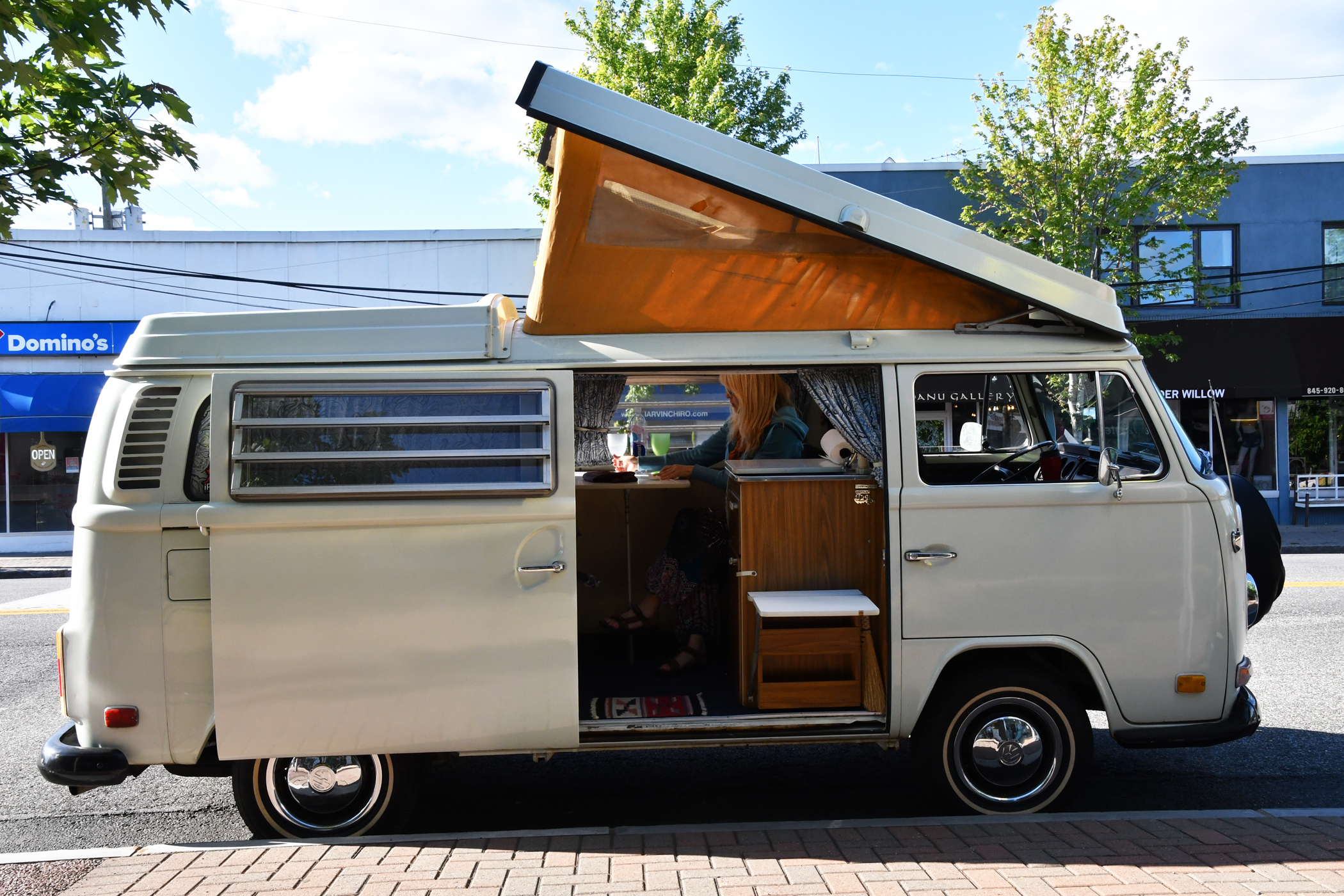
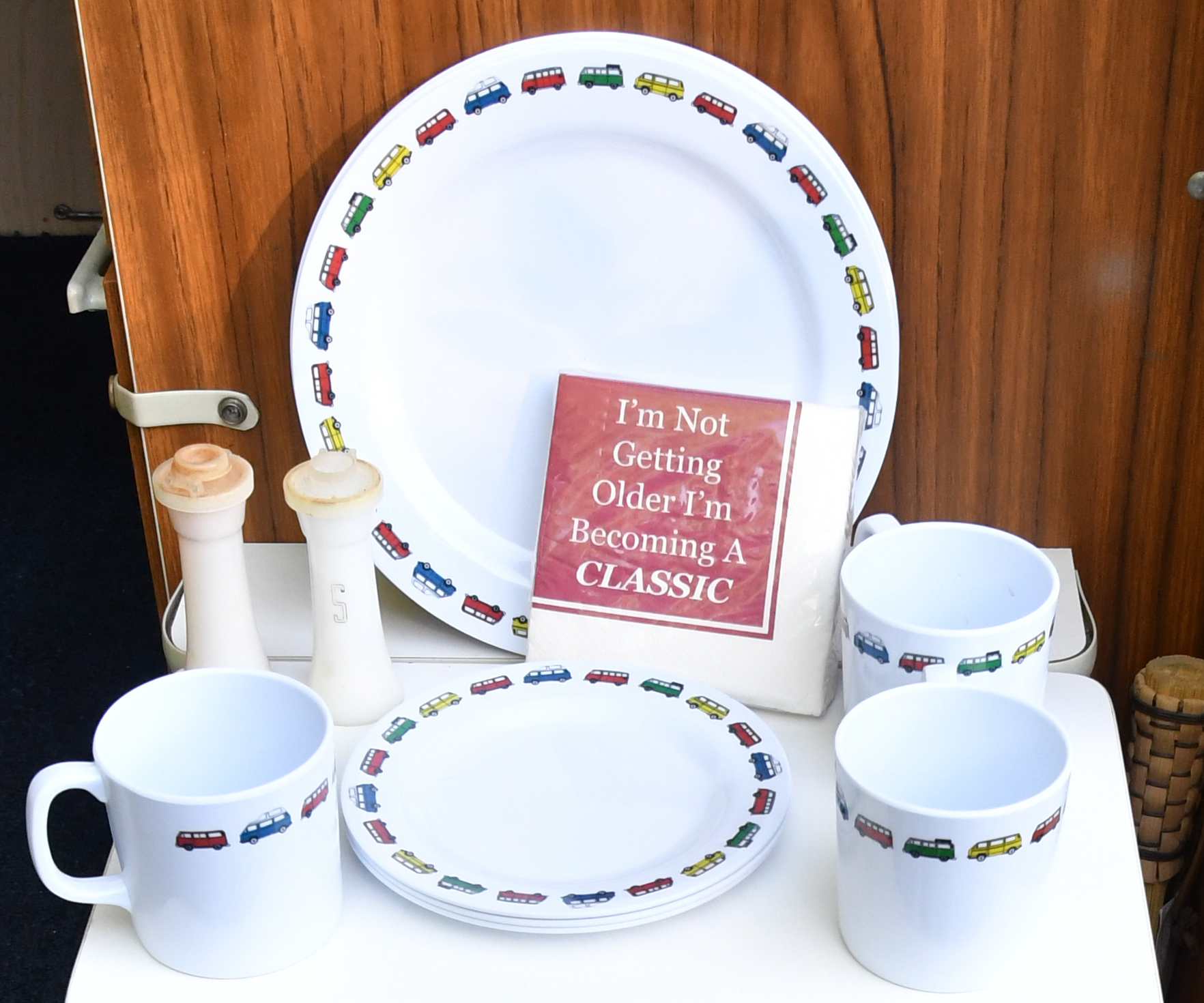
With the present pandemic restrictions, our VW Westfalia affords what can only be described as the pinnacle of present day dining out experiences. Supplementing the fold-out table, refrigerator (cooler with a door), sink (yes, running water) and pop-up top to allow for standing, our dining experience featured VW themed designer cutlery and place settings. Proper social distancing is no problem. There is only room for two.
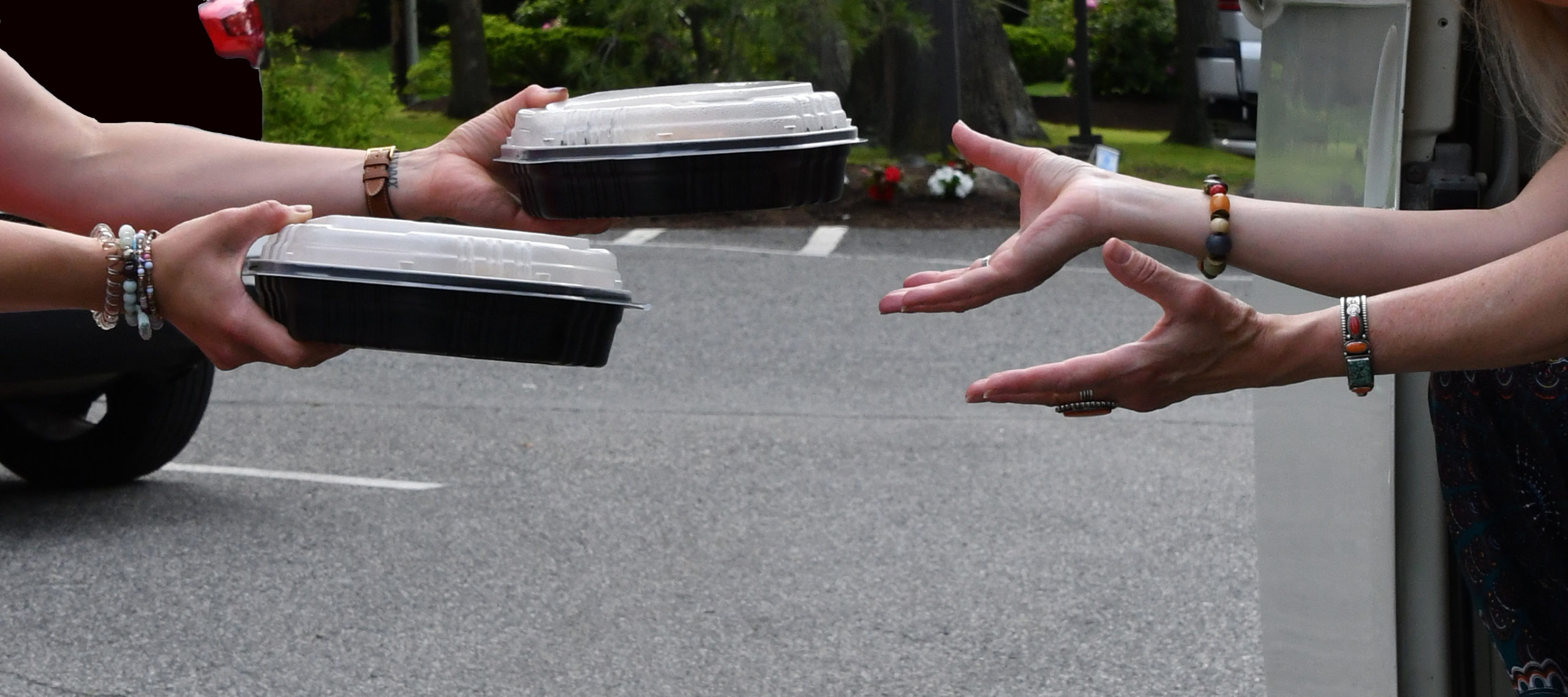
All the restaurants visited functioned with an almost military precision. Cell phones alerted customers to pull up as the food came from the kitchen. Payment was either done by card in advance or with mobile hand units at pickup.
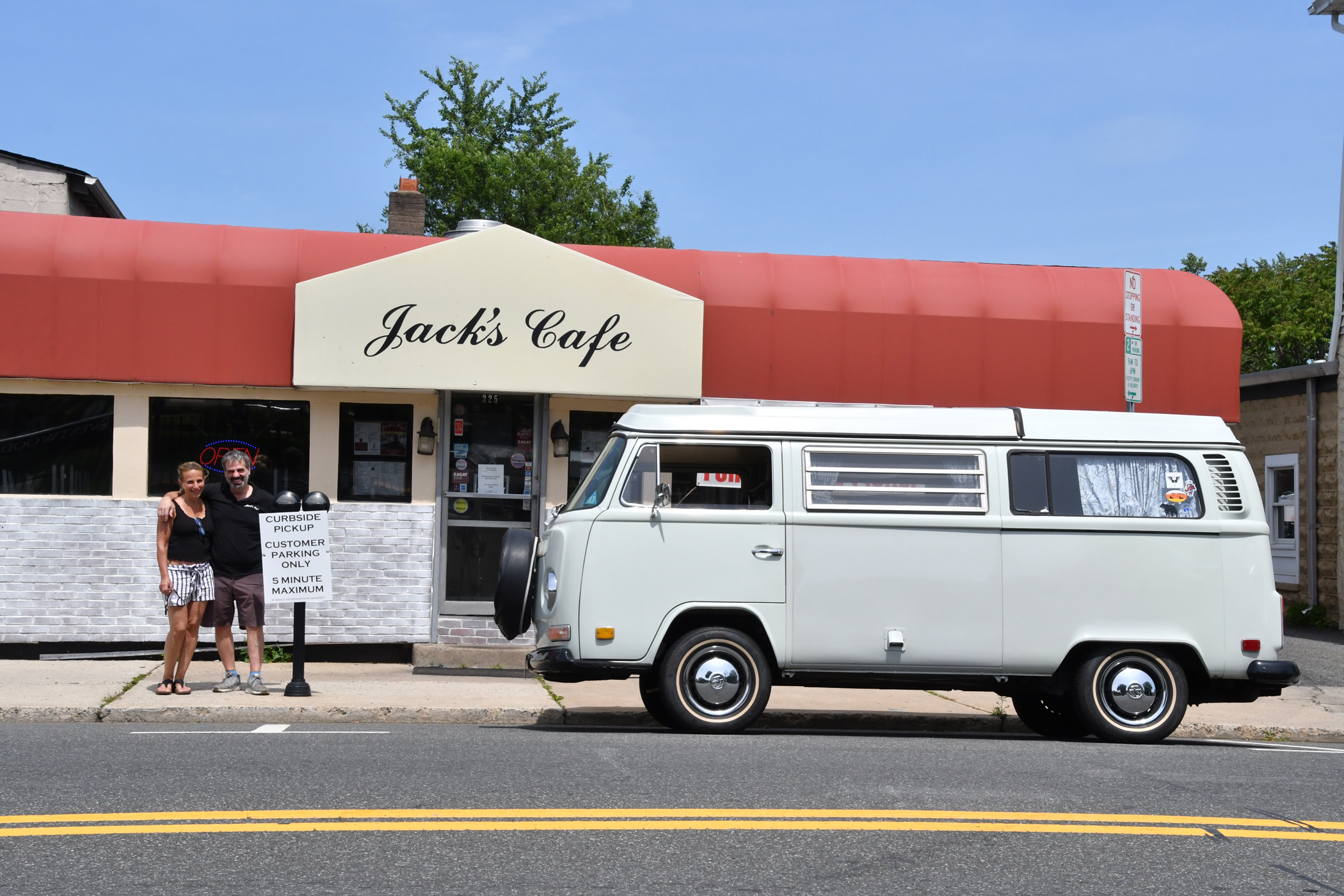
Many restaurants had canopied seating, some with music for patrons who wished to dine out on site. All food does have to be served in take out containers.

Survival stories on the road to the “new normal”

It has become painfully clear that many fine and favorite eateries which have delighted our palates before the pandemic could well be gone when better days return.

For the many quality restaurants not mentioned in this story it can be accepted that all share similar challenges and concerns as expressed by the restaurateurs quoted here.

With a shared voice they all spoke to the critical importance of TAKE-OUT as the lifeline that will bridge this crisis and allow for a future in the “new normal.”

While facing this uncertain and difficult time, all proprietors made a point of expressing their profound gratitude for the support of the surrounding community that has risen to sustain them. The quality of their words reflected those of a farmer whose neighbors rallied to sandbag a river to save his crops from being lost.


Click on the Restaurant’s name to go to their website.

Chris D’Eletto (Jack’s Café – Westwood)

I have owned Jack’s Café for almost 14 years. Presently TAKE-OUT is everything. We are at a fraction of our normal business but we are holding on. I miss the people. I am so thankful that I am going to be allowed to have some seating on June 15th though it will only be half capacity. Before Covid-19 It was already hard to make a living in the restaurant business so TAKE OUT will remain critical to our survival.
This community is awesome. I love Westwood. I live in Westwood. I am proud of my community. The people have been incredibly faithful. We have people who order every week. Sometimes twice a week. They are great.

I am going to make it. Absolutely. This is my life.


Malissa Wright (Peppercorn’s – Park Ridge)

I have owned Peppercorn’s for a year. I never saw this coming. They say tough times make you tougher. So be it. Right now if it wasn’t for TAKE-OUT I would have my doors shut.
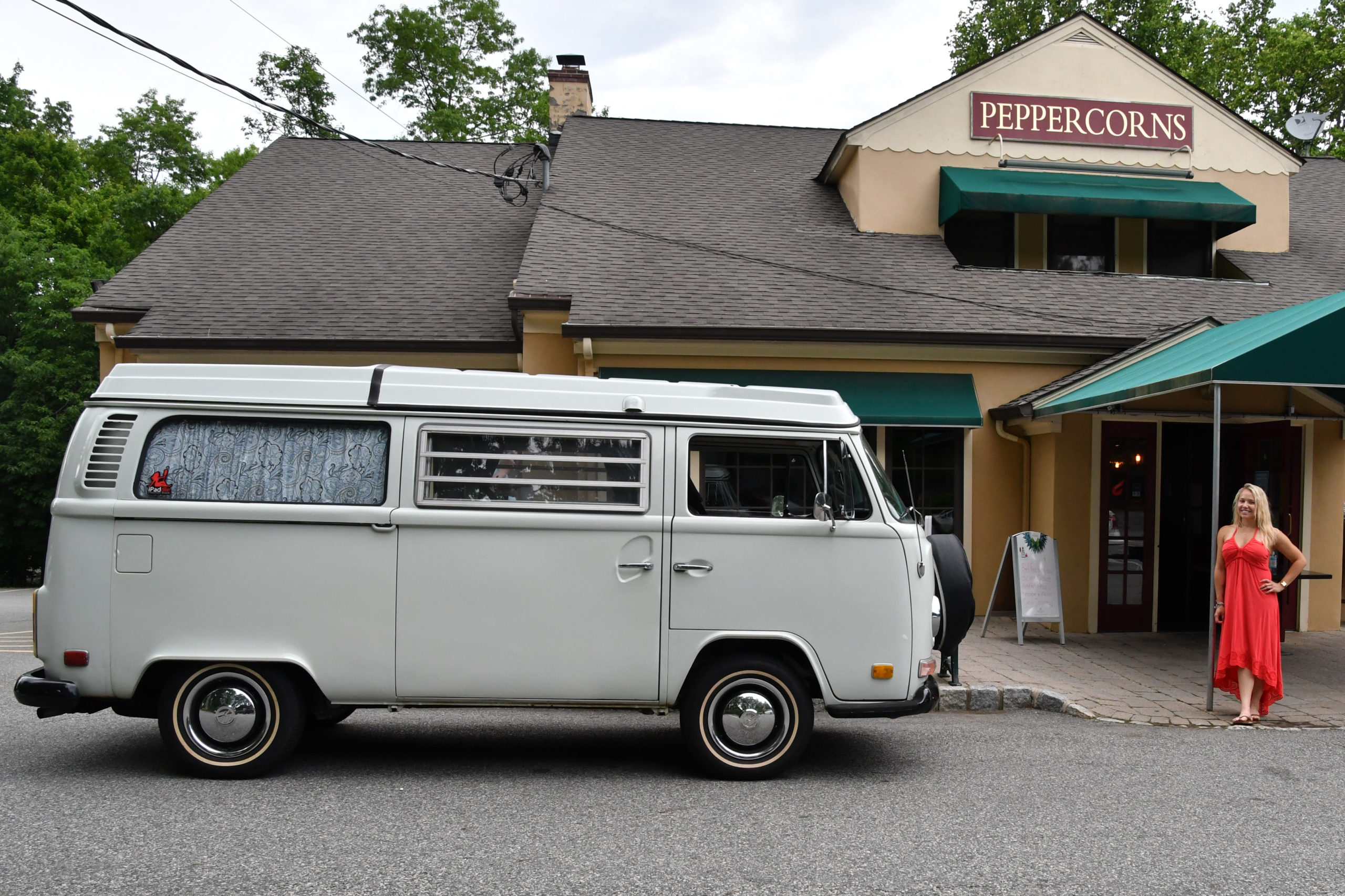
Peppercorn’s has been around a long time. I am humbled by how Peppercorn’s customers have responded to our situation with their support and loyalty. They are making a concerted effort to support us. It’s been very, very humbling.

We have started our outside seating which will make a great difference. Still TAKE-OUT remains so important.

Peppercorn’s will survive.


Thomas Davey (Davey’s Locker – Montvale)

Davey’s Locker has been in my family for 46 years. My dad bought it in 1974.

TAKE-OUT is all we have. It isn’t a long term solution but it is sustaining us as we bridge to the future “new normal.” Opening up outside is going to help. We are planning for inside where  we will have socially distanced seating. If we are lucky we will be doing maybe half of what we used to do. TAKE-OUT will remain fundamental to our continued existence.
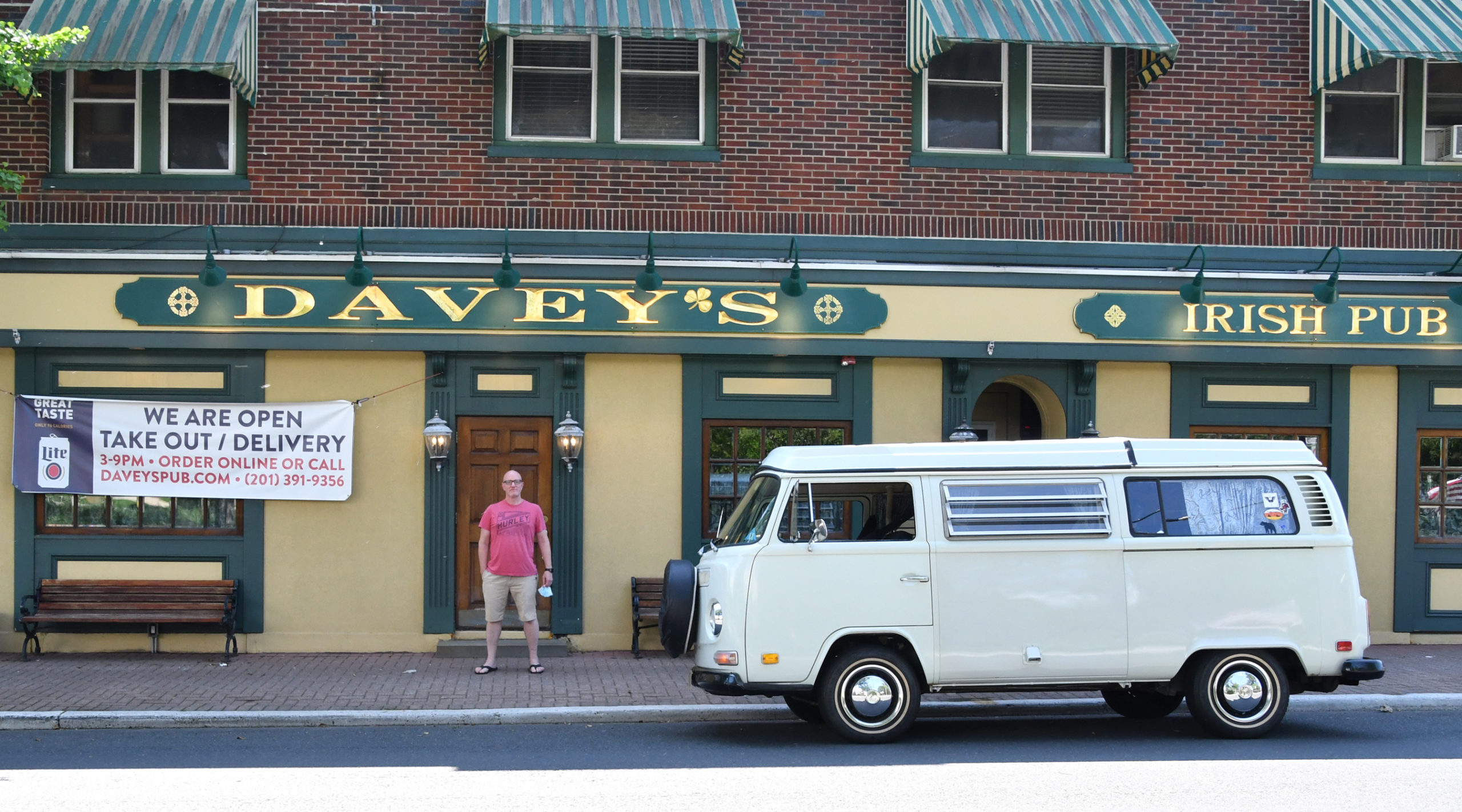
I can’t say enough about the community. Incredible. After St. Patrick’s Day we shut down. Everyone was locked down. After about 4 weeks I set up a little tent outside and sold Davey’s digital gift cards. People came in to say hello and buy gift cards. Talk about faith. People didn’t know if Davey’s was ever going to open up again. We sold thousands of dollars in gift cards. What can I say? We opened up.


Ralph Colantuono (Granita Grille – Westwood)

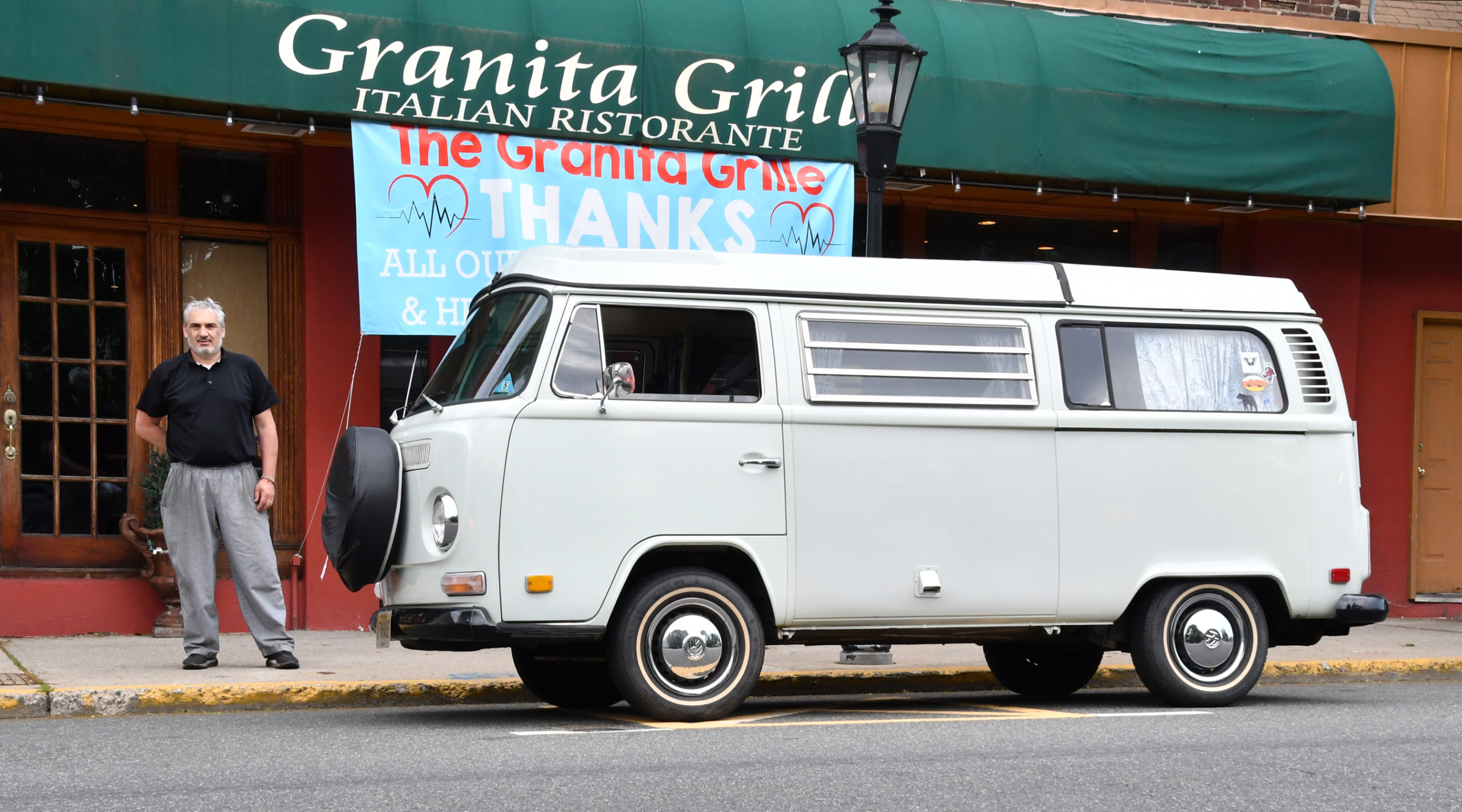
I’ve owned the Granita Grill for 22 years. TAKE-OUT is everything. I do not have a lot of space for outside seating so until people can come indoors, TAKE-OUT is my lifeline to the future.

I cannot express my gratitude to the community for their support. Our traditional regulars as well as surrounding community members have made all of the difference in the world.


Frank Hernandez (Cornerstone – Hillsdale)

Cornerstone has been in business 14 years, Frank Hernandez has been manager for one year.

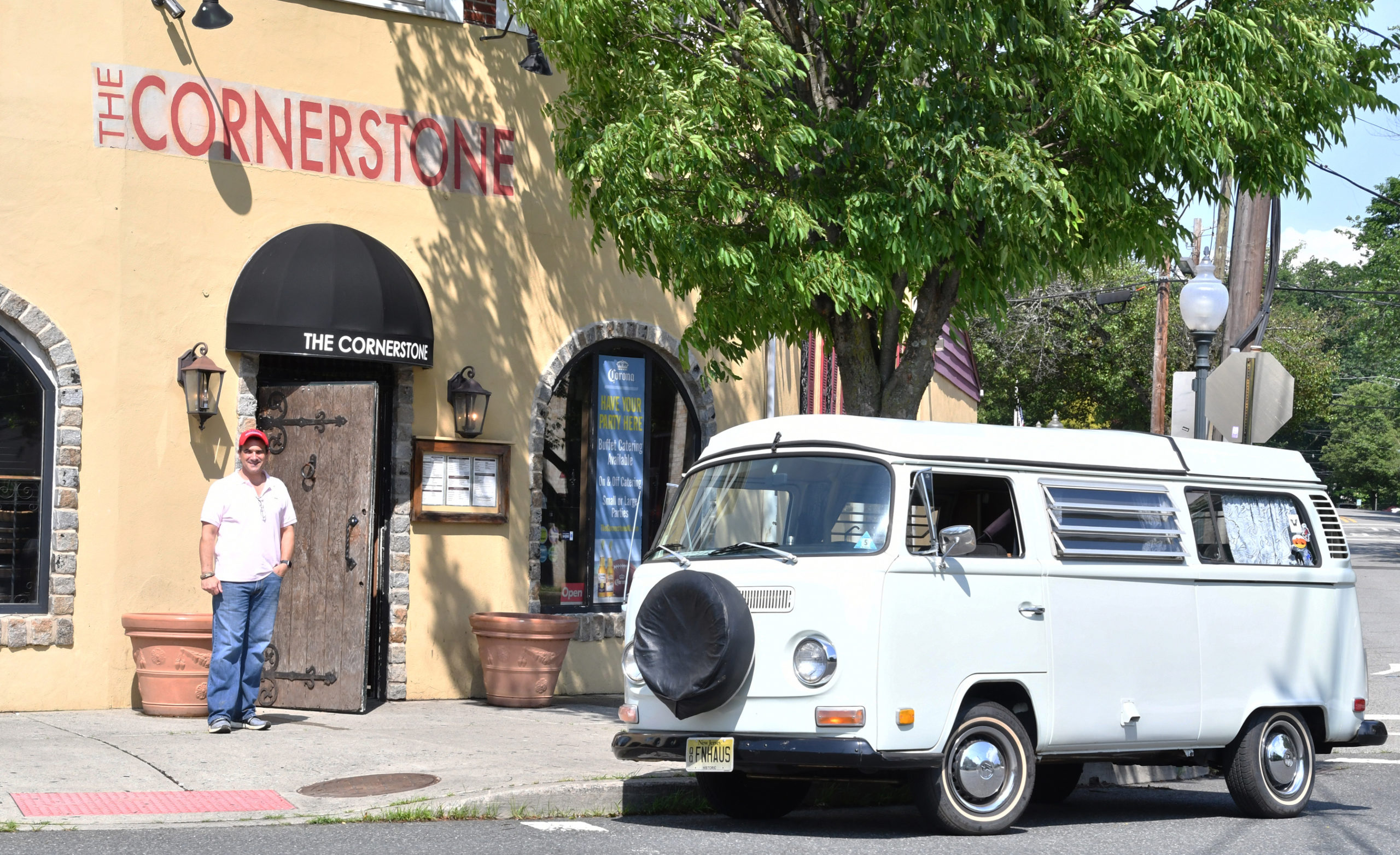
TAKE-OUT is the lifeblood of our business. That is all we have going at this point. Thankfully the community has been fantastic in supporting us from the day this all started.

Clearly we are eager to welcome people back inside in a reconfigured socially distanced layout. We hope people appreciate that the restaurant business is in the best position to do things properly as constant Health Department oversight ensures that proper procedures are in place.


Randy Carson (Park Steakhouse – Park Ridge)

I have owned Park Steakhouse for 15 years.

It is only because of the tremendous support from the people of Park Ridge and the surrounding community for our TAKE-OUT business that we can stay afloat until we get the new normal sorted out. Right now we are creating a sheltered outdoor dining area.

Park Ridge has been wonderful to us. Everybody has really pulled together to help us through this. In having the community there for us now will allow us to be there for them in the future.


What then can each of us do to ensure that we don’t find ourselves yearning for that favorite entree with no recourse but a taunting and flavorless memory? Clearly, to the Covid-19 mantra of “wear a mask” and “wash your hands” we must add ORDER TAKE-OUT!

Share with us your favorite restaurant after a drive. Give them some recognition in the comments section. It just may make the difference.


By |2020-07-09T16:35:32+00:00June 11th, 2020|11 Comments

Roads We Remember #2

In difficult times appreciating the difference between an escape and running away often determines how we make it through. Running away is abdication. An escape is a respite that strengthens our resolve to re-engage.

In this challenging time I would like to recommend a small jewel of an escape, Henry Hudson Drive.

Henry Hudson Drive

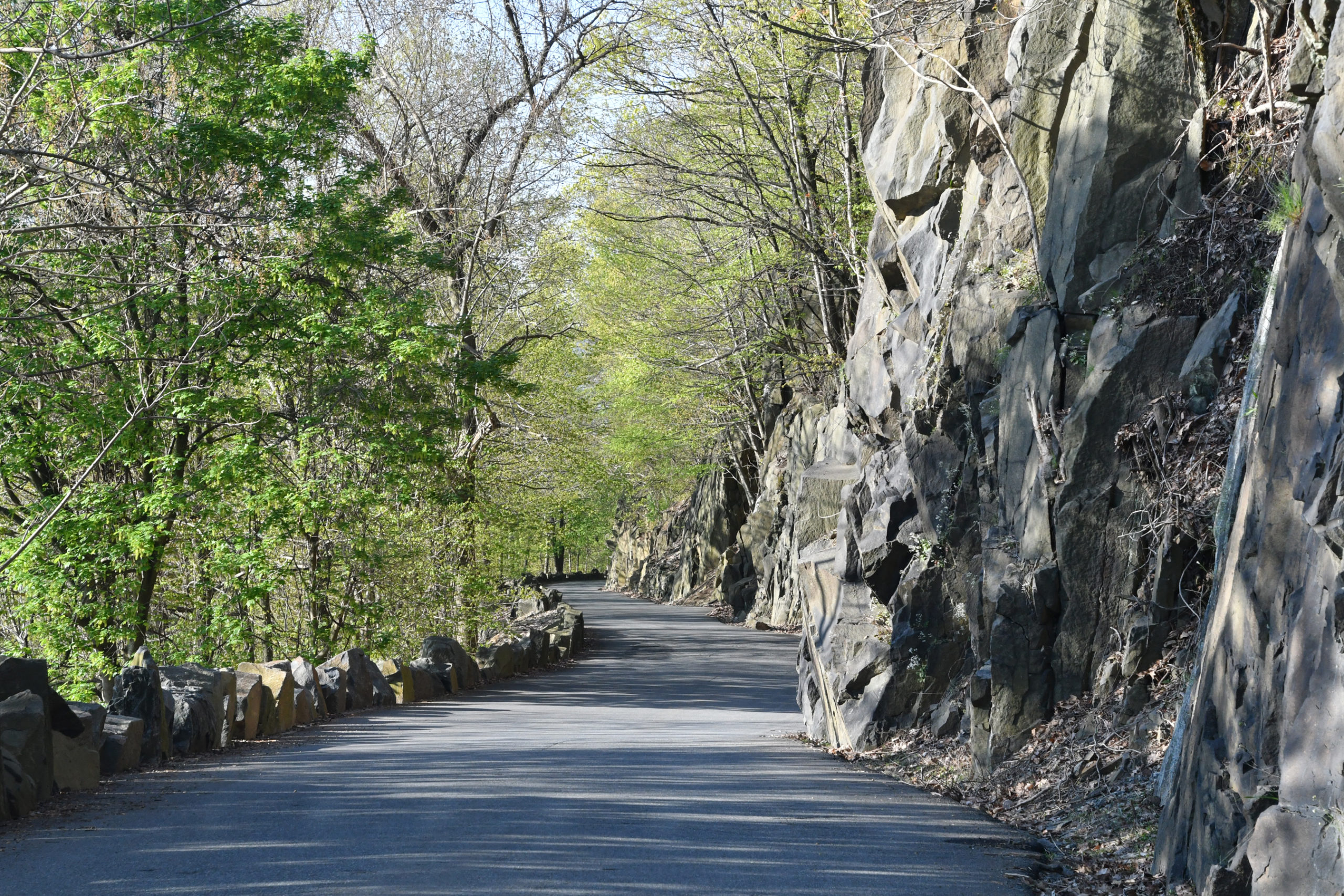
Hugging the Hudson River while offering spectacular views of the George Washington Bridge and the New York City skyline, Henry Hudson Drive offers a startlingly rural gem within minutes of Manhattan.

Lower all windows or even better, if possible, put the top down. It’s best to cruise in a lower gear. Once finding that low gear  RPM sweet spot, the engine‘s throaty exhaust note will be enriched and reverberated by the sheer stone face of the Palisades that flanks the road. This rumbling symphony enhances the sensory delight courtesy of the Henry Hudson Drive, a narrow serpentine road clinging to the towering Palisades. Driven at night only makes it better.
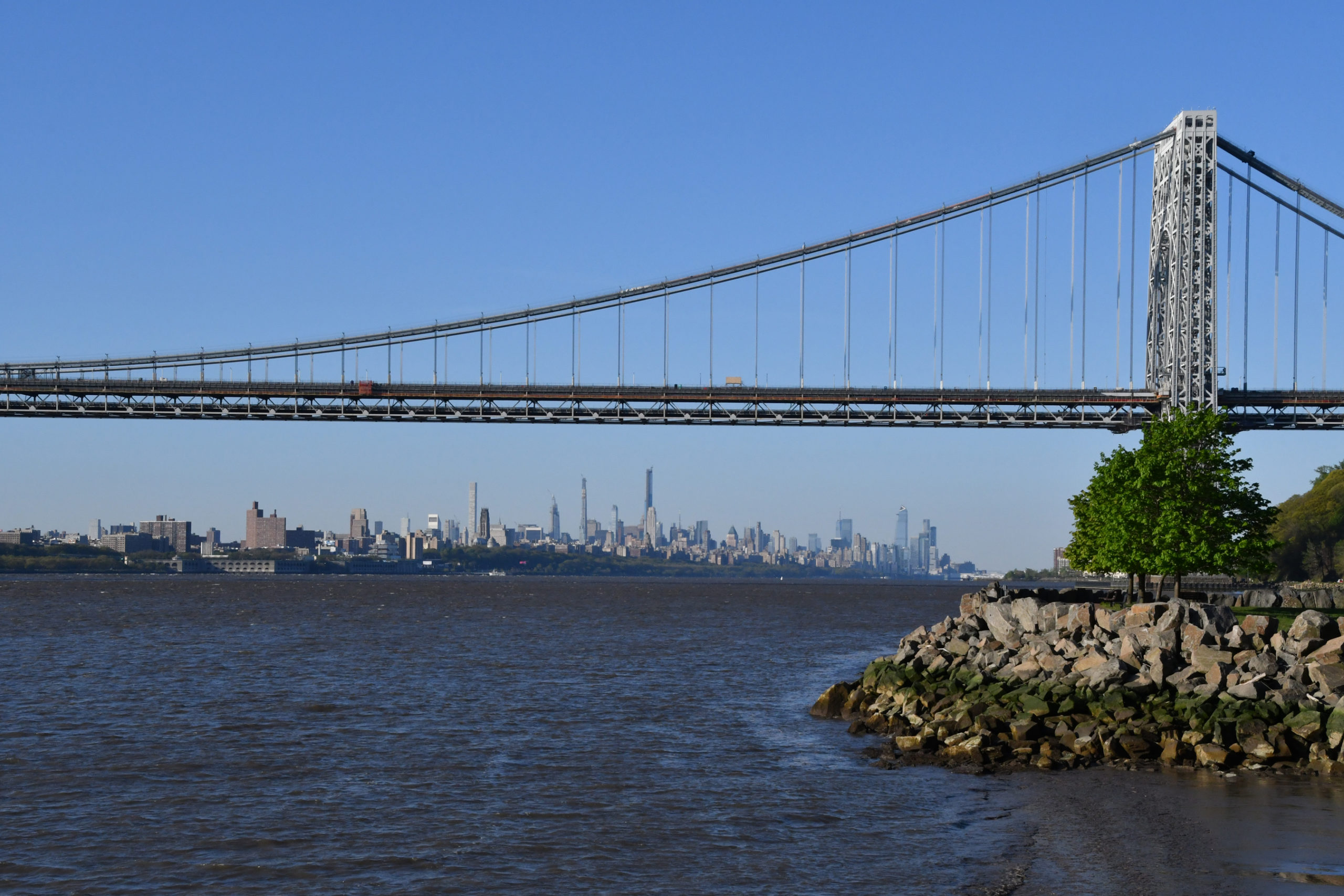
This seven miles of slender two lane “motor path” weave through an extraordinary stretch of real estate filled with echoes of the past.

Many are amazed that this greenway exists considering its value as prime real estate. Credit for its preservation resides with the generosity of the Rockefeller Family. Much of this land was originally purchased in the early 1930s by the Rockefeller family and donated to the park commission to ensure that the viewshed from the Cloisters, another Rockefeller project, on the east bank of the Hudson River would be preserved.

Interestingly when people think of fjords their thoughts normally go to Norway, however, the Hudson Valley is actually the southernmost fjord in the northern hemisphere.
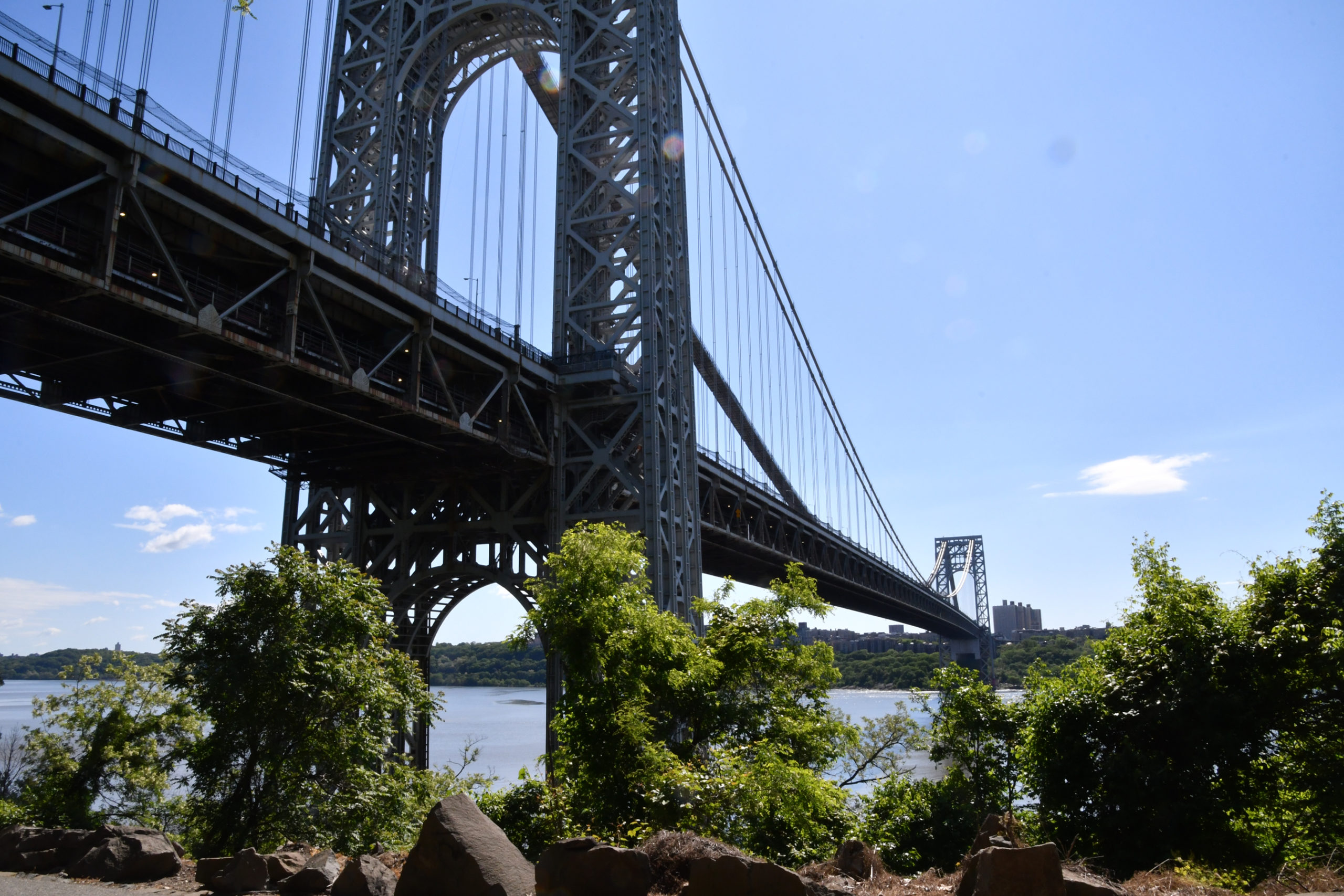
Exit 2 off the Palisades Interstate Parkway leads to the Alpine, New Jersey headquarters of the PIP Police and the Henry Hudson Drive’s northern entrance. Immediately greeted by a well paved meandering road shielded beneath a canopy of trees, the narrow motorway twists down towards the Hudson River. Be mindful that weekends and afternoons will find hikers and bikers aplenty with which to share the road. Ideally, visit at early morning or after sunset when there are far fewer hikers and bicyclists. That said, be warned that the PIP officials have a habit of randomly closing sections of the drive, especially in this age of Covid-19.

Property and paths surrounding the Henry Hudson Drive have been a part of American history since the Revolutionary War. The northern leg of Henry Hudson Drive played a pivotal role in American history as this is where in 1776 General Charles Cornwallis brought his troops ashore after the British Victory in the Battle of Fort Washington to Pursue General George Washington and his rag tag band of soldiers. Washington’s escape  would culminate in the famous retreat to Valley Forge.

One hundred and sixty two years later the forest above the north entrance provided sanctuary for a number of local residents who fled in panic based on the news of attacking Martians reported in the now infamous 1938 Orson Welles “War of the Worlds” radio broadcast.

Heading south, drivers will encounter the bridge that spans the tallest waterfalls in New Jersey, Greenbrook Falls, with a cumulative drop of 250 ft.

A narrow string of endless twists and turns will lead to the first section of Henry Hudson Drive to be built. Construction of the steep descent from Palisades Avenue in Englewood Cliffs,  New Jersey to the Englewood boat basin started in 1912. Tall grey stone walls form a two lane chute that snakes down to the Hudson River.

High above the southern leg of the drive, was once the home of America’s first “Hollywood.” From 1910 to 1920 most of the major film studios could be found in and around Fort Lee, NJ. Here Pauline faced her perils, D.W. Griffith shot over 100 films, Rudolph Valentino could be seen on the street and Mary Pickford made her film debut. It would last but a decade as bitter winters and cheap land in balmy southern California put a quick end to New Jersey’s silver screen dreams.
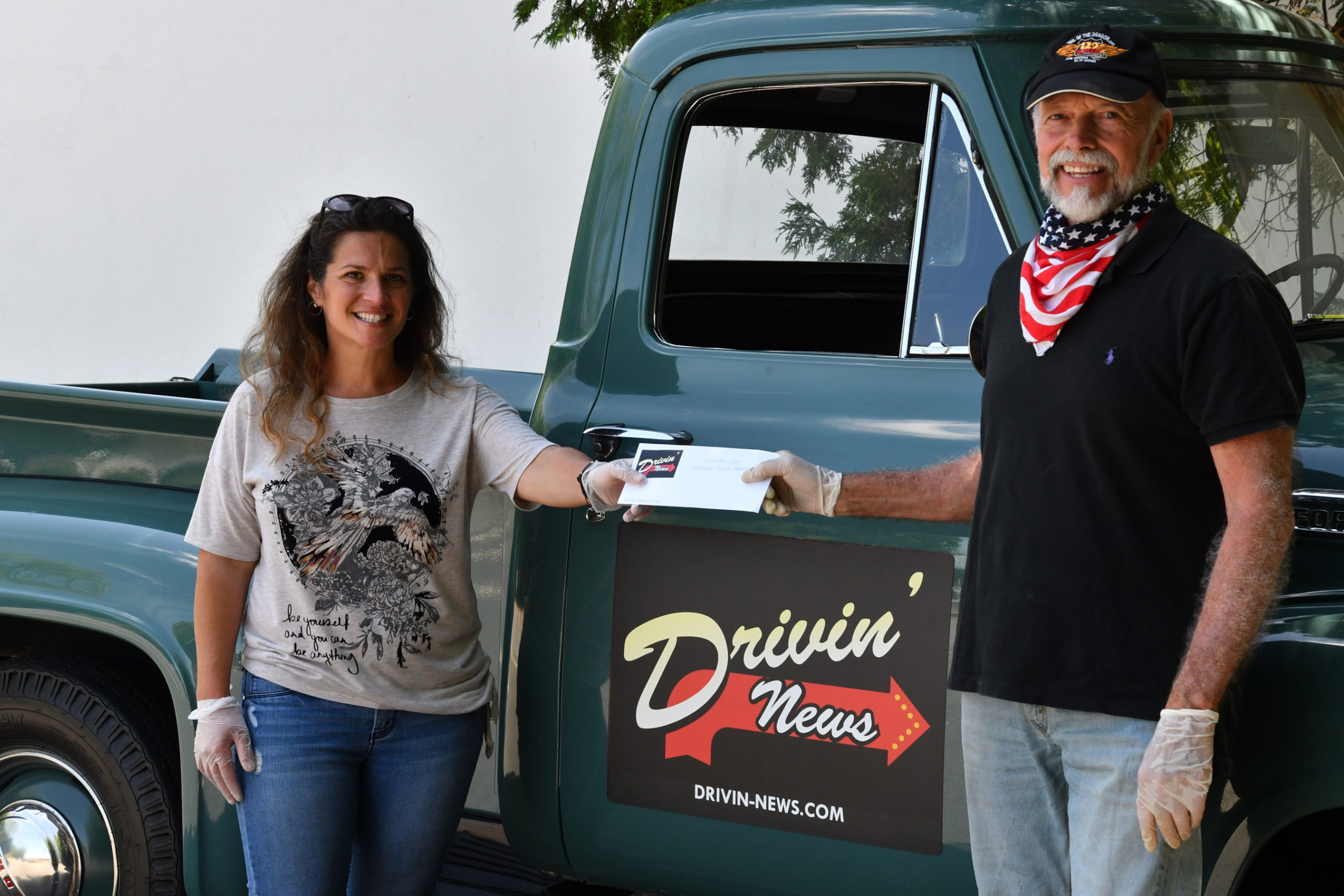
Heading south the George Washington Bridge looms high above the slim bucolic country road. Soon ending after passing beneath the bridge, Henry Hudson Drive concludes at River Road in Edgewater where North Jersey’s signature frenetic pace quickly reintroduces itself.

By |2020-06-04T01:50:11+00:00June 4th, 2020|4 Comments

Conversations With People We Value #2

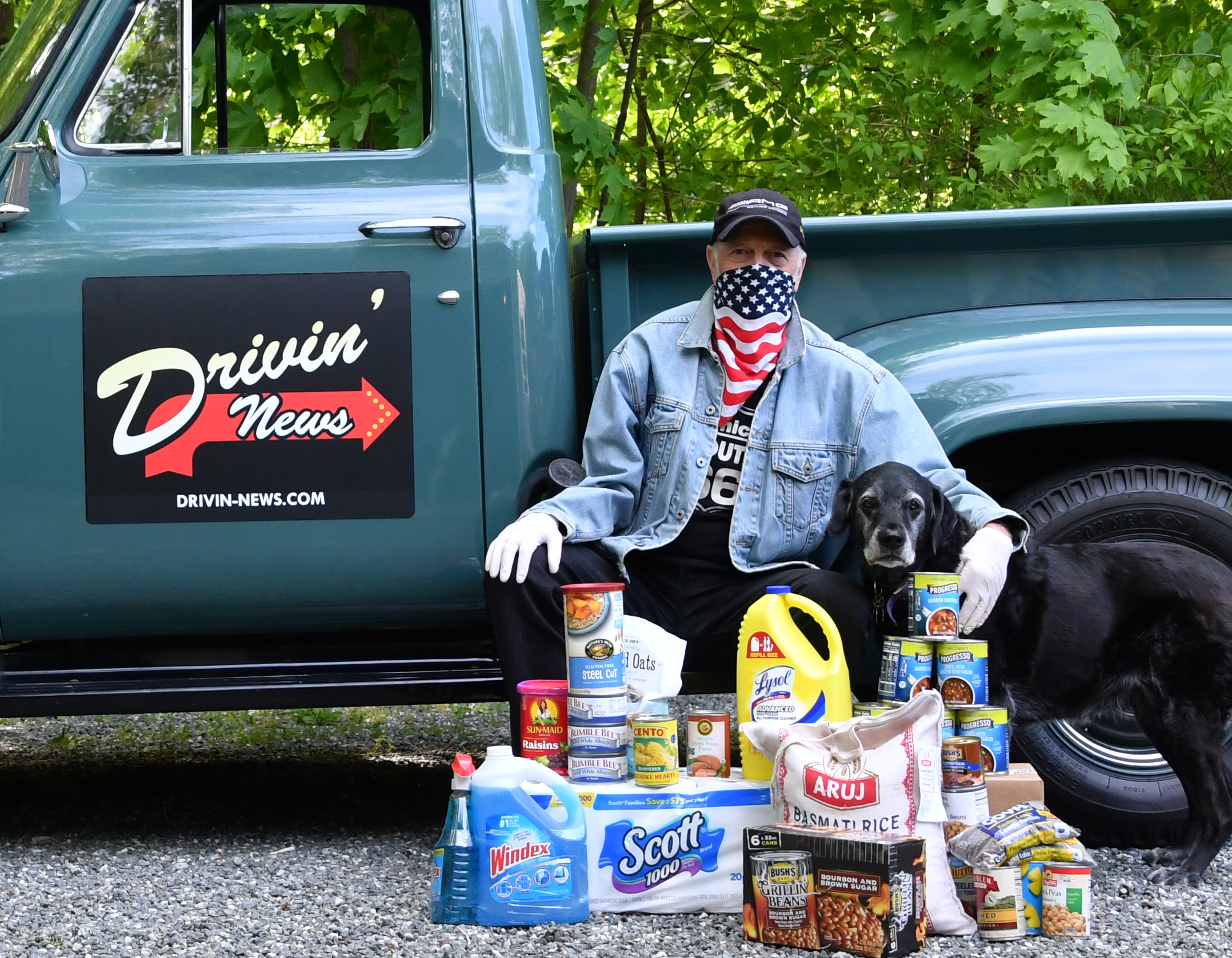
While fulfilling our duty to practice “social distancing” we should embrace the opportunity to  reduce emotional distance. Check in on an old friend. Call a sibling more frequently. Put Adirondack chairs on you front lawn and talk to your neighbors as they walk by. Or in the case of car guys, translate your motoring isolation into a fund raising group opportunity – like the Drivin’ News Food Drive.


Carnucopia Food Drive Results

Over the years Janelle Larghi has witnessed a great deal of need as Director of the Tri-Boro Food Pantry in Park Ridge, NJ. “But, never anything like this,” says Director Larghi.

Since the state imposed its shelter-in-place lockdown, demand on the pantry’s resources has more than tripled. Where last May the pantry normally served 30 families a week, This May it serves 110 families a week.
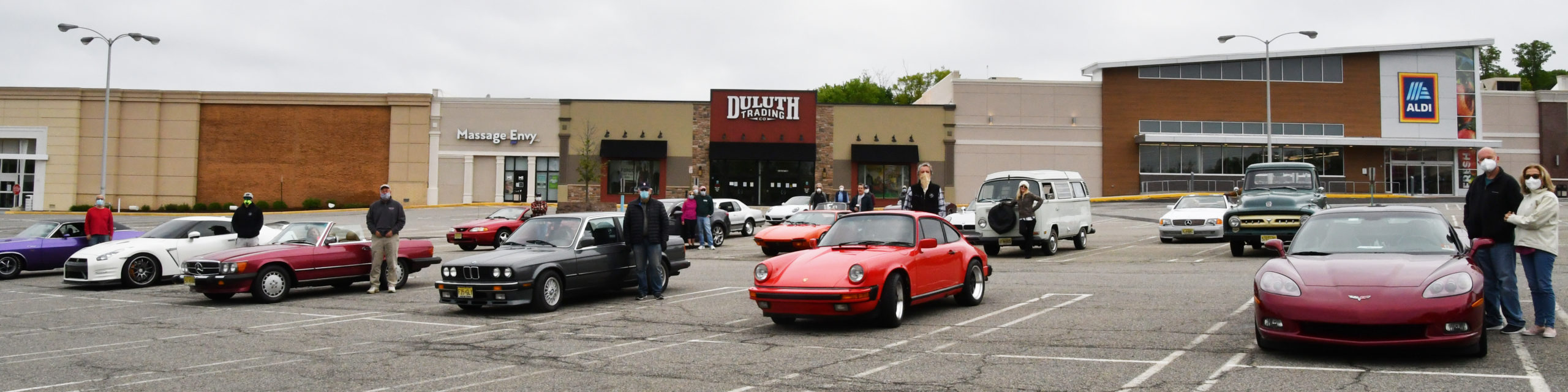
Larghi’s connection to the food pantry runs deep. Her grandfather co-founded it in the early 1980s. Larghi says, “the Tri-Boro Food Pantry’s mission calls for providing food to anyone in need who comes here for help. Plain and simple”

Serving primarily Bergen County, clients of the Tri-Boro Food Pantry represent a large cross section of people including working class families, senior citizens, immigrant families and handicapped residents from local facilities.

Says Larghi, “I don’t see any immediate end to this situation of people needing assistance.”

“Luckily for us, we have the generosity of the community and a lot of businesses, parishes, individuals and groups like Drivin’ News, Rockland Rodders and the local Corvette Club. All are helping us meet the demand. We couldn’t do it without everybody’s help.” says Larghi.

While the Tri-Boro Food Pantry faces each day challenged to operate at a level far beyond what was once normal, Larghi made a point to emphasize saying, “Anyone who needs food or assistance should put their pride aside and come to us for help because that’s why we’re here.”

For many readers of Drivin News, the idea of the “Food Drive” offered a welcome means for helping people in this challenging time.

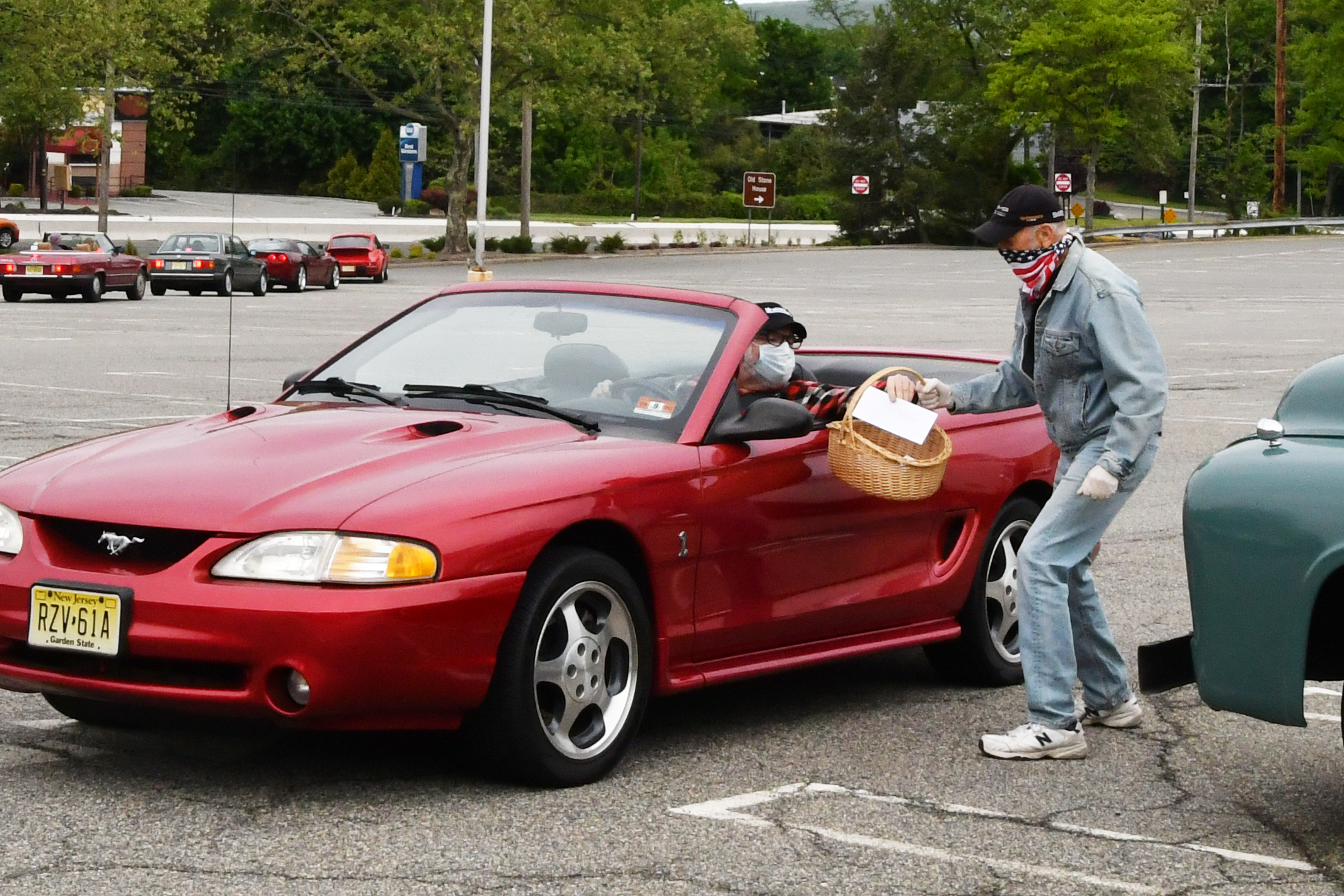
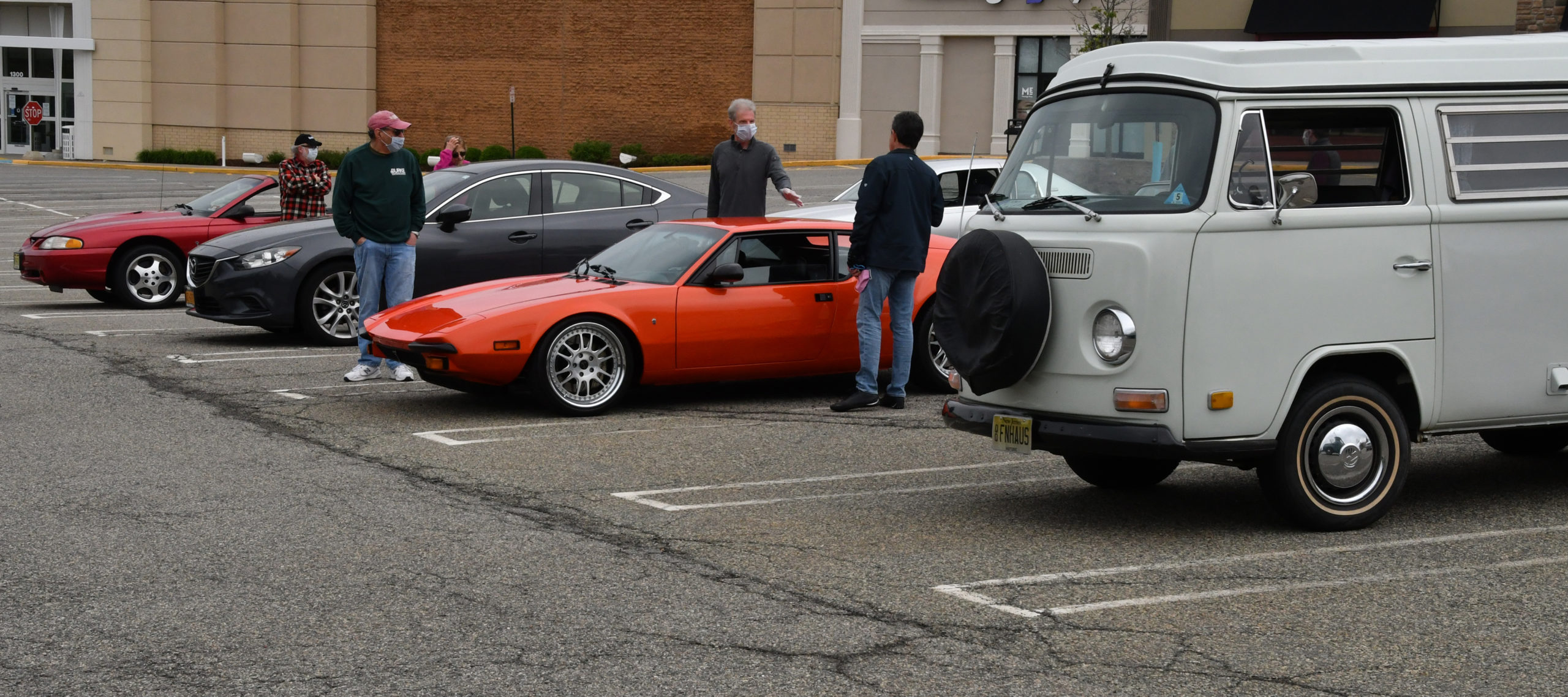
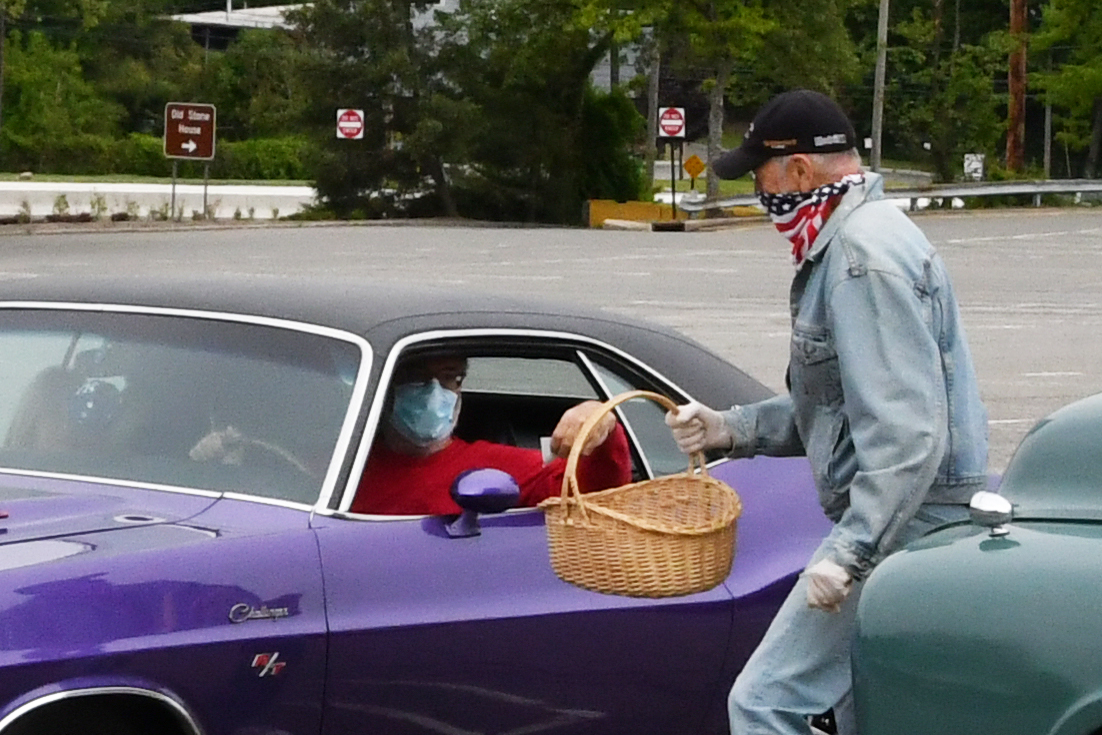
Though Memorial Day weekend, an autumn-like chill accompanied the Food Drive participants as they assembled in the deserted Kohl’s parking lot just south of the New York Thruway. An eclectic and wonderful collection, some vehicles represented the fruits of years of meticulous reconstruction while others reflected on-going preservation efforts that sought to stall the ravages of time. Others were messengers from history recalling distant memories of family adventure.

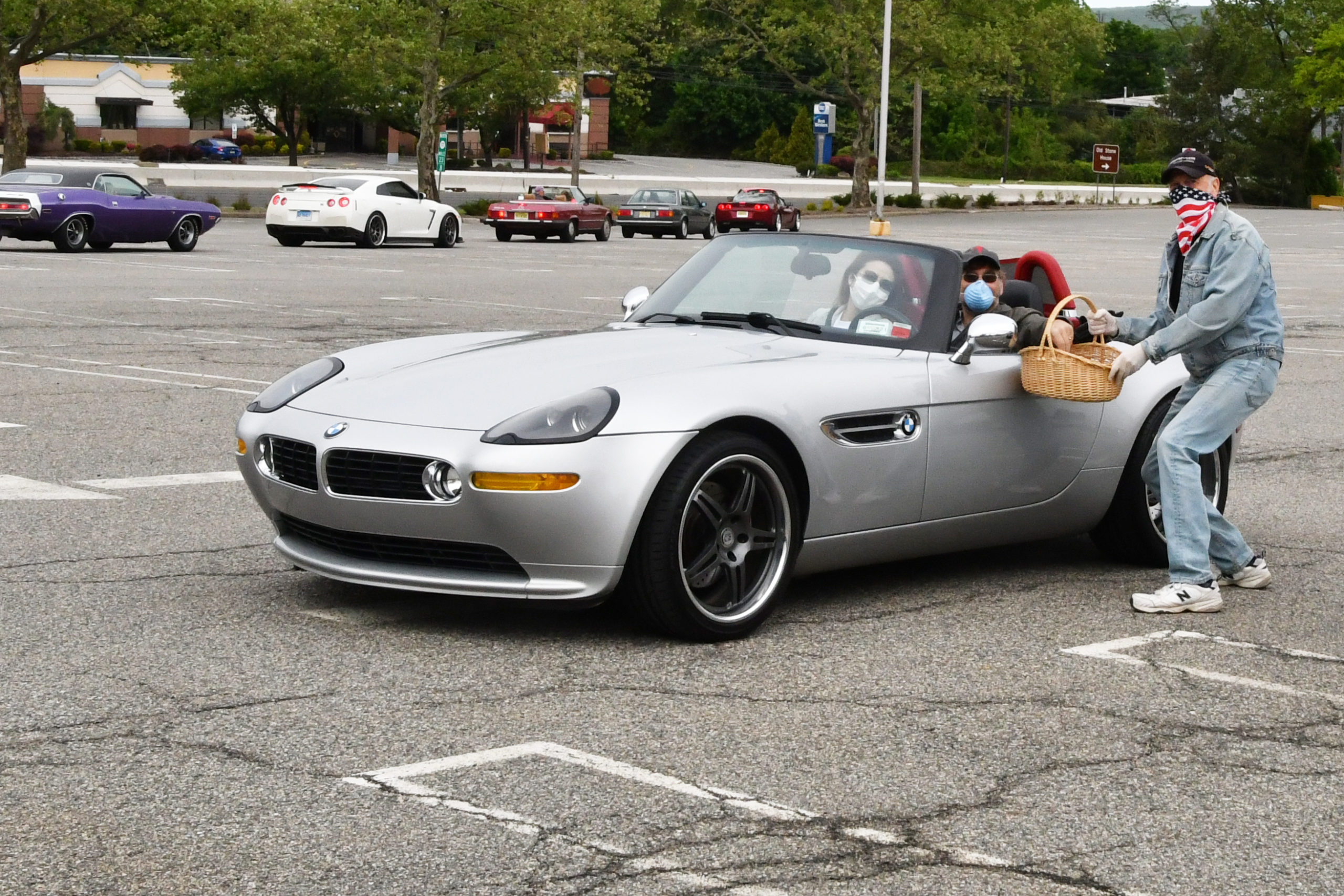
However, as if Andromeda Strain author Michael Crichton had crafted some bizarre perversion of what was once normal life, drivers casually sported face obscuring surgeons’ masks or bandit bandanas plus surgeon’s gloves.

With cars spaced apart every other parking spot, drivers meandered in orbit about their vehicles while maintaining a proper distance from the surrounding drivers.

A year earlier and a life time away, this scene was unthinkable. Much has changed since the ides of March 2020.

As drivers arrived the fleet expanded to include a mix of iconic contemporary and vintage collectible vehicles including a BMW Z8, Nissan GT-R, various Porsches, Mercedes-Benz SLs, Corvettes, 70’s Mopar muscle and a vintage cluster that included an air cooled Corvair, Volkswagen Westfalia and the Drivin’ News F100 pickup.

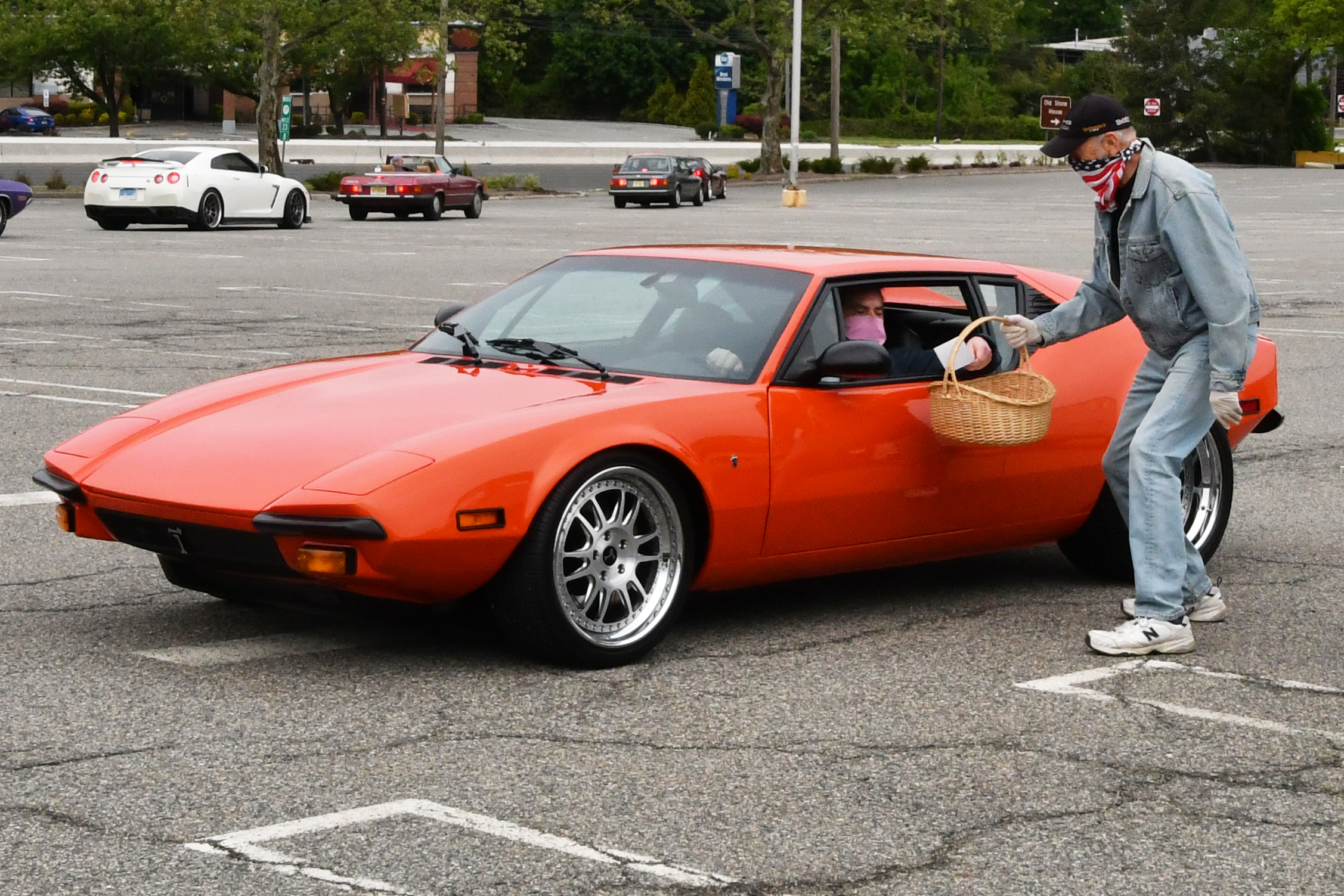
Departing at 8:30 the masked motorists circled the Kohl’s parking lot to pass the Drivin’ News 1953 Ford F100 pickup and drop off their donations.
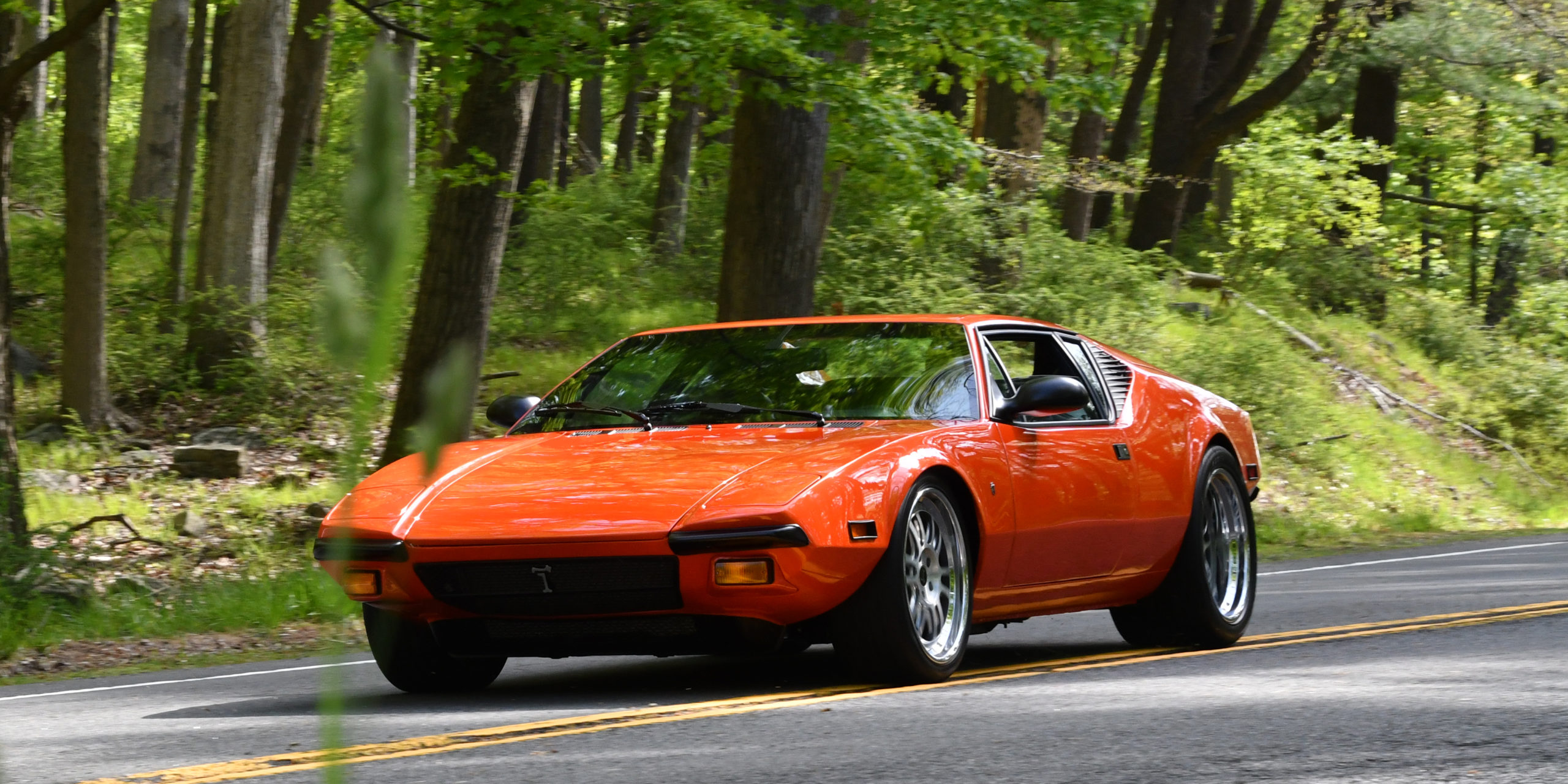
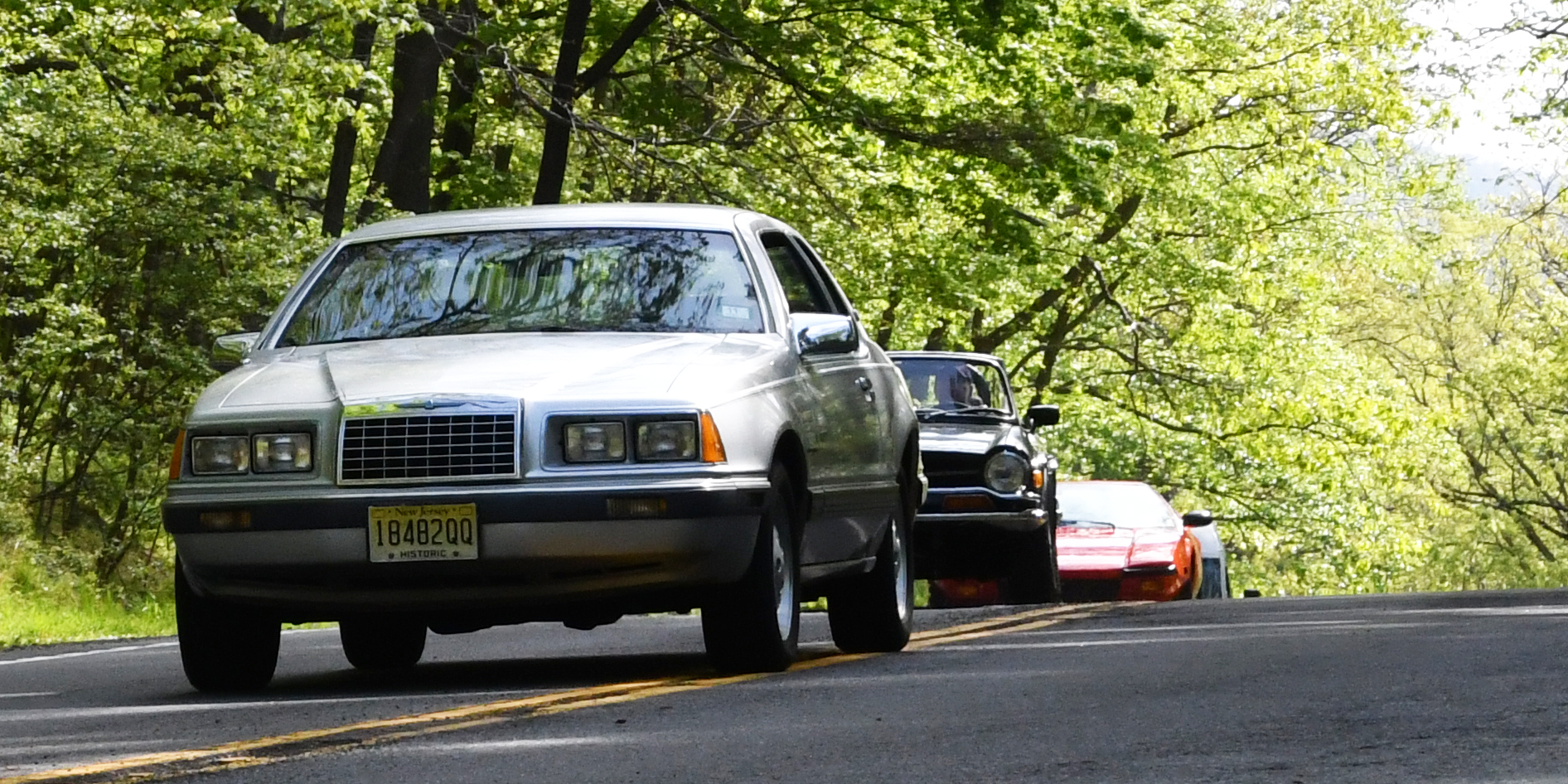
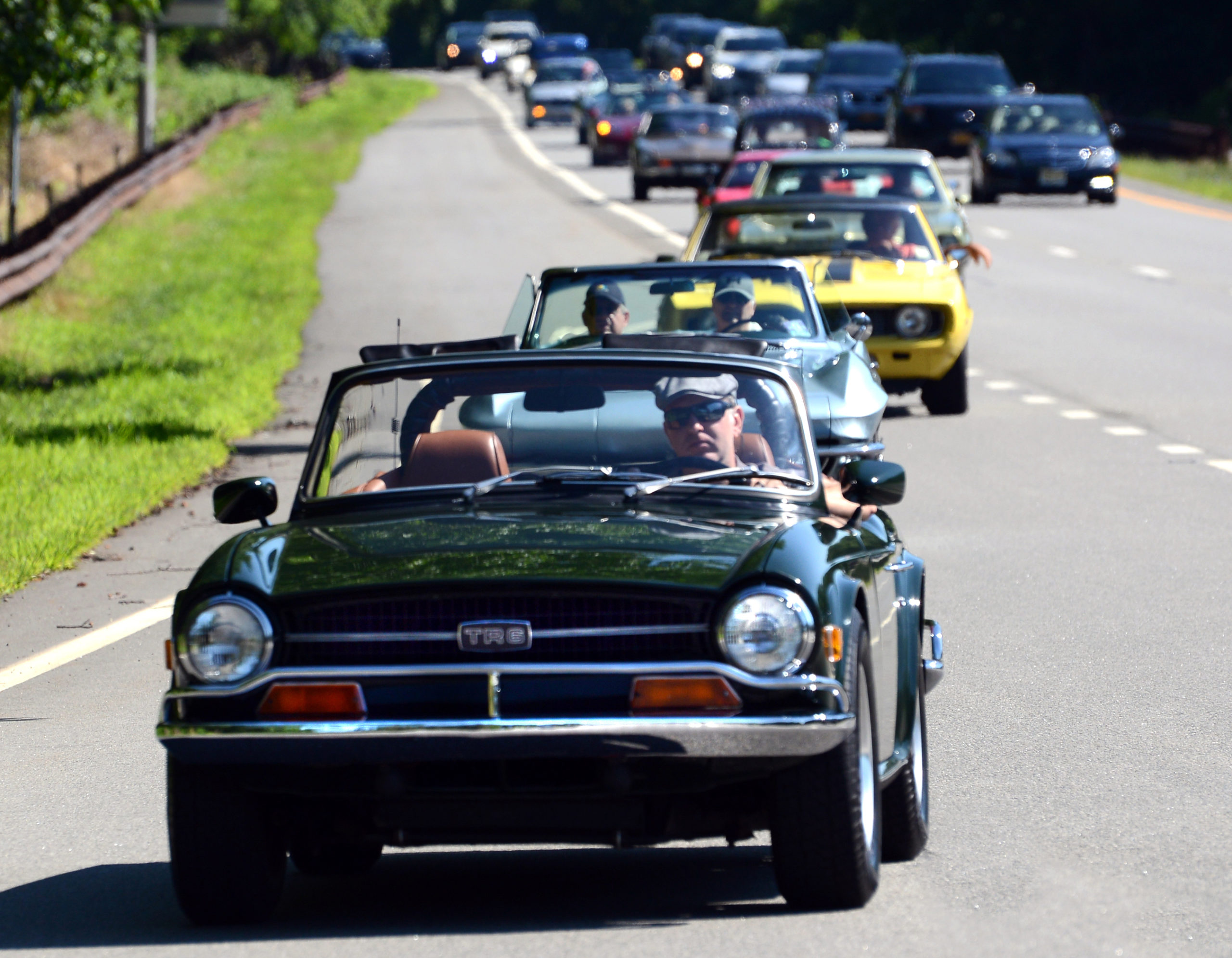
Lead by Peter Desbet’s in his 1986 Guards Red 911 Porsche, the group, with masks cast off, burst out onto a desolate Route 17 enroute to Harriman State Park and the two lane roads that snake through its 44,000 wooded acres.

Though restricted by New York State Covid-19 related road closures, the “Food Drive’s” early departure allowed the group to navigate the trip to the Bear Mountain Circle and back effortlessly. It was only later with Harriman left in the group’s tail lights that the peace and tranquility of Seven Lakes Drive would, thanks to New York State mandate, acquire the charm of a Cold War Eastern Block border crossing.

As the participants spilled out of the Seven Lakes Drive exit on to Route 17, they could rumble home having given their cars a much needed workout and the Tri-Boro Food Pantry a much needed $1,000.


By |2020-05-28T11:11:13+00:00May 28th, 2020|10 Comments

Cars We Love & Who We Are #4

It’s spring and young men’s and women’s fancy turns to thoughts of… driving their classic cars. Granted our fancy turns to thoughts of other things too, but right now I am talking classic cars.

Unlike all previous springs the joyous social nature associated with our classic car passion has been knee-capped by the Covid-19 pandemic. Conflicted by our unshakable determination to do the “right thing” and our passion for the open road, we yearn for a responsible solution. How about this?

Carnucopia

 Carnucopia offers a classic car driving event that combines helping people in need with food and necessary supplies while affording a gathering of friends an opportunity to enjoy a great drive on country roads. All while practicing proper social distancing.
Carnucopia is both a driving event and a fund raiser. Participation in the driving event requires a minimum donation of $25. Larger donations are welcomed. All moneys will go to the Triboro Food Pantry, a Park Ridge, NJ 501C3 non-profit organization. Click on the link to visit their website. They support families across Bergen County. Donations are tax deductible. Please make out all checks to Triboro Food Pantry.
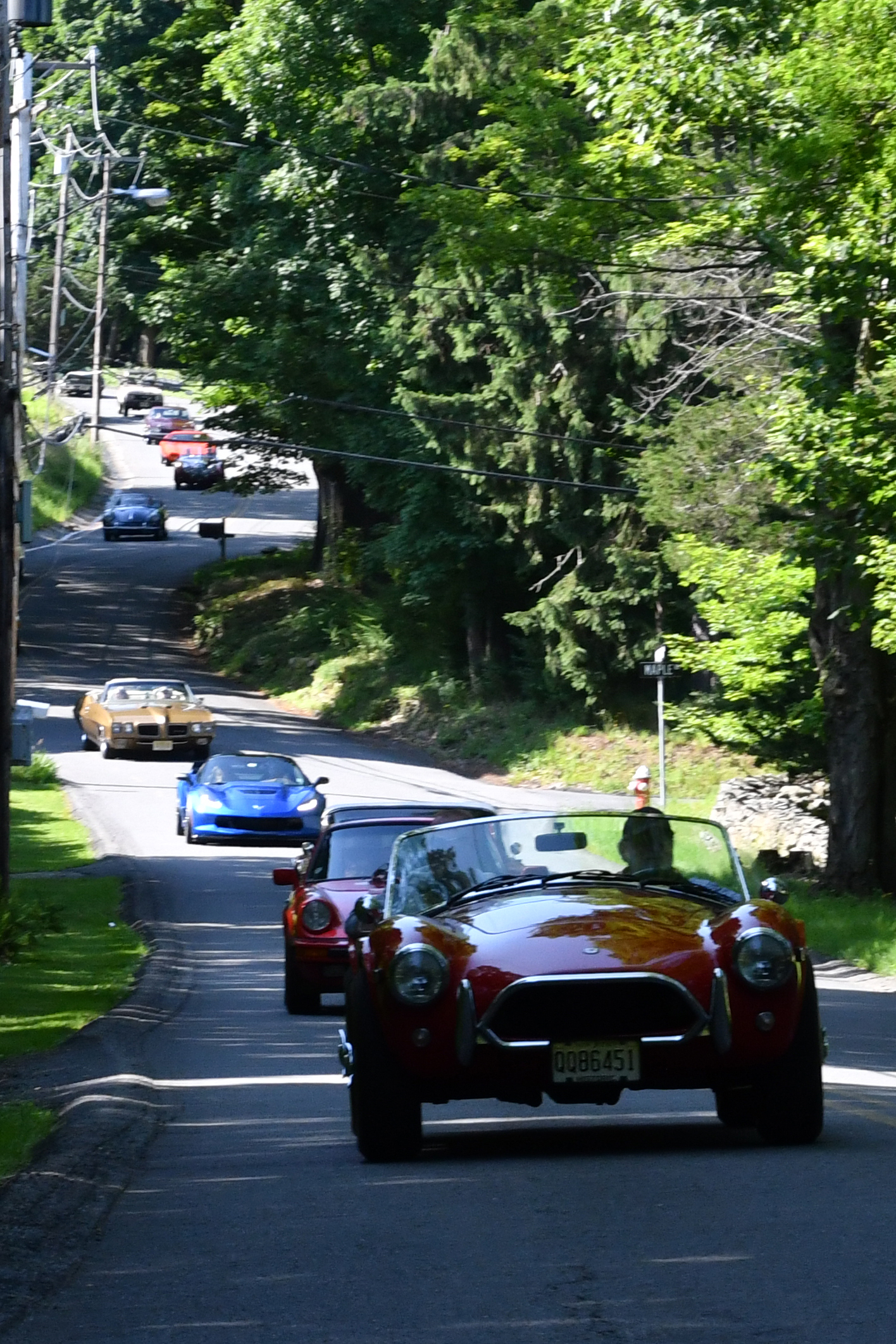
In essence the plan calls for all participants to gather at 8:00 am on the morning of Sunday, May 24th at the Kohl’s parking lot on Route 17 North in Ramsey NJ.

The Drivin’ News 1953 Ford F100 pick-up truck will be positioned where all participants can stop to make their donation and get route directions. Volunteers will direct participants to alternating parking spots to allow for proper spacing. PEOPLE MUST STAY IN THEIR CARS.

The drive leader will depart at 8:30 sharp.

Key Facts

  • Starting location: Kohl’s, 1300 Route 17 North, Ramsey, NJ 07446
  • A donation of a minimum of $25 is required
  • Arrive time: 8:00 am
  • Depart Kohls: 8:30 sharp
  • Distance: Approx 45 miles
  • Duration: Approx. 1.5 hours
  • Drive leader: Peter Desbets, 1986 Red Porsche 911
  • Directions are provided so that even if you get separated you will know where you are.
  • The drive will conclude at the light at the intersection of Seven Lakes Drive and Route 17 in Sloatsburg.
  • Triboro Food Pantry 501C3 tax ID# 81-1480802

Covid-19 Rules of the road

  • ALL PARTICIPANT MUST HAVE GLOVES AND MASKS WITH THEM
  • SOCIAL DISTANCING RULES MUST BE OBEYED.
  • EVERYONE MUST STAY IN THEIR CARS
  • CARS WILL BE POSITIONED EVERY OTHER PARKING SPOT
  • WE WILL ATTRACT ATTENTION, IT JUST SHOULD NOT BE FOR THE WRONG REASONS

IMPORTANT

A head count of intended participants is needed. If you plan on attending, please respond with your name and intention in the comments section. Without sufficient support the drive event will be cancelled.  I need to hear from you by Friday afternoon. By supper time Friday I will send out an email that will state if the drive is on.

The weather looks good.

By |2020-05-20T23:50:29+00:00May 20th, 2020|8 Comments

Conversations with People We Value #1

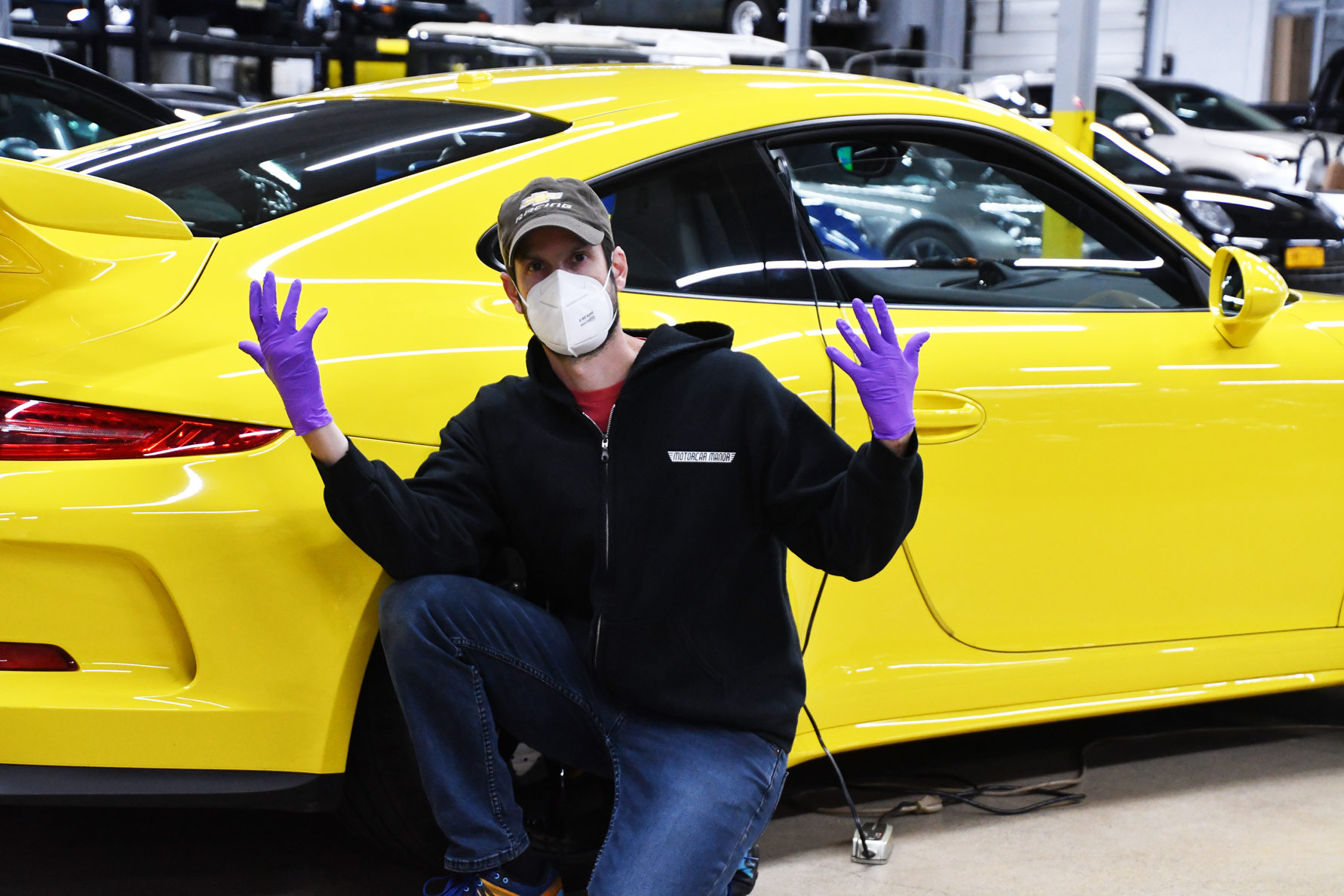
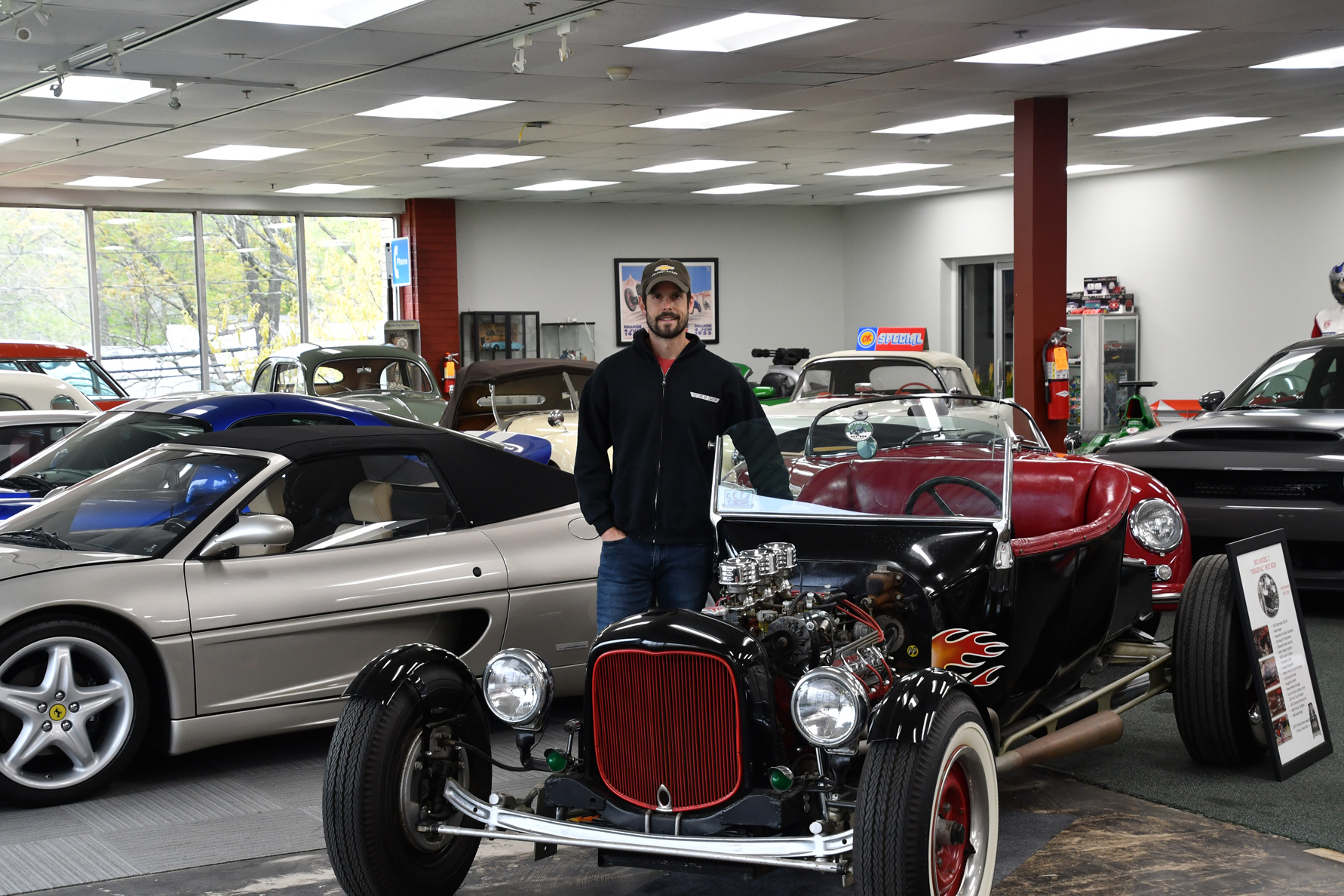
He never saw this coming. Embedded in the classic car culture Matt Maisano, owner of Motorcar Manor a premier collectible automobile storage facility in Ramsey, NJ, has built his business by being a forward thinking guy. Fortunately, He has always strived to be prepared for the unexpected.

Let’s see what he is preparing for now.


Collectible car culture in a pandemic –

An insider’s perspective

Tell us about Motorcar Manor?

I love classic cars. Whether I own the car or someone else does, I love everything about it. If I did not own Motorcar Manor, I would visit it whenever I could. Other than a world class museum, where else could you enjoy such an eclectic collection of automotive art?
I appreciate the joy each of these rare, beautiful and athletic works of art and genius conveys to its owner. As a business, MCM stores all clients’ vehicles the same as if they were my own. Yes, MCM is a business, but for me it is a passion.

At MCM we store special vehicles. We assist people in buying and selling vehicles. We assist in providing vehicles for film and magazine placement. We recently placed vehicles in The Irishman and The Marvelous Mrs. Maisel.

How has Covid-19 affected your business?

Initially it really has not impacted us. We’re still storing people’s cars because the weather here in the Northeast until recently has been pretty gloomy.
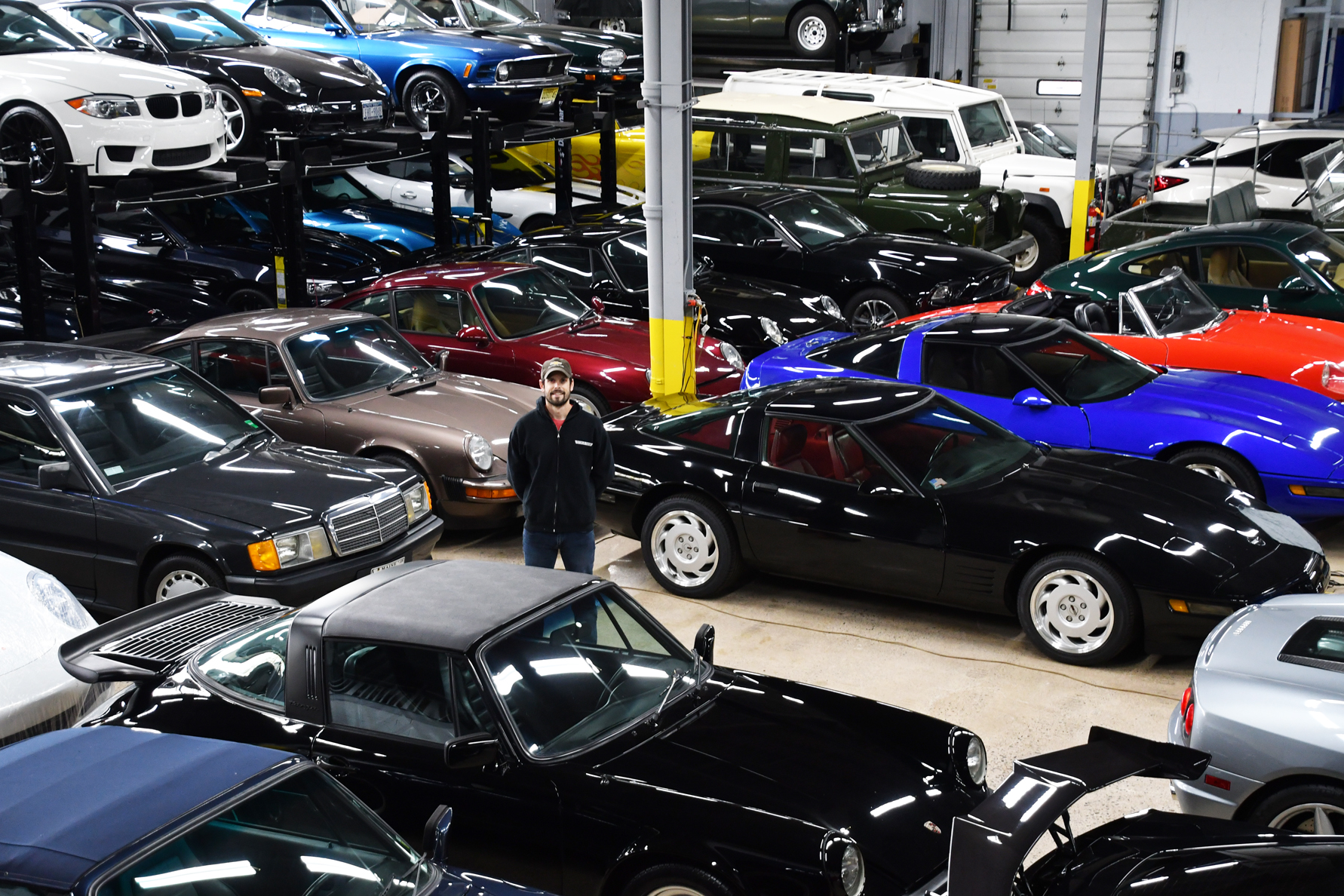
That said Regardless of weather, some clients are like clockwork. End of March the car gets detailed and leaves to return in the fall.

However, some cars are staying longer. This impacts MCM because people usually get a premium detailing before taking the car. Detailing is an important source of income. Frankly, I think until people get a better understanding of the virus some people will choose not to expose their prized vehicles to other people.

As well our vehicle sales have taken a hit. I believe the decline in sales reflects people’s concerns about social distancing. I believe that will soon change for the better as people become more comfortable in knowing how to safely interact.

Frankly, some people may just choose to leave cars here until some kind of normalcy returns. Also, I have a couple of clients that are snow birds. I’m willing to bet those guys are not coming back any time soon.

We won’t feel the impact until June or July.

How do you see Covid-19 impacting auctions?

Through March maybe 10 to 12 different live auctions were cancelled. Some of the higher end auctions have gone the online route. RM did an online auction and was decently successful. They had more potential bidders than they had last year, which was just a normal auction. They did maybe $13.7 million worth of cars, which is lower than what they sold in the past, but the number and quality of vehicles was lower.
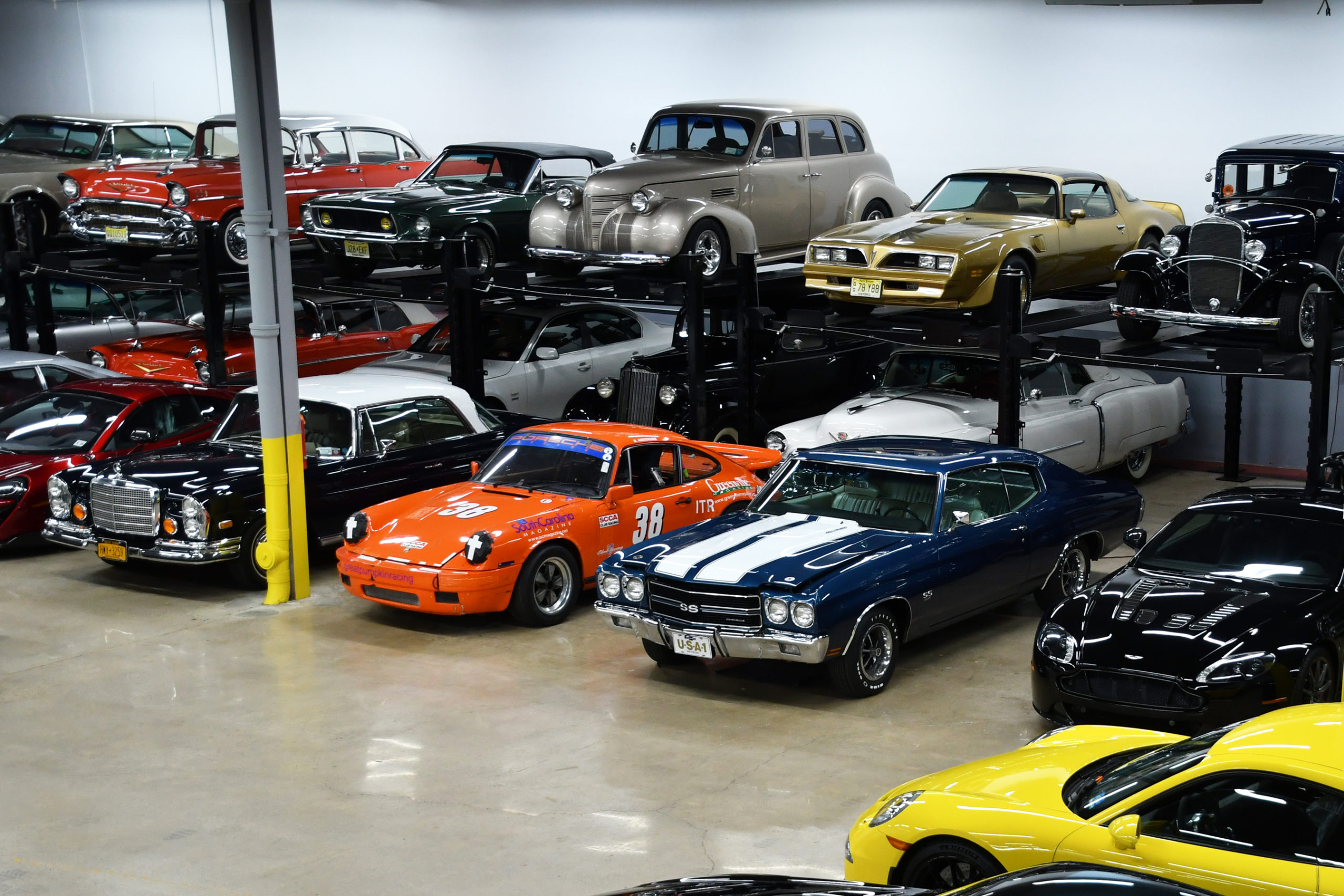
I think that we will see more and more online auctions. Not just from the big name guys either. New companies will start popping up because the cost is significantly less to do it online than in person. Also, as a society we are getting increasingly lazy. In the world of Amazon Prime, The new generation of buyers is just far less willing to wait months or years for the right car. We want it yesterday.

Interestingly, Bring A Trailer has done very well. Obviously it depends on the particular vehicle, but they’ve done very well auction wise.

Why do you think Bring A Trailer is doing well?

It’s primarily that Bring A Trailer constantly has auctions. Today, nobody’s doing anything right now. We’re all home. We’re all on the computer if you have a job. So every now and then if you take a break you’re gonna go on BAT. There’s no one looking over your shoulder saying hey, what are you doing right now? And we’re all dreaming of the day that we can go out to shows or drives.

As well, I think it has to do with the age group of the people buying and selling and the type of cars that BAT typically sells. European cars and Japanese Imports even newer domestics have definitely been more popular. Vehicles 25 years old and newer are drawing great “Newtimer” interest. It’s not necessarily that they’re higher value than the older cars. They’re just more popular right now with the age group of people in their late 20s to early 50s that is not as affected by this virus economically.
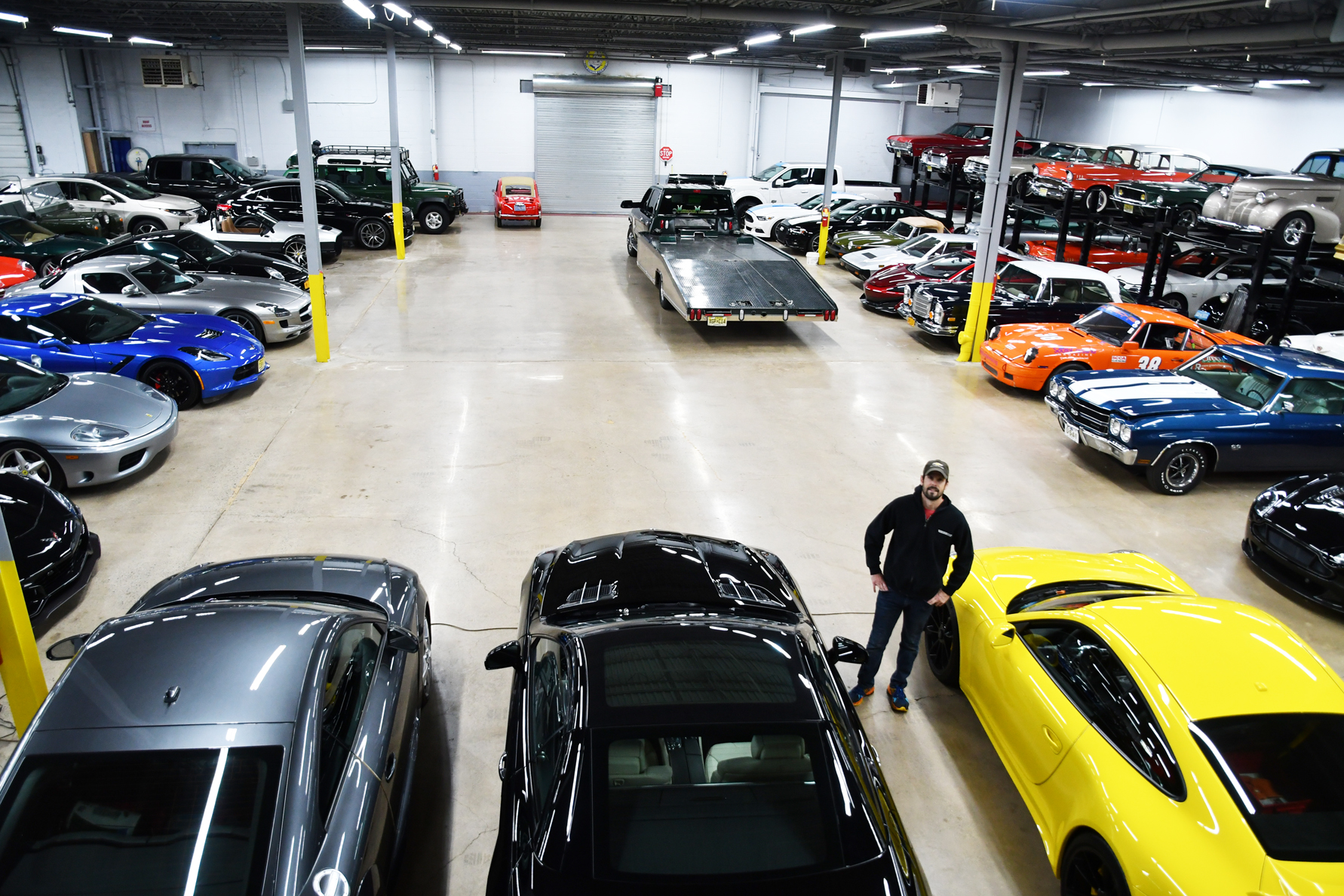
Based on their life experiences this “Youngtimer” generation of buyers appears to be getting comfortable with a new norm where something bad will happen and then life will get better again. The virus really hasn’t impacted them as it has the older demographic.

With all that is going on, if you’re over 65 with your money is in a 401k you are probably not thinking this is a great time to spend $100,000 on a collectible car.

Could you see live auctions going away?

I think you’ll see a couple of live auctions go away. However, it’s never going to be fully online. Part of the reason live auctions will continue is that auction houses bank on these auctions being a destination.
They make it a weekend long party. Companies like Barrett-Jackson and Mecum will continue live events. Even the higher-end auctions like Bonhams, RM and Gooding want you there. They want friends around you to push you to buy a car. They want you to get boozed up, so you make bad decisions. You know, that’s just all part of it and getting caught up in the whole atmosphere of things.

Have car sales suffered during the pandemic?

Older iron was dwindling down in popularity already, but the age group that would be interested is the one impacted by this virus. Most are already on fixed incomes with money set aside to purchase a vehicle. But now they don’t want to go anywhere. They don’t know what’s going to happen to them. They don’t know what’s going to happen to their loved ones.  Fewer in that generation are at ease making a big expenditure on a classic car with an uncertain future.

However, especially for the new generation of buyers based on their “bad right now, but back to better later” mentality the current pandemic might be an opportunity. Some may view this period as a market correction with a price spike awaiting in the somewhat near future much like after the stock market crash in 2008.

Will Covid-19 affect how you interact with a client’s vehicle?

I have asthma. When a customer brings in a car, we allow them to pull it into the building. Before they exit I have them roll down the windows. I then let the car sit for 24 hours before I go inside. Even then when I do enter the vehicle I’m putting down plastic on their seat. I’m wearing gloves and I’m wearing a mask. That’s just how I’m doing it when receiving a car.


On the personal side, how has the new normal impacted your home life?

I am trying to help out at home. My wife, Jill, is working from home. We have three kids, two girls 9 and 2 and a boy 6. Honestly, I don’t know if I’m making things better. With home schooling, I’m trying. At best, I’m like the gym instructor filling in for a missing teacher. We try to get their schooling done by one o’clock. Then I try to bleed off some of their energy. You know like, hey let’s run around the yard. Does nothing. At times in desperation I put up one of those bouncy houses in my living room.

I haven’t had a haircut since the last week of February. I will not take my hat off.

It’s crazy.


By |2023-01-08T17:03:28+00:00May 14th, 2020|2 Comments
Go to Top